




Abstract
Recent global events have triggered compositional changes in the workplace (e.g., intentional diversification and sudden team member removal). This study investigates whether team gender diversity and the novelty of membership changes moderate the relationship between team processes and performance. We found that development of team confidence plays a pivotal role in shaping performance through its influence on backup behavior. Moreover, gender-balanced teams were better at translating their confidence into backup behaviors, and teams experiencing reduced novelty during membership change events tend to leverage these behaviors more effectively, leading to enhanced overall performance. We explored several theoretical and practical implications.
Keywords
Organizations derive numerous competitive advantages from harnessing the potential of teams. Teams, comprised of members with diverse skills and backgrounds, effectively leverage these attributes to navigate complex challenges such as evolving tasks, roles, management, and team composition (S. W. J. Kozlowski et al., 1999). Key changes in team composition encompass sudden alterations in team size, either downsizing or upsizing, and deliberate diversification efforts, often involving shifts in gender composition. While these endeavors are closely linked to a company’s survival (e.g., Kaur & Arora, 2020; Mujtaba & Senathip, 2020), such novel changes can also yield adverse effects on teams (Trainer et al., 2020), evoking emotions among existing team members impacted by the changes (Dlouhy & Casper, 2021). This emotional response is particularly pronounced when the changes result in demographically diverse teams (Reinwald & Kunze, 2020). Teams are inherently dynamic and adaptable, evolving in response to ongoing changes rather than remaining static or isolated (Mathieu et al., 2018). Organizational scholars have long aimed to understand teams undergoing membership changes from a dynamic perspective (e.g., Arrow & McGrath, 1995; McGrath et al., 2000). Nonetheless, empirical studies that offer actionable insights for workplace best practices regarding dynamic changes remain relatively scarce (Mathieu et al., 2019).
Recent global events—most notably social and economic challenges posed by the COVID-19 pandemic—have reignited the need to focus on supportive mechanisms for managing changes in team composition. Trainer et al.’s (2020) review of team membership change events emphasizes the importance of integrating pertinent research to understand the recent impacts of team membership changes. This encompasses understanding how teams adapt after a member departs and how they function when membership is in flux. In light of the ongoing social and economic challenges, these shifts in team membership have substantially disrupted typical team operations, continuously testing their resilience, functionality, and capacity to achieve optimal results (Fu et al., 2021). When employees leave the organization, the remaining team members can encounter difficulties related to training, loss of task-specific knowledge, and team culture, as well as disruptions in information-sharing practices (Heavey & Simsek, 2014; Leonard et al., 2014). These consequences of team membership changes have prompted researchers to delve into understanding their implications and provide guidance for enhancing teamwork, particularly in the face of emerging and evolving challenges (Hughes & Donnelly, 2022).
In line with this, an extended framework of Morgeson et al.’s (2015) Event Systems Theory describes the nature of team membership change events and steers future research to better grasp the consequences of each event type. These events are classified into three categories: novel, disruptive, or critical. Novel team events can be defined as those that “involve changes that had not been previously experienced or were not otherwise expected” (Trainer et al., 2020, p. 228). In contrast, disruptive events more broadly require ongoing adjustment, while critical events involve changes in key resources. Given the abrupt shifts organizations have had to navigate recently, such as the pandemic and economic uncertainties, the novelty of the change events holds particular relevance in the contemporary context. Instances like sudden furloughs, layoffs, and occupational changes underscore this contemporary significance. These more dynamic change contexts highlight the imperative need to understand the impact of novel team membership change events on team functioning (Chandler et al., 2005).
Team gender diversity during membership change events introduces a confounding factor that can influence the severity of change-related consequences. Research has indicated that women are more prone to leaving the workforce (Dhanani et al., 2021), which poses significant challenges for work teams. Women often contribute unique value to teams beyond task-specific skills, including higher levels of social perceptiveness (Nielsen et al., 2017) and a propensity for volunteering behaviors (Farh et al., 2020). Consequently, teams that disproportionately lose female members may witness a reduction in supportive teamwork mechanisms. As a result, the gender disparity within work teams can directly impact overall team outcomes.
A substantial body of literature underscores the significance of gender diversity within teams. Notably, gender diverse teams exhibit superior capabilities in self-managing team task performance (Y. Li et al., 2022), excel in collaborative problem-solving (Nielsen et al., 2017), and demonstrate heightened performance in complex endeavors requiring extensive coordination and interdependencies among team members, such as critical innovations (Chan et al., 2023). These advantages align with the supportive teamwork mechanisms previously discussed, which are often contributed by female team members. However, it is worth noting that meta-analytic evidence has also shown a negative association between gender diversity and team performance (Schneid et al., 2015). Furthermore, although gender diversity does not consistently or directly impact team performance, Kukenberger and D’Innocenzo (2020) argue that the intricate nature of gender diversity can yield varied team outcomes depending on different team compositions and contextual factors. Therefore, comprehending the effects of novel team membership change events within gender diverse teams remains a critical endeavor.
Surprisingly, there has been a scarcity of research addressing the impact of downsizing on team performance, with even fewer studies delving into the role of diversity within team composition. One notable exception is the work by DeRue et al. (2008), which emphasized the importance of addressing team composition variables in mitigating the adverse effects of downsizing while identifying the adaptation of task-related behaviors as a key mediator. This study prompted a call for a deeper understanding of such disruptive events and their consequences. While DeRue et al. (2008) primarily focused on team adaptation and personality as key composition variables, they left a gap by not exploring the supporting mechanisms related to team functioning amid team membership changes. Research into these mechanisms has pointed to either cognitive factors (e.g., transactive memory systems; Argote et al., 2018) or behavioral processes (e.g., communication; Siegel Christian et al., 2014) as vital for bolstering overall team performance. However, less is known about essential mechanisms that enable team members to fulfill their core responsibilities amidst disruption and uncertainty. Social processes often serve as precursors to significant team cognitive and behavioral processes that support high performance (Schwarzer, 2001). These social processes foster a sense of belonging and attachment within the team, motivating team members to support one another (e.g., Leung & Wang, 2015). Research has shown that nurturing positive social processes can enhance team creativity (Reiter-Palmon & Paulus, 2019), aid in organizational sensemaking (Maitlis, 2005), and even mitigate the adverse effects of time pressure on teams facing challenging events (Nordqvist et al., 2004). Consequently, developing positive social processes becomes particularly crucial for teams grappling with demanding team membership change events to ensure effective performance (Uitdewilligen et al., 2010).
Given the profound impact of the disruptive events spurred by the global pandemic, characterized by a notable surge in both voluntary and involuntary departures, there is an urgent need to gain a deeper understanding of team dynamics and processes (Sklar et al., 2021). In navigating the intricate consequences of team membership change events, Marks et al.’s (2001) taxonomy offers a valuable framework, particularly by accounting for temporal aspects related to team processes such as the transition phase (i.e., strategizing) and the action phase (i.e., goal accomplishment). Within the ever-evolving landscape of team processes, two critical components emerge as pivotal, especially within the context of uncertainty: building confidence during transition phases and facilitating backup behavior during action phases. To elaborate, team confidence has demonstrated close ties to process behaviors, including contingency planning (Elms et al., 2023), while backup behavior plays a crucial role in enabling team members to identify and address any gaps in teamwork (Abankwa et al., 2019). These aspects are particularly relevant in the context of novel team membership change events. To fully understand team dynamics and to provide support for members’ learning, growth, and experimentation, it becomes imperative to investigate the socialized perspective of team development. Barnes et al.’s (2008) critique of existing research, especially in the realm of backup behavior, underscores the necessity of incorporating the social processes inherent in team contexts to enrich theory and understanding.
In this article, we draw from the frameworks of Trainer et al. (2020) regarding change events and Marks et al. (2001) regarding team processes to elucidate how gender diverse teams should engage to optimize their team performance in the face of novel changes. As depicted in Figure 1, our study sets out to address three main inquiries: (1) how team processes develop from the transition to action phases before any change event, (2) what role diversity plays in enhancing these processes, and (3) whether the novelty of the team membership change event influences the extent to which team processes affect their performance. Leveraging Trainer et al.’s (2020) novelty dimension of team membership change event and Marks et al.’s (2001) transition and action phases of team processes, our research makes three key contributions for contextualizing these events as to who comprises the team (i.e., gender composition), what type of team functioning is in play (i.e., action processes), and how they happen (i.e., level of novelty of the event). In response to Trainer et al.’s (2020) call for research on aspects of team membership change events, our study fills a critical gap by delving deeply into team processes across temporal phases leading up to a team member’s departure. Furthermore, we aim to understand the conditions under which gender diverse teams can operate most effectively, taking into account the novelty of the team membership change event. Thus, this experimental study simulates a team challenge requiring adaption, allowing us to investigate the effects of gender diversity, team processes, and team membership change event on team performance. Our findings offer valuable insights that can guide recommendations for better preparing teams to navigate novel membership changes and enhance team performance during turbulent periods. Additionally, our study contributes to a more nuanced understanding of the impact of diversity and change events on team dynamics.
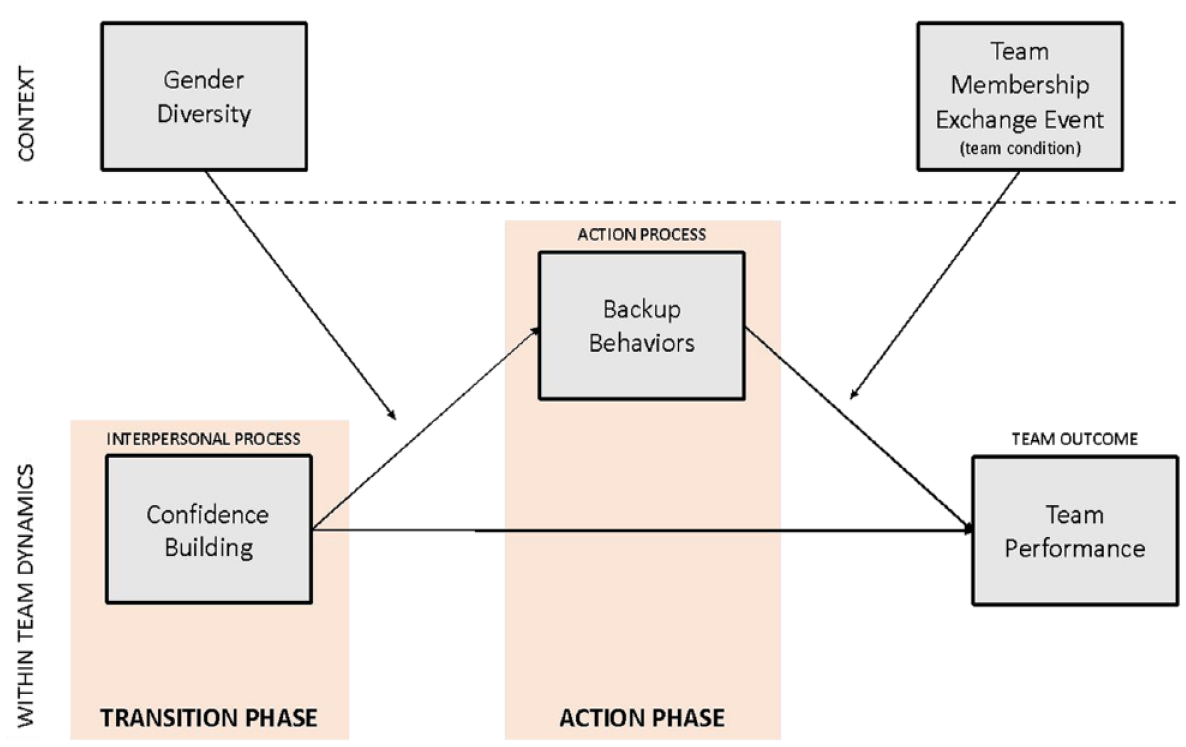
Hypothesized model.
Theoretical Background and Hypotheses
Team Processes Across Phases
Team processes can be defined as the team’s main interdependent activities that convert inputs into outcomes related to their collective goals (Marks et al., 2001). These processes can be categorized into two fundamental phases within the broader spectrum of a team’s lifespan: action and transition phases. More specifically, action phases are specific timeframes during which team members actively contribute toward the achievement of their goals, whereas the transition phases are periods characterized by the evaluation of past actions and strategic planning of future team endeavors (Marks et al., 2001). Naturally, what happens during the transition phase will have a direct impact on the action phase. Transition episodes serve as critical junctures for feedback and refinement of strategies (Mathieu & Button, 1992), thereby exerting a profound impact on goal attainment. Accordingly, researchers have increasingly delved into the intricate dynamics of how team processes interact over time. For instance, empirical investigations have demonstrated that planning is intricately linked to interpersonal processes, which, in turn, play a pivotal role in determining overall team effectiveness (Fisher, 2014). The interpersonal processes were measured as a composite variable comprising elements such as motivation, confidence building, conflict management, and affect management. In the context of transition phases, particularly when teams undergo membership changes, confidence building assumes particular significance. This, in conjunction with motivation, aligns with what Marks et al. (2001) defined as “generating and preserving a sense of collective confidence, motivation, and task-based cohesion with regard to mission accomplishment” (p. 363). It is noteworthy that many teams experiencing suboptimal performance or failure often exhibit lower levels of motivation (Diefendorff & Chandler, 2011; Hu & Liden, 2015) and a deficiency in fostering effective teamwork through feedback and the establishment of positive team norms (Chen & Kanfer, 2006; Humphrey et al., 2007). Research posits that team confidence plays a pivotal role in translating elevated levels of trust into optimal performance (Grossman & Feitosa, 2018). Relatedly, collective efficacy, or the belief that a team can get their task done, is positively related to team performance, through the engagement of backup behaviors (Porter et al., 2011; Tasa et al., 2011). Elevated confidence levels within a team facilitate information sharing and create an environment conducive to the manifestation of backup behaviors.
Consequently, when considering action processes, it becomes evident that backup behaviors play a significant role in team preparedness for disruptions, like changes in team membership. Backup behavior, which includes team monitoring processes, is defined as the assistance provided to team members in executing their tasks. This assistance can take various forms, including the provision of constructive feedback, active support in task execution, or even the completion of a task on behalf of a teammate (Dickinson & McIntyre, 1997; Marks et al., 2001). Successful execution of backup behaviors requires team members to be adaptable, resilient, and aware of their surroundings to identify shortcomings promptly. Because confidence building promotes these qualities, when team members feel comfortable and deeply engaged with one another (DeRue et al., 2010), they are more inclined to step in and provide support when necessary. Given the potential for team members to experience heightened stress and uncertainty during times of disruption (Dirks & Ferrin, 2001; Hogg & Gaffney, 2023), it becomes imperative to explore the shift from positive interpersonal processes during the transition phase to action phase processes. Through backup behaviors, catalyzed by robust confidence building, team members are more likely to exhibit monitoring and cooperation behaviors, aligning with the overarching objective of achieving the team’s goals. As team members begin to discern when their colleagues may require assistance (N. Li et al., 2015), this collective sense of confidence nurtured within the team becomes a driving force, fostering an environment conducive to enhanced teamwork and collaboration. Thus, we hypothesize that:
Hypothesis 1: Higher levels of confidence building during transition phases will lead to more backup behaviors during the action phase.
Backup Behaviors and Team Performance
Backup behaviors are commonly identified as key aspects in creating the conditions for high team performance (e.g., Marks & Panzer, 2004; Porter, 2005; Porter et al., 2003). These behaviors can refer to the team’s ability to recognize and anticipate the needs of team members and react in ways that will help each member to cover their responsibilities (i.e., shifting workload and helping to complete tasks when other members are struggling), and are, therefore, identified as one of the “Big Five” components in teamwork (Salas et al., 2005). While some researchers have suggested that excessive backup behaviors (Barnes et al., 2008), particularly as team members’ skills improve (Porter et al., 2010), may lead to reduced participation in subsequent task events, backup behaviors are generally considered a positive aspect of team dynamics. Backup behaviors facilitate team adaptation in high-pressure situations by aiding less proficient or challenged team members and redistributing the workload to accomplish a shared objective (Burke et al., 2006; N. Li et al., 2015; Salas et al., 2005). During action phases, this combination of positive team cognitive and behavioral processes exhibited through team backup behaviors can be particularly valuable for anticipating and swiftly intervening when a team member requires assistance. Accordingly, these behaviors help synchronize the team’s activities and allow the team to be more adaptable to change events (S. W. Kozlowski & Ilgen, 2006). Without backup behaviors, a team can fall to an error of a single teammate, lowering the performance of the whole team (Marks et al., 2001). Therefore, teams operating within ambiguous and complex situations often require backup behaviors to support members in meeting task demands. Thus, we hypothesize that:
Hypothesis 2: Higher levels of backup behaviors during the action phase will lead to better team performance.
Backup Behaviors as the Explanatory Mechanisms
Effectively motivating and nurturing team confidence is a pivotal factor in facilitating optimal team functioning. When team members experience low levels of confidence, it often leads to heightened anxiety concerning the team’s performance (Modaresnezhad et al., 2021). Consequently, team members may become less open, less comfortable, and less willing to engage in mutual learning experiences. This diminished willingness to learn and collaborate can result in the absence of effective team processes, such as backup behaviors (Marks et al., 2001; Salas et al., 2005), ultimately culminating in subpar team performance. Marks et al. (2001) highlight breakdowns in interpersonal processes (e.g., confidence building) can directly hinder team backup behaviors.
Interpersonal processes play a crucial role in shaping team attitudes that translate into the monitoring and cooperative behaviors necessary for achieving optimal performance. These processes empower team members to discern when their fellow teammates require assistance, thereby mitigating the risk of performance decline (N. Li et al., 2015). Failing to recognize such needs can indeed compromise the overall performance of the entire team (Marks et al., 2001). In line with this perspective, Janardhanan et al. (2020) have suggested that motivational factors can act as precursors to cognitive processes, which, in turn, exert a positive influence on performance. Therefore, the impact of confidence building on performance is likely mediated through the adoption of effective team processes (e.g., Nederveen Pieterse et al., 2011). For instance, backup behaviors have been shown to mediate the relationship between collective efficacy and team performance (Porter et al., 2011). Building on these arguments and the hypotheses previously outlined, we anticipate that action processes (e.g., backup behaviors) will mediate the relationship between the interpersonal process of confidence building and team performance. Consequently, we hypothesize that:
Hypothesis 3: Backup behaviors mediate the relationship between confidence building and team performance.
Moderating Role of Gender Diversity
Muddying the relationship between the interpersonal transition phase processes (i.e., confidence building) and action phase processes (i.e., backup behavior) is the composition of the team. Gender diversity, shown to enhance the relationship between team processes and outcomes (e.g., C. Lee & Farh, 2004; Ruiz-Jiménez et al., 2014), can also exert an influence on how confidence building unfolds into backup behavior within a team. Effective confidence building processes demonstrated during the transition phase are more likely to lead to effective action processes in gender diverse teams compared to less diverse ones. We expand on the idea of costly signal and competitive altruism theories, which suggest that team members of all genders tend to exhibit more helpful behavior when in a gender-balanced team as opposed to gender-dominant or homogeneous teams (H. W. Lee et al., 2018). When diverse team members align their efforts and forge strong connections among themselves and with the team identity, supported by team-focused behaviors like confidence building, it fosters a sense of optimal belonging (Davis et al., 2022). This optimal belonging promotes an environment where team members operate optimally together as a cohesive unit (e.g., Orme & Kehoe, 2020). In such an environment, team members experience a sense of belonging to a collective and feel valued for their unique and valuable identities. This simultaneously satisfies the psychological needs for affiliation and distinctiveness, leading to psychological fulfillment within the team (Brewer, 1991). Consequently, team members interact more cohesively, motivating one another and supporting the overall functioning of the team (Dávila & Jiménez García, 2012; Harrison et al., 1998). Thus, empowerment in gender diverse teams fosters an environment conducive to the swift translation of team confidence building into effective action processes, such as backup behaviors.
While some studies have indicated that cooperative team norms could significantly decline in the absence of a nurturing environment that promotes optimal belonging within gender diverse teams (Seong & Hong, 2013), effective management of such teams in inclusive environments has shown to reduce team conflict (Nishii, 2013) and enhance profitability and performance (Hoogendoorn et al., 2013). Previous research has also shown that high levels of gender diversity correlate with more constructive team processes and enhanced team cooperation (Kochan et al., 2003), ultimately improving team performance. In alignment with the idea that gender diverse teams have a more optimal sense of belonging, evidence shows that they are more likely to convert team efficacy into effectiveness (C. Lee & Farh, 2004), translate knowledge combination capability into innovative performance (Ruiz-Jiménez et al., 2014), and mitigate the impact of status conflict on team psychological safety (H. W. Lee et al., 2018). Building upon a substantial body of literature that advocates for the advantages of gender diverse teams (e.g., Chan et al., 2023; Y. Li et al., 2022; Nielsen et al., 2017), we posit that this context serves as a catalyst for important social processes. In contrast, in gender-dominant or homogenous groups, high levels of team confidence may lead to isolation of non-majority members due to reduced influencing power (e.g., Powell, 2018) or excessive cohesion, as suggested by groupthink research (e.g., Cox & Blake, 1991), rather than fostering effective action processes like backup behaviors. Thus, when gender diversity is high, the positive effects of interpersonal processes are more likely to materialize, resulting in a stronger relationship between confidence building and backup behaviors. Therefore, we argue that:
Hypothesis 4: Gender diversity will moderate the relationship between confidence building and backup behaviors such that confidence building will be more likely to result in backup behaviors when teams are gender-balanced (most diverse) rather than (a) homogeneous, or (b) gender-dominated.
Moderating Role of Novelty in Team Membership Change Events
Backup behaviors are integral to facilitating high team performance, but their effectiveness hinges on the supportive nature of the work environment. While these behaviors help to develop effective team processes within ambiguous and unstable situations that require greater team adaptability (Salas et al., 2005), the disruptive impact of team membership changes cannot be ignored. Membership changes, whether they involve additions, removals, or replacements of team members, either voluntarily or involuntarily, have the potential to disrupt team dynamics and undermine overall performance (Arrow & McGrath, 1995; Humphrey & Aime, 2014; Trainer et al., 2020). When teams lose members, the remaining members may no longer receive the support that was previously provided through established backup behaviors by those who have departed (Duimering & Robinson, 2007). This is particularly worrisome when the event is novel in nature because team members are not expecting such a departure.
Additionally, when teams face disruption to their composition and functioning, a sense of familiarity is lost, resulting in diminished outcomes such as cohesion (e.g., Gruenfeld et al., 1996; Levine & Moreland, 1994), and altered social integration, all of which affect team backup behaviors. Due to the inherent complexity and unpredictability of organizational and team environments, changes tend to occur suddenly and dynamically (Arrow & McGrath, 1995; Choi & Thompson, 2005; Thomas-Hunt & Phillips, 2003), forcing rapid membership changes (Sanchez-Manzanares et al., 2020). Ultimately, the novel team membership change events have a negative impact on team performance (van der Vegt et al., 2010).
Organizations operating in dynamic or uncertain environments can reduce the novelty in membership change events (Chandler et al., 2005) through advance notice of membership changes. When teams exhibit strong action processes related to backup behaviors such as active communication and role clarification, teams can effectively manage structural changes (Rao & Argote, 2006). Recognizing and strategically adapting to disruptions in group structures enables teams to successfully complete tasks (S. W. Kozlowski et al., 2009). Thus, backup behaviors thrive in stable, less novel change events (Duimering & Robinson, 2007; Huang et al., 2016), and should ease the translation of adaptive team backup behaviors into optimal performance. As such, we hypothesize that:
Hypothesis 5: The novelty of membership change event will moderate the relationship between action processes (i.e., backup behavior) and performance, such that action processes will be more likely to result in high performance when the novelty of the membership change event is low (i.e., the team is expecting a change) versus high (i.e., the change is unexpected).
Methods
Participants
A sample of 116 university students, organized into 29 four-member teams, participated in a laboratory study. Compensation for their participation included course credit or a $10 Amazon gift card. The participants had an average age of 21.50 years (SD = 2.87). According to self-reports, 72 participants identified as women, while 44 identified as men. In terms of racio-ethnic backgrounds, 30% identified as White/Caucasian, 16% as Black/African American, 25% as Asian, 20% as Hispanic/Latino, and 9% identified as another race. Furthermore, 91% were undergraduate students and 9% were graduate students.
Procedure
Participants were randomly assigned to four-person teams in one of two experimental conditions: the low novelty team membership change event or the high novelty team membership change event. The team’s primary task involved playing a video game called “Overcooked,” where team members assumed the roles of chefs working together in a kitchen-like setting. These roles included the preparation of different ingredients, cooking, serving, and dish washing. Each game level presented unique challenges, demanding efficient and effective teamwork to fulfill customer orders promptly. With the participants’ consent, all team interactions, both verbal and physical, were recorded on video during the gameplay and transition phases. An experimenter was present in the room to direct the team and record performance metrics.
First, each team engaged in a 30-minute of gameplay training session, during which participants received verbal instructions from the experimenter and played trial game levels. Teams alternated between action phases (i.e., playing the game together) and transition phases (i.e., strategizing, discussing performance, and building confidence in preparation for the next action phase). This training session included two action phases (action phase 1: two game levels, action phase 2: one game level) separated by a transition phase.
Before the first task action phase, teams in the low novelty condition were informed that they would lose a team member at some point during the task period. They then had a 5-minute transition phase to prepare for the actual task. Subsequently, participants played four rounds of the game, with transition phases inserted between rounds (action phase 3: two rounds, transition phase three; action phase 4: one round, transition phase 4; action phase 5: one round). After these initial four rounds, one participant from each team in both the low and high novelty conditions was removed from the game and debriefed immediately. Another 5-minute transition phase followed this experimental manipulation, after which participants completed the last three game levels. After gameplay concluded, all team members received a debriefing. The entire session, from the start to the final level, lasted approximately 2 hr (see Appendix A for the experimental timeline).
Measures
Performance
Our dependent variable of team performance was measured by the number of meal orders completed and delivered to customers during the first gameplay level after the experimental manipulation. It was important to gather the subsequent performance as that is the most likely to be impacted by the removal of the team member.
Gender Diversity
Gender diversity was categorized as homogenous when participants self-identified with the same gender, gender-dominant when three members were of one gender and one was the opposite gender, or gender-balanced when the team comprised an equal number of male and female members. These categories correspond to scores of 0, 0.37, and 0.5, respectively, when applying Blau’s (1977) diversity index. Although a commonly used index to calculate diversity (Solanas et al., 2012), it is less adequate for studies with smaller and fixed team sizes.
Behaviorally Anchored Rating Scale
We followed a systematic procedure to develop and apply a Behaviorally Anchored Rating Scale (BARS) for objective assessments of team processes (see Appendix B and Supplemental Materials for BARS scaling and instructions). BARS, a rating technique that relies on critical incidents and identifiable performance dimensions (Martin-Raugh et al., 2016), allows for accurate evaluations (Smith & Kendall, 1963). We first identified critical behaviors by observing pilot gameplay sessions. We then refined and defined these behaviors based on relevant literature. Using Salas et al.’s (2005) and Marks et al.’s (2001) definitions of various team processes and emergent states, we identified confidence building and the presence of backup behaviors and rated them using specific anchor descriptions of these team processes (Bergman et al., 2012) on a 5-point Likert scale, from poor = 1 to excellent = 5. These specific anchor descriptions provide clear and observable indicators.
To assess validity and reliability of our ratings, we enlisted Subject Matter Experts who validated the definitions and descriptions of the behaviors. Then, two raters who were unaware of the study’s hypotheses underwent comprehensive training. The raters collectively conducted BARS ratings, discussing and aligning their assessments with videos of pilot studies. Once at least 50% agreement was achieved, raters individually assessed each team’s action and transition phases. Phases and teams were randomized to reduce rater fatigue and bias. To address any discrepancies and enhance rating consistency, the raters held consensus meetings after evaluating every 10 teams where they discussed their assessments and resolved any disagreements to reach a final consensus rating for each coded phase. To quantify interrater reliability across all phases and constructs, we utilized Cohen’s Kappa statistic. The initial agreement across raters for confidence building was originally κ = 0.5 (indicating moderate agreement) while for backup behaviors it was κ = 0.4 (indicating fair agreement). In instances where discrepancies persisted, the coders convened consensus meetings to resolve any outstanding issues and ensure that a final agreement of 100% was achieved.
Confidence Building
To develop a confidence building BARS, we drew from Marks et al.’s (2001) definition of confidence building, which describes it as an interpersonal process that instills and maintains a high level of morale toward achieving the team goal and consideration of team members. We evaluated teams collectively on a scale of 1 (members saying negative remarks, showing a lack of interest) to 5 (members consistently encouraging others with motivational and confidence building remarks, paying attention, and helping others). The strength of confidence building behaviors during the transition phase before the first task action phase and the experimental manipulation (transition two) was included as the independent variable in our analyses.
Backup Behaviors
To evaluate backup behaviors within teams, we rely on Salas et al. (2005) definition: a member’s ability to recognize the needs of other team members and take over processes or roles accordingly. Team ratings range from 1 (team members must ask for help when they are struggling) to 5 (team members consistently and efficiently take over roles whenever needed). We averaged the strength of backup behaviors throughout the action phases before experimental manipulation (action phases 3, 4, and 5). The average score is included as a mediator in our analyses to investigate how backup behaviors mediate the impact of confidence building on team performance and how the experimental conditions influence this mediated effect.
Post-Hoc Power Analysis
Results of a post-hoc power analysis showed that, with the effect size for a model predicting backup behaviors (R2 = 0.59, Cohen’s f2 = 1.44) and for a model with five predictors (confidence building, gender diversity 1, gender diversity 2, confidence building × gender diversity 1, confidence building × gender diversity 2) predicting backup behavior, our sample size of N = 29 has a sufficient power of 0.99. Results of another post-hoc power analysis showed that, with the effect size of our final model predicting performance (R2 = .47, Cohen’s f2 = 0.89) that includes four predictors (confidence building, backup behavior, experimental condition, backup behavior × experimental condition), our final sample size of N = 29 also has a sufficient power of 0.97.
Results
To investigate the relationships between effective team processes and team performance in gender diverse teams (see Table 1 for variable means, standard deviations, and bivariate correlations), a multiple-moderated-mediation analysis was conducted using PROCESS in SPSS (Model 21; Hayes, 2018; see Table 2). Figure 2 provides an overview of our findings. Contrary to Hypothesis 1, confidence building alone did not significantly predict backup behaviors, B = 0.42, p = .067. However, supporting Hypothesis 2, results of our analysis showed a significant relationship between backup behaviors and performance, B = 36.72, p = .004. While there was no direct effect of confidence building on backup behaviors, our results pointed to an indirect effect of confidence building on performance through backup behaviors in highly gender diverse teams experiencing lower levels of novelty in the change event (B = 31.15, SE = 13.80, 95% CI [6.48, 56.72]). This finding underscores a conditionally mediated relationship, lending partial support to our Hypothesis 3.
Means, Standard Deviations, and Bivariate Correlations of Variable of Interest.
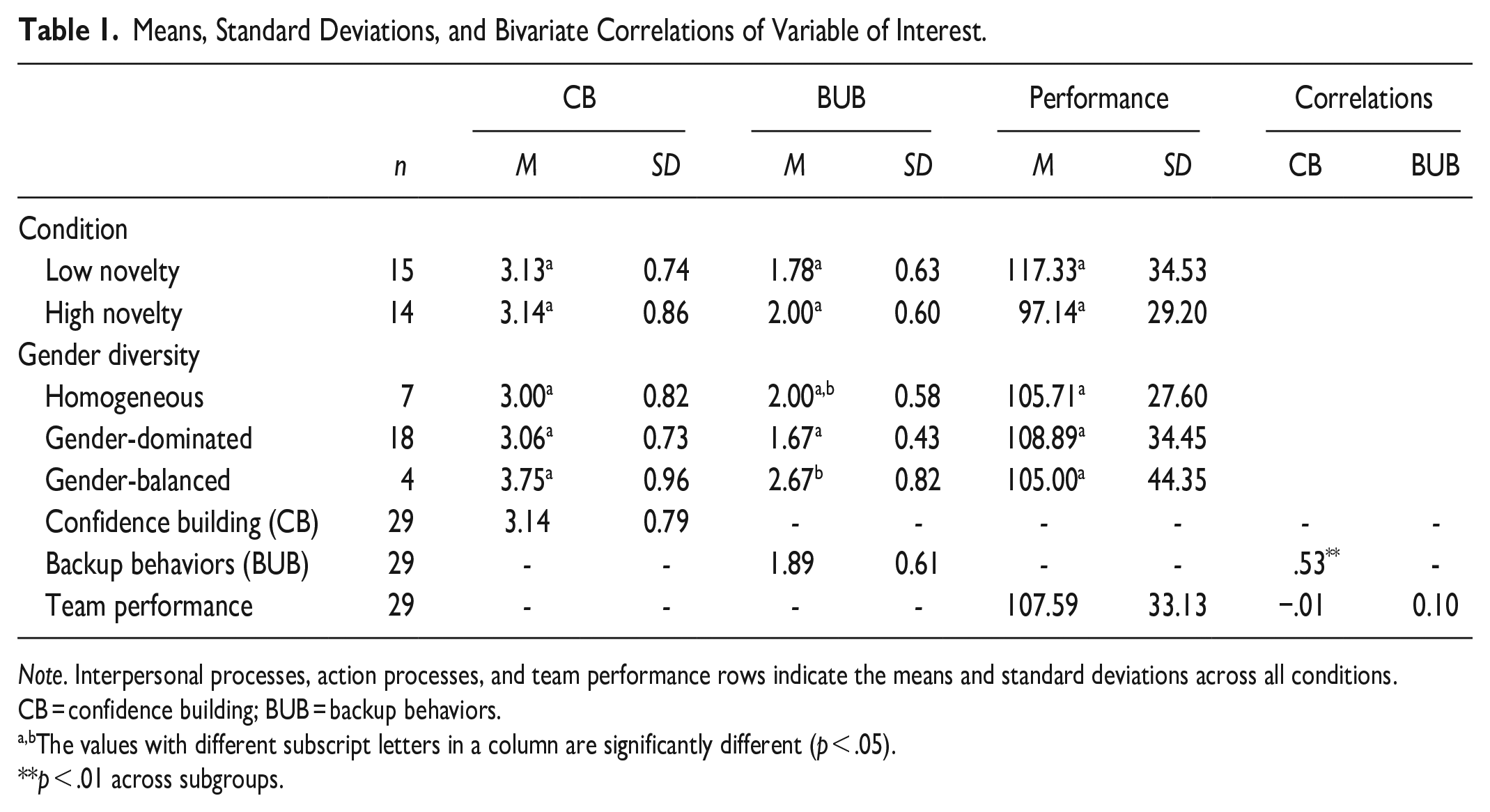
Note. Interpersonal processes, action processes, and team performance rows indicate the means and standard deviations across all conditions. CB = confidence building; BUB = backup behaviors.
The values with different subscript letters in a column are significantly different (p < .05).
p < .01 across subgroups.
Multiple-Moderated-Mediation Analysis Results.
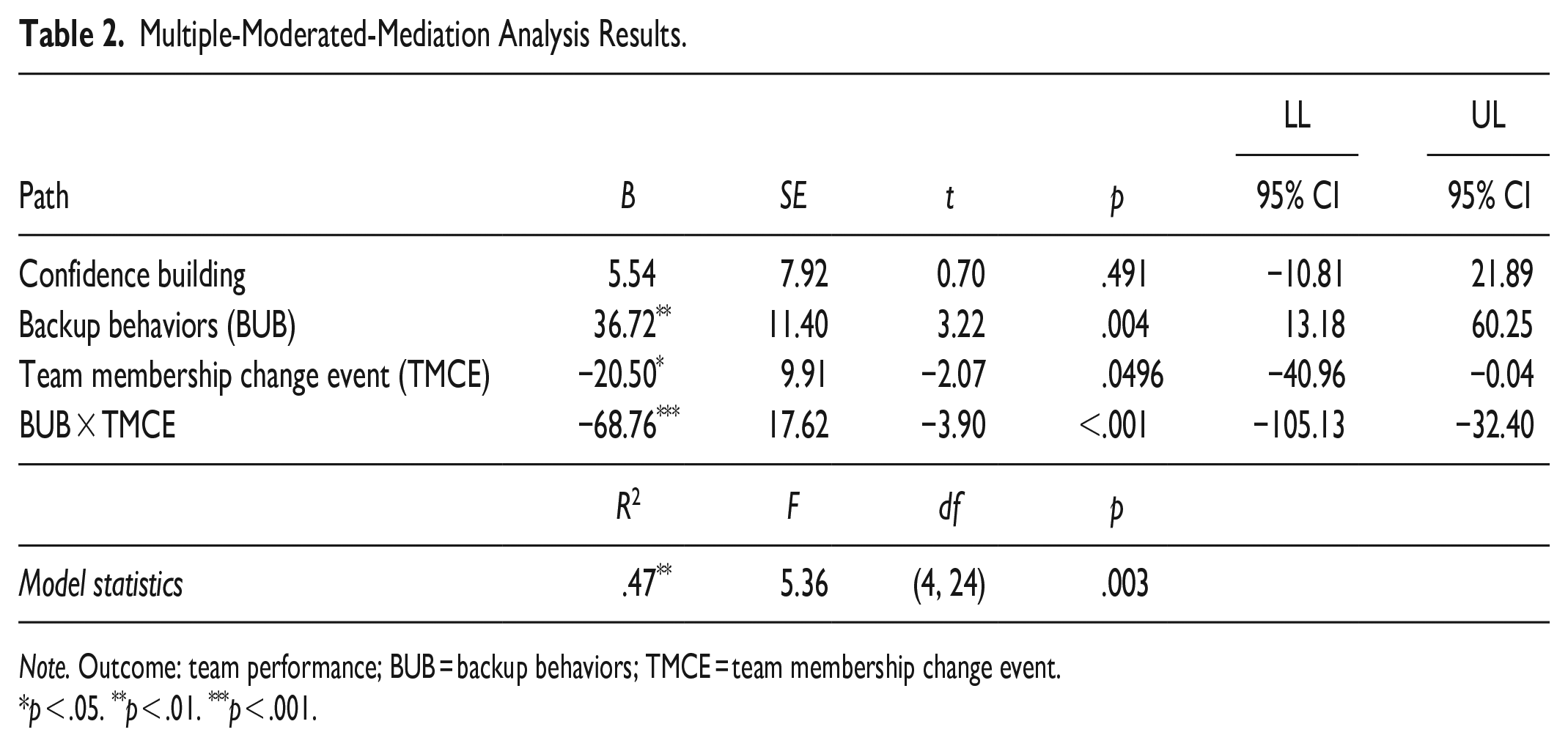
Note. Outcome: team performance; BUB = backup behaviors; TMCE = team membership change event.
p < .05. **p < .01. ***p < .001.
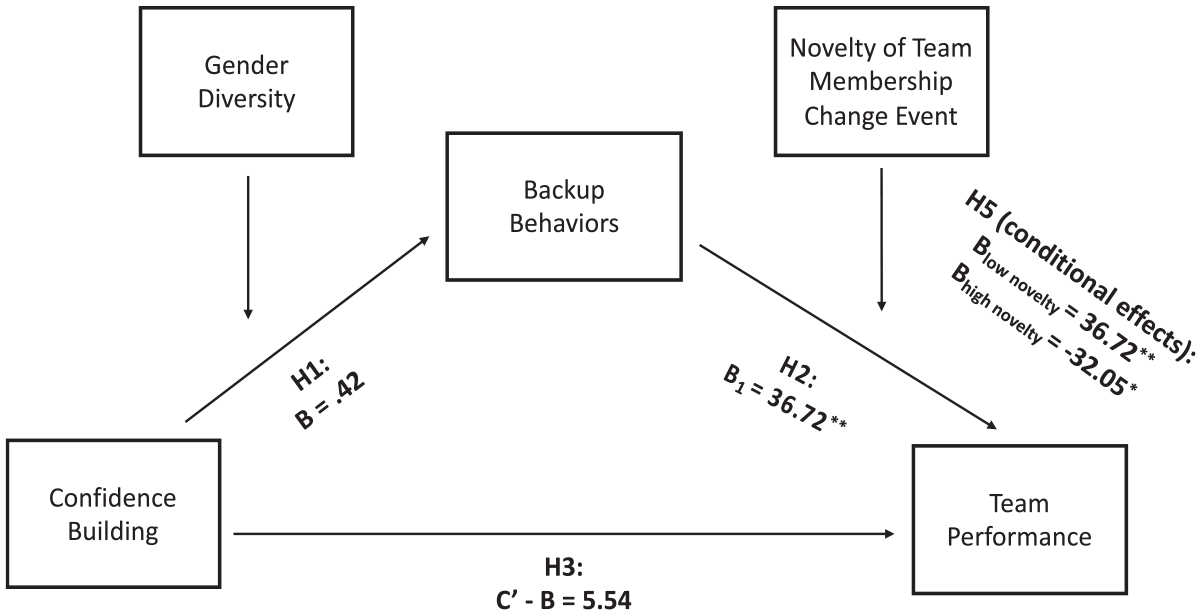
Study model and results demonstrating the multiple moderated-mediation model of the relationship between confidence building and team performance.
In terms of moderated mediation effects, Hypothesis 4 was not supported, given that the test of highest order unconditional interaction did not reach statistical significance, ∆R2 = 0.12, F(2, 23) = 3.17, p = .061. Nevertheless, when exploring conditional effects, we found that confidence building significantly impacts backup behaviors when gender diversity is high. Confidence building was positively related to backup behaviors for teams with equal gender composition (gender-balanced/high diversity; B = 0.85, p = .004). Conversely, there was no significant relationship between confidence building and backup behaviors for teams with no gender diversity (B = 0.42, p = .067) or gender-dominant teams (B = 0.11, p = .449; see Figure 3 for interaction plot and Table 3 for details). These results underscore the importance of confidence building for fostering backup behaviors in gender diverse teams.
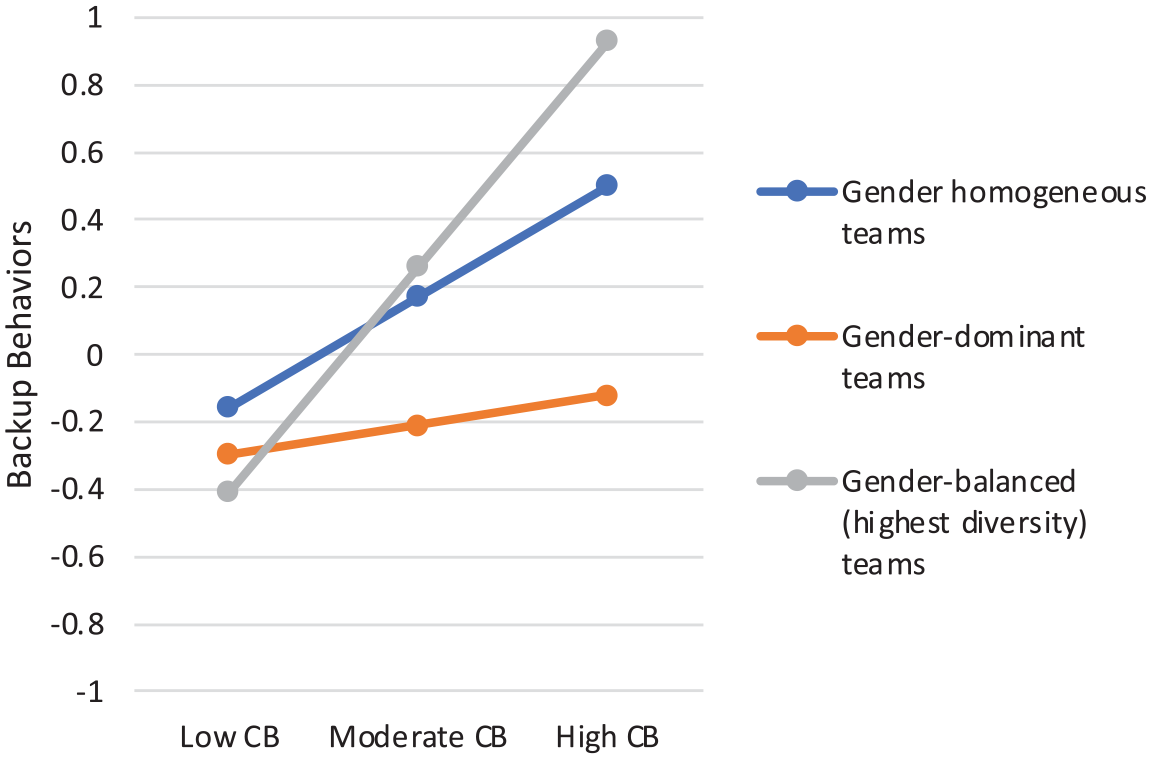
Backup behaviors at different levels of confidence building as a function of team gender diversity.
Conditional Effects of Confidence Building on Backup Behaviors at Each Level of Gender Diversity.
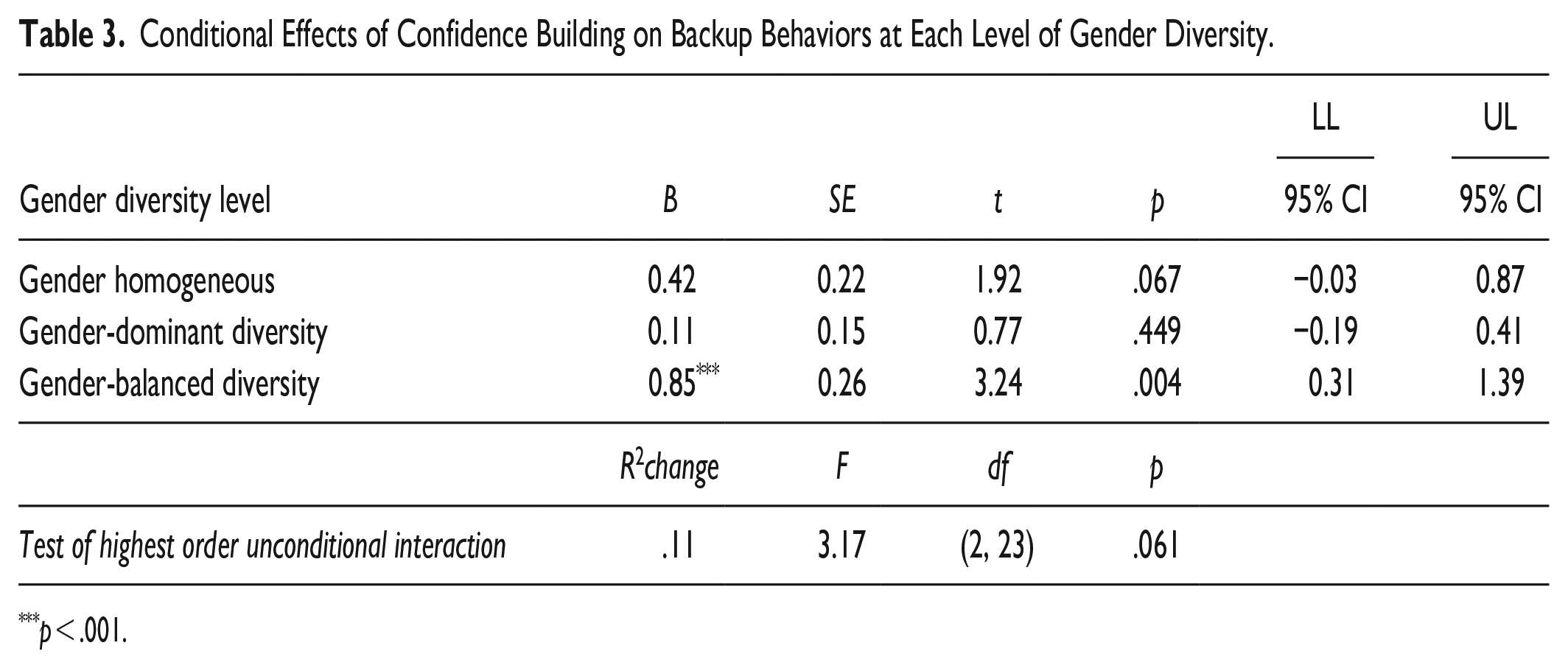
p < .001.
Moreover, the test of highest order unconditional interaction effect of novelty of team membership change events and backup behaviors on team performance was significant, ∆R2 = .34, F(1, 24) = 15.24, p < .001, supporting Hypothesis 5. Teams experiencing high novelty events performed more poorly compared to their counterparts encountering low novelty events (low to high novelty: B = −20.50, p = .049). Adding to this, for every unit increase in backup behaviors before the change event, teams grappling with high novelty exhibited an even more pronounced drop in performance (interaction term: B = −68.76, p < .001). Delving deeper into the conditional effects of backup behaviors on team performance, Figure 4 portrays the interaction graph for low (−1 SD), moderate, and high (+1 SD) backup behaviors under each change event condition (i.e., low vs. high novelty). As outlined in Table 4, teams in the low novelty condition displayed a significant positive relationship between backup behaviors and performance (B = 36.71, p = .004), while teams contending with high novelty demonstrated a significant negative relationship between these two variables (B = −32.05, p = .044).
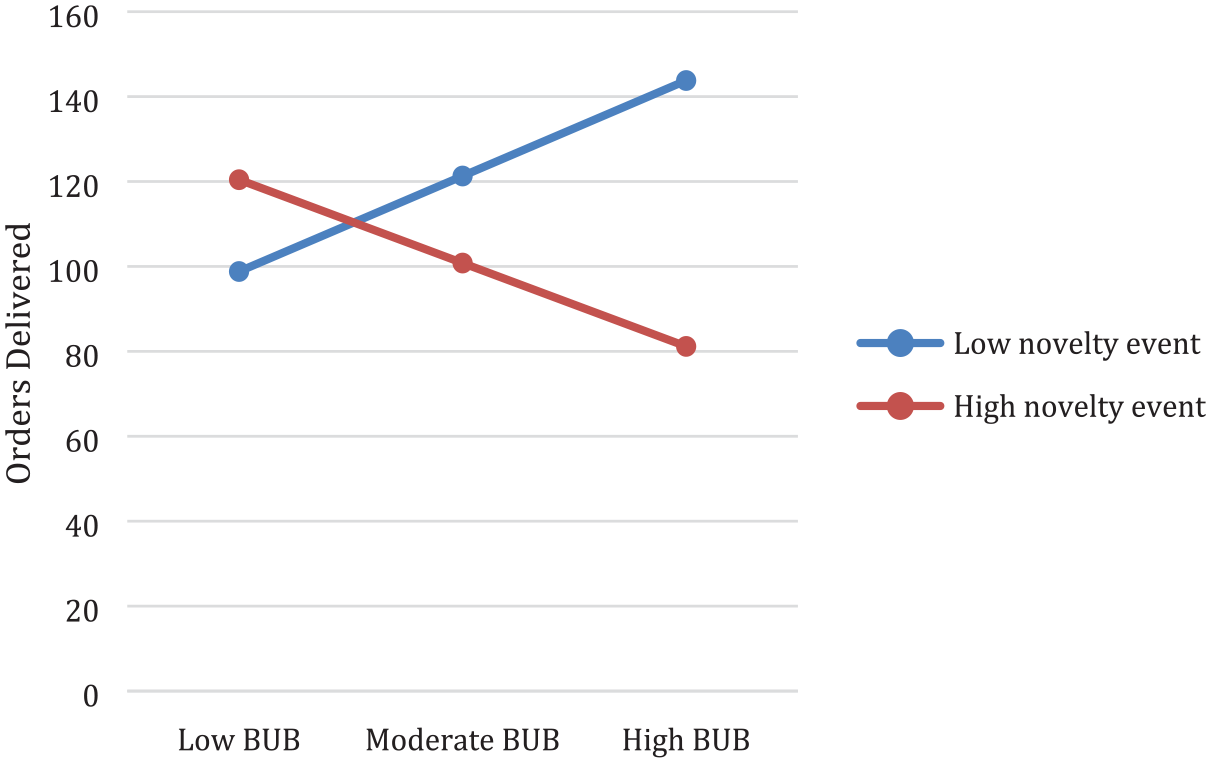
Performance at different levels of backup behaviors as a function of novelty in team membership change event.
Conditional Effects of Backup Behaviors on Team Performance at Each Novelty Level of Team Membership Change Event.

p < .05. **p < .01. ***p < .001.
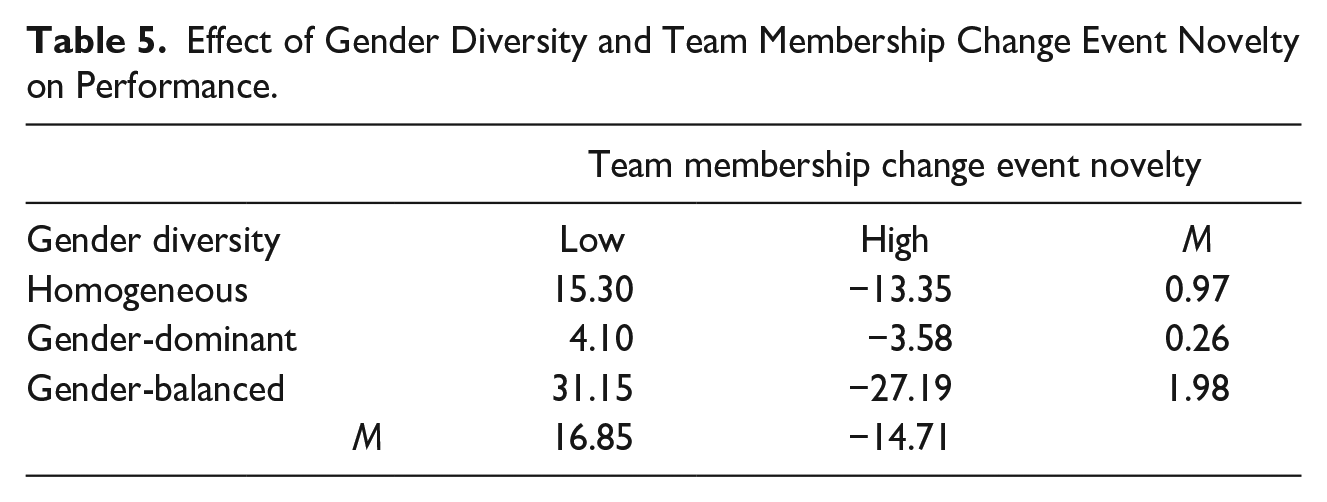
Lastly, our overarching multiple-moderated-mediation model showed substantial explanatory power in accounting for variance in performance, R2 = .69, F(4, 24) = 5.36, p = .003. To further understand the indirect effects of confidence building on performance through backup behaviors, we conducted a contrast analysis (see Table 5 for a summary). This analysis unveiled significant differences between the indirect effects of confidence building on performance through backup behaviors across various team configurations, including gender-balanced teams with low novelty of change events versus homogeneous teams with high novelty of change events (B = −13.35, SE = 11.90, 95% CI = [−35.91, 11.41]; Contrast = 44.51, SE = 17.65, 95% CI = [12.33, 78.85]), gender-dominant teams vs. low novelty (B = 4.10, SE = 5.35, 95% CI = [−4.99, 16.28]; Contrast = 27.05, SE = 12.77, 95% CI = [5.59, 53.86]), gender-dominant teams vs. high novelty (B = −3.58, SE = 4.41, 95% CI = [−12.33, 4.93]; Contrast = 34.74, SE = 14.31, 95% CI = [9.09, 62.00]), and gender-balanced teams vs. high novelty (B = −27.19, SE = 16.56, 95% CI = [−44.88, 16.35]; Contrast = −58.35, SE = 21.15, 95% CI = [−92.65, −12.12]). These results offer valuable insights into the multifaceted dynamics at play in shaping team performance in gender diverse settings.
Effect of Gender Diversity and Team Membership Change Event Novelty on Performance.
Discussion
This study makes significant contributions to the small group literature in three distinct ways. First and foremost, we delved into the relationships between crucial team processes, both individually and in conjunction with team diversity. Second, we shed light on the impact of backup behaviors on team performance, varying depending on the novelty of team membership change events. Lastly, we investigated the role of backup behaviors as underlying mechanisms in the interplay between confidence building and performance. Accordingly, we demonstrated that confidence building is linked to heightened levels of backup behaviors, ultimately bolstering team performance in gender balanced teams with lower novelty in the team membership change event. In essence, confidence building led to backup behaviors, which in turn led to higher team performance more so in gender diverse teams when under the reduced novelty of the team membership change condition, in contrast to gender diverse teams with high novelty events, gender-dominant teams facing low or high novelty events, and homogeneous teams exposed to high novelty. These results expand upon Trainer et al.’s (2020) Event Systems framework, offering a tangible example of how dynamic environments, characterized by the careful reduction of novelty during change events, can enhance team processes and subsequent performance.
However, contrary to our initial prediction that confidence building during transition phases would correlate with backup behaviors during the action phase across the board, this link was only significant under conditions of high gender diversity (i.e., gender-balanced) and low novelty. Consequently, we discerned that gender-balanced teams, when they boost team confidence, can effectively translate this into positive action processes, exemplified by backup behaviors. Yet, for homogeneous or less balanced teams, this relationship may manifest differently, warranting further investigation into the intricate ways in which interpersonal processes translate into positive action processes. These findings respond to pivotal calls from the diversity literature (e.g., Roberson, 2019), offering a more refined examination of team processes within the input-processes-output models of diversity and thereby advancing our understanding. Additionally, by developing BARS to code team processes during a team task, we have extended Marks et al.’s (2001) temporal framework, spotlighting the supportive mechanisms spanning from the transition to action phases preceding team membership change events.
Furthermore, our study offers additional evidence that backup behaviors play a pivotal role in shaping future performance. This finding aligns with the notion that these action processes are indeed beneficial (e.g., N. Li et al., 2015; Salas et al., 2005) rather than detrimental (e.g., Barnes et al., 2008; Porter et al., 2010) in the context of subsequent task events. However, we add to the discussion of contingencies of this relationship. The key contingency here was the novelty of the team membership change event, with teams exhibiting a negative link between backup behaviors and team performance in cases of sudden unexpected change (i.e., high novelty). This is consistent with the thinking that backup behaviors are more helpful when team dynamics are stable and novelty is reduced during change events (Duimering & Robinson, 2007; Huang et al., 2016). An increase in novelty within a team setting often introduces more unpredictability and confusion among team members, potentially rendering backup behaviors more disruptive than beneficial.
Finally, the overall model that includes backup behaviors as a mediator of the relationship between confidence building and performance, along with the moderating roles of gender diversity and novelty of membership events, yielded statistical significance. Both gender diversity and the novelty of events amplified the relationships between team processes and the outcome across the lifespan of these teams. Given the influx of compositional changes in current organizations (e.g., Mathieu et al., 2018), future research should pay more attention to contextual elements such as time, other forms of diversity, and novelty. Our findings contribute significantly to a deeper understanding of the essential social processes that support team members to carry out their main tasks amidst disruption and uncertainty. This study bridges the gap in knowledge regarding specific team processes throughout temporal phases leading up to a team member’s departure and elucidates the conditions under which these processes function most effectively.
Theoretical Contributions and Managerial Implications
This research provides several key contributions to the scientific literature on team development and adaptation. For instance, our study demonstrates using a BARS to code team processes uncovers nuanced insights into key relationships. This invaluable information aligns with the necessary knowledge to assess today’s organizations grappling with incessantly evolving demands. The use of BARS in our study enabled us to assess teams placed in situations that required adaptive capabilities, leading to findings that indicate backup behaviors can fortify resilience in the face of disruption. As the imperative to study resilient systems within organizations continues to grow (e.g., Glowinski et al., 2016), predominantly due to their capacity to anticipate and respond to diverse situations, our research adds to the existing knowledge of effective team adaptation processes, particularly in the face of new adaptive demands. We specifically highlight how adaptation occurs when the team is confronted with a novel team member change event involving the loss of a team member—whether with advanced notice or no notice.
Another theoretical contribution of this manuscript lies in unraveling the underlying mechanisms influencing the emergence of backup behaviors within teams. Prior research has documented that teams maintaining high performance levels often succeed when members exhibit motivating and confidence building behaviors (Marks et al., 2001). Effective communication, the conveyance of a positive view of their collective skills, and the provision of constructive feedback collectively foster a strong sense of social identity, commitment, and satisfaction among team members (Kirkman et al., 2002; Maruping & Agarwal, 2004). Conversely, teams struggling to create such a positive environment tend to experience adverse outcomes (Lindsley et al., 1995). Our findings demonstrate the significance of having equal representation in terms of gender diversity and how it molds the development of effective backup behaviors, which may be more challenging for teams lacking diversity. Overall, this research sheds light on the underlying mechanisms influencing team dynamics, offering insight into how teams can foster a positive and effective work environment.
Furthermore, our study provides a theoretical contribution by empirically demonstrating the disruptive influence that teams undergo when faced with uncertainty and the loss of resources. We expand upon the understanding of the novelty of membership change (Trainer et al., 2020), specifically when it entails the loss of individual skills during complex and stressful tasks, subsequently influencing team functioning and performance. Our model examines the overall impact on team functioning as teams grapple with dynamic factors that shape the loss of effectiveness and performance. This research offers a more comprehensive understanding of the challenges teams encounter while working effectively together and integrates with existing frameworks surrounding team membership changes, thereby advancing our comprehension of these change events.
Our results also reiterate that mere gender representation is insufficient to improve performance; instead, the most effective team performance is exhibited by gender-equal teams experiencing low novelty change events. Past studies (e.g., Hoogendoorn et al., 2013) have demonstrated that teams with a balanced gender composition tend to outperform traditionally male-dominated teams. This current study accentuates that gender diversity—wherein there is an equal number of men and women—coupled with confidence building and motivation, leads to the manifestation of backup behaviors and improved performance. These findings strengthen the case for companies to set their diversity targets not only to achieve gender representations but to strive for gender equality.
Moreover, our results also contribute to a new understanding of how the loss of a team member (e.g., team membership change event) can detrimentally impact team functioning and disrupt team processes, particularly the relationship between backup behaviors and high team performance. We found that for teams experiencing membership change events involving an unexpected loss of a member, high backup behaviors did not translate into high performance as they did for teams informed about the membership loss in advance. Possible explanations from existing literature include the loss of affective connections to removed team members that previously supported backup behaviors, resulting in ineffective behaviors that hinder team performance (Gruenfeld et al., 1996). Alternatively, when unexpected membership changes occur, backup behaviors may shift focus from enhancing or regaining performance to reestablishing synchronicity among team members (Levine & Choi, 2004).
Thus, it is important for teams and managers to prioritize the development of positive processes among team members in readiness for potential unexpected team composition changes. This proactive approach allows members to seamlessly step in to compensate for the lost contributions of another member. Additionally, preparing team members as early as possible for the potential loss of a team member ensures that backup behaviors can continue to be effective in achieving high performance. Even if the change event does not materialize, early preparation can avert the adverse outcomes associated with the unexpected departure of an individual. As organizations increasingly grapple with disruptive events, such as supply chain breakdowns, economic challenges, geopolitical conflicts, environmental disasters, and emerging technology (Freakley, 2023), this built-in adaptability will become a critical asset.
In our study, teams that experienced the low novelty membership change event performed better due to their heightened readiness to strategize and prepare for impending changes. These teams were well-prepared to support a team member in need, anticipating that a membership change event could occur at any moment. Consistent with other studies, this preparedness greatly enhanced their agility in navigating challenges (Fisher, 2014), whereas backup behaviors were not as strongly and positively related to performance when teams were unaware of any impending changes. Managers should therefore recognize the importance of transparency regarding potential changes, even when these changes are unfavorable, such as the departure of an employee. This transparency builds adaptability within teams and mitigates the negative effects of membership changes.
Limitations and Future Research
In the future, research endeavors must continue to emphasize the examination of gender diverse teams and their responses to disruptive events. The departure of women from the workforce at various points in their careers is not a novel occurrence. For instance, research has shown that roughly half of the women in their sample ceased working at some juncture in their professional lives (Cabrera, 2007). Some have tried to discern whether these departures emanate from individual choices or are driven by the organizational dynamics, with results supporting the latter (e.g., Lim & Rasdi, 2019). The COVID-19 pandemic exacerbated gender disparities within organizations (Sprechmann, 2020), causing women to abruptly exit teams and organizations in recent years (Gonzalez, 2022). Connecting to our findings, the way in which organizations communicate impending departures can be instrumental in preparing teams for such disruptions.
Nevertheless, our study is not without its limitations. While our results bring clarity to the relationship between interpersonal team processes and team performance within diverse teams, it specifically focused on examining gender diverse teams. Future research stands to gain by encompassing other forms of surface-level or demographic diversity (e.g., race, age, and physical disability). Similar to gender, diversity in terms of race, age, and physical disability triggers social categorization among team members due to their easily observable nature (Tajfel, 1981; Turner et al., 1987). With numerous organizations committing to diversifying their workforce by establishing racial diversity targets (Kalev & Dobbin, 2022), it becomes increasingly critical to evaluate the role of diversity in teams, specifically in the emergence of team processes (e.g., backup behaviors) and performance in subsequent research.
While our study sample displayed exceptional racial diversity, with 70% identifying as races other than White/Caucasian, the traditional categorization of women and men within our study omits crucial insights into the experiences of non-binary individuals. It is pertinent to underscore that our study participants had the opportunity to self-identify as non-binary or choose not to answer, yet our sample did not include any individuals who identified as such. While we were able to represent racially minoritized populations rarely accessed in research (Williamson et al., 2022), the restriction of gender diversity representativeness underscores the urgency of finding alternative methods to amplify the voices of the often-overlooked subgroup in research. Thus, continuing to be of utmost importance in small groups research is the pursuit of deeper insights into how disruptive changes affect gender diverse teams and gender equality, with a special emphasis on emcompassing nontraditional gender categories.
Another limitation within our study is its central focus on the novelty aspect of team member departures. To reiterate, the Event System Theoretical Framework proposed by Trainer et al. (2020) suggests that change events consist of various dimensions, including (1) novelty (new and/or unexpected changes to team processes), (2) disruption (requiring a team to change its ongoing team processes and adjust its norms and mental models), and (3) criticality (loss or gain of key resources, requiring a change in team goals and pursuits). Future studies could investigate the effects related to other facets of change events, such as disruption and criticality. Additionally, a closer look at the impact of change events at the individual and organization levels could be worthwhile, as our study exclusively focused on team-level analysis.
Further, we recognize the challenge of attaining a substantial sample size in team-based experimental research (Sadler et al., 2007). The intricacies of recruiting and coordinating participants for team studies entail complexities such as random assignment to balanced teams, aligning multiple participants’ schedules, and managing potential disruptions in team composition. Although our study included a total of 188 participants, the sample size was reduced to N = 29 at team level, which was the primary unit of analysis. While this reduction is substantial, it was executed to compound the effects of randomization when using teams as the unit of analysis (Sadler et al., 2007). Notably, our overall model explained a substantial portion of variance, with our model paths exhibiting strong coefficients. However, while our post-hoc power analysis yielded a reassuringly high statistical power (Power >0.97) to detect effects, it is prudent to acknowledge the potential for a type II error within our study. This potential arises from the relatively modest sample size, as emphasized in recent research findings (Serdar et al., 2021; Yang et al., 2023), which may account for some non-significant results observed in specific paths. In light of these findings, we call for future studies to replicate and validate our findings using larger samples.
Recognizing teams as dynamic systems undergoing transitions, action phases, and change events at various points in their life cycle, subsequent studies should explore the nature of team event changes and their influence on team outcomes. For example, future research would benefit from examining how arriving or departing team members impact established team processes and emergent states. Given the increasing prevalence of agile teams in the contemporary workforce, where critical change events have become the norm, applying the frameworks from this study to incorporate the arrival of new members and/or the departure of existing team members may provide additional insights into the understanding of team change events in diverse group settings. Hence, future research should go beyond examining unexpectedness and consider individual characteristics of the arriving or departing members, such as their personality and expertise, along with organizational-level characteristics of the embedding environment. The embedding environment can shape the resources, constraints, and opportunities available to a team, thereby influencing the team’s ability to adapt to change events and achieve its goals. Such insights on the real-world dynamics of membership changes in organizational settings can be leveraged to enhance our understanding of how teams can navigate changes and maintain effectiveness through adaptive strategies.
Focusing on the temporal aspects of a team’s journey through transition and action phases, as outlined by Marks et al. (2001), we explored the development of team processes in unstable teams as they navigate social and compositional disruptions. Our results underscore the importance of strategic planning in shaping team interpersonal processes and overall team effectiveness, a point in alignment with Fisher’s (2014) insights. Within this context, the regulatory processes within teams comprise elements such as (a) orientation and planning, (b) task execution, and (c) evaluation of actions (Konradt et al., 2015). These processes are the linchpin of social team dynamics, facilitating the adaptation required for teams to thrive amidst change. However, our study focused on the attitudinal influence and behavioral emergence within diverse teams. Future research can examine the influence of regulatory processes, such as strategy development and planning, on the emergence of team cognition, such as shared mental models (i.e., shared understanding of the information held by members of a team; Van Den Bossche et al., 2011) and transactive memory systems (i.e., collectively encoding, storing, and retrieving information within a group by combining mental models and exchanging information between team members; Jackson & Klobas, 2008). This can help shed light on how these cognitive constructs wield substantial influence over a team’s capacity to effectively adapt to dynamic and challenging change events.
Conclusion
This experimental study investigates the effects of team processes at transition and action phases on team performance while considering contextual elements such as gender diversity and novelty of team membership change events. Consistent with our hypotheses, our findings offer support for the overall model, encompassing backup behaviors as a mediator in the relationship between confidence building and performance, along with the moderating influences of gender diversity and the novelty of membership events. Specifically, high gender diversity and low novelty of events amplified the team processes and outcome relationships across the lifespan of these teams. These results indicate that focusing on the development of interpersonal processes during transition phases in gender-balanced teams will shape supportive action processes, which in turn will enhance team performance. Furthermore, the novelty of the team membership change event influenced the extent to which team functioning affects performance. More specifically, backup behaviors were positively related to team performance under the low novelty type of event, while the opposite was true in the high novelty event. In sum, our study not only yields valuable insights for the effective management of teams and small groups but also charts an exciting course for future research endeavors. We anticipate that further exploration, encompassing crucial contextual elements such as time, diversity, and novelty, will contribute significantly to our comprehension of team dynamics, enhancing our ability to navigate the intricacies of team performance amidst fluid contexts.
Supplemental Material
sj-docx-1-sgr-10.1177_10464964231209924 – Supplemental material for Team Membership Change Events: Processes That Support Gender Diverse Teams
Supplemental material, sj-docx-1-sgr-10.1177_10464964231209924 for Team Membership Change Events: Processes That Support Gender Diverse Teams by Jennifer Feitosa, Alicia S. Davis, Reggie Romain and Fabrice Delice in Small Group Research
Footnotes
Appendix A. Experimental Timeline
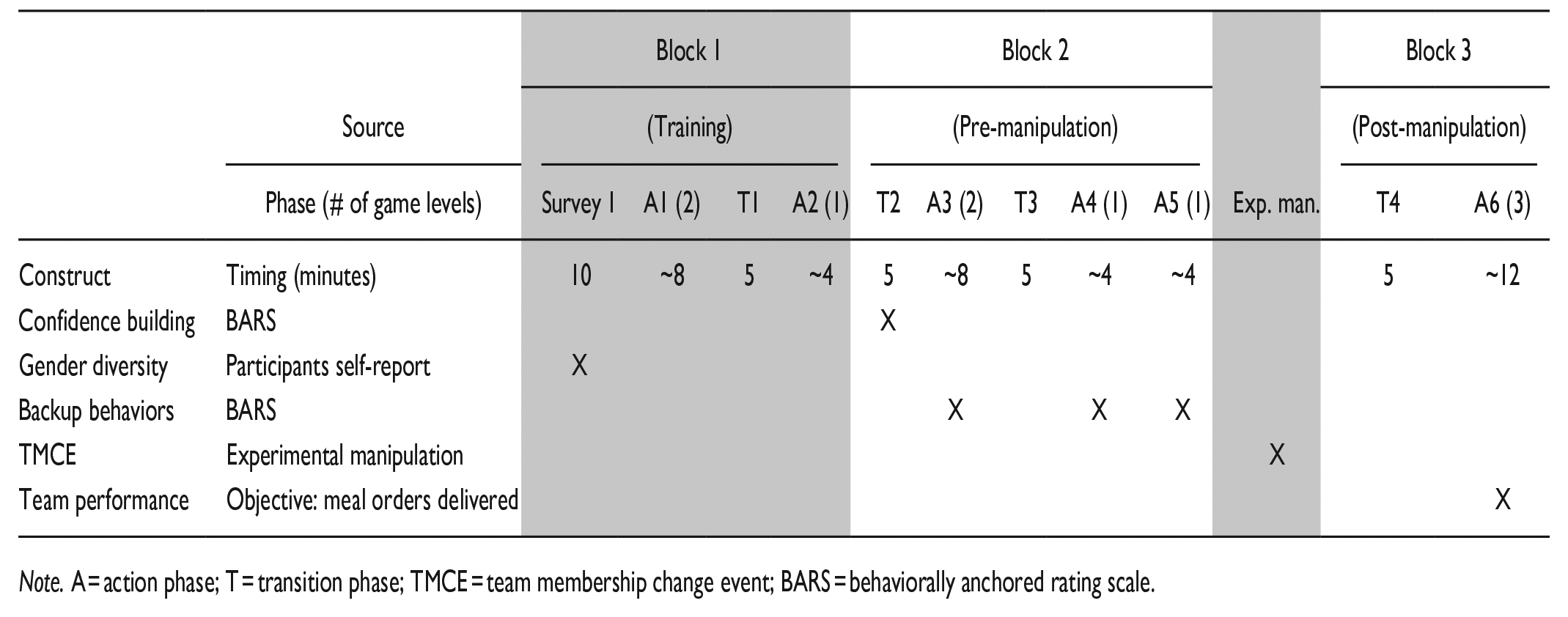
| Source | Block 1 | Block 2 | Exp. man. | Block 3 | |||||||||
|---|---|---|---|---|---|---|---|---|---|---|---|---|---|
| (Training) | (Pre-manipulation) | (Post-manipulation) | |||||||||||
| Phase (# of game levels) | Survey 1 | A1 (2) | T1 | A2 (1) | T2 | A3 (2) | T3 | A4 (1) | A5 (1) | T4 | A6 (3) | ||
| Construct | Timing (minutes) | 10 | ~8 | 5 | ~4 | 5 | ~8 | 5 | ~4 | ~4 | 5 | ~12 | |
| Confidence building | BARS | X | |||||||||||
| Gender diversity | Participants self-report | X | |||||||||||
| Backup behaviors | BARS | X | X | X | |||||||||
| TMCE | Experimental manipulation | X | |||||||||||
| Team performance | Objective: meal orders delivered | X | |||||||||||
Note. A = action phase; T = transition phase; TMCE = team membership change event; BARS = behaviorally anchored rating scale.
Appendix B: Behaviorally-Anchored Rating Scale Categories and Instructions for Coding
Acknowledgements
The authors would like to thank Lilian Rangel and Leyna Hong for their assistance with the behavioral coding of the measures.
Declaration of Conflicting Interests
The author(s) declared no potential conflicts of interest with respect to the research, authorship, and/or publication of this article.
Funding
The author(s) received no financial support for the research, authorship, and/or publication of this article.

Supplemental Material
Supplemental material for this article is available online.
Author Biographies
References
Supplementary Material
Please find the following supplemental material available below.
For Open Access articles published under a Creative Commons License, all supplemental material carries the same license as the article it is associated with.
For non-Open Access articles published, all supplemental material carries a non-exclusive license, and permission requests for re-use of supplemental material or any part of supplemental material shall be sent directly to the copyright owner as specified in the copyright notice associated with the article.
