



Abstract
This study combined the dual perspectives of team interaction and decision-making stages. Based on 22,654 behavioral units from 20 four-person teams, we developed a team decision-making process model encompassing goal-driven patterns, information sharing, knowledge integration, and decision-making transition. Additionally, we found that high-performance teams engage more in exploratory discussions, timely summarization, and conflict coordination mechanisms, compared to low-performance teams. We summarize the specific interactions that are beneficial and harmful to decision-making performance. This study supplements previous research on team interaction during the decision-making stage and expands the nuanced understanding of how team interactions affect decision-making performance.
Keywords
Team decision-making is regarded as a rational communication process in which members finish the generation and implementation of decisions through information exchange, discussion, and integration of opinions (Breugst et al., 2018). Effective team decision-making requires members to be independent but interactive. Previous research has provided evidence of behavioral sequences in team decision-making processes (e.g., Kolbe et al., 2014; Lehmann-Willenbrock & Allen, 2014; Lehmann-Willenbrock & Chiu, 2018). However, these studies have focused on micro-level behaviors and time sequences, ignoring the stage nature and global interaction structure of team decision-making processes. The global structure of team decision-making is reflected in stage-based communication (Sohrab et al., 2022). Based on previous definitions (Gouran & Hirokawa, 1996; Zhu et al., 2021), team decision-making is a multi-objective and multi-stage collaboration process characterized by high information and evaluation demands, opaque structures, and the conflictual nature of human group decision-making. Each stage in the decision-making process can be defined as a coherent period of interaction (Sohrab et al., 2022), characterized by a series of dominant team interactions. Therefore, it is necessary to consider the stage nature of team decision-making and clarify the development and characteristics of team interaction in the decision-making process.
Driven by team goals, team interaction is a series of routine verbal or non-verbal micro-behaviors that occur when team members engage in coordination and communication (Stachowski et al., 2009). Team interaction in decision-making processes has been explored in contexts such as team coordination, communication mechanisms, and information sharing (e.g., Hoogeboom & Wilderom, 2020; Kolbe et al., 2014; Schecter et al., 2018). However, most of these studies favor task-related processes, often ignoring relationship-related interactions and how they are intertwined with task processes (van der Meer et al., 2022). As Keyton and Beck (2009) argued, team interactions can only be fully interpreted by combining both task and relationship behaviors. Therefore, unlike previous studies that focused primarily on task interactions, our study uniformly considers task and relationship interactions and the links between them.
Team interaction is closely related to team decision-making performance (Zhang et al., 2021). The functional theory of group decision-making suggests that differences in decision outcomes often depend on the interaction or communication process among team members (Gouran & Hirokawa, 1996; Orlitzky & Hirokawa, 2001). Although previous studies have greatly promoted the understanding of factors that affect team decision-making performance (Few & Joshi, 2013; Lin et al., 2019), most of them rely on the static characteristics of team members or overall measures of team interactions. Additional empirical evidence is still needed on how teams make decisions through actual behaviors and behavioral sequences, and how those behaviors affect decision-making performance.
This study contributes to the understanding of team interactions in the decision-making process in three ways. First, we consider the stage nature and construct a team decision-making process model that advances the understanding of the structure and characteristics of team interactions during the decision-making process. Second, unlike previous studies that focused primarily on task interaction, this study uniformly considers task and relationship interactions, supplementing research on behavioral sequences in team decision-making processes (e.g., Lehmann-Willenbrock et al., 2017; van der Meer et al., 2022). Meanwhile, this study investigates differences in behavioral sequences between high- and low-performance teams, which reveals why some teams are more effective than others. Third, we empirically examine how various team interaction factors jointly affect decision-making performance, extending team decision-making research. Although most previous studies have shown that problem-oriented behaviors promote team performance (Hoch & Schkade, 1996; Meyer et al., 2016), we find that problem-oriented behaviors in team interaction negatively affect decision-making performance in the face of complex decision tasks. This also reveals some differences from previous research on how team interactions affect team performance.
Theoretical Background and Hypotheses Development
Team Decision-making Interaction
The definition of team interaction varies based on perspectives and research questions (Poole et al., 2004). Relevant research has explored from the perspectives of task and relationship (see Table 1). Bales (1950), a social relations scientist, first proposed the concept of social interaction processes in groups, suggesting that social interaction processes are mainly composed of members’ social-emotional behaviors and group task behaviors. Subsequently, scholars began to focus on the study of team interaction processes. Cohen and Bailey (1997) pointed out that team interaction is the connection that occurs among team members and between members and the external environment. Kuhn and Poole (2000) emphasized the central role of team interaction from a conflict perspective and suggested that it is a set of observable behavioral patterns used to solve problems. According to Marks et al. (2001), team interaction refers to the process in which team members interact and support each other through cognition, language, and action oriented toward achieving the organizational tasks and transforming inputs into outputs to achieve the overall team goals.
Relevant Research on Team Processes.
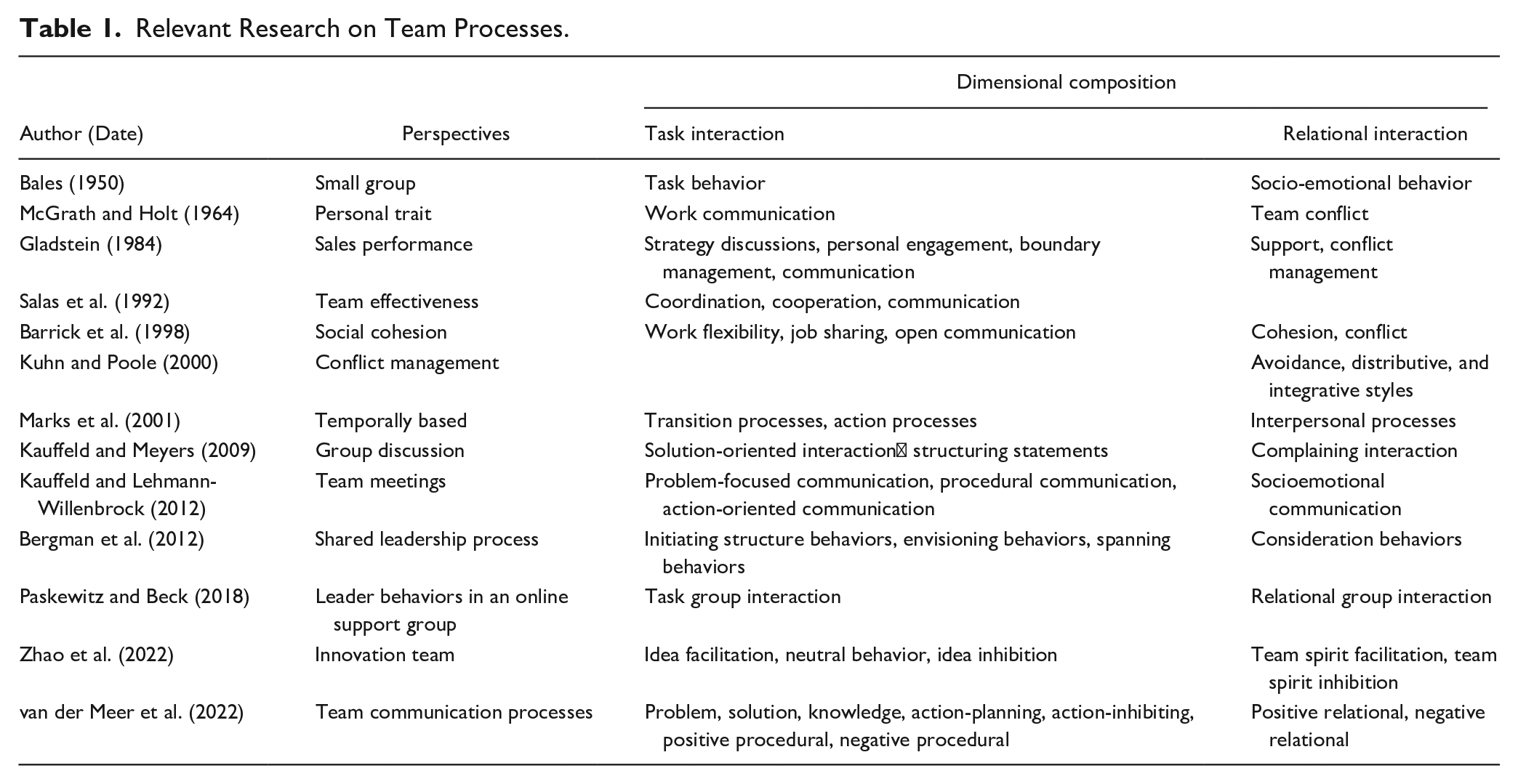
Most definitions of team interaction are relatively general (Marks et al., 2001) and few specific definitions focus on the context and characteristics of team decision-making. Meanwhile, previous research mostly treats team processes as a holistic concept (Marks et al., 2001), overlooking the multi-issue and multi-stage process of team decision-making. The functional theory of group decision-making suggests that effective teams rely on member interaction to fulfill several key task requirements of decision-making, including problem analysis, establishing criteria, generating alternatives, and summarizing and evaluating the positive or negative impacts of alternatives (Gouran & Hirokawa, 1996; S.-C. S. Li, 2007; Orlitzky & Hirokawa, 2001). Therefore, team decision-making is the product of members’ information, knowledge, and viewpoints colliding with each other (Zhang et al., 2021). Team decision-making interaction is the sum of various cognitive, multi-level micro-behaviors that members engage in during the different decision-making stages of jointly achieving decision goals and problem-solving. Members need to finish task interactions, such as establishing decision frameworks, problem analysis, knowledge integration, summarizing, and making decisions. They also need to complete relationship interactions involving mutual support, conflict, or other obstacles during the decision-making process. The team decision-making interaction pattern is defined as a set of observable decision-making interaction behaviors that occur in a specific sequence over time, forming a continuous series of behavioral events (Hoogeboom & Wilderom, 2020; Pilny et al., 2016).
The functional theory of group decision-making suggests that the complexity and importance of team decision-making often determine the need for high information and knowledge interactions among team members, as well as the need for integration and evaluation (Gouran & Hirokawa, 1996; Orlitzky & Hirokawa, 2001). At the same time, the ambiguity and timeliness of decision-making directions require teams to have process-planning instruction (Kolbe et al., 2011). The nature of human interaction also involves positive interpersonal interactions and obstructive conflict processes (Kuhn & Poole, 2000; Paskewitz & Beck, 2018). Based on group decision-making theory and processes, Kolbe et al. (2011) proposed that general team decision-making interactions should contain instructive, structural, problem-oriented, and content-oriented behaviors. These task interaction dimensions coordinate team decision-making and have been tested in practice (Kolbe et al., 2014). In addition to task interactions, team decision-making interactions should also include interpersonal interactions such as supportive and obstructive behaviors (Keyton & Beck, 2009). Therefore, this study classified team decision-making interactions into six dimensions: instructive behaviors, structural behaviors, problem-oriented behaviors, content-oriented behaviors, supportive behaviors, and obstructive behaviors.
Team Decision-making Interaction and Decision-making Performance
Instructive Behavior and Decision-making Performance
Instructive behavior (IB) mainly includes conveying clear instructions, task assignments, process control, and reminding other members during the team decision-making process (Kolbe et al., 2011). In terms of the division of labor, instructive behavior helps team members clarify their roles and expectations (Kolbe et al., 2014). With clearly assigned tasks and defined roles, team members can concentrate on specific tasks and fully utilize their abilities and expertise, thereby improving the quality of decision-making (Rico et al., 2012). Meanwhile, the division of labor facilitates the efficiency and coordination of team decision-making by reducing repetitive work and process ambiguity (Porck & van Knippenberg, 2023). In the team decision-making process, temporal control, process planning, and timely reminders are beneficial for improving team performance (Larson et al., 2020; Siddiquei et al., 2022). Process control helps the team carry out phase planning, temporal control, and information flow around the decision-making goal. Consequently, the decision-making process is assured to be directed, and efficiency and accuracy are improved (Larson et al., 2020). Members’ mutual instructions help the team evaluate problems more comprehensively. For example, the team can generate a list of priorities to lessen their cognitive load so that a high quality of decision-making can be achieved (Kolbe et al., 2014). Therefore, this study proposes the following hypothesis:
H1: Instructive behavior has a positive effect on decision-making performance.
Structural Behavior and Decision-making Performance
Structural behaviors (SB) are systematic behaviors that exist in team decision-making processes, involving summarizing, repeating, deciding, and other routine behaviors (Kolbe et al., 2011). Previous research has demonstrated that the task structure in team processes can improve team performance (Mesmer-Magnus & DeChurch, 2009). A team that excels at summarizing usually reviews the decision-making process and learns from experience (Ellis & Davidi, 2005). This allows teams to update strategies promptly, leading to better decision-making choices. In this process, members exchange views with each other and share knowledge and experience. The generation of ideas in such a collaborative learning environment encourages the team to create new ideas to solve problems (Galeazzo & Furlan, 2019; Zhao et al., 2022), which benefits the team’s decision-making performance. Repeating another member’s words during team discussions may be an endorsement or emphasis of others’ ideas. Members become more engaged and willing to take action when they feel that their opinions are respected by others (Ferguson et al., 2024). This response stimulates more effective knowledge sharing and communication (Gibson et al., 2011), and lays a solid foundation for the quality of decision-making. In addition, repeating is a manifestation of being trapped in thought. Team members can develop their insights by assessing and building on the ideas of others. Expressing ideas through repetition is an incremental process that can improve the efficiency of decision-making (Lin et al., 2019). Finally, the objective of decision-making is accomplished by breaking down the problem into sub-problems and resolving each one separately. The realization of these processes will ultimately facilitate the team’s decision-making performance (Zhu et al., 2021). Therefore, this study proposes the following hypothesis:
H2: Structural behavior has a positive effect on decision-making performance.
Problem-oriented Behavior and Decision-making Performance
Problem-oriented behavior (POB) involves requesting to obtain decision-making information, knowledge, opinions, or explanations (Kolbe et al., 2011). Typically, asking questions is viewed as a method of obtaining information and resources, which promotes the interaction process and positively affects performance (Kauffeld & Lehmann-Willenbrock, 2012; Meyer et al., 2016). Problem-oriented behavior can help teams gather necessary information, clarify their thoughts, and reduce biases, thereby improving the quality of team decision-making. Requesting information motivates team members to share their knowledge and experiences, expanding the information pool and enabling the team to consider the problem from multiple perspectives, increasing the comprehensiveness of decision-making (Hoch & Schkade, 1996). By revealing hidden information biases and engaging in exchanges from multiple perspectives, it helps to examine and correct potential cognitive biases among team members (Langfred & Moye, 2004). Further, seeking opinions stimulates intellectual collisions and discussions among team members, promoting the exchange and integration of diverse knowledge and viewpoints (X. M. Li et al., 2021). Through active listening, debating, and negotiating with each other, team members can find the best solutions, enhancing the creativity, and feasibility of decision-making (van Knippenberg, 2017). Seeking the opinions or viewpoints of team members on a decision-making issue also helps to avoid the trap of groupthink, encouraging independent thinking and the presentation of challenging viewpoints (Jaeger, 2020). This helps prevent team members from blindly following mainstream opinions, thereby reducing the risks and errors in decision-making. Moreover, in the team decision-making process, when there is confusion regarding others’ opinions or viewpoints, seeking direct clarification can promptly avoid misunderstandings and eliminate communication barriers (Gerpott et al., 2019). This can facilitate efficient decision-making among team members, enhancing team members’ decision acceptance and satisfaction. Therefore, this study proposes the following hypothesis:
H3: Problem-oriented behavior has a positive effect on decision-making performance.
Content-oriented Behavior and Decision-making Performance
Content-oriented behavior (COB) requires members to provide each other with useful information or necessary evaluation, as well as clarify and explain their viewpoints (Kolbe et al., 2011). The provision of different types of information is essential for the quality of decisions. As the information available for judgment increases, errors, and uncertainties decrease accordingly (Bartelt & Dennis, 2024). Through the accumulation of content-oriented behaviors, a wealth of information can be gathered within the team. In this way, members are more likely to be motivated to propose new ideas (Huang & Liu, 2022). On the contrary, subjective decision-making or decision-making bias is more likely to happen in a team without in-depth communication because of information asymmetry among members (Sohrab et al., 2022). Moreover, it has been shown that the performance of decision-making is positively impacted by team heterogeneity (Zhang et al., 2021). When team members come from different fields, their experiences and expertise provide the team with more comprehensive information for decision-making (C.-R. Li et al., 2016). Specifically, members put forward views from various perspectives throughout the discussion until a decision-making consensus is reached. Through this process, the content of the discussion can be deepened, as well as the cooperative relationship among members (C.-R. Li et al., 2016; Lin et al., 2019). In addition, misunderstandings or ambiguities inevitably arise during team decision-making interactions (Sinha et al., 2016) and can lead to team conflicts or deviations from team goals (de Wit et al., 2013). Explanation is a useful means of communication in situations of information asymmetry or ambiguity. Through clarification and interpretation, it helps the team reach a consensus, thereby promoting the effectiveness of decision-making (Kilcullen et al., 2023). Therefore, this study proposes the following hypothesis:
H4: Content-oriented behavior has a positive effect on decision-making performance.
Supportive Behavior and Decision-making Performance
Supportive behavior (SUB) demonstrates recognition and respect for the opinions and contributions of other members and relieves tension and conflict in the team (Kauffeld & Lehmann-Willenbrock, 2012). Positive interpersonal interaction promotes effective teamwork and healthy working relationships (Killumets et al., 2015), contributing to the creation of a collaborative and trusting environment (Paskewitz & Beck, 2018). In such a relaxed environment, team members are more willing to actively share information or express opinions, which promotes the flow of knowledge (Lehmann-Willenbrock et al., 2011). At the same time, the inclusive atmosphere inspires members to express themselves more freely and to think critically (Pillay et al., 2020). After voicing thoughts, they may receive positive feedback from others such as approval and praise, which also fosters the growth of self-confidence and enthusiasm for participation (Zhu et al., 2021). As an approach to showcasing abilities, positive supportive interaction behaviors have also been found to stimulate cognitive flexibility and creative thinking (Ashby et al., 1999). Positive interpersonal interactions have also been found to prevent negative emotions such as blame and complaints (Kauffeld & Meyers, 2009). To sum up, supportive behavior can create a relaxed and harmonious environment for team communication, which can lead to deeper and broader decision-making, ensuring the quality of the final decision. Therefore, this study proposes the following hypothesis:
H5: Supportive behavior has a positive effect on decision-making performance.
Obstructive Behavior and Decision-making Performance
Obstructive behavior (OBB) refers to behaviors that demonstrate relationship conflict, such as interrupting, complaining, or refusing to talk (Kauffeld & Lehmann-Willenbrock, 2012). During team decision-making, relationship conflicts harm team performance (De Dreu & Weingart, 2003; de Wit et al., 2013). From the perspective of the team, information exchange and expression of opinions will be blocked if team members constantly interrupt others’ speeches or bring up irrelevant topics (Nifadkar & Bauer, 2016). Negative emotions can easily spread and propagate in the team, affecting the atmosphere of teamwork (Kauffeld & Meyers, 2009). From the perspective of individuals, team members may feel neglected and disrespected when their teammates explicitly or implicitly refuse to talk or interrupt their expressions (Jehn, 1995). At the same time, negative feelings such as complaints and blame will destroy trust among members and weaken mutual understanding and support, which is not beneficial to the team’s decision-making success (de Wit et al., 2012). Therefore, this study proposes the following hypothesis:
H6: Obstructive behavior has a negative effect on decision-making performance.
Methods
Participants
This study carried out a simulated business decision-making competition. Recruitment for the competition was initiated on campus at the third author’s university through posters, and participants self-organized themselves into teams and signed up for the competition. Twenty teams of four members were formed spontaneously by 80 postgraduate students (males = 37, females = 43) from different majors (e.g., business administration, operations management, financial management, advertising). The number of females in each team ranged from 0 to 4 (M = 2.15, SD = 1.31), and the age of participants ranged from 23 to 29 years (M = 24.53, SD = 1.76). All participants are either on-the-job students or have at least 6 months of internship experience in the firm. Before the experiment, all teams attended training on the use of the experiment software and system rules. All participants were notified that the experimental process would be videotaped, and all video data was used strictly in accordance with privacy regulations and exclusively for academic research.
Procedure
The enterprise resource planning (ERP) system is a management platform that enables decision-makers in an organization to execute operations with the use of information technology and systematic management principles (Rodriguez et al., 2020). Entrepreneurship Star is a professional ERP simulation software commonly utilized in experimental teaching and contests at colleges and universities. Entrepreneurship Star creates a simulated competitive company environment where teams make decisions and operations for their virtual firm to survive the competition (Mullins & Sabherwal, 2022). In this study, the 20 teams were required to operate a manufacturing firm that produces e-book readers in a simulated market environment. Each team was made up of four roles performed by members with corresponding professions or skills: managing director, technical director, production director, and financial director.
The specific experimental process is as follows: each team must complete business activities for four quarters, with a challenging time limit of 25 min per quarter. They need to produce e-book readers in their factory through independent design, research, and development of e-book reading technology. Subsequently, they must try to promote and sell their products to different types of consumers in different regions. Within the limited time at each stage of operation, each team needs to discuss all the problems encountered and make decisions, such as the type of products, materials needed in the production, recruitment of workers, and the market where they will promote the product. Their final decision can be entered into Entrepreneurship Star once the team reached consensus.
Before the experiment, each team was informed that they could receive a reward of 100 RMB (legal tender in China) if they finished the experiment as required. Two teams with the best performance could receive an additional bonus of 200 RMB.
Measures
Behavioral Observation and Coding
Eighty video recordings, including audio, were collected from 20 teams during decision-making processes over four quarters, totaling 2,171 min. To analyze the recorded team decision-making interactions, the MICRO-CO coding scheme was employed (Kolbe et al., 2011). Compared to other classifications, this coding scheme offers more detailed functional coordination statements in team decision-making processes. Apart from addressing the coding requirements for sufficient information and opinion exchange pertinent to decision-making, this coding scheme also encompasses coordination mechanisms essential for elucidating and propelling the decision-making process. Thus, the MICRO-CO aligns well with our research objectives in coding task interactions within the realm of team decision-making. Additionally, this study aims to investigate interpersonal interactions, including supportive and obstructive behaviors in the team decision-making communication process (Keyton & Beck, 2009). Therefore, based on previous research (Kauffeld & Lehmann-Willenbrock, 2012; Keyton & Beck, 2009; van der Meer et al., 2022), we incorporated two additional primary coding categories: supportive behavior and obstructive behavior. The final coding scheme for team decision-making interaction behaviors is presented in Table 2.
The Coding Scheme for Team Decision-making Interaction Behavior.
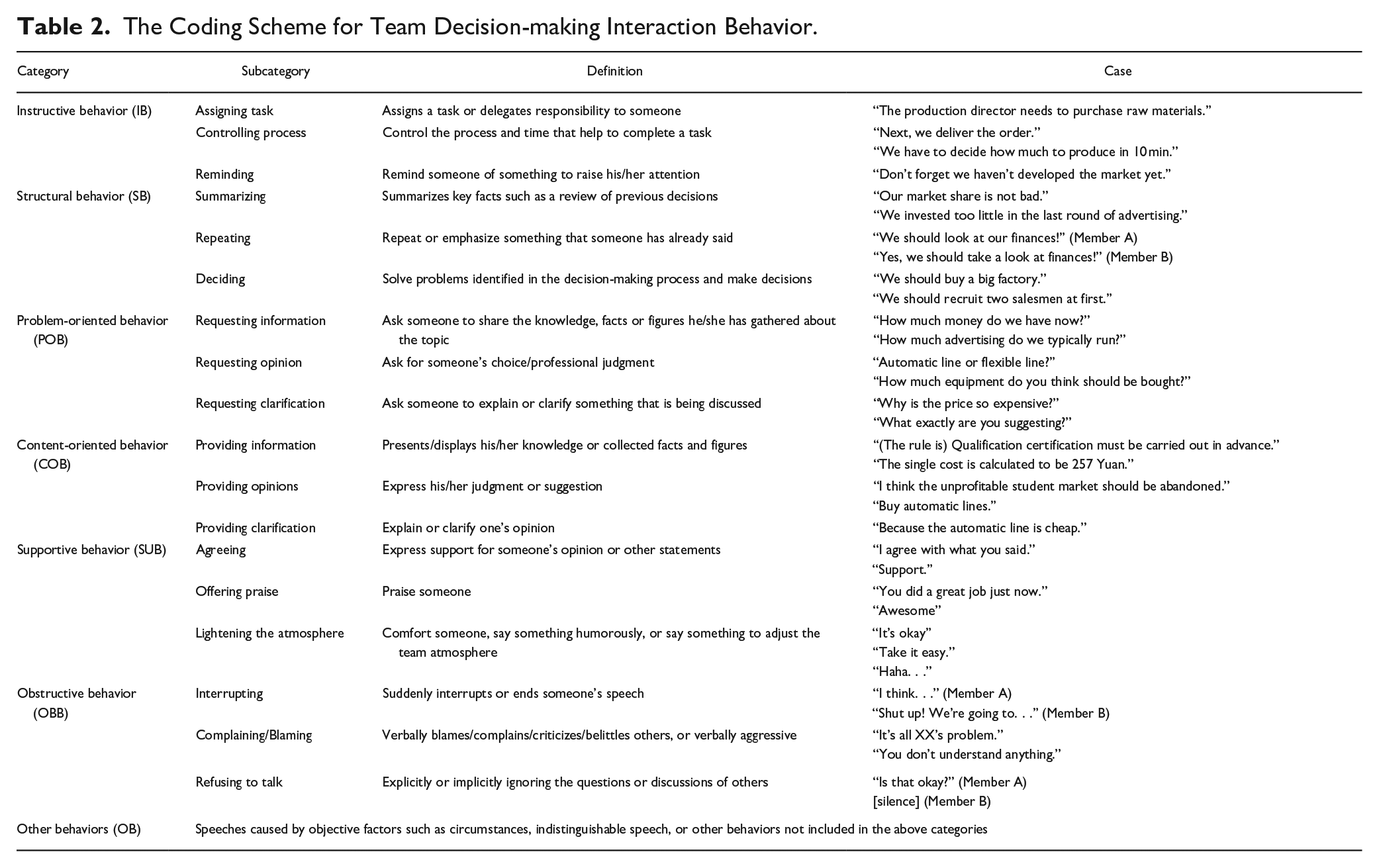
This study used BORIS software to observe and code the recordings of team interactions (Friard & Gamba, 2016). The coding team consisted of one primary coder and three secondary coders who are professionals in this field of study and are trained in coding. The primary coder coded all the video data, while the secondary coders coded the videos of five teams (i.e., 20 videos) respectively (accounting for 75% of the total experimental data). Before formal coding, the team selected a video to identify possible divergent behaviors (Stachowski et al., 2009) by reviewing the “thought units.” A “thought unit” is a sequence of a few words (i.e., full sentences or fragments) containing a single thought (Bales, 1950). Unitizing was performed using BORIS which allows the marking of digitalized video. Incomplete sentences also need to be considered for coding if they contain a meaning of concern. We identified the verb as the center of meaning and considered everything directly related to it as part of the thought unit. For each thought unit, only one subcategory behavior code can be assigned. A speaker’s conversational turn can contain multiple thought units (e.g., stating an opinion immediately followed by a clarification, or providing information followed by a problem-oriented request). Coders identified the subcategories of the team’s behaviors, and BORIS automatically generated the corresponding category codes.
A total of 22,654 behaviors were coded. Interrater agreement was measured by Cohen’s kappa output by BORIS (Kolbe et al., 2014; Locke et al., 2022). Among the 15 videos jointly coded by the coders, the mean value of Cohen’s kappa was 0.893, which is greater than the judgmental value of 0.7, indicating adequate agreement (Waller & Kaplan, 2018).
We measured team decision-making interaction behavior using the elative frequency of each behavior, based on prior research (Lehmann-Willenbrock et al., 2015; Meinecke et al., 2017). This involved dividing the number of each type of decision-making interaction behavior by the total number of behaviors (except “Other Behaviors”) for the same team in the same quarter, and then multiplying the result by 100 to obtain relative frequency.
Team Decision-making Performance
Team decision-making performance is evaluated using the comprehensive scores of each team’s business operations generated by Entrepreneurial Star for each team in each quarter (Mullins & Sabherwal, 2022). The success or failure of team decision-making is often reflected in the direct profitability, financial, and market performance of the firm (Papadakis et al., 1998). Additionally, investment during the operation process and the future growth of the firm are also important considerations. Therefore, based on the context of this experiment, an expert group discussion was conducted to determine the following scoring and weighting criteria, which were subsequently input into the software. The total score is 100, which consists of sub-scores for profitability (30% weight), financial (30% weight), market (20% weight), investment (10% weight), and growth (10% weight).
Control Variables
Gender and age were included as control variables for regression analysis.
Results
Descriptive Statistics and Correlation Analysis
The results of descriptive statistics and correlation analysis conducted using SPSS 24.0 are shown in Table 3. Results showed that the values of correlation coefficients among control variables, independent variables, and dependent variables were far less than 0.7, indicating low multicollinearity. Moreover, the correlation coefficient between team decision-making interaction behavior and decision-making performance is significantly correlated, justifying further regression analysis.
Descriptive Statistics and Correlation Analysis.
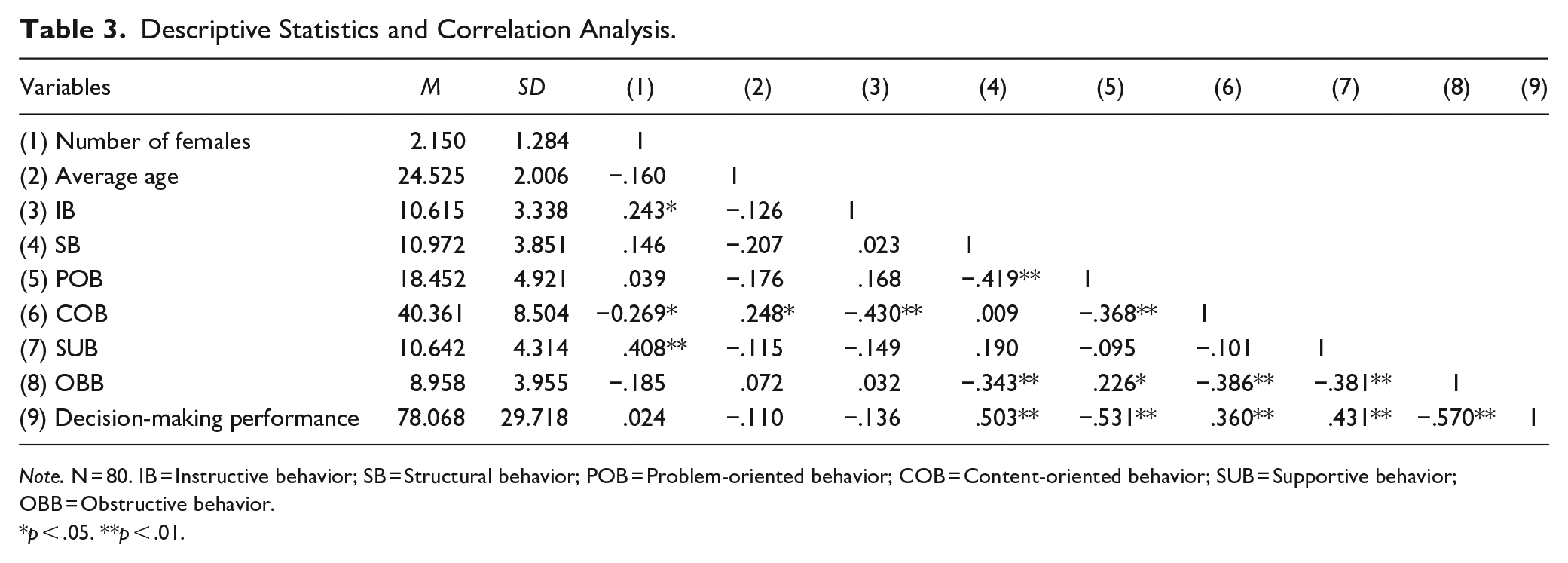
Note. N = 80. IB = Instructive behavior; SB = Structural behavior; POB = Problem-oriented behavior; COB = Content-oriented behavior; SUB = Supportive behavior; OBB = Obstructive behavior.
p < .05. **p < .01.
Hypothesis Testing
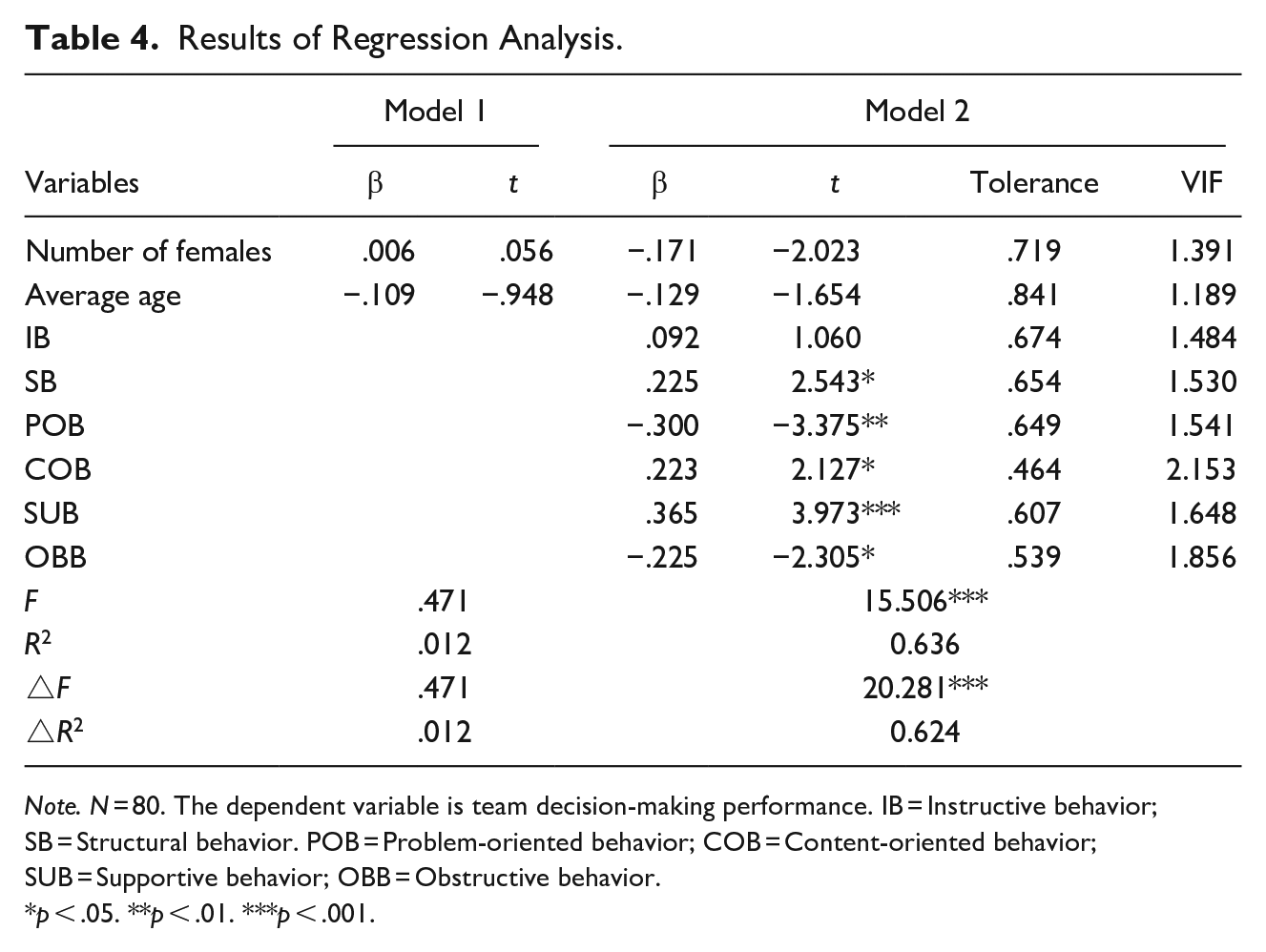
Hierarchical linear regression was used to test the hypothesis. The relative frequency of behaviors was matched to the decision-making performance of the 20 teams in each of the four quarters. The results are shown in Table 4. The value of VIF for each variable was far less than 10, indicating that the regression model does not have problems with multicollinearity.
Results of Regression Analysis.
Note. N = 80. The dependent variable is team decision-making performance. IB = Instructive behavior; SB = Structural behavior. POB = Problem-oriented behavior; COB = Content-oriented behavior; SUB = Supportive behavior; OBB = Obstructive behavior.
p < .05. **p < .01. ***p < .001.
Results showed that the control variables in Model 1 have no significant effect on team decision-making performance. In Model 2, all team decision-making interaction behaviors were added in sequence. Excluding the effect of Model 1, Model 2 explained 62.4% of the decision-making performance (△F = 20.281, p < .001). Among them, the relationship between IB and decision-making performance was not significant (β = .092, p > .05), so H1 was not supported. SB had a significantly positive effect on decision-making performance (β = .225, p < .05), so H2 was supported. POB has a significantly negative effect on decision-making performance (β = −.300, p < .01), so H3 was not supported, since the results were contradictory to the hypothesis. COB (β = .223, p < .05) and SUB (β = .365, p < .001) both had a positive effect on team decision-making performance, so H4 and H5 were supported. OBB had a significant negative effect on team decision-making performance (β = −.225, p < .05), so H6 was supported (see Figure 1 for a summary).
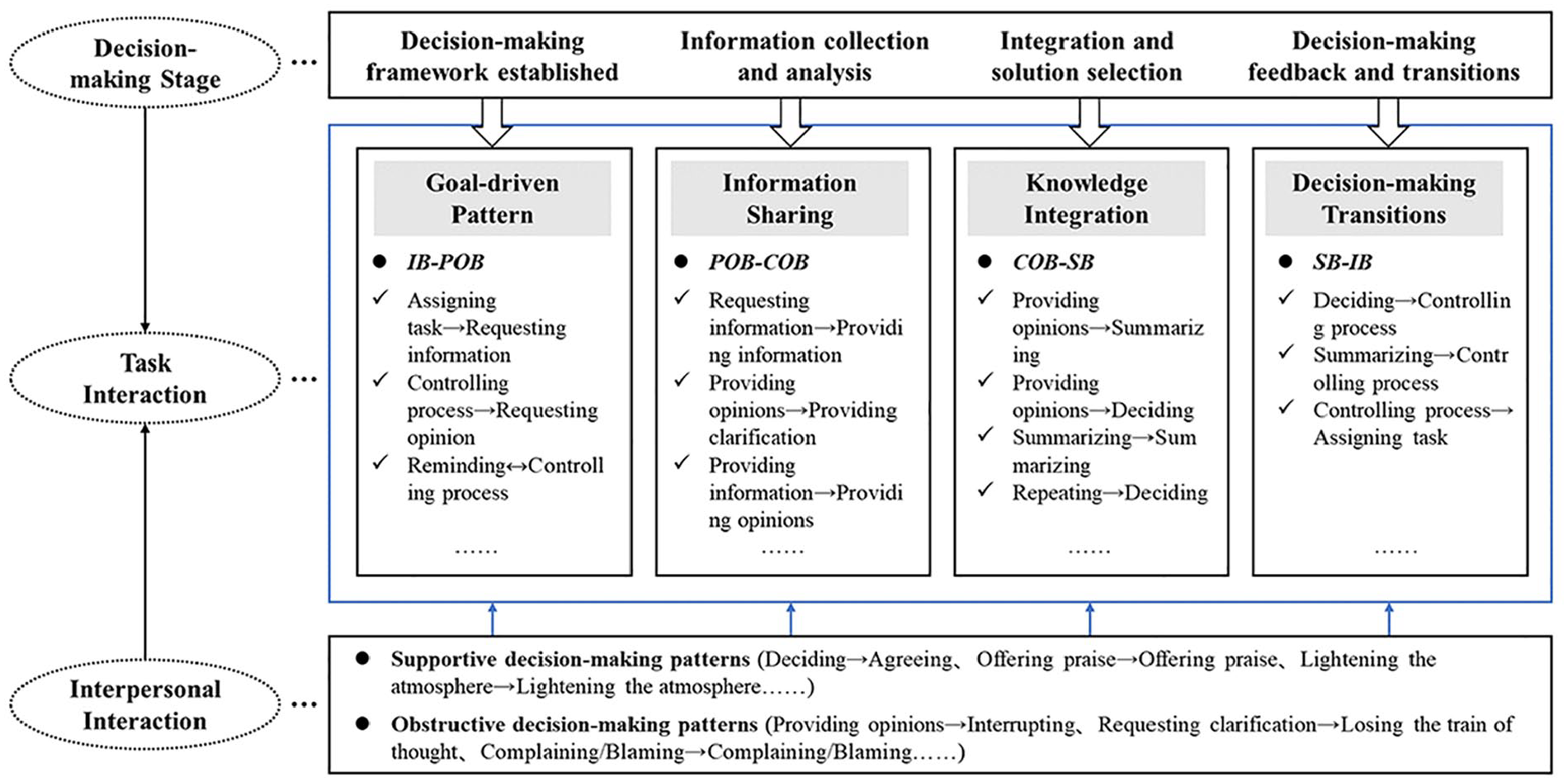
Model of the relationship between team decision-making interaction behavior and decision-making performance.
Team Decision-making Interaction Patterns and Processes
The 22,654 decision-making behaviors identified through coding were analyzed using lag sequential analysis with GSEQ software to uncover the interaction patterns present in the team’s decision-making process. Lag sequential analysis can examine contingencies and interaction patterns in coded events based on the order of occurrence that occurs less than 5% of the time. If the adjusted residual (z-score) is greater than 1.96, it indicates a significantly higher probability of the target behavior occurring after the given behavior than expected (Lehmann-Willenbrock et al., 2015; Waller & Kaplan, 2018; Zhao et al., 2022). The simplest transition occurs when a statement follows directly after the previous one (lag 1). If there is another statement between the initial and target statements, this is considered as two lags (lag 2; (Kauffeld & Meyers, 2009). The frequency of behavior transition
The Frequency of the Team Decision-making Interaction Behavioral Transition and Adjusted Residual (Lag 1).
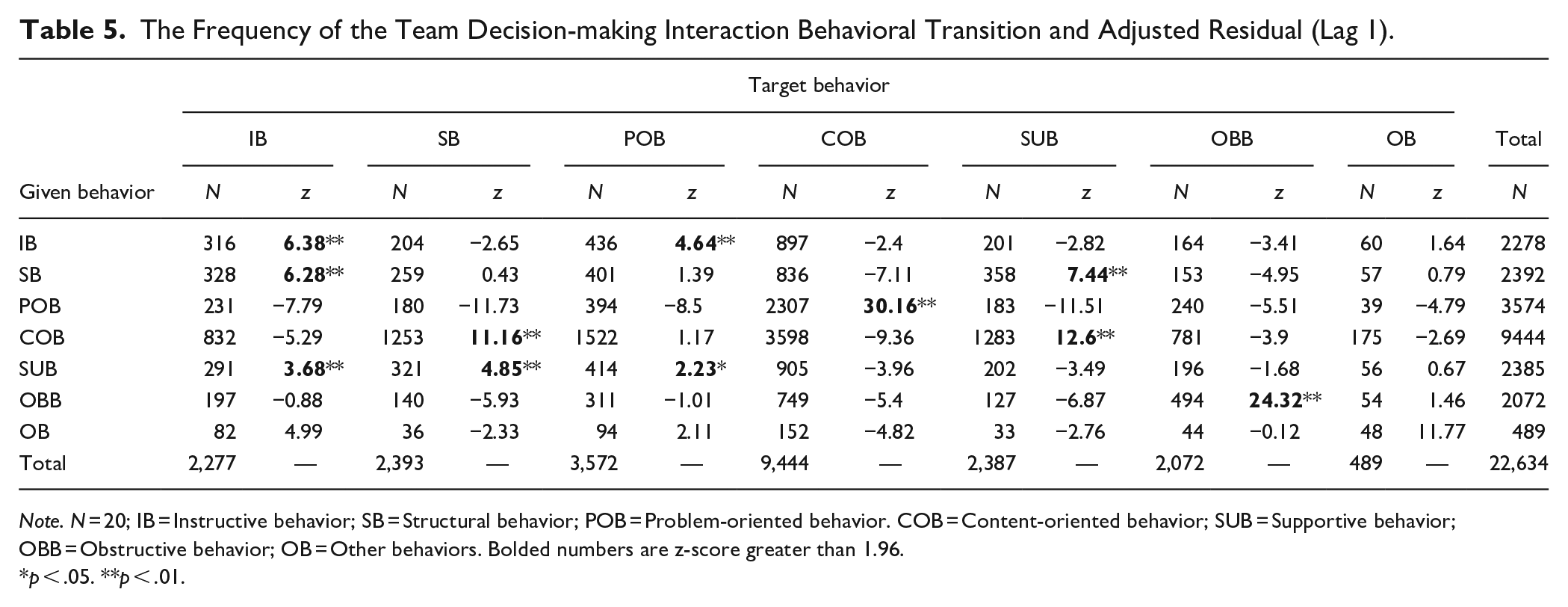
Note. N = 20; IB = Instructive behavior; SB = Structural behavior; POB = Problem-oriented behavior. COB = Content-oriented behavior; SUB = Supportive behavior; OBB = Obstructive behavior; OB = Other behaviors. Bolded numbers are z-score greater than 1.96.
p < .05. **p < .01.
Results of the lag sequential analysis revealed that 11 interaction patterns were found to have a higher probability of occurrence than expected during team decision-making interactions. The interaction pattern POB-COB (i.e., COB occurs after the occurrence of POB; z = 30.16, p < .01), involving behaviors aimed at achieving the decision-making goal, occurred most frequently. When team members request information, opinions, or explanations related to a decision, other members frequently provide relevant responses. After members put forward suggestions or important information, they are more likely to receive positive responses (supportive behavior; SUB) from other members (z = 12.60, p < .01), or prompt the team to make structural behaviors (SB), such as summarizing or decision-making (z = 11.16, p < .01).
The type of behavior that correlates most with other behaviors is SUB. SUB is often followed by POB (z = 12.60, p < .05), which is behavior that promotes the discussion cycle, IB (z = 3.68, p < .05), behavior that controls time and process, or SB (decision-making behavior; z = 4.85, p < .05). After making a decision, the team would either have a brief morale-boosting SUB (z = 7.44, p < .05) or conduct IB (z = 6.28, p < .05) to quickly enter the next stage. The IB-POB pattern often occurs at the beginning of a decision-making phase (z = 4.64, p < .05), and questions related to decision-making tasks often occur after task assignment and process control.
In addition, there are two self-circulations in the team decision-making process. The first is the interaction pattern IB-IB (z = 6.38, p < .05) which represents the end of a previous stage of tasks and the beginning of the next stage of decision-making discussion. The second is OBB-OBB (obstructive behaviors; z = 24.32, p < .05), which is often self-contained and appears in a independent cycle (i.e., not constituting a pattern with other behaviors). This pattern indicates that negative obstructive behaviors, such as complaining, blaming, and interrupting, can easily escalate in the team, exacerbating their negative impact (Madrid et al., 2019). Once the team starts to fall into a negative cycle, it will be difficult to pay attention to the problems that need to be solved, thereby seriously inhibiting the decision-making performance.
The functional theory of group decision-making suggests that effective team decision-making often involves processes such as criteria construction, problem analysis, solution evaluation, and generation (Gouran & Hirokawa, 1996; S.-C. S. Li, 2007). These processes are reflected in interactive stages of goal development, information sharing, and knowledge integration that teams undertake for decision-making tasks (Kolbe et al., 2011), as well as procedural decision-making transitions (Schecter et al., 2018). Aligned with the functional theory, the results of our lag sequential analysis revealed that four common interaction patterns (IB-POB, POB-COB, COB-SB, SB-IB) align with the stage characteristics of team decision-making, reflecting the interaction dynamics of different stages in team decision-making. These patterns interact with each other to drive the team’s decision-making process. Marks et al. (2001) argued that different stages of task execution entail distinct team interaction processes; thus, they advocated for the integration of these processes and stages. McGrath and Holt (1964) also pointed out that a team task often consists of multiple goals, requiring the team process to continuously address these goals in different stages to achieve the ultimate task outcome. This holds true for team decision-making processes, where an overarching decision-making process usually involves making and implementing many subdivided goal decisions. For example, in this experiment, the team faced various challenges, including product design, staffing, fund allocation, publicity, investment, and lending, all of which revolve around the advancement of the major business goal. Before reaching a consensus and implementing each small goal decision, the team goes through the establishment of decision-making frameworks, information collection, and knowledge integration. Following decision-making implementation and review, the process transitions into establishing the next stage of decision-making. Throughout the developmental process of each stage, task, and relationship interactions within the team are closely intertwined and evolve. Therefore, this study constructs a model of the team decision-making interaction process based on our findings of interaction patterns, as shown in Figure 2. In the decision-making establishment stage, the goal-driven pattern of IB-POB is used to clarify task objectives. Team members usually engage in collaborative interactions around problem clarification and process arrangement. In the information collection and analysis stage, the focus is on information exchange and sharing, manifested as the POB-COB pattern. Subsequently, based on the flow of information, the team summarizes and integrates to arrive at the optimal decision solution, manifested as the COB-SB pattern. After reaching a decision-making consensus, the team conducts a review of the solution or implementation process and prepares for the next stage of decision-making goals. This is the transitional process of the team decision-making stage, mainly the SB-IB pattern. Our model shows that the stages interact with each other until the completion of the overall decision-making goal. In addition, interpersonal interactions among team members are present throughout the task interactions in each stage, including both positive relational interactions, such as support and praise for teammates, and relational conflicts that obstruct the decision-making process, such as interrupting, complaining, and blaming.
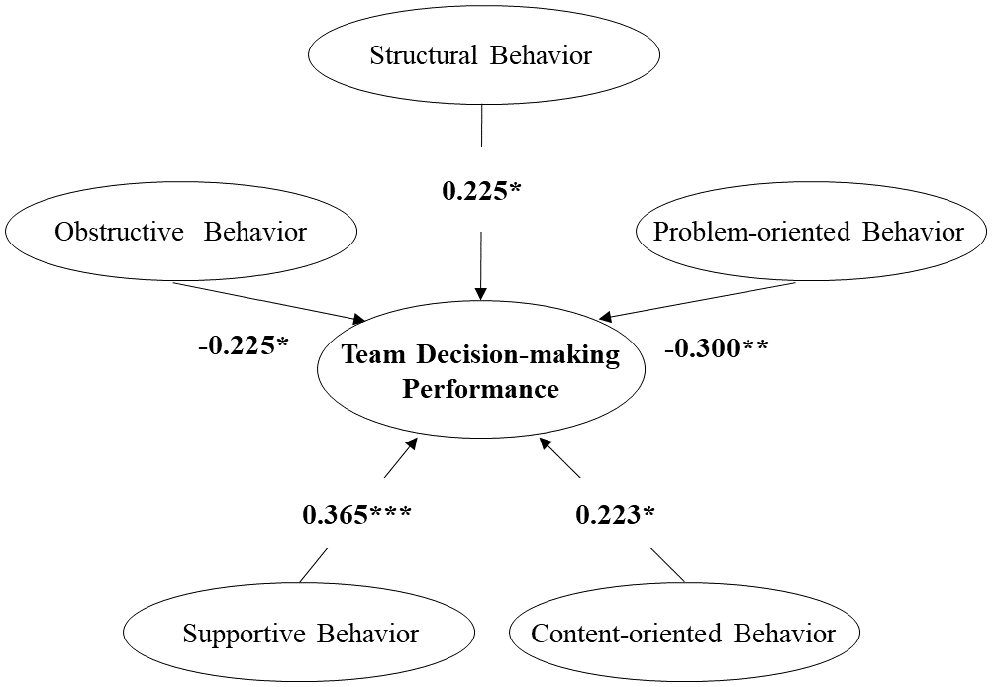
A model of team decision-making interaction processes.
Differences between High- and Low-Performance Team Interactions
We used the score at the end of the fourth quarter as the final team decision-making performance. To better understand the differences in behavioral interactions between high- and low-performance teams, we divided the final team decision-making performance into three levels: high (top 35%), medium, and low (bottom 35%), based on treatments in previous studies (Aufegger et al., 2019; McNeese et al., 2021). An independent sample t-test revealed a significant difference between the decision-making performance of high- and low-performance teams, t(12) = 4.73 (p < .001). The high-performance teams had a mean score of 89.58 (SD = 12.94), while the low-performance teams had a mean score of 35.56 (SD = 9.48). Additionally, the high-performance teams (M = 1346.43) had a higher total number of interaction behaviors than the low-performance teams (M = 696.71), t(12) = 2.92 (p < .05). This indicates that teams with better performance engaged in more extensive discussions during the decision-making process. Instead of individual subjective decisions, continuous communication promotes knowledge flow among members and ensures that the final decision reflects the wisdom of the team as a whole (Lehmann-Willenbrock et al., 2011).
Further distinctions were made regarding the distribution of interaction patterns between high- and low-performance teams. Differences of the behavioral transitions (lag 1) between the two types of teams are shown in Table 6.
Adjusted Residual for Behavioral Transitions in High and Low-Performance Teams (Lag 1).
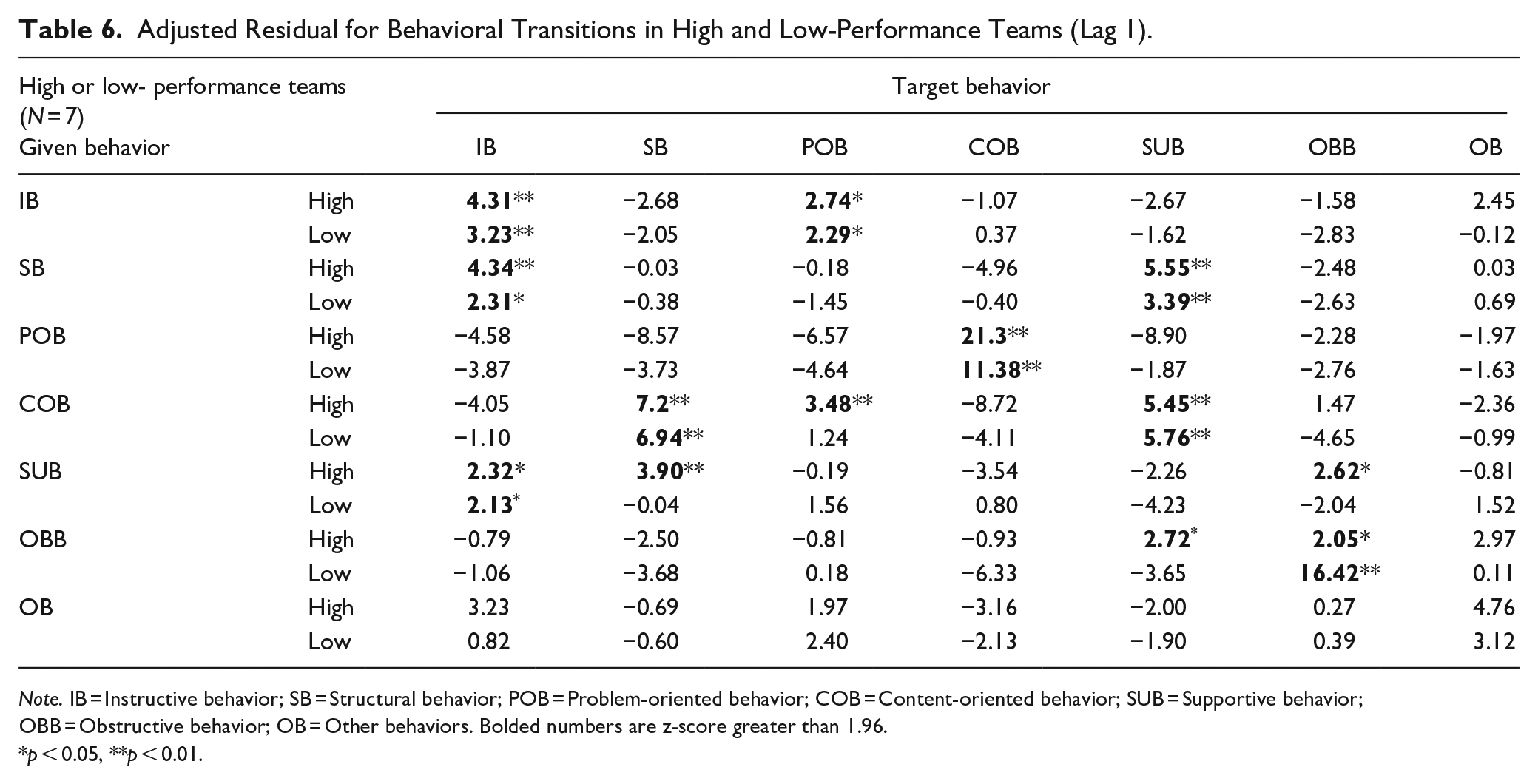
Note. IB = Instructive behavior; SB = Structural behavior; POB = Problem-oriented behavior; COB = Content-oriented behavior; SUB = Supportive behavior; OBB = Obstructive behavior; OB = Other behaviors. Bolded numbers are z-score greater than 1.96.
p < 0.05, **p < 0.01.
Through the comparison of interaction patterns, it was found that task interaction patterns such as IB-POB, POB-COB, COB-SB, and SB-IB existed in both high- and low-performance teams, indicating that these behavioral patterns are characteristic of team decision-making interactions. Analyses of lag 1 and lag 2 showed the interaction differences between high- and low-performance teams. Three patterns appear significantly frequent in high-performance teams but do not exist or do not constitute a cycle in low-performance teams: (a) POB-COB-POB (lag 1: POB-COB: z = 21.3, p < .01; COB-POB: z = 3.48, p < .01; lag 2: z = 2.24, p < .05): In high-performance teams, the problem request and content provision constitute a cycle. With this pattern, the team examines the decision task from multiple perspectives and gains a deeper and more comprehensive understanding of the problem. In contrast, low-performance teams have a more superficial exploration of the problems and task content. (b) SB-SUB-SB (lag 1: SB-SUB: z = 5.55, p < .01; SUB-SB: z = 3.90, p < .01; lag 2: z = 2.37, p < .05): High-performance teams do not rush to the next stage after reaching a consensus on a decision; rather, they summarize and review the process promptly. On the contrary, low-performance teams only exhibited the pattern SB-SUB-IB (lag 1: SB-SUB: z = 3.39, p < .01; SUB-IB: z = 2.13, p < .05; lag 2: z = 2.14, p < .05), indicating that, once a preliminary decision-making consensus is reached, they immediately move to the next decision-making discussion, which leads to a lack of thoughtful consideration of the decision options. (c) SUB-OBB-SUB (lag 1: SUB-OBB: z = 2.62, p < .05; OBB-SUB: z = 2.72, p < .05; lag 2: z = 3.05, p < .01): Unlike low-performance teams, which often tend to stay in the state of OBB-OBB (lag 1: z = 16.42, p < .01) or experience a spread of negative emotions, high-performance teams break free from the trap of obstructive behavior cycles with an optimistic attitude and an active atmosphere.
Discussion
This study unified the consideration of decision-making stages and team interactions, constructed a team decision-making process model, and elucidated the interaction differences between high- and low-performance teams, contributing to the understanding of team interactions in the decision-making process. We empirically tested the role of team interactions on decision-making performance, extending the research on factors influencing team decision-making. Two findings are worth special note. First, the hypothesis of a positive relationship between instructive behavior and team decision-making performance was not supported. One possible explanation is that members of a temporary team are more independent and autonomous compared to those in teams with established long-term work relationships. A long-term leader-member relationship or team opinion leader has not been formed, which weakens the role of instructive behavior. Second, contrary to the research hypothesis, empirical analysis found that problem-oriented behavior has a negative impact on decision-making performance. One explanation is that, due to experimental constraints, the team was required to complete the tasks in a relatively short period, which was a major challenge. Since time was limited, a higher proportion of problem-oriented behavior caused teams to delay the resolution of the main issues, thereby compromising the completeness of the decision. Another explanation is that task complexity is a key factor (Kuhn & Poole, 2000). Team decision-making in this study involved complex decisions with multiple stages and objectives. In such cases, a higher proportion of problem-oriented behavior may lead to information overload, lengthy discussions, and member attention diversion, resulting in a shift away from solving core problems and a decrease in decision efficiency.
Additionally, through lag sequential analysis, we discovered an interesting phenomenon: the interactions and participation among team members are not entirely consistent across different decision-making stages. Specific findings are summarized in Figure 3. In the goal-driven stage, members participated actively but mainly focused on quickly clarifying task goals, with few complex interactions occurring during the process. It was not until the information-sharing stage that members exhibited high levels of participation and interaction, characterized by a significant exchange of information and knowledge. In the knowledge integration stage, interactions and integration were mainly carried out by a few members or opinion leaders to form decision solutions. In the decision-making transition stage, only a small number of members carried out simple summarization and transition, resulting in low levels of participation and interaction.
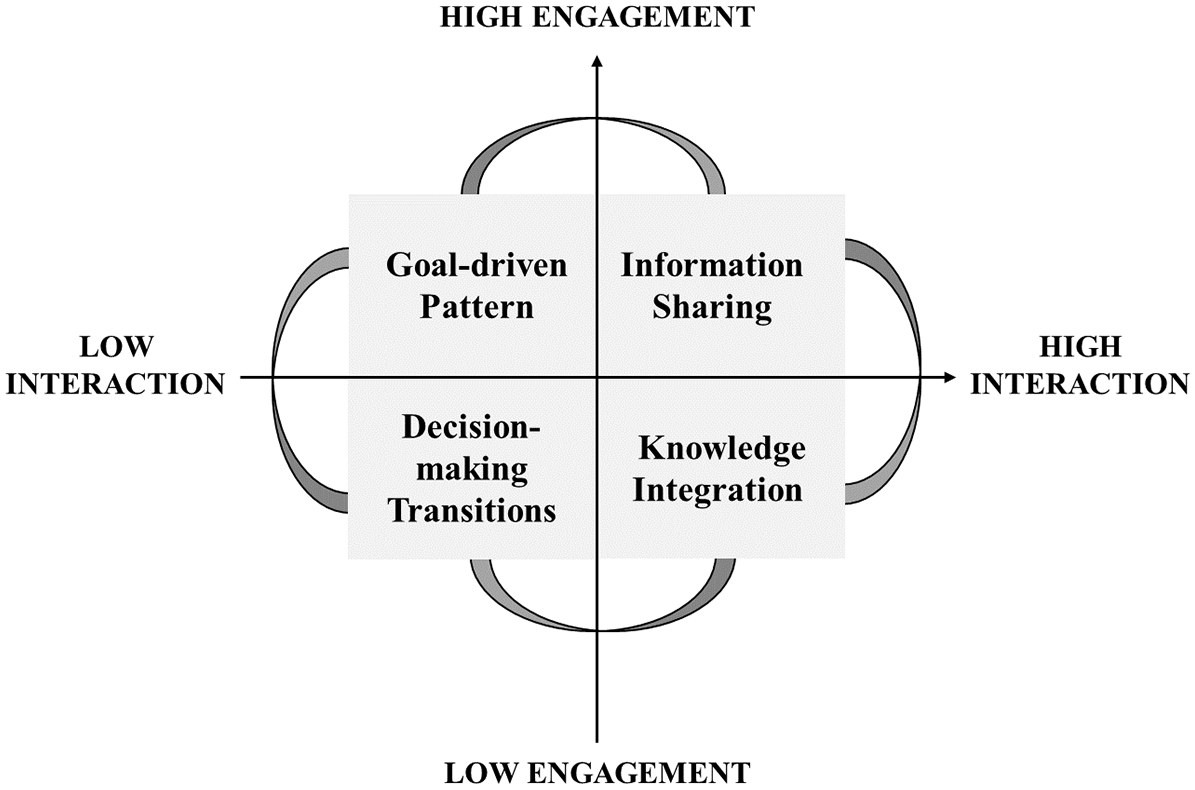
The interaction and participation of team members during the decision-making stage.
Theoretical Implications
This study has several contributions. First, it combined a dual perspective of team interaction and decision-making stages, uncovering the team decision-making process and clarifying differences in interaction patterns between high- and low-performance teams. To better predict outcomes, we need to focus on the decision-making stages experienced by the team and the actual interaction patterns (Uitdewilligen & Waller, 2018). However, previous studies tended to focus more on the actual behavioral processes (e.g., Aufegger et al., 2019; Bergman et al., 2012) and neglected the stage nature of team decision-making. Second, as stated by van der Meer et al. (2022), most prior studies have focused on the exploration of task-level team interactions. Only by combining task and relationship interactions can a more comprehensive insight into team processes be gained (Keyton & Beck, 2009). Therefore, in response to the call by Marks et al. (2001), this study integrated team decision-making stages and team interactions (task interactions and interpersonal interaction), constructing a team decision-making process model and expanding the evidence on the interaction structure and characteristics in the team decision-making stages.
In contrast to previous research, this study found that problem-oriented behavior is less advantageous for team decision-making outcomes when faced with time constraints in complex decision-making scenarios involving multiple stages and objectives. Traditionally, research has regarded questioning as a means of acquiring information and resources, which can facilitate the interaction process and positively influence performance (Kauffeld & Lehmann-Willenbrock, 2012; Meyer et al., 2016). However, it has overlooked the varying effects of problem-oriented behavior in different interaction contexts. For instance, in time-limited or urgent team decision-making processes, frequent problem requests may lead to lengthy discussions and repetitive answers, consuming the team’s time and energy (Marsch et al., 2005). When team members overly focus on gathering information or emphasize trivial matters, they neglect the exploration of primary goals and core issues. This deviation from the main objectives results in a lack of clear direction in the decision-making process and increases the risk of information loss and erroneous decisions (Franken et al., 2021).
Managerial Implications
Team decision-making interaction is a dynamic and complex evolving process that requires a step-by-step approach for regulating and controlling different stages of the decision-making process. First, goals determine success. Successful team decision-making requires a clear understanding of task objectives and problems among team members. The team leader should guide the team to clarify the task and determine the division of labor first. It is also important to deepen information and knowledge sharing within the team. Information and knowledge can be effectively shared by encouraging open communication. Third, promoting the depth and breadth of knowledge integration and emphasizing data-driven decision-making is crucial.
In the team’s decision-making process, interpersonal interaction, whether supportive or obstructive, is an important factor that cannot be ignored. A positive atmosphere should be created to strengthen the positive emotional output of members, thereby promoting better communication processes and decision-making results. Contrarily, relationship conflicts will deepen the spread of negative emotions or behaviors (Madrid et al., 2019). The team should cultivate harmonious and good interpersonal relationships to avoid forming relationship conflicts. Team managers should encourage members to express themselves through communication and negotiation to reduce confusion and relationship conflict.
In addition, team interactions should aim to strike a balance between problem-oriented and content-oriented behavior. When operating under time constraints, it is important to ensure that team interactions remain efficient and focused. This can be achieved through the use of pre-set agendas or a clear prioritization of problems. In multi-stage and multi-objective decision-making processes, it is crucial for the team to not only focus on information gathering and communication but also to constantly keep in mind the main objectives and core problems. Encourage team members to share critical information to help them avoid excessive focus on individual problems at the expense of overall decision-making goals.
Limitations and Future Research
This study has several limitations. First, due to the cumbersome nature of data collection via video recording (averaging 2 hr per video, requiring approximately 40 hr per person to code for one team on average), this study is limited by its small sample size. This is a common problem in experimental studies (Kolbe et al., 2014). Future research can increase the number of samples to further explore the characteristics of team decision-making interaction behaviors and patterns. Second, we recruited participants in China; however, decision-making teams from different countries exhibit variations in cognition and behavioral styles (Wulf et al., 2020). As a result, follow-up research can consider collecting comparative data from different countries to conduct cross-cultural research. Finally, this study only tested the effect of team decision-making interaction behavior on decision-making performance using frequency data from experiments. Future research can investigate the influencing factors of team decision-making interaction behavior at the level of team cognition or traits to broaden the research on decision-making behavior.
Footnotes
Acknowledgements
The authors would like to thank the Associate Editor Nale Lehmann-Willenbrock and two anonymous reviewers for their thorough review and valuable feedback on earlier drafts of this paper. Additionally, they extend their sincere thanks to two editors, Dennis Kivlighan and Lyn Van Swol, as well as the editorial team, for their efforts in facilitating the successful publication of this paper.
Declaration of Conflicting Interests
The author(s) declared no potential conflicts of interest with respect to the research, authorship, and/or publication of this article.
Funding
The author(s) disclosed receipt of the following financial support for the research, authorship, and/or publication of this article: This study was financially supported by the Overseas Visiting Fellow Program-Creative Interaction Research of High-Level Innovation Teams in the Yangtze River Delta (No. QN2022013002L).

Data Availability Statement
The data that support the findings of this study are available on request from the corresponding author, Huangyi Gui (email: