



Abstract
Background: Sustainable management of the municipal water supply is a priority issue in the policy agenda of Maui County, Hawaii. The Maui Economic Development Board launched the WaterStory initiative to educate residents about the determinants and history of Maui’s water resource development. A System Dynamics model was developed and coupled with a user interface to create WATERSTORY, an interactive learning environment (ILE).
Purpose: The purpose of this study was to analyze the benefits of WATERSTORY for the identification and assessment of sustainable water management policies in Maui.
Method: WATERSTORY is a System Dynamics-based ILE that shows the cross-sectoral impacts of users’ decisions. Both, the simulation model and the ILE resulted from group modeling and ILE testing sessions.
Results: The development of the WATERSTORY ILE facilitated the involvement of local communities in the discussion of water management problems and identification of possible solutions.
Conclusions: The study suggests that developing a simple ILE is essential in raising the interest of a wide audience involved in sustainable development policy making. After stakeholders gain confidence in the benefit of the ILE, it becomes easier to integrate simulation exercises into planning processes at national, regional and local levels.
Keywords
Sustainable management of the municipal water supply is a priority issue in the policy agenda of Maui County, Hawaii (CWRM, 2008). This is due primarily to the expectation that water will become increasingly scarce due to growing demand, the depletion of groundwater reservoirs, and a possible decline in precipitation and surface water availability (Freedman, 2007; SEF, 2006).
In recent years, stakeholders such as resident communities, tourist operators, and local authorities have expressed their desire to participate in the policy-making process and to bring their perspectives and values to the regulators. Starting from these needs, in 2010, the Maui Economic Development Board (MEDB) launched WaterStory, a project aimed at engaging resident communities and a variety of stakeholders in the identification of shared policy interventions to improve the sustainability of water resources on Maui.
This article describes the process, method and tools adopted by MEDB to facilitate communication between policymakers and local communities on Maui, and to support informed, effective and inclusive decision making on integrated water resource management priorities. In particular, the article analyses the process followed to develop a System Dynamics model and an interactive learning environment (ILE). The purpose of the ILE is to guide the audience (community and policymakers alike) through the policy process, including problem identification, policy formulation, implementation and evaluation, and bridge the gap between local, scientific, technical, and policy knowledge. Finally, the article illustrates the results achieved through this innovative approach and discusses the level of engagement by multiple stakeholders in the debate on sustainable water balance.
System Dynamics models are used to analyze quantitative scenarios, or projections, of possible future patterns emerging from a system, including impacts of external interventions on a system’s behavior in the short, medium and long term (Barlas, 2002; Richardson, 1991). In particular, the explicit representation of delays, feedback loops and non-linearities in the model structure allows exploring synergies and trade-offs between the different system elements over time and thereby provides valuable decision-making support (Fredericks, 2008; Subroto, 2012). Due to their integrated nature, System Dynamics models are particularly appropriate for analyzing and addressing complex issues in public policy sectors, such as health (Homer, Hirsch, Minniti, & Pierson, 2004; Homer et al., 2000), energy (Bassi, Schoenberg, & Powers, 2010; Trappey, Trappey, Lin, & Chang, 2011), green economy, climate change and sustainable development (Fiddaman, 2002; UNEP, 2011).
The interaction of the feedback loops in the system dynamics model for the WaterStory project replicates the historical dynamics of water demand and supply on Maui and demonstrates the impact of different water policies on the economy, society and environment. Stakeholder participation in model development, or group modeling, allowed taking into account the needs and concerns from a variety of stakeholder perspectives and improving those stakeholders’ understanding of system behavior (Rouwette, Vennix, & Thijssen, 2000). More specifically, multi-stakeholder sessions provided everyone with opportunities to explore the facts and issues surrounding water supply and demand on Maui Island. The decision to conduct group modeling sessions resulted from the increasing consideration given to this method as an effective way to improve model-supported governance (Dreyer & Renn, 2011; Ritzema, Harmsen, Wolters, Boonstra, & Froebrich, 2011).
The WATERSTORY ILE links the system dynamics model to a user interface. The purpose of the ILE is to facilitate the use of simulation by different kinds of stakeholders involved in the policy cycle (Alessi, 2000; Davidsen, 2000). The ILE provides users with the opportunity to modify decision variables on water policy and evaluate the system-wide impacts of such changes.
The article is organized as follows: We first provide a brief overview of current and projected challenges for the sustainability of water resources in Maui and of previous System Dynamics-based ILEs to support public policy processes. We then explain the collaborative process for developing the System Dynamics model and present its main features. The model quantification and analysis section focuses specifically on the economic, social, and environmental variables in the model structure, as well as on the expected outcomes of model use in the WaterStory process. Subsequently, we describe the ILE and its features to facilitate the exploration of policy options and opportunities. The debriefing section reports on the outcomes of debriefing sessions. The outcomes are based on the feedback provided by participants on their user experience and on performed simulation runs. Finally, we summarize the strengths and weaknesses of WATERSTORY ILE and conclude about its contribution to research in the simulation and gaming field.
Background
Maui, Hawaii, is a very popular destination for tourists from all over the world. In 2010, almost 300,000 international visitors chose Maui for their vacations (Maui County Office of Economic Development, 2011), attracted by sunny beaches, crystal clear sea and entertaining activities offered by local resorts. At the same time, however, water supply is expected to progressively decline, and is likely to be exceeded by water demand in the coming decades. This lingering problem is becoming increasingly relevant for the resident community, and it has been the issue of extensive discussions by the public authorities of the County.
Despite the fact that engineering solutions have solved water distribution issues on Maui for a long time, recent worrying trends have brought the water issue back on top of the County’s priority list and are calling for renewed commitments and shared solutions. First, demographic developments have led to a progressive increase in water demand. The resident population, which has grown by more than 20% between 2000 and 2010, is expected to further increase in the coming decades. Water demand is also strongly influenced by the tourism sector, on which a significant portion of the local economy is based. According to projections by the Office of Economic Development, the annual number of visitors is expected to increase in the years to come, which further increases the amount of water required to satisfy the demand of hotels, resorts and golf courses. On the supply side, global climate change produces a decline in annual precipitation (Fletcher, 2010). Since groundwater resources, mostly sustained by precipitation (water infiltration), provide a considerable share of water supply to Maui, a progressive reduction in annual rainfall is likely to influence the overall availability of water on the island considerably, including the impact created by salt water infiltration.
Public authorities, private companies and local communities are committed to promptly addressing the water balance issue and to planning ahead in order to ensure sustainable access to fresh, potable water for future generations. For example, stakeholders are discussing the maximum annual debt allocation for the Department of Water Supply, and the maximum acceptable annual increase in water rates. They are also examining water meter fees, including variation by location, subsidies paid by low-cost areas to high-cost ones, or by current customers to new users, among others. To highlight the relevance of water supply on Maui, it is worth noting that the County, Hawaiian Commercial and Sugar Co. (HC&S), East Maui Irrigation (EMI) (two subsidiaries of the parent company Alexander and Baldwin), Wailuku Water Company, Earth Justice, Maui Tomorrow, and Na Wai Eha have been involved in litigation and other processes on Interim Instream Flow Standards regulations since 2001. In this respect, the success of MEDB’s WaterStory in bringing together several stakeholders in a collaborative environment is remarkable.
Literature Review
In this section, we review the most successful recently developed simulation games that use System Dynamics and other modeling methodologies to support public policy formulation, monitoring and evaluation. The review focuses particularly on ILEs that aim at raising public awareness of complex problems (including sustainable water management and other public policy issues) and engaging citizens, policymakers, senior officials and politicians in discussing and identifying potential solutions. The ILEs reviewed below all exhibit some of the main features included in the WATERSTORY ILE.
2050 PATHWAYS ANALYSIS is a web-based ILE (based on an MS Excel Calculator) developed by the UK Department of Energy to enhance public debate on low-emission energy policies (HM Government, 2010). 2050 PATHWAYS ANALYSIS aims to improve the general understanding of sustainability challenges and opportunities. For this purpose, it gives users the opportunity to test the impacts of energy policies on the economy and the environment. Further, as in the case of the WATERSTORY ILE, the ILE supports policy makers in the evaluation of the effects of short and medium-term energy efficiency policies on long-term environmental protection. Since its official launch, 2050 PATHWAYS ANALYSIS has had significant success: More than 10,000 users visited the platform in the first three months (Misuraca et al., 2013). 2050 PATHWAYS ANALYSIS ILE was presented to stakeholders on Maui in the preliminary phases of the project, to provide an example of the use of ILEs in support of sustainable development policymaking.
Another recent example of an ILE designed to improve understanding and broaden participation in policy formulation, monitoring and evaluation is OPINION SPACE 3.0, an interactive visualization forum provided by the U.S. Department of State. OPINION SPACE 3.0 allows users to exchange ideas on foreign affairs and global policies. An experimental gaming model uses a mapping tool and statistical analysis to sort discussions by relevance and participants’ engagement and to display results in a map that shows patterns and trends (Misuraca et al., 2013). By monitoring and analyzing results, policy makers are able to better understand citizens’ opinions, and to identify the most useful and most widely shared ideas and suggestions. The ILE provides citizens with a valuable opportunity to make their voice heard and to be more actively involved in the policy-making process. The WaterStory project adopted a similar approach with the creation of community conversations on Maui, in which the WATERSTORY ILE informed policy discussions.
ILEs have also proved successful in supporting participatory urban development policies. For example, URBANSIM is a tool that uses an agent-based model calibrated with Monte Carlo methods to simulate interactions between real estate market, infrastructure development, transportation, and choices made by households, businesses and landowners in urban settings (Misuraca et al., 2013; Waddell, Liming, & Xuan, 2008). This is also the context for Maui, where community development includes several stakeholders at the urban level. URBANSIM shows results in 3D visualization mode and improves understanding of and the participation of citizens in urban planning. The ILE combines the use of choice theory, simulation of real estate markets and statistical methods to maximize the accuracy of projections. City administration departments in several municipalities in Europe and the United States have already used URBANSIM. In some cases citizens could express their ideas, simulate urban planning options, and compare results in public meetings, like in the case of Maui.
The ILEs described so far are used in a variety of public policy sectors. A more targeted literature review now focuses on ILEs that specifically address sustainable water management issues, and that were used to inform and guide the development of the WATERSTORY ILE. An example of ILE dealing with water issues is the UVA BAY GAME, an agent-based simulation game developed by researchers at the University of Virginia. The agent-based model underlying the UVA BAY GAME captures the impacts of human behavior on natural capital and ecosystems in the Chesapeake Bay Watershed, the largest estuary in the United States. Players take the role of different stakeholders and simulate the impact of their decisions on the environment, the economy, and their own well-being (Learmonth, Smith, Sherman, White, & Plank, 2011). While the WATERSTORY ILE is narrower in scope (as it only simulates impacts of policy interventions on water demand and supply), it adopts the same educational and learning approach as the UVA BAY GAME, that is, raising awareness of decision-makers and other stakeholders about the potential unintended impacts of water policy interventions. Similar to the UVA BAY GAME, users’ feedback led to continuous improvement of the WATERSTORY ILE.
Another example of an ILE on water resources management is the interactive game developed by Valkering, Tàbara, Wallman, and Offermans (2009). It allows users to explore policy impacts on water management in the Ebro River Basin in Spain. In particular, the game is linked to a System Dynamics model (LASY) that follows the DPSIR (Drivers, Pressures, State of the Environment, Impacts, Responses) framework and that allows players to project the dynamic outcome of interactions between water culture, water policy and autonomous stakeholder behavior. Similar to WATERSTORY ILE, the game is structured along four main stages: problem definition; policy design; policy testing; and learning and reflection on sustainability. Unlike WATERSTORY ILE, this game integrates a geographical information system component that allows spatial disaggregation of simulation outcomes, and it incorporates the human dimension (i.e., fundamental beliefs on how the world should be managed) into the model’s structure. Valkering, van der Brugge, Offermans, Haasnoot, and Vreugdenhil (2013) adopted a similar perspective-based approach in a more recent water management simulation game that explores alternative river management options for a segment of a typical Dutch river.
Model Development Process
Given the complexity of the water system and the different implications that policy interventions might have on local communities, economic sectors and ecosystems, MEDB developed processes and tools aimed at
Creating a common understanding of current and projected challenges,
Supporting informed and integrated decision making, and
Promoting participation of all relevant stakeholders in the process for policy formulation and evaluation.
Based on these general principles and overall objectives, MEDB launched the WaterStory project. The project included regular meetings of an expert Water Working Group that consisted of stakeholders across various backgrounds and interests, who, in some cases, were in litigation with each other over water rights. The Water Working Group meetings improved the development of a System Dynamics model that represents the dynamic interactions between economic, social and environmental variables responsible for water supply and demand on Maui. Furthermore, the group modeling sessions contributed substantially to the identification of key water issues, as well as the prioritization of intervention options, in an evidence-based and collaborative manner.
Development of the Water Sector
The process for the development of the Maui model is based on group model building principles for the involvement of a wide range of technical experts and stakeholders (Andersen & Richardson, 1997; Rouwette et al., 2000). In particular, the process followed a logical sequence of activities to ensure the creation of a rigorous model structure. First, the modeling team collected and analyzed statistical data for the Island of Maui (from 1990 to 2012 and projections). In order to ensure data reliability and comprehensiveness, the team selected and compared different sources, including the Maui County Data Book (MCDB), Hawaii State Data Book (HSDB), Native Hawaiian Data Books (OHA), Energy Information Administration (EIA), District Water Services (DWS), Center for Water Resource Management (CWRM), Maui County Water Use and Development Plan, Department of Business, Economic Development and Tourism (DBEDT), State Department of Health (DoH), Maui County General Plan 2030, Maui Island Plan, and U.S Census reports. Furthermore, the modeling team analyzed detailed reports produced by the United States Geological Survey (USGS) in order to extract specific information on the peculiar interactions of selected water systems on Maui.
A group modeling session followed the preliminary data collection. A variety of different stakeholders participated, including modeling experts and specialists in water systems, as well as representatives of stakeholders directly affected by water policies, such as landowners, farmers and other concerned citizens. As a result, the session took the form of a multi-stakeholder process, in which different opinions were confronted, analyzed and discussed with the help of an external facilitator (the modeling expert). As an initial step, all the participants introduced themselves, and expressed their opinions regarding current and upcoming challenges related to water demand and supply on Maui. This initial exercise led to the identification of key concerns affecting the various stakeholders involved and to a clarification of their different positions.
The next step consisted in the collaborative development of a Causal Loop Diagram (CLD). The CLD focuses attention on the dynamic relationships existing within the Maui water system (See Figure 1). Figure 1 shows that stakeholders identified climate trends and forest cover as the key variables influencing precipitation patterns and that they linked precipitation to watershed integrity and eventually surface and groundwater availability. Surface water is diverted into reservoirs, or treated and stored before being supplied and used to fulfill water demand. Groundwater resources are conveyed to storage facilities by means of pipelines. Participants also identified a number of drivers for water demand, including population, tourism, GDP growth rate, infrastructure and cultivated land. Each of these drivers influences water demand in one or more sectors, including residential, industrial, commercial and agricultural sectors.
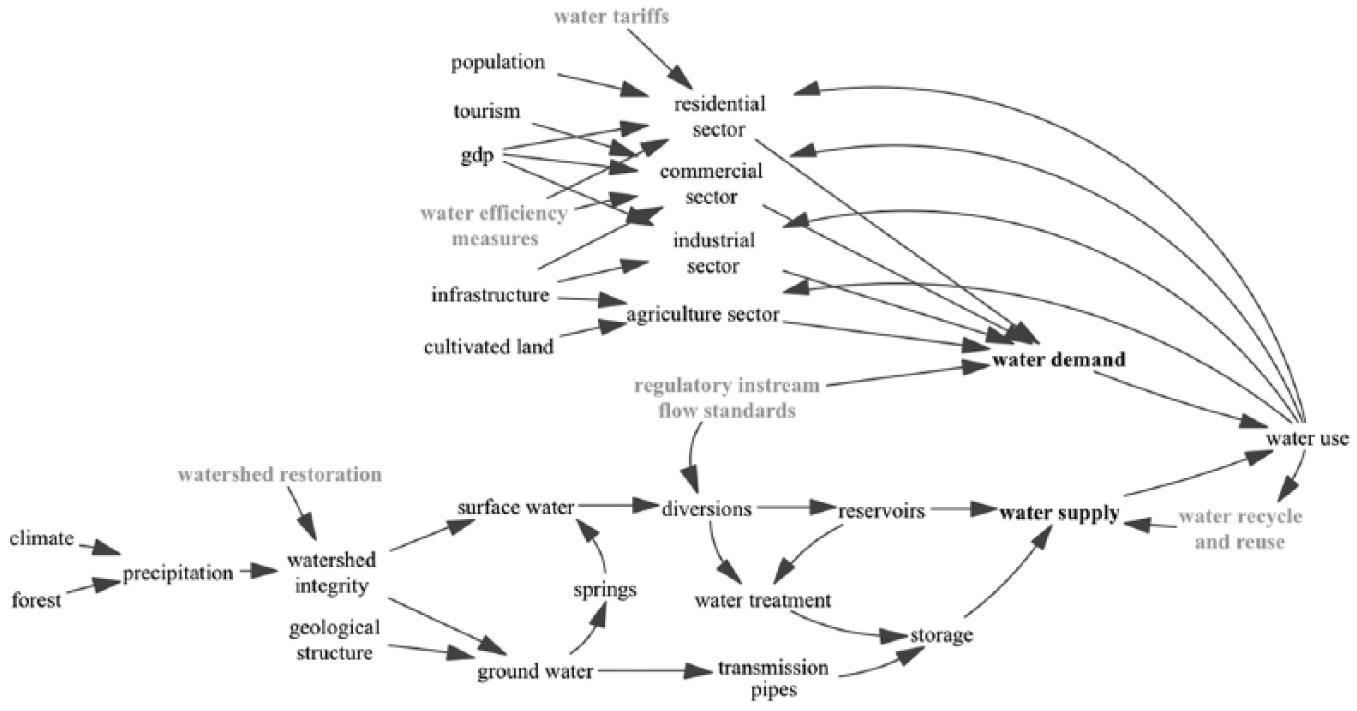
Causal Loop Diagram resulting from the group sessions held on Maui.
The creation of a CLD supported the understanding of the system’s structure and the behavior this structure gives rise to. Participants recognized that the water system is dominated by balancing feedback loops. In particular, an increase in water supply driven by growing demand leads to a decrease in water stocks, eventually resulting into a decrease in water supply (not visible in Figure 1). Participants also identified two reinforcing feedback loops. One reinforcing loop characterizes the relation between water demand, water use and production in key sectors (i.e., residential, commercial, industrial and agriculture): An increase in water demand leads to an increase in water use, which in turn contributes to sectoral growth (e.g., more water consumption in agriculture resulting in increased agriculture production). Eventually, sectoral growth leads to additional water demand for sustaining the expansion of the economy. Another feedback loop describes the reinforcing relationships between water supply, water use and water recycling: An increase in water supply increases water use, which in turn increases the amount of recycled water that can be redistributed and reused. Importantly, Figure 1 shows a CLD that resulted from an exploratory workshop conducted with multiple stakeholders in Maui. The system dynamics model developed from this CLD contains additional feedback loops that represent the complex dynamics of the water system in Maui in more detail.
Based on this simplified representation of water demand and supply dynamics, discussions then focused on possible alternative solutions to ensure the sustained availability of water resources for the Maui population, with careful consideration of co-benefits and potential unintended consequences of the proposed interventions. Participants identified incentives for water efficiency technologies and water pricing measures as public policies that could help reduce water consumption, especially in the residential and commercial sectors. On the supply side, participants proposed investments in watershed restoration to increase water availability, together with incentives and standards on water recycling and reuse, and the establishment of instream flow regulatory measures for the instream network in Maui.
The variables and causal relations identified in the group modeling session, as well as the policy measures suggested during this participatory exercise, facilitated the development of a customized System Dynamics model. The simulation model quantifies the dynamic interplay between the elements comprising the water system on the Island of Maui. Starting from the causal relations identified in Figure 1, the model uses precipitation as the main inflow for both the surface water and groundwater stocks. On the other hand, water demand from the residential, industrial, commercial, and agricultural sectors determine water outflows. In turn, GDP and population dynamics drive sectoral water demand. The model incorporated the policy options identified in the CLD to analyze their economic, social and environmental impacts across sectors.
Development of the Overall Maui Model
The larger Maui model that calculates GDP and population dynamics consists of three main spheres, each subdivided into specific sectors. The Social, Economic and Environmental Spheres were customized following a modular approach.
The key variable governing the Economic Sphere is the gross domestic product (GDP), which is characterized by a Cobb-Douglas production function with inputs of labor and capital, visitor expenditure and total factor productivity (including energy prices) (Bassi, Harrison, & Mistry, 2009). A Social Accounting Matrix calculates economic flows: government expenditure is linked to taxation levels, and allocated to households, producers and banks, which eventually affects the delivery of public services.
The Social Sphere takes into account the impact of health care, family planning and income levels on life expectancy and overall population dynamics. Total population, which is divided by gender and one-year age cohorts, determines the labor force and affects employment. Employment and labor productivity in turn determine the levels of production from a given capital stock (Bassi et al., 2009).
The Environmental Sphere represents various interconnected dynamics, including land allocation, water and energy demand and supply, and pollution, among others. The use and depletion of natural capital stocks is connected to production and prices. In particular, specific data on hydrological systems is used to replicate water trends and create projections based on the peculiarities of Maui’s geographical area.
Model Quantification and Analysis
As stressed in (Bassi et al., 2009), precipitation is the main source of water on Maui, impacting watershed integrity and the levels of surface and groundwater resources. In particular, groundwater levels (GW) are influenced by rain infiltration (GWR), the flow of groundwater production (GWP) and natural loss (GWL):

Calculation of the total amount of water internally produced takes into account fog and the fraction of rain that evaporates immediately. This value is then multiplied by the ratio of ground water recharge relative to precipitation in order to obtain GWR. GWP is calculated by multiplying GWR by the observed natural outflow share of water that infiltrates in groundwater reservoirs, which is assumed to be constant. Finally, GWL is calculated as the residual amount of water needed to satisfy demand, on condition that the withdrawals do not exceed the maximum sustainability level (Bassi et al., 2009).
The equation used to calculate surface water (SW; equation 2) includes the flows of ground water emergence and recharge from rain (SWI)—accounting for evaporation—as well as production (SWP), diversions for agricultural irrigation (SWAI), and the discharge in the ocean (SWR):

As a result, total water supply on Maui is given by the sum of surface water and ground water supply, to which the amount of water produced through catchment systems, desalination and recycling plants is added.
A number of sectors were considered in the model in order to calculate total water demand (WD; equation 3). These include, among others, the commercial and industrial (WDP), residential (WDR), and agricultural sectors (WDAG). Depending on the sector considered, different variables influence sectoral water demand. For example, agricultural water demand is mainly related to precipitation trends and the extension of cultivated area, while water demand from the residential sector is driven by population (POP) and per capita water use (WDPC), precipitation (P) and water efficiency use (WE) (equiation 4).


The inclusion of economic, social and environmental components of the water system aims at improving the understanding of the complex relations among them, and at illustrating how water policies cannot be implemented in isolation. Instead, they need to be formulated in the wider context of sustainable development through an integrated, cross-sectoral and trans-disciplinary approach (i.e., a systems approach). For instance, variability in precipitation and projected declines in water precipitation will have economy-wide impacts that may constrain sugar cane production and the economic development of key sectors, such as tourism. Moreover, these climatic changes are expected to take place within the context of a growing population and economy that would increase water demand, including water demand resulting from the continuation of local habits and traditions, such as taro cultivation. Natural capital and ecosystem services would decrease as result of reduced rainfall and thus further limit sustainable growth. Hence, an integrated medium-to-long-term planning approach is required to understand such complexities of socio-economic development against the backdrop of a changing climate.
The Business as Usual (BAU) scenario projected water supply and demand trends on Maui and identified potential threats to the sustainability of water resources. The BAU scenario assumes no changes in the current policy framework, and it is primarily driven by assumptions about the future performance of two indicators that play a crucial role in water supply and demand on Maui, namely precipitation and visitors. Based on observed trends (Fletcher, 2010; Oki, 2004), rainfall is assumed to decline from 2010 to 2030. On the other hand, a 33% growth rate in visitors is assumed by 2030, based on projections from the Maui County Data Book (Maui County Office of Economic Development, 2011).
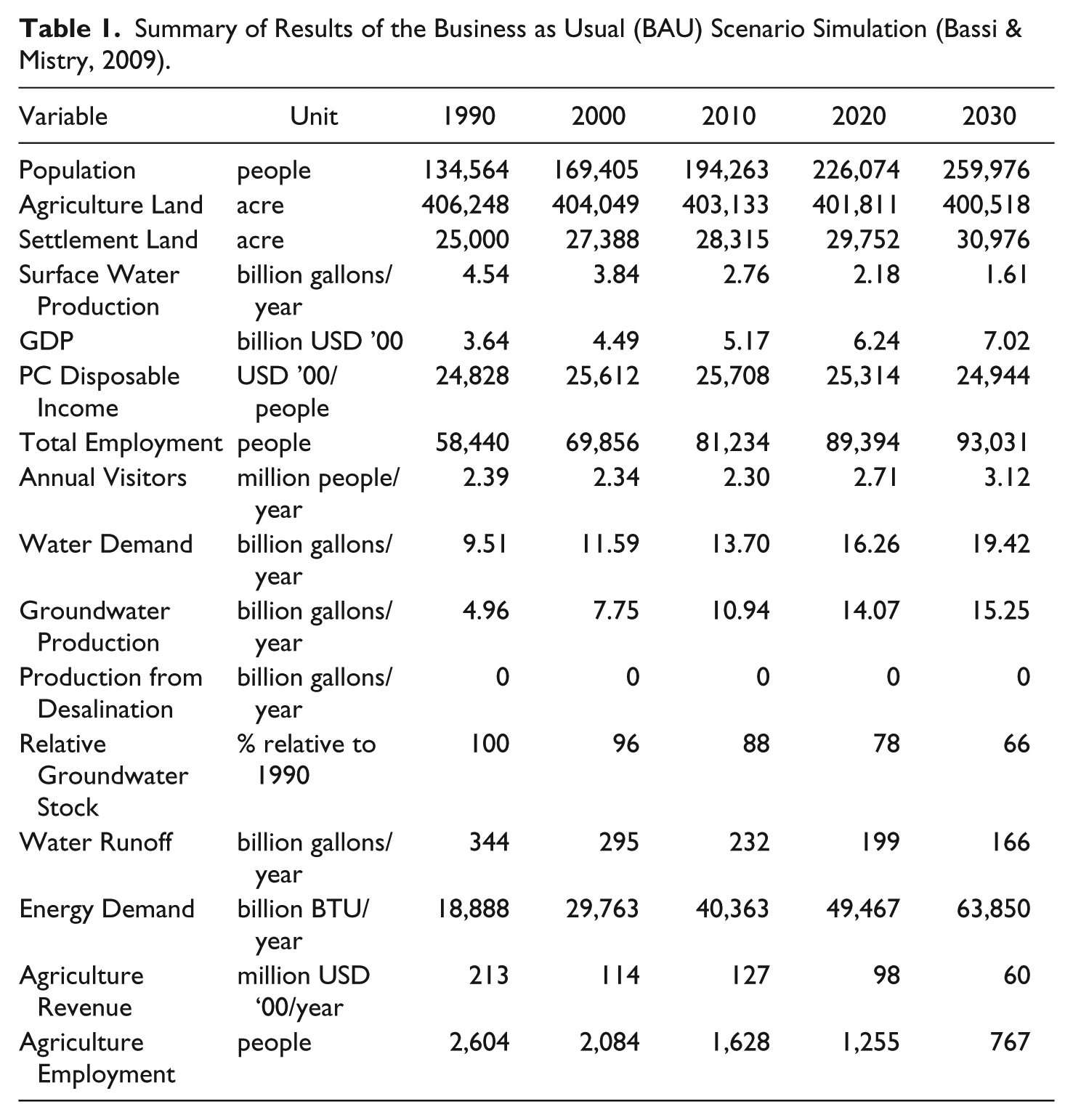
Overall, the BAU scenario projects that supplies of water will eventually reach a maximum level and begin to decline as stocks are eventually depleted in the two main aquifers currently used for groundwater production. More precisely, with 13.7 billion gallons/yr in 2010, the total supply of water reaches a maximum at 17.2 billion gallons/yr in 2024, and then decreases to 16.8 billion gallons/yr in 2030 (Bassi et al., 2009). The sustainability limit for groundwater exploitation is assumed to be 40% above 2009 levels, based on the yield indicated by the Center for Water Resource Management (Oki, 2004). Table 1 shows that the reduction of surface water and the depletion of groundwater stocks are projected to have a negative impact on agricultural revenue and employment, and overall GDP growth. Such projections provided the starting point for the development of the WATERSTORY ILE, which is an interactive platform that allows users to test alternative policy scenarios (identified during the group modeling session), and that informs the decision-making process for a more sustainable water future on Maui.
Summary of Results of the Business as Usual (BAU) Scenario Simulation (Bassi & Mistry, 2009).
User Interface
The development of the ILE followed the creation of the integrated, cross-sectoral System Dynamics model, and the selection of possible intervention options in the water sector through a multi-stakeholder process. The aim of the ILE was to facilitate understanding of the problem and to allow all interested stakeholders on Maui to simulate different policy options and investigate their impacts on the sustainability of water resources. The WATERSTORY ILE takes the form of an interactive game, following the approach taken in the WaterStory sessions.
The WATERSTORY ILE is structured as follows (Figure 2). A first screen explains the project background and describes the model as well as its purpose and scope. Subsequently, a CLD, similar to the example in Figure 1, illustrates the complex relations between water demand and supply, economic growth, environmental conservation and social well. Then, the features of the ILE are presented to the user, including a list of three assumptions and three available policy options that were identified during the group modeling sessions as potentially suitable to improve the sustainability of water resources on Maui. Further, the user is introduced to the business as usual (BAU) simulation, which shows past, present and future trends of water demand and supply, assuming that no policy interventions are implemented. The consequences of inaction are explained by means of charts and text. After awareness has been created on current and projected challenges, the user is encouraged to modify key model assumptions and decide on the best combination of policy options to enhance the sustainability of water resources on Maui. The ILE can be played in two simulation modes: basic (using checkboxes for assumptions and policies) and advanced (using table functions). The simulation screens show results in behavior-over-time graphs and compare them to the BAU simulation.
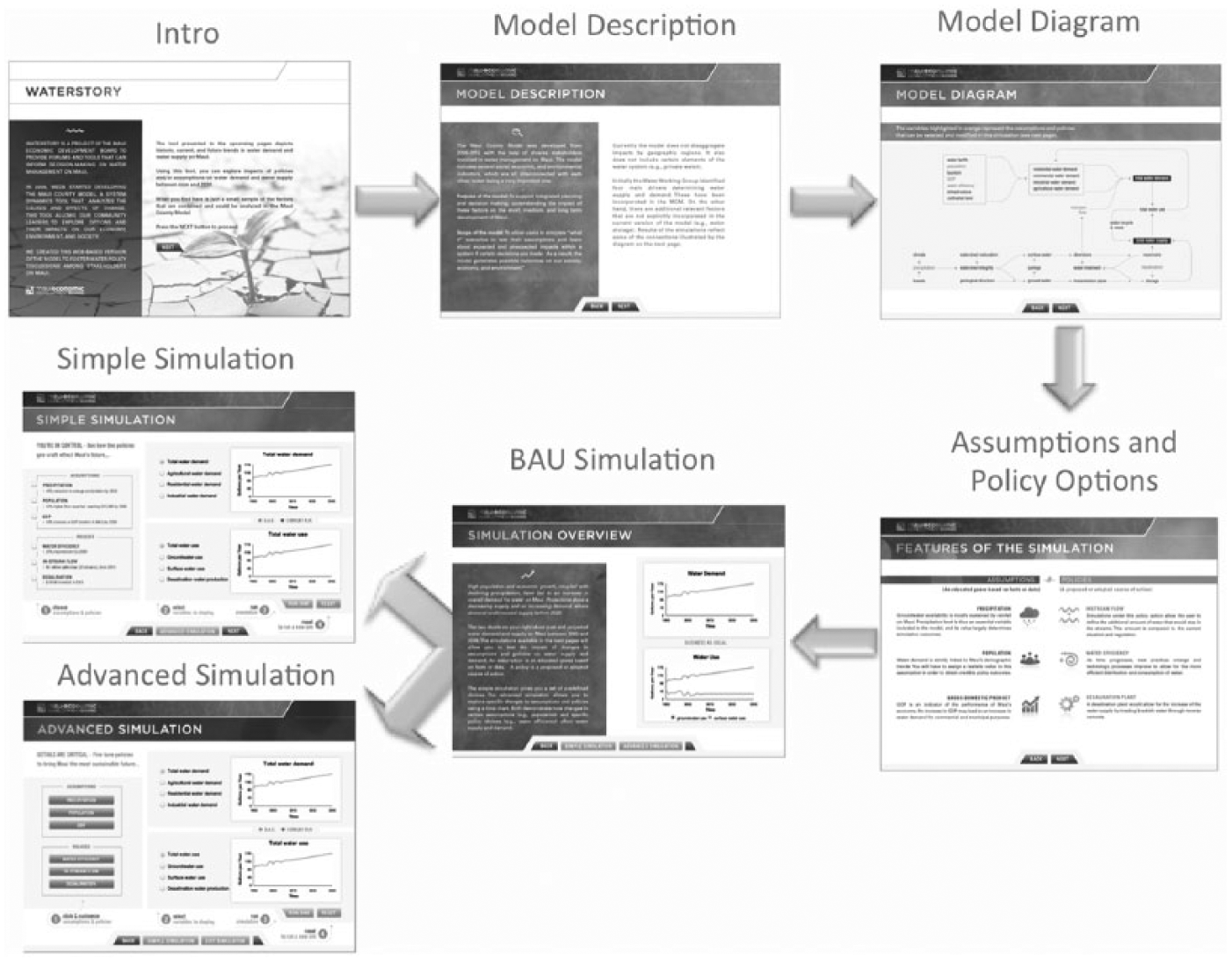
Flow of information and screens in the WATERSTORY ILE.
The initial screen (Appendix 1.1) provides users with relevant information about project background and interface features. A brief project description recalls that “WaterStory is a project of the Maui Economic Development Board to provide forums and tools that can inform decision making on Maui.” A text box contains succinct game instructions and a Next button allows users to proceed.
The following screen (Appendix 1.2) describes the System Dynamics model used in the ILE. It provides information on the purpose and scope of the model, the connection between economic, social and environmental indicators, missing elements, and model limitations. The next screen (Appendix 1.3) offers more detailed information on model structure. Here, a CLD illustrates the dynamic interplay between the main variables in the model, including key feedback loops, delays, and non-linearities that influence system behavior.
After introducing the structure of the model and the rationale behind the System Dynamics approach, the ILE presents the specific game features (Appendix 1.4), i.e., a list of three assumptions and three potential policy interventions that users can modify to simulate alternative futures. The three assumptions that players can modify are:
In addition to these assumptions, three policy options are described and proposed to guide users through the decision-making process. These policy interventions are:
After gaining an understanding of the modifiable assumptions and the policy options available to address the problem, users can become familiar with projections by analyzing the business as usual (BAU) scenario (Appendix 1.5). BAU assumes no changes in any of the current policies or regulations relating to water and it focuses on the two main drivers of water demand and supply in Maui, namely precipitation and visitors. Simulation charts under the BAU scenario illustrate the extent to which water stress may increase in the future, with municipal water supply being projected to reach its maximum level at around 2024, and to level off as the main aquifers become chronically depleted below their sustainable level.
An inspection of the charts on projected water balance under the BAU scenario reveals to users that alternative policies are needed to avoid future water shortages and detrimental impacts on the livelihood of local communities. At this point, users should be fully engaged with the problem solving exercise and ready to play with the model in order to explore possible futures. Users can choose from two game modes, as follows:
After simulating a scenario alternative to BAU, the ILE shows the impact of users’ interventions toward shaping a different future for water demand and supply in Maui. In order to fully understand the dynamics that generated the new scenario, users can go back to the Model Diagram screen and further explore the causal relationships, feedback loops and delays that influence the system’s behavior. By doing this, users increase their understanding of the complex relationships between policy interventions, and are encouraged to identify synergies among interventions to maximize long-term benefits.
Debriefing
The WATERSTORY ILE aims at improving dialogue among stakeholders on a contentious issue, namely water policy on Maui. To achieve this, the ILE challenged users to improve their understanding of the dynamic properties of the system in order to find sustainable and shared solutions to the problem of long-term water management, and its effect on Maui’s economy, society and environment. Exposure to, and understanding of, the key pillars of System Dynamics is essential for users to effectively evaluate intervention options.
For this reason, a series of debriefing sessions were held. Several stakeholders from different fields participated in the debriefing sessions, including water professionals, experts, businesses, agriculture workers, large landowners, conservation groups, instream flow advocates, and the County of Maui. During the sessions, participants first interacted with the ILE to simulate the impact of different policy options and to analyze the response of the system to external interventions. Subsequently, participants were invited to provide feedback on their user experience through open discussion sessions guided by a facilitator (Figure 3).

Debriefing sessions.
The outcomes of three initial debriefing sessions demonstrate that the WATERSTORY ILE achieved its overall objective of providing decision makers and other stakeholders with an integrated policy assessment tool. In particular, by simulating alternative water policy options, and presenting their impacts across sectors, participants were able to examine the result of their decisions, as well as to gain insights regarding the causes of failure or success. This answers the need to look at water as an integrated system. Previously, policy makers had no tools to consider the social (cultural), economic, and environmental impacts of their decision making, since most of the models they encountered (and still do) are designed to support the analysis of engineering solutions for municipal potable water systems. Moreover, this new decision-making approach encouraged stakeholders to think in a systemic and collaborative way and to put aside their differences to focus on common goals that require the effort of all to be achieved.
Participants in the debriefing sessions found the systemic view offered by the System Thinking and System Dynamics methodologies valuable. To cite one example, it was surprising to the audience to learn that the implementation of the proposed regulation of Instream Flow Standards would have increased water runoff to the ocean. Initially, they perceived this as a sub-optimal use of water resources. On the other hand, the recognition that higher runoff increases the health of watersheds and allows for taro cultivation, as well as shrimp farming and higher fish recreation led to a broader appreciation of the value of ecosystem services, and how these are represented in the history and culture of Maui.
Further, debriefing sessions explored the feedback loops that drive the availability and use of water resources. For example, they highlighted a reinforcing feedback loop between population growth and economic development that also leads to higher water demand. The latter, on the other hand, triggered several balancing loops (due to the need to distribute a finite amount of water resources) and affected a variety of economic sectors.
Debriefing sessions also discussed delays, specifically in the following two regards. First, it takes time to build infrastructure to increase water supply (e.g., reservoirs), and their lifetime is very relevant in the assessment of investments. Second, groundwater recharge is a result of precipitation, and depleting groundwater can have several and lasting negative consequences on municipal water supply.
Finally, the concept of non-linearity emerged when discussing the impact that economic development can have on water demand, among other things. Participants mentioned the case of golf courses as well as the tourism sector’s requirement for a more than proportional amount of water relative to the visitors that the sector brings to Maui.
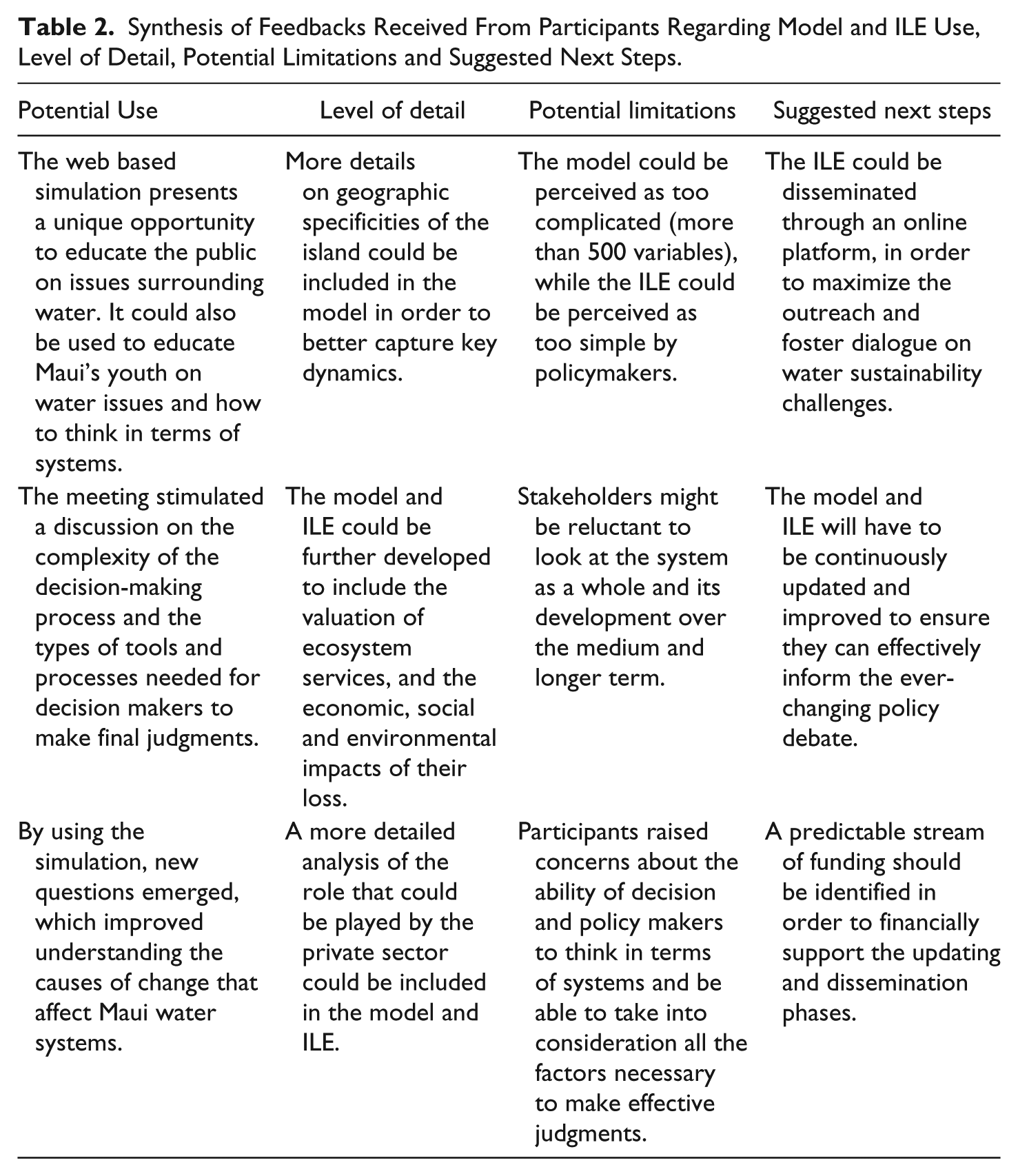
At the end of each debriefing session, we held a roundtable in order to gather feedback from participants on the functionality and potential future use of the WATERSTORY ILE in the policymaking process. Table 2 summarizes the main comments received and highlights insights regarding potential use, level of detail, potential limitations, and suggested next steps.
Synthesis of Feedbacks Received From Participants Regarding Model and ILE Use, Level of Detail, Potential Limitations and Suggested Next Steps.
Conclusions
This article presented the WATERSTORY ILE, a learning environment combining a System Dynamics model with a user interface, that is being used in Maui County for advancing the debate on water policies. The methodology adopted for the development of the System Dynamics model and ILE included the use of group model building sessions, which brought together a variety of stakeholders, and it contributed to improving dialogue on contentious issues such as regulations concerning instream flow standards. In particular, the collaborative development of causal loop diagrams helped to make the process inclusive and evidence-based, allowing participants to focus on the forest (the socio-economic and environmental value of water) rather than on the trees (individual opinions and interests). Furthermore, the WATERSTORY ILE facilitated the involvement of local communities in the discussion of water issues and identification of possible solutions. Following simple instructions, users were encouraged to test their assumptions and the cross-sectoral impacts of their proposed policy interventions.
Overall, the WATERSTORY ILE succeeded in providing a cohesive and stimulating environment in which local stakeholders and the community could explore options and possibly achieve a consensus on current water issues by testing and evaluating the impacts of proposed policies and regulations. Indeed, the use of the ILE, combined with the debriefing sessions organized by MEDB, has increased awareness among local decision-makers about the upcoming issues for Maui County, their systemic repercussions, and possible options. Further, experts are becoming more and more fond of the WATERSTORY ILE, in that it integrates their sectoral knowledge and provides a cross sectoral and longer term view on water policy impacts.
A procedural feature that facilitated the use of the ILE by local stakeholders in Maui was the participatory process adopted for the creation of the system dynamics model. By leveraging their previously acquired knowledge of the system’s structure, users were able to effectively interact with the WATERSTORY ILE, and to fully understand the outcomes of their decisions. Furthermore, the two simulation options provided (i.e., simple and advanced simulation modes) proved useful to address audiences with different levels of expertise. Finally, from a technical standpoint, a simple feature that contributed to the success of the WATERSTORY ILE is the use of radio buttons for choosing the output variables to be displayed in the simulation graphs. In the debriefing sessions, many users highlighted how this functionality allowed them to easily shift between variables to better understand the impact of selected policies on different indicators.
The structure and functionalities of the WATERSTORY ILE could be further improved and expanded. In particular, users could be given more freedom to modify assumptions and implement policy interventions (e.g., by adding policy options in the advanced simulation). Also, the interactions between different water-related sectors (e.g., agriculture, energy, tourism) could be made visible in the simulation outcomes (e.g., in the form of graphs) in order to facilitate the understanding of systemic impacts of external interventions. Finally, the WATERSTORY ILE could be turned into a role-playing game, where users take the role of different water stakeholders on Maui, and are challenged to find negotiated solutions to a common problem.
The success in the use of a participative approach to the development of the system dynamics model and the WATERSTORY ILE provides insights regarding the importance of engaging multiple stakeholders during the initial phases of model and ILE development. This is especially true for ILEs that are intended to support policymaking efforts focused on contentious issues (such as water management in Maui). This research demonstrated how divergent stakeholders’ opinions can be better addressed and reconciled in the preliminary phases of ILE development, when the structure of the system is jointly analyzed and replicated in the model.
Finally, this study demonstrates an effective methodology for designing ILEs (based largely on System Dynamics principles) in the context of sustainable development policymaking. In particular, the study suggests that System Dynamics models should be implemented in and presented using simple and intuitive ILEs to gain acceptance and increase interest among a wide audience. After policymakers and other stakeholders gain confidence in the benefits of ILEs, it becomes easier to integrate simulation exercises into planning processes at national and local levels.
Footnotes
Appendix
Author Contributions
All authors contributed equally to this article, in content and in form. AB and NL wrote the manuscript. AB performed the modelling. AB, FDR and JH designed the ILE and managed public sessions. All authors contributed equally to the editing of the manuscript.
Declaration of Conflicting Interests
The authors declared no conflicts of interest with respect to the authorship and/or publication of this article.
Funding
The authors disclosed receipt of the following financial support for the research, authorship, and/or publication of this article: WATERSTORY ILE was funded by the Maui Economic Development Board.
Author Biographies
Contact:
Contact:
Contact:
Contact: