



Abstract
Background
Gamification is a promising field of research that can benefit education. In particular, it can benefit teaching programming to children. Emotional Learning Companions (ELCs) are interactive systems that dialogue with the students as well as provide them with emotional support.
Intervention
The design of ELCs was extended with gamification to teach programming to Primary Education children. Riddles, levels, badges, and a leader board with trophies among other traditional gamification elements were incorporated into the learning companion, as well as game mechanics, aesthetics and connection with the players (students) to increase their learning, motivation and satisfaction levels.
Methods
A pre-post test single group experimental research design was followed to test the proposal. In total, 137 students aged between 10 and 12 years used the gamified learning companion during an academic year in Ecuador.
Results
The results showed a significant increase in students’ learning scores as well as satisfaction and motivation levels above 90%.
Conclusion
Therefore, the conclusion is that gamifying ELCs to teach programming in Primary Education can improve students’ learning scores, satisfaction, and motivation levels.
Background
Using technology to teach has proven beneficial as shown in international conferences such as the International Symposium on Computers in Education and journals such as Computers and Education. Moreover, using technology to teach children has proven beneficial when a correct educational methodology is applied. As shown in Pérez-Marín et al. (2022) just using technology to teach children can be motivational and satisfactory, but not resulting in learning gains. In particular, how to teach programming to children, with and without technology, has attracted significant research in the last decades (Soloway & Spohrer, 1988; Wender et al. 1995; CSTA, 2012; Jacobsen, 2014; Hromkovič et al. 2019). Benefits include students developing greater cognitive skills (Wing, 2006; Almadhun et al. 2019; Arfé et al. 2020) and a better understanding of the world in which they live, when creating or using software (Pérez-Marín et al. 2020).
Some technological approaches that have been studied to teach programming are the following: multimedia software to program using blocks, e.g. Scratch (Resnick et al. 2009); robots such as Lego Mindstorms (Zygouris et al. 2017); and unplugged approaches in which no software or hardware is used, but rather exercises on paper or games without technology (Brackmann et al. 2016).
In our previous work, the approach has been to use an Emotional Learning Companion (ELC) to teach programming to Primary Education children (Ocaña et al. 2020). Learning companions are defined as “robots or virtual conversational agents that possess a certain level of intelligence and autonomy, as well as social skills that allow it to establish and maintain long-term relationships with users” (Lim, 2012, page 241). ELCs can be defined as interactive agents that support students by not trying to adopt either a teacher role to transmit knowledge or a student role to learn from the user, but to be present and provide recommendations to guide students to achieve an optimal state in which to learn (Baylor and Kim, 2005; Holmes, 2007; Lim, 2012).
Other studies have shown that learning in general can be facilitated through gamification (Deterding et al. 2011a), which can be defined as using game design elements in non-gaming environments to increase motivation and performance (Deterding et al. 2011b; Denny, 2013; Domínguez et al. 2013). However, to achieve the correlation between gamification and higher motivation and performance, the game design must be properly planned and not limited only to using isolated gamification elements (Groening and Binnewies, 2019).
The proposal in this paper brings together both research fields to gamify ELCs to teach programming to children. No previous use of gamification in ELCs has been found in the literature for teaching programming to children. Given that gap, our intention is to answer how to do so and provide practical implications and outcomes. By providing a pedagogy to the use of technology to teach programming it is expected to increase not only the satisfaction and motivation of the students, but also their learning gains.
To show the viability of the approach, the ELC Alcody (Morales-Urrutia et al. 2021) was gamified and used to teach programming to 137 students aged between 10 and 12 during one academic year. Results indicated significant improvement in students’ knowledge and satisfaction, and motivation scores above 90% both before and during COVID-19 (Ocaña et al. 2020; Morales-Urrutia et al. 2021).
Once the viability of the approach was proved, in this paper, the focus is on how gamification can be integrated into ELC to teach programming. In our previous work, the ELC was described (Ocaña et al. 2020), the use of mindfulness (Morales-Urrutia et al. 2021), but it was not described how to gamify the ELC. It is considered important to explain to other researchers the process to gamify an ELC to teach programming as, up to our knowledge, it has not been published elsewhere in the literature. However, it seems to have promising results, both in terms of students’ knowledge and satisfaction. The good results were proved for input/output and conditional concepts (Ocaña et al. 2020). In this paper, a global view of the results of using the gamified ELC during one course covering all basic introductory programming concepts such as input/output, conditional and loops are presented with more recent data.
The paper is structured into six sections: - Literature review which presents the context of teaching programming to Primary Education students with ELCs and gamification. - Intervention which presents the challenges, rewards and progress indicators for the gamification of the ELC. - Methods which describes the experiment carried out. - Results which shows the data gathered in the experiment in terms of learning scores, satisfaction and motivation percentages. - Discussion and limitations which answers the research questions and links the results with the literature. - Conclusions and future work which ends the paper with the main ideas and lines of future work.
Literature review
This section reviews the two areas of research in which the theoretical framework of this work can be framed: the first focuses on teaching programming to Primary Education students with ELCs and the second on gamification to facilitate learning.
Teaching programming to Primary Education students with ELCs
According to Heintz et al. (2016) there is a worldwide interest in teaching computer programming in Primary Education, which is a challenging task (Apiola and Tedre, 2012; Donchev and Todorova, 2013). In addition, there is emerging literature showing that some of the most complicated concepts to understand are initialisation, variables and loops, with explicit teaching of these being suggested (Hubwieser et al. 2014). These are considered high-level cognitive activities, and different researchers agree that developing abstract representations in the form of logical structures is required. Mental models – also known as schemas – have a key role in understanding programs (Cruz-Flores and López-Morteo, 2007). Moreover, programming requires the use of both sides of the brain; the logical left hemisphere on its own is not sufficient, the creativeness of the right hemisphere is needed too (Naps, 2002).
Another important skill needed to program is to be able to go through a cyclical process (Resnick, 2012; Rogalski and Samurcay, 2010). However, it can be frustrating for children to see that many attempts are required until a correct solution is reached. As previously stated, programming is not an individual activity and some companionship is needed – in the form of another student if available, or a computer ELC if the student is programming alone at home (e.g., during an on-line class) without other students around. Children have enough imagination to transform reality into fantasy situations and bring personality and life to the on-screen agent as a supporting friend (Majors, 2013). The design of the companion is crucial, however. It should be attractive to students to have a positive effect on the learning gains (Heidig and Clarebout, 2011; Schroeder et al. 2013; Schroeder & Adesope, 2014). Moreover, interaction with the companion should be challenging but not overpowering. The companion should have an empathetic personality to engage the students with a sympathetic, cheerful or inquisitive strategy (Seïler, 2016).
Some example ELCs for teaching children are: DORIS 3D (Frozza et al. 2009) that teaches Geography by showing joy, sadness, expectation, indignation, surprise, attention and doubt; My Pet (Chen et al. 2011) that teaches Chinese through a loyal pet friend that serves as a mirror to the student of their learning and reminds them how important is to make an effort to achieve satisfactory results; Jake and Jane (Beverly et al. 2011) that teach mathematics by trying to empathise with students in their confident, excited, bored, focused, frustrated or anxious states; and Jeppy, the closest work to ours (Pérez et al. 2020) that teaches programming to children by focusing on helping them correcting syntax errors with affective messages and gestures.
Gamification
Gamification, as noted, can be defined as using game design elements in non-gaming environments to increase motivation and performance (Deterding et al. 2011a; 2011b). In general, it can make any activity more fun and engaging (Reeves and Read, 2009; Shneiderman, 2004). Possible gaming elements that can be included are: challenges with questions, mazes, labyrinths, or riddles; rewards with points, stars, or badges; and indicators of progress with leaderboards, medal displays, or progress bars (Crumlish and Malone, 2009; Zichermann and Cunningham, 2011). The important point is that these elements should not be isolated but based on a game design plan to achieve good results (Groening and Binnewies, 2019).
Gamification has been successfully applied to students of all ages in education (Lee et al. 2004; Coller and Shernoff, 2009; Dicheva et al. 2015) and different domains such as Mathematics (Coller and Shernoff, 2009), Biology (Mcclean et al. 2001), Physics (Squire, 2003) and Programming (Robertson and Howells, 2008; Astudillo et al. 2015; Shahid et al. 2019). In the case of programming, Robertson and Howells (2008) reported how children overcome boredom with gamification, and how they enjoy having virtual badges and being congratulated by characters. Sometimes, students play with puzzles and are congratulated by the characters that are usually well-known to the children – because they appear in other games or on TV. However, these characters, which are the most similar to companions to teach programming, are static and do not provide any intelligence or emotional support. Students are only asked whether they liked the puzzle and the number of lines completed but there is no gamification design plan integrated into the teaching of programming with a learning companion (Code.org, 2021).
In relation to teaching programming with gamification, Astudillo et al. (2019) presented learning sequences through games where students must overcome challenges to pass the level and obtain scores. Míguez and Neira (2020) described the implementation of an educational videogame on programming created in the Unity platform. It has the form of a puzzle where children must program the genetic code of a cell to perform functions such as nutrition, interaction and reproduction. Children assign the genetic code to the cell by executing tasks such as loops and conditionals to determine the behaviour of the cell. It works on levels and indicates the percentage of energy it has, allowing children to learn programming by moving to the next levels. This game promotes logical thinking, creativity and motivation.
Tsarava et al. (2017) developed a game to teach programming and basic programming concepts for elementary school children, based on structured board games in a treasure hunt. Students are motivated by badges and the presentation of statistics on their learning process. This game was evaluated with third and fourth grade children. In Tillmann et al. (2014), a serious web-based game for teaching and learning computer programming at many levels was implemented, involving students from school to university level. The study considered how the gamification of programming significantly improves the effectiveness and efficiency of student learning. The EasyLogic platform support for teaching programming in an affective and gamified way. This combines affective recognition, use of tools and application of gamification techniques. It also allows algorithmic logic and programming to be learnt. It was structured using the Blockly programming library and shows a graphical interface of algorithms with emotional recognition (Zatarain Cabada, 2018). However, from the studies reviewed, there is a lack of attention in the literature to the application of gamified systems to teaching programming using ELCs in Primary Education.
Intervention
To gamify the activities of the ELC, the five-step methodology presented in González González and Mora Carreño (2015) was followed (see Figure 1): • • • • • Gamification application method in education (adapted from González González and Mora Carreño, 2015).
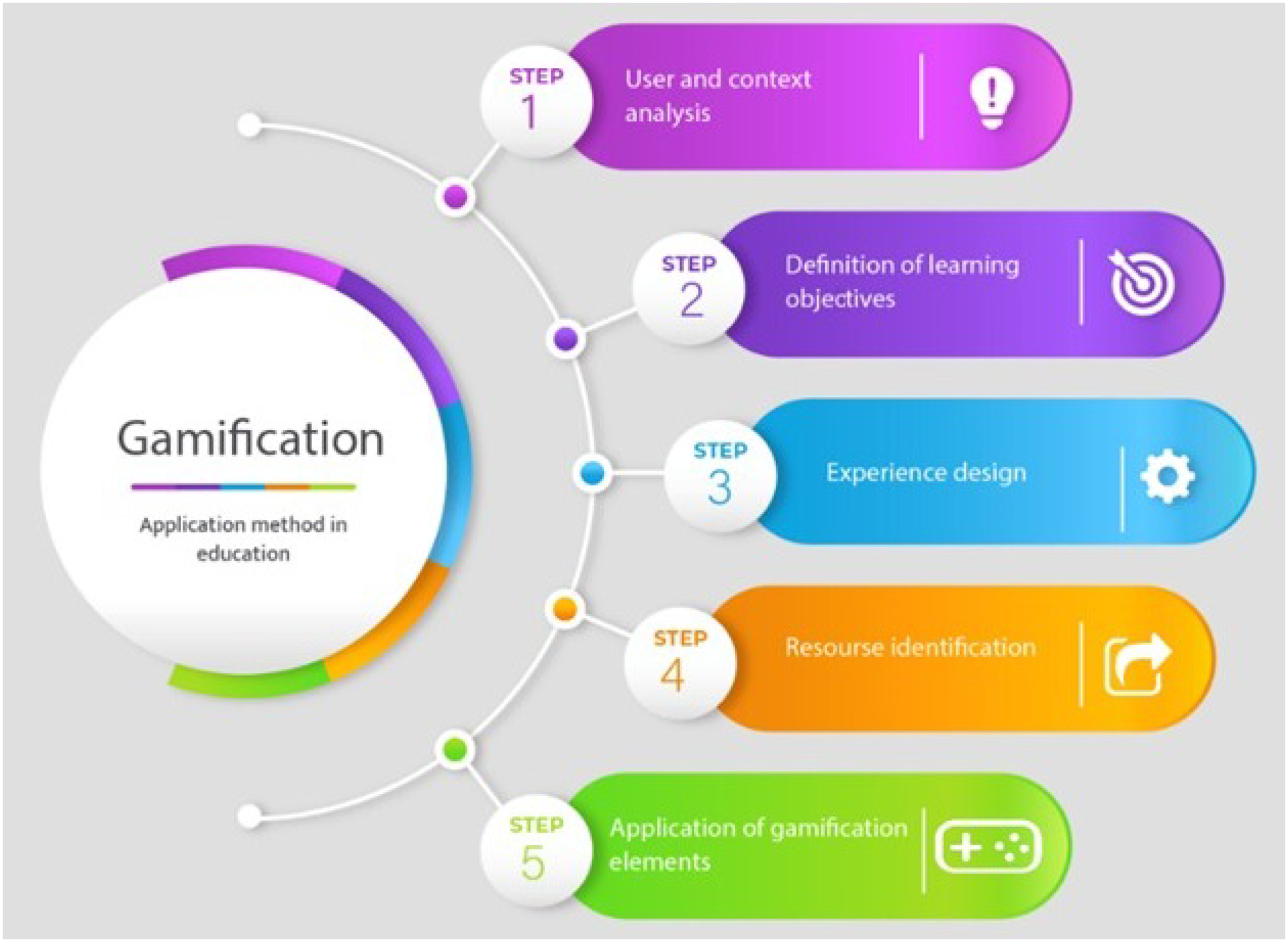
To show the viability of this gamification proposal, it was applied to the ELC Alcody (Morales-Urrutia et al. 2021) created by the first and second authors of this paper during their PhDs (2016-2021). Alcody is an own proprietary software that has been used in schools in Ecuador and Spain. It is intended that it can be used in more schools all over the world once it is translated into English, as currently it is only available in Spanish. Al images in this paper has been translated to English for the sake of non-Spanish speakers’ readers.
Figure 2 shows Alcody’s main interface. Alcody asks students to write a program in p-code (i.e. an informal text-based language that could be written using English or Spanish words helping programmers to think before running their programs in a language that could be executed by a computer). Alcody is based on Papert’s constructionism theory (Papert, 1980), whereby students learn to program by coding as if it they were learning a new language, in this case, p-code. Screenshot of Alcody’s interface (Author’s own).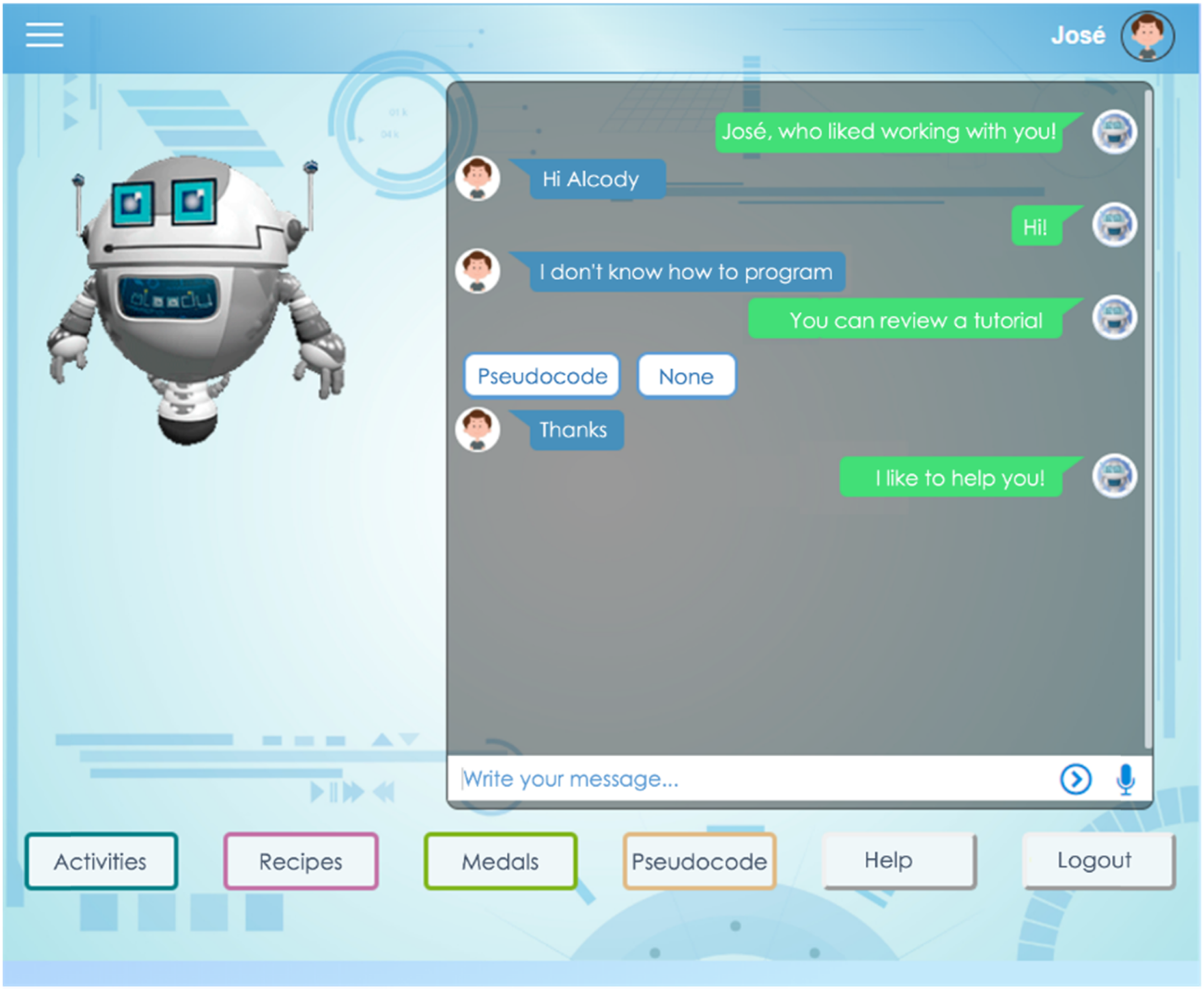
The core idea is that students need to understand one or more programming concepts to write the program. Next, students ask Alcody to run the program. If the program is not correct, Alcody marks where the syntax errors are, so that students can correct them, and try to successfully run it in the cyclic process of learning to code. Eventually, when, the program is correct, students are congratulated and get a new request to write more programs.
In the gamified version, when students complete a certain number of exercises as indicated by the teacher, they can try to solve the challenges, get rewards, and check their progress indicators as explained below.
Challenges
Riddles were developed to gamify the ELC Alcody. Riddles present students with challenges to keep them motivated as it seems that they are only playing. Alcody first provides the rules to accomplish the riddles and asks students how they feel about opening and having a dialogue with the companion in case they want to report something. Some example riddles are: • In the riddle of the wolf, sheep and cabbage, a farmer must move them to the other riverbank. However, he could carry only himself and the wolf, the goat, or the cabbage. The student must move them while avoiding the sheep or cabbage being eaten, as if the sheep is left alone with the cabbage, it will eat it, and if the sheep is left alone with the wolf, then the wolf will eat it. Students will be playing without being aware that they are developing the logical thinking necessary to program. Figure 3 shows a sample screenshot of the riddle. It can also be noted how Alcody asks the student how s/he feels trying to connect with him/her emotionally too. • In the riddle of the jumping frogs, students must click on the frogs to move the brown frogs to the right and the green frogs to the left of the river. Frogs can only pass over another frog once. As before, students will be playing without being aware that they are developing the logical thinking necessary to solve the riddle. Screenshot of the riddle of the wolf, sheep and cabbage (Author’s own).

Challenges are not limited to riddles. According to the MECOPROG methodology (Pérez-Marín et al. 2018), which has been integrated into Alcody and could be integrated into other ELCs, programming is like cooking, and a program is like a recipe. Following MECOPROG, to cook a recipe can be an appropriate challenge (see Figure 4). Each line of the recipe is like an instruction of the program that must be followed to produce the output (in this case a meal). Children aged 6 to 12 usually love cooking, so it is fun for them while they learn the importance of sequences and provides an introduction to programming. Screenshot of the creation of recipes (Author’s own).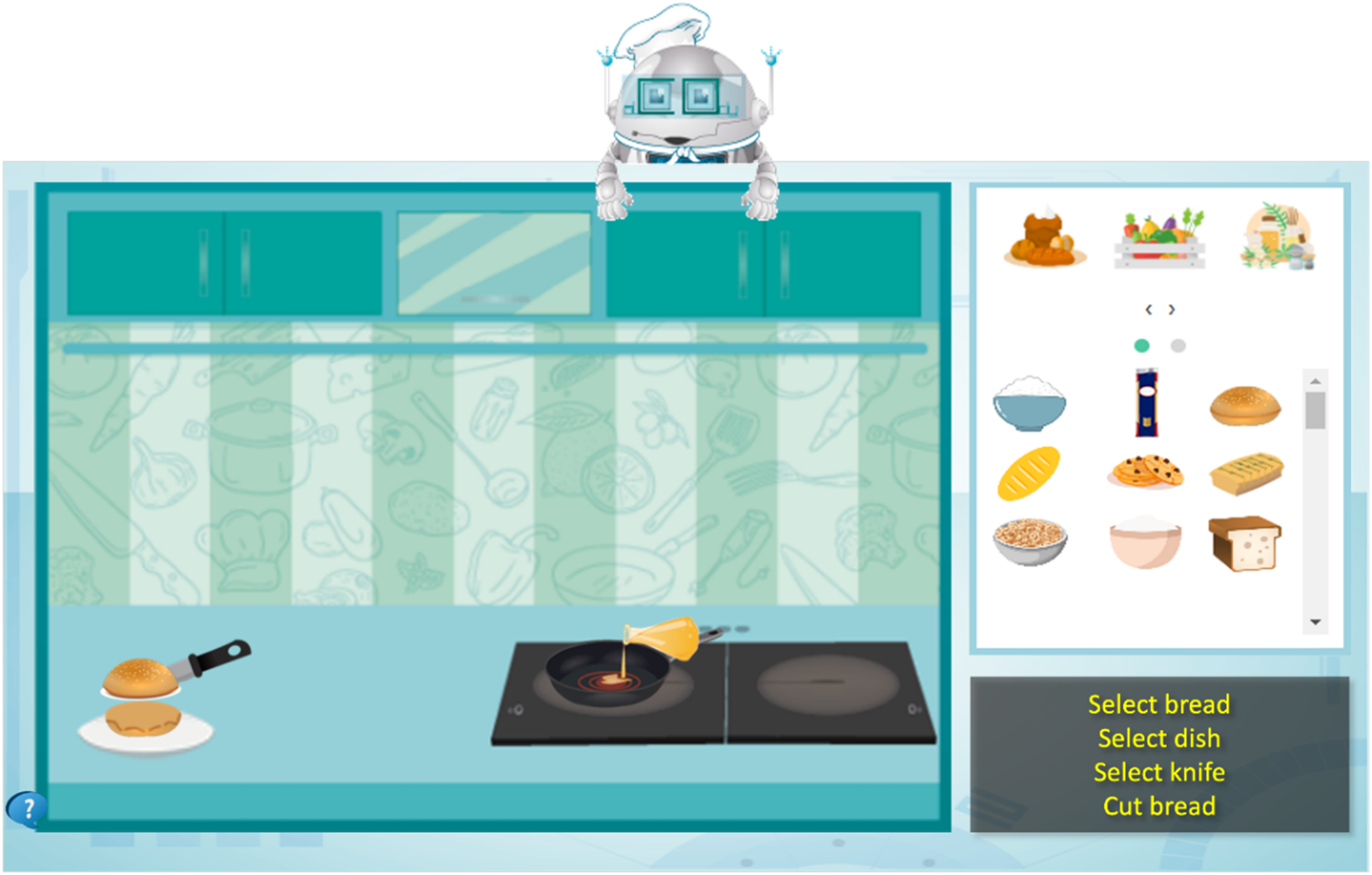
Several simple recipes can be provided such as pasta, hamburger, salad or lasagne. Students are shown the recipe and the ingredients. They must choose the correct ingredient according to the recipe in the proposed order or in any logical order to complete the steps of the recipe. As shown in Figure 4, students can get ingredients and see the result in the kitchen on the left until the recipe and the meal is complete.
Rewards
Each time students complete one of the fun activities or a recipe in Alcody, they should be given a medal or trophy. Rewards are a very important gamification component in increasing students’ motivation (Deterding et al. 2011a). For example, following the sample riddles described in the previous section, some badges could be provided. Initially, they would be greyed out until they are earned by the students. Once students complete each achievement, the badge is coloured in (see Figure 5). Sample reward badges (already earned) (Author’s own).
The badges are shown immediately after completing the exercise on the screen as they complete it to create a greater impact on students. Congratulations messages are also shown together with a thumbs-up gesture.
Progress indicators
Students are also able to check their progress at any time. It helps them acknowledge the completed activities with the coloured badges earned, and the activities they still need to complete with grey badges. A global percentage is calculated as a result of this formula: percentage = (number of badges earned * 100) / total number of badges. Currently, given that there are seven badges in Alcody as shown in Figure 5, when the students have all seven badges coloured the progress indicator reaches the maximum 100%, but for instance, if the student has earned two badges, then the percentage would be 200 divided by 7 equals 28.6%.
Methods
A pre-post test single group experimental research design was followed to test the proposal. It was not possible to have a control group (companion without gamification) and test group (companion with gamification). The experiment was carried out in the same school than in the experiment reported in Ocaña et al. (2020) and Morales-Urrutia et al. (2021). The School Principal told us again that the problem was not to use different versions of software (the ELC with / without gamification). The problem was that it was considered unfair to deprive some students of using the gamified ELC. We would only be allowed to carry out the experiment if all students had the same teaching possibilities. All in all, it was not considered a problem in this paper given that the focus is not to determine what was the most important factor that could lead to a possible improvement of the students’ scores and satisfaction. On the other hand, in this paper the data is provided to test the impact of the gamification proposal for the ELC on students’ scores and satisfaction while using the gamified ELC during one course covering all basic introductory programming concepts with more recent data. The learning scores of the students served as a quantitative measure to test their programming language knowledge, and answers to questionnaires serve to measure their motivation and satisfaction as percentages from 0 to 100. The research questions were:
Did students (aged between 10 and 12) increase their learning scores in a pre-post test using a gamified ELC during a course?
How motivated and satisfied are students in interacting with a gamified ELC?
The criterium to choose the students was the age. Students should be between 10 and 12 years old as indicated in RQ1. A total of 137 students aged 10 to 12 participated in the study (49% girls and 51% boys). It was because they were all the students aged 10 to 12 enrolled in the school so that they had the same teaching possibilities as requested by the School Principal. Students were grouped in face-to-face (when possible) and online sessions with their teacher and two researchers as external observers. The online sessions were due to COVID-19, since students could not attend their face-to-face lessons in Ecuador, and they had to use Alcody on-line. Given that Alcody can be used from any computer connected to Internet, there is no difference in the use of Alcody in the computers in the school or in the computer the students had at home. The time devoted was the same as they connected on-line at their time class with their teacher and mates.
Permission was given for students to use the gamified ELC on their computers, but none given to record the sessions. All data was anonymised during analysis. In the last two months as a new version of Alcody was created, half of the students kept using the same gamified learning companion (69) in the experiment described in this paper. While the rest of students (the other 69 students) could not be included in this experiment any longer as they were using a different version of Alcody (the mindfulness version explained in Morales-Urrutia et al. 2021).
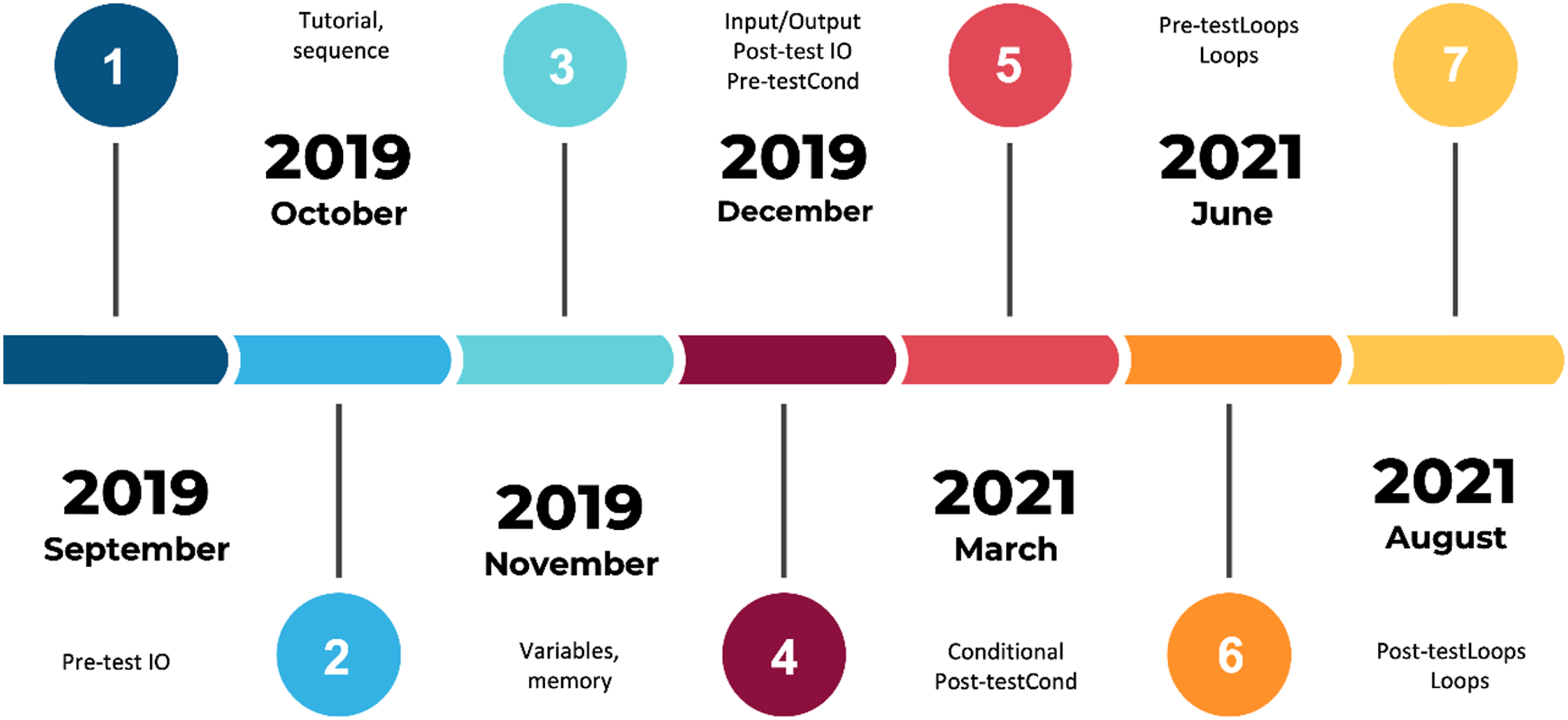
The procedure of the experiment was as follows: 1) In September 2019, the school’s authorities approved the project. The teachers then explained the project in a general meeting with the parents and asked for their permission for their children to participate. All parents gave their full consent. Figure 6 shows the procedure followed in the study. Initially, all students took a pre-test to find out their initial programming knowledge. 2) Students had a one-hour class with Alcody per week for one academic year – September to August. The concepts covered were input/output, sequences, memory, variables, conditionals, and loops. In the first fifty minutes of each class, students were asked to write programs as indicated by Alcody and answer how they feel and follow the recommendations indicated by Alcody, when possible, in class or after class. 3) If students had doubts, they could read the tutorials provided by Alcody and ask their teacher if they had any problems. In the last ten minutes of each class, students were given the option of solving the riddles and playing with the cooking recipes and checking their progress on the medal board. 4) Until October 2019 they were taught Alcody’s p-code with tutorials and the sequence concept. The next two months were devoted to teaching variables and memory, so that students could code their first input/output programs during January-February 2020 with their first post-test in February 2020 on these initial concepts. In March 2020, COVID-19 stopped face-to-face lessons, so students continued with Alcody online and using Zoom to talk to the teacher. They completed conditionals in May 2020, when the second post-test was taken, and finally, they studied loops in the summer until August 2020, when the third and final post-test was taken. On the final day, students were also asked to fill in a satisfaction and motivation questionnaire. Overview of the procedure of the experiment (source: Author’s own).
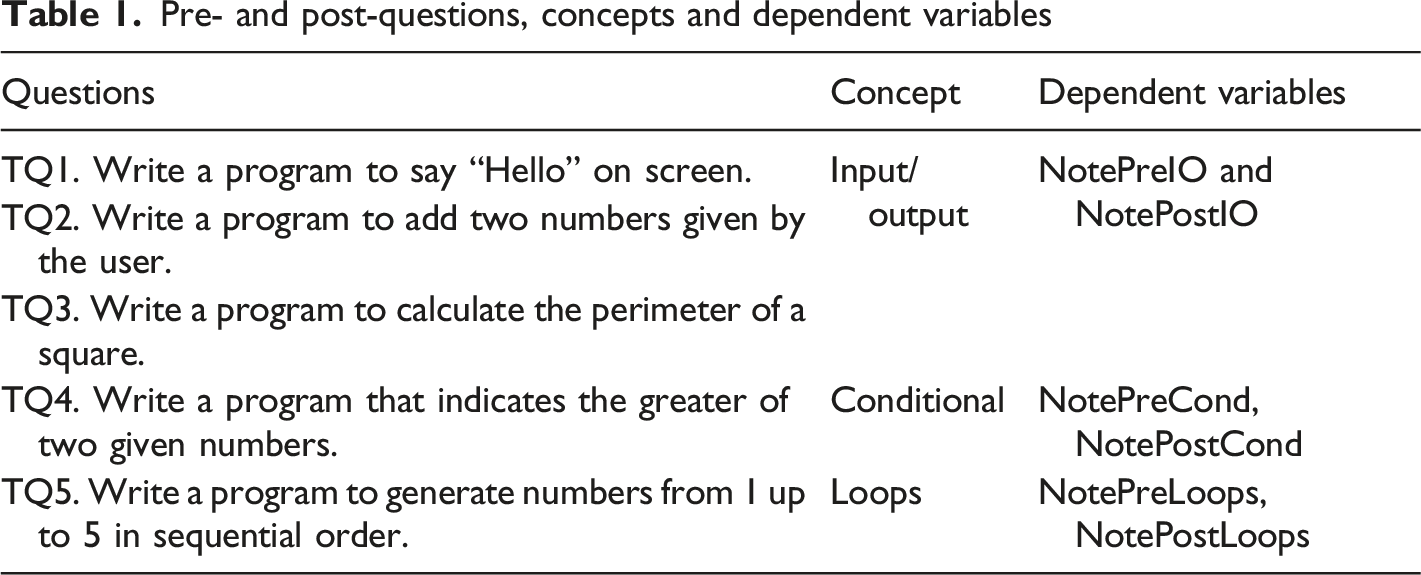
The pre- and post-tests were the same with five questions (see Table 1). All the children took the tests in class with their teachers. The dependent variables NotePreIO, NotePostIO are related to learning input/output (I/O) programming concepts; NotePreCond, NotePostCond are related to learning the conditional programming concept; and, NotePreLoops, NotePostLoops are related to learning the loops programming concept. There was only one independent variable in the experiment, “Use of Alcody” defined as the exposure to the gamified learning companion.
Each question was scored from 0 to 10. All questions in the test had the same weight. A rubric was given to the teacher to evaluate all tests in the same way: 0 points were assigned to unanswered or incorrect programs; half (5 points) if some instructions were correctly used but others were incorrectly used; and maximum (10 points) score if all instructions were correctly used in a working program. It was possible to use other scales such as 3-point scale, but it was considered simpler to evaluate the questions with the Spanish usual scale of passing a question with a score higher than 5 and failing with a score lower than 5.
Besides the test about knowledge, students were asked to fill a satisfaction questionnaire with 12 multiple-choice questions to choose on option. All students took the questionnaire in class with their teachers at the end of the experiment. Satisfaction and motivation percentages are measured by the answers given to the questionnaire (see Table 1 in Annex A).
Pre- and post-questions, concepts and dependent variables
Results
Learning Scores
Results of the pre- and post- programming tests

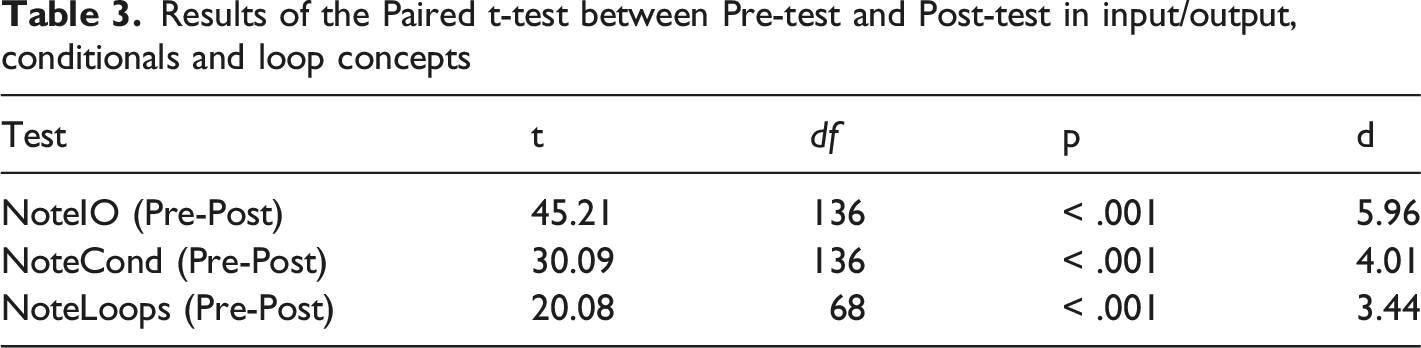
For the input-output concept, the pre-test median value was 0.50, with a data dispersion (standard deviation) of 0.85. In the post-test, the median increased to 8.33 but, with a data dispersion of 1.47. For the conditional concept, the median in the post-test increased from 1.50 to 7.50 and data dispersion also increased. Finally, for the loop concept, both the pre and post-test have atypical data. The difference in the medians between the pre-test and the post-test is five points. The dispersion around the mean also increases considerably.
Results of the Paired t-test between Pre-test and Post-test in input/output, conditionals and loop concepts
Satisfaction and Motivation Percentages
Results of the satisfaction and motivation questionnaire in percentages (each file refers to the question of the questionnaire and each column is the percentage of answers provided by the students to each option of the answers for that question (a-f); the options that were not present in a question are marked with blank) (Author’s own)
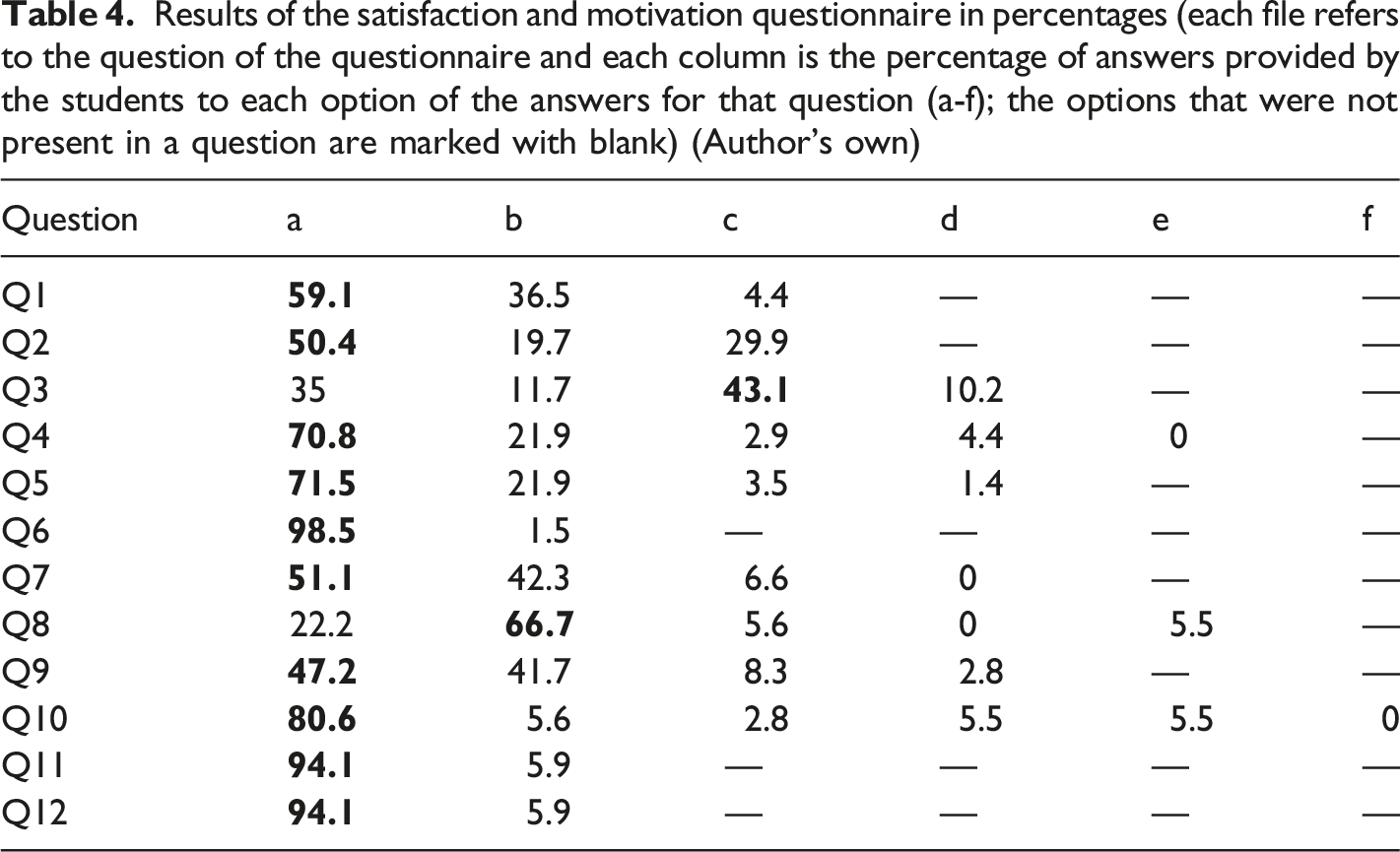
Regarding students’ preferences when using the gamification elements of Alcody, more than half the students chose the riddles (59.1%), followed by the recipes as their second preferred option (36.5%). Among the riddles, the one preferred by the students was the wolf, sheep and cabbage (50.4%). Among the recipes, the one preferred by the students was the hamburger (43.1%). Of all the students, 95.6% thought that earning badges was cool, very good or good. No student thought that earning badges was bad.
Regarding how useful students found the help provided by Alcody, 71.5% answered that it was very useful, 98.5% considered that Alcody had allowed them to learn programming, and more than half found it interesting to have learnt by playing and the rest found it fun (only 6.6% did not care).
Regarding the frequency of talking to Alcody about their emotions, 66.7% of the students reported having frequently talked to Alcody about their emotions, and 47.2% thought that Alcody’s recommendations were very good for them.
Finally, regarding how motivated and happy students were to go to class to use Alcody, 94.1% of the students answered that Alcody made them happy to go to class and motivated them to learn how to program and 80.6% felt satisfied after finishing the lessons with Alcody.
Discussion and limitations
Two research questions were asked regarding having an emotional gamified learning companion to learn to program in Primary Education. The first research question RQ1: Did students (aged between 10 and 12) increase their learning scores in a pre-post test using a gamified ELC during one course? was positive. An increase in the learning scores for all basic programming concepts (input/output, conditionals, and loops) has been recorded. This result is similar to the ones found by other studies showing that learning in general can be facilitated through gamification (Deterding et al. 2011a; Deterding et al. 2011b; Denny, 2013; Domínguez et al. 2013).
Regarding RQ2: How motivated and satisfied students are interacting with a gamified ELC? Students were highly motivated and satisfied. It may be that this was due to the support of the gamified learning companion to overcome the frustration of the cyclical process of programming (Resnick, 2012; Rogalski and Samurcay, 2010). In general, the use of gamification has been identified as motivational and satisfactory when the adequate game design has been applied (Sailer et al. 2017; Xi & Hamari, 2019; Yu et al. 2021).
Some reflections on the design experience are the following: 1) Gamification is not difficult to integrate into an ELC to teach programming. When teachers provide the programming exercise, they should also provide the kind of reward, challenges and riddles related. From the technological side, it is easy to integrate the gamification into the ELC as proved with Alcody. 2) The important point is that teachers think which rewards seems more adequate. Similarly, it is a matter of thinking which challenges and riddles are more adequate depending on the students and resources they have.
Finally, as practical implications of this study, we present some guidelines of how to introduce gamification into ELCs are following the features indicated by Zichermann and Cunningham (2011). 1) Before starting the activities, the rules of the challenges must be explained to the students. For instance, in Alcody the following texts are shown and spoken in the riddle of the wolf, sheep and cabbage: “The farmer must move the wolf, sheep and cabbage to the other riverbank. For this, you should consider for the exercise that on each trip you can only take one of them, but if you leave the sheep alone with the cabbage, it will eat it, and if you leave the sheep and the wolf alone, then the wolf will eat the sheep”. 2) Interactivity and feedback. The companion should provide badges and increase their level in the game as they complete activities to motivate students to keep studying. For instance, in Alcody, whenever students complete challenges or recipes, badges are given to them and there is a medal board to check overall progress. 3) Aesthetics. It is necessary to use images that are gratifying to the player. In Alcody’s interface, each of the characters, landscapes, backgrounds, etc. have been designed to be beautiful and eye-catching to capture the attention of students. 4) Idea of the game. Some pedagogy should be considered as the background of the games to develop students’ skills. For instance, in Alcody, logical riddles and recipes to follow sequences are used according to the MECOPROG methodology (Pérez-Marín et al. 2018) and the constructionism (Papert, 1980). 5) Game-player connection. A compromise between the player and the game is sought. To do this, the user’s status must be considered (Padilla et al. 1980). In Alcody, when starting and ending the activities, students are asked about their state of mind and an open dialogue is available to connect students and Alcody. 6) Definition of profiles. It is recommended that students as players have a profile in the system. In the Alcody learning companion, students have a profile that can be customised with details such as name, image and template. 7) Motivation. The psychological predisposition of the user to participate in the game can be regarded as a trigger. To keep players motivated, the game should have enough challenges so that students do not get bored, but without being too difficult to avoid anxiety and frustration. In Alcody, the activities and recipes were implemented with progressive difficulty, so as not to lose the interest of the students. 8) Promote learning. Psychological techniques should be incorporated to encourage learning through play, such as assigning points and corrective feedback. In Alcody, at the end of an activity, whether it is passed or not, students receive feedback on the result according to the instructions of the game, such as in the activity of the wolf, sheep and cabbage when the wolf is left alone with the sheep: “The wolf has caught the sheep, in the next attempt you will overcome the exercise, cheer up”. Similarly, the resolution of the activities assigns a value for the medal table that allows users to achieve a higher percentage in the medal table. 9) Problem solving. It can be understood as the ultimate goal of the user, i.e., to reach the goal, to solve the problem. The gamification of the Alcody learning companion is intended through solving riddles and recipes, which is expected to contribute to the subconscious process of solving the programming exercises.
However, it is important to note the limitation of these results and recommendations given the lack of a control group and the use of non-standardised measurement instruments.
Conclusions and future work
To gamify ELCs to teach programming to Primary Education students, careful guidelines should be followed such as providing challenges, rewards and progress indicators. Some sample challenges could be to solve riddles to develop logical thinking and to cook recipes following the metaphor of programming like cooking. Moreover, when students complete the activities, they should get immediate feedback such as a badge, congratulations message and thumbs-up gesture. At any time, they should be able to check their overall progress such as on a medal board.
Satisfaction questionnaire (statements of the 12 questions with their possible answers, blank indicates that the option is not available for that question)

Footnotes
Declaration of conflicting interests
The author(s) declared no potential conflicts of interest with respect to the research, authorship, and/or publication of this article.
Funding
The author(s) disclosed receipt of the following financial support for the research, authorship, and/or publication of this article: This work was supported by Consejería de Educación, Juventud y Deporte, Comunidad de Madrid grant no P2018/TCS-4307 and Universidad Rey Juan Carlos grant no Project P2018/TCS-4307.

Author Biographies