



Abstract
Background
The smartphone market is saturated with apps and games purporting to promote mental wellness. There has been a significant number of studies assessing the impact of these digital interventions.
Motivation
The majority of review papers solely focussed on the impact of strict rules and award systems of the apps. There is comparatively little attention paid to other game techniques designed to encourage creativity, a lusory attitude, and playful experiences.
Results
This gap is addressed in this paper in a consideration and analysis of a purposive selection of six mobile games marketed for wellbeing, our focus is on both external and internal motivations that these games offer. Our specific interest is how these games balance rule-based play with creativity. We find that ludic play is a highly-structured, rule-bound, goal-oriented play, in contrast to paedic play which a freeform, imaginative, and expressive. We argue that while ludic play is purposed towards the promotion of habit formation and generates feelings of accomplishment, it nonetheless relies heavily on extrinsic motivation to incentivise engagement. By contrast, paidic play, specifically role-playing, improvisation, and the imaginative co-creation of fictional game worlds, can be used effectively in these games to facilitate self-regulation, self-distancing, and therefore provides intrinsically-motivated engagement. In the context of games for mental wellbeing, ludic play challenges players to complete therapeutic exercises, while paidic play offers a welcoming refuge from real world pressures and the opportunity to try on alternate selves.
Conclusion
Our intention is not to value paidic play over ludic play, but to consider how these two play modalities can complement and counterbalance each other to generate more effective engagement.
Introduction
The smartphone market is saturated with apps and games purporting to promote mental wellness. The search terms ‘mental health’, ‘mental wellbeing’, and ‘self-care’ return thousands of hits on Google’s Play Store and Apple’s App Store. In 2020 the American Psychological Association reported that there were more than 20,000 apps designed for mental health available on mobile phones (Mental Health Apps Are Gaining Traction, n.d.). In response, there has been a significant number of studies assessing the impact of these digital interventions (see Sardi et al., 2017) and (Eichenberg & Schott, 2017). These studies tend to measure the effects of a narrow set of gamified elements, namely badges, leader boards, points and levels, challenges and quests, and social engagement loops, on user engagement with the e-health solutions (Miller et al., 2014). A recent systematic review, for example, found that many papers solely focussed on the impact of “levels or progress feedback, points or scoring, rewards or prizes, narrative or theme, personalization, and customization” (Cheng et al., 2019). There is comparatively little attention to date paid to other game design techniques for encouraging lusory attitudes and for scaffolding playful experiences. In this article, we address this gap by applying taxonomies of play drawn from games studies to a sample of six mobile games designed to support mental wellbeing. We are particularly interested in how these games create a balance between ludic play and paidic play, where ludic play is defined as highly structured, rule-bound, goal-oriented play, and paidic play is defined as freeform, imaginative, expressive play. We are deploying Roger Caillois’ coinage to distinguish between two very different modes of play (Caillois, 1961). We reframe Caillois’ terms as a continuum between two opposing poles, following a conception developed by King and Krzywinska (2006).
In practice, most forms of play combine both ludus and paidia (King & Krzywinska, 2006), with a high degree of inter-connection. Whilst we acknowledge the interdependence of ludus and paidia, for the purposes of this paper we deliberately focus on their points of contrast as a means of distinguishing between the different types of play experiences facilitated by the games in our corpus, and where these games frequently articulate ludus not as complex systems but instead as an over-simplified mode of gamification in the form of feedback mechanisms such as badges.
Mobile Games Efficiency and Mental Health: need to understand artistic potential of games
Arguments in favour of designing mobile games to promote mental wellbeing often point to the financial, social, and geographical barriers that prevent many people from accessing traditional forms of psychological support. The accessibility of smartphones is invoked as a justification for using this medium as a platform to deliver treatment (Hugh-Jones et al., 2022), and gamification is proposed to reduce levels of attrition in digital mental health (Sholten & Granic, 2019). While there are many enthusiastic proponents of gamified tools to improve mental health, there are also those who remain sceptical about the efficacy and feasibility of digital interventions, and those who question the ethical implications of using gamification to foster adherence in the context of mental health treatment (Colman & Gnanayutham, 2014).
Digital games have a distinct set of rhetorical affordances and aesthetic devices, which means that questions of efficacy, feasibility, and acceptability cannot be fully addressed without a formalist understanding of the aesthetic potential of the form. While large mental health app databases (such as One Mind: PsyberGuide
Ludic Play and Paedic Play typology
The canonical work of theorist Brian Sutton-Smith The Ambiguity of Play (1997/2001) is often used to diagnose the social and psychological ailments of contemporary society: we suffer because we are a play-deprived population. In combination with Mihaly Csikszentmihalyi’s theorisation of ‘flow states’ (Csikszentmihalyi, 1990), the idea that play is a panacea that can cure modern malaise underpins many utopian accounts of gamification (Kirkpatrick, 2015). ‘Gamification’, here, is broadly defined as the introduction of simple game-like elements that reward behaviours into non-game contexts (Deterding, 2020).
However, many games scholars view gamification as palliative at best (Woodcock & Johnson 2018, p. 524): a coping strategy to pacify and distract, rather than cure (Rethinking Gamification, Fuchs et al., 2014).
In other words, gamification aims to make social subjects less depressed, rather than making social systems less depressing, shifting the burden of managing stress, demotivation, and alienation onto the individual. In the context of games for mental wellbeing, this manifests as a kind of ‘technological solutionism’ in which pathologized and medicalised unhappiness is positioned as an individual problem to be treated through automated self-care and digitally enhanced self-management. On the other hand, people would vary in their mental health due to genetic and temperament differences so there might always be a need to support some people more than others to enjoy a certain quality of life.
Using frameworks devised by and drawn from games studies, we identify the key differences between features that ‘pointsify’ (Robertson, 2010) wellness and features that scaffold restorative play experiences. Since there is significant disciplinary resistance to the logic and rhetoric of gamification within games studies, for example, (Kirkpatrick, 2015) (Bogost, 2011), and (Robertson, 2010) ,these frameworks introduce an alternative set of criteria with which to appraise the current state of mobile games for mental health.
Over-looked Paidia, and positive social aspects of Paidia
As there is not space in this article to fully engage with critiques of gamification, and there are many critiques of such, we will employ Ian Bogost’s concept of ‘exploitationware’ to describe forms of gamification that are by nature instrumental, outcome-focussed, and extractive. We will use Robertson’s coinage ‘pointsification’ to describe a subcategory of gamified systems that uses extrinsic rewards to motivate, manage, and manipulate participants to mask a dearth of intrinsic systemic meaning.
If gamification’s interpretation of ludic play is not the antidote to depression because it sublimates the absence of intrinsic meaning, could a greater emphasis on paidic play pose a direct challenge to meaninglessness? Sutton-Smith suggests that play requires the wilful suspension of disbelief and an embrace of a fiction in which the player imagines alternate modes of being and alternate systems of relation. This entails the provision of a rich symbolic space for reflection and testing out feelings and positions.
Although gamification-from-above can be used to maintain the status quo, paidic play seems instead to prime players for transformation (Fink 2021, Fink Cards Mental Wellbeing). Transformation is a neutral concept, but in the context of tacking poor mental wellbeing, transformation of the self and of social, political, and environmental systems could be considered the opposite of hopelessness.
For Beauvais (2015), the existential potential of play is confined to childhood, but researchers from other fields have suggested that our capacity for paidic play is something that we carry forward into adulthood. Ethologist Frans de Waal, for example, notes that human beings “retain the playfulness and curiosity of juveniles. We play, dance, and sing until we die… Neoteny has been called the hallmark of our species' (2022, chp 5). Paidic play may offer a temporary reprieve from age-based beliefs about the stability of the self and the fixity of social systems. Sociologist and age studies scholar Sari Edelstein uses ludic language to describe adulthood as “the prize of compliance with a system that prioritises the self over other and competition over cooperation” (2018, p. 145). She argues that the privileges associated with adulthood (e.g., independence, autonomy, authority, security, full citizenship) are hard won for some, and remain unattainable for others. Women, disabled people, queer people, people from low socio-economic classes, and racial, ethnic, and religious minorities can be denied the rewards of adulthood, irrespective of their age in years
We will show here how, in the context of mobile games for mental health, this may mean rejecting overly simplified goal-oriented game systems that imagine wellness as a linear escalation towards an optimal state, and instead embracing games that are purposefully rich, unproductive, cyclic, and undirected. We suggest revaluing paidic play to reveal a need for games that are absurd, mysterious, childlike, symbolic, evolving, open, surprising, and fantastical.
Methods
Corpus Selection
We selected games for inclusion in our corpus through purposive sampling (Palinkas et al., 2015), a nonprobability sampling technique used by researchers when randomization is impossible (like when the population is very large) and when the research does not aim to generate results that will be used to create generalisations pertaining to the entire population.
Criteria of narrowing down our search/sampling
We used the tags ‘mental health’ and ‘mental wellbeing’ to search the App Store and the Google Play Store for relevant games. Since we wanted to limit our analysis to games rather than apps, we excluded search results that did not explicitly invite ludic or paidic play as the primary mode of interaction: (i) emotional intelligence education; (ii) therapy chatbots; (iii) mood trackers (iv) self-diagnosis tools (v) AI therapists; (vi) professional usage apps; (vii) all apps forh age less than 25; (viii) ‘’money-extractive’ games, encouraging in-app spending.
In practice, it is difficult to draw a definitive line between games and apps. For example, Finch: Self Care Widget Pet (henceforth Finch) looks very similar to Wysa but we categorised the former as a game and the latter as an app. Both place the user in conversation with a cute, cartoon baby bird (for illustration, Figure 1). Finch, however, solicits paidic play by positioning the player in the role of guardian of the baby bird and invites ludic play by challenging the player to complete preselected tasks to earn gems that can be exchanged for in-game items. Wysa does not facilitate role-playing, nor does it incentivise engagement through a gamified rewards system. Therefore, we classified Finch as a game and Wysa as an app and excluded Wysa from our corpus. Screenshots of the hubspace of ‘Finch’ and the hubspace of ‘Wysa’.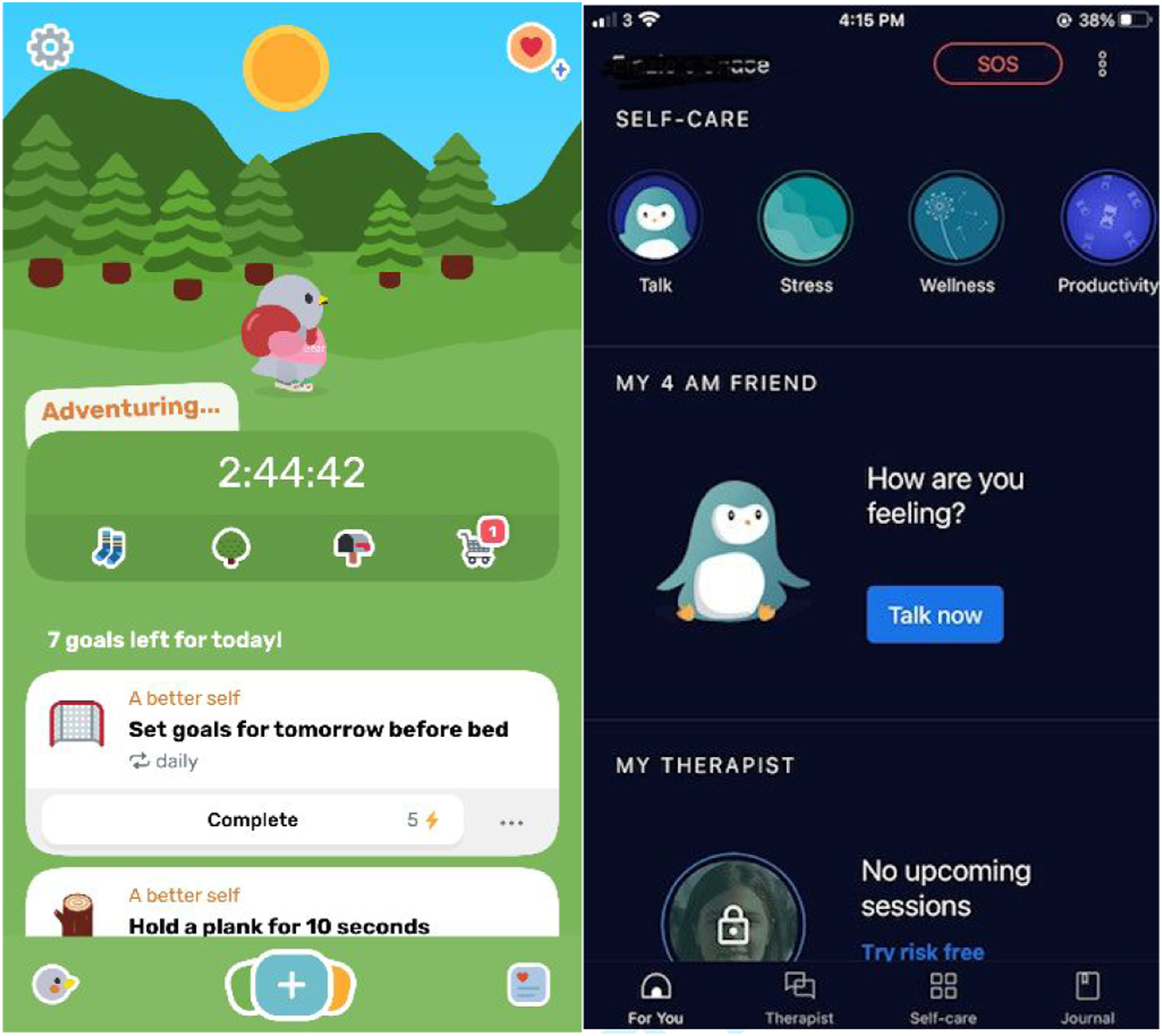
Discussing the ethical implications of the monetization of mHealth is beyond the scope of this article. However, we do address the implications of the payment models used in each of our primary texts in the ‘Discussion’ section.
Short description of selected apps
The six games we chose for close analysis were selected to represent a range of audio-visual styles and game mechanics. (1) Finch has childly visuals, a points-based reward system, and an emphasis on parasociality (or one-sided relationship). (2) Betwixt has a minimalist aesthetic and uses lyrical language instead of visual art. Its unique chatbot invites role-playing and the game uses an intriguing mystery to foster engagement. (3) A Hero’s Guide to Gardening (henceforth AHGtG) is an interactive graphic novel with an embedded narrative and a striking art style. It includes mini games to introduce mindfulness techniques. (4) Apart of Me is a third-person RPG set in a three-dimensional world. It uses levelling-up mechanics to incentivise the completion of therapeutic exercises designed to support players through bereavement. (5) #SelfCare is a digital, interactive bedroom that players can explore by tapping hotspots. There are no goals to attain or skills to master, and retention is rooted in an autotelic desire for players to turn small, digital interactions into daily rituals. (6) Finally, Amaru: The Self-Care Virtual Pet (henceforth Amaru) uses a fantasy setting and traditional pet simulator mechanics (e.g., feeding, petting, and customising a digital animal). It gamifies therapeutic exercises through a combination of rewards in the form of in-game currency, levelling-up the player’s bond with the pet, and releasing new instalments of the pet’s backstory. Thematically, these games include magical, fantasy settings, natural environments with animal protagonists, and sites of domesticity. Games had different wellness goals, ranging from enhancing self-care to coping with a bereavement. They also varied with regards to whether they were evidence-based or grounded in psychological theory. For instance, Apart of Me was designed by a child psychologist whereas #SelfCare was modelled after the creators’ personal self-care rituals.
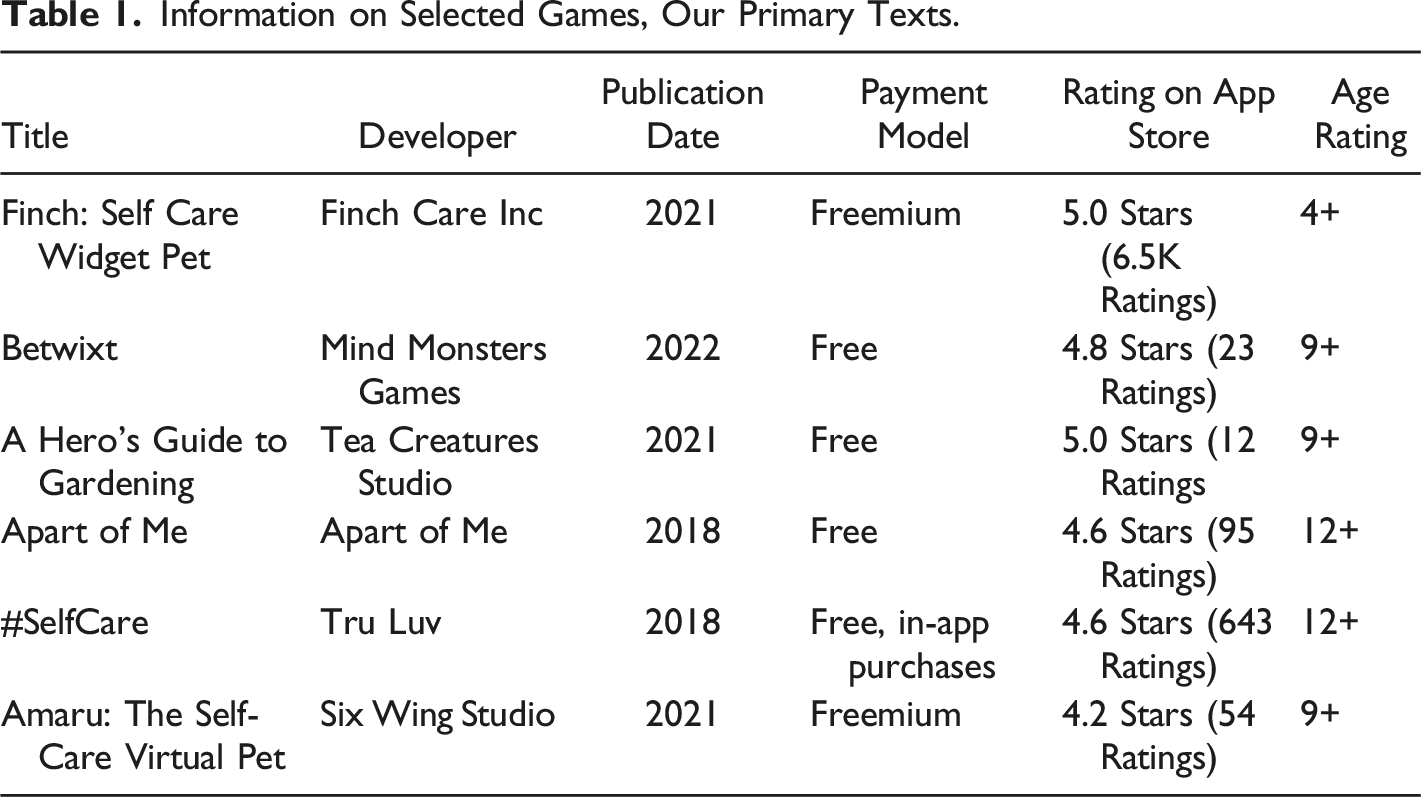
Information on Selected Games, Our Primary Texts.
Method to analyse and classify the six selected games
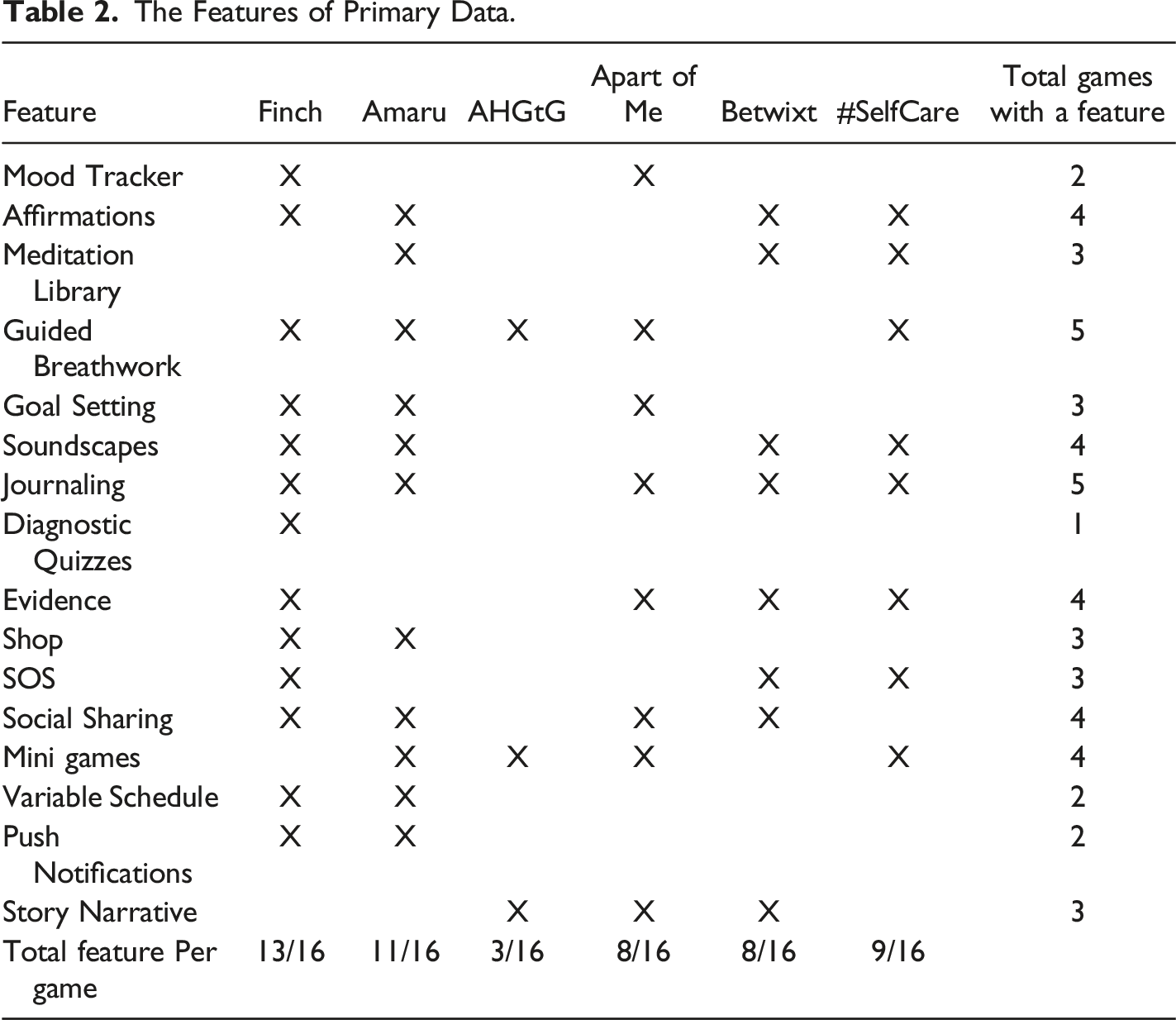
The Features of Primary Data.
Members of the research team played selected games from the primary texts based on their interests and backgrounds, and discussed the different types of play each feature could elicit. We then located each game on a scale with ludus and paidia at each pole. Namely, each person scored (on a Likert scale) each game for paidia and ludic, and then the difference was used to put it into ludic paedic spectrum, e.g. if ludic=3 and paidia=4, then the score = 4-3 =1 of paidia, if paidia is a right pole of the x-axis. We also obtained 2D representation for our set for visualization, see Figure 8 Last. Note the games on the diagonal are scored balanced on the spectrum.
As an interdisciplinary group, we drew across the fields of games studies, computer science, psychology, and psychiatry to consider how the balance of ludus and paidia might shape the player’s experience. Although all testers are over 18 and younger players may experience these games differently, we do not regard this a limitation for this research.
Usage of primary Caillois taxonomy and its connection with motivation types
As (Sardi et al., 2017) suggests, researchers need to pay considerable attention to the motivational side of the gamified applications and serious games. Play is only described as intrinsically motivated when interacting with the game system itself is rewarding, satisfying, interesting, exciting, or pleasurable (Ryan & Deci 2000). We scored (as described above, by consensus across the team) each game on a scale between ludus and paidia, which indirectly reflected extrinsic and intrinsic motivations (Sardi et al., 2017).
Analysis and in-depth classification
Detailed description of games; comparison of their features and functionality
Here we first describe our games with their features and functionality, and then compare and categorise them according Caillois typology, which we described in Methods.
Finch and Amaru as the most Ludic
For the most part, Finch only scaffolded ludic play. It included 13 out of a total of 15 features identified across our corpus, meaning that it had more interactive offerings than all of the other games. The core gameplay loop in Finch follows a consistent pattern: when the player opens the app, they are met with an inspirational quote by a celebrity or a spiritual leader and the non-optional mandate to log their mood. The next screen is a hubspace that shows the player’s cartoon, neotenised bird standing in a flat, primary-coloured forest, waving at the player. From here, the player can set themselves real world tasks from a selection of themed goal lists. Examples of goals include ‘Say one thing I’m grateful for before bed’, ‘Hold a plank for 10 seconds’, and ‘Wash my face’. When the player marks these goals as complete, they are awarded energy, symbolised by a bolt of lightning. With enough energy, their pet bird will ‘go on an adventure’ for a period of seven hours. The bird’s animation changes from waving to walking with a bindle over its shoulder. Players can continue to accumulate energy by interacting with any of the game’s features (e.g., recording an entry in the ‘Reflections’ journal or completing a breathwork exercise). This energy will accelerate the bird’s return and earn the player ‘rainbow stones’, the in-game currency. Ludic play is encouraged through transparent feedback loops that ascribe numerical values to self-care practices. The game has a clear goal: accumulate energy and earn rainbow stones. The player’s personal progress is visualised through infographics and progress checkpoints (Figure 2b), as well as through the accumulation of purchased items of clothing and furniture for the bird. (a) Screenshot of rewards screen in ‘Finch; (b) screenshot of the quantification of the player’s progress in ‘Finch’.
Paidic play is encouraged in three main ways in Finch: 1) through childly aesthetics, 2) through the expectations set by the pet simulator genre, and 3) through dialogue choice that invites players to engage in parasocial relationships with the bird.
Paidic play counterpoints the disciplinary nature of ludic play, making compliance with the game system feel more like a request than an order. The injunction to take responsibility for one’s own wellness is reframed as taking responsibility for the development of a baby bird, whose neediness is explained and excused through the cultural normalisation of dependence as a characteristic of childhood. Compassion for the baby bird may lead to greater self-compassion. In other words, the paidic mode of acting as if the bird were real and sentient softens the vulgarity of quantification. The potential for alienation resulting from being interpolated into such a simplified system of moods and attributes is ameliorated, in part, by the intercession of a friendly, childly mascot.
Amaru uses a similar technique. In the place of a bird, the player is asked to emotionally invest in a bird-cat, the eponymous Amaru. Amaru has an anxiety disorder stemming from a traumatic incident, which is gradually revealed in instalments of his backstory. If the player completes self-care exercises, such as ‘waking up on time’ or ‘doing a guided meditation’, this soothes Amaru and allows the player to interact directly with him. Amaru’s animation changes from shivering unresponsively on the ground with a worried expression to sitting up, smiling, and soliciting the player’s attention. Amaru encompasses more pet sim mechanics than Finch, including purchasing food to feed the bird-cat and petting the bird-cat to increase a bond metre. The in-game currency is earned by sending Amaru out to explore, which – as with Finch – can only happen once the player has logged a set number of tasks as complete.
Currency can also be earned by playing mini games. Significantly, the game requires the player to specify a time limit for how long mini games are available, which is the most explicit example of how both games mandate self-discipline. Some of these mini games are pockets of paidia within a ludic structure – particularly, the cairn-stacking mini game. It is ironic that the only game elements that could constitute extended restorative play (e.g., the mini game that involves completing jigsaw puzzles whilst listening to a relaxing soundscape) are restricted. This belies a deep suspicion of play within gamified mHealth contexts and reinforces a ‘chocolate-coated-broccoli’ understanding of serious games where what is ‘nutritious’ (the therapeutic exercises) is made ‘palatable’ by play. If the opposite of ‘serious’ is not ‘playful’ but ‘trivial’, then we could argue that the trivialising potential of ‘pointsification’ makes it less suited to serious themes than paidic play (Figure 3). (a) Screenshot of hubspace in Amaru; (b) Screenshot of phone’s lock screen showing push notifications from ‘Finch’.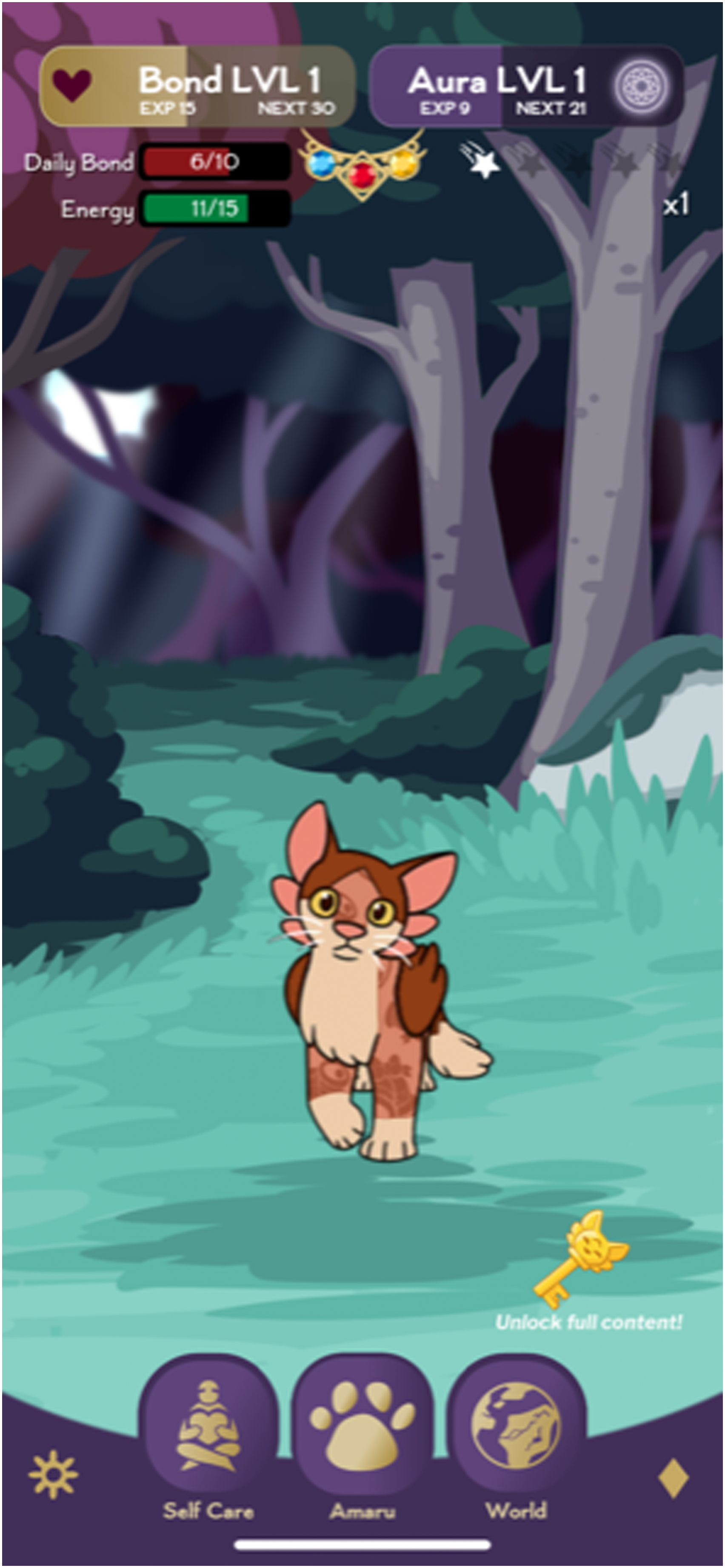
Amaru mostly relies on extrinsic motivation (e.g., investing time to unlock new areas, earning beads).
Cheating as a side effect of Finch and Amaru
Since the rewards for completing these tasks are extrinsic, players may feel inclined to cheat either by deliberately selecting ‘easy’ goals or by marking goals as complete without doing them. Finch facilitates cheating in the same way, as it is not possible for the game to monitor the player’s behaviour in the real-world. The appeal of cheating is rooted in the fact that ludic play ascribes value to the outcome of play rather than the process of play. Cheating is not necessarily a wholly negative form of engagement in the context of serious games. Lee and Lim have argued that players who cheat at exergames, for example, may remain invested and return to approved playstyles over time (Lee & Lim, 2017). Furthermore, the subversive nature of cheating means that it can have more of a playful quality than strict obedience to the game’s rules. Writing verbose, rambling nonsense in the journal in Finch, for example, could be a creative, amusing, self-expressive act, prompting laughter and a sense of autonomy. In the context of mental wellbeing, however, cheating may also elicit negative emotions such as guilt or a sense of failure
Finch and Amaru are also the only games that are not free. When engaging with Finch and Amaru, every menu contains certain options that are visible but are greyed out behind a paywall, represented by a padlock icon. This functions as a constant advertisement for purchasing a full subscription to the game service. Both Finch and Amaru connect mental wellness with economic power through their shopping-themed reward systems.
Apart of Me as the most balanced game
Apart of Me was the game that most evenly balanced paidic play and ludic play. This is was confirmed by a survey sent out to the researchers and developers of the Attune Team. It borrows from the standard language of role-playing games. The player explores a 3D tropical environment meeting characters and discovering interactive objects in order to accumulate ‘experience points’ (XP) that allow them to level up (Figure 4). It courts a completionist impulse that has a ludic quality. On the other hand, the fact that the game consists of an open world (albeit a small one) and that there are multiple pathways to gaining XP means there is an element of self-direction when playing, which is consonant with a paidic experience. The paidic elements of Apart of Me shape a bounded playspace that is visualised as an island, reachable by hot air balloon. The game’s fiction gives the players somewhere to go – it offers them a playground that does not continually redirect them back to the ‘real world’. The tasks within the game are not particularly playful, but the gameworld nonetheless invites a relaxed, open attitude, suggesting that a consistent and encompassing gameworld can invite a paidic mood when approaching therapeutic exercises. The end point of levelling up the avatar is to become a Guide like the non-player character (NPC) who first welcomes the player to the island. In some sense, this goal acknowledges the social component of grief and bereavement. The aim is not to rehabilitate the player, returning them to a state of functional normalcy after the trauma of bereavement, but to ascribe meaning to their lived experience. Screenshots of Apart of Me showing player-character, game world, and HUD (left) and journal entry containing recorded interview with bereaved person (right).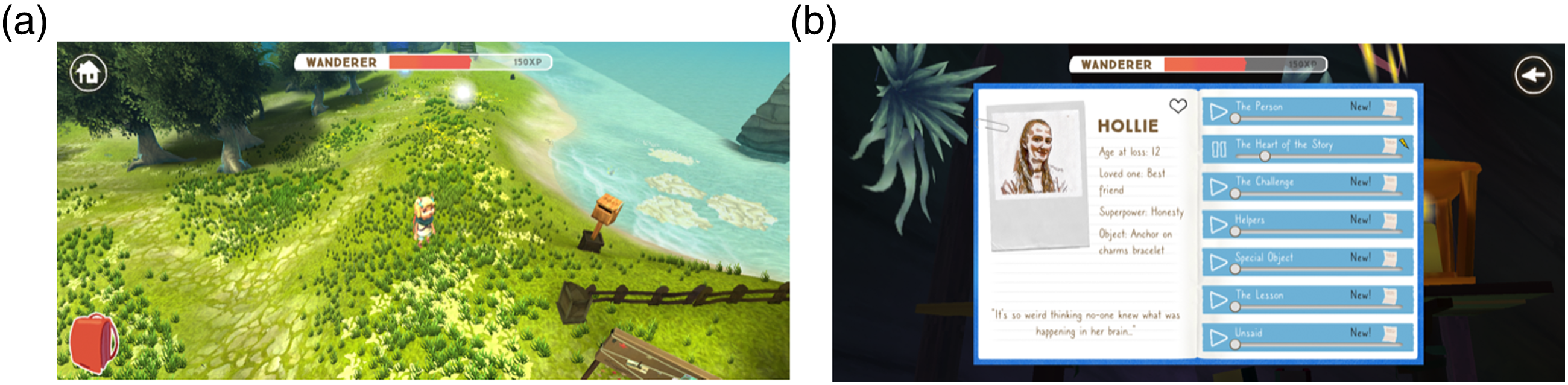
The game also balances fiction with reality. In a designated cosy hubspace within the gameworld, the player can listen to recorded interviews with bereaved young people. The seriousness, and comparative ‘realness’, of these moments are bounded as separate from the rest of the play experience – the magic circle of play is more like a magic donut of play in this game. These journals are presented to the player as rewards for completing errands, therapeutic exercises, and real-world acts of memorialisation. The interviews also suggest that comfort can be found in connecting with others as well as tackling grief as an individual.
AHGtG and Betwixt as an intermediate paedic
If Apart of Me gives players somewhere to go, AHGtG gives players someone to be. AHGtG is an interactive graphic manual for self-compassion. Rather than addressing players in the second person and inviting them to enter the magic circle of play as themselves, AHGtG allows players to fail and learn without hazarding their self-image by pairing them with the character of Noomi. Noomi is a young, well-intentioned, purple-skinned fantasy creature whose hubristic flaw is her inability to ask for help. She learns techniques for mood regulation alongside the other characters, each of whom struggles with an aspect of their mental wellbeing. For example, AHGtG models the process of taking calming, restorative breaths during a sequence in which the protagonist helps an anxious, perfectionist, dungaree-wearing Owl learn to accept, and even value, the ‘Jitter Bug’ weeds growing in her garden (Figure 5). Screenshots of A Hero's Guide to Gardening: (a) interactive graphic novel, (b) dialogue choice, (c) a metaphor for passion and support, and (d) supporting cast.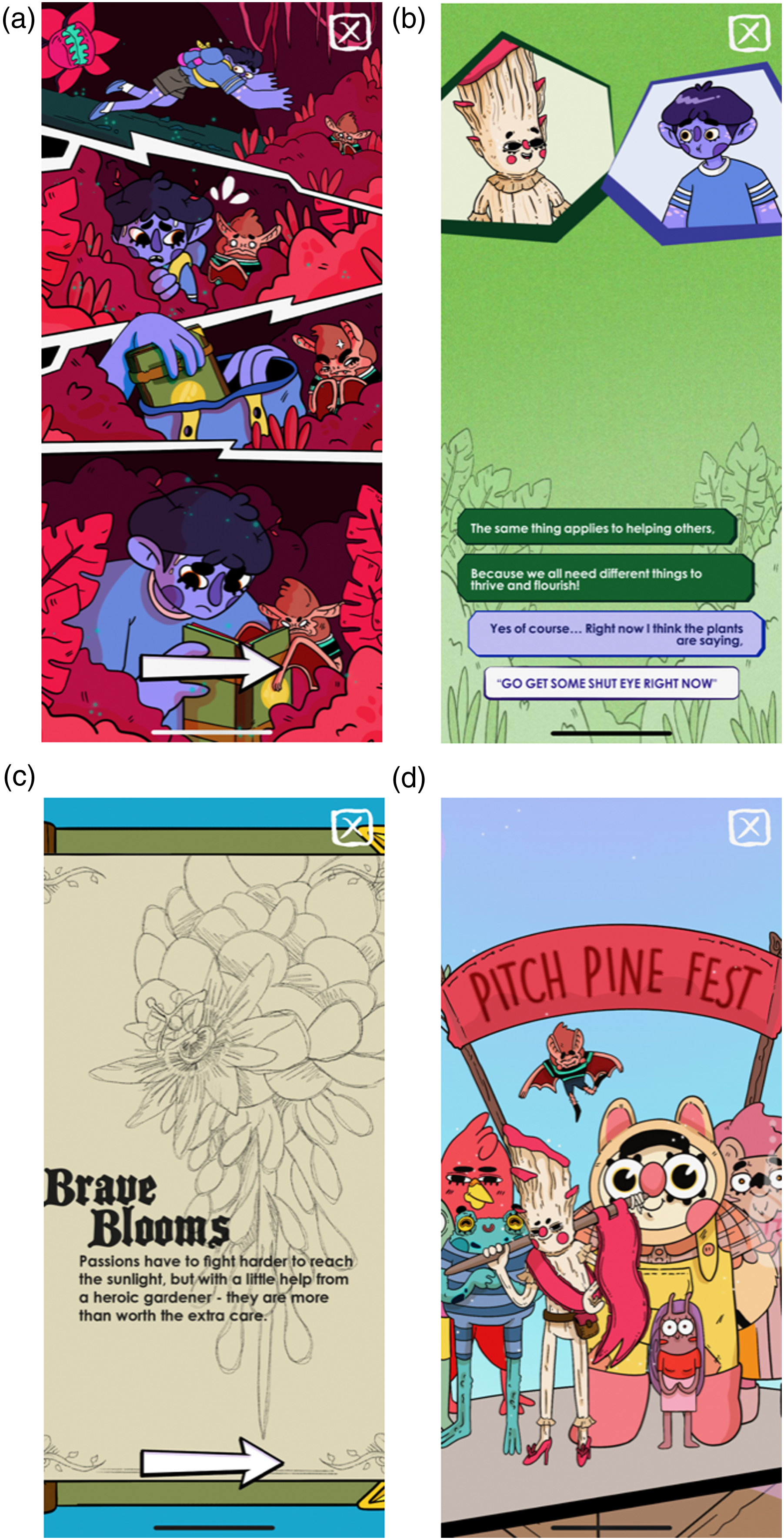
Agency entails responsibility, which can sometimes feel stressful, but AHGtG limits the consequences of agency whilst still inviting players to reflect on the choices that Noomi makes by giving them the power to trigger these choices.
Betwixt invites a more exploratory and expansive form of role playing. It addresses players in the second person, but it uses a high fantasy framing to suggest that it is not the player’s ‘everyday’ self that is being hailed. There is no visualisation of the player’s ‘self’ on screen. This works significantly better than any customisable avatar creation system for two key reasons: firstly, if the on-screen perspective implied the presence of an in-game body, it would undermine the idea that the game takes place inside the player’s mindscape; secondly, the lack of a visualisation of a self supports the game’s message that we do not have essential, stable selves, but are shifting beings whose moods and experiences constitute our realities. In fact, Betwixt does not use images at all. The gameworld and the events that take place there are conjured solely through lyrical verbal text, responsive soundscapes, and a well-designed chatbot.
The character that the player is conversing with is presented as a cryptic, mystical presence rather than as a proxy for a real person. This also makes it easier for the game to avoid the uncanny (and, potentially, highly distressing) bugs that plague other mental health chat bots. Betwixt creates subjective space for players to project meaning by using poetic language and allegorical frames. The gameworld in Betwixt – referred to by the narrator as The In-Between – is a shifting, mystical landscape that alters with the player’s mood. Beginning in a vast, cold, inhospitable tundra, the landscape grows warmer and more detailed, until it is filled with life and fantastical delights. The experience is located ‘in between’ the player’s ‘real’ intrapsychic space and the game’s fictional realm. Fiction is a virtual reality tool that simulates human experiences.
While the writing in Betwixt is poetic and rich (Figure 6), the art in AHGtG is vibrant, striking, and stylish (Figure 5). The care and skill involved in the creation of the audio-visual and verbal elements of these mobile games is what makes the player want to spend time engaging with them. Screenshots of ‘Betwixt’: (a) menu selection screen, and (b) chatbot conversation.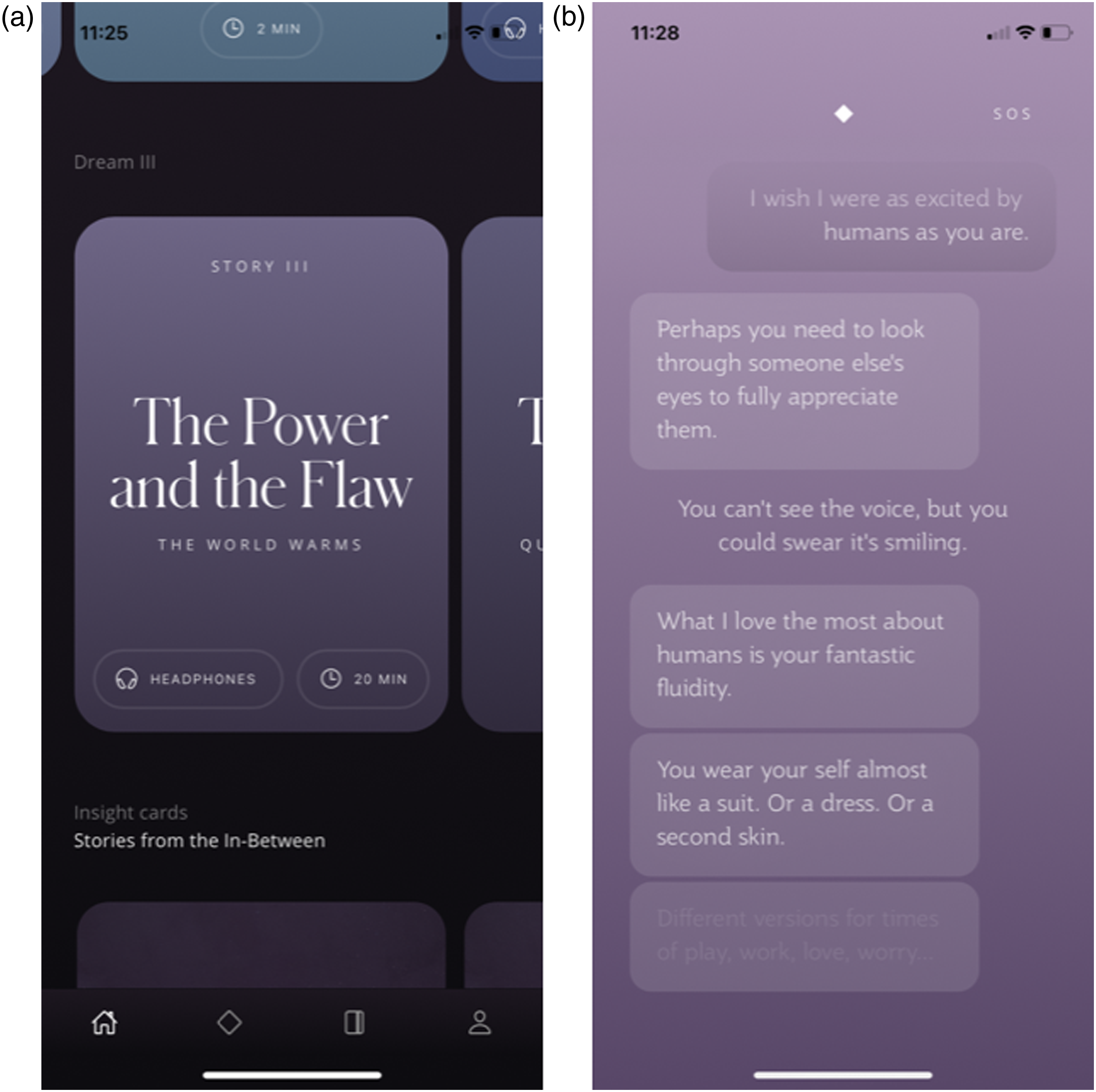
#SelfCare as the most Paedic
Beneath its veneer of New Age pseudoscience, #SelfCare is the most radical of the six games in our sample. It is a shrine to idleness and indulgent solipsism. The hubspace in #SelfCare shows someone lounging in bed, their face covered by a comfy duvet. The room has dirty laundry on the floor and the blinds are half-closed (Figure 7). Mantras and platitudes like ‘You Are Enough’ (common to all games in our corpus with affirmations) feel more authentic when the game itself revels and delights in doing nothing. What is playful about #SelfCare is its embrace of unproductivity. There are many definitions of play, but nearly all of them stipulate that play is ‘unproductive’. Screenshots of ‘#SelfCare’: (a) hubspace, (b) affirmation jar, (c) guided breathwork, and (d) journaling.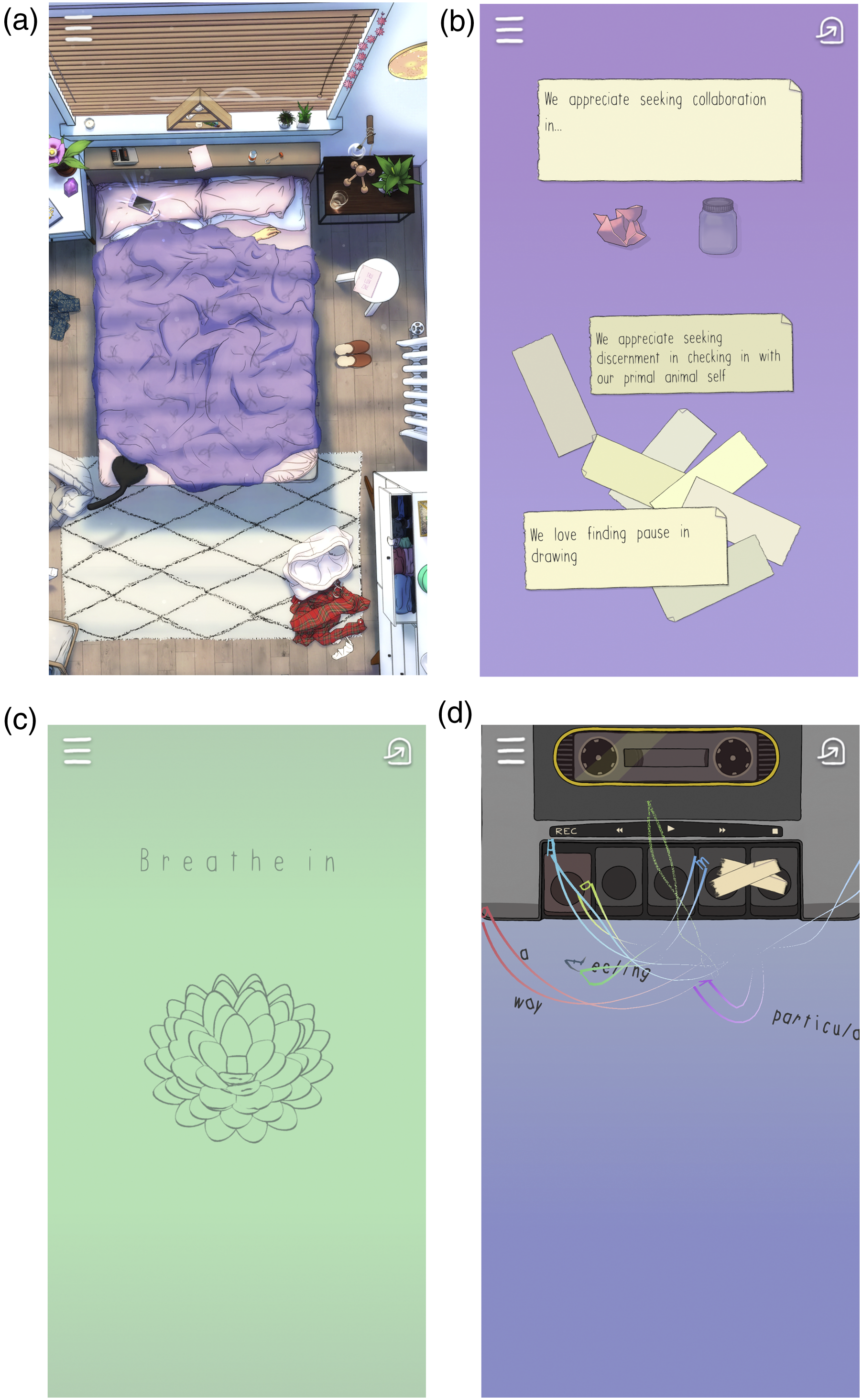
The journal mechanism of #SelfCare is themed to an old-fashioned tape recorder and as the user types out their thoughts the words appear in random locations and almost immediately start to melt and streak away leaving behind rainbow trails. The player is invited to stop recording, press the rewind button to reassemble the text, and then press play to reflect on what they have written. You cannot record progress – how you feel in the moment exists only in the moment and then it passes. There is no essential self that you can ‘work on’ over time, just your reactions and sensations as fluid, multiple, and ephemeral. Rather than simply remediating a paper-based journal as a digital tool, #SelfCare takes advantage of what is possible in the digital realm to enhance the capacity of journaling to encourage non-attachment and self-distancing.
Comparison of games according their features and functions
The functional features in the six mobile games are shown in Table 2 lists, and Figure 8 places the games on a spectrum from Ludus to Paidia. Figure 8 shows rankings of the wellbeing games on their ludic and paidic scoring, showing a good mix of games in the ludic and paidic spectrum, with a consensus that Apart of me being the one which is best balanced. Visual representation of games scored according Ludic-Paidic spectrum. Showring Apart of Me as the best balanced.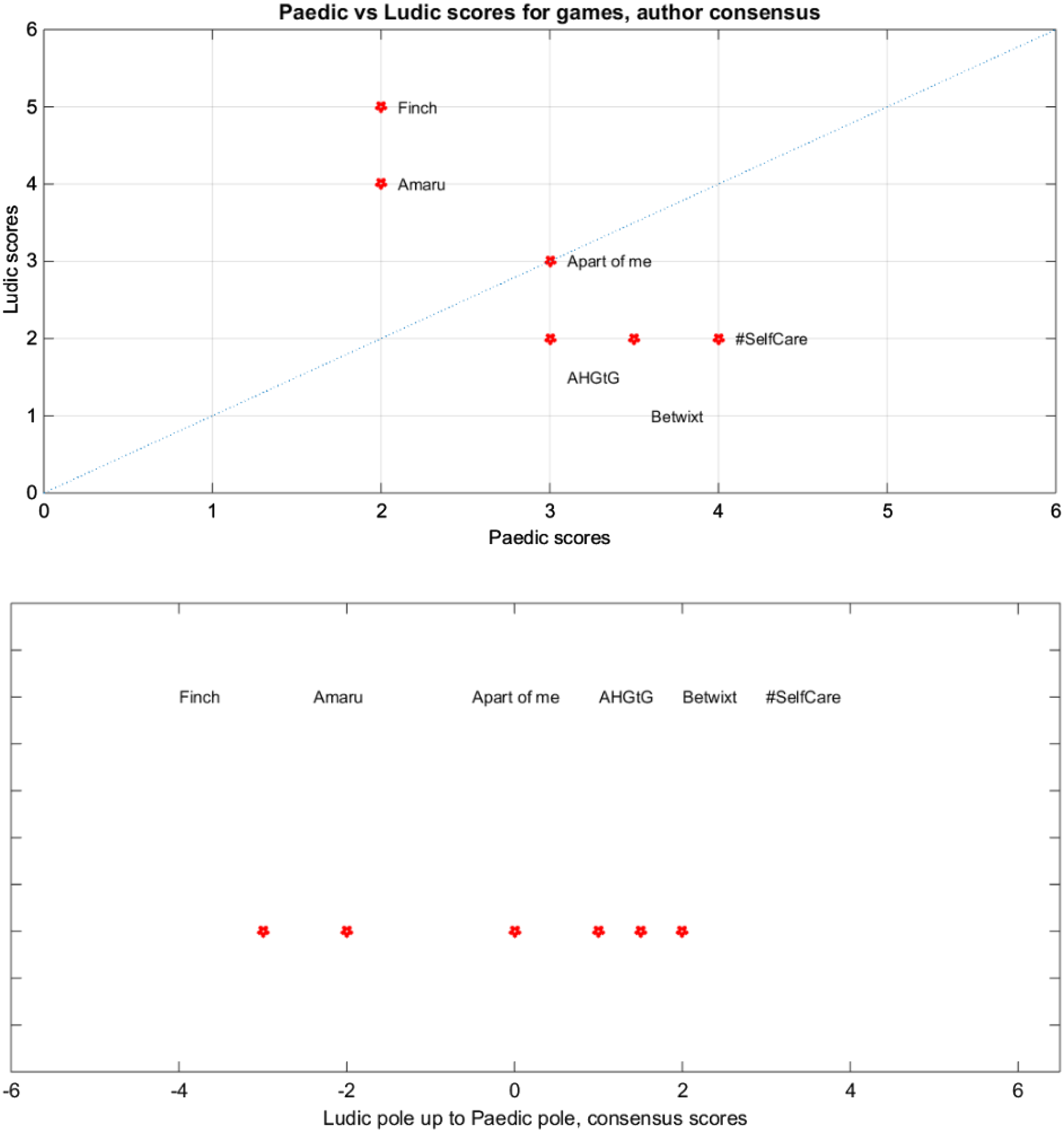
Journalling and guided breathwork were the most common features in our corpus, making use of the smartphone’s keyboard and its audio-visual affordances. Games at the paidic end of the spectrum presented these features in innovative ways made possible by the affordances of digital games. The journal in #SelfCare, for example, has the entries dissolve into streaks of rainbow colours only to reassemble when the player presses the ‘rewind’ button. Most of the games featured affirmations either in the form of original insights or of inspirational quotes, and most games offered players soothing soundscapes and low stakes mini games. Four out of six games presented evidence to the player to justify specific interactions, but while Betwixt integrated this evidence into the core gameplay loop, Finch simply had a list of academic citations hidden away in the ‘Settings’ menu. Games at the ludic end of the spectrum required players to complete tasks located outside of the game in the form of ‘Goal Setting’, while games at the paidic end of the spectrum created insulated playspaces that made no real world demands on the player.
The two most ludic games, Finch and Amaru, had freemium payment models and used techniques also employed by extractive games to encourage engagement. Only games at the ludic end of the spectrum featured an in-game shop as a rewards system. It is significant that the most ludic game, Finch, did not feature any mini games, implying a suspicion of play for play’s sake and a belief that play is only valid when it is in service of some ‘higher’ purpose. Several games inviting physical participation (e.g., in the form of breathwork, or by following exercise and stretching videos).
Betwixt’s chatbot is less jarring than chatbots in several other mental health games we encountered whilst assembling our corpus.
We see radical potential in one of #SelfCare’s journaling features, too. Whereas the other games keep a record of the player’s journal entries to document and monitor progress, the journaling mechanic in #SelfCare is ephemeral and fluid.
Whereas Finch and Amaru turn self-care into another kind of work, #SelfCare’s garbled AI prophecies and unscientific, magical, yogic invocations about energy and emanations and enchantments resist the rationality of contemporary, secular late-stage capitalism. The ambiguity of the game’s ritualistic mysticism (tarot cards, lunar cycles, astrology, crystals, etc.) means that it is up to the player to decide upon the meaning and value of the various interactions.
Features such as “story” are typically used in more narratively driven games, such as Betwixt (through fantasy settings or “dreams”), Apart of Me (fantasy and stories in audio journal based on lived experience). We also see heavily story driven narrative in AHGtG. Typically the story feature is found in games that tend to be more paidic and focus on immersion and free flowing play rather than strict structure and adherence to rules. The games mentioned also are found to be more heavily on the right side of the ludic to paidic scale as shown in Figure 8.
Discussion and conclusion
In this article, we deploy and reframe Caillois primary typology between games and play, and shown how it can be used for the classification of mental health apps. We collated a purposely representative corpus of six mobile games designed to support mental wellness for child and adolescent users, and plot those games on a spectrum that ranges from the purely ludic Game) to the Paidic (free-form play_, as well as showing how these elements work holistically interplay. We argue that games that are on the ludic end of the spectrum are often purposed towards consumerist tendencies demonstrating a potential decline of wellbeing. We further illustrate games at the paidic end of the spectrum have a greater potential to impact positively mentally and socially.
Implications
Our framework has been developed to demonstrate to game designers and health professionals that a good balance of ludic and paidic gameplay is likely to help mental health and wellbeing mobile games to be more effective in promoting positive mental health. For example, a game that is too heavily and punishingly ludic may be overly structured and goal-oriented, which can lead to frustration and burnout for individuals who are struggling with mental health challenges. Scaled changes in difficulty can be mobilised to help with this, but still entails a stress-inducing fail state. On the other hand, a game that is too heavily paidic may not provide enough structure and support to engagement players in a meaningful way and therefore will support the intention to effectively manage players mental health challenges.
A key reason why achieving a good balance between ludic and paidic gameplay is important is that it can promote greater motivation and engagement. Ludic gameplay can provide a sense of accomplishment and progress, which can help to keep players motivated to continue playing. While, paidic gameplay can be used to create a sense of relaxation and calm, thereby reducing stress and improving overall well-being. By combining both types of gameplay, mobile games can offer a more well-rounded, beneficial, and enjoyable experience for players.
In addition to promoting motivation and preventing burnout, a balance between ludic and paidic gameplay can also help to ensure that mobile games are accessible to a wider range of players. Some individuals may prefer more engaging and challenging gameplay, while others may prefer a more relaxing and therapeutic experience. By offering a mix of both types of gameplay, mobile games can appeal to a wider range of players and potentially have a greater impact on mental health outcomes. Games for mental health and wellbeing mobile games should therefore be flexible and adaptable in order to meet the needs of a diverse range of individuals.
There are several examples of mental health and wellbeing mobile games that have struck a good balance between ludic and paidic gameplay. For example, the game “SuperBetter” (2023) combines elements of ludic gameplay (such as challenges and quests) with paidic gameplay (such as virtual environments and simulations) to help individuals develop new skills and strategies for managing their mental health challenges. Another example is the game “Happify” (2022) which also uses a combination of ludic and paidic gameplay to help individuals develop coping skills and build resilience.
There is also evidence to suggest that a balance of ludic and paidic gameplay can be more effective for improving mental health outcomes. A study by Kim (Kim et al 2016) found that mobile games that incorporated both types of gameplay were more effective at reducing stress and promoting relaxation compared to games that were solely focused on ludic or paidic gameplay. Similarly, a review by Gao (Gao et al 2018) found that mobile games that incorporated both types of gameplay were more likely to be perceived as enjoyable and effective by players.
Limitations
It should be noted that this paper does not make any claims about the validity of using mobile games to support mental wellbeing. That would be another piece of research. The lack of conventional randomised trials when evaluating mobile wellbeing games and apps is a significant concern for the field , alongside concerns about the lack of monitoring for any potential harm, especially with vulnerable participant groups (Parker et al., 2019). These factors make it difficult to determine the effectiveness of these games and apps, and it makes it tricky to compare different games and apps. This lack of evidence calls into question the validity of many existing studies on these games and apps, and it may lead to a lack of trust in the field (Shueller, 2018).
There is an intriguing role of cheating in ludic-type games (Passmore et al., 2020). Thus, gamifying wellness through extrinsic motivation may encourage cheating, which is not necessarily a completely negative form of engagement in the context of games for mental health. On the one hand, players who cheat may remain invested and return to approved playstyles over time, and the subversive nature of cheating means that it may be more playful than strict obedience to the game’s rules. On the other hand, cheating may induce negative emotions such as self-condemnation or a sense of failure.
In conclusion, mental health and wellbeing mobile games should have a good balance of ludic and paidic gameplay in order to promote motivation and engagement, prevent burnout and fatigue, and improve mental health outcomes. By offering a well judged balance between play modailites, mobile games can appeal to a wider range of players and provide a more well-rounded and enjoyable experience.
Footnotes
Acknowledgements
We would like to thank the ATTUNE team including investigators Nicola Shaughnessy, Paul McCrone, Paul Cooke, Sania Shakoor, Mina Fazel, Flick Broadley, Graham Smith, Jamie Jones, Nick Smith, Isabelle Butcher and Harsimran Sansoy, and the many young people and partners seeking to improve adolescent mental health, and who have contributed to acquisition of funding, project management, and ongoing discussion.
Declaration of Conflicting Interests
The author(s) declared no potential conflicts of interest with respect to the research, authorship, and/or publication of this article.
Funding
The author(s) disclosed receipt of the following financial support for the research, authorship, and/or publication of this article: This work was supported by the UKRI (MRC/AHRC/ESRC) Adolescence, Mental Health and the Developing Mind Programme (Project name: ATTUNE—Understanding mechanisms and mental health impacts of Adverse Childhood Experiences to co-design preventive arts and digital interventions. Grant number: MR/W002183/1).
