




Abstract
Background
Simulation methodology in teacher education offers a wide range of practice opportunities in a controlled environment. However, even though not much has been written about the benefits of simulation in teacher training, even less has been said about the difficulties perceived by the participants in doing simulation.
Method
In this study we conducted an exploratory longitudinal study which includes 205 postgraduate participants scattered around the globe who took part in a computer mediated simulation in the years 2019 to 2022 as an assessment tool in a master’s degree for teacher education. Aside from the positive impact on learning, which has already been disseminated (autor1), some recurring difficulties have been identified and presented in this study. A mixed analysis is performed based on the triangulation between qualitative and quantitative approaches. The qualitative data were analysed using a qualitative content analysis method through an open question about participants’ perceptions post-treatment, video recordings and individual final reports. The quantitative data was gathered through a Likert-type questionnaire and analysed using statistical methods.
Findings
Findings indicate that (1) simulation entails several concerns about task overload and time consumption along with lack of understanding of what the simulation phases involve (learning focus vs performance focus); and (2) simulation can cause uneasiness and anxiety related to the use of technological devices and teamwork.
Contributions
Thus, these results have several implications for research, theory and practice when it comes to applying simulation as a pedagogical strategy.
Introduction
Student exposure to significant challenges that evidence their learning is at the core of teaching degrees (Alam, 2022; Orellana-Guevara, 2020). In teacher education, curricula are increasingly focused on an approach where teaching and learning are presented simultaneously, using experiential and action learning methodologies in pursuit of a more authentic learning (Aparicio-Herguedas et al., 2020; Pérez-Pueyo et al., 2020). Simulation, however, has not found sufficient acceptance as an articulating methodology except for its use as a resource or specific classroom technique (Angelini, 2021). We found few studies that have empirically proved the benefits of simulation as a methodology in teacher training. However, there is not much written about the impact simulation has on different learning styles (Dieker et al, 2014; Angelini & Muñiz, 2023).
By and large, simulation benefits on learning have been widely identified in different fields of study, such as medicine, nursing, engineering far more than in teacher education (Burke & Mancuso, 2012; Murphy & Cook, 2020). When it comes to teacher training, early research provides evidence of participants’ performance in simulation broadly, as for example, student teachers who participate in classroom simulations perform better in terms of self-efficacy than those who only analyse and discuss isolated cases (McCrary & Mazur, 2010; McGarr, 2021; Thompson & Dass, 2000). Brozik and Zapalska (2002, 2003) and Sottile and Broznik (2004) use simulation in their teacher education because of their need to find a didactic approach that replicates real classroom situations, but they do not analyse if all participants can be suitable for simulation-based instruction. The aim of their application of simulation is to explore decision-making techniques. Probably the most salient finding through a simulated environment is the participants' self-discovery of their creative ability to solve educational problems posed in the simulation scenario. Angelini (2021) has widely proven the advantages of applying simulation-based methodology in teacher education. Some of the most relevant findings indicate that simulation scenarios capture real educational situations with challenges that involve thorough research and decision-making; simulation provides opportunities for prospective teachers to examine the task from different perspectives as they assume different professional profiles (head teacher, English teacher, pedagogical advisor, etc.), using a variety of resources; simulation provides the opportunity to collaborate with each other through teamwork; each simulation provides the opportunity for reflection especially in debriefing; each simulation can adapt its scenario to different subject areas; formative evaluation can take place in each simulation, making the simulation a valuable evaluation tool and a source of immediate feedback. It has also been proved through the participants’ answers to the open question about their perceptions that most of them recognise a high level of motivation to take part in simulation from the very beginning. However, none of these studies delve into simulation impact on individualised learning. Thus, in view of the need for deeper insights of its impact and considering the proven virtues that simulations offer, this study poses the following research questions: 1. What difficulties do participants face when doing simulation? 2. How do these difficulties inform participants' learning styles? 3. Can simulation be effective to overcome learning difficulties?
In this article, we delve into simulation intricacies to voice participants’ perceptions of difficulties before and during the simulation. It is through participants’ testimonies that teachers-facilitators will be able to make the necessary adjustments to ease the process of simulation to unfold its full potential.
This study therefore pursues the following objectives: (1) to identify, through qualitative analysis, the recurrent difficulties among students who carry out simulation as an unfamiliar methodology, (2) to identify the difficulties of students in making the necessary adjustments to facilitate the simulation process to deploy their full learning potential, (3) despite the difficulties identified, recognise the positive impact of simulation on student learning, (4) to explore what the statistically significant correlations are between the variables that indicate the process of briefing, action, perceptions and learning, and (5) to test whether the results obtained from the quantitative study are reflected in the results collected from the qualitative study.
The authors conducted a mixed-methods study: (1) a discrete quantitative study of a teaching experience based on simulation methodology with undergraduate and postgraduate participants across borders and related with education (master’s students of secondary education, in-service teachers, pedagogues, academics); and (2) a qualitative study of participants’ perceptions on the difficulties of the proposal through the video-recordings and open question from the final report. This mixed research approach seeks to take advantage of the best of both fields: the richness of qualitative analysis and the generalisation of quantitative analysis, providing a more complete and in-depth picture of the phenomenon studied.
Triangulation refers to the combination of qualitative and quantitative methods to address a research question from multiple perspectives. When performing triangulation, convergence and corroboration of results between the two approaches are sought, with the aim of obtaining a more complete and rigorous understanding of the phenomenon in question. The convergence of results between methods is used to corroborate and validate the conclusions. If the qualitative and quantitative findings support the same interpretation, the validity of the research is strengthened.
Theoretical Framework
Simulation-based learning has had a long tradition in health disciplines, law, business and engineering (Fischetti et al., 2022), and in the field of teacher education it is still developing as a novel methodology (Shapira-Lishchinsky, 2013; Frei-Landau & Levin, 2022; Levin & Flavian, 2022).
In almost a decade, between the years 2014-2023, several studies have been published, which extolled the virtues of using simulation in teacher education. The general advantage is that more emphasis is placed on the active role of pre-service teachers, who thereby can gain insights into the nature of the process being simulated (Álvarez, 2023; Bradley & Kendall, 2014; Edo Agustín, 2021; Gibson et al., 2014; Hamada et al., 2019; Kikkawa & Crookall, 2011; Kikkawa & Ohnuma, 2019; Kriz, 2003; Kriz & Hense, 2006; Leigh & Spindler, 2004; Nygaard et al., 2012; Ranchhod et al., 2014; Speed et al., 2015,Tipton et al., 2016; Angelini, 2021, among others).
On balance, results indicate that simulations have a positive impact on learning goals. Most researchers agree on three main learning outcomes: cognitive, interactive, and affective (Alcívar & Moya-Martínez, 2020; Kolb & Kolb, 2018, 1984, Watts et al., 2011). The authors provide enough evidence on the virtues of simulation for pedagogical purposes and such evidence also provides potential options and pathways for future research.
As Hoban (2002) claimed some while ago, most teacher education courses still represented a fragmented view of learning. He argued that teacher instruction had an enormous potential to structure and prevent pre-service teachers from becoming progressive practitioners. He referred to the difficulties that pre-service teachers found in dealing with life in the classroom. Other authors had also observed that pre-service teachers were often unable to retrieve essential knowledge when they needed it most (Kervin & Turbill, 2003; Stronge, 2002; Danielson, 1996; Entwhistle, Entwhistle & Tait, 1993).
Now, some three decades later, the situation appears little unchanged (Kember et al., 2010; Biggs, 2003, Hynes, 2017). In an ideal setting, pre-service teachers would have an array of opportunities to experience quality classroom episodes that progressively develop their classroom practice. However, several barriers still need to be overcome, such as the cost of the practicum experience, school needs, school availability, university course requirements.
Yet, it is fair to say that, despite limited research conducted on teacher school practice, some effort has been made to optimise teacher training (O'Sullivan & Perry, 2013; Violato, 2022). Teacher preparation has gone through a change from classroom lecture and discussion to individual analysis of group roles, individual and group decision making. This shift is built on the learning opportunities that pre-service teachers have when they are exposed to theoretical frameworks and to real world situations. Active methodologies, such as case studies, lesson study or simulation, have started to be developed in teacher preparation (Crisol-Moya et al., 2020; Gargallo-López, 2017).
In short, teacher education focused on student learning gives rise to a series of new teaching and learning methods (Angelini, 2021) with the aim of active student learning (Almasri, 2022; Rooney & Nyström, 2018).
Today’s demands for highly qualified and versatile teachers call for social-constructivist principles to frame university degrees. Student-teachers are expected not only to acquire specific knowledge but also to demonstrate through application in real classrooms. But how can student-teachers get enough practice before stepping into a classroom?
Badiee and Kaufman (2015) question the absence of simulation as a methodology in the training programmes of faculties of education and the preference for the conventional Practicum in the internships of future teachers. The authors argue that the conventional Practicum commonly requires the collection of data on a teaching practice and does not always meet the expectations of trainers. An obvious question is: how can prospective teachers acquire sufficient practice and knowledge of almost all classroom situations during their training? Teaching practice is the key to knowledge acquisition and is at the heart of any teacher education programme. However, it depends to a large extent on the mentors in the school, the initiative of the trainee teachers and the time spent in dealing with different situations (Angelini & Muñiz, 2023; Losada-Puente et al., 2022). Typically, the practicum becomes a repository of experience more inclined to fulfil degree requirements than to reflect on what happens in the classroom (La Paro et al. 2018; Larsen & Searle, 2017; Sjølie & Østern, 2021).
In the same line, some authors increasingly question some gaps in the practicum. Well-designed simulations to complement the practicum are becoming more frequent, according to Finn et al. (2020), Gibson et al. (2014), Mukhtar et al. (2018) and Sasaki et al. (2020). For example, Gibson et al. (2014, p. 2) urge schools of education to “take simulation seriously in teacher education”. In their study, the authors stress the importance of developing a broad understanding of educational situations by studying simulation scenarios and actively participating in simulations. In this way, trainee teachers can engage in a comprehensive multi-step process. This process would begin with the investigation of the problems or cases presented in the scenario and end with the interaction between the participants in the simulation. So far, the adoption of simulations for teacher education seems to be based on the personal initiative of the trainer rather than on an institutional model (Levin and Flavian, 2022; Frei-Landau and Levin, 2022). These studies mark a path in educational research through simulation based on the observations of the trainer/facilitator. It is thus the facilitators’ responsibility to grow in awareness not only of the benefits but also of the difficulties simulation may entail, considering also the facilitators' responsibility in the field of teacher education (Frei-Landau and Levin, 2022) as mediators of the learning process (Sellberg, 2018).
This context justifies the need for rethinking simulation and the application of the research results which seem not to have been incorporated into teaching practice yet.
Methodology
In this study we employed a descriptive and convergent mixed method design to enrich the understanding and depth of the phenomenon of difficulty in simulation methodology, by taking advantage of the strengths of both approaches. Although the study mainly has a qualitative focus, quantitative elements are included to obtain a more complete and rigorous perspective of the data. The results of the studies can be used as a guide to elucidate different learning styles as well as strengths and weaknesses of the simulation.
We carried out a qualitative analysis of the responses to an open questionnaire given to 205 participants, and then we selected only 6 out of 34 questions from a Likert-type questionnaire that we show in Annex 1. By conducting a preliminary qualitative analysis, we have identified which Likert questionnaire questions were most relevant to understand the difficulty students had during the simulation. These six selected questions refer to briefing, action, perceptions, and learning of the participants involved in the simulation-based training.
This approach has allowed us to focus on the key aspects that really matter for our research and obtain relevant and meaningful information that could be useful in addressing the research questions about the difficulties the participants face when doing simulation, if those difficulties inform about participants’ learning styles, and if simulation could be effective to overcome learning difficulties.
Qualitative Study
For the qualitative study, the final evaluation reports as well as the answers to the open-ended question about the participants’ perceptions of the simulation were analysed. The software used is Dedoose Version 9.0.17 for the management, analysis and presentation of qualitative and mixed methods research data (2021). The initial reading allows the most relevant concepts related to the difficulties encountered in the simulation. Subsequently, the variables are coded following a hybrid coding model. Within the deductive coding, descriptive, structural and value coding methods have been used, as well as a continuous contrastive analysis model (Contreras-Cuentas et al., 2019; Páramo-Morales, 2015). Recurrent themes and central themes are identified. After coding, the information collected is analysed and qualitative relational studies are carried out. The results of the qualitative analyses, added to those obtained in the quantitative studies, make it possible to identify the indicators of difficulty in the simulation applied to teacher training.
Therefore, 2 central categories of analysis have been extracted: Prior assumptions and Teamwork vs self-regulated learning.
Discrete Quantitative Study
Frequencies for bachelor's degree.
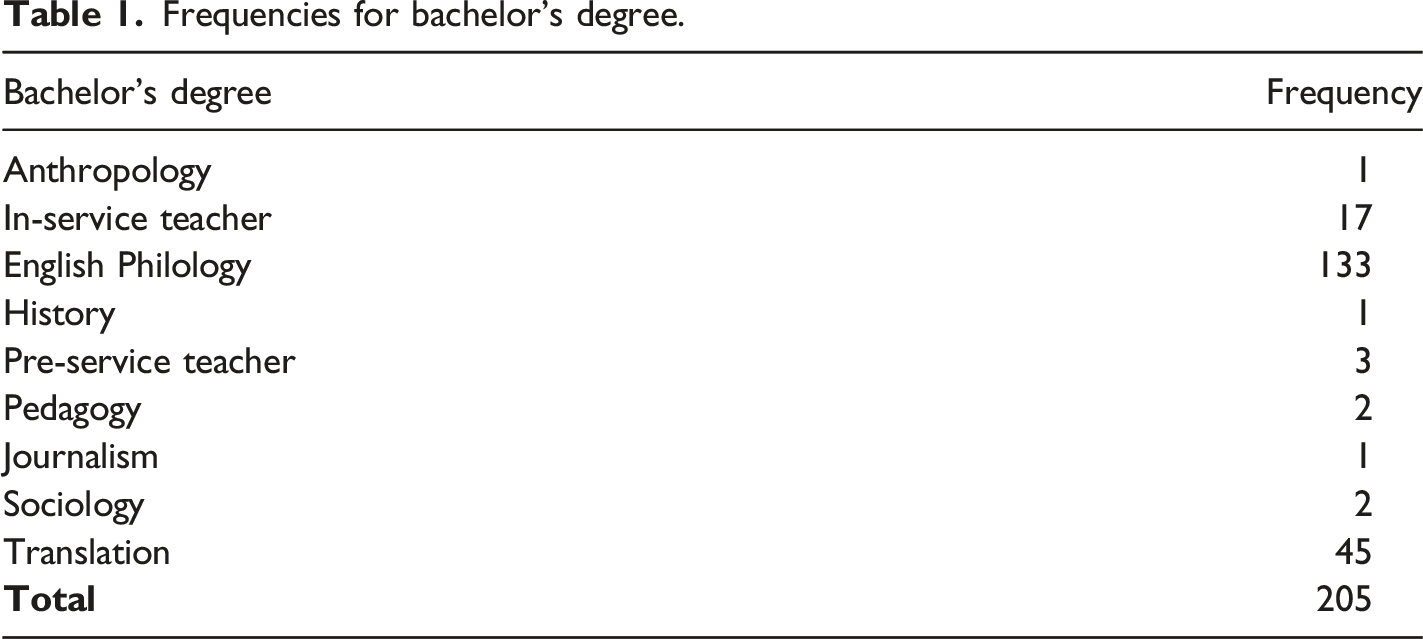
To carry out the analysis of data, we have used the statistical package IBM SPSS Statistics (Version 27). Through a Likert-type questionnaire, the aim is to measure the level of briefing, action, perceptions, and learning, of the participants on an ordinal scale with multiple categories, in our case, from 1 to 5, where 1 represents totally disagree and 5 represents totally agree.
A study of existing correlations between six variables is carried out to inquire about the difficulty that the students had before and during the simulation-based training in the master's degree in Secondary Education Teacher. To analyse the correlations between the ordinal variables of the Likert-type scale, it is important to consider that these data do not meet the normality assumptions required for traditional correlation methods such as the Pearson correlation coefficient. As the variables are measured on an ordinal scale, we use Spearman's correlation coefficient.
As the size of the population is larger than 50, we perform the Kolmogorov-Smirnov statistical significance test to verify if the data follow a normal distribution. To determine if there is sufficient evidence to reject the null hypothesis for which the data follows a normal distribution (the null hypothesis of the Kolmogorov-Smirnov normality test states that the data follows a normal distribution. On the other hand, the alternative hypothesis suggests that the data does not follow a normal distribution), we compare the level of statistical significance with the critical value of 0.05 and see that for all the variables this level is less than 0.05. We conclude, then, that the test indicates that the variables do not follow a Gaussian distribution. 1
Since the variables are measured on an interval scale and the normality assumptions are not met, we perform a non-parametric analysis. In our case, all the variables do not present normality, thus a non-parametric analysis is performed using Spearman's correlation coefficient instead of Pearson's correlation coefficient.
Results
We present a qualitative study on the participants’ perceptions post-treatment and a discrete quantitative study based on a Likert-type questionnaire.
Qualitative Study on Participants’ Perceptions Post-Treatment
Regarding the participants’ perceptions of difficulty post-treatment, two central categories of analysis have been extracted: 1. Prior assumptions 2. Teamwork vs. self-regulated learning
Figure 1 shows central category Prior assumptions and its confrontation themes. Central category Prior assumptions and its confrontation themes.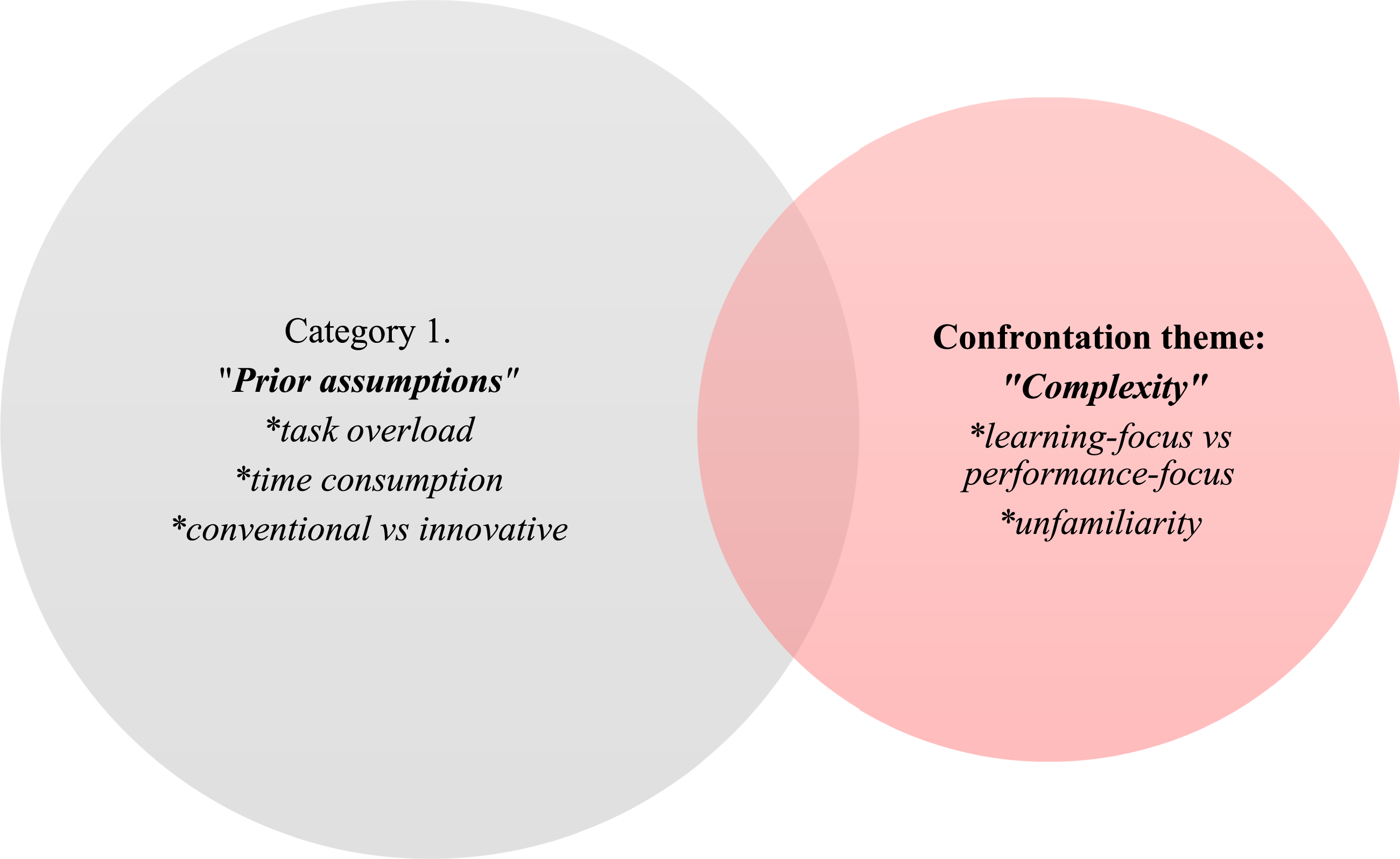
As for ‘Prior assumptions’, it was observed that some participants express certain uneasiness in the face of an unfamiliar methodological proposal. They indicate that they have never carried out a simulation before and that apparently the simulation briefing is very demanding in terms of the theoretical content. This meant thorough study before carrying out the action/simulation. * “At the beginning I was a bit afraid about doing the simulation as I did not know how to do it or what to expect. I had no experience with simulation.” [P53] * “Honestly, I’d rather do the subject on my own. No time for so much group work and stuff like that.” [P112] * “I was scared at the amount of theory we had to study. I did not know if I was able to cope with it.” [P131]
Among the difficulties identified, the time management for the study and analysis of the topics of the scenario seems to be common to most of the participants. They consider that the preparation time was not enough. * “It is true that it requires much time, you need to prepare and organise it well” [P13] * “Time management is key. On many occasions, I felt I had to put aside other subjects as I couldn’t finish preparing the topics in the scenario” [P28] * “I had to optimise time, so I have read many times the topics in the scenario and watched some YouTube videos instead of reading”. [P94]
Some of the responses about the initial discomfort of the paradigm shift in the subject of didactics are noteworthy. * “As a personal objection I would say that I found instructions a little bit unclear to follow, so at the beginning I felt a bit nervous and confused. Sometimes I also felt a little bit embarrassed or lost.” [P15] * “At first, I was very afraid because speaking in public is very embarrassing. When we did the group work of simulation, I was silent because I was afraid to do it badly or that my group was not comfortable with me.” [P186]
We confirm that facing a methodological shift may bring about instability for some which is revealed through lack of abilities to manage the time properly, to control emotions and to find the learning potential of the proposal.
By way of a confrontation of opinions, there are those who associate the difficulty of the simulation with the complexity of its stages. The briefing stage is articulated from a learning-focus with active discussion and internalisation of the concepts and contents that will later appear in the scenario. * “I found the briefing and the debriefing more difficult than the simulation. In the briefing I had to read and study, but in the debriefing, I had to think about myself and how I had learned. This is more personal. I liked the action more.” [92] *“At first, I thought it was a bit too complicated, lots to read. However, when I had to speak during the simulation, I felt I had something valuable to say. This wouldn’t have been like this, hadn’t I prepared well beforehand.” [123]
It is surprising that some participants were concerned about their performance during the simulation even though they had not tried it. This denotes self-doubt, high levels of anxiety and a tendency to fail in managing emotions.
Faced with the challenge, there are those who see problems rather than learning opportunities; however, given the little or no familiarity with the proposal framed in the simulation, there are others who welcome it with enthusiasm for simply doing something different from what is usual in these higher education studies. * “It was hard to take responsibilities as the head of the school. With this role I didn't feel quite comfortable sometimes. Next time, I would like to choose the role instead.” [P153] * “I have to say that at the beginning I was insecure and thought it was difficult. I think it was because we had never done it before. Discussing the different ideas and listening to the opinions and contributions to solve the problems in the simulation made me open my mind to other options of thinking. I believe doing simulation is good to practice and feel the future is closer to us.” [P172]
Figure 2 shows the Category of analysis Central category Teamwork vs. self-regulated learning and its recurrent and confrontation themes.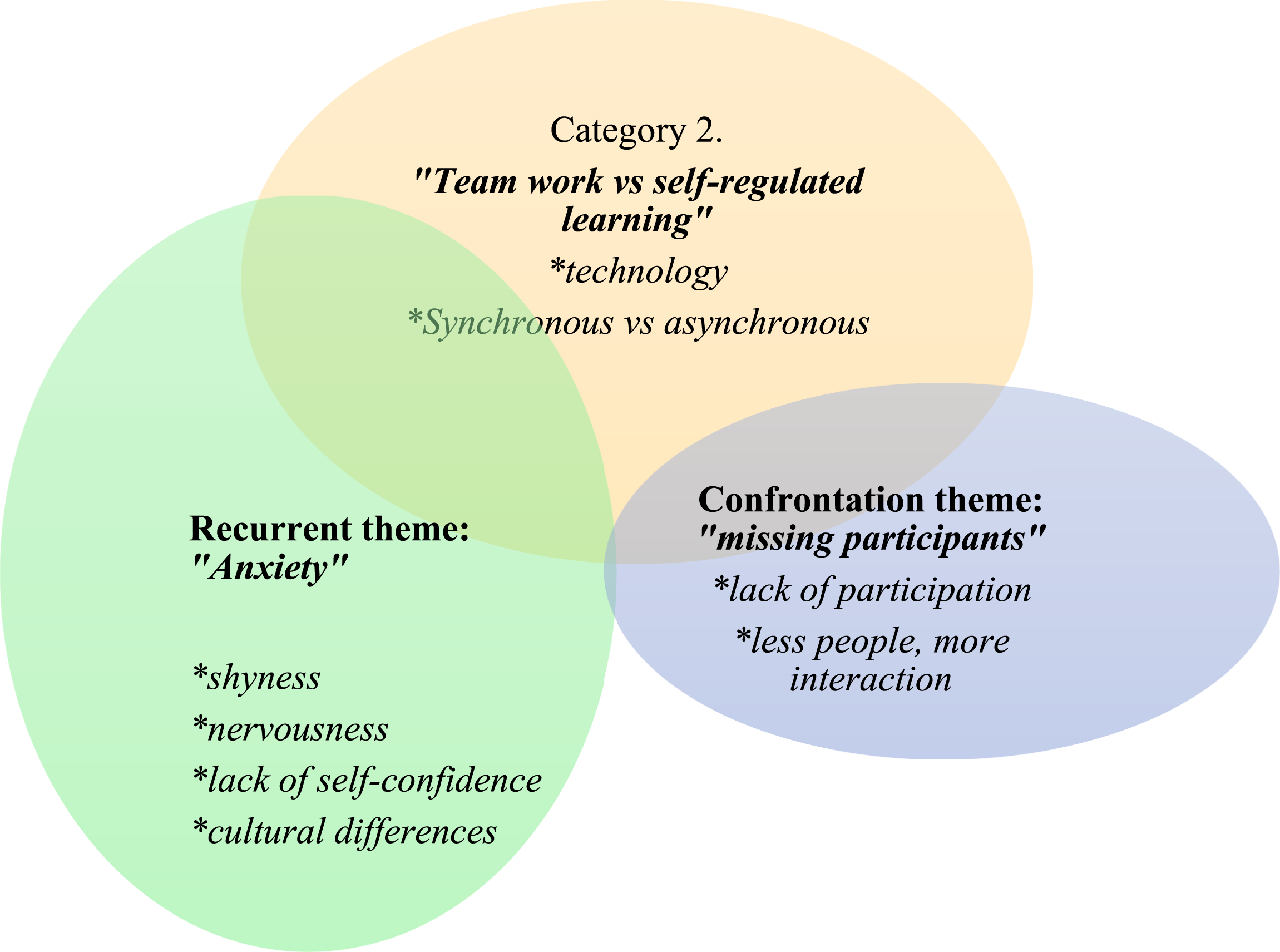
The category of analysis Teamwork vs. self-regulated learning provides very interesting reflections on the difficulties perceived in the simulation. A dichotomy can be observed between those who prefer autonomous work and the presentation of a final paper as a tool for the assessment of the subject (a frequent modality in master's studies) and others who highly value the possibility of learning collectively through teamwork. * “I think I work better by myself. I liked the simulation although I prefer individual tasks and a final presentation.” [P6] * “I have been able to share ideas with my team. It has increased my knowledge about ESL, and I have also learned to lead a team.” [P9] * “Their perspective enlarged my view about some issues which I did not consider before.” [P82] * “I would say we were lucky to have been working with a team which has prepared the scenario very well, which made the experience more enriching for all of us. I would repeat this experience again in other subjects.” [P165]
We note that the difficulty is linked to learning styles. However, on the basis that the simulation reflects real educational environments, the teamwork pursued is in line with the professional environment in educational institutions. If it is assumed that simulation is the prelude to professional life, the difficulties in teamwork encountered by a few participants highlight attitudinal aspects to be analysed. In this sense, simulation may serve as a tool for self-knowledge, and management of emotions, among others.
Another noteworthy aspect is the assistance of technology in the computed mediated simulation. Synchronous communication via videoconference is required as well as asynchronous communication via digital platforms of the participants' choice. Although the project coordination provides digital support for these communications, it is true that the participants in each team find different ways of communicating, such as WhatsApp, FaceTime, among others. There are those who have expressed some discomfort with the demand and frequency of messages in asynchronous communications. And there are those who have alluded to their lack of digital competence to interact assiduously in asynchronous mode. * “I felt rather uneasy with so many technological tools, but I also think that technology is beneficial for us, especially in the XXl century.” [P43] * “I could not exchange messages with my team because I don’t normally manage well with social networks”. [P79] * “I was the only one in my teams with problems to enter UniCollaboration platform, so I decided not to participate during the first week. I was surprised to see the chat and the documents shared once my connectivity problem was solved”. [P91]
A recurring theme in the discourse of some participants is the anxiety they feel at being exposed to an unfamiliar inter-university working team. We recall the nature of the teams, mixed in their composition and with some members having extensive teaching and academic experience. * “I was sceptical with that task of simulation because I consider myself a really shy person when it comes to meeting new people”. [P13] * “The first week I know I didn’t give my best version. I was stuck, I’m shy and talking to people I don’t know makes me feel under a painful situation. However, the second week was better, and I gained more confidence” [P108] * “We were very nervous and unconfident, but it finally didn’t go so bad after all.” [P199]
A marked degree of shyness can be observed in some of them, which is not necessarily linked to a lack of self-confidence. As the interventions were recorded to be later analysed, it could be observed optimum performance and accurate content preparation in spite of the enormous effort made by a few in coping with the synchronous sessions. Despite the difficulties associated with their shyness, their assessment of the simulation methodology is very positive, and some reckon they would do it again. * “I consider myself a shy person when it comes to meeting new people. However, this course was complete. Simulation is a very useful technique to put the students in real-life positions, as well as it is a wonderful technique for them to know their strengths and weaknesses regarding the communicative skills” [P13] * “I would definitely do simulation more often”. [P108]
These testimonies help prove the appropriateness of the methodology. We infer that the higher the frequency of its application, the higher the perception of improvement in emotional management, anxiety and self-confidence. Such an exercise, sustained over time, could result in professionals who are better prepared for the real world.
In relation to the confrontation themes identified, the lack of participation of some members of the teams has led to antagonistic positions. * “There were some members of my team whose role was important, and they didn’t defend it the way they should, or even they didn’t participate that much.” [P17] * “One of the most difficult things to control during the simulation is the lack of participation which may be due to introversion, nervousness, apprehension, or cultural differences”. [P18] * “I did not mind the fact that a member in my team was delayed one day and there were two absent in the meeting the following week. I think we could communicate our ideas very well among less people and we received feedback from our missing partners via UniCollaboration in the week”. [P65]
On the one hand, there are a few who observe a marked absence of some members of their teams. Lack of participation has surely led others to take on more responsibility. This has been perceived as a stress factor in the face of the unexpected. On the other hand, there are some voices alluding to greater interaction when there are fewer members in the synchronous sessions. It is worth remembering that each team is made up of 6-7 members, and when one of them is absent, he or she must also present his or her position on what has been discussed through asynchronous communications.
Once again, the simulation places participants in situations that are true to reality, where far from settling into conformity, they have to resolve unexpected and uncomfortable situations in a safe environment.
Discrete Quantitative Study
Descriptive Statistics.
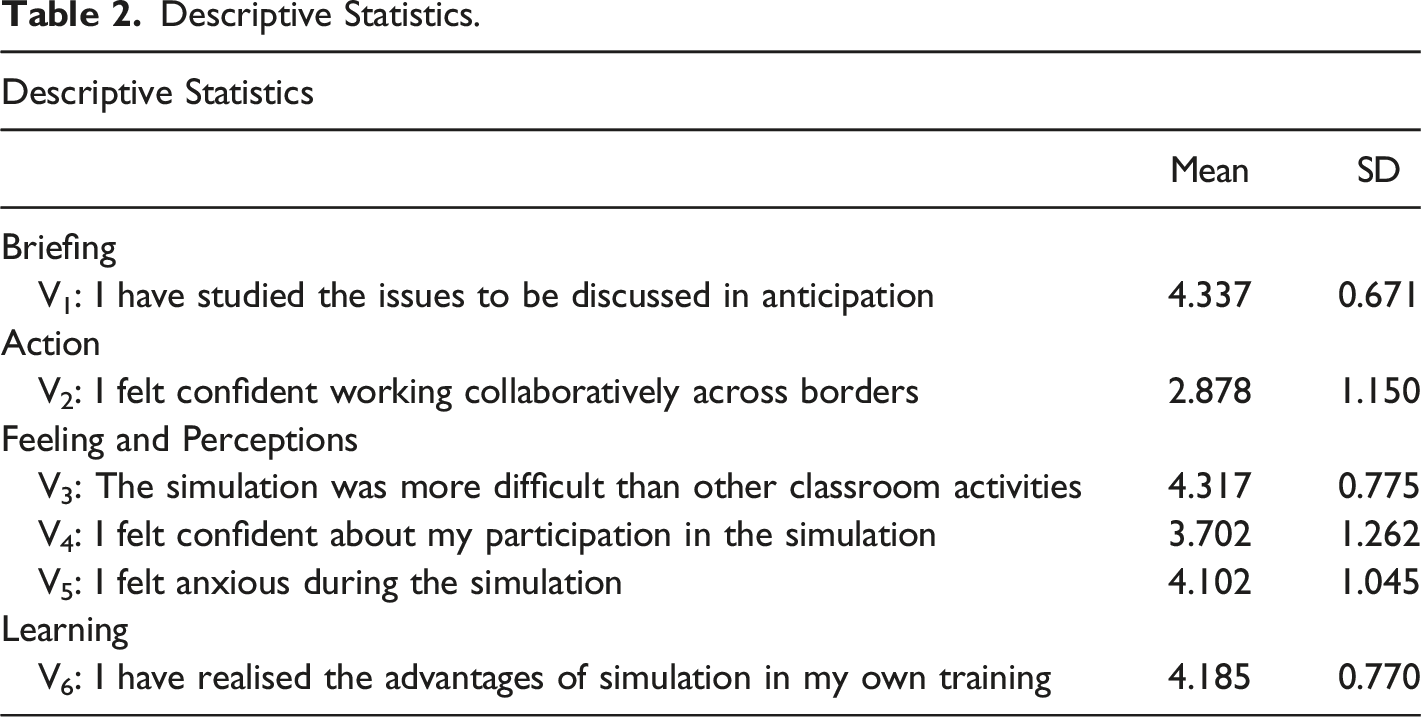
It is important to note that the perception of self-confidence and comfort when working with people from abroad during a simulation may depend on various factors, such as all the members’ implication in the simulation, the previous experience, the communication skills, amongst others. Results indicate that in some teams, the participants encountered interpersonal difficulties that needed solutions to be able to proceed.
On the other hand, as illustrated in Table 2, the participants expressed a high level of agreement in item V1. We infer that as simulation sets a challenge early on in the briefing phase, through a thorough preparation there are more possibilities of doing a better performance during the simulation action. By studying the topics in advance, students can maximise their learning, increase their confidence, and address the discussions and negotiations with an increased sense of preparation and control. In this sense, their perceptions may indicate that the higher the preparation, the less intricacies during the simulation action.
In a previous study (Angelini, et al., 2023), we noticed that the variable “The simulation was more difficult than other activities performed in class” had a significant negative correlation with the variable referring to the perception of knowledge gain about current educational issues: “I have deepened my knowledge of current educational issues”. We concluded that the more the participants inquired about educational issues and were exposed to cycles of simulations, the less difficult it was for them to perform in the simulation compared to other activities.
Correlation matrix between the six variables.
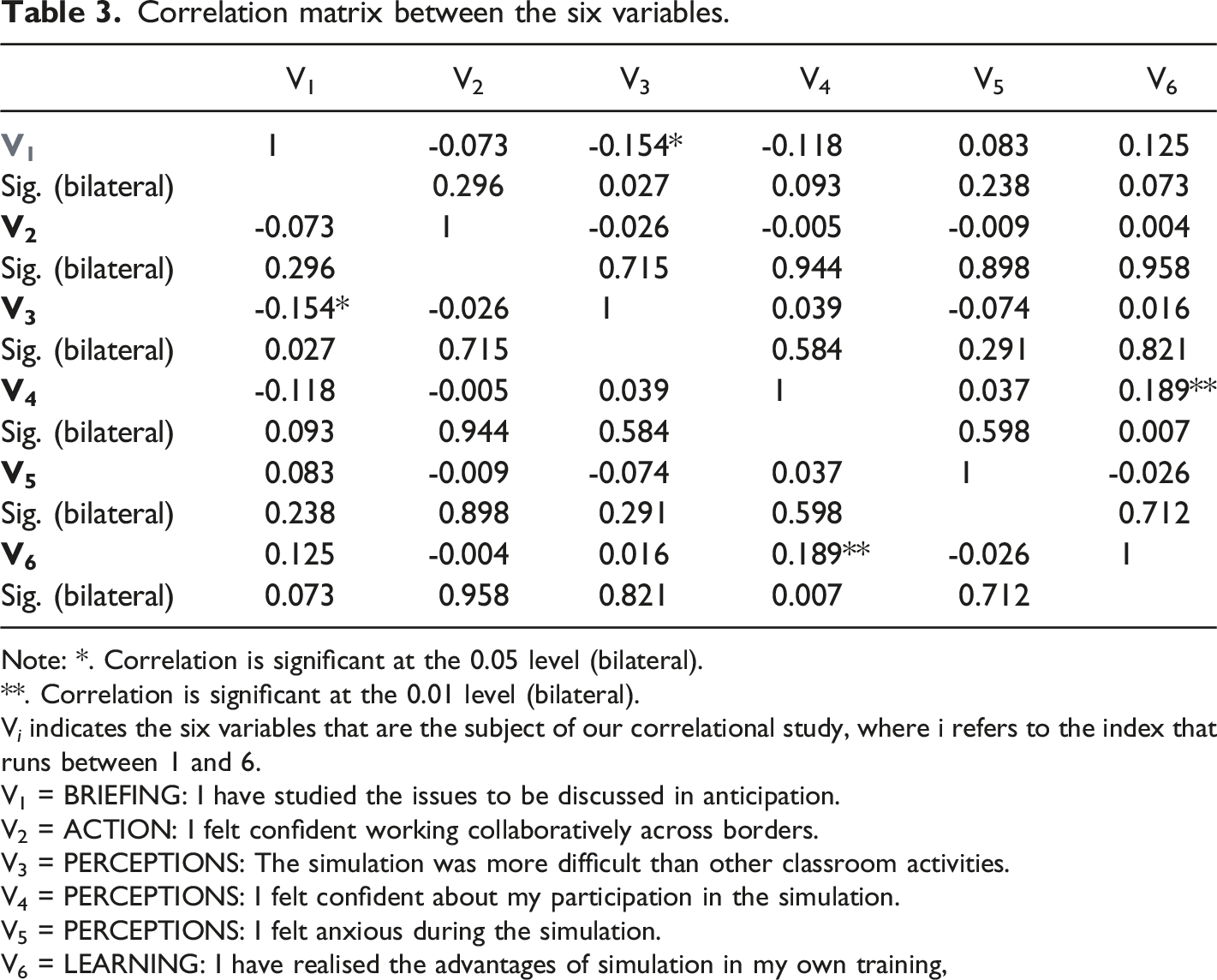
Note: *. Correlation is significant at the 0.05 level (bilateral).
**. Correlation is significant at the 0.01 level (bilateral).
V i indicates the six variables that are the subject of our correlational study, where i refers to the index that runs between 1 and 6.
V1 = BRIEFING: I have studied the issues to be discussed in anticipation.
V2 = ACTION: I felt confident working collaboratively across borders.
V3 = PERCEPTIONS: The simulation was more difficult than other classroom activities.
V4 = PERCEPTIONS: I felt confident about my participation in the simulation.
V5 = PERCEPTIONS: I felt anxious during the simulation.
V6 = LEARNING: I have realised the advantages of simulation in my own training,
This is reflected in the significant positive correlation between variables V4 (“I felt confident about my participation in the simulation”) and V6 (“I have realised the advantages of simulation in my own training”), i.e., when students experience the benefits of the simulation post-treatment, this can increase their self-confidence. Thus, simulation may serve as an indicator of their achievement, and their cognitive and metacognitive reflection.
Discussion
It is understandable that some students may find the simulation more difficult compared to other activities carried out in class; this may be due to certain challenges associated with this methodology. The results obtained from the studies show that some participants demonstrate pre-apprehension related to the technology involved, the unfamiliarity with the methodology and individual performance in an international team.
On the one hand, the simulation applied for the study requires mastery of technological devices which may cause some frustration to those less familiarised. For some participants, becoming acquainted with different platforms for synchronous and asynchronous communication was difficult at the beginning. It should be stated that according to teaching degrees programmes, developing a digital competence is central in teacher education according to The Common Digital Competence Framework for Teachers (CDCFT) (Novella-García & Cloquell-Lozano, 2021).
As regards the unfamiliarity with the methodology, it may be inferred that some participants are more inclined to the traditional teacher-centred models based on the transmission of knowledge through the teacher's expository style (Kember & Kwan, 2000; Biggs, 2003, Dieker et al., 2017). Active methodologies such as simulation may drive them out of a sort of complacency as they are called to action. It should be remembered that current professional profiles and learning processes favour active learning methodologies aimed at achieving the required competences and the expected learning outcomes (Crisol-Moya et al., 2020; Gargallo-López, 2017).
As for the individual performance in an international team, it should be considered that social relations in the teaching-learning process are fundamental where the sense of belonging is relevant as it implies peer learning (Levin & Flavian, 2022; Frei-Landau and Levin, 2022), something that may have been altered by the cultural diversity in the working group and may lead to possible gaps that affect students' ability to learn effectively (Angelini & Muñiz, 2023; Losada-Puente et al., 2022).
We have also proved that the pre-simulation anxiety level was higher than post-simulation anxiety. Participants probably found the simulation itself stressful but, as Vilato (2022) found, reflection, participation and personal development throughout the simulation, rather than leading to higher levels of anxiety, facilitated greater coping or eustress, i.e., positive stress (O'Sullivan, 2011) which improved student performance. Compliance with the established rules is likely to have increased their self-confidence and sense of responsibility (Violato, 2022), which has led them to be more critical and demanding of their team members, as lack of participation can have a negative impact on their team's performance. Overall, a positive feedback loop has been created between them.
Furthermore, workload and time management were identified as a source of distress. It can be drawn that difficulty relies on the participants’ own learning habits, a construct involving cognitive, affective and psychological elements that allow us to understand how a subject responds to a particular teaching methodology (Kolb & Kolb, 2018). Thus, simulation applied cyclically and iteratively (Angelini & Álvarez, 2024) can make a difference to mitigate difficulties and make the experience more manageable and enriching. Neuroscience research on education supports cyclical applications in which, due to repetition of an action, the mirror neurons generate brain structures like those generated in real performance (Alcívar & Moya-Martínez, 2020; Watts et al., 2011; Tormo-Calandín et al., 2023).
It should also be argued that academic performance and motivation towards learning can increase as students are taught according to their interests, abilities and learning styles (Rooney & Nyström, 2018), a differentiating aspect that should be considered in the design of simulations (Angelini & Muñiz, 2023). Each student learns differently, processing different information in different ways, so the selection of methodologies should be aligned with the style of each student, and prior knowledge of the student is necessary. This means knowing the learning styles of students and adapting teaching to their peculiarities (Álvarez, 2023), something that has not enjoyed the empirical support it deserves and that would help to obtain better learning results. In the present study, some students reported having gained a deeper insight into current educational problems throughout the process of the simulation, while some others realised about their learning more towards the end, in the debriefing. These findings are in line with previous studies by Thompson and Dass (2000), Brozik and Zapalska (2002, 2003); Sottile and Broznik (2004); and Tipton et al., (2016) in that they confirm that participants in a simulation perform better in terms of understanding educational issues than those who only analyse and discuss isolated cases.
While some scientific studies evidence the impact of learner characteristics on simulation performance (Garber et al., 2017; Lynch & Michael, 1989; Towler et al., 2009), little information is available on the influence of learning styles on simulation performance (Almasri, 2022). This aspect needs to be studied as it is possible that learners with specific learning styles may not show their full potential through simulation-based learning.
Therefore, for simulation to be effective in overcoming learning difficulties, it is important that educators are aware of these possible reactions and provide the necessary support to help participants. In general, it has been demonstrated that simulation-based training offers an enriching learning experience that can improve students' confidence when participating in educational activities once the initial self-limitations are overcome. By recognizing the practical advantages and benefits of this approach, students can feel more motivated and prepared to face educational challenges with a greater sense of confidence in themselves and their abilities.
Conclusions
The outcomes obtained in this manuscript, resulting from the combination of qualitative and quantitative analysis, bring interesting considerations. The two categories extracted through the qualitative analysis are reflected and shaped by the statistical evidence coming from the correlation between the variables in question.
To our knowledge, this is the first study to empirically demonstrate the difficulties participants find when facing simulation-based learning in teacher education through a mixed research design. Regarding the first emerging category, although some participants express some discomfort with the simulation as an unknown methodology, it seems that these concerns decrease as soon as they progress into the action with their teams. Participants who demonstrate less self-confidence to speak in public can be affected by simulation implementation at the beginning. The simulation requires highly interaction across borders. Also, participants who are strictly regulated may feel overwhelmed by simulation. As testimonies confirmed, simulation was new for the participants and the unfamiliarity with the simulation procedure, time concerns, or workload may bring about stress and anxiety especially to those more traditionalist, accustomed to instructional learning by accumulation of content based on transmission.
Regarding the dichotomy between teamwork and self-directed work, it has been learned that some students prefer autonomous work and the presentation of a final project for the evaluation of the subject. However, other students express that teamwork and self-regulated learning during the simulation are more meaningful to assimilate the content in a true-to-life situation. When students participate in simulations and work as a team, they begin to learn to self-regulate their own learning process. This last one, together with collaboration and reflection on their knowledge and strategies, can strengthen their autonomy and self-confidence, because they highly value the possibility of learning collectively through teamwork.
We have also proved that simulation can cause anxiety. In the briefing phase, anxiety and stress may well be related with the unknown methodology and the individual performance in an international team. The study also shows that satisfaction and self-confidence were restored after the end of the simulation. There is a before and after the simulation where stress and anxiety are reduced towards the end. Participants become accustomed to a safe learning environment and increase their self-confidence as they progress throughout the simulation, according to their testimonies. Challenging participants to interact synchronously and asynchronously has led them to become acquainted with technological devices, something that is at the core of the teaching degrees’ curricula. Once more, simulation serves as an indicator of participants’ own digital competence.
Finally, we continue to maintain that simulation may well serve as an opportunity to develop cognitive and metacognitive reflection despite the difficulties encountered as participants become more aware of what they know and can do; and they are also able to comprehend what they still need to master and how they could do it. In this way, simulation mirrors their achievements and deficiencies. These results, thus, should be taken into consideration in further research, theory development and practice through simulation as a pedagogical strategy.
This research has elucidated future paths to delve into, such as a previous study of students' learning styles and analysis of academic performance considering stress facilitator variables, review of training plans in Faculties of Education, differences according to experience, age, and gender.
Footnotes
Acknowledgements
Erasmus+ Programme made possible Research and Exchange of good practices of M. Laura Angelini, Roberta Diamanti and Remedios Aguilar-Moya at the University of Stavanger and Sandnes Municipality (Norway) in 2020 and 2024 and Maria Curie-Skłodowska University (Poland) in 2024.
Declaration of Conflicting Interests
The author(s) declared no potential conflicts of interest with respect to the research, authorship, and/or publication of this article.
Funding
The author(s) received no financial support for the research, authorship, and/or publication of this article.
