




Abstract
We explore informal recyclers’ perceptions and experiences of the social determinants of health in Vancouver, Canada, and investigate the factors that contribute to the environmental health inequities they experience. Based on in-depth interviews with 40 informal recyclers and 7 key informants, we used a social determinants of health framework to detail the health threats that informal recyclers associated with their work and the factors that influenced their access to health-related resources and services. Our analysis reveals that the structural factors influencing environmental health inequities included insufficient government resources for low-income urbanites; the potential for stigma, clientization, and discrimination at some health and social service providers; and the legal marginalization of informal recycling and associated activities. We conclude that Vancouver's informal recyclers experience inequitable access to health-related resources and services, and they are knowledgeable observers of the factors that influence their own health and well-being.
Introduction
This study explores informal recyclers’ understandings and lived experiences of the social determinants of health and well-being in the City of Vancouver. These non-sanctioned waste workers (locally known as “binners”) salvage recyclable materials from the waste stream in order to generate an income from their sale. Solid waste work has been linked with poor health outcomes in the formal sector in the Global North,1,2 as well as in the informal sector in the Global South.3,4 However, the health status of informal recyclers in the Global North is relatively understudied, despite the prevalence of this work in urban areas.
While many studies of informal recycler health focus on occupational exposure to waste as a central determinant of health, we argue that additional attention to the broader constellation of social determinants of these workers’ health foregrounds some of the factors that lead to the environmental health inequities experienced by many low-income urbanites. A social determinants approach to health considers a wide scope of social and economic factors that have a significant influence on the health of individuals. 5 Environmental health inequities are conceptualized as being the “total configuration of inadequate, unresponsive, and/or discriminatory public- and private-sector programs and policies that result in uneven quality of environmental conditions and concomitant negative impacts on health and quality of life for people at the neighbourhood level” 6 (p. 1244). Poor health and increased risk therefore tend to be concentrated among lower socioeconomic groups due to their disadvantaged position in society as the result of a gradient of health that emerges out of systemic inequities. 5 Despite the prevalence of socioeconomic health disparities and the knowledge of the more holistic and systemic-based lens of the social determinants of health, institutional action on the social and structural aspects of health in Canada has been minimal, with several authors pointing to neoliberal policy-making and the roll-back of the welfare state as the cause for widening gaps in health service provision along this gradient.7–9
In this paper, we employ the social determinants paradigm to investigate the factors that contribute to the environmental health inequities experienced by informal recyclers in Vancouver. This approach is especially pertinent in this context because, in contrast to much of the occupational health literature on precarious informal recycling from the Global South,3,4 recyclers in countries like Canada have access to a social safety net and universal healthcare coverage, yet poverty and perceptions of poor health persist for a majority of these workers. The social determinants approach thus provides insight into the diverse health challenges and outcomes across this population, while also enabling an analysis of the structural and systemic factors that contribute to environmental health inequities. This approach thus moves away from individualized understandings of health that blame the victim for their poor health status and instead focuses on participants’ experiences of institutional and systemic inequities in ascertaining their perceived health status. 10 In this paper, we have included gender, ethnicity, mental health, and social exclusion as social determinants that mediate experiences of threats (e.g., through occupational exposure to waste) and access to health resources (e.g., income, food, housing, services). In this way, gender and other elements of social difference are not understood to be static structural determinants, but rather as fluid dimensions of identity that may have diverse impacts on the lived experiences of individuals.11,12
Informal Recycling in Vancouver
Informal recycling can be a survival strategy for no or low-income individuals involving the collection and sale of recyclable and reusable items from the curbside waste of households, businesses, or public garbage bins. 13 In British Columbia, most types of beverage containers can be returned under a recoverable deposit system, 14 which provides an important income opportunity for informal recyclers in the province. 15 Vancouver’s informal recyclers work throughout the city, many focusing on specific neighborhoods or parks, while others rely on traplines (regular routes and partnerships with residences and businesses throughout the city) as a means of increasing the efficiency of their material recovery.16,17 Informal recycling provides an income-earning opportunity to a wide range of Vancouver’s socially excluded and impoverished citizens and is growing in popularity as an income-generating strategy in the city. 16
Despite the environmental benefits of waste and litter reduction associated with this work, the activity of “scavenging” remains prohibited in British Columbia. This work is therefore not only precarious but also informal due to its untaxed, unregulated, and prohibited status in the city and political economy. In Vancouver, the illegality of informal recycling and intensive surveillance and criminalization of poverty-related behaviors (e.g., informal recycling, street vending, public urination, loitering) entrench the social exclusion and stigma that recyclers and other low-income urbanites encounter.18,19 For informal recyclers, their association with waste adds an additional element of stigmatization, where one can be perceived as being dirty, a nuisance, or even criminal. 17 But this work also occasionally operates in a somewhat permissive local context, as despite the stigma and prohibition of the work, there are examples like the weekly city-sanctioned street market for recyclers to sell their recovered and refurbished goods. 20
Although informal recycling takes place throughout Vancouver, there are concentrations of these workers in areas with what many respondents termed “rich garbage,” such as affluent residential neighborhoods, areas frequented by tourists, and dense commercial areas. Despite having diverse working sites, many of these workers access shelter and community services in the city’s Downtown Eastside (DTES), also known as Vancouver’s “place of the poor.” The DTES has long been a place where vulnerable and socially excluded persons (including recent immigrants, Aboriginal people, people with addictions, and low-income individuals) find social acceptance and access to low-barrier services.21,22 Because they live and socialize in the DTES, many informal recyclers also choose to sell their materials here as well, notably at the United We Can (UWC) depot (a social enterprise founded by and for informal recyclers located in the DTES at the time of this study).
As one of the most disadvantaged groups in the urban sphere, informal recyclers are exposed to a disproportionate amount of risk associated with their work and their living conditions compared to other groups and tend to experience poor health.3,4,15 The multiple dimensions of informal recyclers’ social, economic, and environmental well-being emphasize the importance of using a broad and holistic approach to understanding their complex and multifaceted health outcomes.
Methods
This qualitative study is based on a series of semi-structured interviews (n = 40) with a purposive sample of informal recyclers held in the summer of 2013. In collaboration with UWC, the authors of this paper (along with research assistants) were asked to design and conduct a survey of depot users to assess their perceptions and concerns about an impending location change for the depot. Survey participants were recruited through posters in the depot and through word-of-mouth. Some of the demographic results from the survey (n = 100) are reported in this study in order to provide a broader demographic context. After completing the survey, respondents were asked if they were interested in participating in an additional interview about health issues. The interviews focused on recyclers’ health experiences and access to services in the city. This sample size was justified on the basis of data saturation, whereby respondents were recruited until the accounts of multiple respondents supported one another and provided similar findings. 23 Respondents were paid $10 for their participation in the survey and interview, each of which lasted about 25 min. This rate of remuneration was based on commonly provided stipends for program and research participation in the DTES, as determined through conversations with multiple organizations in the community.
This study also included 7 key informant interviews with community actors who regularly engage with informal recyclers through their work and/or community activities and were contacted through the first author’s volunteer work in the study neighborhood and snowball sampling. The key informant interviews were an essential component of triangulating the information learned through interviews with informal recyclers. 24 The interviews focused on key informants’ experiences of working in the DTES and their knowledge of the common obstacles that recyclers and other DTES residents encounter in attempting to access basic services.
The DTES is a heavily researched neighborhood, and health is a personal and sensitive subject. Individual accounts of health and illness are “more than descriptions of one’s physical condition … but also reflect the individual’s perception of their social situation and place as worthy individuals in society” (p. 221). 25 Power relationships and social differences between researchers and respondents are therefore central concerns in health knowledge generation. We therefore decided it was important for us to frame informal recyclers as experts in the conditions of their own well-being, rather than victims or patients. The interview process was designed to shift the focus from an exclusive discussion of ailments facing individuals to a description of the collective experience of informal recyclers with the aim of framing the research participant as a knowledge holder who can contribute insights and recommendations based on their experiences.
Results
We present our results within a social determinants framework beginning with workers’ occupational health experiences and waste-related exposures, which represents the more typical approach to informal recycler health in the literature. We then proceed to a discussion of recycler perceptions of their own health and how these understandings of health link strongly with one’s functionality and the social determinants of health. The remainder of our results are then presented according to the social determinants that emerged as most influential in our study (income, food, housing and homelessness, and access to services) and a discussion of factors that mediated participants’ health experiences and access to resources (gender, ethnicity and racialized identities, mental health, and social exclusion).
Occupational Health and Waste-Related Exposures
Almost all interview respondents said that they regularly encountered materials that they considered to be hazardous to their health while they were working, including broken glass, needles, pipes, fuel, paint, dog feces, cat litter, dirty diapers, rusty nails, dead animals, dirty clothes, wires, razors, blood-contaminated items, detergents, chemical powders, knives, and various sharp/protruding objects. The types of hazards and frequency of exposure can be linked to specific work practices. For example, those who engaged in traplines or partnerships with residents and businesses or who limited their collection methods to picking up recyclables from the ground in parks and on sidewalks reported fewer incidents with hazardous materials than those without partnerships or who regularly climb into dumpsters to find materials.
Partnerships can also provide income stability through exclusive access to recyclable materials that are set aside for informal recyclers by businesses or residents. For some, these materials are source-separated so that recyclers do not have to physically enter dumpsters. For others, partnerships still require workers to enter dumpsters, but the informal recycler will possess a key (exclusive access) to a dumpster; because they know where the garbage is coming from and that their partner is the sole source of waste placed in the dumpster, this strategy was perceived as being less hazardous than searching shared dumpsters. The recyclers with fixed routes and partnerships also tended to express that they are proud of their work, respected by others, and perceive their work as being an environmental contribution to society, which is reflective of Gowan’s 26 research on “professional” recyclers in San Francisco, where recyclers may not all “resent this badly paid, stigmatized and dangerous work, but instead enthusiastically embrace it as a way to prove their worth in a society” (p. 161).
The occupational health risks inherent in formal sector waste work (e.g., physical strain, exposure to contaminated materials, stigma)1,2 are exacerbated in the informal sector where workers are not protected by employment security/benefits or mandated protective equipment. More than half of the respondents reported that they used some form of personal protective equipment. In order to account for self-reporting bias, we also asked respondents how often they saw other informal recyclers using equipment; only 8 of 40 participants reported that they observed others using protective equipment, which is also more reflective of our observations in the field. Among those who admittedly do not use protective equipment, the most common reasons provided was discomfort associated with equipment use, and the fact that recyclers can’t “feel anything” through the fabric. One interviewee explains: “They get in the way … you can’t feel nothing and you just can’t work with them because it makes you clumsy” (59-year-old man, recycling for 15 to 20 years).
In the absence of protective equipment and formalized strategies for collecting segregated waste materials, Binion and Gutberlet 3 found that informal recyclers often experience a variety of occupational health threats, including: “chemical hazards, infection, musculoskeletal damage, mechanical trauma, emotional vulnerabilities, and environmental contamination” (p. 43). We observed similar patterns in the self-reported health outcomes that respondents associated with their informal recycling work in Vancouver. The main occupational health issues were explicitly related to exposure to chemicals and traffic exhaust—irritating the eyes, skin, and lungs; infections resulting from food waste, viruses, and needle-pricks; ergonomic injuries and chronic pain associated with the physical nature of the work; and mechanical injuries (cuts, lacerations, fractures) as a result of sharp items protruding from the waste because of falling when climbing in and out of dumpsters.
Overall, almost all respondents reported that they experienced one or more health problems, with most framing the hazards, injuries, and illnesses that they experienced as “part of the job” and mostly unpreventable. The acceptance of occupational risk, injury, and illness was commonplace among this group. Although most respondents described informal recycling as survival work associated with hazards and stigmatization, some noted that this work has positively impacted their health. These respondents linked positive health outcomes with occupational factors like being outdoors, walking and exercising, providing purpose to one’s day (a rationale especially prevalent among 3 interviewees who disclosed that they were recovering from addictions), and having positive working partnerships with residents and businesses. These positive health outcomes draw attention to the broader social issues that can impact the well-being of low-income urbanites, including social isolation, stigma, and addiction.
How Do Informal Recyclers Frame Their Own Health?
Interview respondents were asked to define health in their own words, or to describe “what being healthy means to you.” The most popular responses related to one’s functionality and highlighted adequate nutrition and rest, one’s ability to walk and work, freedom from stress and pain, and access to resources are the highest health priorities for this group. A summary of these definitions is listed (in order of prevalence) in Table 1.
Most Common Factors Identified in Informal Recyclers’ Definitions of Health.
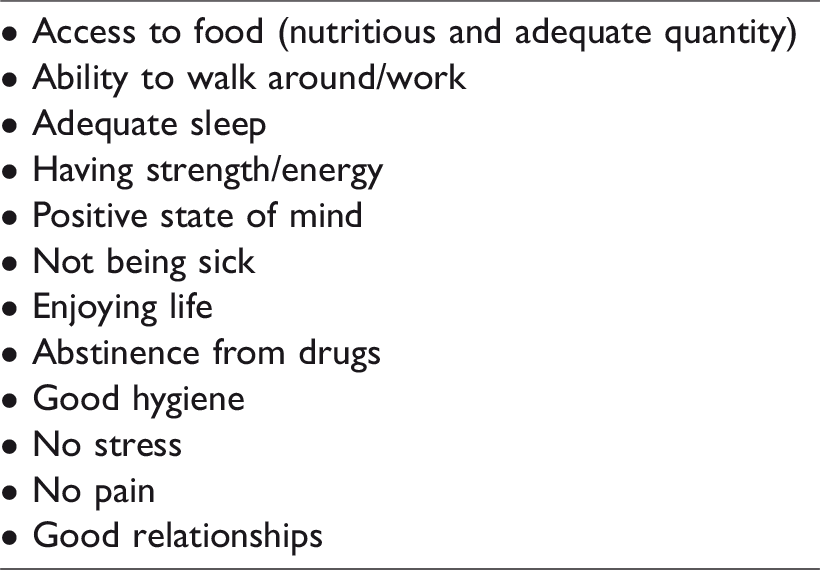
To these workers, functionality is a key component of perceived health, which is also reflected in a study of informal recyclers in Rio de Janerio where health was described as one’s ability to work. 27 The idea of functional health lends itself to an array of individual characteristics and structural phenomena which are intertwined with one’s experiences of working and living conditions, access to services, social exclusion, and mental health status. These self-reported understandings of functional health thus reinforce the importance of using a social determinants approach to observe the dynamics of informal recyclers’ health outcomes, as this approach takes into account a broader range of factors that are enmeshed with perceptions and experiences of well-being. We now turn to this broader context of factors that contribute to environmental health inequities in the DTES as they pertain to informal recyclers.
Social Determinants of Informal Recyclers’ Health
Health-producing resources (income, food, housing, and services) were key factors expressed as being fundamental to informal recyclers’ health outcomes. Deficits in these resources were prevalent among respondents and were often associated with reports of poor or worsening health status.
Income
Income not only affects the way that one experiences well-being but also is a key factor in coping with deficiencies in other health resources. The mean average earnings reported by interviewed recyclers was $24/day, with a range of $3–$100 per day. The coordinators of the DTES Street Market (a weekly local street market supporting informal recycler vendors) stated that the average vendor incomes (as determined through informally conducted surveys) was approximately $50 per market day.
Many respondents noted that they have diversified their informal recycling livelihoods to encompass different collection methods, materials, and locations, as well as other forms of casual or temporary work to increase their earnings. To this extent, a survey of 196 homeless respondents in the DTES 18 revealed that the most common income-earning strategies (informal recycling: 66%, social assistance: 57%, and panhandling: 56%) were often combined in various ways. Almost all of the respondents in our study reported that they were recycling to supplement inadequate social assistance payments. There is a strong correlation between social assistance cutbacks in BC between 1995 and 2002 and the marked increase in informal recycling activity during these years. 16 Key informants from UWC and the DTES Street market also observe that the number of informal recyclers that use the depot and market fluctuates on a monthly basis, with less recycling activity after social assistance cheques are issued, and more activity as the month progresses toward cheque day.
Although informal recycling is an important income-generating strategy, it is important to note that the health threats inherent to this work can also endanger one’s financial status. Some of the respondents reported that the chronic injuries that result from this type of informal physical labor have increasingly limited their future livelihood options in other areas of work.
Food
There are approximately 50 organizations that offer free or reduced-cost meals in the DTES, yet many residents still encounter significant barriers in accessing an appropriate quality and quantity of food.28,29 Interview respondents reported that they had experienced regular barriers in accessing food, despite the high usage of local food services reported among this sample. Cited barriers included line-ups, constraints due to the operational hours of services, and a desire to provide for oneself rather than relying on services or charity (thus highlighting the importance of dignified food acquisition). Informal recyclers and key informants noted that clientization (a process whereby citizens are redefined as clients who are responsible for their own success, health, and well-being and are represented by those who provide care services18,19,30) tended to be a source of anxiety and conflict surrounding food and service acquisition in the neighborhood.
Informal recycling was found to both help and hinder respondents’ access to food. Some noted that their earnings allowed them to buy food for themselves in local stores or restaurants. For others, food acquisition through “dumpster diving” or obtaining food from the waste stream was a regular practice, which is consistent with Gutberlet et al.’s 13 survey findings in Victoria, BC, that 41% of informal recyclers in the city obtained their food from garbage bins on a regular basis. 13 Dumpster diving was expressed by some of the respondents in our study to be a usual strategy that they employ as a means by which to avoid food line-ups and the stigma or conflict that can be associated with them. While there are both negative health implications and stigma associated with recovering food from the waste stream, these respondents preferred the independence of seeking food in the waste stream to the perceived indignity and stress of waiting in line-ups.
One of the most significant barriers to nutritious food acquisition among marginally housed individuals in the DTES is a lack of availability of cooking facilities and refrigeration, which often leads to individuals eating infrequently and relying on charities or dumpster-diving. 31 Single-room occupancy (SRO) hotels in the DTES, in particular, have scant access to refrigeration and food storage spaces can also be limited. Among the interviewed recyclers, 29/40 (73%) reported that they ate infrequently (i.e., 1 meal a day or less), often obtaining food through free meals offered through their housing provider or obtained through dumpster diving. A social worker key informant emphasized that informal recyclers have immense nutritional needs due to the physical nature of their work but are often unable to meet these needs due to financial and structural constraints that prevent them from purchasing food or accessing services that provide free or low-cost meals. Notably, some respondents attributed their lack of appetite and thus their low food intake to mental health issues like stress or drug addiction.
Housing and homelessness
Vancouver has the most expensive housing market in Canada. As a result, there is a lack of affordable accommodation available to low-income residents of the city, and much of the housing available to this group is subpar and can have significant implications for health.19,32 Interview respondents indicated that they lived in either SRO hotel rooms (16/40; 40%), social housing complexes (18/40; 45%), or were homeless (6/40; 14%). When asked if they perceived their health as better, the same, or worse than when they started working with waste, several respondents explicitly indicated that their housing situation, rather than recycling work, was the most influential factor impacting any changes to their health status. Two responses from participants illuminate this finding below: It’s probably worse because the place I’m living in is worse (55-year-old woman, recycling for 8 years). Oh, it’s improved since I moved out of that building … the binning had nothing to do with it (56-year-old woman, recycling for 6 years).
As highly visible workers in public spaces, access to sanitary facilities can be a major issue impacting health and perceptions of stigma and dignity. Over half (23/40; 58%) of the respondents said that they frequently experienced barriers in accessing sanitary facilities while working, including: a lack of public bathroom options, the decrepit conditions of existing public facilities, retailers’ rules that only allow customers to use washrooms, and the inability to bring carts or bags of recyclables into public facilities with them. The lack of accessible sanitation options available to informal recyclers can have direct and especially adverse health outcomes for workers when faced with situations that require urgent or prolonged treatment. A 42-year-old man, working as a recycler for 1 year gave his experience: “One time, I went into a bin and some chemicals came out and irritated my eyes and stuff, so I washed them out in a puddle.” This quotation indicates a strategy used for soothing and treating an acute health threat, which was not all that uncommon as several participants referred to experiences of cleaning cuts with such water or improvising bandages out of material found in the waste.
Recent ticketing crackdowns in the DTES which target local residents for violating by-laws that ban public urination and defecation complicate matters further and create additional barriers for informal recyclers and other low-income urban dwellers who work and/or live on the streets. 33 Marginally housed respondents strongly associated a lack of access to basic sanitation facilities within one’s housing situation with poorer self-identified health status; conversely, participants living in social housing with access to clean and private washrooms and laundry facilities were more likely than the homeless and SRO hotel residents to report their health as staying the same or improving.
Key informants also noted that informal recyclers are chronically labeled as being “hard to house” in the DTES and many face frequent evictions because of mental health issues and work-related issues (e.g., difficulties in storing their carts and collected goods). Cycles of insecure housing are connected with hoarding and collecting behaviors, which disproportionately affect recyclers who collect things for a living and often experience scarcity in the neighborhood.
Access to services
Many low-income residents in the DTES encounter social and structural barriers to accessing the services (e.g., healthcare, shelter, food) that are prevalent in the DTES.28,34 Health service usage among interviewees was quite high, with 34 of 40 (85%) reporting that they had received medical care within the last 12 months. Almost all of the care reported was obtained from the St. Paul’s Hospital emergency room and walk-in clinics in the neighborhood. The interviews indicated respondents’ complex relationships with accessing services in Vancouver. Twelve of the 40 respondents (30%) reported that they regularly encountered difficulties in accessing healthcare or other services in the DTES. Conversely, 22 of 40 (55%) respondents reflected that it is easy to access services in the DTES, but more than half of this group said that they choose not to use these services despite their ease of access. Two participants explain this common avoidance of services and the links between access, clientization, and perceptions of dignity and stigmatization: Well it’s easy to access, but you’re not getting respected. You’re not taken seriously (42-year-old man, recycling for 10 years). As soon as you give a DTES address, you don’t get the service that everybody else gets. And it’s really transparent, it’s right there. You just don’t get the service that you would get if you were living on Commercial Drive or living in the West End [wealthier areas] (53-year-old woman, recycling for 10 years).
As a result of heavy reliance on walk-in clinics and emergency rooms, many respondents identified long wait times as a major barrier in accessing healthcare and other services. Several dwelled on their dislike for waiting in line-ups when accessing services and associated these experiences with anxiety, stress, and stigma. VANDU’s
34
report similarly explained that 80% of their respondents regularly experienced long wait times when accessing healthcare and had to “plan their day around the doctor” or “put in a full day” in order to see a physician (p. 14). Long wait times can impede access to services for some people with addictions or mental illness who are unable to sit and wait for hours. Informal recyclers and other precarious workers are especially affected by long wait times because they often work long hours to meet their basic needs and cannot afford or are unwilling to take time off of work. A community worker notes: I notice that binners are very territorial and they don’t like taking time off because they’ll lose their territory to somebody else. So I think that if something was seriously wrong with them, they could come and access services during the day like everybody else, but … they’re torn between wanting to make that money and not wanting to lose ground to anyone else and accessing services.
Mediating Factors Influencing Informal Recyclers’ Social Determinants of Health
Social factors such as gender, ethnicity, mental health, and social exclusion mediate informal recyclers’ experiences to the health resources discussed above (income, food, housing, and access to services), and thus influence health status.
Gender
Informal recycling in Vancouver has typically been dominated by men, but there is an increasing presence of women in this type of work. Seventy percent of the respondents in this study (and in the UWC survey) were identified as male, while 30% were identified as female. Our analysis indicates that women were much more likely to work with a partner than men. Most of the women who worked with a partner said that they regularly collected recyclable materials with another woman; a small number of women reported that they worked with a male friend or partner while they collected materials. When women were working together, they were mostly walking together and collecting waste materials equally as they went. However, the women who worked with male partners indicated that they each performed different occupational roles: men tended to search dumpsters and garbage bins while women searched the ground for recyclable materials and took on a larger role in sorting materials. This trend emerged not only within partnerships between men and women, but was also prominent among men and women who worked alone (i.e., men were more likely to enter dumpsters than women).
In this study, men and women indicated that they accessed resources and experienced health threats differently in the DTES. In recent decades, there has been significant development of women-only resources in the neighborhood due to the fact that women have often experienced insecurity in male-dominated urban spaces. All of the key informants noted that the increase in women services was one of the most significant positive changes to the neighborhood in the last decade. The result of these interventions was that at the time of the study, women respondents were more likely to have access to social housing and more independent access to nutritious food than men, who predominantly lived in SROs and accessed their food from neighborhood services or the waste stream. A male respondent (51-year-old man, recycling for 9 years) spoke about how he indirectly accesses his food from the women-only services: “I usually eat once a day- later in the afternoon. Usually, 80 to 90 percent of it, [my] girlfriend brings home from the women’s places.”
Our analysis additionally reveals that gendered differences in accessing resources like housing and services suggest that women are more likely than men to seek out assistance. The stereotype of service-reliant women may also be perpetuated among service providers, whereby women can be perceived as being more “deserving” of services and thus gain access to support more quickly than men. 35 Despite the favorable status that women might hold with service providers and the increased provision of women-only services in the DTES, women’s health outcomes and perceived baseline levels of health were equal to that of the male respondents, with an equal portion (40%) of both male and female respondents reporting a worsening health status.
Ethnicity and racialized identities
A majority of respondents to the UWC survey (59/100) self-identified as Caucasian. However, indigenous and elderly Asian people are over-represented in the city’s informal recycling population; for example, 34 of 100 survey respondents self-identified as being indigenous (specifically identifying as Native, First Nations, Haida, Cree, and Metis), while only 2% of the total population of the city is indigenous. 36 Indigeneity is an important issue to consider in the DTES, as legacies and continuing impacts of colonization in Canada have contributed to poorer health outcomes for indigenous people and systemic inequities in social determinants of health (e.g., food insecurity, poor housing, social/economic exclusion).9,37,38
Elderly Asian women are estimated to comprise 20% of recyclers using UWC and can be observed collecting beverage containers from parks, sidewalks, and at public events throughout the city. 17 Immigrants often enter the informal economy because they are precluded from formal sector employment due to their immigrant status, language barriers, or a lack of skills. 39 Despite our observations that support the high participation of elderly Asian women in informal recycling work, few people of this description self-selected to participate in our study (possibly due to language barriers or a desire to remain unobserved). The prevalence of indigenous and marginalized immigrant groups among informal recyclers highlights the social vulnerability of many of these workers and emphasizes the complexity of the social determinants of their health.
Mental health
Although mental illness does not affect all informal recyclers, mental health emerged as a prevalent theme in this research, especially in conversations with participants about housing. More than half of the interview respondents reported that their mental health suffered as a result of noise, fighting, and a lack of sleep associated with their living situations. In addition, women (12/15; 80%) were much more likely than men (13/25; 52%) to discuss experiences of stress, anxiety, or depression as a result of either their living conditions or their work with solid waste. This gendered division in self-reporting and discussing one’s mental health may speak to several issues, including socialized interpretations of gender-based identities associated with vulnerability and toughness for women and men, a reluctance to discuss mental well-being with researchers in general, or a reaction by gendered respondents to a woman interviewer.
Informal recycling provides alternative employment for those who are unable to or who choose not to obtain formal sector work because of various mental health issues (including addiction). Some respondents spoke of the mental health benefits provided by their recycling work (e.g., reduced stress due to increased income, increased social contact, increased exercise and outdoor activity, and support/structure in abstaining from drug use). However, informal recycling work also provided a source of mental health stressors, including increased visibility and experiences of stigmatization; reduced access to services and community resources; and fear of various forms of violence in the public sphere. When asked if informal recycling has had any health effects on him, a 24-year-old man working as a recycler for 2 years explained: The stress of being broke all the time and having to get in and dig through other people’s garbage and stuff is kind of degrading … like stress makes you lose weight, you know, you feel fatigued and weak from not eating.
Although respondents were not explicitly asked about addictions, 18 of 40 participants (45%) voluntarily spoke about a current addiction, and an additional 3 participants (8%) said that they were former drug users or currently recovering from addiction. In the DTES, addiction is a significant barrier to employment, where many people with addictions are excluded from work and thus turn to the informal sector to earn an income. In this study, several respondents reported self-medicating with illicit substances in order to cope with pain caused by work-related strains and injuries. A 31-year-old man working as a recycler for 8 years describes this form of coping: Binning and pushing carts and jumping in and out of bins and ripping bags all day—sure I have stress on my muscles and stuff like that … my shoulders big time, like I [have] a dislocated shoulder that pops out all the time. Like, I’m a recovering addict user, which means that I still have little mistakes here and there, normally I’m doing pretty good. Today, I didn’t do anything [use substances] yet. I’m not going to do it right away—I’m going to wait until after supper and work first, because I use it for pain relief.
Social exclusion
As highly visible workers in the public sphere, it is significant that a majority of interview respondents (27/40; 68%) reported that they regularly experienced negative reactions from others while they were working. Many stated that they came to expect disrespectful treatment because of their association with garbage. When asked how she thought informal recyclers were perceived or treated in Vancouver, a 56-year-old woman working as a recycler for 4 years replied: The majority really look down their nose at you for it. Most definitely. Like they just think you’re dirty, filthy, you know, you’re scum … there’s always going to be some sort of prejudice I suppose—people experience that a lot down here [in the DTES].
Although a majority of respondents reported mostly negative public interactions, some reported that they often had positive interactions with non-recyclers in public. These respondents were most often those with established work-related partnerships with residents and businesses, and they tended to describe their work with dignity as a source of independence and a personal choice, which echos Gowan’s 26 insights from San Francisco that “given their stigmatized social position, recyclers are choosing to concentrate their efforts on using their work to redefine themselves as people with full humanity rather than victims” (p. 183).
Discussion
Approaching informal recyclers’ health outcomes from social determinants of health perspective in the global North provides insight to the programs, policies, social processes, and other structural factors that contribute to “environmental health inequities” 6 experienced by these workers. Our results reveal that pervasive poverty creates barriers for these workers in accessing health resources (e.g., income, food, housing, sanitation facilities, healthcare), which vary between individuals based on identity-based factors (e.g., gender, race, mental health status).
Many of the informal recyclers who were interviewed for this study in Vancouver made explicit connections between their experiences of poverty and the insufficiency of government-provided income assistance payments (e.g., income assistance, unemployment insurance, disability payments). This finding indicates a divergence from the literature on the occupational health of informal recyclers in the global South,26,41–43 as these types of government income assistance programs and universal healthcare insurance coverage are largely absent in these contexts and therefore do not appear as an explicit concern or reason for entry into recycling work, as it was often the case in this study.
Informal recycling and other informal income-earning strategies are a means of coping with exclusion from more traditional forms of work because of a wide and complex array of issues, including disabilities, mental health issues, addictions, language barriers, and migration status. In Vancouver, recyclers have adopted dynamic income earning strategies which combine various kinds of activities (e.g., informal recycling, street vending, panhandling, sex work, and other types of labor) and fluctuate throughout the month in relation to social assistance payments. In the absence of adequate income assistance payments, employment security, minimum wages, injury compensation, and labor regulations, 44 occupational risks are absorbed by the individual worker rather than by an employer or government, which marks a significant challenge for informal recyclers who provide urban services to the city at their own risk.
Informal recyclers’ dynamic income-earning strategies are further constrained in a political context where the activities of “scavenging” and street vending are prohibited because of their association with disorder and high visibility in public space.20,44 Such policies legitimize the increased surveillance of marginalized workers by local authorities and interference with their day-to-day income-earning strategies and routines in seeking sanitation facilities in public space. The prohibition and surveillance of recyclers’ work and public sanitation behaviors has a significant health impact on informal recyclers through increasing the likelihood of workers encountering negative stigmatizing experiences and in further entrenching barriers they experience in accessing health resources and services.
Although emergency healthcare and some social services were noted by respondents as being easy to access in the DTES, many still chose to avoid accessing such services until situations became urgent (and more difficult to treat) because of various barriers to entry (e.g., long wait times) and perceptions of being disrespected by service providers in the past. The clientization of people who access social housing, food services, and other programs targeting the urban poor in the DTES entrenches the social inequities that they experience in other aspects of their lives and can contribute to anxiety, conflict, and further withdrawal from accessing programs/services in the neighborhood. The chronic strain on health-related services (mental health and addictions services in particular) is connected to issues that key informants discussed at length, most notably, the chronic underfunding of services, the insecurity of funding through annual funding processes, the high turn-over of frontline staff due to burn-out or insecure/losses of funding, and heavy reliance on volunteer labor. The barriers and experiences conveyed by informal recyclers in accessing services and the constraints and challenges expressed by key informants in providing services speak to well-documented tensions associated with the neoliberalization of healthcare and other social services, including the depoliticization of health issues in the neighborhood, decreased public funding and increased reliance on volunteer labor, and the individualization of responsibility for health.45–50 The social determinants lens thus points to the structural inequities that informal recyclers experience in accessing various kinds of resources and services in the DTES in the context of the neoliberalizaiton of public services and emphasizes the need for empowering community-based knowledge and leadership in redressing the environmental health inequities experienced by marginalized urban dwellers.
Redressing Environmental Health Inequities
Our study suggests some means by which environmental health inequities may be redressed, including the following: the presence of community organizations that support the livelihoods and well-being of informal recyclers, including UWC, the DTES Street Market, and the Binners’ Project; the presence of individuals, professionals, and grassroots organizations who work with and advocate for informal recyclers and other low-income urbanites (such as VANDU, various local Outreach services, and the key informants and frontline workers in this study); and the potential for progressive policy and programming to be developed in the DTES context, as supported by the success of women-oriented housing and service provision in the neighborhood and other locally developed initiatives (e.g., the success of the Insite supervised-injection site in the DTES). 51
When considering initiatives to redress environmental health inequities in the DTES, it is important to foreground the importance of functional health (rather than the absence of disease) as a locally relevant lens for assessing the effectiveness of interventions. Respondents’ suggestions for improving health outcomes emphasized the importance of integrating health resources into their daily lives, rather than relying on a siloed approach to treating health as an individualized biomedical phenomenon attended to in hospitals and doctors’ offices: they suggested increasing investments in health outreach services and providing sanitation facilities and first aid services at the bottle depots and services that they frequent.
Limitations
The health results reported in this study are based on self-report, which can be a limited mechanism for assessing health due to respondents’ inability to evaluate their own health or the misrepresentation of one’s health due to social desirability. 52 However, numerous studies have shown that self-assessed measures of health are highly correlated with mortality and capture more than the sum of other more specific health indicators.53–56 The catch-all nature of self-assessed health measures can thus provide a meaningful overview of health status in the absence of extensive measurements of individual determinants of health (e.g., family history, health-related behaviors, etc.); we therefore consider self-report to be an appropriate method of health status assessment for this qualitative study.
In addition, the self-selected nature of the sample may have led to the self-exclusion of certain populations (in particular, we noticed an underrepresentation of non-native English speakers in our sample relative to the broader population of recyclers at UWC). Others who may also have declined to self-select include people who have had previous negative experiences with researchers in the DTES or those who did not feel comfortable discussing health issues in a research context due to a desire to remain unobserved. Furthermore, the power dynamic of a seemingly healthy researcher (who is perceived as being healthy enough to work) asking informal workers about health problems may have influenced how respondents answered interview questions, 24 and may have prevented respondents from sharing some aspects of their health experiences with the interviewer.
Conclusions
This study has analyzed the social determinants of health experienced by Vancouver’s informal recyclers in order to detail some of the “inadequate, unresponsive, and/or discriminatory public and private sector programs and policies” (p. 1244) 6 that contribute to environmental health inequities in the DTES, including: the insufficiency of government programs, such as income assistance and affordable housing; the challenges to dignity presented by clientizing programs, including some charitable-sector food provision programs; discriminatory healthcare experiences; insufficient urban infrastructure to support the hygiene of low-income urbanites, including public bathrooms and other sanitary services; and the legal precariousness of informal recycling work and associated street vending activities. Potential to redress these inequities can be seen in examples of advocacy and responsive programming that considers the needs and perspectives of informal recyclers in the DTES. Central to our analysis is the expertise of informal recyclers as knowledge-holders and experts in observing the factors that influence their own health and well-being.
Footnotes
Acknowledgments
Research assistance for this project was provided by Terez Szoke, Nathan Stewart, and Clare O'Connor. The authors thank United We Can for their participation in this research project and to the participants for sharing their stories.
Declaration of Conflicting Interests
The author(s) declared the following potential conflicts of interest with respect to the research, authorship, and/or publication of this article: The views expressed in the submitted article are the authors’ own and not an official position of the institution or funder.
Funding
The author(s) disclosed receipt of the following financial support for the research, authorship, and/or publication of this article: Funding for this research was provided by the Social Sciences and Humanities Council of Canada (File #430–2012-0296).