



Abstract
This article introduces two panel discussions that were held at the University of Michigan School for Environment and Sustainability’s 2020 Michigan Environmental Justice Summit: Commemorating the Thirtieth Anniversary of Michigan’s Conference on Race and the Environment and Looking Toward the Future. The authors provide an historical overview of how the 1990 Michigan Conference helped to shape the development and progression of the environmental justice movement.
Keywords
Introduction
On 13 February 2020, a short time before the SARS-CoV-2 virus began to expose the long-term inequities across social and economic structures and systems in the United States, the University of Michigan School for Environment and Sustainability (SEAS) held a conference commemorating the thirtieth anniversary of Michigan’s Conference on Race and the Incidence of Environmental Hazards. The 1990 Michigan Conference was the first to bring academics, activists, and policymakers together to discuss the implications of mounting evidence of disproportionate environmental burdens in poor and people-of-color communities.1-3 The conference was credited by the U.S. Environmental Protection Agency (EPA) as one of two events to bring the issue of environmental racism and injustice to the attention of the agency and sparked high-level government meetings. The 1990 Conference also helped to springboard environmental justice (EJ) as an academic field of study.
To put the 1990 Michigan Conference on Race and the Incidence of Environmental Hazards into context, it is important to point out that 2020 is also the fiftieth anniversary of Earth Day, for which the University of Michigan and SEAS also played a major role. As described in the SEAS website, in 1970, the student group, Environmental Action for Survival, organized a massive “Teach-In on the Environment” that “formed a model for the first Earth Day five weeks later” on 22 April. The teach-in “began with a ‘trial’ and sledgehammer ‘execution’ of a 1959 Ford automobile that culminated with a fifty thousand-person event” held on campus (https://seas.umich.edu/news/original-earth-day-organizers-come-together-50-years-later). Money left over from the teach-in was used to build the Ann Arbor Ecology Center, which came to be an influential environmental advocacy organization in Michigan. That same year SEAS students lobbied faculty for an environmental advocacy program to teach students how to organize those least served by the geo-political system to protect themselves against environmental harm.
Prior to 1970, public concern about the environment, especially about air and water pollution, had been growing, and in 1970, this concern came to a boil. This concern culminated not only in mass demonstrations around the nation but also in groundbreaking actions taken by government. Nineteen seventy was the year that the National Environmental Policy Act and the 1970 Clean Air Act Amendments were passed. It was also the year the U.S. EPA was created. Nineteen seventy began a decade with a spate of groundbreaking laws to combat water pollution, protect endangered species, control hazardous wastes, preserve wilderness areas, and others. However, it was not for almost another twenty years before public awareness began to emerge that these truly groundbreaking laws passed in the 1970s to protect our environment were not protecting everyone equally or in the same way.
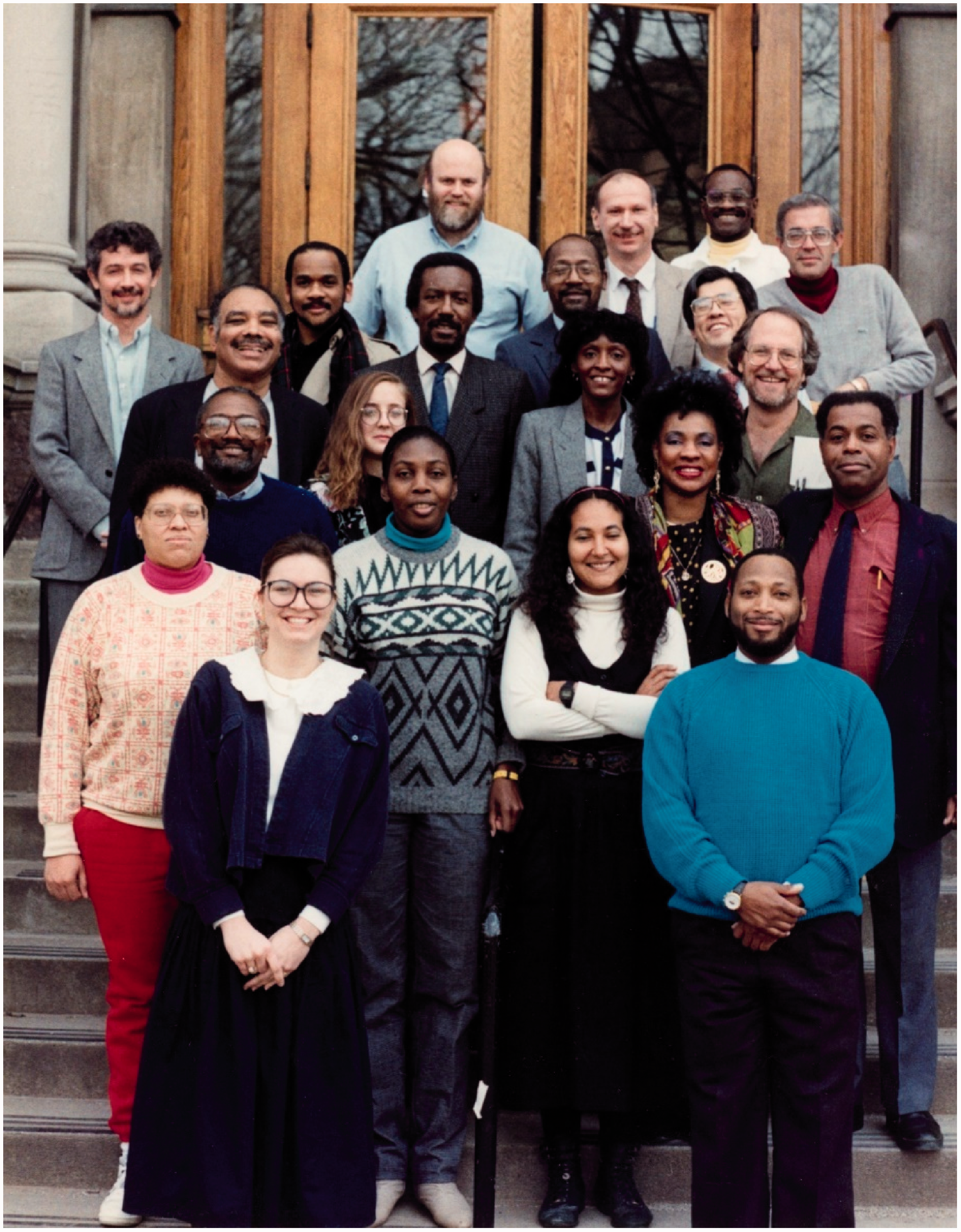
An EJ Movement Emerges
Several events began to change that. First was the Warren County protests in the early 1980s, which gained national attention. These protests involved a predominantly African American community in Warren County, North Carolina, who organized to protest a state plan to place a polychlorinated biphenyl hazardous waste landfill in their community. The community used tactics and protest strategies reminiscent of those used in the civil rights movement of the 1950s and 1960s and gained national media attention.
One of those involved in the protests was Charles Lee, who was working at the time for the Commission for Racial Justice of the United Church of Christ, an organization which helped the residents in Warren County to mobilize. The protests in Warren County and in other places in the South caused him to wonder whether what was happening there was happening elsewhere in the nation. He conceived of analyzing the demographics around all the hazardous waste sites in the United States. This led to the landmark study and report in 1987, entitled Toxic Wastes and Race in the United States, of which he was the principal author.4,5 This study found that the concentration of people of color near hazardous waste sites was double that of communities without such sites, and that race was the best predictor of where these sites are located.
Also in 1987, Paul Mohai started as an Assistant Professor at SEAS, and it is there where he met colleague, Bunyan Bryant, who was already by then a tenured faculty member studying and teaching courses about social injustice and environmental advocacy. He was also the first African American environmental studies professor Mohai ever met. At the time, Mohai was working on an analysis of African American environmental attitudes from a large national survey. Very little about African Americans’ environmental attitudes had been written then.6-8 Mohai introduced himself to Bryant, told him about his project, and asked him for recommendations of publications to develop a literature review for the paper Mohai wanted to write.8 Bryant gave Mohai several papers and reports and found them all useful. However, the report that caught Mohai’s attention was Toxic Wastes and Race in the United States. It changed his life. In the 1970s and 1980s, public discourse was that environmental problems affect us all and hence affect us all equally. This report was revealing something very different, that environmental burdens were greater for some communities than for others.

Civil rights protest against polychlorinated biphenyl hazardous waste dumping in Warren County, North Carolina, 1982.
From that point, we (Bryant and Mohai) began working together. First, Toxic Wastes and Race motivated us to look for other quantitative studies with similar findings.9 This was no easy task back then. We did not have the internet, and the University of Michigan Library collection was not yet digitized. We relied on Library Information Specialists, real people who, after describing to them what you were looking for, would find publications for you and obtain copies. This process lasted several months.
In that search, two names kept coming up over and over: Robert D. Bullard and Beverly Wright. We were struck by two things. First, they were already writing about environmental racism and injustice before the publication of Toxic Wastes and Race. Second, their articles pulled no punches about calling out the racism and injustices that lead to disproportionate environmental burdens and disparate negative health outcomes on African Americans and other people of color.10-12 We knew we would have to call them for their help, which we did.
At about the same time we were conducting our review, we began plans to conduct the very first EJ analysis of the Detroit Metropolitan Area, which we did in conjunction with the University of Michigan’s 1990 Detroit Area Study.13 In addition, we decided to bring together all the academics we could find studying environmental racism and inequality to Ann Arbor to discuss their findings and better understand the issues. We realized the political and public policy implications of these issues, and thus we also invited representatives from key federal and state agencies to participate as observers. It was this mix of academics, activists, and public agency representatives who decided that we would write letters to key environmental policymakers, such as the heads of the U.S. EPA and the Council on Environmental Quality, and request to meet with them to discuss the issues of environmental racism and inequality and what EPA and other agencies could do about them. To make sure our letters would not be ignored, we sent copies to members of the Congressional Black and Hispanic Caucuses and other key members of Congress, key members of the Michigan State Legislature, and to every governor in all fifty states.
It worked. A group of us, which the EPA dubbed the “Michigan Coalition,” was invited to meet with EPA Administrator William Reilly on the afternoon of 13 September 1990. The Michigan Coalition included (in alphabetical order): Dr. Bunyan Bryant, Dr. Robert Bullard, Dr. Benjamin Chavis, Dr. Michel Gelobter, Mr. David Hahn-Baker, Mr. Charles Lee, Dr. Paul Mohai, and Dr. Beverly Wright. Administrator Reilly and his staff set aside a significant amount of time with us, and it was clear that we had their ear and that they would take concrete actions, such as organizing a Work Group charged with developing policy recommendations to address environmental discrimination and inequalities. Its chair, Mr. Rob Wolcott, was a participant at the Michigan conference earlier that year. The administrator also created an Office of Environmental Equity, later renamed the Office of Environmental Justice, and a formal advisory group, the National Environmental Justice Advisory Council (or NEJAC). The administrator also promised to meet with the Michigan Coalition on a regular basis.
In the following year, in October 1991, the First National People of Color Environmental Leadership Summit was convened in Washington, D.C.5,14 This summit was the first to bring together leaders and representatives from environmentally impacted communities from all over the United States. Nearly a thousand people attended. It was at this summit that the Seventeen Principles of EJ were discussed and adopted (http://lvejo.org/wp-content/uploads/2015/04/ej-jemez-principles.pdf). These Principles have served as the basis for defining what EJ means and what needs to be accomplished for EJ to be achieved. The summit crystallized the growing grassroots EJ movement as a national movement and placed further pressure on the U.S. EPA and federal government to take action.
Subsequently, in 1992, EPA’s Work Group produced its report and recommendations, entitled Environmental Equity: Reducing Risks for All Communities.15 This report was the first official acknowledgement by any agency of the federal government that racial and socioeconomic disparities in environmental burdens exist, were a serious problem, and that the EPA needed to take action. This report was heavily criticized for not going far enough, but it was enormously important in raising the visibility of this issue and spurring further action. Indeed shortly after EPA’s 1992 report was released, hearings were held in Congress and numerous bills introduced. None ever passed into law. However, less than seven years after the publication of Toxic Wastes and Race, four years after the 1990 Michigan conference, the near simultaneous publication of Dr. Bullard’s landmark book, Dumping in Dixie,16 and less than two years after EPA’s report and only after a year in office, President Clinton signed on 11 February 1994, Environmental Justice Executive Order 12898, calling on all the agencies of the federal government, not just the EPA, to take into account the EJ consequences of their actions. This executive order became the nation’s high water mark on federal EJ policy and remains so to this day.
EJ in Michigan and in the Academy
Most recent policy developments on EJ have been at the state level, with a number of states implementing such policies. The State of Michigan has begun doing the same. In March 2018, Michigan’s Environmental Justice Work Group submitted thirty-three recommendations to Governor Rick Snyder in the wake of the Flint Water Crisis in order to avoid similar such crises in the future and to advance EJ in the State (https://www.michigan.gov/documents/snyder/Environmental_Justice_Work_Group_Report_616102_7.pdf). In February 2019, newly elected Governor Gretchen Whitmer issued an Executive Order that reorganized the Department of Environmental Quality into the Department of Environment, Great Lakes and Energy (https://www.michigan.gov/whitmer/0,9309,7-387-90499_90705-488736--,00.html). That same executive order addressed many of the thirty-three recommendations made by the 2018 Environmental Justice Work Group. Some of the important recommendations that have thus far been implemented include the creation of (a) the Office of State Environmental Justice Public Advocate, with Ms. Regina Strong first to be appointed to that position; (b) the Interagency EJ Response Team, consisting of the heads of key agencies such as the Department of Environment, Great Lakes, and Energy, the Department of Civil Rights, the Department of Health and Human Services, the Public Service Commission, and others; and (c) the Michigan Advisory Council on EJ (MAC-EJ), an external advisory council consisting of representatives from impacted communities, NGOs, local government, academia, and others with an interest in advancing EJ in the State of Michigan. These are all firsts for Michigan.
The state is also currently considering adoption of an EJ cumulative impact assessment tool, the model for which was built by a team of SEAS masters students in partnership with the Michigan Environmental Justice Coalition, coordinated by SEAS alumna Michelle Martinez (https://deepblue.lib.umich.edu/handle/2027.42/149105). With these developments, and with the commitment, drive, and energy of Michigan’s EJ leaders, we sense genuine momentum in moving the needle forward on advancing EJ in Michigan.
At the national level, we have heard a lot about the Green New Deal. We have also heard the terms “environmental racism” and “environmental justice” raised in the televised Democratic debates, with many of the candidates having plans. The terms “environmental racism” and “environmental justice” have become more commonly and widely used by the media, especially since the Flint Water Crisis, one of the most egregious examples of environmental racism and injustice witnessed in the United States in the last thirty years.17
Furthermore, since 1990, “environmental justice” has become firmly established as an academic field of study, cutting across multiple disciplines, including sociology, economics, political science, public health, law, geography, urban planning, and others. SEAS became the first academic institution in 1992 to offer degrees in EJ. In the period between 1982 and 1987 (the period between the Warren County protests and publication of Toxic Wastes and Race), there were only four publications with the term “environmental justice (or injustice)” in their titles. Today, there are more than ten thousand (Google Scholar, 13, February 2020).
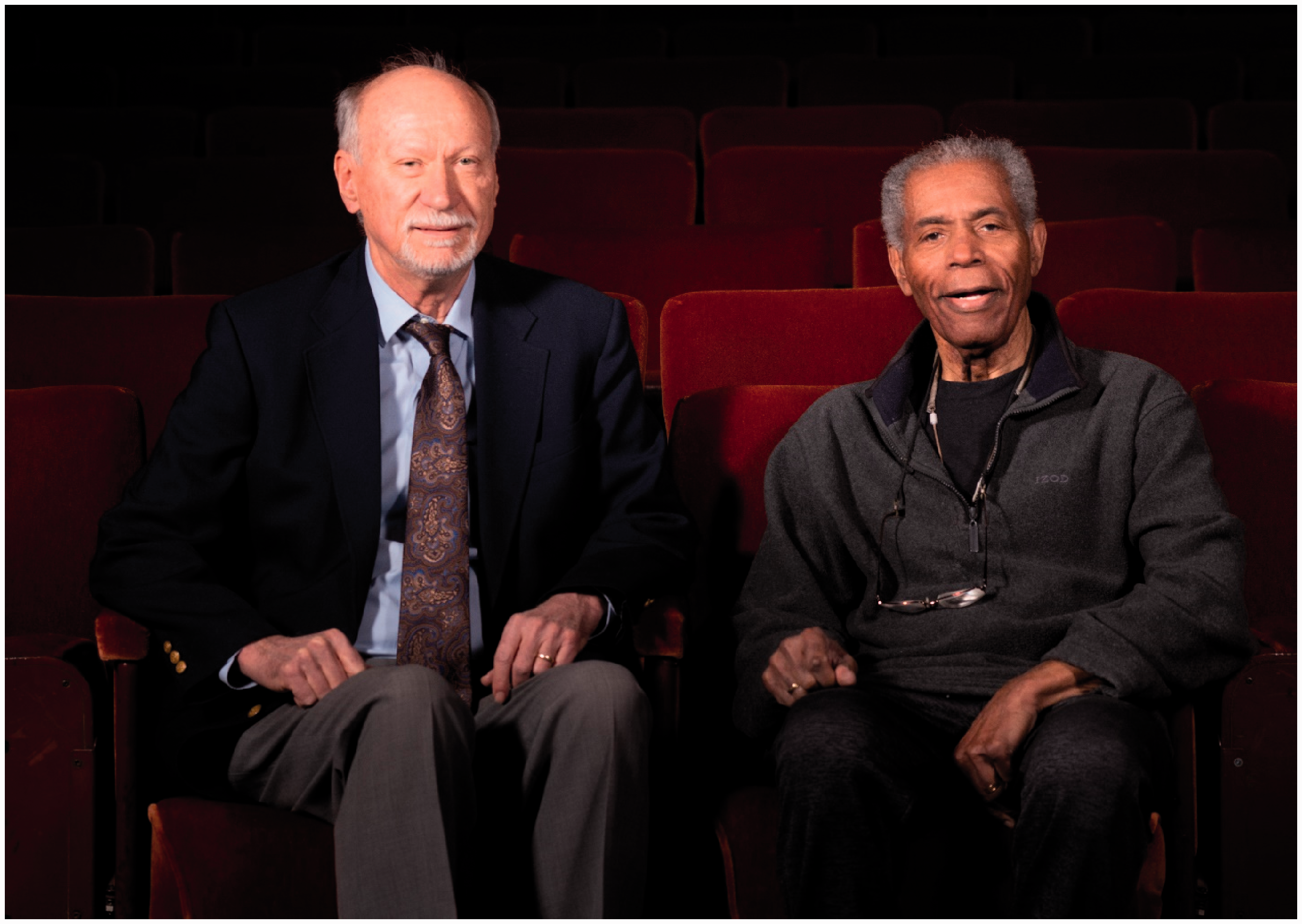
Prof. Paul Mohai and Prof. Bunyan Bryant, organizers of the 1990 Michigan Conference on Race and the Environment, at the Thirtieth Anniversary Commemoration held on 13 February 2020 at the University of Michigan campus. Photo by Dave Brenner, SEAS, University of Michigan.
Conclusion
As this introduction explains, there have been a number of game-changing events to raise the visibility of environmental injustices and propel action, going back as far as the Warren County protests, Toxic Wastes and Race in the U.S., and the early research and writings of Drs. Bullard and Wright. In turn, the 1990 Michigan conference played an important role in bringing scholar–activists together to discuss the issues and brainstorm ways to push the government, especially the U.S. EPA, to take notice and to take action. The Thirtieth Anniversary Commemoration of the 1990 Michigan Conference held on 13 February 2020 at the University of Michigan campus provided an opportunity to take stock of what has happened in the last thirty years and to celebrate the EJ movement’s successes. It also provided an important opportunity to gain the insights, assessments, and advice of some of the EJ movement’s most important founders and leaders. During the Community EJ Leaders and National EJ Leaders Panels, these leaders explained what brought them to the movement and the people who inspired them. They highlighted the challenges they faced, as well as their most important accomplishments, and how the movement has evolved over the last thirty years.
In the articles that present the two panels, readers will learn about the firsthand experiences of these leaders and their views about the important steps needed in the future to make the societal changes needed to achieve EJ for all. They talk about the importance of: broadening the definition of environmentalism; community–academic–government partnerships; involving the younger generation; protecting democracy and self-determination; and breaking down silos and building trust in order to advance EJ. They also provide advice, born from their hard-earned experiences, to the younger generation who want to become involved and contribute to advancing EJ in their communities, in the United States, and throughout the world. As perhaps best expressed by Dr. Bullard at the Thirtieth Anniversary Commemoration: “As we commemorate and celebrate, we also have to rededicate” ourselves to the fight for EJ.
Footnotes
Acknowledgments
The authors thank SEAS Dean Jonathan Overpeck for his support of the commemorative event held 13 February 2020, to celebrate the Thirtieth Anniversary of the Michigan Conference on Race and the Incidence of Environmental Hazards. The authors also thank the Planning Committee for this event, which included Prof. Tony Reames, Michelle Lincoln, Wakako Kobayashi, Carole Love, and Amy Novak. In addition, the authors thank the Office of President Mark S. Schlissel; School of Public Health (Department of Environmental Health Sciences, Department of Health Behavior and Health Education); The Gerald R. Ford School of Public Policy; Taubman College (Urban and Regional Planning Program); Erb Institute; The Law School (Environmental Law & Policy Program); and Program in the Environment for their sponsorship. The authors specially thank all the panelists for sharing their expert insight, wisdom, and advice: Dr. Robert Bullard, Rhiana Gunn-Wright, Theresa Landrum, Charles Lee, Michelle Martinez, Andrea Pierce, Regina Strong, Donele Wilkins, and Dr. Beverly Wright.
Declaration of Conflicting Interests
The author(s) declared no potential conflicts of interest with respect to the research, authorship, and/or publication of this article.
Funding
The author(s) received no financial support for the research, authorship, and/or publication of this article.
