



Abstract
The Diagnostic and Statistical Manual of Mental Disorders (DSM) is one of the most successful technologies in modern times. In spite of well-argued critiques, the DSM and the idea of “mental illness” on which it is based flourish, with ever more (mis)behaviors labeled as brain diseases. Problems in living and related distress are converted into medical problems, obscuring the role of environmental factors such as poverty and related political, social, moral, and economic factors such as the interest of the state in controlling deviant behavior and maintaining the status quo. This view shrinks rather than expands opportunities for freedom, growth, and dignity. It ignores the vast literature showing that unusual environments create unusual behaviors and that by arranging learning opportunities we can change behavior. Reasons for this marketing success are discussed and alternatives suggested including consensual counseling regarding problems in living and drawing on a science of behavior attending to environmental learning opportunities.
The creation and dissemination of the Diagnostic and Statistical Manual of Mental Disorders (DSM) has been one of the major success stories of the modern age. Millions of copies have been sold, many purchased by lay people. Mental health practitioners are required to use this classification system for reimbursement purposes, the media regularly use related terms, and “diagnostic” labels are used in everyday discussions (e.g., referring to a moody colleague as “bi-polar”). Until recently (Insel, 2013), researchers were required to cast problems to be investigated within this framework to obtain funding. Consumer advocates often form interest groups to press for attention to a particular “disorder.” There is an abundant literature describing the development and characteristics of the DSM as well as an abundant literature critiquing it. What more can be said about the DSM? The importance of saying more is shown by the continuing expansion in use of the language of mental illness to describe (mis)behavior and human suffering and its effects and options for enhancing quality of life, even by those in helping professions such as social work who claim as their mission to enhance social justice (Gomory, Wong, Cohen, & LaCasse, 2011). Social workers make up most of the mental health professionals in the United States. The profession of social work has actively participated in encouraging the use of the DSM in part by obscuring alternative views of troubled and troubling behaviors. For example, LaCasse and Gomory (2003) found that alternatives to a psychiatric view were rarely mentioned in course outlines on psychopathology in social work degree programs.
This classification system ignores the vast literature on human suffering and its contexts including decades of experimental research describing the creation of unusual behaviors by unusual learning environments (see later discussion). Why would we choose such avoidable ignorance? Does this contribute to helping clients? Does this honor the call in the NASW Code of Ethics (2008) to draw on available research, to think critically, and to enhance social justice? This article describes continuing concerns regarding the DSM and the idea of mental illness on which it is based, focusing on the dehumanizing consequences of this decontextualized view of behavior including coercion in the name of helping and ignoring an evidence-informed alternative in which learning opportunities and related political, economic, and social influences are focused on in understanding troubled, troubling, and very dependent behaviors. Controversies regarding the DSM are first briefly reviewed. Next, reasons for its popularity are explored. Finally, alternatives are described, and the dehumanizing consequences of ignoring them suggested.
Controversies Regarding Psychiatric Labels
Psychiatric labels have been applied to an ever-increasing variety of behaviors viewed as mental disorders. For each “disorder”, the following is described: diagnostic features, associated features supporting diagnosis, prevalence, development and course, risk and prognostic factors, culture related diagnostic issues, (and/or), gender related diagnostic issues, functional consequences,differential diagnosis, and comorbidity, lending a questionable aura of the authority of science. The fifth edition of DSM 5 (American Psychiatric Association, 2013) contains even more diagnostic categories, and the boundaries around many entries have been loosened, drawing more individuals into an ever widening net of alleged “mental illnesses” (e. g., Frances, 2010a, 2010b). As Frances (2012b) notes, changes in DSM 5 “loosen diagnosis and threaten to turn our current diagnostic inflation into diagnostic hyperinflation. Many millions of people with normal grief, gluttony, distractibility, worries, reactions to stress, the temper tantrums of childhood, the forgetting of old age, and ‘behavioral addictions’ will soon be mislabeled as psychiatrically sick and given inappropriate treatment.” We have an obligation to think critically about labels. Classification systems affect people. They may result in overinclusion or underinclusion. When are they helpful and to whom? Do they offer sound guidelines about how to help clients? When are they irrelevant? When are they misleading or harmful? What are underlying assumptions? Are they well argued? For example, what is “disorder”? It is claimed that diagnoses facilitate research and communication among professionals. Yet a “diagnosis does not carry any necessary implications regarding the causes of the individual’s mental disorder” (American Psychiatric Association, 2000, p. xxxiii).
It is claimed by many, including representatives of the American Psychiatric Association, that this classification system is based on scientific evidence. Critics argue that it is neither reliable nor valid (e.g., Kirk & Kutchins, 1992; Kirk, Gomory, & Cohen, 2013; Kutchins & Kirk, 1997). Lack of association between diagnosis and indications of what plans will be effective continues to be a problem as does the metaphorical nature of the term “mental illness.” (See later discussion.) The DSM has been faulted for not distinguishing among different “syndromes”; that is, there are “boundary” problems (overlap between two or more categories). Many writers argue that this medicalized classification system obscures life challenges and complexities of behavior including unique meanings and individual differences in environments. Many argue that it trivializes problems-in-living and encourages blaming victims for their plights rather than examining and altering related social circumstances. Skrabanek and McCormick (1998) suggest that new terms for diseases serve as a camouflage for a lack of understanding. Many people believe that there is convincing evidence that a disorder called schizophrenia exists and has a biological cause. Others present cogent arguments against this belief (e.g., Boyle, 2002). Some scholars argue that the concept of mental disorder is culturally relative. Others contend that it is not.
The hundreds of alleged “mental disorders” in the DSM are based largely on consensus rather than empirical criteria—a vote by alleged experts, many of whom have conflicts of interests, for example, receiving money from pharmaceutical companies (Cosgrove, Bursztajn, Krimsky, Anaya, & Walker, 2009). Conflicts of interests between academic researchers (especially psychiatrists) and pharmaceutical companies are rife, including fraud and corruption (e.g., failing to report income from pharmaceutical companies to universities where researchers are employed; e.g., Gambrill, 2012a; Lo & Field, 2009). Indeed, most members of some task forces concerned with the DSM have financial ties to pharmaceutical companies (Cosgrove, 2010).
Why Has the DSM Been Such a Marketing Success?
How could a way of describing behavior and options for understanding and changing it which is so dismissive of the complexity of our lives and related research and literature become so successful? The success of this technology is so great, the conceptual and empirical underpinning so clear in their weakness, and the harms to clients in lost opportunities to understand clients and to enhance quality of life so clear, that momentous reasons must come into play to explain the marketing success of this technological-medicalized view of behavior. To understand the phenomenal success of the DSM, we must examine not only the rhetoric of the DSM itself but also the discourse in related sources.
The Medicalization of Life
The term medicalization describes “a process by which nonmedical problems become defined and treated as medical problems, usually in terms of illness and disorders” (Conrad, 2007, p. 4). The terms “healthy” and “unhealthy” have been applied to an ever-wider range of behaviors, thoughts, and feelings. Ivan Illich (1976) argued that physicians have medicalized many aspects of everyday life such as aging, pain, death, healing, and prevention; private areas of life were being expropriated by governmental institutions and by what he referred to as the “disabling professions.” He called this “medicalization” and argued that it impaired, rather than benefited health and decreased our freedom. It is widely believed that mental illness is the cause of troubled, troubling, and very dependent behaviors. Biomedical psychiatry and pharmaceutical companies, with the help of the state, have been very successful in forwarding medical views of problems-in-living including transforming everyday behaviors, thoughts, and feelings into mental illnesses requiring medical solutions (medication), as illustrated by the ever-lengthening list of behaviors viewed as signs of mental illness and promotion of medical remedies (prescribed medication). (Mis)behaviors, troubled or troubling feelings and thoughts, are translated into illness such as bipolar disorder, schizophrenia, attention deficit hyperactivity disorder, and hundreds of others including gambling and female sexual dysfunction (Moynihan & Mintzes, 2010).
In this medicalization of human distress, anxiety, depression, and (mis)behaviors are claimed to be due to brain diseases. Factors focused on include biochemica1 changes, brain damage, and genetic differences. The client is viewed as having an illness (mental) in need of a diagnosis and treatment. Now, mental health is considered to be a public health problem warranting screening of the entire population for “mental health” problems. Treatment of mental health and substance abuse disorders now has parity with treatment of physical illnesses. Consumers have become more involved, requesting or demanding services (Conrad, 2005; Clarke, Mamo, Fosket, Fishman, & Shim, 2010). There is less tolerance for low-level distress. A disease model of alcohol abuse rules the day. This view has fostered the development of a thriving industry of specialized counselors and treatment centers for “addiction.” Psychologists, social workers, and counselors have jumped on the biomedical bandwagon as reflected in the professional literature and in professional education programs (Gomory et al., 2011).
Szasz (1990) argues that ignoring political, social, and economic factors that influence behavior and equating mental and physical illness is deeply deceptive; “human difficulties are scientifically transformed into medical diseases” (p. 167). Concerns about the coercion that results from conflating mental and medical illness (e.g., forced outpatient commitment) have been a driving force in his analysis. Szasz has long been revered, derided, or ignored for his persistent and penetrating critique of the idea of “mental illness,” arguing that this is a rhetorical device (a metaphor) designed to obscure the differences between real diseases (e.g., syphilis) and (mis)behaviors. Mind is reduced to brain. He suggests that pretention to a medical status requiring experts “conceals the complex moral and political character of psychotherapy behind a series of quasi-medical pronouncements” (Szasz, 1988, p. 5). He does not deny the reality of the phenomena to which the terms are applied. “People do suffer from all sorts of aches and pains, fears and guilt, depressions and futilities; many such persons do consult, or are compelled to consult, experts called psychotherapists; and one or more of the participants in the resulting transaction may consider it helpful, useful, or “theraputic” (pp. 3–4). Although some troubled or troublesome behaviors, thoughts, and feelings may indeed be due to brain dysfunction, if they are so caused, they would become a subject for neurology (not psychiatry) as Szasz suggests.
As Szasz (1990) points out, insanity is an idea, not a fact; however, most people assume “that the term mental illness names a bona fide illness”(Szasz,1990, p. 3). This idea is actively promoted by governmental agencies and the American Psychiatric Association and social work and clinical psychology. Those who promote biological views of behavior claim that “mental illness is like any other illness” (p. 343). In Marker and Aylward (2012), we find the statement: “The treatment of diabetes can be a useful metaphor for understanding the treatment of GAD” [Generalized Anxiety Disorder] (p. 33). Is this so? What is mental? Does this refer to the mind? Where is the mind? Are mental experiences the same as chemical changes in the body? Such questions, discussed in detail by Szasz as well as by others such as Fancher (2007), highlight problems in equating physical and mental illness. Szasz (1990) argues that two misconceptions lie at the heart of those who promote the idea of mental illness: “one is a misunderstanding of the differences between the literal and metaphorical meanings of words; the other is a misunderstanding of the relationship between chemical processes in the body and human experiences or so-called mental states” (Szasz, 1990, p. 345). Allen Frances (2012a) who chaired the task force for preparation of the fourth edition of the DSM has now gone on record as agreeing that DSM-defined mental disorders are not diseases. Although “psychiatrists have claimed that mental diseases are brain diseases; pathologists have never been able to confirm these claims” (Szasz, 1990, p. 71). This remains true today, but still claims are made (e.g., Boyle, 2002; See also Leo & Cohen, 2009; Vul, Harris, Winkelman, & Pashler, 2009).
The finding of biochemica1 abnormalities related to certain behaviors only establishes that abnormalities in biochemistry are present, not that they cause the behavior. Even today, there are no agreed on independent signs of “mental illness.” Biochemica1 changes may result from stress caused by limited opportunities due to discrimination; indeed, our experiences create brain changes (Garland & Howard, 2009). Fancher (2007) argues that the assumption that physical causes are responsible for distress reflects a confusion that “gives biological psychiatry a specious credibility and drugs a specious aura of significance” (p. 283). He notes that “psychology (and other sciences) have as much claim to explain material states as biology has to explain psychological ones. We are all talking about the same thing, though we are saying very different things about it.” (p. 283). In a category error, things of one kind are presented as if they belonged to another (Blackburn, 1994).
Once we abandon dualism, the distinction between different disciplines becomes a distinction between types of discourse and levels by which reality is organized. All the structures and systems composing reality are made of the same stuff. Thus, to speak of physics versus chemistry is to speak of different modes of discourse addressing different levels of how reality is organized …. (Fancher, 2007, p. 285)
The Therapeutic State and Culture
The DSM reflects the therapeutic state and culture in which we live. Szasz (2001) argues that we now live in a therapeutic state (a pharmacracy) characterized by state-sanctioned psychiatric control of (mis)behaviors, primarily via prescribed medications (e.g., Olfman & Robbins, 2012). Use of psychotropic medication has indeed skyrocketed over the past years. Psychiatrists have the power to coerce people to participate in interventions “for their own good.” Coercion is now defined as “treatment.” Szasz suggests that suffering is no longer permitted; we must be happy and healthy. Happiness is equated with health (Heath, 2006; see also Elliott & Chambers, 2004). Therapy is offered for life’s travails (e.g., Cushman, 1995; Illich, Zola, McKnight, Caplan, & Shaiken, 1977; Reiff, 1983). Herzberg (2009) describes the multiple pathways that contributed to the increasing focus on prescribed medication as the answer to life's ills and increasingly, to lifestyles—how to be happy. Szasz views the term “psychotherapy” as fraudulent because it connotes special medical expertise. He argues that psychotherapy consists of talking and listening and concerns how people should live. It is thus a “ministerial rather than medical enterprise” (Szasz, 1988, p. vii).
Eva Illouz (2008) offers unique insights into the development and nature of this culture in her penetrating critique of clinical psychology, approaching this topic through the lens of the sociology of culture. She suggests that popular ideas must satisfy three conditions: (1) They make sense to actors’ social experience (e.g., downward mobility, status anxiety); (2) they provide guidance about uncertain and conflict-ridden areas of social conduct; and (3) they are institutionalized and circulated in social networks (p. 20). This pragmatic view of culture emphasizes that people do what works for them. She notes that the focus on managing emotions was of immediate interest to corporations in order to facilitate productive, smooth-working relations. She suggests that popular texts describing therapeutic procedures and their reflection in the media foster distance between people as “communication becomes formalized” (p. 18). (See also later discussion of the role of technology.) She, as do others, emphasizes how “the therapeutic lexicon depoliticizes problems that are social and collective” (p. 19). The therapeutic culture is now being globalized. Kleinman and Kleinman (1996) argue that “ominous aspects of globalization include the commercialization of suffering [and] commodification of experiences of atrocity and abuse” (p. 19). (See also Summerfield, 2012; Timini, 2012; Watters, 2010).
Control of Deviant Behavior
Many scholars argue that labels, such as “mental illness,” are used for social and political control, often resulting in harming rather than helping people. Indeed, the history of psychiatry clearly shows this, including use of psychiatric hospitals to get rid of troublesome relatives (e.g., Scull, MacKensie, & Hervey, 1996; Scull, 2005). Consider labels such as drapetomania (an irresistible propensity to run away). This “disease” was allegedly common among slaves in the southern United States in the past (Cartwright, 1851). Szasz (1990) considers the very notion of “mental illness” as a rhetorical device designed to obscure the differences between physical illness and problems-in-living in order to impose control on those labeled or to allow the labeled to escape responsibility for their behavior. (See also prior discussion of medicalization.) The history of psychiatry illustrates the imposition of expected gender roles, especially on women due to their claimed special vulnerability to “disorders.” In The Mismeasure of Women, Tavris (1992) contends that labels included in the DSM-IV (1994) continue to misdirect attention away from political, social, and economic conditions related to expected gender roles and toward supposed individual deficiencies. (See also Horwitz & Wakefield, 2007, 2012). Hobbs (1975) suggests that “Categories and labels are powerful instruments for social regulation and control, and they are often employed for obscure, covert, or hurtful purposes: to degrade people, to deny them access to opportunity, to exclude undesirables whose presence in some way offends, disturbs familiar custom, or demands extraordinary effort” (p. 110).
With the development of the therapeutic service sector of the economy, an increasing proportion of all people come to be perceived as deviating from some desirable norm, and therefore as clients who can now either be submitted to therapy to bring them closer to the established standard of health or concentrated into some special environment built to cater to their deviance. (Illich, 1976, p. 123) … medicine is becoming a major institution of social control, nudging aside, if not incorporating, the more traditional institutions of religion and law. It is becoming the new repository of truth, the place where absolute and often final judgments are made by supposedly morally neutral and objective experts. And these judgments are made, not in the name of virtue or legitimacy, but in the name of health. (Zola, in Conrad, 2007, p. 470)
Szasz (1990) highlights parallels “between religion and psychiatry.” He argues that “the ideas of mental health and mental illness have replaced the idea of God and the Devil, and that the institutionally legitimized explanations, justifications, and interventions of psychiatry have replaced those of organized religion” (p. 97). As he suggests, power must be “legitimized by certain ideas. It is these ideas that sanction some to use power and require others to submit to it” (p. 317). He argues that the idea of mental illness provides “justification for violence against those who act or think differently than we do” (p. 318). Szasz (1988) contends that the true role of the idea of mental illness is to allow the “therapeutic state” and its thousands of social workers, psychiatrists, and psychologists to control troubled, troubling, and very dependent behaviors. Consider, for example, the psychiatric incarceration of Ignas Semmelweiss who discovered childbed fever “for upsetting his colleagues and the public with the view that the disease was carried by the doctors’ dirty hands” (Szasz, 1984, p. 237). “Classifying human acts and actors is political, because the classification will inevitably help some persons and harm others” (Szasz, 1988, p. 183). The political nature of the DSM has long been raised as a concern (e.g., Schacht, 1985; Sedgwick, 1992). Kirk and Kutchins (1992; both social workers) highlight the role of political and economic considerations in the creation and “selling” of the DSM. (See also Kirk et al., 2013.)
The Technological Society in Which We Live
The DSM is a technology. It is a classification system. The uses of classification are many. Only one is to enhance understanding. Others include processing people more efficiently in terms of billing and provision of services, both sought and not (e.g., outpatient commitment). Ellul (1964, 1965) argues that technology has replaced nature as a supernatural force. Technology tends to perpetuate itself, often as part of organizations with vested interests in survival and growth, such as hospitals, professional organizations, and social service agencies, both not for profit and for profit (Charlton, 2010). A technological society creates a “technological personality” with secondhand experiences and opinions via the influence of pervasive media (Stivers, 2004). As Ellul (1965) argues, public opinion is a key component of mass society in which there is little time for reflective thought. Professionals as well as clients are caught up in such a society in which techniques and technical information proliferate, removing time for critical reflection in an ever faster paced life, often driven by bureaucratic and monetary interests. Technology presses for ever greater efficiency and standardization seen, for example, in ever greater use of “tickboxes” on case records and codes to describe (mis)behaviors. Critical psychiatrists such as Timini (2012) argue that a technological paradigm in which classification systems are forwarded and specific interventions designed—this “medicine of the mind” (Bracken et al., 2012)—ignores vital relationships, meanings, values, beliefs, and practices. Bureaucracies are technologies designed to process products, including people, in ever more efficient ways. Knowledge becomes abstract. A DSM label gives an illusion of understanding, encouraging detachment from lived experiences. “Technique, in the form of psychotechnique, aspires to take over the individual, that is, to transform the qualitative into the quantitative. It knows only two possible solutions: the transformation or annihilation of the qualitative” (Ellul, 1964, pp. 286–287). The use of psychiatrized (technisized) language has become more and more common in our culture. This stabilization of discourse is to the advantage of those who use new technologies (Stahl, 1995, p. 254).
Relief From Responsibility for the Consequences One’s Behavior
Blaming (mis)behavior on “mental illness” removes responsibilities for such behavior (Szasz, 1961, 2001). “Behavior is seen only in terms of its clinical, rather than social meaning” (Conrad, 2007, pp. 63–64). There is a “dislocation of responsibility from the individual to the nether world of biophysiological functioning” (Conrad & Schneider, 1992; see also Szasz, 2008). Those with mental illnesses are entitled to special benefits and/or accommodations. The medicalization of attention deficit hyperactivity disorder (ADHD) provides a medical explanation for underperformance. Diller (2006) argues that “the simple fact of hyperactivity or impulsivity is not the chief concern for teens and adults; rather, it is their disorganization, irresponsibility, procrastination, and inability to complete tasks” (p. 277). Moncrieff (2008a) suggests that a psychiatric framing of problems complements conservative political views by considering discontents such as depression and anxiety as caused by individual deficiencies, overlooking related political and economic factors such as lack of jobs. Indeed, suicide rates are affected by economic factors (Carey, 2011). Such a framing removes collective responsibility for addressing adverse circumstances of those who suffer from policies that favor some but leave others with little.
Psychiatric Labels (A Medical Framing) as a Salve for Helplessness
Social workers work in public welfare and child welfare departments. They work with the homeless and with those labeled as “severely and chronically mentally ill.” Great need meets limited resources often because of public policies that affect life chances, often leaving social workers powerless to improve the quality of life for clients. Indeed, the main option they may have is to further lessen opportunity (e.g., declare a client mentally ill and force him into outpatient commitment). Without effective skills for minimizing and handling the inevitable uncertainty in making life-affecting decisions and lack of success involved in professional practice, it is easy for professionals to blame intractable problems on characteristics of clients (e. g., their brains) as a protection against failure. Lack of success can be blamed on the client’s “mental disorder.” Schools of social work as well as published literature in social work emphasize the importance of forwarding social justice. This is highlighted in the Educational Policy and Accreditation Standards (2008) and in the National Association of Social Workers Code of Ethics. We tend to flee from a sense of helplessness. What better way out than to use a state-approved technology that removes responsibility?
Misleading Use of Language
Today, we take language for granted, overlooking its primitive beginnings and functions that linger in our modern world such as magical uses of words and phrases. Language is a complex social technology that has evolved over the ages. Words can be (and are) used to obscure rather than reveal reality (Orwell, [1946] 1958). The language of cognitivism dominates clinical psychology; the language of the brain dominates psychiatry. Both involve a language of deficit/pathology. Language revealing the influence of context is minimized in this focus on interiors. Kleinman and Kleinman (1996) suggest that American cultural rhetoric is “changing from the language of caring to the language of effectiveness and cost” (p. 14). Szasz (2001) distinguishes among the terms “disease,” “discomfort,” and “deviance.” “Disease refers to a demonstrable alteration in the structure or function of the body… considered harmful to the organism, such as a cancerous lesion” (p. 7). Virchow suggested three key characteristics of a disease: (1) a specific causal agent, (2) the agent always induces the disease, and (3) the disease becomes worse without treatment. Discomfort refers to a person’s complaint, for example, pain or depression. Deviance refers to “the complaint of individuals about the behaviors or other persons or groups” such as the use of illegal drugs or behavior causing injury or death to others or the self. Szasz argues that deliberate confusions are created among these three terms in the service of political, social, and economic interests.
If we count discomforts and deviances as diseases, we change the criterion for what counts as a disease and set the ground for steadily expanding the category called “disease.” Patients suffering from discomforts can classify their feelings of malaise as diseases and can try to convince others to accept their claims. Many prominent persons now engage in this kind of disease promotion: some advertise their depression as a brain disease, others their impotence as ED (erectile dysfunction), still others their former drug use from which they are ‘in recovery.’ Physicians and politicians can do the same with other people’s deviance. Because physicians and politicians regularly function as agents of the therapeutic state, this is an ominous development: acting in concert, they posses the power needed to convince, co-opt, or corrupt the public to accept the illness inflation they promote. (Szasz, 2001, p. 7)
The misuse of words is key to understanding what Szasz views as deceptions regarding psychotherapy and the term “mental illness.” Szasz has consistently focused on the misuse of words in his critique of psychotherapy and related technologies such as the DSM. He views “psychotherapeutic intervention as metaphorical treatments” (p. 5). A metaphor “involves the pretense that something is the case when it is not” (Szasz, 1990, p. 138). Psychotherapy and mental illness are both metaphors. Psychotherapy is “the name we give to a particular kind of personal influence” (Szasz, 1988, p. 9). This influence is directed toward altering conduct. Persuasion strategies are integral to modern day therapy as reflected in motivational interviewing. “In plain language, what do patients and psychotherapists actually do? They speak and listen to each other … each tries to move the other to see or do things in a certain way. This is what qualifies their actions as fundamentally rhetorical” (Szasz, 1988, p. 11). Szasz (1988, p. 13) refers to Plato citing Socrates, “The cure of the soul … has to be effected by the use of certain charms, and these charms are fair words.” The value-laden languages of theology and tragedy have been replaced with seemingly value-free languages of science and technology (p. 19). The distinction between rhetoric and science was critical to Aristotle. Szasz argues that these have now been blended. “The result is that modern psychiatry and psychotherapy claim to be scientific religion or religious science combining in a powerful alliance the forces of both religion and science” (pp.183–184).
The promiscuous use of the term psychotherapy is an important sign of the debauchment of the language of healing in the service of dehumanizing and controlling persons by technisizing and therapeutizing personal relations. (Szasz, 1988, p. 208)
The rhetoric of science contributes to the dehumanization of clients in a number of ways including obscuring ethical travesties (e.g., Soloman, 1994). Language is basic to magic. (See later discussion.) The repetition of words is integral to chants, spells, and rituals. Mumford (1966) suggests that
words originally were not merely a means to the performance of magic, but were in themselves the archetypal form of magic. The right use of words created for the first time a new world, seemingly under human control: any departure from meaningful order, any confusion of tongues, was fatal to this magic. The passion for mechanical precision which man now pours into science and technics stems originally, if I guess correctly, from the primordial magic of words. Only if the right word were used in the right order did the spell work. (pp. 87–88)
Today, as in the past, naming is a powerful framer. Naming carried considerable magical power in ancient Egyptian thought. (See also next section on the DSM as a form of magic.) For example, once the goddess Isis learned Ra’s real name, she could then cure him of a snake bite (www.sonoma.edu.users/h/holmstrl/EGmagic, 2/1/13). In the New Testament, “the words name and power are synonymous” (Szasz, 2008). Szasz notes that the power to name things, to classify acts and actors, is the greatest power in the world (p. 182). The importance of the word has always been of key concern as illustrated by the fate of William Tyndale who was burned at the stake for translating the Bible into English. Throughout time, language was considered to have a subversive power as reflected in censorship (certain books could not be read and certain phrases and words cannot be used). This is found in all venues including educational institutions as illustrated by Ravitch (2003) in The Language Police. There are taboos in the professional literature as illustrated by failure to acknowledge well-argued alternatives to views promoted (Gambrill & Reiman, 2011). Specialized vocabularies are used in different areas. Esoteric language is essential to expertise and has been throughout the centuries. A prime example is the DSM with specialized terms such as dissociative amnesia, dyssomnias, and paraphilia. Szasz (1993) describes hundreds of synonyms for mental illness showing the long history of “labeling as ‘crazy’ virtually every kind of unusual or distasteful behavior, as well as anyone who displays such behavior” (p. 46). The odder the behavior or the more harm that results as in mass shootings, the more we may appeal to causes extraordinary such “he is crazy” or “he is mentally ill,” assuming that an explanation has been offered when it has not as illustrated by use of the insanity defense (e.g., Szasz, 1984).
The DSM as a Modern Day Form of Magic
The term “magical thinking” is often applied to clients who are assumed to engage in thinking that is not realistic. However, magical thinking is common in psychiatry itself. “Magic is the art of producing a desired effect or result through the use of incantation,or various other techniques that presumably assure human control of supernatural agencies or the forces of nature” (Unabridged Dictionary Random House Incorporated, May 24, 2012). Magic provides a sense of control when control is lacking or when one thinks it is lacking. Szasz (1988) argues that psychotherapies are “purely verbal exercises, having incantatory, ritualistic, and strategic functions rather than identifying, as they ostensibly do, discrete forms of medical treatments” (p. 5). Speech is essential to magic rituals. Words are used to bring about actions; the ritual act itself achieves the stated goal. Magical uses of language highlight its overlap with religion; Szasz views psychotherapy as a religion rather than a science. Frazer (1925) suggests that magic is much closer to science than it is to religion; prediction is integral to both magic and science; both have procedures that must be followed to accomplish a certain goal based on knowledge.
Malinowski (1954) argues that magic and religion often serve the same functions in a society. “Magic supplies primitive man with a number of ready-made rituals, acts and beliefs, with a definite mental and practical technique which serves to bridge over the dangerous gaps in every important pursuit or critical situation” (p. 58). He suggests that magic fills a gap when technology is not available (in Stivers, 2001, p. 29). Magical kinds of talk include excessive claims of effectiveness (Stahl, 1995, p. 249). Stahl (1995) describes magic in media discourse on technology; in his content analysis of Time Magazine reporting on computers and other technologies over a 10-year period, he found that 36% of all stories used explicitly magic or religious language. Stivers (2001) suggests that in a technological world “magic comes under the aegis of technology, and becomes either an imitation of technology or a compensation for it” (p. 41). He defines magic as “a set of words and practices that are believed to influence or effect a desired outcome” (pp. 41–42). Here are some examples of word magic involving the DSM:
Could you tell me about one of your clients?
Yes. Ms. Z is bi-polar. (No further information is provided and the student seems satisfied that applying this label is sufficient to understand Ms. Z and decide on an intervention.)
Instructor gives students two sentence vignettes of clients and requests them to correctly apply DSM labels.
Can you please tell me about your clients?
I have three schizophrenics and two obsessive compulsives.
Stivers (2001) suggests that administrative and psychological technology has assumed a magical status: Our expectations for their effectiveness are magical. He views the ever-changing variety of management practices as a form of magic—an endless series of “new” practices claimed to be able to solve problems previous ones could not. Because the problems addressed are not solvable by these (or perhaps any) means, these management practices are a form of magic in our modern world. “Magic established an indirect or symbolic relationship between a set of practices and a desired outcome so that the magic practices [such as a different therapy or management practice] become, as it were, operational indicators of the outcome” (p. 11). The practice itself becomes the magic action. Stivers suggests that such indicators are believed to contain the “sacred power of technology,” but really do not. The effects are placebo effects that contribute to belief in the magic activities; there is a self-fulfilling prophecy. (See also Kirsch et al., 2010; Whitaker, 2010). As with dancing to draw rain, we believe in the power of psychological practices, managerial systems, and medical technology to fulfill our desires.
Money to Be Made
Hidden agendas Szasz (1990) suggests for classifying mental illnesses, as diseases include both practical and political ones. A practical one is that the behaviors that can be labeled as mental illnesses are endless, since there is no need for objective foundation (p. 82). Because there is no need to appeal to signs as in physical illness (e.g., tissue changes), an endless variety of behaviors, feelings, and thoughts can be dubbed as “mental disorders.” Those who accept the idea of “mental illness” become patients to be treated. Increasing “illnesses” require increasing numbers of professionals to address them. Indeed, the numbers in the helping professions continue to expand. The more behaviors that are viewed as mental illness, the more need for professionals to help those with a “mental illness.” Lynn Payer (1992) introduced the term “disease mongering” to refer to the selling of sickness and increasing the market for those who sell and deliver treatments. Scull, MacKensie, and Hervey (1996) note the expansion “of the knowledge-based professional classes” (p. 5) with the help of the state.
Unlike their entrepreneurial counterparts in the manufacturing sector, the new professionals were in the business of selling something intangible: skill and expertise rather than material goods. Each such group claimed the ability not only to diagnose and understand problems on a more subtle and sophisticated level than was granted to layman who lacked their specialized knowledge but also to prescribe remedies and solutions on the basis of their greater expertise … … In alchemical fashion, the abstract human capital they claimed to embody could be transubstantiated into real claims on resources: enhanced power, prestige, and influence…but also income … . (p. 5)
Szasz argues that treating the mind as an object (using terms such as “diseased mind”) was deliberate, not an innocent error, to benefit its promoters. This view has benefited the pharmaceutical industry that sells billions of dollars of pills prescribed for mental illnesses. Focusing on the mental disorders of individuals draws attention away from environmental influences that contribute to adverse experiences including public policies and related legislation. Fixing these may be politically unpopular; the cost may be substantial. Timini (2012) argues that there has been a packaging of distress for the convenience and profit of corporations, agencies, researchers, and funders. There is a commodification of distress in which industries are built around a diagnosis, such as ADHD. In commodification, goods, ideas, or as Timini (2012) suggests, “anything can become a ‘thing’ with a commercial value that can be bought and sold and subject to the influence of the market, which then makes it available for exploitation” (p. 418).
Lack of Exposure to Alternative Views
Many clinicians and clients have not been exposed to political, economic, and social perspectives on deviance—to the fact that what is considered a problem is constructed and relative (ascribed), rather than inherent (fixed). (See for example Loeske, 1999.) What is considered pathological changes with the time and differs in different cultures. Rarely are they well versed concerning ethical and conceptual dilemmas related to the medicalization of (mis)behaviors as “mental illnesses.” Lack of knowledge about historical differences in how a certain pattern of behavior is viewed encourages pathologizing clients. In Shrinking Violets and Casper Milquetoasts, McDaniel (2003) describes the changing views of reticent, shy behavior (see also Lane, 2007). A recent book now lauds “the introvert” (Cain, 2012). A learning approach to behavior and related publications is often ignored (Thyer, 2005). “The widespread lack of knowledge of learning principles and learning conditions ensures that the ‘abnormality’ of the environment … goes without recognition” (Staats, 2012, pp. 212–213). Szasz suggests that the belief that troubled and troubling behavior is due to mental illness is ingrained in Western culture, which decreases the likelihood that critiques receive the attention they deserve.
Boyle (2011) describes a variety of strategies used to obscure the influence of life experiences and the social context on human distress. These strategies include focusing on deficits; symptoms are focused on rather than life experiences and related environmental factors. Poverty and social isolation are viewed as a consequence of mental illness rather than as a cause of distress, distracting attention from environmental circumstances such as social disadvantage. She suggests “that researchers and professionals are all very fluent in context-free or context-`lite' language” (p. 41). Boyle (2011) describes how medicalized views promote the assumption that only the vulnerable (the “mentally ill”) are negatively affected by adverse environmental circumstances. She highlights the “sanitizing” of negative life experiences via use of technical language (e.g., “stress,” “low social support”). Such sanitized language obscures the play of power: It protects “relatively powerful groups from scrutiny” (Boyle, 2011, p. 39). Appeals in written discourse to the “biopsychosocial” approach contribute to the illusion that the social receives attention when it often does not (e.g., Tesh, 1988). Thomas Szasz’s work is routinely ignored (e.g., Moynihan, 2013).
Cognitive Biases and the Play of Informal Fallacies
Use of a classification system that focuses on the individual is facilitated by the play of common cognitive biases such as the fundamental attribution error (the tendency to attribute behavior to personality characteristics of the individual and to overlook the role of environmental circumstances). Characteristics of individuals rather than of environments are examined and considered the focus of deficiencies. This focus potentiates the “interviewer error”—the assumption that behavior during artificial situations such as the interview mirrors behavior in the real world. Most professionals see most clients in artificial circumstances—in an office or an emergency room. Clients are vivid as they sit before us; they are available. Their environments are usually not or are not observed. Related biases include illusory correlations (Gambrill, 2012b). The common occurrence of negative experiences in the history of both people who do not seek help and those who do make it easy to discover experiences that are assumed to be responsible for complaints. Thoughts and feelings are vivid—ready to be assumed as the cause of behavior. A key part of assessment is making the invisible visible such as unusual environments that result in unusual behaviors. Consider a child who has temper tantrums. Related behaviors, such as screaming, throwing objects, and hitting, are visible. What is not visible is the environmental history in which such behaviors developed. Reactions of teachers and parents who reinforce hitting, screaming, and throwing objects and fail to provide positive feedback for desired behaviors are not as vivid. The less we understand clients’ past and current real-life circumstances, the more we may ignore them and focus on the client as both the locus and the cause of problems.
Merely hearing certain words can create an illusion of understanding (Renner, 2004). Being labeled may result in attention only to characteristics that complement the label—a confirmation bias. Perez-Alvarez and his coauthors (2008) point out that in “inducing attacks of hysteria under the assumption that he was merely describing them, Charcot’s clinical expectations actually functioned as prescriptions of what was to be observed. Charcot was himself immersed in a self-confirmatory system” (p. 212). The authors argue that the “Charcot effect” takes place in almost all psychodiagnostic and psychotherapeutic processes. Pharmaceutical ads promote claims that anxiety and depression are related to too much or too little of certain biochemical substances such as serotonin. (For critiques, see Lacasse & Leo, 2005; Moncrieff, 2008b). Appeal to the trappings of science (picture of brains) is one of the many strategies used to forward this belief. Other strategies used to perpetuate this claim include its sheer repetition in thousands of direct to consumer advertisements, journal articles, books, and workshops often accompanied by pictures of brains—and now webinars (Lacasse, 2005), and in the halls of the academy in which professional schools of social work, psychology, and psychiatry are located. Many biases are implicit and reflect accepted views in our therapeutic culture, and it is thus easy to impose beliefs about what is normal and what is not, and what is “healthy” and what is not, on clients.
Client ethnicity and race, as well as other characteristics such as obesity, influence helpers’ views (e.g., Garb, 1998). Baer, Kim, and Wilkenfeld (2012) found that the poorest mothers are most likely to be diagnosed as having “generalized anxiety disorder.” Since professionals’ beliefs usually mirror commonly accepted norms of proper and improper behavior, little in the way of contradiction may challenge personal beliefs. Thus, professionals, as well as clients, are easy prey for misleading discourse promoting popular ideas. In his classic article, “Why I Never Attend Case Conferences,” Meehl (1973) suggested that “Many family psychiatrists have a stereotype of what the healthy family ought to be; and if anybody’s family life does not meet this criteria, this is taken as a sign of pathology” (p. 237). This tendency is increased by the fact that practitioners tend to be from the middle class, and many of their clients are poor or working class.
Pitfalls and fallacies at play regarding the DSM include hasty generalizations, ignoring baserate (e.g., what is “normal”?), appeal to unfounded authority, begging the question (assuming what should be argued), and the fallacy of labeling. Some are classic propaganda ploys used consciously or not (e. g., Gambrill, 2012a). Jumping to conclusions encourages oversimplifications such as assuming that a label captures the complexities of experience. The vague labels in the DSM encourage our tendency to oversimplify events and people. Consider for example the complexity of the term “melancholy” throughout history (e.g., see Lepenies, 1992). They obscure cultural and individual variations among people (i.e., they encourage the “patient uniformity myth”). They contribute to the “psychopathologist’s fallacy”—the belief that because a child has been brought in as a patient there must be something wrong with him or her (Taylor & Rutter, 2002, p. 4). Context is minimized. We may start to think of a person as the label he or she is given. (Indeed, the DSM [2000] warns readers against this possibility.) Mistaking a well person for an ill person is considered not as bad as judging a sick person as well (Gambrill, 2012a).
The tendency to use an either/or classification system (people either have or do not have something, e.g., being an alcoholic or not) obscures individual variations. A teacher may conclude that a child has ADHD, because he has difficulty concentrating on tasks and sitting in his seat. She may further assume that he should be medicated (e.g., take Ritalin). Notice the circularity here:
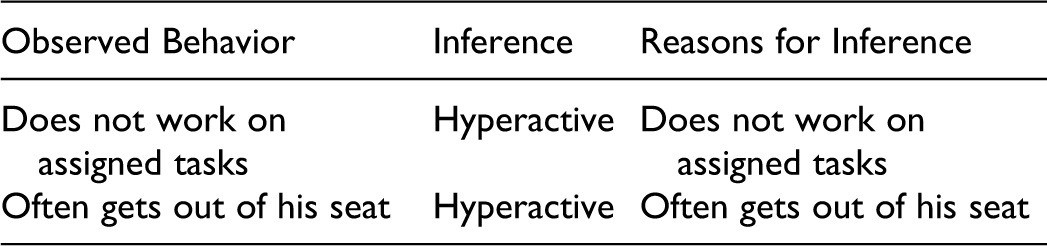
This label is based on the two observed behaviors; no such underlying condition may exist. If this is the case, a descriptive term is used as a pseudoexplanatory term. These alchemical accounts give an illusion of assessment—an illusion that the client and his or her life circumstances are known, including moral dilemmas, when they are not.
The Neglect of History and Critical Thinking in Educational and Other Professional Venues
Many of the oversimplifications and confusions discussed in this article are encouraged by lack of a sound education both in the liberal arts including the humanities and the social sciences and in professional degree programs. Central to a sound liberal arts education is a sense of history and familiarity with political, social, moral, and economic controversies and related consequences. Encouraging values, knowledge, and skills in critical thinking, including understanding the role of language in our lives, is an essential part of such an education. Understanding the role of language in everyday discourse allows us to spot the vague, the incomplete, the distorted—at least more often than if we are not so educated. What exactly happens in “psychotherapy”? What does “bipolar” mean? Who says a treatment is effective? What does this mean? Increasing scrutiny of professional publications, including peer-reviewed reports, shows that few can be depended on for accuracy (e.g., Ioannidis, 2005). “Critical self-reflection” is needed to avoid influence of commercial interests as well as “the narrow technical interests that serve primarily professional groups” (Kleinman & Kleinman, 1996, p. 18). Also needed is the courage to raise questions others may prefer to ignore. Well-argued alternatives to a popular problem framing are often hidden (Gambrill & Reiman, 2011). Great literature reflects the complexities and burdens of life including powerlessness in the face of death and chance circumstances.
Depression is something we cannot leave to the psychiatrists: it is too painful and reaches too far down into the very roots of human existence … It should then be clear that, if we inquire as to its meaning, we are dealing not with a psychological or psychiatric issue but with an intellectual and spiritual concern. (Guardini, 1949, quoted in Lepenies, 1992, p. 173)
Humanizing Alternatives
Medicalized views of behavior ignore findings from the social sciences including the science of learning as well as from the humanities, which emphasize the complexity of behavior, historical variations, life challenges we confront, the vital role of environmental variables including wars, ethnic strife, social inequities, changes in work opportunities, and the resulting unique behaviors and subjectivities, including suffering. They ignore related insights of the great religions. All emphasize that people have reasons for their behavior and that understanding fosters compassion and contributes to being of help. Obscuring these sources of understanding has been key to the marketing success of a biomedical view. In humanizing alternatives, it is recognized that life is rife with conflict and challenge, often unsought and unfair. There is an effort to understand feelings, thoughts, and behaviors in their context. Szasz has long argued that problems-in-living mislabeled as “mental disorders” are moral, ethical problems we must struggle with in daily life. Such challenges call for philosophical conversations guided by an understanding of learning opportunities conducted in contractual counseling.
The Language and Conceptual Understanding of Learning
A medicalized classification system describing hundreds of (mis)behaviors as mental disorders—brain diseases—has flourished in the midst of a vast experimental literature documenting the influence of learning environments on behavior, thoughts, and emotions. Evolutionary epistemology emphasizes our connection with all living creatures in our learning process—in the general way we acquire knowledge about the world via trial and error—learning from our mistakes (Popper, 1972). Staats (2012) views attributions of disliked/unusual behavior to brain deficiencies, for example with ADHD, as an example of “The Great Scientific Error.” There is “no evidence of cause, and no recognition that learning produces both brain development and behavior development” (p. 244). An extensive experimental literature illustrates that unusual behavior can be established by arranging unusual learning environments. Consider Maier’s (1949) research in which he created what he called “fixated” behaviors, Masserman’s (1943) research creating approach-avoidance conflicts, and Overmier and Seligman’s (1968) study of the effects of inescapable shocks (learned helplessness). Focus on the behavior resulting from stressful circumstances such as “helplessness,” “fixation,” and “neurosis” misdirects attention away from related learning circumstances. (See later description of a functional analysis of behavior.)
Over a half century ago, Staats and Staats (1963) applied social learning principles to complex human behavior, recently updating this (Staats, 2012). Wolpe (1958, 1990) applied the results of experimental research to decrease anxiety reactions. Research illustrates the influence of unique learning environments for children in the same home (Plomin, 2011). This vast literature is ignored in medicalized views of behavior. Consider the recent article by Kinderman, Read, Moncrieff, and Bentall (2012). In their call for an alternative to the DSM, no mention is made of social learning theory and related literature in experimental and clinical settings. No mention is made of applied behavior analysis and related experimental literature (Fisher, Piazza, & Roane, 2011; Madden, 2013). Areas of application include behavioral gerontology, education, sleep, community advocacy, severe behavior problems, verbal behavior, intellectual and developmental disabilities, behavioral medicine, and business.
With some exceptions, the language of learning has not entered the popular culture or the vast majority of the therapeutic culture in understanding and altering behavior. Or, it has done so in a superficial or partial manner ignoring the complexity of successful application. The language of learning emphasizes the nature and quality of learning opportunities in shaping our repertoires. Learning opportunities shape our emotional–motivational development, our sensory–motor development (e.g., skills acquired or not), and our language–cognitive development. If someone does not engage in certain expected behaviors, perhaps there were no opportunities to develop such behaviors. Perhaps this individual has related skills, but because of emotional reactions acquired in her learning history, experiences anxiety in anticipation of acting and does not do so. Perhaps there are no opportunities to act in expected ways. All these possibilities direct attention to learning environments both past and present—to their nature and their lack or abundance and the resulting effects on our behavior including our “personality.” Although researchers suggest that part of our personality has genetic origins, part is shaped by our unique learning histories (Charlton, 2009). “Personality” consists of learned repertoires that become increasingly complex and interrelated over our lifetimes (Staats, 2012, p. 201). Current reactions such as degree of empathy reflect early experiences (Ardizzi et al., 2013). (See also Shonkoff, & Garner, 2012.) Past environments are often unknown. Present environments are often “hidden.” Without the language of learning and related conceptual understanding, we are unlikely to understand opportunities in the present. Environments that create problems often remain hidden such as the unsuccessful competition of one “gentle” child in comparison with his two assertive siblings (Staats, 2012, p. 221).
Decades of research in both applied and laboratory settings show that our behavior is influenced by its consequences. It is learned (Madden, 2013). (See also Fisher et al., 2011). A functional analysis involves describing the context in which problems occur (i.e., the relationships between behavior in real-life settings and what happens right before and after), including alternative behaviors that, if increased, would compete successfully with undesired behaviors. The interest in behavior and related circumstances calls for the translation of concerns into observable behaviors of involved parties and the discovery of options for rearranging them. Some of the myths and misconceptions about contingency analysis are as follows: It is easy, I can do it sitting in my office, thoughts and feelings are not considered, it dehumanizes people, the helper–client relationship is not important (e.g., Gambrill, 2013; Thyer, 2005).
Behavior is affected by many kinds of consequences, including reactions from significant others, changes in the physical environment, and physiological changes. The form of a behavior (its topography) does not indicate its function (why the behavior occurs). Identical forms of behavior may be maintained by different contingencies. A client may drink alcohol to avoid worrying about unpaid bills, because he enjoys the resulting relaxed feeling, because it upsets his mother and he enjoys her discomfort, or for all these reasons. A child saying the word toast might be reading a word, or she may be hungry and this prompts her to say toast because this produced food on previous occasions. Or she might be telling her parents that there is no toast as described in the classic book by Ferster, Culbertson, and Boren (1975). Just as the same behavior may have different functions, different behaviors may have identical functions. Saying the word toast, banging on the table, or throwing cereal all may be maintained by attention from parents; that is, all three behaviors may belong to the same response class or operant.
A behavioral analysis includes a description of behaviors of concern as well as evidence that specific antecedents and consequences affect them; thus, it requires both a functional and a descriptive analysis. A descriptive analysis involves identification of behaviors of interest and associated setting events, antecedents, and consequences. Helpful questions are as follows: What does this behavior communicate? What is its “meaning”? Behaviors have a communication function. They communicate a desire for or a dislike of something. For example, methods required to decrease self-injurious behavior will differ depending on whether this behavior is maintained by positive reinforcement such as attention from adults, negative reinforcement such as escape from difficult tasks, and/or is self-reinforcing. (Negative reinforcement which increases behavior that prevents, delays, or avoids aversive events is often confused with punishment, which decreases behavior by presenting aversive events or removing positive ones). Accounts that do not include a description of related environmental contingencies are incomplete ones that may interfere with the discovery of options. A functional analysis requires demonstration that certain antecedents and/or consequences influence behaviors of interest. This involves the systematic variation of selected variables (e.g., certain consequences), noting changes that occur. A focus on contingencies has a number of implications for assessment including observing people in real-life contexts when it is feasible, ethical, and necessary to do so to clarify concerns and related factors and collecting information about individuals and their interactions with others.
Behaviors tend to occur in situations in which they have been reinforced. A behavior analysis will often reveal that undesired behaviors are reinforced positively, immediately, and with certainty, and desired behaviors are not positively reinforced or reinforcement is uncertain and delayed (Daniels, 2000). Many contingencies are remote, such as the relationship between smoking cigarettes and developing lung cancer. Competing contingencies often are present (e.g., pleasing others while also pursuing personal goals). Discovering the function of a behavior (its effects on the environment) may be difficult when it is followed by both punishing and reinforcing consequences. In these instances, strong behavior may be observed only indirectly, because it is displayed only in indirect forms. We may, for example, want to raise questions concerning a claim made by an “expert” but do so ineffectively because of a fear of rejection. Cues associated with reinforcement increase the probability of behaviors reinforced in their presence, whereas cues associated with punishing consequences (i.e., behavior is punished in their presence) decrease the probability of behaviors. Like consequences, antecedents have a variety of sources. Rearranging antecedents (stimulus control) is one way to change behavior (Watson & Tharp, 2007).
Gerald Patterson and his colleagues have studied interaction patterns in families that produce antisocial children (Reid, Patterson, & Snyder, 2002). Their research shows that children and parents actively participate in creating their family “envi-ronments,” shaping antisocial children. Parenting behavior has been found to be a key factor in doing so. A child learns his or her interpersonal style in the family. The coercion process begins with something that is intrinsically normal, a rather high level of child noncompliance and continued employment of aversive behaviors that are maintained, because they work (escape conditioning). The parents fail both in teaching the prosocial behaviors that would replace the coercive ones and they also fail to use effective discipline strategies for the disliked behaviors that do occur. The process moves out of control when the frequencies of these coercive behaviors reach very high levels (Chamberlain & Patterson, 1995, p. 213). This research shows that parenting practices, including noncontingent reinforcement and low supervision and involvement, are important in creating antisocial behavior (see also Reid et al., 2002). “Noncontingent means that their reactions are not significantly correlated with what the child is doing. For example, if the child behaves in a prosocial fashion, the mother is no more likely to react in a positive, interested, supportive fashion than if the child is being neutral or deviant” (Chamberlain & Patterson, 1995, p. 212). Coercive behaviors common in families with antisocial children include:
Punishment acceleration, in which parents’ reprimands accelerate aggressive behavior.
Crossover, in which a family member responds with negative behavior to positive behavior of another.
Counterattacks, in which negative behavior of one family member is responded to with negative behavior by another family member.
Continuance, in which family members continue to behave in a negative way, regardless of how others behave.
Families in turn are influenced by their environment, including employment opportunities and the quality of education for children. Mothers of aggressive children behave more aggressively toward their children on days when they have unpleasant exchanges with people outside the family (Wahler, 1980). Negative parenting practices are related to callous unemotional traits in children (Waller, Gardner, & Hyde, 2013).
Behavior Always Makes Sense: Goldiamond’s Nonlinear Thinking
An individual functional analysis will typically reveal that behaviors, even those that appear bizarre and irrational “make sense.” That is, there is a payoff for the client but at a high cost. For example, rather than focusing directly on undesired behavior (e.g., eating and binging), Goldiamond (1984) helped a client take advantage of naturally competing activities, such as enriching her social life. Using a nonlinear functional analysis, “behavior analysts can understand, treat, and make sense of the seemingly irrational or maladaptive patterns observed in the clinic without resort to hypothetical mediating variables such as emotional avoidance, governance by self-generated misrules or defective cognitions” (Layng, 2009, p. 163). Layng and Andronis (1984) describe how behaviors such as hallucinations often make sense but only when we understand a client’s history and current circumstances within a contingency matrix attending to both disturbing behavior and alternative repertoires. This approach is reflected in a constructional questionnaire (Schwartz & Goldiamond, 1975). No matter how bizarre or dysfunctional a disturbing behavior (the DB) may seem, when the context is explored including available alternative behaviors (AABs), and when the costs and benefits related to these different behaviors are compared, we can see that DBs have been selected by the social environment. For example, only by acting “crazy” may a person gain access to resources provided only to those who act “crazy.”
Goldiamond quickly came to understand that the goal of therapy was not to directly control, change, or suppress emotions or cognition, but instead to sensitize the patient to them, use them as indicators of the relevant consequential contingencies, and to build on their current repertoires so as to arrange new contingencies. Patients were taught that their disturbing patterns were quite sensible, and often nearly heroic responses to the contingency matrix in which they found themselves, and that their behavior was neither maladaptive nor pathological. The approach is illustrated by an example provided by Goldiamond 1975 about a woman with a debilitating phobia that often left her confined to her bed. …She was immobilized thereby and her husband swept and cleaned the house every morning (to clear it of vermin), brought her breakfast in bed, and washed the dishes (to deter vermin) before leaving for work. Whenever she recovered somewhat, his attentiveness waned. The phobia was costly: she could not resume the professional work she had enjoyed, nor could they go out together at night; further her in-laws were suggesting divorce. The benefits to recovery are obvious, as is the matrix. There is a metaphor involved. Labeling the disturbing behavior as a psychiatric problem is essential to the matrix. The patient would not get the accruing benefits if she simply told her husband: “Look, you’ve been putting work ahead of me and everything else since we’ve been married. I’ve worked to keep this marriage together. How about you?” Indeed, earlier efforts in this direction had been extinguished. Numerous psychiatric problems have this legitimate labeling function. Labeling theorists who denounce such terms might reflect further on this metaphorical use for the patient, rather than upon the psychiatrist’s benefits and the crippling effects of the label upon the patient. It is the contingency matrix that produces the disturbing effects, and governs the behavior and the experienced emotions or thought patterns (Layng, 2009, p. 173).
In a topical analysis, there is a direct focus on a DB, for example, hallucinations or talking out of turn in class. Topical analyses may be linear or nonlinear. The effects on the DB of consequences attached to AABs are ignored in a linear analysis (Goldiamond, 1984, p. 535). In linear analyses (“eliminative” or “pathological” approaches), there is a direct focus on the DB, and eliminative methods are used such as extinction, punishment, and/or response cost to decrease the DB. Let us say the DB is yelling in class, and the teacher makes the student stay 10 minutes after class each time he yells out. She is using an eliminative method focused on the DB. Topical nonlinear analyses also focus on the DB such as yelling out in class, but a desired alternative such as raising his hand and waiting to be called on is identified and reinforced. The focus is still on the DB but a constructional approach is used.
A systemic behavior analysis broadens assessment to include identification of current relevant alternative repertoires that can be used to alter the frequency of DBs. Current available repertoires (behaviors the client already has, such as social skills) are transferred to new situations. Emotions and thoughts can be used to identify related contingencies. Both this kind of analysis and a nonlinear topical analysis are constructional approaches that require consideration of what is not occurring such as for example positive social contacts. Both offer guidelines for decreasing the DB by improving the cost–benefit ratio of AABs. Target behaviors (those focused on to change) are selected based on a review of the costs and benefits associated with DBs and AABs. Target behaviors should “depotentiate” (decrease the likelihood of) costly DBs; they should be less costly than the DB and provide more benefits to both the client and the significant others. A target behavior could be on-task behavior encouraged by providing instructional tasks that engage the student’s attention. Notice that in plans based on a systemic analysis, the conditions that “potentiate” a reinforcer, such as escape from boring or overchallenging material, are removed; there is no need to escape because the instructional material now engages the students. A constructional analysis requires information about available alternative repertoires (Goldiamond, 1974, 1984). It may require observation in real-life settings. Discovering options for attaining valued outcomes may require a multilevel analysis including agency policy and related social policies and legislation (Mattaini, 2002; Sailor, Dunlap, Sugai, & Horner, 2009). This will often reveal contingencies that will interfere with attaining valued goals.
The Role of Language
Our feelings and behavior are influenced by what we say to ourselves. Verbal behavior may have all the functions other kinds of behavior may have (e.g., cue overt behavior, elicit emotional reactions, and function as reinforcers). Ideologies function as cues for behavior (who to vote for). Metaphors such as the “War on Drugs” influence how we view events. We develop unique meanings of words that may appear bizarre to others but “make perfect sense,” given our client’s unique learning history. Discovering these unique meanings requires empathy and deep listening as well as a recognition of the role of learning. (See, for example, Layng’s [2009] description of a woman about to be released from the hospital who started to call staff “a devil.”) Verbal behavior acquires its influence over our actions because of its association with certain consequences. Instructional control (by either others or ourselves) is created through individual learning histories. Instructions from others are effective by influencing self-instructions (what we say to ourselves).
By behaving verbally, people cooperate more successfully in common ventures. By taking advice, heeding warnings, following instructions, and observing rules, they profit from what others have already learned. Ethical practices are strengthened by codifying them in laws, and special techniques of ethical and intellectual self-management are devised and taught. Self-knowledge or awareness emerges when one person asks another such a question as “What are you going to do?” or “Why did you do that? (Skinner, 1981, p. 502)
Motivation and Emotion
Motivation can be viewed as a relationship between a set of operations (e.g., deprivation of a reinforcer, such as social approval) and their effects on behavior (increased persistence in overcoming obstructions and increased resistance to extinction; Leslie & Millenson, 1996). Motivational variables are related to differences in the reinforcing effects of environmental events. Establishing operations (e.g., deprivation of water) influence motivational conditions (conditions of our body or environment) that influence our motivational level (sensitivity to reinforcement). Defining motivation in this way provides guidelines for understanding and altering behavior. For example, establishing operations related to behaviors can be identified and changed.
Emotion can also be viewed as a relationship between certain antecedent conditions (an abrupt stimulus change, such as experiencing an intense pleasant or unpleasant event) and their effects on behavior. Here, too, the reinforcing value of events and general activity level are altered. Large changes in the schedule or amount of reinforcement or punishment are usually accompanied by emotional reactions or a disruption of ongoing behavior. If a teacher severely criticizes a child, the child may have difficulty continuing to work. Just as a large change in the amount of a positive reinforcer or aversive event can alter behavior, so can a large change in the schedule of reinforcement. This, too, is likely to create emotional effects that disrupt behavior, such as when a companion who supported most of another person’s behavior dies. High levels of emotion decrease skill in making discriminations. High levels of stress may result in emotional effects that decrease parents’ skills in identifying specific desired behaviors to reinforce on the part of their children. An evolutionary view highlights the communication and survival functions of emotions. One of the main functions of emotion is mobilizing us to deal quickly with environmental threats (e.g., from predators); we appraise events as harmful or beneficial (e.g., Lewis, Haviland-Jones, & Barrett, 2008; Reuter-Lorenz, Baynes, Mangun, & Phelps, 2010). Emotions are “clues to contingencies” (Skinner, 1974). We can use them as an occasion to explore environmental influences on our behavior.
Culture and Contingencies
Events have different meanings (influences on thoughts, feelings, and behavior) for different people at different times because of unique learning histories. Cultural practices affect our behavior, and we in turn affect cultural practices. Being born at a particular time (e.g., during the Vietnam War) may create unique influences on behavior known as cohort differences. In early modern England, melancholy was often viewed as a result of spiritual struggles (Schmidt, 2007). Differences in cultural norms and values reflect different reinforcement histories. For example, one group may ignore a behavior that to another group may be the occasion for a gang fight. Skinner (1981) suggests that “Behavior is the joint product of (i) the contingencies of survival responsible for the natural selection of the species, (ii) the contingencies of reinforcement responsible for the repertoires acquired by its members including (iii) the special contingencies maintained by an evolved social environment.”
Cultural practices (not individual persons) survive over time as a result of natural selection by differential consequences. Such practices involve interlinked contingencies of reinforcement in which the behavior and resultant products of each person function as environmental events that influence others (e.g., Biglan, 1995; Biglan, Flay, Embry, & Sander, 2012; Glenn, 1991; Mattaini & McGuire, 2006). For each cultural practice, we can ask: Who is involved? What are the related antecedents and consequences? Different cultures create different learning histories as a result of different social reinforcement patterns (Biehl, Good, & Kleinman, 2007). The emotions and accompanying behaviors common to a culture depend on the basic forms of social organization that are favored. In competitive, power-based groups, fear and appeasement are common. In cooperative, reassurance-based groups, playfulness, problem solving, and sharing are common (Gilbert, 1989). An analysis of contingencies at different levels (individual, family, neighborhood, community, group, organization, legislation, policy), including their interrelationships, can help us understand who benefits and who loses from certain practices and policies, and how different practices at different levels influence one another (e.g., Wacquant, 2009).
Using the Language of Learning to Understand and Alter Behavior
A search for what behavior communicates calls for language that reveals possible functions, such as “Let me out of here” or “I want attention.” The language of learning directs attention to environmental circumstances, especially learning opportunities and their lack. There is a focus on deficiencies in learning environments. Valuable questions include:
What does this behavior communicate?
What is gained from this behavior (e.g., removal from a situation where one consistently fails at a task)?
What alternative competing repertoires are available?
What occurs right before and after the behavior?
In deficit environments, not only are valuable behaviors not learned, “abnormal” (disliked) behaviors are acquired which interfere with learning needed repertoires. Depending on unique developmental circumstances, we develop repertoires more or less attuned to culturally valued behaviors. “Abnormal environments produce abnormal behaviors” (Staats, 2012, p. 211) as illustrated in the following examples.
Inappropriate or inadequate stimulus control. Most of our behavior consists of discriminated operants, behaviors that occur only in certain situations (those in which they are reinforced). An antecedent event that increases the probability of a behavior is called a discriminative stimulus. A stimulus is defined as any change in the environment that can influence behavior. A discrimination can be established by reinforcing a behavior in one situation and not reinforcing it in other situations (i.e., differential reinforcement). A discrimination has been established when there is a high rate of a behavior in one situation and a low rate in all other situations. Antecedent events that are similar to those present during learning will elicit or occasion similar behaviors. If a person slows down when he sees a police car in back of him, he may also have this reaction when he spots cars that are similar to police cars. This is known as stimulus generalization and occurs with both operant and respondent behavior. Situational factors that are not related to whether a behavior is reinforced but that are usually present may affect behavior if these change radically. The term response generalization refers to the fact that behaviors that are similar to a behavior that is reinforced will also tend to increase in future probability. If you reinforce a friend for telling particular types of jokes, he may tend to tell you similar jokes. Generalization across situations and maintenance of desired behaviors over time are of major importance in the helping professions. Language plays a vital role in inadequate or inappropriate stimulus control (see prior section on language). Problems related to discriminative stimulus functions include defective stimulus control (e.g., a desired behavior occurs under conditions in which it is not reinforced or is punished), lack of accurate “tacting” of behavior (mislabeling lust as love), inappropriate self-generated stimuli (over or underestimating ability), overly rigid rule governance (not under contingent influence), and ineffective contingency arrangement (e.g., Follette & Hayes, 2000). Establishing appropriate discriminations is a key aspect of developing effective repertoires. For example, people who do not do well in social situations, such as meeting people and making friends, may not perceive (notice) signs of friendliness by others and so not initiate conversations. Inappropriate or inadequate discriminations are often involved in complaints regarding troubled, troubling, or very dependent behaviors. Examples include continuing to drink alcohol even when signs of intoxication are evident or a student’s incorrect assumption that a teacher’s facial expressions indicate disapproval.
Disliked behaviors are reinforced, and desired behaviors ignored or punished. Understanding the context—past and present—of troubled, troubling, and very dependent behavior typically shows that undesired behaviors are reinforced and desired behaviors are ignored or punished (see prior discussion). Problematic reinforcing functions include insufficient reinforcement, restricted range of reinforcers, noncontingent reinforcement, overly punitive environment (behavior is under aversive control), and excessive schedules (reinforcement depends on a very high output of behavior) among others (see Cipani, 2012; Follette & Hayes, 2000). These conditions may result in an aversive or deficient repertoire, inappropriate emotional reactions, excessive self-monitoring, and/or behavioral excesses. It is not unusual for children to be well behaved in school but difficult to manage at home or vice versa, reflecting different contingencies of reinforcement in the different settings. Parents may reinforce annoying behaviors at home (and not reinforce desired behaviors), whereas the teacher may reinforce desired behaviors and ignore unwanted behaviors. The teacher thus becomes a cue for desired behaviors, because she reinforces them; the parents become a cue for undesired behaviors, because they reinforce them and ignore desired behaviors. Ineffective or disliked repertoires may continue because of poor training on the part of professionals (e.g., Stoutimore, Williams, Neff, & Foster, 2013). Consider the increase in hitting on the part of a child by use of the alleged therapy “brushing and joint compression” (Kay & Vyse, 2005).
Contingent and noncontingent use of aversive events. Behavioral researchers have taken the lead in identifying the negative effects of punishment (presenting aversive event following disliked behavior; e.g., Azrin & Holz, 1966; Fisher et al., 2011; Hineline, & Rosales-Ruiz, 2013). Punishment teaches only what not to do and leaves the development of desirable behaviors to chance. It does not eliminate reinforcement for inappropriate behavior. Neither does it undo any damage caused by such behavior. If behavior is punished in a situation that differs from those in which a decrease in response is hoped for, changes may be confined to the original context in which punishment occurred. Noncontingent aversive events (their probability is not affected by our behavior) increase both the probability of aggressive behavior and behavior reinforced by the opportunity to engage in aggressive behavior. Both elicited and operant aggression may result. The former refers to aggressive reactions that have no influence on the probability of further punishment. For example, if a monkey is shocked in a chamber, he will attack a tennis ball in the chamber, even though this action will in no way influence the probability of future shocks. Consider how this might apply to violence in families. In operant aggression, behavior does influence the probability of further punishment. For example, a potential victim may punch a bully who then retreats. Physically abusing children increases the likelihood that they will develop aggressive behavior, perhaps because effective ways of relating to others are not established. An example of a parent without a clue regarding this is the father who strikes his child saying, “I told you not to hit your brother.” We seem to have difficulty decreasing our use of punishment in spite of the negative consequences of relying on coercion. Neutral cues that are present when aversive events are experienced may acquire aversive properties by being paired with punishing events. At a future time, these cues may elicit emotional responses, resulting in avoidance behaviors. If the aversive event is intense, the probability of a variety of behaviors, including desirable ones, may be lessened. If a negative event serves as a cue for a positive reinforcer to follow, the presentation of negative events may increase the frequency of undesired behaviors. For example, if a mother is affectionate to her child only after she beats him, the behaviors that lead to beatings may increase.
Other environmental sources of unusual/disliked behavior. A variety of other kinds of learning histories produce unusual behavior. Adventitious arrangement of contingencies may account for unusual behavior (Sidman,1960). Schedules of reinforcement influence the rate of behavior,its maintenance,and its resistance to extinction (how difficult it is to decrease a behavior). Consider the “addictive” effects of variable ratio schedules of reinforcement in gambling. Scheduling effects are often overlooked, resulting in assessment errors. Sudden changes in response requirements may disrupt behavior. Children have different histories in terms of how much output has been required before reinforcement in a given situation. If a teacher requires the same output for all children,those who are not accustomed to this requirement will not meet her expectations. The teacher may label such children as lazy or unmotivated, when in fact, environmental factors are responsible (a change in the schedule of reinforcement). Schedule changes may result in attack (e.g. when a schedule is thinned and reinforcement is given less often)or changes in the frequency of other behaviors,such as water drinking (Epling & Pierce,1988). The schedule of reinforcement refers to the particular pattern between a behavior and its consequences. Different schedules create different rates of behavior.
Respondent behavior plays a key role in many problems, including depression, anxiety, chronic pain, aggression, and child abuse. Some events (unconditioned stimuli) elicit behavior without any previous learning. Respondent learning involves pairing neutral events with cues that already elicit a given reaction. Knowledge of respondent learning can help us understand the complex interactions between respondent and operant behavior (e.g., between anxiety and avoidance behavior). Our evolutionary history influences emotional reactions such as anger and social anxiety (Gilbert, 1989; Tooby & Cosmides, 2008). Neutral events that are paired with aversive stimuli become conditioned aversive stimuli; the avoidance of such events is reinforcing. Contingencies critical to our survival in early times may now hamper rather than help us.
Dehumanizing Effects of Ignoring Context Including Learning Opportunities
Stripping life’s trials and tribulations from their context is dehumanizing in understanding related experiences and potential remedies. Thomas Szasz has been the most consistent in highlighting ethical travesties resulting from framing problems-in-living as brain diseases, including coercion in the name of helping, drugging people, and interfering with our right to make our own decisions when our behavior does not harm others (e.g., Szasz, 1961, 2002, 2008). He has been a consistent witness to the incestuous relationships between self-interests of helping professionals such as psychiatrists for status and money, and goals of the state (to control and contain deviance) in his description of the therapeutic state—now a pharmacracy.
The institution of psychiatry, like the institution of slavery, consists of a socially sanctioned relationship between a class of superiors coercively controlling a class of inferiors. The system rests on the idea of mental illness, its semantic clones, and their legal implications; it is destined to engender disdain on the one side, and defiance on the other. The juxtaposition of persuasion and coercion lies at the heart of mankind’s great moral conflicts – relations between men and women, leaders and followers, capital and labor, expert and lay person. The true healer of the soul is a ‘doctor’ of persuasion, not coercion. Psychiatric peace and tolerance are contingent on the recognition that ‘mental illness’ is a misleading metaphor and on the rejection of psychiatric coercion as a crime against humanity. (Szasz, 2007b, p. 227)
Stripping Agency From Clients Including Coercion in the Name of Helping
Central to being “human” is making decisions about how to act in the world and to make moral decisions in the face of conflict and turmoil. The assumption that (mis)behaviors and troubling feelings and thoughts are the result of brain diseases over which we have no control hides and denies agency. We are relieved of responsibility for the consequences of our behavior, because we have an alleged brain disease. We are also relieved of the freedom to craft our lives within the parameters that exist in our learning environments, both actual and potential. Szasz (1961, 1987) argues that dealing with a troubled, troubling, and very dependent behaviors has always been a challenge in society. Related moral concerns have ancient roots. Ignoring the philosophical nature of such concerns increases the likelihood that we remain prisoners of biomedical narratives. He contends that “the languages of psychiatry, psychoanalyses and psychotherapy … are necessarily anti-individualistic, and hence threats to human freedom and dignity” (Szasz, 1988, pp. 19–20). A pathology framework views the distressed individual as acted on by impersonal forces. This is incompatible with a framework that views the individual as the creator (the agent) “in a unique story” (Jacobs & Cohen, 2010, p. 312). Jacobs and Cohen (2010) argue that a decontextualized view is “impersonal in a double sense”—assuming nonagential processes/mechanisms and in the assumption that the labeled person’s story is not relevant (e.g., because they are “mentally ill”). Ignoring learning opportunities and current options for rearranging them drawing on the science of behavior leaves us prisoners to this narrative.
Lost Opportunities to Understand Clients and Their Circumstances
Problems differ in their prospects for resolution. These prospects are influenced by the accuracy of assessment. Client concerns may be framed in a way that facilitates or hinders discovery of options. Does giving a DSM label to a client enhance understanding of a client and his or her circumstances and success in selecting effective interventions? The labels in the DSM are considered to be descriptive not explanatory. Lists of indicators are quite vague as illustrated in diagnostic criteria for ADHD: What is a “careless mistake”? What does “gives close attention to details” mean? What is “often”? Diagnostic labels say little about positive attributes and potential for change. Vague descriptions offer an illusion of knowledge; these can be used to befuddle the gullible. The more one reads incomplete accounts, the more one may forget that the client’s reality is unknown. Classification systems such as the DSM give an illusion of understanding. We may think we know more but do not. What do you really know about a client labeled as having a “depressive disorder”? Do we know the environmental sources contributing to related resignation—failing to act? Do we know challenges confronted and resources available or lacking? Do we know what intellectual and/or spiritual dilemmas were or are being confronted and their circumstances? Like the animals in Maier’s (1949) experiments, past circumstances may have created a profound resignation. Required use of the DSM over time may cast our doubts about the utility of this classification system into the background. After all, if we use it, is it not useful? The DSM is a technology used, not to understand clients and their characteristics and circumstances and life potentials, but to process people more efficiently in administrative systems while giving an illusion of caring and understanding. It is a good example of the increasing role of technology (often magical) in our lives.
Premature acceptance of biophysical explanations and related assessment methods such as neuroimaging techniques interferes with exploration of alternative views such as Heyman’s (2009) view that although drug use alters the brain and genetic factors render some people more susceptible to addiction, research demonstrates that such individuals can assess the consequences of their actions. Additional problems with these kinds of explanations include limited intervention knowledge and predictive validity. Alberto and Troutman (1990) argue that biophysical explanations give teachers excuses not to teach. Such explanations are at best incomplete; environmental factors also play a role.
To say that Rachel can’t walk, talk, or feed herself because she is retarded tells us nothing about the conditions under which Rachel might learn to perform these behaviors. For [some one] to explain Ralph’s failure to sit down on the basis of hyperactivity caused by brain damage does not provide any useful information about what might help Ralph learn to stay in his seat. Even apparently constitutional differences in temperament are so vulnerable to environmental influences as to provide only limited information about how a child is apt to behave under given conditions. (Alberto & Troutman, 1990, p. 9)
Avoidable Selection of Ineffective or Harmful Interventions
Lack of understanding of and/or ignoring of learning environments and related histories may lead to selection of ineffective and harmful intervention methods.
The Great Scientific Error misleads parents by assuring them that child development occurs via biological maturation, that caring and love are what the child needs. A central prevention framework for parents is to realize that rearing a child is not just taking care of the child physically, expecting the child to blossom behaviorally like a plant. Parents also must take care of the child’s learning, a great need of the child. (Staats, 2012, p. 234)
Application of Stigmatizing Labels That Affect Future Learning Opportunities
Being labeled as “mentally ill” may limit opportunities to enhance quality of life including job prospects (e.g., Thornicroft, Rose, & Mehta, 2010).
Once it is believed that a child is abnormal, the child is treated differently than the normal child. When the “ill” child does not learn normally, for example, the parent tries to protect the child from the experience of failure in learning. What needs understanding is that this constitutes an abnormal environment. That will not produce normal behavior, it will exacerbate the child’s abnormality. Similarly, children diagnosed as having ADHD, autism, or other disorders, are considered ill and treated specially. Again, such treatment constitutes an abnormal environment. That does not mean there has been any malign motivation involved, no intent to do other than love and support the child. It only means the environment was different than what normally occurs. (Staats, 2012, pp. 212–213)
Lost Opportunities for Compassion
Overlooking life circumstances related to problems-in-living decreases compassion for clients and removes opportunities to help clients have compassion for themselves and their significant others. A decontextualized view of behavior hides the everyday realities related to problems-in-living such as lack of health care, lack of employment opportunities that pay a living wage, poor-quality educational opportunities, few recreational opportunities, and lack of food. Szasz (2011) suggests that in this medicalization of the soul and of suffering “we have replaced the old religious-humanistic perspective on the tragic nature of life with a modern dehumanized perspective on it” (p. 5). He estimates that the “medical conquest of the soul was achieved by the end of the nineteenth century” (p. 6). There has been a blurring of differences between degrees of avoidable suffering. Consider “Posttraumatic Stress Disorder,” originally developed to refer to shell-shocked Vietnam War veterans. This is now applied also to relatively minor stresses (Summerfield, 2001). Summerfield (2001) argues that there has been a medicalization of trauma (viewing this as a health concern) when indeed, much trauma is a direct result of stress induced by events such as wars and power imbalances in society resulting in rape, torture, and mutilation and constant fear and lack of basic necessities such as food and water. A nonlinear constructional analysis of client concerns will reveal related circumstances (e.g., Griffin, Fuhrer, Stansfeld, & Marmot, 2002). It often reveals that troubling, troubled, and very dependent behaviors are heroic ways to manage difficult life circumstances. Understanding the dilemmas clients confront requires an empathic, individualized view of each client’s unique circumstances. Indeed, high levels of empathy have been shown to be related to outcome (e.g., Norcross, 2011; Wampold & Budge, 2012). A decontextualized view diminishes recognition of the “collective responsibility of governments and their institutions, for allowing environments that result in harm” (Timini, 2012, p. 423).
Clients Are Misinformed Regarding the Nature of Their Concerns
If professionals are misled by dubious problem framing, they misinform their clients; clients are less likely to understand their world and its potentials. Simply applying a label (e.g., depressed) and making a referral for medication shirks one’s responsibility to “see” the client and their circumstances and to provide appropriate help including empathic understanding that contributes to positive outcome (Wampold & Budge, 2012). Depression, boredom, and a sense of helplessness may be directly related to degree of social order—too much or too little. Melancholy may be created by boring, repetitive lives (Lepenies, 1992). Depression may reflect a low level of reinforcement due to illness or punitive work environments. Rather than chemical imbalances causing depression, environmental losses/stress create brain changes:
You may have heard people talk about chemical imbalances in the brain, suggesting that depression is a medical illness, without psychological causes … In fact, the chemical imbalances that occur during depression usually disappear when you complete psychotherapy for depression, without taking any medication to correct the imbalance. This suggests that the imbalance is the body’s physical response to psychological depression, rather than the other way around … A serious loss, chronic illness, relationship problems, work stress, family problems, financial setback, or any unwelcome life change can trigger a depressive episode. (Psychology Information Online 2010, 1; Staats, 2012, p. 237)
It is House Cleaning Time
With the publication of the DSM 5, there is yet another opportunity for social work to think carefully about its role in promoting and being a handmaiden to a medicalized view of troubling, troubled, and very dependent behaviors. Social work has an inspiring history of attention to avoidable suffering and injustice—not just talking about it, but actively trying to reduce it. Consider Jane Adams and the development of the settlement house. This attention to environmental causes of avoidable suffering was not only on the part of well-known people such as Jane Adams but was also obvious in the scholarly writings of casework scholars such as Helen Harris Perlman. Consider her 1967 article “Casework is Dead.” She quotes from a letter from the mother of a child to a teacher: “I am writing you about my daughter, Darlene. You wants to know why she stay out of school.” This letter describes the trying circumstances of this family. Perlman (1967) writes as follows:
Darlene and her mother, I reminded myself firmly, are only a single instance of widespread endemic social problems … What is needed is social planning on a significant scale, basic preventative interventions, with macro-system change not simply symptom-change. What all the Darlenes and Mrs. Jones need are such human welfare programs and social policies as will expand the narrow margins of their lives and undergird their precarious existence (see p. 23).
The Food and Drug Administration issues warnings of unsafe products as do organizations such as Consumer’s Reports. Special websites exist to help the innocent avoid misleading marketing ploys by pharmaceutical companies such as Pharmedout.org and CriticalThinkRx (Cohen, LaCasse, Duan, & Sengelmann, 2013). The Database of Uncertainties about the Effects of Treatments (DUETS) highlights uncertainties regarding claims of effectiveness. We need engaging venues that highlight misleading claims and related harms of those who promote medicalized psychiatry as well as well-argued alternatives that attend to environmental causes of troubled, troubling, and very dependent behaviors. We can highlight uses of language that hide agency. Rather than saying “Sam is a schizophrenic,” we can say “Sam has been labeled as a schizophrenic.” Rather than saying “She is bi-polar, we can say The social worker labeled Mrs. T as bi-polar.”
Conclusion
A medicalized view of behavior is promoted as if there were no science of behavior. But there is—an extensive one, which shows that abnormal environments create abnormal responses and that behavior can be changed by altering environments drawing on the science of behavior. The language of learning offers a humanizing understanding of unusual repertoires (trouble, troubling, and very dependent behavior). Focus is on learning opportunities and their lack. This science of behavior shows the effects of different schedules of reinforcement, of adventitious reinforcement, of contrast and momentum effects, of a low density of positive reinforcement, of linking punishment and reinforcement, as well as many others. Some of this information is well over a half century old. The decontextualized rhetoric of the list of labels in the DSM ignores unique learning histories and their context and current learning opportunities. It hides the often heroic nature of clients’ reactions to difficult life circumstances (Goldiamond, 1975). This dehumanizes clients. There is an avoidable loss of opportunities to understand clients including their conflicts, strivings, joys, thirst for luminescent experiences, lack of basic necessities such as housing, wish to escape repetitive boring lives or struggles to deal with rapid social change. The DSM shrinks rather than expands opportunities for freedom, growth, and dignity by obscuring the vast literature, which shows that behavior is influenced by the environment. If we accept the grand narrative of disease to understand behavior, we become architects of clients’ dehumanization as well as our own. By recognizing environmental circumstances, we can understand that behavior always makes sense.
Will the future reflect the past? Will DSM 6 be even more extensive than DSM 5? Will there be a continuing medicalization of problems-in-living in which life experiences are ignored? A number of trends encourage use of a contextualized approach to understanding human behavior and avoidable suffering. One is the sheer excess of medicalization including deception and fraud on the part of the pharmaceutical companies and physicians and scientists (e.g., Angell, 2011; Brody, 2007;Gambrill, 2012a; Kirk et al., 2013). The third International Conference on Disease Mongering was recently held in Washington, DC. Another is the increasing attention given to applied behavior analysis and its use to help people. It is time to wake up from our slumber in the arms of a medicalized psychiatry to recognize missed opportunities to help clients. We have a science of behavior we can draw on to enhance their quality of life.
Footnotes
Acknowledgments
The author thanks the reviewers for valuable feedback on the original version of the manuscript as well as the editor of this special issue, Jeff LaCasse, for his feedback. The author thanks the founders of the Hutto Patterson Chair of Child and Family Studies.
Declaration of Conflicting Interests
The author declared no potential conflicts of interest with respect to the research, authorship, and/or publication of this article.
Funding
The author received no financial support for the research, authorship, and/or publication of this article.