



Abstract
Objectives:
This study investigated the effectiveness of a culturally congruent group intervention program entitled “Claiming Your Connections (CYC)” aimed at reducing stress and enhancing psychosocial competence (i.e., locus of control and active coping) among Black college women.
Method:
Using an experimental design, a total of 96 undergraduate Black college women recruited from four predominantly White institutions and one historically Black college and university were randomly assigned to either the CYC group (n = 49) or the wait-list control group (n = 47). The CYC group attended 10-week group intervention sessions. Repeated measures analysis of variance was used to test intervention effects for the outcome variables.
Results:
After the intervention, the CYC group reported a significantly greater reduction in perceived stress and external locus of control compared to the control group.
Conclusions:
Counseling implications and directions for the development of future culturally relevant practice interventions with this population are discussed.
College students are confronted with personal, social, academic, and vocational challenges during their matriculation that require them to navigate developmental tasks, focusing on social, emotional, and academic adjustment (Chiang, Hunter, & Yeh, 2004; Constantine, Wilton, & Caldwell, 2003; Greer & Brown, 2011). For many college students, attending college may be a source of strain that would contribute to changes in adjustment. The transition to college reduces support from families and friends from home communities, requires to establish new social relationships, and increases uncertainty of students’ ability to meet academic demands. Difficulties handling these stressors may lead to poor adjustment such as decreased academic performance and increased psychosocial stressors (Dwyer & Cummings, 2001; Friedlander, Reid, Shupak, & Cribbie, 2007). Additionally, Black college women often experience an accumulation of daily stressors associated with gender and racial discrimination and feelings of isolation due to their minority status (Banks, 2010; Greer & Brown, 2011; Jenkins, 2002). For this reason, Black college women often report questioning of their intellectual capacities, feelings of alienation, and concern for interpersonal relationships and familial stress (Brown, 2000; Rosales & Person, 2003). These distinct challenges add a layer of complexity to the social and psychological adjustment of Black college women (Von Robertson, Mitra, & Van Delinder, 2005). Research has noted that when Black college women are unable to manage stressors associated with these oppressions, they have decreased feelings of competence that may impact their academic success (Henry, Butler, & West, 2011; Walton & Cohen, 2011). For instance, they may fear asserting themselves in social situations, set lower goals, experience more anxiety during competition, and express more dissatisfaction with their performance (Barnes & Lightsey, 2005; Greer & Brown, 2011; West, Donovan, & Roemer, 2010).
In general, many college students who experience high levels of psychological distress may pursue college mental health services as a viable means of addressing their concerns (Constantine & Arorash, 2001; Gloria, Hird, & Navarro, 2001; Hunt & Eisenberg, 2010). However, the literature indicates that Black college women regardless of the type of institution, Predominately White Institution (PWI) or Historically Black College and University (HBCU), may avoid accessing formal mental health resources, such as college counseling centers (Chiang et al., 2004; Eisenberg, Hunt, & Speer, 2012; Utsey, Adams, & Boldern, 2000; Wallace & Constantine, 2005). Rather, they tend to rely on informal networks for coping with distress (Constantine et al., 2003; Grier-Reed, 2013). Multiple studies have identified barriers to use mental health services for Black women including a general mistrust of mental health professionals, cultural and language barriers, issues of shame and stigma, lack of information, and primary reliance on family and the religious community during times of distress (Alvidrez, Snowden, & Kaiser, 2008; Eisenberg et al., 2012; Grier-Reed, 2013; Nadeem, Lange, & Miranda, 2009; Snowden, 2001; Williams et al., 2007). Additionally, Black women receiving mental health services may drop out from treatment early because their ethnic, cultural, and/or gender needs go unrecognized or mistreated (Brown & Palenchar, 2004; Comas-Díaz & Greene, 1994; Davis & Ancis, 2012; Jones & Warner, 2011; Miranda & Cooper, 2004; Smedley, Stith, & Nelson, 2003; Snowden & Yamada, 2005; Williams et al., 2007). Thus, Black college women may have greater need for college mental health services yet are less likely to access them.
The field of college mental health is faced with the critical task of providing culturally relevant services that meet the complex psychological needs of their growing Black student populations (Briggs, Briggs, Miller, & Paulson, 2011; Griner & Smith, 2006; Guiffrida & Douthit, 2010; Shonfeld-Ringel, 2000; Wingo, 2001). The current literature suggests that to enhance mental health treatment outcomes for Black college women, programs must be culturally relevant and include subsidiary services (i.e., ethnic and linguistic matching, schedule flexibility, extended sessions, and peer support networks) that are more helpful than standard college counseling programs (Carrington, 2006; Carter, 2000; Dill & Henley, 1998; Gloria & Rodriguez, 2000). Grier-Reed (2013) suggests the development of alternative mental health programs and informal support networks, such as Black peer support network or off campus supportive services, as opposed to traditional college campus counseling, in that they can provide more culture-specific and indigenous interventions. In this sense, the use of Black feminisms in therapy has the possibility to represent a beacon in college mental health counseling in the combating of the complex oppressions and psychosocial adjustment difficulties that Black college women face. Such practice methods would not only help Black women reconstruct negative societal self-images constructed by patriarchal therapeutic ideologies, but also assist them in consciousness raising regarding their socially constructed identities and to reject socially induced shame and degradation. Hence, the incorporation of Black feminist practice perspectives that raises consciousness, fosters resilience, and empowers Black women will serve to decrease psychosocial stressors and promote positive coping strategies (Boyd-Franklin, 1991; Greene, 2004; Jones & Ford, 2008; Vaz, 2005). Both the emergent Black feminist perspectives and psychosocial competence practice model may provide an ideal framework for understanding and intervening with Black female college students struggling with psychological and social adjustment difficulties.
The purpose of this article is to examine the efficacy of a culturally congruent group intervention entitled “Claiming Your Connections (CYC)” aimed at reducing stress and enhancing psychosocial competence among Black women matriculating at HBCUs and PWIs who self-identified as having psychological and social adjustment issues and managing stressors of daily life. The culturally congruent nature of the protocol is based upon treatment techniques and didactic content that addresses specific aspects of Black women’s cultural experiences (McNair, 1996; Miranda & Cooper, 2004).
Literature Review
Black Feminist Perspectives
A number of theorists and researchers have increased their efforts to transcend universalizing and hierarchical limitations of psychology to be more inclusive of race, gender, class, and sexuality in the development of Black feminist perspectives in mental health (Brown, 2010; Guy-Sheftall, 1995; Jackson & Greene, 2003), specifically counseling models that are respectful of and responsive to the unique intersections of race, gender, class, and sexual orientation. Black feminist perspectives in counseling reflect integrated analyses of race, gender, class, and sexual identity (Collins, 2000; Greene, 2004; C. B. Williams, 2005) and offer a model that addresses the simultaneity of oppressions that Black women experience. The emphasis on emotional wholeness, risk and resilience, empowerment and social change, “personal is political,” and African American women’s historical struggles has remained at the core of Black feminist therapeutic practices. These principles represent themes that emerge from the Black feminist literature, research, and the lived experiences of Black women in the United States and resonate with the work of Black feminist practitioners in the field (Boyd-Franklin, 1991; Greene, 2004; Jackson & Greene, 2003; Jones & Ford, 2008; Vaz, 2005; C. B. Williams, 2005).
Although Black feminist psychological theoretical conceptualizations have yet to be applied systematically to college mental health counseling, initial efforts in this direction have appeared in the literature (e.g., Carter & Banks, 1996; Jenkins, 2002; Jones, 2009). Black feminist psychological strategies of race, gender, and class role analyses, consciousness raising, exploration of power imbalances, social action, and empowerment are key modes of change in treatment with Black women (Brown, 2010; Enns, 2012; Greene, 1997; Jenkins, 2002; Jones, 2004; D. S. Williams, 1993; Zea & Jarama, 1995). In particular, Black feminist perspectives in counseling emphasize concepts of consciousness raising, actual or potential strengths, self-defined knowledge for empowerment, meaningful connection to others, and social change.
Psychosocial Competence
For many students, the college years provide a uniquely appropriate developmental period to promote a healthy sense of psychosocial adjustment by intervening to reduce stress and enhance outcomes of psychosocial competence (i.e., external locus of control and active coping). Psychosocial competence (i.e., locus of control, coping, self-efficacy, and trust) has garnered significant attention in college mental health as a construct central to improved models for understanding and enhancing the psychological well-being of Black women (Jones, 2004; Tyler, Brome, & Williams, 1991; Zea & Jarama, 1995).
Psychosocial competence has been identified as an individual’s belief in their ability to control outcomes, belief in the world as a predictable place, and corresponding behavioral tendency to engage in active coping (Maluccio, Washitz, & Libassi, 1999; Tyler et al., 1991). It is derived from the ecological paradigm for viewing human functioning which draws widely from such fields as psychodynamic psychology and anthropology and from cognitive, family systems, organizational, learning, and developmental theories (Maluccio et al., 1999). While an ecological framework provides a way of conceptualizing and understanding human beings and their functioning within the context of their environment, knowledge about competence development offers specific guidelines for professional practice and service delivery.
Research has focused on cognitive and behavioral variables that may contribute to the development of a healthy sense of competence and even predict student’s success in college (Bandura, 1977; Sedlack, 1987; Tracey & Sedlacek, 1989; Tyler, 1991). A few outcome studies have been found to predict low levels of psychological distress and high academic performance as well as positive adaptation to college among ethnic minority students (Deckro et al., 2002; Steinhardt & Dolbier, 2008; Walton & Cohen, 2011). Studies conducted on psychosocial competence and Black women support the presence of a shared constellation of personal attributes in individuals who successfully negotiate life and its attendant stressors (see El-Mohandes, Kiely, Blake, Gantz, & El-Khorazaty, 2010; Jones, 2004; Jones et al., 2010; McKee et al., 2006). For instance, some research evidence suggests that Black students use specific negotiation coping strategies to reduce the negative impact of psychological and social adjustment difficulties (Barnes & Lightsey, 2005; Greer & Brown, 2011), including mental distraction/avoidance, social support from peers and family, and spiritual activities. Constantine, Wilton, and Caldwell (2003) tested the effect of coping, problem solving, and social support as a moderator of stress and willingness to seek help and found that Black college students with greater social support satisfaction were less likely to present for psychological counseling. Greer and Brown (2011) further noted that Black students who engage in coping behaviors that are indigenous to the African American value system are more likely to have favorable stress-related outcomes. These findings suggest that interventions aimed at enhancing Black women’s sense of psychosocial competence during times of stress and adversity or when confronted with less predictable environmental situations may promote a more optimal pattern of psychosocial functioning. Black feminist perspectives in mental health counseling have particular resonance with the self-attitudes and behavioral attributes as dimensions of psychosocial competence. Hence, these constructs may be a particularly useful starting framework for conceptualization of an intervention to develop the skills needed to assist in the psychological and social adjustment of Black female college students.
Unfortunately, there is a paucity of intervention research in the area of psychosocial competence and Black college women. The few researchers have evaluated the effectiveness of stress management program for college students and found significantly greater reductions in perceived stress, symptoms of anxiety, and depression in the participation group (Deckro et al., 2002; Dziegielewski, Turnage, & Roest-Marti, 2004; Steinhardt & Dolbier, 2008). These intervention studies have incorporated several modality including relaxation techniques, cognitive–behavioral therapy, and psychoeducation. However, knowledge from such intervention studies does not inform how the program can be applied to Black college women. A limited number of intervention studies have attempted to examine the efficacy of culturally adapted group therapy with Black women to reduce psychological distress. For example, Kohn, Oden, Muñoz, Robinson, and Leavitt (2002) conducted a pilot study to examine the effect of adapted cognitive–behavioral treatment on depression for low-income Black women with multiple psychosocial stressors. The finding suggests that Black women in culturally adapted treatment group exhibited more decreased depression in comparison to those in the general cognitive–behavior treatment group. However, since this evaluation study simply focuses on a reduction in depressive symptoms with a small sample, it is insufficient to capture various outcomes of culturally adapted intervention for Black women. To reflect the limitations of existing intervention studies, Jones (2009) previously evaluated the effectiveness of CYC program with a sample of Black college women attending at PWIs. In the previous study, intervention participants had a statistically significant reduction in stress symptoms. However, no significant differences in psychosocial competence enhancement (i.e., locus of control and coping) were observed between the intervention and wait-list control group respondents.
The current study extends prior research on CYC’s efficacy for Black female college students by replicating the intervention with Black women attending at HBCU. The research tested the following three hypotheses.
After the CYC program, the intervention group will show a significant decrease in perceived stress when compared to the control group. After the CYC program, the intervention group will exhibit significant enhancement in psychosocial competence, including decreased external locus of control and increased active coping when compared to the control group. After the CYC program, there will be no significant differences in perceived stress and psychosocial competence between students attending HBCUs and PWIs.
Method
Design
This study used an experimental design, composed of an intervention and a comparison group with pretest and posttest measures to study the effectiveness of the CYC group intervention on Black college women at four PWIs and one HBCU within the northeast and southeast regions of the United States.
Samples
Black female college students between the ages of 17–35 were recruited through the use of flyers and mailings from five colleges in the northeastern and southeastern United States. One participant identified herself as a returning student after leaving school given childcare difficulties. Twenty women were selected to participate in either the intervention or comparison group at each of the five study sites. Special attempts were made to collaborate with Black student organizations and departments in an effort to establish relationships and orient them to the research project. Black in this study is used as a designation to include individuals who self-identified as African American, Caribbean, Latina, African, or other Black (n = 96).
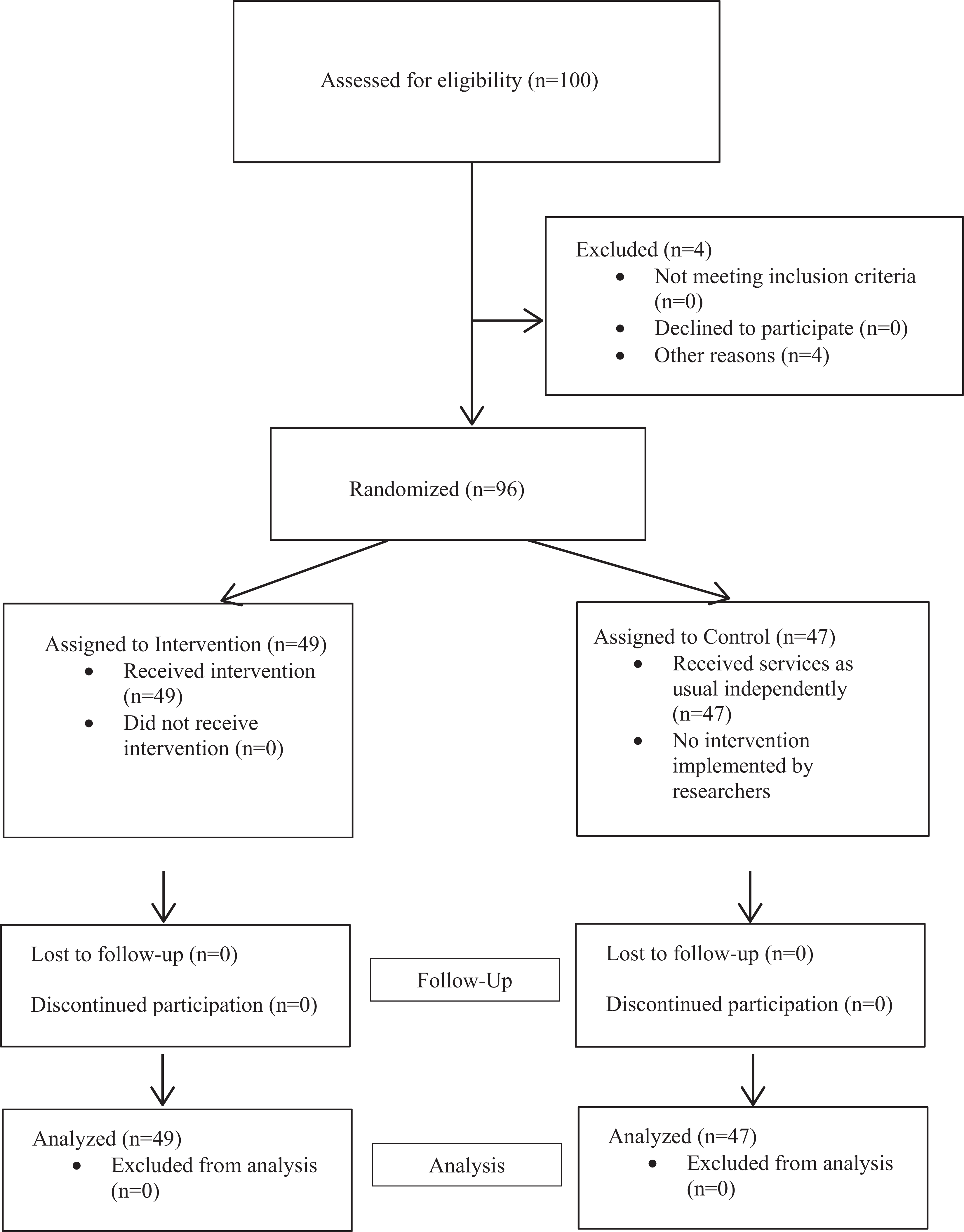
Consolidated Standards of Reporting Trials diagram of participants in study.
Study Procedures
A subject pool was created consisting of individuals who confirmed their interest in participating by calling the given number or by postcard response. The criteria for participation in the study were that individuals identify themselves as Black, undergraduate college women, between the ages of 17–35 who self-identify as having difficulties adjusting to college life and having difficulty coping with stresses of daily living (i.e., poverty, racism, discrimination, sexism, and lack of access to supports and resources). Women were excluded if they did not meet the study criteria.
Participation in the 10-week psychoeducational group was voluntary and free of charge. Prospective participants were provided with detailed information regarding the nature of the intervention and the randomization process. Participants were randomly allocated to (a) CYC or (b) comparison group at each of the five study sites. Randomization was conducting by assigning alternating names in the sampling pool for each site to the intervention or comparison group. The first 20 women selected at each of the sites were enrolled in the study. Prior to the beginning of data collection four participants declined involvement, citing personal reasons (one from intervention group and three from comparison groups). The control group received no mental health treatment services but was given the option for future group participation following the study. The methodological advantages of this design are complemented by the practical and ethical merits, which allow for all participants to receive a potentially useful intervention.
The principal investigator and a graduate research assistant administered the pretest and posttest instruments. The pretest and posttest questionnaires were administered in a group format at each of the five sites, for both the intervention and comparison group participants. Participants were paid US$10 for keeping to completing the pretest and posttest survey instruments. Following the pretest, participants who had been assigned to the intervention group received a listing of scheduled group sessions for the 10-week period, including a wrap-up session in which subjects were posttested. The comparison group participants received the date and time of the posttest at the end of 10 weeks. The time for completion of the pretest and posttest questionnaire was approximately 20 min. Human subjects’ approval was obtained by the sponsoring institution.

Claiming your connection’s intervention modules.
The Group Intervention Model
CYC is a group intervention program that was developed to expand opportunities for Black college women to engage in culturally congruent, therapeutic interventions. The culturally congruent nature of the intervention protocol is based upon treatment techniques that both directly and indirectly address specific aspects of Black women’s psychosocial experiences in America (Belgrave, Chase-Vaughn, Gray, Addison, & Cherry, 2000; McNair, 1996; Miranda et al., 2003; Randall, 1994). For instance, cultural congruence in this study refers to (1) the integration of cultural attitudes, beliefs, and values of Black women into the intervention and (2) the continuous promotion of skills, practices, and interactions throughout the group process to ensure that sessions are culturally responsive and competent.
The CYC utilizes a weekly counseling group to enhance psychosocial competency skills from a cognitive therapy perspective. The intervention is predicated on cognitive-based treatment that teaches participants to recognize and examine their negative thoughts, beliefs, and feelings in order to produce relief from their distress and enable them to cope more effectively with life’s challenges (Alford & Beck, 1998).
The CYC group intervention consisted of 10-weekly, 90-min sessions. Structured and didactic methods based upon Black women’s psychological, social, and political needs and experiences are integrated into each session to make the manual culturally congruent. These methods include (1) attention to ethnic and gender homogeneity, (2) the use of ethnic matching among participants and facilitator, (3) a focus on themes related to Black women social and psychological development, (4) a termination ritual at the end of the 10-week intervention, and (5) the use of literary works from Black literature to illustrate concepts. This approach is consistent with recent strategies to reduce stress-related symptoms (Miranda et al., 2003; Napholz, 2005) and promote optimal psychosocial functioning (i.e., locus of control and coping) among Black women (Belgrave et al., 2000; Jones, 2004, 2009). While participants are not required to attend a designated number of sessions, the importance of group cohesion and support are stressed during the orientation following the pretest.
Measures
The questionnaire consisted of the Perceived Stress Scale (PSS; Cohen, Kamarck, & Memelstein, 1983), the Rotter Internal–External (RIE) Locus of Control Scale (Rotter, 1966), and the Behavioral Attributes of Psychosocial Competence Scale—Condensed Form (BAPC-C; Tyler, 1978). In addition, the pretest instrument included self-reported demographic data on age, ethnicity, college class, work status, socioeconomic class, and precounseling experience. Age was captured from date of birth, ethnicity was captured through self-identified ethnic or racial background, college class was determined by university/college designation based of class level, and current counseling was based upon self-report of participation in individual or group counseling, therapy, or treatment over the past 6 months.
The PSS (Cohen et al., 1983) was designed to measure the degree to which situations in one’s life are appraised as stressful. The PSS 14 items (e.g., “In the last month, how often did you feel unable to control important things?”) are questions that are answered using a 5-point scale, from 1 (never) to 5 (very often). Total scores range from 0 to 54 across the 14 items, with higher scores representing greater stress and a diminished belief in one’s ability to cope. PSS scores are obtained by reversing responses (e.g., 0 = 4, 1 = 3, 2 = 2, 3 = 1, and 4 = 0) to the 4 positively stated items (Items 4, 5, 7, and 8) and then summing across all scale items.
Cohen, Kamarck, and Mermelstein (1983) report a coefficient α reliability of .91 for the PSS. Psychometric data for the PSS were generated from two college student samples and a smoking cessation sample (Cohen et al., 1983). Cronbach’s α reliabilities for each administration ranged from .84 to .86 (Cohen et al., 1983). The normative sample of the PSS was comprised of largely White Americans (86.5%), with 7.8% of the sample consisting of African Americans (Cohen & Williamson, 1988). The scale has high predictive validity with life event scores, depressive, physical symptoms, utilization of health services, social anxiety, and smoking reduction maintenance. A reliability α of .73 for pretest and .77 for posttest was obtained for this current study. Exploratory factor analysis using principal axis factoring found that the most strongly represented items in the PSS that consistently captured stress for this population were “how often have you felt difficulties were piling up so high that you could not overcome them” (λ = .81) and “how often have you felt that you were unable to control the important things in your life” (λ = .68). Results did indicate issues with items such as “how often have you dealt successfully with irritating life hassles” and “how often have you found yourself thinking about things that you have to accomplish,” which contributed very little to understanding stress for this population.
The RIE Scale is a standardized measure for the assessment of the degree to which an individual perceives reinforcement as contingent upon her actions. The instrument contains 23 forced choice items and was reported to possess adequate internal reliability and test reliability. The locus of control construct is assumed to be a continuous variable ranging from an internal to external stance. The scale ranges from a score of 0 to 23, with a higher score indicating the number of external attributes endorsed. Results of initial testing indicate that persons scoring high on external locus of control tend to believe that the responsibility for and control over one’s life resides largely with fate, luck, chance, or powerful others. Rotter (1966) reports a Kuder–Richardson internal consistency reliability coefficient of .70 from a sample of 400 college students. There is limited information about whether normative efforts for this measure included ethnically diverse populations. However, reliability coefficients were .71 for pretest and .69 for posttest scores for this study, which indicate internally consistent findings for Black college women in the northeast of the United States. Exploratory factor analysis with the scale indicated that the question which asked respondents to choose between the statements “becoming a success is a matter of hard work, luck has little or nothing to do with it” and “getting a good job depends mainly on being in the right place at the right time” was most strongly represented in the instrument (λ = .72). The results of this validity analysis suggested that the scale most effectively captured a sense of internal versus external locus of control in this context from the sample.
The BAPC-C measures an individual’s proactive coping style. The BAPC was originally created by Forrest B. Tyler (1978) and was named the Behavioral Attributes of Psychosocial Competence (BAPC), which was found to be reliable and valid for different ethnics groups, including Black American samples (Tyler, 1978, 1981). The BAPC-C Scale consists of a 13-item forced choice questionnaire, 8 items of which assess active coping style, 3 items assess emotional coping style, and 2 items loaded on a factor analysis to assess both. Active coping is measured in terms of the degree to which an individual manifests an active and planful coping orientation, high initiative in the pursuit of set goals, and a capacity for experiencing and building from successes and failures. Individual items are scored 1 or 0. Item scores are added to form a total score potentially ranging from 0 to 13. A higher score is associated with a more active coping orientation. The BAPC-C has been found to be moderately correlated at −.38 with the Internal–External (IE) Locus of Control Scale developed by Rotter (1966). Tyler reports a Kuder–Richardson reliability coefficient of .76 for the condensed version of the BAPC. Respectively, reliability coefficients were .76 at pretest and .79 at posttest for this current study which is consistent with Tyler’s scores. Exploratory factor analysis with the scale indicated that the question which asked respondents to choose between the statements “I figure my life will be what I make of it, but even so I generally prefer to let things come to me first” and “I figure my life will be what I make of it, so I generally go out to meet life and get the most out of it” was most strongly represented in the instrument (λ = .694). This was closely followed by the question which asked respondents to choose between the statements “most situations yield possibilities for personal growth, but I usually settle for what comes my way” and “In most situations I seek out information that will help me grow as a person” (λ = .685). These results indicated that the instrument best captured an orientation to proactive coping in terms of taking action to make the most out of life and attain personal growth.
Statistical Analyses
Data were analyzed using SPSS Version 21 for Microsoft windows. Descriptive statistics were used to examine the demographic characteristics of the sample. Chi-square and independent two sample t-test analyses were conducted on demographic variables to estimate group differences. Repeated measures analysis of variance (RANOVA) was used to test intervention effects for the outcome variables. This was a two-group (CYC intervention and no-treatment control) by two time points (preintervention and postintervention) by three outcomes (perceived stress, external locus of control, and active coping model). A p value of .05 or less was used for statistical significance; all probability values were two tailed. The interaction effects of condition by group were of particular interest in the current research because they reveal the differential effectiveness of the two experimental conditions at pretest and posttest.
Results
Participant Characteristics
Demographic characteristics of the participants are presented in Table 1. Participants’ mean age was 19.97 years and 33.3% were college sophomores. Of the 96 participants who completed the study, 56 (58.3%) were African American and 40 (42.7%) were of other Black ethnicities (Caribbean, African, Cape Verdean, Haitian, and Other). Other demographic variables of interest, included work experience, socioeconomic status, and previous participation in counseling. No significant differences emerged among the CYC intervention or comparison groups in demographic characteristics.
Demographic Characteristics of Participants.

Note. t = independent two-sample t-test; χ 2 = chi-square test at the nominal level; CI = confidence interval.
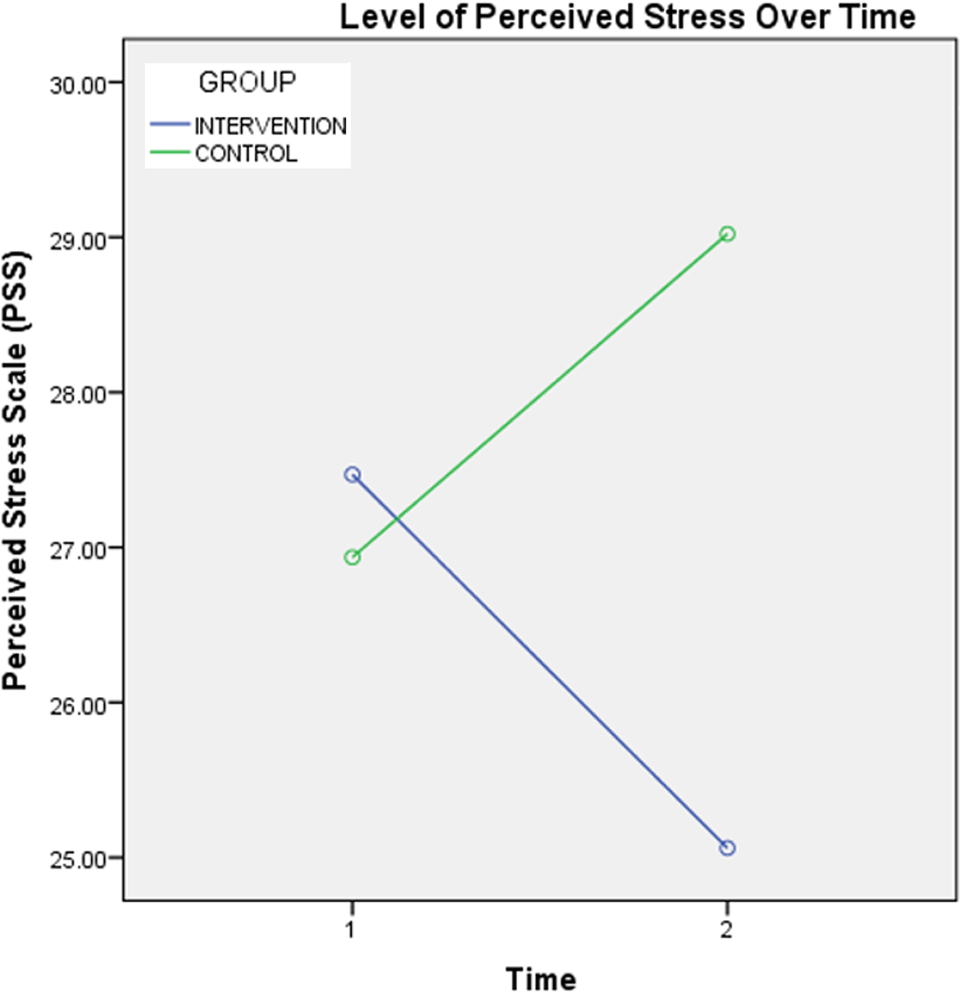
Interaction of time × group for perceived stress (PSS). PSS = Perceived Stress Scale.
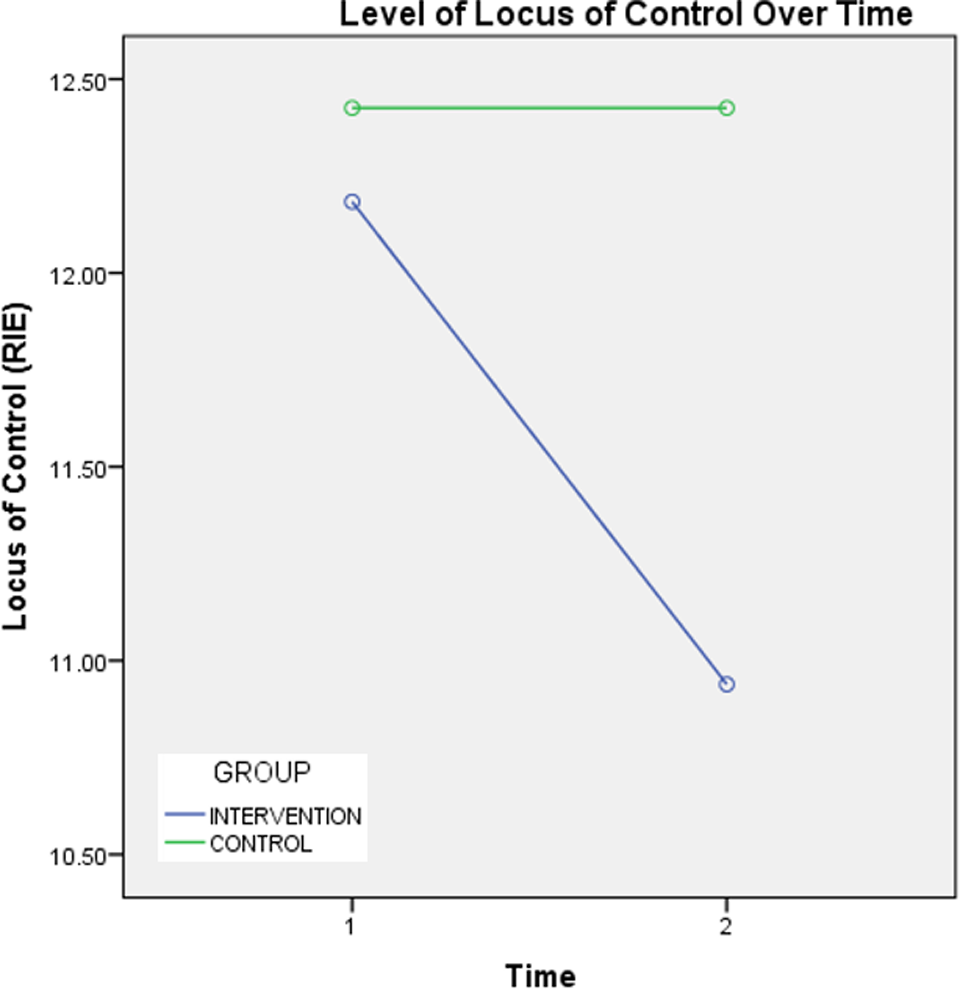
Interaction of time × group for locus of control (RIE). RIE = Internal–External Locus of Control Scale.
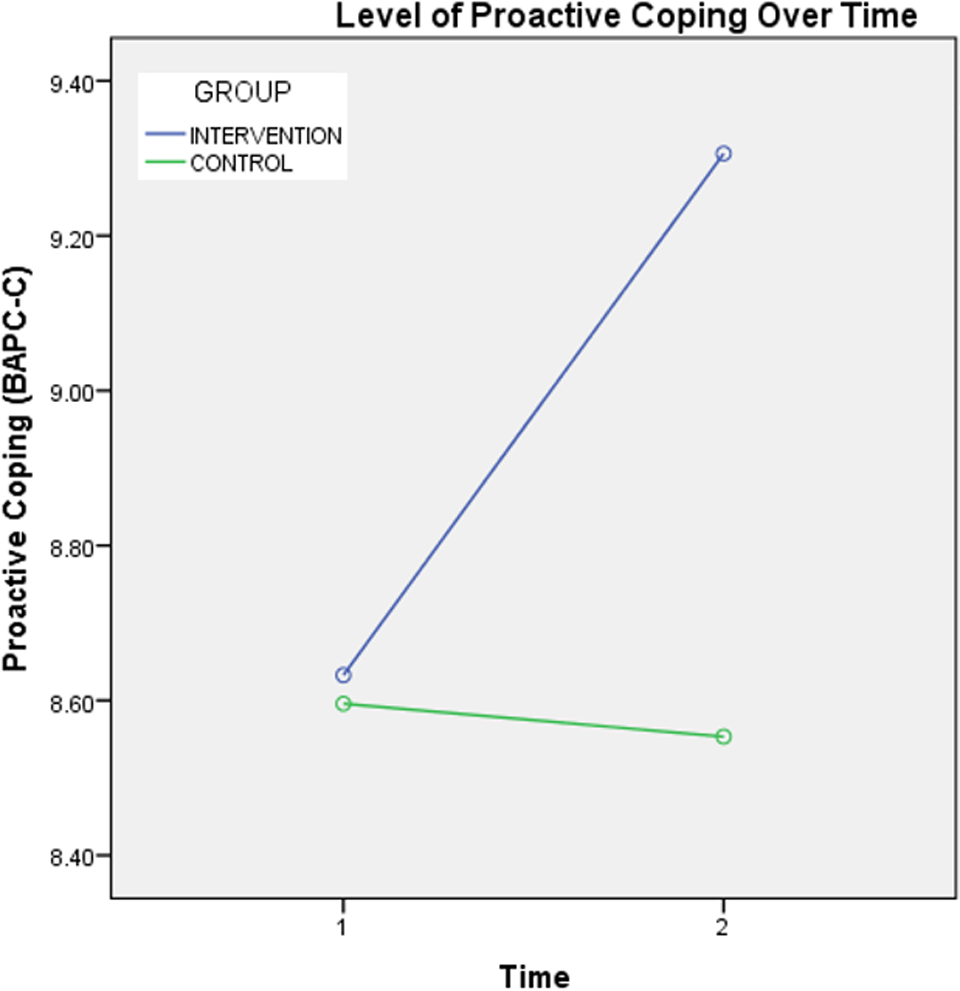
Interaction of time × group for proactive coping (BAPC-C). BAPC-C = Behavioral Attributes of Psychosocial Competence Scale–Condensed form.
Pre- and Postoutcome Scores by Time and Group and Type of Institution
Table 2 shows the pretest and posttest means on outcome variable results by group and type of institution. The descriptive statistics show that the outcomes of intervention group participants changed in the hypothesized direction regardless of the type of institution. For the intervention group, the level of perceived stress and externality reduced but active coping increased after the intervention.
Psychosocial Competence Outcome Means by Time and Group and Institution.

Note. HBCU = historically Black college and university, PWI = predominately White institution.
Results of a RANOVA in Table 3 separately represent if the outcomes changed over time by group or by the type of institution. With respect to interaction between time and group, the CYC program participants reported a significant decrease in perceived stress, F(1, 94) = 4.64, p < .05,
Summary of RANOVA.
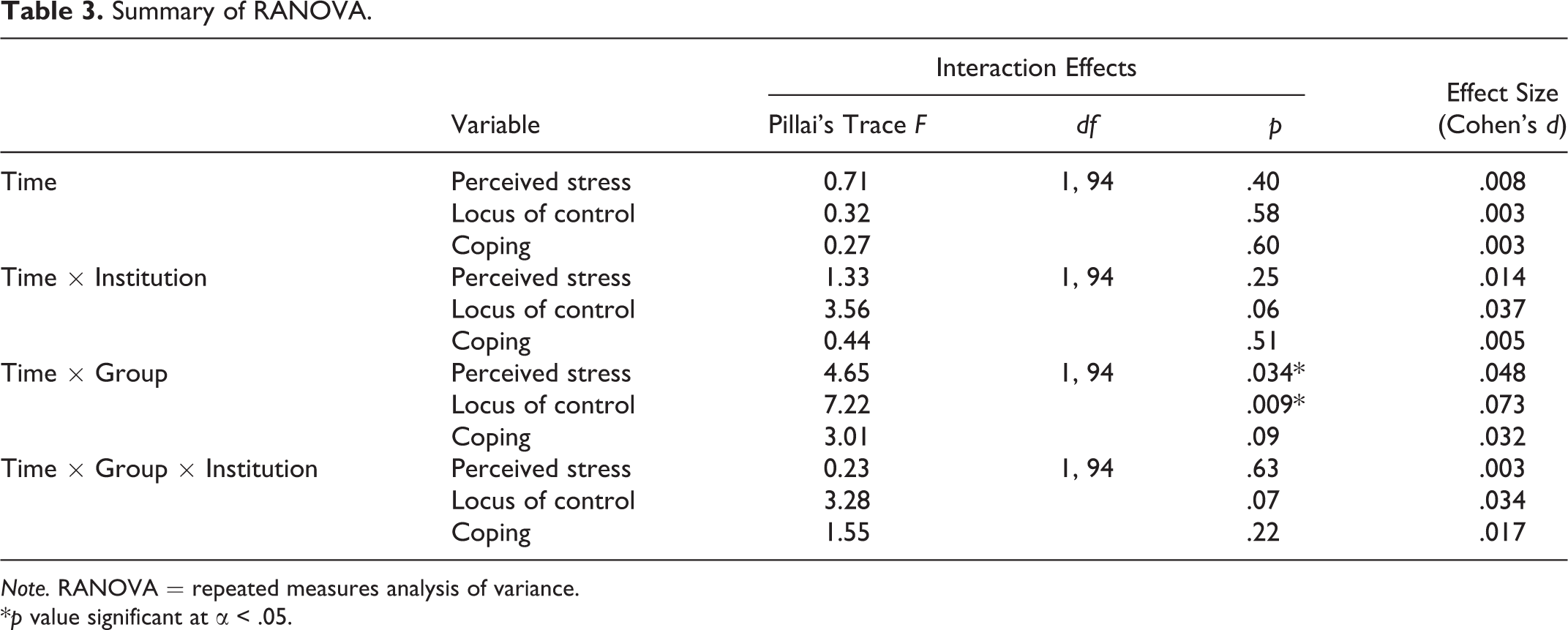
Note. RANOVA = repeated measures analysis of variance.
*p value significant at α < .05.
Discussion and Application to Social Work
In this study, participants of the CYC group intervention program reported a decrease in perceived stress in comparison to the wait-list control group. This result is congruent with earlier significant findings, F(df = l, 74) = 11.16, p < .01 (Jones, 2009), on the outcome variable of perceived stress among Black college women. In addition, this finding is consistent with previous research indicating that students who participate in supportive college mental health programs reduce their levels of stress (Conley, Travers, & Bryant, 2013; Deckro et al., 2002; Steinhardt & Dolbier, 2008). Cohen, Aronson, and Steele (2000) found that support services that give attention to social–psychological processes, such as threatening academic and social environments for Black, Latino, and female college students, boost both academic achievement and college adjustment. As supported by previous research on the use of group work with Black women (Carter, Sbrocco, Gore, Marin, & Lewis, 2003; Kohn, Oden, Muñoz, Robinson, & Leavitt, 2002; Miranda et al., 2003; Napholz, 2005), this result also suggests that the group intervention program provided a supportive environment in which participants could feel comfortable to discuss their difficulties in relation to their daily life stressors. By fostering interaction, affiliation, and social involvement among group members, the group program may have provided both a direct and an indirect buffering of stress, assisting participants in altering their perception of stress and helping to alleviate stress once experienced. It appears that the use of support mechanisms, such as counseling group programs, may be an effective buffer in reducing the negative effects of psychological distress in a challenging higher education environment.
In contrast to previous findings of this intervention, participants of the replication intervention group reported a decrease in external locus of control. According to Bandura (1977), locus of control is a major mediator of behavior and behavioral change. This replication study modified its curriculum activities to provide an emphasis on behavioral outcomes of locus of control including a greater emphasis on (1) positive self-attitudes of performance and accomplishments, (2) vicarious learning, through peer and facilitator modeling, and (3) verbal persuasion, which included verbal support and encouragement. These enhanced activities may have assisted participants in acknowledging and believing that she possesses the ability to be successful with a given task or behavior.
Contrary to expectations, there was no statistically significant finding on the measure of coping orientation. However, it is important to note that although active coping does not show statistically significant difference at p value of .05 level, intervention group participants’ level of active coping changed in the hypothesized direction (pretest, M = 8.63, SD = 2.51, and posttest, M = 9.30, SD = 2.95). It can be postulated that these women brought into the group process personality and behavioral traits that had been developed based on their experiences and socialization into society. Their ingrained coping patterns may be constructs that are not amenable to statistically significant change in a short time (10 weeks).
As shown by Tyler (1991), individuals who have difficulty in coping may find it more difficult to productively deal with life tasks or enjoy the rewards of their labors. Black college women in this study can be characterized as trying to understand and deal (actively cope) with their realities in ways that will permit them to survive in a potentially hostile environment (college). Black women may pretend to be well when they encounter oppressive realities because they historically learned to deceive to keep from being punished in a White patriarchal and racist culture. However, the literature emphasizes commitment to truth telling as the first step in any type of self-recovery (Hooks, 2005). In The Salt Eaters, Bambara (1980) opens a question with “Are you sure, sweetheart, that you want to be well? Just so’s you’re sure, sweetheart, and ready to be healed, cause wholeness is no trifling matter. A lot of weight when you’re well.” In this sense, active coping would be possible for Black college women when they are able to be open and honest to holistic wellness. This finding also points to the need for additional systematic change methods in the intervention curriculum to significantly increase active coping.
These findings should be considered in the context of several potential limitations. First, although the current study extends to include Black college women in HBCU, sample was drawn from academically competitive institutions. The results therefore should not be generalized to all university settings. As a result of the selectivity of the schools attended by participants, these students represents an elite group that is not representative of the larger population of Black students attending colleges across the United States. In addition, it cannot be assumed that all of the women’s experiences on each of the campuses were similar in terms of options for counseling services. Given the diversity that exists among Black women, additional studies conducted in a variety of settings and on a more varied sample of Black women in ethnicity, age, and socioeconomic and geographic region status are also needed to confirm the study’s generalizability. Second, since this intervention study does not include other factors that might influence on psychosocial competence, it is difficult to fully capture whether the results were due to CYC intervention. For example, this study excludes Black students’ relationships with family, friends, and faculty members, which are known as effective coping sources. If they have unfavorable relationship with families and friends, active coping orientation can be negatively affected. Additionally, it is possible that the results were due to general therapeutic factors and not specific to CYC. The wait-list condition does not allow for evaluating to see if the CYC is as effective as other evidence-based interventions. Hence, the use of a replication design to see if the wait-list control group experiences the same or similar benefits as the original intervention group would help to validate the results. Furthermore, given that the participants volunteered, there may be an effect for self-selection into the study and it is not possible to assess how representative these participants are of all Black college women at the same college. Further, this study does not permit for longitudinal follow-up past 10 weeks. A more extensive interval beyond 10 weeks with follow-up measures would go far toward establishing whether any benefits of the group intervention program are maintained over time. Finally, while the measures that were used have been found to be internally consistent and reasonably valid for the sample, some items were found to not fit so well within their respective scales. For example, in the PSS, the questions “how often have you dealt successfully with irritating life hassles” (corrected item − total correlation = −.03) and “how often have you found yourself thinking about things that you have to accomplish” (corrected item − total correlation = −.05) had no observable correlation to other items in the scale, suggesting that they contributed little or nothing to the measurement of stress for the sample of Black women in this study. In the case of the measures for Locus of Control (RIE) and Proactive Coping (BAPC-C), these issues were even more pronounced with a number of items in each respective instrument. It is likely that this can be largely explained by measurement confounds due to a lack of sensitivity in these instruments to capture these social constructs for minority and female populations. Future studies can employ more nuanced questions that differentiate between normative, adaptive experiences of Black women in managing the realities of institutional injustices and oppression versus experiences that connotes high-level stress, externalizing behavior, and passive coping. With more sensitive instruments, it is likely that treatment effects can be better captured, resulting in larger effect sizes from this intervention.
Despite these limitations, it is important that social work practice research continues to focus on understanding cultural, racial, and psychosocial competence characteristics that underlie adjustment and adaptation for Black students and of the patterns of change needed to successfully matriculate at all universities and colleges. In addition, culturally congruent programs that show effectiveness with this population must be refined and replicated.
Footnotes
Declaration of Conflicting Interests
The authors declared no potential conflicts of interest with respect to the research, authorship, and/or publication of this article.
Funding
The authors received no financial support for the research, authorship, and/or publication of this article.