



Abstract
Background:
Early career faculty experiences and perspectives on transdisciplinary research are important yet understudied.
Methods:
Assistant professors at 50 top-ranked social work programs completed an online survey assessing perspectives on the salience of transdisciplinary training in their field, obstacles to or negative impacts of transdisciplinary training, and current environments. Content analysis and descriptive statistics were used.
Results:
A large majority of all participants (N = 118) believed that transdisciplinary research is important, that greater training is needed, and that they are relatively well prepared in related skill sets. They are expected to build cross-disciplinary collaborations, yet only a small minority believed that social work researchers are nationally recognized as important collaborators, or that they are prepared to navigate tensions on research teams.
Conclusions:
We offer a multilevel framework of structural and training supports needed to realize transdisciplinary research in social work with relevance to other disciplines.
Effective responses to complex social and environmental problems such as climate change, poverty, and violence require holistic approaches and input from diverse disciplines and stakeholders (Gehlert et al., 2014; Nurius & Kemp, 2012; Patterson et al., 2013). Increasingly, transdisciplinary research collaborations, which bring scholars from different disciplines (and, frequently, key stakeholders) together to tackle complicated problems using new approaches to scientific inquiry, are seen as key to advancing innovative solutions. Transdisciplinary research aims to “synthesize and extend discipline specific perspectives, theories, methods, and translational strategies to yield innovative solutions to particular scientific and societal problems” (Vogel et al., 2014, p. 2). Stretching to create new frameworks, questions, and methods of inquiry, at multiple levels, transdisciplinary efforts build on but go beyond interdisciplinary work, which is typically characterized by scholars working together on a common project, transferring their knowledge, and focusing on interrelationships between their fields but with less emphasis on integration.
Early career scholars are increasingly recognized as pivotal to advancing these efforts. Yet, involvement in impact-oriented collaborations frequently comes with significant complexities. Early career scholars are launching their research careers in scientific contexts that, on the one hand, call for transdisciplinary teamwork and, on the other, typically require evidence of individual contribution and, at times, disciplinary purity for promotion and career advancement. In these environments, building a secure academic identity and coherent scholarly portfolio can be complicated. If departmental or disciplinary norms call for contributions in a strictly defined field, for example, participation in cross-disciplinary research may disadvantage early career scholars when being reviewed by their senior colleagues for promotion (Bridle, Vrieling, Cardillo, Araya, & Hinojosa, 2013). Furthermore, academia is itself in a period of significant change, from rapidly evolving research and knowledge production environments to marked shifts in the security of academic employment (Enright & Facer, 2016; Felt, Igelsböck, Schikowitz, & Völker, 2013). Navigating this changing landscape, one’s own research program and ongoing training needs, institution and discipline-specific criteria for success, and the ever increasing importance of demonstrating the impact of one’s work poses significant challenges for early career scholars.
Transdisciplinary research also poses operational challenges, as scholars navigate new and complicated relationships and ways of thinking about their research questions (Vogel et al., 2014). Being part of a transdisciplinary team requires not only disciplinary depth and expertise but also strong interpersonal, cross-disciplinary, communication, and collaborative skills, including the ability to give and receive challenges to customary ways of thinking about a particular problem and integrate new ways of thinking (Kemp & Nurius, 2015; Patterson et al., 2013; Uhlenbrook & de Jong, 2012; Willetts & Mitchell, 2006; Winowiecki et al., 2011). Successful participation in cross-disciplinary teams requires a willingness to take on these challenges, including commitment to and patience with the process.
Given these complexities, recognition is growing regarding the need for intentional investments in supporting early career readiness and success in changing research environments. Calls for advancing transdisciplinary research training (Sadovsky, et al. 2014), boundary-spanning competencies (Uhlenbrook & de Jong, 2012), a developmental training trajectory (Kemp & Nurius, 2015), and specific training methods (Benesh et al., 2015) have come from disciplines as diverse as environmental sciences, information technology, public health, social work, engineering, behavioral health, obstetrics and gynecology, and more. These and related efforts have begun to shape national and international conversations on the future of doctoral education, preparation for collaborative research, and the need to better align the institutional logics governing academic research careers and the changing nature of academic knowledge production.
In social work, these conversations have taken productive root in several venues. In recent years, plenary presentations, workshops, and round tables at the Society for Social Work and Research (SSWR) conferences have frontally addressed the changing arena of research and social work’s potential, as an integrative science, to define a distinctive “business plan” for thriving in this scientific marketplace. The SSWR board for years sponsored a National Research Capacity Building Initiative (NRCBI) aimed at strengthening preparedness for involvement in transdisciplinary and translational research contexts. The NRCBI has now evolved into a standing SSWR Research Capacity Development Committee, focusing on fortifying “emerging scholar” development by linking doctoral, postdoctoral, and early career research supports to achieve greater individual, programmatic, and institutional consistency. Social work scholars from across the country have also gathered to sharpen the field’s collective thinking about the science of social work and preparation of graduates for the opportunities and demands of research in the 21st century, resulting in a series of special issues and sections in the journal Research on Social Work Practice. The current article stems most directly from the 2015 Science in Social Work Doctoral Education Roundtable, a working conference focused on the scientific training contexts and priorities of social work, including readiness for cross-disciplinary research training, engagement, and translation.
These efforts mirror the broader literature in recognizing the central role of early career scholars in increasingly transdisciplinary environments (Benesh et al., 2015; Bridle et al., 2013; Patterson et al., 2013). However, few studies to date have focused specifically on the perspectives of early career faculty on their transdisciplinary research preparation, needs, and experiences. The present study is the first of its kind to canvas the transdisciplinary preparedness and experiences of a national sample of early career social work faculty. Recognizing that, in practice, the term transdisciplinary encompasses a range of cross-disciplinary experiences, we sought to characterize the research landscape of junior scholars relative to where they came from (their doctoral training), where they are headed (their current institutional environments and future career goals), and the field of forces within which they are functioning (e.g., how others perceive social work researchers, challenges or potential negative impacts of transdisciplinary research, and how social workers can communicate their research skills). The overarching goal of the study was to more directly include early career scholars’ real-world experiences and perspectives in what has been largely a set of conversations among later career scholars. We also aimed to identify elements in participants’ career trajectories as well as structural components at the levels of the academy, social work program level, professional organizations, and the individual that collectively support successful transdisciplinary research training and practice.
In the article that follows, we provide an overview of the survey and the analytic approach followed by a distillation of the qualitative and quantitative results aimed at providing a broad but also nuanced overview of participants’ perspectives. We then highlight major themes and organize these into a multilevel model of structural and training supports needed to realize the transdisciplinary research potential of social work’s early career scholars. In concluding, we discuss the implications of the key elements in the model for social work and other fields, focusing on elements of the model of broad relevance and flexible applicability across disciplines and university settings.
Method
Participants and Recruitment
We recruited participants from the U.S. News and World Report top 50 ranked social work programs. Assistant professors were identified within these programs through an online search of each program’s faculty list. Because we were focused on research-related training and experiences, assistant professors were included in our study whether they had the title assistant professor or research assistant professor and had received a PhD. Assistant professors were sent an introduction to the study and an anonymous survey link via e-mail. Several personalized reminder e-mails were sent to encourage participation. Participants received a US$5 gift card for participation. Survey responses were kept completely anonymous, with no identifying program or individual-level data collected or linked to an individual response. The study was reviewed by the University of Washington Human Subjects Division and found to be exempt.
Survey Instrument
The survey was developed through an iterative process of literature review and discussion among the investigator team. To build the questionnaire, we used the National Institutes of Health funded online survey platform REDCap (Harris et al., 2009). The survey questions, which included both open and categorical questions, focused on eliciting participant perspectives and experiences with transdisciplinary research and training, and skills and support needed for a successful academic research career. In addition, participants were asked to comment on obstacles and challenges related to transdisciplinary research and their perceptions of social work scholars relative to scholars from other disciplines. To ensure functionality and readability, the survey was pilot tested by six graduate students in our program.
Based on this feedback, the survey, which took between 8 and 25 min to complete, was refined. The final survey assessed the following topics: (1) knowledge, use, and importance of transdisciplinary research; (2) doctoral training preparation; (3) expectations and support for transdisciplinarity in their current work environments; and (4) contextual factors such as challenges or potential negative impacts of transdisciplinarity, and how social workers are perceived by other disciplines and can communicate their research skills. Some example questions included: “In your doctoral training, how did you balance gaining depth and breadth of knowledge? Please note if this was not raised as an expectation in your training”; “Do you think doctoral training programs in schools of social work should focus more on developing transdisciplinary research competencies? Please explain”; “What are the potential negative impacts of transdisciplinary training in social work?”; “In your current position and institution, how supported do you feel to complete your research agenda?”; “To what extent do you believe that social work researchers are recognized nationally as being important collaborators?”; “How can social work researchers communicate their research skills?”; “Please describe the factors in place in your current position that support your research agenda”; and “In your specific area of research, what skills and competencies do you think social work researchers need to be successful?” A copy of the entire survey can be obtained by contacting corresponding author (M.M.) at the School of Social Work, University of Washington.
Analysis
Categorical survey questions were analyzed quantitatively using Stata 14 (Stata Corp, 2015). Dedoose analytic software was used to code and store open-ended survey data (Dedoose, 2015). Dedoose (2015) allows for efficient management, sharing, and analysis of large amounts of qualitative and quantitative data by geographically distributed teams. Inductive qualitative content analysis was utilized to analyze open-ended survey questions. This method entails subjective interpretation of the content of text data through a systematic classification process of coding and identifying themes or patterns when existing theory or research on a phenomenon is limited (Elo & Kyngas, 2008; Hsieh & Shannon, 2005). Data were read word for word to derive codes that captured key concepts or thoughts. Codes were then sorted into higher order concepts or categories based on how they were related or linked with the aim of building a conceptual model (Hsieh & Shannon, 2005; Morse & Field, 1995). Investigators then employed a consensus-based process to develop the model presented in the article.
Results
Participants
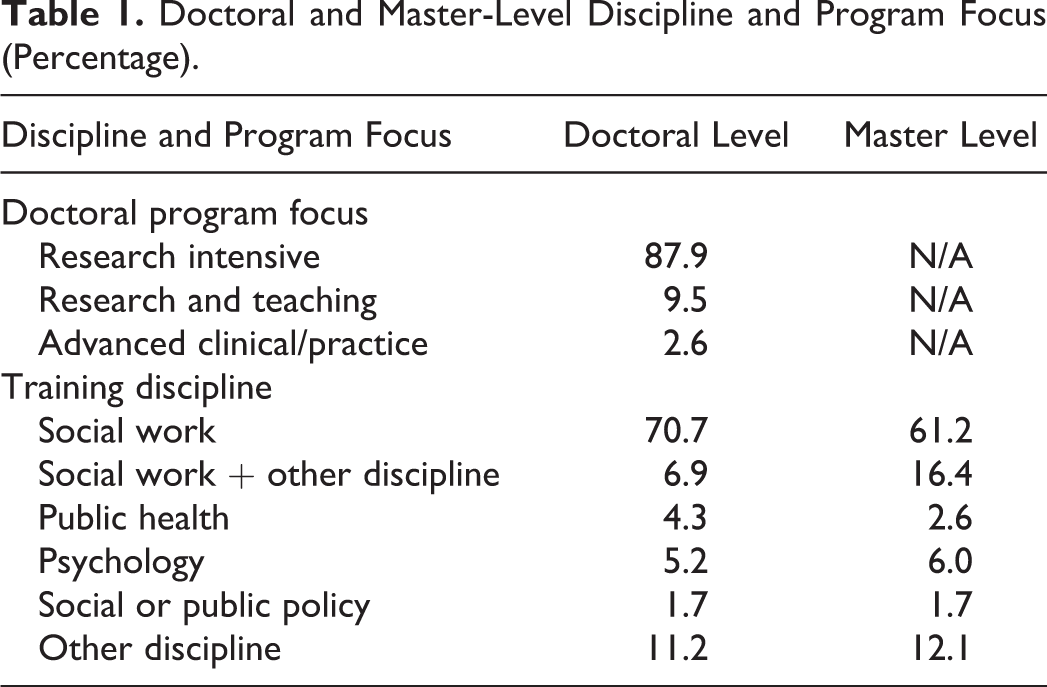
Survey participants included N = 118 (42%) of the assistant professors identified in the top-ranked 50 social work programs across the country. Of those, n = 100 (85%) provided one or more responses to open-ended questions. Participants had been at the assistant professor rank for <1 year (10.2%), 1–3 years (44.4%), 4+ years (42.6%), and very recently promoted beyond assistant professor rank (2.8%). Although there was some variation in training backgrounds, the majority of participants reported their doctoral training was in social work (70.7%) with a research-intensive focus (87.9%; Table 1). Participants reported a wide range of research areas and methods. Engaged in collaborative research in areas as diverse as disability, economic policy, the intersection of health and mental health, child welfare, and behavioral health, they described their research as boundary spanning and as requiring collaboration within, beyond, and at the intersection of disciplinary silos.
Doctoral and Master-Level Discipline and Program Focus (Percentage).
We conducted several sensitivity analyses to examine whether responses to quantitative items varied as a function of the respondents’ training backgrounds. We found no significant differences in training background. We also found no difference in responses comparing the top 25 social work programs to the full sample, and all results are reported at the full sample level.
Early Career Faculty Responses
Participants provided important information in the following areas: (1) their perspectives on the use and importance of transdisciplinary research, (2) their own training experiences, (3) their current work environments, (4) challenges and ambivalence about transdisciplinary research, and (5) recommendations for strengthening the continuum for transdisciplinary research success from doctoral training to early career supports. Major themes were identified in each area, as elaborated below.
Perspectives on Transdisciplinary Research
Twenty-three percent of participants reported they had not heard the term “transdisciplinary research” prior to completing the survey. However, 98% reported that they believed it was important to the field of social work and 93% reported it was important to their own research, presumably on the basis of the definitions of transdisciplinary research included in the survey.
Three major themes emerged from the open-ended survey responses that illuminated participants’ reasons for emphasizing the importance of transdisciplinary research: (1) transdisciplinary approaches are needed in order to address complex social problems, (2) transdisciplinary work is required in their area of research, and (3) social work is inherently transdisciplinary. By far, the most common response was that the complexity of social problems facing researchers today requires the ability to represent multiple levels, dimensions, contexts, or systems. Comments related to this theme also alluded to the value of integrating methodological tools as well as theories. One participant quote illustrates what many reported: Given the breadth of theory and methods that exist, our field and indeed each discipline can only boast of a narrow specialization. The only way to begin a reconceptualization of the issues affecting the human condition will involve moving away from artificial scientific silos…[for instance] poverty is a multifaceted phenomenon we have been unable to grasp in our individual disciplines. Merging ideas, theory, methods across disciplines is long overdue. (Participant #93) I work in [a field] that is naturally dominated by education and educational psychology. Social work has a lot to offer in making sense of the full life of the student and what affects the learning environment outside of the classroom. (Participant #52) Our field, by definition, crosses boundaries to work across professional domains: politics and policy, health and mental health care, environmental science, etc. We need to be working across professions and making sure that our work reaches diverse audiences in order to have an impact on the issues we care about. (Participant #86)
Doctoral Training Experiences
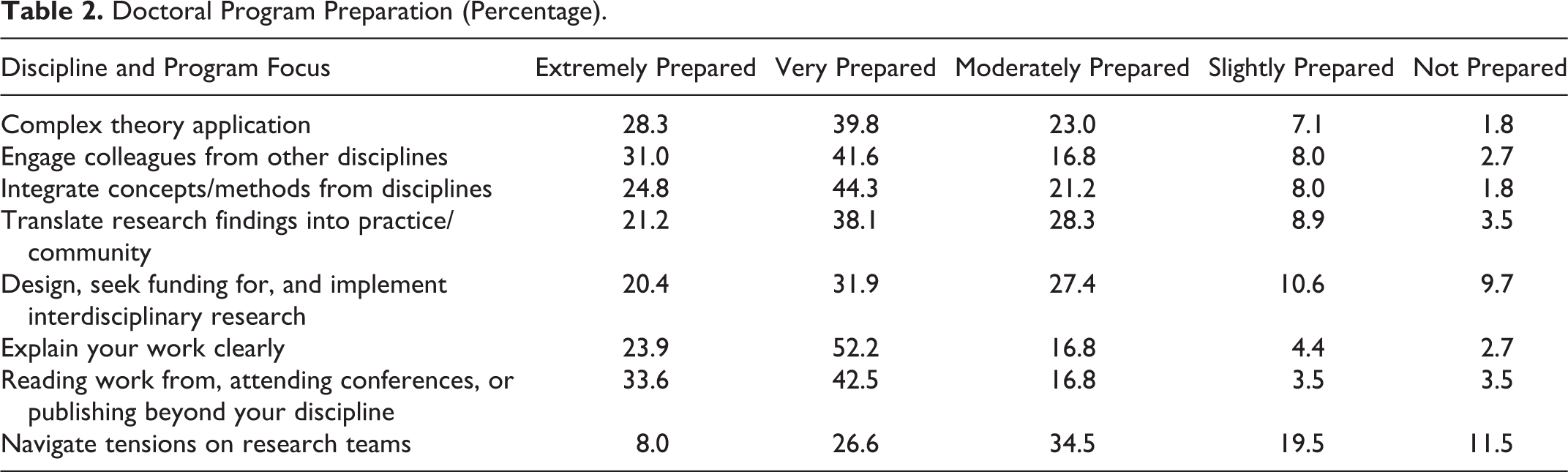
Asked about their level of preparation on a range of transdisciplinary research competencies, the majority of participants reported that, in most competency areas, they felt either extremely prepared or very prepared to conduct transdisciplinary research-related tasks. An important exception was preparation to navigate tension or conflict on research teams, where participants felt less prepared. Participants also demonstrated some equivocation in relation to their preparedness to translate research findings into practice, and to design, seek funding for, and implement interdisciplinary research. Open-ended responses about training experiences added nuance to these responses, revealing that although individuals felt prepared in many areas, some reported that they needed enhanced methodological training, experience in writing scholarly papers, and obtaining grant funding (Table 2). In addition, much of their transdisciplinary preparation was self-directed: The following quote highlights this theme: My research focus was a little outside the expertise of my program’s faculty. Several months into my study, I knew more about the topic than any of my mentors. For this reason, I feel like I set my own course about how to pursue knowledge in my area. (Participant #62)
Doctoral Program Preparation (Percentage).
Participants also expressed a need to seek out supplemental training in particular areas of interest or expertise beyond their home training department. Those interested in broadening their preparation sought cross-disciplinary mentors, research projects, and coursework. One quote illustrates a theme mentioned by many respondents: Our program helped us to go in depth in one area, but encouraged us to tailor our educational experience to our own interest and to seek out courses and mentoring from across diverse departments/fields at our university. (Participant #51)
Current Work Environment
Participants were asked to describe their current work environments, including availability of supports and encouragement of collaboration. Participants reported feeling supported with regard to their research agenda and encouraged to seek collaborations with different disciplines (Table 3).
Challenges and Supports for Cross-Disciplinary Collaboration (Percentage).

Specific supports identified as critical to launching their research careers included financial resources, course buyouts and time protection from burdensome service, strong mentoring, access to good collaborators, grant writing support, and a strong dean who supports junior faculty research agendas and academic freedom and creates a collegial environment.
Transdisciplinary Training
In response to a question about whether PhD programs in social work programs should focus on developing transdisciplinary research competencies among students, 86% of participants answered “yes.” Some respondents were adamant in their endorsement, with comments such as “Very simple: grand challenges and impact!”; “Social work is far too insular…”; “I think it is necessary…”; “We live in a complex world; single discipline orientation is not adequate….” Taking a more modulated approach, others suggested that an incremental approach may be necessary, beginning with interdisciplinary experiences and frameworks and working toward a clearer consensus on transdisciplinarity. However, as we elaborate further below, a third group of participants expressed clear ambivalence about transdisciplinary training in social work, concerned that such emphases could further weaken social work’s research identity, dilute students’ disciplinary grounding and identification with the field, and undermine their ability to contribute to teams.
Challenges and Obstacles to Transdisciplinary Training and Success
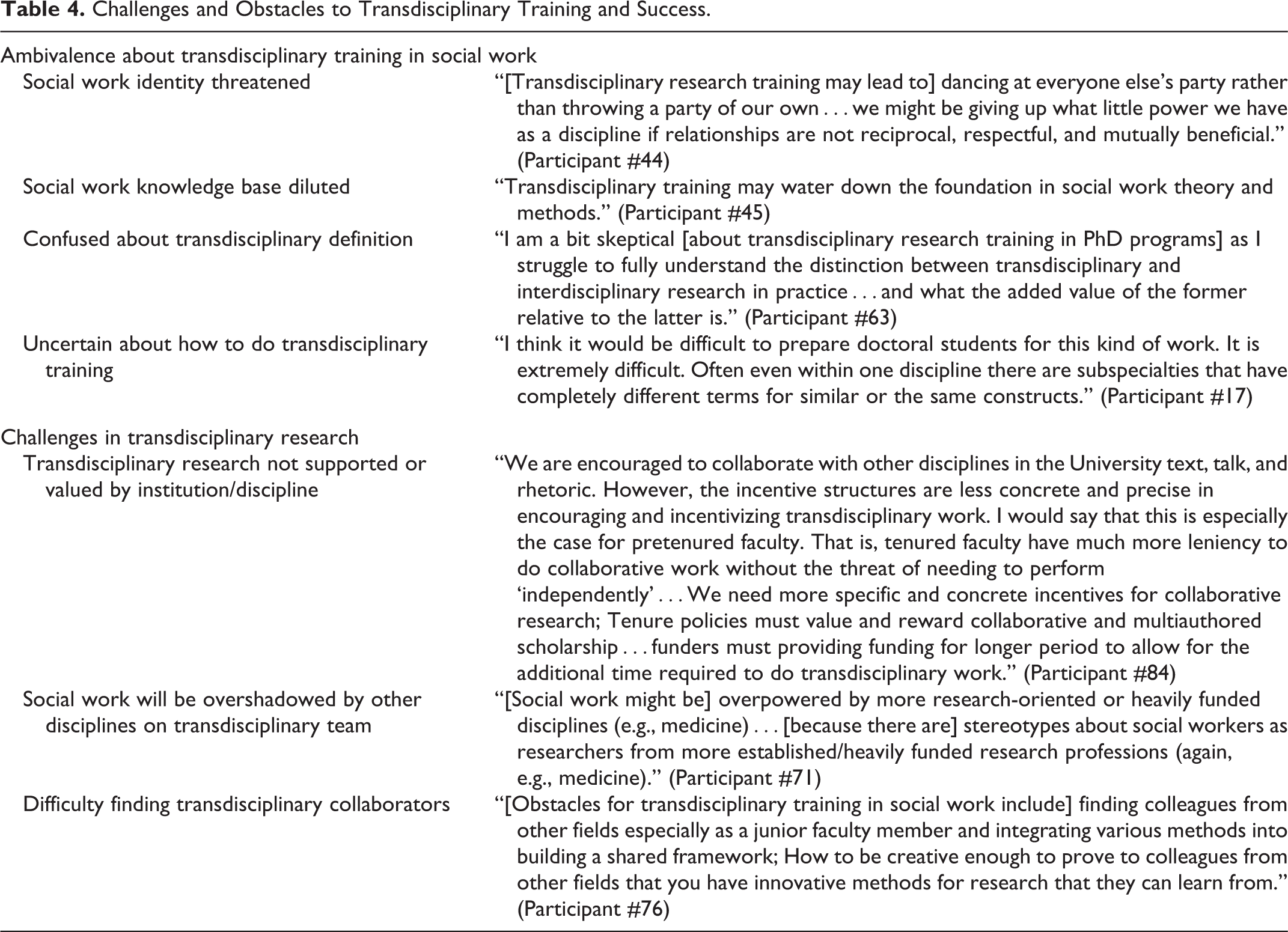
Three themes emerged related to challenges and obstacles to transdisciplinary training and success: ambivalence, challenges in engaging in transdisciplinary research, and obstacles to collaboration (see Table 4 for illustrative quotes of these themes).
Challenges and Obstacles to Transdisciplinary Training and Success.
Ambivalence about transdisciplinary training in social work
Ambivalence emerged as a theme in participants’ perspectives on whether or not social work doctoral programs should focus on transdisciplinary competencies. Although responses varied, participants expressed ambivalence on several levels, including concerns that social work’s identity as a discipline might be threatened and the social work knowledge base diluted given the amount of material to be covered and time constraints of doctoral programs. Participants also expressed confusion (indeed skepticism) about what transdisciplinary training in doctoral programs would actually entail, noting confusion about the meaning of transdisciplinary research definitions and competencies, and uncertainty about how to train for these competencies.
Challenges in engaging in transdisciplinary research
A second set of responses identified challenges related to undertaking successful transdisciplinary work as an early career scholar. Reflecting on their current academic positions, participants expressed concern that despite “rhetorical” support and encouragement for transdisciplinary collaborations, in reality transdisciplinary research was not well understood, supported, or valued at the discipline or institutional level. Expressing a related concern, some participants worried that social work researchers would not be valued on transdisciplinary teams or would be overshadowed by other disciplines.
Difficulty finding collaborators
The final theme was reflected in responses to questions about how participants believed social workers are viewed by collaborators from other disciplines. An overall negative perception was reported, indicating potential for difficulty in finding transdisciplinary collaborators who are willing to engage with social work faculty. Indeed, participants also pointed out how difficult transdisciplinary work can be in terms of finding and working effectively with collaborators. This is likely related to the fact that the majority of participants (83%) believed that social work researchers are not recognized nationally as important collaborators either a great deal or much of the time. Furthermore, 74% believed that other disciplines do not understand the skills social work researchers can bring to the team (see Table 3). These concerns stand in stark contrast to the interest that most participants expressed in working within cross-disciplinary frameworks—pointing to considerable startup challenges for early career scholars as they arrive on a new campus and need to take the initiative in pursuing new collaborations (Tables 3 and 4).
Recommendations for the Training Continuum: From Doctoral Program to Early Career
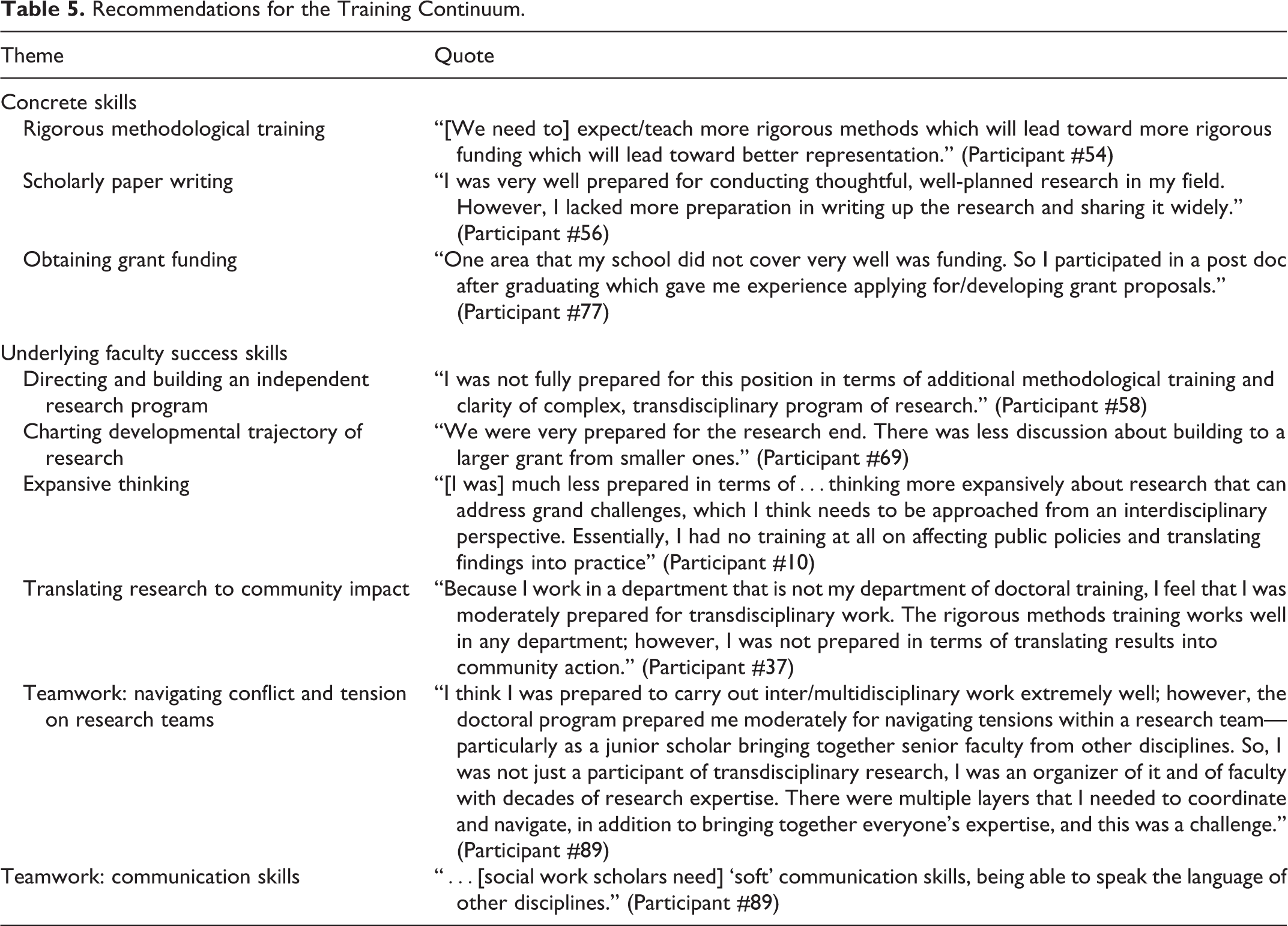
Participants’ responses to questions about gaps in their training, and to being asked what skills and competencies are needed for success in their area of research, generated a taxonomy of recommendations spanning the training continuum. Considerable emphasis was placed on concrete skills such as rigorous methodological training, scholarly paper writing, and grant writing skills. In addition, some participants mentioned the need for enhanced competency in what we have labeled underlying faculty success skills. These included directing an independent research program, charting the developmental trajectory of research, expansive thinking, learning how to translate research and increase the impact of one’s work, and teamwork skills, including navigating differences, tensions or conflict on teams, and good communication skills (see Table 5 for illustrative quotes related to these recommendations).
Recommendations for the Training Continuum.
Recommendations for Enhancing Transdisciplinary Research in Social Work
When we asked participants to explain how social workers can communicate their skills and contributions to others, particularly in the context of team science, some participants found it difficult to articulate the particular contributions of social work researchers. As one participant said, “I don’t think we have a collective understanding of ‘social work research skills’ or a shared skill set. Our diversity is a gift and a marketing challenge” (Participant #44). Others suggested that the following tenets set social work apart: social work values and commitment to social justice, ethics, leadership and communication skills, applied research focus, and understanding the whole person. Suggested pathways to improving other disciplines’ understanding of social work included publishing and presenting in interdisciplinary venues, identifying ourselves as social work researchers, working on teams to demonstrate our value, and a national campaign or website to communicate to others what we do.
In addition to the concrete supports (noted above) identified as critical to success in their current environments, participants suggested that successful transdisciplinary research will require changing the academic culture through a reenvisioning of existing siloed academic disciplines as well as promotion and reward systems that encourage individual-level credit and expertise. One participant summarized these barriers to transdisciplinary research as follows: I think we spend too much time in our individual disciplines reinventing (and renaming) the wheel. On one hand, this is a huge waste of time and resources. On the other, this is how people make names for themselves in their own fields and it is hard for me to imagine anyone wanting to give this up. For example, medicine has recently discovered social work and several physicians have become very well-known developing ‘innovative’ new practices that are in their essence, just hiring social workers. Why would people profiting from ‘discovering’ and renaming something that already exists want to admit that it is just an adaptation of well-established methods and models? (Participant #62) This work would have to be rewarded by the institution and research community through monies and publication support. I imagine it may be difficult to get started, to learn to speak each others language and to utilize each of our skills in the most efficient way. (Participant #51)

Supports for Transdisciplinary Science in Social Work
Discussion
The Grand Challenges for Social Work Initiative recently launched by the American Academy of Social Work and Social Welfare (2016) emphasizes collaboration and teamwork as key to tackling complex social issues such as family violence, homelessness, incarceration, and economic inequality. This “call to action” requires the profession and those allied with it to invest in training and research models that bring diverse groups of scholars and community stakeholders together to attack intransigent social problems from multiple angles. Transdisciplinary research is one such model. Preparing our scientific workforce for effective participation in collaborative science requires, however, thoughtful educational and early career scaffolding.
The perspectives of early career scholars highlighted in this article provide fresh input to help shape these scaffolding efforts. Overall, respondents conveyed a strong message that they see cross-disciplinarity (both inter- and transdisciplinary) as an important dimension of their research careers. Similarly, they are generally supportive of increasing the extent to which social work doctoral programs provide explicit preparation for the cross-disciplinary and translational dimensions of research, even as some express concerns about potential threats to social work’s disciplinary identity and distinctive knowledge base.
Among these particular early career faculty members, the majority presented a favorable picture of their preparedness for transdisciplinary research across a number of skill sets. This suggests that doctoral programs graduating these scholars constitute a disciplinary set of resources available to other programs seeking to accelerate their own pedagogical and teaching tool development. At the same time, participants reported underpreparation for some of the challenging parts of cross-disciplinary collaboration, such as working around differences, tensions, and a sense of hierarchy among disciplines that disadvantaged social work researchers.
Deepening this concern, these early career scholars described a kind of “bind”: In their current positions, they are being encouraged if not expected to pursue cross-disciplinary collaborations, yet looking at the research landscape, they fear they will not be recognized by others as value-added research colleagues or be sought out by interdisciplinary colleagues in their new institutions. Respondents also voiced concern about power dynamics—noting that given disciplinary hierarchies, their perspectives may be overshadowed by others. Nor do they feel well equipped to undertake the task of marketing the potential contributions of social work science on their own.
Although these junior colleagues largely reported feeling supported by their home departments, they noted mixed or unclear messaging in the standards by which they would be evaluated. Senior faculty sometimes seem to hold contrasting values or at least to not be clear about how to help incoming faculty launch the kinds of research careers for which they themselves were not trained. Given these ambiguities, will junior scholars be rewarded (and tenured) for pursuing cross-disciplinary research or partnerships or is this potentially a risky career path?
Taken as a whole, these findings argue for thoughtful multilevel attention to supporting emerging scholars for success in contemporary scientific contexts. Figure 1 illustrates some aspects of what such a coordinated approach might involve, portraying potential strategic actions at four levels: doctoral programs, schools/departments, discipline, and academy. This schematic is intended to be heuristic rather than comprehensive.
Doctoral Programs
Doctoral programming can provide an initial level of transdisciplinary research readiness that can be further developed in the early career years. Participants in this survey noted the need in doctoral training for both sophisticated methodological and theoretical content and research skills and for “soft” skills or metacompetencies, such as communication skills, conflict management skills, writing and conceptual skills, and the ability to clearly identify and articulate one’s social work identity and unique contribution to teams (Nurius & Kemp, in press). Findings that much of respondents’ cross-disciplinary learning was self-initiated and self-directed point to the importance of more intentional programmatic attention to supporting students’ development in these domains (Kemp & Nurius, 2015). Specifically, programs can assist students to strengthen scholarly identity, provide holistic mentoring, and opportunities to participate in team science. Success in these efforts will involve doctoral students, faculty, program directors, and curriculum committees.
Schools/Departments
In addition to school or departmental supports such as protected time, workload reductions, and startup resources, this survey makes clear that early career scholars need more robust mentoring, networking, and “system navigation” assistance. Deans, associate deans for research, and senior mentors or development teams all play roles in helping junior scholars find their niche in new collaborations. At the institutional level, senior colleagues are also critical players in efforts to ensure optimal clarity and alignment between departmental benchmarks for success and security (e.g., promotion and tenure criteria), the ways in which these benchmarks are interpreted by faculty colleagues and junior colleagues’ research plans and investments. Similarly, as we note below, there are parallel needs in the larger academy.
Discipline
Survey results indicate a need for a coordinated effort to market social work research identity and value. National organizations, such as the American Academy of Social Work and Social Welfare, the Group for the Advancement of Doctoral Education in Social Work, and the Society for Social Work Research, share interlinked, complementary forms of support to advance educational efforts related to social work identity. In addition, these organizations can enhance support for research career readiness. These efforts have begun and are illustrated through recent conversations aimed at systematically coordinating training and mentoring programs across the country (Nurius et al., 2016). Recent national presentations have aimed to provide guidance as to pedagogical models, metacompetencies, and team science readiness skills and tools to support social work research careers (and pipeline alignment from our professional degree programs) in the context of our Grand Challenges (Hall, Gehlert, & Palinkas, 2017; Nurius, Coffey, Fong, Korr, & McRoy, 2017).
These important efforts need to be sustained and, ideally, coordinated to provide predictable offerings that social work’s emerging scholars can count on. In addition, these organizations can serve as repositories for pedagogical resources (e.g., syllabi, training activities, individualized development plans, and mentoring guidelines) that schools and programs can access. A good many respondents reported promisingly high levels of preparation, indicating that some of these pedagogical resources are already in place and could have value in their dissemination. Although we focus here on interlocking needs at the doctoral training and early career levels, these institutional investments will also benefit mid-career and later career scholars interested in retooling for effective participation in cross-disciplinary and translational research collaborations.
Academy
Participants in this study underscored the persistent gap in many research-intensive academic settings between enthusiastic rhetorical support for collaborative research partnerships and a range of persistent, if not intransigent, structural barriers to realizing these collaborations. Shifts in both the culture and the pragmatics of academia are needed to better support collaborative, community-engaged research initiatives, including expansions in promotion, retention, and tenure criteria; investments in developing “communities of practice” aimed at supporting and sustaining early career researchers (Patterson et al., 2013); and efforts to address long-standing, often hierarchical disciplinary divides.
Limitations
Although the data presented here provide grounds for optimism regarding early career social work scholars’ enthusiasm and preparedness for transdisciplinary research, this study has several limitations. By targeting junior faculty from the top 50 ranked social work programs, we sampled from those most likely to have had more fully developed research training as well as exposure to the factors that encourage cross-disciplinary research preparation. Thus, this sample is not fully representative of the emergent social work academic workforce. However, responses did not statistically differ when contrasting the first 25 and second 25 ranked programs, suggesting considerable stability of trends. With limited resources, we reasoned that this approach provides insights into those graduates most likely to be early adopters, working in research-oriented academic settings already actively engaged in supporting their careers. Furthermore, all of these programs have doctoral programs, and within a national framework are likely also among those more prepared to engage with social work professional organizations in developing training, mentoring, and early career research supports. In addition, in order to safeguard confidentiality, we asked very limited personal identifiers so cannot associate important demographic characteristics (e.g., sex, race/ethnicity, and institutional characteristics) with the responses.
Conclusions
Pressing social and environmental challenges call for robust attention to new trends in research; responsiveness to the most compelling scientific opportunities; smarter collaborations to advance the knowledge base of the field; and efforts to accelerate impact by better linking research, policy, and practice. Disciplinary strengths, including long-standing investments in multilevel analyses and interventions, a commitment to social justice, and a track record of community engagement and collaborative science–practice partnerships, position social work scholars as potential leaders in moving forward transdisciplinary research models. This study adds the early career faculty perspective to discussions of transdisciplinary research. With a call from our National Academy to address grand challenges facing our society, existing momentum among national leadership groups, and an interest from early career faculty to move transdisciplinary training and supports forward, social work is poised to begin to implement and refine transdisciplinary training models. This study identified recommendations for addressing the challenges posed by transdisciplinary training and research. Although some elements are specific to social work, many may also be relevant to other disciplines. Further research is nonetheless needed to assess trends regarding cross-disciplinary research preparation more broadly within social work.
Footnotes
Acknowledgment
The authors would like to express appreciation to Justin Clark and Mark Gudmastad for their assistance with the project.
Declaration of Conflicting Interests
The authors declared no potential conflicts of interest with respect to the research, authorship, and/or publication of this article.
Funding
The authors disclosed receipt of the following financial support for the research, authorship, and/or publication of this article: This research was supported by the National Center for Advancing Translational Sciences of the National Institutes of Health (KL2TR000421 to Dr. Moore). Partial support for this research came from a Eunice Kennedy Shriver National Institute of Child Health and Human Development research infrastructure grant (R24HD042828) to the Center for Studies in Demography and Ecology at the University of Washington (Dr. Martinson).