




Abstract
Purpose:
This study evaluated an intergenerational interaction program set in a nonfamilial context to combat age-related stereotypes and to facilitate positive interactions between the young and elderly in Hong Kong.
Method:
A quasi-experimental design was adopted. A total of 312 participants were recruited: 73 older and 78 young participants in the intervention group and 77 older and 84 young participants in the comparison group. Standardized measurements of intergenerational attitude, sense of comfort with cross-age groups, and intergenerational interaction were used during pre- and posttest.
Results:
The intervention group showed positive change in intergenerational attitude and sense of comfort. There were also positive changes in most aspects of intergenerational interaction in the intervention group.
Discussion:
This research provides preliminary evidence of the effectiveness of the intervention model and offers many implications for service directions. The findings enrich cumulative knowledge about factors contributing to the reduction of age-related stereotypes.
Supporting solidarity between generations has emerged as a crucial vision in response to the challenges presented by an aging population (Cortellesi & Kernan, 2016; World Health Organization, 2015). However, the trends of generational separation and modernization have left traditional channels of achieving intergenerational solidarity in crisis. With the spread of family breakdowns and age differentiation, there are fewer opportunities for young and old generations to live together in multigenerational families and other community contexts spanning age groups (Jackson & Liu, 2017; Séguin, Apparicio, Riva, & Negron-Poblete, 2016; Yan, 2016). In the technological era, the digital divide not only challenges the social norm of associating elderly generations with wisdom but also reduces opportunities for intergenerational interaction in general (Brandtzæg, Heim, & Karahasanović, 2011; Tsai, Chang, & Ho, 2016).
Negative stereotypes between generations seem to grow as a result and are regarded as a barrier to achieving intergenerational solidarity and age-friendly environments to promote healthy and active aging (Kornadt & Rothermund, 2015; Lou & Dai, 2017; Meisner, 2011). Previous studies have found that some adolescents tend to construct old age with ageist stereotypes, which portray old people as ill, incompetent, and unattractive (Hurd, 2000; Weiss, Sassenberg, & Freund, 2013), while older adults frequently associate younger generations with being rebellious, taking risks, being moody, and showing immaturity (Chow & Bai, 2011; Fletcher, 2007; Gross & Hardin, 2007). These age stereotypes, as a cognitive link pervasively adopted by one age-specific perceiver against another age-group regarding certain features or characteristics, may or may not accurately reflect reality (Cox, Abramson, Devine, & Hollon, 2012). Moreover, negative stereotypes are likely to produce age-related prejudice, discrimination, stress, and negative behaviors at the individual level and worse, unstable social ties and intergenerational solidarity at the society level (Drury, Abrams, Swift, Lamont, & Gerocova, 2017; Huang, Liang, & Shyu, 2014; Lou & Dai, 2017).
Combating age stereotypes often requires rigorous efforts. First, merely promoting more positive stereotypes of specific age groups is not enough to deal with this issue (Riach & Rich, 2007). It has been argued that an important strategy for resisting age stereotypes is reevaluating a specific age-group in a positive way and creating positive attitude change regarding the identities of old and young generations collectively (Isopahkala-Bouret, 2015). Second, intergenerational prejudice is not reduced by practices that only facilitate superficial intergenerational contact, unless the quality of contact is stressed (Christian, Turner, Holt, Larkin, & Cotler, 2014). The quality of intergenerational contact refers specifically to how well generations get on with each other and how emotionally close they feel to each other (Tam, Hewstone, Harwood, Voci, & Kenworthy, 2006). Finally, changes in stereotypical perceptions do not necessarily lead to behavioral changes; research has revealed that adolescents may show positive attitude changes after intergenerational programs but are still reluctant to have further contact with old people (So & Shek, 2011).
Taking the aforementioned points into consideration, resistance to negative age stereotypes requires purposeful facilitation of intergenerational contact in three dimensions: (1) positive intergenerational attitude changes, which reveal the redefinition of a specific age-group on the attitudinal level; (2) a sense of comfort with cross-age groups, which represents quality of contact and emotional closeness between generations; and (3) positive intergenerational interaction changes, which stress the efforts made to reduce negative age stereotypes on the behavioral level.
Intergenerational Projects as an Important Way to Reduce Age Stereotypes
As identified by intergroup contact theory, stereotypes regarding both younger and older adults are caused by a lack of access to information that may disconfirm negative attitudes (Alcock, Camic, Barker, Haridi, & Raven, 2011; Huang et al., 2014; Masse & Meire, 2012; Pettigrew & Tropp, 2006). Therefore, policies and projects which purposefully structure intergenerational contact are regarded as effective ways to reduce prejudice or discrimination between age groups and to facilitate positive attitudinal change between generations (Chui, 2008; Jarrott & Smith, 2011). Given the trend of less intergenerational interaction within familial contexts, caused by changing family structures, modernization, and migration (Cheung & Kwan, 2009), nonfamilial intergenerational interaction programs are regarded as one of the most desirable solutions to this issue.
It has been argued that positive intergenerational attitude changes could be nurtured through cooperative tasks, shared goals of fostering cross-generational bonding, and by providing support systems for both groups involved (Christian et al., 2014; Gaggioli et al., 2014; Kuehne & Melville, 2014; Lai & Kaplan, 2016; Penick, Fallshore, & Spencer, 2014). For example, recent studies on nonfamilial intergenerational programs indicate that interventions involving intergenerational volunteers, education, and recreational projects are effective at enhancing positive perceptions of the elderly among the younger generation (Christian et al., 2014; Lokon, Kinney, & Kunkel, 2012; So & Shek, 2011), cross-age attitudes between generations (Belgrave, 2011), and intergenerational solidarity (Bishop & Moxley, 2012; Cortellesi & Kernan, 2016; Lou & Dai, 2017) in both Western and Asian contexts.
Three research gaps can be identified in the literature. First and foremost, the dimensions involved in reducing age stereotypes have not been thoroughly examined. Attitudes or perceptions have been the focus of extensive attention in the literature and a lack of contact quality and behavioral variables have been covered when evaluating the effectiveness of intergenerational programs in reducing age stereotypes. Second, few studies have investigated changes in stereotypes regarding the younger generation among the elderly. The elderly generation is the target evaluated in most studies (Christian et al., 2014; Gaggioli et al., 2014; Penick et al., 2014). Third, interdisciplinary cooperation is given little emphasis for interventions led by social workers aiming to reduce age stereotypes (Lokon et al., 2012). These programs were implemented only by social workers who worked with a particular age-group.
This study aims to fill these research gaps by evaluating the effectiveness of an intergenerational program aiming to reduce the age stereotypes of both young and old participants. Dimensions involved in reducing age stereotypes were comprehensively examined including intergenerational attitudes and perceptions, sense of comfort with cross-age groups, and intergenerational interaction. Moreover, a designated interdisciplinary team was developed comprising social workers who work with both youth and the elderly, with the aim of demonstrating promising cooperation in intergenerational programs and social services.
The Young–Old Link and Growth (YOLG) Intergenerational Program
The YOLG intergenerational program was developed in order to understand the challenges facing intergenerational solidarity in Hong Kong. To respond to these challenges, social care and social policies related to intergenerational solidarity are expected to expand their focus from family-oriented intergenerational relationships to the harmonious inclusion of all generations in the community (Chui, 2008). The Hong Kong Jockey Club Charity Trust and the Aberdeen Kai-Fong Welfare Association together founded this program to reduce age stereotypes and to promote positive intergenerational interaction in a nonfamilial context, through purposefully designed intergenerational interaction activities.
The intervention was implemented by recruiting elderly participants through community elderly social service units and engaging young participants from secondary schools. Letters of invitation explaining the rationale and purpose of the YOLG program, participant inclusion and exclusion criteria, and intervention arrangements were disseminated to service managers in the elderly centers and to school social workers. The latter then mentioned the YOLG program to potential participants.
In order to develop a theory-driven intervention model for this program, a thorough literature review was conducted. According to Allport’s contact theory, there are five key mechanisms promoting high-quality intergenerational contact: equal group status, common goals, intergroup cooperation, opportunities for friendship, and institutional support (Allport, 1954; Jarrott & Smith, 2011). In terms of achieving attitude change in particular, Glass and Trent (1980) proposed three mechanisms: peer discussion about attitude objects, opportunities for direct experience with attitude objects, and the acquisition of information or knowledge about attitude objects (Hannon & Gueldner, 2008). In the late 1980s, Seefeldt further set out four conditions that mediate contact and positive attitude enhancement: voluntary and equal-status contact between all parties, intimate rather than casual contact, pleasant and rewarding contact for both groups, and functional interaction with a goal-oriented program (Gilbert & Ricketts, 2008; Seefeldt, 1987). These theoretical underpinnings have served as the basic tenets and the framework of optimal-quality intergenerational interaction (OQII) for the YOLG program.
Grounded in the contact theory proposed by Allport (1935, 1954) and mechanisms of positive attitude nurturing (Bengtson & Oyama, 2007; Gilbert & Ricketts, 2008; Jarrott & Smith, 2011; Seefeldt, 1987), the OQII model was developed to serve as the intervention model for the YOLG program. Five core elements are embodied in this model: (1) institutional support to build interventionists’ capacity for intergenerational programs; (2) collective goal establishment, which involves defining a meaningful goal through intergenerational interactions and devising strategies as well as action plans to achieve that goal; (3) intergroup collaboration, which is promoted through purposefully designed activities to help participants better achieve the collective goal; (4) active participation, which facilitates both young and older participants via various programs designed for optimal goal attainment; and (5) nurturing intergenerational rapport, which cultivates cross-generational interaction for long-term mutual care and friendship.
Based on the five core elements of the OQII model, the service team established a trial intergenerational interaction. Based upon the firsthand experiences of the trial intervention, a three-stage intervention strategy with six sessions was established.
The first stage was the foundation stage. It sought to build interventionists’ capacity, the first element proposed by the OQII model. With the aim of facilitating the cooperation of social workers who work for a particular generation, an interdisciplinary team comprising both youth- and elderly-focused social workers was developed and given structured two-round training. Eleven pairs of social workers specialized in working with youth and elderly participated in the program and completed all sessions.
The second stage was the stimulation stage, which aimed to provide balanced information for the participants to get to know each other. It consisted of two 2-hr sessions: “when we were young” and “when we are in 2046.” Old and young participants attended the two sessions separately. In the “when we were young” session, older participants watched a video on youth development to provide better understanding of the needs of contemporary youth. Communication skills were enhanced through participation in games to learn youth slang and buzzwords and guided reflections led by interventionists. At the end of this session, the older participants received photographs of the adolescent participants processed to present them as elderly individuals, which were produced by the researchers with aging software. The old participants were encouraged to identify their fellow group members based on these photos in their next session.
In the “when we are in 2046” session, the young participants were physically loaded to experience various forms of impairment or disability. Examples of the impairment included blurred vision, a stiff finger, or a weak lower limb. Participants were then invited to reflect on what they had experienced and learned in a small-group setting. Similarly, at the end of this session, the young participants received photographs of the elderly participants as young individuals, again processed by the researchers with software. They too were encouraged to identify their fellow group members based on these photos in their next session.
As well as ensuring that both groups were provided with balanced information about their counterparts, subgroups with 8–12 participants were formed based on the following four strategies: (1) Each subgroup must contain a balanced number of young and old participants, (2) young and old participants must be paired based on their strengths and personalities, and (3) subgroup identity and paired identity must be equally emphasized later on, to nurture subgroup cohesion and personal relationships, (4) gender sensitivities had also been stressed by trying to pair young and old participants based on same gender.
Building upon the stimulation stage, the consolidation stage emphasized four core elements of the OQII model: collective goal establishment, intergroup collaboration, active participation, and nurturing intergenerational rapport. This stage consisted of Sessions 3–6. Session 3 was a 7.5-hr day camp which aimed to realize the collective goal setting. After a brainstorm discussion, the group members proposed the collective goal of identifying sightseeing locations suitable for both young and old generations in Hong Kong. Since this was the first-time old and young participants had met, an assessment was conducted at the end of Session 3. The collective goal was achieved in the fourth session, which lasted about 7.5 hr. Group members organized small-group activities for (1) presite visit preparation, (2) site visit, and (3) postsite visit experience consolidation. The fifth and sixth sessions focused on presentation rehearsal and group presentations, respectively. Both sessions lasted 2 hr. The group presentations gave basic information on the sightseeing sites identified and how they provided opportunities to promote intergenerational contact in Hong Kong. The subgroups were encouraged to adopt various means to enrich their presentation collectively, such as PowerPoint, posters, or even role plays.
The YOLG program aimed to achieve optimal outcomes after these three stages of implementation. These outcomes were positive intergenerational attitude, improved sense of comfort while interacting in cross-age groups, and positive intergenerational interaction. Figure 1 presents a flow diagram of the program.
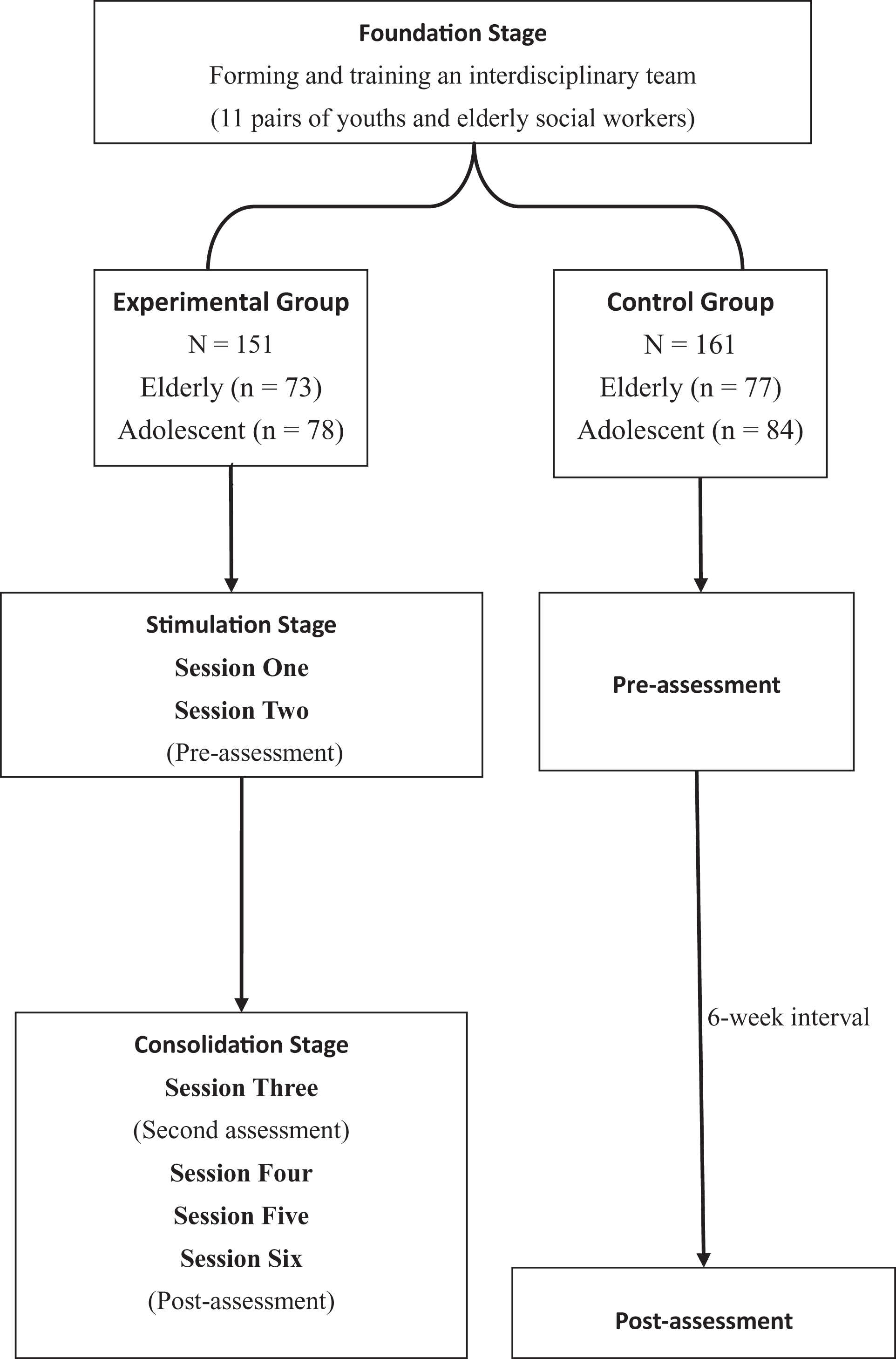
Flow diagram of the Young–Old Link and Growth program.
The YOLG intergenerational program submitted protocol and program-related materials for research ethics review and was endorsed by the institutional review board of The University of Hong Kong.
Method
A quasi-experimental approach was adopted to examine the effectiveness of the intergenerational program and followed the steps of pre- and posttest control group (CG) design. First, the participants were assigned to experimental or control groups. Since participants were engaged through open recruitment in six social service centers and approached by frontline social workers, it was not feasible to assign them randomly. After assignment to groups, a pretest was conducted using self-report questionnaires distributed to all participants. When elder participants struggled to complete the questionnaire, the researchers conducted a face-to-face interview to help them. Then the experimental group (EG) underwent the intervention. Finally, a posttest was administered to all subjects after a 6-week interval. The steps of pre- and posttest CG design are diagrammed as follows: Experimental group: O1 × O2 Control group: O1 O2
Participants assigned to the CG served as a comparison group but eventually received the intervention after the data collection was complete. The follow-up intervention for the CG is not discussed in this article.
Participants
Older participants were recruited through 10 community elderly social service units, while young participants were recruited from three secondary schools. The inclusion criteria for the elderly were (1) aged 60 or older, (2) cognizant, (3) good mobility, (4) capable of communication, and (5) willing to participate. The inclusion criteria for the young participants were (1) aged 12–18 and (2) willing to participate.
A total of 346 participants joined the program, 167 older and 179 young. Eighty-nine pairs participated in treatment group, but 16 older participants and 11 young participants dropped out. The major reasons among older participants were health and/or clinical complications, followed by not having time to participate in all the sessions; the main reason for young participants dropout is engaging in other school programs during the intervention period. Among the 78 older and 90 young participants belonging to CG, one older and six young participants dropped out.
Hypotheses
Based on the framework of the YOLG program intervention and the dimensions for reducing age stereotypes, the following hypotheses were developed:
Measurements
Standardized and validated scales were adopted to measure the expected outcomes, presenting the dimensions of intergenerational attitude, contact quality (sense of comfort with cross-age groups), and behaviors of intergenerational interaction.
Attitudes toward young people
The Age Group Evaluation and Description (AGED) Scale was adopted to measure attitudes toward young people among older participants (Knox, Gekoski, & Kelly, 1995). The AGED inventory comprises a list of 27 pairs of bipolar adjectives. Respondents are asked to rate their answers on a 7-point Likert-type scale. A higher score is associated with a positive attitude toward the younger generation. The research team translated and back translated the scale. Internal consistency reliabilities for the Chinese AGED Scale were satisfactory among the current sample (Cronbach’s α was .93).
Attitude toward older people
The Chinese version of Kogan’s Attitude Toward Older People (KAOP) Scale was used to measure attitudes toward older people among the younger generation (Polizzi, 2003). The KAOP contains 34 statements describing older people, and respondents are asked to respond to each statement using a 6-point Likert-type scale; 17 statements are positively worded and 17 negatively worded, with Likert-type scores reversed. A higher score is associated with a more positive attitude toward older people. The internal consistency reliability was satisfactory among the current sample (with a Cronbach’s α of .83).
Sense of comfort with cross-age groups (COMFORT)
Participants were asked to rate their sense of comfort while interacting with cross-age groups outside their familial context, using a single question. Older participants were asked “how comfortable do you feel interacting with nonfamily young (aged 12–18 years old) individuals?” Young participants were asked “how comfortable do you feel interacting with nonfamily older (over 60 years old) individuals?” They responded on a scale ranging from 1 (very uncomfortable) to 7 (very comfortable).
Observed interpersonal behavior
The interpersonal behavior of participants was assessed using Belgrave’s behavioral observation tool (Belgrave, 2011). This instrument was modified from the elder/child interaction analysis instrument (Newman, Morris, & Streetman, 1999) and proposed six primary verbal or nonverbal interpersonal behaviors which are likely to occur in a cross-age group setting including smiles, looks, touch, encouragement, initiated conversations, and assistance. The interrater reliability of the behavioral observation tool was .88 (Belgrave, 2009). Two assessments of observed interpersonal behavior between generations were conducted, one in the first intergroup session (i.e., Session 2) and one during Session 5, when the small groups were expected to rehearse their presentation. A trained research assistant was responsible for taking the observation records during the two sessions, in line with the following rules: (1) 15-s observation periods for each participant (8–12 people in a group), comprising 10 s of observation and 5 s of recording; (2) a 5-min break within the intergroup observation; (3) observation sequentially rotated across remaining group members for the remainder of the session; and (4) no interaction with participants. Scores on a particular behavior were computed by taking an average of the observation records for all members belonging to either the young or older generation.
Procedure
EG participants were invited to complete three assessments during the project. The preassessment was conducted before the intervention, the second assessment was completed during Session 3 in the consolidation stage (i.e., the first time the young and old participants met), and the postassessment was conducted at the end of the last session (Session 6). Two assessments were conducted with CG participants, with a 6-week interval. The assessments were completed via self-report questionnaires. In addition, a trained research assistant conducted two observations of behaviors demonstrating intergenerational interaction in the EG, one during Session 3 and the other during the fifth session.
Data Analysis
The changes in intergenerational attitude and sense of comfort with cross-age groups were examined by analysis of variance. F ratio values were employed to show the treatment and interaction effects of treatment and group. Changes in intergenerational interaction were evaluated by a paired sample t test. SPSS Version 23.0 was adopted to conduct the statistical analysis.
Results
Demographic Characteristics of the Sample
As shown in Table 1, the majority of the older participants were female (80.82% of the intervention group and 79.22% of the CG), aged 70 or above, literate, and married. Over half rated their health as “normal.” Nearly, 20% were living alone. The majority of the young participants were male, aged 16 or above, and studying at Form 4 or 5 of secondary school. Fewer than 20% were living with their extended family. Differences in each demographic variable between the experimental and control groups at pretest were examined by χ2 analyses. The results suggested a lack of significance in these variables, indicating that the two groups were comparable and shared similar characteristics at pretest. Variables of statistical significance (marital status of old participants, education level, and living with siblings for young participants) were controlled during the following data analysis of the program’s effectiveness.
Demographic Characteristics of Participants.
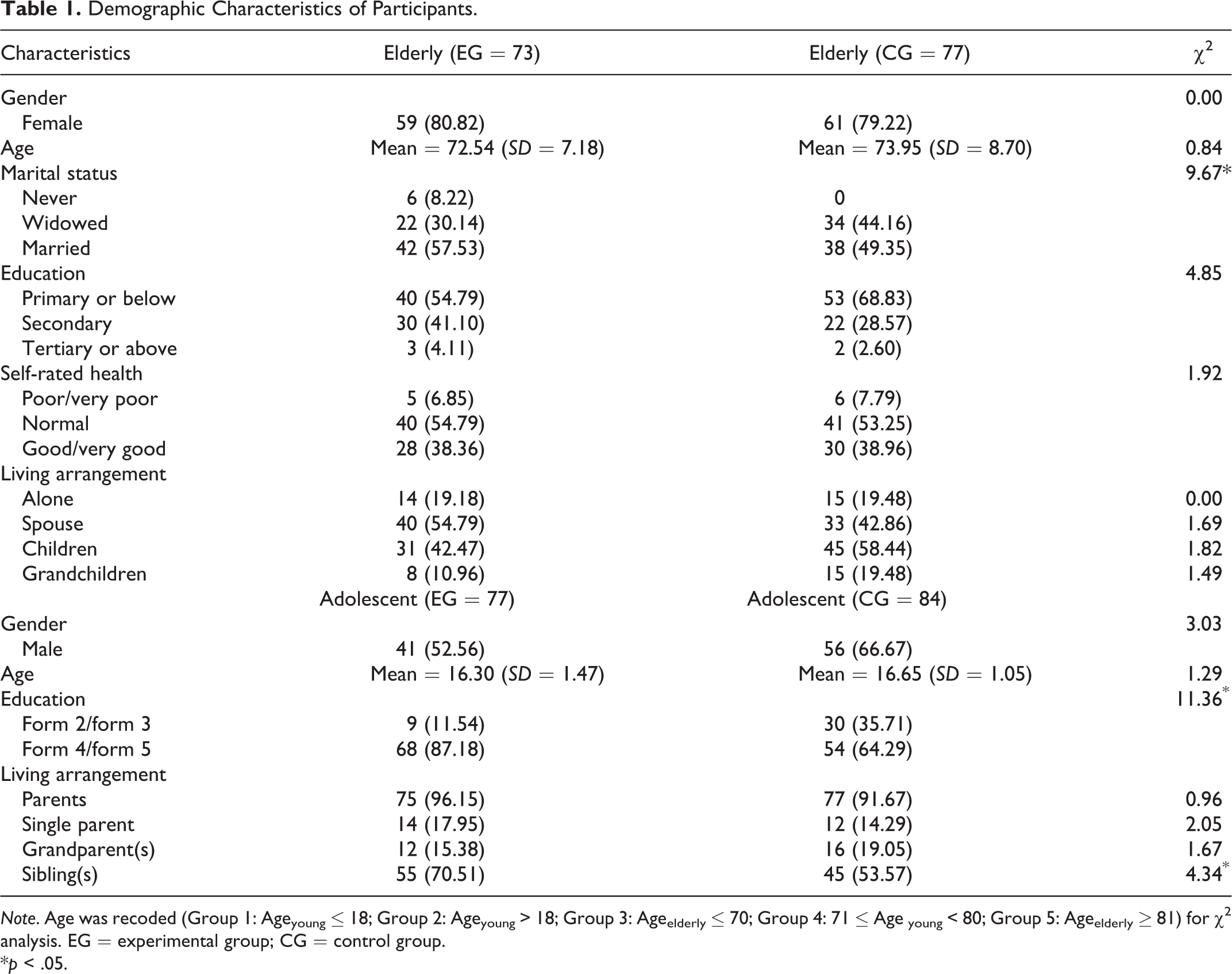
Note. Age was recoded (Group 1: Ageyoung ≤ 18; Group 2: Ageyoung > 18; Group 3: Ageelderly ≤ 70; Group 4: 71 ≤ Age young < 80; Group 5: Ageelderly ≥ 81) for χ2 analysis. EG = experimental group; CG = control group.
*p < .05.
The Effectiveness of the Program
The intervention effects of the YOLG program are shown in Tables 2 and 3. First, differences in each outcome variable between the experimental and control groups at pretest were examined using independent t test. The results suggested that there is no statistical significance in these variables, indicating that the two groups were comparable and shared similar characteristics in terms of intergenerational attitude and sense of comfort with cross-age groups at baseline.
Changes of Intergenerational Attitude and Sense of Comfort With Cross-Age Groups.
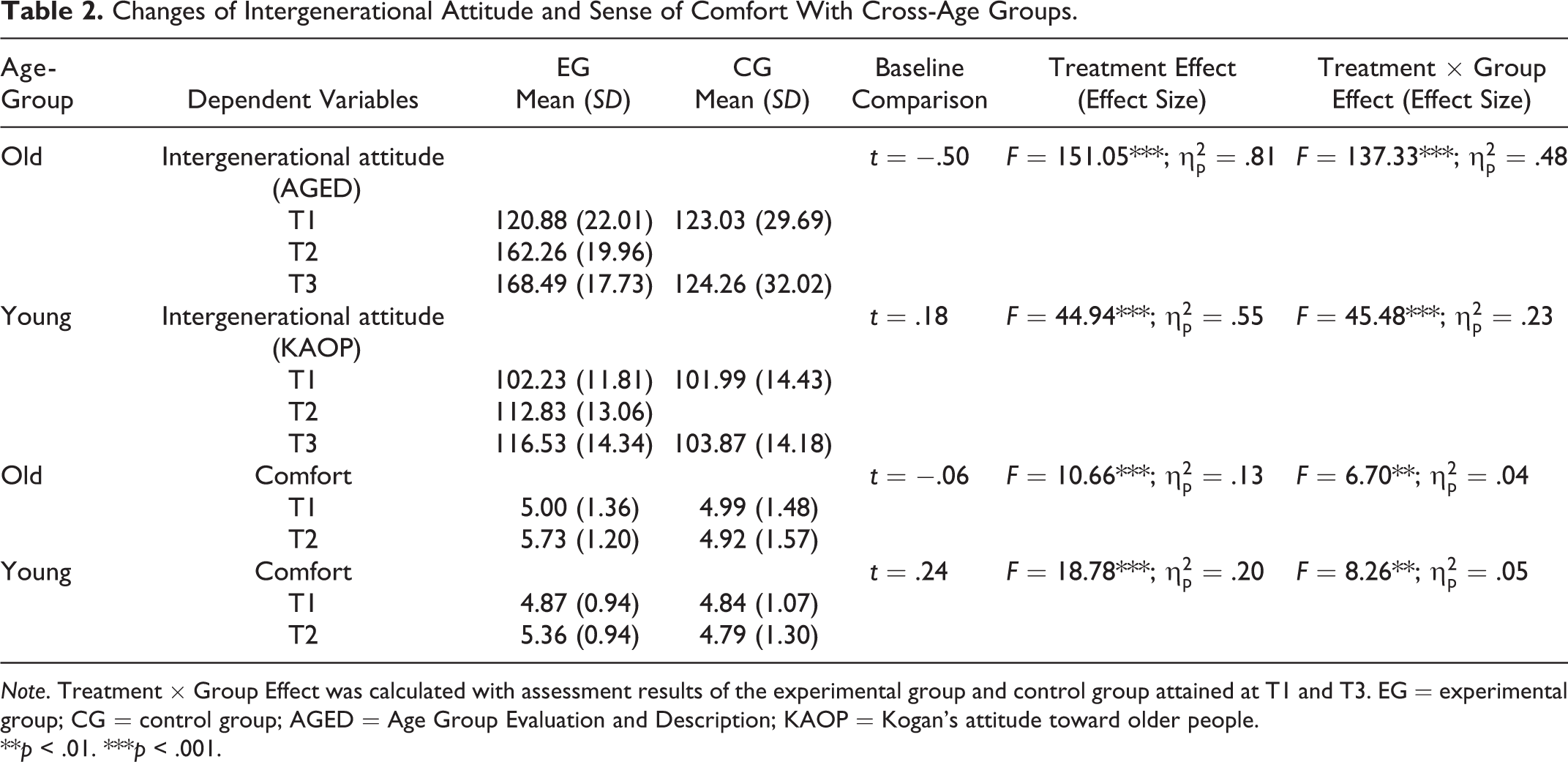
Note. Treatment × Group Effect was calculated with assessment results of the experimental group and control group attained at T1 and T3. EG = experimental group; CG = control group; AGED = Age Group Evaluation and Description; KAOP = Kogan’s attitude toward older people.
**p < .01. ***p < .001.
Observed Changes of Six Behaviors for Intergenerational Interaction.
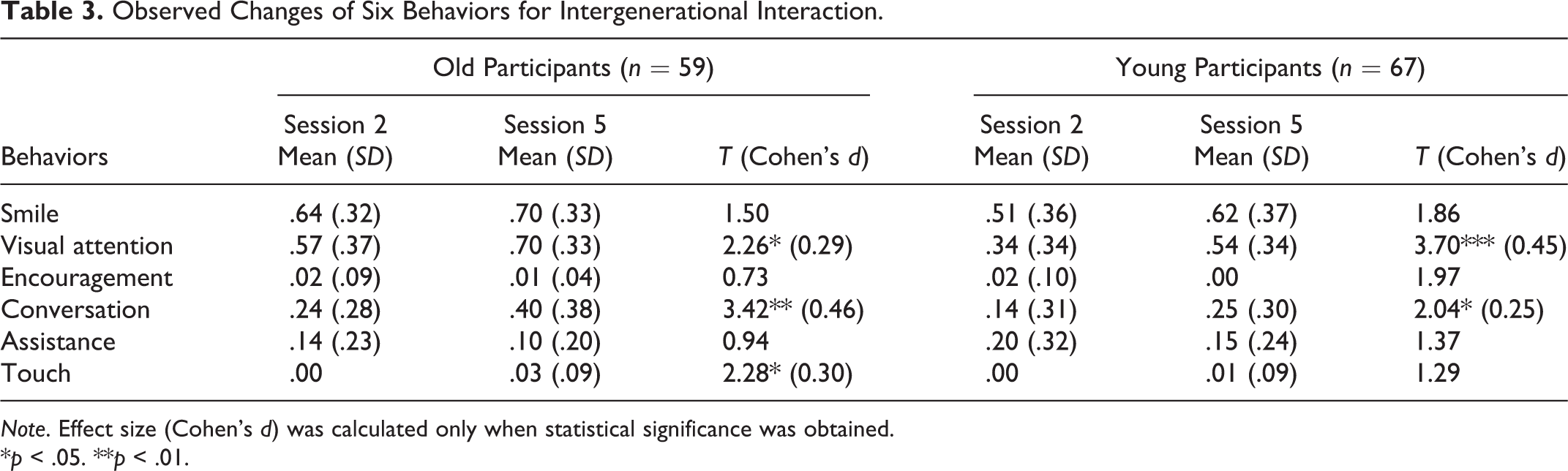
Note. Effect size (Cohen’s d) was calculated only when statistical significance was obtained.
*p < .05. **p < .01.
Changes in intergenerational attitude
As shown in Table 2, a significant overall time effect was observed for changes in the intergenerational attitude of both old, F(2, 70) = 151.05, p < .001, and young participants, F(2, 73) = 44.94, p < .001, in the EG. The values of
Significant Treatment × Time Effects were also found in the intergenerational attitude measures. Significant positive changes in the measures were found both in the older, F(1, 147) = 137.33, p < .001, and young participants, F(1, 156) = 45.48, p < .001, who received the intervention, with large effect size (.48 for the elder participants and .23 for the young participants).
Changes in sense of comfort with cross-age groups
The changes in sense of comfort are shown in Table 2. There was a significant time effect in both old, F(1, 71) = 10.66, p < .001, and young individuals, F(1, 74) = 18.78, p < 0.001, who received the intervention. The values of
Significant Treatment × Time Effects were also found in sense of comfort with cross-age groups, which indicated that the EG showed significant positive changes in the measures. Although the effect size was relatively small (.04 for the elder participants and .05 for the young participants), both older, F(1, 147) = 6.70, p < .01, and young participants, F(1, 154) = 8.26, p < .01, demonstrated statistically significant improvement.
Changes in intergenerational interaction
Table 3 shows the behavioral changes observed among the participants. Based on a paired-sample t test, the older participants showed significant positive changes in three of the six behaviors. During Session 5, they became more likely to show visual attention to young group members (t = 2.26, p < .05, d = 0.29), initiate conversation (t = 3.42, p < .01, d = 0.46), and touch young members (t = 2.28, p < .05, d = .30). The young participants showed significant positive changes in two of the six behaviors. When group members gathered to rehearse their presentations in Session 5, young participants became more likely to show visual attention to older group members (t = 3.70, p < .001, d = .45) and make conversation with them (t = 2.04, p < .05, d = .25).
Discussion and Applications to Practice
Despite the prevalence of nonfamilial intergenerational programs to foster solidarity between old and young, their effectiveness in nurturing positive change regarding age stereotypes is not often systematically evaluated. This study filled this gap by assessing the YOLG intergenerational program, whose main purpose is to reduce age stereotypes between generations in Hong Kong. The program established three dimensions through which to achieve this objective: positive changes in intergenerational attitude, improved sense of comfort while interacting with cross-age groups, and positive changes in intergenerational interaction. These three dimensions enrich the cumulative knowledge of factors contributing to the reduction of age stereotypes.
The results of this study demonstrate encouraging outcomes for these three goals across time, among participants of the EG and between participants of the experimental and control groups. There were positive changes in intergenerational attitude in both old and young participants, with very large effect sizes (
An improved sense of comfort was also shown by both age groups but with smaller effect sizes (
The provision of opportunities to enhance intergenerational recognition at the stimulation stage may also explain the positive changes in the sense of comfort. The stimulation stage involved strategies consistent with the processes to promote intergenerational solidarity proposed by intergroup contact theory (Pettigrew, 1998) and placed emphasis on providing both age groups with more positive views and experiences of each other. The enhanced intergenerational communication skills of the participants and the nurturing of subgroup cohesion and personal relationships contributed to improvement in the sense of comfort.
An emphasis on intergroup collaboration also promotes the sense of comfort with cross-age groups. Informed by contact theory (Kuehne & Melville, 2014), a common goal supported by facilitators’ efforts proved helpful to motivating participants to strive for excellence, successfully nurturing channels for information-sharing and requiring interdependence among young and old. This, in turn, optimized the sense of comfort with cross-age groups.
Positive changes were observed in the intergenerational interactions in both elderly and young groups, with satisfactory effect sizes ranging from .25 to .46 in most behavioral aspects. Older participants showed more visual attention (t = 2.26, p < .05), conversation initiation (t = 3.42, p < .01), and touch (t = 2.28, p < .05), while young participants showed more visual attention (t = 3.70, p < .001) and conversation initiation (t = 2.04, p < .05). These results provide initial evidence of the effectiveness and importance of nonfamilial intergenerational programs encouraging positive change in behavioral aspects that can reduce age stereotypes.
Considered together, the findings of this study have some practical implications for social work. First, they lend support to the effectiveness of nonfamilial intergenerational programs in reducing age stereotypes. The study gives a systematic picture of this by taking intergenerational attitudes, intergenerational contact quality (sense of comfort with cross-age groups), and intergenerational interactions into consideration. It obtained more comprehensive data than previous projects, which mostly focused on changes in attitudes regarding the elderly among younger age groups (Christian et al., 2014; Chung, 2009; Gaggioli et al., 2014; Penick et al., 2014). The three-stage, six-session design of this project could serve as an effective protocol for social workers and allied professionals to design appropriate plans for nurturing intergenerational solidarity. Second, the interdisciplinary team of social workers represents a productive synergy of research and practice regarding both the old and the young, which has provided promising results for an evidence-based program. Finally, by covering the three dimensions involved in reducing age stereotypes, this study has further indicated future directions for program designers and frontline social workers. In future, these latter can consider activities for fostering attitude change, behavioral change, and high-quality contact during the stages of in-service development, implementation, and evaluation.
This study has some limitations. First, this is not a randomized control study; the subjects were recruited through convenience sampling. Therefore, caution is urged in generalizing the findings to the general population. Second, although the intergenerational interaction behaviors were explicit and the rater was well trained before the assessment to guarantee reliability, we failed to realize interrater reliability for the assessment of intergenerational interaction due to limited human resources.
However, our study is among the first to adopt a quasi-experimental research design to test the impacts of a theory-driven intergenerational program on both older and young participants. According to the latest reviews of familial and nonfamilial intergenerational programs, the vast majority of evaluation reports remain atheoretical (Kuehne & Melville, 2014; Lou & Dai, 2017). This research has demonstrated an evidently theoretical base for a framework and intervention model for an intergenerational program in Hong Kong. The OQII model contributes to intergenerational theory due to its uniqueness as an interaction model that is specific to intergenerational services and programs. We recommend that researchers and social workers further explore the effectiveness of this intergenerational interaction model in other population groups and improve the evaluation of intergenerational interaction behaviors by expanding behavioral components and conducting videotape or interrater evaluations.
Footnotes
Acknowledgments
We would like to express our profound gratitude to the funder, community partners (the Aberdeen Kai-Fong Welfare Association), working group members, and all project participants.
Declaration of Conflicting Interests
The authors declared no potential conflicts of interest with respect to the research, authorship, and/or publication of this article.
Funding
The authors disclosed receipt of the following financial support for the research, authorship, and/or publication of this article: The YOLG Project is funded by the Hong Kong Jockey Club Charity Trust.