




Abstract
Purpose:
The goal of this study was to understand factors that predict mothers’ decisions to participate as data informants in a randomized controlled trial of a fatherhood intervention for African-American non-resident fathers.
Method:
Baseline data from 178 fathers and 125 mothers in the Dedicated African American Dad (DAAD) study were examined. Prior research and theoretical frameworks by Feinberg and Morawska informed father variable selection. Data were analyzed via bivariate and multivariate logistic regression analyses.
Results:
Mothers were likely to participate as data informants when they had younger children, the father reported higher stress, less conflict with the mother, and the mothers’ female relatives were less supportive of the father.
Conclusion:
Mothers’ decisions to participate as data informants in a fatherhood intervention are shaped by a complex array of social, interpersonal and family relationships that impact co-parenting. More research is needed to explore maternal characteristics and additional factors that could influence maternal predictors of participation. Future intervention research with African American non-resident fathers should seek to capitalize on the importance of the co-parenting relationship, by intervening prenatally, bolstering social support, and including extended family and kin networks.
Keywords
Half of African American (AA) children reside in households with their biological father (Child Trends, 2008–2015). When fathers reside apart from their children, father–child involvement tends to decrease over time and can be detrimental to the well-being of the child, father, and mother (Adamsons & Johnson, 2013; Eggebeen et al., 2013; Randles, 2020a). One of the key reasons that nonresident fathers are less involved with their children is due to difficulties maintaining a harmonious relationship with the child’s mother (Waller, 2012). Thus, an understanding of mothers’ roles in impacting father involvement in the context of nonresidential fatherhood is warranted. In order to better understand co-parenting relationships between AA nonresident fathers and the custodial mothers of their children, we explored the participation of mothers, as a data informant, in a randomized controlled trial of a fatherhood intervention. In this study, co-parents are defined as the nonresident father of a child aged 2–6 and the child’s mother. Therefore, the purpose of this study is to examine predictors that influence mother participation as a data informant in the Dedicated African American Dad (DAAD) study. Our premise was that mothers’ willingness to participate reflects the co-parenting relationship. Potential predictors were identified based upon the literature and our prior research with AA nonresident fathers (Gamboa & Julion, 2019; Goldberg & Carlson, 2015; Julion et al., 2012; Trahan, 2018)
AA Nonresident Fathers
Nonresident fatherhood has increased among all racial groups. In general, AA fathers tend to maintain active involvement at higher levels than fathers of other races, even after interpersonal relationships have ended (Edin et al., 2009; Ellerbe et al., 2014; Johnson & Young, 2016). Unfortunately, AA fathers are more likely to be portrayed negatively by the media and the public compared to fathers of other races (Goodman, 2018).
Fathers’ residency status can negatively impact father–child involvement (Goodman, 2018). Data from the Fragile Families Study reveal that over 90% of nonresident fathers are present at their child’s birth or visit while the mother and newborn are in the hospital (McLanahan & Beck, 2010). However, fathers’ involvement with their child can decline or fluctuate with fathers demonstrating varying degrees of involvement with their child over time (Nepomnyaschy & Teitler, 2013). Diminishing levels of involvement hold true despite fathers expressing dissatisfaction with their involvement with their children (Rusten et al., 2019).
Father involvement in AA nonresident fathers can be influenced by a number of factors such as intergenerational father absence and contentious co-parenting relationships with their child’s mother (Perry & Lewis, 2016). In addition, father characteristics such as fathers’ socioeconomic status (i.e., income, education, employment status), parental mental health (Bamishigbin et al., 2017), parenting skills, communication skills, and engagement in antisocial behaviors such as intimate partner violence and criminal activity can affect father involvement (Zhang & Fuller, 2012). Conversely, fathers’ strengths in the form of resilience and utilization of social support can bolster co-parenting and father involvement (Castillo & Sarver, 2012; Fagan & Lee, 2011; Murphy et al., 2013). Social support could be general in nature from family and friends or reflect social support that is directly related to being a father in the context of co-parenting (Castillo & Sarver, 2012; Trahan & Cheung, 2012).
The Impact of Intergenerational Father Absence
There is an intergenerational tendency toward father nonresidency status in AA fathers because currently nearly half of AA men (49%) grow up in households apart from their own biological fathers (Child Trends, 2008–2015; Stahlschmidt et al., 2013). Indeed, nonresident fatherhood is more prevalent among AA families (over 49% vs. 26% in Latinos and 15% in Whites; Child Trends, 2008–2015). Intergenerational father absence can influence future generations of fathers because men who grew up living apart from their fathers may not have benefited from their fathers’ presence and may subsequently undervalue their importance to their own children (Guzzo, 2011). Because they lack the experience of living in households where they were able to learn about fathering from their own fathers, they may also lack fathering skills and be unsure of how to parent, discipline, and support the healthy growth and development of their children (Gamboa & Julion, 2019). In fact, some AA fathers have acknowledged that they have limited knowledge, skills, and self-confidence in parenting their young children (Trahan, 2018).
Father Factors
Fathers with higher levels of socioeconomic disadvantage are at higher risk for disputatious co-parenting relationships (Lemmons & Johnson, 2019). These fathers have more challenges in providing financially for their children (Waller et al., 2018) and are more likely to face additional personal and social challenges (Fagan et al., 2020; Lemmons & Johnson, 2019). Subsequently, mothers may be more likely to engage in maternal gatekeeping (Carlson et al., 2005; Palmer, 2011; Tach et al., 2010). Maternal gatekeeping—limiting fathers’ access to their children—can be associated with less father involvement in various forms of caregiving (Gaunt, 2008); however, gatekeeping does not always negatively impact father involvement. Recent studies have shown that mothers also engage in maternal gate-opening behaviors that facilitate co-parenting and father involvement (Fagan & Cherson, 2017; Nixon & Hadfield, 2018).
A number of factors impact the psyche of AA fathers including disproportionate rates of exposure to racism, discrimination, and encounters with law enforcement officers. The increased likelihood that AA fathers will experience involvement in the criminal justice system can influence AA men’s mental health and their ability to be involved in the lives of their children (Lemmons & Johnson, 2019). The impact of being apart from their children can subsequently result in psychological harm in the form of depression or anxiety in fathers (Rusten et al., 2019). If mothers perceive that the state of fathers’ mental health could be harmful to their children or to themselves, they are unlikely to engage in co-parenting (Goodman, 2018).
Fathers’ parenting and parenting self-efficacy can influence their involvement with their children. Nonresident fathers may engage in parenting that is out of sync with maternal parenting because fathers with limited time with their children understandably want their time together to be enjoyable and may forego stringent limit setting (Osborne et al., 2014; Whyte, 2017). In addition, fathers may lack confidence in their parenting skills if they have not learned socially acceptable, culturally aligned parenting strategies from their own fathers (Gamboa & Julion, 2019).
AA fathers have many strengths and play a critical role in fostering child development. For example, AA fathers readily assume caregiving roles and engage in parenting that socializes children to effectively navigate potentially unsafe neighborhoods and racist encounters (Randles, 2020b). Numerous fatherhood studies have highlighted the value that AA fathers place on “being there” for their children, which means they serve as nurturer, teacher, protector, and provider of in-kind support even in the face of limited financial means (East et al., 2020). Furthermore, AA fathers are highly resilient and known for perseverance in the face of hardship such as racism, discrimination, and elevated socioeconomic risk (Jamison et al., 2017; Toldson & Johns, 2016). They are also competent in developing and engaging in supportive community environments (Teti et al., 2012). There is strong evidence that resilience is bolstered by social support that can buffer the impact of stressors on unmarried co-parents (Trahan & Cheung, 2012). Finally, when fathers feel more efficacious about their parenting, they are more likely to demonstrate resilience in father involvement, even in the face of multiple challenges (Teti et al., 2012; Trahan, 2018).
The Value of Positive Father Involvement
Positive father involvement benefits children, mothers, and fathers themselves. Positive father involvement is defined as engagement/interaction (the amount of time fathers spend interacting with their children), accessibility/availability (the nature of the contact between fathers and children), and responsibility (the extent to which the father assumes ultimate oversight for his child’s welfare and care; Kennedy et al., 2015; Lamb et al., 1987). Positively involved fathers actively contribute to their children’s well-being by participating in a range of activities that are social, emotional, financial, or physical (Adamsons & Johnson, 2013). Early, active, positive, and sustained father involvement facilitates child development, academic success, and long-term well-being (Henry et al., 2020). Positive father involvement is important to mothers because positively involved fathers are more likely to provide financial or in-kind support for their children (Randles, 2020b). Mothers who have the support of involved fathers experience enhanced emotional and psychological well-being because they feel supported in their parenting efforts (Nomaguchi et al., 2017). Finally, fatherhood is important to men (Eggebeen et al., 2013; Nelson-Coffey et al., 2019) because positive fathering can be an important turning point for men which can promote male maturity, increased economic capital, improved health behaviors, and decreased engagement in antisocial behaviors (Blair et al., 2020; Whyte, 2017).
The Co-Parenting Relationship and Mother as a Data Informant
In order for nonresident fathers to build and nurture positive relationships with their children, they must have collegial relationships with their child’s mother. Among nonresident fathers, co-parenting support and quality of co-parenting relationships have positive effects on fathers’ involvement with their children (Fagan & Palkovitz, 2011). Timing is important when considering co-parenting within the boundaries of fatherhood research because father involvement that occurs earlier in the child’s life is critical for both the child and the father. Strengthening the co-parent relationship may enhance the quality of the parent–child relationship and positively influence children’s developmental and family outcomes (McHale & Carter, 2012; Pudasainee-Kapri & Razza, 2015). Since it remains unclear how the co-parenting relationship directly influences mothers’ decisions to participate as a data informant in fatherhood interventions, maternal perspectives can illuminate a deeper understanding of the factors that influence parenting alliances in nonresident couples (Charles et al., 2018). In addition, obtaining reports of father involvement from multiple informants can enhance study validity (Roy et al., 2015). If only self-reported father measures are used (Washington et al., 2018), effects of parent education for low-income fathers in particular can have overstated effects due to the likelihood of socially desirable responses. Conversely, differential findings between parents could indicate that mothers may be slower to recognize meaningful changes taking place in fathers’ co-parenting behavior (Fagan & Kaufman, 2015). Quality data focused on childhood and father outcomes should not rely exclusively on one source of data (Volling & Cabrera, 2019).
Theoretical Framework
This study and selection of research variables are framed by Feinberg’s (2003) theory of influential factors that contribute to co-parenting and Morawska’s model of factors that influence parents’ participation in parent training (Morawska et al., 2014). Feinberg’s theory is central to the framework for this study. Factors from Morawska’s model are mapped onto the Feinberg model. Feinberg postulates that multilayered factors such as agreement or disagreement on child-rearing, division of labor, support/undermining, and joint family management are important in understanding co-parenting. Co-parenting relations, in turn, impact outcomes and interactions between outcomes and other factors that have the potential to impact co-parenting—such as stressors or resources (Feinberg et al., 2019).
Morawska and colleagues (2014) suggest that parent, child, and family factors can indirectly and directly impact parents’ participation in parenting interventions. Indirect factors include child gender, perception of child problems, socioeconomic risk, and parental depression. Since depressive symptoms, perceived stress, and racial stress can exert a negative impact on AA fathers’ mental health, these concepts have been added to the analytic model (Baker, 2014; Bamishigbin et al., 2017). Direct factors include perceived child problem severity, parents’ self-efficacy, social support, and quality of co-parenting relationships. The quality of the co-parenting relationship is particularly salient with AA nonresident fathers because the co-parenting relationship often dictates the degree of father involvement (Coates & Phares, 2019).
In this article focused on maternal participation in a fatherhood intervention, the authors combine components of Feinberg’s and Morawska’s models and organize them through the lens of an ecological model. In this ecological model, individual characteristics, familial and relationship influences, and extrafamilial influences impact the co-parenting relationship and can influence maternal participation as a data informant in a fatherhood intervention (see Figure 1). Next, the authors provide a depiction of how the levels of the ecological model are aligned with the study variables (see Figure 2). Individual-level influences include parental self-efficacy, parental mental health, perceived child behavior problem severity, and ineffective parenting. Family and relationship influences include quality of relationship and social support. Finally, extrafamilial influences include socioeconomic risk. This guides our understanding of how multilevel co-parenting contexts can influence maternal participation as a data informant in a fatherhood intervention.

Ecological model of co-parenting contexts.
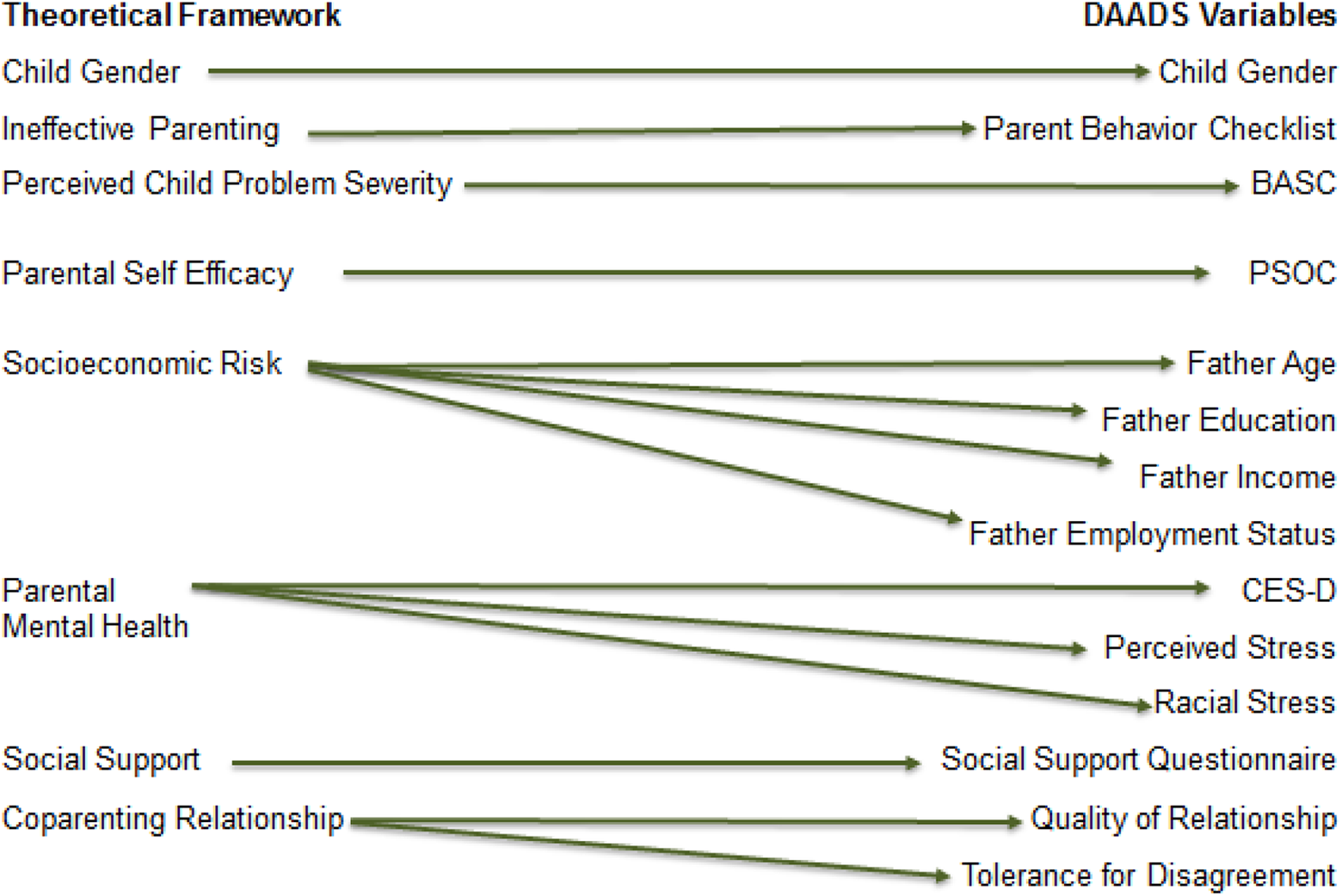
Mapping theoretical frameworks to Dedicated African American Dad (DAAD) study variables.
Method
The DAAD study is a randomized controlled trial testing the efficacy of a fatherhood intervention for AA nonresident fathers of children aged 2–6. To investigate predictors of mothers’ willingness to participate in the DAAD study as a data informant, we analyzed baseline data collected between May 2015 and September 2018. We considered maternal participation as a data informant as a proxy for co-parenting relationships (Nixon & Hadfield, 2018; Schoppe-Sullivan & Fagan, 2020). Baseline data included father reports on measures of well-being, parenting behavior, parenting self-efficacy, social support, and quality of father–mother relationship; maternal reports of mother demographics; child gender and age; and decision to participate as a data informant.
The study was approved by the university institutional review board, and a Certificate of Confidentiality was obtained to protect the privacy of sensitive participant information. Full details regarding the DAAD study design and inclusion/exclusion criteria are available elsewhere (Julion et al., 2016).
Recruitment
The primary participants for this study were AA fathers who did not reside with their young children (aged 2–6) on a full-time basis. Recruiters were AA male and female research assistants who were comfortable recruiting in urban settings and communities of color. Recruitment sites were community settings such as barbershops, churches, and sporting venues. In addition, study advertisements were displayed and distributed in community settings, and potential participants could inquire through a recruitment study line. Inclusion criteria were AA biological father of a child 2–6 years old, child lived with father no more than 48 hr per week, and child lived with the biological mother (or other custodial relative such as grandmother). Fathers who met inclusion criteria were given a choice of interview location (their home or nearby community site) and reimbursed with a US $50 gift card for data collected at baseline. At the time of the baseline interview, contact information for the mother of the target child was requested. Mothers were contacted by a female recruiter and invited to participate in the study as a data informant. Mothers were reimbursed with a US $40 gift card for data collected at the baseline interview.
Variables and Measures
Individual influences
Parental mental health
Three measures were used to assess father mental health because of the multiple stressors facing AA men and included depression, perceived stress, and racial stress. Depression was evaluated with the 20-item Center for Epidemiologic Studies–Depression (CES-D) Scale (Radloff, 1977). Fathers reported how often they have felt or behaved in a certain way during the past week on a 4-point scale ranging from rarely/none of the time to most/all of the time. Higher scores reflect higher depressive symptoms. In light of the potential for fathers in the current study to represent a vulnerable or disenfranchised population, we decreased the cut score for the CES-D from 16 to 12 as previously done by other researchers (Minkler, 2004). In this sample, α coefficient was .82.
General stress was assessed via the 10-item Perceived Stress Scale (PSS; Cohen et al., 1983; Lee T. W. et al., 2012). The PSS measures the perceived degree of stress caused by situations in one’s life over the past month. Fathers were asked how often they felt a certain way using a 5-point scale ranging from never to very often. Higher scores reflect higher perceived stress. α coefficient for the scale in this sample was .77.
Racial stress was examined using the Perceived Racism Scale across five domains (overt public, subtle public, employment, academic, and racist statement domains; McNeilly et al., 1996). The 27-item instrument measures the multidimensional experience of racism as perceived by AA adults. For the current study, we examined fathers’ baseline ratings for the past year using a 5-point scale from never to very often. In this sample, α coefficient was .90.
Father parenting behavior
Parenting behaviors were measured using the 32-item Parent Behavior Checklist (PBC; Fox, 1992). The PBC measures how parents raise young children with three subscales: Developmental Expectations (12 items; e.g., “My child should be old enough to share toys”), Discipline (10 items; e.g., “I yell at my child for whining”), and Nurturing (10 items; e.g., “I read to my child at bedtime”). Each item is scored on a 4-point scale ranging from almost never or never to almost always or always. Lower scores reflect less effective parenting. In this sample, α coefficients for the three PBC subscales ranged from .72 to .84.
Father parental self-efficacy
Parental self-efficacy and satisfaction with parenting were measured using the 17-item Parenting Sense of Competence Scale. Two subscales include Satisfaction (nine items; assessing anxiety, motivation, and frustration) and Self-Efficacy (seven items; assessing competence, capability, and problem-solving). Responses are recorded on a 6-point scale from strongly disagree to strongly agree. Higher scores reflect higher parenting efficacy and satisfaction (Ohan et al., 2000). In this sample, α coefficients were .59 on the Satisfaction subscale and .70 on the Self-Efficacy subscale.
Perceived child problem severity
The Behavior Assessment System for Children, second edition, Parent Rating Scales (BASC-2) were used to measure child behavior and emotions (Reynolds, 2010). The 134-item preschool version was used to evaluate children from age 2 to 5. The 160-item BASC 6- to 11-year-old version was used for children aged 6 years. Father ratings of their child’s behavior over the last few months were reported on a scale ranging from 0 to 3 (never to almost always). Higher scores reflect higher child problem severity. In the preschool sample, α coefficients on the five BASC subscales were .67–.85. The coefficients for the BASC preschool version was used rather than the BASC 6- to 11-year-old version because there were only 19 children who were of age 6 years in the study.
Familial and relationship influences
Social support
The Social Support Questionnaire-6, a six-item survey, was used to examine social support (Sarason et al., 1987). Participants were asked about the people in their life who provide them with help or support across six domains. Each question consists of two parts: (a) listing of all people they know who can provide support in that domain and (b) rating of satisfaction with support in that domain on a 6-point scale from very dissatisfied to very satisfied. In this sample, the α coefficient was .84 for satisfaction. Data on the number of people who provide support were not included in these analyses.
Support for being a father
Four items were used to examine father social support networks. These items examined fathers’ perceptions of supportiveness and encouragement for being a father from the mother and her friends and family members (Cabrera et al., 2004; Cabrera & Peters, 2000). Fathers identified the extent that specific members of their network supported them in being a father. Responses were on a 4-point scale ranging from doesn’t support me at all to is very supportive. In this sample, individual items were used for the analyses.
Quality of relationship
Quality of relationship was measured using the 25-item Quality of Relationships Inventory (QRI). The QRI measures ways parents feel supported by their co-parent. Three subscales include Conflict, Supportiveness, and Depth of the Relationships (Reiner et al., 2012). Responses are on a 4-point scale from not at all to very much. In this sample, α coefficients ranged from .83 to .87 on the three scales.
Tolerance for disagreement (TFD)
The 15-item TFD Scale is designed to measure the degree to which an individual can tolerate other people disagreeing with what the individual believes to be true (Teven et al., 1998). The concept mirrors argumentativeness, and those with high argumentativeness tend to have a higher tolerance for disagreement. The 5-point scale was scored such that higher scores reflect higher tolerance for disagreement from strongly disagree to strongly agree. α reliability in this sample was .68.
Extrafamilial influences
Socioeconomic risk
Socioeconomic risk is defined as sociodemographic factors that contribute to overall health and well-being (Schoon & Melis, 2019). Father socioeconomic risk was assessed with the following demographic variables: father age, educational level, monthly income, and employment status.
Mother demographics and agreement to participate as a data informant
Mothers responded to the same socioeconomic risk demographic questions as the fathers (e.g., age, educational level, monthly income, employment status). Since not all mother participants were AA, mothers also reported their race and ethnicity. Mothers were categorized as participant or nonparticipant based on whether they completed a baseline interview.
Data Analysis
Given the relatively large number of potential predictors of mothers’ participation, the first step in building a model predicting participation was to conduct a series of bivariate analyses to examine the association between candidate predictors and whether the child’s mother agreed to participate in the study. These analyses included t tests (continuous predictors) and χ2 analyses (categorical predictors).
Variables with a significance level less than or equal to .10 in the bivariate analyses were included in a multivariate logistic regression analysis. A stepwise approach with backward elimination was used to achieve a parsimonious final model.
Results
Participant Demographics
One hundred seventy-eight fathers and 125 mothers provided baseline data for father and mother demographics (see Table 1). The mean age of the fathers was 34 years (range 19–62). At the time of data collection, nearly 75% of fathers were never married, and only 3% were currently married or living with a domestic partner (not the mother of the target child). Fifty-four percent of fathers had attended college or earned a college degree. The majority of fathers were employed or attending school, and 36% of fathers were unemployed. The median monthly income was between $1,001 and $2,000. The average age of their child for the study was just under 4 years old, and slightly more than half of the target children were boys.
Study Participant Demographic Characteristics.
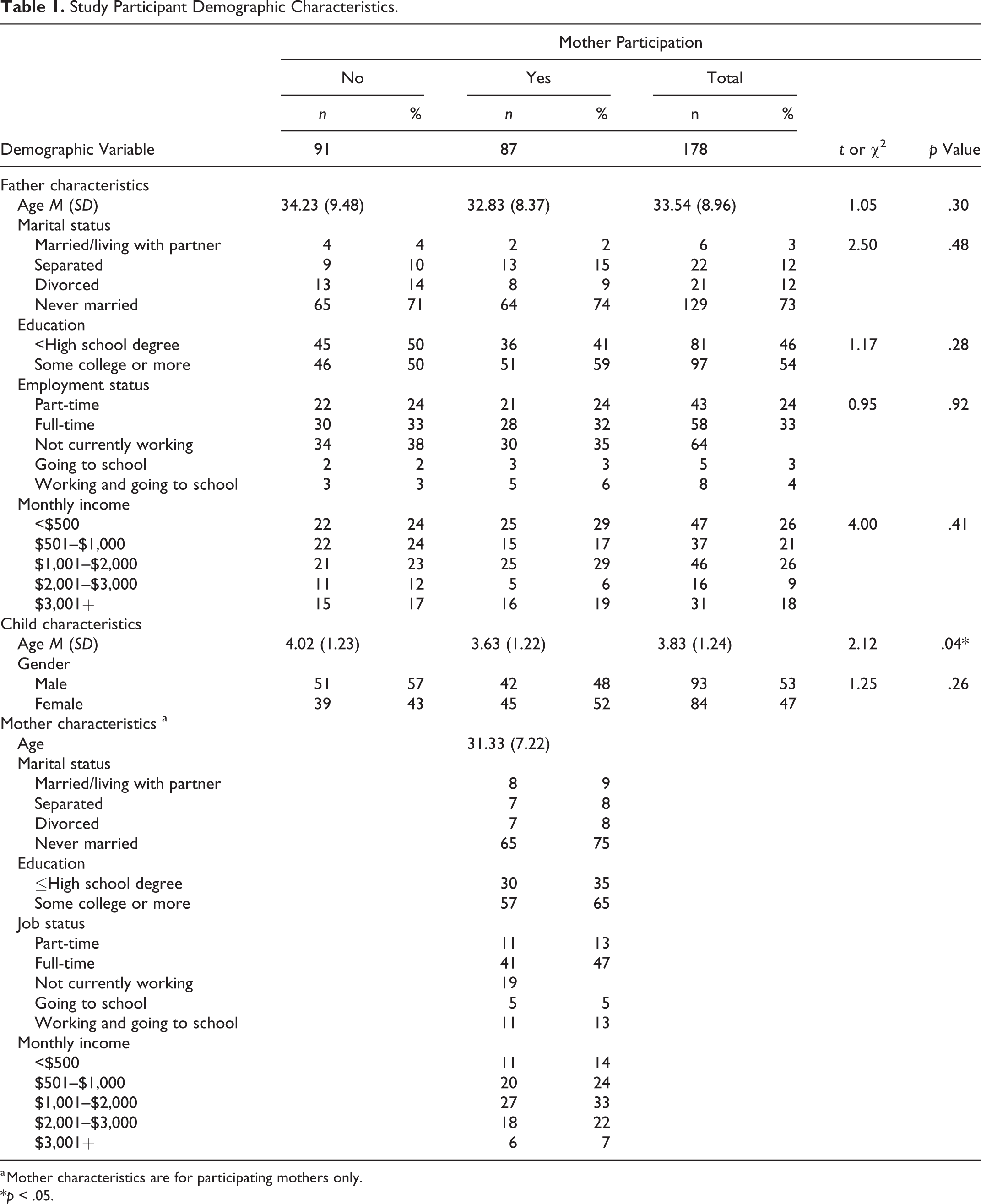
a Mother characteristics are for participating mothers only.
*p < .05.
The mean age of mothers (n = 125) who participated in the study was 31 years (range 19–57 years). Like fathers, 75% of mothers were never married, and 9% were currently married or living with a domestic partner. Nearly two thirds of mothers had at least some college education. Most mothers were employed or attending school with 22% unemployed. Mothers reported median monthly income was between $1,001 and $2,000 (see Table 1).
Predictors of Mother Participation
Of the mothers who participated in the study, their children were 4.2 months younger than nonparticipating mothers (p = .04). Bivariate analyses revealed several significant associations with mother participation (p ≤ .10; see Table 2). Mother participation was associated with fathers’ reports of higher levels of depressive symptoms (2.3 points higher on the CES-D) and perceived stress (2.1 points higher on the PSS). Fathers’ perceived support for fatherhood from the mothers’ female relatives was .3 points higher when the mother declined participation. Finally, father’s perceptions of the co-parent relationship differed by mother participation on two subscales such that depth of relationship was .2 points higher and level of conflict was .2 points lower when mothers participated (see Table 2).
Bivariate Analysis of Predictors of Mother Participation.

a Analysis of log-transformed variable and untransformed variable yielded the same results. The result of analysis of the untransformed variable is presented.
*p ≤ .10.
Of the significant predictors entered into the logistic regression model, five variables were retained in the final model (see Table 3). The odds of mother participation were 20% lower for each year of age of the target child with this finding approaching statistical significance. As fathers’ perception of support from mothers’ female relatives increased, the odds of mother participation decreased by 27%. Greater father perceived stress was associated with 9% higher odds of mother participation. Finally, a better co-parent relationship was associated with mother participation. Each point increase in father-reported conflict was associated with a 56% reduction in odds of mother participation, and each point increase in relationship depth was associated with a 60% increase in the odds of mother participation.
Final Multivariable Logistic Regression of Predictors of Maternal Participation.
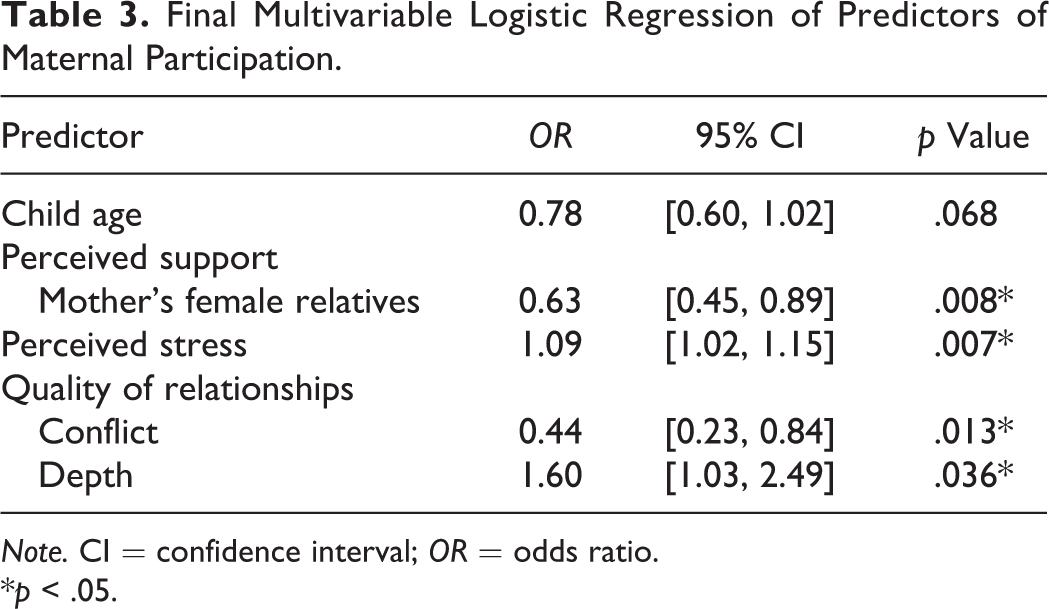
Note. CI = confidence interval; OR = odds ratio.
*p < .05.
Discussion
Our findings reveal that mothers were more likely to participate as a data informant when children were younger, fathers perceived their stress as higher, fathers perceived less conflict with the mother, and the father perceived that he had lower levels of support from the mother’s female relatives. Factors typically noted as being important to family functioning and co-parenting alliances such as employment status, and income did not significantly influence mothers’ participation. The current study reveals factors influential to mother support of father involvement and aspects of the co-parenting relationship in AA co-parents which are beyond the current research literature.
Individual Influences
In the current study, having a younger child was associated with the mother’s participation as a data informant. Research conducted with unmarried couples supports the notion that co-parenting relationships and father–child engagement tend to be firmer when children are younger (Goldberg & Carlson, 2015), which might suggest that parents are more likely to be connected when children are younger. Much of the work in early childhood development confirms the importance of early connections between parents and their children, and it may be easier for parents to remain connected in their child’s early years even in the absence of a solid relationship between the parents (McHale & Carter, 2012). In addition, maintaining the positive involvement of both parents in early childhood provides a more secure footing on which to build healthy child development (Newland, 2015). Therefore, supporting this relationship early, when parents may be more amenable to participating, could be a critical step in maintaining positive and effective co-parenting relationships.
The finding that when the father’s perceived stress was high, the mother was more likely to participate as a data informant is an interesting one. Stress can negatively impact parents, children, and overall family functioning (Cappa et al., 2011). Determinants of parenting stress are multifaceted and can include individual parent characteristics such as depression, child characteristics, co-parent relationship, parent–child relationships, the environment, and interactions across all factors (Nomaguchi et al., 2017). Perhaps mothers are attuned to father’s stress and see their encouragement of fatherhood intervention participation as an opportunity to help alleviate stress. It is possible that a mother perceives that supporting the child’s father’s participation in fatherhood interventions would benefit the father and subsequently the child. Therefore, given the potential positive impact on her child, she might be more willing to support the father’s participation in a fatherhood intervention by serving as a data informant. Future research should continue to explore and address a variety of additional factors that impact parental stress, mental health, and the co-parenting relationship for AA fathers such as racism, employment, and limited access to resources (Nomaguchi & Johnson, 2016; Threlfall et al., 2013). In addition, Feinberg et al. (2019) posit that in light of the potential for fluctuations in parenting stress, the quality of the co-parenting relationship may not be static and could better inform the co-parenting relationship if assessed via data collected at multiple time points.
Research that explores additional aspects of fathers’ characteristics that can influence mother participation is warranted. Although mothers in the current study were more likely to participate when the father perceived that his stress was elevated, there may be limits to how much the mother is willing to tolerate to help buffer the father’s stress. For example, if fathers handle their stress by engaging in behaviors that diverge from family, cultural, and community norms, the mother may feel that it is in her best interest and the best interest of the child to remain distant. Similarly, when fathers’ behaviors contribute to family disorder (i.e., home confusion and disorganization), children have elevated behavior problems, and parents engage in less effective discipline strategies (Dumas et al., 2005; Petren, 2017). Previous research has shown that the effects of parenting interventions are compromised when parents cannot work as a team to implement the program (Dush et al., 2011), highlighting the importance of making sure that both parents have the requisite co-parenting skills (Pearson et al., 2020). Father, mother, and child individual characteristics can influence mother participation as a data informant in parenting interventions because family relationships are dynamic and interrelated. According to Feinberg et al. (2019), mother characteristics have the potential to influence the contexts of the co-parenting relationship and the enactment of parenting strategies. Additional information on family characteristics could better inform the likelihood of maternal participation as data informants in fatherhood interventions.
Relationship and Family Influences
Poor co-parenting relationships between parents living apart negatively influence fathers’ accessibility and interactions with their children. A significant reason for couple discord is when fathers are noncompliant or inconsistent in their visitation and financial support. Co-parenting relationships in this context can also be complicated by the erosion of romantic relationships that are supplanted by contentious relationships, making it difficult to maintain cordial contact for the sake of the child (Carlson et al., 2005; Palmer, 2011; Tach et al., 2010). When these circumstances occur, mothers may limit fathers’ contact with their child.
To our knowledge, this is the first study to examine predictors of mothers’ participation as a data informant in fatherhood intervention research. Most prior parenting interventions designed to improve child outcomes have focused on mothers as the recipient of the intervention (Panter-Brick et al., 2014). Mothers have also been used to support recruitment of fathers and sons into intervention research studies (Caldwell et al., 2010, 2014). However, recruiting fathers through the mother does not address the capacity to recruit and engage fathers in fatherhood research when fathers have poor or nonexistent relationships with the mothers of their children. Furthermore, this approach systematically marginalizes fathers from fatherhood intervention research and places mothers in a research-gatekeeping role (Fagan & Cherson, 2017). Gatekeeping has not been explicitly studied in relation to recruitment and enrollment in intervention research. It remains unclear to what extent mothers have the potential to regulate fathers’ enrollment in interventions. Even so, a strong co-parenting relationship focused on the child’s best interest would need to be in place in order for such an approach to be successful (Camisasca et al., 2015). In future studies that are focused on father participation in intervention research, it will be important to refine recruitment strategies that can facilitate engaging co-parents even when only one parent is the target of the proposed intervention. According to Morawska et al. (2014), recruitment approaches should describe the benefits of participation in terms of reducing behavior problems and also include affirmative messages about the importance of fostering child competence and well-being.
Although we are learning more about the predictors of mothers’ participation in fatherhood research, evidence reveals that parental conflict can not only negatively impact child well-being but also the mother’s decision to be involved in any activities related to the father (Camisasca et al., 2016). Conversely, a strong co-parenting relationship would suggest that mothers would be more likely to support father engagement in parent training because there is mutual trust, high-quality communication between co-parents, and the father is an important resource for the mother (Nomaguchi et al., 2017). In addition, if maternal beliefs about parenting roles include the importance of the father as caregiver, nurturer, and educator, she will be invested in fathers’ efforts to better themselves for the benefit of the child (Trahan, 2018). In an effort to minimize family chaos (e.g., lack of routine, disorder, conflict, stress), mothers may be more likely to endorse opportunities for fathers to participate in programs that help bolster positive father involvement for the good of their children (Budescu & Taylor, 2013). Mothers may view their participation in a fatherhood study as a data informant as a means to facilitate positive co-parenting and view father participation in a fatherhood intervention as a way to mitigate their own stress by sharing parenting responsibilities with fathers (Nomaguchi et al., 2017).
Among nonmarried parents, relationships are likely to be unstable with 60% of nonmarried parents severing their interpersonal relationship by their child’s fifth birthday (McLanahan & Beck, 2010). The lack of relationship stability as the child ages supports the premise that the younger the child, the more likely the parents are to be connected. The finding that mothers are more likely to participate as a data informant when the child is young and there is less co-parenting conflict speak to the need to support early collaborative co-parenting relationships. Early efforts to bolster collaborative co-parenting, prior to relationship dissolution, can buffer against co-parenting decline (Carlson & Högnäs, 2011; Dush et al., 2011).
Mothers in our sample were less likely to participate as a data informant if the father perceived that the mother’s female relatives were more supportive of his being a father. This counterintuitive finding is based on paternal reports and could imply that fathers perceive mothers take a step back when her female relatives are supportive of the father. The role of the extended family is more pronounced in AA families, particularly for single mothers (Parke & Cookston, 2019).This may be particularly so when maternal grandmothers or other female relatives provide social support to co-parents. There is evidence that mothers’ relatives can play a significant role in moderating the relationship between estranged parents, particularly if the mother is younger or the child’s grandmother perceives that the father is not living up to his responsibilities as a father (Högnäs & Williams, 2017; Perry, 2009). Overall, literature supports the notion that fathers who report having more cooperative co-parenting relatives in their networks also report having higher parenting self-efficacy and father–child closeness (Fagan et al., 2016). Children are best served when all of the adults responsible for their care and upbringing are communicating, coordinating, and working together. Even so, additional research is needed to examine the impact of familial support on parent participation in intervention research.
Extrafamilial Influences
Although socioeconomic risk did not influence mothers’ participation in this study, we know that fathers’ provision of financial support to the mother can play a role in the co-parenting relationship. According to Parke and Cookston (2019), the sociocultural contexts that impact fathering can include income, social class, employment opportunities, work schedules, and institutional constraints related to military service and mass incarceration (Lemmons & Johnson, 2019). Thus, multiple contexts can potentially impact fathers’ ability to meaningfully engage in fatherhood interventions. Finally, extrafamilial influences can impact father’s mental health and self-efficacy as families and society often ascribe being a provider to fathers (Cabrera & Volling, 2019). When fathers are narrowly prescribed to the role of provider and subsequently struggle to fulfill that role, mental health can suffer. More nuanced research is necessary to tease out if extrafamilial and sociocultural factors mediate/moderate the co-parenting relationship and participation in fatherhood interventions. Additionally, extrafamilial influences related to the impact on fatherhood that mass incarceration causes warrant further investigation (Lemmons & Johnson, 2019). Thus, additional exploration of the origins and impact of stressors and the availability of resources for co-parents are important because each parent’s well-being is entangled within the interrelated nature of the co-parenting relationship (Feinberg et al., 2019).
Limitations
There are limitations to the current study. First, our study is limited because it only considers mothers’ initial enrollment in the study. It is possible that over time, the predictors of mothers’ participation may change as their perspectives of fathers’ behaviors and interactions with their children evolve over time. Despite the use of a conceptual framework to guide the selection of predictors for the current study, we may not have evaluated other salient predictors that may have influenced mothers’ willingness to participate in the study as a data informant. For example, when fathers are engaged in risky behaviors, substance abuse, or the criminal justice system, mothers may opt out of the relationship (Stykes, 2015). These data are just from the 125 maternal caregivers who decided to participate in the current study as a data informant. Consequently, the perspectives of mothers who decided not to participate remain unknown. Findings, related to predictors of mothers’ participation, may have differed considerably among mothers who declined participation. This is particularly relevant because there may be numerous reasons that are directly related to the co-parenting relationship that can cause relationships to splinter such as infidelity, intimate partner violence, and either parent deciding to move on to form a new interpersonal relationship (Bonevski et al., 2014). The challenges inherent in research that seeks to garner the perspectives of adults who may not be bound by marital relationships and household ties are many (Bonevski et al., 2014). Attempting to obtain maternal participation in research may also be influenced by conducting research with participants who may be ill-inclined to participate in research or mistrustful of researchers (Scharff et al., 2010). In addition, due to the potential for members of the target groups to change their residence or contact information, fathers who have limited contact with the mothers of their children may literally lose contact with their children due to change in residence of either parent (Bonevski et al., 2014; Cheadle et al., 2010). Finally, our understanding of maternal participation as a data informant is hindered by incomplete understanding of maternal characteristics that could influence her decision making.
Implications
As long as co-parents maintain good relationships, parenting alliances can be forged (McHale & Carter, 2012). Since the aim of parent training interventions is to facilitate family and child well-being, it may be important to examine the family as an extended kin network that can help co-parents work together (Jones, 2011; Minniear & Soliz, 2019). It is likely that single mother–headed households include extended maternal and/or paternal kin. The role of extended kin in fostering effective co-parenting relationship is important to explore and may also help to shed light on father’s participation in fatherhood interventions (Högnäs & Williams, 2017).
Interventions developed and implemented specifically for fathers who live apart from their children (i.e., nonresident) are nascent (Henry et al., 2020). In addition, existing interventions designed for nonresident fathers tend to focus more on school-age and male children (Davis et al., 2009) and less frequently on preschool-aged children and daughters (Caldwell et al., 2010, 2014; S. J. Lee et al., 2011). Research on intervention approaches geared specifically toward parents who are co-parenting children in separate households, and attentive to diversity among unmarried parents and child gender, will be a significant advance for this field (Carter & McHale, 2012; McHale & Carter, 2012). Of particular importance will be differences in programming for parents whose relationships are ongoing, those whose relationships dissolved, and those who had a more casual relationship to begin with. Key recommendations moving forward include offering relationship skills support, focusing on fathers’ desires to make life better for their children, and providing supplementary support related to interpersonal communication skills and problem-solving (Holcomb et al., 2015).
Conclusion
Mothers’ participation as a data informant in a fatherhood intervention is reflective of the co-parenting relationship and important to data reliability and validity. Efforts to strengthen co-parenting among couples should begin prenatally, continue once the child is born, and involve extended kin in order to optimize child well-being (Panter-Brick et al., 2014). Such an approach would capitalize on the likelihood of parents building a strong alliance with the child’s best interest at heart. Strong and healthy families are bolstered when co-parents are integrated in families and communities that surround families in a matrix of support that could improve the long-term well-being of fathers, children, and families.
Footnotes
Authors’ Note
Dawn T. Bounds is now at the Sue and Bill Gross School of Nursing, University of California Irvine. Susan M. Breitenstein is now at The Martha S. Pitzer Center for Women, Children and Youth, College of Nursing, The Ohio State University.
Declaration of Conflicting Interests
The authors declared no potential conflicts of interest with respect to the research, authorship, and/or publication of this article.
Funding
The authors disclosed receipt of the following financial support for the research, authorship, and/or publication of this article: This study was supported by National Institute of Nursing Research (grant ID: 5RO1NR011182-06).
