



Abstract
Originally developed in the United Kingdom and the United States, the profession of social work became common around the world after the 1920s (Midgley, 2001). Medical social work was one of the first areas of social work to be professionalized (Frieiro Padin et al., 2021). Professionalization was profoundly meaningful for medical social workers in hospitals. Medical social workers act as nonautonomous “guests” in host settings dominated by physicians and nurses (Auslander, 2001). Thus, medical social workers must self-certify, demonstrate their value to institutions, clarify their contribution to hospital operations, learn from the medical profession to achieve professionalization, meet hospitals’ expectations of social workers, and consolidate their role in the division of labor in hospitals (Beddoe, 2013).
In the history of social work in Taiwan, medical social work was the first well-developed field of social work practice. In 1949, the job title “social worker” was first mentioned in the social service department of Taipei Hospital (now known as the Zhongxing Branch of Taipei City Hospital; Chou et al., 2006). Government departments did not establish a social worker employment system until 1972 (Huang & Ku, 2014). Taiwan Medical Social Work Association, Taiwan's first professional social work organization, was established in 1983, marking the initial step toward the professionalization of social work in Taiwan, contributing to the establishment of the Taiwan Association of Social Workers, and inspiring the subsequent enactment of the Social Worker Act and the formulation of a regulation system (Lin & Wang, 2010). Therefore, analyzing the history of medical social work in Taiwan deepens our understanding of the development of Taiwan's social work regulation and its effect on the professionalization of social work (Chen, 2020).
However, few international studies have explored social work professionalization in Taiwan, and most of them have focused on the development of social work education (Chang & Mo, 2007; Feng, 2007; Lin & Wang, 2010). No research has conducted relevant historical analysis of the development of medical social work and the social work regulation in Taiwan. Historical research advances understanding of the social context in which Taiwan's medical social work and social work regulation system developed, providing references and guiding the future development of social work professionalization and the regulation system in various countries (Cheng, 2007). This study focused on exploring the following questions: How did medical social work develop in Taiwan? What social and environmental factors influence the development of medical social work? How does it interact with the social work professionalization mechanism and regulation?
Theoretical Framework for the Development of the Social Work Profession in Taiwan
In the 1970s and 1980s, sociologists (Child & Fulk, 1982; Collins, 1979; Larson, 1977) proposed the Power Approach, arguing professionalism is the exclusive right to pursuing a certain job and to competing with other professional groups to draw professional boundaries, acquire service users and resources, and establish appropriate regulatory mechanisms. Through this process, professional groups can maintain and even expand their own interests with regard to wages, status, and power as well as ensure professional monopoly and jurisdiction (Abbott, 1995). A professional project is defined as the process of attaining professional status (Larson, 1977) and is developed through the following five mechanisms.
Define Professional Discourse
The primary task of a profession is to create demand and a market for the products produced or services offered (Larson, 1977). Through abstract knowledge, problems can be discussed from a new perspective or using new language. For example, orthodontics is a profession developed based on esthetics and specialization (Taylor & Nicolson, 2007). In addition, authoritative and scientific knowledge discourse is conducive in obtaining professional social status and financial rewards. For example, the early welfare policies and social work expertise and practices of the United Kingdom and the United States constituted a professional discourse later referenced and adopted by other countries (McDonald et al., 2003).
Master Professional Technology
From the Power Approach perspective, the advancement of professional technology does not fully contribute to the foundation on which a profession is established. The monopoly and control of technology are contributors to a loss of power among professions. For example, Freidson (1970) maintained that the development of medical science at the end of the 19th century enabled physicians to provide treatments and obtain job autonomy, but the exclusive rights to use treatment methods and medical tools are crucial sources of professional power.
Develop Professional Education
Professional education is offered by formal educational institutions that provide training or diplomas to certify the acquisition of professional skills. For example, in the United States, obtaining a bachelor's or master's degree in social work accredited by the Council on Social Work Education is a crucial threshold for obtaining a social work license, substantiating the core competencies of professional social workers, and ensuring that social workers have the knowledge and skills required to provide professional services (Council on Social Work Education, 2022).
Professional Legislation and Certification
Larson (1977) stated that legislation and certification signify a profession has a government-granted monopoly and thus the privilege to self-regulate. The three types of social work certification are registration based on educational attainment, certification based on professional knowledge and skills, and licensure based on educational attainment and exam success (Swain, 2001). All certification aims to enhance professional legitimacy and ensure a monopoly position on the market through the laws or regulations.
Establish Professional Organizations
Professionalization can be regarded as the collective mobility project of a self-interested occupational group (Larson, 1977). Professional organizations provide several external and internal functions. In terms of the external function, professional organizations may serve as the representative spokespeople of individual workers. Specifically, these organizations fight for the interests of workers through their participation in politics, collective negotiation, and advocacy. In regard to the internal function, professional organizations promote professional training and develop new knowledge and technology to ensure professional autonomy and service quality (Freidson, 1986).
Purpose of the Study
A professional project is a process of gradual development. To discuss the aforementioned five mechanisms of achieving professional status, an analysis of the historical and social context at different periods of time is necessary (Witz, 1992). The objective of this study was to determine the dynamic relationship between the professionalization of social work in Taiwan and the development of medical social work through the aforementioned five mechanisms, to analyze the factors affecting the social environment, and to contribute to the international discussion on Taiwan's social work professionalization and regulation system.
Methods
Research Design
Historical institutionalism refers to institutional development over time from a longitudinal perspective and is used to analyze the social context in which a choice is made during a critical juncture consequential from a cross-sectional perspective (Pierson & Skocpol, 2002). An institution is created by historical actors or groups through a series of choices and actions. Path dependence is defined as follows: an institution, once established, persists for a certain period of time and affects subsequent institutional choices, regardless of its appropriateness (Hall & Taylor, 1996). Path dependence, derived from economist Douglass North's research on national economic development, was subsequently used in historical analysis research (Dugger, 1995). For example, path dependence has been applied to explore the historical development of social work practice (Breton, 2006) and the effect of neoliberalism on social work profession (Harris, 2014). Path dependence is the research framework of historical institutional theory that has been frequently employed (Mahoney, 2001; see Figure 1).

Research framework.
Antecedent Conditions
To examine the professionalization of social work and the development of medical social work in Taiwan, the development of institutional promotion, especially in the contemporary social, political, and economic environment, must be traced.
Critical Junctures
In the event of crisis or opportunity during social work development, critical junctures may be selected based on a professional project. After a professional development path is selected, returning to the initial point before the decision will be difficult.
Sequence of Events
After these critical junctures, social work professionalization and the development of medical social work were affected by socioenvironmental factors and professional project mechanisms. Consequently, a reactive sequence—the continuation (positive reaction) of or withdrawal (reverse reaction) from professional development—or institutional reproduction—the reproduction or remodeling of the professional institution—did occur within or outside of the profession.
Institutional Outcome
The outcomes for social work professionalization and the development of medical social work in Taiwan after decision making can be analyzed based on critical junctures and path dependence with the historical context.
This study first defined the critical junctures of social work professionalization and medical social work development in Taiwan to explore the social environment and government policy factors at that time. This study further analyzed how the five professional project mechanisms can promote the development and professionalization of a regulation system for Taiwan's social work in the event of development crises or opportunities.
Data Collection
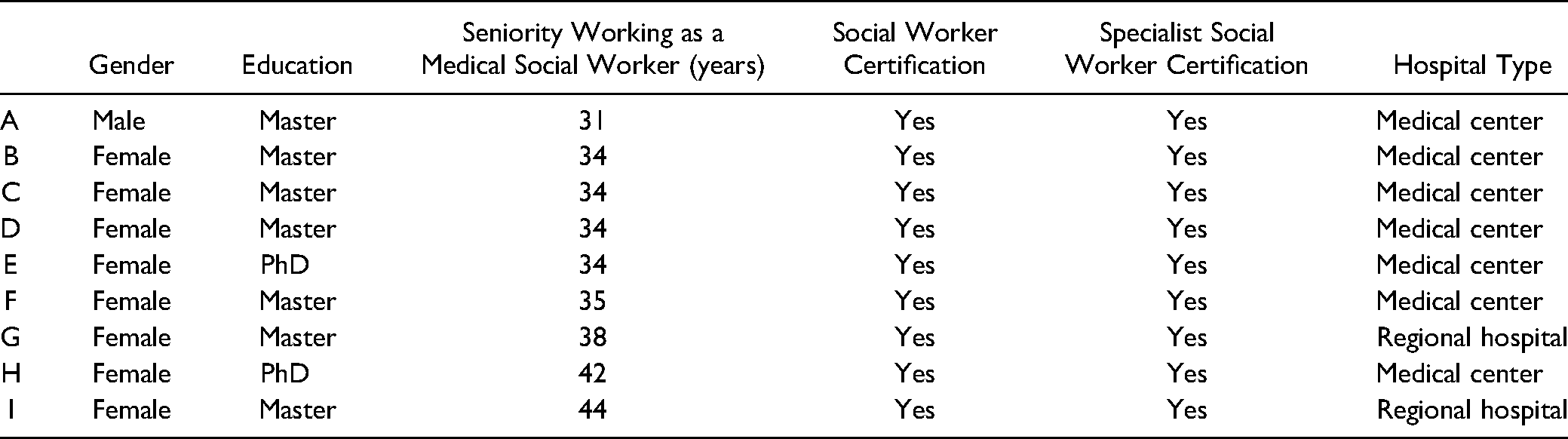
The following three data collection methods were adopted. First, in-depth interviews with nine medical social workers with seniority of over 30 years of experience in the field were conducted to reconstruct the social context and professional development of medical social work before implementation of the 1997 Taiwanese Social Worker Act (Table 1). Second, a literature review, which involved searching for keywords such as “social work professionalization,” “Social Worker Act,” and “history of Taiwan's social work profession” in the Chinese language literature database Airiti Library, was performed; a total of 49 studies were obtained to analyze the professionalization process and impact factors of Taiwan's social work profession. Third, content analysis of 42 historical files documenting the promotion of social work professionalization, the minutes of board of directors, and professional development plans for medical social workers compiled by the Taiwan Medical Social Work Association from 1983 to 2021. Furthermore, 50 Legislative Yuan (Taiwan's highest legislative body) motions and 157 Examination Yuan (Taiwan's highest examination body) minutes and statistics relating to the Social Worker Act and professional regulation were analyzed to explore the participation of professional organizations in the history of the social work profession and the impact of the social work regulation.
Details of interviewees.
Data Analysis
Data analysis was used to explore the longitudinal and cross-sectional aspects of historical institutionalism and comprised the following four steps (Mahoney, 2001): First, determine the goal of institutional analysis, that is, the interaction between the professionalization and regulation of social work in Taiwan and the development of medical social work. Second, identify the main actors at a national level (e.g., Ministry of Health and Welfare), group level (e.g., Taiwan Medical Social Work Association), and individual level (e.g., medical social workers). Third, analyze actors’ actions, such as legislative initiatives. Fourth, explain the effect of these actions on professional development. Following these steps, suggestions for the further professionalization and regulation of social work and the development of medical social work are proposed.
Results
The results of the historical institutional analysis of social work professionalization and medical social work development in Taiwan are summarized in Table 2.
Analysis of social work professionalization and medical social work development in taiwan based on historical institutionalism (Postwar–Present).

Note: SPTESW: Senior Professional and Technical Examinations for Social Workers.
Postwar–1982: Charitable Relief for the Poor and American-Style Social Work
The Historical Legacy of Medical Missions and Charitable Social Services for the Poor
The antecedent conditions of the development of medical social work in Taiwan were analyzed and are herein detailed. In the early days, Western missionary physicians who worked in Christian hospitals in Taiwan established charitable hospital-based social services to provide medical care and assistance to economically disadvantaged patients. After World War II, Taiwan began implementing labor insurance, stipulating that only employed individuals could enjoy labor insurance coverage; unemployed individuals were thus excluded from this insurance scheme (Lee & Ku, 2007). Medical social workers were positioned to assist uninsured, underprivileged individuals (e.g., children and older adults) and address family crises and social problems resulting from illness.
However, the aforementioned profession positioning instilled in hospital administrators a belief that charitable work can be performed by any individual with a kind heart, compassion, and some mainstream education. Social services were highly inclusive and included patient registration, reception, and event hosting.
The responsibilities of social workers used to revolve around financial assistance and social services. The hospital director from my first job, the director of the hospital (with a background in medical management) said, “Any high school student can do what social workers do after some training!” In the past, the hospital despised social workers. (Respondent F)
Yao’s (1973) Medical Social Work published in Taiwan stated that “medical social workers should be given an institutional development plan that is formal, precise, and professional to overturn the stereotypical image of charitable social services and the charitable social worker” (p. 23).
Diffusion of American Medical Social Work Discourse
After World War II, the United States provided Taiwan with military, economic, medical, and educational resources from the second half of 1950 to June 1965. For example, the Department of Social Work, National Taiwan University Hospital was established in 1951 with the assistance of Mrs. Samson from the United Nations International Children's Emergency Fund. The institution of the medical social work profession became increasingly prevalent when more doctors and social workers returned to Taiwan after studying in the United States. Since then, Taiwan has exhibited an American style of development of the medical social work profession (Cheng, 2007).
Physicians returning to Taiwan from the United States introduced the idea of the division of labor among medical teams, and medical social workers became members of interprofessional teams. How did social workers express their professional subject in a team? The medical social work community adopted the psychosocial perspective (Doremus, 1976) from the U.S. Journal Health & Social Work and applied the “4Rs” (role, reaction, relationship, and resource) to analyze the social and psychological impact of diseases on patients and their social environment, thereby identifying the needs of social service users.
Medical professionals act on the basis of research and theories. In the early days, social workers were challenged by the medical team. [They always questioned us by asking,] “What did you base your psychosocial diagnosis on?” In the 4Rs, the patients’ role, reaction to their disease, relationship with their family, and resources they receive (social support) are clearly defined. The psychosocial perspective was probably introduced to Taiwan by some social work professors who visited the United States for 3 months in the 1980s. (Respondent B)
As a result of postwar international relations, the critical junctures with regard to the American-style professional institution of medical social work prevailed. Moreover, the introduction of the psychosocial perspective (4Rs) into Taiwan by medical social workers at the time had a decisive effect on the development of the medical social work profession. Medical social workers were no longer goalless, nor did they engage in charitable work without a theoretical foundation. Through the 4Rs, medical social workers established their professional subject in the medical team and delineated the boundaries of their professional jurisdiction.
1983–1996: Establishment of the Taiwan Medical Social Work Association and Promotion of the Social Worker Act
Hospital Accreditation and Establishment of the Taiwan Medical Social Work Association
Taiwan's economy developed rapidly from 1960 to 1970, with an average economic growth rate of 10.28% (Directorate General of Budget, Accounting and Statistics, Executive Yuan, 2010). Private enterprises accumulated substantial profits and began to invest in the hospital industry in the late 1960s and early 1970s. In the 1970s, Taiwan allowed for an increasing number of private consortium hospitals. This action caused the term “hospital” to be widely used, resulting in an uneven quality of medical care. To strengthen hospital management in Taiwan, the Ministry of Health and Welfare began implementing hospital accreditation in 1987 and classified all hospitals in Taiwan into different levels, namely medical centers, regional hospitals, district hospitals, and clinics, for accreditation purposes (Ministry of Health and Welfare, 1986).
Taiwan's social work education was in its infancy in the 1970s (Lin & Wang, 2010), and courses in medical social work were uncommon. The knowledge and practical methods of early medical social workers were transferred among individual social workers in churches or public hospitals. After the 1970s, demand for social work education and training increased in response to the shortage of social workers required to cope with the growth of private consortium hospitals. Collective organizations were necessary for the social worker community to jointly face future hospital accreditation, advocate for the interests of medical social workers, and maintain professional jurisdiction. Thus, the Taiwan Medical Social Work Association, the first professional social work organization in Taiwan, was established in 1983.
In 1981, the medical social workers held their first seminar at which they advocated for a place in future hospital accreditation. At that time, some hospitals had just established social work divisions, and most of the social workers had not graduated from social work programmes. In the seminar, we discussed how social workers can provide services in hospitals and how they can learn from their counterparts, such as through case records and intern education. Some of the seminar attendees wished to establish an association. A total of 30 people stayed behind after the seminar to act as signatories and submitted an application to the Ministry of the Interior. (Respondent I)
Social Worker Act Advocacy and Lobbying
In hospitals dominated by medical professions, medical social workers—among all social workers—perceived urgency for seeking professionalism and equal status with other medical professions. In 1995, Taiwan began implementing National Health Insurance to reduce the economic barriers to medical treatment access, which affected both the charitable services provided by medical social workers and the psychosocial discourse around the profession. On the first day that National Health Insurance was implemented, Social Worker A perceived a sense of loss and crisis of professional identity.
I remember it clear as day. On March 1, 1995, the Social Work Division was empty. Completely empty! Medical expenses were being covered by National Health Insurance, and the problem of lacking money to see a doctor no longer existed. Medical social workers were thinking “So, where does that leave the profession of medical social work? If we are not providing financially-friendly assistance, what should we do next?” (Respondent A)
Furthermore, Taiwan's Dietitians Act and Nursing Personnel Act, passed in 1984 and 1991, respectively, also drove the social worker community to advocate for the passage of the Social Worker Act. The Taiwan Medical Social Work Association and Taiwan Association of Social Workers—established in 1989—collaborated in 1991 in proposing the first draft of the Social Worker Act. However, the Legislative Yuan did not review the draft until 1995. Social work practitioners and academics formed the Alliance to Promote the Social Worker Act to perform legislative lobbying and advocacy and hold street marches. After 6 years, the Social Worker Act was finally passed in 1997, representing Taiwan's first national legislation protecting and regulating the social work profession through licensing examinations.
1997–2008: Implementation of the Social Work Certification and License
Social Work Certification Governed by the Ministry of Examination
The differences in the social work regulation between Taiwan and the United States may be attributable to Taiwan following the format of China's imperial examination, which assesses a selection of professional talents and skills (Gan, 2008). Social work in Taiwan is classified as a profession that is closely related to public interests and people's right to life, bodily autonomy, and property. Therefore, in accordance with Article 86 of the Constitution of the Republic of China (Taiwan), the qualifications of social workers, doctors, and nurses shall be determined and registered through examinations held by the Examination Yuan.
To obtain a social work license in Taiwan, candidates must pass the Senior Professional and Technical Examinations for Social Workers (SPTESW) held by the Ministry of Examination. To qualify for the SPTESW, candidates must have graduated from a social work department or program approved by the Ministry of Examination and have completed two social work internships (400 hours or more).
The SPTESW covers six subjects, namely social work (history, ethics, and theory), human behavior in the social environment, direct social work practice, research methods for social work, social policy and legislation, and social work management. Each subject has half multiple-choice questions and half essay questions. The minimum passing score for the exam is 60%. A certificate of qualification is issued to people who pass the exam for them to apply to the Ministry of Health and Welfare for a social worker certificate. Subsequently, they must register and obtain a license from the local government in the area in which they work using the social worker certification before they commence social work practice.
Accordingly, Taiwanese social workers must pass a national examination held by the Ministry of Examination to obtain the social work license. However, in the United States, the Association of Social Work Boards (ASWB), a nonprofit organization, is responsible for the design and management of licensure examinations, and the social work license requirements and regulations vary between states (ASWB, 2022a). To qualify for Taiwan's SPTESW, candidates must have graduated from a social work department or program approved by the Ministry of Examination, which is similar to the qualification required for the examination for licensed baccalaureate social workers in some American states (ASWB, 2022b). The question drafters and graders of Taiwan's SPTESW are all university professors or associate professors of social work selected by the Ministry of Examination. However, the ASWB invites experienced social workers and academic scholars to form a geographically and ethnically diverse examination committee for the question drafting and review of the social work licensing examination. ASWB also adjusts the scope and content of examination questions by investigating social work practices in different fields (ASWB, 2022c). The lack of a similar mechanism for Taiwan's SPTESW (i.e., formation of, question drafting by, and review by an examination committee) often leads to disputes over the alignment of the SPTESW questions (including the drafting and grading) with practical needs.
Challenges Following Social Work Certification
Low Pass Rate for SPTESW
From 1997 to 2021, a total of 93,317 people took the SPTESW, 13,706 of whom passed, resulting in a mean pass rate of 14.97% (Ministry of Examination, 2022; see Table 3); this pass rate is regarded as low compared with that for certification exams for other professions. For example, in 2021, the pass rate for the doctor, nurse, and clinical psychologist license exams was 60.91%, 55.88%, and 77.84%, respectively (Ministry of Examination, 2022). The social work and academic sectors thus began to review the certification system. In 2007, legislators of the Legislative Yuan invited social work professors as well as representatives from the Associations of the Licensed Social Workers and from other professional social work organizations to a public hearing, where recommendations for social work professionalization were proposed.
Failure to revise the social work profession institution can have a negative impact on Taiwan's social welfare services. Items requiring review include the low pass rate for examinations, the vague division of labour between social work and other professions, and the heavy workload. (
Taiwan Medical Social Work Association, 2007
, p. 2)
Participation and pass rates for the SPTESW from 1997 to 2021.

Note: H1 and H2 stand for “half first” and “half second” of the year. SPTESW: Senior Professional and Technical Examinations for Social Workers.
The aforementioned suggestion reflects the rapid expansion of social work education in Taiwan following the enactment of the Social Worker Act. The Taiwan Association of Social Work Education 2016 statistics revealed that the number of social work programs in Taiwan increased from 9 before enactment of the Social Worker Act in 1997 to more than 30 in 2016. The number of social work graduates exceeds 3,000 every year (Peng, 2016). However, the number of social work teachers, internship locations, and practice supervisors cannot meet the demands of the increased number of social work students, resulting in a severe decline in the quality of social work professionals (He & Ku, 2017). In addition, the increasing social service needs with increasingly complex service demands presents a problem for the social work profession in Taiwan. For the development of the social work profession in Taiwan, the SPTESW pass rate must be improved, and the professionalism of social workers must be maintained concurrently (Lin & Shen, 2008); thus, a balance must be achieved in terms of both quality and quantity requirements.
Jurisdictional Competition with Similar Professions
In addition to social work, other professions work toward achieving national regulation through legislation; for example, the Psychologists Act (2001), Respiratory Therapists Act (2002), and Speech Therapists Act (2008). According to the Psychologists Act, the duties of medical social workers and mental health social workers overlap considerably, resulting in jurisdictional competition between the professions. In 2007, the Taiwan Medical Social Work Association proposed suggestions and countermeasures at the Board of Directors Meeting.
Social workers adopt different intervention strategies according to the needs and challenges of service users. Treatments such as assessment, counselling, and psychological and social therapy are inevitable. Thus, the duties of social workers, clinical psychologists, and counseling psychologists often overlap. To protect the interests of service users, the aforementioned duties should be allowed to be performed in accordance with the regulations and professional organisations of each respective profession; this prevents each profession from delineating service boundaries on their own, interfering in each other's work, and harming the rights and interests of service users. (
Taiwan Medical Social Work Association, 2007
, p. 3)
Development Trends in Professional Advancement
To qualify for Taiwan's psychologist certification examination, candidates must have a master's degree in psychology. Professional classification systems have been established for certifying nurses, doctors, and lawyers. In terms of social workers, only a bachelor's degree is required to qualify for the certification examination; the continuing education and supervision mechanism following the examination are incomplete. The Social Welfare and Environmental Hygiene Committee of the Legislative Yuan proposed that the law be amended to improve the professional quality of social workers.
Other professions similar to social work require candidates to have a master's degree (advanced level) to obtain further qualifications, whereas to become social workers, only a bachelor's degree is required; continuing education, advanced training, and clinical supervision following the examination are lacking. In practice, when cooperating with other professionals, social workers are bound to feel inferior; they may fail to engage in conversations as equals or enjoy the same professional status(
Legislative Yuan, Taiwan, 2007
, p. 20)
2009–Present: Approval of the Specialist Social Worker Institution
Implementing the Specialist Social Worker Institution
The Social Worker Act was substantially revised in 2009. Specifically, it was modified to be inclusive of “specialist social workers” after referencing the National Association of Social Workers Specialty Certifications and the regulations regarding “specialists” in Taiwan's Physicians Act and Nursing Personnel Act. The amendment established a two-level advanced professional system for Taiwanese social workers. The Regulations Governing the Classification and Evaluation of Specialist Social Workers stipulates that specialist social work be divided into the following five specialized fields: medical; mental health; child, youth, woman, and family; older adults; and disability (Laws & Regulations Database of Taiwan, 2010).
Social workers must have accumulated 5 years of experience in these five specialized fields and have undergone at least 150 hours of training from an organization recognized by the Ministry of Health and Welfare within the previous 3 years before they can enroll for the specialist social worker written examination. Candidates are granted a specialist social worker certificate after passing the examination. Specialist social workers are required to participate in continuing education courses and to renew their certificate every 6 years. As of 2020, Taiwan has 54 qualified training organizations—specifically, 25 for medical; 19 for mental health; 6 for child, youth, woman, and family; 2 for older adults; and 2 for disabilities. The specialist social worker examination has been held three times (2014, 2016, and 2019) and a total of 551 specialist social workers have obtained a certificate.
Promoting a System of Professional Advancement
According to the statistics compiled by qualified training organizations, hospital social workers (medical social workers and mental health social workers) account for 81.5% of all specialist social workers. In 2015, the Taiwan Medical Social Work Association organized 10 focus groups to collect strategic suggestions from medical social worker supervisors and specialist social workers in the medical field for subsequent specialization development. The association proposed the following four major goals: design specialized training courses, establish a medical social worker supervision system, identify the duties of specialist social workers, and develop a certification system for skill classification (Taiwan Medical Social Work Association, 2016). The medical social work community has responded positively and supported advanced professional development.
In addition, Taiwan is facing demographic changes such as a declining birth rate and ageing population, with increased incidence of random killing, child abuse, and domestic violence. In response, the central government formulated and implemented a Social Safety Net program in 2018 (Ministry of Health and Welfare, 2019) to recruit more social workers for family welfare, mental health, and domestic violence prevention centers. These three service systems can provide preventive and active interventions to reduce social problems. To satisfy Taiwan's increasing demand for social work professionals, the labor market for social workers must be expanded. Following 20 years of implementation of the Social Worker Act, social work practitioners and academics have begun to explore a means for the effective integration of professional education, certification examination, on-the-job training, and practical work to meet the large demand for social workers and to respond to social changes.
Discussion and Applications to Practice
A century ago, Flexner (2001) proclaimed that the field of social work was not yet a profession within the United States. Nonetheless, from the perspective of historical institutionalism, this study analyzed the dynamic relationship between social work professionalization and the development of medical social work. The study revealed that Taiwan has elevated social work to a mature and professional status through five professional project mechanisms. In reference to Taiwan's experience, this study discussed the following three topics: first, following the prevalence of Western-style social work in Taiwan, how can the local professionalization of the profession be achieved, especially in the field of medical social work where professionalization is particularly necessary? Second, what are the characteristics of Taiwan's social work regulation? Third, what is the future development trend of the social work profession in Taiwan?
In terms of the first discussion topic, the professional development of medical social work is a dual process that validates their professional orientation and status (Harington & Beddoe, 2014). The research revealed that the discourse around the charitable work for the poor provided by medical social workers in postwar Taiwan engendered a misunderstanding of their role among hospital managers, which challenged the value of medical social workers’ professional expertise. The professional discourse centered on the U.S. medical social workers’ duties and the psychosocial perspective confirmed the role of social workers in the division of labor in hospitals. Subsequently, the professionalization of social work in Taiwan was achieved through establishing professional organizations, developing professional social work education, promoting the Social Worker Act, and advancing the specialist social worker institution, all of which consolidated the professional status of medical social workers.
The second discussion topic concerns the role of the nation and professional organizations in the regulation system. Taiwan's social work profession establishes its professional status through national legislation (Huang & Ku, 2014), which involves examination eligibility requirements, implementation of national licensure examinations, and registration for practice. Taiwan and the United States vary in terms of their social work regulation. This study proposed that Taiwan's social work professional regulation system owes its form to some extent to the legacy of China's imperial examination. The boundary between self-discipline and national control of the profession requires further exploration. Social work professional organizations in Taiwan are advised to assume an even more critical role of self-regulation to supervise such a mature profession. For example, organizations can monitor higher education professional courses and the mechanism of social work licensing examinations (Yan et al., 2021) to reduce the challenges of certifying social workers and mitigate the gap between social work education and practice.
The third discussion topic is an extension of the analysis of the second topic. The professionalization of social work has advanced but must be further improved. After Taiwan passed the Social Worker Act in 1997, social workers realized that their professional status—to be distinguished from that of different professions and recognized by the general public—cannot be guaranteed if they rely solely on national legislation. Social work professional competence is the current goal of the education and training conducted for social workers’ professional development (Bogo, 2010). Professional social work organizations in Taiwan must develop strategies for improving the professional competence of social workers and specialist social workers in response to social changes and the increased demand in the social worker labor market.
Countries around the world must elevate social work to a recognizable professional status. According to Taiwan's experience with social work professionalization and regulation system development, this study proposed three practical suggestions as follows. First, the social work profession originated in the United Kingdom and the United States and subsequently spread to other countries; each country must develop a localized social work profession based on their own society, politics, economy, culture, and history (Midgley, 2001). Taiwan's five mechanisms for social work professional development can be used as a reference for professional localization. Second, Taiwan has rapidly professionalized social work, implemented professional regulation, and realized a professional social work identity through national examinations (Lin & Wang, 2010). To address the problems of inadequate social work teachers and supervisors in Taiwan, the gap between examination and practice, and a scarce national social work labor force, school education, on-the-job training, and practical work must be integrated—in addition to the social work regulation system—to improve the professional development of social work. Third, Taiwanese social workers have commented on how the national examination-based social work regulation constrains social work education and practical work development (Ku, 2019). Professional associations related to social work in Taiwan must participate in the reform of the social work regulation and in guiding the future social work professionalization.
This study contributes to investigating the development of medical social work and the history of social work professionalization and regulation in Taiwan from the postwar period to the present day. However, this study has the following limitations: first, historical research results are limited by the availability of research materials (Cheng, 2007). Although this study used interviews, government data, professional association records, and journal articles as sources of data for analysis, only tentative conclusions can be drawn from the present study results. In the future, more diverse historical data can be collected and included to continue historical research on social work professionalization in Taiwan. Second, the development of medical social work in Taiwan plays a key role in Taiwan's social work regulation system. Future research can further expand the perspectives of other social workers, such as social work educators and social workers in other fields, to more comprehensively explore the development and impact of social work regulation. Finally, many studies (e.g., Yan et al., 2021) have conducted cross-country comparison of social work professionalization and historical development. In the future, Taiwan's experience can be further incorporated into cross-country comparative analysis.
Footnotes
Declaration of Conflicting Interests
The authors declared no potential conflicts of interest with respect to the research, authorship, and/or publication of this article.
Funding
The authors received no financial support for the research, authorship, and/or publication of this article.
