



Abstract
Substance use disorders (SUDs) are a growing problem for pregnant and parenting women. Woman-to-woman peer support may positively influence perinatal outcomes but little is known about the impact of such support on the women who are providing support. The purpose of this study was to describe experiences of addiction in pregnancy, recovery, and subsequently serving as a peer mentor to other pregnant women with active SUD among women in recovery in a rural setting. We conducted one digital storytelling workshop with five women serving as peer mentors with lived experience of perinatal SUD. The mentors faced significant stigma in pregnancy. They had each done the “inside work” to achieve recovery, and maintained recovery by staying balanced. Peer mentoring supported their own recovery, and story sharing was integral to this process. Peer-led support models may be an effective, self-sustaining method of providing pregnancy-specific peer support for SUD.
Keywords
Substance use disorder (SUD) is a growing public health problem in the United States, including among pregnant and parenting women of reproductive age. SUD refers to impaired control of use of alcohol or drugs, resulting in impaired function socially, clinically, and/or functionally (American Psychiatric Association [APA], 2013). It is diagnostically defined as being mild, moderate, or severe, and may be active, in early remission, or in sustained remission (APA, 2017). Nationally, 5.4% of pregnant women aged 15 years to 44 years used illicit substances in 2012 to 2013 (Substance Abuse and Mental Health Services Administration, 2014). In Massachusetts, nearly 8.5% of women of reproductive age have been identified as using substances (Bernstein et al., 2015). Maternal opioid use is higher in rural than urban Massachusetts counties (Villipiano, Winkleman, Kozhimannil, Davis, & Patrick, 2017) and neonatal abstinence syndrome (NAS) is rising faster in Massachusetts compared with the national average (Commonwealth of Massachusetts, 2017).
Pregnant women with SUD are at increased risk of a variety of perinatal complications (Maeda, Bateman, Clancy, Creanga, & Leffert, 2014; Whiteman et al., 2014), yet may be reluctant to initiate prenatal care due to fear of legal consequences (Roberts & Pies, 2011). The repercussions of SUD in pregnancy are felt not only acutely during pregnancy, but can continue to affect mother and child throughout the life span. Mothers with SUD may suffer from substance use sequelae, including further addiction, infections, cancers, psychiatric issues, and cardiovascular disease (McHugh, Wigderson, & Greenfield, 2014; Rehm et al., 2017). Meanwhile, children with in utero exposure to illicit drugs may experience low-birth weight, birth defects, NAS, intellectual and language processing delays, and are at higher risk of substance abuse in the future (Anand & Campbell-Yeo, 2015; O’Brien & Hill, 2014; Rholdon & Templet, 2016).
Although being pregnant is usually a cause for celebration and sharing among peers and family, pregnant women with SUD often experience a feeling of social isolation due to perceived stigma (Stone, 2015). SUD may lead to homelessness, incarceration, and unemployment, exacerbating an already vulnerable state while being pregnant (Galea & Vlahov, 2002). Pregnant women with SUD may not have the means to overcome these challenges without adequate support (Roberts & Pies, 2011). In rural settings, access to treatment and other supportive resources that could help pregnant women with SUD may be limited (Lander et al., 2013). Despite this, pregnancy for women with SUD may lead to higher hope for themselves and their unborn children (Davie-Gray, Moor, Spencer, & Woodward, 2013; Marcellus, MacKinnon, Benoit, Phillips, & Stengel, 2015), becoming an opportune time for treatment and recovery.
Engaging in peer support and social involvement is associated with improved outcomes in the process of recovery (Tkacz, Severt, Cacciola, & Ruetsch, 2012). By providing social support early in pregnancy, there is greater opportunity to maintain recovery (Winklbaur et al., 2008). Women have long provided a social support system for each other in motherhood, including in pregnancy/delivery, breastfeeding, and the caretaking role (Hoddinott, Chalmers, & Pill, 2006; McFadden et al., 2017; Price et al., 2017), and social support is particularly important for women transitioning to motherhood in rural settings (Gjesfjeld, Weaver, & Schommer, 2012). Among pregnant women with SUD, social support from other women similar to themselves may be uniquely valuable because it helps to normalize their experiences (Kuo et al., 2013).
Peer-mentored support may have a significant effect on the perception of having one’s psychosocial needs met while coping with active SUD. In one study with pregnant and parenting women with SUD, researchers compared outcomes for women in peer-led support groups with those in support groups led by professional counselors and mentors. Results demonstrated that, not only were the participant’s needs met in the peer-led group, but that the peer-led groups were as successful as the professionally led groups (Sanders, Trinh, Sherman, & Banks, 1998). In a retrospective study of women with alcohol addiction at risk of giving birth to children with fetal alcohol syndrome, providing social support through peer mentorship was shown to increase positive outcomes such as greater self-reliance, a reduction in financial dependence, and increased treatment of existing addiction and related health issues (Rasmussen et al., 2012).
While there are numerous examples of peer support groups for pregnancy and, separately, those for recovery from SUD, research on the success or even the existence of peer support groups specifically for pregnant women with active SUD is lacking. Furthermore, little is known about the impact or experience of peer support groups from the perspective of the women providing peer support, namely, those who are in recovery and have the lived experience of perinatal SUD. Understanding how peer support affects the recovery process for pregnant women with SUD and for the peers providing support from the perspective of those who have expert knowledge through lived experience is critical to developing and maintaining effective peer-support programs. This is particularly true in rural settings where peer-support programs could represent an important, sustainable resource (Gjesfjeld et al., 2012). The purpose of this study was to describe the experiences of addiction in pregnancy, recovery, and subsequently serving as a peer mentor for other pregnant women with SUD among women in recovery in a rural setting.
Method
Our study used digital storytelling in a community setting to understand the insider (emic) perspective on the experience of peer mentoring and its relationship to recovery from SUD. The University of Massachusetts Amherst Institutional Review Board approved the study. Digital storytelling is a group-based, participatory process in which participants construct meaning about their life experiences by talking and writing about an “important moment” in their lives, sharing their stories with others in the workshop group, revising the story based on feedback from others, audio recording the final story script (i.e., a voice-over), and pairing the voice-over recording with digital still and moving images and sound to produce a roughly 3-minute long video story (i.e., a digital story; Gubrium, 2009). Applied in health research and promotion contexts, and in the context of SUD recovery, it is a method through which workshop participants may link past and present health experiences (Paterno, Fiddian-Green, & Gubrium, 2018), and through the process develop resilience by telling and sharing one’s own story. Digital storytelling has been used to elicit stories of health in a number of contexts (Ferrari, Rice, & McKenzie, 2015; Gubrium, Fiddian-Green, Lowe, DiFulvio, & Del Toro-Mejias, 2016 Jason, Stevens, & Light, 2016) and to promote a social justice approach to addressing health inequities experienced by marginalized groups (Gubrium, Krause, & Jernigan, 2014; Matthews & Sunderland, 2013; Willis et al., 2014).
Theoretical Framework
Heaney and Israel (2008) described a model in which strong social support and social networks positively influence health behaviors both directly and indirectly by increasing coping and community resources; decreasing stress; and improving physical, mental, and social health. Applied to perinatal SUD, peer mentors with lived experience may provide critical social support that influences each of these domains leading to healthy behaviors, including reduced illicit drug use, adherence to medication-assisted treatment for SUD, attendance at prenatal and postpartum check-ups, and utilization of mental health resources. Digital storytelling provides a supportive process (Gubrium et al., 2016) in which peer mentors can collectively reflect upon their experiences of mentoring other women through individual (script writing, image collection, video editing) and group (story circle, story screening) activities to understand and articulate the impact of peer mentoring on the health behaviors of their mentees.
Participants and Setting
We conducted our study in a rural county in Massachusetts with high rates of opioid use and NAS. In this county, as a measure to improve care for pregnant women with SUD and their neonates, a formal peer-mentoring program for pregnant women with SUD was developed in a collaborative effort by local agencies invested in the well-being of women and children. Peer mentors in recovery with lived experience of substance use in pregnancy were paired with other pregnant women with active SUD. The peer mentors provided support and advocacy to their mentees throughout pregnancy, birth, and postpartum. The formal peer-mentoring program ran for 6 months, from June through December 2015, until it was abruptly closed by the state-funding agency. For our study, we aimed to learn from peer mentors involved in the formal peer-mentoring program, which at time of study recruitment, had been closed for less than 2 months.
Recruitment and Retention
Peer mentors were recruited by word-of-mouth with assistance from one peer mentor who served as a key informant. The key informant notified other peer mentors about the study and gave them the contact information for the project principal investigator (PI). The PI either spoke on the phone or met in person with potential participants to provide an overview of the study. To be eligible to participate, women had to (a) be in recovery from SUD, (b) be at the age 18 years or above and speak English, (c) have lived experience of active SUD during pregnancy, and (d) have served as a peer mentor for pregnant women with active SUD, as part of the formal peer-mentoring program. Participants received a US$100 gift card for completing each day of a 3-day workshop and a US$20 gift card for completing a follow-up interview. We considered our participants to be experts on the study topic and based remuneration on what constituted a living wage for the 25 hours of study participation.
Data Collection
Digital storytelling workshop
A digital storytelling workshop was held in May 2016 at a community site over the course of 3 days. Digital storytelling is an interactive, group-based process through which participants can examine and understand their own lived experiences (Gubrium, 2009). All equipment and materials necessary for the workshop were provided by the research team (e.g., laptop computers, projector, digital editing platform.) At the start of the first day, each peer mentor reviewed and completed formal, written informed consent related to participating in the digital storytelling workshop. Demographic information was collected from each study participant. The structure of the workshop followed the process designed by StoryCenter (https://storycenter.org), led by a team of three experienced workshop facilitators (including the PI/first author and third author on this article), each of whom was formally trained in digital storytelling workshop facilitation by StoryCenter. The workshop began with an introduction to digital storytelling, which included showing examples of other digital stories, and a review of the rights of the digital storyteller, including but not limited to the right to ask questions, choose not to participate, retain ownership of one’s own story, and withdraw consent for use of one’s story at any time (StoryCenter, 2016). The facilitators then asked the participants to begin writing a story script to tell their stories of peer mentoring. Participants were given prompts to assist with writing, but were ultimately encouraged to write stories of their own choosing. In the prompts, participants were asked to choose one of the following to “write about a time when you”:
Felt like your personal experience with addiction and recovery was helpful to supporting others as a peer mentor
Felt like you had a purpose
Felt like you belonged, or felt isolated
Understood what it meant to be “in recovery.”
The first day ended with a story circle in which each peer mentor read her preliminary story script to the group and received feedback from other participants and workshop facilitators. The story circle was audio recorded with participant permission.
On workshop Day 2, participants continued to refine and then audio recorded their scripts with facilitator assistance. One facilitator presented a tutorial on using WeVideo (www.wevideo.com) to edit the digital stories on the computer. Guided by facilitators, participants selected images to pair with their stories and loaded the images along with their voice-over recordings into the cloud-based digital editing program. Discussion of image selection included consideration of loss of confidentiality through the use of one’s own photo, and the ability to blur images using photo-editing software. Participants were encouraged not to use images of other people within their personal stories; participants who did ultimately include images of others had the person depicted in the photo sign a secondary release form giving consent to use the photo in the story. Image selection and video editing continued on workshop Day 3. By the end of the workshop, each participant had produced an approximately 3-minute digital story about an important moment or experience of peer mentoring, told in her own words. After participants finalized their stories, they signed release forms giving permission to screen their stories at the workshop and at other select venues. It was again emphasized at this time that the participants owned their digital stories and that the stories would not be shown without their permission. The workshop ended with a group screening of the digital stories, followed by a discussion of the produced stories, the workshop process, and goals set by the peer mentors for using the stories in advocacy work. The story screening and follow-up discussion were also audio recorded with participant permission. Field notes were written by group facilitators on each day of the workshop and during a facilitator debriefing at the end of each day, in which the facilitators noted their interpretations of discussions, nonverbal communication, and group dynamics that occurred during the workshop.
Semistructured interviews
Each peer mentor participated in a follow-up, semistructured individual interview with the first author, 2 to 4 weeks after completing the digital storytelling workshop. Participants selected the location of the interviews: One interview was conducted in a participant’s home and the other four were conducted in a local agency dedicated to promoting substance use recovery. Prior to each interview, participants reviewed and completed a second formal, written informed consent related to the interview. The goal of the interview was to further explore, one-on-one with each participant, her experience of peer mentoring, recovery, and participation in the digital storytelling workshop. The interviews were approximately 1 hour-long and audio recorded with participant permission. After each interview, the interviewer wrote field notes to capture initial impressions about the interview, nonverbal communication, and aspects of the environment in which the interview took place.
Data Analysis
Digital stories were analyzed using intertextual transcripts (Gubrium & Turner, 2011). Audio-recordings of the story circle, story screening, and individual interviews were professionally transcribed after the interviews were complete. Using a constructivist grounded theory approach, the transcript data were separately coded by the first and second author (Charmaz, 2014). In open coding, the analysts read through the entire transcripts while writing interpretive memos in response to the data. As new codes emerged, previously analyzed transcripts were re-explored for these codes (Thorne, 2000) and the analysts independently created lists of categories within the data. The two coders met multiple times during the analytic process to compare codes and categories, and discuss patterns and preliminary themes. To ensure rigor of the analysis and interpretation, this process continued until a final list of themes was negotiated and consensus was reached (Sandelowski & Barroso, 2007). Trustworthiness was further established through member checking (Lincoln & Guba, 1985), which helped confirm accuracy of the findings.
Findings
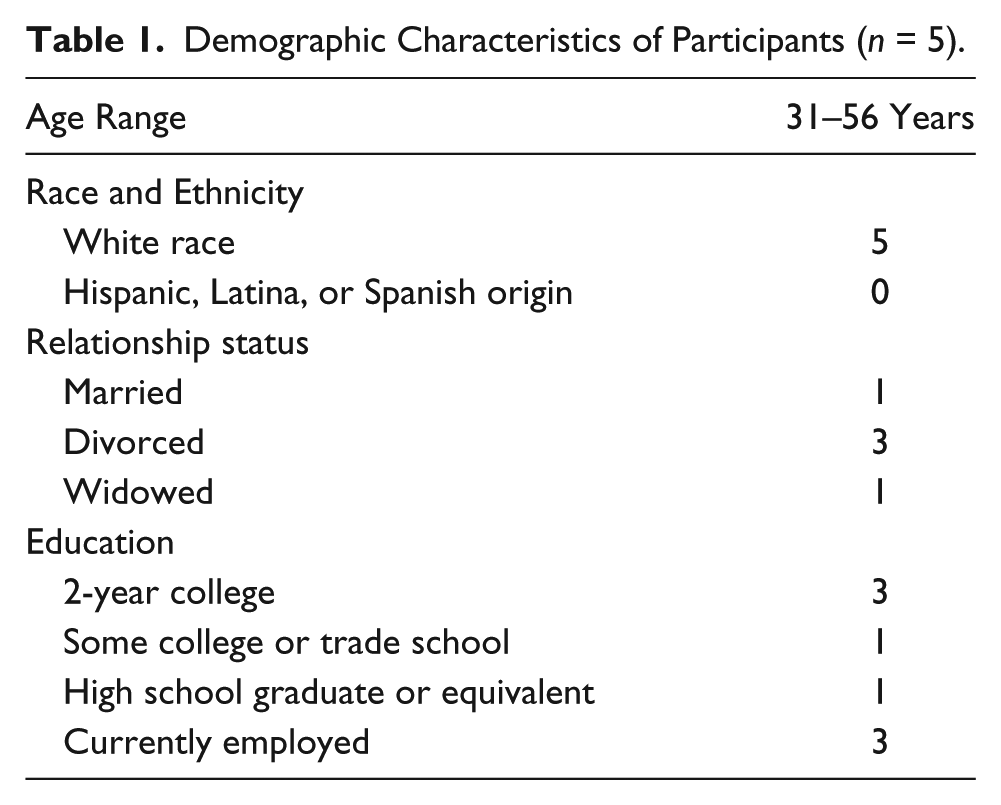
Five women participated in this study, including the key informant. Demographic data for the participants are shown in Table 1. Participants ranged in age from 31 years to 56 years and all identified as White, non-Latina women. We arrived at four major themes through analysis of the transcripts, digital stories, and field notes produced in and around the digital storytelling workshop: addiction in pregnancy, the path to recovery, being in recovery, and the work of peer mentoring. Here, we illustrate these themes from our multimodal data collection, through quotes from the interview transcripts and digital stories, supplemented with data from the story circle and story screening transcripts, and field notes.
Demographic Characteristics of Participants (n = 5).
Addiction in Pregnancy
The peer mentors discussed their own past experiences of addiction in pregnancy, including their sense of shame, stigma, fear, and isolation. Being pregnant and addicted, they felt ashamed knowing their babies were exposed to substances, a common theme among women dealing with addiction during pregnancy and parenting (Cleveland, Bonugli, & McGlothen, 2016). One study participant reflected in her interview, “To be an addicted mother, the guilt and shame that goes on top of that, pretty much we want to die anyway. We are so ashamed and embarrassed and people look at us with disgust and disdain.” Each of the mentors revealed this common sense of shame, experienced in the past during pregnancy.
In addition to the “looks” they received, participants felt stigmatized by health care providers during and after pregnancy, which may have contributed to their self-imposed shame (Cleveland et al., 2016). In the workshop story circle, one of the participants talked about feeling shamed by the staff in the neonatal intensive care unit (NICU) who “wouldn’t listen to me because I was a junkie mom.” Field notes from Day 2 of the workshop record the backstory: she wanted to breastfeed and did not want her daughter to have a pacifier. Despite expressing this, she repeatedly saw the NICU staff feeding her baby formula from a bottle and giving her a pacifier, rather than treating her as a mother capable of making the best decisions for her daughter and honoring those decisions—sentiments commonly described as important by mothers of infants in the NICU (Aagaard & Hall, 2008) yet frequently not experienced by mothers with SUD (Cleveland & Bonugli, 2014).
The participants differentiated stigma of addiction in pregnancy from general stigma around addiction. They experienced pregnancy-related stigma even from others in the addiction community. One of the participants elaborated on this in her interview, saying [Pregnant] women in the community, they get treated differently by the community, they get stigmatized in meetings, oh “they’re nodding off, they are not clean,” this and that. The stigma just gets—their disease of addiction gets compounded with the stigma and the expectations put upon them by living in certain houses or not having available resources to accommodate pregnancy.
The stigma of addiction in pregnancy came coupled with fear. A participant described in her interview that [W]hen you are pregnant and using some sort of substance, there is a ton of stigma around that and there are a ton of fears, you know, fear that [the government agency] is going to take your baby away, fear that your baby is not going to be healthy, fear, you know, you’re still not going to be able to get clean ever, fear that you’re going to be alone, or have to hold this secret.
This participant’s fears were exacerbated by her experiences with previous pregnancies, which for unknown reasons had all ended in miscarriage, as well as her experiences with health care providers during her pregnancy with her daughter. Her daughter was born with a known anomaly diagnosed during pregnancy and unrelated to her own active drug use; in her digital story, she describes being told that her daughter would not live beyond 2 years. Although she feared for her daughter’s health, she also felt unsupported in her goal of getting into recovery (Workshop Day 2 debrief fieldnotes), a goal she needed to achieve to retain custody. When her baby was born, she had only moments with her daughter before she was taken to surgery and then the NICU. In her digital story, she says, “The first time I laid eyes on her, I knew that I would never use again” and the viewer sees a close-up, black and white photo of the faces of the participant and her newborn daughter, gazing at each other, their eyes inches apart. The participant is smiling, with her right thumb touching her daughter’s left hand.
Despite wanting to stop using drugs, the participants noted that they did not feel capable of quitting drugs on their own and did not have adequate social or institutional support to help them toward that goal. In her digital story, the participant who had experienced multiple miscarriages states that during her pregnancy, “I felt alone and scared because I didn’t miscarry and all of sudden I was going to be a mother. I really wanted to be clean and sober but I didn’t think I could do it.” In another digital story, a participant says, “I was waiting for weeks to get into the methadone clinic. I just wanted to save my baby’s life.” The viewer sees a photo of this participant in her third trimester of pregnancy, smiling, with her right hand atop her pregnant abdomen and visible track marks on her arm. The struggle between wanting to end their drug use while lacking support contributed to a sense of isolation and hopelessness for the participants. Conflicting desires—for being a good mother and for their drug of choice—carried the threat of forced abandonment of their child through government agency intervention. Ultimately, each of the peer mentors experienced some degree of child custody loss, either because the state took their children away, or because other family members took on primary caregiving responsibility. One participant describes the experience in her digital story, saying that shortly after her second child was born, the government agency was “at the door with the police, taking our babies away. I was so deep in my addiction that I really believed I was a good mother, I didn’t think I was doing anything wrong.”
The peer mentors deeply connected their own experiences of shame, stigma, fear, and isolation in pregnancy with those of their pregnant mentees. They empathetically wanted the experience to be different for these women, in a sense reclaiming a mothering role with their mentees as they provided continuous support despite their mentees’ own struggles with and relapse into addiction. For the mentors, story sharing was an important part of helping to facilitate a better experience for their mentees. One participant noted in her digital story that “sharing allows us to let go of the shame, work on the guilt, and focus on building a stronger ‘us.’” Her use of the word “us” may signal a sense of solidarity felt with fellow mentors and mentees, which was expanded upon in the digital storytelling workshop through shared experience, connection through reflection, and then active storytelling to make sense of one’s experiences.
Path to Recovery
Each of the mentors had an individual journey toward recovery but many of their recovery-related beliefs are common to the foundational ideas of the 12-step Narcotics Anonymous (NA) program (Narcotics Anonymous, 2008). In her digital story, one participant said of working toward recovery, “It’s an inside job. We have to get all of that junk out of us, and then the task of trying to replace it with the beautiful begins. A transformation of sorts.” Along with these words, the viewer sees on screen a photo of a disk of a single flower, used to represent the individual woman struggling with addiction. As the participant speaks of the inside job that leads to self-transformation, the image very slowly zooms out revealing the beauty of pink petals surrounding the flower disk.
This participant’s sentiment was echoed in all of the participants’ interviews. To be successful in recovery, the women had to be active participants in the process and do the “inside” work of reconciling the past, in NA parlance, meaning they had to remember the past and recognize that they could not change it, but not allow it to contaminate the present. The phrase “inside job” was used by several of the participants in their interviews and digital stories. This phrase is commonly found in literature about recovery from substance abuse (Ehler, 2000) and was described by one participant as developing “morals and values and ethics and love and compassion, not just for self, but for others.” To do this inside work, another participant noted in her interview “you really have to search inside you and see,” reflecting a common sentiment that continuous self-awareness is part of the recovery process. The inside work did not end once sobriety was achieved. Although sobriety was part of the recovery process, the mentors spoke of recovery as something different from sobriety. To truly be in recovery, one had to have done the inside work; abstaining from substance use was not enough. As one of the participants put it in her interview, “the stopping of using drugs and alcohol is the easy part. It’s all that inside work that’s the hard part. But it’s also the part that’s worth it.”
Collectively, the peer mentors emphasized throughout the digital storytelling workshop and in follow-up interviews that the path to recovery required a strong support network to produce a sense of hope and possibility. Having a strong support network while maintaining sobriety was key to doing the inside work, and was a necessary component toward the goal of moms and babies staying together. Peer mentoring and story sharing were seen as crucial elements of support for pregnant women with SUD. The participant who uses the pink flower to represent self-transformation states in her digital story that, “sharing my story has allowed other women to identify with me, and my feelings. Like me, they no longer feel like they are all alone. They have a hope that they didn’t have when we first met.” On screen, the viewer sees the same photo of a pink flower slowly zoom out, to reveal a bed of flowers, signifying a sense of connection. This represents a key ingredient—social support through shared experience—to recovery. Another participant further emphasized the importance of social support in her interview: I think that one thing that I have to say that is consistent for every single person I know in recovery is they have some sort of support network, like that seems to be key and across the board for everybody that I’ve come across in recovery. I have not- I have yet to meet somebody that has recovery that’s doing it all by themselves in their little, in their little bubble.
For the participants, being part of the digital storytelling workshop contributed to their sense of social support because it created a space in which they were able to better know each other through the process of creating and sharing their digital stories (Paterno et al., 2018).
Maintaining Recovery
To the mentors, a critical part of maintaining recovery was “balance.” Each talked during the workshop and in their interviews about the importance of self-care activities to maintain balance in daily life so as not to relapse. For one of the participants, self-care meant prayer and maintaining her religious faith. In her digital story, she describes the cycle of addiction, sobriety, and relapse that she experienced when she was pregnant with her first son and for the following 15 years. She visually depicts the end of this cycle with a still image of her personal copy of the New Testament, which fades into view as she says, “Finally, the relapse of eleven years is over.” For another participant, time management to balance her roles as a mother and full-time student was important, as was going to weekly therapy sessions. She noted, however, “You have to find what works for you. Like what works for me might not work for somebody else.”
Maintaining recovery led the mentors to reunification with their children and the opportunity for, as one participant put it in her interview, “another chance to do it right.” After describing the end of her relapse, the participant who incorporate prayer and religious faith in her self-care continues her digital story by detailing the positive outcomes of her recovery: Three years clean and sober. For the first time, I’m in recovery. I’m changing. I have a close relationship with both of my sons again. I help other new women with their recovery every day. I have God in my life daily.
The viewer sees a close-up picture of the participant with a joyful expression and, as the image zooms out, the viewer sees her standing between her two grown sons, both of whom sport broad smiles, portraying a happy and connected family. For another participant, an important part of reclaiming her role as a mother and maintaining recovery was talking openly with her son about her addiction, the times that she relapsed, and the times that she “got back up in recovery and battled on.” In her view, it provided a critical lesson for her son that “some things in life are hard. We fight and we get through it and it takes hard work, but it’s what we do with adversity that defines us.”
Despite reunification with their children, participants were acutely aware of how vulnerable they were to potential relapse, so they persevered in self-awareness by attending group meetings to avoid losing what they had achieved. Described by one participant in her interview, maintaining recovery was “an ongoing process, you don’t ever, you’re never going to be recovered because it’s continual work on self to maintain recovery. It’s about becoming a person that you are okay with.” They reckoned that their own peer-mentoring work afforded them the opportunity to continue this work, while also providing support to other women such as themselves. As another participant put it in her interview, The most important thing recovery has given me is the ability to like myself and to figure out why I did the things I did . . . the only way I can maintain that is to work with others. That’s how we keep our recovery, we work with others.
Story sharing with mentees was part of the work of maintaining recovery. For one of the participants, this was why she shared her story, including her relapses, regularly as part of her peer mentoring. She said in her interview, “The more they can identify, they can see me as a sober woman of dignity, grace, and integrity, and still know that I did those things, I believe it gives them hope that it’s possible for them, too.” Story sharing benefited not only the mentees, but also the mentors. Personal storytelling was part of the practice of self-awareness.
The Work of Peer Mentoring
Although storytelling figured into the process of maintaining recovery, the mentors also recognized that sharing their stories, including their digital stories, could figure into their endeavor to communicate to a wider audience about the experiences of pregnant women with SUD. After the digital story screening on the last day of the workshop, participants discussed the potential use of their stories for advocacy purposes. Their digital stories could be effective because, as one participant put it, the stories “all felt really genuine, and it didn’t feel like, when everyone was talking about helping out the moms, it didn’t feel like, ‘oh, this is the line I am supposed to say,’ you know like that. It felt heartfelt.” In particular, they saw their digital stories as a means to reduce stigma experienced by pregnant women dealing with addiction by providing “a different insight into who we are.” One participant said in her interview, If, like, medical people could see it, the [digital] story, and see, you know, the other side of it, maybe they won’t judge their patients as much when they’re coming in, you know, and disclosing “I am pregnant and I am using.”
In this sense, the work of peer mentoring was “all encompassing”—in terms of maintaining recovery for one’s self, supporting other women in need, and then advocating on their behalf. Peer mentoring took on a mothering quality in and of itself. Effective peer mentoring required direct support that was 24/7, which included assessing their mentees’ needs, linking them to local services, and advocating on their behalf with health care providers. As mothers in recovery in their own right, the mentors collectively noted that specialized services were necessary for their mentees to successfully achieve recovery because adding pregnancy and a newborn into the recovery mix heightens the challenge. Often articulated was the need for flexibility in service provision. A participant noted in her interview: Some of the rules cannot be the same across the board. Like [the moms are] told “you have to get your own rides to meetings.” I have told [the meeting organizers], well, when you tell a mother, who’s got a carrier and an infant to get her own ride, usually women who pick up other women have other women in the car. They have to accommodate for two seats not just one because they’ve got a [baby] carrier. Some of the rules have to be malleable to accommodate pregnant and postpartum women.
Encouraging hope through connection was also seen as a central part of the peer-mentoring role and something only a peer could provide by sharing her recovery story. During the final digital story screening, each of the mentors talked about the importance of sharing their addiction and recovery stories with mentees as a means of establishing hope, trust, and connection. In her interview, one participant put it as follows: “I talk about all those dirty little secrets, I do. . . and then hopefully [they] can help alleviate somebody’s pain to know they are not alone.” A strong message of hope was captured in the opening of one of the digital stories, in which the viewer sees an image of rock in a garden with the word “hope” inscribed on it. The image is portrayed in silence for 11 seconds to magnify the importance of the message.
When the state-funded, formal peer-mentoring program suddenly closed, the mentors were very concerned about what would happen not only to their current mentees, but to pregnant women yet to come, worrying that these women would get lost in the system and not offered appropriate support services. Despite the defunding of the program, the mentors continued to work with their mentees, yet they also felt at a loss, as the formal program had provided a mechanism through which they literally practiced—did—recovery as they sustained each other as mentors and maintained their own recovery by supporting their mentees. The digital storytelling workshop resurfaced this dynamic, albeit in an ephemeral fashion (Paterno et al., 2018). One participant captured this sentiment during the story circle when she said “doing [peer mentoring] helps us stay healthy” and again at the start of her digital story, saying “Shut down with one phone call. I don’t think I’ve recovered from it. It wasn’t just a job, it wasn’t just a paycheck. It was about life, sobriety, health, safety, and much more.” As she says these words, the viewer sees only a black screen, demonstrating the sense of trauma and loss experienced when the program suddenly closed.
The closure of the program inspired the mentors to seek new avenues for supporting pregnant women with addiction. At the end of her digital story, the same participant says, “I won’t let this [mentoring] program or the brave women be dismissed. I’m not sure what the end result of my purpose will be but I know I’m not being silenced anytime soon.” As the viewer hears these words, onscreen the special rock from her garden comes back into view, again displaying the word “hope” to convey her continued commitment to supporting women dealing with addiction. The importance of starting a new mentoring program focused on pregnant and parenting women with addiction was a key point of discussion throughout the digital storytelling workshop and during the final story screening.
Discussion
The peer mentors described their personal journeys through addiction to recovery, and ultimately, to peer mentoring. Throughout their experiences, they faced significant stigma and lacked support for getting clean and staying united with their children. They had each done the inside work required to achieve recovery, and maintained their recovery by staying balanced and incorporating self-care into their lives. The peer-mentoring process supported their pregnant mentees in the active addiction phase by providing hope and advocacy, laid a path to recovery by providing social support and shared experience with their mentees, and helped the mentors to maintain their own recovery. Story sharing was integral to both recovery and doing the work of peer mentoring.
Pregnant women, including those who are addicted to substances, highly value motherhood (Shahram et al., 2017; Van Scoyoc, Harrison, & Fisher, 2017). The peer mentor participants in this study were no exception. Their feelings of shame and guilt at being addicted in pregnancy, coupled with fear of losing custody, are consistent with what has been previously reported (Cleveland et al., 2016; Roberts & Pies, 2011). Although a mother’s guilt can have negative consequences, it can also be uniquely motivating for her to become sober (Yonkers et al., 2009). Study participants were acutely aware of this potential—they had all wanted to stop using drugs but had not felt equipped to do so on their own. They universally acknowledged that receiving social support is a critical component to successful recovery, particularly from other women with similar experiences as it helps pregnant women realize they are not alone. Similarly, in another study, pregnant and parenting women with SUD reported that support from other similar women was valuable, especially in a group setting, because they could identify with each other (Kuo et al., 2013).
The peer mentors also realized that pregnant women dealing with addiction face unique stigma and challenges compared with nonpregnant substance users. The participant’s observation that there are no exceptions to the expectation that addicts find their own rides to meetings, despite the reality that postpartum mothers will be traveling with an infant in a carrier, is notable because it reveals an underlying structural incompetency in the treatment and recovery system and implies the need for an approach more sensitive to the everyday exigencies—including precarious modes of transportation—of women in recovery (Metzl & Hansen, 2014). A mother who does not attend recovery meetings may be labeled as noncompliant with care, regardless of the reason, jeopardizing her ability to retain custody of her infant, and jeopardizing her recovery through retraumatization (Brown, Tracy, Jun, Park, & Min, 2015). Normative standards for recovery and what it means to be a “good mother” are set in stone, often to the detriment of those they are meant to help (Kitty & Dej, 2012; Phoenix & Woollett, 1991). Singling out pregnant women in the addiction community may be evidence of an underlying hierarchy that exists within recovery programs, despite the professed concept that everyone working the 12-steps is equal (Snyder & Fessler, 2014). The efforts of peer mentors and other supportive organizations, and ultimately the health of the mother, may be undermined if systematic structural vulnerabilities are not addressed (Bourgois, Holmes, & Quesada, 2017; Bungay, 2013; Torchalla, Linden, Strehlau, Neilson, & Krausz, 2014).
These punitive practices are part and parcel of a larger philosophy holding that only through hard work can one successfully achieve and maintain recovery. This bootstrapping mentality assumes that one has the capacity and resources to do so and is consistent with the fundamental tenants of 12-step programs (Narcotics Anonymous, 2008). Also a tenet of 12-step programs is a redemptive narrative, in which one admits to one’s own prior actions, shame, and the inability to stop using on one’s own. The peer mentors referenced these tenets in their discussion of shame, doubt in their ability to stop using drugs without support, being active participants in their rehabilitation, doing the inside work of recovery, and incorporating self-care into their lives to maintain recovery. Clearly, they believed in this way of thinking about addiction and recovery. As former or current members of NA for whom the NA program was successful, it was not surprising that their talk often indexed this recovery logic.
Although the peer mentors believed in the overarching NA philosophy, they were adamant that specialized support for substance-using mothers was essential. This intuitive knowledge is supported in the literature, where support services have been found to greatly improve outcomes for women using substances while being pregnant (Silva, Pires, Guerreiro, & Cardoso, 2012). One study found that substance abusing mothers who permanently lost custody of their children had fewer support needs met compared with women who kept or regained custody (Grant et al., 2011). Considering these findings, sensitive and tailored support and guidance for pregnant and parenting women, particularly from someone who will not stigmatize and who has been through the same ordeal and emerged successfully, holds great promise. The formal peer-mentoring program provided an opportunity to offer such support.
A tailored approach required mentoring that took on a mothering quality. In the same way that the peer mentors strongly valued their position as mothers in recovery, they valued their commitment to supporting other mothers. The sudden closure of the formal peer-mentoring program was reminiscent of the threat of loss of custody they faced during their pregnancies. This withdrawal of support for the program was a form of abandonment to the mentors, and, in turn, put them in a position in which they were potentially forced to abandon their mentees. The closing of the program not only affected pregnant women served, it also genuinely jeopardized the mentors’ own recovery, as providing support through sponsorship and story sharing is, again, a fundamental part of maintaining recovery in 12-step programs (Narcotics Anonymous, 2008). This loss was perhaps even more profound because the peer mentors were offering something unique to the pregnant women that could not be captured through standard NA programs. This suggests that being a peer mentor for pregnant and parenting women is different from being an NA sponsor and bears further study. The digital storytelling workshop provided an opportunity for camaraderie and closure on the mentors’ losses related to the program ending, and new optimism as the resultant videos may provide inspiration and hope for others who view them.
There are several limitations to this exploratory study. We held one digital storytelling workshop with five participants. Although this number is within the recommended range of participants for a digital storytelling workshop (Lambert, 2010), our findings are limited by our small sample size. All workshop participants also had at least a high school education. It is possible that this gave the participants an advantage in engaging in the digital storytelling workshop, but it is important to note that digital storytelling workshops are successfully conducted worldwide, in resource-poor settings with no Internet connection, and with participants who may not be print literate or may speak a language other than English (see https://www.storycenter.org/silence-speaks/).
All of our participants self-identified as White, non-Latina, and were recruited from a single geographic area. Although this is not surprising given the study location, peer mentors identifying as other race/ethnicities and cultures, and living in other geographic areas may have different experiences and philosophies around addiction and recovery. The way in which support needs may differ for diverse groups of pregnant women with SUD has not been specifically studied. However, in studies with breast cancer survivors, culturally specific peer mentoring has been successful with diverse women because of the ability to provide support that is culturally, linguistically, and historically sensitive to those receiving mentoring (Ashing-Giwa et al., 2012; Lu, You, Man, Loh, & Young, 2014). For pregnant and parenting women with SUD, being able to identify with peer mentors through their experiences with addiction and also through cultural, ethnic, or educational similarities may more readily enable the ability to build trust, which is a critical component of successful treatment for pregnant women with SUD (Kuo et al., 2013).
A further limitation is that we do not know if the peer mentors maintained recovery using medication-assisted treatment. This is particularly relevant because there are documented competing perspectives on the meaning of “recovery.” One perspective is that the abstinence from any substance is the only way to demonstrate that someone is in recovery, while the opposing view is that one may not only use substances while in recovery, but also need substances as an adjunctive therapy to satiate cravings (Duke, Herring, Thickett, & Thom, 2013). Further research is needed in this regard as it is important to understand the unique needs and meanings of recovery and ways to conceptualize “successful” recovery (Marcellus et al., 2015), from the perspective of women with active SUD or in recovery, to provide optimal care and services. Finally, all of our participants achieved recovery through 12-step programs, which is not surprising as such programs are free and available worldwide, but perspectives from women who utilize other recovery modalities may be different from those of the women in this study.
Mother-to-mother peer mentoring is a distinct concept. Capturing the work of peer mentoring and its impact on mentor and mentee is an important strength of this study. We have documented important perspectives on the needs of pregnant women with SUD from women who have lived this experience and are actively engaged in their community. We also used digital storytelling for data collection, which is a unique method for understanding the insider (emic) perspective on addiction in pregnancy, recovery, and peer mentoring. In addition, one researcher lived in the community where the research was conducted. During recruitment, it was evident that this contributed to the participants’ interest in the study because they perceived that the researcher was personally invested in the community.
Future research should consider perspectives of pregnant women who receive peer-mentoring services, and perspectives of mentors who have achieved recovery through programs other than 12-step. Understanding the utility and therapeutic qualities of digital storytelling as a means of storytelling and story sharing will be useful, as storytelling is an important component to active recovery (Narcotics Anonymous, 2008). It would also be prudent to examine health outcomes for pregnant women who do and do not receive support from peer mentors to understand the larger health impact of peer mentoring on women and infants. Perhaps most important would be to understand how best to organize and maintain community-based, peer support programs so that their success is not tied to government funding and policy changes. Considering that NA remains foundational to the recovery of many women, including the participants in this study, a similar but separate peer-led model specifically situated for pregnant and parenting women with SUD—in which peer mentor “sponsors” are assigned to new members—might be a reasonable approach. The development of such a model would likely take time and financial resources at the outset but would have the potential to be self-sustaining over time.
Footnotes
Authors’ Note
Portions of this article were presented on July 30, 2017, at the Sigma Theta Tau International, 28th International Research Congress held in Dublin, Ireland.
Declaration of Conflicting Interests
The author(s) declared no potential conflicts of interest with respect to the research, authorship, and/or publication of this article.
Funding
The author(s) received no financial support for the research, authorship, and/or publication of this article.