



Abstract
Attention to power imbalances when seeking help for suicidality after having been controlled within intimate partner violence (IPV) is crucial in improving health care delivery. Well documented in the literature is the correlation between suicidality and IPV and that help-seeking for each is difficult; however, a gap exists when both intersect. The process of women’s help-seeking is explored in this feminist grounded theory and photovoice multiple qualitative method study. Analysis of interviews with 32 women from New Brunswick, Canada, and photovoice meetings with seven women revealed a basic psycho-social problem. System Entrapment or being dehumanized while seeking help for suicidality occurred as a result of perceived invalidation from health care providers’ lack of empathy. Further harm while providing services to women feeling suicidal can be prevented with a shift from an individualist model toward a trauma and violence informed approach. Understanding the contextual factors influencing women’s suicidality may reduce victim blaming.
Keywords
Suicides account for 1.4% of deaths worldwide (World Health Organization [WHO], 2017), and the link to intimate partner violence (IPV) is clear. Among women in a domestic violence shelter, 20% had thought of suicide within the past 2 days (Wolford-Clevenger & Smith, 2017), and 30% of women from a community sample who had experienced emotional and economic IPV during the previous year had thought of suicide in the past month (Gibbs, Dunkle, & Jewkes, 2018). Abusive relationships involve a complex tapestry of power and control (Stark, 2009; Zarling, Orengo-Aguayo, Lawrence, Dishion, & Snyder, 2016) and can contribute to psychological pain so great that women wish to end the pain by killing themselves (Jewkes, Corboz, & Gibbs, 2019; Wolford-Clevenger et al., 2018). Despite the urgency of suicide, little is known about how women access help. While several studies have demonstrated that women have difficulty accessing help for a variety of health outcomes of IPV (Ford-Gilboe et al., 2015; Fay-Hillier, 2017), only a couple of studies could be found on help-seeking for suicidality in the context of IPV. One study found that participation in a culturally informed psycho-educational support group did not lower suicide ideation in African American women who had experienced IPV and had recently attempted suicide (Kaslow et al., 2010; Taha et al., 2015). Ilardi and Kaslow (2009) also found that disconnection from others was found to be a barrier to help-seeking for suicidality in women after IPV, illuminating the need to explore the process of how women access help.
The purpose of this article is to discuss System Entrapment, the basic psycho-social problem that emerged from my analysis of women’s help-seeking for suicidality after IPV. System Entrapment is an original concept denoting a sense of being stuck during the process of help-seeking that has not previously been documented in the suicide literature. System Entrapment is a devaluation of human worth while seeking help in the health care system and is influenced by cultural conceptualizations of suicide. This study’s findings have important implications for creating safe environments that promote women’s capacity to manage suicidality and avoid escalating trauma responses in the mental health sector, family violence programs, women’s shelters, crisis hotlines, and other health care services.
Background and Context
Psychiatry, the area of medicine in which suicidality is treated, is essential to understanding women’s help-seeking. Psychiatry is known for its history of hierarchical structures and mistreatment of patients within asylums (Foucault, 1965; Nguyen-Finn, 2012). Power abuses within psychiatry have enabled women’s oppression by maintaining traditional feminine roles that implied women were weak and incapable of managing difficult emotions (Potter, 2015; Ussher, 1991). Pathologizing women within a psychiatric context dates to the late 19th century with Freud’s treatment of women presenting with intense fear, despair, and uncontrollable emotions (Herman, 1992; Kohon, 2018). He labeled them as being hysterical, a condition that was believed to have derived from the female sexual organs (Anleu & Hornosty, 2012; Ussher, 1991), but has since been acknowledged as posttraumatic stress disorder (PTSD; Chesler, 2005; Herman, 2015). These oppressive ideologies continue to this day in psychiatry by blaming women for their problems, in other words the “weaker sex,” without considering greater socio-political factors that influence mental health (Morrow, 2017). Power imbalances frequently occur within psychiatric units. For example, patients within psychiatric units reported feeling powerlessness when subjected to physical coercion (Brophy, Roper, Hamilton, Tellez, & McSherry, 2016; Hörberg & Dahlberg, 2015), including locked seclusion (Iversen et al., 2011; Sambrano & Cox, 2013), suicide-watch (Cutcliffe & Barker, 2002; Hörberg & Dahlberg, 2015), and physical restraints (American Psychiatric Nurses Association, 2018; Brophy et al., 2016), routine interventions in the treatment of suicidality.
Suicidality is embedded within an interpersonal context (Jobes & Ballard, 2011); therefore, understanding the influence of health care provider (HCP) relationships while help-seeking for suicidality within the health care system is important. Nearly all studies on patients’ perception of care within Canadian psychiatric units between 1997 and 2014 reported coercive care and poor relationships with HCPs (Cutcliffe, Santos, Kozel, Taylor, & Lees, 2015). Shame or the fear of being judged (Frey, Hans, & Cerel, 2016; Han & Oliffe, 2015), feeling uncomfortable around HCPs (Flynn et al., 2017; Hagen, Knizek, & Hjelmeland, 2018), and deterioration of the relationship with HCPs (Hotzy & Jaeger, 2016) have been found to impede access to help for suicidality. Even worse, HCPs’ negative attitudes toward their patients in psychiatric units have been found to worsen suicidality (Vatne & Nåden, 2014).
Exploring help-seeking for suicidality after being abused by a partner requires an understanding of IPV within a historical context. IPV has traditionally been considered a private matter removed from political advocacy (Bailey, 2010), decreasing women’s agency in attaining help for the negative outcomes associated with abuse and violence. Akin to suicidality, seeking help for IPV is an interpersonal process. For example, one study found that women evaluated their help-seeking experiences for IPV based on the relationship with the HCP, that is, the negative interactions with the HCPs reminded them of their abuser (Keeling & Fisher, 2015). The gendered nature of IPV and suicidality is another similarity that complicates help-seeking. IPV is situated within the context of women’s oppression (Bailey, 2010), occurring most severely and frequently to women at the hands of their male partners (Statistics Canada, 2018; WHO, 2010). Gender influences help-seeking for suicidality as women seek help from a psychiatric HCP for thoughts of suicide (Chan, Wong, & Yip, 2018; Gontijo & Vasiliadis, 2016), access the emergency department (ED) for suicidal behavior (Canner, Giuliano, Selvarajah, Hammond, & Schneider, 2018; Katz, Randall, Leong, Sareen, & Bolton, 2018) and are admitted to hospital after attempting suicide (Narishige, Kawashima, Otaka, Saito, & Okubo, 2014; Roelands, Vanoverloop, Maron, & Bilsen, 2018) more frequently than men. Despite this difference, treatment services for suicidality are gender neutral (Jaworski, 2016), creating potential problems for women’s help-seeking.
Theoretical Underpinning
The theoretical underpinning of this study was feminist ethical theory, an approach that challenges the way dominant moral philosophy oppresses women or other marginalized groups and guides the reformulation of a moral framework that equalizes power imbalances (Jaggar, 2000). Power imbalances are situated within the medical model, the framework that governs how health services for suicidality are delivered and is built upon hierarchical structures where HCPs have authority over decision making (Fitzpatrick & River, 2018). Feminist ethical theorists challenge the misuse of power within psychiatry by deconstructing the assumption that the HCP is the expert with all the knowledge and the patient is a passive recipient of this knowledge (Griscti, Aston, Warner, Martin-Misener, & McLeod, 2017). In this way, women’s strengths and experiences are valued as contributors to decision making in treatment.
Feminist ethical theory helps to challenge dominant Western conceptualizations of suicide, a concept that denotes self-infliction (Diagnostic and Statistical Manual of Mental Disorders, 5th ed.; DSM-5; American Psychiatric Association [APA], 2013) without consideration of the socio-political influences on suicidality, thereby placing responsibility and blame on individuals for their self-harm and mortality. Deconstructing dominant ideologies within the health care system using a feminist lens is critical in identifying and challenging taken-for-granted assumptions that impacts women’s mental health (Tseris, 2013). In this study, feminist ethical theory helped to illuminate power dynamics in women’s help-seeking for suicidality in the context of having been controlled by an abusive partner. The feminist lens was critical in capturing a comprehensive picture of women’s experiences, an understanding that is lacking in the current body of knowledge of women’s mental health. Overall, the purpose of this study was to explore the process of women’s seek-help for suicidality after IPV using a feminist Grounded Theory (GT) and Photovoice (PV) study.
Design
The research design for this study was a multiple-method feminist GT and PV research approach. Qualitative methods can legitimately mix and be used concurrently within one study (Morse, 2012) by having a core component, representing the complete method, and a supplementary component, representing research strategies from another qualitative method (Morse & Niehaus, 2009). GT functioned as the core component, and PV represented the supplemental component. Their compatibility is demonstrated in their congruency with feminist ethical theory as GT enables the identification of socio-political factors that influence human behavior (Wuest, 1995), and PV is critical in the study of power imbalances related to gender (Duffy, 2011). Women’s voices are essential in knowledge creation within GT and PV, contributing to a decrease of power differentials during the research process. Women’s realities were valued, yielding rich data from the participant interviews and group discussions.
Reflexivity, a feminist technique of critically analyzing the research process and the researcher’s response to it (Hesse-Biber, 2007), contributed to the validity of this study. For over two decades as a psychiatric HCP, I worked with women who had a history of abuse and were frustrated with coercive treatment for their suicidality. This peeked my curiosity of how they manage help-seeking in the context of paternalism and power imbalances. To avoid forcing my ideas onto the data collection, I recorded insights in a journal about how my background as an HCP and my personal values related to emerging findings (Cutcliffe, 2003). I acknowledged the power imbalance between the participants and myself, in particular, how my role as the researcher might influence participants’ sharing, an awareness that promotes a more accurate depiction of women’s lives (D. E. Smith, 1999).
Grounded Theory
GT involves the study of human behavior (Morse, 2001) with the intent of understanding a social or psycho-social problem (Glaser & Strauss, 1967). Theory is generated through a constant comparative research method where data collection and analysis occur simultaneously (Glaser & Strauss, 1967). Data are initially coded line-by-line (Glaser, 1978) followed by theoretical coding that is used to establish relational statements, raising the analysis beyond description to a theoretical level (Strauss & Corbin, 1998). Theoretical sampling is used to collect further data from the participants or the literature in order to test the sensitivity of emerging hypotheses (Ford-Gilboe, Wuest, & Merritt-Gray, 2005; Wuest, 2000). Following the Glaserian style of GT, the analysis involves the identification of substantive theory that exists within and emerges directly from the data without forcing concepts or ideas onto the development of relationships (Stern, 1994). The final theory is written using memos that are created throughout the entire research process in keeping track of how the concepts and relationships fit together (Wuest, Ford-Gilboe, Merritt-Gray, & Berman, 2003).
Photovoice
PV is a visual research approach that uses participant-generated photography to describe the needs, strengths, and concerns of a community (C. Wang & Burris, 1994), stimulating change through critical reflection and empowerment (C. C. Wang & Redwood-Jones, 2001). PV involves an acknowledgment of the participants’ voice as an indicator of reality (C. C. Wang & Redwood-Jones, 2001) and is based on the person’s everyday experiences (Hergenrather, Rhodes, Cowan, Bardhoshi, & Pula, 2009). After participants generate their images that represent their experiences, they share their personal perspective of their photos and expand on the meaning of these images through a critical reflection among the other members of the PV group (Wang & Burris, 1997), enriching the study with added context (C. C. Wang & Redwood-Jones, 2001). The next step is to codify the data that arise out of the group dialogue by identifying “issues, themes, or theories” (C. Wang & Burris, 1997, p. 381).
Integrating Methods
I integrated the qualitative methods by including the PV data in the GT analysis of the interviews, that is, I analyzed transcripts of the PV meetings and the individual interviews using the constant comparative method. The integration did not compromise the integrity of either research approach; the integral aspect of GT (to create theory by raising the data to a higher level of abstraction), and the integral aspect of PV (critical reflection of self-generated photos), were maintained. Incorporating PV into the research approach strengthened the study, as photos provide a unique perspective of everyday reality that only a visual image can reveal (Harrison, 2002). Images reflecting women’s abuse experiences deepened the understanding of how violence influenced help-seeking for suicidality.
Ethics
This study adhered to the Tri-Council Policy Statement on Ethical Conduct for Research Involving Humans (TCPS-2; Canadian Institutes of Health Research [CIHR] 2014), meeting approval of the University of New Brunswick Research Ethics Board (file #2013-071) and the Horizon Health Network Research Ethics Board (file # 2013-1900). Informed and written consent for the interviews and a separate written consent for the PV meetings were obtained. Women were given a modest cash gift for their participation in the interviews and a basic inexpensive digital camera for their participation in the PV portion of the study.
Considering women’s experiences having been abused, I gave full attention to helping them feel safe participating in this study. Women had left their abusive partner at least 1 year before entering the study, most of them having left at least 5 years prior. They identified a comfortable meeting place, gave me a safe phone number to reach them, and identified personal or professional supports that helped them to manage stress. I offered the women a list of resources in case of an emergency or for further support. Following a discussion about risks related to being identified in their photos, the women consented to having their photos published in research journals. Finally, I provided women with emotional support and acknowledged them as contributors of an important body of knowledge on women’s health. All women reported that they did not feel their participation in the study increased their risk for harm and reported that the experience was rewarding.
Recruitment and Sample
English-speaking women at least 19 years of age living in New Brunswick, Canada, who had left their abusive partner at least 6 months prior to the study and had sought help for suicidality either during or after IPV were recruited voluntarily through advertisements in physician offices and health clinics. The sample included 32 women between the ages of 19 and 68, most of whom lived in urban areas. Suicidality and IPV were self-identified and self-defined. One participant described suicide as a desire to kill herself so that she could have a “break” from life, an “answer” to her problems. Another participant explained how she felt before she overdosed on pills: “I felt frustrated. I felt sick of living. Just frustrated feeling this way every single day. I feel trapped in my own body.” Suicidal thoughts and attempts were unique for each woman with varying intensities at differing periods of time after leaving the abusive partner. Women in this study described IPV as their partner controlling their lives through verbal insults, isolation from family, physical harm or threats, nonconsensual sex, limited access to finances, children used as pawns, and/or other forms of intimidation. Among the 25 women who had children, eight no longer had custody of her children. Three women completed some high school, 20 had a high school diploma, and nine women obtained some postsecondary education. Two participants were students, 5 were employed, and 25 were unemployed at the time of the study.
Data Collection
I met with each woman once for an in-depth interview, leading with the question “How did you find help for suicidality after IPV?” or “Tell me about your help-seeking for suicidality.” After the interview, women residing in a local urban city of NB were invited to participate in a PV group to further explore help-seeking with other women who had similar experiences with IPV and suicidality. Seven women signed a PV consent form agreeing to participate in the groups, that the meetings would be audio recorded, the recordings would be transcribed, and all data would be stored in a file with a privacy-protected password. We met as a group for five 2-hour meetings. During the first meeting, the participants engaged in a brief training on the functioning of the camera and on how to capture images that represent their experiences. Women were then invited to take pictures on their own time that represented their help-seeking and returned to subsequent meetings prepared to describe the meaning of their self-selected photos with the images displayed on a screen for the rest of the group to view.
A guide used to facilitate the critical reflection of the photos was the mnemonic “SHOWeD”: What do we See here? What is really Happening? How does it relate to Our lives? Why is the situation occurring? What we can Do about it? (C. C. Wang, Morrel-Samuels, Hutchison, Bell, & Pestronk, 2004). The group’s critical reflection of the images was based on Freire’s (1970) theory for critical consciousness (Wallerstein & Bernstein, 1988), where women created new knowledge about their experiences through collective dialogue. This process compliments the philosophical perspective of the study, feminist ethical theory, a lens through which the context of women’s lives was critically examined.
Analysis
Rather than a predefined research question, a GT study begins with an area of inquiry (Glaser & Strauss, 1967) and as the data are collected concurrently with the analysis, the area of inquiry develops richness and is further defined. Line-by-line coding of initial interviews began with the descriptive concepts being locked out, feeling isolated, and getting nowhere, codes that continued to develop through a simultaneous analysis of the PV data. One woman in this study shared a photo of a girl covering her ears with her eyes closed symbolizing, “I can’t hear you! I can’t hear you!” conveying others’ rejection or refusal to listen to her experiences of suicidality. The meaning of her image was coded as being ignored, stuck in exile, and feeling minimized, codes that were compared with a grouping of other codes including hitting a brick wall, being stuck in quicksand, and getting nowhere during exerted efforts to connect with HCPs. All of these codes collapsed into the categories locked away from the world and being stuck, eventually merging with codes denoting loss of freedom into the concept System Entrapment.
The theory continued to develop through theoretical coding as I observed how conceptual indicators of a code connected to the dimensions of other codes. System Entrapment emerged as a contributor to suicidal ideation, a finding that led to more questions about the role of IPV in relation to System Entrapment because abuse had also been found to be a contributor of suicidal ideation. I tentatively hypothesized that System Entrapment and IPV were somehow connected in relation to suicidality. Theoretical sampling helped to clarify the relationships between these emerging concepts. During subsequent interviews, I asked newly sampled women more about IPV outcomes and tested these data against the data on suicidal thoughts in the context of System Entrapment. Theoretical sampling allowed me to see that IPV intensified the relationship between System Entrapment and suicidality.
Findings
The basic psycho-social problem for women’s help-seeking, System Entrapment, involves feeling controlled and minimized as a result of perceiving HCPs’ invalidation or lack of empathy. The System represents the health care system and Entrapment represents a feeling of being trapped and dehumanized. While System Entrapment is the central problem, two other forms of Entrapment influence women’s difficulty in seeking help: Abuser Entrapment, representing IPV, and Trauma Entrapment, representing suicidality. To begin, an exploration of Entrapment as a general concept provides the groundwork for understanding System Entrapment.
Entrapment
The core property of Entrapment is dehumanization, an erosion of perceived personhood and reason for existing characterized by low self-worth, lack of belonging, and hopelessness. Entrapment is situated within a context of unequal power imbalances, coercion or low levels of autonomy, and a low sense of dignity, factors that contribute to dehumanization. Dehumanization encapsulates all aspects of women’s lives, including their thoughts, emotions, and behaviors. All forms of Entrapment contain women’s belief that they have little control over escaping dehumanization. Feeling trapped makes fully participating in life or realizing one’s personhood extremely difficult. The three forms of Entrapment overlap and influence one another (Figure 1).
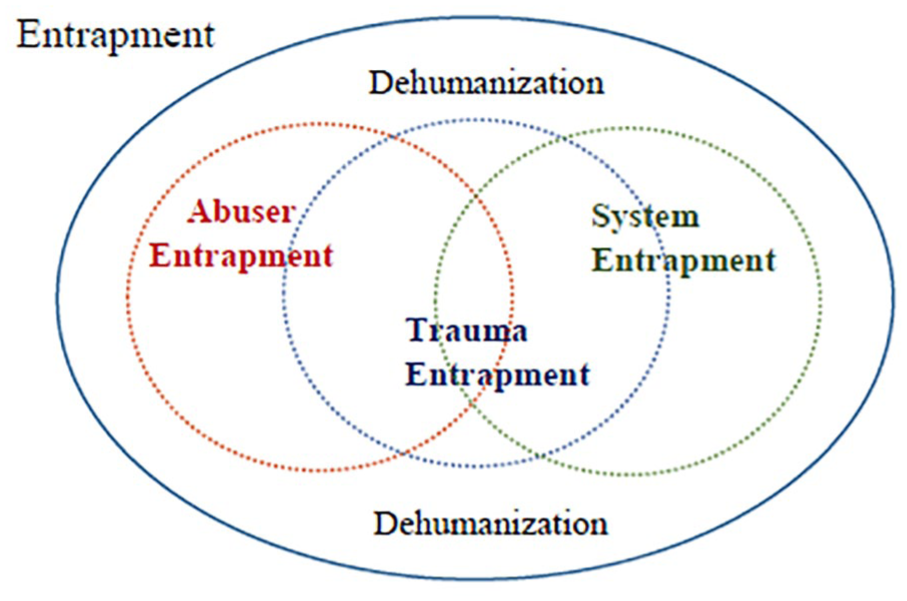
The core property of Abuser, Trauma, and System Entrapment is dehumanization.
Abuser and Trauma Entrapment
Abuser Entrapment represents feeling hopeless about escaping IPV. Abuse in the form of physical, emotional, sexual, financial, and isolation from loved ones entails a sense of being controlled. Conceptualizing IPV as feeling trapped is not new; however, Abuser Entrapment illustrates a novel concept of dehumanization in relation to being abused leading to a loss of meaning in life and a disconnection from living. One woman described Abuser Entrapment in her photo of a knife, the weapon her abuser used to control her (Figure 2), “That was the same knife that my ex-husband had and threw it at me the last day that I was at our house. I just have a feeling of wind right beside my head. He could have killed me.”
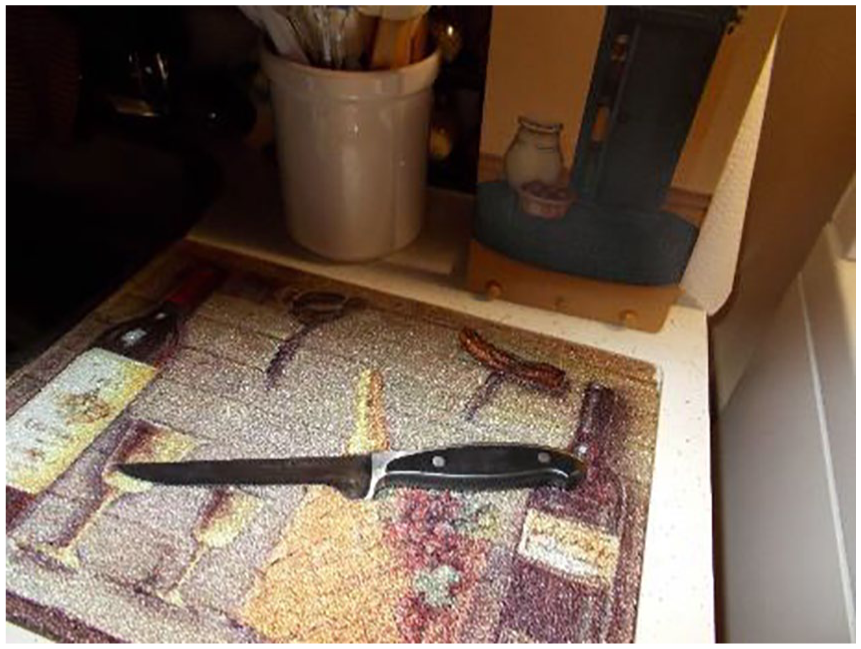
The knife that an abuser threw at a participant.
While this participant’s life was in danger by being physically controlled, emotional abuse eroded her sense of self. Name-calling, isolation from loved ones, and other coercive tactics and emotional abuse are the most attributable to dehumanization.
Feeling hopelessness that Abuser Entrapment will never end contributes to Trauma Entrapment or the context for suicidality that coexists with depression, anxiety, or PTSD, leading to dehumanization. Trauma Entrapment is a state of mind characterized by personal devaluation and the urgent need to take control of or escape unbearable psychological pain through suicide. The term Trauma is an acknowledgment of the impact that IPV and other violent trauma have on suicidality, an important addition to the literature because the role of IPV in suicide assessment and intervention is absent. A woman in this study explained her need to escape the pain of being abused through suicide: “I just dropped to the ground in the snow. Like it was just, I asked God to come and get me because I couldn’t take it no more so I went downstairs and went and got my husband’s gun.” The pain of being in an abusive relationship characterized by isolation and disconnection from others lead to a desire to escape this unbearable existence by ending her life.
Trauma Entrapment represents the despair and hopelessness of suicidality, leaving little energy to escape from psychological pain. A participant described being stuck with suicidal thoughts: “It is hard to change your thoughts . . . When you’re suicidal it just stays there with you. It is always in the back your mind. You don’t get rid of it.” Suicidality impeded her ability to control her thoughts, contributing to a feeling of being trapped within her own mind. This experience of Trauma Entrapment required her to seek others’ help since she was not able to end suicidality on her own. Seeking help begins when women feel they cannot manage the suicidality any longer, a process that leads to additional dehumanization upon approaching HCPs. Reminiscent of Abuser and Trauma Entrapment, dehumanization continues within the health care system.
System Entrapment
System Entrapment is a perception of dehumanization through the invalidation of women’s suicidality and trauma within the health care system, eroding their sense of security and fuelling the desire to end life. Invalidation from HCPs’ judgmental attitudes, disregard of women’s trauma experiences, and minimization of suicidality were the most dehumanizing aspects of System Entrapment, leading to alienation and feelings of abandonment. The System refers to acute care services designed to help people with urgent health problems, such as, psychiatric units, EDs, or crisis hotlines, and nonacute services designed for people with less urgent problems, such as, counseling centers and family physician offices. One woman experienced System Entrapment when a crisis line worker did not take her suicidality seriously, leaving her feeling abandoned and stuck with managing her pain alone.
I called and the girl was like, "Yeah . . . yeah . . . Okay." . . . another time she didn’t even say anything. She offered no help, no support, no words, nothing. I hung up. I had called all of the crisis lines. That’s all there is.
Even slight intonations of the crisis line worker’s voice conveyed invalidation, immediately creating feelings of dehumanization. System Entrapment occurs at any time, during all levels of urgency from contemplating help before reaching out, to requesting help for depression, to seeking help after a suicide attempt. System Entrapment is a unique addition to the literature, as it offers a theoretical representation of diverse help-seeking experiences. System Entrapment adds a deeper and contextual understanding of suicidality through rich descriptions of women’s need for help, treatment barriers, and their response to these barriers.
Relation to Abuser and Trauma Entrapment
Abuser and Trauma Entrapment function as lenses through which System Entrapment is experienced. Feeling trapped within an abusive intimate relationship contributed to the perception that HCPs are untrustworthy. Feeling trapped with the unending psychological pain of suicidality decreased women’s hope to get help. Abuser and System Entrapment also influence Trauma Entrapment as described by a participant who felt pressured by an HCP to stop being depressed. Her psychologist defended her need to be in control of her recovery process:
A vital discovery in this study is that System Entrapment or the feeling of being controlled by invalidating HCPs, is strikingly similar to Abuser Entrapment or being controlled by an abusive intimate partner. One woman described, You can go [to the ED] and suffer worse than if you were being abused by your partner because you leave there feeling like you are worthless. Even if you tell them you were suicidal, it is not taken seriously. They almost refuse to treat you. They refuse to talk to you. You are just worthless . . . You can come out of [the hospital] feeling three times worse than when you go in with a crisis . . . because [the HCPs] are too judgmental.
Her experience also demonstrates how System Entrapment exacerbates Trauma Entrapment as her suicide intention had increased upon leaving the hospital. Violence from an intimate partner alters every aspect of women’s lives distorting their relationships with others and shattering their view of the world, leading to the desire to escape the world through suicide.
Interactions with HCPs
System Entrapment occurs most frequently during interactions with HCPs. The feeling of being invalidated occurred by being over-powered or controlled, not being taken seriously, and being judged. One woman’s photo of having her picture taken from high above illustrated a sense of powerlessness and low self-concept in relation to the HCPs while she sought help: “When you reach out and you say I’m suicidal. I have anxiety, I have whatever, people look down on you and you don’t want [that]!” (Figure 3).
The participant felt that HCPs looked down on her while seeking help.
This image conveys disempowerment while seeking help. Being gatekeepers of treatment, controlling how the services are run, and enforcing the rules that women were obligated to follow automatically places HCPs in a position of authority, leaving women feeling less powerful.
System Entrapment can be concrete and overt when HCPs use physical restraint, making power imbalances more obvious. Involuntary treatment through mental health laws awards great power to HCPs, as women were locked within an institution for a specified period of time. In addition, physical restraint within psychiatric units consisted of being locked in a seclusion room, secured to a bed with straps, and sedated with psychotropic medication, contributing to isolation and loss of dignity. One participant described a sense of being over-powered with her photo of handcuffs, a representation that “reach[ing] out . . . equals having a loss of freedom.” (Figure 4).

Handcuffs represented being shackled to a system that has control over women.
Physical restraint is not only dehumanizing due to overt control over the body but also feeling betrayed and alienated by the HCP. A woman in the study described locked seclusion and the influence of the HCPs actions on her suicidality: “[They] put you in [seclusion] and you feel like you are in a cage and there are two nurses that sit behind glass and watch you steady. It was very scary. That doesn’t help me. It makes me worse.” Being observed behind an enclosure amplified her alienation and sense of dehumanization. The invalidation of being placed in a locked room intensified with the knowledge that the HCP assigned to observe the person in seclusion literally holds the keys to freedom. While some aspects of HCPs’ position are helpful, such as the authority to administer emergency medication in a crisis, infringement on women’s freedom by telling them what to do and how to feel is an ethical violation within the context of a hierarchical dynamic.
Perceived judgment
Perceived judgment is a major source of System Entrapment during interactions with HCPs through HCPs’ lack of empathy and shamming of women’s humanity, leading to the most intense feelings of being controlled and dehumanized. Women believed HCPs judged them for having problems that were beyond their control and labeled them as “crazy” due to having been categorized with a psychiatric diagnosis. Judgmental attitudes were seen by the women as being influenced by the stigma of having been in an abusive relationship and wanting to kill themselves as illustrated in one participant’s photo of a gavel (Figure 5).
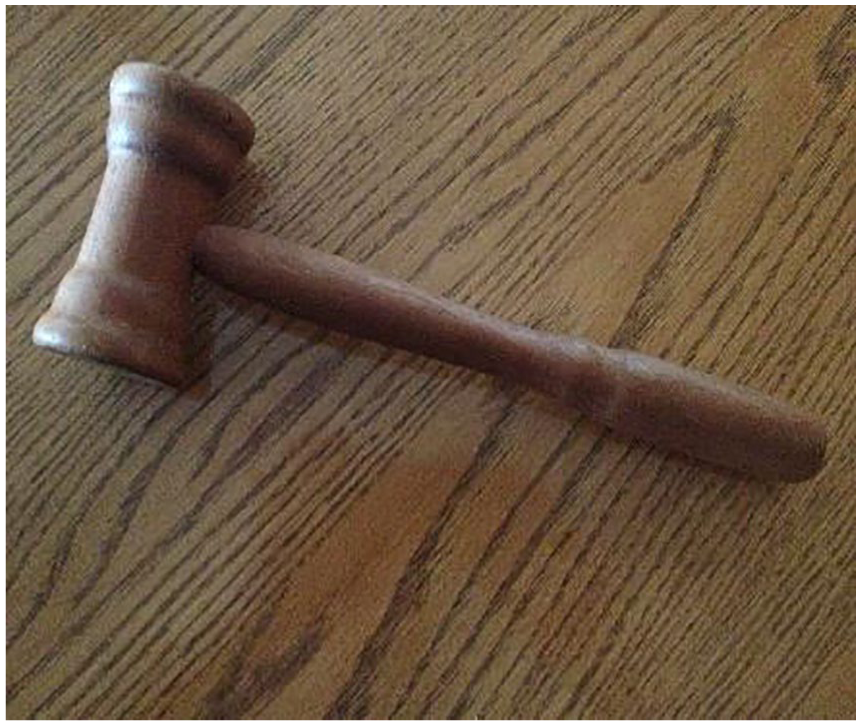
The photo of a gavel represented being judged.
This participant also described being judged with a metaphor of a magnifying glass: “I felt like [the HCPs] are going to look at me through a magnifying glass which would just make me look more broken and they find my faults and I couldn’t face that.” This metaphor symbolized fear of being shamed or dehumanized by being analyzed and criticized while seeking help. Being judged is a well-established aspect of suicide stigma; however, this study adds to this knowledge an understanding of how perceiving judgment deflates the self-concept and distorts meaning in life.
Perceiving judgment is particularly intense within EDs, the entry point for treatment of most acute mental health crises. The functioning of the ED involves system processes and policies that are designed to treat physical ailments while invalidating the mental health needs of someone who is feeling suicidal. Women in this study were not taken seriously if their health problem was not manifested as a physical aliment. One woman explained: “I come in [to the ED] looking half decent and I am told, ‘Why are you coming here? You look fine!’ They do not take into consideration the symptoms or what I’m going through.” HCPs did not believe that she needed help because she did not look sick. Attention to emotional distress, disturbing thoughts, and other psychological health consequences of trauma are regarded as unimportant, contributing to System Entrapment.
Women experienced stigma and feared judgment before actually reaching out for help. Emotional problems are considered within society to be private matters that ought to be managed without professional help; therefore, women spent a lot of time gathering courage and contemplating whether they should approach the system. A woman in this study believed that mental health stigma hindered her knowledge of how to reach out: “I was like what do you do? Who do you see? It is just hard. Again, it’s the stigma. It’s not knowing how to access mental health. Like who do I call?” Perceived judgment also contributed to women’s basic human needs being overlooked. Help for everyday problems, including transportation to therapy appointments and money to feed their children, were difficult to access. Women were treated for their crisis symptoms only, dismissing more important concerns. One woman explained: I have had psychiatrists and psychologists and medical doctors and friends and nurses say to me, “Are you sure you aren’t bipolar?” And I say, “No, it’s not bipolar. It’s fucking . . . it’s my life! My life is really hard! . . . I need help with the practicalities. I have no support network.” . . . My urgent matters were practical, getting a lawyer, getting [my abuser] out of the house, getting us separated.
Despite having psychological difficulties, identifying a label for her mental health problems was not her priority but rather she needed “practical” help for her family.
System Entrapment is sometimes difficult to recognize. Nonetheless, subtle forms of invalidation can be highly dehumanizing. Women felt judged by being treated like an illness instead of a person. HCPs focused on symptoms while avoiding getting to know the women and lacked empathy toward the reasons behind their suicidality. One woman recounted that some HCPs would medicate her anxiety symptoms instead of talking to her about the problems contributing to her anxiety: [HCPs] need to check in. They need to see what’s going on. We all fit this nice little box. I have depression so check, check, check . . . Calm me down! Don’t just [say] ‘Here’s an Ativan.’ [Do] something!”
This participant emphasized the need to be seen, taken seriously, and understood. Women also felt judged as being dramatic and weak when they expressed despair, anger, and other intense emotions. Perceived judgment occurred during intake assessments, crisis interventions, therapy sessions, casual conversations, and quick exchanges of information, leaving women feeling dehumanized in a variety of ways by different HCPs.
Fearing judgment may prevent women from seeking help. A participant described feeling like a burden when contemplating asking the nurses for help when they were talking in the nursing station, “They just wouldn’t bother with me. And some nurses made you feel like you were bothering [them] . . . This didn’t help my depression because you feel like you have nobody to go to.” Interactions with HCPs mirrored women’s worth. If women felt that they were not accepted, they believed that they were unacceptable; when felt that they were not taken seriously, they believed that they were not worth being taken seriously. The feeling of being trapped is solidified by the cyclical nature of invalidation. Not being taken seriously increases psychological pain, which then may increase expressions of this pain toward the HCPs, who in turn become defensive and continue to invalidate. The vicious cycle creates a feeling of being at the mercy of the system.
Perceived judgment is also manifested as expectation to change or to deal with problems independently. Women felt threatened by HCPs’ assumption that they needed to learn new skills or to cope more effectively because this suggested to women that they were not good enough as they were. Due to the loss of control while suicidal, women interpreted HCPs efforts to end their suicidality as coercive. When one woman in the study presented to the ED or called the crisis line, she perceived that the HCPs either did not believe her suicidality or they blamed her for being in crisis. She perceived that the HCPs judged her as exaggerating her psychological needs and pressured her to manage on her own using coping skills: [HCPs] really want to get rid of you if you have called more than once . . . So if you are in a crisis you don’t want to hear "Use your skills" . . . It is like, hello? I am calling you . . . like I am calling you for help! I am calling you to talk with.
This participant believed that the HCPs had unrealistic expectations. Her photo of a rock (Figure 6) explains how she felt pressured to cope on her own: “[This picture represents] people telling me I had to be strong, solid like a rock, to be able to stand by myself.”

The rock represented pressure to be strong.
The pressure to be completely independent was overwhelming. Although women intended on making changes through their help-seeking, HCPs’ expectations about ending suicidality by insinuating that women ought to fix their problems resulted in dehumanization.
In summary, System Entrapment is a sense of dehumanization as a result of being invalidated by perceiving judgment, not being taken seriously, and feeling pressured to manage one’s problems independently while seeking help for suicidality after IPV. Abuser Entrapment contributes to Trauma Entrapment and both contribute to System Entrapment. System Entrapment also deepens Trauma Entrapment. The irony that seeking help for suicidality intensified suicidality has critical practice and policy implications.
Discussion and Implications
System Entrapment provides an opportunity to identify and challenge invalidating policies and practices that dehumanize women who are help-seeking for suicidality after experiencing IPV or other violent trauma. The occurrence of System Entrapment across clinical settings, geographic locations, and among a variety of HCP disciplines commands a widespread approach in making the most effective improvements. System Entrapment is rooted within mental health stigma and gender disparities, factors that are embedded within the system’s culture and realized through the health delivery model. Moving health delivery models away from individualism toward a more comprehensive delivery of services that account for the social determinants of health will reduce blaming women for their suicidality. Although the emphasis of this study’s implications relates to the health care system, recommendations apply to other service delivery systems including private clinicians, crisis hotlines, social services, and women’s shelters.
Awareness of Power Imbalances
Creating awareness throughout the health care system of how power imbalances influence System Entrapment will help challenge dominant assumptions about women’s suicidality. Awareness of the following overlapping contexts help identify ways to decrease power imbalances and dehumanization: (a) trauma and violence, (b) gender stereotypes, and (c) coercive treatment. Preventing retraumatization in women who have experienced violent trauma is enabled through trauma and violence informed care (TVIC). Challenging oppressive gender stereotypes helps to ease pressures and judgments placed on women who are suicidal. Finally, recognizing overt and subtle forms of coercion in the treatment of suicidality is urgently needed to decrease System Entrapment. All three contexts contribute to women feeling weak, blamed, and dehumanized, experiences that are addressed within TVIC.
Trauma and violence informed
Awareness of the impact of violent trauma on women’s help-seeking will help HCPs to avoid System Entrapment. System Entrapment informs HCPs of how women were dehumanized within the system after having been dehumanized within an abusive relationship; the latter increasing vulnerability for the former. The deleterious impact of violence is not new. The impact of violent trauma in women has historically been ignored within a psychiatric context and is pathologized, medicalized, and conceived as being an individual problem (Wilkerson, Sherwin, & Batt, 1998). The feminist literature documents that the trauma of being oppressed within systems and institutions combined with violent trauma make women particularly vulnerable to negative health effects (Brown, 2017). Distrust in others as a result of past trauma or fear of reaching out due to fears of being retraumatized is well established (Clapp et al., 2014; Kantor, Knefel, & Lueger-Schuster, 2017). Likewise, a large body of literature on trauma and service provision draws awareness to the risk of retraumatization when caring for people with past trauma (Harris & Fallot, 2001), knowledge that ought to inform new models of health care.
In response to the role of violence in System Entrapment, TVIC, a universal approach to service delivery that intentionally acknowledges that the influence of violent trauma in people’s lives (Ponic, Varcoe, & Smutylo, 2016) is a comprehensive way to help women. Emphasis is placed upon the term violence in TVIC, implicating a uniquely harmful form of trauma that is interpersonal and drawing awareness to the insidious and enduring nature of its harmful consequences (Ponic et al., 2016; Public Health Agency of Canada, 2018). The intention of TVIC is to “limit exposure to ongoing violence, and to reduce triggering and the potentially traumatizing effects of services” (Ponic et al., 2016, para. 8), an ideal that addresses the unique harms of System Entrapment. Consistent awareness of how violent trauma may have influenced the person seeking treatment entails viewing the person holistically within a greater social context, reducing the risk of blaming individuals for their problems. A holistic approach also diminishes dehumanization by avoiding the compartmentalization of the person into pathologic symptoms. Considering the bio-physical focus of the medical model, sometimes at the expense of psychological health during suicidality (Koning, McNaught, & Tuffin, 2017), mental health problems, trauma, violence, and other social factors may be invisible to HCPs. TVIC helps to raise awareness of these issues and challenge assumptions about women who are suicidal including gender stereotypes.
Gender informed
System Entrapment is understood within a gendered context. Improving services for women requires a dismantling of the assumption that women who are suicidal are too dependent and emotional (Sherwin, 1996; Thompson, 2006). System Entrapment embodies an expectation to be emotionally strong and to manage personal problems with limited help and resources; therefore, women believed that they were judged as being weak and overly dependant when they reached out to HCPs. This finding is situated within the historical belief that women’s inferiority to men is partially due to a weak feminine nature and high emotional intensity (Gilligan, 1982; Thompson, 2006) negating their capacity to be rational (Held, 2006). The medical model has traditionally enabled these gendered stereotypes with the belief that women are incapable of managing difficult emotions (Morrow, 2017; Ussher, 1991). This oppressive stereotype is reflected in conceptualizations of women in abusive relationships as being weak, an assumption challenged in these study’s findings. For example, Abuser Entrapment contradicts the theory of learned helplessness, a narrative of IPV that depicts abused women as being powerless victims because they believe they are unable to leave the abusive relationship (Walker, 2005). This theory’s fixation on women’s deficits imparts a victim-blaming connotation (Magnusson & Marecek, 2017), an individualist assumption in opposition of the strength-based conceptualization of Abuser Entrapment. Women in this study were creative and persistent in their attempts at ending the violence or leaving the relationship and getting help for themselves and their children. TVIC is a strength-based approach (Ponic et al., 2016) that reinforces the importance of validating women’s knowledge and strengths to avoid victim blaming and gaining their trust.
The intersection of gender and psychiatric diagnoses also disempowers women. Several women in this study reported that they were labeled with psychiatric condition borderline personality disorder (BPD), a label they believed contributed to not being taken seriously during periods of suicidality. Oppressive stereotypes of women are reflected in the treatment of BPD, a psychiatric illness characterized by a pattern of unstable relationships, intense anger, a diffuse sense of identity, and chronic suicidality (Rahme et al., 2016), making up 75% of those who are diagnosed (5th ed.; DSM-5; APA, 2013). Widely considered to be among the most difficult patients to treat (Dickens, Lamont, & Gray, 2016; Woollaston & Hixenbaugh, 2008), BPD is code among many HCPs for a “stereotypical woman at her most extreme—emotionally labile, relationally dependent, and self-destructive” (Tseris, 2013, p. 155). While nonlethal suicide attempts are much more common in women (Jaworski, 2016; Stevovic & Vodopic, 2017), the myth that these are exaggerated feminine gestures not to be taken seriously ought to be reconstructed (Canetto, 2015). Furthermore, awareness of the underlying patriarchal social structures that sustain the role of gendered violence in BPD and create barriers to help-seeking for suicidality (Swartz, 2013) ought to be raised within the consciousness of health care.
Interpersonal awareness
An understanding of the interpersonal nature of Trauma Entrapment will help to lessen System Entrapment by avoiding the assumption that women are “emotional” and “needy” or that they are too dependant on others during suicidality. Expectations to be independent are potentially dangerous when treating suicidality, as it opposes the assertion within Trauma Entrapment, that suicidality includes the psychological pain of isolation, a low sense of belonging, and an urgent need to connect with others. Trauma Entrapment challenges the assumption that reliance on others implies weakness and raises awareness of the critical role of HCP relationships on decreasing suicidality. The relational aspect of Trauma Entrapment and the need to educate HCPs on the importance of therapeutic relationships when helping women who are suicidal is reinforced in the literature. The Interpersonal Theory of Suicide (Joiner, 2005) explicates that the desire to die or continue living is influenced by the quality of a person’s relationships (Michel, 2011) and describes suicide as an interpersonal act (Jobes & Ballard, 2011). Thwarted belongingness, feeling disconnected from others, and burdensomeness, the thought that others would be better off without the person, are associated with suicidality (Joiner, 2005) including among women seeking shelter from IPV (P. N. Smith et al., 2016).
The unrealistic expectation to be self-reliant ought to be challenged with relational awareness, a feminist and TVIC ideology that “refers to how people and their contexts or environments are constantly shaping one another” (Varcoe & Einboden, 2011, p. 381). The practice of holding the individual solely accountable for their suicidality and other problems is criticized within a small portion of the literature (Marsh, 2010); however, relational awareness is missing from the discourse on suicidality. Educating HCPs to be gender and relationally aware when treating suicidality may improve HCPs’ capacity to be validating by reducing the shame associated with relying on others for help with mental health problems.
Coercion informed
Coercion informed care and preventing coercion implicit within System Entrapment is possible within TVIC. Founded on the premise that being overpowered in past violent situations have long-lasting traumatic consequences, TVIC helps create an environment that is sensitive to patients’ perception of being controlled and seeks to prevent the retraumatization of coercion wherever possible (Ponic et al., 2016). HCPs ought to be aware of how Abuser and Trauma Entrapment create a vulnerability to feeling controlled and be informed on subtle forms of coercion hidden in popular therapies.
Awareness of Abuser and Trauma Entrapment
The relevance and importance of educating HCP about women’s sense of powerlessness in Abuser and Trauma Entrapment is supported in the literature. Abuser Entrapment is reinforced by cycle of violence, a well-known model describing patterns of partner abuse through a vicious cycle of tension build up, violence, and reconciliation that feels nearly impossible to escape (Walker, 1984). In addition, the Partner Violence Entrapment Scale, a tool that assess women’s decision to leave an abusive relationship, acknowledges the state of being trapped in an abusive relationship (Torres et al., 2016), thereby supporting the meaning of Abuser Entrapment.
The discovery of Trauma Entrapment also sensitizes HCPs to women’s vulnerability to feeling controlled while seeking help, a finding that is supported within the literature. Indeed, the common denominator in several suicide theories is a lack of options to escape psychological pain (Gunn, Lester, & Yang, 2014). Trauma Entrapment is particularly supported by the Theory of Despair and Entrapment, a model that is used to explain depression and characterized by imprisonment of the mind (Gunn et al., 2014, p. 38). Furthermore, the sense of being trapped has been found to correlate with suicidality in other studies (Crona, Stenmarker, Öjehagen, Hallberg, & Brådvik, 2017; Gooding et al., 2015). Providing women with options for treatment and a safe environment for them to express their difficult emotions are noncoercive ways to relieve women of a sense of powerlessness. Furthermore, de-escalation techniques and other alternatives to physical coercion are well documented within the literature including standardized within least-restraint best practice guidelines (American Psychiatric Nurses Association, 2018; Huckshorn, 2008). Less evident in the literature is awareness of how the more subtle forms of coercion as those discovered in System Entrapment during HCP interactions impact suicidality.
Challenging popular therapies
Women in this study felt pressured and controlled with HCPs’ attempts to change their suicidality within therapy. Expectation for individual change is the focus of a best practice standard treatment for depression and suicidality, cognitive behavioral therapy (CBT), a counseling strategy that seeks to change distorted views of the future and other faulty ways of thinking (Beck, 1976, 2016). Dialectical behavior therapy (DBT), a treatment modality intended to help people with BPD to tolerate distress and manage their emotions (Linehan, 1993, 2015), is also considered best practice that focuses on individual behavior. While CBT is shown to decrease depressive symptoms (Scogin et al., 2018; S. B. Wang et al., 2018) and DBT has been found to decrease suicidality (Coyle, Shaver, & Linehan, 2018; Ramaiya et al., 2018), the onus on the person to change is burdensome and adds to System Entrapment. In all, cognitive behavioral therapies fail to address the most important aspect of suicide treatment, the therapeutic relationship (Rudd & Brown, 2011).
Cognitive behavior therapies are also limited due to trauma outcomes on the brain. Fittingly, the focus of trauma in TVIC includes an awareness of how trauma contributes to altered cognitive functioning. Trauma alters the limbic system, the primitive part of the brain responsible for fight or flight, resulting in long-term anxiety and many other mental health problems (Perry, 2009; Treleaven, 2018). Functioning of the frontal lobe, the part of the brain responsible for cognition, decreases during arousal of the limbic system; therefore, cognitive therapies are limited in effectiveness in the presence of trauma stress-responses (Ivey, Daniels, Zalaquett, & Ivey, 2017; Perry, 2009). The suggestion that the person ought to control one’s thoughts and behaviors during a crisis is coercive because the brain’s ability to make such changes is limited in the presence of trauma. Educating HCPs on trauma effects on the brain may lessen the expectation to get better simply by no longer thinking of suicide. Regulating intense emotion through positive interactions in a safe and trusted relationship must occur before cognitive interventions are effective (Jones, Rybak, & Russell-Chapin, 2017).
Women in this study, who after exhausting their behavior coping skills and reaching out for help, were met with HCPs’ automatic expectation to use these skills without assessing their efficacy or offering other forms of support. Ruiz (2015) supports this finding by writing that the focus on the individual to change while avoiding other contextual factors that contribute to depression may result in self-blame. A feminist ideology that considers “cultural sources of individual dysfunctional beliefs” (Canetto, 2015, p. 228) in lieu of attributing blame toward women for their cognitive dysfunction, strengthens trauma informed approaches. A more compassionate way to help women who have experienced trauma is to combine individual or group therapy while simultaneously addressing social factors that influence health outcomes (Cripe et al., 2015).
Summary
System Entrapment is the basic psycho-social problem of women’s help-seeking for suicidality after having experienced IPV and is characterized as perceived invalidation within the health care system that leads to dehumanization. This GT and PV study allowed for an identification of women’s active engagement in managing System Entrapment, processes that will be discussed in future articles. System Entrapment adds critical new information through a theoretical account of help-seeking that informs HCPs and policy makers on reducing dehumanization and decreasing suicidality. Tackling System Entrapment not only entails avoiding physical restraints, but most importantly preventing expectations on how to feel, think, or behave during suicidality. Shifting to TVIC, gender informed, and coercion informed approaches permits an understanding of how the health care environment and HCP interactions may contribute to System Entrapment. Women’s comparison between a partner’s abuse and an HCP’s invalidation is an impetus for educators, policy makers, administrators, and HCPs to create safer environments where judgment, not taking women seriously, and other forms of invalidation are mitigated.
Footnotes
Author’s Note
Any underlying research materials related to my article can be accessed by emailing Petrea Taylor:
Declaration of Conflicting Interests
The author declared no potential conflicts of interest with respect to the research, authorship, and/or publication of this article.
Funding
The author received no financial support for the research, authorship, and/or publication of this article.
