



Abstract
Filmmaking is a visual method that provides a unique opportunity for generating knowledge, but few studies have applied filmmaking in public health research. In this article, we introduce Collaborative Filmmaking as a public health research method, including a description of the six steps for implementation and an illustrative example from Nepal. Collaborative Filmmaking is an embodied, participatory, and visual research method in which participants are trained to create, analyze, and screen films to answer a research question. The method is useful for exploring sensitive health topics and providing nuanced insight into practices, relationships, and spaces that are difficult to capture using existing methods; however, its use requires close attention to ethical considerations. Building upon the trajectory of other visual and community-based research methods, Collaborative Filmmaking is valuable for gathering granular details and sensory data, co-analyzing data in partnership with participants, and producing participant-generated films that serve as powerful and authentic advocacy tools.
Keywords
Introduction
Health behaviors are influenced by a variety of complex factors (National Institutes of Health, 2019). While it is well established that physical, social, and cultural factors play a role in influencing health behaviors (Mcleroy et al., 1998; National Cancer Institute, 2005), studying and measuring these complexities remains challenging. Qualitative methods have been used to collect evidence regarding how and why health behaviors occur, but additional research methods are needed to extend beyond text-based approaches to embodied ones that centrally situate the body within the research process (Bates, 2013). Methods that involve participants in telling their complex health stories by engaging the body in the research process can support researchers in untangling the complexities of health behaviors.
Visual and Arts-Based Research Methods
Visual methods that incorporate photography and film present a unique opportunity for producing knowledge and such methods have been widely used by ethnographers and sociologists, dating back to the early 1920s (Marks, 1995; Shrum & Duque, 2008). These methods can record sensory knowledge, the configuration of physical spaces, sounds, movement, and body language and expressions, as well as rich details of social, cultural, and contextual factors that may not be fully noted with conventional data collection tools (Keller & Ainsworth, 2008; Pink, 2007).
In the early 1990s, arts-based research emerged as a field and highlighted the advantages of integrating arts-based practices into research (Leavy, 2017). Arts-based research is the systematic use of the artistic process as a means for understanding and examining one’s experiences (Gary Knowles & Cole, 2008). Incorporating art into the research process can elicit emotional responses and alternative forms of representation (Kip, 2006), uncover new and complex insights by observing subtle interactions (Barone & Eisner, 2011), and captivate viewers with images that increase awareness and empathy (Barone & Eisner, 2011; Leavy, 2017). In public health specifically, Photovoice is a popular arts-based method used to engage participants in the research process using participatory photography and discussion (Wang et al., 1996). Other examples of creative methods used to study health topics include Visual Voices (Yonas et al., 2013), which applies drawing, painting, and writing in the research process, and Body-Map Storytelling, which uses art techniques to visualize aspects of people’s bodies and lives (Gastaldo et al., 2018).
Filmmaking/video (referred to as film henceforth) as an arts-based method can be used to record “unsurpassed richness of detail of subtle bodily gestures, small nonlinguistic signs, and shifting facial expressions” (Suhr & Willerslev, 2012, p. 291). Film has the power to document and then display complexities and ambiguities of reality that are critical for understanding behaviors and beliefs. In addition, adopting a participatory approach to filmmaking allows for collaboration in generating knowledge that can be empowering for participants and enables marginalized groups to speak for themselves (Milne et al., 2012; Samuel, 2002). Beyond film’s usefulness strictly as a data collection tool, visuals resulting from the research process also can be used to illuminate themes, raise awareness, and encourage social change (Catalani et al., 2012; Milne et al., 2012). Finally, given the rise of affordable, user-friendly technology, film methods are now more accessible and easier to apply in a wide range of settings.
The benefits of visual and arts-based research methods are well established in several disciplines, but film methods in particular are yet to be widely embraced in health research. According to a 2019 literature review, 20 research articles were identified that applied filmmaking research methods for generating health-related knowledge (Baumann, et al., 2019). The studies used film techniques to explore a range of public health topics including asthma (Gupta et al., 2013; Warren et al., 2016), adolescent health (Akre et al., 2015; Chung et al., 2013), vaccination (Lundström et al., 2012), and mental health (Mirza et al., 2017; Petros et al., 2016), among others. Of the 15 film research methods identified by Baumann and colleagues (2019), Videovoice, Video diaries, Video Intervention/Prevention Assessment (VIA), and Autovideography were the most commonly used audiovisual methods (Bates, 2013; Catalani et al., 2012; Chung et al., 2013; Linz et al., 2016; Lundström et al., 2012). Interestingly, the review included only three film-related studies that engaged participants throughout the research process and concluded that limited research has been conducted using film methods to study health in low-resource settings (Baumann, et al., 2019).
Community-Based Participatory Research
The benefits of working collaboratively with communities in conducting health research have been established in the literature (International Collaboration for Participatory Health Research, 2013; Jacquez et al., 2013; Yonas et al., 2013). Engaging communities leads to culturally relevant research, in which study goals, research methods, and results are informed by local experts familiar with social, religious, and community norms (Israel et al., 1998). Community-based participatory research (CBPR) is an approach that equitably involves community members, partners, organizations, and researchers in all aspects of the research process (Belone et al., 2016; Israel, 2005; Schultz et al., 1998; Wilson et al., 2018). While the extent of engagement and the methods applied may vary, a collaborative approach allows for the integration of unique experiences of participants into the research process. In addition, a CBPR approach seeks to facilitate empowerment within the community itself to improve health. As public health research shifts toward a deeper engagement with communities, CBPR encourages researchers to consider how participants can directly contribute to research, such as how local knowledge can inform the research process (International Collaboration for Participatory Health Research, 2013).
Developing Collaborative Filmmaking as a Research Method
Building upon existing visual and arts-based research methods, as well as the principles of CBPR, authors Baumann and Burke developed the six-step Collaborative Filmmaking research method. Filmmaking and storytelling techniques (Sagan, 2012; Treffry-Goatley et al., 2017) are central to the Collaborative Filmmaking method, which also builds directly upon existing visual research methods including Photovoice (Wang & Burris, 1997), Video Intervention Assessment (VIA) (Rich et al., 2000), and Videovoice (Catalani et al., 2012). Collaborative Filmmaking also incorporates CBPR principles by engaging participants as partners throughout the study, including data collection, analysis, and dissemination. While Videovoice and VIA both use discussions with participants to enhance findings, the technique used in Collaborative Filmmaking differs in that it includes both individual analysis and group discussion sessions (Figure 1). The authors posited that some participants may feel more comfortable discussing their films individually, but also recognized the benefits of a group discussion to offer an opportunity for participants to share reactions to the different films and discuss various meanings and solutions together. In addition, while with Videovoice discussions take place about video segments of 2 to 5 minutes from participant films (Catalani et al., 2012), Collaborative Filmmaking is distinct as it engages participants in analyzing their complete films.

Collaborative Filmmaking technique.
In this article, we:
Introduce Collaborative Filmmaking as a public health research method with detailed steps for implementation;
Describe how the method was applied using an illustrative example from a case study of menstrual practices in far-west Nepal;
Comment on feasibility, lessons learned, and implications for future Collaborative Filmmaking research.
Text and supporting images from one case study are included to provide examples of how the Collaborative Filmmaking process was implemented in the field to lead readers through the full methodological process. An expanded analysis and discussion of all participant films, which explore menstrual practices and motivations in far-west Nepal, can be found elsewhere (Baumann et al., 2020). Supplemental film footage from the project can be viewed in full at: http://www.collaborativefilmmaking.com/2020/04/14/nepalyouth/.
Collaborative Filmmaking Case Study: Menstrual Practices and Motivations in Far-West Nepal
Research Partnership
An initial case study of the Collaborative Filmmaking method was completed through an ongoing community-academic research partnership between researchers at the University of Pittsburgh Graduate School of Public Health, Department of Behavioral and Community Health Sciences and the Nepal Fertility Care Center (NFCC), in which the case study focused on their shared interest in the topic of menstrual health in Nepal. The University of Pittsburgh is a U.S. academic institution. NFCC is involved in programming, training, and research on menstrual health and rights, and reproductive health in Nepal.
Research Question
A nuanced understanding of menstrual practices and how they differ by caste/ethnic and religious backgrounds in the diverse context of Nepal is largely missing from the academic literature, yet it is important for informing interventions and policy designs. In Nepal, 89% of women and girls have reported practicing at least one restriction or exclusion during menstruation, according to a comparative study of 204 girls in four districts (WaterAid, 2009). Similarly, another study of 679 women and girls across nine districts found that only 9% do not follow menstrual restrictions (Baumann, Lhaki, & Burke, 2019). Restrictions followed include using a separate water source, avoiding the kitchen, distancing themselves from others, avoiding worship spaces, or sleeping in a makeshift hut or animal shed in a practice called chhaupadi (Baumann et al., 2020; Central Bureau of Statistics & UNICEF, 2015; Karki et al., 2017; Ranabhat et al., 2015; UNICEF & Central Bureau of Statistics Nepal, 2016). These menstrual practices can be hazardous to the health and well-being of women and girls (Ranabhat et al., 2015). Certain menstrual practices put women and girls at risk for gender-based violence (Mahon & Cavill, 2012; NFCC, 2015; WaterAid et al., 2013) and can lead to experiences of stigma (Hawkey et al., 2017; Hennegan & Montgomery, 2016; Sommer, 2010), shame (Sommer, 2009, 2010), and anxiety (Dasgupta & Sarkar, 2008; PATH, 2016; Sommer et al., 2016).
Study Site
On the recommendation of NFCC, the researchers selected Kanchanpur district in far-west Nepal as the study site due to its diversity in caste/ethnicity and religion. Specific village selection was guided by the Department of Women and Children, under the Ministry of Women, Children and Senior Citizen of the Government of Nepal, which at the time of this study oversaw programming and policies related to women’s development in Nepal (Government of Nepal, 2019). Data collection was carried out during May to June 2017 when schools were in recess. The principal investigator (PI) and research assistant (RA)/translator were based at the study site throughout the 21-day data collection period.
Participant Selection and Sampling
Participants were eligible for the study if they had reached menarche and experienced monthly menstrual cycles. The seven female participants were from four castes (Brahman, Chhetri, Dalit, and Janajati), two religious backgrounds (Christian, Hindu), and were between the ages of 16 and 18 years. They were recruited with support from a nongovernmental organization based in the community, who used snowball sampling and ensured maximum diversity of the sample in terms of caste/ethnicity and religion.
The sample size was based on the diversity of the population (i.e., at least two participants from each religious group of the village was desired) and the resources available for the study. In addition, as group discussions are a key component of the research method, we aimed to keep the number of participants to an appropriate group size for discussions based on standards in the literature (Freeman, 2006; Krueger & Casey, 2009). Similar sized samples also were used in other studies that applied film methods in public health (Lundström et al., 2012; Moletsane et al., 2009; Warren et al., 2014).
Ethics and Compensation
Researchers obtained parental written consent and youth written assent for participants before commencing research activities. Due to the research topic’s sensitive nature and the potential risks of participating in a study in which participant opinions and actions would be captured on film, the research team dedicated significant effort to recruitment and sensitization about potential risks via the following activities: (a) holding an introductory meeting in the village to introduce the study to potential participants and their families, and to articulate potential risks as outlined in the informed consent form; (b) leaving the consent forms with potential participants overnight for review; and (c) returning the following day to confirm participation, thus providing time for participants to reflect on their potential participation and discuss the decision privately with family members.
Furthermore, consent was a dynamic process throughout the study. The research team checked in with participants at various stages throughout the study to ensure that they still felt comfortable participating, and to ask if they wanted to remove any footage from their films. This was a critical aspect of the consent process, as participant comfort and willingness to participate may change over time. At the end of the study before the community screening, participants and their parents signed a separate consent form if they wished to allow their footage to be screened publicly and associated images to be published in related papers and reports, exhibitions, and presentations. Participants were not required to share their films publicly to participate in the study; if they wished, their films would remain private, viewed only by the research team and fellow study participants. Notably, all the participants decided to share their films publicly at the end of the study. The participants were also advised during the training that they should refrain from filming identifying aspects of others outside the study to protect the privacy of people in their village.
Participants were compensated US$70, and the study team assisted participants in opening savings bank accounts for this deposit. NFCC guided the compensation amount and payment process, based on prior experience. The University of Pittsburgh (IRB#: PRO17030267) and Nepal Health Research Council (Reg. no 97/2017) approved this research.
Equipment
Participants were not likely to have experience using cameras, so two easily operated GoPro HERO4 Session cameras with minimal functions were selected for ease of use, durability, long battery life, and safety and ethical considerations. As data collection took place during monsoon season, waterproof cameras were required, and because access to electricity was limited at the study site, we selected a camera with long battery life and large storage capacity. We also considered the research question’s sensitive nature as well as the potential curiosity of onlookers when selecting the camera model; the study team aimed to ensure that participant footage was protected from review by others if the camera was misplaced or stolen. The selected camera has no viewing screen, rather the footage must be offloaded to a laptop or computer using a specific cable, which was stored with the research team. Although this type of camera limits of the participant’s ability to view their footage in real-time while shooting, it provides adequate protection against unauthorized viewing of sensitive footage.
Data Types and Positionality
Collaborative Filmmaking in this case study generated multiple types of data including participant-produced films, co-analysis transcripts, a group discussion transcript, a transcript from a group discussion on the Collaborative Filmmaking method, notes and drawings from a training workshop (i.e., brainstorming sessions on menstrual practices, storyboards), and researcher field journals. These multiple forms of data helped us develop a holistic understanding of the research topic. For example, transcripts from co-analysis sessions were rich with follow-up questions and details describing footage, whereas the films were useful for understanding the visual context of practices (e.g., sound, visuals of the environment), capturing movements, and understanding space and time.
Each member of the community-academic research partnership viewed the data and interpreted the findings based on their social, cultural, and religious backgrounds (Bourke, 2014). Several protocols were established to address team members’ positionality. Throughout the engaged efforts with study participants, the PI, an international female researcher and documentary filmmaker with conversational Nepali language skills, and the RA, a Nepali female researcher, and fluent English speaker, maintained field journals, and they debriefed through discussions each day. This encouraged ongoing self-reflection, a key element of reflexivity in the research process (Callaway, 1992). In the final project steps, the PI and two trained Master of Public Health student coders, one female, and one male, watched all the films, reviewed the translations, and coded the data. These coders were non-Nepali speaking, native English speakers with experience conducting qualitative research. The coders each brought in unique perspectives to the data analysis process given their different genders. Finally, the coders met with the PI throughout the data coding process for weekly reflection sessions, similar to the process described above during data collection.
Collaborative Filmmaking Six-Step Process and Illustrative Example
The six-step Collaborative Filmmaking method is described in detail in the following section (Table 1). A short film describing the research method, including sample footage from participants, and a detailed Collaborative Filmmaking step-by-step handbook with associated training materials and activities can be found at: http://www.collaborativefilmmaking.com.
Steps for Implementing Collaborative Filmmaking as a Research Method.

Step 1—Introduction, Orientation, and Training
The study officially commenced with a 2-day workshop, at which participants were introduced to Collaborative Filmmaking. At the workshop, the project’s research question was discussed, and participants were trained as “Community Producers” tasked with developing their own films. The workshop was held in a rented hall near the village, selected based on convenience for the participants and the availability of adequate space, privacy, and electricity. All training sessions were conducted in Nepali with a trained facilitator, and key discussion points were translated into English for the PI. In addition, a representative from the Women and Child Development Office was present during the first day of the workshop.
At the workshop, participants learned about the filmmaking process, and increased their comfort holding the camera and speaking for the camera (Figure 2). The facilitator led film critiques and taught basic filmmaking techniques through interactive games and exercises. In addition, participants were encouraged to think about how they wanted to share their messages (i.e., genre) and aesthetic considerations that would strengthen their films (i.e., framing). For example, the trainers discussed different types of film genres that could be adopted (e.g., documentary, comedy, drama) and they also encouraged participants to consider how different types of shots and framing would influence the way their story is interpreted (e.g., close-ups vs. wide shots, high angle vs. low angle). The filmmaking workshop activities were developed largely based on the participatory video training developed by Lunch & Lunch, (2006).

Maya learned how to operate a camera for the first time and practiced interviewing fellow participants.
The participants were also trained on film ethics including the importance of respecting the privacy of community members who were not directly involved in the project. For example, participants were advised to avoid filming identifying characteristics of others as much as possible and given filmmaking tips such as asking actors/village members turn their backs to the camera to avoid filming faces.
For the first workshop activity, the participants were given blank notecards and asked to individually generate a list of their menstrual practices. Next, each participant discussed her practices with the group. Then, the facilitator conducted informational sessions about menstrual health, hygiene, and rights. In the afternoon, a camera operation training session was conducted, in which the participants took turns interviewing each other and practiced speaking to the camera. Finally, the participants shot a short scene about one of their menstrual practices as an exercise in applying the techniques learned in the workshop. This exercise was followed by a group film critique. After the session, the facilitators encouraged the participants to reflect on their peers’ feedback to decide for themselves if and how they would incorporate the feedback.
The following day, participants created storyboards to guide the creation of their films (Figure 3). To compensate for the inability to view the footage while filming (i.e., no viewing screen on the camera), the study team held additional filmmaking practice sessions on day 2 to ensure participants felt comfortable. None expressed negative feedback about using cameras without a viewing screen.
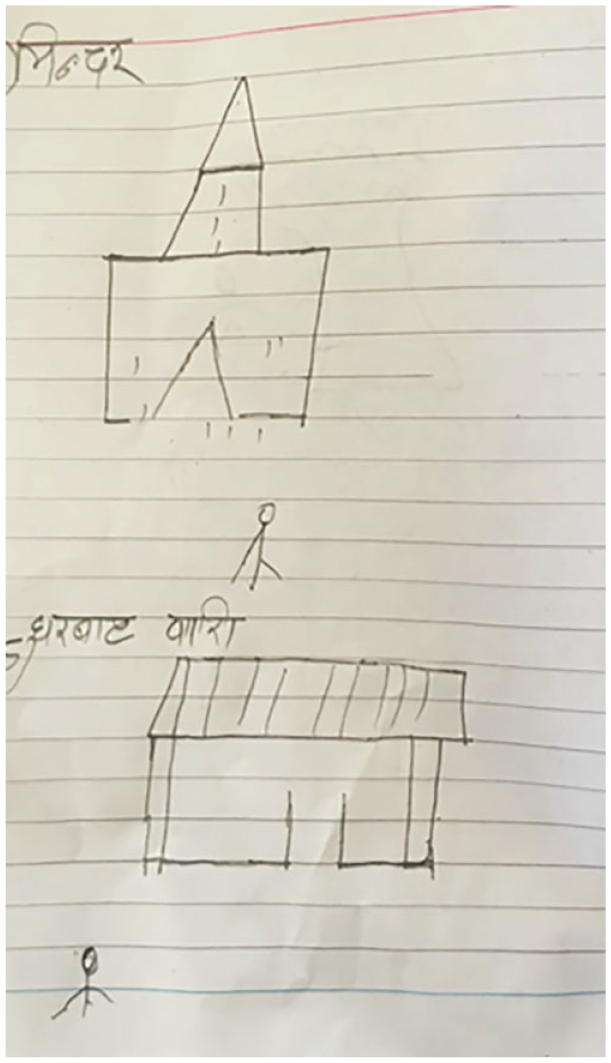
Maya’s storyboard served as a guide for filmmaking, which included drawings of a temple and house.
Maya’s Example: In Maya’s first film exercise during the workshop, she spoke softly and did not show her face. After the filming exercise, she screened her film during the critique, in which girls provided feedback to each other. Some participants suggested that Maya speak louder for clarity, and others suggested that she show her face. Maya incorporated this feedback into her final film, speaking louder and showing her face at times. Her storyboard helped her to plan her shots so she would have a clear direction of what to record while filming (Figure 3).
Step 2—Filmmaking/Data Collection
Each participant received a small, durable camera to create two films highlighting her daily practices, (a) during menstruation and (b) when not menstruating. The study team offered participants technical assistance during data collection. Some participants requested that the researchers remain nearby during filming, while others were comfortable creating their films independently. In both cases, the researchers stayed in the village at the time of the filming to respond to potential difficulties if they were to arise. Neither the PI nor the RA operated cameras in any way. If the participants required assistance with operating the cameras, they were advised to seek support from friends or family members to ensure the films were created under the participant’s creative direction. Depending on their vision and filmmaking style, participants spent between 2 hours and 1 full day creating each film. Shooting times were influenced by how far the participants had to travel to film their desired locations and the number of menstrual practices they wished to record. The final films ranged in length from 4 to 20 minutes.
Maya’s Example: Maya received a camera the day before she was expected to start her menstrual cycle. Her filming style was intimate and personal; her film was a “day in the life” documentary highlighting a typical day when she is menstruating. For the most part, she filmed the documentary herself, developing her story from a combination of long shots to showcase the environment, along with close-up shots of herself performing and explaining her practices. She appeared to be most comfortable when she was filming unaccompanied. For example, as she walked to the river to bathe alone, she turned the camera toward a small hill and narrated to explain that she could not go near the hill because it touches the holy temple. Interestingly, maintaining distance from objects and spaces that neighbor holy sites were not discussed in the workshop, nor during the brainstorming exercise, or in the creation of her storyboard; the fact that this aspect of Maya’s menstrual practices was raised in the film highlights the importance of the embodied filmmaking process for capturing this detail.
In a few segments of her film, Maya asked another study participant or a family member to film her as she performed her menstrual practices, such as the scene of her hanging her clothes to dry along the roadside near her home (Figure 4), or the final shot of her film when she performed cleansing rituals (Figure 5). In addition, Maya filmmed certain practices at night, so the camera was equipped with a small light and she was able to film menstrual practices after dark (Figure 6).
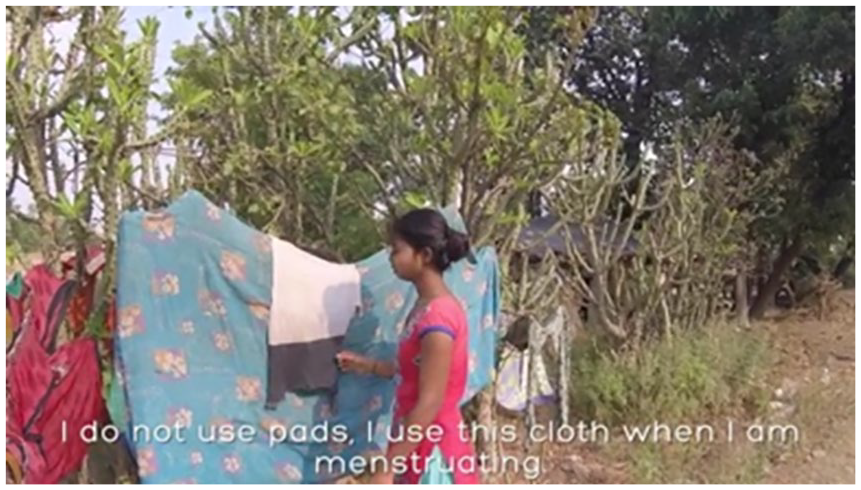
Maya recruited another fellow participant to film her as she demonstrated her practices of washing and drying her clothes along the roadside during menstruation.
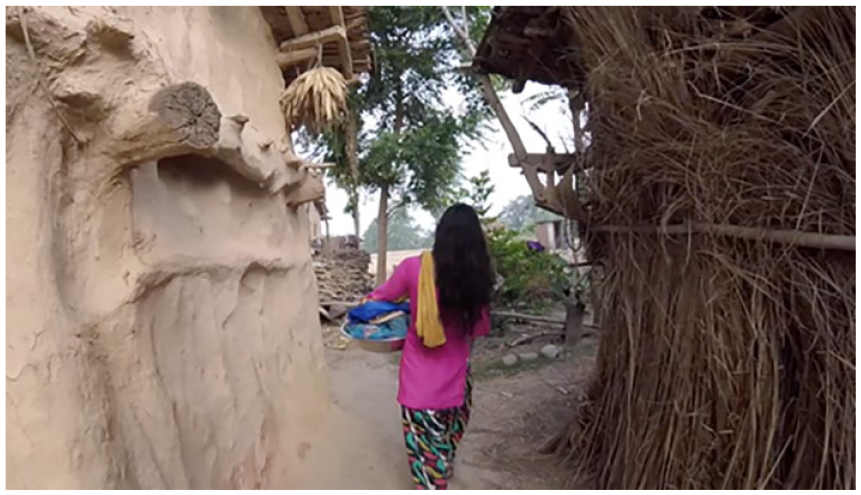
Maya’s family member captured the last shot of her film, in which she walked back to her house after her ritual cleansing practice at the end of her period.
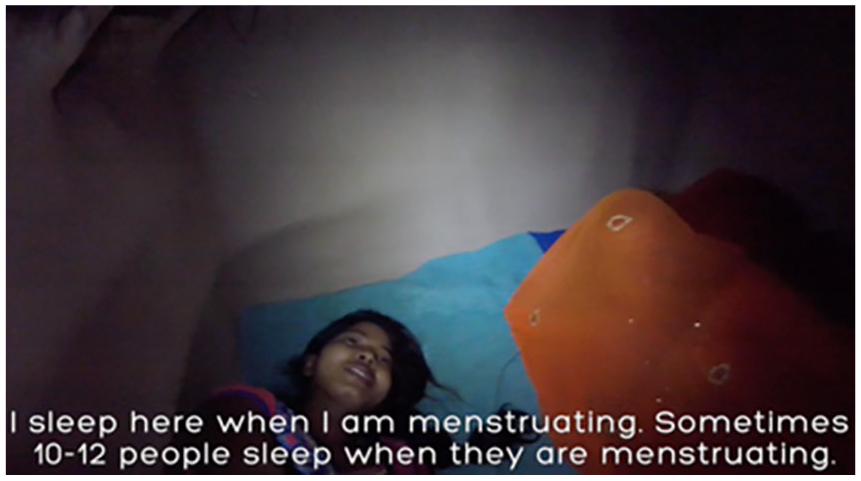
Using a small light on the camera, Maya filmed at night inside the shed where some women sleep while menstruating.
Step 3—Film Assembly and Preparation for Co-Analysis
When filming was complete, researchers collected the equipment from participants and transferred the footage from the cameras to an encrypted external hard drive. The PI assembled the clips into one film file per participant, and with support from the RA, films were translated into English and subtitled in Final Cut Pro X (editing software) (Apple, 2020) in preparation for co-analysis. For the most part, the researchers did not edit the footage because it was filmed in chronological order; however, if the footage was longer than 2 minutes without dialogue, its speed was increased to ease discussions without losing data. The PI and RA discussed this decision with participants, who agreed with the editing choice. During the assembly and subtitling process, researchers also created a list of questions and probes, noting areas in the film that required clarification. Finally, they exported the film as a QuickTime file for easy screening and analysis.
Step 4a—Co-Analysis
Each participant met individually with the PI and RA for a co-analysis session in Nepali lasting between 45 minutes and 2.5 hours. These audio-recorded sessions were essential for adding contextual elements directly from participants. Each co-session took place in a private space in the participants’ homes for convenience. Films were screened on a laptop, and the SHOWeD technique was used to engage participants in discussing their films. SHOWeD is based on Freirean root-cause questioning (Wang & Redwood-Jones, 2001) and involves facilitators asking five questions to understand each clip: (a) What do you See here? (b) What is really Happening here? (c) How does this relate to Our lives? (d) Why does this condition exist? (e) What can we Do about it? (Shaffer, 1980). A supplementary step was also added, using clarifying questions and probes that allowed flexibility to discuss areas of confusion or interest in the films.
After the co-analysis, participants had the opportunity to revise their films. If they were dissatisfied with the footage, they had the opportunity to reshoot. One participant opted to reshoot.
Maya’s Example: Maya initially appeared nervous about participating in the co-analysis session, which was observed and recorded by the PI and RA in their field notes. Maya said she was worried that she would not know the answers to the questions. We explained that there were no right or wrong answers, and after a few minutes, Maya opened up and discussed her practices. As her film was lengthy (over 20 minutes), we took a break during the co-analysis, which lasted 1.5 hours in total.
Step 4b—Group Screening and Discussions
All participants attended a group screening of the final films followed by a discussion in Nepali, which lasted 2.5 hours (Figure 7). The screening was held at the home of one of the participants. The group discussion aimed to gather consensus about what can and should be done to improve menstrual experiences. The group discussion also followed the SHOWeD method and was facilitated by the RA. The PI played the film, took observation notes, and operated the audio recorders. After the group discussed each film, the creator of the film was invited to share her thoughts and respond to questions from the group. Finally, the participants were invited to discuss any final modifications they wanted to make to their films.

All the participants attended a group film screening and discussion about their films that addressed menstrual practices and motivations.
A final group discussion was held in Nepali to examine the girls’ experiences using the Collaborative Filmmaking method. During the 45-minute discussion, the PI took observation notes and operated the audio-recording equipment. Reactions to the method were positive overall. The girls expressed that they learned how to make films, and most discussed a transformation in their confidence throughout the project. One explained, “before I used to feel scared and shy while talking, but now I have developed my speaking [skills]. Now I can express all the things that are in my heart without fear.” The girls suggested allowing more time for training and practice at the beginning of the project to further improve their filmmaking skills. When asked how Collaborative Filmmaking could be used in future projects, they noted that it would be useful for studying and addressing child marriage and child labor issues.
Step 5—Public Screening(s)
Each participant was asked if she wanted her footage to be included in a final film to be shared with the public, both in her community and at national and international levels (e.g., with government officials in Kathmandu, at international health conferences, and raising awareness through the media). Those who agreed signed a separate assent/consent form. This step was taken to ensure that those who wanted to participate anonymously in the study for research purposes only were able to do so. However, we also recognized that some participants were likely to feel proud of their films and wish to share them with others. In the end, all seven participants chose to screen their films with the public. Given creative control over the community screening, the participants were asked who they wanted to invite and what kind of activities they wanted to include (Figure 8). This is a unique aspect of Collaborative Filmmaking that was developed based on CBPR principles of engaging participants throughout the research process, which includes decisions about dissemination. The community event consisted of the film screening, a certificate ceremony, and short speeches from the representative from the Women and Child Development Office, from two participants, and from two family members who assisted during the study. Each participant received a certificate recognizing their participation in the training and project, which is consistent with regular study/project practices in Nepal. Each certificate highlighted a specific strength for the participant so that all received equal individual recognition for their contributions. Neighbors, family members, a government official, and health post staff attended, including a few men. The research team assisted with organizing an accessible space for the event (i.e., a large room in the back of a local shop), ensured the necessary equipment (i.e., a rented projector) to screen the film, and provided tea and snacks. The screening provided an opportunity to share the study findings with the community and to ensure transparency about the study and associated processes.
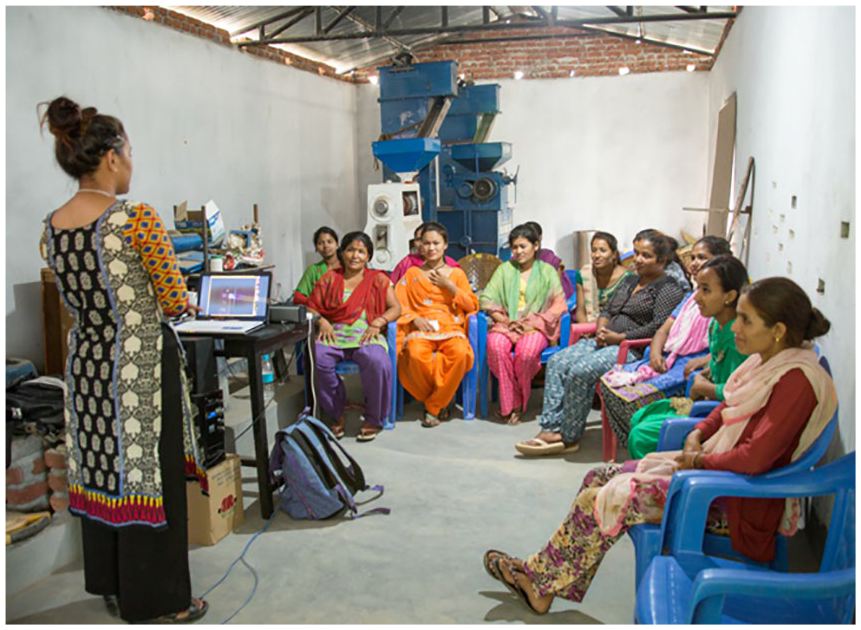
The participants organized a public screening of all the films and invited community members to attend.
The final film compiled from all participants’ contributions was shared with participants via a USB flash drive to ensure participants were able to maintain a copy of their films.
Step 6—Synthesizing Findings
Each film was finalized based on participant feedback, and the audio-recordings of the co-analysis sessions and the group discussions were transcribed verbatim and translated by a team of three program officers of NFCC, who are fluent in both Nepali and English. Next, all films were reviewed, and co-analysis session transcripts were initially read by the PI and two independent coders. The Social Ecological Framework was used as the overarching model for exploring menstrual practices (Burke et al., 2009; UNICEF, 2007; Yoo et al., 2004). Thematic coding was used to index and analyze the videos and transcripts. This approach is consistent with other exploratory visual analysis methods in public health research (Akre et al., 2015; Chung et al., 2013; Mirza et al., 2017; Vega et al., 2015). To develop the codebook, themes were derived from the data, in which each coder reviewed one film with the corresponding co-analysis transcript to generate an initial list of codes. The PI and coders met to discuss initial reactions and to share the draft lists of codes. After agreeing on the initial list, the PI developed and maintained a codebook, adding new codes and clarifying issues with current codes at weekly team meetings. Coders used a standardized Microsoft Excel template to assign codes and memos to the remaining videos and transcripts. After each coder had coded all data sources independently, the PI identified and resolved discrepancies. Finally, NFCC reviewed the themes to ensure that the contextual themes and language were culturally appropriate.
As a final step, the study team synthesized and disseminated the findings at academic conferences, film festivals, and in academic journals.
Discussion
Collaborative Filmmaking integrates the advantages of arts-based research (Barone & Eisner, 2011) and the strengths of CBPR (Israel, 2005) to fill an existing gap in visual, participatory public health research methods. The step-by-step instructions and illustrative example outlined in this article provide specific guidance for future public health research applications of Collaborative Filmmaking to generate detailed, sensory knowledge about sensitive topics and to encourage dialogue and reflection among participants engagingly and creatively. The method’s strengths and challenges are discussed below along with reflections regarding how the method may be expanded upon in future research.
Collaborative Filmmaking: Strengths
Embodiment
Using Collaborative Filmmaking in health research helps to elucidate health as an embodied experience, or the “experiential sense of living in and through our bodies” (Tolman, 2002, p. 50). Many studies highlight the importance of putting the body at the center of health research (Seymour, 2007; Sharma et al., 2009; Todres, 2008), but commonly, qualitative research tools produce data in the form of text, which potentially misses an opportunity to record “experiential aspects of research participants’ lives” (Vacchelli, 2018, p. 172). Numerous scholars in the social sciences have explored embodied creative methodologies (Chadwick, 2017), ranging from collage making (Vacchelli, 2018) to memory books (Thomson, 2005), among others. In the same vein, Collaborative Filmmaking is considered an embodied methodology, in which the body is central to storytelling and knowledge generation, in which participants physically move between public and private spaces, and use their bodies to explain and reflect upon their experiences of menstruation.
Distinct from interviews, which limit participants to using memory to describe their practices and motivations, using cameras allowed participants to record powerful, spontaneous movements and encouraged reflection on such practices by reviewing these data during co-analysis and group discussions. Cameras naturally record the body’s gestures and movements, as well as the sights and sounds experienced. These details provide clues about cultural and sensory contexts. Collaborative Filmmaking centers the body and thereby produces more nuanced accounts of health behaviors.
Participant-centered
Participants construct their understandings of their practices through film, using their own languages and voices. The method shifts the voice from the researcher to the participant, in which participants are fully in control of the way their experiences and stories are told and shared. Numerous social science scholars have called for approaches that shift the voice from the researcher to the silenced or otherwise marginalized participants (Luttrell, 2010; McLaughlin & Coleman-Fountain, 2018).
Verification through multiple forms of data
Using the Collaborative Filmmaking method helped researchers to verify information that surfaced in conversations with participants. Often what arose in discussions was supported by the films and vice versa, but other times the films revealed different realities from discussions. Co-analysis sessions allowed researchers to explore additional details about participant experiences in private. For example, one participant explained in private that it was important for her to give the impression that her family follows restrictive menstrual practices, otherwise her neighbors would be upset, and they would be banned from using the water tap. This evidence of strong social pressure may have been overlooked if the study team limited the analysis to group discussions only. Filmmaking, partnered with co-analysis and group discussions, allowed us to develop a deeper understanding of nuances in health behaviors and provided contextual details beyond a traditional interview or group discussion. We believe the integration of the films and the individual and group-oriented analysis of the films create a more comprehensive understanding of complex health-related behaviors, practices, and motivations.
Nuanced, spatial, and sensory data
As illustrated in Maya’s case study example, Collaborative Filmmaking provides nuanced, spatial, and sensory descriptions related to time, space, relationships, sounds, and experiences. One example from this case study is Maya’s filming of the menstrual shed, where some girls sleep during menstruation. While the dominant narrative in the literature and media is one of a shed, separated from the community, dilapidated and dark, Maya’s film recorded a different visual. By analyzing her footage, researchers could examine exactly how far the shed was from the closest home, how long it took the participants to walk to it, and how many people were around the shed at night when women and girls are most vulnerable. Maya’s film revealed that the shed was actually situated within only a few feet of a neighbor’s home and was well maintained compared to other descriptions in the literature. The footage collected challenges the mental images constructed from dominant narratives and highlights that a range of narratives and spaces need to be revealed for a holistic understanding of the practice. Overall, the films provided nuanced, granular-level details about the body and spaces encountered as participants performed menstrual rituals and practices.
Public engagement and interpretation
When it comes to dissemination, creating films as part of the data collection process allowed the data to continuously be reinterpreted by a variety of audiences. The films themselves were assembled by the study team but are presented as raw data in screenings. Therefore, those who have attended screenings have had the opportunity to engage with the content, discuss it, and come to their own conclusions about the messages shared in the films. Similarly, authors Drew et al. (2010) discuss the power of visual imagery to share research findings so that the researchers themselves “become less of a conduit between raw data and final interpretations because audience members can quickly become engaged in viewing, assessing, and analyzing the data themselves” (Drew et al., 2010, p. 1685).
Advocacy
Finally, Collaborative Filmmaking creates an end product in the form of a film that can be used for advocacy purposes at the community, national, and international levels. Other studies that include filmmaking or a visual component also have discussed their usefulness in advocacy and in communicating research findings (Connell, 2013; Gupta et al., 2013; Linz et al., 2016; Peters et al., 2016), as well as reaching diverse audiences, regardless of educational background (Catalani et al., 2012). In this study, the film produced was screened at the community level to raise awareness about menstrual practices and beliefs in the village and to initiate dialogue, encourage mutual understanding, and consciousness-raising among community members. At the national level, the film was a powerful and unique tool for advocating for more programming addressing a range of menstrual practices, because the first-person perspective of adolescent girls themselves provided a profound look into the monthly experiences girls face during menstruation. While the focus of Collaborative Filmmaking is not to create broadcast quality productions, participants were encouraged to plan how they wanted their films to look and to make deliberate choices regarding how they wanted to tell their stories. The resulting visual images are artistic and reflect each participant’s vision. The fact that each film is unique and reflects a distinct and intimate perspective helps to generate interest and highlights the power of the method for communicating the nuances of individual experiences.
Existing visual research methods have also used the resulting products as advocacy tools, and future Collaborative Filmmaking studies may consider systematically collecting audience reactions through post-screening surveys or interviews to measure changes in knowledge and attitudes, which was beyond the scope of this study. For example, in a Videovoice study post-hurricane Katrina, researchers used the film to reach policymakers, health planners, and community leaders (Catalani et al., 2012). In another study exploring asthma among youth in Chicago, the films created in the study were used to educate community members about the high burden of asthma and what they can do to make their communities more asthma-friendly (Warren et al., 2016).
Collaborative Filmmaking: Challenges
Ethical considerations
One challenge associated with the method is related to the ethics of collecting visual data and associated informed consent processes. During method development, the researchers recognized the challenge of protecting the privacy of community members, including family members or passersby during the filmmaking process. As such, the researchers intentionally included a discussion of associated filming techniques and training on ethics (e.g., filming from far away or tilting the camera down to avoid the face to protect the privacy of others) during the workshop.
Ethical challenges associated with collecting identifiable data, especially film, must be carefully considered when implementing Collaborative Filmmaking; however, the challenges are consistent with those associated with other visual methods (Catalani et al., 2012; Lundström et al., 2012; Moletsane et al., 2009; Treffry-Goatley et al., 2017). Revisiting informed consent and participation throughout the project is particularly important when studying stigmatized topics, such as menstrual practices in our case example. The informed consent process in this study included a detailed description of the study design and filming parameters (i.e., workshop content, individual co-analysis session, group discussion, and screening) and a discussion of potential risks, including feeling uncomfortable. It was critical that the research team scheduled time to discuss ethical components of the study in detail with the community. This approach is consistent with Videovoice, in which Catalani et al. (2012) claim that ethical challenges are inherent to visual methodologies, and they aimed to address such concerns through partnered discussions with participants and implementing video ethics and safety workshops, as was done in the Collaborative Filmmaking training. Finally, having a separate layer of consent for participants who wish to screen their films publicly was also implemented by other visual researchers. Treffry-Goatley et al., who used film to explore sexual violence in South Africa, included a separate release form for screening project films publicly, and this informed our approach (Treffry-Goatley et al., 2017).
The authors followed up with participants 1 and 2 years after data collection to better understand the long-term impacts of participating in Collaborative Filmmaking. While in this study the researchers did not witness negative impacts of participating in Collaborative Filmmaking, it is still important to remain sensitive to the possibility that embodied and visual approaches may put participants in vulnerable situations. For example, a project may leave participants at risk of being excluded from the community after exposing their behaviors or beliefs. Future studies should consider building in opportunities to follow up with participants after the study to ensure that unintended harmful consequences are not perpetuated. Other researchers interested in using the Collaborative Filmmaking method are advised to carefully consider these types of ethical issues, to plan for them, and to prevent harm and miscommunication by using age and context-appropriate language in the consent process and throughout the study.
Potential hindrance to participation
The use of film is an engaging way to include participants in the research process, but the use of cameras and the filming process may also be considered a hindrance to participation in some cases. For example, if participants are not familiar with or well trained in how to use the equipment, they may hesitate to participate. They also may be cautious about expressing themselves on camera, knowing that their visuals are going to be shared with the group. Some of these challenges can be overcome through comprehensive training with opportunities for feedback and practice. In addition, allowing participants to remove their footage at any time throughout the research process is important for ensuring comfort and privacy.
Time intensive
Collaborative Filmmaking is a time- and resource-intensive method. Since the researchers encouraged participants to describe their menstrual practices in-depth, using their own creative styles and voices, and gave them the opportunity to work at their own pace, a flexible research schedule was adopted. Giving participants sufficient time to film and opportunities to reshoot if needed was a key component. In this study, participants also had numerous other priorities (e.g., chores, cooking, or tending to animals) and had to fit in filmmaking between their other responsibilities. However, having extra time in the community and spending time with the families during the filmmaking process turned out to be a positive experience for us as researchers to generate a deeper understanding of families’ beliefs and of the village context in which these practices were unfolding. While the method is time-intensive, this limitation should be weighed with the many strengths it provides; the time investment is similar to other qualitative research methodologies (Baumann, et al., 2019). In addition, equipment and training costs can be high; fortunately affordable, durable, and easy-to-use options are on the rise.
Future Considerations and Research
Whether or not Collaborative Filmmaking will be as useful and accepted in different contexts with participants from a variety of backgrounds remains to be seen and should be investigated in future work. Furthermore, film is not intended to reveal the “whole truth.” Collaborative Filmmaking can reveal intimate aspects of people’s daily lives, and researchers can then reflect on and scrutinize the details of the footage; however, the process is not without bias as a data collection method. Participants make decisions about what they want to film, and their choices may be influenced by cultural values or social acceptability bias. These biases as well as inherent biases among the researchers should be considered when analyzing the footage and drawing conclusions based on the findings.
Based on our experience implementing Collaborative Filmmaking as part of a case study addressing menstrual practices in Nepal, we propose the following considerations for others interested in using the method. First, researchers should be aware of group dynamics. The relationships and interaction between participants are important to consider, as participants work closely together to create their films and analyze the results. In this case study, the participants were all familiar with each other before the study. Although they had different practices and beliefs, the participants opened up freely with each other early in the study, likely because they were already acquaintances. Future studies using Collaborative Filmmaking should assess the level of familiarity among participants and design appropriate activities and training sessions to encourage relationship-building and collaboration. Also, establishing ground rules for group discussions, such as respecting diverse opinions and experiences and nurturing positive discussions, is particularly important when using the method to address topics that may increase participant vulnerability.
For this case study, daily researcher presence in the field was particularly important for addressing potential issues with equipment and ensuring participants were on track in addressing the research question. However, the level of researcher involvement will depend on the context and participant comfort level. For example, in a few instances in this case study, participants were excited about filmmaking but ended up spending a lot of time filming things that did not directly address the research question. Since we were in the village monitoring participant progress, we were able to remind participants of the research question and direct them to review their storyboards to stay on task. It was challenging to navigate the fine line between encouraging participants to stay on topic and giving participants freedom to explore filmmaking and tell their stories in their own ways. We recommend that researchers continuously check in with the participants and have ongoing discussions about the research question, which naturally encourages participants to think closely about what to include in their films.
As is the case with many arts-based and community-engaged research methods, flexibility regarding time is important when using Collaborative Filmmaking. While some participants took the camera and started filming right away on data collection days, others wanted time to plan their shots for the day and to think of creative approaches to tell their stories. Like most fieldwork, schedules for research using Collaborative Filmmaking need to be flexible enough to accommodate different filmmaking styles. In addition, nearly all participants said they were nervous about the co-analysis sessions as this approach was unfamiliar to them; so dedicating sufficient time to explain the nature of the co-analysis sessions is suggested to reduce this tension. If films are longer than 20 minutes, it may be beneficial to complete the co-analysis session over multiple days, as some participants in this case study grew fatigued in the co-analysis sessions. In addition, with longer videos, using the SHOWeD method can be burdensome, as participants quickly become tired of being asked repetitive questions about different parts of their films.
The best way to ensure participants maintain ownership of the films, especially in low-resource settings and when exploring sensitive topics, requires further exploration. In this research, we provided participants with a USB drive with the final film, which was left with our community partner who lives in the village to ensure safekeeping. This decision was based on consultations with the participants. This approach is similar to other research described in the literature using participatory video and film methods. For example, in one study exploring severe mental illness participants had the option of keeping a copy of their video (Linz et al., 2016), and in another study conducted after Hurricane Katrina in New Orleans, participants, as well as community leaders and policymakers, received a DVD of the final film (Catalani et al., 2012). However, more conservative approaches can also be observed in the literature: in a study that explored leprosy stigma in Indonesia, the research team decided to leave the film with a local disabled people’s organization to help to prevent involuntary screenings and to help protect participants (Peters et al., 2016). Overall, it is critical to ensure that participants are involved in and agree upon the decision about final ownership of the film and that the decision is culturally appropriate given the research question and context.
Future research may seek to quantitatively assess the impact of participation in Collaborative Filmmaking studies on participant empowerment, self-efficacy, happiness, and other aspects of emotional well-being. In a similar vein, future studies should also consider measuring the impact of the films as advocacy and awareness-raising tools. This could be done by tracking changes in knowledge or opinions as a result of watching the participant films through a post-screening interview or survey. Finally, future studies should explore the best approaches for screening the final films. For example, in a study by Linz et al. (2016) that used Autovideography with individuals with severe mental illness, the authors discussed the power of consumer-produced videos and their potential use in anti-stigma campaigns. Ultimately, decisions on how and where to use the films will depend on the research question, topic, context, and participant comfort.
Conclusion
Collaborative Filmmaking is an engaging research tool that incorporates audiovisual approaches and participant input into data collection, analysis, and dissemination processes. It is a powerful, participatory method aimed at gathering and sharing granular details about health beliefs and practices.
Footnotes
Acknowledgements
This study would not have been possible without the valuable partnership established with community members in the study village. The researchers would like to thank the participants and their families for sharing their voices and practices. Thank you to Panchu Khadka for her tireless support throughout data collection and translation. Additionally, thanks is expressed to the entire team at NFCC for their partnership in this study, specifically Deepak Upreti for assistance in study coordination, along with additional support from Tamanna Neupane and Jeny Shrestha. We would also like to thank Sara Baumann’s PhD dissertation committee members, Shalini Ayyagari, Muge Finkel, Marni Sommer and Martha Terry, who provided invaluable support with refining the approach and situating the method in the relevant literature.
Declaration of Conflicting Interests
The authors declared no potential conflicts of interest with respect to the research, authorship, and/or publication of this article.
Funding
The authors disclosed receipt of the following financial support for the research, authorship, and/or publication of this article: This work was supported by a University of Pittsburgh Asian Studies Center, Indo-Pacific Graduate Student Research Grant; The University of Pittsburgh Center for Global Health; The University Center for International Studies; and The University of Pittsburgh Nationality Rooms Scholarship – Dr. and Mrs. Ryonosuke Shino Award.
