



Abstract
Targeted services are recommended to pregnant women/parents in vulnerable positions to support their well-being and improve health outcomes; however, being offered extra services is associated with feelings of fear and anxiety. Adopting an ethnographic approach, we explore what parents fear, how and why they experience fear, and how this shapes their childbearing experience and engagement with Danish maternity care services. We made field observations and conducted interviews with 39 parents in vulnerable positions, who shared multiple, ambiguous, and interrelated fears. Four main themes were constructed: fear of going back to a dark place, of having a negative impact on the baby, of being labeled, and of the consequences of service engagement and being open. We conclude that what parents fear, the intensity of these fears, and what potentially triggers it are contingent on their life story, their care pathways, and the maternity care system.
Keywords
Introduction
Pregnant women and families facing social and/or psychological challenges, including mental illness, limited social support, young age, poverty, and low socioeconomic status, are considered to be in vulnerable positions as they are at increased risk of adverse birth outcomes and perinatal mental health problems (Daoud et al., 2015; de Graaf et al., 2013; Johansen et al., 2020; Kramer et al., 2000; Norhayati et al., 2015; Schmied et al., 2013). Although a disputed concept (Brown, 2011; Spiers, 2000; Virokannas et al., 2018), vulnerability thus refers to life conditions or situations, which potentially can place an individual at risk of adverse health outcome due to the existence of diverse and interrelated risk factors (de Groot et al., 2019). To improve health outcomes and support pregnant women and families in vulnerable positions, international guidelines recommend that tailored maternity care services are offered (Australian Department of Health, 2018; Danish Ministry of Health, 2009; NICE, 2010). As an integrated aspect of care, psychosocial assessments are therefore undertaken by health care professionals, including midwives, general practitioners, obstetricians, and heath visitors to identify women and partners in need of tailored services and ensure they are allocated to the right level of care in both pregnancy and the postnatal period (Austin, 2014).
However, although services targeting families in vulnerable positions are intended to be supportive, knowledge is accumulating that women’s experiences of being in need of help to manage childbearing and/or of being offered extra services are often associated with feelings of fear, anxiety, and/or emotional pain (Barlow et al., 2005; Hogg et al., 2013; Kirkpatrick, 2007; Paton et al., 2013; Rollans et al., 2013). Ambivalence and uncertainty are common feelings and may be present along with appreciation of the services offered. Many women have also been shown to fear or have an actual experience of being labeled, judged, or discriminated (Downe et al., 2009; Jakobsen & Overgaard, 2018; Landy et al., 2009; Origlia et al., 2017). Fear is also often reported by mothers with perinatal mental illness (Megnin-Viggars et al., 2015; Viveiros & Darling, 2019), by mothers with prior or current substance use (Harvey et al., 2015; Stengel, 2014; Stone, 2015), and by young mothers (McArthur & Winkworth, 2018). In the existing literature, fear is often identified as a barrier that health professionals must overcome to be able to offer the appropriate help and support to vulnerable groups. Overcoming fear, building trust, and seeking mutuality with health care providers are reported as central for mother’s engagement with services (Jack et al., 2005), and fear may be a psychosocial barrier affecting service engagement (Leurer, 2011).
Fear as a barrier for parents to engage with supportive services is thus well-documented. However, focusing on overcoming this barrier, service providers and practitioners may risk overlooking potentially unintended effects of interventions and supportive services (Allen-Scott et al., 2014). Also, parents’ lived experiences of fearfulness and ambivalence in relation to supportive services are often not in focus, meaning that the experiential aspects of fear as well as the ambiguity and subtlety of these experiences may be downplayed or overlooked in research, policy, and practice. Moreover, based on studies of patients with cancer, Andersen and Risør (2014) argue against inferring a causal relationship between fear and delay in care-seeking practices, encouraging researchers to explore why patients feel afraid by looking to the social context shaping these fears. From an anthropological perspective, fear is understood as an subjectively felt emotion, often experienced in response to a feeling of being in danger or at risk; however, the experience of fear is also embedded in particular social contexts as what we fear, and why varies across time and space (Boscoboinik, 2014). In this article, fear is neither viewed as primarily a psychological concept nor conceptualized as clinical disorder but approached anthropologically by looking into how fear is experienced as well as how these experiences are shaped by social processes. As part of a broader study of parents’ experiences with targeted maternity care services for vulnerable families in Denmark, the aim of this article is to explore what parents in vulnerable positions fear, how and why they experience fear, and how this shapes their childbearing experience and engagement with maternity care services through pregnancy and the postnatal period.
Methodology
Research Design
This article is based on data from ethnographic fieldwork conducted between April 2018 and September 2019 in Aalborg Municipality in Denmark. The fieldwork encompasses 50 individual and dyad interviews with 39 parents, multiple field visits, and observation of 51 encounters between participants and service providers. The study is informed by an experience-near approach to illness and health inspired by Arthur Kleinman (1988) and by an interpretive paradigm where the mode of knowledge is closely tied to the researcher’s engagement with the field under study (Hastrup, 2004). The ethnographic approach enables social practices and experiences to be studied “in situ” (Atkinson, 2015; Emerson et al., 2011), and long-term data collection allows participants to be followed over a longer period (Miller, 2015).
Setting
In Denmark, health care services are publicly funded (Olejaz et al., 2012). Maternity care, including health visitor services, is provided at four levels (Table 1). Allocation to service levels is flexible and can change over time in response to the family’s situation and needs. Level 1 services comprise the standard program offered to all pregnant women; Levels 2 to 4 are individualized additional services that are highly variable in content, number, and timing (Danish Ministry of Health, 2009).
Differentiation of Maternity Care Services in Denmark.

Note. NGO = nongovernmental organization.
In the region where this study was undertaken, systematic psychosocial assessment had recently been implemented as part of the first midwifery consultation. If vulnerability factors are identified, the pregnant woman and her partner are offered Level 3 services (Region Nordjylland, 2017). These services are community-based and delivered by midwives, health visitors, and specialized teams. Social services are involved when required. According to Danish legislation, all health care providers are obligated to notify social services if there is cause for concern about a family’s situation (Danish Ministry of Health, 2009). If a notification is made, social service staff will investigate the case and, ultimately, they have the authority to place a child into care (Danish Ministry of Social Affairs and the Interior, 2019).
Recruitment and Access to the Field
We chose a purposeful recruitment strategy to obtain information-rich cases whose experiences would provide in-depth knowledge of the phenomenon under study (Patton, 2002). All women who had been offered and/or received some form of Level 3 services during the antenatal or postnatal period were considered eligible. We did not focus on specific vulnerability factors as several were often present. Non-Danish-speaking pregnant women were offered additional services and therefore excluded. Purposive sampling was combined with a maximum variation strategy, which is useful for demonstrating diversity between cases and for identifying common themes (Patton, 2002). This was chosen to reflect the diverse experiences of families in different life situations receiving a wide range of services. For the same reason, we also included parents who received services from the beginning of pregnancy and until 1 year after birth, and some who received services for a shorter time or only postpartum. Given the broad nature of the research aim and the wish to achieve variations, we aimed at recruiting at least 25 women/families to obtain sufficient information power (Malterud et al., 2016). Participants were recruited throughout the 18-month data collection period. Recruiting participants in vulnerable situations for research can be difficult (Horowitz et al., 2002; Marsh et al., 2017; Nordentoft & Kappel, 2011), which was also the case in the present study. Due to our collaboration with the municipality, midwives and health visitors informed families about the study and invited them to participate. Families were also invited through social media and posters placed in clinics. Also, we were allowed to take part in antenatal classes and a drop-in café for families. If women/the couple consented to this in advance, we also participated in antenatal consultations and home visits to increase our understanding of the field and allow families to meet the researchers and receive information about the study directly from them and have their questions answered. They were never asked to make decision about participation without having time to reflect on this at home. The majority of the families informed about the study during the 18-month period of fieldwork chose not to participate, but the exact number is not known due to the different methods used to invite families to participate. In 16 cases, parents changed their mind, did not respond to further contact, felt they had too much going on, did not consider themselves the target group, or found participation too demanding during the distressing or potentially distressing time of being pregnant and/or new parents.
Participants
During the research period, 26 women agreed to participate in the study. The woman’s partner was also invited to participate. Of the 26 participating women, 20 were in a relationship. Thirteen partners chose to participate (all male). Sociodemographic characteristics for the altogether 39 participants can be seen in Supplemental Table 2. The majority of mothers were currently or had previously suffered from mental illness, including anxiety, depression, or postnatal depression, and/or were diagnosed with attention deficit hyperactivity disorder (ADHD), personality disorders, including borderline and schizotypal personality disorder, bipolar disorder, and schizoaffective disorder. Six mothers were single, sometimes without contact with the child’s father. Three mothers described a previous substance misuse, and five mothers described earlier experiences of being victims of sexual abuse. A substantial number of mothers described various childhood adversities, for example substance misuse, violence, personal loss, divorce, or mental illness in the family. Only five of the 13 recruited fathers had a diagnosis of mental illness, had a history of substance misuse, and/or were young; however, allocation to services takes place based on an assessment of the family unit’s need for support as a whole, regardless of whether one or both parents have vulnerability factors. The parents had varying educational backgrounds, ranging from no education to university degree. The characteristics of the parents reflected the diverse criteria for allocation to Level 3 services. They received a broad range of services, but three families also received Level 4 services.
Fieldwork
After recruitment, an individual or dyad interview was conducted, depending on the participants’ preference. Almost all fathers preferred a dyad interview, whereas mothers chose individual and dyad interviews. To encapsulate how their experiences change over time (Miller, 2015), parents were invited to participate in follow-up interviews. The location was mostly in the family’s home or in some cases the health center or a café. Fifty interviews were conducted, tape-recorded, and transcribed verbatim in Danish. Sixteen mothers and one father were interviewed two or three times, and 10 mothers and 12 fathers were interviewed once. Inspired by an ethnographic approach (Spradley, 2016), the interviews were conversational and differed from family to family. A theme-based interview-guide was used (Bernard, 2006), exploring parents’ experiences with pregnancy and parenthood, their needs for support, perception of the services offered to them, their relationship with health care providers, and reasons for accepting or declining engagement with services and providers. Descriptive questions were used (Spradley, 2016), asking for participants to talk about specific experiences and situations, such as “Can you describe what happened at the first midwifery consultations?” or “How did you feel after the health visitor came to see you?.” Directive questions were also used to follow up on something said previously in the interview or during an earlier encounter (Spradley, 2016), using prompts like “Last time I saw you, things were a bit hectic; what was going on?” or “I noticed you got a bit upset when she mentioned this service; what went through your head?.” The interviews were combined with observing activities, listening to conversations and engaging in informal interviews during field visits (Atkinson, 2015; Emerson et al., 2011). In 21 of the recruited families, parents consented for the researcher to follow up on the first interview with subsequent participation in home visits and consultations. Being present in the field deepened our understanding of the context and became a shared point of reference in the interviews and enabled the investigator to ask meaningful questions. Fifty-one parent–professional encounters were observed, primarily with health visitors, and supplemented with informal talks before and after. Field notes were not taken during visits but written directly afterward.
Data Analysis
Data analysis was undertaken in an inductive–iterative way with a dialectical relationship between theory, data collection, and analysis (Atkinson, 2015; Emerson et al., 2011). Data were organized in NVivo 12. A case was created for each family where interview transcripts and field notes were added continuously. The principles of thematic analysis were followed to organize and analyze the data (Braun & Clarke, 2006). When adopting an interpretive approach, the researcher is active as codes are assigned to data by interpreting the significance and meaning of these data (Braun & Clarke, 2006). During coding, longer pieces of data were included to ensure that the context was maintained, and often multiple codes would be assigned to the same piece. The codes were sorted into initial themes, which were reorganized after reading the extracts under each theme. This approach produced multiple themes. Instead of including all themes in the final analysis, the major theme of fear was singled out for a detailed account, as suggested by Braun and Clarke (2006).
Ethical Considerations
According to Danish legislation, qualitative studies are based solely on informed participant consent and requires no approval (Danish Ministry of Health, 2011). We followed the principles outlined in the Helsinki Declaration (The World Medical Association, 2013) and the Danish Code of Conduct for Research Integrity (Danish Ministry of Higher Education and Science, 2014) regarding informed consent, withdrawal, confidentiality, and anonymity. Participants were informed verbally and in writing. Written consent was obtained before data were collected. Data were managed in accordance with the General Data Protection Regulation legislation (European Parliament and of the Council, 2016), and the study is registered with the Danish Data Protection Agency (Record No. 2019-899/10-0020).
Reflexivity
Frederiksen has a background in social anthropology with a strong interest in women’s and families’ health. Schmied and Overgaard are registered midwives and senior researchers with a focus on maternity health care service improvement. During the fieldwork, Frederiksen’s position as an anthropologist rather than as a health professional eased her access to the field and facilitated her collaboration with different professional groups and engagement with the parents.
Findings
Four major themes reflecting parents’ fears experienced during pregnancy and the postnatal period were constructed. As illustrated in Figure 1, each major theme captures variations of the identified type of fear. The experience of fear was gendered as it was more dominant in the narratives of the mothers. Fear was experienced by all mothers although in varying ways and intensity. However, fear was also identified in the narratives of almost all fathers, although not as often as the mothers. Some parents described experiencing only one type of fear, whereas others experienced multiple fears, either co-existing or at different times throughout their care pathways. The model does not imply that all parents experience fear in all the identified ways or that fear dominates all parents’ childbearing experiences.
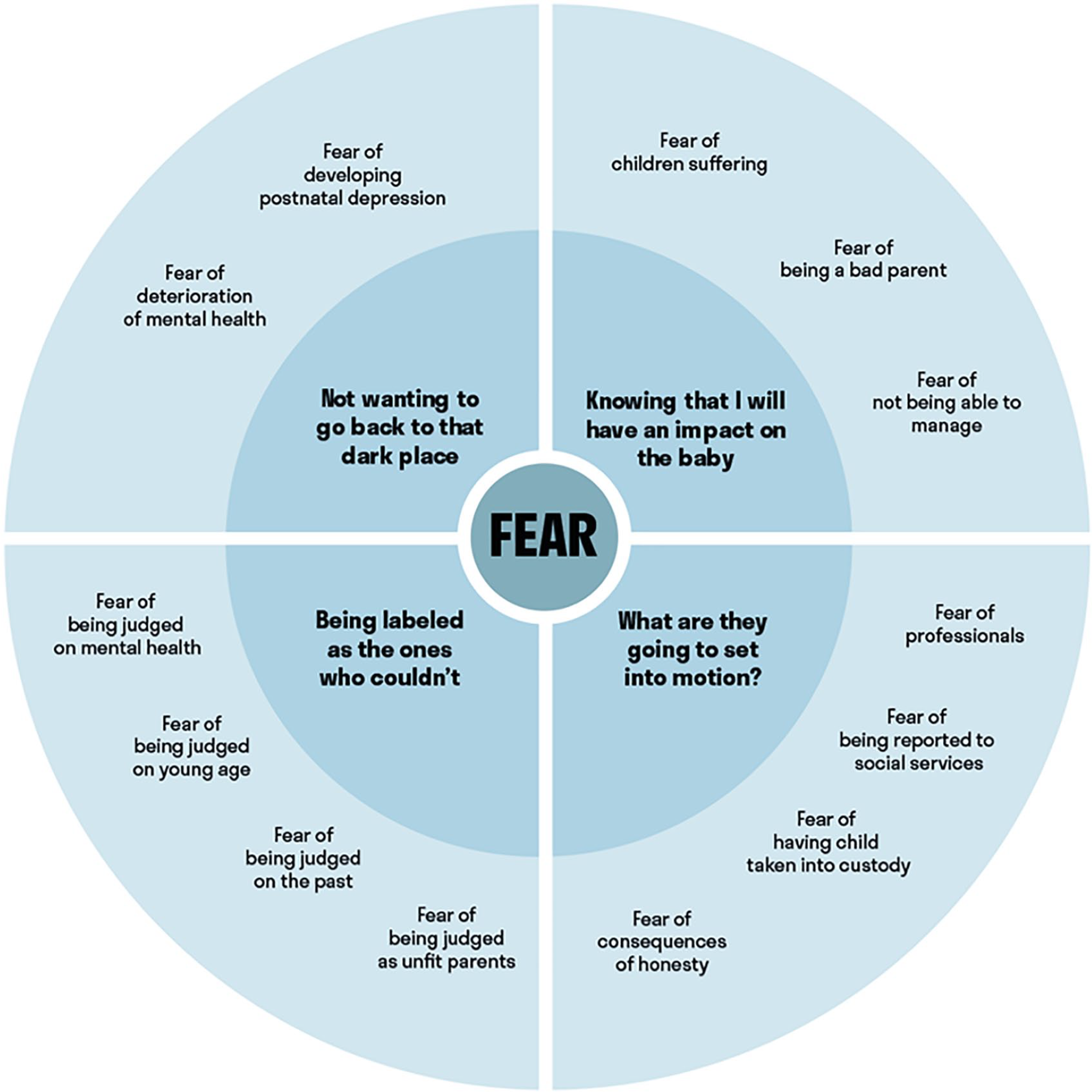
The experience of fear.
Not Wanting to Go Back to That Dark Place
Current or prior mental illness was commonly experienced, particularly among participating mothers, whose illness experiences included previous hospitalization, medical treatment or therapy, and highly distressing feelings of depression or anxiety; for some, previous suicidal thoughts or behavior. These prior experiences with suffering from mental illness generated fear of developing postnatal depression or symptoms of deterioration in their mental health. Many worried about how hormonal changes would affect them, or how they would react following birth because they knew that the birth and care for their baby would place additional strain on them and increase their risk of experiencing mental health problems. One mother, who suffered from episodic depression and made sure this was known to service providers during her pregnancy, explained this type of fear in the following way:
It’s in my journal [medical records] that I used to suffer from depression. I really have tried to create a safety net because I know I’m at greater risk of developing postnatal depression. And I thought, I just cannot suffer from depression together with her [her daughter]. I don’t want her to suffer. I don’t want to be in that place again. (Postnatal interview)
Although not currently depressed, the mere thought of suffering from depression while caring for a newborn was terrifying to this mother, who tried to create a safety net by accepting support to prevent relapse of her illness. Others shared this fear, such as a mother who, unlike in the example above, was currently troubled by anxious and depressive thoughts during her pregnancy. As she recognized these symptoms from previous periods of her life, she worried about getting worse and possibly developing postnatal depression:
I just know how horrible it can be. And I know where it may end. And I don’t want to go there. And I don’t have time for it, if you can put it like that. I have a little daughter I’ve got to take care of. I can’t go back to how I used to feel. (Antenatal interview)
This illustrates how prior experiences with suffering from mental health problems could play a central role in parents’ engagement with the care services and became a productive force that led parents, like the mothers above, to reach out and accept additional support in the hope of getting help. Although the majority of fathers had not experienced mental illness themselves, their well-being and childbearing experiences were impacted by their partner’s mental health concerns. One couple reached out to their midwife as the mother had suffered from postnatal depression before, and they worried about feeling no joy about their second pregnancy. The father explained, “I guess the fear was to be in that place, once again,” with the mother adding, “And the fear, it was exactly that, what if we yet again have these thoughts and feelings one more time, and on top of that have other children to take care of” (Postnatal interview).
This exemplifies how the childbearing experience for some may be painful as it can trigger fear of falling ill again, and how the fear of suffering while being a parent and having to care for your children was motivating some parents to seek out support. The underlying fear of going back to a dark place is further illustrated by this mother, who previously suffered from anxiety and recognized the symptoms in her pregnancy:
The bottom line is that I’m worried about getting worse, mentally. It’s in the back of my head a bit. I’m soon to have two children for whom I’m responsible (….) I get that thought that everybody who suffers from anxiety and depression gets; they kind of have that fear of becoming crazy. (Antenatal interview)
Thus, fear of developing postnatal depression or deterioration of their mental health was rooted in and shaped by prior experiences with suffering from mental illness. This was a dark place they feared going back to. Many responded to what they experienced as a potentially dangerous situation by trying to create safety nets or reaching out to health care providers for help.
Knowing That I Will Have an Impact on the Baby
Fear of not being a good parent was another central theme as many parents, particularly women, feared that they would somehow have a negative impact on their baby and cause the baby suffering, that they would not be a good enough parent or that they would do something wrong. Some feared the consequences of mental illness, whereas others reflected on their childhood experiences or the difficulties in being a single parent. A few feared the consequences of substance use in early pregnancy or needing to take medication during pregnancy. For many, fear of impacting their child’s life negatively began in pregnancy. This fear is expressed by this single mother with a history of depression:
I’m really afraid that I’m going to feel like I’m not living up to being a good mother, and then knowing that I have an impact on him (. . .) Although I might try and do something different from what I think my mother has done, what if he ends up there, anyway, simply because he’s my son? (Antenatal interview)
In some cases, this fear would evaporate once the baby was born; however, for many the fear continued or intensified after the birth of the child. Fear in relation to their children was often voiced by parents during postnatal home visits with the health visitor:
We are paying a visit to a new mum who is living with a mental illness. She is upset and says that she spent the weekend crying and not feeling well. She had begun worrying about why she was suddenly feeling so sad and whether it would impact her baby, and she asked her health visitor; “Can he feel it too? Am I able to be there for him?” (Field note, postnatal home visit with health visitor)
Fear of “damaging” the baby and causing the baby harm was extremely painful for the parents who generally strived to do what was best for their children. Some felt that the more they knew about the potential long-term consequences of their vulnerability issues on the baby’s development, the worse it got as explained here by this mother, who developed anxiety and depression after having given birth:
It’s also because of that knowledge I’ve got . . . I just have a lot of knowledge about these things (. . .) I KNOW how important it [attachment] is. And knowledge, well, that can be your worst enemy at time, right? (Postnatal interview)
Knowledge about the potentially negative consequences their own vulnerabilities could have for the baby led some parents to feel not only guilty but also ashamed for not being able to live up to what they perceived to be normal parenthood standards. In this way, fear that the child would somehow suffer and the idea that they potentially were to blame made some parents feel that they were inadequate parents. One mother did return to the dark place she had feared during pregnancy as her mental health got worse after the birth, and along with that she grew increasingly fearful of being a bad mother. She explains,
I’ve never thought that I didn’t love him. Only thought that maybe they deserved better because I’ve been feeling the way I’ve been feeling. (Postnatal interview)
Overall, particularly women struggled with negative self-images of being a bad parent and often felt that they were doing something wrong or were not able to do enough and judged themselves harshly. This could cause emotional distress as they feared for the negative impact they believed this would have on the baby.
Being Labeled As the Ones Who Couldn’t
Another theme relates to the experience of fear before, during, and after encounters with health professionals as many parents worried how the health professionals would respond to the information they had shared with them, for example, in antenatal consultations, home visits, or when referred to services to determine the appropriate level of care. During her pregnancy, a young mother had worried about being judged and labeled due to her mental illness and age. Reflecting on whether she was afraid of being reported to social services, she said,
Yes. And no. Well . . . I think it’s because, it’s going on in my mind. . . because I knew that I would be a good mother, I had no doubt about that. I was afraid that other people would doubt it. And would see my illness and not me. Because it’s been so long since I was really ill (. . .) I do have challenges. It’s not because it’s an easy diagnosis I have, right? But considering how I was then and how I’m now, it’s just not me, that thing, anymore. So, I was just afraid that people would still see me as that. As the girl who was admitted, the girl who was struggling and the girl who wanted to kill herself. (Postnatal interview)
To be labeled a bad mother or one that needed to be watched was a fear shared with other participants as well, as the parents had a great wish to be seen where they were now and feared how former events, a difficult upbringing, being young, or having a history of mental health problems would influence the professional assessment. This fear left parents uncertain about how much to tell as they worried how health care providers would respond. For example, a mother with prior substance misuse explains how she had feared disclosing her past at the first consultation with a midwife:
I’m afraid that people don’t see the good stuff. That they [care providers], only look back and think, okay, she was a wild teenager, she has taken drugs and back and forth, without thinking about where you are now. So that was a fear I had. (Antenatal interview)
Similarly, a first-time father with prior substance misuse shared his concern regarding how their midwife would respond to his past:
I was a bit scared, also because I never hide the fact that I had the abuse I had. I told our midwife. So there was this fear, [midwife saying], okay, she [partner] has this illness, he used to be an addict, right? (. . .) That they would think, okay, she will become psychotic and become ill, he will have a relapse [into abuse], when they have the baby. I think we both carried that fear. (Postnatal interview)
Fear of being judged was often shaped by previous negative experiences where parents had felt misunderstood, misjudged, or stigmatized. One mother, for example, remembered that when her diagnosis was disclosed when she was still at school, “It felt like as soon as they knew I had this diagnosis, they kept a distance to me” (Postnatal interview).
Prior negative experiences like this were common and often perceived as extremely hurtful, and experiences of interactions with other people as well as professionals could continue to haunt parents. Another mother had experienced that a health care provider questioned her decision to be a mother due to her mental disorder, which fuelled her own fear of not being able to be a good mother as well as her fear of being judged by others:
It’s imprinted [in my mind]. And it’s . . . that’s my . . . every time I meet new people, I get that thought, is that what people are thinking about me? That I’m completely crazy and incapable of anything? (Postnatal interview)
Another mother, who had been unemployed for a couple of years due to illness, recalled a professional at the job center asking her how she thought she would be able to take care of a child when she was not able to hold on to a job. This experience of being judged made the afflicted parents reflect deeply on how other people saw them, and they appeared to be carrying these experiences with them. For some parents, fear of being judged was also shaped by their own perceptions of vulnerability as many saw this categorization as negative and something with which they did not like to be associated. This was experienced by this mother with a mental health condition, who turned down referral to an intervention for vulnerable families:
(. . .) when it was first mentioned, I was like, wow, I thought that was for young mothers, maybe financially vulnerable; and, obviously, that’s okay if you cannot manage, but I thought that was in an entirely different category of people than how I saw ourselves and my challenges. (Antenatal interview)
Thus, previous negative experiences with being judged as well as parents’ own negative perceptions left them afraid of being labeled as unfit for parenthood, which would make some stories difficult and painful to disclose to health care professionals.
What Are They Going to Set Into Motion?
The perceived implications of being labeled as an unfit parent were negative and linked to unwanted consequences. Some parents were afraid of professionals due to uncertainty about their role or their potential role in relation to child surveillance. Others were afraid of being reported to social services, whereas some had an ongoing case and worried about its outcome. Parents in these positions feared the consequences of being honest and felt uncertain and ambivalent about engaging with services as described by this mother, who had feared for her mental health and reached out for support, but was deeply disappointed to be assigned a social worker as part of her support team:
I took it as kind of a defeat. I felt a bit put off as they chose a social worker for me, I really couldn’t see how she could help me. I suddenly felt like I was being placed in this box. And I did it for my own sake and for the sake of our family, so I shouldn’t end up really upset. And, suddenly, I actually got really scared that a social worker was coming to see me. (Postnatal interview)
The fear expressed by this mother was also experienced by other parents; moreover, the fears were not just triggered by social workers but also by other care providers. This fear related to the potential risk of being identified as an unfit parent, and the things that could be set into motion, but it sometimes also co-existed with other fears. A mother struggling with mental health issues after the birth feared for the impact this had on her baby, but also feared implications of receiving help:
Actually, I was a bit afraid that they [care providers] would. . . sometimes, that they would come and get her. Because they thought she’s crazy this one. We can’t leave the baby with her. And I think they’re going to come out and check up on me. (Postnatal interview)
Fear of being under surveillance, being reported to social services, and potentially having the child taken away was common among the included parents, although children were very rarely removed in practice. Parents experiencing this felt nervous about engaging with services and uncertain how health care providers would respond to what they told them, as described by this father, who had a history of substance misuse:
It’s a little bit difficult, when the two of us both have had kind of a turbulent past. I think, then, there are considerations about whether you should tell it or not, because you have that worst-case scenario about what could happen. (Antenatal interview)
Fear of consequences of being honest, and the dilemma between telling and withholding information, was also alluded to by a mother, who described how she felt after a joint meeting with her midwife and health visitor:
I was pretty exhausted (. . .). I keep having that thought, do I get labelled? As, oh, this a family we need to keep an extra eye on, like that, because I’m saying these things I’m saying. I don’t want it to be written down somewhere or that social services will be on your back because they think you’re not able to take care of your child, because that’s not where I see us. (Antenatal interview)
However, as she simultaneously wanted help to cope with her mental health condition, she chose to be honest and disclose information even though at the same time she feared that might lead her to being labeled. Thus, some parents proceeded with accepting supportive services, but the ambivalence and fear of the consequences remained with them. For some, this fear continued to linger with them for a long time, as for example this mother, who sought out help to cope with her mental illness and worried about how her state of mind could affect her children negatively. However, it was always with a underlying fear of how this would be perceived:
But, well I’m not really in doubt that I’m capable of taking take care of my kids. But, still, you may worry about whether other people see something else. But also, this thing that you say out loud, that you’re in the place you’re in [mentally], that maybe somebody will interpret it differently or misunderstand what you say. (Postnatal interview)
Thus, for many parents, encounters with health care providers were associated with a certain level of risk due to the possibility that they and the health care providers might not see the situation in the same light, which left parents struggling to find out what service was safe to accept and what was safe to talk about.
Discussion
Multiple fears were experienced by parents in vulnerable positions during pregnancy and the postnatal period, including fear of going back to a dark place, of having a negative impact on the baby, of being judged and labeled, and of the consequences of engaging with services and being open to health professionals. How and why parents experienced fears were shaped by their previous experiences and were often experienced in response to particular situations occurring throughout pregnancy and the postnatal period. These fears were often experienced in diverse, ambiguous, and interrelated ways, and could cause uncertainty and hesitation about engaging with services, but they also played a central role in reaching out for help.
Fear of going back to a dark place is central to understanding the experience of being pregnant or a new mother while having a psychiatric diagnosis or facing mental health issues, both present and past. This theme illustrates how the childbearing experience may be painful as it can trigger fear of falling ill again, which is not often reported in the literature. However, one recent study has demonstrated that women with bipolar disorder fear relapse in the context of motherhood (Anke et al., 2019). The association between current or previous mental illness and postpartum depression and/or mental illness is well established (Johansen et al., 2020; Norhayati et al., 2015), and most parents in the present study were aware of being at increased risk. Their fears of going back to a dark place were partly shaped by this knowledge, but these fears were also shaped by their own embodied knowledge and their ability to recognize symptoms, as well as their urgent wish not having to go through this again while having children. The finding that the fear of becoming ill can play a central role in reaching out for help appears somewhat contradictory to existing research documenting how women with perinatal mental illness do not easily engage with services, nor talk openly about mental illness, due to stigma and fear of implications (Megnin-Viggars et al., 2015; Schmied et al., 2016). However, the present study adds to the extant knowledge by showing how fear of going back to a dark place at times co-exists with these other identified types of fears, thus proving some explanation of how engagement with services may be associated with ambivalent feelings.
The finding that parents fear having a negative impact on their child, and not being a good parent, alongside feelings of shame or guilt, are corroborated by other studies of mothers with severe mental health problems. In a study of mothers with bipolar disorder, Anke et al. (2019) found that these mothers also feared that their baby would be affected by their medication and their mood shifts, and they feared as well that the illness would be passed on to their children. Mothers diagnosed with schizophrenia, bipolar disorder, and depression have also been shown to fear that their mental illness would negatively impact their children (Diaz-Caneja & Johnson, 2004). In addition, previous research reports that mothers with prior substance misuse fear that this may have harmed their infant, leading to feelings of shame and self-blame (Harvey et al., 2015). The fear of shaping a child’s life in a negative direction and the feelings surrounding this fear must also be understood in the context of societal expectations about “good motherhood.” The “good mother” discourse promotes the belief that the mother knows intuitively what to do for her child, cares for her child without ambivalence, and provides developmentally supportive activities that become all-consuming (Lupton, 2011). Yet, for many, motherhood falls far short of the idealized images and is experienced as overwhelming and characterized by feelings of powerlessness, insufficiency, and guilt (Liamputtong, 2006; Schmied et al., 2017).
Whereas fear of having a negative impact on their children relates to parents’ judgment on themselves, fear of being labeled concerns the judgment of others. Consistent with other studies (Jack et al., 2005; Jakobsen & Overgaard, 2018; Kirkpatrick, 2007), the findings in the present study show that parents feared being labeled by health care providers and worried about being judged as unfit parents or somebody in need of being watched. For some, this fear was shaped by previous experiences with stigmatization; however, for others, being categorized as vulnerable was linked to negative attributes with which they did not want to be associated. This mirrors how being in the target group of a supportive intervention may clash with the recipient’s self-image (Jakobsen & Overgaard, 2018; Kirkpatrick, 2007). This finding should be seen in the context of studies documenting common experiences of being judged or discriminated against among pregnant women in vulnerable positions (Downe et al., 2009; Landy et al., 2009; Origlia et al., 2017; Rayment-Jones et al., 2019). As argued by Goffman (2009), stigmatization involves the negative labeling of individuals who deviate from normal standards in society. Central to this line of thinking is how stigma over time may be internalized as individuals integrate it into their view of the world and sense of self, hence continuously expecting and fearing how others will respond to them as they know that they are at risk of being devalued and rejected (Link & Phelan, 2001). Others have since argued that stigmatization is a moral experience as it threatens what is at stake in a given context and intensifies feelings of uncertainty and fear (Yang et al., 2007). Thus, the stigma attached to suffering from mental illness, being a young mother, or identified as vulnerable and eligible for additional support may generate fear in encounters with health care providers, which provides an understanding of why some stories are experienced as difficult to tell.
As shown in the present study, encounters with health care providers can be experienced as being associated with some risk. The fear of implications and consequences of service engagement and/or honesty has also been demonstrated elsewhere (Kirkpatrick, 2007; Paton et al., 2013; Rollans et al., 2013) and linked to the existence of power relations. Years back, Peckover (2002) argued that health visitors inhabit a double role of support and surveillance as representatives of a state intervention, which makes it ambiguous and complex for mothers exposed to domestic violence to seek the health visitor’s help. In a more recent Danish study, Pedersen (2015) similarly analyzed how power relations and normalizing of parenting practices are integral to the health visitation program. It is thus important for health visitors to consider how their role is experienced by mothers and to show critical awareness of their own position (Peckover & Aston, 2018). Awareness of the ambivalence of support and surveillance provides an understanding of why parents may fear the consequences of accepting services or sharing information, as health care providers, although offering support, also possess power over them.
Understanding the temporality of fear is central to understanding the findings of the present study. First, how and why parents experience fear change over time. Previous studies have focused on fear as a barrier to overcome to get the appropriate support or to engage in a trusting relationship with health professionals (Jack et al., 2005; Leurer, 2011). The findings presented here further nuance this perspective on fear as a barrier by illustrating how fear is experienced in multiple ways and may co-exist and change, thus mirroring what has been termed the temporal nature of human experience (Kleinman & Kleinman, 1996). From an anthropological perspective, fear arises in social situations (Boscoboinik, 2014); instead of only viewing fear as a barrier to overcome, these findings demonstrate that fear can occur at any time as it is contingent on whatever happens over time in relation to the particular health care provider–parent encounter, the services they are being offered, as well as challenges and needs that arise during pregnancy and the postnatal period.
Second, how and why parents experience fear are contingent on their life stories. For some, fear might be a fleeting thought or an immediate response after meeting a health care provider or being offered a service, whereas for others it might be more persistent, perhaps triggered by earlier experiences. In line with this finding, Beatty has argued that emotional experiences are closely intertwined with the particularities of a person’s bibliographic narratives (Beatty, 2019). Parents would recount, explain, and create meaning out of these experiences based on the past, their current situation as well as their orientation toward future scenarios. The experience of fear cannot be separated from the context of parents’ lives, and what they bring with them into encounters with health care providers. Some of these stories were narratives of suffering or marginalization due to psychosocial challenges often being interrelated and accumulating over their life course. Thus, what parents fear, the intensity of these fears, and what potentially triggers their fear are shaped by the particularities of their life story.
Implications for Practice
The findings of this study offer health professionals a deeper understanding of the different forms of fear parents in vulnerable positions may experience as well as the complexity of these fears. The knowledge that targeted services beyond the standard care, although intended to be supportive, may be perceived differently by parents, leaves health professionals with an essential but challenging task of offering support in a sensitive way without producing further fear or stigma. This is particularly important as our findings further the understanding of why parents’ previous experiences with suffering may be difficult stories to recount, and why engaging with services can be imbued with ambivalence and mixed feelings. Based on these findings, health care professionals are encouraged to introduce the notion of vulnerability and psychosocial risks with caution and be aware of the potential fear this may infuse and contribute to. For parents to feel safe to engage with providers and services, the approach taken by health care providers is important. With the knowledge that vulnerability is linked to different forms of fear, health professionals need to openly engage in conversations with parents about what they fear and why. This has the potential to clarify health care providers’ own role, the purpose of services as well as provide support to parents experiencing particular fears they want to be addressed. Furthermore, it is critical that health professionals have well-developed communication skills to engage in conversations with parents about their situation and need for support, and are able to meet parents with empathy and without judgment.
Strengths and Limitations
The strength of this study is its research design combining field visits and interviews. This has provided a unique possibility for in-depth exploration of parents’ perspectives over time and their care pathways. The study is limited by our difficulties with recruiting parents. Some of the parents living in highly vulnerable and disadvantaged positions, including domestic violence, were not recruited, nor were families who did not engage with services at all. The findings from other studies do, however, lead us to believe that the experiences of fear reported by the participants in the present study would be even more dominant among women exposed to domestic violence (Peckover, 2003) or having prior substance use (Harvey et al., 2015).
Conclusion
Parents in vulnerable positions can experience fear during pregnancy and the postnatal period in multiple, ambiguous, and interrelated ways. First, experiences with mental illness could trigger fear about going back to a dark place of suffering. This is central to understanding the experience of being pregnant or a new mother while having a psychiatric diagnosis or facing mental health issues. Second, fear of having a negative impact on the children, alongside feelings of shame and guilt, could make the childbearing experience painful and cause emotional distress. Third, fear of being labeled a bad parent left parents highly aware of how health care providers would perceive them. Some had previously experienced stigmatization, whereas others associated vulnerability with negative attributes. Finally, fear of what would be set into motion left parents struggling to find out which services to accept and what to disclose, which has been linked to the double role of support and surveillance in the maternity health care sector. These fears could cause uncertainty and hesitance about engaging with services and being open, but they could also play a central role in reaching out for help and could co-exist and change over time. Thus, what parents fear, the intensity of these fears, and what potentially triggers these fears are contingent on the parents’ life story, their care pathways, and the maternity care system. These findings offer a deeper understanding of the complexity of the fears that may be experienced by parents in vulnerable positions.
Supplemental Material
sj-pdf-1-qhr-10.1177_1049732320978206 – Supplemental material for Living With Fear: Experiences of Danish Parents in Vulnerable Positions During Pregnancy and in the Postnatal Period
Supplemental material, sj-pdf-1-qhr-10.1177_1049732320978206 for Living With Fear: Experiences of Danish Parents in Vulnerable Positions During Pregnancy and in the Postnatal Period by Marianne Stistrup Frederiksen, Virginia Schmied and Charlotte Overgaard in Qualitative Health Research
Footnotes
Acknowledgements
We thank the participating families for their invaluable contributions to this study. Also, we thank Aalborg Municipality supporting and contributing to the funding of the research and the midwifes and health visitors for their collaboration.
Declaration of Conflicting Interests
The authors declared no potential conflicts of interest with respect to the research, authorship, and/or publication of this article.
Funding
The authors disclosed receipt of the following financial support for the research, authorship, and/or publication of this article: This research was funded by a grant from Aalborg Municipality, Denmark, and Aalborg University, Denmark.

Supplemental Material
Author Biographies
References
Supplementary Material
Please find the following supplemental material available below.
For Open Access articles published under a Creative Commons License, all supplemental material carries the same license as the article it is associated with.
For non-Open Access articles published, all supplemental material carries a non-exclusive license, and permission requests for re-use of supplemental material or any part of supplemental material shall be sent directly to the copyright owner as specified in the copyright notice associated with the article.
