



Abstract
Chronic Lyme disease can manifest as a debilitating illness with symptoms that change over time. With its varied presentation, timeline variation, diagnostic difficulty, and lack of definitive treatment, clinical recognition of chronic Lyme disease remains controversial. At the same time, patients face challenges in finding a provider who is supportive and knowledgeable about diagnosing and treating Lyme. We examined the ways the medical system may have affected the lived experiences of chronic Lyme patients. In this article, we communicate the personal, health care, and community illness experiences of 14 women navigating the medical system with chronic Lyme disease through a qualitative community-based participatory research study using interviews and narrative reflection in a rural community setting. The women were interviewed by a researcher living with chronic Lyme disease and the transcripts were analyzed for themes. All participants described navigating multiple allopathic and nonallopathic care modalities to find satisfactory care. They struggled with physical and emotional burdens of chronic, nonlinear illness, as well as disbelief and discrimination by medical providers. Their lives followed patterns of illness and wellness, trust and mistrust of medical treatment, and community connection and disengagement. They learned to become their own advocates to seek affirmative care. They are aware of the controversial nature of their illness, and many have channeled their frustrations into caring for one another through their Lyme community. Women living with controversial diagnoses like chronic Lyme disease experience increased challenges navigating the medical system to find satisfactory care and thus create communities with each other for mutual aid and support. In understanding these challenges, the medical community can improve care for people living with contested chronic illnesses.
Keywords
Introduction
Lyme disease is the most common vector-borne disease in North America and Europe with a threefold increase in prevalence from 1993 to 2013 (Delong et al., 2019). Lyme is caused principally by Borrelia burgdorferi, a spirochete, injected by Ixodes scapularis and Ixodes pacificus ticks in the United States when the tick is in its nymph stage (Cardenas-de la Garza et al., 2019). The disease is described as having three clinical stages, presenting in the first weeks as a rash; in the first month as a rash with neurologic symptoms, arthritis, and carditis; and in later months as continued arthritis or carditis with a different set of neurologic issues (Borchers et al., 2015; Hu, 2016). Symptoms of persistent Lyme disease overlap with other illnesses but are generally more severe and include fatigue, arthritis, pain of the limbs or neck, cognitive dysfunction, sleep disruption, paresthesias, headaches, irritability, dizziness, chills, and depression (Rebman & Aucott, 2020). Recent theories for why people develop chronic symptoms of Lyme disease include the presence of resistant forms of Borrelia, the oversensitization of neural networks, the dysregulation of autoimmune function, and factors relating to the illness experience (diagnosis and treatment delays, stress, etc.; Lacout et al., 2018; Rebman & Aucott, 2020). In the early phases of the disease, Lyme is diagnosed with immunological analysis using IgM and IgG markers, which remain positive for a few months (Hu, 2016). For later stages of Lyme disease, there is no consensus on the symptoms, laboratory, or imaging findings, so it is often a diagnosis of exclusion (Rebman & Aucott, 2020). Co-infections with Anaplasma phagocytophilum or Babesia microti are estimated to occur in 2% to 15% of Lyme disease cases, which can complicate the diagnostic process (Hu, 2016).
There are many names for the chronic form of Lyme disease, including chronic Lyme disease (CLD; Borchers et al., 2015), posttreatment Lyme disease syndrome (Hu, 2016), post-Lyme disease syndrome (Glauser, 2019), or post-Lyme late disease (Feder et al., 2007; Gentilini & Bricaire, 2019). We prefer to use the general term of CLD because patients with persistent symptoms of Lyme disease are a heterogenous population. People with CLD do not always receive initial treatment and are therefore not always “post-treatment” (Feder et al., 2007; Rebman & Aucott, 2020). Also, people with CLD do not always reach a point where they are asymptomatic where they would consider themselves being “post-Lyme.” We also refer to CLD throughout our results simply as “Lyme,” as that is the term our participants used most often to describe their experience.
CLD is a contested illness due to the confident polarity in clinical guidelines from the Infectious Disease Society Association and the International Lyme and Associated Diseases Society which represent the two extremes of clinical perspectives on CLD. The Infectious Disease Society Association does not endorse the existence of CLD, instead recommending initial antibiotic prophylaxis for verified Lyme followed by a 2- to 4-week antibiotic regimen, which can be repeated if “post-treatment” symptoms continue (Hu, 2016; Wormser et al., 2006). The International Lyme and Associated Diseases Society does endorse the existence of CLD and allows for longer periods of antibiotic treatment as needed (Cameron et al., 2014). Providers who treat Lyme disease tend to align themselves with one of these organizations, intentionally or unintentionally and unbeknownst to most patients.
In addition to suffering a confusing array of symptoms, which can include pain to the level of postsurgical pain and fatigue that is comparable with multiple sclerosis (Fallon et al., 2008), Lyme patients experience a double burden of having their illness experience judged and doubted (Dumes, 2020). The medical literature is laden with public statements from medical providers who support (Greenberg, 2017; Halperin, 2015; Hirsch et al., 2018; van Hout, 2018) and condemn CLD (Auwaerter et al., 2011; Gentilini & Bricaire, 2019; Melenotte et al., 2019). The latter have described CLD as a “scam,” “a result of psychological trauma,” an “asymptomatic disease,” and simply “a reflection of the perception of one’s own multiple difficulties” (Gentilini & Bricaire, 2019; Melenotte et al., 2019). CLD patients have been called “anti-science activists” and Lyme doctors are described as “pseudo-specialists” (Auwaerter et al., 2011; Gentilini & Bricaire, 2019).
We know from existing medical literature chronicling the experiences of CLD patients that the experience of seeking medical care is exhausting, confusing, and often results in a departure from conventional medicine to alternative care. Patients generally experience a wide variety of symptoms, see multiple specialists, undergo many diagnostic tests, incur high expenses, and receive multiple diagnoses (Ali et al., 2014; Gaudet et al., 2019). They deal with stress from high expenses for treatment that is not always covered by insurance, especially for alternative medical care (Ali et al., 2014; Drew & Hewitt, 2006). The dismissal and discrimination they receive from physicians leads to the distrust of conventional health care systems (Ali et al., 2014; Dumes, 2020; Gaudet et al., 2019). Through their dismissal by providers, they learn to advocate for themselves as individuals and collectively (Drew & Hewitt, 2006). Researchers have described the “push” (e.g., stigma) and “pull” (e.g., effectiveness) forces that CLD patients experience as they navigate modern medical services and seek alternative care (Ali et al., 2014; Boudreau et al., 2018). The anthropological studies of CLD patients and providers have suggested that one reason why people feel pushed away from biomedicine is that it focuses on physical pathophysiologic signs over a patient’s symptoms, whereas alternative and integrative medicine have a greater focus on symptoms (Dumes, 2020). Other researchers add that physicians are trained to recognize heuristics, so when they see a patient with a contested illness, the heuristic they recognize is that the patient has multiple medically unexplained symptoms (Wessely & White, 2004). Providers feel that symptoms are less important than the pattern, whereas the patient feels that the experience of their symptoms is key to the diagnosis (Wessely & White, 2004). In addition, the physician’s acknowledgment of what the patient is experiencing involves noticing it as something “medically relevant” and not just “legitimate” (Barker, 2008). These studies have illuminated the experiences of CLD patients to highlight the need for compassionate medical care.
The purpose of this qualitative study is to communicate the experiences of women navigating the medical system with CLD. We use Arthur Kleinman’s Explanatory Model to describe the personal, professional, and folk sector experiences of women living with CLD (Kleinman, 1978). While there are examples of research describing the experiences of patients with CLD, this is the first study to describe the experiences of women living in rural areas. Women living in rural areas have fewer options for health care providers and rely more on one another for support in managing their disease. We chose to center women’s chronic illness experience not only to control for gender but also to give voice to women who suffer gender bias in treating their chronic pain (Driscoll et al., 2018; Samulowitz et al., 2018). CLD shares symptomatology and language around pain with other contested illnesses more common in females such as fibromyalgia and historically discredited psychosomatic diseases, seen as malingering, or described as hysteria and neurasthenia (Armentor, 2017; Råheim & Håland, 2006). Women living with CLD face gender bias in addition to discreditation of their chronic pain. Understanding their health care–seeking behaviors is important for understanding how health care providers can improve their patient experience.
Method
This qualitative community-based participatory research involved semi-structured interviews and narrative reflections of 14 women with CLD living in rural settings in the United States. Participants self-identified as women over the age of 18, living with CLD as diagnosed by a provider. We received Institutional Review Board approval from Oregon Health & Science University (STUDY00019754) prior to the beginning of the study. Each participant received written information about the project and provided verbal consent. We invited participants through chain referral. A researcher with CLD reached out to an initial group to solicit participation. The initial group then referred their close contacts to this researcher, who solicited their participation. We chose this approach because many CLD patients participate in independent, patient-established care networks and social circles, and we wanted to adapt our research to a model already built by the participants themselves. Once the researcher contacted the participant, she completed a semi-structured interview or a written narrative, or both, based on participant preference (Supplemental Material, Semi-Structured Interview Guide). We offered multiple formats for reflection for the purpose of inclusivity and to build trust with the participants. Factors affecting participants’ choice in format included disability, access to technology, time constraint, location, and comfort. Interviews lasted on average 1 hour, and written reflections ranged from one to 10 pages. In interviews, participants were asked to respond to questions about their symptomatic experience, diagnosis, seeking of treatment, and effects on personal life. Written reflections were open format and interviews were semi-structured, beginning with the prompt “Tell me about your experience with Lyme.”
We used Arthur Kleinman’s Explanatory Model (Kleinman, 1978) as the conceptual model for our research and our approach to the illness experience. The aim of our research was to understand the illness experience from the participants themselves, so we used grounded theory as a framework for our thematic data analysis. Grounded theory draws themes directly from qualitative data to build a theory in an area of study often underrepresented in research (Glaser & Strauss, 1967; Strauss & Corbin, 1997). In this study, researchers individually read the interview transcripts and narrative reflections from participants, and independently coded them for recurring themes. The research team then met to compare independent thematic analyses and draw out common themes. We then used these themes to review the data a second time. This analysis used intercoder reliability as a validity procedure to avoid researcher bias and maintain the inductive nature of the research (McHugh, 2012). The researchers then organized these themes into three overarching categories of patient experience: personal illness experience, health care experience, and community experience. The team summarized the results of this analysis and chose illustrative quotes. As a final validity procedure, participants reviewed the results and their feedback was incorporated into the final manuscript (Creswell & Miller, 2000).
Community-based participatory research applies to research that seeks to ensure an equitable partnership between community members affected by the issues being studied and academic researchers, where community members participate in all phases of the research process (Coughlin et al., 2019). The community member of the team with CLD was involved from conception to manuscript as an equal member of the team to the other main academic researcher, and performed all participant outreach during this study. This was done to help participants feel more comfortable interacting with a peer they identify with. There was also one academic mentor monitoring progress and one academic member who helped with transcription.
Results
We conducted 10 semi-structured interviews and received five narrative reflections from 14 women with CLD living in rural areas (one participant provided both a reflection and an interview). Of the 22 women originally contacted, three did not respond, two declined due to acute illness and the burden of discussing past traumas, and three initially responded “yes” but were subsequently unreachable. Participants in this study sought a diverse array of practitioners and used the term doctor liberally, often to refer to practitioners with an MD, DO, MD/MPH, or PA degree. Other providers were described by title (i.e., naturopath, acupuncturist). The focus of this study was not to compare providers, and so these terms intentionally remained broad, as reflected in the analysis next.
Personal Illness Experience
Physical burden
We counted 82 symptoms mentioned, with each woman having periods of cardinal and noncardinal symptoms of Lyme, often uncertain of what may or may not be Lyme. Symptoms that appeared early in the timeline could disappear for years before reappearing, making it difficult for the patient to establish patterns or understand what to expect of their illness. For all participants, illness burden ranged from life threatening to bothersome in nonlinear ways, for example, “it’s not like having a broken bone.” They described having “lost years” to intense illness or treatment side effects, when they were unable to participate in normal life. Lyme was described as omnipresent and as a “teacher.” Women learned to sense immunologic changes, manage symptoms, and set boundaries: Because Lyme is so multi-symptomatic, you have to pay attention to every little corner of your body, because it could strike at any symptom, at any part of you . . . it’s just like, there is nowhere that is safe from Lyme in the whole human organism. After [treatment] I would lie on my floor for 24 hours and feel like “what the hell.” I could not move and I felt like, I don’t know what chemo is, but it must be something like this. Because I felt so terrible in my body.
Emotional burden
All participants shared feelings of significant fear, anger, and depression. At times, women felt they were dying and feared worsening or returning symptoms. They shared fears about the accessibility and burden of treatment for themselves and people in their community. Women cited feeling anxious about the future, resigned to an eternal prognosis, and detached from others. Many participants grieved the loss of time, loss of capacity, and loss of a previous understanding of self. One woman reported a suicidal attempt related to depression about her illness. Anger was common toward a general lack of support from the medical community: Oh, I was so angry. I was really angry. I didn’t even know who or what to be angry at. To some extent, I was angry at the doctors, like the doctor who told me that my perineum was bleeding because I was wearing the wrong underwear. [Laughter] But it is not really her fault, because she is not educated in this. I may as well have asked her about the weather on Mars. I did so much research . . . literally just trying to figure out who I should be angry at. Who is in charge of this whole fuck up? And why is it so silenced? [In finding treatment] I felt literal fear and trembling. That is just a fact. I can remember sitting in the darkness of my little rancher third bedroom turned into an office and the only light was from my laptop and just shaking in my shoes. But asking god, what do I do? How do I know? Do I turn left? Do I turn right? Do I go forward? Help me to know.
Financial concerns
All women discussed the significant financial sacrifice of Lyme, which caused personal and familial stress and caused women to terminate or change care. Expenses limited how much participants were able or willing to follow their prescribed treatment plans. Traveling long distances to receive care added to most women’s health care expenses. Women cited significant financial losses and navigated difficult insurance authorization processes. One woman estimated a number for her Lyme treatment over the years: US$300,000. Another woman cited losing her family’s farm to Lyme treatment costs: Money is a problem. I couldn’t afford to go to the specialist. I told my doc what to prescribe me . . . I did that for a few years until falling into debt was more stressful than being sick. [CLD] is killing people . . . I mean it’s predominantly killing people who can’t afford to be treated.
Impact on rural life
Women cited Lyme as having complicated their relationship with the outdoors, where their fear of tick-borne illness conflicted with their connection to rural life. For many, their symptoms prevented them from caring for their farms. Several women mentioned that they were concerned about their livestock and pets getting sick. One woman sought diagnostic testing for herself because her horse was sick with Lyme. Another woman talked about how her illness and intuition about her health has helped her connect more with her horses. For many, the landscape had previously provided their livelihood, acted as a source of healing, offered a sense of self and community, and was a place of solace. The interruption of this relationship caused feelings of grief, isolation, and fear: I think one of the hardest parts of Lyme, one of the most emotionally exhausting parts is that I [feel] very disconnected from the earth right now. And that I am so scared of the earth and I am in this kind of weird place where a lot of the reason why [the city] is so appealing to me is that there are not many ticks. I love where I live. I love the woods and the dank leaf mold and all the things that ticks love [Laughter] and I think it is beautiful and it is like part of my soul and for somebody to tell me, oh, you have got to give it up. Right? No.
Health Care Experience
Navigating health systems
Participants described the exhausting cycle of being referred to a new provider, following their recommendations, experiencing negative side effects or lack of healing, and then seeking a new provider. All of the women expressed how difficult it was to find a supportive provider or a second opinion, with many having to cross state lines or drive multiple hours to find care. They exhibited strong agency in fluidly crossing boundaries between allopathic and nonallopathic care to find satisfactory treatments, to terminate care when it was no longer serving them, and to self-medicate. Most of them utilized multiple providers’ perspectives to practice multiple treatments, recognizing that specialties are siloed. The source of this patient agency came from an intimate sense of their illness and knowing themselves better than any provider could. Most eventually gained measured doubt for medical providers (“It eliminated my awe for the medical profession”) and learned that the medical system is a “game.” These realizations, among other factors, led to nonadherence to treatment plans among several participants, especially when providers communicated authoritatively or failed to listen. The women were acutely aware that their condition is controversial and that their providers have intentionally or unintentionally ended up on either side of a debate about their care. We found that this disagreement within the medical community undermined the trust between patient and care providers, as it distracted from the lived experiences of the patient: I realized I have to be my own advocate, which is not a bad thing to learn. It is a heck of a painful way to learn it. But I had to learn that: No! What I feel is what I feel. For the past eight months, I’ve been going to appointments and faking treatments . . . because it doesn’t fit. I don’t trust it. I use her [the doctor] for what is effective for Lyme or Bartonella. I use that information and combine it with the recommendations from my other doctor who is less authoritative and educates more . . . so I combine the two.
Good health care experiences
Participants felt that a “good” doctor was hard to find “like walking through a fog”—especially with limited choices in rural areas. They emphasized the importance of providers listening and believing patients and to be knowledgeable and seek new knowledge. They favored kind providers who understand the pain, uncertainty, and expense of living with a chronic condition and were there to help guide them and offer hope. They expressed appreciation for being taken seriously, both by listening and by taking action to work toward a diagnosis and treatment. They generally found medical providers via word of mouth from other Lyme patients and often had to travel long distances for care: Having a doctor that’s good is like finding gold. It’s amazing. They’re very few and far between. I did find a good Lyme doctor, but he’s up in New York and getting to him is like impossible for me right now. But I do love him. He was the one that diagnosed and treated me for the longest time. I do want to go back to him but I just can’t afford him right now. But it’s wonderful to have a doctor that actually listens to you and takes the time to hear your thoughts. Definitely to me, compassion mattered enormously. I think one of the hardest things about being a female is that, for whatever reason, we ourselves and definitely our culture don’t, or often don’t, take women’s bodily feelings seriously.
Bad health care experiences
Of 14 women, 13 reported mistreatment from doctors that ranged from dismissiveness to outright bullying. These reports centered around the provider’s disbelief, willful ignorance, disengagement, and dismissal of the patient’s experience when “serious illness” has been ruled out. They were frustrated when symptoms were ignored or attached to a psychiatric diagnosis when they did not fit into a medical heuristic or when they were treated based on test results rather than symptoms. They reported being humiliated and blamed; being called an “idiot,” “weak,” or “crazy”; and seeing their nonallopathic providers humiliated. They described doctors as “gatekeepers” who sometimes had to be appeased to get treatment or a diagnostic test. Participants described several strategies for self-protection in the face of these traumatic events: bringing personal advocates to appointments, warning others of providers who bully, obscuring aspects of their illness if they doubted a provider’s trustworthiness, and terminating care in some cases. Some participants described feelings of self-blame, guilt, embarrassment, and shame in the face of medical maltreatment, taking the burden on themselves: The hardest part is when one doctor holds the access to the medical help that I need but treats me and my doctors (who have helped me tremendously) like ignorant, law breaking, kooky examples of why people are sick. It leaves me questioning whether or not to seek treatment/help from the doctor or accept my health woe and go home. I’m afraid to tell any new medical practitioner the names of my other doctors or tell them of my medical history. [A local doctor] was telling mothers who came in with their children: you have a mental issue and there is nothing wrong with your child. But if a dad was there, not only was he treating the kids longer than 30 days, he was putting them on IV Rocephin and so forth and so on.
Community Experience
Personal life
Living with Lyme strained participants’ social relationships, causing loss of friends, depleting family finances, and trapping women in a “sick role” at times challenged by others. Most were also the primary caregivers for other family members diagnosed with Lyme. The women were grateful for their support systems, including family, friends, religious communities, certain medical practitioners, and their Lyme community. Many of them found solace in religion, putting fear into God’s hands and having faith that they will pull through. For many, hope became the ordering principle that has led them through the relative chaos of chronic disease. Hope was often directly associated with community connection, action, and a deep sense of self: It threw all of my relationships for a loop, including my relationship to myself. So, it led to a lot of arguments between me and [my husband]. It led to me worrying: am I going to be able to be [a] parent? It led to me worrying: am I going crazy? Do I trust my own self? [Friends] just listen, and they don’t really get it. And then we move on. Or they get it, but there’s nothing anyone can do, so they just listen.
Lyme community
Participants emphasized the importance of their physical and virtual Lyme communities for emotional support, provider recommendations, and education. Many of the women were involved in helping other rural women find access to care and support for them and their families, knowing they “have a service to offer the community.” At times, participants found the Lyme community to be overwhelming, especially when they offered their time to others. Some discussed the process of learning that they may choose to identify as disabled, which opens a new affinity community to connect with but can feel permanent and carries negative stigma. They noted that it is mostly women who are doing the caretaking and advocating for people with Lyme: It has been very encouraging to know that there were other people out there who are going through the same thing. I don’t want them to have the disease, but it is encouraging to know that other people are fighting the same fight, that other people do find answers, but it bothers me that some people do not find answers. [It] is very disappointing to see people in that position where they have been sick for a long time and nobody is doing anything about it and nobody believes them. Just knowing there were other people out there experiencing the same things that I could talk to was a godsend. I had also created a Lyme support group that met once a month. It seemed to be very well received; though eventually my doctor asked me to stop, as she felt I was too empathetic and was taking additional stress from those in the group that weren’t able to get help or treatment.
Discussion
This research recounts the illness narratives of 14 women with CLD to understand their illness experiences and how they navigate medical care. All participants navigated multiple allopathic and nonallopathic care modalities to find satisfactory care. As women living in rural areas, they had fewer provider options and needed to travel long distances to find supportive care. In addition to dealing with the substantial physical and emotional burden of chronic, nonlinear illness and in addition to illness burden, they have dealt with disbelief and discrimination by medical providers. Indeed, most doctors feel that they lack appropriate educational resources on CLD and sense increasing frustration from CLD patients (Glauser, 2019). Still, there exists a lack of definitive answers regarding how to diagnose and treat CLD, causing fear and confusion for patients and disbelief and disregard by physicians (Rebman et al., 2017). Suggestions from our participants for physicians managing patients with contested chronic illness center around active listening. Participants reported trusting practitioners who were willing to believe their experiences and engage with them as co-researchers of treatment options. Other resources suggest that physicians humbly acknowledge their position of power to label patient experiences, use shared decision-making, and focus on patient rapport not only to improve treatment for the contested illness but also to foster trust in seeking health care for other comorbid conditions (Rebman et al., 2017; Råheim & Håland, 2006). There is also power in maintaining an online community for patients to help one another cope with the disease (Huh & Ackerman, 2012).
The lives of women with CLD follow cyclical patterns of illness and wellness, trust and mistrust of medical treatment, and community connection and disengagement as they learn to become self-advocates for affirmative care. They are aware of the controversial nature of their illness and channel their frustrations into caring for one another through their Lyme community, recommending care and providing emotional support to one another. Kleinman (1978, 1988) used the Explanatory Model to describe a patient’s illness experience across popular, professional, and folk sectors, emphasizing the importance of illness narratives to understand patients’ experiences of disease outside of the hospital or clinic. In Figure 1, we integrated the illness narratives of the women living with CLD with the Explanatory Model to follow how they cross boundaries of professional (black cycle) and folk sectors (gray cycles) through their interactions with communities.
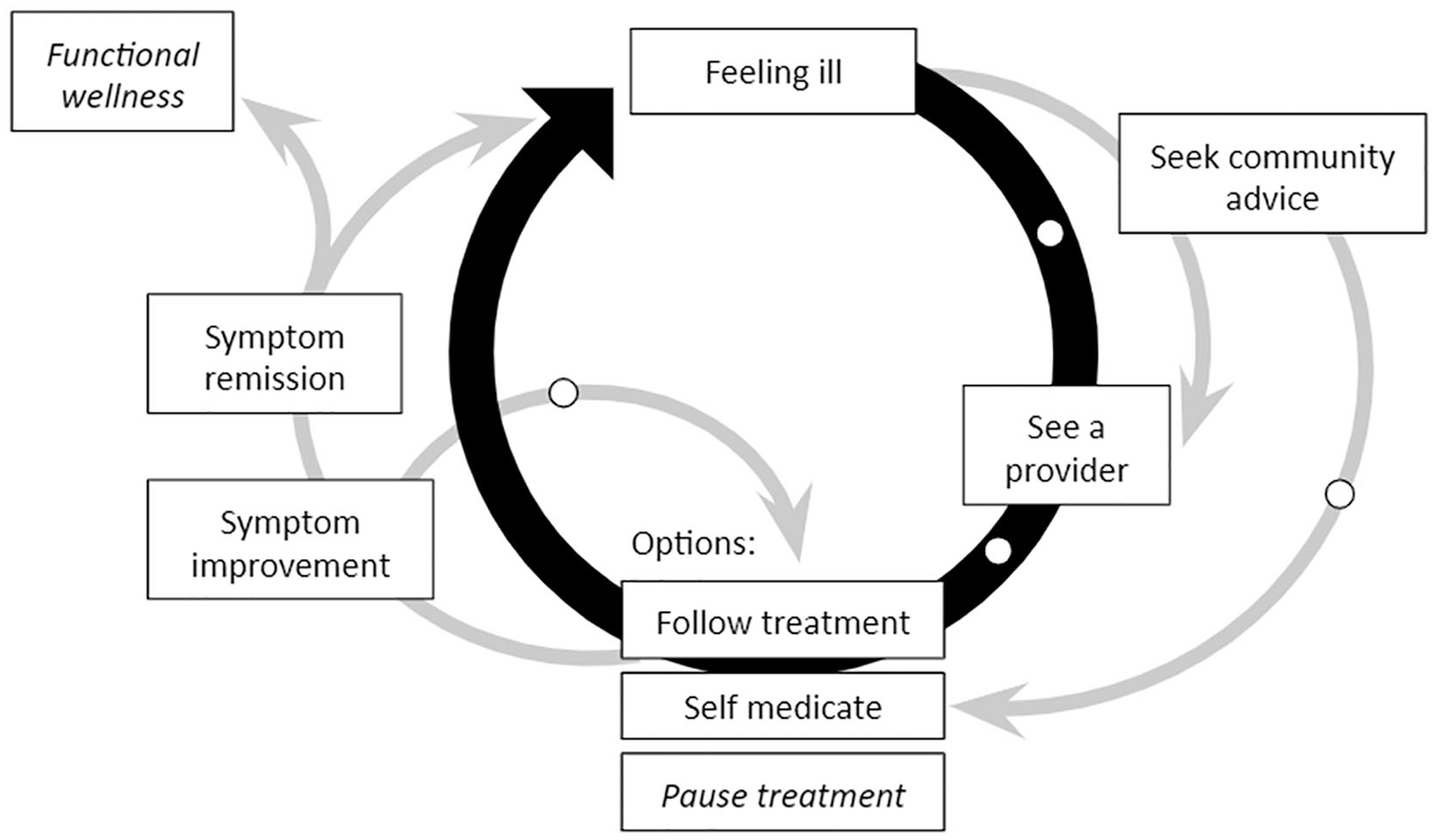
Cycles of health care navigation.
In the literature available on patients with CLD, two care-seeking models for CLD patients describe a linear pattern of seeking help from modern health care, becoming frustrated and feeling rejected, and then seeking alternative health care (Boudreau et al., 2018; Gaudet et al., 2019). We have shown that CLD patients not only respond to “push and pull forces” (Boudreau et al., 2018), but also fluidly interact with modern and alternative health care practices to seek treatment based on changes in their illness and influences from their community. We chose to represent the care-seeking model of patients with CLD as cyclical not only to reflect the choices of CLD patients when interacting with modern health care or alternative care, but also to reflect the recurring cycles of wellness and illness, certainty and uncertainty, and security and fear. The experience of living with CLD was nonlinear for participants in this study, a pattern similarly experienced by other patients with chronic illness, such as multiple sclerosis (Giovannetti et al., 2017). Our model also integrates the agency and independence CLD patients express in navigating multiple care modalities. This finding is supported by theories that those with chronic illness operationalize self-care in managing their illness through self-reflection, managing their care plans, and maintaining their health (Riegel et al., 2012). Our participants embodied the principles of “patient power” described in patients with similarly contested illnesses of chronic fatigue syndrome and fibromyalgia, where marginalized patients take on the role of educating themselves on their disease and seeking care until they find affirmative spaces (Åsbring & Närvänen, 2004). It is important for providers who treat CLD to recognize CLD patients’ power in making independent choices about who they seek for health advice and how they adhere to treatment.
Our research adds to past literature by using narratives to comment on not only the illness burden but also the difficult and nonlinear nature of navigating our medical system as a marginalized person. Our research describes the experiences of women; however, more studies focusing on other genders are needed to make conclusions about how gender impacts CLD illness experiences. The major strength of our research lies in the connection between our interviewer, a woman from a rural area living with CLD, and the similarly identifying participants. She was able to elicit deep and honest interviews with relative comfort even among participants who are skeptical of medicine. Also, our study has high internal validity because our participants approved the integrity of results to their experience.
Our research was limited by having illness narratives from only 14 participants. Reasons for not achieving a higher sample size include the nature of recounting traumatic experiences, the need for participants to attend to immediate health needs, and barriers created by the COVID-19 pandemic. We recognize that the participants in our study may be more interested in participating in this study to communicate negative experiences. It is more difficult to recruit subjects to speak about neutral or positive experiences, especially in the context of a controversial illness. Our study therefore more likely represents the mode of patient experience rather than the full range. We did not address how race, culture, faith community, or sexual and gender minority status affects health care interactions, all of which would be a useful focus for future research. Other future areas of research should address the diversity of treatment modalities available to patients and understand more about how they choose treatments to improve shared decision-making with patients.
Conclusion
Women living with chronic Lyme independently navigate allopathic and nonallopathic medical systems, relying on self-concepts of illness and support from their built Lyme communities. In addition to the emotional and physical burden of living with a complicated illness, they experience disbelief from providers and are acutely aware of the controversial nature of their condition. They invest in providers who listen to them and advocate for one another to receive affirmative care. In understanding these challenges, the medical community can improve the facilitation of care that reflects patient needs and goals.
Supplemental Material
sj-pdf-1-qhr-10.1177_10497323211044463 – Supplemental material for Personal Agency and Community Resilience: Narratives of Women Navigating Health Care With Chronic Lyme Disease
Supplemental material, sj-pdf-1-qhr-10.1177_10497323211044463 for Personal Agency and Community Resilience: Narratives of Women Navigating Health Care With Chronic Lyme Disease by Tessalyn Morrison, Sylvia Madaras, Charlotte Larson and Rebecca Harrison in Qualitative Health Research
Footnotes
Acknowledgements
The authors would like to thank Dr. Christina Nicolaidis, MD, for her feedback on the manuscript and acknowledge the participants of this study for offering their time to share their experience of living with Lyme and for giving their feedback on the manuscript. This research is made possible by the grassroots communities of mothers, neighbors, farmers, care providers and advocates who continue to work on behalf of Lyme patients everywhere.
Declaration of Conflicting Interests
The authors declared no potential conflicts of interest with respect to the research, authorship, and/or publication of this article.
Funding
The authors received no financial support for the research, authorship, and/or publication of this article.

Supplemental Material
Author Biography
References
Supplementary Material
Please find the following supplemental material available below.
For Open Access articles published under a Creative Commons License, all supplemental material carries the same license as the article it is associated with.
For non-Open Access articles published, all supplemental material carries a non-exclusive license, and permission requests for re-use of supplemental material or any part of supplemental material shall be sent directly to the copyright owner as specified in the copyright notice associated with the article.
