



Abstract
This article explores socio-spatial dimensions of risk and how they can enhance understanding of a high burden tuberculosis (TB) context in the South Fly District of Papua New Guinea. We report on select findings from a qualitative study that included 128 semi-structured in-depth interviews and 10 focus group discussions with a wide range of South Fly District community members. Using the conceptual framework of ‘riskscapes’ to examine emic perspectives on risk, space and practice, we map key elements of TB riskscapes on Daru Island, South Fly District, along with solutions for navigating through these riskscapes. Overcrowding, lack of water, sanitation and hygiene, as well as food insecurity and undernutrition, were identified as common elements within participants’ riskscapes, that compounded upon each other to create the perception of an assemblage of risk favourable to TB transmission.
Introduction
I think everyone is at risk. Every one of us is at risk; even us working people. All of us are at risk, and they, people in the corners [settlements] are double at risk because of overcrowding in their homes. That’s how I see it here. You come to Daru you must know that you are already at risk, too, because this place is full of TB. - Sylvia – Health Care Worker
Due to an ongoing outbreak of multidrug-resistant tuberculosis (MDR-TB) on Daru Island in the South Fly District of Western Province, Papua New Guinea (PNG), the PNG National Department of Health initiated, in 2014, a multisector emergency response and the entire Western Province was declared an MDR-TB ‘hotspot’ (Morris et al., 2019), labelling this specific geographical area as a place of risk. The Western Province capital, Daru, serves as the administrative centre for South Fly District and is located on an island also known as Daru. Comprising a mere 14.7 km2, Daru Island has largely been the focus of the outbreak response. Sylvia, the health care worker whose quote opens this article, believes that all of Daru is a risk space, but that the degree of risk depends on a person’s socio-economic status and place of residence; those residing in overcrowded informal housing settlements, or ‘corners’, experience highest risk of acquiring tuberculosis (TB). Sylvia’s perspective, which reflects on the spatial (environmental) and social dimensions of risk, speaks to the essence of ‘riskscapes’ (Müller-Mahn & Everts, 2013). The concept of riskscapes, underpinned by a ‘context-sensitive, practice-oriented and socio-spatial understanding of risks’, has become an important framework for in-depth exploration of complex risk contexts (Neisser & Müller-Mahn, 2018, p. 356), such as the one identified in South Fly District. This approach allows closer examination of the contexts in which the bacteria that causes TB spreads and the disease develops and to inform and guide contextualised and local public health responses.
Well proven interventions have long been available to prevent and cure TB, yet TB remains one of the leading infectious causes of death globally (WHO, 2020). Geographical areas of persistently high TB incidence pose a significant challenge to the global strategy known as End TB (WHO, 2015). In light of the insights that riskscapes can offer, we seek to understand and explore in depth the socio-spatial dimensions of risks in an internationally recognised TB ‘hotspot’ in PNG (bib_Kase_et_al_2016Kase et al., 2016). We are interested in emic (i.e. local, insider) perspectives of risk; specifically, the way people construct and understand TB riskscapes in this region. In doing so, we explore in this article the socio-spatial dimensions of risk, along with local knowledges related to risk factors and how they can enhance understanding of the overall TB context in the South Fly District of PNG, and Daru specifically. We report on select findings from a large qualitative study that included 128 semi-structured in-depth interviews and 10 focus group discussions with a range of community members from the South Fly District. Participants included people on TB treatment, caregivers and family members of people on TB treatment and people on TB preventive treatment, TB service providers, health care workers, community and church leaders and local policymakers.
In contrast to HIV, TB-related qualitative research in PNG has been very limited (Diefenbach-Elstob et al., 2017; Marme, 2018; bib_Whittaker_et_al_2009Whittaker et al., 2009). Most of the formally collected and reported evidence that has informed the TB response in PNG has been clinical, biological or epidemiological in nature (Bainomugisa et al., 2018; Diefenbach-Elstob et al., 2018; Guernier-Cambert et al., 2019; Hapolo et al., 2019; Morris et al., 2019; Taune et al., 2019; Willie et al., 2021). Epidemiological and survey research offers important, relevant population-level information, and while the PNG National Department of Health is leading the response to address the biomedical and biological aspects of TB, this current study integrates a social and spatial dimension to this approach, a potentially critical aspect which to date has been largely neglected in PNG and elsewhere.
Conceptualising Riskscapes for TB in PNG
In this article we use the concept of riskscapes to examine perspectives on interconnected and overlapping risks, identified in one geographic area. The concept of riskscapes ‘connects perspectives on risk, space and practice’ (Neisser & Müller-Mahn, 2018, p. 197). Drawing on the insights of risk theorists working at an intersection between human geography, anthropology and sociology who conceptualised the social science perspective of riskscapes, we agree that the spatial dimensions of risk are important. Such risk spaces need closer scrutiny from the perspectives of those living in these spaces (bib_Müller_Mahn_et_al_2018Müller-Mahn et al., 2018; November, 2008). This includes the TB hotspot of the South Fly District, if for no other reason than all our participants spoke extensively about this landscape, even if not using such sociological language.
Risk research has often narrowly observed risk as a hazard or methodological problem that is delegated to experts to comprehend and assign (Müller-Mahn et al., 2018). What is frequently missing is an exploration into the practices and perspectives of individuals and groups who are directly impacted by such risk in their everyday life. While theoretical explorations of risk have proliferated, subjective and intersubjective perceptions of risk have been lacking (Tulloch & Lupton, 2003). The field of sociology has contributed much to the conceptualisation of risk, often exploring how risk is negotiated by people and institutions in different contexts (Lidskog & Sundqvist, 2013). Put simply, context matters. A sociological understanding of risk examines not only the actions of individual behaviour when confronting a risk, but also how these practices are influenced by a multitude of contextual factors (e.g. interpersonal relationships, informal and formal institutions, geographic, environmental, policy and socio-cultural).
While sociological perspectives of risk are essential, they are ‘incomplete’; spatial dimensions and geography should also be considered (Müller-Mahn et al., 2018, p. 200). Müller-Mahn and Everts (2013) conceptualisation of riskscapes enables exploration of the multiple, interconnected perspectives of individuals and groups and how they make sense of risk in a given landscape. The concept of riskscapes follows a form of social constructionism where risks are ‘simultaneously real and constituted by social perception’ (Flynn, 2006, p. 86). We support Müller-Mahn and Everts (2013) framework of riskscapes and draw on it for this analysis influenced by the work of three social scientists: anthropologist Arjun Appadurai’s use of the term – scape; social theorist Theodore Schatzki’s focus on practice theory and the human geographer Valerie November’s focus on the spatialities of risks (Neisser & Müller-Mahn, 2018, p. 349).
The term riskscapes was influenced by the work of Appadurai (1990), who introduced the suffix -scape to various abstract nouns (e.g. mediascapes and financescapes) to evoke ‘variations of the metaphorically understood term “landscape”’ (Müller-Mahn & Everts, 2013, p. 25). Appadurai (1990) noted that a landscape cannot be viewed objectively. Rather, there are multiple, differing viewpoints, resulting in varying interpretations (Neisser & Runkel, 2017, p. 171). Regarding risk, a person’s accumulated knowledge and history and their place within a social group may influence their perceptions of a given riskscape. Therefore, it can be argued that there exists a multitude of riskscapes which are socially situated and fluid and are developed depending on the viewpoint of a particular person or group. This is important when considering the riskscapes of different people, for example, lay people or ‘experts’ who may have differing opinions on what constitutes a riskscape in a particular location (Müller-Mahn & Everts, 2013).
The second component of the riskscapes framework is derived from Theodore Schatzki and his work on social practices (1996, 2009), which influenced Müller-Mahn and Everts (2013, p. 26) to state that riskscapes ‘are created and enacted in practice’, and that their ‘spatial and temporal dimensions’ must also be considered. In this regard, the perspectives of risk and the creation of riskscapes are socially produced and performed, locally situated in micro and macro structures and embedded in relationships. For example, the TB risk in the South Fly District and the rest of Western Province is real, as was noted in the declaration of the space as a hotspot. However, interpretations by local people of conditions that produce risk will depend on their social practices and the way these are produced based on shared histories and other situations encountered in their everyday life. An exploration of these practices is essential to unpacking how people, such as those in this current study, construct and assign meaning to their riskscapes. A social practice perspective acknowledges that risks should not be studied in isolation or as separate factors, and that risks often overlap and people may encounter more than one risk at a time (Müller-Mahn et al., 2018).
The third component of the riskscapes framework is drawn from Valerie November’s (2008) work on spatialities and the spatial dimensions of risk. Müller-Mahn and Everts (2013, p. 27) draw on November’s concept of the ‘practiced and plural character of risk’ and the idea that a myriad of interconnected risks may exist in relation to one issue in a given space. For analytical purposes, Müller-Mahn & Everts use the term ‘signposts’ (bib_November_et_al_2010November et al., 2010) to denote the multiple risks identified within given riskscapes. People understand and make meaning of these signposts as they navigate these spaces of risk (Müller-Mahn & Everts, 2013). In relation to TB disease, a signpost could be incidence rates in a specific population.
Importantly, riskscapes are not fixed; they change as those who are impacted by them or those who are ‘managing’ them change their focus or are no longer impacted by them (Neisser & Müller-Mahn, 2018, p. 350). Therefore, it is important to garner multiple perspectives of risk so the risks are managed appropriately and do not, inadvertently, create an even riskier environment (Braun, 2020). Power imbalances may occur during and in the design of risk-management strategies, and researchers should address the power dynamics within riskscapes (Müller-Mahn et al., 2018), particularly when examining risks experienced by vulnerable groups.
In this article, we explore local viewpoints of TB riskscapes in the specific location of South Fly District in PNG. Those from whom perspectives were sought include people on TB treatment, caregivers and family members of people on TB treatment and people on TB preventive treatment, TB service providers, health care workers, community and church leaders and local policymakers. By including these local perspectives, the research acknowledges the voices of those social groups who are often unheard in high-level risk-management decision-making, despite being the ones most directly impacted by these decisions.
While the South Fly District has been labelled as an area of significant TB risk, in this study, we were concerned with how people made sense of their own contexts in relation to TB. What did they encounter in their everyday life that was facilitating ongoing TB transmission? What were the signposts identified that interacted to create TB riskscapes? An empirical examination valuing socio-spatial dimensions of risk, enacted and understood through practice, is particularly relevant in such a culturally and geographically diverse country such as PNG. By exploring perceptions of risk, we map key elements of localised understandings of TB riskscapes and identify the issues that matter most to the community.
Methods
Research Context: TB Risk and the South Fly District, Papua New Guinea
PNG has among the highest TB incidence rates (432/100,000 population per annum) in the world (WHO, 2020), with rates considerably higher in some settings including the South Fly District of Western Province and the National Capital District (Aia et al., 2016). Along with 13 other countries, PNG is classified by the WHO as having the triple high burdens of TB, MDR-TB and HIV/TB coinfection (WHO, 2020).
Daru Island, an island in the Torres Strait, is home to the provincial capital of Western Province and is the only urban local level government area in the South Fly District. Western Province is the only mainland province with its capital, Daru, offshore on an island. The South Fly District covers an area of 31,864 km2, with Daru Island only 14.7 km2.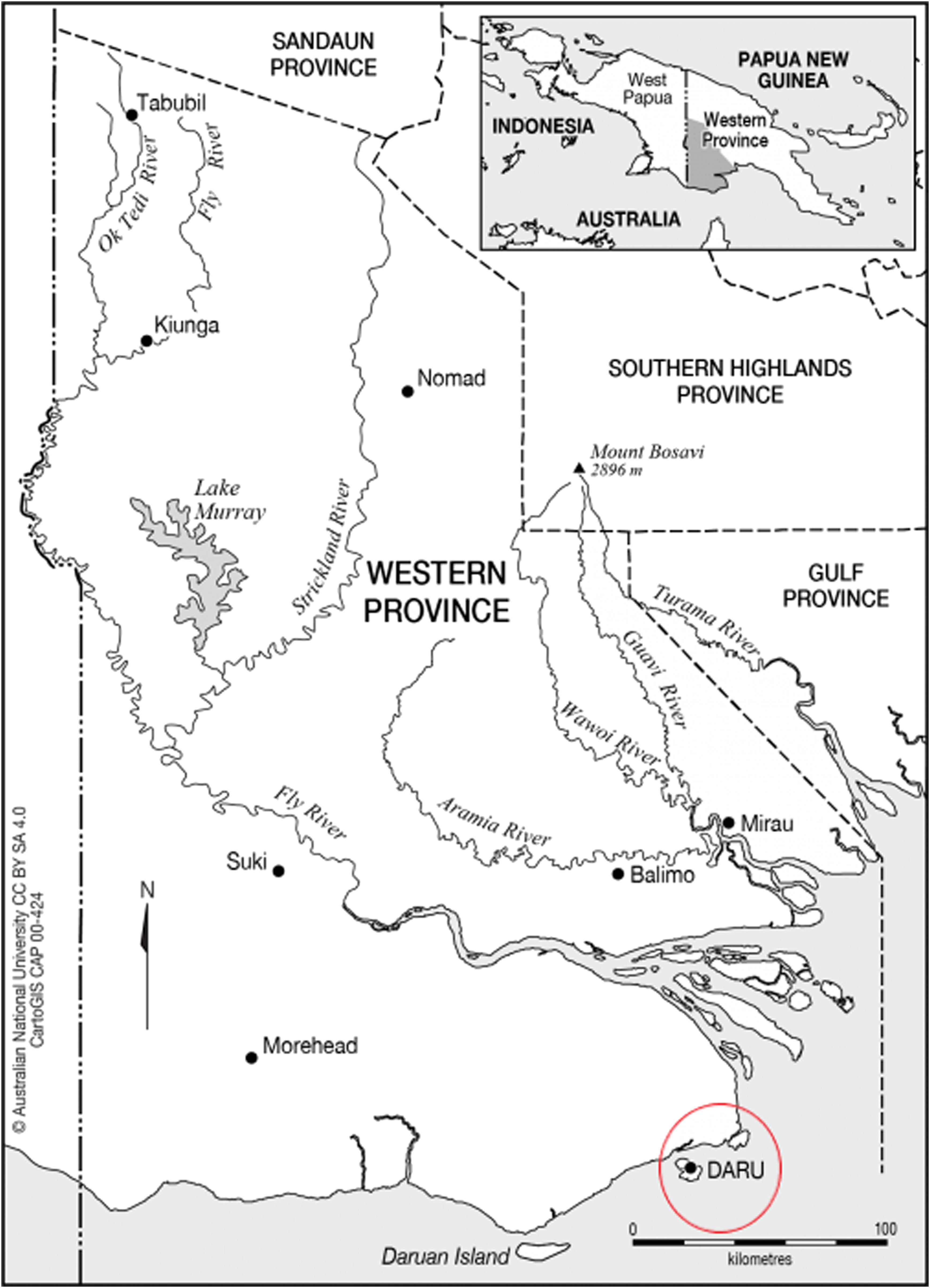 The original map was obtained from CartoGIS Services, College of Asia and the Pacific, The Australian National University: https://asiapacific.anu.edu.au/mapsonline/base-maps/western-province-png#
The emergency response to the ongoing MDR-TB outbreak on Daru Island in the South Fly District in 2014 was led by the provincial government and the PNG National Department of Health (Kase et al., 2016) and involved stakeholders including non-governmental organisations and infectious disease experts. This also resulted in the scale-up of treatment services at Daru General Hospital, the provincial referral hospital, which coped with a high number of people being diagnosed with both drug-susceptible TB (DS-TB) and MDR-TB. This multisector response in Daru has been described as ‘outstanding, world-class…with significant progress in improving case finding and treatment of active TB’ (Specialist Health Service, 2019, p. 20).
The MDR-TB outbreak has been stabilised through a range of measures implemented by government, community organisations and other stakeholders (Morris et al., 2019). Community-based implementation of household contact screening with provision of TB preventive treatment for young children (<5 years) was successfully introduced. Despite the progress in stabilising the outbreak, ‘there is no room for complacency’ (Specialist Health Service, 2019, p. 9). The COVID-19 pandemic may have reversed some of the gains in treatment outcomes of recent years, with household contact screening and management paused, leaving communities in Daru and the wider South Fly District again vulnerable to TB.
Data Collection
The findings in this article are drawn from a large qualitative study that aimed to investigate the beliefs and behaviours that sustain and enhance the transmission of TB in the South Fly District of PNG and to assess the accessibility and acceptability of current TB interventions (e.g. diagnosis and treatment) within this context. In our study, we adopted an interpretive qualitative approach which centres emic perspectives and lived experience. We used semi-structured in-depth interviews and focus group discussions, distinct qualitative research methods, to enhance the richness of data. This allowed the research team to gather local perceptions of the common elements contributing to the TB burden.
All interviews were organised and carried out between July 2019 and July 2020 by a team of Papua New Guinean researchers from the Papua New Guinea Institute of Medical Research (PNGIMR). Recruitment and interviews took place at three sites in the South Fly District: Daru Island, Abam (mainland) and Katatai (mainland). An iterative, purposive snowball sampling technique was used to recruit participants and to capture as much diversity as possible to gather very different perspectives on TB. This sampling strategy reduces the potential for coercion and is more respectful of people’s privacy. Snowball sampling is also an appropriate method for hard-to-reach groups who may not be easy to identify, such as people on treatment for TB and their families. Recruitment was initiated through key informants working in outpatient and inpatient medical services in the study sites, who were directly invited to participate in the study. People who were then approached by the key informants were asked to approach the research team directly either in person at the clinic or in the community, or by sending a free ‘Please Call’ message to the study mobile phone.
The research team carried out 128 semi-structured in-depth interviews and 10 focus group discussions. Based on the extensive research experience of this team, we believe that the sample sizes of research participants identified were enough to achieve sufficient coverage of the multiple aspects of TB that relate to our specific research aims, and to ensure that ‘data saturation’ was achieved. This sample size is broad enough to ensure information-rich data that captures patterns and variants, particularly in such a diverse ethnic context such as PNG.
The semi-structured in-depth interviews were undertaken with people on TB treatment, caregivers and family members of people on TB treatment and people on TB preventive treatment, TB service providers, health care workers, community and church leaders and local policymakers to gauge a wide range of perspectives. Interviews explored how participants understood the transmission of TB, the accessibility and acceptability of diagnosis and treatment services and the socio-spatial dynamics that facilitate TB risk, along with solutions. Interviews lasted between 1 and 2 hr.
Research Participants.

Note: TB = tuberculosis; DS = drug-susceptible; MDR = multidrug-resistant. Age ranges: children, 0–11 years; adolescent, 12–18 years; young adult, 19–24 years; adults, 25 years and older.
a Treated for DS or MDR-TB.
Research Participants.
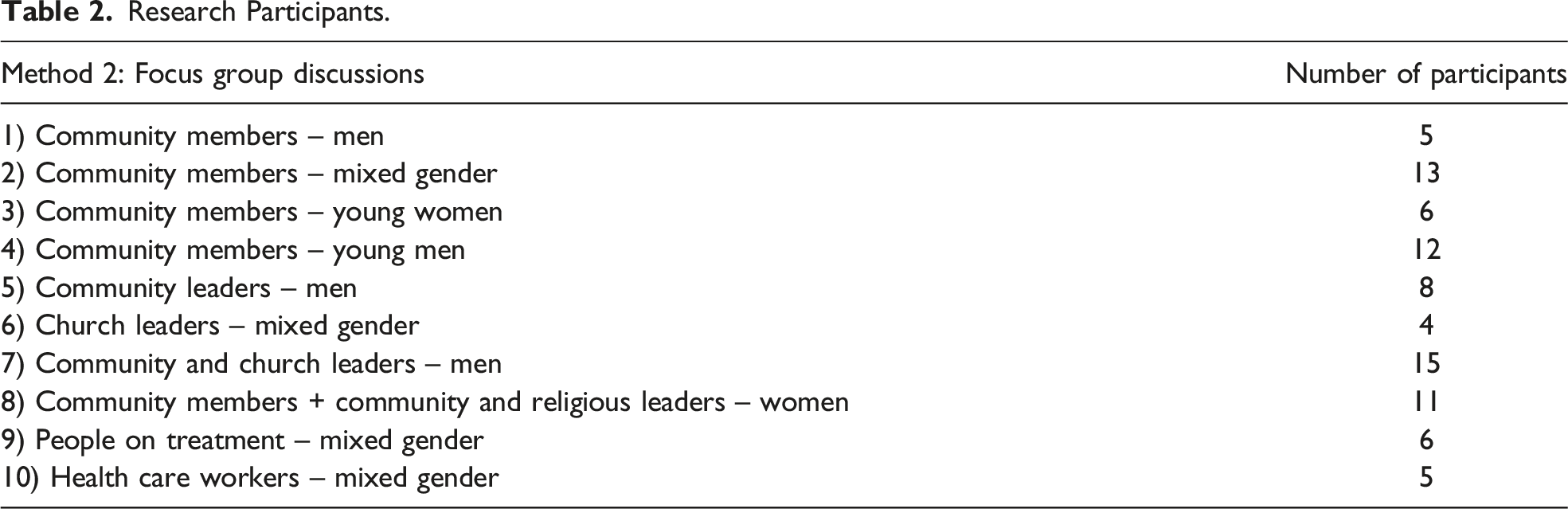
Some of the questions asked during interviews and focus groups included: • What are the key factors that are sustaining the transmission of TB within this context? • Do these factors impact people living on the mainland of the South Fly District? Are some people more susceptible to these factors than others? If so, why and where are they located? • What do you think needs to be done to address the factors contributing to the spread of TB?
Data Analysis
All interviews and focus group discussions were audio-recorded with informed consent from participants. Datasets were transcribed and translated from Tok Pisin to English and then coded and analysed for key concepts (Patton, 2015) in NVivo. Translation and transcribing of transcripts were undertaken by staff from PNGIMR in a three-step process. In the first and second step, a transcriber transcribed the audio verbatim and then translated the transcription. In the third step, a senior researcher undertook a quality and accuracy check to ensure both translation and interpretation were correct and captured the meaning of the participants. The transcription and coding of data began immediately after the in-depth interviews were completed and continued after the focus group discussions. Data triangulation of the different sources of data and information sourced from the various participants allowed the team to clarify and verify the interpretations of the assemblage of research data. We used specific elements of the riskscapes framework to guide deductive thematic analysis.
Multiple study team researchers with local and external perspectives, and different disciplinary approaches, were involved in data analysis. Coding of transcripts was conducted by a member of the research team from Australia. As codes were developed, they were discussed with members of the research team from PNGIMR for consistency and revised considering emergent themes and interpretations. The coding process was guided by thematic analysis (Braun & Clarke, 2006). We were looking to identify 1) themes related to the socio-spatial conditions that were producing TB risks (the signposts) and 2) solutions for navigating through TB riskscapes. The multi-staged coding process began by becoming familiarised with the dataset through the reading of transcripts and identifying preliminary codes. Next, we went back to the dataset for more intensive analysis and identified codes and placed them under their own tentative categories along with key quotes. Analysis was a recursive process, where we went back and forth to the dataset to gather additional evidence that eventually resulted in codes being collated into themes. Finally, we were able to create thematical categories, or interrelated signposts, situated within one spatial territory in the South Fly District, along with solutions to mitigate risk.
Ethics
The study received ethics approval from from the PNGIMR Institutional Review Board, the PNG National Department of Health’s Medical Research Advisory Committee, and the Human Research Ethics Committee of UNSW Sydney. The study was endorsed by the Western Province Provincial Health Authority. For the interviews and focus group discussions, written consent forms were obtained from the study participants who were literate, while witnesses signed on behalf of those who were unable to read and write. Participants were also given the option of giving verbal consent. All participants were informed of the study by key informants working in outpatient and inpatient medical services in the study sites and explained what would be required from them. Actual copies of the consent form were not provided until after the participant agreed to participate in the study and had met with a member of the research team to go through the form. At this time, participants were given time to ask the researcher any questions they had and/or to discuss concerns. Consent forms were developed by PNGIMR and UNSW and had received ethics approval. All participants were reimbursed for their time. Refreshments and a small sum of money were given.
With regard to the inclusion of interviews with people on treatment who were adolescents, two pathways to consent were sought: 1) parental or guardian consent was sought for the adolescent’s participation and 2) parents or guardians of adolescents were invited to participate and discuss the adolescent’s experience with TB and comment on the risk factors sustaining TB transmission in Daru.
All people referred to in the ‘Findings’ section have been provided a pseudonym.
Findings: Signposts of the Structural Conditions in Which TB Thrives
How are we going to stop this thing [TB transmission]? We are just talking over here to stop this thing but, we’ll never stop this thing, because we are not going straight to people to talk to them. You never go to study their lifestyle; how they are living and how life is in the community. What’s making this sickness worse on the Island here? - David – Family Member of Person on Treatment for TB
These remarks by David, the husband of a woman who is on treatment for TB in Daru, speak directly to the need for localised accounts that explore community constructions of risk which are embedded in practice and in place. David is of the belief that TB will never be stopped without exploring these spatial dimensions. David, and many other interviewees, pointed to Daru Island, specifically, as the place of most risk in the South Fly District and identified multiple, interconnected signposts that made up their TB riskscapes here and impacted on their everyday life. In the sections that follow, we critically explore the signposts that community members spoke of when assessing their place as riskscapes for infection and disease. A number of those interviewed stated that poverty was the root cause. ‘This disease’, said Maurin, a Program Manager at a medical facility in Daru, ‘is a disease of poverty’. Long used to refer to and describe TB, we were interested in unpacking the different dimensions of the experiences of poverty that people talked to. By breaking down this all-encompassing term poverty, on people’s terms within TB riskscapes, we can reveal lived experiences and work out how best to respond to the issues practically, and in ways that centre these experiences. Overcrowding, lack of water, sanitation and hygiene (WASH) as well as food insecurity and undernutrition were all used as examples of poverty that the communities identified required action in order to influence ongoing transmission of TB in Daru. As such, we have labelled these conditions as signposts common to the riskscapes and discuss them in detail below.
Overcrowding
Most people we spoke to reflected on overcrowding as one of the most significant and obvious signposts that made up TB riskscapes. Research has established that overcrowding is linked to a higher risk of exposure to TB infection (Duarte et al., 2018). Since the early 1990s, Daru has experienced a significant rural to urban drift from mainland South Fly District (Busilacchi et al., 2015). Participants explained that people from the mainland migrate for several reasons: health services, including TB treatment; mourning rituals to mark the death of a family member; education; employment opportunities and compensation collection from a mining company in Western Province due to environmental damage that resulted in the discharge of mining waste into the local Fly River. According to those interviewed, this rural to urban drift means that household numbers in already overcrowded homes and settlements have expanded to accommodate family and extended kin coming over from the mainland. People may migrate over temporarily or permanently. Dora, the caregiver of a child on TB Preventative Treatment, stated that even temporary visits could last for months: It’s overpopulated [Daru], so you know, sometimes overpopulated people living in one house can cause TB sickness. It’s very risky. We don’t know whether they are coming well or if they also have this sick [TB].
Additionally, many of those accessing TB treatment from the South Fly District mainland will live with friends or relatives during their time in Daru, putting further stress on limited resources such as food and contributing to overcrowding: This is where the wantoks [one’s kin or community members who speak the same dialect] are very, very important…because they are from the same area, they take them to their houses and live. But the thing about them is…when you go to live with the relatives, it puts pressure on their daily living… so also contributing to the problems of the household. - Wayne –Key Informant-TB Program Implementer
Not only has migration resulted in the already overcrowding, but it has stretched the already limited services available on the island. According to Wallace, a local community leader, the consequence of these circumstances was that ‘many of our people succumbed to all kinds of illnesses’. Melis, a mother of a child on TB preventive treatment, was born in Daru and concurred with others that the island has been transformed by overcrowding that has resulted from rural to urban migration. She believes that overcrowding is a major transmission risk: ‘Island is overcrowded, that’s why this TB germ spreads like wildfire’.
The impact of severe overcrowding is most evident in the housing settlements, or ‘corners’. The corners are the most densely populated areas in Daru. These multiple housing settlements (26 in total) are typically made up of people from a particular ethnic group from the mainland. For example, in Mabudawan Corner, most inhabitants are from the Mabudawan area of South Fly District on the mainland. Houses in the corners are built from off-cut timber, mangrove posts and saplings, with roofing made from off-cut iron and biri (palm) leaves (see Picture 1). Housing structures in a Daru corner. Copyright Angela Kelly-Hanku (2019).
Participants reported high occupancy numbers in the corners. Customary obligations and practices are very strong in the South Fly District, and many houses accommodate between 3 and 5 families (between 10 and 30 people) in one house. People sleep inside, on the veranda and under the house. Most household yards that should cater for one house, cater for 5–8 houses, all built close together: … there are no proper windows, people are overcrowded, there are no spaces for [fresh] air to come in… People are living on each other’s body. Therefore, the root part of TB is still there on Daru Island which is only through overcrowding. And the government must look into it. – Wendy, Church Leader, Focus Group Discussion
Clement, the father of a child on treatment for DS-TB, stated that the entire island gets extremely crowded with people coming over from the mainland during mining compensation payment time, which typically happens two to three times per year. As a result, the corners are packed to capacity: All the villagers are cramped up over there. As such, during that time we never have enough space at the corner. Sometimes we usually provide space for the villagers to come and stay with us.
In many of the interviews and focus groups, it was pointed out that infection rates were probably higher in the corners due to high occupancy rates. Thompson, a local health care worker, noted that this overcrowding was a conducive avenue for TB transmission in Daru: People staying together in one house because of land shortage… you know town life, they come here and the settlements [corners] are beefed up and there is nowhere to build a house and families stay together and then, that is how the TB increase.
The island has a population of around 15,000 (Busilacchi et al., 2015). This number is quoted from an article referencing the 2011 census. However, a local government leader we interviewed put the population closer to 20,000. Unlike towns and cities on the mainland that can expand their boundaries with immigration, as an island town Daru cannot. There is a fixed space, and in the interviews and focus groups, we were told even that space cannot be fully utilised as much of the coastline is mangroves and swampy, and the changing tides means the grounds underneath and around houses is subject to continuous salt water, limiting areas of agriculture production.
Many of those interviewed were aware that TB transmission was airborne and rightly noted that poorly ventilated houses were a key transmission site for the bacterium. As Jep, a woman who resides in one of the corners and cares for a family member on TB treatment, stated: ‘They [people in the corners] are getting this sickness [TB] because they are living in an overcrowded house where they are breathing the same air’. Vanessa, a woman on treatment for TB, observed that babies and people living in overcrowded conditions were frequently becoming infected with TB, and that houses in her corner were ‘filled with many sick people inside’. She worried that people will continue to be at risk of transmission if the conditions remain unchanged: They must go and occupy another man’s house…or go and reside far away as it is not good to use the same house…where the air has already been polluted and everything.
According to Maybell, a key informant who works at the provincial government level, the overcrowding showed no sign of abating: But the people here they can’t go back to their villages because there are no shops there, there are no schools there, there are no public servants there… their health centres are closed, there’s no airstrips, there’s no banks, there’s no Government services there.
While participants stated that overcrowding was leading to situations that increased risk, and that risk of infection was higher in the corners, Stavis, a TB Program Advisor who did not live in the corners, stated that people outside of the corners were also at risk: The risk is inherent here for everyone because we do mingle ourselves. It’s a very small island… and we occupy a small percentage of that so the population density is very high.
This comment by Stavis is important, and it draws attention to the spatial dimensions of TB risk on Daru. He went on to state that decongesting Daru as a whole would be a necessary factor in reducing TB transmission.
Lack of Water, Sanitation and Hygiene
Lack of clean WASH is not a direct risk factor for TB; however, ‘unsanitary living conditions are associated with the increase in the incidence of TB’ (Cardoso et al., 2017, p. 1). Many people signalled that TB was an issue in the community due to overcrowding but also the result of the lack of WASH. It was unclear at times whether people were referring to the risk of acquiring TB infection or progression to disease. Nevertheless, many were adamant that inadequate WASH services and practices were contributing risk factors and as such, we have framed these as a signpost. According to a local leader we interviewed who works in government services, a proper waste management system is lacking in Daru, with the Daru Urban Authority no longer providing a functional waste management system. Therefore, most of the population, specifically those residing in the corners, lacks access to toilets and defecates in the sea, the bushes (mangrove swamps) or relies on pans to collect human waste. Most water wells and pans are located just a metre or two from the house. Some buried the pans in the household yard or discarded the waste in the sea as there was often no other option for disposal. Participants explained that whenever there was a king tide (an exceptionally high tide), the sea brought the faeces back to the residential areas. Robin, a caregiver of a child on TB preventive treatment and a Daru resident, felt that people in the corners were living like ‘inhuman inhabitants’ due to the unhygienic living conditions there. While Robin and her family did not live in the corners themselves, she believed that most TB cases on the island could be found there: ‘So most of the people affected by TB are from the settlement areas because of the way they live’.
Kelvin, the father of a child with MDR-TB disease, was asked why TB was still so common in Daru. He said, ‘heaps of rubbish or wastes, toilets in the open spaces or near the house, not cleaning the drain’. According to Kelvin, the only place to go to the toilet or dispose of rubbish was in the sea: ‘We can make toilets but when the pans are full, where are we going to dump the toilet? There is no other place’. Kelvin stated that if the community had access to sanitation services perhaps then the TB burden would ease.
Access to treated tap water is also severely limited on Daru. In contrast to other islands in PNG, Daru Island has no running water. There is an underwater pipeline that runs from the mainland to Daru; however, the pipes are decades old and have not been well maintained. Apart from public servants and people in certain areas who have access to sporadic water supply from the mainland, most Daru inhabitants do not have such access. As such, people either rely on bore water (for a fee) or they collect rainwater, water from wells (see Picture 2) or from the sea. Woman collecting water from a well in her corner. Copyright Angela Kelly-Hanku (2019).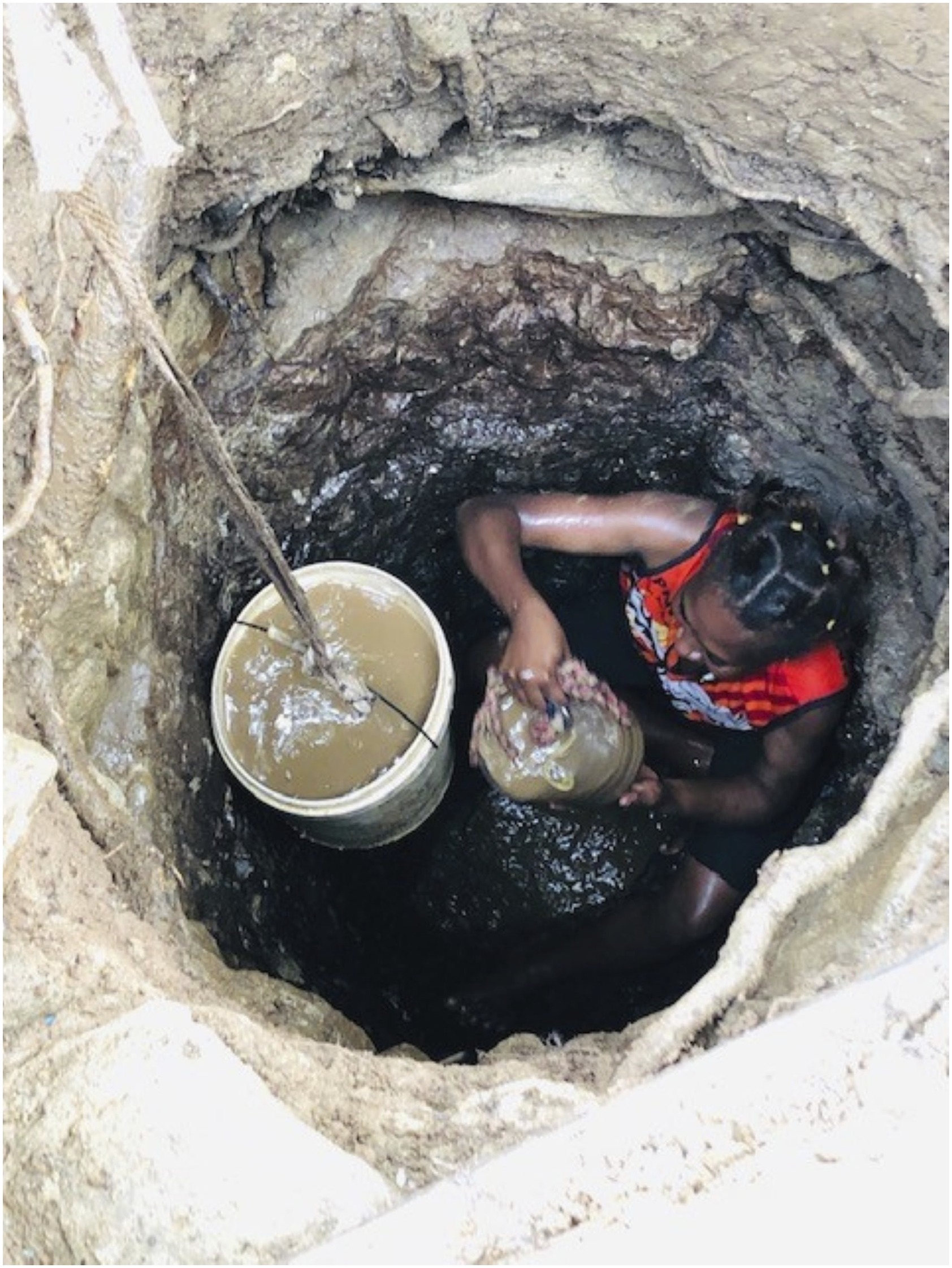
Some community members stated that unsafe drinking water was contributing to unhygienic living conditions in the corners and leading to TB risk. Gabi, a man who lives in one of the corners and whose child is currently on TB preventive treatment, believes that a lack of clean water is the main cause of TB. He said water taps could be shut down for months and during that time people relied on well water, and these wells were located where ‘they’ve been burying shit’. Gabi claimed drinking contaminated water was a primary risk: ‘I think that’s the cause of all these things…there’s no other cause for TB’.
Some participants interviewed stated that they were trying to come up with their own solutions to the water and sanitation problem in Daru. Obed, a youth leader living in Daru, stated that rather than: waiting for the government to bring services to my door… I’m putting an awareness to my youths if they can assist families, friends, relatives in the communities to build their toilets and things like that. We are trying to make pit toilets that people can all use.
While a community-driven solution such as Obed’s is important, many interviewed emphasised that government involvement was still needed as the WASH problem was so prevalent.
Food Insecurity and Undernutrition
Undernutrition is an established biological risk factor for TB disease, and TB disease is also a direct cause of weight loss and the deterioration of nutritional status (bib_Gupta_et_al_2009Gupta et al., 2009). Participants identified undernutrition, due to food insecurity, as another risk factor. The signpost of food insecurity was listed as a major problem in Daru. This leads to undernutrition which is a direct risk factor for developing TB. As Sally, a worker at a TB prevention program, stated when speaking about the local population in Daru: Most people here are very weak, who are very—they are malnourished, they are under-weight. And when these types of people come across people who are with TB, they will easily get it.
As mentioned, Daru has limited space. Participants explained that land is unsuitable for growing fruit and vegetables, and that many families relied on sago and rice alone or struggled to feed their families. Undernutrition was noted as a serious issue by many participants. Felix, the father of a young child on TB preventive treatment, survived on the small income he received from selling firewood. He said: We are living but suffering. As we are living in Daru, sometimes we have no food, so we sleep without food; we take the children to the side and tell them, “Just sleep!”
In a focus group discussion with community church leaders, one pastor, Ezra, explained that many people go without food on Daru, and he felt that this was when they were most vulnerable to developing TB: ‘TB doesn’t jog or put on breaks. It travels at full speed and comes into [the body]. It runs speedily in because of hunger’. Ezra’s take on the dominant approaches to TB that favour medically orientated strategies such as testing, treatment and preventative treatment was that they are short-sighted and will not address the ‘social and political precarities that enable TB to prosper’ (Kehr, 2016, p. 383): We can keep on trying with our medicine… medicine will run out and the sickness will still remain. We can continuously fund many millions, and money will run out but this sick will still remain because this is an island [and] nobody is eating.
Participants reflected on life and place in their ancestral villages on mainland South Fly District. In the villages on the mainland, food insecurity and undernutrition were not a common issue for most. Upon arrival in Daru, however, they quickly found that everything was costly. This was the observation of Naomi, a caregiver of a child on TB preventive treatment. She claimed that, compared to village life, the living standard in Daru was very low and people were going hungry: In the village you have everything there. You make garden, you eat good food there like greens and fish… but when you come to Daru and you want to buy [eat] fish, you buy it with money, you want to eat good food you buy it with money but the thing is, we are not working… So, by the look of it, that’s where this TB is growing.
Many participants stated that ‘greens’, vegetables such as ‘aibica’, which is similar to spinach and other ‘garden food’, such as cabbage, were not regularly available in the markets on Daru and if available, they were expensive. As such, local people consumed cheaper foods like sago, an edible starch made from palm stems, or processed food if they could afford it. Wala, a woman on treatment for both HIV and MDR-TB, lives with her parents and children in Daru. She has been on TB treatment for almost 1 year. For their family’s livelihood, Wala’s brother and father catch fish from the local reef. If the weather is good, and they have a decent catch, they sell the fish at the local market and earn a small income. However, circumstances quickly change if they are unable to make market: [if] you are not going fishing, you are not making market, you don’t eat, you stay like that. You work you eat, you survive. It’s today’s life everywhere, because we’ve got no garden.
Brad, a man on treatment for MDR-TB, moved to Daru from his village on the mainland so he could access treatment. His wife and children were living with him in Daru initially, but because of limited options for income generation, they went back to their village. Now, Brad lives with his parents and relies on their small marketing income to survive while he completes treatment. Like Wala, Brad and his family must limit food intake during times of financial insecurity: ‘So, when they make good sales, then we eat good [food] but if not then [we] aren’t satisfied’. Brad was grateful to his parents for supporting him while he completed his TB treatment, but he also acknowledged the stress it was causing them as they struggled to meet their own needs. The reality was that many people on treatment for TB relied on the food vouchers 1 distributed monthly by World Vision at the local Daru Accelerated Response to Tuberculosis sites, where the regimen known as directly observed treatment short-course (DOTS) is offered. Daily lunch is also provided at these sites.
The large movement of people into Daru has created a growing class of unemployed people, particularly in the corners. Limited economic opportunity has prevented people from generating sustainable incomes and as such, many people here generate income from small sales via the local market in Daru. However, the income they might earn from market sales was often not enough to maintain a stable livelihood to sufficiently feed their families, with many going hungry.
Findings: Navigating Out of Riskscapes – Emic Solutions
For the people we interviewed, the way to navigate out of TB riskscapes calls for a preventative plan that addresses the interconnected signposts described in the previous sections, namely, the socio-spatial conditions that remain unaddressed and which enable TB to flourish. Overcrowding, lack of WASH and food insecurity and undernutrition were seen as clear and persistent markers of TB riskscapes. Cameron, a person on treatment for MDR-TB, worried that, without immediate action, TB transmission would continue to proliferate: TB is not killed here; it’s still alive even though we are getting treatment and others [new patients] are coming and doctors are really working very hard. So, we also must look at the Daru Island itself…. We talk about it, but nothing happens. We don’t know who is going to come and help us in this program. Our MPs or maybe PNG Government or maybe we don’t know. If we don’t solve this problem, maybe we will die. There must be something; Government must do something over here.
There was a real worry among the people we spoke to that nothing would be done to mitigate the socio-spatial conditions that were producing risks. It was stated overwhelmingly that health, education and social services needed to be decentralised beyond Daru, to the mainland South Fly District, to manage broader TB risk. This would take the pressure off services in Daru and lessen overcrowding. It would enable people to access TB treatment closer to home, not have to worry about the higher cost of living and lack of space on Daru, nor rely on family and extended networks for support. Paias, a father living alone in Daru while receiving treatment, stated that the Department of Health needs to act now: Daru is a difficult place; no house, no proper meals and water system and transportation to travel back and forth. So, the best thing is that our TB medicine must be provided in the health centres or aid post.
2
There was also a clear call for the provision of some level of social protection from government services as unemployment and food insecurity was identified as a major issue on Daru. As Celine, a local policy maker explained: We need this multi-sectoral approach to fight TB… at the moment we are only treating the top of it… the actual root cause of it somewhere down there, nobody is taking heed of it…TB is a social issue, it is not only health… government agencies need to help step up and work with health then you will see a difference.
Those interviewed were aware that effective TB curative services were in place on Daru. However, the majority of participants were adamant that prevention efforts must remain at the forefront, and by this, they did not only mean through TB preventative treatment. One community leader, Isiah, stated that prevention, and the expansion of health services to the mainland, must take precedence to break the TB cycle in Daru: Everyday people are increasing, you see because we are dwelling in one circle, one place … You treat this fellow tomorrow, while he’s under treatment, you are already treating another one and it continues. Okay, so let’s focus ourselves on the prevention; I would say prevention is better than curing. Cure is already here, like I said we need to move out of Daru Island.
One community leader, Simeon, felt that the risk of TB in Daru was so high that the government needed to start evacuating people off the island because TB infection is unavoidable here: If you stay here, you’ll definitely die because this thing - TB - is unstoppable… because you are healthy when you come here, you grab it you go back home, ten people are already affected.
Simeon felt that government involvement was the only solution: We can do research, medicine, and other things and what-not, but the Government has the money, so the Government needs to step in and try to sort this problem out.
The space of Daru, particularly the corners with its many signposts of risk, was presented as a place of ongoing TB transmission and progression to disease. Many were of the belief that this was a continuing cycle, and the only way out was through targeted interventions from the government. Treatment, education and awareness are key, but addressing the structural conditions in which TB thrives also needs to remain at the forefront.
Discussion
In this article, we have examined how people from the South Fly District, Western Province, PNG, understood their social and physical spaces as places of TB risk – for infection and disease development – and how these understandings were shaped by multiple, overlapping risks factors, or signposts, to create TB riskscapes. When asked about the signposts enabling their TB riskscapes, the people we interviewed spoke of structural factors impacting on everyday life, such as overcrowding, lack of WASH, food insecurity and undernutrition. It has been documented that TB transmission is effected by all these societal factors and that a mitigation of these factors can bring about ‘a substantial effect on tuberculosis trends’ (Lönnroth et al., 2010, pp. 1820–1821) and may facilitate access to health services and adherence to TB treatment (bib_Fried_et_al_2015Fried et al., 2015). These signposts identified within riskscapes led to people’s greater exposure to direct risk factors for active TB and compounded upon each other creating the perception of an assemblage of risk favourable to TB transmission, and without change, preventative efforts will potentially be hindered.
To uncover how the risk of acquiring TB or developing the disease was experienced and responded to by people in this study, it was imperative to consider the socio-spatial dimensions of these intersecting signposts. According to Müller-Mahn and Everts (2013, p. 35), ‘riskscapes emerge when particular dangers are highlighted pertaining to a given territory’. Our findings indicate that within the South Fly District, the island of Daru specifically was viewed and identified as the territory of greatest TB risk, with the corners being a site of heightened risk for transmission of infection. These findings support the notion that risks ‘are unequally distributed and tied to locales, sites, places and particular landscapes (i.e. riskscapes)’ (bib_Müller_Mahn_et_al_2013Müller-Mahn et al., 2013, p. 204) and also highlights the vulnerability certain community members face due to their living conditions. These perspectives on the spatial dimensions of exposure to risk are important to consider because it allows an emphasis away from ‘the individuation of risk or personal responsibilisation to mitigate risks’ (Braun, 2020, pp. 271–272) and, instead, asks us to consider why the most impoverished, those living in squalid conditions, remain increasingly vulnerable to a preventable (and curable) disease.
There are concerted efforts by a consortium of non-governmental organisations, the National Department of Health, and the provincial government to ensure that socially embedded approaches to TB are designed and utilised in Daru and the wider South Fly District region. Additionally, efforts are being made to shift from vertical program delivery to a more patient-centred or decentralised and integrated approach, which requires understanding of and response to socio-cultural issues. As part of this socially embedded approach, it is recognised that TB cannot be eliminated in lower- and middle-income countries (such as PNG) where the burden is greatest, without addressing and responding to the structural determinants of health (Hargreaves et al., 2011; bib_Wingfield_et_al_2018Wingfield et al., 2018). It has been documented that TB transmission is, among other things, effected by ‘poverty, urbanisation, crowded living conditions, increased population density, and migration’ (Lönnroth et al., 2010, pp. 1820–1821), all factors which are present in Daru. Participants were of the belief that any change in these conditions needed to be led by the government; the onus cannot be solely left to the community, nor would it be a pragmatic solution. Overcrowded living conditions in the corners, for example, is not something one can easily resolve, particularly when there is no physical space to expand, and one is unemployed, or living with up to 30 people in their homes. This highlights the importance of studying the socio-spatial dimensions of risk in order to examine ‘uneven spatial risk configurations that have major consequences for some, while having virtually no effect on others’ (Müller-Mahn et al., 2013, p. 204). It is therefore the hope of those interviewed that the social and political institutions in PNG will provide a social safety net when their agency is constrained due to risk configurations such as overcrowding and a lack of land to expand on all factors beyond their control.
While effective curative services have been established in Daru, and the large MDR-TB outbreak has been stabilised, the risk of acquiring TB in Daru remains high. Medical approaches to TB prevention are currently in place on Daru, for example, TB preventive treatment for children under the age of 5 and active case finding (Specialist Health Service, 2019), although, as mentioned earlier, the COVID-19 pandemic has put a pause to most activities. Risk-management strategies supported by program partners are essential, but they do not resolve the compounding risk factors identified by the community members in this study that are, in essence, at the root of the TB problem. Historically, the tools used to combat TB were highly medicalised and based in clinical and narrowly defined public health management strategies. In these older approaches, ‘TB control’ was narrowly approached through diagnosis and treatment with little to no attention to the socio-cultural or social determinants of health that fuel transmission and disease development (Hargreaves et al., 2011; Raviglione & Uplekar, 2006). These public health approaches typically ‘operate on a large-scale understanding of problems… [however], expert practices need to attune to a wider variety of risks relevant to local populations’ (Müller-Mahn & Everts, 2013, p. 35). The way people within a given context understand illness and infection and explain their health state based on their own socio-cultural experiences should be considered (Ailinger & Dear, 1997).
We believe that optimally contextualised solutions are needed to address TB riskscapes in Daru and our findings support this notion as the local population interviewed have identified a myriad of risks impacting on their daily life that for them require as much attention. We do not claim that TB control does not also need medicalised approaches. However, we argue, as do the community, that TB riskscapes will never be stabilised without also examining the political economy and social production of the disease. We acknowledge that these factors are beyond the scope of TB programs to address and that a whole of government approach is needed to address the multifaceted signposts identified by the local population.
People can act in different local ways to cope or navigate risks in their daily lives. In forthcoming work, we will look at strategies communities are exploring to mitigate and negotiate their personal risk in these TB riskscapes. Governments can then build on what communities are doing to stay safe within such difficult circumstances. By doing this, government and practitioners can utilise the insight gained to work with communities to also develop practical solutions that would provide a starting point for health promotion activities.
If the signposts identified in this study remain unaddressed, particularly overcrowding and undernutrition, people will continue to be vulnerable to TB infection and disease. The community has identified TB riskscapes, they can visualise them, but what they cannot see are the programs to address it or a plan to navigate out of it. TB diagnosis and treatment is secondary to the reality of their perceived riskscapes. The social root of the situation needs to be brought to the forefront as prevention efforts are scaled up and to not lose the gains from the successful curative response. A decentralisation of health, social and educational services into the wider South Fly District is paramount to reduce the overcrowding on Daru and to facilitate TB prevention and treatment efforts.
Conclusion
TB is not decreasing; it is still running… While I was waiting for you, I went back to the ward… I went inside the ward and I saw some people were there, patients were already there now… what is really causing it [TB]? We must look at these things properly. We are not killing TB, TB is still running, still coming. So, the government must really consider this one closely. We are talking about life. - Cameron- Person on Treatment-DS-TB
We intentionally highlight the common elements identified within these particular TB riskscapes as this is a longer-term area in need of political and international attention. These narratives of risk from South Fly District community members emphasise the urgency of the situation. This is the reality in many high burden settings around the world and the challenge is how do we maximise TB control efforts through mechanisms that are within the control of TB programs and local communities, while advocating for broader action to reduce global inequality and the elements of TB riskscapes that are beyond health. The importance of speaking out about these risks is that it also calls to action more than just public health authorities but housing, sanitation and income generation. We conclude that inaction on these key areas will likely lead to an increase in TB risk factors and incidence in this space.
Footnotes
Declaration of Conflicting Interests
The author(s) declared no potential conflicts of interest with respect to the research, authorship, and/or publication of this article.
Funding
The author(s) disclosed receipt of the following financial support for the research, authorship, and/or publication of this article: This research was supported by the National Health and Medical Research Council (1142715).
