



Abstract
This study explored the learning experiences of intensive care residents in an intensive care unit (ICU) during night shifts and the development of communication skills in this community of practice. This action research qualitative study used the photovoice method in four workshops. A group of nine residents shared their learning experiences and collectively analyzed, built, and presented proposals to improve residents’ communication skills in the community of practice in which they become intensivists. Participatory thematic analysis was conducted. Students concluded that night shifts in the ICU offered a perfect situational learning environment for communication with one-on-one resident–teacher relationships, less administrative work, and more resident responsibility, improving intensivist identity. Role models, reflective thinking, and teamwork are essential for fostering communication skills among intensivist community members and are all trainable. The results and student suggestions were presented to teachers and decision-makers in the clinic. These photovoice strategies developed students’ abilities to share their critical views and suggestions with decision-makers for subsequent implementation, enhancing their confidence in their learning process, strengthening trust-based relationships with teachers, and improving future intensivists’ practice communities.
Introduction
Communication competence in medicine is a fundamental interpersonal skill required for efficient information collection, communication with work teams, and communication and empathy with patients and their families (Barrett & Bion, 2006; Ellison et al., 2008; Roze Des Ordons et al., 2017; Sullivan et al., 2009). This competency improves health outcomes and family member satisfaction, fosters a work environment that promotes team well-being, and reduces burnout (Fassier & Azoulay, 2010; Kalet et al., 2004; Lingard et al., 2004; Lotte & van der Voort, 2021; Piazza & Cersosimo, 2015; Pronovost et al., 2003; Sullivan et al., 2009).
Intensive care unit (ICU) doctors must have adequate communication skills to lead ICUs and establish effective therapeutic relationships with patients and families. The primary source of conflict and preventable errors within the ICU is a lack of communication (Brindley & Reynolds, 2011; Ghezeljeh et al., 2021; Reader et al., 2007). Skills associated with effective communication include establishing daily goals with the work team (Pronovost et al., 2003), knowing how to socialize with the team (Brindley & Reynolds, 2011), and sharing daily goals with the team members of the following shifts (Dutra et al., 2018; Jalilian & Antongiorgi, 2019). These can be taught using role models (clinical teachers who model professional behaviors), feedback, and adequate self-reflection experiences (Gilligan et al., 2021; Santhosh et al., 2017; Saucier et al., 2012). Communication competence has been informally learned in medicine, even though it can be taught over a brief period (Turner et al., 2015), and the teaching processes must be intentional, explicit, experiential, and curriculum-consistent to be successful (Saucier et al., 2012).
According to Lave and Wenger’s Situated Learning Theory of Communities (Lave & Wenger, 1991), to achieve communication competence, residents need to develop the identity of an intensivist within a community. First, learning communication competence is of interest to have good ICU teamwork. Second, the community understands that competence is learned in daily ICU practice and is shaped by the activities, practices, and culture of the ICU rather than a formal educational setting (Cruess et al., 2018; Monrouxe et al., 2022). Similarly, we aligned with Bandura’s social learning theory, recognizing that this competence can be learned by observing, reflecting, and modeling the behavior of role models, allowing residents to build self-efficacy within the ICU (Cruess et al., 2018). From this theoretical framework, we emphasize that a trusting relationship must be established between the resident and the team to stimulate student metacognition, define the role of the residents based on their academic maturity, and promote their autonomy and active commitment (Krasner et al., 2009). Including communication in the curriculum significantly improved students’ communication development, relationships with patients, teamwork, performance, and resilience (Karlsen et al., 2017).
During their residency, residents rotate in many areas of the clinic, such as cardiology, nephrology, and gastroenterology, where they learn through experience and workshops with attending doctors during the day. However, they must perform three to five rotations in the ICU with at least 12-hour night shifts per month. This is known as a night shift. Night shifts could be ideal for residents to learn communication skills because they provide a one-on-one resident–teacher relationship, less administrative burden, and more responsibility for residents. In addition, this learning setting improves decision-making and planning for communication competence among residents compared with day shifts (Coomber et al., 2014). Residents are the connection between the patient and the attending physician because they perform the clinical history and the initial physical exams, review the labs and drugs required by the patient, and then propose a work plan to the attending physician. When the attending physician deems it appropriate, they will also provide information to the patient and his or her family. During the night shift, they are the only resident, and all the assistance burden is theirs (as opposed to the day shift, where you may have between four and eight residents).
This photovoice study describes the learning experiences and critical reflections of intensive care residents during their ICU night shifts in Colombia. This allowed and hindered their communication learning, aiming to promote intentional pedagogical changes within a formal curriculum. Photovoice has been previously used in medical education for curricula development, communication skills, critical thinking, and clinical reasoning (Delany & Golding, 2014; Sandars et al., 2012; Von Pressentin et al., 2016; Wallerstein & Bernstein, 1988). Addressing this topic through participatory action research within the field of medical education is a pedagogical strategy that contributes to the development of self-reflection and is closely related to communicative competence (Real et al., 2017). Likewise, the use of the photovoice strategy, when proposed in its complete cycle, offers an opportunity for the development of these competencies, understanding that photographs can document daily life, be used as an educational tool, and reflect needs in a social context with practical results that promote dialogue and encourage action and/or policy change (C. Wang & Burris, 1997).
Methods
Design
Qualitative action research was conducted in a clinical medical education scenario involving intensivist residents. This study combines the theories of experiential, community, and critical learning, which allow participants to intervene in the research process and their professional and social contexts. Intensivist residents discussed the importance of developing communication skills for their professional development. They were motivated to implement the strategies or scenarios they thought were important for learning this competence during night shifts. The participants identified experiences that aided and hampered learning. They were also empowered to improve their learning by presenting the results and improvement strategies to their clinical teachers as leaders and decision-makers by the end of the study. Data were gathered in four group sessions, two virtual and two face-to-face meetings, because of COVID-19 contingencies using photovoice. Photovoice is a method developed by Wang and Burris in 1994 that allows the graphical expression of situations encountered in a community of practice from a personal perspective (the acronym VOICE stands for Voicing Our Individual and Collective Experience), thereby encouraging collective reflective critical thinking (Wang & Burris, 1997).
Selection and Description of Participants
Nine residents who performed night shifts in an ICU at Bogotá, Colombia, and were students of the first author from years one to four in the intensive care program volunteered to participate (six women and three men). They volunteered after the main author spoke about the importance of communication competence in the ICU, presented the research proposal, and invited residents to share their views and suggestions to improve their learning. Students interested in the study sent a confirmation e-mail to the main author and received the informed consent information for review. The students had the opportunity to ask questions and decide to participate. Five were first-year residents, one was a second-year resident, two were third-year residents, and one was in the fourth year. Initially, 14 residents were selected, but five withdrew from phase I.
Data Collection
Data collection involved a five-phase procedure guided by the photovoice methodology of Wang and Burris (1997) (Figure 1). In response to confinement caused by COVID-19, phases 0, I, and II were carried out virtually using the ZOOM® and TEAMS® communication platforms and video-recorded. Phases III and IV were developed in person and audio-recorded (Table 1). Phases developed in the investigation. Phases and Participants of the Study.
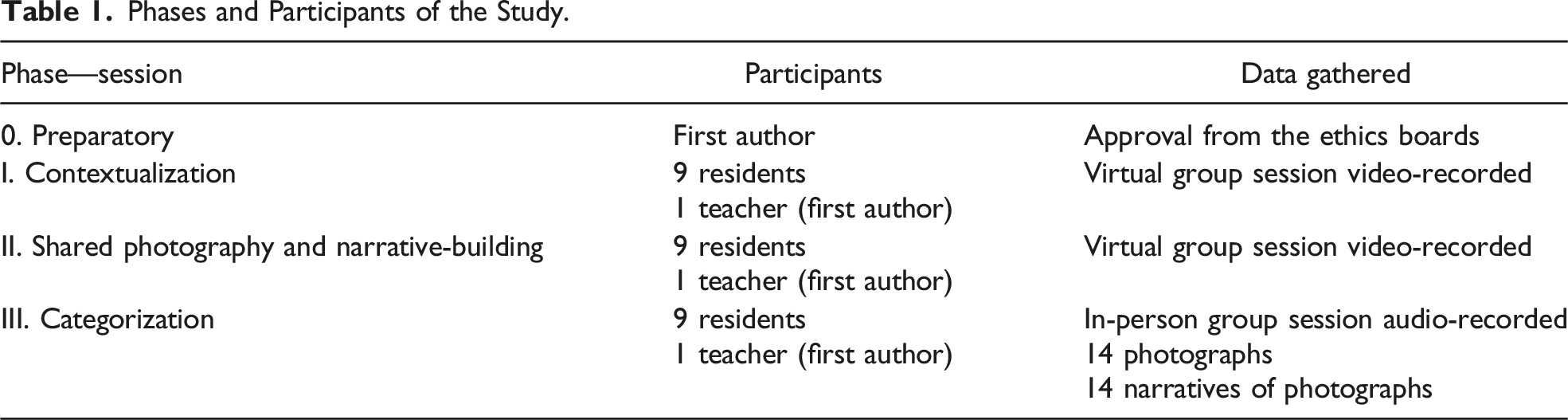
In the preparatory phase, or phase 0, the research proposal was presented and approved by the university and hospital ethics board and presented to the ICU residents for recruitment.
Checklist for Taking Pictures During the Study.
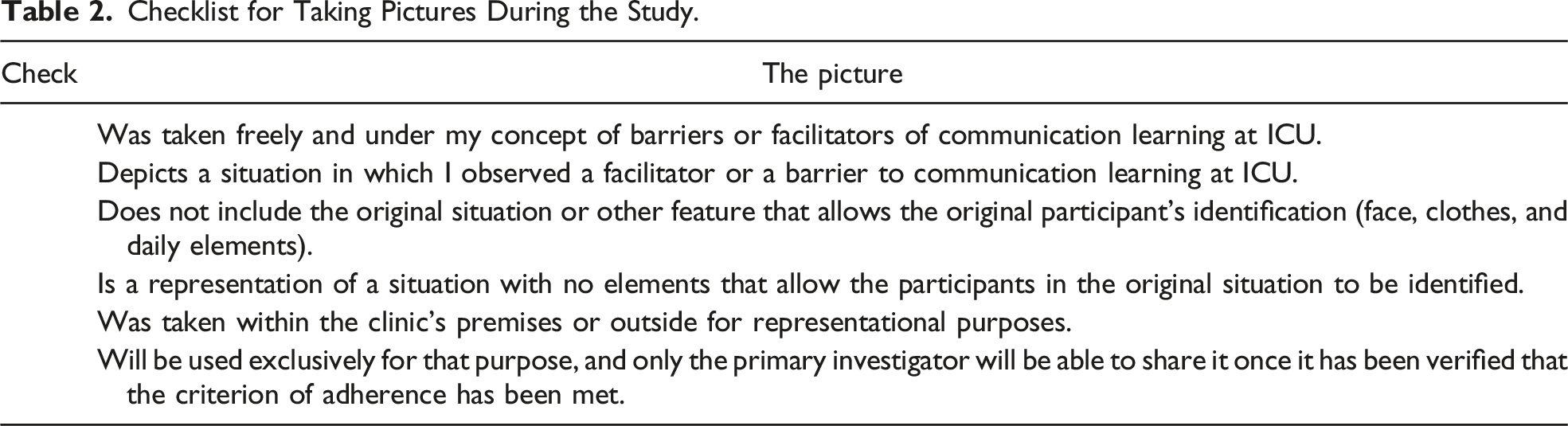
In the phase II workshops, participants displayed photographs that met the ethical criteria, and each of them constructed a narrative for the pictures they took using the Freirean empowerment education technique with the acronym SHOWeD (What do you See here? What is really Happening? How does this relate to Our lives? Why does this situation exist? What can we Do about it? (Wang & Burris, 1997). These were the initial data for the thematic analysis. Four photographs were not shared because they did not meet the criteria of the ethical checklist. Participants were invited to write short narratives as footnotes accompanying their photographs, summarizing their responses to the SHOWeD questions.
Phase III, categorization, was developed in two stages using a participatory approach to inductive thematic analysis (Liebenberg, 2018).
Data Analysis
As explained previously, phase III (analysis) was developed in two parts. (A) In the categorization session, we used a participatory approach to inductive thematic analysis (Liebenberg, 2018): photographs were printed and displayed for residents to remember the previous meeting and the narratives accompanying each photograph. The group was asked to list the issues shared in the photographs. Subsequently, the students were asked to group the photographs based on the common themes identified. Using this participatory approach to thematic analysis, students identified issues (codes) shared by the group, constructed themes related to their understanding of communication learning, grouped the issues discussed, and concluded with improvement proposals (Figure 2). (B) The first author conducted a deductive thematic analysis. The initial coding frame made with the participants was complemented by a detailed coding of workshop transcriptions and photographs organized in posters by the residents. Themes were built based on participant analysis and a priori themes of communication competence learning (Table 3). Participants performed inductive thematic analysis. Communication Skills That Have Been Previously Documented in Literature.
a
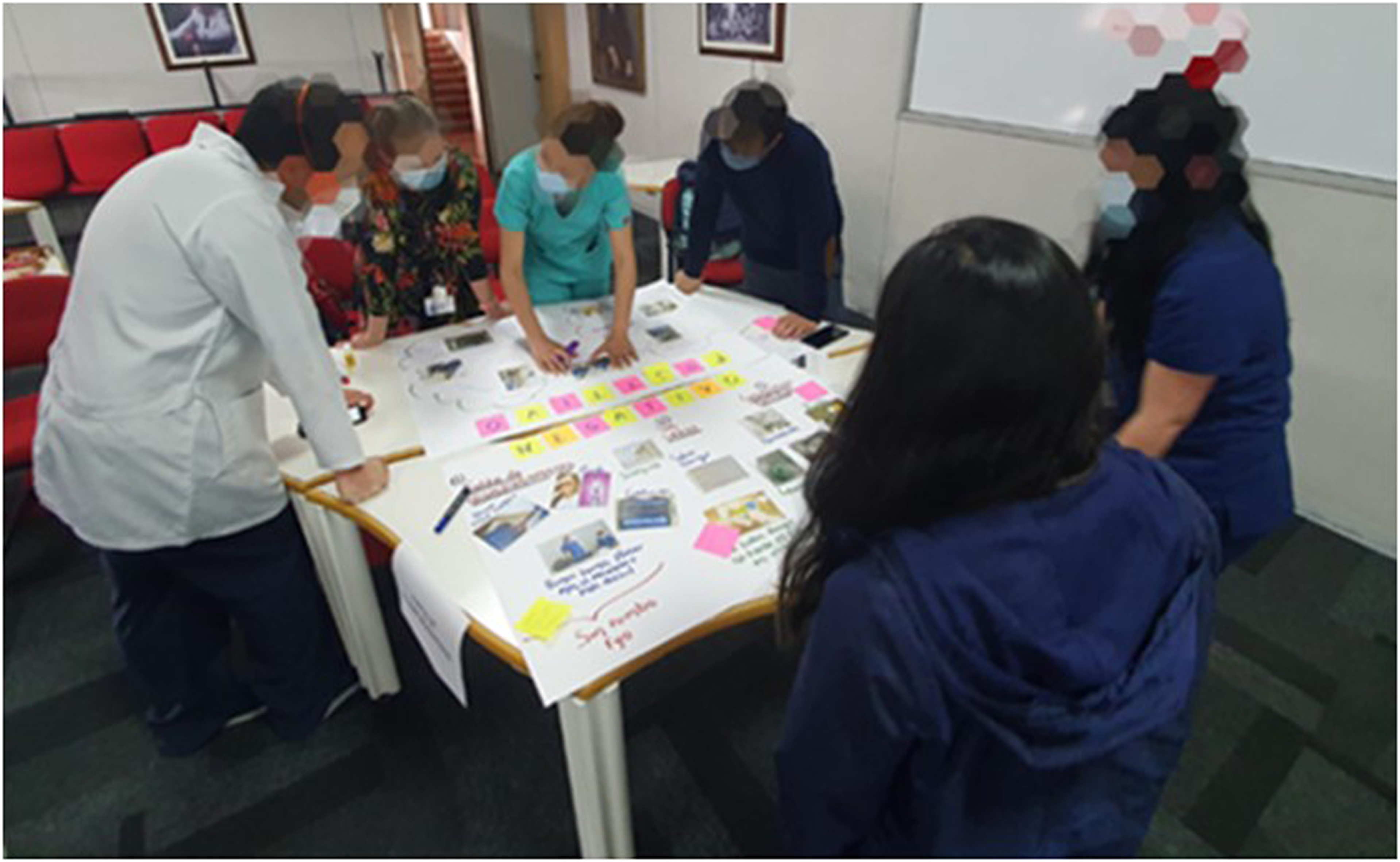

Peer debriefing sessions with tutors refined the analysis, gaining reflexivity from the first author, who was a researcher and teacher in the study. Final themes were constructed, including insights from the expertise of a medical educator specializing in clinical settings as a medical education scenario (third author) and from the second author as a psychologist and critical educator specializing in participatory qualitative methods.
Ethical Considerations
This study was approved by the ethics and research boards of the participating institutions. The research proposal was approved by the university ethics board in August 2020 and the hospital board in October 2020. Participation was voluntary and confidential (resident quotes were provided under pseudonyms), and all residents provided written informed consent. A checklist was created to ensure that the ethical criteria for the photovoice design were met, including privacy, safety, ownership, photo selection, presentation, publication, research influence on subject matter for participant photos, and advocacy (Evans-Agnew & Rosemberg, 2016). The chosen scenes were recreated from images taken outside the participants’ shifts. Photographs were created and used solely for this study, and those not meeting the ethical criteria were excluded before participating in the workshops.
Trustworthiness
Rigor was enhanced by auditing the trial and carefully registering the research process through recordings, transcripts, and a research journal. Peer debriefings were conducted with a second author (qualitative researcher) and a third author (medical education teacher) at every stage of the research process. The second author supervised the methodological coherence throughout the process, watching over the critical and transformative purposes of the study in the context of medical education. Dialogical peer debriefing sessions enhance the first author’s (teacher and researcher) reflexivity. Throughout the research process, member checking was conducted with residents by corroborating the narratives of the pictures taken in the group sessions (O’Brien et al., 2014). The results were presented to participants before the final session with the decision-makers.
Results
Five themes were constructed regarding the core learning experiences of communication competence in ICU night shifts: (1) characteristics of a role model, (2) teamwork within the ICU, (3) residents’ reflective learning, (4) training spaces during the shift, and (5) interactions with patients and family members. Within each theme, we found experiences that facilitated or hindered residents’ communication learning depending on the teacher and team in each shift (Figure 3). Residents decided that these findings and photographs should be presented to decision-makers by the primary researcher in a meeting they would also attend, as a trust-based relationship with these teachers was not equally built. As previously argued by other researchers, it is important to be coherent with the participatory framework of empowering the residents to choose the photographs presented to the decision-makers and the final themes published (Evans-Agnew & Rosemberg, 2016). Therefore, all photographs chosen by the residents were presented to the decision-makers. However, in this study, the images were limited to the most representative. Experiences for learning communication competence during night shifts. The two-colored red and green boxes represent categories with both facilitating and barriers experiences. The red boxes are barriers, and the green boxes are facilitators.
Role Model
Learning to communicate by the example of their medical supervisor in clinical settings is a beneficial experience highlighted by residents. A good role model, usually the attending physician or the experienced health personnel in the ICU, demonstrates emotional intelligence through an assertive attitude and communication with the work team that includes respect, empathy, patience, and humility (Figure 4). I am amazed by how calm the teacher is and how organized his mind is while dealing with a patient having a cardiac arrest. This motivates us and allows the improvement of communication skills when we, the students, are in this situation. It teaches us how to stay calm in a crisis and how to get things done. (Emma, 2nd-year resident) Positive attitude: In difficult situations, having a calm and positive attitude allows for better communication and results in the shifts (Mara, 1st-year resident).
In contrast, some teachers’ behaviors as clinicians during shifts are barriers or anti-role models, such as impatience, lack of tolerance, and bullying. Some teachers have a temper; they are hard to speak to or tease us if we do not know something. That is not how things should be because we are here to learn, and that is what we expect: to be taught, not teased. (Roberta, 2nd-year resident)
As an improvement strategy, the residents proposed activities with teachers to promote their awareness of being role models in the profession. These activities included feedback to teachers after the night shift, meetings about the importance of empathy, and establishing a teacher–student trust-based relationship with ICU residents.
Leadership and Teamwork
Learning to communicate with the ICU team includes developing leadership skills, establishing trusting relationships, and developing shift plans that consider the importance and contributions of each team member and assign responsibilities accordingly. Teamwork is built on strong leadership (Figure 5). Tall towers need strong bases: No matter how heavy the shift is, it is easier to bear it if the leader knows how to lead and the rest of the team carries responsibilities according to their respective role (Ania, 3rd-year resident).
On the contrary, lack of adequate leadership is associated with conflicts in communication and teamwork: “If the specialist does not show up, everyone starts acting their way, and nobody does what they must do … everything that happens is a tragedy” (Ania, 3rd-year resident).
Failure in communication results in mistrust, power relations, and hierarchies that lead to negative feelings among residents, such as fear of expressing oneself and feeling repressed. This can also lead to rivalry and a lack of companionship among peers: “Hierarchy can generate fear to communicate with the intensivist or the feeling that our ideas or thoughts will be belittled” (Dulce, 1st-year resident) and “The fear of asking the intensivist prevents us from gaining knowledge and predisposes us to make mistakes with patients” (Simón, 3rd-year resident).
Consequently, it is advisable to engage in activities that foster trusting relationships and emphasize the importance of each member. In addition, as shown in the hierarchy photograph, creating a safe environment where residents can express themselves and feel valued is recommended (Figure 6). Hierarchy: Both large and small syringes are capable of packaging different vital drugs for patients; in the same way, the different collaborators of the ICU, regardless of their academic training or age, have important information or ideas for the patients and the processes of the ICU (Dulce, 1st-year resident).
Students proposed doing social activities outside the work environment and simulation activities in the ICU. Communication can be improved by performing different activities related to daily operational acts. For example, when we drink coffee with the doctors or talk about other things … I feel that communication is strengthened and improves the execution of orders daily. (María, 1st-year resident)
One of the main facilitators of communication competency learning in teamwork is the development of plans for night shifts. Plans specify each team member’s role and the work plan for each patient. When the doctor begins a shift, she calls the therapist and nursing team; they make decisions and indicate what needs to be done with the patients, improving the performance and the use of time. Mistakes in communication are also avoided, and there is clarity on what will be done in the shift with each patient. (Simón, 3rd-year resident)
Another important tool for communication competence is learning the correct paraverbal language. This emotionally supported the patient and team within these high-stress scenarios (Figure 7). Contact: Sometimes physical contact can be a positive reinforcement between the different team members of the ICU; it can convey warmth, gratitude, approval, humanity, or empathy (Dulce, 1st-year resident).
Reflective Learning
Another vital component of learning to communicate is reflective learning provided by an adequate feedback and supervision, which stimulates metacognition to identify mistakes and the level of competence required, accept feedback, and make improvements. We must observe and identify the competencies that each of us needs to have as residents to reinforce what is needed with the help of the teacher or to continue developing and strengthening the competencies we already have. We need to observe how the process occurs. (Emma, 2nd-year resident)
“The lack of supervision generates fear because we are learning. We do not know about the critical patients or the ventilators; the ventilator may be wrong, and we cannot identify it” (María, 1st-year resident). It is important for the specialist to recognize my functions and objectives during each shift because I am in the training process. So, the specialist must recognize that I have limits regarding what he expects of me during the shift; it is important for him to know how far I can go. (Alma, 2nd-year resident)
“Having a feedback opportunity is important because when we get feedback, we understand that knowledge is not static; it is something that improves and strengthens daily” (Emma, 2nd-year resident).
However, for this to happen, teachers must understand each resident’s level of academic maturity and assign responsibilities while avoiding overload, providing adequate supervision during the night shift, and providing purposeful feedback. Otherwise, it can be a hindrance.
Students proposed creating a document with the residents’ expected level of competence based on the year of residence, training teachers in supervision and feedback, and reinforcing feedback activities through a “feedback box” to improve reflective learning.
Intentional Spaces for Learning
The spaces intended for education during the shift are heavily influenced by the workload and emphasis on learning while caring for patients. Communicative skills can be learned through role models, verbalizing actions, and providing appropriate feedback while caring for a patient. These areas should be preserved because they are valuable to residents (Figure 8). Space for teaching: Despite the lack of time or the complications presented in the shift, there are teachers who always review our academic assignments or concerns (Pepe, 1st-year resident).
Interaction With Patient and Family
Because of the pandemic, physical barriers to patient and staff protection limited paraverbal communication, resulting in the depersonalization of patient care. Similarly, communicating with family members via phone has altered the therapeutic relationships (Figure 9). The use of audio-visual aids such as video calls or scheduled visits in end-of-life cases are examples of experiences that have improved this situation. Depersonalization: The depersonalization caused by personal data protection elements makes it difficult to interact with both teachers and patients (Mara, 1st year).
An important barrier is the inability to provide bad news. Residents proposed including this topic in the formal curriculum to improve therapeutic relationships and reduce the associated emotional burden. We do not know how to deliver bad news … I think that none of us did it well the first time, and it is not even that there is a “good way” to say it, but there is always a “better way.” It will always be a blow that one can lessen, but nobody knows how to do it. (Ania, 3rd-year resident)
Action Results in the Community of Practice
The photovoice strategy allowed ICU residents to reflect collaboratively on and advocate for a better community of practice. The residents shared that this study allowed them to express themselves about their learning experiences during the shifts. Also, the trust relationship improved with the principal researcher, who also served as their teacher during the night shifts. Presenting this study to decision-makers (ICU residency program leaders) provided them with a space to propose improvements to their residency program in the five categories found and where they felt effectively heard.
Recommendations made by residents, such as feedback during shifts and extracurricular activities to enhance trust-based relationships and teamwork, have recently been implemented. Subsequently, a feedback box was implemented. The formalization of the expected competencies for each level of residency is an element that, from the perspective of the residents, promotes effective and respectful communication with their teachers and increases the residents’ legitimacy in their intensivist training process. This process continues to evolve.
Discussion
The ICU is a community of practice recognized for its environment, its multidisciplinary staff, and its patient–family binomial system, in which residents learn everything they need to know to become critical care physicians. As they are exposed to daily situations and with the help of an appropriate learning model, teamwork, feedback, and reflective learning, they will develop the identity of an intensive care physician required for their professional practice (Lave & Wenger, 1991). We found that communicative competence can be cultivated from five main learning experiences. In each one, we found elements that facilitate or hinder communicative competence: role models, teamwork, reflective learning, learning spaces, and interaction with families (Figure 3).
Becoming Role Models in the Intensive Care Unit
A role model that demonstrates professional behaviors such as communication competence through emotional intelligence, a positive, assertive attitude, and a willingness to teach is an effective way for residents to learn how to communicate, as expressed by residents and supported by previous research (Cruess et al., 2008). The residents’ recommendations are consistent with the literature on Bandura’s social learning theory, suggesting that teachers can be trained in modeling by becoming aware of their position as role models, demonstrating clinical competence and demonstrating a positive attitude toward daily activities through feedback and teaching spaces, such as workshops (Bandura, 2018).
This intentional training is crucial to address the findings related to teacher bullying of residents, which, although problematic, is not new in medical education in the Colombian context. Recently, the problem has been made visible in the media and studies of other specialties, such as emergency medicine (Vivas et al., 2022) and surgery (Domínguez-Torres et al., 2021). Therefore, cultural and institutional transformations should be made to enhance the importance of role models (Vivas et al., 2022). This will also support the development of communication competence, for which specific efforts should be made to protect teaching time, implement resident-centered teaching, facilitate reflection on the clinical experiences being modeled, strengthen dialogue with colleagues, engage in staff development, and be explicit about what is being modeled when possible (Cruess et al., 2008; Mueller, 2015).
Clinical teachers in the ICU are key role models for appropriate communication with patients and their families. Our study emphasizes the importance of learning how to communicate bad news and deal with end-of-life decisions in high-stress environments. Role modeling and intentional teaching allow better communication with patients, their families, and the team (Barrett & Bion, 2006; Croley & Rothenberg, 2007).
Teamwork in Communities of Practice: Leadership, Clear Shift Plans, and Reducing Hierarchies
To achieve adequate teamwork in the ICU, we can learn from community of practice studies suggesting that leadership is required, and mutual trust and respect are essential communication elements (Croley & Rothenberg, 2007; Cruess et al., 2018). In communities of practice proposed by Lave and Wagner, each member feels respected, important, and useful when there is adequate leadership, which is associated with better clinical decisions, less moral stress, greater engagement, job satisfaction, and intention to continue working (Brewster et al., 2020). In contrast, a lack of leadership is associated with group distrust, disorder, frustration, and conflict, resulting in lower productivity (Rouse, 2009).
Furthermore, learning to establish a plan during the night shift and communicating it to the team reduces errors by up to 75% (Dutra et al., 2018), improves the quality of care, and reduces ICU stay by up to 50% (Pronovost et al., 2003). Some tools used to create this plan were face-to-face interviews, written sheets, checklists, or daily plans. In addition, they can be learned by the team through simulations, multidisciplinary evaluations, and electronic or physical shift plans (Wang et al., 2018).
One limitation in consolidating learning communities is their tendency to perpetuate existing hierarchies, power structures, and inequities. Diluting this hierarchy and power relationships by strengthening relationships of trust and holding purposely structured social events can foster a sense of belonging. This can be done by building secure environments to express oneself, improving the team’s communication and performance during the shift, and improving worker satisfaction and the work environment (Fassier & Azoulay, 2010). Similarly, peer rivalry decreases, improving peer learning and resilience during residency (Pethrick et al., 2020). Residents highlighted how fear-based relationships harm learning and suggested that, as a way of learning to communicate within a community, they could engage in social or cultural activities outside the workplace.
Furthermore, the residents emphasized the importance of nonverbal communication in providing empathy and emotional support to the team and patients. Communication is transmitted through paraverbal language up to 70% of the time, allowing trusting relationships with others to develop, detect, and manage emotions that arise in high-stress environments, thus improving the therapeutic relationship between the team and the patient (Marra et al., 2020).
Action research methodologies in medical education, such as photovoice in this study, can contribute to professional development beyond research skills, as shown in other disciplines, such as sociology and social work (Mulder & Dull, 2014; Schell et al., 2009). This methodology has been widely used in community and public health research (Catalani & Minkler, 2010), but it also contributes to the development of health professionals’ capabilities to understand patients’ contexts and health structural conditions (Gutierrez & Wolff, 2017); their own biases and misconceptions toward patients (Hudon et al., 2016); and their own health and well-being as students (Goodhart et al., 2006; Odom et al., 2022).
In this study, we share how photovoice is also useful in health science education for developing critical thinking and self-reflection (Mulder & Dull, 2014), developing students’ agency (Goodhart et al., 2006), engaging in their learning process, and participating in the improvement of their learning scenarios. The pedagogical potential of the research method, that has been useful in health promotion strategies, is rooted in the Freirean critical pedagogy (C. Wang & Burris, 1997) that has a transformative aim. In this study, we also found that photovoice in medical education can reduce the hierarchical power relationships, which are predominant in this setting and problematic in the abuse cases described, which are also barriers to solid learning communities, changing them into trust-based relationships. Similarly, it enhances team communication in the ICU. This was accomplished by empowering the residents to give feedback in a protected environment, focusing on improvement as ICU students but also as a collective.
Formal Learning Outcomes as Key Point in Teacher–Resident Communication
Residents expressed the need to overcome informal communication learning by structuring it. General learning outcomes at each residency level within the formal current curriculum, mandated by medical education societies such as the ACGME since 2005 (Sullivan et al., 2009), are also necessary. These can range from a single session to a concurrent program with residency (Berger et al., 2019).
Reflective Learning and Feedback for Intensivist Legitimization
Reflective learning, the examination of our experiences to learn from them, and other practices like “mindful practice” or “metacognition” are used to understand internal processes and emotions, as well as performance, decision-making, interpersonal communication, and patient outcomes within the ICU community (Epstein, 1999; Krasner et al., 2009; Real et al., 2017). This practice, along with delegation of responsibility and autonomy, adequate supervision to avoid overload, and feedback activities, is necessary for the development of a knowledgeably skilled identity, a sense of belonging, and progress from a peripheral identity to full participation in the ICU community, transforming this community of practice. This allows the resident to construct or legitimize his identity as an intensivist (Lave & Wenger, 1991).
The residents asked for clearer supervision and adequate feedback as basic communication practices in the learning process to develop communication skills and become better intensivists. Similarly, numerous studies have shown the importance of adequate supervision based on each resident’s level of academic maturity, stimulating metacognition, improving the learning climate, and resident satisfaction (Richards et al., 2014). In the same way, feedback experiences are associated with greater communication learning and professional growth (Van De Ridder et al., 2008). However, feedback is scarce during shifts (Akl et al., 2006), and residents, aligned with the literature, proposed promoting feedback based on direct observations of performance during the shift, focused on learning objectives and clear improvement actions, hopefully, delivered immediately after the evaluated activity (Richards et al., 2014).
The photovoice method promoted self-reflection practices among residents and teachers (in this case, the principal investigator). The group established a solid scenario for feedback with the teacher (principal investigator) and decision-makers of the residency program (Catalani & Minkler, 2010; Lindhout et al., 2021). The residents were in a safe, educational environment. The methodology allowed them to use novel research methods that enhanced the capabilities of groups with less power to express personal viewpoints, share stories critically, and develop shared agency (Singhal & Rattine-Flaherty, 2006), particularly relevant for transforming the traditional hierarchical scenario of medical education.
Limitations
We identified two main limitations in this study. First, the COVID-19 pandemic influenced communication competence in the ICU’s night shifts by increasing patient demand and complexity, as well as the need for protective equipment and staff exhaustion. Residents’ work dynamics were altered owing to academic and emotional overload, forcing five residents to withdraw from the study. Limitations in the second photovoice collection method have been reported in the literature (O’Hara & Higgins, 2019). However, these were overcome by using meticulous checklists and adhering to literature considerations, including raising awareness of the importance of the message rather than the aesthetics of the photo.
Strengths
This is the first study based on Lave and Wenger’s situational learning theory, which uses participatory action and photovoice methodology to explore the experiences of the ICU community of practice in learning communicative competence. This study also allowed residents to enhance their learning, improve their sense of belonging, and propose improvement actions within the curriculum for decision-makers.
Conclusions
The communication competence of ICU doctors is essential for their activities and leadership within the ICU; however, this skill is not formalized in the curricula. This study found that night shift experiences may contribute to developing specific competencies but also allow for situational learning within practice communities, cultivating residents’ sense of identity and improving their participation within the community.
The main experiences that can improve the learning of communication competence during night shifts include optimizing the awareness and development of teachers as role models, cultivating reflexive learning focused on feedback, fortifying team trust relationships by improving leadership, developing clear plans during the shift, and reducing power dynamics. These recommendations are consistent with previously published theories of situational and social learning.
Photovoice provided a secure space for communication between students and teachers. Residents felt safe dialoguing about the registered scenarios with the given recommendations, creating narratives, and discussing the topics as a group during the meetings. We recognize that this was possible by being coherent with the theoretical foundations of the method, which, as Liebenberg has highlighted, is crucial for achieving rigorous and collectively built knowledge that can contribute to social transformation (Liebenberg, 2018). Particularly relevant to this educational setting is the Freirean framework of the method that, as Liebenberg recalls, is oriented toward shifting power structures, facilitating egalitarian communication in the dialogue that, as Freire defended, is the prerequisite for any possible learning (Liebenberg, 2018). The collective reflective practices promoted by the method increased self-reflection and feedback from and to the teacher. They strengthened the trust-based relationship needed for an effective community of practice for ICU residents. Photovoice is recommended as a research tool and pedagogical strategy to strengthen communities of practice for medical students.
In conclusion, this study emphasizes the importance of improving fundamental competencies, such as communication, based on known learning theories, for the development of health professionals, and finds an appropriate environment in ICU night shifts, despite being high-stress scenarios, ensuring that there is a community of practice that encourages it. This information opens the door for future studies on acquiring other competencies and using qualitative research tools for residents to voice their opinions and promote their identification as intensivists.
Footnotes
Declaration of Conflicting Interests
The author(s) declared no potential conflicts of interest with respect to the research, authorship, and/or publication of this article.
Funding
The author(s) received no financial support for the research, authorship, and/or publication of this article.
