



Abstract
Young adults thrust into the role of caregiving for parents with young-onset dementia (YOD) face unique challenges during their formative years. While existing research acknowledges the crucial role of young adult caregivers, a gap persists in understanding how this group experiences and redefines their identity amidst these circumstances, along with the psychological and societal challenges encountered. This knowledge deficit hinders the identification of suitable social support, adversely affecting the personal growth and well-being of these young adult caregivers. In this single-case study, we used a combination of a semi-structured interview and photovoice to explore the journey of a 19-year-old caregiver, Alice, whose mother had been diagnosed with dementia in the preceding 3 years. Through this unique perspective, we aimed to illuminate how caregiving for a mother with YOD may profoundly redefine familial roles and relationships. Over 3 months, Alice captured significant life moments through photography, selecting meaningful images for bi-weekly meetings. These images served as pivotal themes, triggering in-depth conversations during subsequent interviews to provide nuanced insights into her life experiences. Findings reveal four major themes faced by a young caregiver: (1) challenges adapting to an unexpected role, (2) navigating the complex emotional terrain of losing a loved one to YOD, (3) prioritizing the well-being of the healthy parent, and (4) expressing a profound desire for both informal and formal support. These results underscore the intricate identity and emotional challenges faced by young adult caregivers, emphasizing the urgency of addressing their unique needs through family-centered systemic support services.
Introduction
Young-onset dementia (YOD), characterized by symptoms emerging before the age of 65, primarily involves abnormal behaviors and emotional issues (Draper & Withall, 2016; Koopmans & Rosness, 2014). As the disease progresses, the increasing caregiving responsibilities significantly impact both spousal and child caregivers (Spreadbury & Kipps, 2016). For young adult caregivers aged 18–24, navigating the psychological and emotional stress of caring for parents with YOD while juggling roles as children, students, or newcomers in their professional lives presents unique challenges, demanding targeted support and interventions (Chevrier et al., 2022; Millenaar et al., 2013; Svanberg et al., 2010).
Prematurely taking on caregiving responsibilities disrupts the life expectations of young adult caregivers. Many have forgone crucial developmental opportunities while caring for parents with dementia (Hamilton & Adamson, 2013; Sikes & Hall, 2018). This sacrifice extends to missing out on scholarships, altering educational plans, and reducing social interactions (Gelman & Rhames, 2018; Hall & Sikes, 2020; Hutchinson et al., 2014). Previous research underscores the challenges faced by young adult caregivers with a parent diagnosed with YOD, encompassing stress, depression, and health issues, affecting various aspects of their lives (Helvik et al., 2024; Sikes & Hall, 2018; Wiggins et al., 2022). Recognizing the distinctive needs of young adult caregivers living with parents facing YOD is crucial for ensuring their well-being. Despite often being overlooked, these young caregivers require care and assistance to address emotional, psychological, and social challenges (Cartwright et al., 2021).
The profound impact of cultural norms on shaping individuals’ caregiver identity significantly influences their adaptation to the caregiving role (Losada et al., 2023; Lwi et al., 2022; Zhang et al., 2023). Within Chinese cultural norms, the emergence of YOD disrupts the traditional “mutual assistance model” of family caregiving (Wu, 2023), rooted in filial piety. Young caregivers, compelled to navigate this disrupted norm, grapple with an intricate interplay of cultural values and personal identity. Filial piety, demanding respect and selfless dedication to parents, transforms into a commitment that requires sacrificing personal well-being (Canda, 2013). Despite formidable challenges, these cultural values propel young caregivers to uphold their roles (Liu et al., 2019).
Within the current body of literature in both Chinese and English, the focus on young adult caregivers of individuals with YOD predominantly centers on Western countries (Wiggins et al., 2022). Only two articles specifically address the experiences of spousal caregivers in the Chinese context (Kang et al., 2022; Pang & Lee, 2019). Recognizing this gap, a comprehensive exploration of young adult caregivers’ experiences within the Chinese cultural context becomes imperative. This knowledge serves as a foundational basis for formulating effective, culturally specific interventions and support services to enhance adaptability and alleviate fears about the future. This study employed the photovoice approach with the aim of gaining a deep, real-time understanding of the experiences of a single young adult caregiver from her perspective on living in families affected by YOD. Specifically, the study seeks to illuminate shifts in roles and family relationships, as well as the challenges, emotional journeys, and needs that arise throughout this process.
Methods
Study Design
This study employed a combined approach of a single-case study and photovoice to understand the experiences of a young adult caregiver having a parent with YOD, from the perspective of a female as a daughter (Baxter & Jack, 2008). The case study design yielded valuable insights into our participant, Alice’s journey with parental YOD, enriching our understanding of this intricate theme (Flyvbjerg, 2011). This study used photography, interviews, and image analysis to capture the lived experiences of Alice. In recent years, photovoice has emerged as a potent tool for fostering social empowerment, particularly among young adult caregivers who may confront marginalization due to inadequate representation, limited decision-making influence, and stereotypes associated with their age group (Abma & Schrijver, 2019; Evans et al., 2014; Johnson, 2011). Photovoice has effectively given voice and visibility to under-represented individuals who may be marginalized due to age, disability, or cultural differences, or who may be reluctant to directly express traumatic experiences through traditional research methods (Drew et al., 2010; Wang, 1999). Another innovative aspect of the photovoice method is its application as a therapeutic, psychosocial, and empowerment tool (Malka et al., 2018). Through the use of images, young people, as Alice, can share their perspectives and experiences of family situations without elevating psychological or social harm (Catalani & Minkler, 2010; Wang & Burris, 1997).
Participant
This study recruited a participant from the Memory Clinic of Huashan Hospital, affiliated with Fudan University. During the initial recruitment, clinic staff contacted individuals or their spouses previously diagnosed with YOD by telephone to ensure a clear understanding of the research purpose and details. After securing verbal consent, the clinic staff then contacted the adult children to inquire about their willingness to participate in the study. Following the initial telephone contacts, we identified five potential participants. Two declined, and two other adult children were excluded as they had relocated far from their parents’ residence. Ultimately, Alice was selected as a participant for this study. Research personnel obtained consent from her father, who served as a proxy for her mother. We then conducted a face-to-face meeting with Alice, providing a detailed explanation of the study’s purpose and details, and obtained her written informed consent. She was informed about the voluntary nature of participation, with the option to withdraw at any time.
Study Procedures
Harrison (2002) suggested that untrained photographers can capture culturally and socially significant data through personal, everyday photography. Introducing photography training or imposing specific photographic guidelines might change Alice’s practices and restrict the researcher’s ability to observe and reflect on the explored phenomenon. Therefore, no formal training was given to Alice to preserve her natural expression and interpretation of her perspectives. To support the continuity of photography, Alice took photos using a cell phone. Alice was instructed to add the captions and comments referring to her thoughts about the situation when the content of the photographs occurred.
Data Collection
After obtaining informed consent during the initial interview with Alice, she was instructed to document significant events, places, or individuals related to her experience of having a parent with YOD through photography. Additionally, Alice was encouraged to annotate the photos, documenting her thoughts and emotions alongside them. There were no restrictions on the frequency of taking photos or the minimum number of photos required. The photographs included in this paper were primarily taken by Alice in her family environment and school setting, documenting events related to her parents and interactions with peers in the context of having a parent with YOD. Alice selected photos that were meaningful to her that she wished to share in subsequent interviews (Bukowski & Buetow, 2011; Mahmood et al., 2012; Novek et al., 2011). Three individual interviews with Alice were conducted between September 2022 and March 2023. The interviews were conducted at times and places per Alice’s preferences. All interviews were audio-recorded and conducted by the same interviewer, each lasting 45–60 mins. Before the interview, Alice shared the photos she chose to review with the interviewer. The interview focused on the photos and captions, with Alice explaining the meaning of her photos.
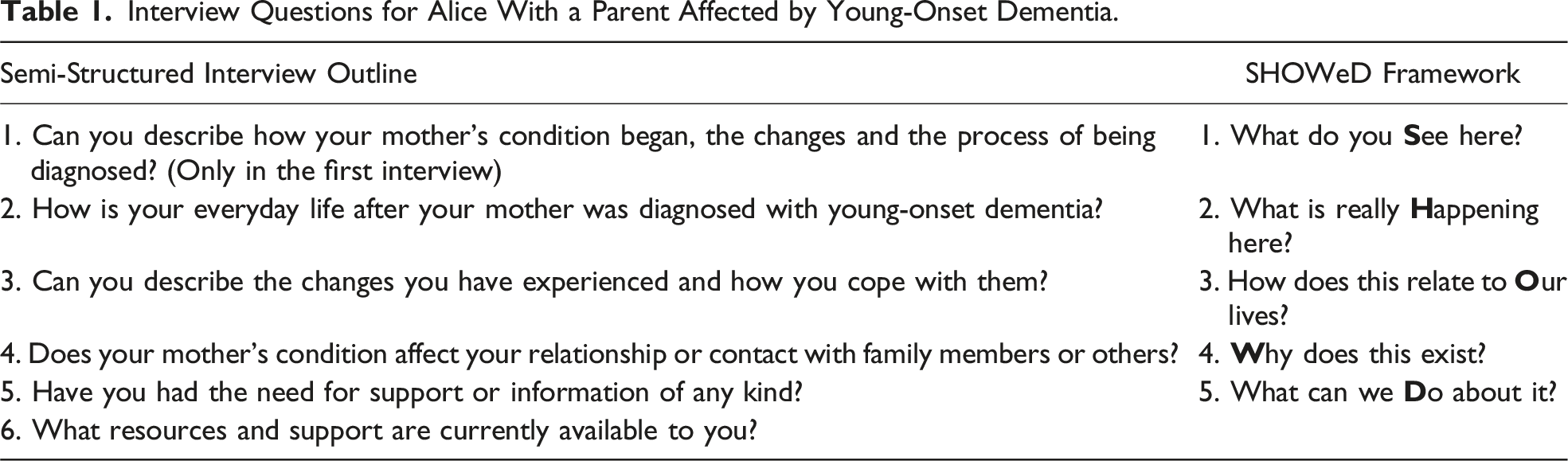
Interview Questions for Alice With a Parent Affected by Young-Onset Dementia.
Data Analysis
The coding team, consisting of two faculty members (JQW and JW) and two graduate students (XTT and XYC), utilized MAXQDA 2022 software to manage data and assist in conducting thematic analysis, aiming to delve deeper into the nuanced themes present in our examination of the case study. This approach places an emphasis on interpreting the themes in relation to the research question or objectives and considering their implications and significance within the broader context of the study (Clarke & Braun, 2013). All three interviews were treated as a single dataset and analyzed by using the six-stage process outlined by Braun and Clarke (2006). Thematic analysis facilitated the recognition of recurring patterns, reflecting various facets of Alice’s experiences, perspectives, and viewpoints (Clarke & Braun, 2017). The team thoroughly reviewed the interview materials, immersing themselves in the data repeatedly to obtain a comprehensive understanding. Coding sheets were created based on the interview questions (see Table 1) to extract key elements from Alice’ responses. Each question corresponded to specific codes for categorizing the responses. Categories and themes were subsequently derived by the coding team through the comparison and grouping of codes related to similar issues, identifying commonalities, patterns, and relationships among the initial codes. These categories helped organize and classify related codes within each theme. This analysis was an iterative process, involving regular full team meetings to discuss and resolve discrepancies until consensus was reached. Upon completion of coding, the full team reviewed the data, discussed emerging themes, and, as part of the discussion, compared them to existing literature on the lived experiences of young adult caregivers with parents affected by YOD.
Rigor
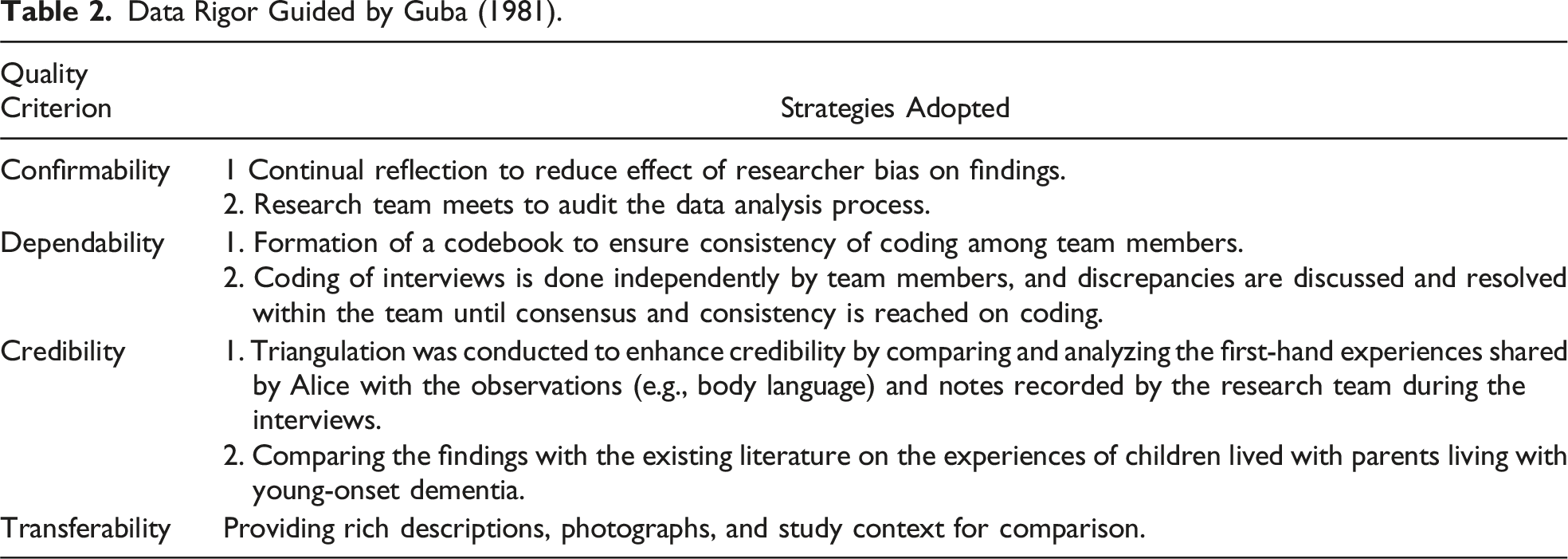
Data Rigor Guided by Guba (1981).
Ethics
This study, ethically approved by Fudan University’s Review Board, ensured strict participant anonymity and confidentiality. Pseudonyms were consistently used to protect participant’s identities, including names, locations, and other details. We discussed privacy measures with Alice, instructing her to avoid capturing identifiable faces in photos before starting the photovoice project. We obtained informed consent from Alice and her father after explaining the study’s objectives, potential risks, and the dissemination of findings. Unfortunately, direct consent from Alice’s mother was unattainable due to her cognitive capacity. We recognize that assent does not necessitate the same level of cognitive capacity as informed decision-making, and obtaining assent and respecting dissent are widely adopted safeguards when conducting dementia research involving individuals who lack consent capacity (Black et al., 2010). Alice’s father communicated the study’s purpose and content to her mother, who cannot directly interact with strangers. He carefully observed her verbal and non-verbal responses, and Alice’s mother’s assent was obtained. Individuals with cognitive impairments typically express dissent through indications of frustration, discomfort, unhappiness, or passive behavior (Cacchione, 2011; Keyserlingk et al., 1995). Proxy consent was obtained through Alice’s father.
Results
Alice took a total of 13 photos and selected 7 for narration. Based on the interviews, discussion of Alice’s photos, and observational notes, four major themes were identified: (1) struggling to adjust to the new and unexpected role, (2) coping with the grief of losing a loved one to YOD, (3) stressing the well-being of the healthy parent, and (4) longing for informal and formal support.
Case Description
Alice, the only child in her family, resides with her parents. Her mother was a full-time homemaker, while her father commuted to a nearby city for work. When Alice was 16 and in her first year of high school, her mother was diagnosed with YOD at the age of 49, with symptoms emerging at 48. Alice and her father noticed her mother’s increasing forgetfulness, difficulties with calculations, and a decline in cooking skills. In response to the diagnosis, Alice’s father changed jobs to allocate more time and flexibility to her mother’s care. Previously, Alice had been the center of the family, with her parents managing everything for her. However, due to her mother’s cognitive decline, Alice had to assume self-care responsibilities and became a part-time caregiver for her mother. Almost every weekend and holiday, Alice returned home from school to provide assistance and support in caring for her mother.
Alice’s family maintains limited connections with their extended family, influenced by societal stigma around conditions like YOD. Her father avoids openly discussing her mother’s diagnosis, presenting it externally as a mental health issue resulting from a stroke rather than YOD. This secrecy potentially reshapes community and extended family perceptions and support. Within the extended family, an implicit understanding prevails, deepening isolation and impacting the overall support structure. The avoidance of open discussions, driven by societal stigma and familial dynamics, may affect the family support network. Navigating her mother’s challenges often leaves Alice and her father to confront complexities on their own. During data collection, Alice commuted between school and home. When she had class, she returned to school on Sunday evenings, an hour away from home by subway. Taking on essential caregiving responsibilities on weekends and holidays, and on weekdays without classes, she shared caregiving duties with her father. While her role is supplementary, it does not imply a minor impact.
Theme 1: Struggling to Adjust to a New and Unexpected Role
This theme suggests Alice faced challenges in adjusting to her role as a caregiver after her mother’s YOD diagnosis and the changing dynamics in her daughterly position. Alice found it challenging to transition from being cared for to becoming a caregiver, a role she hadn’t expected.
In her father’s absence, Alice had to assume the responsibility of caring for her mother. As the disease progressed, Alice had to provide her mother with increasing amounts of care and attention. In Figure 1, a particular instance is highlighted where Alice was alone with her mother. Alice hid behind her room’s door, listening to her mother’s activities outside. Early in the morning, her mother’s pacing outside her room woke her, presumably in search of the bathroom, but ending up in the kitchen. Alice expressed feeling torn between staying in bed and getting up to assist her mother. Early in the morning, I caught Mom wandering, struggling to locate the bathroom. Despite my reluctance to leave the warmth of my bed, the chilly weather weighed on my mind. Considering Mom’s vulnerability to colds, I begrudgingly roused myself to assist.
Taking on the parental responsibilities for her own parent presented a challenging and exhausting experience, leading to both physical tiredness and emotional strain. She described her mother’s declining abilities and shared an instance captured in Figure 2, taken after a meal, where her mother always dropped food, requiring Alice to clean the floor afterward. This routine included her mother consistently dropping food, requiring Alice to clean the floor each time. Beyond the wearisome cycle of cleaning, the most poignant aspect for Alice was the unavoidable observation of her mother’s gradual loss of self-sufficiency. Alice conveyed her internal struggle to comprehend and accept her mother’s incapacity: I would often get impatient and even lose my temper with my mother. It wasn’t easy to dress her. For example, when I dressed her, sometimes she couldn’t find the sleeve opening, so I had to guide her to put her hand into the sleeve. When she put on her pants, she often wore them backward. Sometimes, I helped her put on a pant leg and then went to get her socks, but she would take off the pant leg, and I would have to put it on again. It felt a bit like taking care of a child. After lunch, there’s always some food under Mom’s side of the table. It happens every meal, so I have to sweep multiple times a day.
The overwhelming emotional impact of her mother’s condition may have influenced Alice to refrain from assuming the responsibility of caring for her in a manner similar to caring for a child: I still treat my mother as I always have, but her various behaviors demonstrate that she is no longer the same person. This disparity is hard for me to accept, and I feel the necessity to adjust to this new reality.
Her conflicting emotions may stem from the disparity between her expectations and the altered reality of her mother’s behavior, exacerbating the internal struggle within her caregiving role. Alice sought to position herself as an impartial caregiver when attending to her mother, stepping away from the conventional daughter role. She underscored this caregiving aspect, expressing, “At times, I approached caring for my mom as if tending to anyone else. I don’t consistently engage as her daughter; instead, I assume the role of a caregiver, much like I would for anyone else.” This intentional identification as a caregiver, rather than solely as a daughter, could be interpreted as a strategy aimed at distancing herself from her mother’s condition, possibly to mitigate the emotional burden associated with her dual role. The emotional detachment she adopted functioned as a coping mechanism, allowing her to protect herself and discreetly manage negative emotions.
Theme 2: Coping With the Grief of Losing a Loved One to YOD
This theme explores the impact of YOD on the relationship between Alice and her mother. Alice describes the emotional turmoil and suffering she experiences, feeling trapped in an ongoing process of grief as her mother undergoes transformations. Alice struggles to come to terms with the changes in their relationship, which have become increasingly delicate and sensitive.
As YOD progressively affects her mother’s personality and cognitive function, her mother begins to feel like a stranger to Alice. The fragility of the relationship between Alice and her mother is evident in Alice’s words, as she feels like she is walking on eggshells around her mother. This delicate dynamic is further illustrated in Figure 3, which depicts an incident where Alice sneaked some yogurt at home, given by her father, in order to avoid triggering her mother’s jealousy. Alice revealed the need to navigate her interactions with her mother with utmost care, emphasizing the importance of avoiding actions that might provoke her mother’s anger, even if it required sacrificing her own desires. Alice also shared her mother’s unpredictable behavior, especially in their interactions. When her mother was angry, she treated Alice like a competitor and was intolerant when her father was caring for Alice. However, when her mother was in a more lucid state, she would stare at Alice and cry, attempting to compensate for her behavior by offering money. Alice struggled with the confusing and hurtful situation, stating: It’s really hard for me to accept that my mother sometimes sees me as a rival instead of her daughter. She perceives my father’s kindness towards me as a threat to her. It’s a confusing and hurtful situation, and sometimes I feel like I’m being treated unfairly. I make sure to share whatever I’m eating with Mom; otherwise, she will get angry.
When confronted with the transformation of the mother–daughter relationship, Alice’s internal struggles are poignantly revealed: I find it really difficult to cope with, but I can’t help feeling this way. When I was a child, my mom was always there for me. She took care of me, sent me to school, and even to tutoring classes, because my dad wasn’t very involved in these family matters. It was my mom who took care of everything.
Alice’s memories of her mother’s past role may contrast with the current realities, potentially infused with elements of irony and sadness. Despite her mother’s inability to fulfill traditional parental responsibilities, Alice harbors a yearning for the love and emotional support she once shared with her: “I often sleep in the same bed with my mom, and sometimes she will pat me or hug me like when I was a kid. It’s emotionally challenging because deep down, I still crave my mother’s love and attention.”
Amidst the intricate challenges of caregiving in the context of YOD, Alice’s profound longing for a rekindling of the mother–daughter connection appears to become increasingly apparent. The stark contrast between the present and the past, coupled with a sense of regret for potentially not fully cherishing the bond they once had, intensifies Alice’s yearning for a connection that seems irretrievable. Alice’s own words illustrate her struggle with the loss of a meaningful relationship with her mother: “I felt that I had lost her irretrievably.” This poignant longing, in a way, might impede Alice’s emotional adaptation to the new caregiving role required for her mother.
Theme 3: Prioritizing the Well-Being of the Healthy Parent
This theme focuses on Alice’s deep concerns for the well-being of her father, as the healthy parent. Alice is keenly aware of the emotional toll and caregiving burden shouldered by her father, and she articulates a strong desire to provide support and prioritize his well-being.
Alice explicitly voiced her concerns for her father’s well-being and her desire to lessen his caregiving responsibilities, recognizing his overwork: “I often worry about the burden and stress on my dad as he takes care of my mom. I wish there could be an outside caregiver to help him, and that my mom would not reject the idea.” She carefully observed her father’s commitment to caring for her mother and recognized the unspoken challenges he faced. Figure 4 depicted a scenario in which, while watching a documentary, Alice noticed a situation reminiscent of her family’s own, where a husband cared for his unconscious wife despite his own health condition. Her father watched it with her, and seeing him in tears deeply moved her emotionally. She was touched by her father’s hardships and recognized the silent suffering he endured, yet saddened by her inability to offer more assistance, which ignited a deep desire within her to provide more support. She was also concerned about her father’s emotional well-being, noting his tendency to suppress his inner feelings: I suggested to my father that he should go to counselling because I realized that the burden he carries is much greater than mine. He needs to release his inner turmoil, but he refuses to go and seems to have a dismissive attitude towards it. I can see that he is not in a good mood every day, and it worries me. Dad and I teared up watching a documentary, and it felt like I saw a new side of him in that moment.
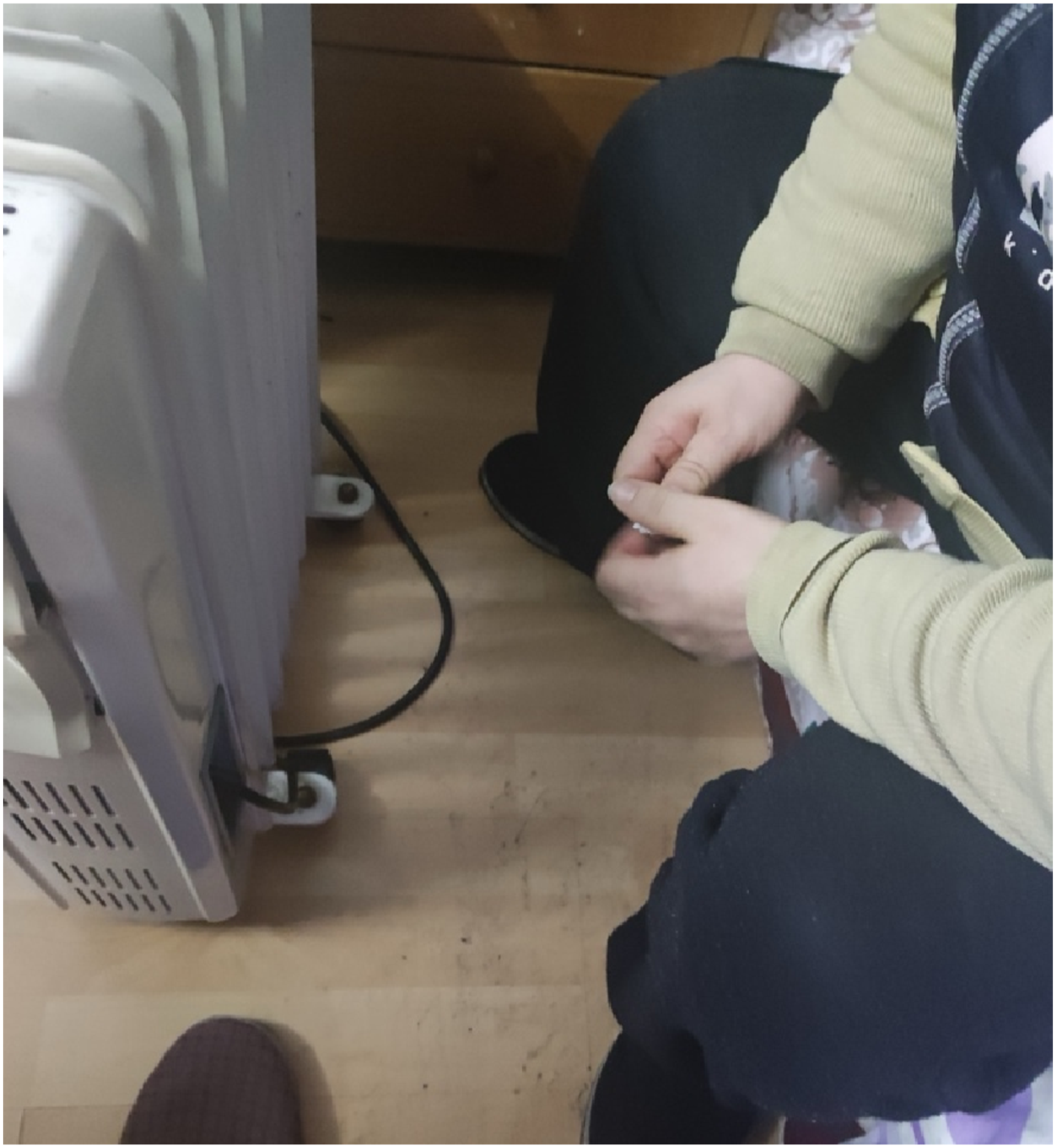
Alice expressed her empathy for her father, who always seemed to suffer alongside her mother’s emotional outbursts. Figures 5 and 6 depict her mother’s medication struggles and the toll they took on her father. In Figure 5, Alice captured her mother’s pillbox, which her father had put together. However, her mother started resisting the medication. Whenever her mother had a poor adherence to medication, her father became frustrated and worried. Figure 6 shows her mother becoming agitated and refusing to lie down after taking her medication at bedtime, leaving Alice feeling helpless and heartbroken that her father had to endure such pain and feeling incapable of preventing it. It’s time for Mom’s medication, and, as usual, she’s resisting. This moment always makes me feel nervous. Mom got really upset before bedtime, refusing to sleep. Both my dad and I felt lost. It was tough, wanting to help but not being able to do anything.
Theme 4: Longing for Informal and Formal Support
This theme concerns Alice’s desire for more social support in both informal and formal settings. The process of getting support may have been challenging for Alice. She desired recognition for her experience from others as well as specific professional support.
In Alice’s narrative, feeling different from her peers may have led her to self-isolation. When she first disclosed her family situation to a friend during high school, it was a significant moment. The exchange was emotionless, and she realized her friend wasn’t interested in the conversation and only responded perfunctorily. While Alice recognized that sharing her experience with others could be helpful, she also acknowledged its limitations. In reality, others could not fully empathize or comprehend what she was going through and how she felt: I tried to talk to my friend about my mom, but she seemed uninterested and detached. Perhaps because she hasn’t experienced this kind of thing herself, she didn’t seem very interested. As a result, I started to withhold sharing with her over time.
Alice, who was now a freshman in college majoring in medical rehabilitation, underwent a noticeable shift. She had become more willing to share her story with friends in college who were knowledgeable about dementia. Alice even mentioned sharing her family situation at a recent dorm party. Figure 7, the moment at the party, is captured as Alice and her roommates gathered around the table, getting ready to play “Truth or Dare.” The chance to share arose when one of her roommates shared a personal family experience: At the party, I opened up by sharing how old my mom was and that she was diagnosed with Alzheime’s when I was in middle school. My roommates froze for a moment, then looked at me with tears in their eyes and came over to give me a hug. I opened up about my family situation to my roommates for the first time.
The supportive and empathetic reactions from her roommates provided Alice with a sense of comfort and understanding that she had been seeking. Alice found it easier to talk to people with medical knowledge because they understood what dementia meant, which allowed them to listen and try to comprehend how she felt, emphasizing the importance of shared understanding in facilitating meaningful conversations. Despite this, she expressed a desire for more formal support that extends beyond emotional understanding. Alice highlighted the need for professional guidance, especially in situations involving potential psychological aspects or co-occurring disorders in her mother: She found it difficult to discuss her mother’s condition with her father, and Alice expressed a need for a professional who was available to offer guidance in such situations: I think my mom might have some psychological aspects that might be co-occurring disorders. Sometimes, I do think she has a little bit of it. So I suggested to my dad that maybe my mom needs to go to the counsellor, but he didn’t think it was necessary.
The absence of professional intervention may have contributed to the postponement of addressing crucial aspects of her mother’s condition, resulting in the matter being put on hold. Moreover, Alice mentioned the general inadequacy of online resources in providing specific and applicable information for individuals dealing with YOD: “I personally think that the information available online is often general and less specific to each individual’s unique needs, particularly for persons living with YOD. As a result, I don’t find it very useful.” The inadequacy of available resources in addressing concrete challenges may have contributed to Alice’s sense of helplessness and frustration, potentially impacting her ability to adapt to her caregiving role.
Discussion
This case study explores the caregiving experiences of a young adult navigating maternal YOD. The study sheds light on the profound sorrow and self-identity conflict arising from the ambiguity surrounding one’s identity while caring for a mother. Challenges in identity adaptation are compounded by concerns for the well-being of the healthier parent and difficulties in receiving acknowledgment and support. Recognizing family roles and relationships, integrating family services becomes crucial in supporting the ongoing growth and development of young adult caregivers.
The narrative of Alice’s journey may suggest a potential communication gap between her, a young adult caregiver, and her father, who assumed the primary caregiver role for her mother with YOD. Despite Alice’s efforts to prioritize her father’s well-being, this commitment is accompanied by a profound sense of guilt, likely rooted in the challenges she encounters while tending to her father’s needs. In the realm of parent–child relationships, our study suggests a potential distinctive element: during pivotal decisions concerning her mother’s condition, it appears that Alice’s expression is limited, potentially fostering a profound sense of helplessness that may significantly shape her identity. This phenomenon may be associated with the cultural norm of filial piety, where Chinese parent–child dynamics emphasize enduring relationships and expect parents to be deeply involved and attentive to their children (Chao, 1994; Wu, 2012). Despite the cultural emphasis on filial piety, overprotective parenting has been linked to reduced positive mental health in young caregivers (Shifren & Kachorek, 2003). Feelings of inadequacy among young adult caregivers can stem from perceived excessive parental control. In families dealing with YOD, it’s crucial for the healthy parents to recognize that their children often subtly begin shouldering caregiving responsibilities right from the onset of the parent’s condition (Aldridge & Becker, 2003). Gelman and Rhames (2016) shed light on the divergent perspectives between children in families affected by YOD and their healthy parents, emphasizing the critical importance of parental comprehension and transparent communication. It becomes imperative to recognize and extend support to these young adult caregivers for effectively navigating challenges and fostering positive identity development.
Within the narrative of Alice’s journey, the profound impact of understanding and empathy on her identity development becomes evident. Actively seeking societal support, particularly yearning for understanding and encouragement from her peers, presents a significant challenge for Alice. Her peers often struggle to grasp the depth of emotional challenges associated with caregiving for a loved one with YOD. Limited public understanding of YOD may contribute to the stigmatization or marginalization of young adult caregivers in the community, leading to feelings of shame or guilt and intensifying their experiences of sorrow and isolation (Hall & Sikes, 2017; Hutchinson et al., 2014, 2015; Sikes & Hall, 2018). Research suggests that preconceptions about neurocognitive conditions often prompt these young caregivers to remain silent, refraining from disclosing their family member’s condition to peers (Masterson-Algar & Williams, 2020). This silence may impede the young adult caregivers from effectively utilizing support services. Elevating public awareness of YOD is crucial for fostering a deeper understanding of this condition in the broader community. Social support plays a pivotal role in alleviating and promoting the well-being of young adult caregivers (Wang & Brooke, 2020). As illustrated in Alice’s university experience, while sharing may not directly ease grief, it can provide solace by confirming that one is not alone in facing personal challenges or navigating the complexities of emotions toward a parent with dementia. This underscores the potential advantages of fostering a supportive community for young caregivers.
Our findings align with previous research, which indicates a consistent theme of widespread grief among young adult caregivers with parents affected by YOD (Aslett et al., 2017; García-Toro et al., 2018; Gelman & Rhames, 2018; Hall & Sikes, 2018; Johannessen et al., 2015; Sikes & Hall, 2017). In Alice’s case, she grappled with emotional trauma and turned to detachment, experiencing a subjective shift from daughter to professional caregiver while facing the challenge of establishing a meaningful connection with her mother. Simultaneously, she attempts to cultivate an independent connection with her father as caregiving roles reshape their family dynamics. Despite shared experiences, the nuances in the encounters of younger individuals are uniquely influenced by the interplay of YOD and their developmental stage (Chirico et al., 2021). This highlights the importance of supporting young adult caregivers during key life course transitions, as they provide informal care. Recognizing the unique experiences of individuals is crucial, especially in culturally diverse contexts where family ties and traditional roles may vary significantly.
Strengths and Limitations
Our study adopted a rigorous approach by employing both a case study design and the photovoice method. This unique combination of methodologies enabled us to delve deeply into the life of a single participant, providing a comprehensive understanding of her experiences while capturing intricate details and exploring intra-individual variability (Baxter & Jack, 2008). Analyzing themes from the case narrative sheds light on the experiences of a young adult caregiver with a parent with YOD, particularly during her specific developmental stage. While the study’s findings provide a foundational platform for broader research into the experiences of young caregivers, it’s crucial to acknowledge certain limitations. Our case study focused on Alice’s unique journey, and the experiences and needs of young adult caregivers can vary based on factors such as age, gender, parental status, and family structure. The focus on a single-case study, while providing depth, may limit the generalizability of our findings to other contexts. Therefore, generalizing our findings to other contexts should be approached with caution.
Photovoice played a pivotal role in enriching our understanding of Alice’s lived experiences, allowing her to visually and verbally express dimensions of her caregiving journey that traditional interviews might have missed. However, it’s important to recognize that the suitability of photovoice may vary depending on research questions and participants. The method demands a collaborative and time-intensive process, and some individuals may not find self-expression through photography comfortable, potentially limiting its applicability.
Implications
Young adult caregivers with a parent affected by YOD require focused support for their well-being and mental health, emphasizing the importance of culturally sensitive and easily accessible mental health services tailored to their unique emotional strains. Future initiatives should prioritize the creation of family-centered support programs, foster collaboration among organizations dedicated to YOD, and establish support groups for affected families and young adult caregivers. Strengthening and customizing online platforms can contribute to the creation of a robust virtual community for shared experiences. To enhance access to support services, stakeholders should develop resources specifically tailored to young adult caregivers, encouraging them to openly express their thoughts and feelings. The overarching goal is to establish a comprehensive network of support for those affected by YOD.
Recognizing the profound impact of cultural narratives on identity, future research should prioritize culturally sensitive interventions. Understanding how cultural expectations intersect with individual experiences is crucial for tailoring support to the unique needs of young caregivers. Utilizing photovoice as a research tool is recommended, allowing for a comprehensive exploration of how changes in family dynamics, especially when parents have YOD, influence young adult caregivers’ lives. Integrating technology into support services is another avenue to explore, with research focusing on optimal ways to deliver information, support, and foster a sense of community.
Conclusion
This single-case study delves into the intricate challenges faced by a young caregiver grappling with parental YOD. The results highlight an urgent and compelling demand for family-centered support systems that cater to the nuanced needs of young caregivers, cultivating a more compassionate and effective caregiving landscape. As the young adult caregiver navigates a profound identity shift, heightened by the emotional toll of witnessing a loved one’s decline, the complexity deepens with the added responsibility of prioritizing the well-being of the healthier parent, thereby intensifying her caregiving duties. Within this context, a clear and compelling desire for diverse and culturally sensitive forms of support emerges, emphasizing the need for interventions tailored to the unique needs of young caregivers. This study advocates for a paradigm shift—an imperative move toward empowering young caregivers, enhancing their well-being, and fostering resilience. It underscores the significance of embracing cultural nuances in shaping their caregiving journey, calling for a support framework that respects the diverse cultural backgrounds of young caregivers.
Footnotes
Author Contributions
All authors have contributed to the work and agree with the presented findings and that the work has not been published before nor is being considered for publication in another journal.
Declaration of Conflicting Interests
The author(s) declared no potential conflicts of interest with respect to the research, authorship, and/or publication of this article.
Funding
The author(s) disclosed receipt of the following financial support for the research, authorship, and/or publication of this article: This work was supported by Shanghai Sailing Program 20YF1402000 by Shanghai Government Science and Technology Committee; Ministry of Education of the People’s Republic of China (21YJCZH089); Science and Technology Innovation Action Plan-Soft Science Research Project (Grant No. 22692191000); China Medical Board (CMB) Open Competition Research Funding (Grant #21-429), and National Natural Science Fund from the National Natural Science Foundation of China (72204055).
