



Abstract
Background
Emerging environmental concerns have prompted organizations to adopt Corporate Social Responsibility (CSR) initiatives. Traditional business practices alone are no longer sufficient for CSR success, requiring organizations to revisit their business processes and practices.
Objective
This study examines the role of Green Human Resource Management (GHRM) practices in enhancing CSR performance, focusing on the mediating roles of pro-environmental psychological climate and pro-environmental behavior.
Methods
Data were collected through a structured survey from 382 middle- and top-level managers working in large manufacturing firms in Pakistan. Partial Least Squares-Structural Equation Modeling (PLS-SEM) was used to analyze the data and assess the impact of GHRM dimensions on CSR.
Results
The findings demonstrate that GHRM dimensions have a positive impact on CSR, with the exception of green training and development. Additionally, pro-environmental psychological climate and pro-environmental behavior significantly mediate the relationship between GHRM practices and CSR.
Conclusion
This study underscores the significance of GHRM practices in fostering CSR and highlights the critical roles of psychological climate and behavior in achieving CSR goals. These findings provide actionable insights for organizations aiming to enhance their CSR initiatives.
Keywords
Introduction
To address emerging environmental issues, firms around the globe are frequently adopting eco-friendly business practices in support of the “Go Green” campaign. 1 Among various green business practices, green human resource management (GHRM) holds a distinctive position and, if optimally strategized, significantly contributes to achieving green objectives. In their study, Renwick, Redman 1 suggested that GHRM practices play a noteworthy role in accelerating and executing a firm's green plans. Some earlier studies have also suggested that, in pursuit of accomplishing green objectives, organizations ought to embrace GHRM practices as they promote employees’ green behaviors. 2 Furthermore, an environmentally responsible Human Resources (HR) department can transform the firm's conventional performance into sustainable performance, 3 because green-oriented HR activities tend to develop a compelling human capital that values sustainability. 4 Hence, organizations should adopt new HR practices to develop talented human capital to support the “go green” initiative.
Employees’ suggestions, participation, and actions need to be encouraged for the successful implementation of environmental practices. 5 In this regard, an organization's psychological climate plays a significant role. Psychological climate is an employee's understanding of an organization's environmental policies, practices, and processes. 6 In addition, the pro-environmental behavior (PEB) of an employee enhances an organization's knowledge base to efficiently address corporate and environmental issues. 7
In recent times, businesses have been developing corporate social responsibility (CSR) systems, which involve adopting a set of guidelines to achieve a balance between the needs of all stakeholders, including vendors, communities, and customers. 8 This is also an important factor that leads to corporate competitiveness, sustained growth, and the success of the project. The organization's image and reputation are influenced by their CSR's an essential part of mitigating adverse environmental effects from their operations. Another critical factor for embodying social responsibility is establishing a pro-environmental psychological climate (PEPC) for knowledgeable employees with a broader view of ecological sustainability.
Implementing GHRM practices, along with promoting pro-environmental climate and behavior, can improve environmental performance. 9 GHRM develops the organizations’ capacity to improve on pro-environmental performance which enables the organization to better implement CSR practices. 10 However, there is a grey area in the empirical investigation of CSR in developing economies. As of now, achieving the goals of sustainability through CSR has become an emblematic subject for organizations in developing economies. 11 Stakeholders also exert pressure on organizations to remain socially and environmentally competent. 12 Therefore, scholars have been urged to investigate CSR in the context of developing economies.
Despite growing issues related to environmental sustainability, the notion of GHRM and its role in enhancing employees’ green behavior at the workplace has remained under-explored. This study will help develop an understanding of how GHRM plays a role in an organization's adoption of environmentally sustainable practices. It will offer insights into this area of research. Firstly, research shows that Pakistani industrial enterprises can achieve green practices through GHRM practices, enriching the green corporate responsibility paradigm.
Although research on GHRM in developing countries, such as Pakistan, has garnered scholars’ attention, 13 yet there remained some grey areas. For instance, research has explored the overall effects of GHRM, and mostly, the direct relationships between GHRM and employee green outcomes were investigated. 14 In the context of organizational outcomes, studies merely observed the impact of GHRM on the unidimensional construct of environmental performance. 15 There has been limited knowledge regarding the underlying mechanisms through which GHRM dimensions impact an organization's overall CSR. Secondly, our research indicates that GHRM impacts CSR through both direct and indirect means. Finally, it is necessary to complete the empirical examination of how GHRM practices affect CSR, PEPC, and PEB in the workplace.
This study explores the correlation between Green HRM practices (dimensions) and a company's CSR. Additionally, it investigates the underlying mechanisms by analyzing the explanatory role of PEPC and PEB. This study also seeks to explain how green HRM practices, dimensionally, affect a firm's CSR through multi-mediation.
Literature review and hypotheses development
Green human resource management (GHRM)
GHRM is of utmost importance in today's business landscape because the importance of environmental sustainability has been increasing as it receives more attention. GHRM integrates environmentally friendly practices into HRM processes and strategies to promote sustainability and reduce the organizations’ ecological footprint. 16 To ensure CSR, it is crucial to implement various GHRM practices, like GRS (green recruitment and selection), GTD (green training and development), GRP (green reward and pay), GE (green empowerment), and GPA (green performance appraisal). Green recruitment and selection are crucial as they enable the organization to attract and hire individuals who have environmental knowledge and the necessary skills required for sustainable operations. 17 Green training and development ensure that employees possess the skills and knowledge to contribute to sustainable practices within their roles. 18 GPA allows the organization to assess and reward employees based on their environmental performance and achievements. 19 Green reward and compensation practices recognize and incentivize environmentally responsible behaviors, fostering a culture of sustainability. 20 Lastly, green empowerment encourages employees to actively engage in sustainable practices by involving them in decision-making processes and providing them with autonomy and support. 19 These practices collectively promote sustainability, enhance employee engagement, and strengthen CSR.
Through the use of environmentally friendly strategies and workplace initiatives that support employees’ pro-environmental behavior, GHRM practices are essential for organizations to survive. 19 Renwick, Redman 1 characterize human resource activities as “the activities which generate positive ecological outcomes”. Green recruitment and selection can attract and shape desirable human capital to value environmental concerns. Green recruitment and selection are managing an enormous supply of possible contenders among whom the most gifted are recruited, those who possess ecological mindfulness. 17 Establishing a strong interest in green recruitment and selection is believed to attract environmentally responsible applicants, secure their job requests, and maintain positive perceptions of managers and employment opportunities. 21 By focusing on green recruitment and selection, environmental consciousness, morals, and values can be addressed. Furthermore, individuals with good performance in these areas can be recruited. 1
Having concerns about the environment is a crucial factor in attracting potential job applicants who also value environmental sustainability. Prospective candidates have been reported to perceive a company with environmental concerns as a “dream organization”.
22
Moreover, making green values a part of the job description would further strengthen a PEPC of a firm. However, a potential applicant may encounter psychological disharmony if an anomaly exists among constituents of attitudes toward ecological assurance.
23
The PEPC incorporates candidates’ perspectives on the company's condition and its needs, which in the end prompts an individual's green behavior. Hence, it is hypothesized that: H1a: Green recruitment & selection is positively associated with an organization's pro-environmental psychological climate
Green training & development, and pro-environmental psychological climate
Firms need to realize an environmental mission and offer training courses to inform their employees regarding the firm's environmental management practices.
24
The firm should share the appropriate piece of information, regarding their ecological concerns, with all its employees and educate them about the activities needed for environmental security.
25
For a company to attain environmental success, every employee must embrace environmental responsibility. Environmental mindfulness, education, and training in the workplace increase employee engagement, improve retention rates, higher job satisfaction, align with company values and goals, and create a positive reputation for being an environmentally conscientious organization.
24
H1b: Green training and development is positively associated with an organization's pro-environmental psychological climate
Green performance appraisal and pro-environmental psychological climate
The studies on HRM behavior propose that HRM impacts the performance of a firm through its influence on the behavior and work attitudes of employees. 26 According to the literature, employee outcomes are often influenced by HRM inferences. 27 Green practices such as promoting the firm's environmental initiatives, emphasizing ecological traits in recruitment, and evaluating sustainable characteristics through performance appraisals can enhance employees’ ecological awareness. 1 Employee support networks determine the value of business strategies, practices, and systems, while employees judge the value of firm strategies, practices, and systems based on their observations and experiences at work. 26 Employees should absorb and decode the firm's HRM practices, as this will shape their perceptions of the organization or its characteristics.
Employee behavior that is in line with the company's green ambitions is likely to be influenced by structured and widely promoted green HRM rules and procedures. Finally, promoting, evaluating, and rewarding based on environmentally friendly practices encourages employee participation and contribution to green initiatives.
1
Going green will now inspire extra-role green workplace behavior and encourage employees to carry out their in-job green obligations. The discussion leads us to the following hypothesis: H1c: Green performance appraisal is positively associated with an organization's pro-environmental psychological climate
Green reward & compensation and pro-environmental psychological climate
The study by Ostroff and Bowen
28
suggested that the indicators of HRM functions are strengthened by the organizational norms, which are a component of the overall organizational culture. After evaluating their surroundings, workers decide whether to exhibit environmentally friendly behavior to receive rewards. Similarly, researchers proposed that rewards encourage employees to effectively take part in a firm's green practices.
29
Therefore, incorporating remuneration mechanisms to reward personnel for their environmental performance promotes a PEPC.
30
The pro-environmental work climate offers employees a motivated and conscientious approach to participate in eco-friendly initiatives.
31
We hypothesize that: H1d: Green rewards and compensation are positively related to an organization's pro-environmental psychological climate
Green empowerment and pro-environmental psychological climate
Having a suitable culture and climate in the workplace is key to empowerment. The environment of a firm is shaped by its cultural structure, which includes social networks that drive specific practices and interactions among employees. At the same time, the firm's social orientation is capitalized to affect diverse forms of conduct; for instance, the use of novelties, affirmation, and job commitment. 32 Hence, the firm's environment is a cumulative concept that can be recognized well by discussing the concept of the psychological climate.
Concepts like organizational culture, climate, and empowerment are interrelated as per the literature. Organizational empowerment encourages executives to embrace distinct activities to create a congenial work environment.
19
The very presence of organizational culture can further strengthen the employee's empowerment through building an effective psychological climate at the workplace. As a result, this leads to the formation of the following hypothesis. H1e: Green empowerment is positively associated with an organization's pro-environmental psychological climate
Green recruitment & selection and pro-environmental behavior
Among GHRM practices, GRS are of supreme worth
21
yet, a worker's green mindfulness is the outcome of GRS that incorporates personality characteristics that build up the probability of achieving the firm's environmental goals. Furthermore, the GHRM practices exert an intriguing role in picking and engaging ecologically cognizant candidates into management positions. Consequently, this leads to environmentally-focused initiatives to generally improve the firm's ecological performance.
25
That is why the management should give priority to those applicants who are ecologically cognizant. Concerning this viewpoint, employee motivation for ecological initiatives is a key persuasive force for their pledge to environmental performance. In contrast to conventional recruitment, GRS gives significant importance to green-oriented attributes while hiring applicants.
33
Once completed successfully, GRS encourages subsequent stages like green training and development and employee engagement in green activities as well. Hence it is hypothesized as: H2a: Green recruitment and selection are positively associated with an employee's pro-environmental behavior
Green training & development and pro-environmental behavior
To promote green environment practices in the workplace, firms design specific training programs that encourage employees to develop green attitudes and behaviors. 34 The employees are encouraged to adopt organizational changes that are deemed necessary for ecological sustainability. 35 However, few researchers advocate training and compensation as the key factors in the later stages in the wake of getting selected for the firm. 35 Green training refers to on-the-job instruction and education aimed at achieving corporate environmental goals. 36
GTD improves workers’ consciousness and knowledge regarding environmental issues, constructs a persuasive attitude, and promotes a positive way to deal with environmental apprehensions.
37
An investigation by Jabbour et.al
38
likewise, recognizes the importance of training in GHRM practices. In a Brazil-based study, it was identified that “ecological training for alleviating environmental change” is noteworthy for the purposeful improvement of low-carbon production scales.
39
So, workers’ training is essential for the formation of an eco-friendly culture in the firm. In addition, the study by Sarkis, Gonzalez-Torre,
40
viewed ecological training as a means to prompt better environmental management system performance. However, as per the study of Perron et al.,
41
some focused and tailored ecological training is very significant. Therefore, it is hypothesized that: H2b: Green training and development are positively associated with employee pro-environmental behavior
Green performance appraisal and pro-environmental behavior
To ensure the preservation and equitable growth of GHRM practices, performance management is crucial.
42
GPM is defined as “a system for assessing the performance of employees from the perspective of protecting the environment”.
43
Previous studies primarily focused on the explicit aspects of green performance management (GPM), such as providing feedback to employees. However, merely giving feedback without actionable support or follow-up may be ineffective in improving green performance.12,30 An organizational managerial practice will enhance its green activities by delegating the powers and obligations to green-cognizant people.
44
Thus, it is fundamental to recognize green performance outcomes and urge directors to accept the obligation for EM performance. The generous aspect of GPM is its performance evaluation system for staff and managers, which leads to progressive rewards and returns. Employees can be convinced to maintain their green behavior and work towards green goals in their everyday work by using these techniques in the right way. We hypothesized: H2c: Green performance appraisal is positively associated with pro-environmental behavior.
Green reward & compensation and pro-environmental behavior
Workers for their significant commitments are remunerated through a compensation and reward framework. This plan adjusts the workers’ and the company's objectives. It pushes the workers to contribute extra measures to meet the organizational goals. The goal of the green compensation and reward system is to align the green practices and initiatives that the company has adopted.
Nishii, Lepak 27 state that the employees’ work point of view and practices are realizable by the firm in a green context through GHRM practices. If a company integrates environmental practices into its HR policies, employees will adopt these behaviors. Like, when a firm presents awards for best-in-class environmental activity/performance, workers end up being enlivened to add to green practices. 1
The sufficiency of HRM practices in promoting green behavior is dependent on employees’ perception and willingness to adopt these practices.
27
The strategies and plans implemented by GHRM demonstrate the firm's commitment to ecological sustainability. This will motivate employees to work towards achieving the company's green goals. Concurrently, promotions and rewards recognize workers’ green performance which convinces them to partake in green activities.
1
The presence of GHRM within a company has a positive influence on the eco-friendly conduct of employees.
45
H2d: Green rewards and compensation are associated with pro-environmental behavior.
Green empowerment and pro-environmental behavior
According to the study, HRM practices can influence employees’ behavior through psychological mechanisms to provide better results.
46
Additionally, these disclosures suggest that these psychological factors [such as the environment's psychological climate and demands for green practices can alter the performance of employees.
47
The employees’ levels of prudence at work differ, which affects their capacity to adjust to events. Based on literature about employee empowerment, it is clear that the work environment has a significant impact.
48
Therefore, green empowerment (GE), a psychological process, has an impact on employees’ green practices,
49
and encouraging psychological empowerment can lead to useful behaviors among employees. Operational and psychological empowerment may have an impact on a person's actions and opinions.
50
This results in the following hypothesis: H2e: Green empowerment is positively associated with pro-environmental behavior.
Pro-environmental psychological climate and pro-environmental behavior
The terms Green psychological climate, pro-environmental organizational climate, organization's green climate, and workplace green climate are all used interchangeably. 51 All of these equivalent ideas ultimately produce comparable results, such as successful green product creation, pro-ecological behavior, and green behavior,19,51 It is widely acknowledged that societal values have a role in determining how employees behave. 52
Studies suggest that green climate involves observations between representatives towards the social antiquities that are reflected through approaches, systems, and practices to achieve ecological sustainability.
53
It has also been deliberated that pro-environmental climate permits shared standards among the individuals who are beneficiaries in encouraging PEB.
53
Resultantly, we formulate: H3: Pro-environmental psychological climate is positively associated with pro-environmental behavior.
Pro-environmental psychological climate and green corporate social responsibility
Any organization's pro-environmental culture has an impact on how people's mental health and pro-environmental behavior are related. Companies with a green authoritative culture comprehend, research, understand, and design procedures that especially help the company produce ecological reforms.
Individuals are frequently encouraged to exhibit pro-environmental behaviors.
54
A favorable attitude towards the environment requires a sensible and important plan for experts to manage and protect the climate. In any case, there has been minimal research into the role of the pro-environmental climate.
55
According to research, individual and authoritative factors combine to form a holistic system that affects employees’ commitment to extracurricular behavior.
56
We hypothesize, based on the discussion above that: H4: Pro-environmental psychological climate is positively associated with green corporate social responsibility
Pro-environmental behavior and green corporate social responsibility
The willingness to engage in actions that benefit the environment is what is meant by an employee's exhibiting pro-environmental behavior. Whereas, CSR plans to develop community-centred norms, sustainability norms, and ecological norms, in an organization. 57 Vlachos et al. 58 have expanded the thought that employees positively react to CSR initiatives of the firm, and their commitment is influenced by how they perceive the organization's involvement in CSR practices that are relevant to the environment.
This study suggests that employers should encourage employees to participate in CSR action plans by letting them know how their company contributes to CSR practices. Also, employee PEB (which is an extra-role workplace practice) may identify with CSR. Therefore, it is critical to understand when and how CSR affects the commitment of employees to PEB. The above discussion underpins that socially and environmentally responsible companies are considered attractive for potential workers
59
Consequently, it is theorized that: H5: Pro-environmental behavior is positively associated with green corporate social responsibility
The mediating effect of pro-environmental psychological climate
A corporation is characterized as a social setting for the workers. People working within an organization understand their workplaces by interpreting social signals in their environment. Shared conviction is necessary for the development of an organizational atmosphere, which is understood as employees’ shared discernment of the company's plans, methods, and approaches. 60 Frequent contact among group participants constitutes the climate. While communicating within an organization, co-workers provide the primary knowledge. 61
Human resource practices are responsible for making the workplace environment attractive for the workers. It promotes employee commitment and their involvement in extra-role activities.
62
Here, it is argued that Green HRM practices promote employee involvement in greening activities. It can be said that workers with significant levels of environmental awareness would take part in pro-environmental practices in a socially responsible organization. Additionally, green HRM practices and dimensions were linked to pro-environmental behavior, and it is said that a PEPC affects such a relationship. Based on the discussion above, we hypothesize that: H6: Pro-environmental psychological climate mediates the relationships between GHRM practices, pro-environmental behavior, and CSR.
The mediating effect of pro-environmental behavior
Internal green strategies, environmental management frameworks, and authentic guidelines will remain figurative and unproductive if not properly aligned. 63 Employee involvement is one of the important elements that affect the reconciliation of ecological norms and strategies. 63 A firm's capacity to encourage the pronouncement of workers’ and supervisors’ “selves”, 64 once such individuals possess greening goals, it is nascent for workplace pro-environmental actions.
Culture is an important aspect for employees to deliberate on green practices Lamm and Majdandžić.
65
When firms are recognized for their green notions, workers will act more mindfully. Also, Paillé and Boiral
66
recommend that “a workplace environment that encourages eco-friendly practices” could fundamentally impact the probability of green activities at the workplace because of an expanded sensitivity to corporate qualities and targets. In contrast to this, a fragile ecological climate in a firm makes it more uncertain that workers will perform green practices.
67
Green HRM talks about the linkage between HRM and ecological management. The job of HRM is to help firms in their natural/ecological activities. Bangwal, Tiwari
68
suggested that it is important to ensure that HRM covers both the work and private lives of representatives to fully utilize their potential. Furthermore, a study argued that Green HRM functions influenced workers’ pro-environmental practices. This study contended that in business corporations with GHRM policies, workers’ pro-environmental behavior improved. H7: Pro-environmental behavior of employees mediates the relationships between GHRM practices, pro-environmental psychological climate, and CSR.
Figure 1 presents the hypothesized linkages among the conceptions of the study.
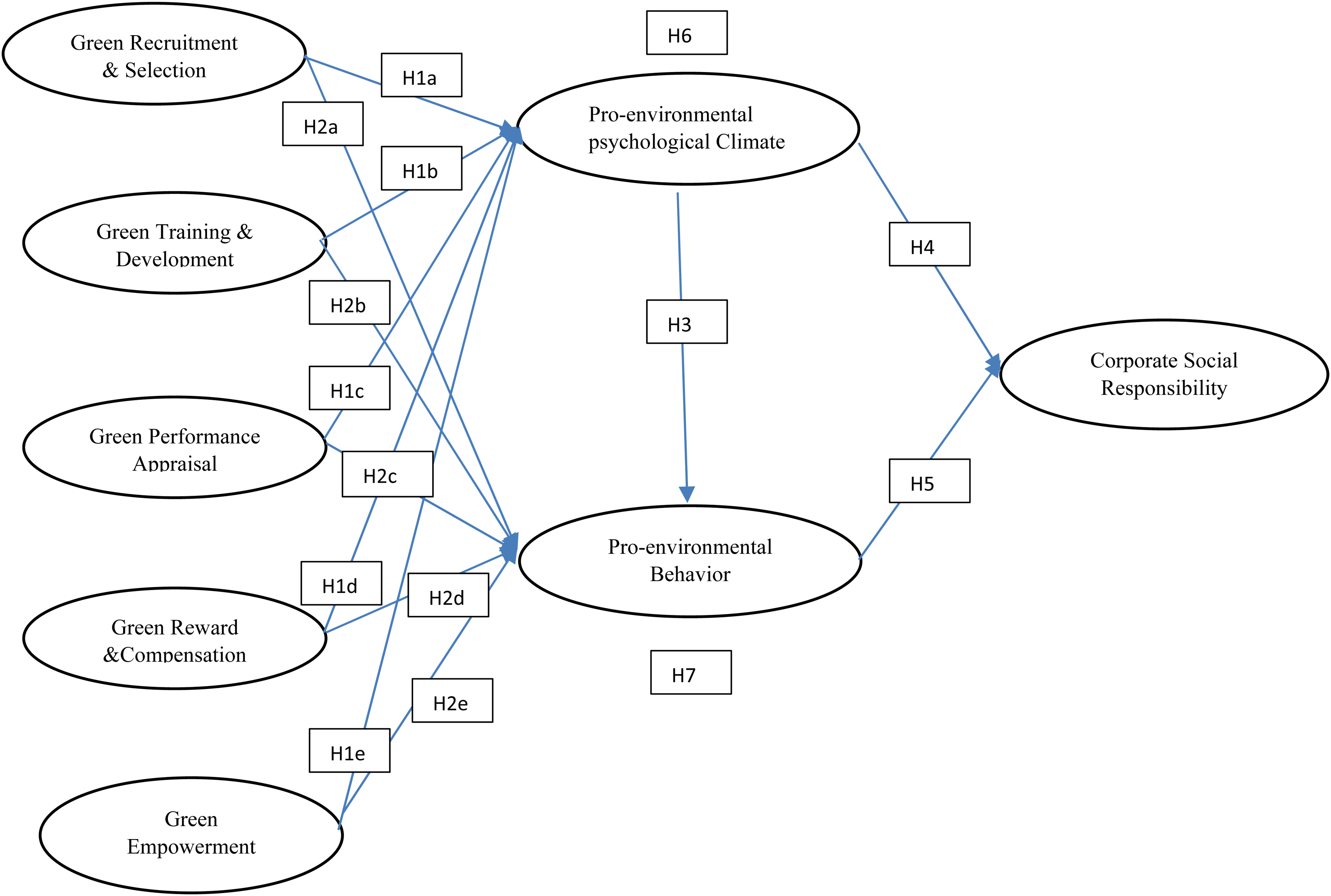
Theoretical model.
Methodology
Sample and procedures
According to the Ministry of Trade and Commerce in Pakistan, 936 firms are considered large organizations. In Pakistan, the manufacturing sector highly contributes to water pollution, air pollution, and waste and greatly consumes natural resources. These businesses can demonstrate green HRM techniques to encourage CSR activities. The target population comprises all manufacturing firms in Punjab province, Pakistan. Following Krejcie and Morgan 69 minimum sample size computation, a sample of at least 380 employees was required. Top and middle management employees were selected using a simple random sampling technique, as they possess substantial knowledge of environmental concerns and policy development. The Punjab province was picked since it is home to the majority of manufacturing companies. The manufacturing firms chosen were among the largest firms with 37996 employees across Punjab, Pakistan. Those larger firms were selected that were listed in the Security Exchange Commission Pakistan (SECP) and a detailed list of employees was generated from their website and by contacting their head offices in Punjab.
To collect the data, structured questionnaires were distributed. A total of 1200 questionnaires were sent via email, with some being self-represented (delivered in person by the research team), to achieve the desired response. The study was introduced to the target population through a clear and structured approach. The management of the selected manufacturing firms, including top and middle management employees, were initially contacted to provide an overview of the study's objectives, their relevance to environmental concerns, and their potential impact on policy development within the manufacturing sector. Information about the study, including its purpose and the importance of participation, was conveyed through email and during personal visits to the firms’ head offices. A detailed explanation of the confidentiality of the responses and the voluntary nature of participation was provided to ensure transparency and encourage genuine responses. Structured questionnaires were then distributed both through email and in person, allowing participants to understand the significance of their input before responding.
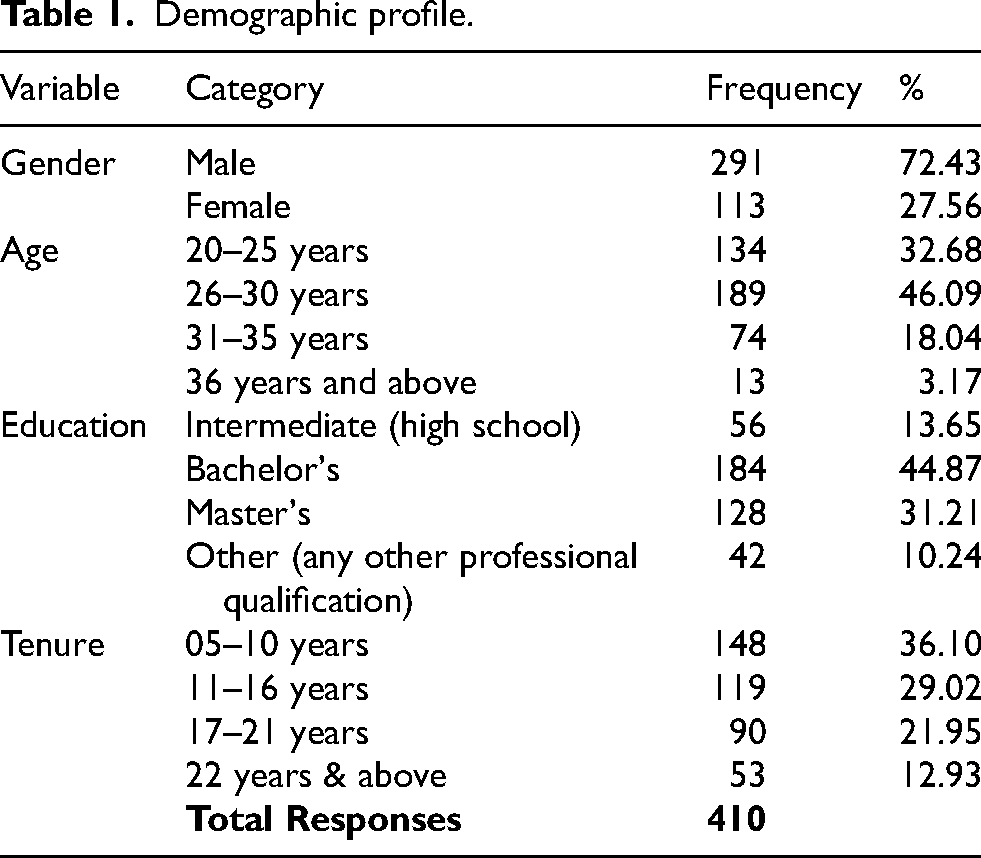
The study was reviewed by the ethical review board committee, and the participants were assured that their responses would remain confidential. Of the 410 questionnaires returned, 230 were received by email and 180 were submitted in person. This yielded a response rate of 34.16%. After excluding 28 incomplete questionnaires, the final dataset consisted of 382 usable responses (Table 1).
Demographic profile.
Measures
GHRM dimensions were measured by scale from Jabbour, Santos. 70 Nine items were used to assess GRS, e.g., ‘In my organization job description specification includes environmental concerns’, five items were used to assess green training and development, e.g., ‘My organization provides environmental training to the organizational members to increase environmental awareness.’, Five items were used to assess GRC, e.g., ‘My organization provides environmental training to the organizational members to increase environmental awareness, four items were used to assess GPA, e.g., ‘In my organization, employees know their specific green targets, goals, and responsibilities.’, and four items were used to assess GE by Chou and J., 71 e.g., ‘My organization recognizes employees as key stakeholders in environmental management, A five-point scale was designed to assess the PEPC and pro-environmental behavior by Kim, Kim, 72 e.g., PEPC: ‘In my organization engaging in and supporting green and sustainable initiatives is important’; PEB:‘I suggest and bring new ideas about environmentally friendly practices to environmental committees”. The scale, which consists of eleven elements measuring CSR, is used to calculate the CSR measures, e.g., Corporate ethics (ethical Behavior in interactions with public officials, politicians, and other enterprises) is prevalent in my organization., which has been adopted from Turker. 73 All items of the various measures were measured using a 7-point Likert scale. The questionnaire was verified and approved by 6 PhD doctors and 4 industry experts, making it reliable and valid in the Pakistani language and culture. The questionnaire items are presented in the Appendix.
Results and analysis
This study employed the PLS-SEM to analyze the data, as it helps to assess the indicators’ loadings and weights. The method of PLS regression has fewer statistical concerns compared to the covariance-based technique of SEM. 74 This method is highly suitable when data have issues of normality and the research model is based on formative constructs. Therefore, to analyze the theoretical framework, this study utilized the Smart PLS 3.3.8. First, this research analyzes the measurement model by testing the validity, reliability, and construct factor loadings. The structural model that displays the construct's relationship significance level is then tested in this study.
The measurement model
While analyzing the data, bootstrapping was based on 2000 (resampling). The number 2000 is often used to provide a good balance between accuracy and computational efficiency, mainly when the original dataset is not too large. The results of the measurement model showed that every single construct had higher factor loadings than the reference value of 0.70. The variance inflation factor (VIF) values in this study vary from 1.655 to 2.735, which is below the threshold value of 5.0, indicating a low risk of multicollinearity. 75 Second, various techniques were used to evaluate the validity and reliability of the reflective indicators used in the study. Table 2 shows the values for Mean, Standard Deviation, Cronbach Alpha, composite reliability (CR) and average variance extract (AVE). The values for CR are higher than the benchmark value of 0.70, and the AVE values are also higher than 0.50. 74
Furthermore, to verify the questionnaire's internal consistency, this research has been examined via Cronbach alpha. The findings show that all values are greater than the suggested requirement of 0.70 and that the questionnaire has a suitable level of dependability. In addition, the data's normality was assessed in this study, as indicated by skewness and kurtosis. The results demonstrate that data distribution is not normally distributed, with values for skewness and kurtosis exceeding the threshold of 1.96.
In addressing the psychometric properties of the variables, it is important to note that the Cronbach alpha values for CSR, GRS, and PEC are well above 0.90. These high values indicate strong internal consistency among the items measuring these constructs, suggesting that the scales are reliable. The elevated alpha values can be attributed to the fact that these variables are well-established and extensively researched in the context of Pakistan, allowing for a robust measurement framework. Furthermore, the values of the discriminant validity assessments indicate that the constructs are distinct from one another, confirming that they measure different underlying phenomena. This distinction is critical for ensuring the validity of our findings, as it reduces the likelihood of construct overlap that could confound the relationships being studied. Overall, the strong psychometric properties of these variables enhance the credibility of the study's conclusions and support the integrity of the research findings.
In addition, the Heterotrait-Monotrait (HTMT) ratio values for the research of discriminant validity have been analyzed. The results of HTMT ratios in Table 3 show that the values are below 0.85 and recommend the validity of the discriminant reflective constructs. 76
Construct reliability and validity.
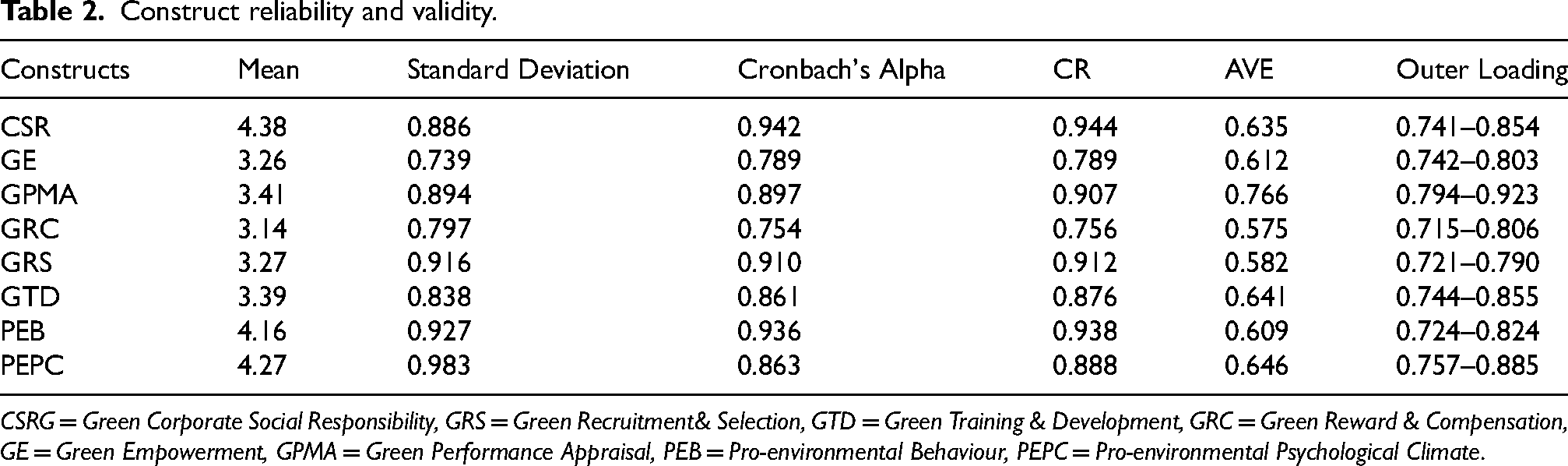
CSRG = Green Corporate Social Responsibility, GRS = Green Recruitment& Selection, GTD = Green Training & Development, GRC = Green Reward & Compensation, GE = Green Empowerment, GPMA = Green Performance Appraisal, PEB = Pro-environmental Behaviour, PEPC = Pro-environmental Psychological Climate.
Heterotrait-Monotrait ratio.
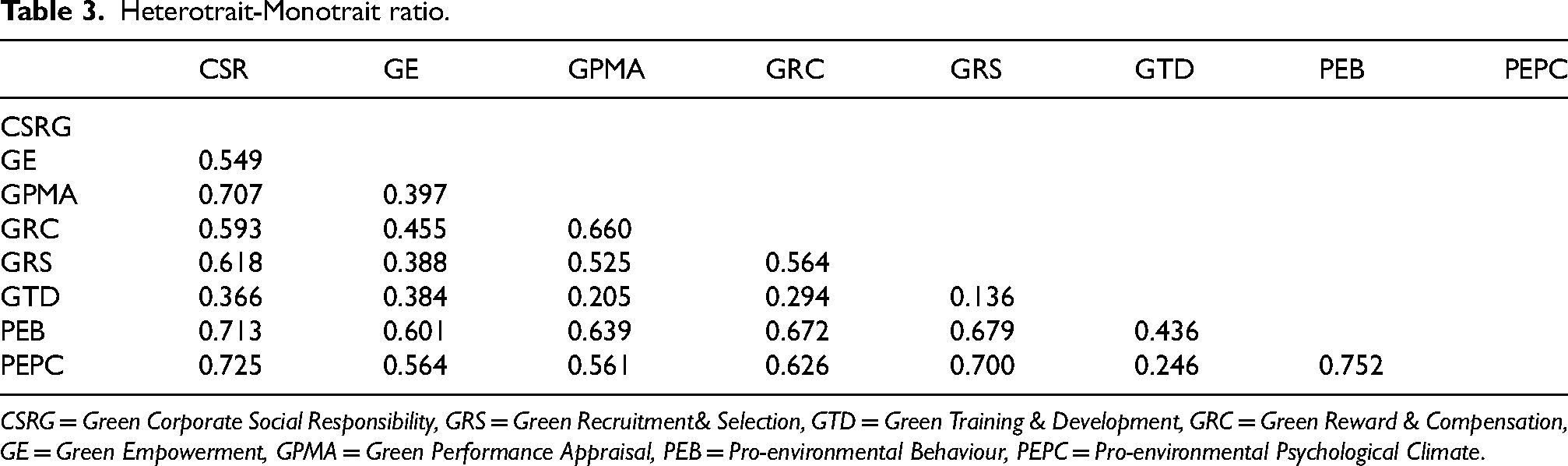
CSRG = Green Corporate Social Responsibility, GRS = Green Recruitment& Selection, GTD = Green Training & Development, GRC = Green Reward & Compensation, GE = Green Empowerment, GPMA = Green Performance Appraisal, PEB = Pro-environmental Behaviour, PEPC = Pro-environmental Psychological Climate.
Structural model
This paper analyses the research hypotheses. The structural model's empirical results, including explanatory power, path coefficient values, and path-related significant values, are provided after the measurement model's positive outcomes in Figure 2.
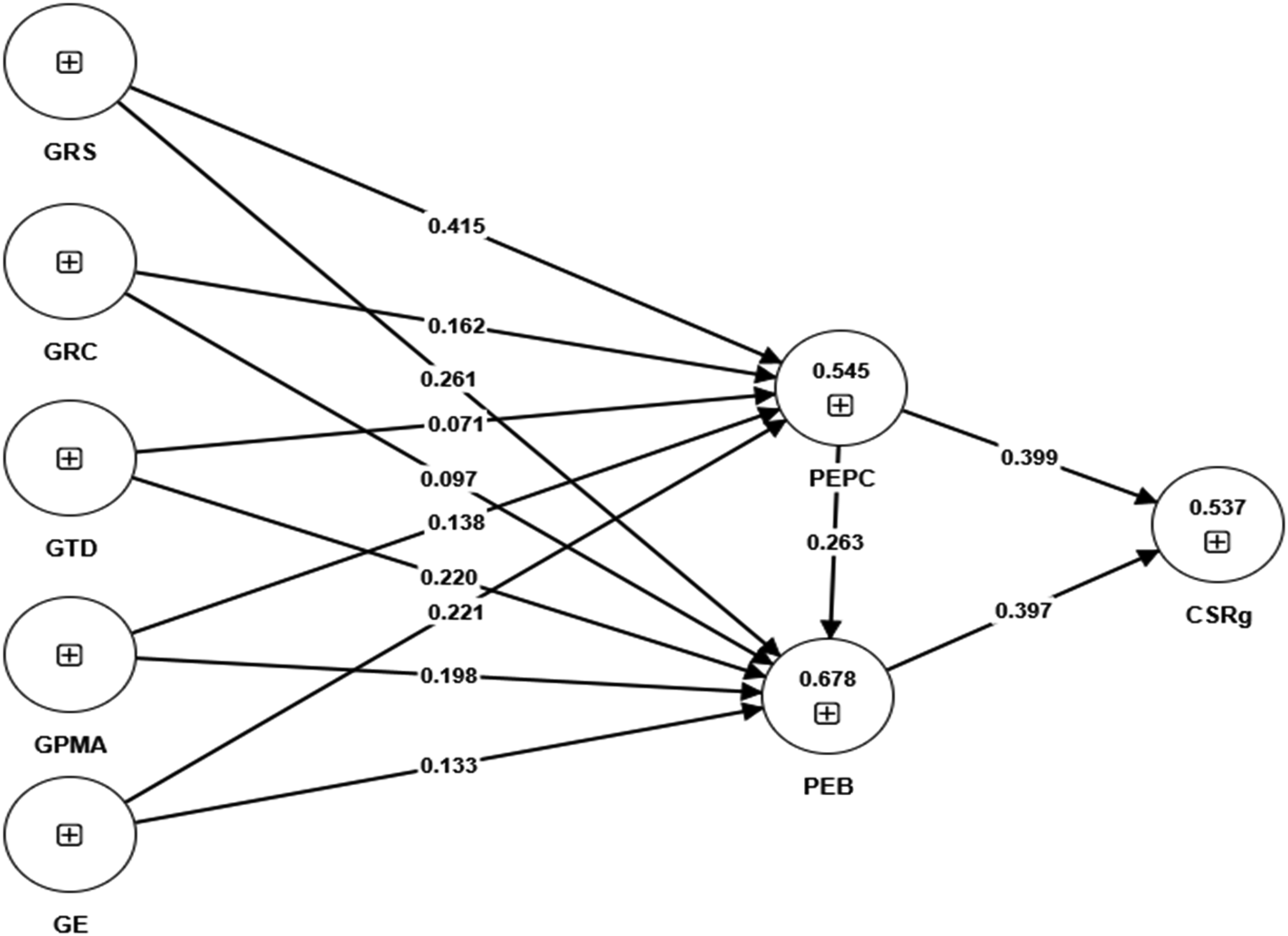
Structural model. CSRG = Green Corporate Social Responsibility, GRS = Green Recruitment & Selection, GTD = Green Training & Development, GRC = Green Reward & Compensation, GE = Green Empowerment, GPMA = Green Performance Appraisal, PEB = Pro-environmental Behaviour, PEPC = Pro-environmental Psychological Climate.
According to the study's findings show in Table 4, the pro-environmental psychological environment and employees’ pro-environmental behavior play an important role in mediating the effects of green HRM dimensions on CSR. The findings present that the study supported all direct hypothesized relationships, except the relationship between GTD and PEPC. The results of the direct hypotheses show that GE, GPMA, GRC, GRS, and GTD significantly influence the PEB (β=0.133, p < 0.001), (β=0.198, p < 0.000), (β=0.097, p < 0.018), (β=0.261, p < 0.000), and (β=0.220, p < 0.000) respectively. Similarly, GE, GPMA, GRC, and GRS significantly influence the PEPC (β=0.221, p < 0.000), (β=0.138, p < 0.001), (β=0.162, p < 0.001), and (β=0.415, p < 0.000). However, GTD has no significant effect on PEPC (β=0.071, p < 0.146). This study also analyzes the direct relationship between PEB and PEPC and results show a significant relationship [β=0.263, p < 0.000]. Furthermore, this study analyzes the direct relationship of PEB and PEPC with CSR, and results present a significant positive relationship (β=0.397, p < 0.000), and (β=0.399, p < 0.000) respectively.
Direct relationships.
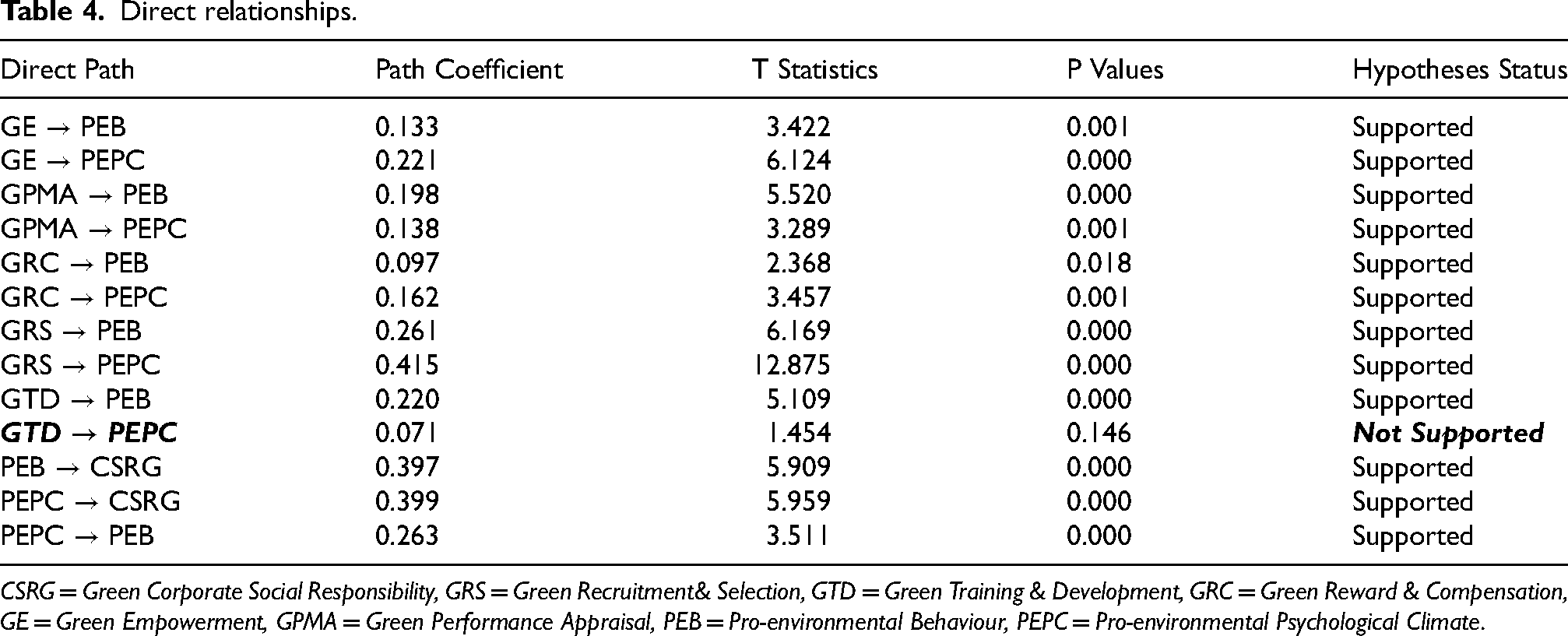
CSRG = Green Corporate Social Responsibility, GRS = Green Recruitment& Selection, GTD = Green Training & Development, GRC = Green Reward & Compensation, GE = Green Empowerment, GPMA = Green Performance Appraisal, PEB = Pro-environmental Behaviour, PEPC = Pro-environmental Psychological Climate.
Mediation analysis
As this study examines how the constructs are related sequentially, therefore, this study follows the _ENREF_80 mediation process to evaluate the explanatory role of PEPC and PEB between GHRM and CSR. Outcomes show that PEPC mediates the relationship between GHRM practices (dimensions) and CSR except for the mediating role of PEPC between GTD and CSR. Also, results show that PEB mediates the relationship between GHRM practices (dimensions) and CSR except for the mediating role of PEB between GTD and CSR; and GRC and CSR. Furthermore, the findings reveal that PEPC plays a role in the interaction between green HRM and PEB. PEB also appears to buffer the association between GHRM and CSR, according to the findings. The specific indirect effect is also investigated with both mediators and the results are displayed in Table 5.
Specific indirect path.
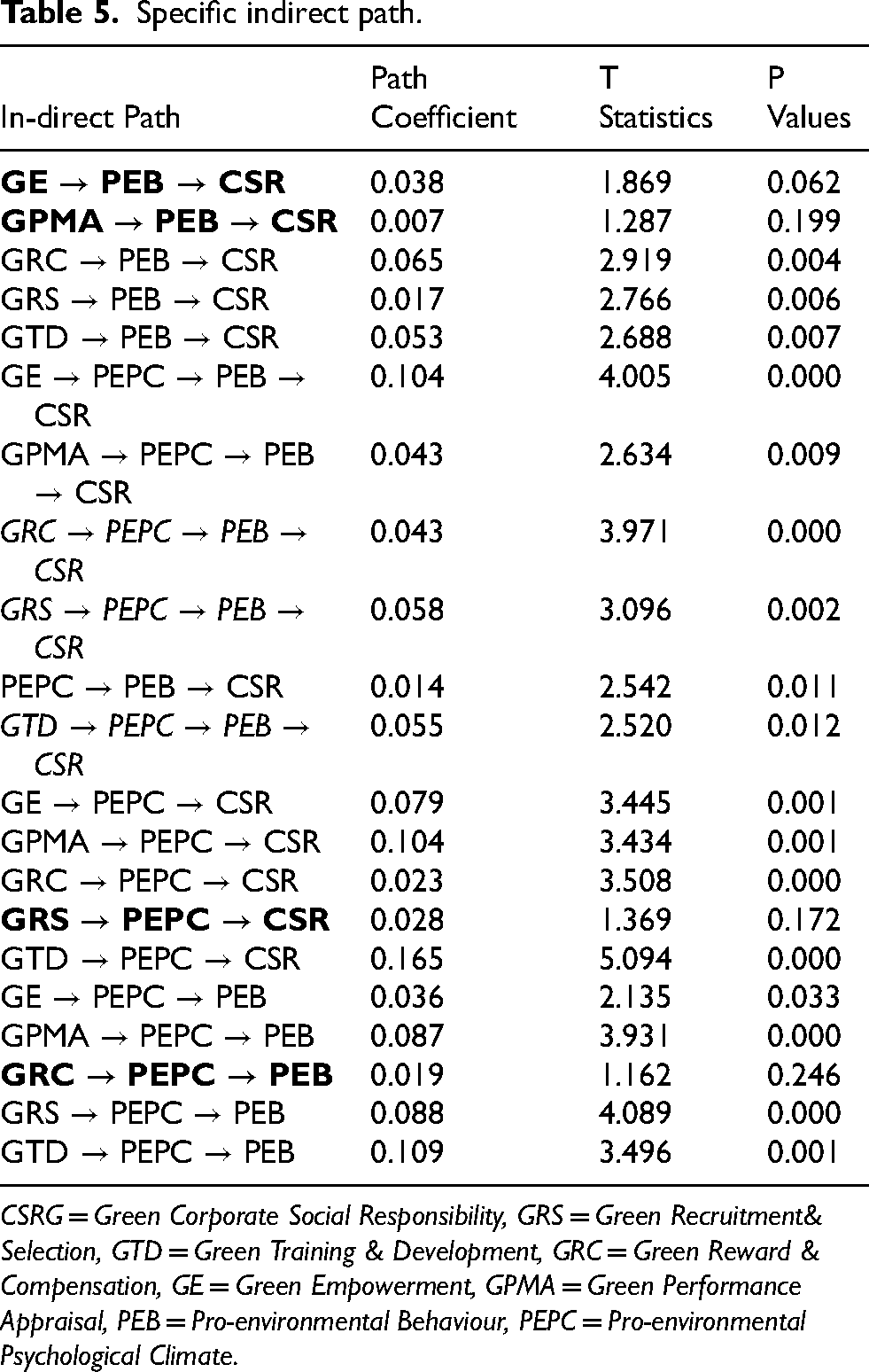
CSRG = Green Corporate Social Responsibility, GRS = Green Recruitment& Selection, GTD = Green Training & Development, GRC = Green Reward & Compensation, GE = Green Empowerment, GPMA = Green Performance Appraisal, PEB = Pro-environmental Behaviour, PEPC = Pro-environmental Psychological Climate.
Goodness of fit
However, Goodness-of-Fit (GoF) indices are not produced by the PLS-SEM, as PLS path modeling lacks an index that gives global model validation. In this regard, the assessment of the R2 value helps to evaluate the explanatory power of the model_ENREF_80. The average value of commonalities and R2 helps to calculate the GoF. Table 6 presents the values of commonalities and R2. By using the following formula, the goodness of fit calculation is as,
Goodness-of-fit.

CSRG = Green Corporate Social Responsibility, GRS = Green Recruitment& Selection, GTD = Green Training & Development, GRC = Green Reward & Compensation, GE = Green Empowerment, GPMA = Green Performance Appraisal, PEB = Pro-environmental Behaviour, PEPC = Pro-environmental Psychological Climate.


The results of the computation demonstrate that the PLS model fitness is satisfactory, as a theoretical model can account for 60.90 percent of the achievable fit. Table 7 shows the values for f2.
f square values.

Discussion and conclusion
Our study contributes to the existing knowledge by suggesting new mechanisms linking GHRM practices with employees’ green activities and a firm's CSR. Concerns about the environment have strengthened the corporation's involvement in ecological safety. 6 Organizations have turned to environmental initiatives as well as behavior in response to rising demands, and one latest advancement is indeed the deployment of GHRM practices, despite the lack of evidence-based studies that have investigated the eco-friendly results of such practices. Furthermore, green HRM practice's involvement in anticipating green behavior and climate is considerably more limited. 77 As a result, the current study examines the connection between CSR and employees’ green behaviors and GHRM practices.
This study divides the green HRM into GE, GPMA, GRC, GRS, and GTD and verifies the linear relationship between GHRM dimensions and CSR. This result is similar to the outcomes of various studies analyzing HRM's critical position in making organizations more ethical and sustainable. HR management has a significant role in advancing and improving CSR as it commits to the improvement of the coordination among monetary and social objectives and the firm's outcomes. The organizations that advance these practices among representatives have an extraordinary effect on the decrease of carbon emissions and on keeping the environment safe. 78
Our findings support the notion that CSR has become a necessity that enterprises have to embrace rather than just another choice and that HR plays a vital role in CSR implementation, particularly in a volatile business climate. Conversely, previous research has identified that strong CSR performance leads to a systematic reduction in credit risk for corporate bonds in the Eurozone. 15 Thus, when applying ecological principles to business management, many businesses consider HRM activities to be important tools for executives. Finally, the human component of environmental management in businesses should be improved by building an organizational culture. However, without a driven and trained human resource, companies cannot completely attain the expected goals of their CSR initiatives. The outcome of this research is consistent with the view that companies need to strengthen their human resources practices to improve CSR practices. In improving their image in the business world, many businesses have perceived the value of implementing GHRM practices. Job seekers, therefore, prefer organizations with a strong reputation for the environment. It has been reported that management believes CSR to be an important predictor of an organization's performance due to its favorable impact on work-life quality.
The results of a study by Dumont, Shen 45 showed that GHRM practices improve employees’ pro-environmental behaviors. An individual's perception of a company's commitment to the environment is the primary factor that influences their pro-environmental behaviors. This influence upon pro-environmental behaviors through individuals’ perceptions is a result of individuals adopting green HRM practices rather than becoming directly influenced by them. According to the current study's findings, PEPC explains GHRM practices’ indirect influence on CSR and pro-environmental behavior. However, GTD has an insignificant effect on the PEPC, it might be due to time pressure and stress.
Based on the given theoretical research background, the findings depict that GE, GPMA, GRC, GRS, and GTD have a direct relationship between PEPC and PEB and in return, both intervening variables have a significant impact on CSR. Furthermore, GHRM practices have a significant impact on the PEPC, which has a favorable impact on PEB, and PEB has a positive relationship with CSR. As a result, PEPC acts as an explanatory construct between GHRM practices and PEB, while PEB acts as a mediator between PEPC and CSR. As a result, the variable's sequence is critical for locating CSR.
Practical implications
There are important implications for both government and businesses based on this study. Firstly, the government should play a key role in creating an environment that supports CSR and offers incentives to help businesses achieve their CSR goals. It is also important for the government to establish legal standards that set a minimum level of responsibility for businesses. This will help them address the challenges faced by Pakistan, such as poverty reduction, generating quality employment opportunities, and focusing on the development of human capital to achieve sustainable growth.
Second, managers should consider the importance of GHRM in improving their organization's CSR activities. They should prioritize implementing GHRM policies to advance environmental efforts, establish positive relationships with the community, and enhance the corporate image among consumers. Additionally, managers should adopt new approaches such as PEPC and PEB to develop CSR initiatives while defining clear meanings for GHRM, PEPC, PEB, and CSR. Allocating more funds to prepare key employees involved in CSR initiatives is also crucial to confirm successful implementation.
Third, as a manager, it is important to consider ways to align HR strategies with CSR initiative policies and effectively implement them. Additionally, HR should establish methods for acknowledging volunteer work and create consistent training measures for employees who participate in volunteer activities. When volunteers feel valued and appreciated, they are more likely to continue giving their time and effort. Encouraging people to contribute to community operations is also crucial. Managers should integrate CSR strategies into GHRM activities or objectives for efficient corporate goal achievement. They should increase employee awareness of CSR efforts, ensure a safe work environment, and encourage employee volunteerism.
Limitations and future research directions
There are a few limitations to this study that could lead to opportunities for future research. Firstly, the study only focuses on one emerging economy, Pakistan. To gain a better understanding of CSR in emerging economies, it would be beneficial to conduct studies in other countries using different research methodologies. Secondly, the analysis only looks at external CSR in terms of environmental and social dimensions and neglects internal CSR dimensions.
Third, incorporating GHRM in Pakistan is challenging. Firstly, there is a lack of awareness and understanding of environmental sustainability practices within organizations. This hinders the adoption of green HRM strategies and initiatives. Secondly, limited availability and access to eco-friendly technologies and practices pose challenges in implementing green HRM practices effectively. Additionally, the absence of clear regulations and incentives for organizations to prioritize environmental sustainability further impedes the integration of green HRM in Pakistan. Overcoming these obstacles requires raising awareness, building capacity, and establishing supportive policies and frameworks to encourage GHRM practices in the country.
Fourth, although the study's sample size met the necessary methodological and statistical requirements of the literature, it could benefit from a broader perspective. Additionally, a firm's adoption of CSR may depend on various other factors, such as regulatory and legal requirements, which future studies should analyze. The collection of data may also be skewed by self-report method bias, potentially resulting in common method variance. To mitigate this, future studies should incorporate more objective measures. Furthermore, it would be valuable for future research to explore mediators like green lifestyle, job satisfaction, and green commitment, to gain a deeper understanding of how green HRM practices impact CSR. Finally, a long-term investigation would strengthen the validity of the study's findings.
Since Cronbach's alpha values of GRS, PEB, and PEPC in this study were particularly high, future studies could benefit from re-evaluating the scales to ensure that the included items are not overly similar or redundant. Researchers may consider using techniques such as item-total correlations, exploratory factor analysis, or confirmatory factor analysis to identify and possibly remove items that do not add unique value to the construct. This would help to maintain a balance between ensuring internal consistency and retaining the breadth of the construct. Additionally, the use of shorter, more targeted scales could enhance the efficiency of data collection without compromising the reliability and validity of the measurements.
Last, the low participation rate is another limitation of this study, potentially affecting the generalizability of the findings. This low rate may be attributed due to time constraints among participants. Future research should focus on strategies to enhance participation rates and consider expanding the sample size to ensure a more representative population.
Supplemental Material
sj-docx-1-wor-10.1177_10519815251348354 - Supplemental material for The impact of green human resource management on corporate social responsibility: The mediating role of pro-environmental psychological climate and behavior
Supplemental material, sj-docx-1-wor-10.1177_10519815251348354 for The impact of green human resource management on corporate social responsibility: The mediating role of pro-environmental psychological climate and behavior by Rizwana Hameed, Nabeel Rehman and Naeem Akhtar in WORK
Footnotes
Acknowledgements
The authors would like to express their sincere gratitude to the editor-in-chief and anonymous reviewers for acknowledging this research. We also thank our colleagues and peers for their valuable feedback and encouragement throughout the study.

Funding
The authors received no financial support for the research, authorship, and/or publication of this article.
Declaration of conflicting interests
The authors declared no potential conflicts of interest with respect to the research, authorship, and/or publication of this article.
Informed consent statement
This manuscript follows the standards of ethical consideration, informed consent, and reporting guidelines. The study was approved by the Institutional Review Board of the University of Engineering and Technology, Lahore, Pakistan (8/Uni/IBM/Dir/2025).
Supplemental material
Supplemental material for this article is available online.
References
Supplementary Material
Please find the following supplemental material available below.
For Open Access articles published under a Creative Commons License, all supplemental material carries the same license as the article it is associated with.
For non-Open Access articles published, all supplemental material carries a non-exclusive license, and permission requests for re-use of supplemental material or any part of supplemental material shall be sent directly to the copyright owner as specified in the copyright notice associated with the article.
