



Abstract
Background
Effective workload management in education is crucial for student well-being with nature-based Virtual Reality (VR) interventions presenting a viable solution. Most publications primarily examined high-end VR devices with immersive Head-Mounted Displays (HMDs), leading to a study gap in areas with restricted access to advanced VR technology.
Objectives
This study explores the impact of a low-cost non-immersive VR environment on students’ workload and cognitive performance in an educational context.
Methods
The participants were divided into two groups: a control group using traditional screen-based tasks and an intervention group using low-cost VR tools. Subjective workload was assessed using NASA-TLX and the participants were further categorized based on their perceived workload levels. Objective physiological data, including heart rate variability (HRV) and galvanic skin response (GSR), were recorded, and cognitive performance was measured using the Pauli Test.
Results
The results showed no significant differences in physiological, psychological, or performance outcomes between the control and intervention groups, implying that non-immersive VR did not significantly affect stress levels. Due to the limited sensory engagement, non-immersive VR did not activate the body or engage cognition effectively.
Conclusion
These findings suggest that the non-immersive VR intervention not sufficient to produce measurable cognitive impact. Future research is encouraged to investigate the potential of immersive VR environments, which might provide a greater sensory experience. In addition, longer exposure durations should be examined to enhance understanding of the effects on cognitive load, relaxation, and overall well-being in nature-based VR applications. Even though differences were not statistically significant, non-immersive VR still reduced stress and enhanced engagement.
Keywords
Introduction
In the context of education, workload refers to the mental and physical demands placed on students during the learning process where the issue of workload will never end. 1 This persistent concern has been highlighted for decades, 2 as increasing study-loads and evolving educational content create sustained pressure on students. Each student possesses varying levels of resilience, which has been empirically shown to have a beneficial influence on students’ overall well-being and mental health. 3 Although each person has a different level of resilience, academic workload can still lead to student burnout. 4 It is crucial to prioritize the management of stress caused by workload to ensure the well-being of students. 5 Therefore, identifying optimal strategies for managing workload can enhance student academic performance. 6 This is supported by findings that show effective workload management, such as balancing demands and clear communication of expectations, can improve students’ perceptions of workload, leading to better focus and reduced stress. 7
Virtual Reality (VR) interventions can be used as a strategy to manage student's workload, as students are the main focus in educational settings. In a study conducted by Rojas-Sánchez et al., 8 bibliometric analysis was performed on a total of 718 articles. The findings of the study show that the most extensively investigated subject in the field of education is VR-based teaching and learning. Moreover, a study conducted by Harris et al. 9 reveals that VR has an impact on students’ cognitive variables and task load sensitivity. Hawes and Arya 10 also assert that VR interventions effectively alleviates student anxiety and enhances cognitive capacity, potentially relieving the burden of academic tasks. VR, particularly in its non-immersive form, has emerged as a promising tool to optimize mental workload by offering interactive and controlled learning environments. While immersive VR provides a more engaging experience with higher ratings for learning atmosphere and clarity, non-immersive VR is still effective in conveying procedural knowledge and reducing cognitive strain through its flexible and self-paced structure. 11 Similarly, another study finds that although the more immersive condition does not produce higher acquisition than the non-immersive one, both device conditions result in significant increases in learning. This suggests that while immersive VR enhance user experience, non-immersive VR remains a valuable tool for educational purposes. 12 These results suggest that VR interventions have significant potential to reduce student workload by enhancing learning efficiency, improving cognitive engagement, and minimizing academic stress.
Selecting the right VR intervention is essential for reducing student workload. Nature-based VR is one of the solutions that can be implemented for that issue. This relates to Wilson's Biophilia Theory, stating that humans have a natural capacity to connect with natural elements including environments, living species, and natural features. According to this theory, when individuals are in the presence of nature, the individuals are inclined to have heightened feelings of enjoyment, reduced stress levels, and greater mental well-being. 13 VR helps students with limited access to nature such as those in urban or remote areas by offering a virtual environment that allows the users to experience nature without needing to be physically present. Although VR cannot fully replicate the sensory depth of physical presence, it creates an immersive experience that gives users a sense of being present in the virtual environment. 14
Numerous studies have successfully employed nature-based VR interventions to reduce workload. Ho et al. 15 find that nature-based VR experiences reduces psychological stress by measuring anxiety levels and physiological stress through heart rate variability (HRV) assessments in manufacturing workers. Similarly, Chan et al. 16 conducted an assessment of HRV, revealing that walking in a virtual forest setting enhances mood and reduces stress. A study conducted in a forest setting by Yahaya et al. 17 also shows that exposure to a forest setting enhances positive mood and decreases stress levels. Furthermore, Seiz et al. 18 suggest that immersion in virtual green environments promotes mental healing and alleviates stress, as indicated by electroencephalography (EEG) brain activity measurements.
Although publications support the effectiveness of nature-based VR interventions in reducing mental workload, most studies use advanced VR devices with expensive head-mounted displays (HMDs) designed for highly immersive experiences. This creates a study gap regarding the effectiveness of nature-based VR in regions with limited access to advanced VR technology. In many developing countries, VR adoption relies on mobile-based platforms such as VR Box, Google Cardboard, and Samsung Gear VR which have limitations in resolution, immersion depth, and user interaction. This study investigates the effectiveness of nature-based VR using low-cost mobile VR devices. It includes two groups namely an intervention group using low-cost VR and a control group without VR exposure. Student workload will be assessed using three key metrics, namely subjective, objective, and performance-based measurements. 19 This study will provide insights into the potential and limitations of low-cost mobile VR for nature-based interventions. When these devices show measurable positive effects, they could serve as an affordable and accessible intervention method. However, when the effects are limited, more advanced VR experiences may be necessary to achieve optimal benefits in workload and stress reduction.
The first method for measuring workload is subjective assessment which evaluates individuals’ perceptions, opinions, or feelings about the workload. This method commonly uses multidimensional tools such as NASA Task Load Index (NASA-TLX) which assesses mental demand, physical demand, temporal demand, performance, effort, and frustration experienced during a task. 20 Caesaron and Ardani 21 used NASA-TLX to examine VR experiments including first-person and third-person perspectives while Rivera-Flor et al. 22 applied it to assess an Electric Powered Wheelchair VR Simulator. NASA-TLX offers several advantages, including time efficiency, ease of use for non-specialists, effective discrimination between workload levels, validity, and high sensitivity. 23
Different from subjective measurement, objective measurement in mental workload refers to the use of quantitative measures, such as physiological reactions. 24 This measurement usually uses additional devices. Most existing studies primarily use HRV and EEG to measure physiological responses to VR-based nature interventions. Following this approach, this study also uses HRV to ensure comparability with the previous studies. However, to provide a more comprehensive assessment, Galvanic Skin Response (GSR) is additionally incorporated. GSR is utilized to gauge an individual's stress or anxiety level by assessing changes in the skin. 25 By using GSR, this study aims to provide an alternative perspective on the effectiveness of mobile low-cost VR in modulating physiological stress responses offering a more accessible and cost-effective measurement method.
Performance measurement in mental workload entails determining how the mental demands of an activity affect an individual's performance. This includes direct measures of task performance such as accuracy, speed, and error rates, which reflect the individual's capacity to manage the work's cognitive demands. 26 A study by Wismer et al. 27 focused on predicting performance in an experiment in the lab that required participants to hit a target consistently in a VR environment. The goal was to investigate how VR-based performance assessments compare to real-world performance. Similarly, Kamińska et al. 28 did another research in which he needed participants to answer questions presented in VR. The conclusion is that the more the correct responses are, the better a person's performance is.
Building on the background, this study contributes to the field of workload management in education using VR interventions. It particularly emphasizes the role of non-immersive VR in optimizing mental workload and improving learning outcomes. By integrating empirical findings and validated workload measurement tools, this study provides a foundation for practical applications in educational settings.
Developing a non-immersive VR-based experimental platform for workload analysis in education. Providing empirical evidence on the cognitive benefits of non-immersive VR in reducing mental workload. Applying validated workload measurement tools (e.g., NASA-TLX) in a controlled experimental setting. Proposing practical implications for integrating VR in instructional design.
The remainder of this paper is structured as follows: Section 2 presents the methods, including participants, VR design, study setting, and statistical analysis. Then, section 3 discusses the results and discussion, providing interpretations and key findings. Finally, section 4 concludes the study and offers directions for future research.
Methods
Participants
This study used a between-subjects analysis design in which each group was assigned to receive distinct conditions. The participants were divided into two groups which comprised Group A (not receiving VR intervention (N = 10)) and Group B (receiving VR intervention (N = 10)). Group A had a gender distribution of 1 male and 9 females, while Group B included 2 males and 8 females, constituting the difference between the two groups. The participants were selected through voluntary participation and availability with inclusion criteria establishing that they be active students aged 18–25 without prior experience in VR applications. Exclusion criteria showed a history of motion sickness or conditions potentially hurt by VR interventions, thereby ensuring the participant safety and data integrity of the test. These criteria correlated with the established practices from Brickhead et al., 29 emphasizing the significance of controlling for VR-related side effects and previous exposure to minimize bias in cognitive performance. In terms of age distribution, Group A comprised 5 students (50%) aged ≤ 20 years and 5 students (50%) aged > 20 years. In contrast, Group B consisted of 2 students (20%) aged ≤ 20 years and 8 students (80%) aged > 20 years. The mean age in Group A was 20.5 years (SD = 0.53), while in Group B, it was 20.8 years (SD = 0.42). Every group comprised 20 individuals and all students did not have extensive VR experience.
VR design
VR environment was created using the Millealab application and accessible through a smartphone. The participants viewed the environment by inserting a smartphone into a low-cost, non-immersive VR head-mounted display (HMD), specifically VR Box. The design featured a minimalist natural setting, including a beach, a garden, and surrounding trees as depicted in Figure 1.

Natural environment settings.
The participants were instructed to walk from start to finish while exploring the environment. To navigate, the participants only needed to direct their gaze at specific standpoints. They could walk and explore the environment in 360 degrees. Multiple standpoints were placed along the path, guiding the participants from the starting point to the end. Figure 2 provided an overview of these standpoints.

Standpoint.
Study settings
This study was conducted in a laboratory setting, where temperature and noise levels were controlled. To assess the participants’ workload, subjective measurements were collected using NASA-TLX questionnaire while objective measurements were obtained using HRV and GSR devices. The tools used were Polar HRV and GSR devices as observed in Figure 3. To evaluate the impact of VR exposure on performance, the participants completed Pauli Test which assessed work aptitude by measuring precision in task execution, speed, efficiency, and cognitive strain while solving basic mathematical problems such as addition. The performance was determined by the number of correct responses, with higher accuracy indicating better cognitive performance (26). Both groups underwent the same measurement procedures with the only difference being that Group B received VR intervention. Group B used HMD (VR Box) for VR exposure, as shown in Figure 3. The experiment was conducted over 7 days, starting at 8:00 AM each day. The detailed timeline for Group A was presented in Figure 4A, while the timeline for Group B was shown in Figure 4B. The overall duration of this experiment was 21 min for Group A and 31 min for Group B.

Participant conducting the experiments.
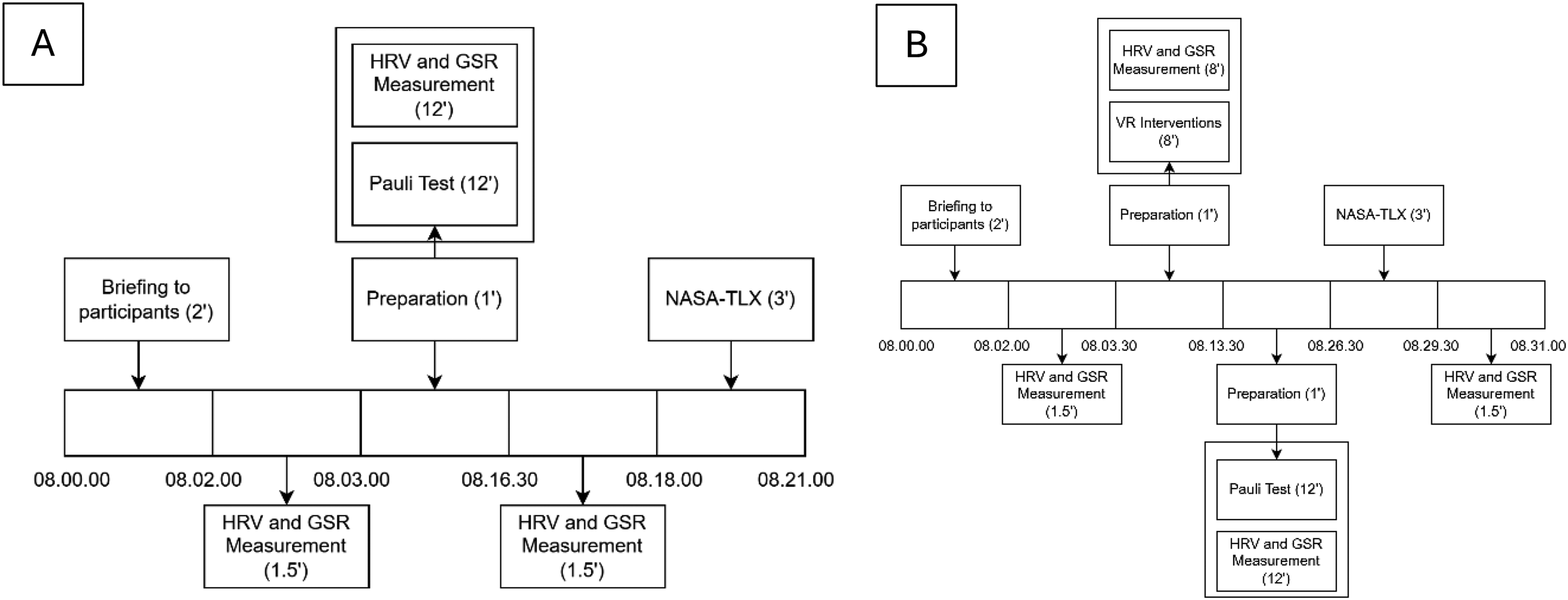
Experiment timeline; (A) Group A and (B) Group B.
Each participant first received a full explanation of the procedure and completed a 2-min demographic questionnaire. HRV and GSR measurements were then taken for 1 min 30 s to establish a baseline. Group B subsequently underwent an 8-min VR intervention, in which the participants explored the same virtual environment to ensure consistency. After 8 min of VR exposure, HRV and GSR were reassessed to measure physiological responses. Pauli Test (12 min) began with a 1-min preparation phase, during which cognitive performance was evaluated, and HRV and GSR were continuously recorded. The Test comprised three conditions categorized by temperature and noise levels, namely (1) Low (31°C & 60 dB), (2) Medium (28°C & 70 dB), and (3) High (24°C & 80 dB), each lasting 4 min. The participants underwent these changes continuously without any rest period, allowing real-time assessment of cognitive load variations. The experimental room was designed to allow external control of temperature and noise levels without disturbing the participants. The controller kept the temperature and noise levels in check from outside the room, ensuring that adjustments to the environmental conditions were made seamlessly while the participants completed the tasks without interference. A 3-min NASA-TLX questionnaire was used to measure subjective workload, followed by an additional 1 min 30 s for HRV and GSR measurements. HRV and GSR measurement procedure followed a standardized protocol. Baseline measurements set a standard for the resting state and Pauli Test, along with continuous HRV and GSR monitoring during VR exposure, enabled real-time physiological assessment. No rest period was provided between conditions, ensuring continuous monitoring of workload variations in the experiment.
Statistical analysis
A comprehensive analysis was conducted on subjective, objective, and performance metrics. The participants’ workload levels were categorized based on their responses to NASA-TLX questionnaire for subjective measurement. Before analyzing the HRV and GSR data, normality and homogeneity tests were performed to confirm the suitability of parametric statistical analysis. An Analysis of Variance (ANOVA) test (significance level = 0.05) was used to examine differences between independent population means and determine whether the analyzed factors significantly influenced the results. Finally, Pauli Test scores were evaluated based on response accuracy to assess the participants’ performance.
Results
Objective measurement
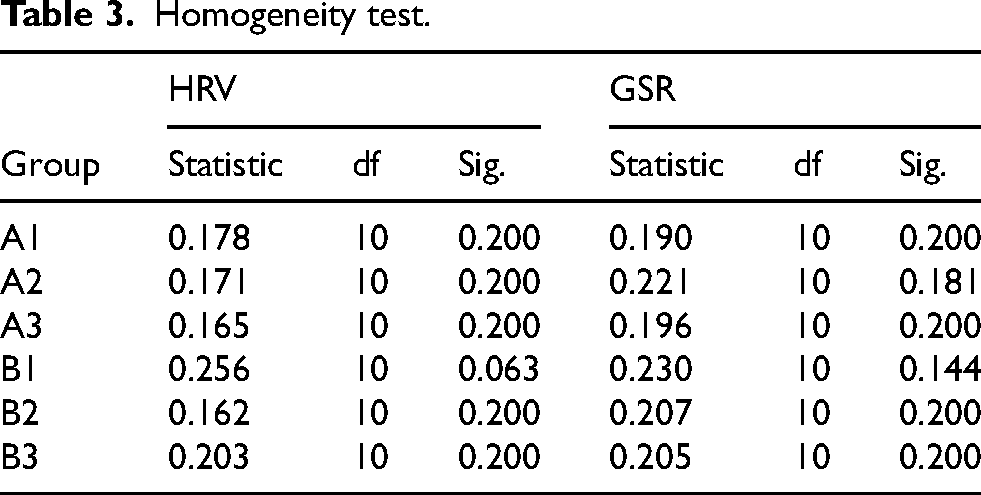
Table 1 presents the outcomes of objective measurement in the form of average HRV and GSR values across the three noise conditions during Pauli Test. Table 2 also shows HRV and GSR values before and after Pauli Test, but no statistical analysis was performed on these values. The primary focus of this study was to evaluate physiological responses during Pauli Test. A One-Sample Kolmogorov-Smirnov normality test was conducted to assess whether the data followed a normal distribution. HRV and GSR measurements were normally distributed, as indicated by Sig > 0.05, as shown in Table 3. A homogeneity test was also performed, yielding a significance level of 0.373 for HRV and 0.446 for GSR, and confirmed that the data were homogeneous (Sig > 0.05).
Objective measurement results during Pauli Test.
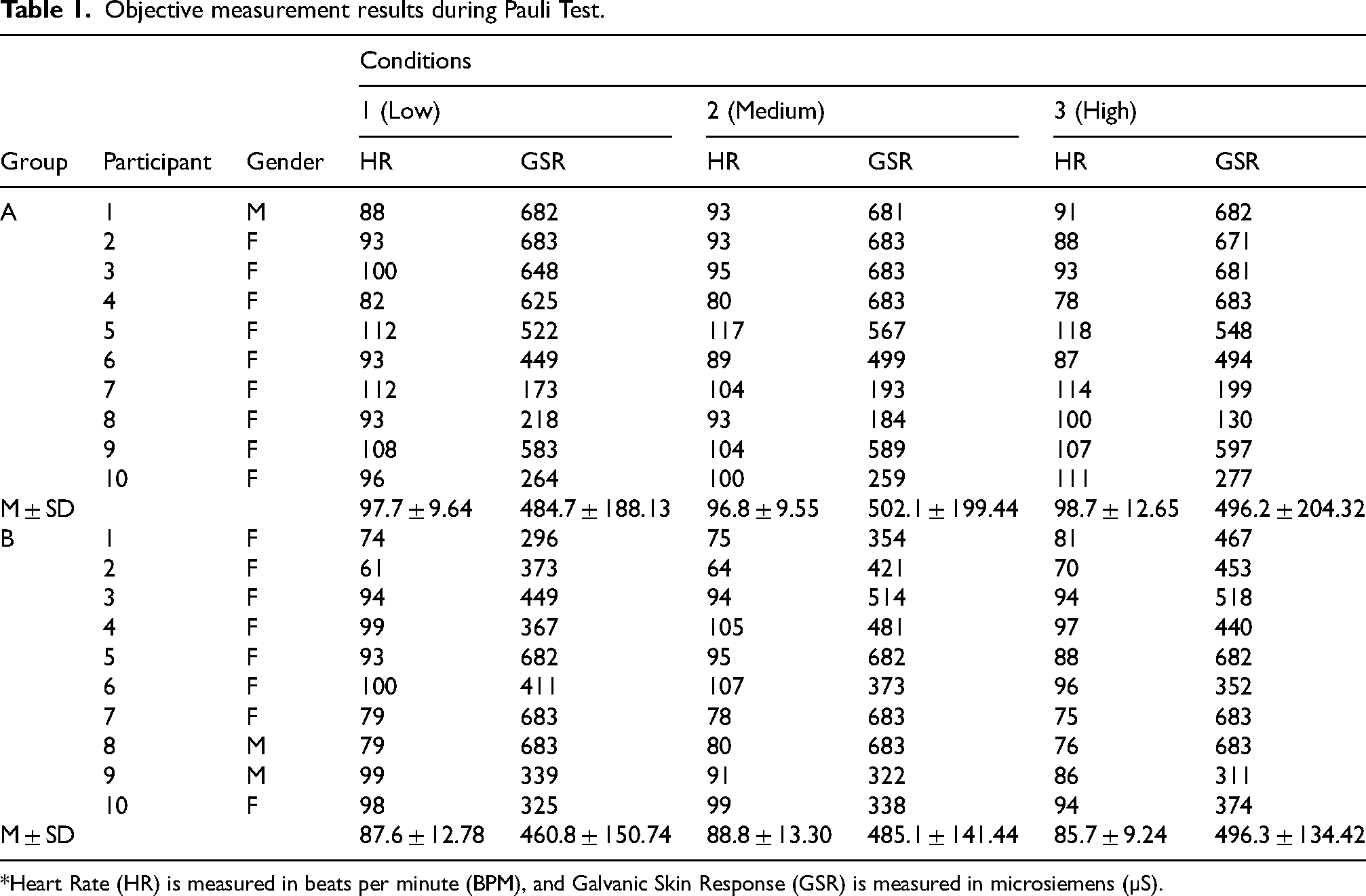
*Heart Rate (HR) is measured in beats per minute (BPM), and Galvanic Skin Response (GSR) is measured in microsiemens (µS).
Objective measurement before and after Pauli Test.

*Heart Rate (HR) is measured in beats per minute (BPM), and Galvanic Skin Response (GSR) is measured in microsiemens (µS).
Homogeneity test.
A one-way ANOVA was conducted to analyze differences in HRV and GSR between Group A and B under different noise levels. The analysis examined whether VR interventions or noise variations (low, medium, high) influenced the participants’ physiological responses. The results showed no statistically significant differences for HRV (F (5,54) = 2.356, p = 0.052) and GSR (F (5,54) = 0.066, p = 0.997). Therefore, objective measurements indicated that low-cost nature-based VR interventions had no measurable impact on human physiology. These results correlated with the previous studies on conventional VR applications, in which users did not experience full immersion. According to Azarby and Rice, 30 there were significant differences between immersive VR and traditional VR, also known as desktop-based VR. The analysis found that most participants perceived immersive VR as more precise than traditional VR, allowing a more accurate spatial impression and enhancing user experience. Additionally, VR technology can significantly influence human perception by presenting cues that provokes the human sensory system. The visual system is extremely vulnerable to manipulation in VR situations, as users often depend on the eyes to navigate and engage in these immersive virtual experiences. 31
Subjective measurement
NASA TLX assessment required the participants to rate six dimensions—mental load, physical load, temporal load, performance efficiency, effort required, and fatigue level—on a scale from 1 to 100. A rating of one represents a very low workload, while 100 indicates a very high workload. A comparative analysis was then conducted to evaluate the relative workload of each dimension. The scoring included multiplying the rating by the weighting factor for each dimension. Weighted workload (WWL) was obtained by summing the scores of all indicators. The interpretation of WWL scores followed a standard classification, namely low (0–9), medium (10–29), somewhat high (30–49), high (50–79), and very high (80–100). 32 Table 4 shows NASA-TLX results for both groups.
NASA-TLX results.
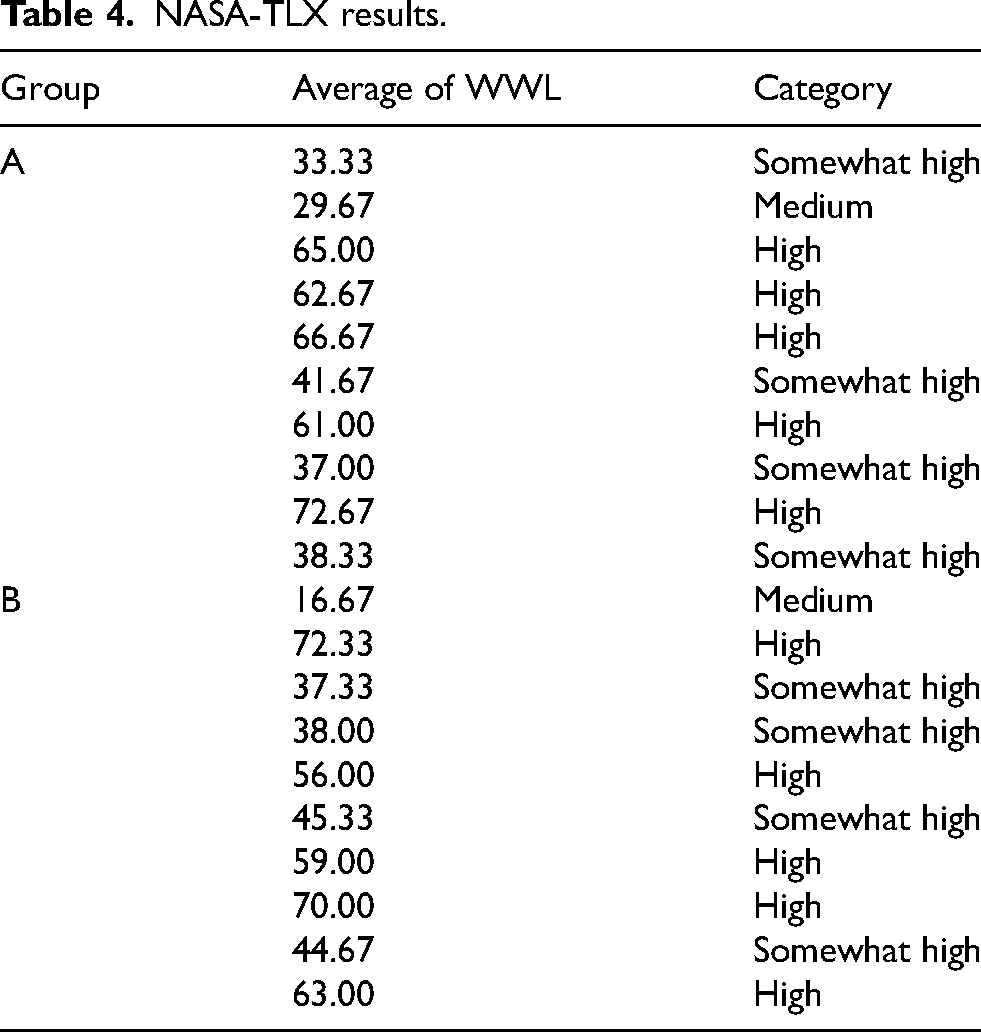
No significant differences were observed in subjective measurements between the two groups and the average WWL values ranged from medium to high. In Groups A and B, only 1 participant reported a medium workload, while 4 participants were categorized as experiencing a somewhat high workload, and 5 participants reported a high workload. These results were consistent with the previous publications on non-immersive VR. Thorp et al. 33 conducted a similar subjective assessment using a questionnaire and found that cognitive load was positively correlated with spatial ability in immersive VR but negatively correlated with cognitive load in non-immersive VR.
Performance measurement
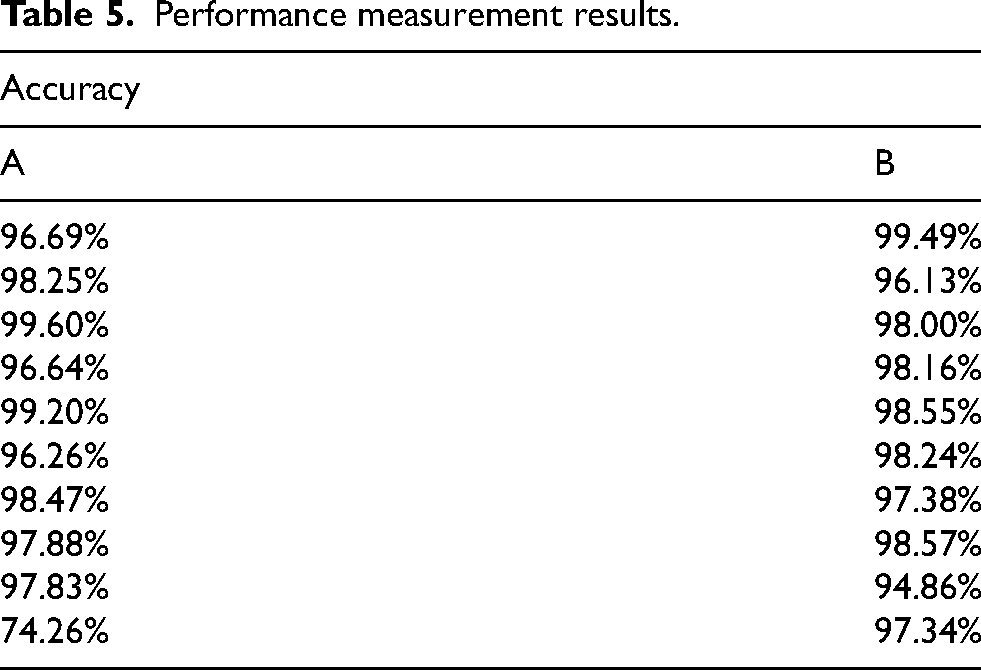
The performance measurement was based on task accuracy the results of which for Groups A and B are displayed in Table 5. No significant differences were observed between the groups. Group A had an average accuracy of 95.51%, while Group B had an average accuracy of 97.67%. The performance outcomes may also be influenced by the nature of conventional VR. The final score on Pauli Test depends on multiple factors, including individuals’ cognitive ability to respond to the questions. Furthermore, Komatsu 34 identifies two key variables influencing perception, namely (1) psychological aspects such as perception, context, expectations, and cognitive processes, as well as (2) physiological factors, namely neuronal activity in the early visual cortex area.
Performance measurement results.
Discussion
The results of this study suggest that non-immersive VR interventions have no significant effect on physiological responses, as indicated by HRV and GSR measurements. The lack of significant variations in HRV and GSR levels between Group A and Group B suggests that traditional non-immersive VR does not significantly impact workload or stress levels. Since non-immersive VR relies on limited sensory engagement, the participants may experience lower cognitive load and reduced physiological stimulation.
Additionally, the subjective workload assessments (NASA-TLX) and performance measurements (Pauli Test accuracy) are supporting these findings. The participants in both groups were found to report similar workload ratings with most scores ranging from medium to high, regardless of VR exposure. This shows that traditional VR applications is insufficient for stimulating cognitive and physiological engagement in tasks necessitating advanced spatial processing or intricate decision-making. The relationship between cognitive load and spatial ability in immersive VR is further typically positive while in non-immersive VR, cognitive load is found to be stable or negatively correlated. This suggests that immersive VR, characterized by 360-degree environments, interactive components, and multisensory cues, possess a greater capacity to adequately improve the spatial perception and user engagement, as well as lead to significant variations in workload and performance outcomes.
It is important to note that although the intervention group did not outperform the control group in a statistically significant manner, the qualitative responses indicate interest and perceived benefits from the VR experience. However, immersive VR, which may provide deeper engagement, was not tested in this study, making any reference to it speculative and intended solely as a direction for future research. Future studies should directly compare immersive and non-immersive VR to evaluate the effects on workload, physiological responses, and performance in a nature-based VR setting. Alamäki et al. 35 conducted an experimental study evaluating students’ affective responses to 2D and 360° videos with and without the use of low-cost VR headsets. The results indicated that while 360° videos enhanced the affective experience compared to 2D, the use of low-cost VR headsets reduced positive experiences due to challenges with usability and comfort. This recent finding underscores the importance of continuing research in this area, particularly to address limitations and explore the potential of VR, both immersive and non-immersive in educational settings. Additionally, Asadi and Taheri 36 demonstrated that integrating multifaceted approaches, including AI tools, could enhance peer assessment effectiveness and student engagement in online IELTS writing courses. This finding supports the idea that digital technologies, including non-immersive VR, can enrich learning experiences and alleviate cognitive load.
The research should also explore the longer exposure durations to determine whether extended VR interaction will improve physiological adaptation and task-related focus. Furthermore, integrating supplementary physiological metrics such as EEG for monitoring brain activity or eye-tracking for analyzing visual engagement yielding enhanced insights into user processing and responses to nature-based VR stimuli. These advancements can further improve the understanding of the effects and impacts of VR-based nature exposure on cognitive load, relaxation, and overall well-being.
Conclusion
In conclusion, workload challenges in the education sector persisted and one potential intervention was the implementation of VR simulation. Most interventions used fully immersive VR but this study adopted a mobile, low-cost VR which lacked immersion with a proposed intervention of nature-based. The results showed that non-immersive nature-based VR interventions did not have a significant effect on physiological (HRV and GSR), psychological (NASA-TLX), or performance-based measures (Pauli Test). This study correlated with the results from other publications that examined the differences between immersive and non-immersive VR experiences. The data showed that participants in both groups exhibited similar workload levels, suggesting that low-cost VR interventions be insufficient for reducing mental workload. For a significant cognitive and physiological impact to occur, the experience needs to be fully immersive.
Despite the results, this study had certain limitations that required consideration. The results could not be generalizable due to the small sample size and the inclusion of only two levels of VR exposure, namely with non-immersive VR and without VR. A fully immersive VR condition was not included for comparison. Furthermore, HRV and GSR were the only objective physiological measurements used. Future studies may incorporate additional metrics, such as EEG or eye-tracking to provide a more comprehensive understanding of cognitive activity. Addressing these limitations in future publications will be essential for enhancing the understanding of VR role in workload management and educational applications.
Footnotes
Acknowledgements
We express our gratitude to the study participants for their invaluable contributions.

Ethical statement
This experiment received approval from the Ethics Committee at Esa Unggul University, as documented under file number 0925-07.183/DPKE-KEP/FINAL-EA/UEU/VII/2025.
Informed consent
All participants provided informed consent in compliance with ethical approval.
Funding
The authors received no financial support for the research, authorship, and/or publication of this article.
Declaration of conflicting interests
The authors declared no potential conflicts of interest with respect to the research, authorship, and/or publication of this article.