




Abstract
Background
Intern nursing students are particularly vulnerable to workplace violence in clinical settings, which compromises patient safety and negatively impacts their mental health and professional development.
Objective
This study aims to investigate the prevalence of workplace bullying among intern nursing students and its association with coping styles, providing a foundation for developing targeted interventions.
Methods
A total of 358 intern nursing students were selected from a Grade III Class A hospital in Hunan Province via convenience sampling. Data were collected using a general situation questionnaire, the Chinese version of the Negative Acts Questionnaire-Revised and the Simplified Coping Style Questionnaire. The study was grounded in Lazarus and Folkman's transactional stress theory. Data analysis was performed using SPSS. Skewed data were described using the interquartile range, whereas count data were described using composition ratio and rate. Group comparisons were conducted with non-parametric tests, and Spearman correlation was applied. A p-value of less than 0.05 was considered statistically significant.
Results
The mean workplace bullying score was 27.00, and the prevalence of workplace bullying among intern nursing students was 29.3%. The total workplace bullying score was negatively correlated with the positive coping dimension score (p < 0.001) and positively correlated with the negative coping dimension score (p < 0.001). Logistic regression analysis indicated that educational background, feelings towards the nursing major, positive coping dimension score and negative coping dimension score of the Simplified Coping Style Questionnaire were associated with workplace bullying among intern nursing students (p < 0.05).
Conclusions
The incidence of workplace bullying is high among intern nursing students. Educational background, attitudes towards the nursing major and coping styles show significant associations with the likelihood of experiencing workplace bullying. Given the cross-sectional nature and single-center design, these findings should be considered preliminary and require validation in broader contexts.
Keywords
Introduction
Workplace bullying is a critical issue in the nursing profession, with global prevalence rates ranging from 21% to 46% among healthcare workers. 1 Intern nursing students, as novices in clinical environments, are particularly vulnerable to bullying, which can adversely impact their mental health, professional development and patient care outcomes. 2 This vulnerability is further compounded by the hierarchical nature of healthcare systems and the transitional challenges faced by intern nursing students. Despite growing attention to workplace bullying in nursing, there is limited research on the specific coping strategies employed by intern nursing students and the factors that influence their effectiveness. 3 Understanding these dynamics is crucial to developing targeted interventions that promote a supportive clinical environment and enhance the well-being of intern nursing students.
When intern nursing students begin clinical work, they are often unfamiliar with the hospital environment, unskilled in performing tasks and lacking in theoretical knowledge and communication skills. 4 These limitations place considerable psychological pressure on intern nursing students. Additionally, unskilled intern nursing students are more likely to experience workplace bullying from senior nurses and doctors, which further exacerbates psychological pressure and job burnout. 5 Previous studies have shown that the occupational stress of intern nursing students and trainee nurses is substantially greater than that of formal clinical nurses.6,7 The unique challenges faced by these student nurses necessitate a focused examination of both the prevalence of workplace bullying and the coping strategies they employ to manage these adversities effectively.
This study was designed and conducted within the theoretical framework of Lazarus and Folkman's (1984) transactional stress theory, 8 which served as the foundation for conceptualizing the research questions, selecting measurement instruments, and interpreting findings. According to this theory, stress arises from transactions between individuals and their environment, wherein coping represents ‘cognitive and behavioral efforts to manage specific external and/or internal demands that are appraised as taxing or exceeding the resources of the person’. 8 The theory distinguishes between two fundamental appraisal processes: primary appraisal, through which individuals evaluate whether a situation poses a threat, and secondary appraisal, through which they assess available coping resources and options. These appraisals subsequently guide the selection of coping strategies, which are broadly categorized as problem-focused coping, aimed at addressing the source of stress, or emotion-focused coping, aimed at managing emotional distress. In the present study, workplace bullying experienced by intern nursing students was conceptualized as the primary stressor, with positive coping corresponding to problem-focused strategies and negative coping corresponding to emotion-focused strategies. This theoretical lens guided hypothesis development, instrument selection, variable operationalization, and the analytical approach, enabling systematic examination of how intern nursing students appraise and respond to workplace bullying within the context of clinical practice.7,9
Coping styles, which encompass the cognitive activities and behaviors individuals employ when confronting stress, are vital for mental health. 7 In the context of workplace bullying, effective coping is particularly crucial, as it not only influences mental health outcomes, but is also closely linked to the experience of bullying and the individual's response. 9 However, despite research highlighting the impact of workplace violence on intern nursing students, few interns receive relevant training. This lack of training, combined with neglect, contributes to the high prevalence of bullying. 10 The absence of coping skills renders interns more vulnerable, compromising their physical and mental well-being, and leading to job burnout and clinical errors, consistent with related research findings. 11 Therefore, enhancing the training of coping skills for interns is essential for protecting their rights and improving the quality of nursing care.
Given the limited attention to intern nursing students in the existing literature, this study aims to fill this gap by examining the prevalence of workplace bullying and assessing the coping styles employed by these student nurses. Understanding these coping mechanisms is essential for developing targeted interventions to support intern nursing students and enhance their resilience in the face of workplace adversity. The findings aim to provide theoretical support for nursing managers and educators in developing intervention programs to address workplace bullying among intern nursing students.
Methods
Research design
This study was conducted between February and April 2024 by surveying intern nursing students at a tertiary Class A hospital in Hunan Province. The study employed a cross-sectional design grounded in Lazarus and Folkman's transactional stress theory, which informed the selection of variables, measurement instruments, and analytical strategies from the outset of research planning. The single-centre observational study received approval from the hospital's ethics committee prior to its implementation (No. 2022-385).
Sample size
According to Kendall's sample size estimation method, 12 the sample size should be 5–10 times the number of items in the main scale. Considering the estimated non-response rate of 20%, the required sample size is calculated as follows: sample size = 22 × [5–10] × [1 + 20%]. This calculation results in a required sample size of 132–264 participants.
Inclusion and exclusion criteria
The inclusion criteria for the study comprised hospital nurses with at least 6 months of clinical experience. The exclusion criteria included nurses who were absent from work for more than 1 month during the internship for any reason.
Data collection
General information questionnaire
Although existing general information questionnaires (GIQs) are valuable, they often target a broader range of variables that may not be as pertinent to the unique experiences of intern nursing students. This study's GIQ was designed in accordance with the research aim and based on a literature review and the actual situation. It was self-designed and included variables such as gender, age, place of origin, education level, whether the participant was an only child, whether they had medical workers in the family, their preference for the nursing profession, whether they were currently attending their first practice, their degree of theoretical knowledge in nursing and their proficiency level in basic nursing operations (see Supplementary Material).
This GIQ was tailored to capture specific demographic and professional details relevant to intern nursing students, which are crucial for understanding the context of workplace bullying. Additionally, the study objectives required a questionnaire that could accurately measure the constructs of interest, including the interns’ theoretical knowledge and proficiency in basic nursing operations—areas not adequately addressed by existing questionnaires.
Negative acts questionnaire revised
The Negative Acts Questionnaire was developed by Kelby Smith-Han 13 and later revised by Xun Hongjing. 14 It includes 22 items across three dimensions: individual-related bullying, job-related bullying and organizational injustice. The questionnaire uses a 5-level Likert scale (1 = 'never’, 5 = 'daily’). The classification of workplace bullying severity was based on empirically-derived cutoff scores established through validation studies in Chinese healthcare populations. 14 Specifically, the cutoff score of 33 for ‘frequent bullying’ represents the threshold at which bullying behaviors occur with sufficient regularity (mean item score ≥1.5, indicating experiences beyond ‘never’ or ‘occasionally’) to constitute a pattern of repeated negative acts, consistent with international definitions of workplace bullying.13,14 The cutoff score of 45 for ‘severe bullying’ indicates a mean item score of approximately 2.0 or higher, corresponding to monthly or more frequent experiences across multiple items, signifying substantial and persistent exposure to negative workplace behaviors. These thresholds demonstrated adequate discriminant validity in Xun et al.'s validation study (Cronbach's α = 0.915), effectively differentiating between varying levels of bullying exposure in nursing populations.14,15 The questionnaire uses a 5-level Likert scoring method, assigning 1–5 points for responses of ‘never’, ‘occasionally’, ‘monthly’, ‘weekly’ and ‘daily’, respectively, resulting in a total score ranging from 22 to 110 points. Higher scores indicate a higher frequency of workplace bullying. A total score of <33 indicates no workplace bullying, a score of 33–45 indicates frequent workplace bullying and a score of >45 indicates severe workplace bullying. The questionnaire's Cronbach's alpha (α) coefficient was 0.915, indicating high internal consistency. 15
Simplified coping style questionnaire
The Simplified Coping Style Questionnaire was revised by Xie Yaning 16 and contains 20 items across two dimensions: positive coping (12 items) and negative coping (8 items). This instrument was selected specifically because its two-factor structure directly corresponds to the theoretical distinction in Lazarus and Folkman's model between problem-focused coping (operationalized as ‘positive coping’ in the SCSQ, encompassing active problem-solving, seeking social support, and positive reframing) and emotion-focused coping (operationalized as ‘negative coping’, encompassing avoidance, self-blame, and withdrawal).8,16 The theoretical rationale for this operationalization is that problem-focused strategies are typically employed when stressors are appraised as controllable, whereas emotion-focused strategies predominate when stressors are appraised as beyond personal control. In the context of workplace bullying among intern nursing students, this distinction is particularly relevant, as some aspects of bullying (e.g., interpersonal conflicts) may be amenable to direct intervention, while others (e.g., organizational injustice) may be perceived as less controllable, thus eliciting different coping responses. 17 Scores were standardized to item means (0–3) for norm comparison, as recommended in the Manual of Behavioral Medicine Scales, with factor analysis supporting a 64.9% cumulative variance explained for the two dimensions. A 4-level Likert scale was adopted (0–3 points), with the points indicating ‘do not take’, ‘occasionally take’, ‘sometimes take’ and ‘often take’, respectively. The questionnaire's Cronbach's α coefficient was 0.90. 17
After obtaining consent from the nursing teaching and research department of the hospital under investigation, the department assistant sent the electronic questionnaire, along with the survey purpose, content and guidance, to a WeChat group of intern nursing students. The preface of the questionnaire included an explanation of workplace bullying. After giving their informed consent, the trainee intern nursing students completed the questionnaires anonymously. The completion time was 5–10 min, and the questionnaire could only be submitted once all options were filled in. A total of 386 electronic questionnaires were collected, of which 358 were valid, resulting in an effective recovery rate of 92.74%.
Data analysis
The data analysis was performed using SPSS 26.0 software. The analytical strategy was informed by the theoretical framework, with particular attention to examining relationships predicted by transactional stress theory. The measurement data of skewed distribution were statistically described as median and interquartile range. Normal distribution of measurement data is described by mean and standard deviation. The counting data were described statistically by composition ratio and rate and compared among groups. Parametric data are presented as mean (SD), while skewed data are reported as median (IQR). Normality was tested using Shapiro-Wilk (n ≤ 50) or Kolmogorov-Smirnov (n > 50) tests, with P < 0.05 indicating skewness. For measurement data exhibiting a skewed distribution, non-parametric tests (the Mann–Whitney U test or the Kruskal–Wallis H test) were utilized to conduct inter-group comparisons. Spearman's rank correlation was used for correlation analysis, with P < 0.05 indicating statistically significant differences.
For the binary logistic regression analysis, multicollinearity was assessed using variance inflation factors (VIF), with VIF <5 considered acceptable. Model fit was evaluated via the Hosmer-Lemeshow test, and variables were selected based on univariate analysis (P < 0.1) combined with theoretical relevance derived from transactional stress theory (e.g., variables related to stress appraisal such as attitude towards nursing, and variables related to personal resources such as educational background), using backward stepwise regression. To examine model robustness, we conducted sensitivity analyses by comparing results across different model specifications. Additionally, we explored potential interaction effects between coping styles and demographic variables (educational background, attitude towards nursing) to determine whether the association between coping and workplace bullying varied across subgroups. Interaction terms were tested using the likelihood ratio test, with P < 0.05 indicating significant moderation effects.
Results
General information
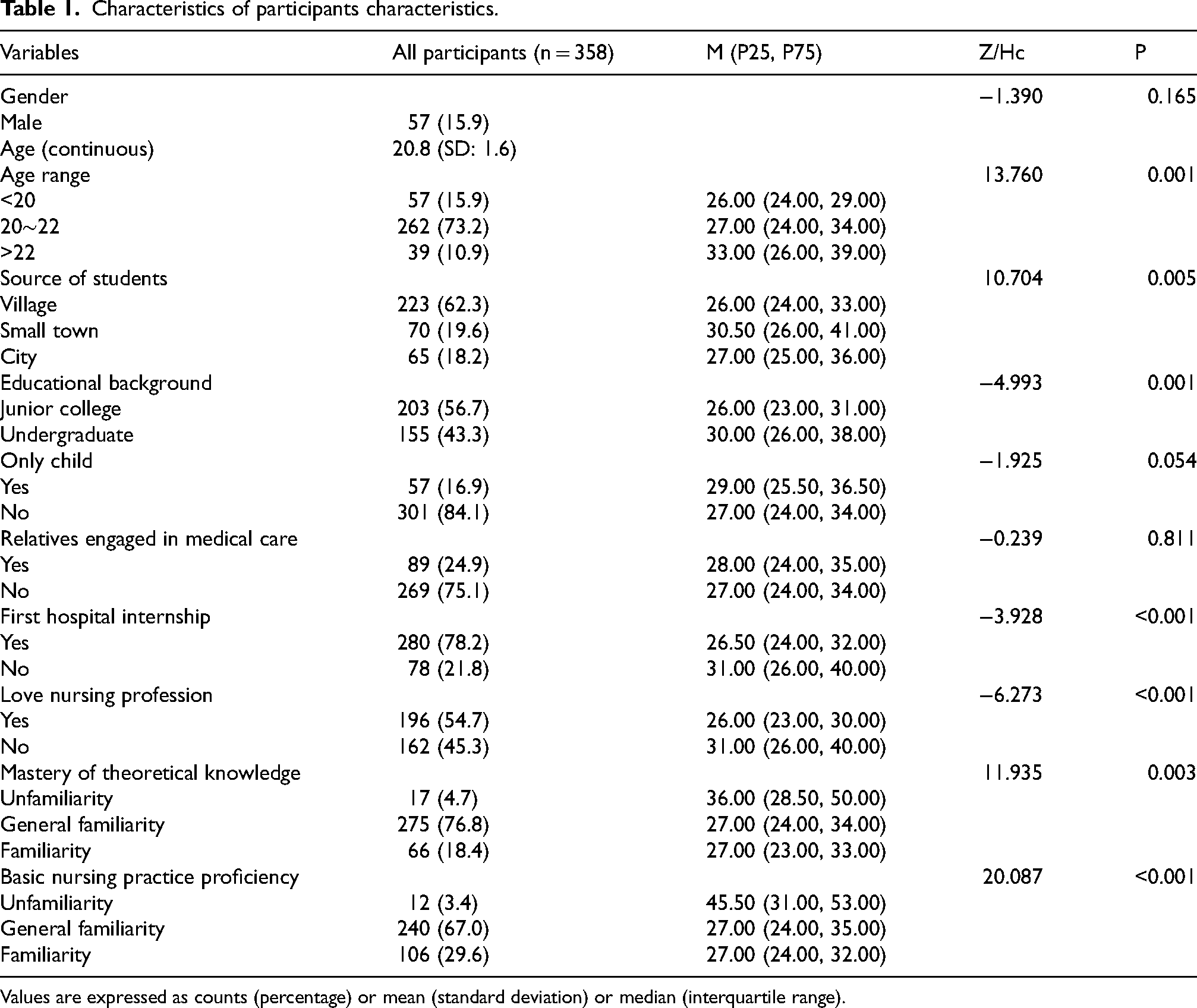
A total of 358 nursing practice students were investigated in this study, including 57 men (15.9%) and 301 women (84.1%), with an average age of 20.8 (SD: 1.6) years. Among the participants, 203 (56.7%) had a college degree or below, whereas 155 (43.3%) had a bachelor's degree or above. A total of 223 participants were from rural areas, 70 were from towns and 65 were from cities. There were 57 participants who were only children and 301 who were not. The remaining information is shown in Table 1.
Characteristics of participants characteristics.
Values are expressed as counts (percentage) or mean (standard deviation) or median (interquartile range).
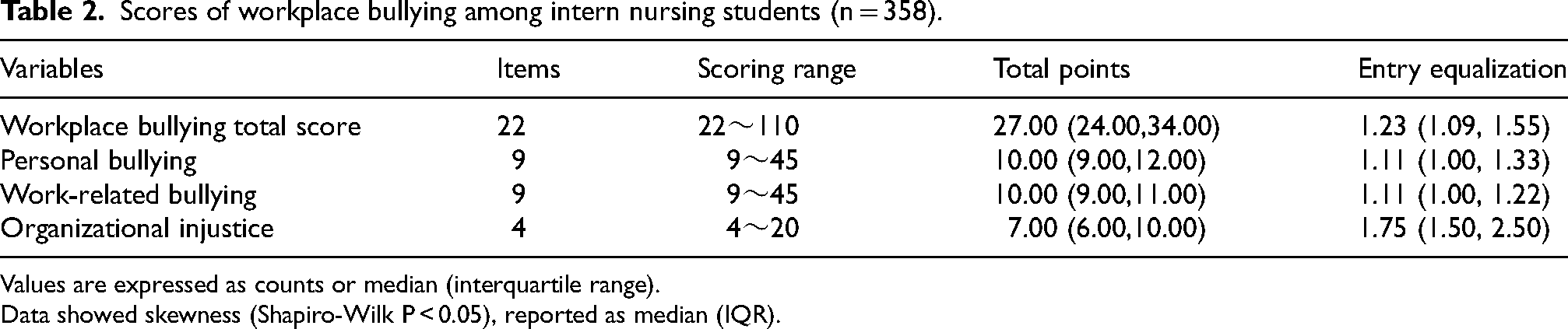
The workplace bullying score for trainee intern nursing students was 27.00 (24.00, 34.00) points, with the scores for each dimension shown in Table 2. This skewness was confirmed by the Kolmogorov-Smirnov test (Z = 2.17, P < 0.001), justifying the use of median (IQR) for reporting. In contrast, the positive coping dimension scores showed approximate normality (Shapiro-Wilk P = 0.086), allowing mean (SD) presentation. A total of 253 students (70.7%) had not experienced workplace bullying, whereas 105 students (29.3%) had. Among these, 78 students (21.8%) had frequently experienced workplace bullying, and 27 (7.5%) had experienced serious workplace bullying.
Scores of workplace bullying among intern nursing students (n = 358).
Values are expressed as counts or median (interquartile range).
Data showed skewness (Shapiro-Wilk P < 0.05), reported as median (IQR).
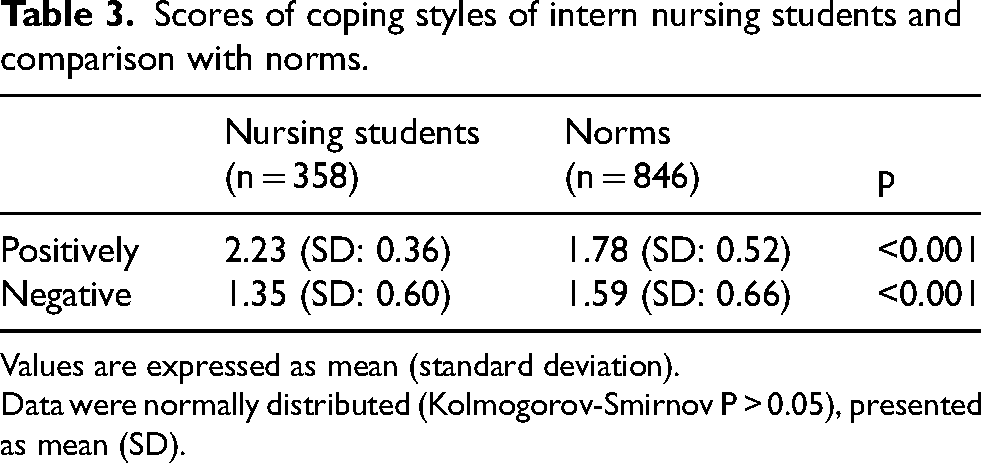
In the comparison between the coping style scores of the practice intern nursing students and the norm, the positive coping dimension score of the 358 practice intern nursing students was 25.55 (SD: 4.33) points, with all items scoring 2.23 (SD:0.36) points. The negative coping dimension score was 10.86 (SD:4.82), with all items scoring 1.35 (SD:0.60). Detailed information is presented in Table 3. Positive coping scores were normally distributed (Shapiro-Wilk P = 0.086), whereas negative coping scores showed slight skewness but were reported as mean (SD) due to approximate normality (Kolmogorov-Smirnov P = 0.062). The positive coping strategy score among intern nursing students was 2.23 (SD:0.36), significantly higher than the normative score of 1.78 (SD:0.52) (t = 18.306; p < 0.001), indicating that intern nursing students’ positive coping strategy scores were significantly above the norm.
Scores of coping styles of intern nursing students and comparison with norms.
Values are expressed as mean (standard deviation).
Data were normally distributed (Kolmogorov-Smirnov P > 0.05), presented as mean (SD).
Single-factor analysis of workplace bullying among intern nursing students
There were statistically significant differences in the incidence of workplace bullying among intern nursing students based on (1) age, educational background and nursing operation proficiency in different departments; (2) whether they were practicing for the first time; and (3) whether they liked the nursing major (all p < 0.05) (Table 1).
Correlation between workplace bullying and coping styles of intern nursing students
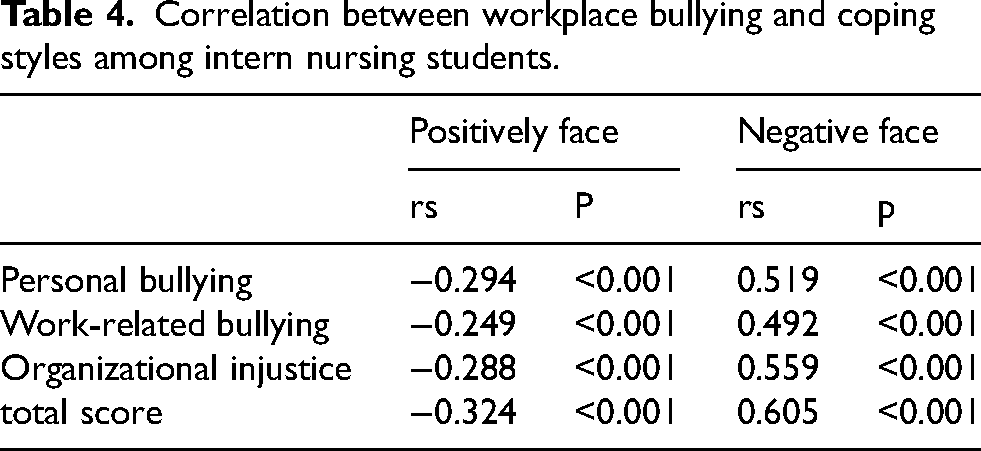
Spearman's correlation analysis showed that all dimensions and total scores of workplace bullying were negatively correlated with positive coping (rs = −0.249 to −0.324, p < 0.001) and positively correlated with negative coping (rs = 0.492–0.605, p < 0.001), as shown in Table 4. These correlation patterns align with predictions from transactional stress theory, wherein problem-focused coping strategies (positive coping) are theoretically expected to be associated with lower perceived stress or threat, while emotion-focused coping strategies (negative coping) are more commonly employed when stressors are appraised as uncontrollable and thus may co-occur with higher stress perceptions.
Correlation between workplace bullying and coping styles among intern nursing students.
Multivariable analysis of workplace bullying among intern nursing students
Seven variables with statistical significance in the univariable analysis (age, student origin, education level, first internship, liking the nursing major, nursing theoretical knowledge level and basic nursing operation proficiency), along with positive coping score and negative coping score, were included as independent variables in the binary logistic regression analysis. All variables showed VIF values <2.89 (mean VIF = 1.97), indicating no severe multicollinearity. The Hosmer-Lemeshow test showed good model fit (χ2 = 8.32, df = 8, P = 0.41), and variables were retained using backward stepwise regression with a removal criterion of P > 0.05.
The logistic regression model, validated for no multicollinearity (VIF <3) and good fit (Hosmer-Lemeshow P = 0.41), revealed significant associations. Variables were selected based on both statistical significance (univariate P < 0.1) and theoretical importance derived from transactional stress theory. Specifically, educational background was retained because higher education may shape career expectations and influence primary appraisal processes, attitude towards nursing was retained because professional commitment may influence both exposure to stressors and appraisal patterns, and coping styles were retained as they represent the core theoretical constructs of secondary appraisal and coping responses in the stress-coping model. 8 The results showed that having an education level of master's degree or above and adopting a negative coping style were associated with higher odds of workplace bullying. In contrast, liking the nursing profession and employing a positive coping style were associated with lower odds, as shown in Table 5.
Logistic regression analysis of influencing factors of workplace bullying among intern nursing students (n = 358).
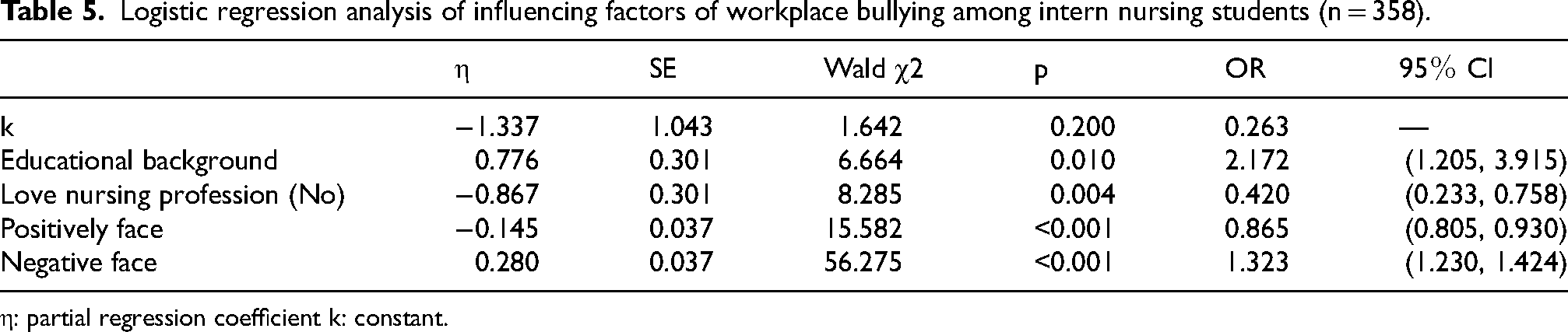
η: partial regression coefficient k: constant.
To examine model robustness, sensitivity analyses were conducted by comparing the final model with alternative specifications, including models with different variable combinations and different cutoff criteria for variable selection (P < 0.05 vs. P < 0.10). The direction and significance of key predictors (coping styles, educational background, attitude towards nursing) remained consistent across all model specifications, suggesting robust findings. Additionally, interaction terms were tested to explore whether the associations between coping styles and workplace bullying varied by educational background or attitude towards nursing. No significant interactions were detected (all P > 0.10), indicating that the associations between coping styles and workplace bullying were relatively consistent across different subgroups of intern nursing students.
Discussion
This study highlights the prevalence of workplace bullying among intern nursing students and demonstrates that coping styles substantially influence the risk of experiencing bullying. The findings align with the theoretical framework of Lazarus and Folkman's transactional stress theory,8,18 which posited that stress outcomes depend on both the nature of stressors and individuals’ appraisal and coping processes. Consistent with this framework, negative coping (characterized by avoidance, self-blame, and withdrawal) was associated with higher odds of workplace bullying (β = 0.280), while positive coping (characterized by active problem-solving and seeking support) was associated with lower odds (β = −0.145). The NAQ-R's organizational injustice subscale (median = 7.00) showed the strongest correlation with negative coping (rs = 0.559, P < 0.001), which aligns with theoretical predictions that uncontrollable stressors (such as systemic organizational unfairness) are more likely to trigger emotion-focused coping responses, as individuals appraise these situations as beyond their personal control during secondary appraisal processes. 8 These findings parallel those reported by Sun Aihua et al., 19 which emphasizes the role of coping mechanisms in mitigating the psychological impact of bullying in clinical settings.
The high proportion of women participants (84.1%) in this study reflects the global gender imbalance in the nursing profession, where women constitute the majority of the workforce. This pattern aligns with the demographics of the broader nursing intern population. 20 Similarly, the overrepresentation of participants from rural areas (62.3%) mirrors the demographic composition of intern nursing students in China, shaped by recruitment policies aimed at enhancing healthcare access in rural region.
This study revealed a lower total score and incidence of workplace bullying among intern nursing students compared with previous reports.21,22 This difference may be attributed to the characteristics of the study site, an affiliated teaching hospital with dedicated psychological counseling resources for intern nursing students, which have been shown to positively impact their mental well-being. 23 Among the dimensions of workplace bullying, job-related bullying and individual-related bullying scored lower, whereas organizational injustice scored higher. This discrepancy may be attributed to some clinical teachers being preoccupied or having insufficient teaching quality, resulting in inadequate theoretical and practical guidance for intern nursing students. Furthermore, as students, intern nursing students are not authorized to perform invasive operations independently and are often assigned basic nursing tasks within the department. These tasks typically involve low-skill, repetitive and monotonous service work that lacks a sense of accomplishment. 24 This may also be one of the main factors contributing to the perception of organizational injustice. To address these issues, it is recommended that nursing managers take measures to improve the clinical working environment for intern nursing students. This should include standardizing teaching behaviors among clinical teachers and providing training on workplace bullying prevention and response to reduce instances of workplace bullying.
A higher education level may contribute to increased career expectations, which could explain the elevated perception of bullying among intern nursing students with advanced degrees.25,26 From the perspective of transactional stress theory, intern nursing students with bachelor's degrees or higher may engage in different primary appraisal processes compared to those with lower educational qualifications. Specifically, they may enter clinical practice with elevated expectations regarding professional autonomy, intellectual challenge, and recognition, leading them to appraise routine or hierarchical aspects of the clinical environment as more threatening or unjust. The surveyed hospitals provided equal teaching and practice resources for intern nursing students across different education levels, with no substantial differences in practice conditions or content. However, intern nursing students with a bachelor's degree or higher face additional training goals set by universities and the nursing industry. Despite having the same educational level as clinical medical interns, they encounter challenges in assimilating nursing work content specific to their speciality and in coping with the relatively low social status of nursing staff during the clinical practice stage. 27 These circumstances create a psychological gap for highly educated intern nursing students, increasing the likelihood of perceiving themselves as bullied. 28
The study results also indicate that a positive attitude towards the nursing major is associated with lower odds of workplace bullying among intern nursing students, which aligns with previous research findings.29,30 From a theoretical perspective, this association may reflect differential appraisal processes. Intern nursing students who have a genuine interest in their major demonstrate a higher level of recognition and actively engage in learning during internships, which facilitates their adjustment to clinical life. 31 They exhibit a proactive attitude, diligent thinking and consistent reflection on their experiences, making earnest efforts to complete clinical practice despite the demanding nature of clinical work. 32 According to transactional stress theory, these students may be more likely to engage in challenge appraisals rather than threat appraisals when encountering difficult clinical situations, framing such experiences as opportunities for professional growth rather than hostile encounters. On the other hand, stress can induce negative emotions, and perceiving stress has been shown to predict anxiety levels. 33 However, the cross-sectional design of this study precludes determination of temporal or causal relationships; it remains possible that experiencing less bullying promotes more positive professional attitudes, or that unmeasured third variables (such as personality traits or social support) influence both attitudes and bullying experiences.
The findings reveal associations between workplace bullying and coping styles among intern nursing students. Consistent with transactional stress theory and previous research,19,34,35 the data show that negative coping strategies are associated with higher odds of workplace bullying, while positive coping strategies are associated with lower odds. However, the cross-sectional nature of this study necessitates careful interpretation. The observed associations may reflect multiple potential pathways. First, individuals with tendencies toward negative coping (avoidance, self-blame) may engage in primary appraisal processes that frame ambiguous workplace interactions as threatening, thereby increasing their perception or reporting of bullying behaviors. Second, experiencing workplace bullying may lead individuals to adopt negative coping strategies, particularly when the bullying is perceived as uncontrollable (such as organizational injustice), prompting emotion-focused responses as predicted by transactional stress theory. Third, the relationship may be bidirectional and mutually reinforcing, with initial coping tendencies shaping bullying experiences, which in turn influence subsequent coping patterns. Differences in coping tendencies among intern nursing students are related to variations in clinical teaching, interpersonal communication and stress adjustment. When faced with workplace bullying, intern nursing students with strong negative coping tendencies often resort to avoidance, self-blame and inaction as coping mechanisms. 34 Consequently, their enthusiasm for learning and work diminishes substantially, leading to negative emotions and psychological distress. 35 Future longitudinal research is essential to disentangle these temporal dynamics and establish directionality.
Practical implications
The findings of this study provide insights into the relationship between workplace bullying and coping strategies among intern nursing students. Based on the observed associations and grounded in transactional stress theory, several practical implications can be considered, though these should be interpreted cautiously given the study's cross-sectional design and single-center sample.
First, the finding that negative coping strategies (avoidance, self-blame, withdrawal) are associated with higher odds of workplace bullying (OR = 1.323) suggests that interventions aimed at enhancing adaptive coping skills may be beneficial. Healthcare institutions could implement training programs to educate intern nursing students about recognizing workplace bullying and developing effective coping responses. These programs could incorporate scenario-based trainings tailored to China's hierarchical culture, such as role-playing exercises demonstrating how to respond assertively yet respectfully to bullying from senior nurses, and communication skills workshops focusing on constructive dialogue while maintaining appropriate deference to clinical hierarchy. Such training aligns with transactional stress theory's emphasis on secondary appraisal and coping resource development. However, the effectiveness of these interventions requires empirical validation through controlled trials, as the current study cannot establish whether enhancing positive coping skills would reduce bullying experiences or perceptions.
Second, the strong association between organizational injustice and negative coping (rs = 0.559) highlights the importance of addressing systemic factors. Hospitals and clinical settings should consider establishing clear anti-bullying policies and reporting mechanisms that specifically address organizational-level issues such as unfair task allocation, inadequate supervision, and lack of recognition for intern nursing students. Implementation of accessible reporting systems, such as WeChat-based anonymous platforms commonly used in China, may enhance accountability and provide intern nursing students with channels to address grievances. However, policy implementation alone may be insufficient; the current findings suggest that when organizational injustice is appraised as beyond personal control, intern nursing students resort to emotion-focused coping, indicating that structural changes must be accompanied by empowerment strategies that increase interns’ sense of control and agency.
Third, the association between higher educational background and increased odds of workplace bullying (OR = 2.172) suggests that intern nursing students with bachelor's degrees or above may require tailored support. From a transactional stress perspective, these students may benefit from interventions that help align their expectations with clinical realities, facilitate realistic appraisal of the internship experience, and provide opportunities for professional growth that match their educational qualifications. Mentorship programs, such as pairing higher-educated interns with senior nurses or clinical educators who can provide intellectual challenge and professional guidance, may help bridge the gap between educational preparation and clinical practice. However, further research is needed to determine whether such targeted interventions would effectively reduce bullying experiences among this subgroup.
Fourth, the finding that positive attitudes towards nursing are associated with lower odds of bullying (OR = 0.420) suggests potential value in fostering professional commitment and interest during nursing education. Nursing schools might consider integrating content that enhances students’ understanding of and appreciation for the nursing profession prior to clinical internships, potentially influencing their appraisal processes when encountering clinical challenges. Workplace bullying awareness and coping skills training could be incorporated into Clinical Practice Introduction courses, with scenario-based learning and assessment of coping competencies as part of internship preparation.
Finally, providing access to counseling services, peer support groups and mentorship programs can build resilience among intern nursing students. Such support systems may serve multiple functions within the transactional stress framework: they provide coping resources (enhancing secondary appraisal), offer alternative perspectives on stressful situations (influencing primary appraisal), and create opportunities for learning adaptive coping strategies through observation and guidance.
It is critical to emphasize that these practical implications are derived from cross-sectional associations and should be regarded as hypotheses requiring empirical testing rather than evidence-based recommendations. The observed associations between coping styles and workplace bullying may reflect complex, bidirectional relationships that cannot be fully understood through the current study design. Intervention studies using experimental or quasi-experimental designs are essential to evaluate whether modifying coping strategies, organizational policies, or educational approaches can effectively reduce workplace bullying among intern nursing students. Additionally, the single-center nature of this study limits generalizability; implementations in diverse healthcare settings with varying organizational cultures, resources, and regional characteristics may yield different outcomes. Rigorous evaluation research is needed to establish the effectiveness, feasibility, and cultural appropriateness of these suggested interventions across different contexts.
Limitations
This study's cross-sectional design presents certain limitations that should be considered when interpreting the results. Although this approach provides a snapshot of workplace bullying and coping styles among intern nursing students at a specific point in time, it does not allow for the examination of changes over time or the establishment of causal relationships. The observed associations between coping styles and workplace bullying may reflect coping strategies influencing bullying experiences, bullying experiences shaping coping responses, or bidirectional relationships, but temporal sequencing cannot be determined from cross-sectional data. Additionally, the reliance on self-reported data may introduce response bias, as participants might underreport negative experiences or overreport positive coping strategies due to social desirability.
The study's findings are also limited to a single hospital in Hunan Province, which may not be representative of other regions or countries with different cultural and institutional contexts. The study hospital is an affiliated teaching hospital with established psychological support resources and systematic intern education programs, which may have influenced both bullying prevalence and the effectiveness of different coping strategies. Findings may not generalize to community hospitals, non-teaching hospitals, or institutions in different provinces with varying organizational cultures and resources. Convenience sampling may result in a higher proportion of female intern nursing students with higher education in the sample, which may affect the generalisability of the results. Future studies may adopt multi-centre stratified sampling, covering hospitals of different levels and regions, to enhance the external validity of the results. Furthermore, the lack of gender diversity in the sample may limit the generalizability of the results. Future studies should aim to explore gender differences to better understand how workplace bullying impacts male and female intern nursing students differently.
Although this study was grounded in transactional stress theory from the research design stage, with the theoretical framework informing instrument selection and analytical approach, the operationalization of theoretical constructs remained constrained by available validated instruments. The Simplified Coping Style Questionnaire measures general coping tendencies rather than situation-specific coping responses to workplace bullying, which may not fully capture the dynamic appraisal and coping processes central to transactional stress theory. Future research could employ experience sampling methods or daily diary approaches to capture real-time appraisal and coping processes in response to specific bullying incidents, providing more nuanced insights into the stress-coping transaction.
Additionally, while the logistic regression model was strengthened through multicollinearity assessment, model fit evaluation, and exploration of interaction effects, the interpretation of findings remains correlational rather than causal. The model examined whether coping styles are associated with workplace bullying while controlling for demographic and professional factors, but cannot establish whether coping strategies causally influence bullying experiences. Residual confounding from unmeasured variables (such as personality traits, social support quality, departmental climate, or prior trauma history) may partially or fully account for the observed associations. Future research should incorporate more comprehensive assessment of potential confounding factors and employ designs that enable causal inference.
To address these limitations, future research could employ longitudinal designs to track changes over time, expand the sample to include multiple hospitals or regions and incorporate qualitative methods to gain a deeper understanding of the lived experiences of intern nursing students facing workplace bullying. Intervention studies using randomized controlled trial designs are particularly needed to test whether coping skills training, organizational policy changes, or educational interventions can effectively reduce workplace bullying or mitigate its negative impacts.
Conclusion
This study found a high incidence of workplace bullying among intern nursing students, with the main associated factors including educational background, relationship with the nursing profession and coping style. The findings align with predictions from Lazarus and Folkman's transactional stress theory, demonstrating that negative emotion-focused coping strategies are associated with higher odds of workplace bullying, while positive problem-focused coping strategies are associated with lower odds. The strong association between organizational injustice and negative coping supports theoretical predictions that uncontrollable stressors elicit emotion-focused responses. However, the cross-sectional design precludes causal inference, and the single-center sample limits generalizability. These findings should be considered preliminary and hypothesis-generating rather than definitive.
Nursing educators and managers should pay attention to workplace bullying among intern nursing students, identify high-risk groups early and explore effective preventive measures to reduce the incidence of bullying in the workplace. Future research employing longitudinal designs, multi-center sampling, and intervention trials is essential to establish temporal relationships, examine generalizability across diverse contexts, and evaluate the effectiveness of theory-based interventions aimed at enhancing coping skills and reducing workplace bullying.
Supplemental Material
sj-docx-1-wor-10.1177_10519815261425365 - Supplemental material for The relationship between workplace bullying and ways of coping among intern nursing students: A cross-sectional study
Supplemental material, sj-docx-1-wor-10.1177_10519815261425365 for The relationship between workplace bullying and ways of coping among intern nursing students: A cross-sectional study by Li-Fen Yang, Ai-Qun Li, Yuan Chen, Ying Wang, Xia-Hong Hu, Yi-Min Cai and Huan Wan in WORK
Footnotes
Acknowledgments
The authors acknowledge the professional English editing assistance provided by a native English-speaking editor to enhance the language clarity and fluency of this manuscript.
Ethics approval and consent to participate
This study was conducted in accordance with the Declaration of Helsinki and approved by the Research Ethics Committee of Hunan Provincial People's Hospital, and informed consent was obtained from all participants. All methods were carried out in accordance with relevant guidelines and regulations.
Consent for publication
Not applicable.
Authors’ contributions
All authors made a significant contribution to the work reported, whether that is in the conception, study design, execution, acquisition of data, analysis and interpretation, or in all these areas; took part in drafting, revising or critically reviewing the article; gave final approval of the version to be published; have agreed on the journal to which the article has been submitted; and agree to be accountable for all aspects of the work.
Funding
The authors received no financial support for the research, authorship, and/or publication of this article.
Declaration of conflicting interests
The authors declared no potential conflicts of interest with respect to the research, authorship, and/or publication of this article.
Availability of data and materials
Data will be made available on request.
Supplemental material
Supplemental material for this article is available online.
References
Supplementary Material
Please find the following supplemental material available below.
For Open Access articles published under a Creative Commons License, all supplemental material carries the same license as the article it is associated with.
For non-Open Access articles published, all supplemental material carries a non-exclusive license, and permission requests for re-use of supplemental material or any part of supplemental material shall be sent directly to the copyright owner as specified in the copyright notice associated with the article.
