



Abstract
Background
The construction industry internationally and in Taiwan experiences high rates of injury, and fatalities. Worker behaviour is frequently associated with construction site accidents. The paper examines evidence on the effectiveness of a safety culture focus in improving safety behaviour on Taiwanese construction sites.
Objective
Taking a public health approach, the research systematically evaluates safety culture focused initiatives to enhance construction site safety in Taiwan, with a particular focus on SMEs, given their overrepresentation in accident statistics.
Methods
Information from a systematic review of safety culture research in construction published between 2014 and 2024, combined with the Grading of Recommendations Assessment, Development and Evaluation (GRADE) Evidence to Decision (EtD) process, was used to assess the evidence supporting safety culture improvements. The combination of methods provides a systematic framework with a novel perspective on safety culture initiatives to improve safety behaviour in construction.
Results
Evidence from 99 articles shows that emphasising safety climate can improve construction workers’ safety behaviour. Nonetheless, key questions around resourcing, acceptability, and feasibility remain, particularly for small and medium enterprises. Benefits may include reduced government compensation costs and better health equity in the industry.
Conclusion
This review using EtD offers a new perspective on international safety-climate research and highlights key gaps in construction safety. The findings suggest that EtD supports comprehensive evidence assessment for practical and policy use. Limited data in many areas points to the need for more holistic, public health-focused research to help achieve construction safety policy goals in Taiwan.
Keywords
Introduction
The construction industry, globally recognised as one of the most hazardous sectors, leading to economic losses exceeding $1.2 trillion USD annually. 1 With worksite accidents frequently resulting in severe injury and death, construction is one of the world's most dangerous industries. Despite constituting only 7% of the global labour force, construction workers account for 30–40% of all workplace fatalities. 2 Like other public health issues, such as road traffic injuries, construction accidents impose long-term health, social, and economic costs that extend beyond the workplace. The continued trend toward larger and more complex construction projects further underscores the critical importance of improved safety management for efficient project delivery. 3 Safety on construction sites is closely related to safety management systems and the safety behaviours of workers.4,5 Unsafe worker behaviour remains a primary contributor to these incidents, with estimates indicating that up to 98% of all accidents originate from some type of unsafe behaviour.6,7 Modern safety science also highlights the critical role of organisational and systemic factors behind workers’ unsafe acts. 8 These antecedents underscore the necessity for evidence-informed safety strategies that address both individual worker safety behaviours and broader organisational influences.
In Taiwan, the construction continues to grapple with persistently high rates of occupational injuries and deaths, a problem that is particularly acute among small to medium-sized enterprises (SMEs) due to over-representation in accident statistics.9,10 A substantial gap and barrier to improving construction safety in Taiwan stems from limited research that brings together assessment, resourcing, and implementation initiatives tailored to the local sector's unique structural and cultural characteristics. This research assesses the available evidence for adopting a safety culture focus to construction safety in Taiwan. Where safety culture is defined as the set of shared values, beliefs, attitudes, perceptions, competencies, and behavioural patterns among owners, managers, supervisors, contractors, and workers that determines the priority given to safety. The absence of standardised, evidence-based frameworks for holistically evaluating safety culture further hampers efforts to reduce accidents and improve overall site safety performance. The objective of this literature review is to investigate the adoption of the public health Evidence to Decision (EtD) research translation methodology and to assess the evidence for safety culture based safety initiatives in the construction industry.
Construction site safety is vital not only for safeguarding workers’ well-being but also for the efficient execution of projects. Researchers have long pursued strategies to measure and improve safety behaviour, employing tools such as safety management systems, regulatory interventions, wearable technologies, and behaviour modification programs.5,11,12 Among these, the systematic enhancement of safety culture is widely accepted as a means of achieving better safety performance through positive safety behaviours across various high-risk industries, including construction. Within this context, the concept of safety climate has gained traction as an operational construct that captures organisational factors influencing workers’ safety practices and attitudes at a specific moment in time.13,14 However, such research fails to consider potential undesirable outcomes and limitations of a safety climate focus on construction safety.
Safety Culture, being a deep organisational driver of sustained safety performance, is slow to change and challenging to measure, making safety climate a more practical measure of safety. The concept of safety climate is well established in the construction industry and has become a specialised area of dedicated research. 15 Zohar et al., 16 first proposed the concept of safety climate, defined as “a unified set of cognitions regarding the safety aspects of the organisation”. Since then, many authors have sought to refine and enhance the definition of safety climate.17,18 Although there is no current definition consensus, key commonalities include: “(a) a psychological phenomenon with typically well-defined perceptions of the status of site safety at a given point of time; (b) Safety Climate is focused on elusive issues such as conditional and environmental factors; and (c) represents, a “snapshot” of safety culture, as such by its nature is somewhat unstable and subject to change”. 19
The factors that influence safety climate and safety behaviour are complex and are influenced by unique cultural factors. 20 Many government safety regulators worldwide have promoted the use of safety climate measurement to influence safety behaviour, with research proposing several different measurement tools.21,22 For example, the United Kingdom Health and Safety Executive developed the Safety Climate Tool (SCT), a validated survey instrument used across industries to measure safety climate and support ISO 45001 accreditation. Despite international uptake of safety climate assessments, limited research examines their application and effectiveness in Taiwan with its unique cultural norms, regulatory framework, and enterprise structures.
The objective of this research is to systematically evaluate safety climate as a means of enhancing construction site safety in Taiwan, with a particular focus on SMEs, given their overrepresentation in accident statistics. The research assesses the novel application of the Grading of Recommendations Assessment, Development and Evaluation (GRADE) EtD framework to systematically assess the benefits, challenges, and contextual considerations relevant to influencing safety climate. The adoption of a public health approach using GRADE EtD provides a highly structured review of available evidence. The findings are intended to provide a model of practice to inform future research, policy design, and practical initiatives to reduce workplace harm in Taiwan's construction sector.
Methods
This study followed a two-stage approach to evaluate safety climate as an intervention for improving safety behaviour in Taiwan's construction industry. Following Zhang et al. 23 the first stage involved a systematic literature review to identify and synthesize current evidence on safety climate in construction. The second stage adopts the EtD framework to assess the relevance, effectiveness, and feasibility of implementing safety climate-focused initiatives. The novel application EtD in this context reframes construction safety interventions as population-level health strategies, enabling systematic evaluation of benefits, harms, equity, and feasibility. The PICO (problem, intervention, comparison, and outcome) framework for the review is as follows: the problem is construction safety; the intervention is safety climate initiatives; the comparison is current practice; and the outcome is improved safety behaviour.
Systematic literature review
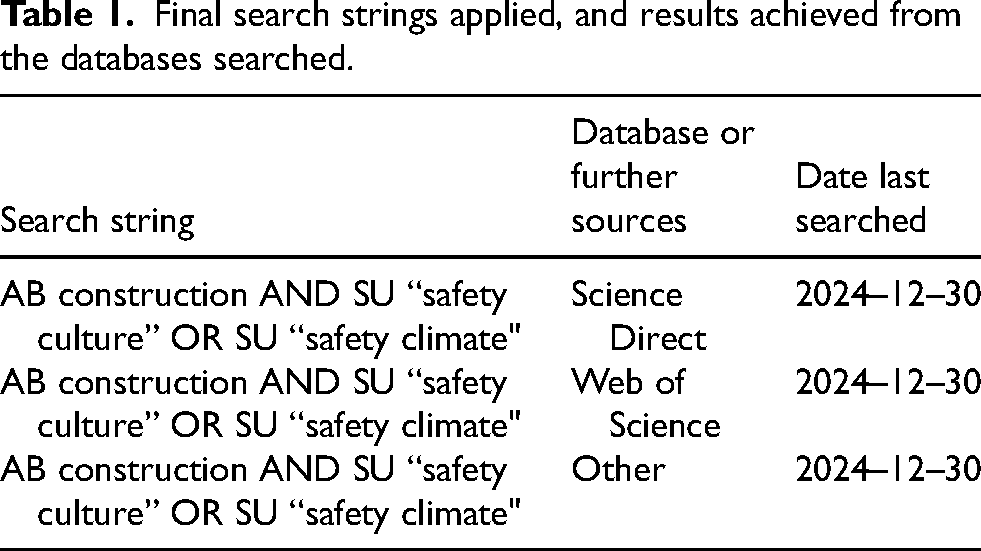
The systematic review followed the 2020 PRISMA statement by Page et al., 24 while using the online CADIMA web tool to ensure a transparent and replicable process. Before commencing the review, an initial search of Web of Science and Google Scholar was conducted to identify any published reviews with a comparable scope published between 2014 and 2024. After conducting trials with various search term combinations, the scope of the search was narrowed to include ‘Construction’ combined with either ‘Safety Climate’ or ‘Safety Culture’. This information led to the final search of ScienceDirect and Web of Science databases and supplementary grey literature sources. These research-based sources were selected for being peer-reviewed and indexed; grey literature included relevant peer-reviewed conference papers in the selected databases. Table 1 summarises the final search string and strategy.
Final search strings applied, and results achieved from the databases searched.
Each article was first screened for keywords in the title and abstract, followed by a full-text review for relevance. Any articles without full text, unavailable, or not in English were excluded from the eligibility assessment. As shown in the PRISMA flow diagram (Figure. 1), after removing duplicates and screening abstracts, the literature search identified 99 full-text studies on safety climate and/or safety culture in the construction industry. The literature included research from Taiwan and international sources. Risk of bias was managed through a clearly defined review protocol, comprehensive and reproducible search strategies across multiple databases, and explicit inclusion and exclusion criteria applied independently by the authors.

Literature review process and results.
The complete list of articles with associated publication details and abstracts is provided in the accompanying Supplementary Material.
Construction worker health and safety are intertwined with public health. 25 The literature review utilised an evidence-informed methodology to establish a framework for evaluating safety culture within the Taiwanese construction sector. By incorporating strategies from allied fields such as public health, policy development, and safety management, the review applied the GRADE EtD approach to systematically assess and synthesise diverse research evidence. This structured process facilitated the integration of findings, supporting transparent and evidence-based decision-making and recommendations. 26
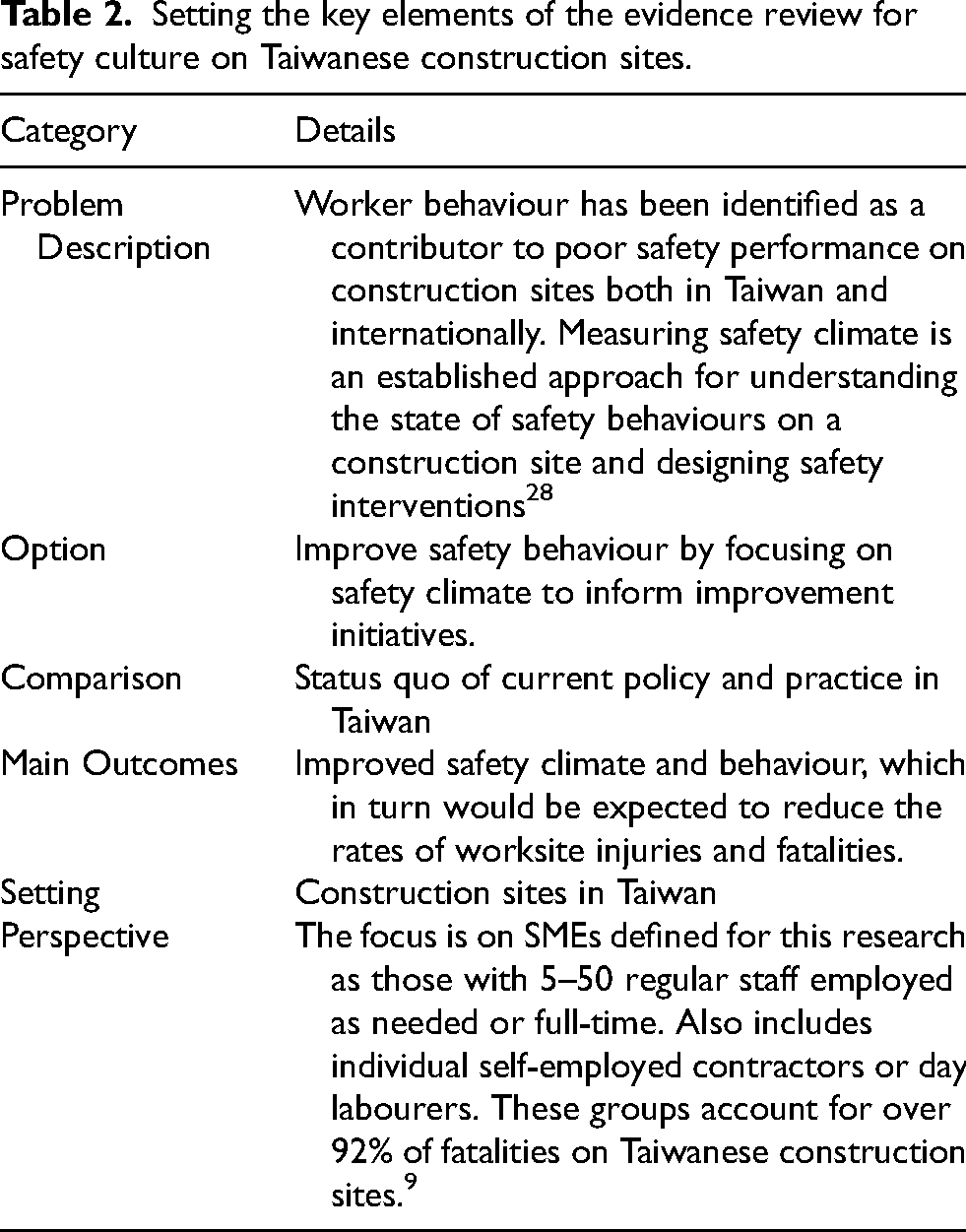
The public health approach with the EtD framework offers a structured, transparent framework for informing policy evaluation by using the best available research evidence. The EtD framework for public health can also be utilised to disseminate recommendations and empower decision-makers to adopt and adapt them, or to make informed decisions. 27 This research utilised the online interactive EtD tool (iEtD) with the health system and public health decision template (https://ietd.epistemonikos.org/#/about/information). The information collected through the literature review was used to address the elements identified in Table 2.
Setting the key elements of the evidence review for safety culture on Taiwanese construction sites.
Results and discussion
Evidence to decision results and discussion
Problem prioritisation
This step of the assessment asks whether this problem is a priority, which, in this case, refers to whether the Taiwanese construction industry or the Taiwanese government prioritises improved safety outcomes
For the ten years from 2005 to 2015, there were a total of 1219 deaths on Taiwanese construction sites. 29 A review of the incident data revealed that 74% of the accidents were at least partially caused by unsafe worker actions or behaviours. Together, small enterprises (<10 workers, 66% of deaths) and small to medium enterprises (10-29 workers, 29% of deaths) account for 92% of all fatalities on Taiwanese construction sites. 9 Thus, targeting SMEs for worker safety interventions will have the most significant impact on construction worker safety. SMEs undervalue safety, with limited initiative to drive improvement. 30 Therefore, to improve safety outcomes, SMEs must prioritise safety, including training staff, hiring qualified personnel and implementing effective safety procedures.10–31
Overall, the review shows that benefits can be made to worker health and safety, driving the prioritisation of safety policy. However, there is insufficient evidence to understand the priority from either the enterprises’ or the workers’ perspective, but it may be undervalued. In fact, government data reveals a paradoxical trend: a decrease in reported incidents without a corresponding decline in fatalities. The reason for this trend in accident rates is unclear and requires further research.
Desirable effects
This question examines the evidence of desirable effects on worker safety achieved through well-established safety climate initiatives. Due to the highly variable nature of the statistical analyses used across the literature, a qualitative approach was adopted to assess the substantive significance of the desired effects. The effects were considered desirable when the literature reviewed showed a statistically significant association or increase in safety climate factors related to safety behaviour.
Research consistently maintains a crucial link between safety climate and behaviours on construction sites.3,32,33 Supporting the link with behaviour, Zahor et al. 34 confirmed the significant positive impact of safety climate on safety compliance and safety participation, with a decline in the number of self-reported accidents/injuries. Consistent with international literature, Chen et al., 31 found a link between safety climate and behaviour on Taiwanese construction sites. Results show that the safety climate level positively impacts safety behaviour and overall safety perception.
In terms of the link between injuries, Golubovich et al., 35 found a reduced rate of musculoskeletal injuries on worksites with a favourable safety climate. Lyu et al., 36 identified that ethnic and migrant construction workers are more likely to be injured at work than locals. The study showed that a good safety climate leads to safer behaviour for ethnic and migrant construction workers. Historically, migrant workers in Taiwan's construction industry have needed more safety and health training. 37 Man et al.,38,39 examined how optimism affects risk-taking in construction workers, finding that optimism about safety in construction work makes workers more likely to take risks.
Al-Bayati 32 linked safety climate, with actions by upper management and safety personnel also affecting safety behaviour and motivation. Despite the potential for management to support improved safety climate, management approaches do not always support positive safety outcomes. 40 The relationship between the implemented management strategies and safety performance is complex. If not carefully managed, communication can harm safety performance, whereas strategies in labor management, supervision, planning, and construction management improve safety outcomes. However, safety investments can be linked to accident prevention, especially for projects with a high hazard level and a strong safety climate. 41
The research reviewed consistently reports statistically significant associations between strong safety climates and increased safety compliance and participation, as well as reduced incident rates.33,34,42 Additional benefits include reductions in musculoskeletal injuries 35 and increased awareness among ethnic and migrant workers, who are often at elevated risk. 36 Management involvement in safety initiatives also improves performance; however, evidence suggests that poor communication and leadership can undermine these outcomes. 40 The key limitation is that, while positive effects are established, the influence on SMEs cannot be readily quantified from the literature.
Undesirable effects
With the desirable effects established, it is essential to establish the undesirable effects associated with a safety climate focus on construction sites. The research reviewed primarily focuses on the desirable outcomes of improved safety climate, with scant attention to its undesirable effects. However, it could be posited that there would be a link with perceptions of barriers, such as costs associated with ‘non-productive’ time spent on safety programs and additional resources required to support safety. Emphasising poor safety climate as the leading cause of construction incidents can foster a blame culture that targets individuals over systemic issues. 43 Relying on behaviour-based measures to offset hazards rather than eliminate them can be problematic. Prioritising safety climate may also provide false assurance and hinder ongoing efforts to improve technology, site conditions, and construction methods. 44
Information is insufficient to make an evidence-informed decision on the precise nature and magnitude of potential and actual undesirable effects, or on how to effectively manage them. The skewed focus on desirable effects in the literature makes it difficult to make a definitive judgment and presents a significant gap in the existing body of literature on construction safety. The evidence reviewed indicates that overemphasis on behavioural metrics may inadvertently foster blame-oriented cultures, detracting from systemic hazard mitigation.43,44 Additional concerns that may arise include increased administrative burden, misallocation of resources, and the risk of complacency if perceived improvements are not effectively managed for undesirable effects.
Certainty of the effects evidence
The reviewed body of research evidence provides high confidence in the beneficial impacts of safety climate improvements on worker behaviour and site-level safety outcomes. However, the absence of research on potential harms, cost structures, and implementation feasibility limits the overall confidence in generalizability and transferability to the Taiwanese SME context. Research on safety climate focuses on its beneficial effects, but there is limited information on the corresponding undesirable effects. Further research to develop a balanced understanding of the evidence is crucial for informing effective policies to enhance construction safety in Taiwan. Overall, the available information is too limited to make a fully informed and balanced decision regarding the certainty of the effects of undesirable effects on safety behaviours.
Values and stakeholder perspectives
This section examines important uncertainties or variability in how much key stakeholders value the outcomes of a safety climate approach. The body of research reviewed supports the importance of safety climate/culture in improving safety internationally. From the perspective of the Taiwan government, the current policy objectives support and value improvement in workplace safety. The Ministry of Labor
45
set out the following policy objectives: “The ministry takes “secure work”, “safe workplace”, and “safe labour” as its governance goals, and strives to create a smoother employment network, improve the quality of labour, and promote active personnel exchanges, while working towards the construction of a full range of labour protection policies and efforts to provide workers in the workplace with reasonable labour rights protections, a safe and secure work environment, and stable labour relations and a stable labour market, while enhancing the work satisfaction of workers and the implementation of work-life balance.”
From the six target policy objectives and priorities of the Ministry of Labor for 2022: “5. Complete the occupational accident insurance system and strengthen the workplace safety and health protection mechanism:
Improve the occupational accident insurance system, continuously review relevant regulations, and improve the protection of occupational accident workers and their families.
Strengthen occupational safety and health management and improve the efficiency of labour supervision and inspection.
Strengthen occupational health and labour health services.
Create a safe, healthy and friendly working environment.
Improve occupational injury prevention and reconstruction resources.”
While the Taiwan government's position as a critical stakeholder on the value of labourer safety is clear, a gap exists in quantifying the value it places on improving safety behaviour from the perspectives of SMEs and individual workers. While national labour policy prioritises safety, there is a gap in supporting research on how workers and employers in Taiwan value or perceive improvements in the safety climate. A range of factors, including education, employment style, and project duration, can influence awareness and engagement on matters of worker safety. 31
The review indicates that stakeholder value for safety culture initiatives on construction sites is crucial, particularly in the presence of uncertainty or variability. Internationally, public support for workplace safety initiatives is generally high. 46 The same assumption is applied to Taiwan from a policy perspective. However, empirical validation of worker and enterprise perceptions across all organisational sizes is needed, representing an important area for future investigation.
Balance of effects
Upon reviewing the balance of evidence on desirable and undesirable effects, this section asks whether the evidence favours the safety climate option or the maintain current practice comparison
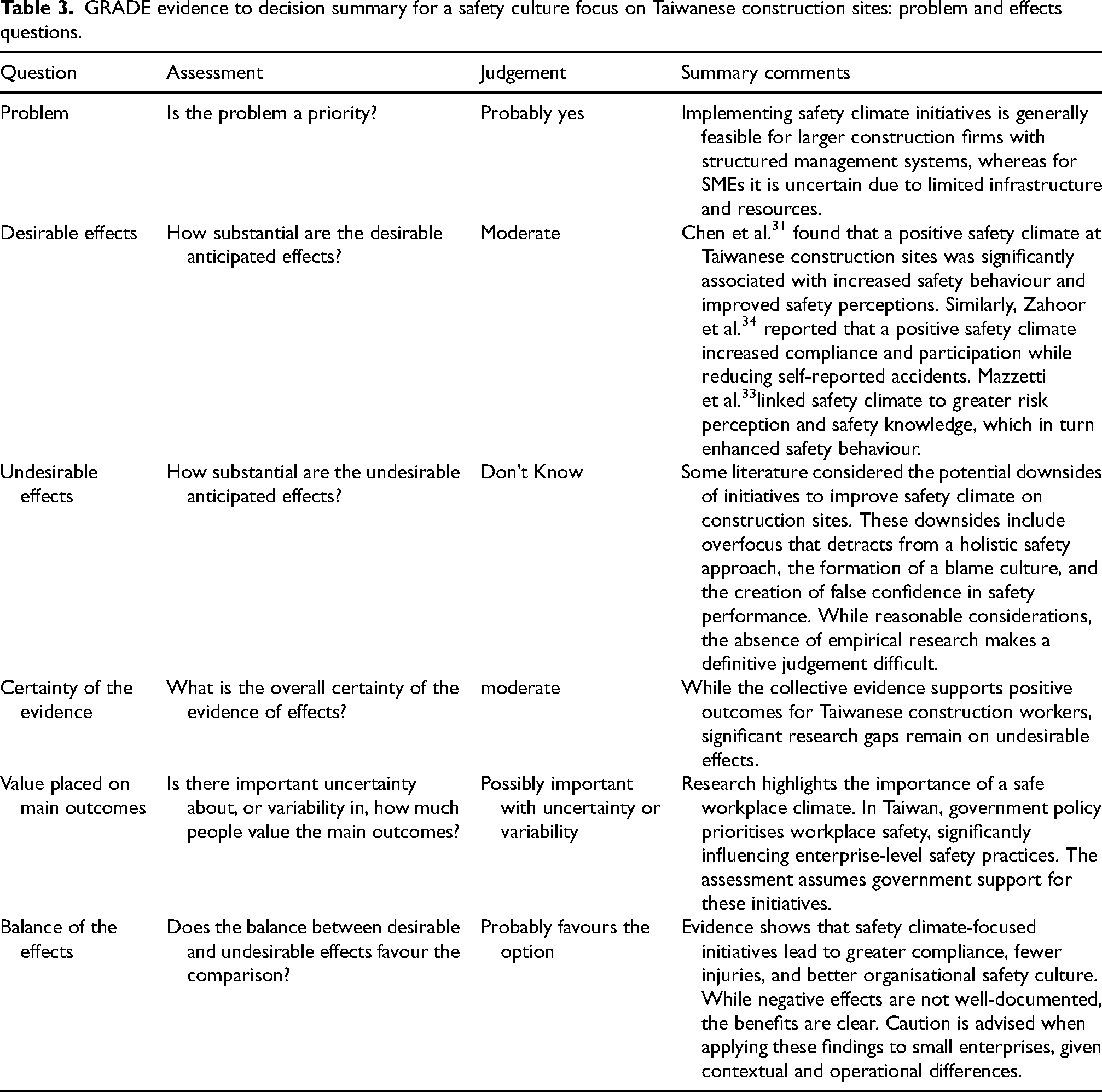
As shown in Table 3, the overall balance of evidence supports the implementation of safety climate-focused initiatives. While there are substantial knowledge gaps regarding undesirable effects, the documented benefits of increased compliance, fewer injuries, and improved organisational safety culture likely outweigh potential downsides. However, caution is advised when generalising findings to SMEs without contextual adaptation. The overall assessment is that the balance between desirable and undesirable outcomes probably favours the implementation of safety climate initiatives. More research characterising undesirable outcomes is required to build certainty in this EtD judgment.
GRADE evidence to decision summary for a safety culture focus on Taiwanese construction sites: problem and effects questions.
Resources required
With the balance of evidence suggesting that desirable safety outcomes can be achieved, the next step is to review the magnitude of resources required to support a safe climate approach. The review provides broad evidence suggesting that investing in improving the safety climate yields positive outcomes. For example, training and awareness were found to yield positive returns in terms of worker safety behaviours on Taiwanese construction sites.10,31,47,48 Safety behaviour interventions, to influence organisational and site management attitudes, do incur costs either directly or indirectly. 49 However, information on the exact resourcing required to support safety climate programs limits the judgments that can be made.
Although several studies report positive returns from investments in safety training and management systems,41,50 few quantify the costs associated with implementing improvements specific to safety climate. In Taiwan, the government incurs substantial financial burdens from construction-related injuries and fatalities, over NT$982 million in 2021 alone. 29 While indirect benefits such as reduced insurance payouts and increased worker productivity are plausible, detailed benefit-cost analyses are lacking. Luo 49 and Bautista-Bernal et al. 51 suggest that safety investments can enhance financial performance, but context-specific data for Taiwan are needed to confirm cost-effectiveness. Overall, the judgment on resourcing is: don’t know, with insufficient information to make an informed decision on resource requirements.
Certainty of evidence of required resources
The next step after evaluating resourcing is to ensure the decision was made based on the evidence. While there are clear economic benefits from improving construction safety outcomes, the assessment is constrained by a scarcity of research investigating the resourcing requirements associated with improving safety climate on construction sites in Taiwan. In the literature from the systematic review, no cost evaluation of implementing safety climate initiatives was provided. An evidence-based evaluation of resourcing for measures such as training, systems development, safety improvements, and hazard control would provide valuable information. In total, the review found insufficient information to make a certain EtD judgment on precise resource requirements.
Cost-effectiveness
At this stage, the assessment considers whether the option is cost-effective relative to the comparison, in this case current practice. The cost-effectiveness consideration in this review was the cost avoidance for labour insurance and compensation to the Taiwan government following construction site injuries and fatalities. Based on government data for 2021, 2805 cases where subsidies were approved for construction workers, both covered and not covered by Labour Insurance. These subsidies totalled NT$256.99 million. Additionally, in the 2021 reporting year, construction accident rates were four times higher than those of all other industries, except manufacturing.
Data from the Ministry of Labor
29
for 2021, benefit payments related to construction injuries, illness, and death amounted to NT$982,285,000, including:
7406 injury claims (NT$361,692,000) 256 disability cases (NT$101,706,000) Disability pensions (NT$14,834,000) Survivor pensions for 234 deaths (NT$33,008,000) and associated compensation (NT$8,992,000).
Investing in safety, through creating a positive safety culture and improving safety performance, can reduce labour insurance and medical costs. 41 For Taiwan, improved safety behaviour could reduce labour insurance and medical costs. Research has shown that safety management system improvements can also have a significant return on investment. 50 Luo 49 linked safety-related costs with management attitudes and policies. Firm financial performance can also be considered in the benefit-cost analysis of safety programs. A longitudinal study by Luo 51 found that a company's safety culture and performance significantly impact its finances, with reduced accidents leading to increased profits.
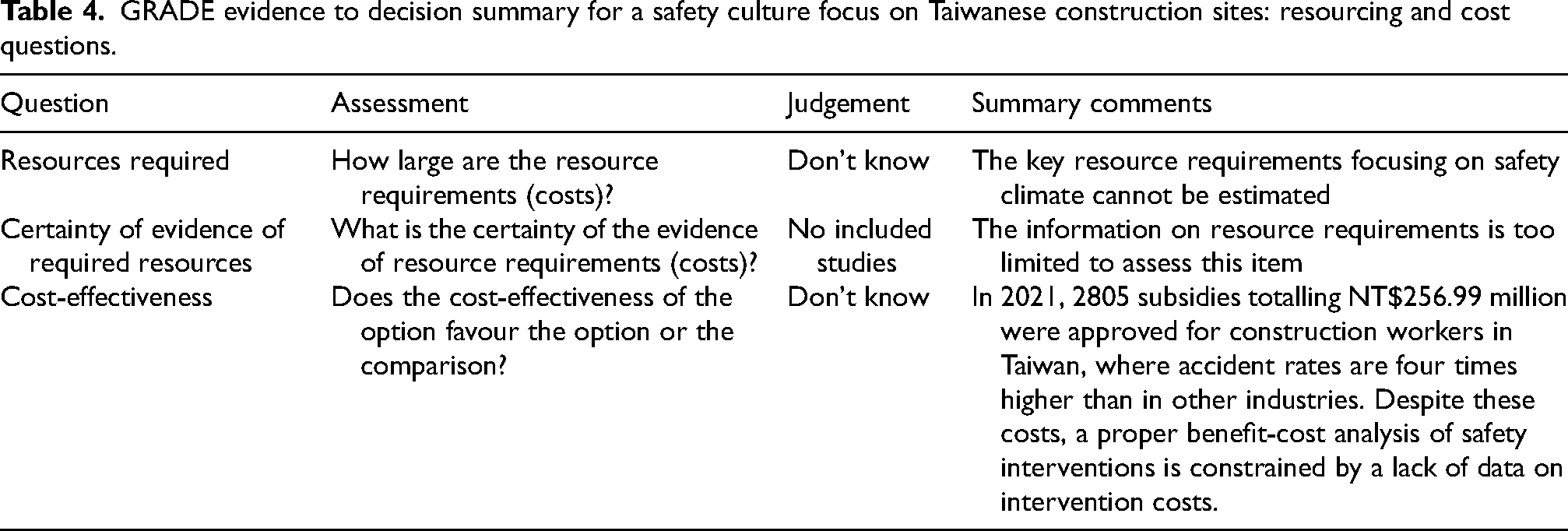
The balance of evidence suggests that, from a financial perspective, there is an opportunity to reduce government insurance and disability pension costs by improving safety performance. However, extensive research is required to characterise the actual cost-effectiveness to support fully informed decision-making. A summary of the findings is provided in Table 4.
GRADE evidence to decision summary for a safety culture focus on Taiwanese construction sites: resourcing and cost questions.
Equity
This step examines the impact of a safety climate focused on the health equity of construction workers, both within industry subgroups and with other industries. Following public health practice judgment regarding the implications for health equity is based on comparisons with other occupational groups and socioeconomic background factors. Taiwan government data shows that construction workers are significantly overrepresented in terms of workplace injury and death rates compared to all other occupation groups except for the manufacturing industry.
Further consideration was given to vulnerable subgroups employed within the construction industry. A survey of 302 construction workers in Taiwan conducted by Chen et al., 31 found that 67% of respondents had secondary school qualifications with no further trade or specialist qualifications. In general, people with higher levels of education have better health outcomes. 52 Within this group, an improved safety climate and corresponding safety behaviours, resulting in reduced accident rates, has potential to improve health equity by educational level.
Construction workers from ethnic minorities are more likely to be injured or killed on construction sites. 36 Taiwan relies heavily on migrant workers, who are at increased risk of injury, disability, and death. 53 Given that many construction workers in Taiwan are foreign workers and ethnic minorities, this raises questions about the equity of safety outcomes for local and foreign workers.
Current safety performance statistics also show a significant gap in accident rates between SMEs and large construction enterprises. In Taiwan, people working in SMEs represent the greatest number of serious injuries or fatalities.9–47 Between 2000 and 2015, a negative correlation existed between organisational size and injury and fatality rates, with companies having ten or fewer workers accounting for 64% of construction site accidents. Improving safety behaviour and outcomes on construction sites could promote health equity across demographic and organisational lines. Migrant and ethnic minority workers are disproportionately affected by unsafe working conditions.36,53 Similarly, SMEs experience higher fatality rates due to systemic resource limitations. 9
Enhancing safety practices and outcomes on construction sites can support health equity across demographic and organisational groups. Research indicates that migrant and ethnic minority workers experience a higher incidence of unsafe working conditions,36–53 while smaller enterprises tend to have increased fatality rates, often due to systemic resource constraints. 9 In summary, directing safety interventions toward these vulnerable populations and enterprise categories may improve occupational health equity and reduce longstanding disparities.
Acceptability
When considering acceptability, the question is whether the option of safety climate focused initiatives is acceptable to key stakeholders.
Government stakeholders
Government policy actively promotes construction site safety, with a focus on larger construction enterprises. The Taiwan government has committed to governance goals, including “safe workplace” and “safe labor”. Furthermore, given the potential of such measures to reduce injuries, disability, and fatalities, and the associated labour insurance costs, it could be theorised that there would be high acceptance among government stakeholders.
Industry stakeholders
Where required by government regulation or legislation, larger construction enterprises have adopted safety initiatives and improved worker safety. Regulatory requirements may help facilitate acceptability, as shown by the improved safety performance of large construction companies in Taiwan.9,47 The integration of worker roadside safety management into regulatory and non-regulatory worker safety initiatives shows how safety climate initiatives would foster evidence-building for future programs. 54 Furthermore, there is evidence to suggest the public is accepting of government measures to address health-related matters. 46
Overall, government policy support for workplace safety is well established, and large enterprises have demonstrated the capacity to comply with evolving safety standards.9,47 However, the acceptability of safety climate initiatives among SMEs remains under-researched. The costs, resource constraints, and lack of enforcement in this sector may limit adoption without additional incentives or support mechanisms. Further research is needed to assess employer and worker attitudes toward safety climate assessments and associated interventions.
Feasibility
The final consideration concerns the feasibility of implementing the proposed option. The review indicates that, given the limited available information, it is not possible to draw a definitive conclusion on the feasibility of using a safety climate approach to improve construction safety in Taiwan. However, the widespread use of safety climate improvement initiatives in the construction sector suggests that this approach could be feasible for influencing safety behaviour. Evidence also indicates that when workers perceive a positive safety climate, they may be more likely to participate in discretionary safety activities. 55
The feasibility of implementing safety climate-focused initiatives is likely high for larger construction firms with formalised management systems, given regulatory requirements. In contrast, feasibility is uncertain for SMEs, which often lack the necessary infrastructure, training, and personnel to sustain safety initiatives. Nonetheless, the success of simplified self-assessment tools in other sectors offers a promising direction for tailored, scalable implementation.15,56 The overall judgement reached is that the outcomes probably favour the option based on the broad application of safety climate initiatives in the literature review. The summary of key findings and research gaps for equity, acceptability, and feasibility questions is provided in Table 5.
GRADE evidence to decision (EtD) summary for a safety culture focus on Taiwanese construction sites: acceptability and feasibility.

Research priorities
While the literature supports a linkage between safety climate and safety behaviour, the evaluation of evidence identified notable research gaps associated with implementing initiatives to improve the safety climate on construction sites, including:
The research reviewed is on the positive influences of safety climate on construction site safety. However, there appears to be an optimism bias, in which undesirable implications are not sufficiently explored to make a full assessment of the positive and negative implications of safety culture. Characterising the undesirable consequences of improving the safety climate would assist in planning targeted strategies to overcome barriers to successful safety strategies. The review indicates that more evidence is needed to evaluate the cost-benefit of improving safety climates, especially in Taiwan. The government faces high costs from insurance and compensation for construction-related injuries and fatalities. However, there is limited information on the costs of implementing safety initiatives on construction sites, creating a research gap in understanding the necessary resources for these improvements. A solid knowledge base is essential for a balanced assessment of the costs and benefits of safety climate initiatives. The successful adoption of safety climate initiatives depends on the attitudes and willingness of the construction industry to adopt such changes in the Taiwanese construction industry towards initiatives to improve construction safety. One approach to understanding willingness and barriers to adopting safety climate is determining critical success factors for implementation. Stakeholder acceptance is key to improving the construction site safety climate. Without the acceptance of key stakeholders, any efforts to improve will be futile and potentially counterproductive. While stakeholders would be expected to be receptive to safety climate improvement initiatives in principle, the extent of their potential acceptance is unknown. Assessing improvements to safety climate and linking to overall safety performance, safety performance with lag indicators such as lost time and injury rates, and leading indicators of safety provide information after the event has already impacted people and business. Leading indicators are another growing area of research interest, in which indicators are selected based on their ability to identify the potential for an accident before it occurs.
8
As an emerging concept in construction safety research, this approach supports the measurement of safety factors encompassing factors related to people, culture, and processes as leading indicators.
57
Aligning safety improvement initiatives on construction sites to create a unified approach to safety climate. Prioritising initiatives that enhance worker mental health and well-being, work-life balance, and job rewards and compensation, alongside improvements to the safety climate, can improve safety outcomes.
58
Conclusion
This research provides a holistic view of the application of safety culture, not found in the current literature. The public health approach to assessing evidence using EtD demonstrates that strengthening safety climate in Taiwan's construction sector offers potential to reduce accidents, lower government compensation costs, and improve equity for vulnerable worker groups, particularly in SMEs. Taiwan's Ministry of Labor has enshrined “safe workplace” and “safe labor” as core governance policy principles. The analysis highlights that a stronger safety culture could reduce accidents and lower government labor insurance and compensation costs.
Higher-risk groups, such as small firms and migrant workers, stand to benefit most from treating construction safety as a public health issue. The EtD evaluation highlights several equity considerations among industry subgroups. Addressing these considerations requires comprehensive, evidence-based strategies that incorporate behavioural, organisational, and systemic approaches for multiple subgroups. Framing safety within public health offers a clear research path to reduce workplace injuries, enhance labour protections, and promote health equity in Taiwan's construction industry.
The research was limited by the notable paucity of information required to make a fully evidence-informed judgment for each question in the GRADE EtD framework. The primary source of information was a systematic review of published studies and conference proceedings, which emphasise positive research outcomes and success. The research reviewed was found to have limited key information on undesirable practices and the perspectives of various key stakeholders, such as SMEs and migrant workers. These limitations highlight the need for further research and engagement across the broader construction industry, including high-risk and resource-limited cohorts like SMEs. 59
Supplemental Material
sj-xlsx-1-wor-10.1177_10519815261428096 - Supplemental material for Applying evidence-to-decision to construction safety: A review of safety culture evidence in Taiwan
Supplemental material, sj-xlsx-1-wor-10.1177_10519815261428096 for Applying evidence-to-decision to construction safety: A review of safety culture evidence in Taiwan by Hew Cameron Merrett and Wei Tong Chen in WORK
Footnotes
Acknowledgements
The authors would like to thank all colleagues and collaborators for their insights and feedback, which strengthened this work. The authors are also grateful to the reviewers for their constructive comments and feedback.
Ethical approval
Not applicable
Informed consent
Not applicable
Funding
The authors disclosed receipt of the following financial support for the research, authorship, and/or publication of this article: The work of Hew Merrett was in part funded by the Taiwan Fellowship awarded by the Ministry of Foreign Affairs, Taiwan. Wei Tong Chen received no financial support for the research, authorship, and/or publication of this article.
Declaration of conflicting interests
The authors declared no potential conflicts of interest with respect to the research, authorship, and/or publication of this article.

Supplemental material
Supplemental material for this article is available online.
References
Supplementary Material
Please find the following supplemental material available below.
For Open Access articles published under a Creative Commons License, all supplemental material carries the same license as the article it is associated with.
For non-Open Access articles published, all supplemental material carries a non-exclusive license, and permission requests for re-use of supplemental material or any part of supplemental material shall be sent directly to the copyright owner as specified in the copyright notice associated with the article.
