




Abstract
Background
Although research on persons with disabilities in self-employment is gaining traction, there is a lack of successful evidence-based frameworks used to facilitate self-employment.
Objective
To map existing literature on evidence-based frameworks for facilitating self-employment among persons with disabilities.
Methods
The three reviewers used the PRISMA (Preferred Reporting Items for Systematic Reviews and Meta-Analyses) process and steps to enhance this research's methodological reproducibility and transparency. Both published and grey literature were searched. Arksey & O’Malley's five sequential stages guided the scoping review process.
Results
After screening 435 studies, only 10 were included. Of the ten included studies, the majority (n = 7, 70%) were from high-income countries. Evidence-based frameworks for persons with disabilities exist mainly in high-income countries and are referred to by various names, including programmes, training, models, and vocational rehabilitation. These are associated with internal and external barriers and facilitators. Moreover, a list of microenterprises for consideration by the key role players involved is available. These evidence-based frameworks’ individualised processes start with a referral and end with a follow-up.
Conclusions
Although the included studies did not use standardised terminologies for evidence-based frameworks, the findings suggest that self-employment for persons with disabilities is intersectoral and includes various key role players. Collaboration, positive attitudes, and the willingness of key role players involved foster the sustainability and continuity of these evidence-based frameworks. A central key role player is a skilled mediator who is aware of other key role players and their roles.
Introduction
The introduction highlights the current state of research on self-employment among persons with disabilities. Specifically, it provides an overview of persons with disabilities, self-employment, evidence-based frameworks and the contribution of this review.
Persons with disabilities and self-employment
The United Nations (2007) states that persons with disabilities “Include those who have long-term physical, mental, intellectual or sensory impairments which in interaction with various barriers may hinder their full and effective participation in society on an equal basis with others, 1 p.4.” Thus, persons with disabilities represent a broader population where the disability's impact on their lives may vary between individuals. 8 In 2016, the International Labour Organization (ILO) estimated that nearly 15% of the global population lives with a disability. 2 Supporting this, the World Health Organization statistics showed that disability affects over one billion people worldwide. 3 Although 80% of individuals with disabilities are of working age, 2 between 60-90% of them are unemployed. 3 Similarly, Quinton (2014) and Yamamoto et al. (2015) stated that unemployment rates for persons with disabilities are almost twice that of persons without disabilities.4,5
Persons with disabilities are part of society and deserve to participate equally in day-to-day activities such as employment or work. As Cooney (2008) notes, there should be more available to persons with disabilities beyond relying on social services. 6 The United Nations (UN) emphasises the importance of work to adults, particularly through its promotion of quality employment. 7 Whether remunerated or not, employment can happen in the formal or informal sector. 8 Employment could be conventional work, where an individual is employed by someone, or self-employment, where one works for themselves. A self-employed person is defined as “An individual who is working for themselves, being directly or indirectly involved in running a successful and profitable microenterprise to earn an income or generate a salary, instead of being employed by another person or an employer, 9 p.75.”
Furthermore, research shows that self-employment is a more common choice among individuals with disabilities than those without.10–12 Challenges such as discrimination13,14 in conventional work are believed to be one of many reasons why persons with disabilities explore self-employment as an alternative. 15 One of the benefits associated with self-employment is a personalised work structure, which can lead to greater satisfaction.12,14
According to Maritz and Laferriere (2016), persons with disabilities may be either pulled or pushed into self-employment. 14 Pull relates to self-employment being voluntary, where an individual chooses it for personal reasons, such as a flexible work schedule. 16 In contrast, a push is associated with being forced into self-employment due to unfavourable work conditions at one's conventional job. 14 Being unemployed or excluded from conventional work may leave persons with disabilities with limited options, especially in developing countries where jobs may be scarce. 17 As such, self-employment may be an alternative for them. However, self-employment has barriers or restrictions, ranging from simple to complex. According to the challenges-adaptive mechanisms-results (CARE) model, there are external (i.e., social, institutional, and environmental) and individual restrictions (e.g., personal conditions). 18 Other barriers to self-employment include a lack of tailored resources and inadequate quality training and education.19,20 As such, it is essential to note that not all people, with or without a disability, can succeed in self-employment.21–23 Caldwell et al. (2020) also state that running a business may be challenging, especially for people with severe disabilities. 24 This makes it crucial for key role players in self-employment to understand what this field entails fully. Their services should be guided by evidence-based research.
Availability of evidence-based frameworks for self-employment
Although studies in this field are becoming prominent, there is a paucity of proven procedures or processes followed by key role players (including persons with disabilities) when exploring self-employment.
15
For instance, the Challenged Based Entrepreneurship
25
is criticised by Hsieh et al. (2019),
18
who stated that it is cumbersome, generic and requires further research. Supporting the lack of practical or proven procedures in this field are the recommendations on self-employment from Iowa's Entrepreneurs with Disability Program's process by Blanck et al. (1999), which outline main steps such as referral, evaluation for acceptance into the programme or further referral and ending with support services if one is accepted into the programme.
10
Arnold & Seekins (2002), on the other hand, recommended a 15-step process for vocational rehabilitation professionals
21
which can be summarised as follows:
A person with disability shows interest in self-employment, They are assessed, They receive relevant training and education (from skills, funding and then engagement in business), The case gets closed (end of vocational rehabilitation services), and The person with disability receives continued annual follow-up as necessary.
In line with the above, research on self-employment processes is largely theoretical, spanning from evaluating the need for self-employment to providing customised training and education through programmes.2,10,15,18,21,26–35 Evidence on practical implementation and results requires further research and documentation, as it remains unclear. Despite being limited, the theoretical data on facilitating self-employment for persons with disabilities highlight the value of collaborative efforts among key role players. 32 Involved in the partnership could be the government, private (in an individual capacity or company), Disabled Persons’ Organisations (DPOs), non-governmental organisations (NGOs), and professionals, with their roles ranging from funding, training and offering support to persons with disabilities in self-employment.5,15,18,34,36–41
Review contribution and question
Further studies are required on self-employment 42 to enhance its viability as a job placement option to help lower unemployment rates, specifically for persons with disabilities.10,14 Moreover, there seems to be a lack of data on evidence-based frameworks for self-employment for persons with disabilities that encourage professionals (key role players) to participate in this field actively. Professions’ guiding documents, such as those for occupational therapy, acknowledge the need for occupational therapists to encourage active participation by persons with disabilities in self-employment but remain unclear about how to do so.43,44 This review is part of a PhD project and intends to inform services offered by professionals involved in work or vocational rehabilitation.44,45 An evidence-based framework with transparent processes and steps proven to be effective, not merely theoretical, offering guidelines and recommendations, will guide professionals or key role players, such as occupational therapists, to offer self-employment as a viable placement option for persons with disabilities. 45 As such, this review aimed to map the existing literature on self-employment evidence-based frameworks to promote self-employment among persons with disabilities. The aim was addressed by answering the following review question: What successful, evidence-based self-employment frameworks are used to promote self-employment among persons with disabilities?. 45 This question was answered by addressing the review objectives, which were to identify and describe: i) Existing self-employment evidence-based frameworks used with persons with disabilities, ii) Barriers and facilitators to using a self-employment evidence-based framework with persons with disabilities and iii. Types of successful self-employment opportunities (small businesses) that persons with disabilities engage in. 45
Methods
As stated above, a published protocol for this scoping review exists. 45
Design
A scoping review was used to map and synthesise literature aligned with this research's question, aim, and objectives. 46 Three reviewers were involved, i.e., the corresponding author (primary reviewer) and two co-authors (co-reviewers). These reviewers used the PRISMA (Preferred Reporting Items for Systematic Reviews and Meta-Analyses) 47 process and steps to enhance this review's methodological reproducibility and transparency. The Preferred Reporting Items for Systematic Reviews and Meta-Analyses extension for Scoping Reviews (PRISMA-ScR) Checklist 48 was employed to verify that all essential elements of the scoping review were covered.
Five sequential stages guided the scoping review process. 46 Each stage is described in detail below, i.e., identifying the research question (stage 1), identifying relevant studies (stage 2), study selection (stage 3), charting the data (stage 4), and collating, summarising, and reporting the results (stage 5).
Stage 1: identifying the research question
Literature was reviewed to answer this review question: What successful, evidence-based self-employment frameworks are used to promote self-employment among persons with disabilities?. 45 This question was identified at the initial stage of this review. 46
Stage 2: identifying relevant studies
As several months had passed since the original 2023 search, EBSCOhost and Scopus were re-searched to identify new data 48 ; however, no new data were found. As such, the studies below are per the initial search. This confirms a lack of priority in this research area.
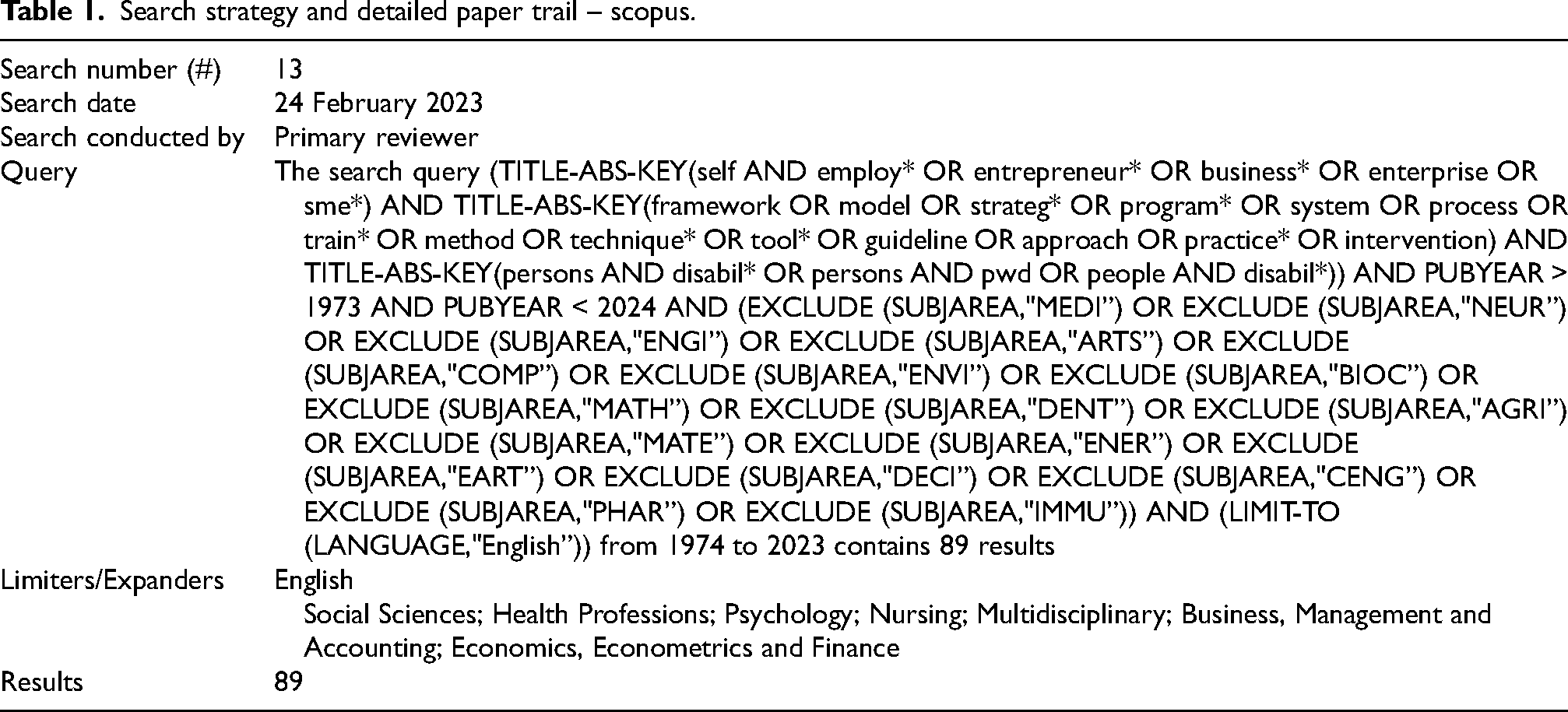
Guided by the eligibility criteria of this review (refer to stage 3 below), literature was searched, and studies were retrieved with assistance from experienced librarians. 46 Published studies were searched on EBSCOhost and Scopus. Databases searched through EBSCOhost were Social Sciences, Health Professions, Psychology, Nursing, Multidisciplinary, Business and MEDLINE, while those searched through Scopus were Academic Search Complete, APA PsycInfo, Business Source Complete, GreenFILE and Open Dissertations. 45 Tables 1 and 2 below summarise the refined search strategies. The two tables also provide a detailed paper trail for each platform searched, i.e., Scopus and EBSCOhost.48,49 The usage of, e.g., Boolean operators (AND, NOT and OR) is also included in each table. 46 Refer to Appendices A, B, and C for more information on the search. Google Scholar and ResearchGate were also searched. Searched grey literature platforms include the ILO, the Organization for Economic Cooperation and Development (OECD), the World Bank, the World Health Organization (WHO) and the University of KwaZulu-Natal's online library (iCatalogue). 45 Grey literature and studies identified from references totalled n = 46. The thirteenth search results for Scopus were considered final and produced n = 89 studies. Below is a search summary through Scopus.
Search strategy and detailed paper trail – scopus.
Search strategy and detailed paper trail - EBSCOhost.
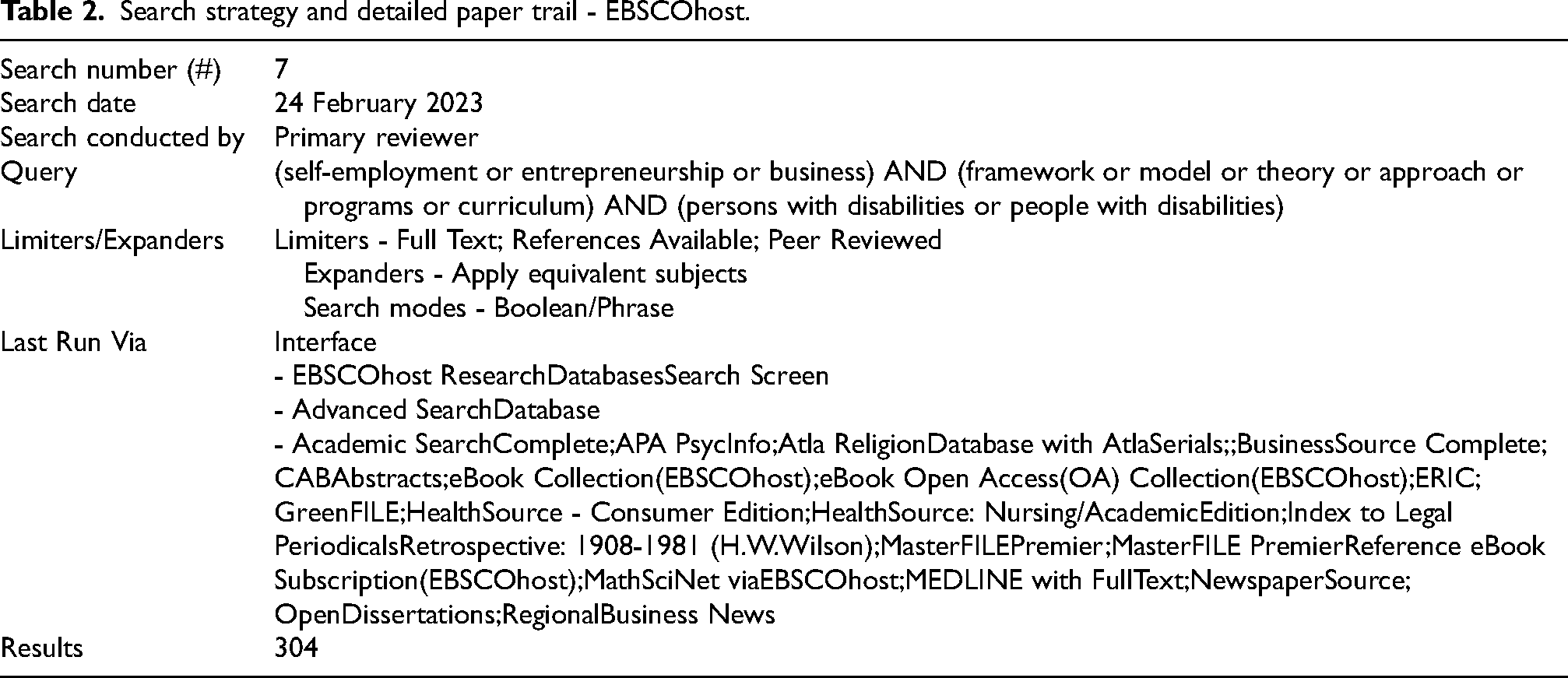
For EBSCOhost, the seventh search result was used as the final result, yielding n = 304 studies. The EBSCOhost search breakdown is shown in Table 2 below.
Stage 3: study selection
The PRISMA 2020 flow diagram (Figure 1) guided the review process. 47
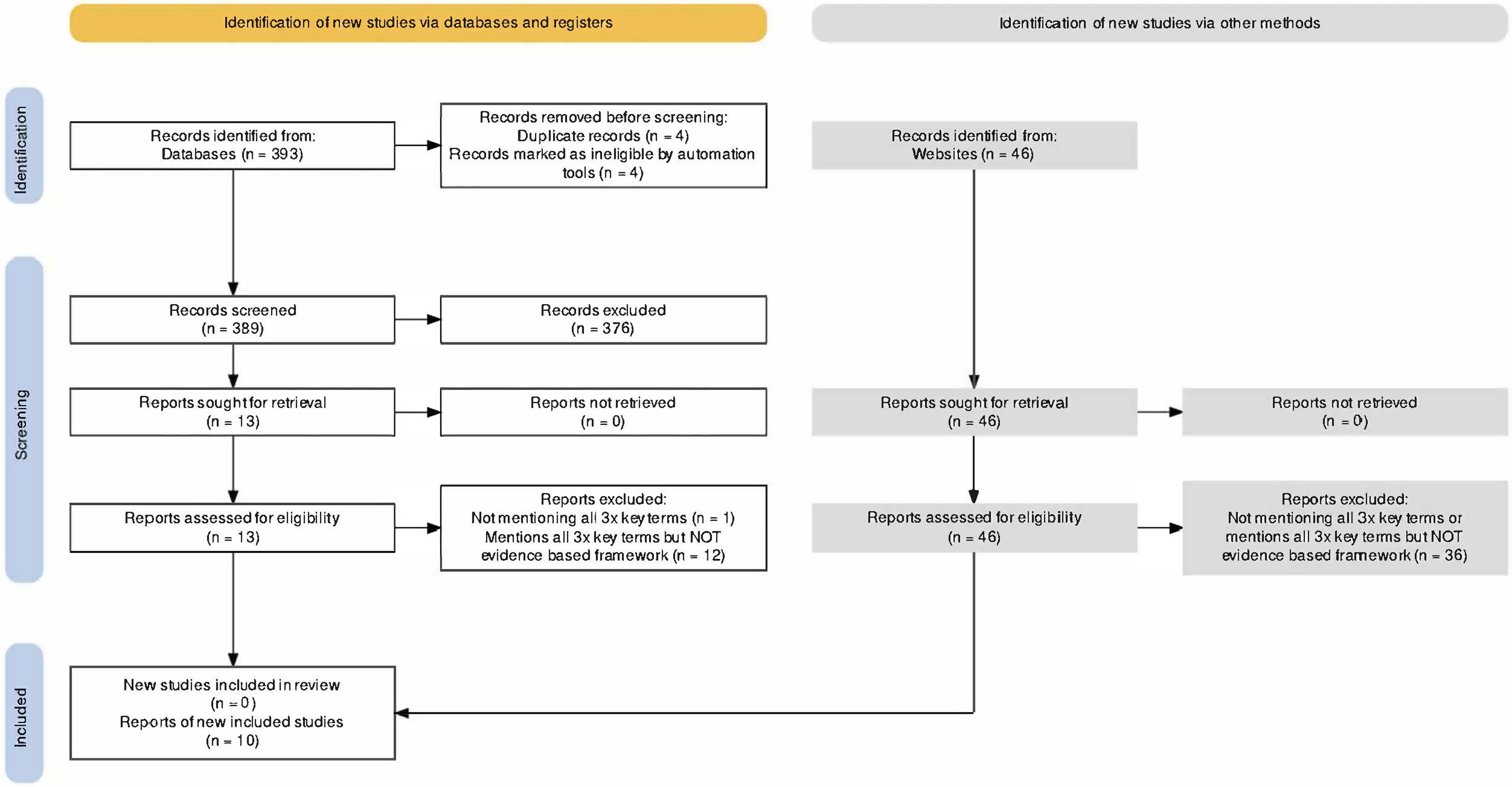
PRISMA 2020 flow diagram.
Below are the inclusion and exclusion criteria,
45
refined and finalised after gaining familiarity with the topic of this review.
46
Studies that did not meet the criteria below were excluded:
Primary studies: This category was broad, but necessary filters were applied to ensure a manageable number of results (see Tables 1 and 2). Concepts (terms):
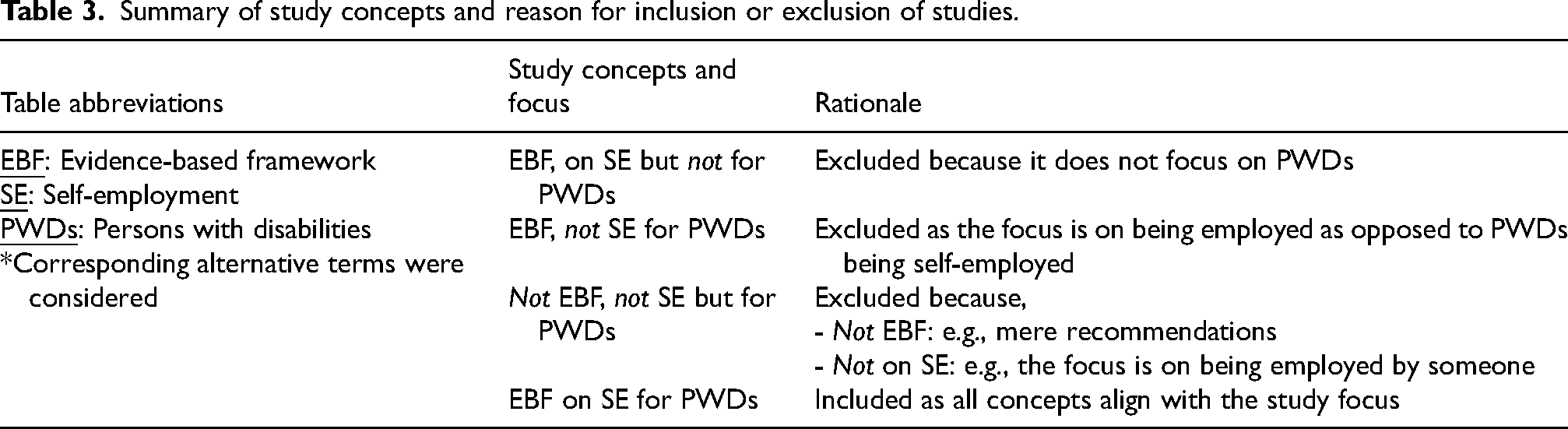
There were three key terms (evidence-based framework, self-employment, and persons with disabilities) with corresponding alternative terms. Included studies referenced all three concepts or their alternative (see Tables 1 and 2 and Appendices A-C). Evidence-based frameworks had to be tested and produce empirical results showing how self-employment was facilitated for persons with disabilities. Studies offering only theoretical guidelines without practical testing were excluded (see Table 3). Context: All countries were eligible. Language: English only. Other considerations:
Online studies with full-text and references were included. Year limit: Automatically applied by each search platform. No limitations were imposed on study design or methodology.
Summary of study concepts and reason for inclusion or exclusion of studies.
As stated in Figure 1, n = 393 studies were identified through the Identification of new studies via databases and registers. These were exported to Mendeley. No duplicates were identified at this stage. Results were then exported to Rayyan, 50 where duplicates (n = 4) were removed, leaving n = 389 studies.
Two independent reviewers screened all studies according to the inclusion criteria. Screening involved evaluating the title, abstract and index terms. Rayyan's blind was activated and deactivated as required. Decisions were marked as “Include”, “Exclude”, or “Maybe”. The Rayyan blind was switched off at the end for reviewers to compare their decisions and resolve any conflicts.46,48 Out of the n = 389 studies, n = 0 met the criteria.
A thorough review of the reference lists of relevant studies was performed to identify potential studies for inclusion. 46 Studies identified through reference lists and grey literature, or Identification of new studies via other methods, were n = 46, as outlined in Figure 1. As described above, the screening process was repeated for these 46 studies. Of the n = 46 studies, only 10 met the inclusion criteria and were included in the review.
Overall, after duplicates were removed, screened studies were as follows: through Identification of new studies via databases and registers, n = 389 and through Identification of new studies via other methods, n = 46, i.e., n = 435. Refer to Figure 1. Excluded studies were n = 425, and those included were n = 10.
Discussions were used to resolve differences between reviewers during screening, resulting in 100% consensus; i.e., a conflict stage requiring intervention from the third reviewer was not reached. As a result, the need to involve a third reviewer, who was on standby, did not arise.48,49 The reviewers spent just over 16 h, across 54 sessions, screening studies on Rayyan.
This review used a forward search strategy, looking ahead to see how studies or articles were cited in other literature, thereby contributing to the scholarly conversation. 51 It is worth noting that this process did not result in additional studies being identified or included.
In summary, only n = 10 studies were included and reviewed. These studies were classified according to the five levels of the Modified Evidence Pyramid, as shown under study demographics below. 52 The Modified Evidence Pyramid indicates the rigour or the quality of a study. Level 5 refers to basic studies such as ideas, editorials and animal research, while Level 4 refers to case reports, Level 3 to case-control studies, Level 2 to cohort studies and Level 1 to meta-analysis, systematic reviews and randomised controlled trials. 52
Stage 4: charting the data
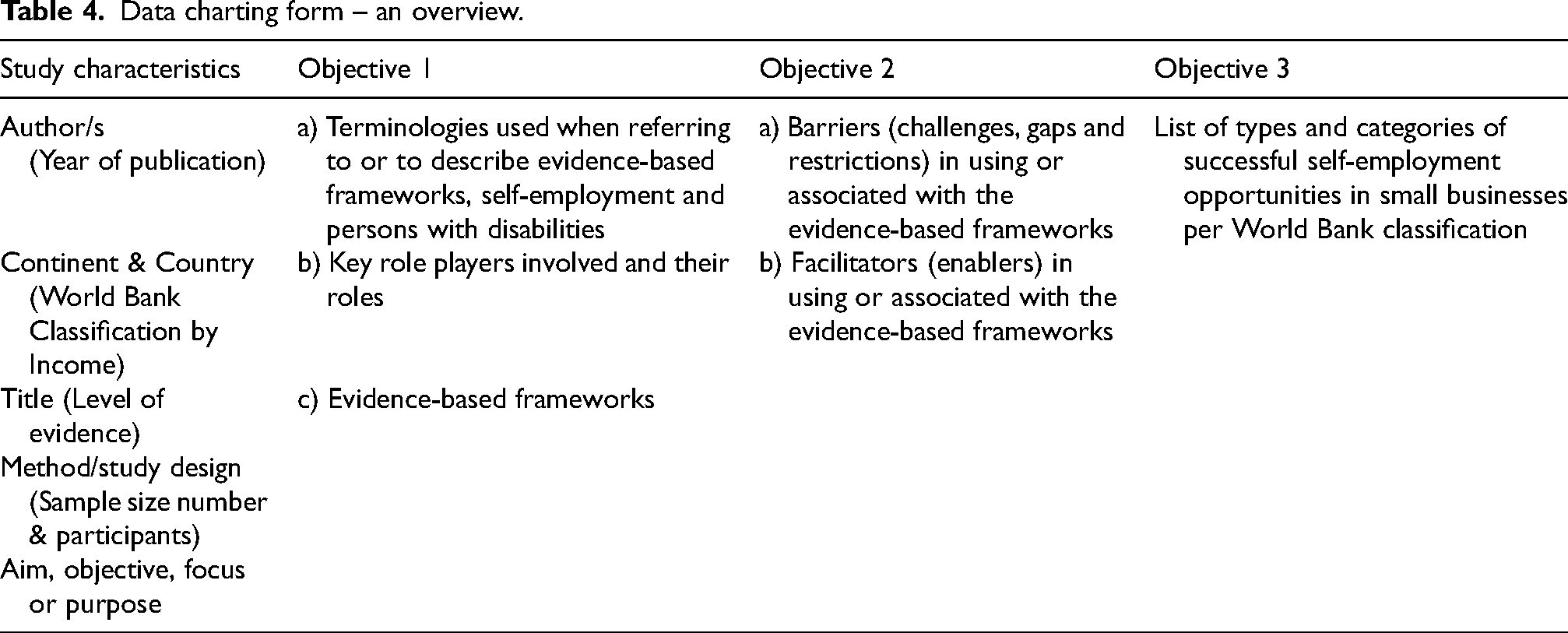
Data were extracted from the 10 included studies and entered into Microsoft Excel using the iterative sifting, charting, and sorting.46,53 Refer to Table 4 for details. The table was used to chart and analyse each study included in the review. In accordance with the review scope, Table 4 was developed by the primary reviewer and validated by the second and third reviewers. 48
Data charting form – an overview.
Stage 5: collating, summarising, and reporting the results
Stage 5 is subdivided into results and discussion
Results
Study characteristics
Table 5 presents the study characteristics of the 10 included studies, including the authors, publication year, evidence level, and brief descriptions of the evidence-based frameworks. The majority (n = 6, 60%) are from the USA (Illinois, Louisiana, Montana, New York, Texas, Washington), a High-Income Economy. They are followed by Asia (n = 2, 20%), Lower-Middle-Income (Cambodia) and Upper Middle-Income Economy (Malaysia), respectively. Africa, Tanzania (n = 1, 10%), a Lower Middle-Income Economy, and Australia, Western Australia (n = 1, 10%), a High-Income Economy, were the minority. 64 There were various authors with publication dates ranging between 2009 and 2018. The oldest study was published in 2009, and the most recent in 2018. Most publications (n = 5, 50%) were in 2014.
Study characteristics of the ten included studies.

On the Modified Evidence Pyramid, seven studies were Level 4. Two were Level 3, and one study was Level 2. The data charting form further revealed that the studies came from various disciplines, sectors and authors’ affiliations, i.e., School of Occupational Therapy, Social Work, and Speech Pathology; Rehabilitation Services and Economic Systems; School of Management; and SME & Entrepreneurship Development, Electrical Engineering, Business Management, Art, and Design.
The brief description column in the evidence-based framework highlights the results of each included study. These evidence-based frameworks yielded results for persons with disabilities in self-employment. They were tried and tested, not just recommendations or proposed solutions. These ranged from tailored grants to vocational or self-employment skills training, and they targeted persons with various disabilities, such as mental illness, physical disabilities, developmental disabilities, and sensory disabilities. Moreover, the evidence-based frameworks were considered successful based on various aspects related to a programme or intervention, such as:
The success testimonies from programme graduates or case studies, Pre and post-programme differences in, e.g.,
- Improved productivity and quality of life post-programme or intervention, - The evident success rate in starting one's small business and/or registering it post-intervention, - Producing tangible earnings, e.g., ranging between $5000–$6000 per month on average, and - Persons with disabilities continued to run the business beyond the programme duration. Theme 1: Existing successful self-employment evidence-based frameworks used with persons with disabilities
During data analysis, themes were identified and plotted on the data charting form. These are presented in the figures and tables below. Theme 1 data is presented under corresponding subthemes, namely, a) Divergent terminologies used, b) Key role players involved and their roles, c) The evidence-based framework brief description, and d) Process or steps followed per the evidence-based framework.
Subtheme 1: Divergent terminologies used
Among the 10 included studies, the five most frequently used terms aligned with this scoping review's focus are disability, programme, self-employment, training, and small business. The term disability was commonly used to refer to end users or to describe the study population. The term was used alone or in phrases such as persons with disabilities, disabled entrepreneurs, individuals with disabilities and youth with disabilities. The specified disabilities were a combination of intellectual, physical, sensory, and mental illnesses.
1
Although infrequently used, the term client was also used to refer to the end-user. The terms programme and training were commonly used to describe evidence-based frameworks. Other terms used in this regard were model and vocational rehabilitation. Regarding employment, term usage varied between studies, i.e., there was no consistency. However, self-employment and small businesses were often used.
Subtheme 2: Key role players involved and their roles
Key role players were end users, service providers and policymakers. Refer to Figure 2 below for a categorised list of key role players. Their roles in self-employment for persons with disabilities were dynamic and interdependent, if not intertwined. The terms used to refer to key role players varied across countries and disciplines; for example, state was used instead of government in some studies. Key role players’ roles seemed to depend on available resources and ranged from conceptualising a self-employment programme to following up with persons with disabilities once they had set up their microenterprises.
Subtheme 3: The evidence-based frameworks
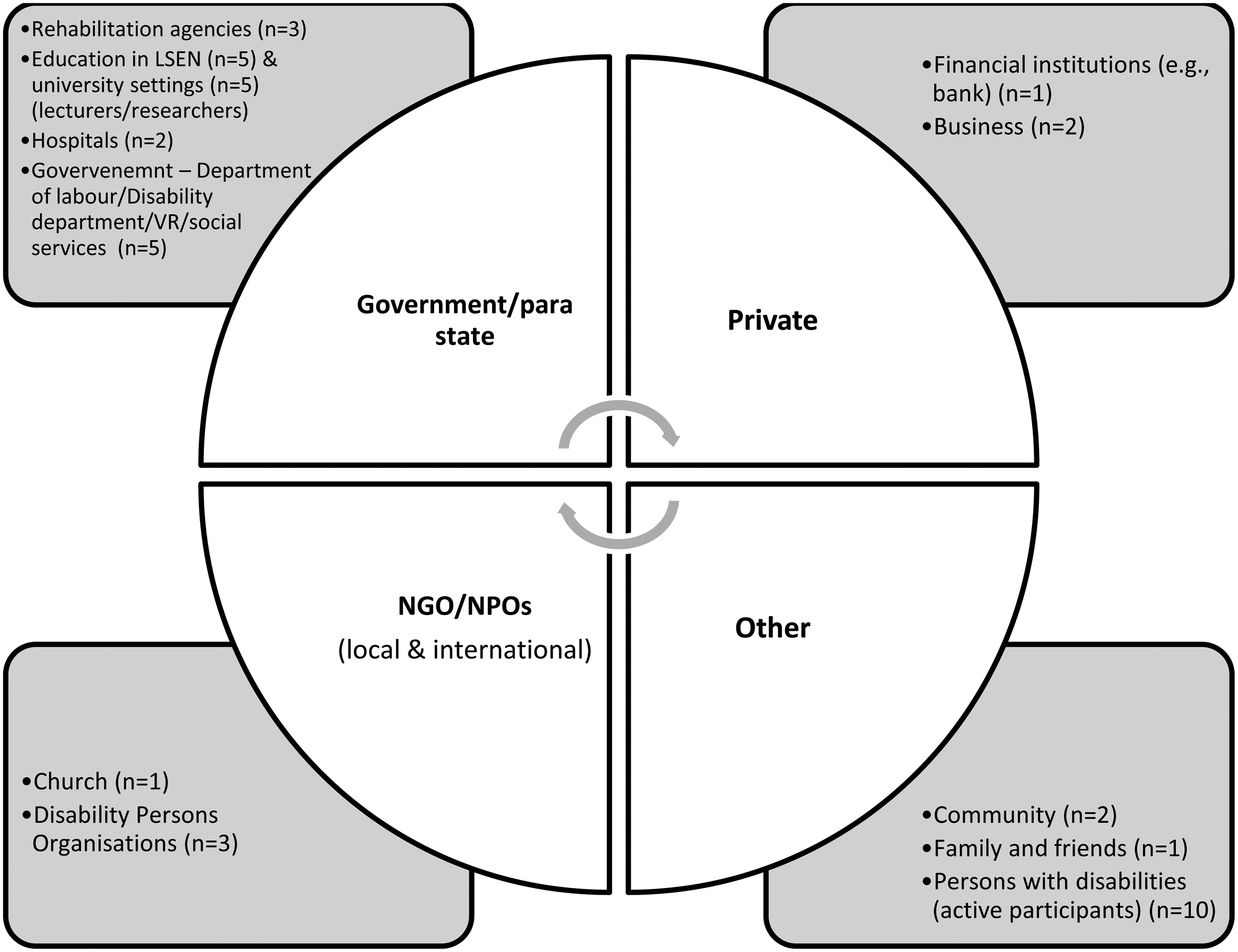
Key role players involved in self-employment for persons with disabilities – working as a collective.
The evidence-based frameworks were approaches and strategies,58,60,62 models54,56 or training programmes55,57,59,61,63 that had in common aspects of referral and a conclusion with follow-up. Refer to Figure 3 below, which uses a matrix and thematic approach to identify key themes.
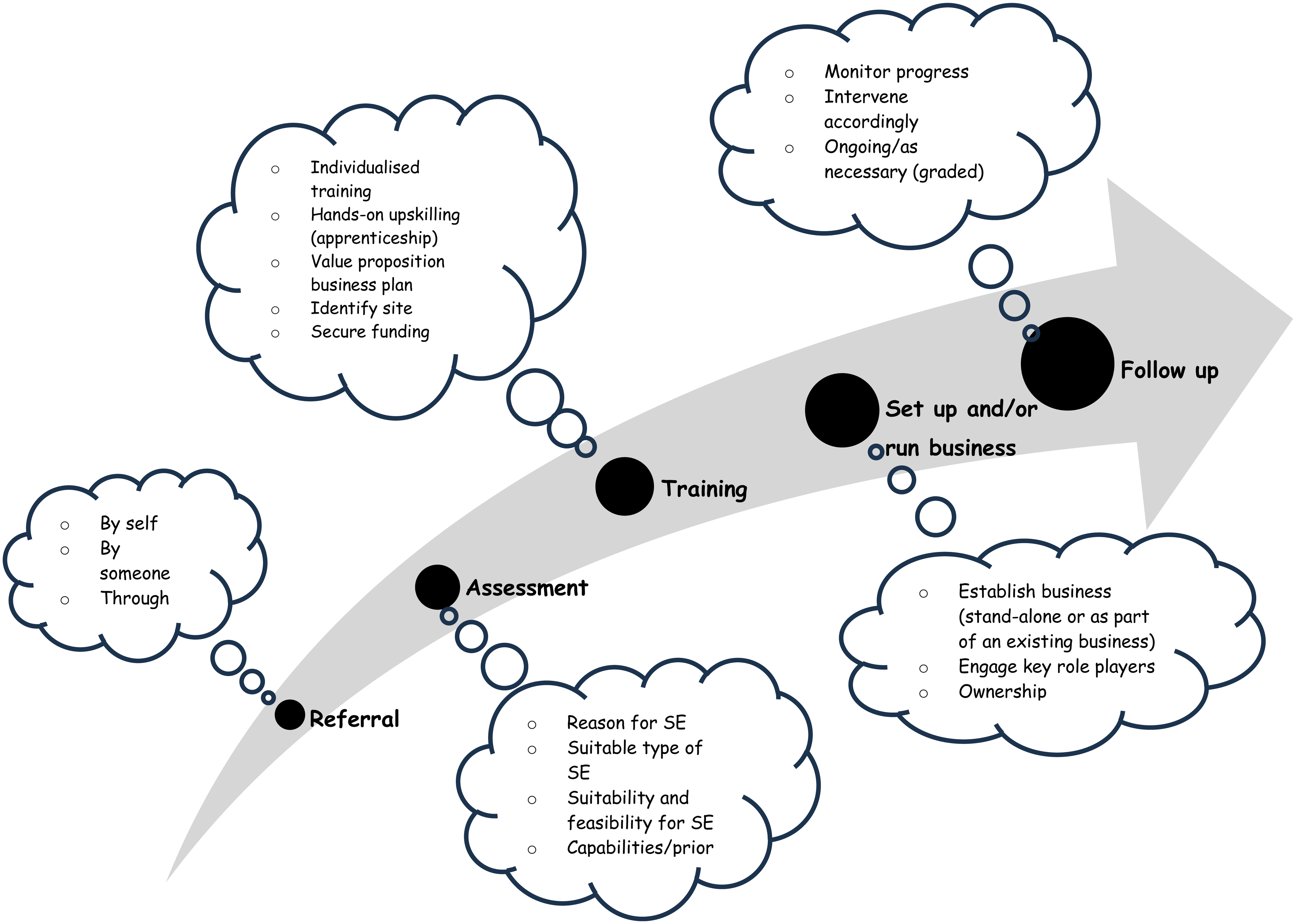
Evidence-based frameworks followed processes (self-employment - se). These may co-occur, e.g., engaging key role players and supportive services could commence during the training stage. On the other hand, networking could occur at any stage, not just during training.
Some studies (n = 3, 30%) had additional resources such as checklists, forms, and guides. These additional resources were an initial interview form, a plan of action and a business follow-up form 62 ; resources on the New York Makes Work Pay website, including forms for readiness self-assessment and business plan 56 ; and the 16 reproducible forms encompassing the skills and needed support forms and a checklist for setting up a small business. 58
These evidence-based frameworks were conducted in person, e.g., in a village, community centre, or training institution,54,55,59–63 and some were conducted both in person and online.56–58 The duration of these programmes ranged from short-term, e.g., a 3-day workshop 63 and a 2-week 54 to long-term, i.e., 3 years. 56
A range of factors were considered when deciding whether a study qualifies as an evidence-based framework and if the outcomes impacted persons with disabilities in self-employment. Some of these key deciding factors were results from the programme, such as, but not limited to:
Other factors used to determine whether studies presented an evidence-based framework included the number of trainees or graduates and the years a programme had been in operation.54,58,60,61 Others, such as the success of the Alleviating Poverty through Peer Training (APPT) programme, were included because of the framework being replicated by other organisations.
62
ii. Theme 2: Barriers and facilitators to using a self-employment evidence-based framework with persons with disabilities
Theme 2 data are presented under a) Barriers and b) Facilitators associated with the self-employment evidence-based frameworks. Barriers included aspects such as challenges, gaps, and restrictions, whereas facilitators included enablers. These barriers and facilitators were inferred from each study's relevant subheadings or arguments, as they were not explicitly mentioned.
Subtheme 1: Barriers
Internal and external barriers
65
were identified across the 10 studies, negatively impacting the self-employment training of persons with disabilities. The internal barriers were subdivided into gender and disability. The external barriers identified were related to the following:
Limited business sustainability, No government security benefits, Lack of professionals’ skilfulness, willingness to assist or offer self-employment as a placement option to persons with disabilities, and their lack of confidence in persons with disabilities achieving self-employment, Limited to no finances to fund businesses and Limited literature to guide the facilitation of self-employment with persons with disabilities. Subtheme 2: Facilitators
Drawing on the 10 included studies, facilitators comprise a network of key role players serving different purposes, including the government, NGOs, NPOs, the private sector, and family and friends. Other available resources that served as facilitators included free business training, technology, and business financing or grants for equipment. They were reported to enhance the business's sustainability. A clear structure, planning and strategic approach to self-employment were also identified as facilitators. These ranged from having a clear business plan with innovation and a value proposition, receiving relevant hands-on training, and following steps and tested processes when setting up a tailored business. Such businesses could be stand-alone or a part of an existing business. Other facilitators were persons with disabilities’ skills from previous work (paid or volunteer work), the skills they outsource from, e.g., a competent professional who uses a graded approach and offers ongoing support or follow-ups concerning self-employment.
iii. Theme 3: Types of successful self-employment opportunities (business) that persons with disabilities engage in
The data for theme 3 are presented under the different types and categories of successful self-employment opportunities or small businesses. The businesses were used as examples, as part of case studies, or offered as part of a programme. The business categories are retail, service & skill, and manufacturing/production. 43
Similar businesses were grouped; e.g., if study one mentioned tailoring and study two also mentioned it, and both fell under the same income classification according to the World Bank, 64 this was recorded as one business on the list, i.e., tailoring. Grouping was also done for similar businesses with different names, provided they fall under the same income classification, according to the World Bank. 64 For instance, baking and Khmer cake making were recorded as baking to represent both. Refer to Appendix D for a complete list of types and categories of successful self-employment businesses.
The combined business categories of all three economies (Lower Middle-Income Economy, Upper Middle-Income Economy and High-Income Economy) are N = 68 (100%). Out of the N = 68, retail was n = 14 (21%), services & skills n = 35 (51%), and manufacturing/production n = 19 (28%). Refer to Figure 4. Across all economies, services & skills constitute the largest category.
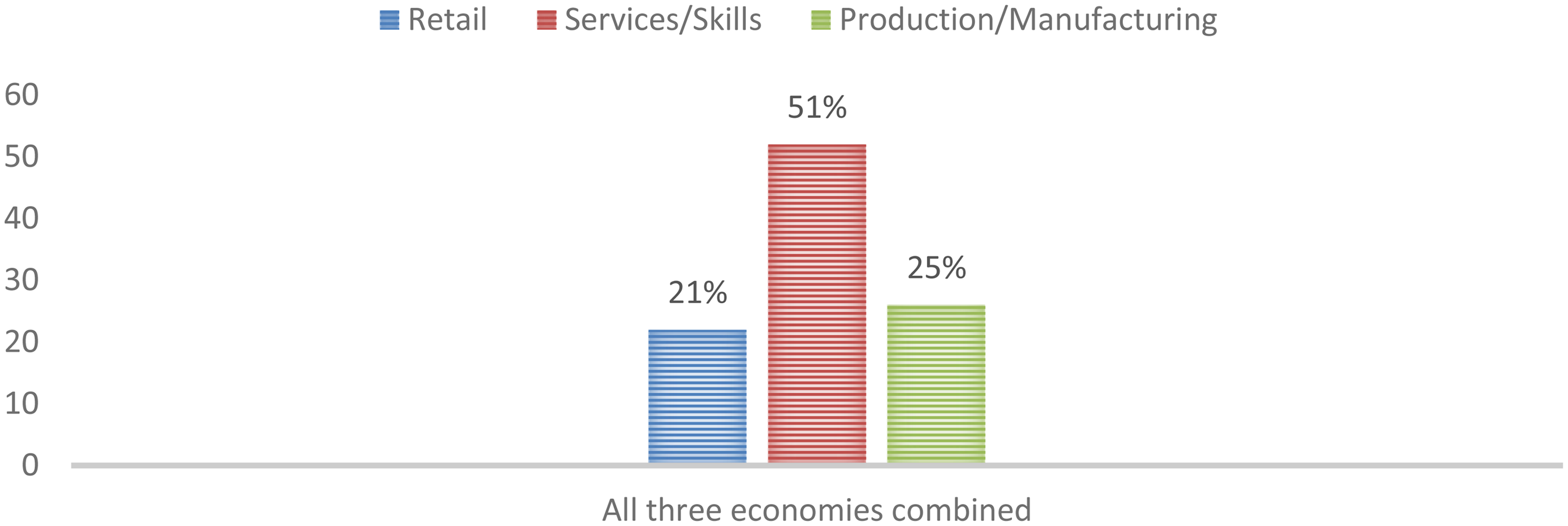
Business categories of all three economies combined, N = 68 (100%).
From Figure 5 below, Lower Middle-Income Economy & Upper Middle-Income Economy: retail n = 6 (19%); services & skills n = 13 (42%); manufacturing/production n = 12 (39%) and High-Income Economy: retail n = 8 (22%); services & skills n = 22 (59%); manufacturing/production n = 7 (19%).
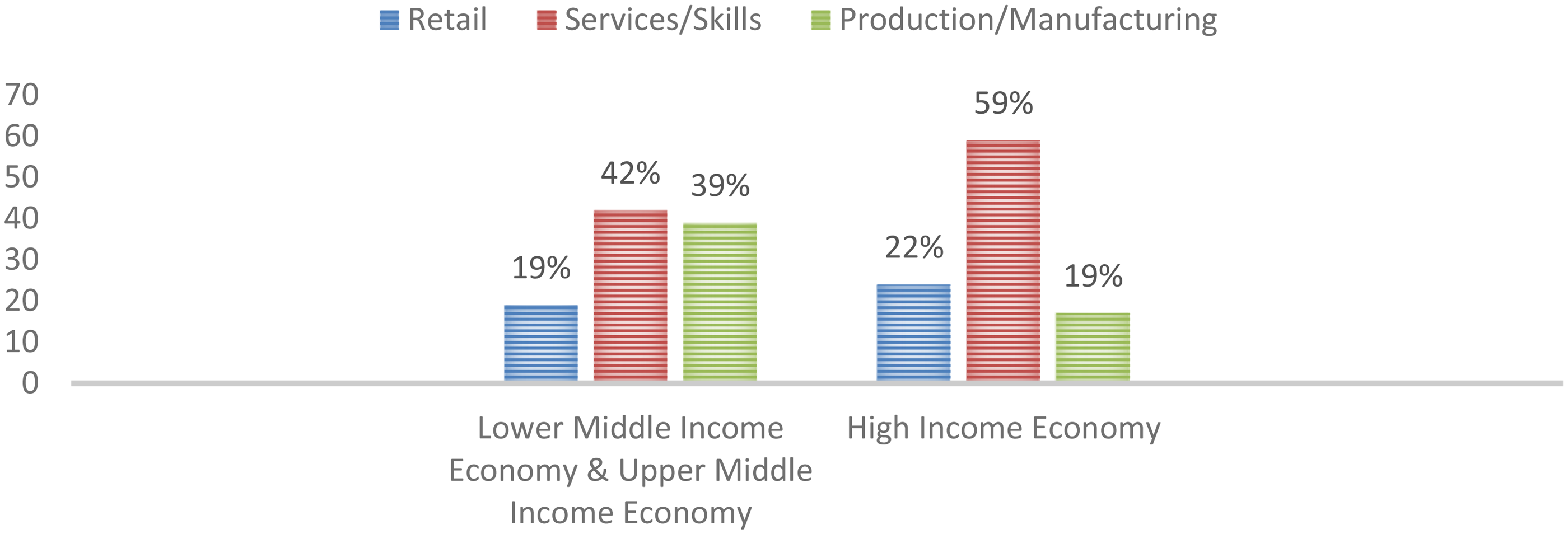
Business categories for the lower middle-income economy & upper-middle-income economy (N = 31), and high-income economy (N = 37).
Lower Middle-Income Economy & Upper-Middle-Income Economy show a higher proportion of services & skills (n = 13, 42%), followed by manufacturing/production (n = 12, 39%), whereas High-Income Economy has a clear majority in services & skills (n = 25, 59%), followed by retail (n = 8, 22%). Of all these economies, services & skills have the majority.
Discussion
Study's characteristics
The majority, n = 7 (70%),54–60 of the included studies are from high-income countries, with the USA having the most available literature, i.e., n = 6 (60%).54–59 For instance, the highly funded government programmes, with amounts ranging from $5 000 to $30 000, could explain the availability of resources in these high-income regions and the commitment made by the respective governments in this field of self-employment for persons with disabilities. In contrast, governments provide less financial support for similar programmes in less-resourced countries. 66 This may imply that less-resourced countries must seek creative ways to overcome financial constraints in this field of study. For instance, one could start small and expand the business, especially as the business generates revenue. 67
Evidence-based frameworks for self-employment among persons with disabilities appear to be a relatively recent phenomenon, with the oldest included study in this review published 16 years ago. 54 The recent attention to self-employment for persons with disabilities and the intersectoral nature of this field could make it a fertile ground for future collaborations. As such, there is potential to expand and improve this field.
Existing successful self-employment evidence-based frameworks
Various terms were used in the included studies to describe the targeted end-user or population, which aligned with the United Nations’ (2007) definition of disability, i.e., intellectual, physical, sensory, and mental illnesses. 1 The same was true for terms describing the evidence-based frameworks, i.e., programme, training, model, and vocation or vocational rehabilitation.
Concerning self-employment, the terms used in the included studies were not standardised but varied. Harris et al. (2013) stated that available research does not clearly differentiate between self-employment and entrepreneurship 68 since these terms are used interchangeably. 69 Maritz and Laferriere (2016) observed an overlap, although self-employment and entrepreneurship differ. 14 Self-employment focuses on empowering individuals financially, for instance, by enabling them to work for themselves.14,70 In contrast, entrepreneurship is perceived as beyond the individual, as it is innovative and change-oriented 71 and may introduce a new product and create employment for others.32,72 Moreover, although entrepreneurs were once thought to be born, not made, there is now some openness and encouragement towards entrepreneurship73,74 challenging the initial view of entrepreneurs.
The included studies used other self-employment-associated terms, including customised employment, home-based income-generating skills, small-scale enterprises, microenterprise, small business, start-ups, small business enterprise (SBE) and income-generating activities. These terms and phrases lean toward a job tailored to an individual's interests, capabilities, and needs.73–75 In other words, they resonated with small and not commercial businesses, i.e., in line with the focus of this research. These varied terms broadened the review's inclusion criteria while remaining specific.
The above discussion adds to the observed lack of commonality in term usage in this field of study, which may explain the small sample size and could potentially negatively affect the transferability of the findings in this review. It would be more beneficial to standardise terminologies if this field is to be researched and enhanced.
The key role players were community-based, family members, the government, mentors, and some organised in teams.54–63 Their roles were dependent on available resources and included, but were not limited to, conceptualising a self-employment programme in line with relevant country or organisation policies, identifying and mediating between relevant key role players, identifying end users, training them, assisting and supporting them with the business logistics and following them up post the programme. Having transparent processes and systems beyond the individual, i.e., not centred on an individual's or a facilitator's character, proved critical to the continuity and longevity of the evidence-based frameworks.
Evidence from the included studies indicates that among the key role players involved in facilitating self-employment for persons with disabilities, some play a core role that may be more structured, whereas others offer a supportive role. For instance, the government seems to be playing a pivotal role, with functions ranging from macro-level legislation to training to funding. Especially in high-income economies, governments provide more financial support than those in lower-income economies.55–57 Training institutions also played a crucial role, as most of these evidence-based frameworks involved them. Other key role players, such as non-government organisations, non-profit organisations, private institutions, family, and friends, provided a more supportive role, sometimes in an unstructured, informal manner.
The availability or willingness of key role players to take part in programmes varied. It is imperative that those leading these programmes, especially those in less-resourced areas, conduct a situational analysis of the area and be creative, acting as problem-solvers. They could draw inspiration from existing programmes, but should avoid copying and pasting. In a study of an initiative in vocational rehabilitation in Cape Town, South Africa (an upper-middle-income country), Coetzee et al. (2011) reported limited interest in collaborating among key role players due to financial implications. 66 As such, creativity seems to be an alternative in less-resourced areas. Such an approach is evident among those who resort to home-based businesses to cut costs, e.g., rent or travel. 67
The included studies show that evidence-based frameworks have existed since the 1980s.58,61 On the other hand, the documentation of these successes is only recent, with the oldest studies published in 2009.54,62 This suggests that research on self-employment for persons with disabilities is still developing. Moreover, one could reasonably assume that successful programmes in this field exist and that what is lacking is documentation of their achievements. Lack of documentation could be due to various reasons, such as this field not being prioritised. Another view is that successful programmes were missed in this scoping review due to the lack of standardised terminology in this field. Regardless, more research and documentation are needed if self-employment for persons with disabilities is to be enhanced.
As Arnold & Ipsen (2005) indicated, “There is no cookie-cutter” strategy for attaining self-employment results, 76 p.117. As such, the evidence-based frameworks included in this research were not entirely prescriptive or disability-specific, but rather advocated an individualised or customised approach to persons with disabilities. This may suggest that creativity should prevail in individualising the facilitation of self-employment for persons with disabilities. It is worth noting that when individualising evidence-based frameworks, the common emphasis was on a graded approach involving the government, vocational or training and finance institutions. Moreover, having transparent processes to follow is deemed to be essential.
The training was primarily conducted in person, even in developed economies. Training could last for more than a year or for a shorter period, where persons with disabilities could generate revenue shortly after training was complete. Finances and financial institutions were crucial in making the evidence-based frameworks a success. To demonstrate success, improvements, or impact, case studies were used, e.g., of those who started and/or registered their microenterprise or advanced their microenterprise through an evidence-based framework.
Although not always linear, the successful and transparent processes for facilitating self-employment included referral and recruitment, assessment, training, setting up and running a business, and a follow-up that may be ongoing or continuous even after the business is set up and running. For instance, reassessment could be conducted during training, which suggests that the frameworks are not rigid or linear. Refer to Figure 3.
The sustainability of these evidence-based frameworks seemed to stem from collaborations with already established institutions. Positive attitudes and willingness amongst all involved key role players fostered their sustainability. Moreover, these key role players were observed to have similar interests, common goals, and objectives concerning self-employment for persons with disabilities. Another crucial key role player essential for sustainability is a mediator at the centre of the evidence-based frameworks – a mediator who is skilled and aware of other key role players and their roles.
Barriers and facilitators
No notable differences were observed between low- and high-income economies in barriers and facilitators associated with evidence-based frameworks for self-employment among persons with disabilities. This could be due to the small sample size. However, key role players should note that barriers negatively impact the frameworks, while facilitators have the opposite effect.
Internal barriers may be beyond an end-user's (business owner's) control. These barriers include their disability and secondary implications, such as psychosocial factors and gender. Furthermore, other factors, such as self-esteem and resilience challenges, could be enhanced through training in the relevant field, which could affect how persons with disabilities view themselves post-training18,65 and, as a result, improve their participation in self-employment.
On gender and self-employment, women face additional barriers leading to their social exclusion, i.e., they are discriminated against by involved institutions and cultural practices which are pro-men.62,77 Other findings confirm that societal ways are patriarchal, excluding women and affecting aspects of their lives, such as having less access to training opportunities. This, in turn, affects women's literacy.78,79 For instance, women in other regions of African countries tend to assume household responsibilities and may prefer less risky employment, such as operating a business.77,80 As such, the development of a contextual framework needs to address these barriers by, e.g., being pro-women, as observed in other initiatives titled Couth us In and the Replicating Success Tool Kit.62,78
As an external barrier, 65 governments must revise policies to incentivise people with disabilities who take the initiative to self-employ rather than punishing them by revoking their social benefits, such as disability grants. This argument is supported by Cooney (2008). 6 Additionally, government and funding institutions could, for instance, arrange special funds or grants to foster self-employment among persons with disabilities, as supported by Pagán (2009). 12 On the other hand, professionals must be upskilled and confident as they are at the forefront of self-employment initiatives. This could also change professionals’ attitudes towards assisting persons with disabilities by offering them self-employment. Over time, this could foster professionals’ confidence in people with disabilities’ ability to succeed in self-employment.
To counter the barrier of limited literature and enhance self-employment for persons with disabilities, more research in this field should be encouraged, conducted and documented. This would benefit all parties involved as there will be abundant evidence-based practice to draw from. Moreover, persons with disabilities will have more prospects of success and sustainability in self-employment.
Facilitators of self-employment for persons with disabilities are centred on coordinated effort, especially between existing institutions and people with aligned or common goals. These relationships needed ongoing refinement and collaborative problem-solving. These collaborations proved invaluable and resourceful, enabling self-employment to be pursued and sustained. As a facilitating factor, persons with disabilities actively participated in evidence-based frameworks and demonstrated qualities such as intrinsic motivation and commitment. Enhancing the above was the structured, transparent and graded process of the evidence-based frameworks.
Types of successful self-employment opportunities (business)
The complete list of types and categories of successful self-employment opportunities in small businesses, classified according to the World Bank 64 is attached as Appendix D. The list was compiled from all 10 included studies in this scoping review. The businesses were part of case studies, used as examples, or included in the evidence-based frameworks in these studies. For these reasons, the list should not be viewed as exhaustive.
There was no notable difference between the types of business opportunities in Tanzania (Africa) 61 and Cambodia (Asia), 62 both of which are Lower-Middle-Income Economies. 64 However, both economies have more retail and manufacturing/production than services and skills businesses. Retail is less complex and requires fewer logistics, hence its popularity. 9 The popularity of manufacturing/production businesses could be attributed to the agriculturally inclined nature of less developed countries. However, manufacturing/production remains at a micro level if the owner is less skilled and not innovative. 9 In contrast, Malaysia (Asia), 63 an Upper-Middle-Income Economy, has more services and skills businesses. This is typical of such economies, as their populations are better skilled and resourced than in lower economies. 64
Among the High-Income Economy, 64 i.e., between Australia and the USA,54–60 there is no difference in the types of businesses. There are more services and skills businesses in the more resourced countries (Australia and the USA)54–60 than in the Lower-Middle-Income Economy (Tanzania and Cambodia)61,62 and the Upper-Middle-Income Economy (Malaysia). 63 High literacy and training achieved through available funds in these well-off countries 64 explain these findings.
Key role players need to consider the above factors when assisting persons with disabilities in self-employment. For instance, lists of persons with disabilities and their capabilities could be used to select and match them with appropriate microenterprises.
Implications for practice and recommendations
The implications for practice and recommendations for future research are intended for policymakers and service providers, for the benefit of end users. These include vocational rehabilitation (work) advocates, educators, clinicians and students, government, and researchers. More collaborative work is needed for impact and sustainability. The implications and recommendations are as follows:
Advocators and educators could explore the status quo and the availability of contextual resources. Moreover, the content or the curriculum on self-employment for persons at a pre-tertiary and/or a university level may be worth revisiting. Clinicians and students could explore resources in areas where persons with disabilities live to tailor services and ensure sustainability, e.g., by helping them leverage existing business opportunities in their communities and avert challenges. Governments should be deliberate and explicit in promoting self-employment for people with disabilities, for example, by incentivising initiatives in this field or paving the way for persons with disabilities to access necessary training and markets. For researchers,
- There is a need to develop region-specific or contextually relevant evidence-based frameworks, such as an Afrocentric version. - Existing programmes on self-employment for persons with disabilities that are deemed successful must be documented.
The existing education or training programmes, guidelines, models, or processes that are not tested need to be improved and converted to evidence-based frameworks. An attempt should be made to make evidence-based frameworks practical and easy to implement rather than theoretical. This will make them relevant and closer to the realities faced by persons with disabilities on the ground.
Conclusion
This scoping review mapped the existing evidence-based frameworks used to promote self-employment among persons with disabilities across 10 included studies. Although the frameworks differed in terminology, structure and scope, shared components were evident, including multi-stage processes, intersectoral involvement of key role players and the use of tailored training and support mechanisms.
The review also highlighted internal and external barriers, such as disability-related needs, gendered experiences, funding limitations, and professionals’ skills. This were alongside facilitators, including coordinated institutional support, access to training, financial resources, and ongoing mentorship. In addition, the mapping of microenterprise categories offered practical insight into business opportunities pursued across different economies.
While these findings illuminate important characteristics of existing frameworks, the limited number of empirical studies, inconsistent terminology and the predominance of evidence from high-income settings indicate that the current knowledge base remains emerging. Overall, the findings highlight the need for further research, the development of a contextual framework, and improved documentation. Future work should prioritise region-specific and culturally relevant approaches, especially within low and middle-income contexts, and promote collaboration among policymakers, service providers and researchers to strengthen self-employment pathways for persons with disabilities.
Strength and limitations
Strength
There are three main strengths associated with this scoping review. First, more than one independent reviewer was involved, increasing the rigour and reducing bias. Second, this scoping review is the first of its kind globally, adding to the limited research on self-employment for persons with disabilities. Lastly, this research is a broad, cost-effective review that enabled high-quality international data collection.
Limitations
There are various limitations associated with this scoping review, which may have had a negative impact, thereby potentially limiting the generalisability and transferability of the findings, i.e., including a small sample size; the exclusion of hard-copy data; the inclusion of English-language studies only; and the exclusion of one potentially eligible study that could not be retrieved before the scoping review cut-off date. Lastly, the variety of terminologies used to describe or refer to the same components may have limited identification and inclusion of some relevant studies. Future studies should develop suitable solutions to counteract these limitations. Moreover, recent and relevant research on self-employment among persons with disabilities remains scarce. Existing disability data tends to be broad and lacks specific ties to self-employment. We believe this area is under-prioritised, warranting additional studies to broaden current understanding.
Supplemental Material
sj-docx-1-wor-10.1177_10519815261450166 - Supplemental material for Successful evidence-based frameworks for promoting self-employment with persons with disabilities: A scoping review
Supplemental material, sj-docx-1-wor-10.1177_10519815261450166 for Successful evidence-based frameworks for promoting self-employment with persons with disabilities: A scoping review by Luther Lebogang Monareng, Shaheed Mogammad Soeker and Deshini Naidoo in WORK
Supplemental Material
sj-docx-2-wor-10.1177_10519815261450166 - Supplemental material for Successful evidence-based frameworks for promoting self-employment with persons with disabilities: A scoping review
Supplemental material, sj-docx-2-wor-10.1177_10519815261450166 for Successful evidence-based frameworks for promoting self-employment with persons with disabilities: A scoping review by Luther Lebogang Monareng, Shaheed Mogammad Soeker and Deshini Naidoo in WORK
Supplemental Material
sj-docx-3-wor-10.1177_10519815261450166 - Supplemental material for Successful evidence-based frameworks for promoting self-employment with persons with disabilities: A scoping review
Supplemental material, sj-docx-3-wor-10.1177_10519815261450166 for Successful evidence-based frameworks for promoting self-employment with persons with disabilities: A scoping review by Luther Lebogang Monareng, Shaheed Mogammad Soeker and Deshini Naidoo in WORK
Supplemental Material
sj-docx-4-wor-10.1177_10519815261450166 - Supplemental material for Successful evidence-based frameworks for promoting self-employment with persons with disabilities: A scoping review
Supplemental material, sj-docx-4-wor-10.1177_10519815261450166 for Successful evidence-based frameworks for promoting self-employment with persons with disabilities: A scoping review by Luther Lebogang Monareng, Shaheed Mogammad Soeker and Deshini Naidoo in WORK
Footnotes
Acknowledgements
Ethical approval was not required for this research because data were collected exclusively from existing studies. Furthermore, this review did not involve any animals or human participants.
Ethics approval statement
This review was part of a doctoral project. Although Helsinki's declaration was upheld [85], this review did not involve animals or human participants. Ethical clearance for the doctoral was formally granted by the University of KwaZulu-Natal's Biomedical Research Ethics Committee (BREC) – ethics number BREC/00004655/2022.
Author contributions
Mr Luther Lebogang Monareng was responsible for heading the project, conceptualising, and drafting the manuscript. Professor Shaheed Mogammad Soeker and Associate Professor Deshini Naidoo assisted with conceptualisation of the manuscript, guidance, and critical reviews throughout the writing process of the manuscript.
Funding
This research was partly supported by the University Capacity Development Grant Funding (UCDP) from the University of KwaZulu Natal. The funding was used for the primary reviewer's teaching relief while conducting this research. To attend and present provisional findings of this scoping review at the Occupational Therapy Regional (OTARG) conference held in Namibia in August 2023, the main reviewer used Funding from the National Research Fund (NRF) Black Academics Advancement Programme (BAAP).
Conflict of interest
The authors do not have any conflict of interest to declare.
Informed consent
Not applicable
Data availability
Included studies are as outlined in this review and are available on the internet.
Statements and declarations
The author(s) declared no potential conflicts of interest with respect to the research, authorship, and/or publication of this article.
Supplemental material
Supplemental material for this article is available online.
References
Supplementary Material
Please find the following supplemental material available below.
For Open Access articles published under a Creative Commons License, all supplemental material carries the same license as the article it is associated with.
For non-Open Access articles published, all supplemental material carries a non-exclusive license, and permission requests for re-use of supplemental material or any part of supplemental material shall be sent directly to the copyright owner as specified in the copyright notice associated with the article.
