




Abstract
Background
Although public discourse on new forms of employment has shifted to X (formerly Twitter), integrated, cross-category evidence remains scarce. This study offers a comparative map of public perceptions by jointly assessing visibility and latent themes for all nine Eurofound forms.
Objective
The aim of this study is twofold: (i) to identify which employment forms receive greater public attention on X, and (ii) to uncover the latent themes structuring user discourse on these forms.
Methods
A corpus of 14,442 publicly available English-language X posts was compiled and preprocessed using standard text cleaning, stopword removal, and n-gram construction. Latent Dirichlet Allocation (LDA) models with varying topic numbers were estimated, and coherence/perplexity diagnostics guided model selection. Descriptive analytics and intertopic distance visualisations supported interpretation of the model outputs.
Results
Exploratory analysis shows higher visibility of ICT-based mobile work (18.7%), interim management (17.6%), and job sharing (approximately 12%) in query distributions. LDA identified ten coherent themes, led by interim management and leadership (17.7%), digital work platforms (14.0%), and teleworking (13.8%). Diagnostic metrics and intertopic maps (t-SNE) indicate internal consistency and thematic distinctiveness. Intertopic maps reveal hybrid perceptions, especially between flexible work and job sharing. Public debate often highlights social protection, job security, and regulatory gaps.
Conclusions
Findings suggest that, alongside continuing concerns about worker protection, attention on X is dominated by technologically mediated flexibility and interim leadership. Mapping all nine forms within a single social media corpus provides a comparative lens to inform labour-market governance and organisational practice.
Introduction
In recent years, technological advancements, globalisation and economic changes have transformed traditional employment patterns, bringing more flexible, digital work models to the fore. These new employment models aim to increase flexibility for both employees and employers, responding to the evolving demands of the global economy. As these models redefine the nature of employer–employee relationships, they also introduce significant changes to working hours, locations, and contract types. As digitalisation increasingly impacts the business world, innovative employment models such as ‘employee sharing’, ‘job sharing’, ‘interim management’, ‘casual work’, ‘information and communication technology (ICT)-based mobile work’, ‘platform work’, ‘portfolio work’, and ‘voucher-based work’ have gained prominence. Each of these employment types offers flexibility and efficiency, exerting a distinct influence on the labour market. Notably, the rise of ICT-based mobile work, employee sharing, and portfolio work has been particularly significant in the post-Covid-19 era.
Eurofound has conducted a thorough examination of new employment forms, analysing the impact of digitalisation and flexible working arrangements on the European labour market. 1 Based on Eurofound's classification, Rimbau-Gilabert and Pasamar 2 address the effects of these new employment models on employers and employees, taking into account factors such as flexibility, productivity, job security, social protection and work-life balance. In light of the growing use of technological and digital platforms among young people, their views on these evolving employment models are of particular importance. Timokhovich et al. have revealed that new employment models offer young workers promising opportunities amidst uncertainties. 3 Types of new employment such as employee and job sharing, casual work, ICT-based mobile work, platform work and voucher-based work are expanding rapidly. They contribute to labour market flexibility while helping to address unemployment. Furthermore, these emerging employment forms appear to align with the goals of sustainable development.4,5
Social networks and electronic platforms are dynamic environments that allow users to share ideas, create content and interact with each other. Social network analysis is a methodology that facilitates the analysis of content derived from social networks. This allows us to understand and predict user perspectives, social events, and business trends. 6 Moreover, social networking platforms are significant sources of big data. The number of applications for social network analysis is increasing rapidly in the literature.7–13
In today's world of increasing information density, uncovering meaningful structures in large text-based datasets has become a key requirement for researchers and analysts. In this context, topic modeling is a powerful technique for analysing large text collections and automatically detecting hidden themes or topics.14,15 It has been widely used in natural language processing and can be applied to various topics, including news articles, social media posts, academic papers and customer reviews.11–13,16–22 Literature on topic modeling includes LDA (Latent Dirichlet Allocation), probabilistic LSA (Latent Semantic Analysis), TF-IDF (term frequency–inverse document frequency) and LSA. Among these, LDA stands out due to its integration with applications such as RapidMiner Studio and Microsoft Excel, as well as its advantages, including semantic annotation, generalisation capability, dimensionality reduction, and mixture modeling.19–22 Building on our previous topic modeling analyses of gig and platform work,13,22 the present study adopts a comparative Eurofound-based taxonomy and systematically examines cross-category thematic co-occurrence across all nine new employment forms within a unified corpus.
Recent WORK studies reinforce the link between digital work arrangements and occupational health outcomes. Qi et al. 23 demonstrate how job characteristics in flexible work shape employees’ self-efficacy and well-being; Lindberg et al. 24 emphasize organizational responsibility for cognitive and psychosocial support in digitalized workplaces; and Çay and Gürbüz 25 illustrate how telework quality influences work–life balance through motivational pathways. Together, these insights situate the present analysis within the broader occupational health and prevention discourse in flexible and hybrid work contexts.
The present study advances this line of research by analyzing a broader dataset from X platform, covering multiple categories of emerging employment forms simultaneously. This approach allows us to compare visibility, attention asymmetries, and thematic saliencies across Eurofound's nine employment types, thereby moving beyond isolated case studies to offer a more comprehensive understanding of how society perceives new forms of work. In doing so, this paper directly addresses the question “so what?” by demonstrating which employment models capture disproportionate attention and what this imbalance implies for labour market policy, flexibility–security debates, and sustainable employment strategies.
The contributions of this study include: (i) providing the first unified comparative mapping of all nine Eurofound new employment forms within a single social media corpus, (ii) identifying cross-category thematic overlaps and hybridization patterns that challenge discrete typologies of work, and (iii) demonstrating how discursive thematic salience can inform labour governance and occupational health debates in digitally mediated employment contexts.
In this study, the term “perception” does not refer to individual-level cognitive evaluation or sentiment polarity. Rather, it is conceptualized as discursive thematic salience and content-level framing within public online discourse. By employing topic modeling, the analysis identifies recurring thematic structures and patterns of attention across employment categories, capturing how new forms of employment are collectively discussed and structured in digital communication spaces. Accordingly, the findings should be interpreted as a mapping of discursive emphasis rather than as direct measures of attitudinal stance or subjective evaluation.
In addition, the research questions to assess possible relationships are as follows: RQ1: Which of the new types of employment is most discussed by users on X platform? RQ2: Which themes and keywords stand out in the field of new types of employment on X platform?
In addition to addressing the research questions above, the study is positioned within the interdisciplinary remit of WORK by examining how emerging employment forms intersect with psychosocial risk and wellbeing discourse. While the primary analytical focus of this study is thematic mapping of discourse on new forms of employment, several identified themes—particularly those concerning job security, contractual vulnerability, algorithmic management, and regulatory uncertainty—have direct implications for psychosocial risk, occupational stress, and wellbeing. Accordingly, the occupational health perspective is not imposed ex post but emerges from the discursive salience of protection, insecurity, and governance-related concerns within the dataset.
Related works
This section reviews studies on new forms of employment and analyses based on social media data.
Studies on new forms of employment
Eurofound identified nine forms of new employment, including employee sharing, job sharing, interim management, casual work, voucher-based work, portfolio work, ICT-based mobile work, crowd employment, and collabourative employment. The report discusses the labour-market implications of digitalization, flexibility, and new working arrangements, highlighting both opportunities and risks related to social protection and job security. 1
Birca 4 examined the effects of digitalization-driven employment forms on employers and employees, emphasizing flexibility, labour-market integration, and the need for updated legal frameworks. Glotava et al. 26 examined non-standard employment forms within Russian legal and statistical frameworks, highlighting flexibility advantages alongside risks such as income instability, weak social protection, and deteriorating working conditions. The authors argued for new regulatory models suitable for the digital economy. Timokhovich et al. 3 linked new employment forms to sustainable development goals and examined young generations’ attitudes toward self-employment under conditions of uncertainty. Similarly, Rimbau-Gilabert and Pasamar 2 examined the effects of new forms of work, based on Eurofound's classification, on flexibility, productivity, job security, social protection, and work–life balance. The study also emphasized the organizational and sustainability challenges created by flexible work models for employers and policymakers. According to ref., 27 digital transformation is eliminating certain professions while increasing the demand for creative and technical skills. While automation is noted as a potential risk factor for rising unemployment, the importance of human capital and innovative thinking skills is emphasized as crucial for the future.
Compared with previous studies, the present research systematically examines all nine Eurofound employment forms using X platform data and machine learning–based topic modeling to identify public perceptions of emerging work models. Table 1 summarizes the literature on new types of employment.
Comparison of studies on new types of employment in literature.
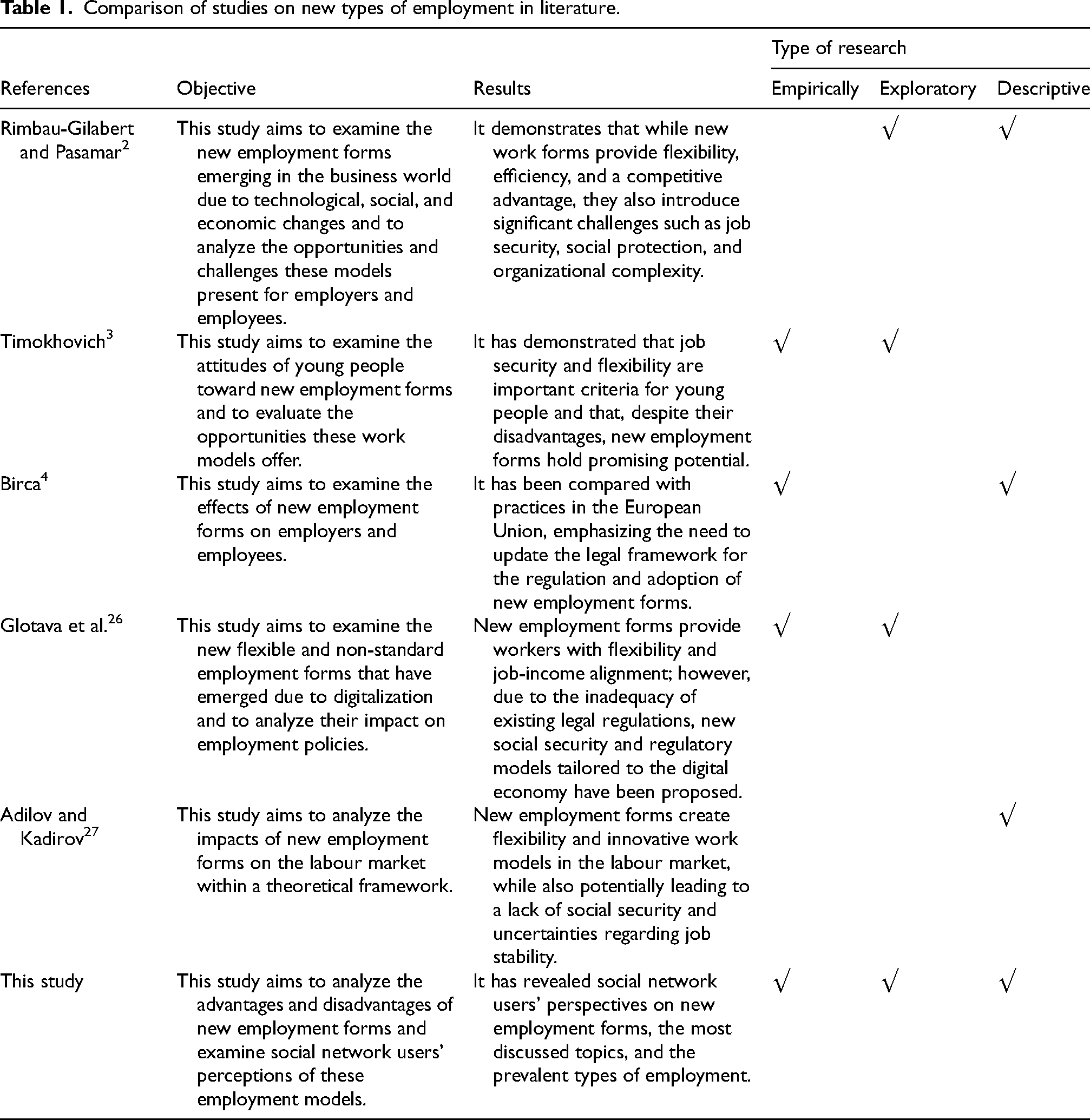
In addition to these studies, Ütük Bayılmış et al. used topic modeling to examine tweets related to the gig economy, a more specialised domain of new employment. Their work highlighted themes surrounding precarity, flexibility, algorithmic control and gender disparities. 13 Ütük Bayılmış and Orhan analysed platform workers’ reviews from FlexJobs, Deel, Toptal and Reddit, revealing issues regarding user experience, financial insecurity and subscription-based service models. 22 While these investigations provided valuable insights into specific employment types, their scope was inherently limited. The present study provides a more comprehensive understanding of how emerging forms of work are perceived by comparatively examining all nine Eurofound employment forms.
Recent WORK studies further highlight the occupational health implications of flexible and digital work arrangements. Qi et al. 23 linked flexible jobs to self-efficacy and well-being, Çay and Gürbüz 25 emphasized the role of telework quality in work–life balance, and Lindberg et al. 24 discussed psychosocial support in digital work environments.
Studies on social network analysis
Social networks provide large-scale user-generated data that can be analyzed to understand public opinions, behaviors, and social trends. 6
This subsection focuses exclusively on studies conducted using data obtained from X platform. Rojas Rincón et al. 7 analyzed perceptions of remote and telework models on X platform in the post-COVID-19 period. Balta Kaç and Eken 8 analyzed water-quality complaints using X platform data, while studies on brand advocacy, 9 consumer electronics, 10 urban green spaces, 11 and metaverse expectations 12 demonstrated the broad applicability of social media analytics across different domains.
Prior studies demonstrated the feasibility of using X platform data to analyze labour-market perceptions. For example, Ütük Bayılmış et al. 13 examined gig economy discourse and identified themes related to precarity and flexibility.
Unlike prior X-based studies focusing mainly on sentiment polarity,7,10 this study employs Latent Dirichlet Allocation (LDA) to identify latent thematic structures across all nine Eurofound employment forms. This approach enables cross-category theme mapping and links online discourse to labour-market governance and organizational practice.
Overall, the literature suggests that emerging employment forms are fluid and interconnected structures shaped by digitalization, organizational adaptation, and regulatory change. Building on this perspective, the present study analyzes how multiple employment forms are simultaneously framed within online discourse and relates thematic salience to broader transformations in labour organization and governance.
New forms of employment
New forms of employment are characterized by flexible work arrangements, digitalization, and changing employer–employee relations shaped by technological and economic transformation.1–5 These employment forms may apply to employees, freelancers, or both groups, and overlaps between categories are possible.
Casual work
Casual work refers to irregular and flexible employment arrangements without guaranteed working hours. 1 While this model provides flexibility for employers and employees, it is also associated with income instability, limited social protection, and weak job security.4,5,28 Casual work is particularly common in sectors such as retail, tourism, construction, and agriculture.
Platform work
Platform work enables individuals and organizations to exchange services through digital platforms. 5 While this model increases labour-market flexibility and access to global work opportunities, platform workers often face job insecurity, weak social protection, and algorithmic management pressures.22,29 Platform work is widely used in transportation, delivery, freelancing, and micro-task services, raising ongoing debates regarding labour regulation and worker rights. 30
ICT-Based mobile work
ICT-based mobile work enables employees to perform their tasks independent of a fixed workplace through digital technologies. Although this model increases flexibility and efficiency, it may also blur work–life boundaries and create expectations of constant availability, raising concerns regarding social rights and job security.7,31,32
Job sharing
Job sharing refers to a flexible employment arrangement in which two employees share a full-time position. The model may improve work–life balance, motivation, and employee retention; however, challenges related to coordination, communication, and task allocation remain important considerations for organizations. 33
Collabourative employment
Collabourative employment promotes cooperation among employees, employers, and digital platforms. While this model may improve workforce efficiency and service innovation, its sustainability depends on fair compensation mechanisms, social protection, and effective regulatory frameworks.34,35
Interim management
Interim management provides organizations with temporary executive expertise during crisis, transformation, or project-based processes. Although this model offers flexibility and rapid decision-making advantages, challenges related to organizational integration and long-term alignment remain important concerns.36–38
Voucher-based work
Voucher-based work is an employment model designed to reduce informal employment and provide social protection through voucher-based payment systems for specific services such as domestic or agricultural work.4,39 The effectiveness of this model depends largely on regulatory design and monitoring mechanisms.
Employee sharing
Employee sharing allows multiple employers to jointly employ specialized workers, particularly benefiting small and medium-sized enterprises. While the model improves labour flexibility and resource sharing, its sustainability depends on legal protections and effective coordination mechanisms.1,40
Portfolio work
Portfolio work enables individuals to work simultaneously across multiple employers or projects. Although this model offers flexibility and professional diversity, it also increases exposure to income instability and limited job security, particularly in creative industries.41,42
Comparative analysis of new forms of employment
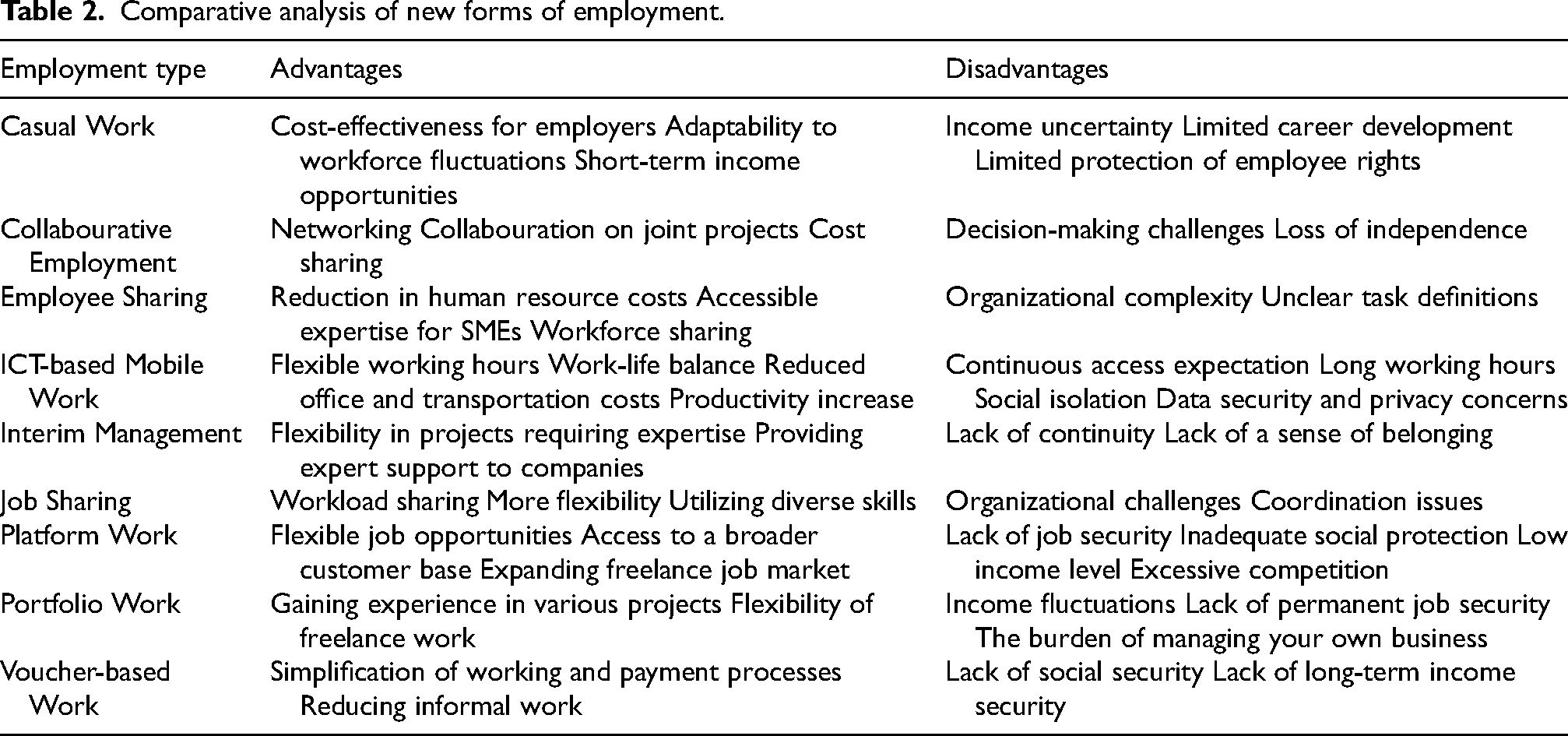
New forms of employment provide flexibility, innovative work arrangements, and cost advantages for both employers and employees. However, they also create challenges related to social protection, job security, income stability, and working conditions. Table 2 summarizes the main advantages and disadvantages of the nine Eurofound employment forms. By comparatively examining all nine forms within a single framework, the present study provides a broader understanding of how emerging employment models are perceived in public discourse on X platform.
Comparative analysis of new forms of employment.
Materials and methods
This section describes the materials and processes used to examine social media users’ perceptions of new types of employment. The overall research flow, including data collection, preprocessing, and modeling stages, is illustrated in Figure 1, providing a clear overview of the methodological design.
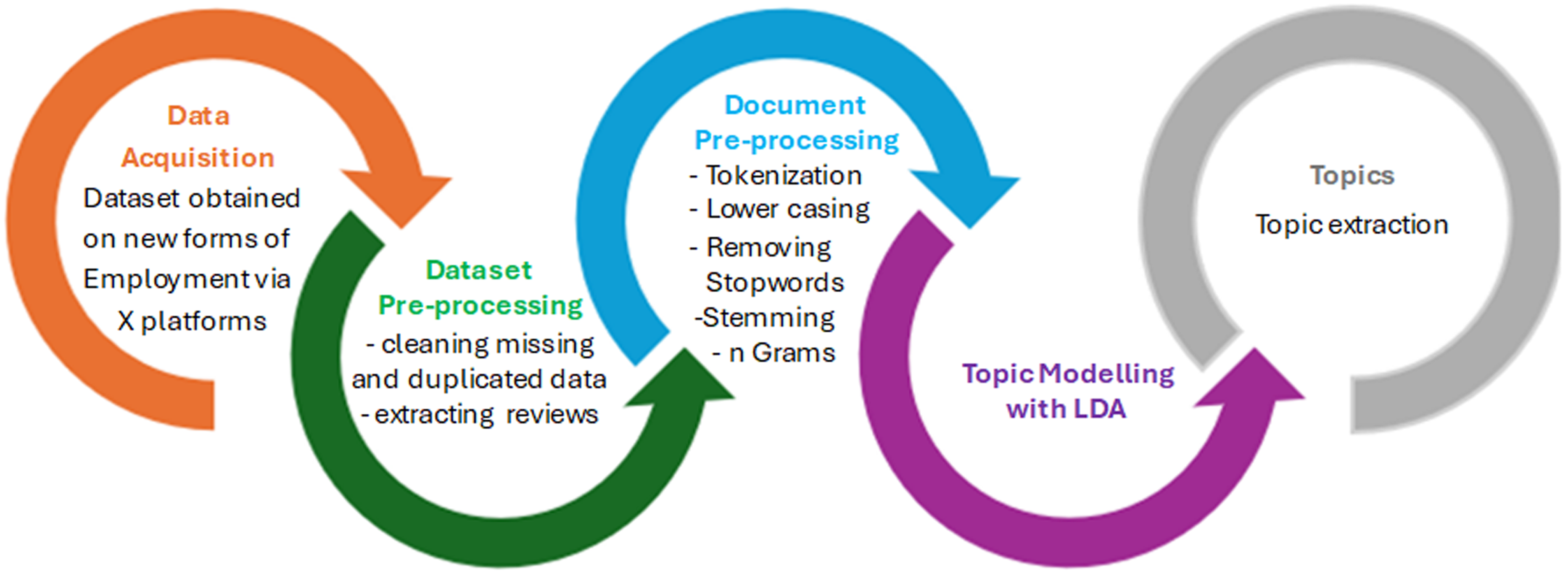
Methodological process followed in the research.
Data acquisition
In this study, 14,442 tweets about new types of employment on X platform were obtained through web scraping technologies as BeautifulSoup and X developer API (https://developer.x.com/en/docs/x-api, accessed on 01 Feb 2025). Data were collected between 1 January 2020 and 31 January 2025. All data employed in this study were publicly available, and no personal or sensitive information was accessed. Therefore, the data collection process complies with ethical standards for social media research. The entire data collection and processing were conducted in the Python (3.11.13) programming language.
Data were retrieved using a combined hashtag + keyword strategy; the query included hashtags such as #PlatformWork, #JobSharing, #InterimManagement, #ICTBasedMobileWork and keywords such as “platform work”, “job sharing”, “interim management”, “ICT-based mobile work”, “employee sharing”, “portfolio work”, “voucher-based work”, “collabourative employment”, “new forms of employment” (Boolean OR across terms to cover orthographic variants and all nine Eurofound forms).
Preprocessing employed NLTK (v3.8.1) tokenization, the NLTK English stopword list augmented with a domain-specific list, and WordNet-based lemmatization; the full preprocessing pipeline is described in Section 4.2.
To enhance thematic coverage and minimize retrieval bias, the data collection strategy combined hashtag-based searches and Boolean keyword queries across orthographic variants of the nine Eurofound-defined employment forms. All retrieved tweets were merged into a single unified corpus prior to analysis. Duplicate entries resulting from overlap across hashtags and keyword matches were identified and removed based on unique tweet IDs to ensure that each tweet appeared only once in the final dataset.
Because Boolean OR logic was applied across all nine employment-form terms, individual tweets could match multiple query expressions simultaneously. However, following retrieval, all tweets were analyzed within a unified corpus without enforcing mutually exclusive pre-model category assignment; category-level patterns reported in Section 5 are therefore derived from term-frequency distributions and topic-model outputs rather than from pre-classified tweet labeling.
It should be noted that the category-level visibility statistics presented in Section 5 reflect the distribution of search-related terms within this constructed corpus. While the combined retrieval approach improves thematic inclusiveness, observed frequency differences should be interpreted as conditional upon the query design and keyword structure employed. Accordingly, the results indicate relative discursive prominence within the dataset rather than definitive measures of organic platform-wide salience.
Data and document pre-processing
A series of data preprocessing steps were undertaken to ensure the quality of the dataset obtained from X platform. Within the collected tweets, empty, duplicate, and spam entries were filtered out, and the dataset used for analysis was finalized. During preprocessing, unnecessary columns as well as NaN (Not a Number) and NaT (Not a Time) rows were removed from the tweet body column, followed by several transformation steps:
Text normalization: All tweets were converted to lowercase. Tokenization: Non-alphabetic characters, URLs, hyperlinks, emojis, special characters, and user mentions were removed. Stopword removal: Commonly used words that do not contribute to document evaluation were eliminated, along with domain-specific stopword lists tailored for employment-related content. n-Grams technique: Applied to detect meaningful word pairs and improve the identification of contextual relationships.
These preprocessing steps ensured the reliability of the dataset by reducing noise and improving the accuracy of topic identification.
Topic modeling with LDA
Topic modeling is a widely adopted text mining method for automatically detecting latent themes in large-scale text datasets and making sense of unstructured text. It has been increasingly applied for purposes such as innovation discovery, inductive classification, and understanding online audiences and social dynamics.15,18 In this study, Latent Dirichlet Allocation (LDA), an unsupervised machine learning method with advantages such as semantic annotation, generalization ability, dimensionality reduction and mixture modeling, is used as a topic modeling method. Developed by Blei et al., 14 LDA uses probability distribution over vocabulary to reveal latent topics in the text collection of documents.
Formally, LDA models each document as a probabilistic mixture of multiple latent topics, and each topic as a probability distribution over words. The document–topic and topic–word distributions are governed by Dirichlet priors, enabling a mixed-membership representation rather than exclusive topic assignment.
To determine the optimal number of topics, several candidate models were evaluated using coherence and perplexity scores. Models were implemented with Gensim LDA and evaluated over k ∈ {6,…,14}; k = 10 was selected as the best interpretability–diagnostics trade-off. The model with the highest coherence and the most interpretable distribution of topics was selected for further analysis. Once the model was established, each topic was characterized by its top keywords, and visualization tools such as word clouds and bar charts of top words were employed to facilitate interpretation of the latent themes. These visualizations not only enhance readability but also strengthen the connection between quantitative results and substantive insights. Candidate topic counts were compared using coherence and perplexity; intertopic distance maps (t-SNE) were used as an exploratory visualization tool to assess topical separation and support interpretability, rather than as a formal validation criterion for topic number selection.
For hyperparameter specification, the LDA model was estimated using standard Dirichlet priors for the document–topic and topic–word distributions (alpha = ‘symmetric’, eta = ‘auto’). The model was trained with 20 passes and 300 iterations, and the random seed was fixed to ensure reproducibility. These parameter settings follow commonly used configurations in topic modeling studies on social-media corpora14,15,43 and were selected to balance model convergence, interpretability, and computational efficiency.
Results
This section presents the empirical findings derived from 14,442 tweets concerning new forms of employment. The analysis proceeded in three stages: (i) exploratory analysis of search-term distributions and user engagement patterns, (ii) topic modeling with Latent Dirichlet Allocation (LDA), and (iii) diagnostic and interpretive visualizations (e.g., intertopic distance mapping via t-SNE) to support topic separation and interpretability. For descriptive transparency, a word cloud visualization of salient expressions is provided in the Appendix (Figure A1). The results provide answers to both research questions (RQ1 and RQ2) by highlighting the visibility of different employment types and uncovering the latent thematic structures in user discourse.
Exploratory data analysis
As a first step, exploratory analysis was conducted to identify the relative visibility of employment types and the engagement patterns surrounding them. Figure 2 shows the relative distribution of query terms across the nine employment types within the constructed tweet corpus described in Section 4.1. ICT-based Mobile Work (18.7%), Interim Management (17.6%), and Job Sharing (≈12%) emerged as the most frequently referenced categories within the query-constructed corpus, indicating their relatively higher discursive prominence under the applied retrieval framework. By contrast, Voucher-based Work and Collabourative Employment received minimal visibility within the analyzed dataset, suggesting a comparatively weaker presence under the applied retrieval structure. This distribution already indicates that not all employment types defined in the literature resonate equally with social media users in the context of the applied retrieval strategy.
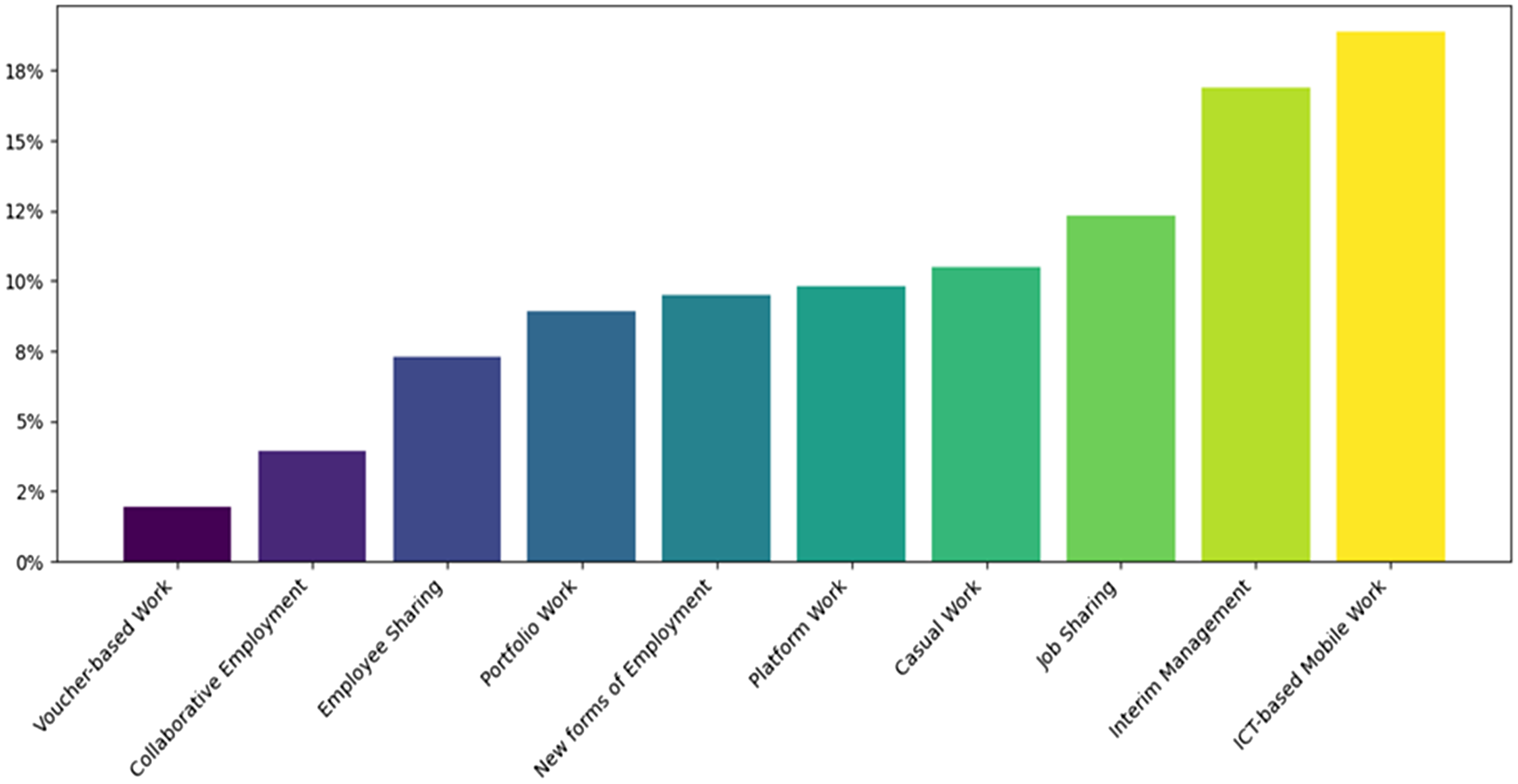
Distribution of query-related term frequencies within the constructed tweet corpus. Note: Percentages reflect the relative frequency of search-related terms within the merged dataset and are conditional upon the multi-stage retrieval strategy described in Section 4.1.
It should be noted that these proportions reflect the distribution of search-related terms within the merged corpus rather than mutually exclusive category assignments. Because tweets were retrieved using a combined hashtag and Boolean keyword strategy, visibility differences should be interpreted as indicative of relative discursive prominence within the constructed dataset rather than definitive measures of platform-wide salience.
Table 3 provides an excerpt of the tweets that received the most likes or were marked as favorites. When examining the top 5 most-liked tweets, it is evident that they include tweets with positive, negative, and neutral sentiments. The most-liked tweet highlights remote work opportunities with a motivational message. It is a positive tweet emphasizing global job opportunities and a comfortable work model. The second-ranked tweet criticizes a decision announcing the end of remote work. This is a negative tweet implying that the decision is an unfavorable development, especially for people who have grown accustomed to remote work. The third-ranked tweet contains a general statement and can be considered neutral as it does not convey any emotional emphasis regarding the work model. The fourth-ranked tweet can also be evaluated as neutral, as it calls for an analysis or discussion on how “new” the concept of “new” truly is in the context of emerging employment forms in Europe. The final tweet emphasizes how remote work and telemedicine have made a significant difference for individuals with disabilities. It also questions the reactions to ending these practices and argues that they do not harm anyone.
Top five tweets by number of likes.
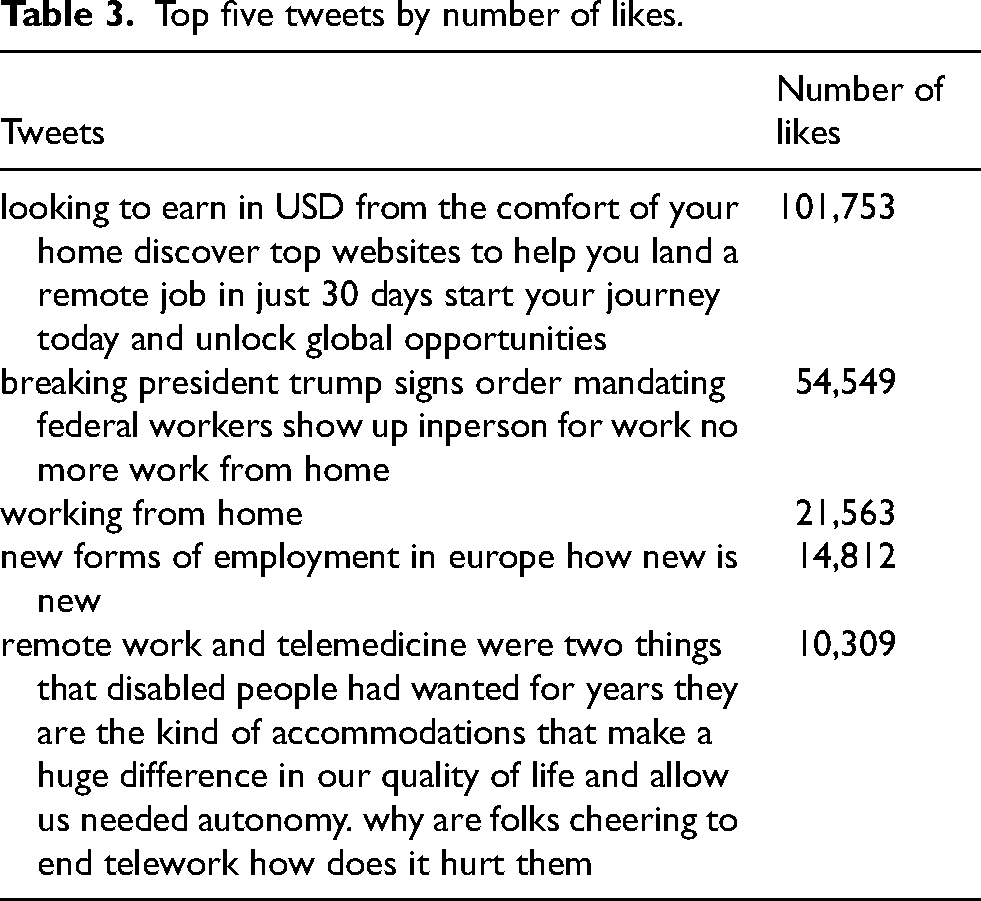
Overall, the diversity of these tweets illustrates the spectrum of public perceptions: positive posts highlight the global opportunities and inclusivity of remote work, while negative ones critique the rollback of telework policies. Neutral entries, in turn, reflect curiosity and reflection rather than emotional bias. This pattern indicates that engagement with remote work discourse encompasses endorsement, criticism, and contemplation alike. Table 3 is included to illustrate the diversity of engagement patterns and thematic expression rather than to generalize sentiment distributions across the dataset.
Table 4 presents the ranking of terms used in tweet searches related to new forms of employment based on their highest engagement and like values. The top three most-liked terms are ICT-based Mobile Work, Casual Work, and New Forms of Employment. The top three most frequently observed terms are ICT-based Mobile Work, Casual Work, and Employee Sharing.
The most seen and liked values of the hashtags used for the query.
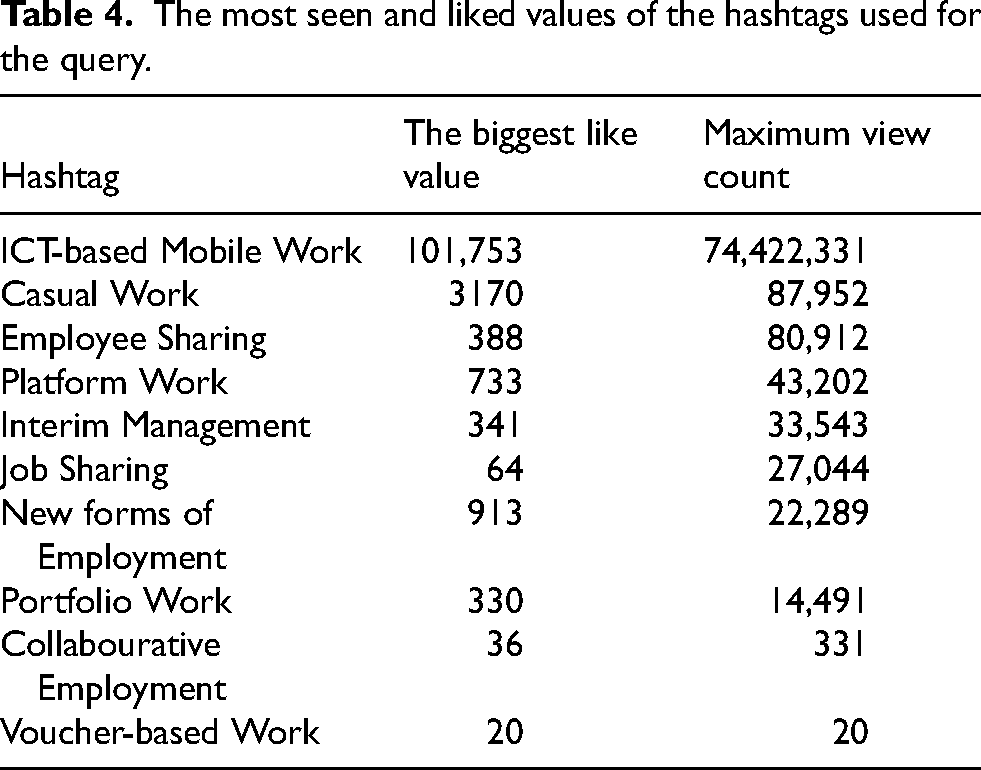
The relative prominence of ICT-based Mobile Work—over 101,000 likes and 74 million views—highlights its strong symbolic presence within the analyzed corpus. In contrast, other categories such as Casual Work and Employee Sharing, though visible, remain far behind in engagement. This pattern suggests that ICT-based flexibility is associated with comparatively stronger engagement dynamics within the dataset, making it a comparatively central reference point within the analyzed corpus.
To answer RQ1, within the constructed corpus ICT-based mobile work appears as the most prominent query-related category, accounting for 18.7% of search-term frequency, 101,753 likes and 74,422,331 views within the analyzed dataset.
Together, these exploratory findings indicate that visibility is highly uneven, with certain forms such as ICT-based Mobile Work, Interim Management, and Job Sharing showing comparatively higher levels of discursive prominence, while others remain marginal.
For descriptive transparency, a word cloud visualization of frequently co-occurring bigrams extracted from the corpus is provided in the Appendix (Figure A1).
Understanding the perceptions of users with LDA topic modeling analysis
Beyond descriptive patterns, topic modeling was conducted to uncover the latent structures within the dataset and provide a more systematic understanding of user perceptions. Table 5 summarizes the ten topics identified through the LDA model, highlighting their representative keywords and the percentage distribution of each topic across the collected tweets. Examinations related to Interim Management and Leadership rank first, while Public Services and Bureaucracy rank last.
LDA topics, top 10 keywords, and prevalence (%).
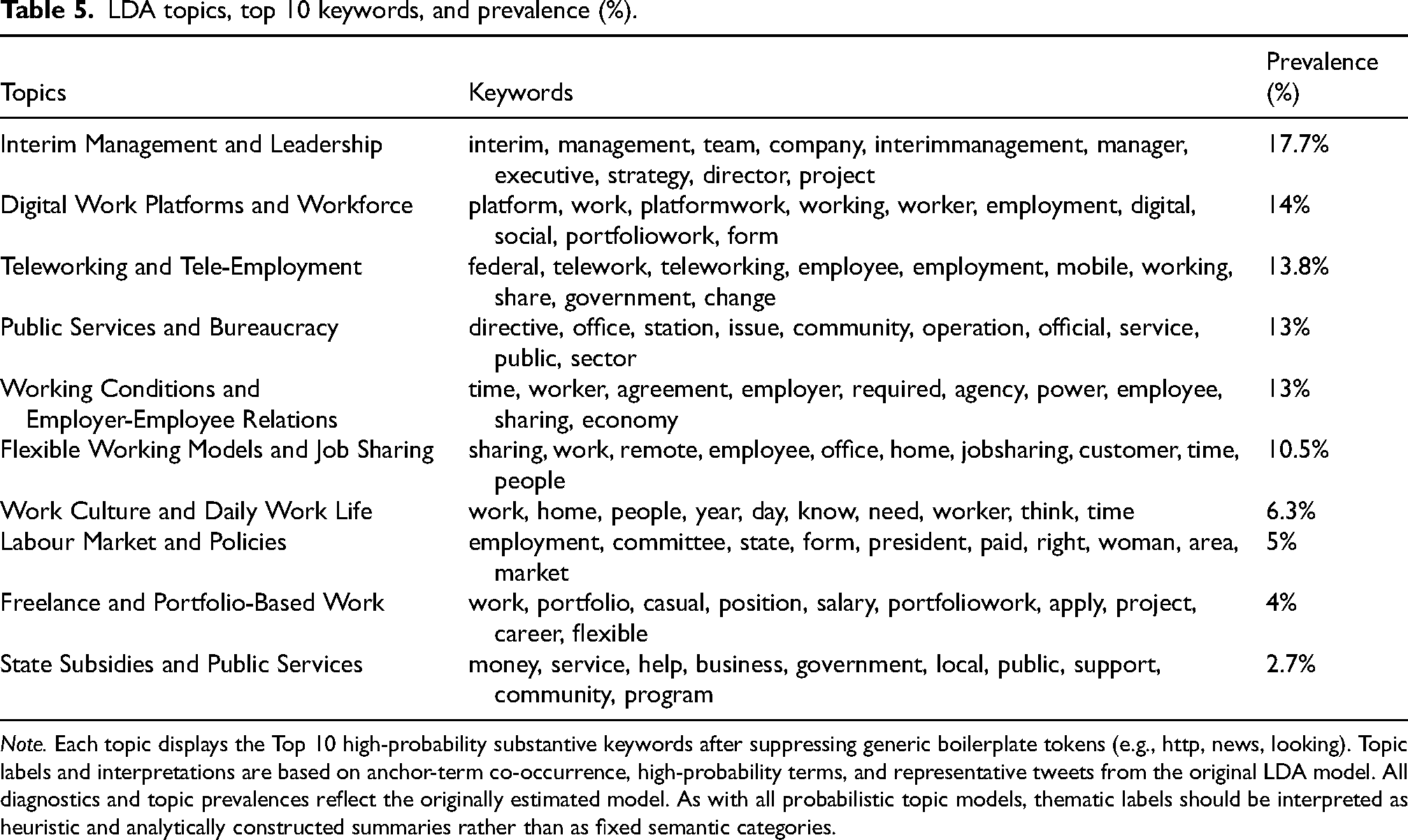
Note. Each topic displays the Top 10 high-probability substantive keywords after suppressing generic boilerplate tokens (e.g., http, news, looking). Topic labels and interpretations are based on anchor-term co-occurrence, high-probability terms, and representative tweets from the original LDA model. All diagnostics and topic prevalences reflect the originally estimated model. As with all probabilistic topic models, thematic labels should be interpreted as heuristic and analytically constructed summaries rather than as fixed semantic categories.
Topic labels and interpretations were derived through a structured interpretive procedure. For each topic, high-probability keywords, exclusivity metrics, and representative tweets with the highest posterior topic probabilities were examined. Topic naming followed an iterative process combining quantitative indicators (top tokens and topic prevalence) with qualitative reading of exemplar tweets. This triangulated approach was employed to reduce interpretive overreach and ensure that thematic labels were grounded in observable textual evidence rather than inferred semantic assumptions.
To answer RQ2, the prominent themes in the field of new types of employment on platform X are “Interim Management and Leadership” with 17.7%, “Digital Work Platforms and Workforce” with 14%, “Teleworking and Tele-Employment” with 13.8%. Prominent keywords in these themes include interim, news, work, platform work, digital, eurofound, mobile, social, telework, employee.
Table 6 provides the Coherence, Exclusivity, Tokens, and Corpus Distance values recommended in the literature to evaluate the topics extracted using LDA in this research study. Coherence is a metric that indicates how consistent and meaningful the words within a topic are. Exclusivity measures how little the words in a topic are shared with other topics (i.e., how unique they are). Tokens show how much space a topic occupies or is represented in the documents. Corpus Distance expresses how much the word distribution of a topic diverges from the overall word distribution of the entire dataset (corpus). 44
Diagnostic measurements for topics.
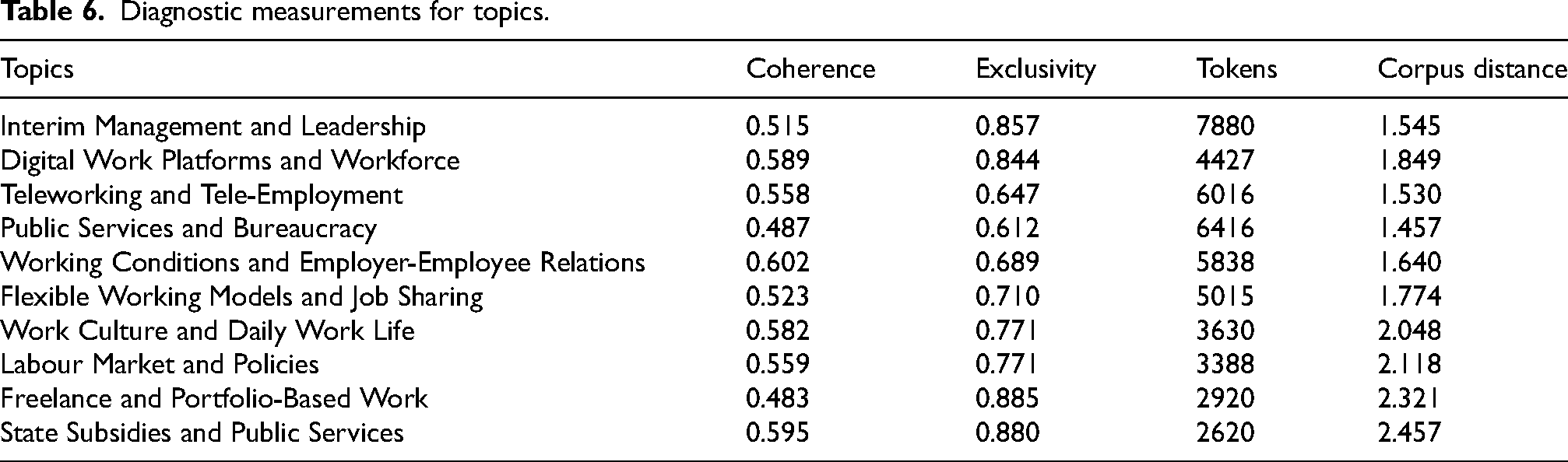
The results for the Interim Management and Leadership topic can be interpreted as follows: A Coherence value of 0.515 indicates that the words in this topic show moderate consistency with each other. An Exclusivity score of 0.857, which is relatively high, suggests that the words specific to this topic are more unique compared to other topics. The Tokens count of 7880 is relatively high, meaning this topic occupies a significant space in the documents. A Corpus Distance value of 1.545 indicates that the word distribution diverges moderately from the overall dataset (corpus), but it is not an extreme outlier.
The results for the Flexible Working Models and Job Sharing topic can be interpreted as follows: A Coherence of 0.603 shows that the words in this topic form a fairly consistent and meaningful whole. An Exclusivity of 0.710 suggests that the words are somewhat shared with other topics, but there is still a core unique to this topic. A Tokens count of 5330 indicates a reasonable volume of text on this topic. A Corpus Distance of 1.774 signifies a notable divergence from the overall corpus, indicating that the topic has a distinct theme.
Overall, coherence values (0.48–0.60) suggest that the topics show moderate internal consistency, a range commonly observed in short and lexically sparse social media corpora, while exclusivity scores demonstrate that most themes possess distinctive vocabularies. Token counts reflect the relative prominence of each theme, and corpus distance values reveal that some topics (e.g., subsidies) diverge sharply from the general discourse, whereas others (e.g., teleworking) remain close to the mainstream. Collectively, these indicators provide convergent support for the interpretability and relative distinctiveness of the identified topics, rather than constituting formal validation of model robustness.
A post or comment may inherently be related to multiple topics. Latent Dirichlet Allocation (LDA) is a probabilistic mixed-membership model in which each document is represented as a distribution over multiple latent topics, and each topic is defined as a probability distribution over words. Rather than assigning a tweet to a single exclusive topic, LDA estimates the proportional contribution of each topic to each document through Dirichlet priors.
For interpretive clarity and aggregation purposes, we report the dominant topic for each tweet based on the highest posterior topic probability. This dominant-topic assignment represents an analytical simplification used for presentation and summary statistics, but it does not alter the underlying mixed-membership structure of the model. Accordingly, references to topic-level prevalence reflect aggregated dominant-topic probabilities rather than exclusive document-level categorization.
Figure 3 provides a t-SNE visualization, in which each point represents an individual tweet. Dense clusters correspond to dominant topics (telework, interim management, digital platforms), whereas overlapping regions illustrate the blurred boundaries between certain themes. This visualization demonstrates that user discourse is multidimensional: some employment forms are perceived as distinct, while others merge into hybrid constellations.
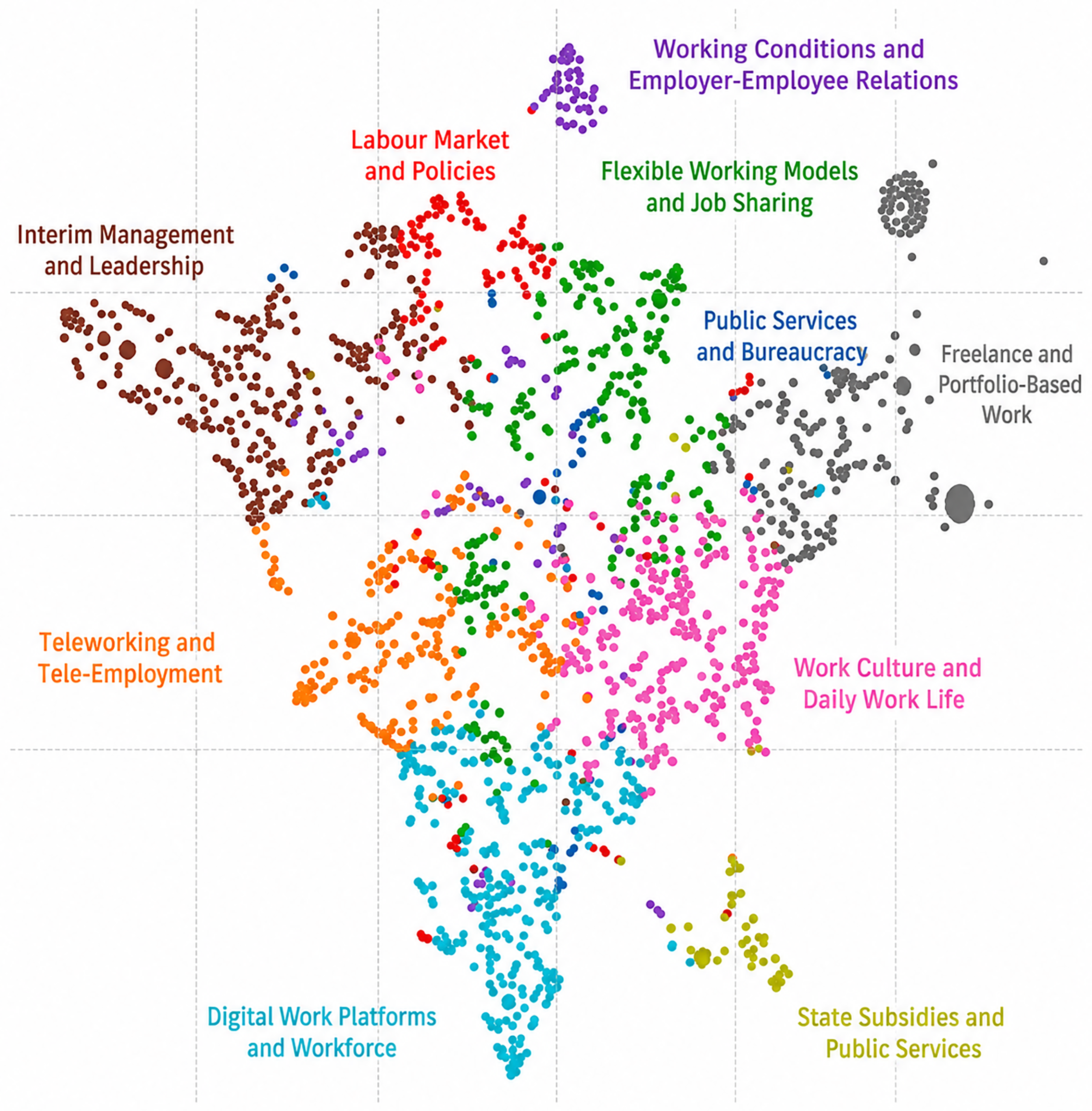
t-SNE visualization. Topics form relatively distinct clusters, supporting qualitative interpretability and exploratory assessment of topical separation rather than constituting formal statistical validation of topic number selection.
When examining the tweets categorized into the 10 different topics identified by LDA, the following explanations can be derived:
Interim Management and Leadership: Under this topic, evaluations regarding the importance of guiding teams effectively through interim management and leadership skills in projects across various sectors are frequently discussed. Flexible approaches such as digital platforms, telework, and casual work are transforming management and leadership roles while offering effective solutions to rapidly changing business dynamics. Keywords such as interim, leader, strategy, project, and change indicate discourse centered on temporary leadership roles in guiding organizations through transformation and uncertainty. Tweets often refer to agility and decision-making capacity as critical assets in volatile contexts. For example, one anonymized tweet from the dataset states: “Start the year strong with interim management services to navigate leadership changes smoothly. Whether temporary or permanent, we provide the expertise and stability to keep your team on track”.
Digital Work Platforms and Workforce: Digital work platforms demonstrate that employees can integrate into the labour market in the digital age through remote work. These platforms offer flexibility to employers while providing employees with the opportunity to explore global job opportunities. However, it is emphasized that improvements are needed in terms of workers’ rights and social security coverage. Defined by terms such as platform work, digital, gig, task, and marketplace, this topic emphasizes opportunities for global participation in the labour market but also reflects concerns about algorithmic control, fraud, and insecure payments. For example, one anonymized tweet from the dataset advertises a platform-mediated remote job opportunity: “Hiring: Remote Chat Support Agent at NoGigiddy – Location: 100% Remote (Work From Home), Salary: $15–$18/hr, No Degree or Experience Required”.
Teleworking and Tele-Employment: The integration of teleworking and tele-employment into business models supported by digital platforms and flexible work opportunities is emphasized. It highlights the diversity of teleworking and tele-employment options, showcasing the feasibility of working from home or specific locations. However, communication and planning challenges encountered during platform usage reveal that the digital work ecosystem requires continuous development and adaptation. With keywords like telework, remote, hybrid, home, and policy, this cluster reflects polarized perceptions: some users celebrate autonomy and flexibility, while others emphasize isolation and blurred work–life boundaries. For instance, one anonymized tweet from the dataset notes: “@ilo released a #report on the evolution of #teleworking, the impact of the #COVID19 pandemic on new forms of #employment, and achievement of decent #workingconditions”.
Public Services and Bureaucracy: The rise of flexible, temporary, and telework-based work models, driven by the impact of digital transformation, is discussed as a factor changing work-life balance. Alongside the increase in workload, the need for adjustments in regulations and working conditions in the public sector is highlighted. Keywords such as public, service, bureaucracy, regulation, and efficiency show debates on the digital transformation of state institutions. While some highlight the necessity of adaptation, others express frustration with inefficiency and rigidity. For instance, one anonymized tweet from the dataset highlights regulatory debates around new employment forms: “We will improve labour laws and regulations and strengthen mechanisms to protect the rights and interests of workers engaged in flexible and new forms of employment.”
Working Conditions and Employer-Employee Relations: The transformation of workforce dynamics alongside technological advancements and the impact of flexible, remote work models are brought to the forefront. In this dynamic environment, the focus is on both employers and employees adapting to changing economic conditions to establish more efficient and sustainable work relationships. Dominated by terms like contract, trust, rights, negotiation, and security, this theme highlights power asymmetries in flexible arrangements and strong demands for enforceable labour rights. For example, one anonymized tweet from the dataset states: “Workers in platform jobs deserve better contracts and stronger labour protections”.
Flexible Working Models and Job Sharing: Digital platforms and technological innovations are driving the increasing prevalence of flexible working models, remote work (remote, home), and job sharing. These approaches provide employees with greater freedom, productivity, and work-life balance while also contributing significantly to innovation and economic growth across various sectors. Keywords including job sharing, flexible, schedule, coordination, and role reveal both benefits (continuity, retention, productivity) and challenges (role ambiguity, coordination costs). For instance, one anonymized tweet from the dataset highlights the growing normalization of flexible and shared work arrangements: “Hybrid working is here to stay. Flexible schedules and shared responsibilities are becoming the new normal for many teams.”
Work Culture and Daily Work Life: The transformation of work culture and daily work life in a digitized world is examined. With flexible work and platform-based business models, employees gain the ability to shape their own work, while issues such as workers’ rights and job security come to the forefront in work relationships. Discussions are held regarding regulations and challenges related to new work models. Terms such as culture, routine, burnout, autonomy, and norm point to cultural implications: while autonomy and innovation are valued, risks of overwork and precarity are frequently raised. For instance, one anonymized tweet from the dataset emphasizes how remote work is becoming normalized through self-imposed routines and discipline: “Every day that he has worked remotely he gets up, puts on casual work attire suitable for any office and goes to work in a room he set up as an office, no TV or distractions.”
Labour Market and Policies: It is understood that flexible working models and new forms of employment are rapidly spreading due to changing workforce dynamics and the impact of government policy adjustments. The legal basis for teleworking practices highlights the need for balanced policies that consider innovation, flexibility, and workers’ rights. With policy, law, regulation, balance, and innovation as defining terms, this topic foregrounds debates on whether existing legal frameworks can balance innovation and protection in new forms of employment. For instance, one anonymized tweet from the dataset emphasizes the policy dimension of emerging work models: “Governments must update labour regulations to reflect the growth of remote work and platform-based employment while ensuring adequate worker protections”.
Freelance and Portfolio-Based Work: Freelance and portfolio-based work models are rapidly gaining popularity through digital platforms. Comments highlight issues such as fraud in platform-based work, payment security, and the importance of supportive policies. Terms like freelance, portfolio, client, invoice, and risk indicate growing attention to multi-project careers but also stress insecurity, payment delays, and lack of institutional support. For instance, one anonymized tweet from the dataset emphasizes the perceived advantages of portfolio-based careers: “Portfolio work can offer huge benefits from a better work/life balance, the ability to span across a variety of areas or specialise in a few, and not having to deal with the politics of being in a corporate office”.
State Subsidies and Public Services: The alignment of state subsidies and public services with flexible working models, as well as the challenges faced particularly in the service sector, are discussed. The implementation of new regulations to protect the rights of temporary workers is being debated. For instance, one anonymized tweet from the dataset highlights policy debates surrounding new forms of employment: “European Parliament report on fair working conditions, rights and social protection for platform workers – new forms of employment linked to digital development”.
Keywords including subsidy, support, eligibility, and adequacy reveal critiques of subsidy schemes, which are perceived as insufficient to provide stability for non-standard workers.
Summary of key findings
The analyses presented in this section offer valuable insights into how social media users perceive new forms of employment. Firstly, exploratory data analysis revealed that ICT-based mobile work and interim management dominate online discussions, attracting the highest levels of engagement and visibility. For descriptive transparency, a word cloud visualization of frequently co-occurring expressions extracted from the corpus is provided in the Appendix Figure A1. This visualization serves only as a descriptive illustration and does not constitute part of the analytical framework. Secondly, the results of the topic modeling demonstrated that user debates cluster around themes such as interim management and leadership, digital work platforms and teleworking. Issues such as working conditions, labour rights and social protection also feature prominently. Finally, the overlaps observed in the intertopic distance map and t-SNE visualisation suggest that users conceptualise certain forms, particularly flexible working models and job sharing, as hybrid and interconnected rather than strictly separate categories.
These findings extend the descriptive patterns of earlier research by systematically mapping the thematic structure of digital labour discourse. In doing so, they provide an empirical basis for discussing the broader implications of new employment forms for labour market governance, organizational practices, and worker experiences, which are taken up in the following Discussion section. These patterns motivate the following Discussion, where we integrate the themes with prior evidence on Eurofound's nine forms and derive theoretical and practical implications.
Discussion
The findings reveal that social media discourse on new forms of employment is diverse and fragmented while also reflecting broader transformations in the world of work. Unlike sentiment-based approaches, the LDA results provide a content-level mapping of thematic prevalence and cross-category overlap across the nine employment forms. Moderate coherence values are expected in short and noisy social-media corpora, where lexical sparsity limits semantic density.
The t-SNE intertopic map is interpreted as an exploratory visualization that supports topic interpretability rather than as a formal validation mechanism.
From an occupational health perspective, the findings align with recent WORK studies showing that flexible and digital work arrangements influence well-being, work–life balance, and psychosocial strain.23–25 The results also suggest that supportive work design and clear boundary-management practices are important in hybrid and platform contexts.
Although the study does not directly model health outcomes, the prominence of themes such as job insecurity, workload intensification, regulatory ambiguity, and boundary blurring suggests important connections to psychosocial risk frameworks within occupational health research.
Theoretical implications
The results extend existing scholarship on non-standard and flexible employment by showing that workers conceptualize new forms of work in hybrid rather than discrete terms. The overlap between Flexible Working Models, Job Sharing, and Working Conditions challenges conventional typologies that treat employment forms as isolated categories and instead highlights fluid boundaries across work arrangements.
The prominence of digital platforms, teleworking, and interim management suggests that employment increasingly operates along a continuum shaped by technological innovation, organizational strategies, and individual agency. In this respect, the findings contribute to digital labour debates by integrating public discourse into models of work transformation.
Consistent with previous social media–based studies, the present research adopts a comparative Eurofound-based taxonomy to examine cross-category thematic overlap within a unified corpus. This approach enables the identification of governance-related tensions that remain less visible in single-domain analyses.
Beyond descriptive mapping, the findings support digital labour perspectives suggesting that employment forms increasingly operate along a continuum rather than within fixed institutional categories. The observed thematic overlaps indicate that contemporary work arrangements blur organizational, contractual, and temporal boundaries.
Practical and policy implications
From a policy perspective, the results highlight the need to address concerns regarding social protection, job security, and regulatory gaps in non-standard employment. Public discourse on the X platform reveals scepticism about the effectiveness of existing labour protections, suggesting that policymakers should balance flexibility and innovation with worker rights.
The findings also highlight the importance of boundary-management practices, supportive task design, and flexible work structures that promote employee well-being and resilience. 25
The prominence of themes such as interim management and ICT-based mobile work suggests growing expectations for agile leadership and flexible work arrangements. At the same time, concerns regarding algorithmic management and payment insecurity in platform work emphasise the need for transparent governance mechanisms to sustain trust between workers and organisations.
Limitations
Despite its contributions, the study has several limitations. First, the analysis is restricted to publicly available tweets, which may not capture all demographic or occupational perspectives. Second, the reliance on English-language data limits the generalizability of findings to non-English contexts, where perceptions of new employment forms may vary significantly. Third, although LDA is a mixed-membership model in which each document can be associated with multiple topics, the use of dominant-topic assignment for interpretive clarity may simplify complex discursive structures.
In addition, the combined hashtag and keyword-based retrieval strategy may privilege explicitly labeled discussions, potentially influencing the relative visibility of certain employment categories within the constructed corpus.
Future research
Future studies could expand this work by incorporating multilingual datasets and additional digital platforms such as LinkedIn, Reddit, or sector-specific forums. Comparative cross-country analyses may further clarify how cultural, institutional, and regulatory contexts shape perceptions of new employment forms. Methodologically, future research may compare LDA with advanced embedding-based approaches such as BERTopic and transformer models to better capture overlapping themes and thematic stability. Longitudinal analyses could also help trace how perceptions evolve in response to technological, economic, and policy changes.
Conclusions
This study examined public perceptions of new forms of employment through a large-scale analysis of social media data. By applying topic modeling to more than 14,000 tweets collected from X platform, the research systematically mapped the thematic structure of digital labour discourse. The findings indicate that certain employment forms—particularly ICT-based mobile work, interim management, and platform work—appear comparatively more prominent within the analyzed corpus, while issues of working conditions, labour rights, and social protection remain central concerns.
Emerging employment forms increase labour-market flexibility and innovation but also raise concerns regarding job security and social protection. Rather than measuring health outcomes directly, the study identifies discourse patterns related to psychosocial risk, governance, and work design.
The study contributes to the literature in three main ways. Firstly, it highlights the hybrid nature of how workers conceptualise emerging employment forms, challenging the binary classification of standard versus non-standard work. Secondly, it incorporates public discourse into academic discussions about digital labour, providing an alternative viewpoint to survey- and policy-based analyses. Thirdly, it demonstrates the potential of topic modeling as a methodological tool for capturing the complexity and multidimensionality of online discussions about the future of work.
The study is limited by data scope, language restrictions, and modeling assumptions. Future studies may expand the analysis across platforms, languages, and advanced NLP approaches.
Overall, the findings suggest that new employment forms are becoming integral components of the digital labour ecosystem and require continuous adaptation of labour regulations, social protection systems, and workplace practices. Consistent with recent WORK studies,23–25 the results also highlight the occupational health relevance of flexible and digitally mediated work arrangements.
Footnotes
Acknowledgements
The authors would like to thank the editor and the anonymous reviewers for their valuable and constructive comments, which helped improve the quality of the manuscript.
Ethical approval
This study used publicly available data from the X (formerly Twitter) platform; therefore, ethical approval is not applicable.
Informed consent
Informed consent was not required for this study, as it was based on publicly available data from the X platform and did not involve direct interaction with human participants.
Funding
The authors received no financial support for the research, authorship, and/or publication of this article.
Declaration of conflicting interests
The authors declared no potential conflicts of interest with respect to the research, authorship, and/or publication of this article.
Data availability statement
The datasets generated and/or analyzed during the current study are available from the corresponding author on reasonable request.

Appendix
This appendix provides a descriptive visualization of frequently occurring expressions in the tweet corpus used in the study.