



Abstract
Background
The foot's musculoskeletal function underpins gait and posture, making footwear a critical body-environment interface. Research across podiatry, orthopaedics, sports science, orthotics, and footwear design remains fragmented, necessitating a unified framework to advance ergonomic theory and practice.
Objective
This study aims to synthesize and present a unified framework of ergonomic considerations in footwear design by harmonizing interdisciplinary research from fields such as podiatry, sports science, orthopaedics, and ergonomics. It seeks to elucidate key thematic areas to advance the understanding and application of ergonomic principles for enhanced health, performance, and safety in footwear.
Methods
A comprehensive literature review and critical analysis were conducted across fields such as podiatry, orthopaedics, sports science, orthotics, footwear design and ergonomics, drawing from scholarly sources in databases including Web of Science Core Collection and Google Scholar. The analysis integrates findings across disciplines to develop a comprehensive taxonomy of ergonomic factors critical to footwear design.
Results
Six principal ergonomic factors are identified: Physiological, Physical, Cognitive, Organizational, Special Populations, and Innovation & Sustainability. The findings underscore the fact that ergonomically engineered footwear acts as a vital intervention for preventing injury, comfort and performances enhancement as well as promoting musculoskeletal well-being.
Conclusions
The findings provide footwear designers, engineers, and ergonomists with a structured, evidence-based framework to guide the development of products that effectively balance comfort, performance, and safety. Future research should address demographic biases, evaluate longitudinal outcomes, and examine implementation barriers to validate the framework across diverse populations.
Keywords
Introduction
The foot's skeletal–muscular interplay underpins gait, posture, and spinal alignment; thus, ergonomic footwear must align with this anatomy by offering structural support, sufficient toe space for natural motion, and cushioning for the heel and metatarsal areas. As a primary interface between the foot and the environment, footwear protects the foot and enables pain-free locomotion for daily, occupational, and athletic tasks. 1
Empirical evidence indicates that specific footwear designs, such as high-heeled shoes, can pose adverse health risks. 2 This is particularly salient given their continued prevalence as a preferred choice among female consumers. 3 Ergonomic considerations in footwear research and design thus aim to enhance comfort, functionality, and safety while minimizing strain or injury to the feet, lower limbs, and entire body.
Consequently, a foundational understanding of podiatric anatomy and biomechanics is therefore critical for the development of footwear that mitigates strain and prevents podiatric and related musculoskeletal disorders. For example an anatomically-informed rocker-sole geometry significantly lowers peak plantar pressures and joint moments, thereby mitigating strain on the foot and ankle complex. 4 Principled ergonomic design therefore translates this knowledge into features that offer targeted arch support, accommodate the dynamic splay of the toes during the gait cycle, and attenuate impact forces at key load-bearing sites such as the heel and forefoot.
The outcome is footwear that achieves biomechanical compatibility—enhancing, rather than inhibiting the foot's intrinsic function. This compatibility is essential for maintaining long-term foot health, optimizing comfort, and improving athletic efficiency. Consequently, the application of ergonomic science positions footwear as a vital intervention in promoting systemic musculoskeletal well-being. 5
Footwear Ergonomics research have focused on certain thematic areas including fit and sizing, cushioning and impact absorption, arch support, sole design and traction, breathability and temperature regulation, footwear weight and mobility, posture and gait analysis and occupational needs and recently on sustainable design and manufacturing issues. 6 Even though there has been quite a substantial research on this topic, most of them are scattered across several fields such as podiatry, orthopaedics, sports science, orthotics, footwear design and ergonomics. This study thus seeks to harmonize these studies, highlight and discuss these thematic areas for a much better appreciation of the subject. This presentation is partitioned into the background and methodology of the study and an overview of Ergonomic factors and their importance in footwear design.
Methodology
This study employs a comprehensive literature review methodology to synthesize existing research on footwear ergonomics while evaluating the current state of knowledge. A systematic search of relevant literature was conducted using the Web of Science Core Collection, Google Scholar, Bing and Bing scholar databases. The search strategy employed the following Boolean strings: (footwear OR shoes OR boots OR insoles) AND (ergonomics OR biomechanics OR anthropometry) AND (design OR engineering OR development); (occupational footwear OR safety shoes) AND (musculoskeletal disorders OR injury prevention); (cognitive ergonomics OR usability) AND (footwear design); (sustainable materials OR bio-based polymers) AND (shoe manufacturing).
The search was limited to English-language publications but not restricted by publication year to capture seminal works. However, a deliberate emphasis was placed on literature published within the last five years (2019–2024) to capture contemporary trends, technological advancements, and current evidence, while foundational works were included where historically necessary for contextual understanding.
Inclusion criteria comprised: (1) peer-reviewed journal articles, conference proceedings, and authoritative industry standards; (2) studies reporting original data or systematic reviews on footwear design factors; (3) research addressing ergonomic outcomes (comfort, performance, injury prevention)and (4) some non-academic sources that provide unique, empirically grounded case studies, and or figures unavailable elsewhere. Exclusion criteria included: (1) non-English language sources, opinion pieces, non-peer-reviewed trade publications. The ensuing analysis integrates findings from relevant publications, and elucidates key ergonomic factors and their critical importance in footwear design.
Ergonomic factors and their importance in footwear design
In general, Ergonomic design factors involve creating products, environments, and systems that are tailored to human needs, abilities, and limitations. When it comes to shoes, ergonomic factors involves creating designs that aligns with this complex anatomy, providing support where it's needed, ensuring ample space for the toes to move, and cushioning the impact on the heel and metatarsals. These factors are critical in ensuring safety, comfort, efficiency, and productivity.
This study categorizes key ergonomic factors relevant for footwear design into physiological, physical, cognitive organizational, special groups and innovation and sustainability considerations. Subsequent discussions look at these factors into detail and highlight their interrelationships as well as their importance in footwear design. Figure 1 presents a diagrammatic outline of Ergonomic considerations in footwear design.
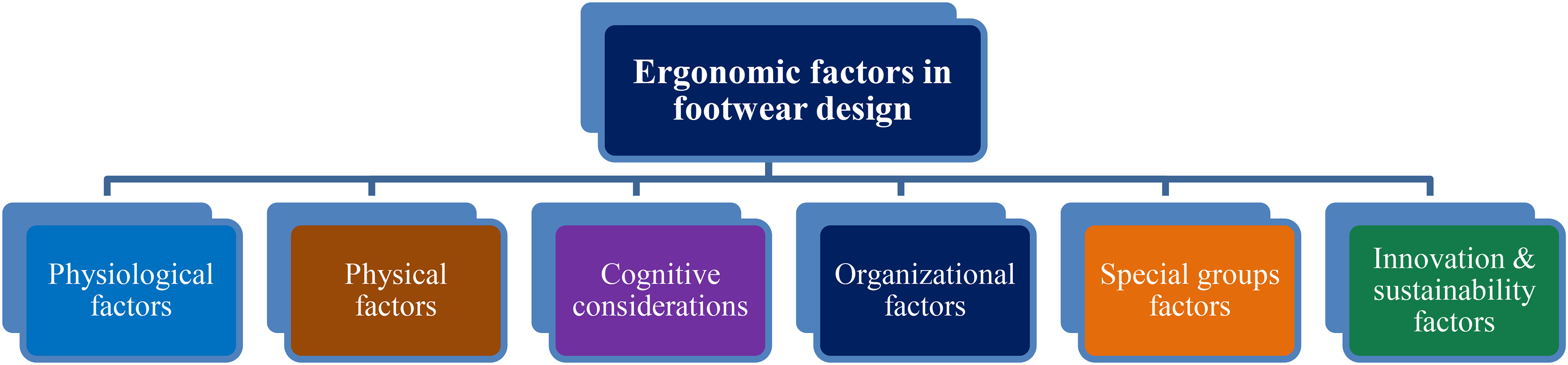
Diagrammatic overview of ergonomic considerations in footwear design.
Physiological factors
Physiological factors constitute a foundational consideration in biomechanically-informed footwear design, as the footwear-foot interface directly influences the structural integrity, sensory-motor function, and overall health of the lower extremity. Wilkinson et al. therefore contends that non-anatomical, cushioned footwear maladapts foot structure and degrades biologically normal functions—namely stability, elasticity, sensory feedback, and movement control. 7 Figure 2 presents these key physiological factors relevant in footwear design and engineering.

Physiological factors in footwear design.
Comprising an intricate arrangement of bones, joints, muscles, tendons, ligaments, and other soft tissues, the human foot provides the mechanical foundation for upright posture, weight-bearing, and ambulatory activities, including walking, running, and jumping. 8 The morphology of the foot is subject to significant influence from diverse factors, encompassing racial background, 9 habitual behaviors (including physical activity frequency and footwear preference), and individual demographics such as gender, body mass index, and age.10,11
These anatomical features together with innate physiological considerations are critical for ergonomic footwear design. Anthropometry—the scientific measurement of the human body—provides the quantitative foundation for understanding foot morphology, which refers to the form, proportions, and structural characteristics of the human foot. Anthropometry when critically applied in footwear design serves to accommodate population variability. Anthropometry serves as a key parameter for sexual differentiation, with its measurements exhibiting significant variation due to hereditary, geographical, racial, and sexual factors. 12
Inadequate fit can lead to deformities such as hallux valgus, corns, and plantar fasciitis 13 Effective design utilizes anthropometric data—such as foot length, ball width, and instep height—to create a range of sizes that serve a diverse user base, typically targeting the 5th to 95th percentiles to ensure inclusivity. 14 Figure 3 shows a percentile range curve which indicates how the 5th to the 95th percentile accommodates variability within the population. This data-driven approach enables standardized sizing and anatomically aligned shoe lasts, ensuring footwear matches the target population's morphology.
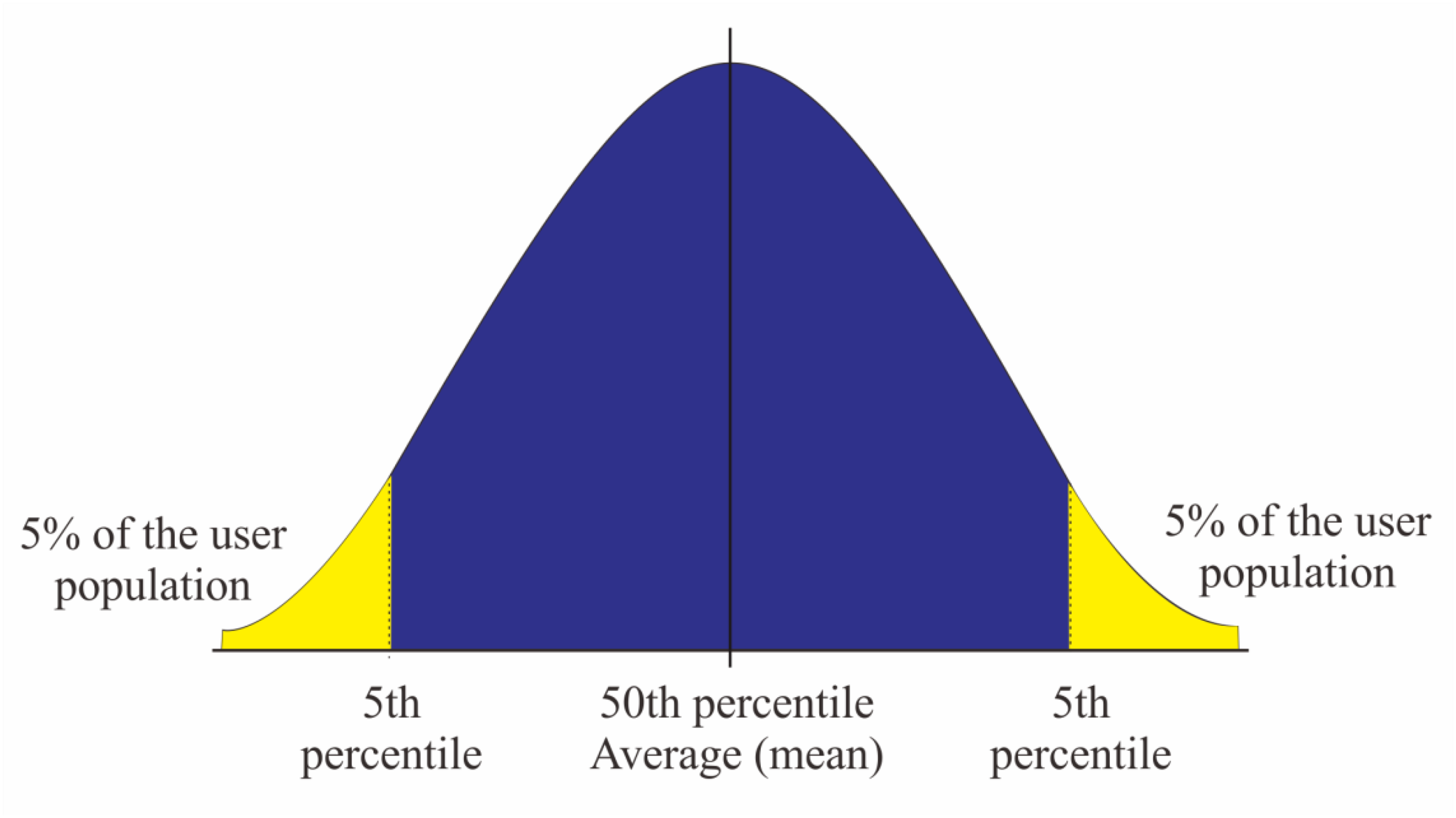
Percentile range curve.
Biomechanics which is fundamental to footwear design and development, directly impacts critical aspects such as comfort, performance enhancement, and injury prevention. 15 The application of biomechanical methodologies—namely motion capture, force plate analysis, and gait analysis—facilitates the precise measurement of variables including joint angles, ground reaction forces, and pressure distribution. These findings serve as a foundational evidence base for designing footwear that is anatomically congruent, with the dual objectives of injury prevention and performance enhancement. 16
Prolonged elevation of in-shoe temperature and humidity facilitates the decomposition of organic compounds in sweat, leading to an increase in the cutaneous pH. This alkaline shift promotes the proliferation of pathogenic bacteria and fungi. 17 Thermoregulation and effective moisture management are critical ergonomic imperatives in footwear design, aimed at maintaining a stable microclimate around the foot to ensure comfort, prevent dermatological conditions, and optimize functional performance.
Applications of physiological factors in footwear engineering and design
Proper footwear requires accurate internal dimensions—length, width, and depth—to match the foot's shape, preventing discomfort, blisters, and deformities. The integration of comprehensive anthropometric and morphological data is fundamentally transforming footwear design applications, moving beyond traditional sizing towards a more scientific and individualized approach. This is most evident in the optimization of last design, where 3D foot scanning technology 18 enables the creation of highly accurate digital lasts that precisely mirror the complex contours and volumetric dimensions of the human foot, forming a superior foundation for shoe construction.
Motion control describes a footwear design philosophy aimed at reducing pathological foot pronation and arch collapse. 19 The quintessential feature is the implementation of a raised, rigid material on the medial aspect of the shoe to buttress the arch. Furthermore, they exhibit a significant heel-to-toe drop and incorporate reinforced stabilizers on both the inner (medial) and outer (lateral) sides. Commercial implementations of this concept can be found in shoes such as the Brooks Adrenaline GTS 18, New Balance 1540 v2, and Asics Gel Foundation 13.
Thermoregulation requires strategic materials, innovative fabrication, and sensor technology. Ning et al. 20 demonstrated that by applying porous 3D-textile insole to improve footwear breathability. Concurrently, the use of breathable, elastic uppers reduces shear forces to prevent ulcer formation. To further personalize this support, many designs incorporate orthotic compatibility through removable insoles, allowing users to integrate custom orthotics or customizable footbeds for individualized therapeutic intervention. 21
Advanced statistical modeling (e.g., principal component analysis) moves beyond simple length and width measurements 22 by identifying morphological dimensions and their covariance that critically influence perceived fit, enabling data-driven last shapes that better accommodate population diversity. This data-rich foundation supports mass customization platforms 23 —allowing consumers to order shoes based on personal foot scans—and automated design of patient-specific orthotic insoles. Other CAD applications include the Free Form Deformation method. 24 These anatomy- and biomechanics-grounded principles inform design through material choice and engineering, yet their static foundations now face disruption from adaptive technologies—a development warranting critical synthesis.
Critical synthesis: static principles in an era of adaptive technologies
The designation of anatomical last design as a ‘non-negotiable’ foundation merits critical examination in light of emerging adaptive technologies. While the fundamental imperative—that footwear must accommodate foot morphology—remains enduring, the very concept of ‘accommodation’ is being fundamentally reconceptualized by smart materials and responsive systems. Table 1 systematically examines how traditional static principles are being redefined by technological innovation.
Redefinition of static principles through adaptive technologies.
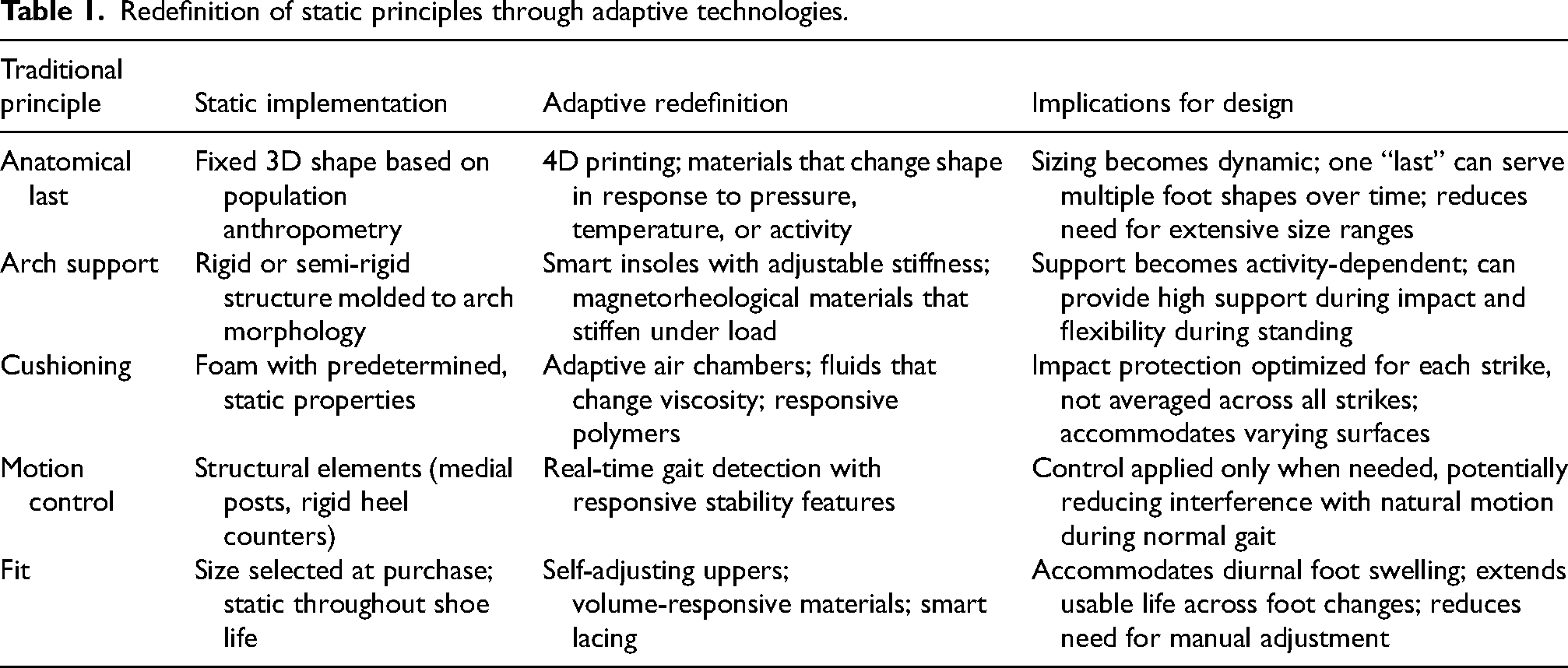
This transformation raises a fundamental question: do adaptive systems render static design principles obsolete? The argument for transformation suggests that continuous adaptation to foot morphology and gait dynamics diminishes the relevance of a single ‘correct’ static last. The shoe evolves from a static container to a dynamic platform for accommodation—a shift that early evidence from prototype smart footwear suggests may enable unprecedented personalization. 25
The case for enduring relevance rests on three observations: adaptive systems require biomechanically sound baseline geometry; passive systems will dominate for cost, reliability, and durability; and most users will continue wearing conventional footwear. A synthesis perspective therefore suggests hybrid approaches as the most plausible near-term future—static foundations augmented by adaptive features where dynamic response offers greatest benefit. Research priorities should encompass long-term outcomes, comparative effectiveness, and identification of populations most likely to benefit.
Physical factors
In footwear design, physical factors—drawing on material science and structural engineering—address mechanical demands via material properties (e.g., flexibility, elasticity, stiffness), sole design (tread profiles, heel height, postural alignment), and shoe shape; Figure 4 lists additional such factors.
Strategic material selection for durability, flexibility, and density directly governs shock absorption and energy return via midsole materials (e.g., EVA foam, polyurethane). The footwear industry increasingly leverages advanced polymers—including PVC, SBR, and TPU—to engineer lightweight, responsive shoes that enhance comfort, flexibility, and durability, thereby meeting evolving consumer demands. 26
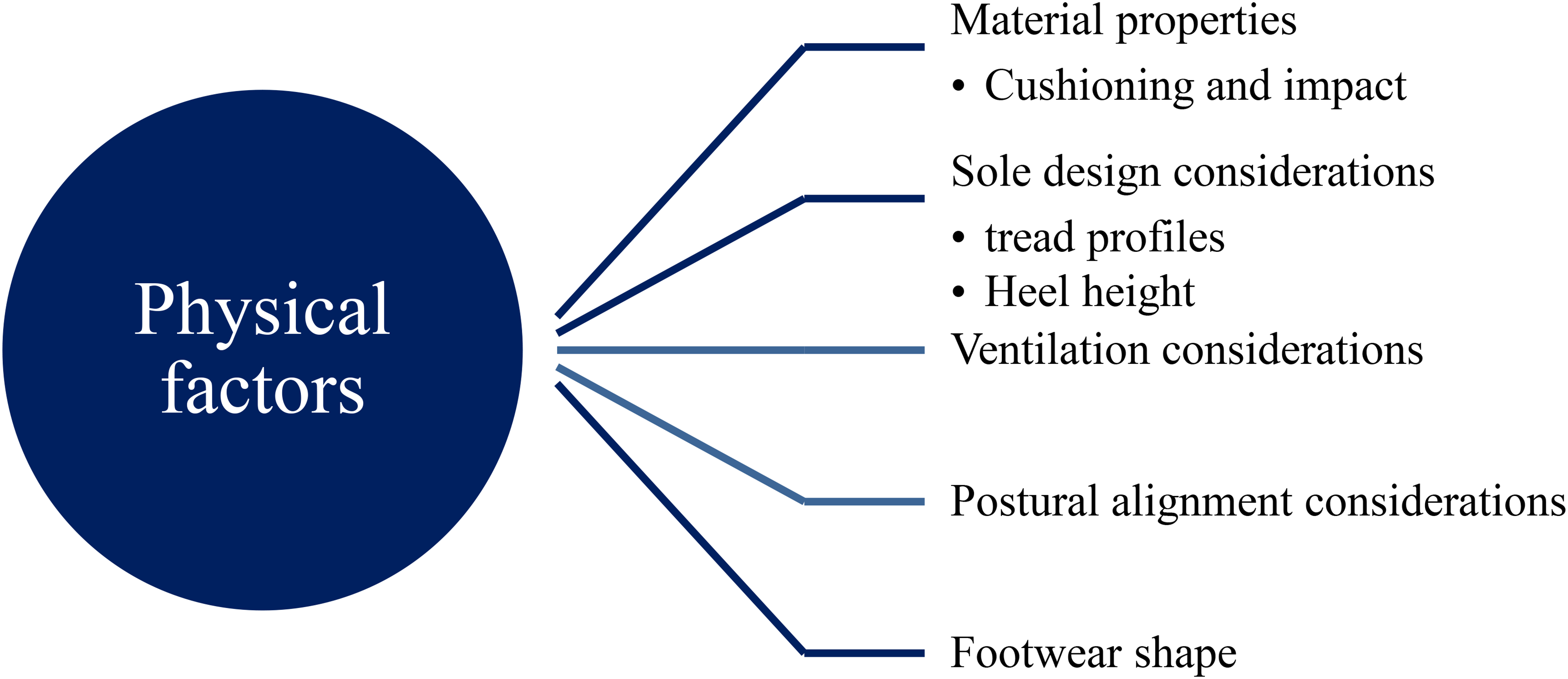
Physical factors in footwear design.
The design must also manage the fundamental trade-off between flexibility, which allows for natural biomechanical motion during gait, and structural stability, which is provided by elements like a rigid heel counter and torsional rigidity to control excessive foot motion. Finally, the overall weight and mobility offered by the footwear are significant factors in user endurance and performance. 27
The use of lightweight materials minimizes the energetic cost of locomotion and reduces muscle fatigue. The physical architecture of the sole unit—including its tread pattern, lug depth, and rubber compound—is engineered to generate sufficient friction and traction with the ground surface to prevent slips and falls, a key safety consideration. The design of a shoe's outsole tread is a critical factor in determining the coefficient of friction, most notably in the presence of lubricants like water or oil. 28 Also parameters such as tread width and tread gap are known to impact footwear slip resistance. 29
The biomechanical function of the foot during gait is influenced by the contour and pliability of the sole, which affects both pressure distribution and movement patterns. 30 Beyond traction, the sole must facilitate natural foot function through strategic flexibility, particularly at the forefoot, to reduce strain on tendons and muscles during toe-off. Furthermore, the heel-to-toe drop—the elevation difference between the heel and forefoot—must be carefully calibrated to influence lower-limb alignment and support a physiologically sound gait pattern, thereby affecting overall posture.
The management of the foot's microclimate through breathability and temperature regulation is essential for maintaining tissue integrity and comfort. 31 Effective ventilation, often achieved through engineered mesh uppers and moisture-wicking linings, is necessary to dissipate heat 32 and prevent the accumulation of perspiration, which can lead to skin maceration and microbial growth. Conversely, for cold environments, footwear design must incorporate thermal insulation such as phase change materials (PCMs) to retain body heat without compromising fit or mobility through excessive bulk. 33 Collectively, these physical factors determine the footwear's longevity, its interaction with the environment, and its capacity to protect the foot from external physical forces.
Postural alignment refers to the optimal positioning of the body's segments in relation to one another and to the ground. 34 It ensures efficient weight distribution, minimizes stress on muscles and joints, and maintains balance during static and dynamic activities. Footwear, as the interface between the body and the ground, plays a crucial role in influencing postural alignment and overall biomechanical function. Footwear influences postural stability through heel height and pitch, arch support, sole rigidity and heel counter and fit.
Footwear shape significantly impacts ergonomics by influencing pressure distribution, joint angles, and overall foot and lower limb biomechanics. Forefoot pressure distribution is significantly influenced by the geometry of the footwear's toe box. 35 For example, a well-shaped toe box allows toes to splay naturally, reducing forefoot pressure, while a properly aligned flex point prevents strain on calf muscles. Furthermore, the anatomical shape of the footbed is directly related to perceived comfort. 36
Applications physical factors in footwear design
Impact cushioning is achieved through strategic material selection, where advanced materials such as ethylene-vinyl acetate (EVA) foam, polyurethane (PU), or encapsulated gel and air systems are employed in the midsole. These materials function not only to dissipate kinetic energy but also to provide energy return, enhancing propulsion while ensuring even pressure distribution across the plantar surface.
A study by Jurca and Saso suggests that wide toe-box running shoes correspond better to the average male toe shape than regular running shoes. 37 Further research suggests that round-toe footwear minimizes pressure around the medial toes, whereas pointed-toe designs result in the least pressure on the lateral toes. However, the most advanced physical design is rendered ineffective if the user struggles to interact with it; therefore, the next consideration must be Cognitive Factors, which ensure the footwear is intuitive and easy to use.
Cognitive considerations
Cognitive ergonomics considerations in footwear design and engineering focuses on optimizing the mental processes and user experience associated with wearing and using footwear. It emphasizes usability, comfort, and ease of decision-making, Sensory feedback, while considering the cognitive load, perceptions, and emotional responses of users. Figure 5 details some cognitive considerations in Ergonomic footwear design.
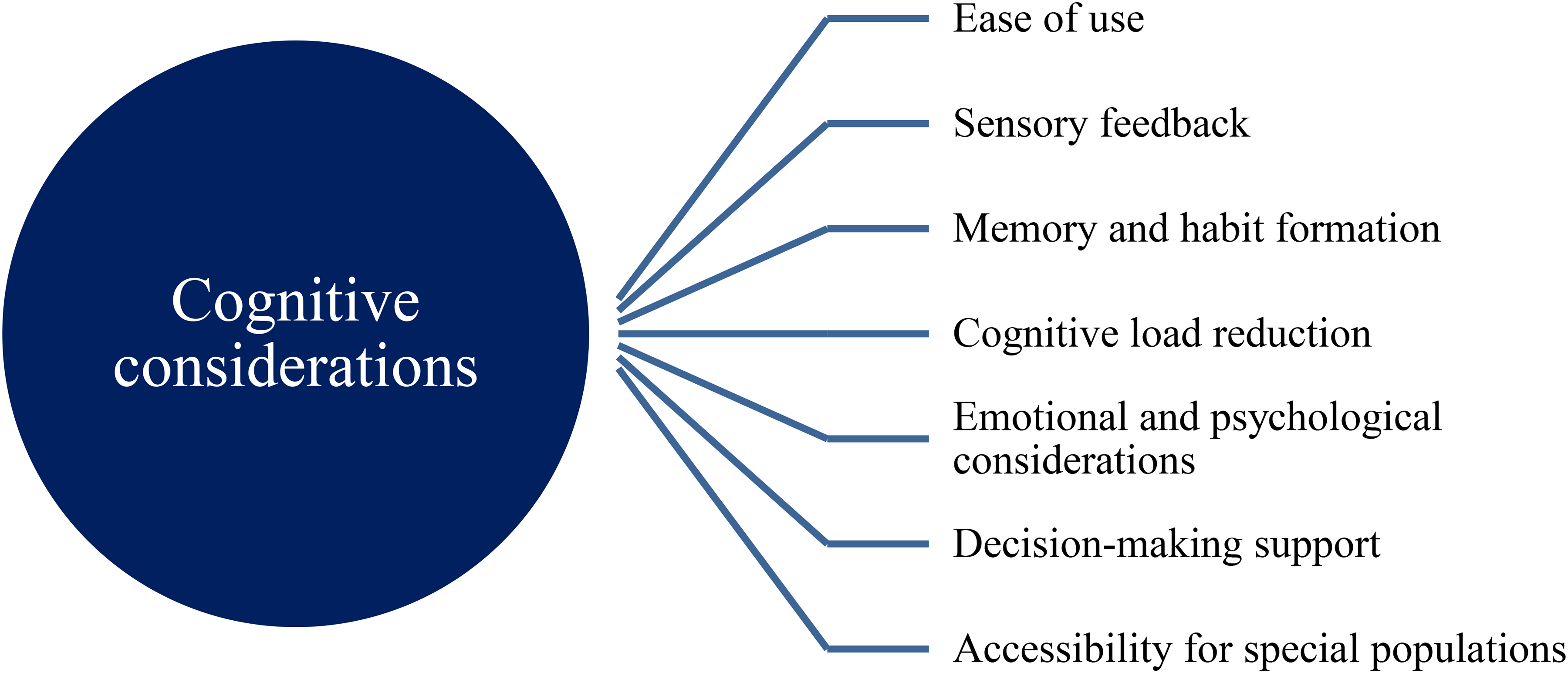
Cognitive considerations in footwear design.
Cognitive factors inclusion in this framework is warranted as evidence demonstrates that footwear fails or causes injury due to cognitive design deficiencies. Ease of use which is a fundamental principle in footwear design, centers on the minimization of physical and cognitive effort required for the fundamental tasks of donning, doffing, and securing the shoe. Studies of elderly populations demonstrate that complex fastening systems may lead to incorrect footwear use—shoes worn unfastened, improperly secured, or with orthotics incorrectly inserted—resulting in podiatric issues.38,39 Furthermore, ease of use is enhanced by design features that reduce user error, including pronounced left/right differentiation through asymmetrical contours or color-coding to guide correct foot placement. 40
The concept extends to adaptive fit or closure technologies, 41 such as stretchable uppers or self-molding materials, which reduce the mental burden and repeated adjustments needed to achieve a secure and comfortable fit. By prioritizing these intuitive interactions, designers not only foster user independence and efficiency but also directly contribute to the consistent and correct usage of the footwear, thereby ensuring its intended biomechanical and protective functions are fully realized.
Sensory feedback in footwear design acts as the primary interface between foot, shoe, and environment, enhancing usability, safety, and motor learning through deliberate tactile, auditory, and visual cues that guide interaction and provide subconscious reassurance. Tactile feedback—via textured insoles, variable material stiffness, or raised seams—enables users to perceive shoe orientation and fit, facilitating correct donning and proper foot placement.
Auditory feedback, such as a definitive click from a magnetic buckle or the specific sound of a secure zip, or those base on a sensor-instrumented insole 42 offers immediate confirmation of successful closure, reducing uncertainty and cognitive load. Furthermore, visual aids like high-contrast color panels or reflective elements at the heel and toe box assist in alignment and spatial awareness. By strategically designing these multi-sensory cues, footwear can not only prevent user error but also enrich the proprioceptive experience, ultimately fostering greater confidence and functional autonomy for the wearer.
Principles from cognitive psychology—particularly memory and habit formation—represent an advanced frontier in ergonomic footwear design. For individuals rehabilitating from injury, correcting gait abnormalities, or experiencing cognitive challenges, footwear must function as a tactile and visual guide for motor (re)learning and daily task performance.
Ergonomic footwear can be strategically designed to leverage the psychological model of the habit loop—comprising cue, routine, and reward—to foster sustainable behavior change. The cue initiates the cycle, which can be the act of donning the footwear, aided by consistent design features, or for smart shoes, a haptic signal prompting a gait correction. The routine is then facilitated by the shoe's engineered features, which make the correct physical action—such as proper fastening or an optimized gait pattern—intuitive and easier to perform.
Alongside guiding specific actions, consistency across a brand's footwear models reduces the learning curve by maintaining uniform closures, lace systems, and structural layout across different shoe types (e.g., daily walking to athletic models). This predictability enables effortless transfer of learned skills, leverages existing procedural memory, and promotes intuitive interaction and correct usage habits without conscious re-adjustment.
Modern ergonomic design aims to reduce cognitive load by minimizing the mental effort required for product interaction. This is achieved through two strategies: simplified design—avoiding overly complex patterns or fastening systems to promote intuitive interaction—and smart customization, wherein footwear autonomously adapts fit or cushioning based on user preferences or activity (e.g., running vs. walking). By preemptively making adjustments, the need for conscious decision-making is eliminated, freeing cognitive resources and ensuring an optimally supportive experience with minimal mental burden.
Applications in footwear design
Ease of use can be primarily achieved through intuitive fastening systems that circumvent the complexities of traditional laces; mechanisms such as hook-and-loop (Velcro) straps, elasticated gussets for slip-on designs, or dial-based BOA® systems provide secure closure with minimal dexterity, significantly benefiting children, the elderly, and individuals with motor impairments. Nike's GO FlyEase hands-free sneaker (Figure 6(a)) exemplifies this innovation, facilitating easy donning and doffing. Unlike conventional laceless designs, it incorporates a bi-stable hinge and a midsole tensioner to enable quick and secure entry. 43
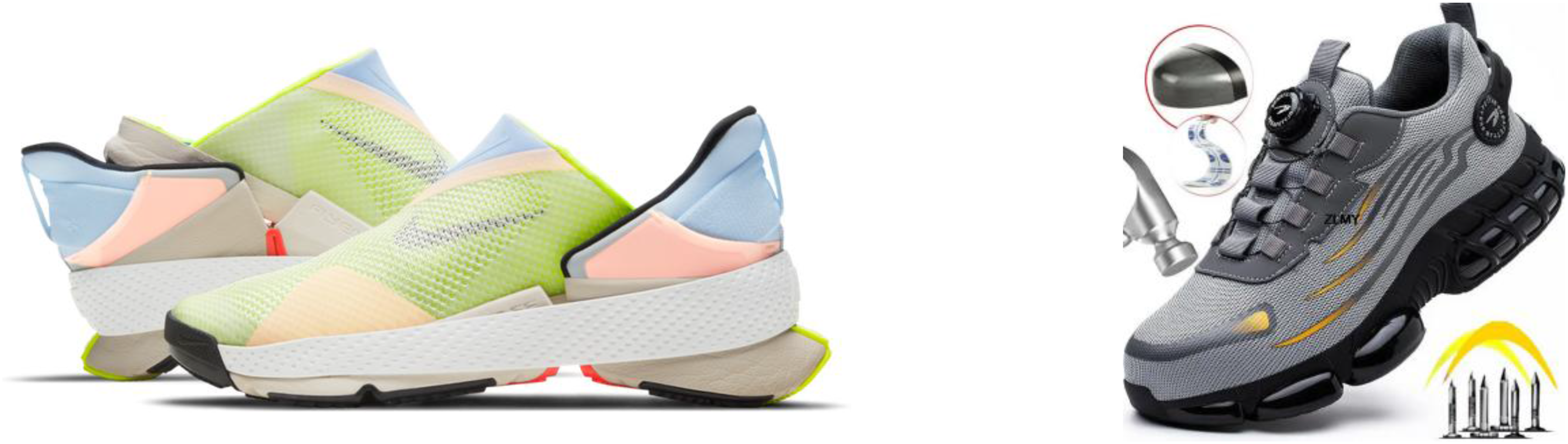
(a) Nike's GO FlyEase hands-free sneaker (b) ZLMY anti-slip and puncture proof shoes.
In terms of sensory feedback, research suggests that footwear designed to stimulate the soles of the feet can enhance sensory feedback, potentially improving both standing balance and gait. 44 Also footwear design for users with cognitive disabilities—such as autism, dementia, and ADHD—requires tailored strategies. Effective approaches often involve the implementation of calming, non-stimulating color schemes and the use of sensory-friendly materials and haptic feedback-enabled smart shoes. 45 These elements are critical for mitigating overstimulation and anxiety, thereby creating a more navigable and comforting user experience.
Age-friendly design considerations should focus on the aging population, accounting for cognitive decline through supportive, easy-to-use features. 46 The primary objectives are to enhance safety, promote autonomy, and maintain independence by reducing interaction complexity. By addressing these cognitive ergonomic considerations, footwear can be more user-friendly, accessible, and beneficial for a wide range of individuals, enhancing both functionality and user satisfaction. Beyond the individual user's comfort and comprehension, the design must function within broader systems, which is the domain of Organizational Factors, where safety standards and task-specific demands prevail.
Organizational factors
Occupational footwear as defined in occupational contexts encompasses a range of boots—such as safety, combat, and work boots—and shoes, 47 all made from assorted materials for professional use. 48 Organizational ergonomics in footwear design shifts the focus from the individual user to the broader context of the work system, aiming to optimize the interaction between the worker, their footwear, and the organizational environment to enhance safety, health, and overall productivity. A Key consideration include compliance with industry-wide safety standards e.g., The two new ASTM standards – ASTM F2412 (the test method standard) and ASTM F2413 (the performance standard), OSHA's regulation 29 CFR 1910.136.
Including organizational factors in an ergonomic framework requires demonstrating that neglecting these dimensions compromises physical design effectiveness. Given the clear dose-response relationship between standing time and musculoskeletal disorders,40,49 optimal footwear designs cannot compensate for work-rest cycles that ignore cumulative load principles. This suggests that organizational and administrative controls (breaks, job rotation, reduced standing time) are at least as critical as individual ergonomic interventions like footwear.
A comprehensive ergonomic model for occupational footwear must therefore integrate the critical dimensions of workload—the cumulative physical demand placed on the lower extremities—and scheduling—the temporal patterns of footwear use. These factors are essential for preventing overuse injuries and optimizing long-term musculoskeletal health. Figure 7 presents organizational factors in Ergonomic footwear design.
Prolonged standing and walking on hard surfaces can lead to musculoskeletal complaints. As the primary interface between the body and the floor, safety footwear is crucial for mitigating these issues and protecting employee well-being. 50 Effective ergonomic intervention involves prescribing footwear that not only fits the foot's anatomy but is also appropriately matched to the cumulative load and temporal pattern of use. This integrated model is crucial for mitigating the risk of cumulative trauma disorders and promoting sustained musculoskeletal health across occupational, athletic, and daily living contexts.
Ergonomic work-boot design now targets productivity as aggressively as safety, with peer-reviewed evidence showing that every additional kilogram carried on the foot elevates oxygen cost 4–6-fold versus torso-borne load; keeping single-shoe mass ≤550 g while retaining ASTM protection can therefore cut VO2 and perceived exertion significantly. 51 Optimizing mid-foot bending stiffness to 0.30–0.40 N m deg−1, engineering a 10–15 mm heel-to-toe drop coupled with a 10–12° anterior rocker, and selecting TPU/PEBAX foams that return 55–65% of stored energy (DMA, 1 Hz) each lower metabolic demand 3–5% and shorten ground-contact time, sustaining work-rate across prolonged shifts52,53are apt interventions.
Ergonomic workstation & task-design specifications for occupational footwear are driven by two intertwined goals: (1) protect the wearer from acute hazards and (2) maintain postural stability, proprioception and metabolic efficiency throughout the entire task cycle. Slip, puncture, crush, chemical splash, electrical conduction dictate out-sole compound, mid-sole plate and upper material; these choices must be balanced against mass because every +1 kg added to the foot raises oxygen cost 4–6× more than the same mass on the torso. 54
The safety features of work boots do not always support optimal task performance. A deeper understanding of their impact on posture and locomotion is key to designing footwear that better balances safety with human efficiency. 54
Applications in footwear design
Studies in occupational health confirm that slips and falls are a major source of workplace injury, jeopardizing employee safety and imposing significant economic costs on employers. For this reason, footwear with certified slip-resistant properties is a fundamental preventive measure. 4 Also For underground coal miners, a boot with a stiff shaft and a flexible sole has been found to reduce slip risk more effectively than designs that are uniformly stiff or flexible. 51
Incorporation of cushioning can reduce some work related MSDs to a significant level. A study on workers fitted with cushioned safety shoes or a midfoot bearing safety shoe led to a significant decrease of the average trunk inclination (p < 0.005). 50 Just as occupational settings demand specialized footwear, so too do distinct user populations, leading to the critical considerations for special groups.
Special groups factors
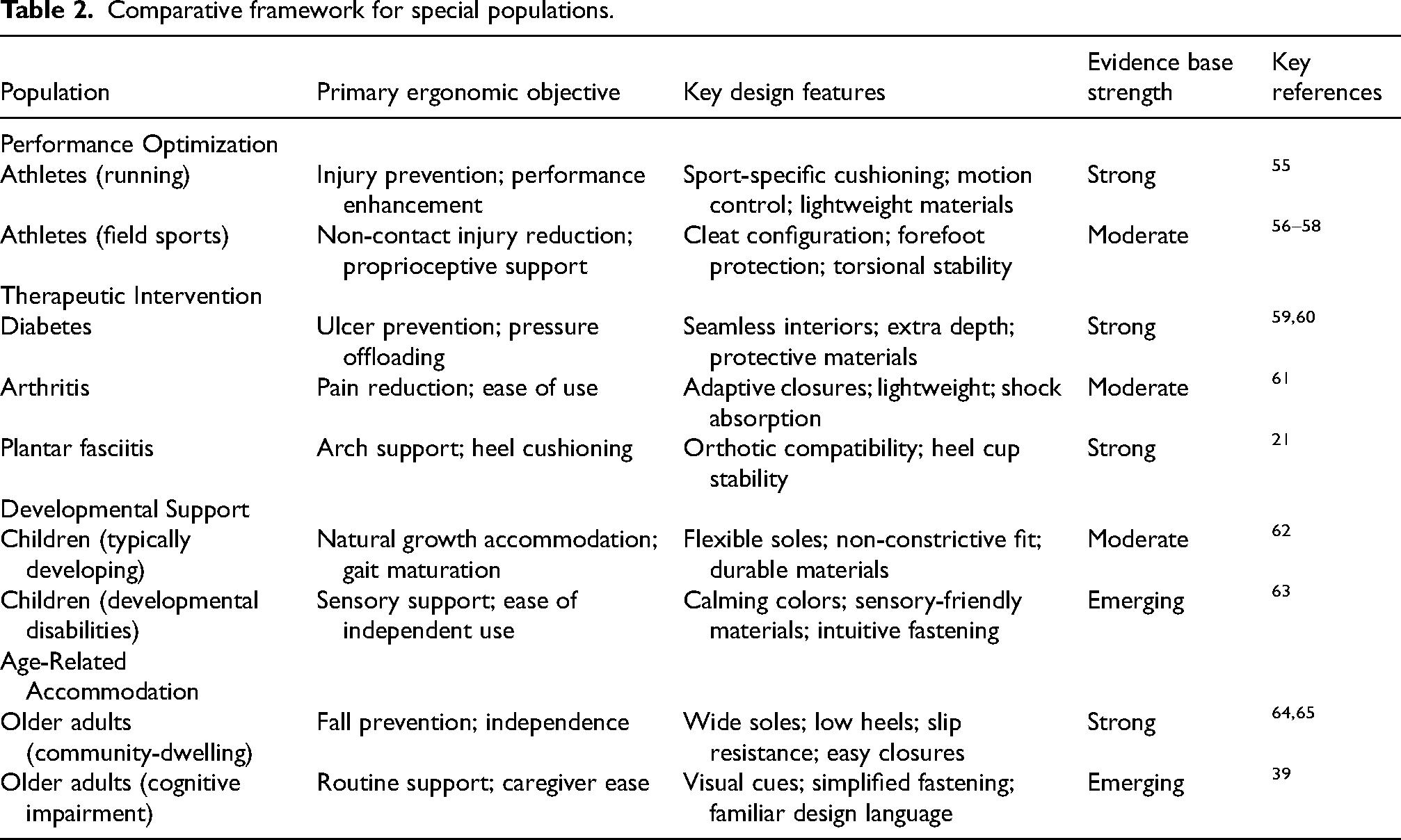
Footwear design for special populations necessitates a highly specialized ergonomic approach that addresses unique physiological, biomechanical, and cognitive needs distinct from the general population. Rather than treating these populations as a simple list of categories, this framework organizes them along a continuum from performance optimization through therapeutic intervention to developmental support and age-related accommodation. This continuum reflects how the primary ergonomic objective shifts across populations while maintaining core principles. Figure 8 presents special group factors in Ergonomic footwear design.
Table 2 presents this comparative framework, enabling cross-population analysis of design priorities.
Comparative framework for special populations.
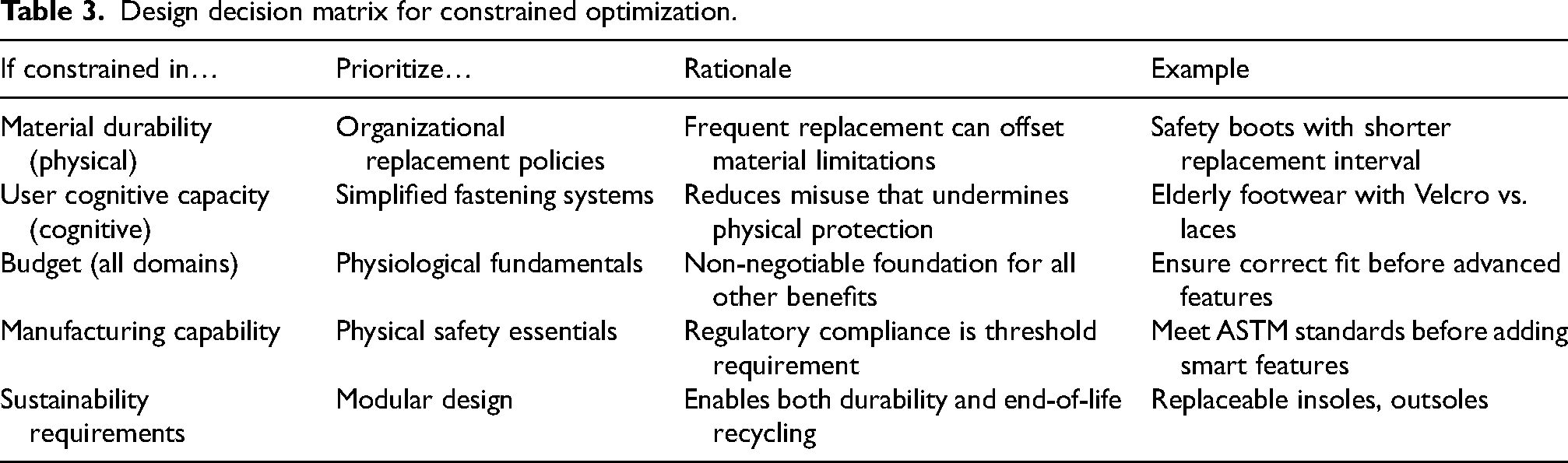
Design decision matrix for constrained optimization.
When evaluating athletic shoes biomechanically, the main goals are to prevent running injuries and improve performance, with injury prevention being the more important focus.55,66 Running shoes require effective shock absorption to cushion the impact and guide the weight from the heel through the foot to the ground. Furthermore, features like thick heels and properly-fitted heel counters are essential to prevent injuries such as tendinitis, ball-of-foot pain (metatarsalgia), and fractures. 67
While athletic footwear prioritizes performance enhancement and injury prevention in active individuals, a parallel emphasis on protection—though for different clinical reasons—characterizes therapeutic design for medical conditions. Diabetic footwear, for instance, shares with athletic shoes the goal of pressure management, but the objective shifts from preventing overuse injuries to preventing ulceration in insensate feet. 59 Similarly, both children's footwear and designs for older adults prioritize ease of use, but the former supports developing autonomy while the latter compensates for declining dexterity and cognition. Ultimately, a successful ergonomic strategy for these groups’ moves beyond mere accommodation to proactive, user-centric design that actively promotes mobility, prevents injury, and supports the specific functional requirements of each population.

Organizational factors in footwear design.
The protective imperative of therapeutic footwear contrasts with the developmental focus required for pediatric populations, where the primary objective shifts from managing pathology to supporting healthy maturation. Children's footwear must accommodate growth rather than accommodate deformity, yet both domains share the principle of non-constriction. Pediatric footwear must prioritize the support of developing foot structures through flexible, non-constrictive designs that allow for natural growth and gait maturation, 68 while also incorporating durable materials and intuitive fastenings to support independent use.
Just as children's footwear supports the acquisition of independent mobility, designs for older adults must support the maintenance of independence despite declining functional capacity. Both populations benefit from intuitive fastening systems, though for fundamentally different reasons—supporting developing fine motor skills versus compensating for diminished dexterity. For older adults, factors such as diminished plantar sensation, reduced joint mobility, and an elevated risk of falls mandate footwear designs with enhanced stability features like wide soles, 64 low, broad heels, 69 robust slip-resistant outsoles, 65 and easy-access closures that compensate for decreased dexterity. 69 This comparative perspective reveals both population-specific adaptations and shared design principles that transcend population boundaries.
Applications of special groups’ factors in footwear design
In the athletic domain, shoes should be engineered for specific activities—such as running, hiking, or basketball—with the dual objectives of optimizing biomechanical performance and mitigating injury risk. For football players, custom orthoses could offer multiple advantages: they improve boot comfort and overall performance, leading to better ball control, less fatigue, and a reduced likelihood of injury.
Footwear components, specifically soles and uppers, can be engineered to facilitate a more neutral gait, offering biomechanical correction for individuals with pathogenic foot mechanics like overpronation or supination. Finally, the pursuit of optimizing all these ergonomic factors is now being fundamentally reshaped by Innovation & Sustainability Factors, where technology and environmental responsibility are setting the new frontier for the industry.
Innovation & sustainability factors
Contemporary ergonomic footwear design increasingly integrates technological innovation with ecological sustainability. Moving beyond traditional comfort and support, manufacturers leverage advanced technologies and circular economy principles to enhance user well-being while minimizing environmental impact. 6 This dual focus reshapes material selection, manufacturing processes, and the product lifecycle. Fundamental to this advancement is material science innovation, with a strong emphasis on sustainability. Figure 9 presents innovation and sustainability factors in Ergonomic footwear design.
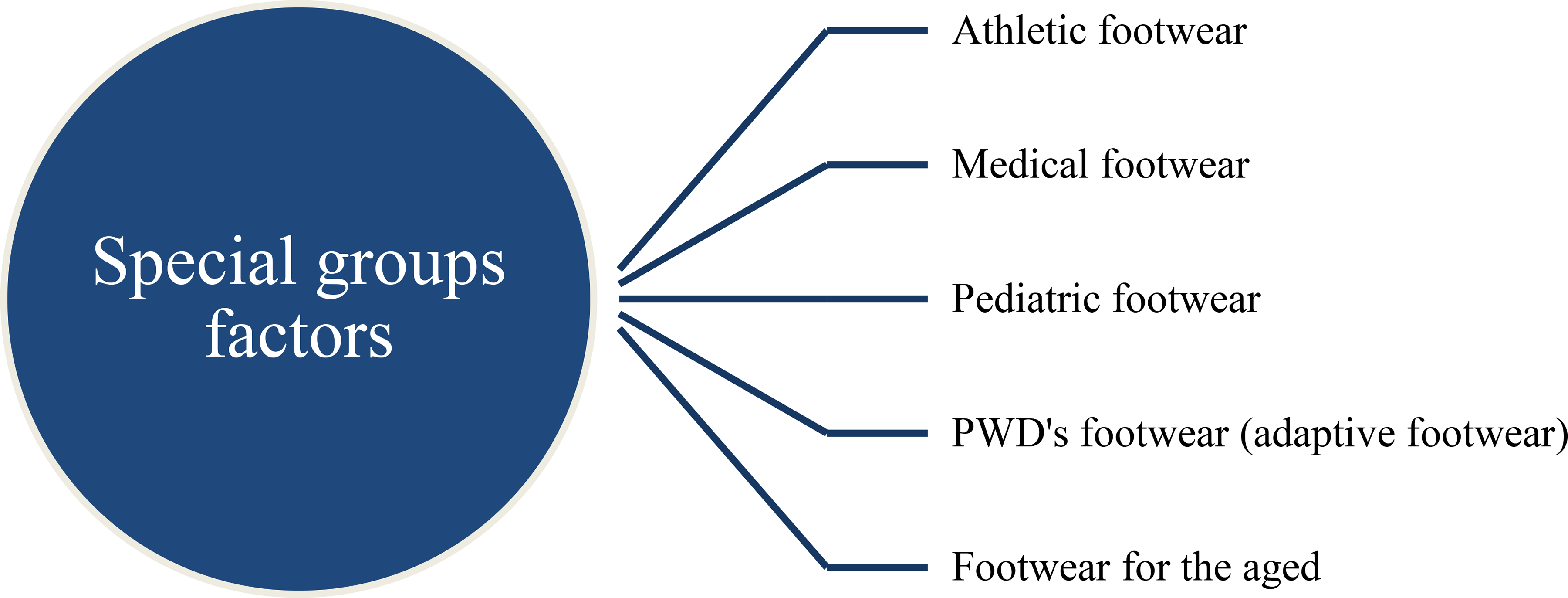
Special groups factors in footwear design.
Contemporary research is dedicated to developing advanced polymer composites and bio-based alternatives 70 that offer superior shock absorption, minimal weight, and enhanced breathability. This paradigm moves beyond mere material substitution to embrace a holistic, circular approach aimed at significantly reducing the product's environmental footprint across its entire lifecycle, from raw material extraction to end-of-life disposal or repurposing.
Innovative posture & gait analysis including smart gait (SG) now drives ergonomic footwear design. Smart gait refers to any AI-powered system for integrated human gait analysis. 71 Example include lattice cushioning insole implemented by integrating finite element (FE) and machine learning (ML) methods. 72 A robust testing and validation process is essential for developing effective footwear. 73 Product developers must balance sustainability, performance, cost, and regulations, using user trials and ergonomic data—like gait, pressure, and thermal analyses—to refine and optimize designs.
Smart footwear adheres to core biomechanical and comfort principles but implements them via sensor-driven, adaptive, or additive-manufacturing technologies. Key applications include smart lacing systems that accommodate dynamic foot volume and haptic feedback shoes that provide navigation assistance for the visually impaired. 45 Sensor-based systems for continuous gait monitoring have revolutionized footwear design by providing automated, rich data on walking capacity and mobility. 25 Integrating sensors directly into shoes or insoles allows designers to optimize fit, enhance performance, reduce injury risk, and create products tailored for possible medical and athletic applications.
Technical tensions in sustainable ergonomic design
The integration of sustainability with ergonomic objectives is frequently presented as harmonious, but industrial realities reveal significant technical tensions that must be acknowledged. Sustainable design involves navigating competing priorities rather than maximizing environmental benefits without consequence.
Biodegradability versus durability represents the most fundamental tension. Materials engineered to degrade naturally after disposal may not withstand the mechanical demands of occupational or athletic use. A fully biodegradable shoe that fails after one week of construction work is neither sustainable (due to replacement frequency) nor ergonomically effective. Current approaches to managing this tension include hybrid constructions (biodegradable components in low-wear areas), modular designs enabling component replacement, and development of bio-based materials with enhanced durability profiles. However, long-term performance data for these solutions remain limited.
Natural material variability versus precision requirements poses challenges for ergonomic design. Bio-based materials often exhibit inconsistent properties (density, stiffness, durability) compared to engineered polymers, complicating the precision required for ergonomic features like graded cushioning or targeted support. Manufacturers employ blending strategies and enhanced quality control, but cost-effective consistency at scale remains elusive.
Recyclability versus multi-material complexity reflects the inherent tension between ergonomic sophistication and circular economy principles. Ergonomic shoes typically require multiple materials with different properties (varying densities for cushioning zones, rigid supports, flexible uppers), which complicates recycling. Mono-material approaches (exemplified by Lubrizol's TPU prototype shoe 74 ) address recyclability but may compromise ergonomic performance by limiting material differentiation. Design for disassembly offers an intermediate approach but increases manufacturing complexity and cost.
Sustainability cost versus equitable access raises ethical considerations. Sustainable materials and circular manufacturing processes currently increase product costs, potentially limiting access to ergonomic footwear for populations who need it most—occupational workers in low-income settings, patients requiring therapeutic footwear, and children in developing regions. Scale economies and policy interventions may eventually address this tension, but current trade-offs are real.
These tensions do not negate the importance of sustainability but require its treatment as one design objective among several that must be balanced, not as an unequivocal good to be maximized without consideration of consequences. The ergonomic designer's task is to navigate these tensions through informed trade-off decisions, supported by emerging evidence on the performance characteristics of sustainable materials and circular design approaches.
Applications in footwear design
Advancements in ergonomic footwear are propelled by sustainable material science, focusing on polymer composites and bio-based alternatives that provide superior shock absorption, light weight, and breathability. These properties optimize comfort and biomechanical efficiency, while sustainable sourcing and end-of-life recyclability minimize the product's environmental footprint. Examples include Serrano-Martinez et al.'s successful application of rice straw and cellulose as fillers into soles made from either styrene–butadiene rubber (SBR) or thermoplastic polyurethane (TPU). 75

Innovation & sustainability factors in footwear design.
Lubrizol's prototype shoe (Figure 10(a), constructed entirely from thermoplastic polyurethane (TPU) and Adidas shoes (Figure 10(b) made out of recycled ocean plastic 76 demonstrates a closed-loop lifecycle from production to recycling and incorporates bio-content derived from renewable sources. 74 Innovative finite element modeling approaches serve as an efficient tool for gaining an in-depth understanding of foot and footwear biomechanics and for optimizing footwear design. 77 Gait analysis enables the design of motion control features that guide foot movement and enhance stability. Furthermore, data analytics provides designers with deep insights into biomechanics and pressure distribution. By leveraging real-world data from wearables and trials, product designs can now be refined with unprecedented precision. An example is integration of AI into the design process of a soccer shoe design by Minaoglou et al. 78
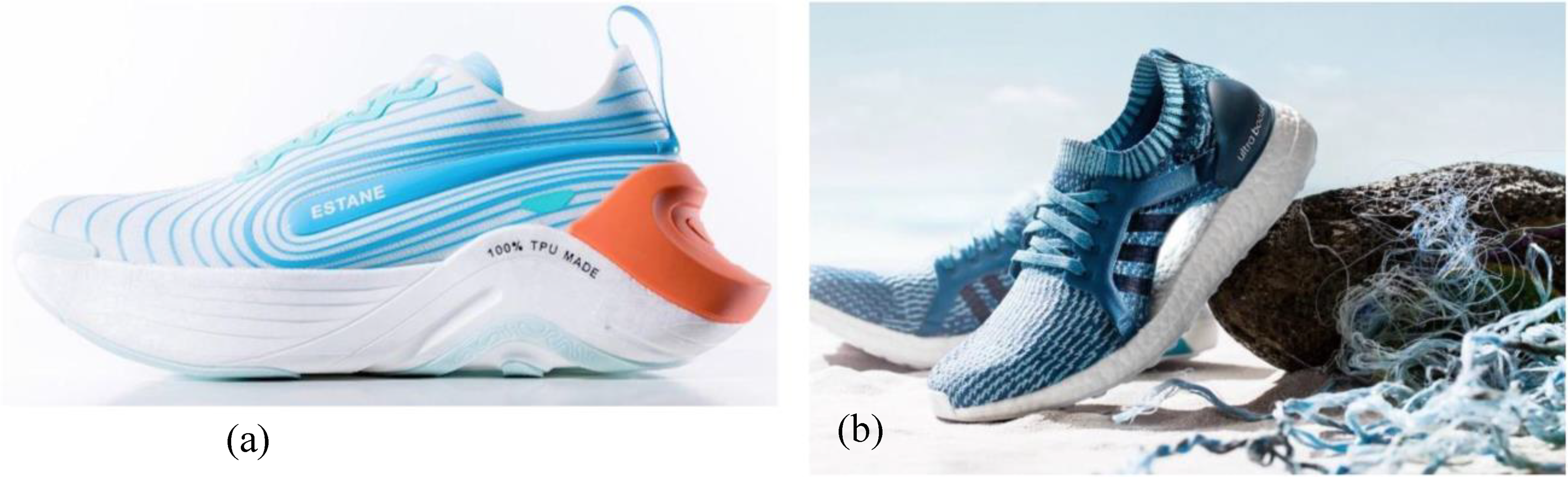
(a) Lubrizol's recyclable TPU sneaker (b) Adidas shoes made out of recycled ocean plastic.
Decision-making support in modern footwear is increasingly provided through integrated smart systems. 79 These systems use sensors and apps to deliver real-time data on foot health, gait, and environment. Modern techniques like constrained free-form deformation and advanced surface scanning enable this; the latter creates CAM-ready geometries rapidly, bypassing mathematical modeling to streamline mold production. 80
Domain interaction model
A critical contribution of this framework is the explicit articulation of how the six domains interact. The relationships between domains are not uniform but follow a multidimensional interaction model characterized by four distinct types:
Bidirectional interactions occur when domains mutually influence each other. For example, physical comfort affects cognitive satisfaction, while cognitive ease of use affects whether physical features are correctly utilized. A shoe that is biomechanically optimal but difficult to operate may be used incorrectly or abandoned, nullifying its physical benefits.
Hierarchical (prerequisite) relationships exist where one domain must meet a minimum threshold before others can be effective. Physiological fit—basic anthropometric compatibility—represents the foundational prerequisite; no amount of cognitive design sophistication can compensate for a shoe that fundamentally does not fit the foot's dimensions. Similarly, physical safety features (slip resistance, puncture protection) must meet baseline requirements before organizational or cognitive factors become relevant.
Compensatory interactions allow strength in one domain to partially offset weakness in another. Superior cognitive design (intuitive fastening systems) can partially compensate for suboptimal physical adjustability. Organizational policies (mandatory replacement schedules) can compensate for material durability limitations. However, compensation has limits—there exist threshold effects below which no amount of compensation suffices.
Conditional relationships depend on context or user population. In elite athletics, physical performance features may appropriately take priority over cognitive simplicity. In geriatric populations, cognitive ease of use may outweigh minor physical compromises. In occupational settings with high slip hazards, organizational compliance with safety standards may override individual comfort preferences. These interaction types have practical implications for designers and practitioners. Table 3 presents a design decision matrix that guides prioritization when constraints limit simultaneous optimization across domains.
Conclusion
This study establishes a unified, multi-domain framework for ergonomic footwear by synthesizing fragmented interdisciplinary research. The analysis reconceptualizes footwear as a critical body-environment interface vital to musculoskeletal health, performance, and safety. The six identified domains—Physiological, Physical, Cognitive, Organizational, Special Groups, and Innovation & Sustainability—are deeply interconnected, necessitating a harmonized, user-centric approach that moves beyond one-size-fits-all design.
The findings underscore that foundational physiological and biomechanical principles—such as anatomic last design, strategic cushioning, and dynamic pressure management—remain the non-negotiable bedrock of effective design. However, this foundation is insufficient if cognitive loads are high, organizational standards are unmet, or the unique needs of specific populations are ignored. The evolution of ergonomic footwear is therefore characterized by this expansion in scope: from merely supporting the foot to enhancing the entire user experience, from preventing acute injury to promoting long-term well-being and autonomy.
The future of ergonomic footwear is driven by technological integration and ecological responsibility. Smart systems and adaptive materials enable real-time biomechanical optimization, while sustainability demands circular design and bio-based materials. The central challenge is to fuse these agendas, creating high-performance footwear that is biomechanically sound, cognitively intuitive, and environmentally sustainable. Adopting the holistic framework presented here will guide researchers and industry stakeholders in advancing footwear as a vital tool for enhancing human capability and quality of life.
Research limitations
This literature review is shaped by the scope, quality, and biases of existing evidence. Specific limitations affect framework validity and generalizability. Demographic biases include gender (male-foot anthropometry overrepresented; female athletes understudied), age (predominantly young adults, 18–40 years; limited data on children and older adults), and geographic/racial biases (Western populations overrepresented; limited data on Asian, African, and Indigenous foot morphology). Contextual biases comprise setting bias (laboratory-based data may not reflect real-world conditions) and temporal bias (cross-sectional studies dominate; longitudinal evidence on injury prevention and joint health is sparse). Methodological gaps include few randomized controlled trials on footwear designs and limited compliance data on actual wear. Domain-specific gaps: physiological (limited data on foot morphology changes over lifespan; poor integration of 3D scanning into sizing systems); physical (little research on material degradation over time; traction studies in idealized conditions); cognitive (minimal quantification of cognitive load or validated usability metrics for footwear); organizational (few policy-level intervention studies; lacking cost-effectiveness data); special populations (insufficient research on intersections such as older athletes, diabetic workers, or adults with developmental disabilities); innovation (smart footwear research remains proof-of-concept, with no long-term safety or clinical outcome studies).
Implications for the framework
These biases render the proposed framework provisional, contextually limited, and aspirational: provisional as ongoing research will refine it; contextually limited to overrepresented populations (young adult male athletes in laboratory settings); and aspirational in articulating the evidence needed for full validation. Future research should prioritize underrepresented populations, real-world settings, longitudinal outcomes, and intervention designs to strengthen the evidence base.
Footnotes
Acknowledgements
Not applicable
Ethical approval
Not applicable
Informed consent
Not applicable
Funding
The authors received no financial support for the research, authorship, and/or publication of this article.
Declaration of conflicting interests
The authors declared no potential conflicts of interest with respect to the research, authorship, and/or publication of this article.
