




Abstract
Background
The rapid digitalisation in the maritime sector has introduced new psychological risks; however, the non-linear pathways of digital burnout remain under-researched.
Objective
This study aims to investigate the multifaceted nature of digital burnout among seafarers by identifying key demographic drivers and latent risk profiles.
Methods
A hybrid analytical framework was employed, integrating traditional ANOVA with K-Means clustering and explainable artificial intelligence (XAI) tools, specifically SHAP and Decision Tree classifiers, to analyse survey data from Turkish seafarers.
Results
While ANOVA identifies age, income, and experience as significant drivers, machine learning reveals complex risk pathways. K-Means clustering identified three distinct profiles, with the high-risk group (Cluster 0) exhibiting critical Digital Ageing (45.12) and Emotional Exhaustion (21.90) scores. Decision Tree analysis indicates medium income as the primary root node for burnout stratification. SHAP analysis pinpoints mid-to-late career experience (16–20 years) and being a Deck Officer as the strongest catalysts for exhaustion, whereas younger age (21–25) and lower experience (6–10 years) act as protective buffers.
Conclusions
Digital burnout in the maritime sector is a spectrum condition driven by professional hierarchy and career midpoint pressures, rather than mere technology use. Findings underscore the necessity for human-centred digital policies and targeted resilience initiatives to safeguard the global maritime workforce's mental well-being.
Introduction
Digital technologies have become indispensable for the production, storage, and dissemination of information while facilitating global communication across all age groups and professional sectors. 1 Recent global trends indicate a significant surge in individual internet usage, 2 with a substantial proportion of the population dedicating considerable time to integrating digital tools into daily life for work, education, and social interactions. 3 As these technologies permeate every facet of human life, their physical, mental, and behavioural consequences have increasingly become a focal point of academic inquiry within the context of occupational health. Research suggests that prolonged and excessive engagement with digital interfaces may lead to adverse health outcomes, including sleep disturbances, reduced physical activity, emotional instability, social isolation, and cognitive impairments.4–6 These cumulative stressors often culminate in a condition termed digital burnout, which manifests as physical, psychological, and social exhaustion frequently accompanied by chronic stress, job dissatisfaction, and a diminished sense of professional adequacy.7–10
The maritime industry is particularly susceptible to these contemporary challenges. Seafarers, who are fundamental to the resilience of the global supply chain, are increasingly required to operate advanced digital systems for navigation, communication, and cargo management. This technological reliance imposes substantial cognitive demands on the workforce.11,12 Modern shipping operations necessitate extended periods of screen exposure. The continuous monitoring of complex digital interfaces often leaves insufficient opportunity for mental recuperation and restorative downtime. 13 Within the inherently asocial and demanding environment of life at sea, seafarers confront digital burnout in distinct ways that are exacerbated by prolonged contract durations and high-stress operational conditions.
While recent works have documented the prevalence of psychosocial challenges, such as anxiety, depression, and social isolation, among maritime professionals,14,15 a significant lacuna remains in the literature regarding the specific relationship between digital burnout and professional demographics. Given that maritime safety and operational efficiency are intrinsically linked to the well-being of the workforce, addressing this relationship is vital for industry stakeholders and policymakers. The development of targeted interventions to mitigate these adverse effects is essential for promoting mental health and reducing occupational risks, yet such efforts necessitate a nuanced understanding of the phenomenon within the unique maritime context.
To address this gap, this study investigates the prevalence and dimensions of digital burnout among seafarers by integrating traditional inferential statistics with advanced machine learning interpretability. This hybrid methodology enables an exploration of how demographic variables such as income, age, and professional rank influence digital exhaustion profiles. Diverging from conventional linear analyses, this research utilises “Shapley Additive Explanations” (SHAP) and Decision Tree models to decode the non-linear risk pathways associated with digital burnout. By identifying specific professional thresholds, notably medium-level income and mid-to-late career experience between 16 and 20 years, this study provides an assessment of the catalysts for high-risk digital exhaustion in the maritime environment.
The rest of this paper is organised as follows. Section 2 provides the theoretical framework of the research. Section 3 details the methodology and data processing steps. Section 4 presents the analytical results. Section 5 discusses the findings within the context of occupational rehabilitation. Finally, Section 6 concludes with practical implications for maritime policy and workforce sustainability.
Theoretical background and contextual framework
Burnout is widely conceptualised as a state of emotional, physical, and mental exhaustion precipitated by prolonged or excessive stress, typically characterised by energy depletion, increased mental distance or cynicism toward one's profession, and a consequent reduction in professional efficacy.16,17 While this syndrome has traditionally been associated with long-term occupational stress or the demands of working intensively with people,18,19 it is increasingly recognised that burnout can manifest in any domain where environmental demands exceed available personal resources. In the contemporary era, this syndrome has evolved into digital burnout, driven by an escalating reliance on virtual existence, social media overload, and the psychological burden of constant connectivity. 19 Unlike traditional burnout, which often remains tied to physical workplace stressors, digital burnout arises from social media overload, the pressure of constant connectivity, and the psychological burden of maintaining a digital persona. Research has begun to explore this phenomenon across diverse cohorts, including healthcare students, educators, and online consumers, highlighting its pervasive nature in the modern workforce.20–22
The significance of this phenomenon was intensified by the COVID-19 pandemic, which necessitated an accelerated digital transformation across maritime business practices, 23 providing expedited information access while immersing seafarers in a predominantly digital environment for both professional duties and social interactions.24,25 Such forced immersion into digital landscapes has presented a complex array of challenges for maritime stakeholders, as seafarers are often confined to high-stress environments during extended contract periods. 26 This shift has rendered seafarers increasingly vulnerable to digital dependencies, including excessive social media and video game usage, which contribute to sleep disturbances, eyestrain, and heightened feelings of isolation. 19 The persistent pressure to remain connected in an increasingly digitalised workspace has ultimately positioned digital burnout as a significant occupational health concern for the shipping sector.
Despite the growing body of literature examining digital burnout through various lenses, such as digital disconnection as a coping mechanism or its impact within educational settings, contemporary maritime research has remained largely focused on the technical aspects of transport transformation.25,27 However, the human element, specifically the interplay between occupational isolation and constant digital connectivity, is frequently overlooked. This study bridges this gap by investigating the prevalence and characteristics of digital burnout, contributing to a more holistic understanding of human factors within the digitalised maritime landscape. Identifying distinct risk profiles provides a segmentation-based understanding of vulnerability patterns, positioning digital burnout as a critical human-factor risk that requires proactive management to safeguard the long-term well-being of the global maritime workforce.
Methodology
This exploratory study investigates digital burnout among Turkish seafarers by employing a multi-stage computational framework that integrates traditional psychometric evaluation with advanced machine learning interpretability. This approach facilitates the identification of non-linear risk pathways and specific professional thresholds, providing a more granular assessment than conventional linear models.
Data collection and participants
The study involved 313 Turkish seafarers recruited through convenience sampling via encrypted digital platforms. All participants provided informed consent, ensuring a diverse representation across the maritime workforce, while maintaining strict anonymity in accordance with the ethical principles of the Declaration of Helsinki. This data collection phase focused on capturing a representative cross-section of active maritime professionals to ensure the validity of the subsequent analysis.
Instruments and measurement
The research utilised the 24-item Digital Burnout Scale
19
as the primary psychometric instrument, measured on a five-point Likert scale with total scores ranging from 24 to 120. The scale consists of three primary sub-scales: digital ageing, which measures the perceived imbalance between physical and virtual realities (12 items; α
Data analysis and computational framework
The analytical process was conducted in three distinct phases using Python: In Phase 1, survey items were aggregated into composite scores for digital ageing, deprivation, and emotional exhaustion. Data were normalised via StandardScaler to ensure equal feature weighting in the clustering process.
29
Building upon this prepared dataset, the analysis proceeded to segment the maritime workforce through an unsupervised learning approach. In Phase 2, One-way ANOVA tests were conducted to identify linear disparities across demographic variables.
30
Subsequently, the population was segmented into distinct profiles using the K-Means clustering algorithm. The optimal number of clusters was determined to be three (
Limitations
Despite the robust framework and explainable AI integration, several limitations exist. First, the use of convenience sampling among Turkish seafarers may limit the generalisability of findings to the global maritime population. Second, the cross-sectional design captures digital burnout at a single point in time, overlooking longitudinal fluctuations across a seafarer's career. Additionally, reliance on self-reported measures introduces potential common method or social desirability biases regarding psychological fatigue. Finally, while K-Means and SHAP analysis provide high interpretability, results remain sensitive to the specific features included. Future research should incorporate objective physiological metrics, such as sleep tracking or cortisol levels, and geographically diverse samples to further validate these digital burnout profiles.
Ethical considerations
Ethical integrity was maintained with formal approval obtained from the Non-Interventional Research Ethics Committee of Kocaeli University on 23 September 2024, under decision number 653713. Participation was strictly voluntary, with informed consent obtained from all respondents via the online survey platform. This procedure ensured full compliance with institutional ethical guidelines and safeguarded participant autonomy. within the maritime community.
Results
Descriptive statistics and reliability
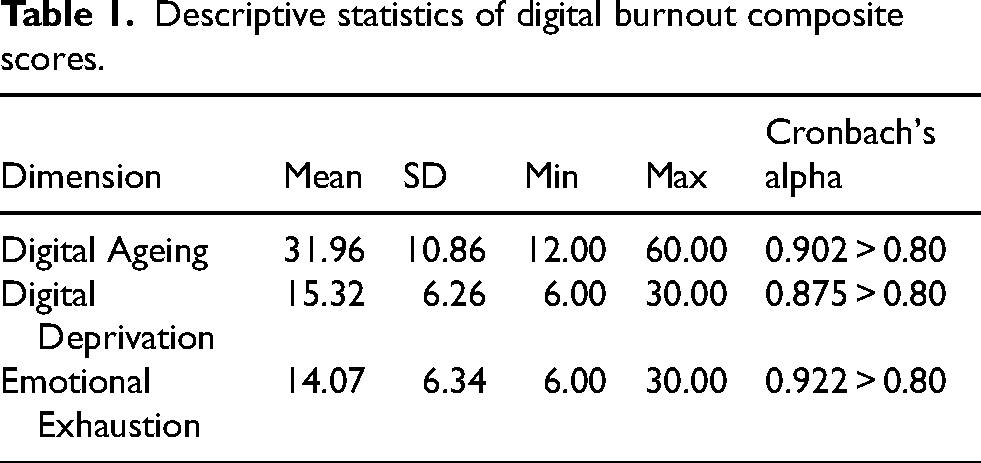
The descriptive statistics presented in Table 1 indicate a pervasive presence of digital stress among seafarers, with digital ageing emerging as the most prominent dimension (Mean = 31.96). This suggests that adapting to rapid technological shifts represents a significant challenge within the maritime context. Conversely, digital deprivation (Mean = 15.32) and emotional exhaustion (Mean = 14.07) show lower overall averages, providing a comparative baseline for the subsequent machine learning and risk-profile analyses.
Descriptive statistics of digital burnout composite scores.
Preliminary analysis: Impact of demographics (ANOVA)
One-way ANOVA results reveal that digital ageing is the most sensitive dimension to demographic variations, significantly influenced by age (
Impact of demographic features on digital burnout dimensions (ANOVA p-values).
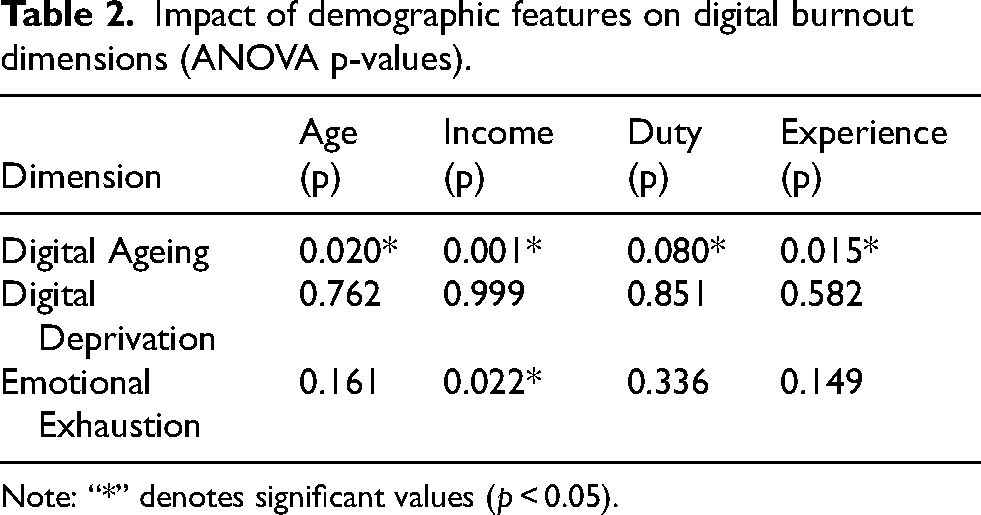
Note: “*” denotes significant values (p < 0.05).
While ANOVA identifies income as a significant driver (
Machine learning analysis and risk profiling
Unsupervised K-Means clustering (
Mean scores of composite clusters and group sizes.
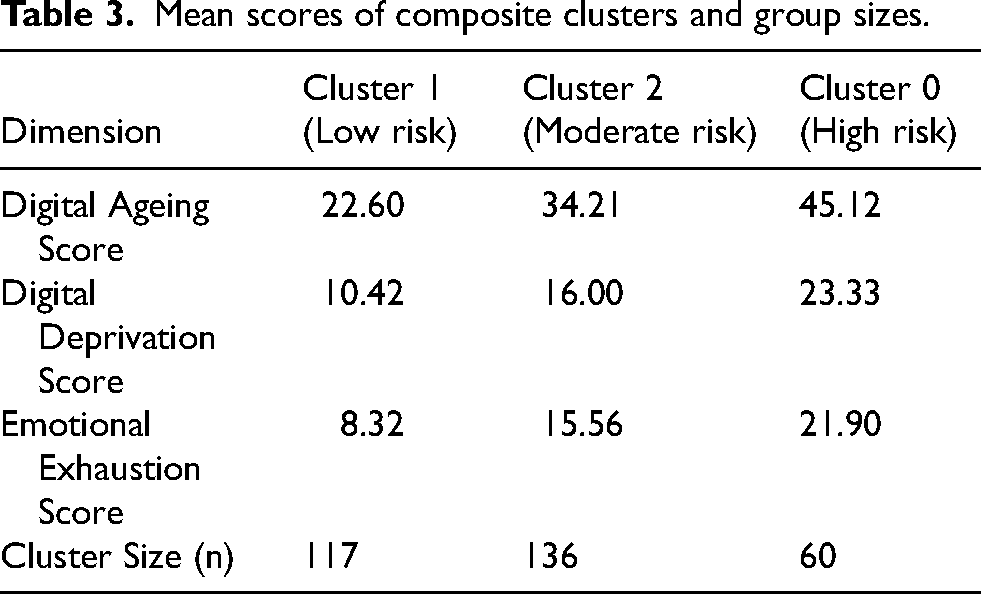
The extreme scores in Cluster 0 suggest a profound sense of technological alienation, where seafarers find it increasingly difficult to reconcile virtual system demands with physical reality. These risk segments now serve as the target variables for the subsequent explainable AI (XAI) phase. By treating Cluster 0 as a distinct classification target, the model moves beyond descriptive assessments to quantify the marginal contribution of specific features.
Using SHAP, the research decodes the non-linear tipping points, such as the threshold of 16–20 years of experience or the influence of mid-level income, that drive individuals into this critical zone. This transition to interpretability ensures that the findings provide actionable insights, mapping the complex conditional logic that shifts a professional profile from manageable stress to acute digital burnout.
Driving factors and feature importance via SHAP analysis
To refine ANOVA findings and decode complex interactions, an Explainable AI (XAI) framework using SHAP values was employed. Unlike linear models, SHAP captures how specific feature values, such as career brackets or income levels, actively drive seafarers toward the high-risk Cluster 0 by calculating each variable's marginal contribution. This provides a granular, transparent view of the underlying logic behind digital burnout catalysts that remains inaccessible through standard inferential statistics.
SHAP importance rankings reveal that variables appearing non-significant in ANOVA play pivotal roles when considered in combination. For instance, while professional duty may lack a broad linear effect, SHAP uncovers its critical impact in specific high-stress contexts. Emphasising these non-linear dependencies ensures an assessment grounded in the complex reality of seafaring. Consequently, these importance scores serve as the empirical foundation for subsequent hierarchical mapping, visualising SHAP-identified interactions as clear, conditional risk pathways.
Global importance across clusters
The SHAP feature importance analysis provides a global overview of the primary factors influencing the segmentation of seafarers, identifying medium income levels as the most dominant predictor across all clusters. This finding suggests that socio-economic stability serves as a fundamental baseline through which digital stress is filtered, indicating that economic well-being is a decisive precursor to the psychological resilience seafarers developed against technological transformation. The prominence of income as a leading variable implies that financial security acts as a buffer, where those in specific middle-income brackets experience a unique set of pressures or expectations regarding digital integration and availability.
In addition to income levels, being aged 41 or older and holding the rank of a deck officer were identified as variables with high global importance within the model. The significant weight of these factors confirms that professional hierarchy and life stage are critical components of digital burnout in the maritime sector. The high ranking of senior age groups and officers with substantial operational responsibilities reveals that digital stress is intrinsically linked to sectoral roles and career stages. This alignment suggests that as seafarers advance in age and responsibility, the cognitive load of managing complex digital interfaces, coupled with the demand for constant connectivity, becomes a primary driver of professional exhaustion.
These SHAP findings provide the necessary empirical weight to transition from broad importance rankings to the specific conditional logic of the maritime workforce. By identifying these three pillars, income, age, and duty, the analysis establishes the core features that the subsequent Decision Tree will use to map the precise risk pathways. As illustrated in the global feature importance ranking (Figure 1), the disproportionate impact of these variables, particularly on the high-risk Cluster 0 (Class 0), underscores their role as primary differentiators. Consequently, the interaction between these top-ranked variables becomes the focus for understanding how a deck officer over the age of 41, within a specific income bracket, might be predisposed to the highest levels of digital strain.
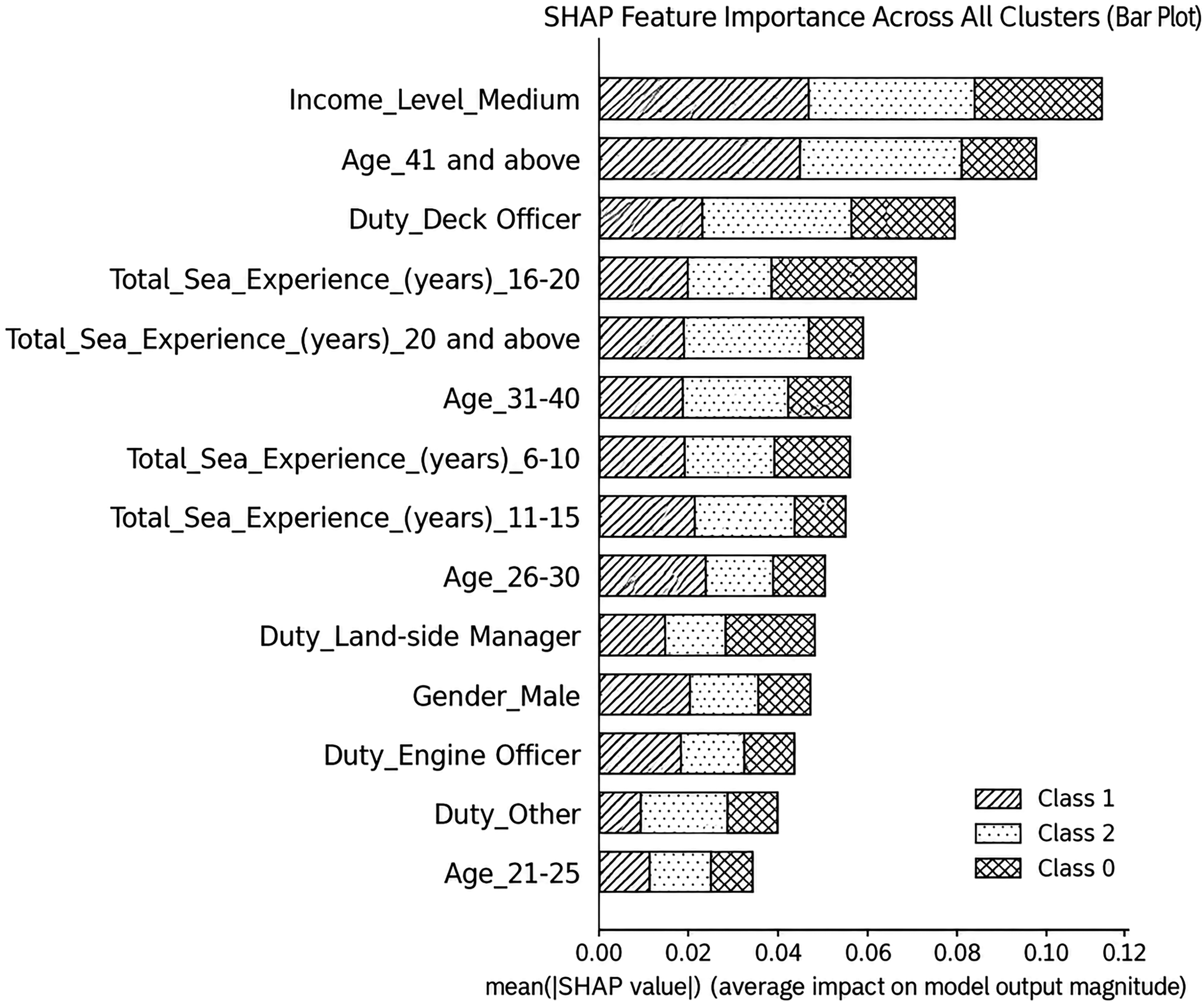
Global feature importance ranking.
Drivers of high-risk digital burnout (cluster 0)
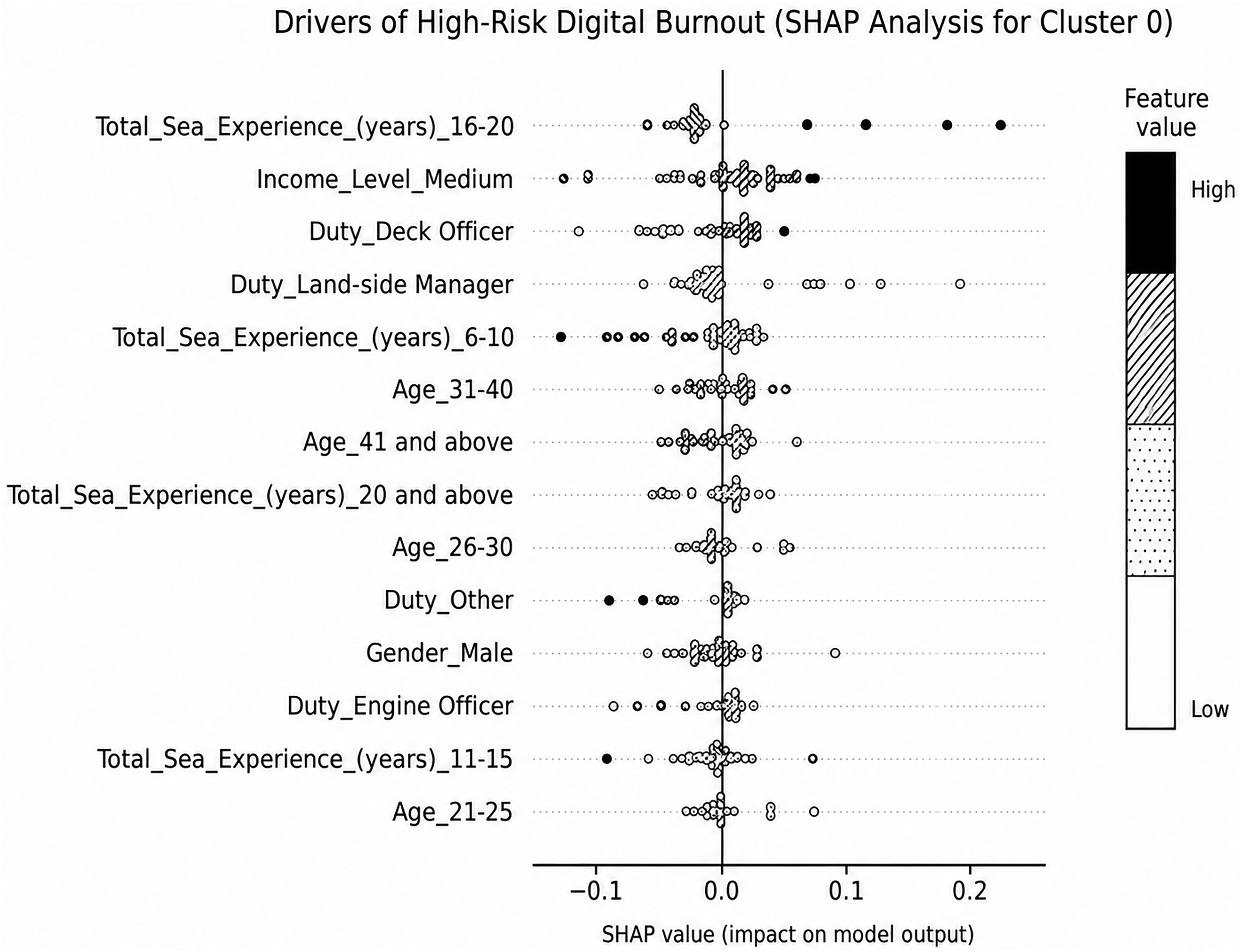
The SHAP summary plot (Figure 2) illustrates the direction and magnitude of factors propelling seafarers into the high-risk Cluster 0. A primary finding identifies 16–20 years of sea experience as a critical mid-career trigger; the density of high feature values (red data points) in the positive SHAP region confirms that reaching this stage acts as a catalyst for digital burnout. Similarly, professional roles, specifically deck officers and land-side managers, exhibit strong positive SHAP values, reflecting the intense operational monitoring and digital surveillance demands inherent in these positions.
Impact of features on high-risk cluster membership.
These insights demonstrate that digital health in the maritime sector is not merely a matter of individual adaptation but is intrinsically linked to professional responsibility and career longevity. The data indicate a non-linear trajectory where exhaustion risk peaks when high operational accountability coincides with mid-career transitions (16–20 years of experience). In contrast, certain demographics function as protective buffers; specifically, seafarers aged 21–25 with 6–10 years of experience are positioned on the negative SHAP axis, suggesting that the initial decade of a career offers a natural defence mechanism against digital stress. Consequently, these SHAP-derived insights provide the empirical foundation for the subsequent decision tree analysis, which further stratifies these complex risk pathways into targeted intervention strategies.
Interaction and vulnerability pathways
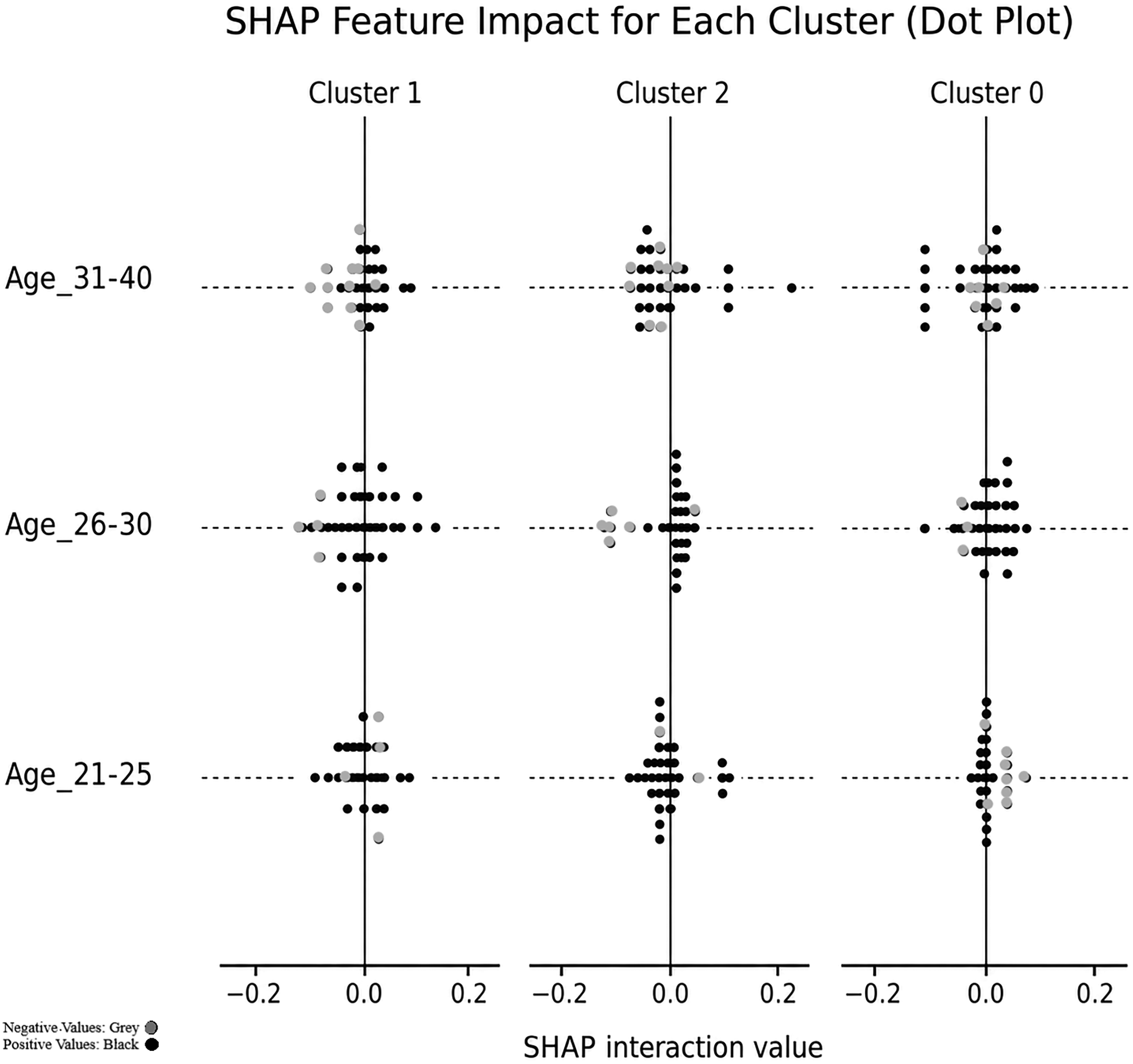
The SHAP interaction analyses reveal that the responses of different age groups to digital burnout do not follow a linear progression but rather contain unique sensitivities specific to each life stage. As illustrated in Figure 3, seafarers aged thirty-one to forty emerge as the most heterogeneous cohort, exhibiting unpredictable reactions to digital stress. The wide dispersion of values within this group confirms that this age range serves as a critical threshold; it may function as a professional advantage through maturity for some, while triggering burnout for others due to escalating digital demands and career pressures.
Interaction effects and age-based vulnerability.
This high degree of variability suggests that the thirty-one to forty-year age bracket represents a transitional phase where individual coping mechanisms and external professional expectations are in constant tension. While younger seafarers may benefit from innate digital literacy and senior seafarers may rely on established managerial stability, those in the mid-career stage face a dual burden of operational execution and technological adaptation. Consequently, the interaction data indicate that binary age-based assumptions are insufficient for assessing occupational risk. Instead, a more nuanced understanding is required to identify how specific professional environments influence this age group's susceptibility to digital exhaustion, providing a direct link to the hierarchical risk pathways established in the final decision tree model.
In contrast, the SHAP values for the youngest age group, specifically those between twenty-one and twenty-five, are clustered within a narrow range around the centre and slightly into the negative region of the plot. This indicates a structural resilience to digital burnout risks, aligning with the concept of digital natives, where early technological familiarity functions as a professional mechanism. This suggests that younger personnel incur a lower psychological cost during the adaptation process to digital tools compared to their older counterparts. Interestingly, the resilience observed in seafarers aged forty-one and over is attributed not to technological familiarity, but rather to the development of stable work routines and established psychological coping strategies cultivated over decades of maritime service.
The predictive power of these demographic and professional variables has been synthesised to provide a clear hierarchy of digital burnout triggers. As summarised in Table 4, the model identifies the transition from socio-economic baseline factors to specific professional milestones as the primary pathway toward high-risk burnout. According to the analytical results, medium income levels function as the root node in the decision-making logic, emerging as the most critical differentiator. This phenomenon arises because seafarers within this economic bracket lack the financial buffers available to higher-income groups, yet they face significantly higher digital demands and operational expectations compared to lower-income cohorts.
Summary of key predictive variables and their impact.
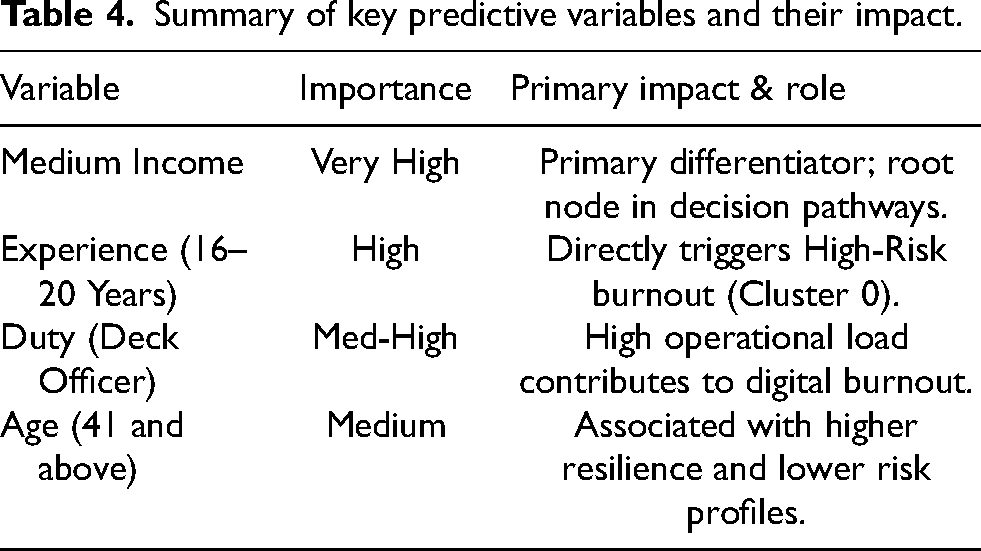
This hierarchical structure suggests that digital vulnerability is determined by a sequence of conditional factors rather than isolated variables. Following the root differentiator of income, the secondary branches of the decision tree highlight the interplay between career longevity and professional rank. This mapping confirms that the high-risk state in Cluster 0 is most likely to be reached when a specific economic vulnerability is compounded by the mid-career pressures of the sixteen to twenty-year experience bracket. Consequently, these results offer a definitive roadmap for maritime organisations to identify at-risk personnel based on a combination of socio-economic and professional criteria.
Hierarchical risk path analysis
A Decision Tree classifier with a maximum depth of four was utilised to map the non-linear pathways and professional thresholds that lead to different digital burnout profiles. 32 The tree structure provides a transparent visualisation of how demographic and occupational variables interact to determine cluster membership, offering a clear hierarchy of risk. By constraining the depth of the tree, the model ensures that the identified pathways remain interpretable and practically applicable for maritime safety managers, avoiding the complexities of overfitting data. This hierarchical mapping allows for the identification of specific decision nodes where the combination of experience, income, and duty shifts a seafarer's risk profile from a moderate to a high-risk state.
The resulting visualisation in Figure 4 demonstrates that the path to severe digital exhaustion is rarely determined by a single factor, but rather by a sequence of conditional vulnerabilities. For instance, the tree reveals how certain career milestones act as critical splitters, where the presence or absence of specific support mechanisms can lead to diverging psychological outcomes. This logical framework complements the earlier SHAP analysis by providing a structured roadmap of the seafaring workforce's vulnerability. Consequently, the Decision Tree serves as the final diagnostic tool in this analytical pipeline, transforming complex machine learning outputs into an accessible format for developing targeted prevention and occupational rehabilitation programmes.

Decision tree classifier for cluster prediction.
The decision tree analysis provides a clear mapping of the hierarchical and non-linear pathways leading to digital burnout among seafarers. The identification of medium income as the root node at the highest level of the model confirms that socio-economic status serves as the fundamental filter for digital burnout risk within the maritime sector. Following this economic baseline, risk profiles are further shaped by secondary filters based on age and professional duty. Specifically, for individuals in the middle-income bracket, being aged forty-one or older acts as a primary differentiator, whereas in other income groups, professional roles, particularly that of an engine officer, constitute critical branching points.
When examining the hierarchical paths leading to high-risk groups, it is observed that younger seafarers, particularly those in the thirty-one to forty or twenty-one to twenty-five age brackets, are systematically directed toward moderate or high-risk terminal nodes when their profiles coincide with specific roles such as deck or engine officers. This complex structure proves that digital burnout is a spectral condition rather than a linear outcome. For instance, the transition between sixteen to twenty years of experience and over twenty years of experience demonstrates that career longevity does not determine risk factors in isolation but instead exacerbates or mitigates risk depending on the preceding age and duty filters.
These findings suggest that the interaction between professional seniority and operational responsibility creates specific zones of vulnerability that are often obscured in aggregate statistical analyses. The emergence of engine officers as a distinct risk node indicates that the digital demands of modern engine room management, combined with specific income thresholds, create a unique psychological burden.
Discussion
The universality and mitigation of digital deprivation
A pivotal finding in this analysis is the lack of demographic influence on digital deprivation, as evidenced by p-values exceeding 0.05 across all categories. This suggests that the sense of being digitally left behind is a homogenous occupational stressor affecting the maritime workforce regardless of age, rank, or income level. To address this pervasive issue, implementing intentional disconnection strategies is critical. Harman et al. (2023) propose that structured digital disconnection significantly enhances the quality of meaningful leisure time, enabling individuals to regain autonomy and cognitive focus. 27 This approach aligns with the concept of digital consciousness, which emphasises mindful engagement with technology rather than passive, constant availability.
Such focus on mindfulness is supported by broader occupational stress research in digitalised environments, which suggests that individual and environmental factors significantly influence the well-being of professionals navigating complex technological landscapes.33,34 Furthermore, these findings have direct implications for operational efficacy and maritime safety. As Sanchez-Segura et al. (2023) suggest, digital burnout can lead to reduced engagement or disruptive shifts in digital interaction, potentially compromising essential safety communications. 34 This shared vulnerability implies that seafarers may experience psychological isolation unless institutional policies support both connectivity and the right to disconnect. Consequently, addressing this dimension requires industry-wide standards that promote digital well-being as a core component of occupational safety, ensuring that technological integration does not undermine the seafarer's mental resilience.
Mid-career vulnerability and socio-professional drivers of digital burnout
SHAP analysis can reveal a critical non-linear pattern in digital burnout risk. While younger seafarers (21–25) demonstrate protective characteristics, individuals within the 16–20 years of experience bracket emerge as the most vulnerable group. This finding indicates a mid-career “double burden”, where increasing operational responsibility coincides with the need to adapt to rapidly evolving digital systems.
This aligns with prior studies,20,35,36 while extending them by demonstrating that burnout risk peaks at specific professional thresholds rather than progressing linearly. In contrast, seafarers with over 20 years of experience exhibit greater resilience, suggesting that long-term exposure leads to the development of coping mechanisms and organisational mastery. These findings highlight the importance of targeted interventions for mid-career professionals, particularly those in operationally intensive roles.
Predictability and the “Spectrum condition”
The decision tree analysis scientifically validates that digital burnout functions as a spectrum condition rather than a binary state. The identified non-linear pathways demonstrate that risk is not determined by a single demographic or professional factor in isolation, but rather by specific and potent combinations such as being under forty-one years of age while simultaneously holding a medium-income position. This spectral nature implies that maritime professionals may move across different levels of vulnerability as their career trajectory and economic circumstances evolve, making periodic psychological assessment essential.
As Eminoğlu et al. (2024) and Annelies et al. (2024) state, high levels of digital burnout may negatively impact a seafarer's confidence in performing future professional roles, creating a potential barrier to career progression.37,38 The identification of Cluster 0 with an alarming digital ageing mean score of 45.12 highlights a specific cohort in critical need of targeted intervention. The addictive nature of digital platforms, combined with the professional always-on culture prevalent among deck officers, poses a unique risk to mental health and overall maritime job satisfaction. This critical state suggests that without formal institutional support, the psychological strain experienced by this high-risk group could lead to long-term occupational detachment or significant safety oversights.
Consequently, the predictability of these risk profiles allows for a shift from reactive to proactive occupational health management. By recognising that certain age and income combinations create a multiplier effect on digital stress, maritime organisations can implement preventive measures before individuals reach the critical thresholds identified in the model. This predictive capability transforms the understanding of digital burnout from an abstract psychological concern into a manageable operational risk factor, providing a clear mandate for the development of specialised rehabilitation and adaptation programmes for the most vulnerable segments of the workforce.
Sectoral and policy implications: Human-centric digitalisation
Digital burnout must now be recognised as an emerging occupational risk factor within the framework of modern maritime policy. The results of this study clearly demonstrate that standardised digitalisation strategies are insufficient, particularly given the vulnerability exhibited by deck officers in the middle-income bracket and those within the sixteen to twenty-year experience gap. In this context, it is a strategic necessity for maritime authorities and operating companies to reconfigure technological integration through human-centric digital policies rather than focusing solely on operational efficiency. Such policies should account for the psychological cost of new technologies, ensuring that the introduction of automated systems does not inadvertently increase the cognitive load on already strained personnel.
As a fundamental part of this strategic transformation, the implementation of structured digital off-duty periods is essential, especially for officers at the midpoint of their careers. For personnel in the thirty-one to forty age bracket, who were found to exhibit the most fragile and heterogeneous responses in the analyses, customised digital resilience initiatives should be launched. These approaches will yield more effective results when supported by the reduction of excessive digital workloads that do not contribute directly to maritime safety. Taking these measures will support the psychological well-being of seafarers while simultaneously enabling the conduct of safer and more sustainable maritime operations in an increasingly digitalised era.
Providing a clear right to disconnect and offering digital training tailored to different career stages are the best ways to prevent burnout. By institutionalising these interventions, maritime organisations can transition from a reactive posture to a proactive health management model. This transition is vital for the long-term retention of skilled officers, as it addresses the root socio-economic and professional causes of burnout. Ultimately, a balanced approach to digitalisation that prioritises the human element will safeguard both the mental health of the workforce and the operational integrity of the global maritime supply chain.
Conclusions
This study provides original insights into the prevalence and characteristics of digital burnout, a phenomenon that remains largely unexplored within maritime literature. By integrating traditional statistical analyses with advanced machine learning interpretability, the research demonstrates that digital burnout is a significant concern for seafarers, particularly within the dimensions of digital ageing and digital deprivation. While digital technologies have become an indispensable element of modern maritime operations, the cumulative effects of these tools highlight a critical need for structural and psychological interventions across the industry.
The analytical results reveal that digital burnout is not homogeneously distributed across the maritime workforce but is shaped by specific hierarchical thresholds. A primary finding of this research is that professionals with medium income levels and sixteen to twenty years of sea experience constitute the highest risk group, as they remain at the intersection of heavy operational loads and intense digital adaptation pressures. In contrast, younger seafarers, identified as digital natives at the start of their careers, along with senior officers possessing greater restorative resources, exhibit more resilient profiles. These data confirm that digital burnout in the maritime sector is not merely a technical adaptation issue, but a complex hierarchical and socio-technical challenge.
To mitigate the effects of digital burnout, the implementation of several targeted interventions is of paramount importance. Technological stress management and digital resilience training should be prioritised, especially for seafarers at the mid-career stage. At the institutional level, structural policies that limit excessive screen time during off-duty hours and encourage offline social interaction must be developed. Furthermore, customised mental health support mechanisms targeting connectivity anxiety and digital fatigue should be deployed for personnel working under high data loads, such as deck officers. For crew members, workplace optimisations and improvements in onboard living conditions are strategic necessities to reduce the stressors contributing to digital deprivation.
Despite its contributions, this study possesses certain limitations. Given the cross-sectional nature of the data and the use of convenience sampling, the findings should be interpreted with caution. The results provide indicative rather than definitive evidence of causal relationships and may not be fully generalisable beyond the sampled population. As an exploratory research based on a sample of Turkish seafarers, the findings may not be fully generalisable to the entire global maritime population. Additionally, the cross-sectional survey method limits the establishment of definitive causal relationships over time. The predictive accuracy offered by the machine learning models suggests that digital burnout is closely related not only to demographic variables but also to individual psychological traits and personal resilience factors.
Future research should focus on longitudinal data to understand the long-term career impacts of digital burnout and to measure the effectiveness of implemented intervention strategies. Furthermore, studies investigating the role of different vessel types and corporate cultures in digital interaction patterns will provide deeper insights for industry stakeholders. As the maritime sector continues its course toward full digitalisation, evaluating the interface between human and machine through the lens of psychological well-being will be indispensable for maintaining operational safety and ensuring the sustainability of the maritime workforce.
Footnotes
Acknowledgements
Not applicable.
Ethical considerations
Ethics Committee of Kocaeli University Institute of Social Sciences on September 23, 2024, with decision number 653713.
Informed consent
Not applicable.
Funding
The authors received no financial support for the research, authorship, and/or publication of this article.
Declaration of conflicting interests
The authors declared no potential conflicts of interest with respect to the research, authorship, and/or publication of this article.
