



Abstract
Background
Virtual supported employment is an emerging service to support clients with disabilities search for, obtain, and maintain competitive integrated employment. This form of support remains relatively unexplored in the literature.
Objective
The purpose of the study was to explore perspectives and experiences of key supported employment stakeholders on transitioning to virtual supports and using technologies to support young adults with neurodevelopmental disabilities during and following the COVID-19 pandemic.
Methods
Semi-structured focus group interviews involved four supported employment stakeholder groups: policymakers and funders, community rehabilitation providers, employers, and young adults with neurodevelopmental disabilities. Sessions were videotaped and analyzed using thematic analysis.
Results
Supported employment stakeholders conveyed positive overall experiences in virtual supported employment during and following the pandemic, describing multiple encouraging opportunities for improving service accessibility, inclusivity, and efficiency. Nevertheless, obstacles with access to technology, the internet, and inadequate training may continue to limit such opportunities, highlighting areas for improvement.
Conclusion
Virtual supported employment offers a promising solution to address service accessibility barriers. The pandemic prompted new approaches to better support clients. This shift has revealed the need for ongoing training to explore technologies for supporting job seekers, as the use of virtual support continues to be provided beyond the pandemic.
Keywords
Introduction
Supported Employment (SE) is a fundamental vocational rehabilitation (VR) intervention for facilitating competitive integrated employment (CIE) for individuals with disabilities. SE is individualized to the strengths, abilities, interests, and informed choices of individuals with disabilities (Brooke et al., 2018). SE gained formal recognition with the passage of the Rehabilitation Act Amendments in 1984 (P.L. 98-527), which aimed to help individuals with disabilities secure and maintain employment in mainstream settings (U.S. Department of Labor, 1984). It was further supported by various pieces of legislation, including the Americans with Disabilities Act of 1990 (U.S. Equal Employment Opportunity Commission, 1990) and the Workforce Innovation and Opportunity Act of 2014 (WIOA, 2014). The WIOA of 2014 played an important role in facilitating the integration of individuals with disabilities into the workforce, particularly those with barriers to the education, employment, training, and support services they need to succeed in the labor market (Wehman et al., 2018). WIOA of 2014 defines SE as services needed to support an individual with a significant disability. These services are provided, organized, and made available in such a way as to assist an individual to achieve CIE based on their needs as specified in an individualized plan for employment (IPE).
On March 11, 2020, the World Health Organization (WHO) declared the coronavirus disease (COVID-19) a global pandemic (Cucinotta & Vanelli, 2020). The pandemic led to an immediate shift in SE services to virtual. Individuals who were previously receiving in-person supports needed access to basic hardware and software technologies to maintain continuous supports. However, there was uncertainty about funding agencies authorizing virtual support and accessing mainstream mobile devices and applications for individuals with disabilities participating in SE because in-person supports were the standard.
Historically, individuals with disabilities are less likely to have access to technologies and the internet compared to individuals without disabilities (Anderson & Perrin, 2017; Fong & Swick, 2022; Perrin & Atske, 2021). Young adults with neurodevelopmental disabilities in state VR programs are most likely to have limited access to technology (Alshamrani et al., 2023; Chen et al., 2015). Prior to the pandemic, many studies reported barriers in effectively supporting clients with technology due to clients having limited access and/or insufficient training (Estrada-Hernández et al., 2007; Froehlich & Linkowski, 2002; Kuo & Kosciulek, 2021; Noll et al., 2006). A recent national survey confirmed that limited funding for technology and inadequate knowledge and skills in effectively utilizing technology are enduring barriers (Tanis, 2021). In another recent national survey, Dallas et al. (2022) reported that many VR service providers experienced challenges in engaging with their clients due to a lack of training on technology, limited internet access, unsupported applications, and no access to devices. Pogoda et al. (2021) found challenges during the transition to virtual support and use of technology in providing SE services for veterans with disabilities. These challenges primarily stemmed from professionals’ lack of familiarity with technology in supporting their clients. Thus, barriers to access and training exist at both the client and provider levels.
Supported employment is traditionally provided in-person between a job seeker, a community rehabilitation provider, and an employer through three distinct phases: job exploration and discovery, job development, and job coaching (Schall et al., 2015; Wehman et al., 2018). Funding for SE services is typically provided by the state VR programs/Division of Vocational Rehabilitation (DVR) or state Medicaid programs under Home and Community-Based Services (HCBS) waivers for those who require long-term support (Drake & Bond, 2008). In-person SE services are well established in federal and state policies and decades of literature demonstrate its effectiveness in producing positive CIE outcomes (Wehman et al., 2014). Virtual SE services may provide more inclusive and accommodating support services that are better aligned with an individual's preferences and circumstances (Healy et al., 2023); address the shortage of support professionals in under-served areas (Ahonle et al., 2021); increase engagement and timeliness of services with decreasing transportation barriers and associated costs (Embree et al., 2018; Ottomanelli et al., 2021); and enhance communication, improve job performance, and foster independence, thereby improving employment outcomes and reducing their reliance on support professionals (Tassé et al., 2020). Using technology also provides opportunities for individuals to learn new job- and technology-related skills, which are prerequisites for much of today's modern labor market (Mahoehney et al., 2024).
Virtual SE remains relatively unexplored in the literature and there is a knowledge gap regarding how technologies were selected, accessed, during the pandemic. The purpose of this study was to explore the experiences and perspectives of key SE stakeholders on transitioning to virtual supports during and following the pandemic when supporting the transition-aged population with neurodevelopmental disabilities in the Colorado VR program. This study sought to answer the following research questions: (1) What types of mainstream mobile devices and applications were used, and for what purpose(s) or phase(s) of supported employment? (2) What policy or funding changes were made to improve access to mainstream mobile devices or applications during and post-pandemic? (3) How were these technologies selected, and what role did participants play in the decisions? (4) Did participants perceive the use of technology in supported employment as a negative or positive experience? (5) Is there a perceived need for more improvements that can inform best practices moving forward?
Methods
We conducted a focus group study with four stakeholder groups involved in SE through the Colorado VR program during and after COVID-19, using a qualitative descriptive design (Bradshaw et al., 2017) to gather rich descriptions from and explore novel areas with study participants on which little may be known (Chafe, 2017; Sandelowski, 2010).
Sampling and Recruitment
We employed purposive sampling to ensure representation from multiple and relevant perspectives in SE during and after the pandemic (Parahoo, 2014; Ritchie et al., 2014). This method allows researchers to intentionally select participants who can provide the most pertinent information (Stewart & Shamdasani, 2014). Our approach aimed to capture diverse experiences across four key SE stakeholder groups, including: (1) VR policymakers and funders, (2) VR service providers, (3) employers, and (4) VR transition-aged young adult clients with neurodevelopmental disabilities and their families. These groups were specifically selected to reflect different roles in SE service delivery, providing insights into policy, service implementation, employer accommodation, and client experience. Participants were not randomly selected; instead, they were deliberately recruited based on their direct experience, diagnosis, and involvement in providing or receiving support during and after the pandemic. The recruitment was facilitated through our collective networks of agency and community partners. Invitations were sent via e-mail to participants within these groups and all participants signed an informed consent form before participating in focus group sessions. This research was approved by the Colorado State University Institutional Review Board.
Participants
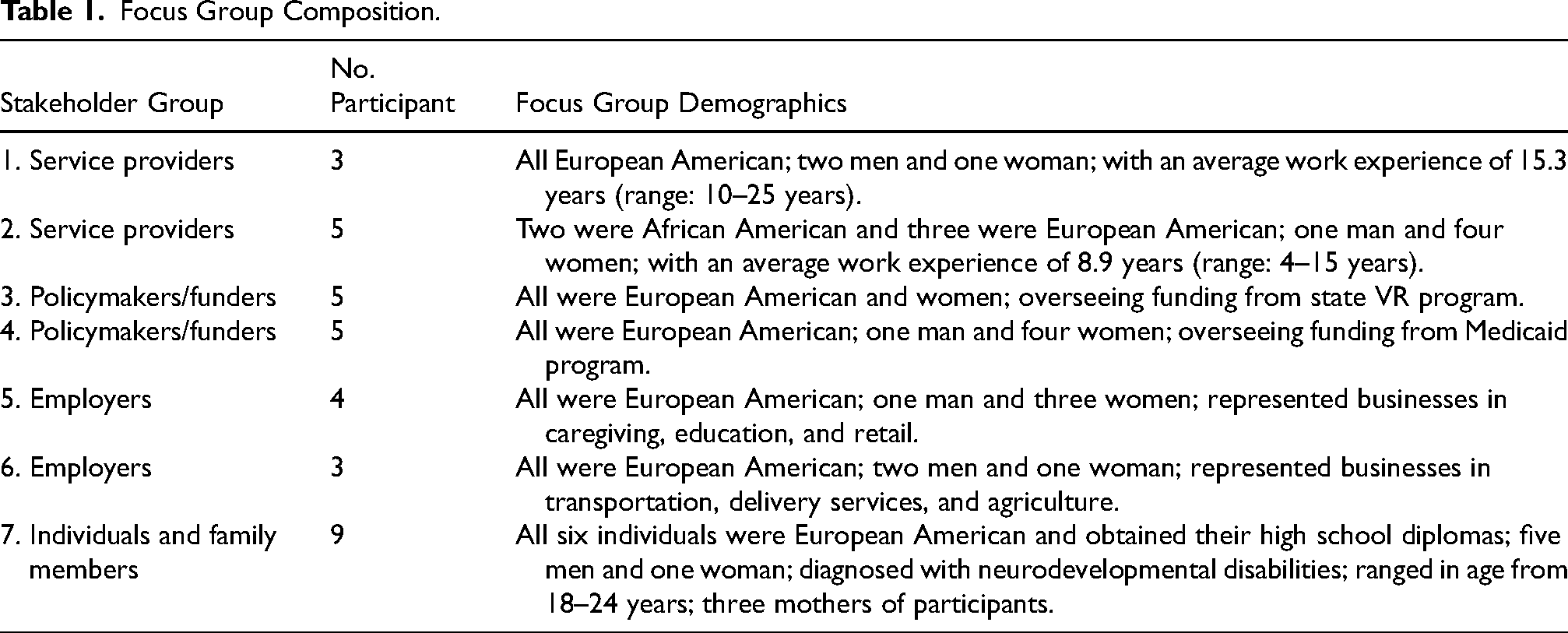
We conducted seven focus group sessions with thirty-four participants across four stakeholder groups. One session included nine participants: six transition-aged young adults with neurodevelopmental disabilities (ASD, ADHD), and three mothers. Two sessions with community rehabilitation providers from different counties in Colorado. Two sessions with policymakers and funders; one group oversaw state VR funding, while the other group oversaw Medicaid funding. Lastly, two sessions with employers; four from caregiving, education, and retail, and three from transportation, delivery, and agriculture. Refer to Table 1 for descriptive summaries of each focus group.
Focus Group Composition.
Data Collection
The interactive nature of focus groups facilitates richer and more nuanced insights than might be gleaned from solitary responses in one-on-one interviews (Holloway & Galvin, 2017; Kitzinger, 2005; Morgan, 1997). We conducted focus group sessions from May 2022 to April 2023, each lasting 45–75 min with 3–6 participants, allowing for in-depth discussions (Holloway & Galvin, 2017). Guiding questions were developed from literature reviews and conversations with key stakeholders. Open-ended, semi-structured questions (Appendix A) encouraged free expression, with facilitators using follow-ups and probing questions to elicit detailed responses (Brinkmann, 2013). A primary facilitator led each session, while secondary facilitators took notes and prompted further discussion (Krueger & Casey, 2000). Participants received the interview guide beforehand, and each stakeholder group was asked 6–8 tailored questions relevant to their roles. Policymakers and funders discussed technology access and funding policies, service providers shared experiences with technology use, individuals with disabilities and families reflected on support experiences, challenges, and recommendations, and employers addressed technology use in hiring, training, and job quality improvements. See Appendix A for the focus group-specific prompts. All sessions were recorded via Zoom or Microsoft Teams, transcribed using Otter.ai (Version 1.0), reviewed, and verified by two researchers before analysis.
Data Analysis
The transcripts were imported into NVivo qualitative data analysis software (Version release 1.7.1; Lumivero, 2023) and analyzed according to the guidelines suggested by Braun and Clarke (2006) for thematic analysis. Before coding, two researchers read and re-read all transcripts to further immerse themselves in the data. In the second step, the two researchers independently conducted the initial coding using the NVivo software. After completing their initial coding analyses, they convened to discuss and reach consensus on the initial codes. Following this discussion, a final codebook was created, with each code clearly named and described. The codebook included a list of 44 distinct codes accompanied by multiple references, the number of transcripts each code appeared in, and a description of each code. Once the data was fully coded and the agreed-upon codebook was established, they proceeded to identifying potential themes. This third step involved grouping related codes that shared common underlying ideas. The fourth step entailed reviewing the coded data extracts assigned to each potential theme. The two researchers evaluated whether the data grouped under each theme cohesively represented the meaning and checked for any emergent sub-themes. All themes and sub-themes were then vetted by the two researchers to ensure all data were captured and to finalize themes and sub-themes. In the fifth step, the final themes and sub-themes were defined, named, and discussed by the two researchers and presented to the entire research team for discussion. Exemplar quotes were also identified by the two researchers and reviewed by the larger research team for consensus to ensure the best representation of stakeholder perspectives.
Strategies to Enhance Trustworthiness
First, we initiated and maintained an audit trail throughout the course of this study (Rodgers & Cowles, 1993). This included saving, dating, and organizing all documents related to the research processes. Second, monthly research meetings were held to allow time for debriefing and evaluating the ongoing research processes (Spall, 1998). Third, the two analysts practiced reflexivity (Greenbank, 2003; Kingdon, 2005) by reflecting on their personal and professional biases; a summary paragraph was written and shared between both analysts. Fourth, data triangulation was employed by obtaining data across participant groups to examine data from different stakeholder groups. Lastly, researcher triangulation was also employed by using more than one data analyst to decrease bias in analyzing the study data (Patton, 1999).
Results
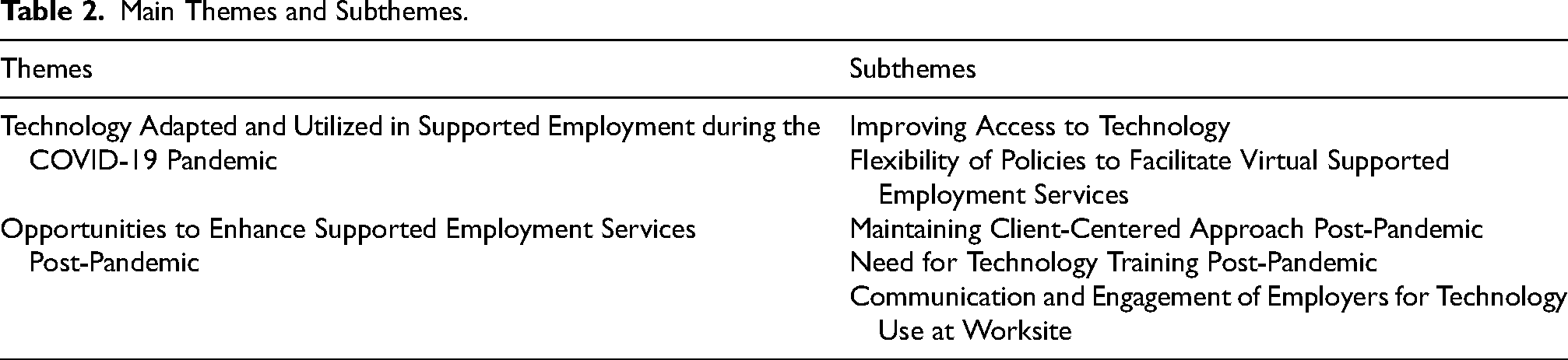
Two main themes were identified (see Table 2). The first theme – Technology adapted and utilized in SE during the Pandemic – included two sub-themes: Improving Access to Technology and Flexibility of Policies to Facilitate Virtual Supported Employment Services. The second theme – Opportunities to enhance SE services post-pandemic – included three subthemes: Maintaining Client-Centered Approach Post-Pandemic, Need for Technology Training Post-Pandemic, and Communication and Engagement of Employers for Technology Use at Worksite. Participants’ quotations supporting each theme and sub-theme are described below.
Main Themes and Subthemes.
Theme I: Technology Adapted and Utilized in Supported Employment During the COVID-19 Pandemic
This theme demonstrates the adaptability of stakeholders in navigating pandemic-related changes and ensuring the continuation of supports. All stakeholders had to adapt immediately and utilize mainstream technologies to stay supportive and engaged. Smartphones, electronic documents, mobile software applications, and videoconferencing were used extensively during the pandemic. Participants described creative ways to use smart phone apps for job coaching. One service provider stated: “We had to find creative solutions. The Job Accommodation Network at the time really stepped up to help identify some of those different [free] apps that individuals could use on their phones. That was really before we had started implementing the use of [the] Avail app.”
Another service provider described the use of the Avail smart phone app to provide job coaching and promote independence among clients with neurodevelopmental disabilities in worksite: “There were apps, specifically one app that is called Avail. It really streamlines the coaching process for a lot of our individuals. And we found that it was an amazing resource because they could still have job coaching and they did not need somebody there next to them in-person. You are able to help set them up for success in different ways by giving descriptions of their tasks, and time intervals of their tasks. And we saw them getting settled in their positions and weaning off our supports.”
From the employer side, some used a smartphone app to offer their training and orientation. One employer described, “At our organization, we've changed our training and orientation procedures. So, we have Cornerstone Learning software app, which all employes have to get on to do certain trainings. This is also where our orientation is accessed.”
Texting emerged as a frequent method of communication between service providers and their clients during the pandemic, and a preferred method over phone calls by many clients. This enabled clients to utilize built-in accessibility features on their smartphones such as speech-to-text or text-to-speech. A service provider explained this evolution, noting: “They [clients] started to use more texting instead of phone calls. I have clients who use text-to-speech or speech-to-text to communicate because they cannot spell well. That's just easier for them. I think pre-pandemic, texting was not considered billable support like that is something done on the site, but it became a means of communication.”
In addition, electronic documents were utilized by service providers to offer job training and coaching to clients. This allowed individuals to review the steps for doing their job tasks on smart phones, as one provider described, “I actually use a word document or a PDF for job task analysis that I would send to clients, so they could use it on their smart phones and scroll through those steps if they needed to remember stuff for their job.” Some service providers learned how to use Microsoft Teams or Google Classroom to make their materials available online so that individuals could participate in job training and coaching - “I had to learn to move my materials online because typically, I was doing everything hands-on, and you know we go out to do activities in the community. It was interesting to try to make those hands-on things available online.”
Several videoconferencing platforms were learned and utilized among all stakeholders, including Zoom, Microsoft Teams, Google Meet, Skype, and FaceTime. As one service provider said, “just figuring out how the videoconferencing platforms work was step one before trying to provide our services through technology.” These platforms became tools for communication, “there was a communication first by phone calls and then as the pandemic wore on more, we learned and got into videoconferencing to make sure that communication was happening for those individuals who need support” and for providing job development, as one provider said, “We all had to learn to use videoconferencing. We used Zoom when we did job development, so that we would still be able to submit job applications online and meet with clients.” Individuals with disabilities also learned and used several videoconferencing platforms. One client shared, “I was using Microsoft Teams, Google Meet, and sometimes Zoom. I was doing job interviews, university class, and autism group therapy sessions which were all virtual.” Another individual with disability shared: “We had to learn about technology and all that, and it was a challenge, but it was very helpful at the same time. I still use online videoconferencing platforms for work and classes. And I also use them to talk to friends that might not be able to get together in person. I think it definitely helped me adapt and get out of my comfort zones.”
Employers also described their adaptations to virtual hiring practices. One employer stated, “We have made several changes, and we are doing virtual job interview and orientation and that is a change in our hiring practice … any interview would be done over zoom, Skype, or FaceTime, and I am still willing to do virtual job interviews.” Another employer added: “We are more open to videoconferencing as an interview style with someone than we would have been before. When we hired our employees, we were more willing to do a zoom meeting for the job interviews. Whereas before I do not think we would have normally done that.”
Improving Access to Technology
This sub-theme highlights the pivotal role of policymakers and funders in improving access to mainstream devices and software applications for clients with disabilities. At the onset of the pandemic, policymakers in the Colorado VR program recognized the importance of improving access to mainstream devices to ensure both clients and service providers had the necessary tools to participate in SE services. As a policymaker described: “we provided access to a smartphone, which, of course, facilitates SE services in a lot of ways. It allows providers to text, jump on FaceTime, or Google Meet directly from their phone … Before the pandemic, a lot of the time computers or tablets were really focused on individuals who were in an academic training program. During the pandemic, I think computers and tablets were being purchased for folks who weren't engaged in an academic training program. So, we loosened up our policies around purchasing a computer for individuals to ensure those supports were accessible.”
Service providers commented on types of devices that were used by clients. One service provider noted, “Most of the people that we are supporting have a smart phone, laptop or tablet that were provided through DVR, and for a lot of individuals, it was easier for them to use their smart phones for communication and accessing support.” The modified policy also included extending funds for technology-based job coaching and improving access to job coaching software applications, as one VR policymaker noted, “We added technology-based job coaching to purchase the software licenses, and we do not limit it to Avail app; it could be any similar type of software app that would enable individuals to participate in a job coaching on their phone.” While the state DVR made enhanced access to mainstream devices and applications, challenges persist regarding access within the Medicaid waivers. As a result, clients often turned to the state VR program for assistance in purchasing technology, utilizing it as a resource to overcome the limitations within Medicaid waivers. As one Medicaid policymaker commented: “I do not think from purchasing technology we did a good job because we do not have the right mechanisms for it. So, that has been a big barrier for us over the years … I really think that DVR was kind of one of our saving graces because people could kind of turn to DVR and say, ‘Hey, we need access technology to be able to do employment-related things,’ and DVR was able to help them with access.”
Another policymaker added, “From the Medicaid perspective, we get worried that we purchase individuals a piece of technology, and then they lose it or become dependent on it without a backup plan for replacement or updates when things go out.” However, all participants in our Medicaid focus group session indicated enthusiasm for improving access within Medicaid waivers to improve access to technology. For example, one participant pointed out several benefits to providing technology for their clients: “We need to do things differently and make sure people have access to technology they need. We need to figure out how we make the Medicaid waiver more effective at funding the technology for people who need it … I do think it is an important question about sort of long-term, how are we supporting access to technology? How do we more broadly support tech literacy and things like that, because whether that is a tool or a skill that individual might need in order to access job coaching, it is also an important tool or skill to get a job.”
Flexibility of Policies to Facilitate Virtual Supported Employment Services
This sub-theme highlights the role of policymakers and funders in facilitating the transition to virtual SE services during the pandemic. The policies for facilitating virtual SE services were unanimously described by providers as flexible policies, which not only facilitated the shift to virtual support, but also enabled service providers to offer support that was most suitable for their clients’ situations during the pandemic. As one service provider commented: “Our DVR [office was] completely flexible to anything we suggested, we did not get any negative experience, and DVR funders were just open to do what we can in whatever way we can to support our clients. Medicaid funders as well were very accommodating like whatever way you need to do to communicate and job coach your clients, you can bill it.”
In addition, participants described that most support and communication were provided through synchronous modes, involving real-time interactions through video, audio, or text. However, there was an awareness of the potential for asynchronous support. A funder acknowledged this aspect, stating, “Honestly, I think the majority is synchronized. A lot of people might not know they can do that, but asynchronous supports are allowed and billable.” Medicaid policymakers and funders were instrumental in advocating for access to virtual SE services and maintaining unchanged service provider rates during the pandemic. Medicaid has an existing appendix in their regulations that allows states to request immediate amendments during emergency situations. As one Medicaid policymaker explained: “There is a piece of our waivers called appendix K. When the COVID-19 pandemic hit, we used Appendix K, and it is still in effect. We really fought the battle to make sure that rates did not change for job development and job coaching. I think that helps with sustainability and people to stay engaged with SE services.”
VR policymakers and funders mentioned that remote services were in the fee schedule prior to the pandemic. This enabled smooth access to SE services for clients during the crisis. A policymaker noted: “the fee schedule has never prohibited services being provided remotely. Prior to the pandemic, a lot of people were not using remote services to the extent that we are now … DVR usually has the flexibility to be able to provide the service in a manner that is how the individual needs it, and how the individual prefers to receive that service.”
Theme II: Opportunities to Enhance Supported Employment Services Post-Pandemic
Participants had positive overall experiences in virtual SE as an opportunity to improve service accessibility, inclusivity, and efficiency for serving individuals with disabilities. One service provider noted, “We do not have enough distribution of service providers across the state. As people become more comfortable with technology, it gives us the opportunity to maybe have a service provider in one city serving someone in a rural community.” Virtual technology has the potential to be more inclusive by empowering individuals with disabilities to choose their preferred mode of support. As stated by a service provider, “When scheduling meetings, I offer all three options; in-person, Zoom, or phone call. And go by the client's preference. I think this leads to greater inclusivity, especially for people with disabilities of various kinds.” Another service provider added, “We can set up a Zoom, Microsoft Teams, phone call, or whatever accessible ways that works for client.” Employers also expressed openness to offering virtual options in their hiring practices to accommodate potential employes’ needs, as one employer commented, “I feel like the options for job interviews, orientations, and some of the trainings have been beneficial, especially for individuals who are students and have a more stringent schedule. So, it has really been helpful to have that virtual option.” Another employer said, “We will accommodate anybody who wants to do virtual.” Virtual options also alleviated common transportation barriers. As one individual with a disability expressed, “I do not have to worry about transportation because I'm not able to drive.” A service provider added, “We are able to schedule individuals quicker and work around individuals’ schedules because they do not have to factor in transportation and commute time to get to our office.” Another benefit was avoiding the stigma associated with receiving on-site job coaching. As one individual with a disability described, “If you would benefit from job coaching but do not want somebody on-site with you, ask if the job coach can do [virtual], because I tried that for a time, and I think that was more helpful than on-site.” A service provider explained: “I had some clients say, ‘I do not like it when you show up because it makes me feel like I am dependent on someone.’ So, it made us look at job coaching differently; why do not we just do some of it via technology instead of showing up on the job site because that makes them feel stigmatized.”
Maintaining Client-Centered Approach Post-Pandemic
Maintaining a client-centered approach is essential to address individual differences and needs, ensuring that the selected technology is tailored to effectively support each client. The selection of technologies during the pandemic was driven by the immediate need to maintain service continuity during the statewide ‘shutdown’. Although providers adapted to using technologies during the pandemic, the involvement of individuals with disabilities in the decision-making process was limited. This highlights an area for potential improvement in post-pandemic SE. One individual with disability stated, “I think there should be client-led. It should be led by the client who you're serving and not assume that one thing is going to work for one person that would work for another.” A family member shared her son's issues with virtual job development meetings, “We try to meet as much as possible face-to-face because the virtual stuff distracts him with ADHD and sensory. He does not pay [as] much attention if he got you online on the computer than face-to-face.” One individual with disability expressed her personal preference, citing her social nature and coping mechanism: “I was using Microsoft Teams and Zoom, but I am a very social person, and I felt like I lost some of my skills to cope with my disability. I think it would have been very hard for me if I did need a job coach virtually because virtual is not my style.”
One service provider commented, “People have grown along with technology, and it has become integral, but some still have preferences for in-person support.” Confidence in using technology varied among individuals. As one service provider indicated, “Some people know how to use technology, some people do not know, and others are just like I do not want to use that.” Another service provider shared, “Someone who is already in the job could pivot easier with technology for virtual training to change how to do things, but some of those starting a job, if they are not used to a job, that hard to address virtually.” Additionally, factors such as the lack of internet access or private space further complicated the shift to virtual, as described by a funder: “It was not easy to stay in contact to keep people engaged when they did not have access to the basics like the internet or space. Even with purchasing technology for them, what is the use of a computer if they do not have anywhere to plug it in or access the internet?”
While technology facilitated SE service continuity, it wasn't effective for all clients. Some clients preferred in-person meetings over virtual, and other clients were not directly involved in selecting their technology, leading to mismatches between the technology and their preferences and needs. These experiences faced by participants during the pandemic highlight the need for maintaining client-centered approach in SE service delivery beyond the pandemic.
Need for Technology Training Post-Pandemic
The pandemic facilitated technology access to mainstream devices and applications for clients with neurodevelopmental disabilities, but training on how to effectively utilize these resources was not often provided, highlighting an area for improvement post-pandemic. It was evident that access to technology alone was insufficient, as one participant suggested, “Even if individuals have access to technology, they usually would have needed somebody to train them on it. It was great that they offered access, but it was not as much help as we would have hoped.”
Following the pandemic, policy makers and funders saw a need for technology training and viewed such training as an opportunity for service providers to develop the learned skills. One policy maker claimed: “The training that we require for our service providers is the ACRE [Association of Community Rehabilitation Educators] certificate training. The training focuses on a lot of ways of providing virtual services and showing different apps on the phone that an individual could use to do work and be independent.”
Another policy maker added: “The neat thing about the pandemic is that ACRE training had to be offered. And we had service providers that were like, “I'm learning how to use technology. I'm learning how to do this. And I can translate that into my support time offering people”, and I think that's been a unique benefit.”
Most employers emphasized the need for technology training for individuals with disabilities, as noted by one employer, “I think it is very important that individuals be included in new forms of technology launching and making sure that they are trained on it is very important.” Service providers noted that individuals with neurodevelopmental disabilities were not given opportunities to learn and use technology before the pandemic, as one service provider said: “There were a lot of people who did not think that individuals with neurodevelopmental disabilities could use and learn technology. We were all kind of learning together, but I think a lot of people we serve have not been given the opportunity to learn those things before … we put our individuals at a disadvantage because we do not expect job coaches and job developers to push the envelope with people to find ways to utilize technology to be more independent and do all of those things.”
Service providers all saw a need for technology training, viewing it as an opportunity to explore technologies that could enhance job coaching activities and better meet their clients’ needs. One provider shared her experience about exploring a new app, “There is one app I learned about at the conference. It could really change the job coaching world out here.” Another service provider mentioned leveraging training and education on technology for individuals, “There is an app I learned yesterday that you can see where every bus is in the city. I did not even know this existed so I'm still educating myself so I can educate my clients.” A family member highlighted the need for information on technology: “I did attend training sponsored by the state, and it was about employment for young adults who have any kind of disability. And one of the things they were saying was that there are lots of apps and other technology things that can help. And I was like I do not know anything about that. So, they were saying ask your service provider about apps.”
Communication and Engagement of Employers for Technology Use at Worksite
This sub-theme highlights the attitudes of employers towards technology use in the workplace, especially in the context of job coaching. While all employers generally embraced technology use for conducting job interviews and orientations, they expressed reservations about the use of technology, such as smartphones and apps during work hours at the worksite. As one service provider mentioned: “I would say with employers, we just did not deal with enough technology with the people being in their job sites. They are not a huge fan of us using technology or having cell phones or apps or anything like that because they see it as individuals on their phones, they are not doing what they need to be doing like they are playing on their phones.”
Employers’ concerns were primarily about potential distractions and the impact on productivity, or that employes might spend work hours engaged in virtual conversations with job coaches instead of focusing on their work tasks. Employers wanted to ensure that it did not disrupt employes’ productivity, or “being able to rely on technology without taking away from the time they are supposed to be completing a task,” as one employer said. However, when the use of technology was clearly linked to enhancing productivity and work outcomes, employers were supportive. An employer noted, “If the service providers we worked with said we needed to use some technology for individuals that would help with productivity, we would support it and do it, but we do not know what we might need that would create a better work environment.” Effective communication and engagement of employers in the job coaching process reduced barriers for some employes with disabilities using devices or software applications at their worksite. For example, one service provider shared his experience of communicating with the employer in the process of job coaching: “I would negotiate with the employer like; would it be okay if this person has their phone with them? Because some employers generally did not want their employees to have phones with them during work hours because of using it for personal use rather than completing their job tasks. I would talk with employers about how I am using this to do a task analysis on the phone that can be helpful for this person. Often, I would actually get the employer [saying]; hey, you broke down this job really well and I'd love to have that for other employees. So, I did find that they were open to it.”
Discussion
This study explored perspectives and experiences of SE stakeholder groups concerning the transition to virtual SE services, accessing technologies, and the training on their use in supporting young adults with neurodevelopmental disabilities. Our focus group participants described how the COVID-19 pandemic forced them to rethink how they support job seekers to find and maintain CIE. The flexibility of policies to facilitate virtual support and technology access allowed service providers to be responsive to the unique needs and circumstances of each individual. For example, some video meeting platforms, like Microsoft Teams, offer many features such as real-time captions, transcription of recorded meetings, translation, turn on text telephone, high contrast mode, immersive reader, and virtual/blur backgrounds to reduce distractions, making them more accessible than other platforms. Together, these features enabled providers to select the most suitable tools to meet the diverse needs of their clients. Notably, for the first time, state Medicaid funding agencies authorized virtual support for Medicaid waiver recipients (Wagner et al., 2022), while the state VR program enacted several policy modifications to improve access to mainstream devices (e.g. smartphone, tablet, laptop) and other software applications (Anderson et al., 2021). These technologies were intended for enrolled clients in academic training programs. However, during the pandemic, such technologies were available to job seekers who were not enrolled in such programs, expanding their reach to a broader range of clients seeking employment. During the pandemic, service providers used innovative methods to provide job training and coaching support, including smartphone applications like Avail, a job coaching app, which is tailored to assist young adults with neurodevelopmental disabilities in learning their jobs, executing their job tasks, and promoting their independence at work (Kuo et al., 2023). Research on video modeling and prompting techniques delivered via mainstream devices confirmed their efficacy in improving job skills and providing job coaching (Allen et al., 2010; Bross et al., 2019; Burke et al., 2013). Lessons learned from the pandemic about adaptive and innovative supports can be used to rethink and improve SE services post-pandemic (Mahoehney et al., 2024).
Access to mainstream devices has expanded communication options, particularly for those with communication needs, allowing them to select the methods that best suit their preferences and abilities. Many mainstream mobile devices have built-in accessibility features that address diverse user needs. However, it is crucial to ensure that users are adequately trained to utilize these features effectively. Accessibility options are often more robust on the Apple operating system compared to Android. This highlights the importance of considering the device type and operating system that is most suitable for users, as well as the importance of user training in accessibility. Additionally, texting became a newly billable means of communication between providers and their clients during the pandemic. This finding aligns with the results of Anderson et al. (2021), which noted that young adults favor texting when communicating with their SE service providers. Texting, which was not a billable activity before the pandemic, offered clients access to built-in accessibility features such as Text-to-Speech (TTS) or Speech-to-Text (STT), empowering those individuals with reading, processing information, and verbal or spelling difficulties to effectively communicate (Wepener et al., 2021).
In the context of employment, TTS and STT offer a range of benefits and can be tailored to enhance work performance. TTS allows employes to access written content in auditory form, which benefits those who struggle with reading comprehension or processing information. It improves understanding and retention by enabling them to hear work-related documents, emails, and instructions, thus reducing the cognitive load associated with reading and processing information. STT facilitates a simplified writing process, enabling employes with difficulties with writing, typing, or spelling to convert their spoken words into written text efficiently. STT also supports clear and effective communication by ensuring that spoken contributions are accurately converted to text, aiding in email communication and messaging. By supporting these key aspects of their work TTS and STT not only accommodate specific cognitive challenges but also boost confidence and independence among employes with neurodevelopmental disabilities, allowing them to perform their work tasks more effectively and contribute positively to their professional environments. Features like the Assistive Access feature allow users to customize their iPhones to reduce cognitive load and suit their specific needs. Guided Access feature helps users stay focused on a single task or app, while Focus feature enables concentration by limiting distractions and activating specific focus areas on the iPhone (Cognitive accessibility, n.d.).
Videoconferencing platforms are utilized for various purposes including learning job-related skills, accessing job training materials, providing job development, conducting job interviews and orientations, and maintaining regular check-ins and communications. Connolly et al. (2020) noted that service providers’ generally favor video conferencing, a sentiment echoed by our participants across our stakeholder groups.
Overall, the participants in our study perceived virtual SE positively, regarding it as the new norm for service delivery by circumventing many of the barriers associated with in-person service delivery. Research suggests that virtual support holds promise for increasing service accessibility, inclusivity, and efficiency in better serving clients with disabilities (Ahonle et al., 2021; Akemoglu et al., 2021; Hinton et al., 2023; Mahoehney et al., 2024; Ottomanelli et al., 2021; Tassé et al., 2020). However, such support relies on access to technology and internet tools and not all individuals with disabilities have access to these tools (Anderson et al., 2021; Dallas et al., 2022; Hinton et al., 2023; Ottomanelli et al., 2021).
While virtual support has made SE more accessible and available, it is important to distinguish this from the accessibility of the technology itself. Some service providers utilize electronic documents in multiple formats (PDF, DOC) to deliver task analysis, job training, and coaching, but without offering training resources to ensure document content and online learning platforms are accessible. For instance, PDF documents are not usable by TTS software unless they are OCR'ed (Optical Character Recognition processed). With the increased use of technology comes an increased need to vet the technology and digital information for accessibility. The lack of accessibility has made it difficult for some clients to navigate and understand the content effectively, highlighting a potential area needing improvement post-pandemic (Levine et al., 2022).
Implications
In response to the in-person restrictions during COVID-19, SE service providers pivoted to virtual support and significantly increased their reliance on technologies in providing supports. This has persisted after the pandemic with a significant number of service providers opting to maintain virtual support (Froehlich et al., 2023; Hartley et al., 2023). Many of the policies for accessing technology and virtual support remain in place after the pandemic, attributing to the growing comfort of clients and service providers with virtual support services (Adolph et al., 2021; Hartley et al., 2023; Oesterle et al., 2020). Many service providers are now more likely to incorporate virtual support into service provision (Hinton et al., 2023; Timmons et al., 2022). A recent qualitative study by Mahoehney et al. (2024) found that SE providers from ten states would continue to incorporate virtual support into SE services after the pandemic due to its convenience and accessibility, as well as for some clients to build job- and technology-related skills. Our study reinforces these findings, as most participants interviewed expressed a desire to continue to offer virtual supports post-pandemic. However, study participants also discussed areas that need to be improved moving forward. Recent studies highlight the importance of addressing the training of service providers in technology to effectively support their clients (Anderson et al., 2021; Dallas et al., 2022; Heman et al., 2022; Pogoda et al., 2021). State VR programs and SE agencies should facilitate training opportunities. Service providers in our study articulated an interest in seeking out training opportunities to explore and learn about technology. It is also important for service providers to continue to explore new technologies for supporting job seekers with disabilities beyond the pandemic, particularly when determining a job seeker's interests, strengths, and abilities at the outset of services (Mahoehney et al., 2024).
Moving forward, ethical considerations, especially regarding client privacy, should be factored into virtual service provision (Froehlich et al., 2023; Hartley & Bourgeois, 2020). Client privacy and information protection should be included in service providers’ training. Training on universal design (UD) may also be considered to maximize the benefits for all clients. Universal design is a strategic approach to make products, electronic contents, communications, and/or services accessible and usable by people of all abilities and diverse needs, including those with neurodevelopmental disabilities (McNamara & Stanch, 2021). For example, when delivering support through videoconferencing, providers need to consider if that modality is most appropriate for the client and their situation and change modalities as needed (Levine et al., 2022; McNamara & Stanch, 2021; Sheppard-Jones et al., 2021). This would effectively cater to the diverse needs, preferences, and communication styles of individuals. UD principles align with the values that underpin SE: to enhance inclusivity and accessibility (Levine et al., 2022). However, UD is absent from the Code of Ethics and the 2016 Council for Accreditation of Counseling and Related Educational Programs (CACREP) Standards (Levine et al., 2020). The use of technologies may unintentionally create new barriers if person-technology fit is not optimized.
State Medicaid agencies have authorized virtual support for SE clients, yet many funded recipients still face barriers due to policy restrictions on funding for technology (Friedman, 2022). Virtual support can improve access to services, particularly for those living in remote communities with limited options for in-person support (Adams et al., 2019; Bray et al., 2016; Burd-Sharps & Lewis, 2017; Mahoehney et al., 2024). Enhanced access to technologies not only improves service availability in these communities but also enables individuals to access more inclusive service delivery that meets their needs, preferences, and personal circumstances (Healy et al., 2023). It also contributes to enhancing tech literacy, empowering individuals to learn new skills and access more employment opportunities (Alshamrani et al., 2023; Anderson et al., 2021; Chen et al., 2015; Izzo et al., 2010), given the growth of telework opportunities in recent years with higher wages for many individuals with disabilities who are skilled in using and navigating digital work environments (Ameri et al., 2023). However, a lack of access to technology and insufficient training on its use may restrict these benefits and employment opportunities (Fisher et al., 2021; Khanlou et al., 2020).
Supported employment necessitates a client-centered approach that is individualized to the unique strengths, abilities, interests, and informed choices of individuals with disabilities (Brooke et al., 2018; Drake & Bond, 2008; Kostick et al., 2010). This approach ensures that support services are tailored to meet the unique needs and circumstances of each client. Virtual services promote a client-centered approach and expanding the use of technologies for better supporting job seekers in finding and maintaining CIE beyond the pandemic.
Study Limitations and Future Research
There are several limitations to consider in interpreting our findings. First, the study conducted one focus group with young adults with neurodevelopmental disabilities and their families. Future research can interview more individuals to understand better the perspectives of the individuals who receive those supports. Second, the findings of this study are descriptive in nature to allow for exploration of perspectives and experiences of key stakeholder groups. Hence, caution is warranted in generalizing their experiences and perspectives to the larger population. Third, our findings reflect the experiences of key stakeholder groups in metropolitan areas of Colorado, which may not be representative of non-metropolitan or rural communities where access to SE is often limited. As non-metropolitan areas are lacking access to SE services, research is needed that investigates the facilitators and barriers of virtual SE services in rural communities.
Additional research is also recommended to further explore the feasibility, acceptability, efficiency, and comparative effectiveness of virtual SE compared to traditional services in achieving CIE. Stakeholder perspectives presented here highlight how smart phone applications and videoconferencing platforms were used to support clients. As the use of technology continues to grow in SE service delivery post-pandemic, there is a need for further research to evaluate the effectiveness of existing and emerging technologies in vocational settings, with the aim of informing best practices. Moreover, the field would benefit from a scoping review to map existing literature to identify research gaps, provide recommendations for future directions, and inform practice. Additionally, the rise of digital technologies in service delivery for individuals with neurodevelopmental disabilities highlights the urgent need to understand how they interact with such technologies to perform better in job-related tasks and access employment resources more efficiently (Gartland et al., 2022). Future research could involve reviewing web and mobile applications for accessibility. The Americans with Disabilities Act (ADA) Title II's new rulemaking extends accessibility requirements specifically to web and mobile applications (U.S. Department of Justice, 2023). It is essential that new technologies are reviewed for accessibility.
Conclusion
The COVID-19 pandemic ushered in an era of increased service accessibility and inclusivity, breaking down many long-standing service barriers. The move towards more inclusive practices would benefit transition-aged individuals with disabilities to ensure they can fully participate in SE services and employment. Improved access to mainstream technologies within the VR system has provided job seekers with opportunities to acquire new skills in using mainstream devices and applications for accessing job training resources, virtual support, and engaging in job interviews with potential employers. Importantly, it has also played a pivotal role in improving tech literacy, empowering them to learn, navigate and utilize technology in pursuing employment opportunities. However, many individuals need training and assessments to determine which mobile platform is most usable and accessible for their specific needs. Given the continued integration of virtual SE and embracing of more technologies in SE service provision, a crucial consideration is determining which technologies and training have been most effective and should be upheld and improved upon in the post-pandemic era.
Footnotes
Acknowledgments
The authors would like to thank the focus group participants for their generosity in sharing their time, ideas, and experiences. They also thank members of the research team, Sam Shoener, Brian Dean, and Cordelia Robinson Rosenberg, for facilitating the focus group sessions and their help during the study process.

Ethical Considerations
Ethical approval of this research was obtained from Colorado State University's Institutional Review Board (IRB approval # FWA0000647).
Funding
The authors disclosed receipt of the following financial support for the research, authorship, and/or publication of this article: This research was funded by a grant from the National Institute of Disability, Independent Living, and Rehabilitation Research (NIDILRR) (Grant # 90IFRE0057). NIDILRR is an institute within the Administration for Community Living (ACL), Department of Health and Human Services (HHS). The contents of this manuscript do not necessarily represent the policy of NIDILRR, ACL, or HHS, and you should not assume endorsement by the Federal Government.
Declaration of Conflicting Interests
The authors declared no potential conflicts of interest with respect to the research, authorship, and/or publication of this article.
Informed Consent
Written informed consent to collect and publish the anonymized data was obtained from participants prior to the start of the focus group sessions.
Appendix A. Focus Group Interview Guide.
Can you describe how your job duties or daily routines were impacted, or changed as a result of the COVID-19 pandemic? Are there any approaches that you utilize to interact with individuals with disabilities? Have you worked with clients using technology? How did they access technology? Can you describe what worked well for providing supported employment services to your clients and what you will continue to use after pandemic? How are you moving forward in terms of either efficiency or effectiveness working with the clients, in terms of providing supported employment services? Anything particularly challenging for the individuals you are working with, or maybe within your own agencies as a result of the pandemic? Can you describe how employers responded to the use of technology in the workplace? And did you feel that the use of technology options was well received to meet the needs of the employes and employers? What funding mechanisms were in place during the COVID-19 pandemic to pay for any type of technology? What types of modifications to policy or funding had to be made to account for the technology or to make that technology available? What kind of those supported employment services that you had to look at? Providing in a way that you maybe you had not done prior to the pandemic? What do you think the impact would have been on job seekers during the pandemic, if you had not been able to make this shift and be resilient and nimble to provide access to technology? What would have been that impact to job seekers? What does supported employment look like now on the DVR/Medicaid side? What policy elements have been introduced during the pandemic and you think will continue after the pandemic? Have you ever hired individuals or had interns with disclosed disabilities? Can you describe your working with service providers prior to the pandemic and now? How did the pandemic impact your ability to have service providers on site? Can you describe if or how your business/organization changed their hiring practices, or their training procedures during the pandemic? At the start of the pandemic, what format did you utilize for your business operations? Can you describe the technologies that are used on your job site and include people with disclosed disabilities are responsible for the use of these technologies? Can you describe how these technologies may impact the quality of work for the employes with disabilities you have hired or will hire? How do you think your employes could be better supported moving forward? How can you better support individuals with disclosed disabilities? If you were receiving support with finding and applying for jobs at any time during the pandemic, can you describe your experience? What type of technologies were you using? If you worked with a supported employment service provider, how were you be supported? Were there any technologies involved? Have there been any forms of technology that have made it more beneficial for you either working with a job coach or performing on the job site? What challenges do you remember facing with technology and how did you overcome them? What recommendations do you have for supported employment services moving forward? What information have you learned that you would like service providers to know?
Focus Group
Question Prompts
Service providers
Policymakers and funders
Employers
Individuals and family members