



Abstract
Background
Individuals with disabilities encounter various obstacles to employment, including both environmental barriers and challenges related to work skills.
Objective
The aim of this work is to review the literature on effective interventions that support individuals with disabling mental issues in securing and retaining employment.
Method
To guarantee the inclusion of the most recent evidence, we specifically focused on articles published in English between 2014 and 2024. A total of 26 relevant studies were included in this review.
Results
We first explore the impact of interventions aimed at disability in the broader sense, such as Integrated Practical Placement, Direct Skills Teaching, and Traditional Vocational Rehabilitation. We then focus on interventions for people with a disabling mental illness: well-known approaches such as Supported Employment and Individual Placement and Support work well, but innovative interventions are emerging, such as psychotherapy, peer support program and Vocational Empowerment Photovoice. Involving family members and the work environment is key, while approaches focused solely on information did not have any impact.
Conclusion
Employment offers vital economic resources, but most importantly it also fulfils psychosocial needs by reducing the risk of social isolation and poverty. Therefore, examining effective employment interventions for individuals with disabling, serious conditions of mental illness is undeniably a critical matter.
Introduction
Work is proven to be beneficial for physical and mental health and increases overall well-being. Employment provides essential economic resources, facilitating material well-being and full participation in society, but it also allows people to fulfil their psychosocial needs, contributing to individual identity, social roles, and social status (Schur, 2002).
Despite the importance of work for mental, physical, and material well-being, people with disabilities face multiple barriers at obtaining or returning to work (Organization for Economic Co-operation and Development (OECD, 2010)). Most people with a disabling mental issue receive little assistance in obtaining employment, in contrast to the different available vocational interventions (Bond & Drake, 2008; Waghorn & Hielscher, 2014).
To address the significant impact that mental health conditions can have on people's lives, this review uses the terms “disabled” and “disability” in line with the social model of disability, emphasizing that severe mental illness can be disabling both because of symptom severity and because of societal, structural, and attitudinal barriers that limit full participation in work and community life. We found that interventions such as Individual Placement Support (IPS) and Supported Employment (SE) are well-documented and are increasingly implemented in the context of different disabling mental issues (Frederick & VanderWeele, 2019; Heffernan & Pilkington, 2011). Specifically, IPS is a person-centered, evidence-based model of Supported Employment (SE) that follows a “place and train” approach: the individual is placed in a competitive work position first, based on their preferences and interests, and then trained for that specific position while receiving ongoing individualized support. SE more broadly refers to individualized strategies to support people in finding and retaining employment; while IPS represents the most structured and widely studied SE model, other SE approaches may incorporate vocational rehabilitation strategies, preparatory training, or non-competitive and unpaid work experiences. Several researches (Craddock & McCormack, 2002; Metcalfe & Drake, 2022; Waterhouse et al., 2010) reveal that people with disabilities often face exclusion from mainstream, competitive and even sheltered employment due to several causes: environmental, attitudinal, social, and organizational barriers; reluctancy of employers in hiring individuals with disabilities due to a lack of confidence in their knowledge, understanding, and competency to face associated tasks; ambivalence of the staff to apply vocational interventions to people with mental issues.
Effective approaches have evolved to address these issues (Corbiere & Lecomte, 2009; Krupa & Chen, 2013) and, with employability becoming a growing issue, investigating effective interventions to gain and maintain employment in our designated population is crucial, as it allows people with disabling mental issues to be less exposed to risks such as social isolation and poverty (Schur, 2002). Work has a meaningful impact on the lives of individuals with disabling issues, more than for people without disabilities (Aitken et al., 2020; Milner et al., 2014); on the other hand, being unemployed has a greater negative effect for them (Milner et al., 2017). Additionally, employment retains its health-promoting effects over time (Saunders & Nedelec, 2014).
The crucial role of paid employment in overall health and wellbeing of people living with disabling conditions is widely recognized (Modini et al., 2016). This review aims to encourage the implementation of interventions, both the well-recognized and the innovative ones, through an investigation exploring the interventions documented in literature in the last ten years.
Methods
We performed a systematic search across three databases: PsycINFO, PubMED, and Scopus. The search was conducted for records published in the last 10 years, therefore restricting the search criteria to publications dated between 2014 and 2024. Concerns about quality control and potential bias in grey literature led to the decision to exclude it from our review and to prioritize peer-reviewed sources. In fact, “grey literature” refers to research outputs that are not published in traditional peer-reviewed journals, such as reports, dissertations, conference proceedings, or government documents. These sources were excluded from the present review to ensure that all included studies had undergone peer review, thereby maintaining a consistent standard of methodological quality and reliability across the evidence base.
The search strategy utilized Boolean operators to combine terms related to disability, employment and related outcomes, with the following search string: [(intervention* OR job intervention* OR employment intervention* OR vocational intervention*) AND (employment inclusion OR job training OR job insertion OR vocational training OR supported employment) AND (disabilit* OR people with disabilities OR persons with disabilities OR disabled people) AND (outcomes OR results OR employment rate* OR job tenure OR job satisfaction OR quality of life).
Since mental issues are not always associated with disability, we opted to use wider search strings related to disability instead of narrowing them down to specific terms, allowing us to independently determine which aspects to include in the scope of our review. Decisions about studies to include were made with respect to forthcoming criteria.
Eligibility Criteria
Studies were included based on the following criteria:
Being published from 2014 to 2024; Full text available in English; Being empirical articles including original data; Containing at least one indicator related to interventions aimed at gaining and/or maintaining employment; Containing at least one indicator related to individuals with non-physical disabilities and within our target group (i.e., autism, intellectual disability, developmental disability); Focused on individuals in the transitioning age and older (16 + years old).
Studies were not included based on the following criteria:
Full-text not available in English; Grey literature; Papers with no empirical original data (i.e., reviews, letters to the editor, theoretical papers, or commentaries); Focused on individuals outside the age range (under 16 years old); Focused solely on physical disabilities; Focused solely on other disabilities (i.e., intellectual disability).
Eligibility criteria did not include specific references to mental illness. This decision stemmed from our aim to conduct a broader search under the term “disability”, ensuring the inclusion of only mental health conditions considered “disabling”. Subsequent manual screening of the results allowed us to refine the selection, focusing solely on studies addressing disabling mental health conditions, rather than mental illness in general. This extended process, while more time-consuming, facilitated the inclusion of relevant, specific data. In fact, for the purposes of this review, “severe mental illness” (SMI) and “disabling mental condition” refer to mental illness whose severity and duration substantially limit major life activities and hinder full participation in community life, comparable to the impact of other long-term disabilities. Our focus is therefore on not on physical, neurodevelopmental or intellectual disabilities, but on mental health conditions that are disabling in their functional impact.
Selection Procedure
The initial search generated a total of 223 publications, which were subsequently stored and managed using Zotero. After the removal of duplicates, 132 unique records remained for screening.
During the initial screening phase, 84 records were excluded based on title and abstract review. During this screening, studies were excluded when it was evident that they did not meet the eligibility criteria, such as focusing on unrelated populations, interventions, or outcomes. This process resulted in 48 works being deemed potentially relevant and thus selected for full-text retrieval and assessment. Upon obtaining and reviewing the full-text articles, 22 of these were further excluded for not meeting the eligibility criteria. This rigorous selection process resulted in a final set of 26 articles that were evaluated as suitable for inclusion in this systematic review. Every reviewer participated in the screening of the titles, abstracts, and full texts and each independently extracted relevant data and applied the inclusion criteria to decide about inclusion and to categorize the studies. Any disagreements at either the selection or coding stage were resolved through discussion to reach consensus. For a detailed flowchart of the selection process, see Figure 1.
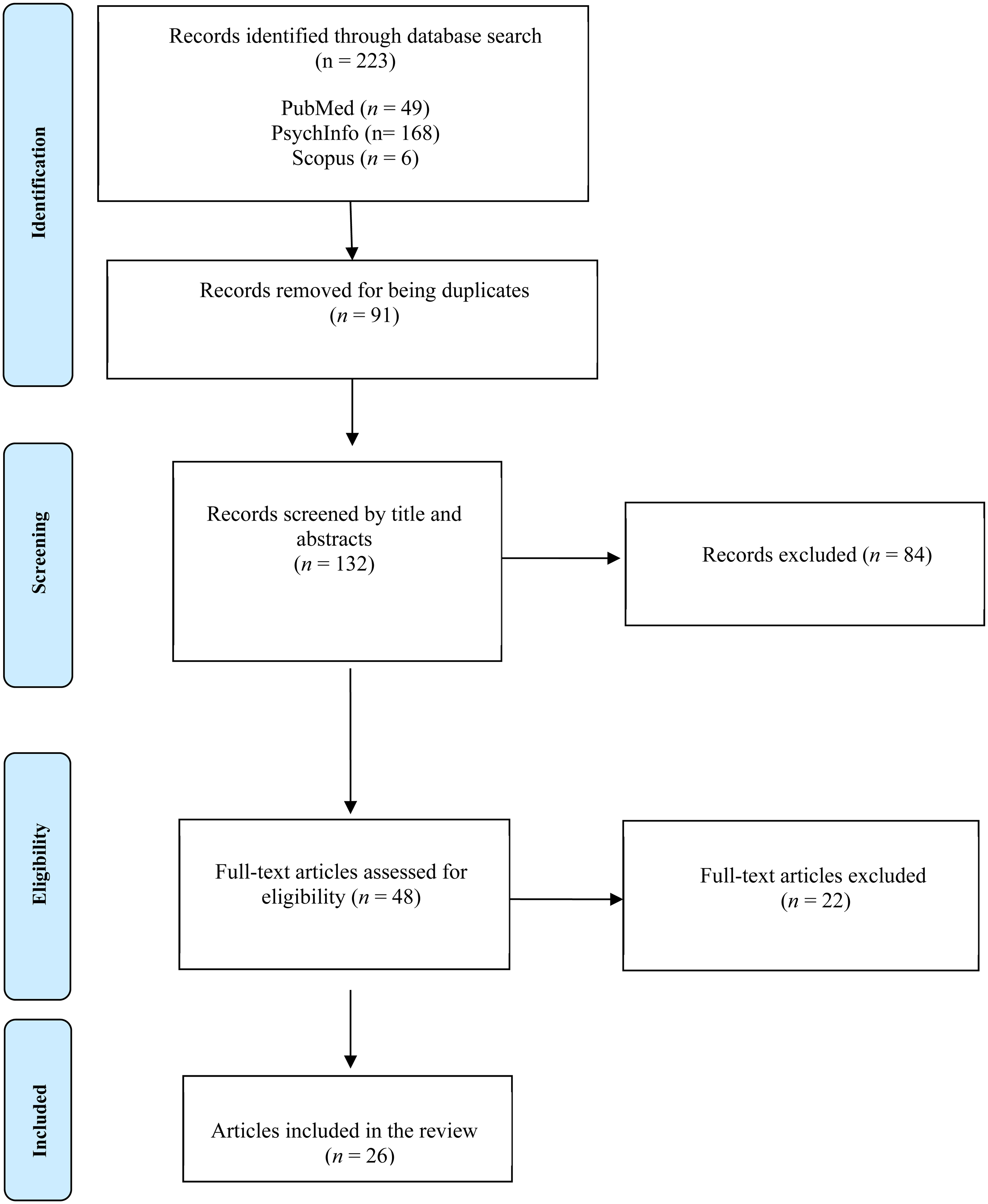
Flowchart of the search results.
Results
An analysis of the selected studies revealed several key themes, which will be examined in greater detail in the following sections.
Universal Interventions: Promising Approaches Across Disability
Nine studies were included (Brongers et al., 2020; Kiegaldie et al., 2023; Kwan, 2021; Lu et al., 2022; Metcalfe & Drake, 2022; Smith et al., 2021; Sveinsdottir et al., 2020; Taylor et al., 2022; Williams et al., 2019) despite not explicitly addressing mental illness, as they focus on interventions suitable for disability in a broader sense. Consequently, these interventions can be applied to our target population as well.
Despite the availability of effective programs, some individuals with disabling conditions still choose not to enrol in them. Qualitative interviews reveal several key reasons why individuals choose not to enrol in employment programs. Primarily, there is a lack of interest in work and the belief that their health issues prevent them from working. Some interviewed individuals declared that they felt as if their health would not improve enough to secure a job, even with support. Additionally, factors such as a general lack of hopefulness about the future and an unwillingness to seek help were significant. The data do not clarify whether the hopefulness of enrolees and the pessimism of non-enrolees are stable personal traits or are influenced by current circumstances (Taylor et al., 2022). Other common reasons for non-participation included difficulty in contacting the support team, ambivalent feelings towards the program, and physical comorbidities (Metcalfe & Drake, 2022).
Brongers et al. (2020) argue that, to contrast these believes and show people with disabling conditions the benefit they could gain if employed, an effective intervention is the Family Group Conference, consisting in a network intervention where the client, their family, and professionals collaboratively develop a plan to address individual work issues. Families and significant others are seen as competent enough to participate in decisions that impact them, provided they are properly engaged, prepared, and given the necessary information.
To be the most effective, employment programs should be implemented since high school, providing transition services to transition-aged young individuals with disabling conditions. A mixed-methods pilot study by Kiegaldie et al. (2023) assessed the experiences of students, supervisors, and a project coordinator involved in an Integrated Practical Placement (IPP) program designed for students with disabilities. Participants in the IPP program completed three 9-week rotations and received personal placement support and guidance from employment coaches, whereas comparison students underwent three 2-week placements without additional support. Students in the intervention group reported greater initial improvements in work skills and readiness to employment, along with notable advancements in communication and self-organizational skills. Following the program, 70% of the students who followed the IPP program secured employment, compared to 15.4% of the comparison group, thus indicating that an evidence-based supported employment program, with a focus on personalized assessment and training, can equip with the essential skills for successful employment.
Focusing on transition-age youth, the PROMISE program aims to enhance employment outcomes through a structured approach to summer work experiences. Key predictors of success include interest-based job placement, comprehensive case management, and job readiness training. Service-delivery elements, such as tailored job readiness training, personalized interest-based job placements, and strategic introductions to local workforce centres by case managers and facilitators, play a critical role in improving employment outcomes for this population. Participants also attended “work readiness” or “job club” classes prior to starting their jobs and received ongoing tailored support while on the job. Job placements were closely aligned with the participants’ interests and preferences, ensuring that the work provided valuable experiences that would be beneficial for their future careers. These interventions highlight the importance of personalized and interest-based approaches in vocational training programs, demonstrating that such methods can significantly improve the employment prospects for youth with disabilities (Williams et al., 2019).
It has been noted (Smith et al., 2021) that employment interventions aimed at transition-age youths should also always take into account the importance of interviewing skills, since most of them will likely face one in during their job-seeking process.
Addressing the need for an intervention focused on interviewing skills, a study by Lu et al. (2022) aims to determine the feasibility of the Presenting Qualifications intervention for people with different disabling issues, such as learning disability, attention deficit/hyperactivity disorder, communication disorders, intellectual disabilities, and autism spectrum disorder. Researcher used Direct Skills Teaching, a methodology used to help people to learn new skills by proposing skills content summary, structured curriculums and practice sessions. Drawing from this framework, they implemented the group-based “Presenting Qualifications” intervention, to taught the following skills: describing main accomplishments, identifying key skills, preparing for the interview, and describing qualifications. After the intervention, participants perceived themselves as more prepared for the interview and they reported great satisfaction with the intervention; in fact, 85% of participants felt confident in utilizing new skills and 75% would recommend it to a friend.
One of the main benefits of starting work-related interventions at transition age is to avoid the risk of early work disability. When looking transversally at different kind of disabilities, IPS is still considered one of the most effective interventions. Through a randomized controlled trial, Sveinsdottir et al. (2020) compared IPS to Traditional Vocational Rehabilitation (TVR).
IPS aims to find suitable job matches without relying on prevocational training, subsidized, or unpaid work; it focuses uniquely on competitive employment, does not screen clients for job readiness, allows client preferences to guide choices and decisions, and provides ongoing support after employment is secured.
TVR involves assessing work capability and offering preparatory work training tailored to the individual's challenges and skill level, all within a sheltered environment with close supervision. Participants were placed in various sheltered businesses in the community, offering diverse work settings such as food and catering, child care, mechanic services, transportation services, and warehouse handling. Placements were based on individual interests, goals, and availability. The study found that IPS was particularly effective for young adults at risk of early work disability, outperforming TVR: specifically, 47.83% of participants in the IPS group achieved competitive employment, compared to only 8% in the TVR group.
Despite most interventions focusing on enhancing skills and competencies, Kwan (2021) addressed the need to consider the work environment as well. To do so, a great intervention is the so called “mezzo-level” intervention, a practice that takes the environment into account. In this specific case, the intervention aimed to work with both employers and employees, engaging with businesses and companies to promote workplace diversity and cultivate a disability-inclusive culture. Workplace inclusion was primarily promoted through three main factors: attitudes, skills, and knowledge, with the support of social workers who accompanied the participating staff members who worked with people with disabilities through the intervention. By doing this, the whole work environment became more inclusive: better workplace accommodations were provided for employees with special needs and staff members gained a deeper understanding of the characteristics of people with disabilities, therefore making it easier for people with disabling conditions to be employed and maintain their job position.
Mental Issues: Mental Disorders, Severe Mental Illness, Psychiatric Disorders and Schizophrenia
Seventeen studies (Balogun-Mwangi et al., 2019; Bell et al., 2014; Bond et al., 2016; Gal et al., 2022; Humensky et al., 2019; Martinelli et al., 2022; Mattila-Holappa et al., 2016; Mattila-Holappa et al., 2018; Nuechterlein et al., 2020; Pichler et al., 2021; Reme et al., 2019; Russinova et al., 2018; Solar, 2014; Solar et al., 2023; Soo Wei Qing et al., 2021; Vanzetto et al., 2024; Viering et al., 2015) targeted individuals with mental issues, including mental disorders, severe mental illness, psychiatric disorders, and schizophrenia. Among these, seven involved IPS, three focused on SE, and two examined psychotherapies. Five additional interventions were identified: one involving peer support, one using photovoice, one exploring an informative approach, and two addressing the work environment. This section will explore these diverse approaches and their effectiveness in supporting individuals with mental health challenges.
Individual Placement Support
IPS has been found as one of the most effective interventions to face employment challenges in different disabling mental conditions, such as severe mental disorders, severe mental illness and schizophrenia.
A randomized controlled trial by Viering et al. (2015) assessed the effectiveness of IPS for people with a disabling mental illness, comparing participants of a group who received job coaching to a control group who received no structured support in a 2-years-long intervention. Both groups were interviewed before the intervention and followed up every 6 months. Compared to the control group, the IPS group was shown to be more effective, with 32% of the participants securing new competitive jobs versus the 12% in the control group.
These findings align with two other studies (Bond et al., 2016; Reme et al., 2019) comparing IPS to Treatment as Usual (TAU) directed ad people with moderate-to-severe mental illness as well. Specifically, TAU included a “train-and-place” methodology that included prevocational training, assisted work and/or a traineeship in a sheltered business.
One of these studies (Bond et al., 2016) compared young adults who received IPS to a control group, finding that participants who received IPS had significantly better employment outcomes, with 82% of them obtaining competitive employment and an average of 25 weeks of employment, compared to 42% of the employed control group participants, who worked an average of 7 weeks. In line with these results, a study by Reme et al. (2019) randomly assigned participants to an IPS intervention, or a high-quality version of TAU. IPS follows a structured and manualized approach, focusing on securing competitive employment through a “place-and-train” method of vocational rehabilitation. Although both aim to promote employment, TAU includes methods like prevocational training and non-competitive work. In work with assistance, participants receive support from a personal facilitator to find suitable jobs using subsidized schemes and employer incentives. Additionally, traineeships in sheltered businesses emphasize training in a protected environment where tasks are tailored to individual skills and challenges. Registry data at the 12-month follow-up showed that 36.6% of the IPS group and 27.1% of the TAU group were in competitive employment. This difference increased slightly at the 18-month follow-up, with 37.4% of the IPS group employed versus 27.1% of the control group. Subgroup analysis indicated that employment rates were similar for participants with moderate and severe mental illness, suggesting that IPS benefits extend beyond its original target group, impacting also secondary outcomes, such as reducing psychological distress and depressive symptoms and improving overall functioning, health-related quality of life, and general well-being.
IPS has also proved its effectiveness in the long run, as stated by a study by Pichler et al. (2021), who used a non-interventional follow-up to examine the long-term impact of IPS for people with mental illnesses. Participants to the study were randomized into an IPS intervention group or into a control group who received TAU which, in this context, included all vocational and employment services provided without dedicated job coach support. Those assigned to the IPS group received job coaching, assistance in the application process, support during employment and when losing the job, while participants in the TAU group could chose other vocational services, but were not provided with a job coach. Members of both groups participated in individual interviews to assess their employment status, job tenure, workload, wages, and whether they gained employment by themselves, through the IPS coach, or other means. During the first 2 years post-intervention, the IPS group had an employment rate of 40%, compared to 28% of TAU. However, after six years from the initial intervention, almost half of the participants (45.1%) were employed in competitive jobs, 31% were not in employment and 18.6% worked in a protected job marked. Interestingly, these new findings do not completely align with the previous ones, since there were no significant differences between the IPS and the TAU group, suggesting that both approaches are effective in providing competitive job positions for individuals with mental illnesses.
While the effectiveness of IPS interventions for people with disabling conditions of mental illness, Solar (2014), through interviews with staff working with patients with schizophrenia identified staff-related barriers to implementing IPS, specifically a lack of knowledge regarding its principles and an ambivalent attitude towards its application in this population. The effectiveness of IPS interventions after a first episode of schizophrenia was investigated by Nuechterlein et al. (2020); This randomized controlled trial evaluated a vocational intervention combining IPS with mental health services for individuals with recent schizophrenia episodes, aiming to improve competitive employment outcomes. The intervention included individual support, disability benefits counseling, and group-based training focusing on social and problem-solving skills, using methods like videotapes, role-playing and homework, to enhance job performance, sociality and motivation. Results showed a significant efficacy of the enhanced intervention focused on participation in normative work settings in the early phase of schizophrenia, with rates of participants obtaining competitive employment in the first 6 months of the intervention being 83% and 92% in 12 months.
IPS can also be associated to cognitive enhancement interventions. A study by Bell et al. (2014) investigated whether adding cognitive remediation to employment interventions improves work outcomes for people with schizophrenia or schizoaffective disorder; they assessed if participants were to be considered as high or low community functioning, then provided them with supported employment only or supported employment with the addition of cognitive remediation. The proposed intervention consisted of IPS, weekly discussion groups about work related issues and a lifestyle group addressing social concerns. Participants assigned to the augmented condition received the same employment services, but also had access to computerized cognitive exercises, organized in a progression of difficulty. The exercises required cognitive abilities and were specifically tailored to schizophrenia-related issues, such as attention, language, memory, and executive function. They also attended groups that focused on affect recognition, empathy, and verbal communication skills. After two years, employment rates and work hours were similar for higher-functioning participants (62% vs. 54%). In contrast, lower-functioning participants who received cognitive remediation had higher employment rates (49% vs. 20%) and worked more hours than those in supported employment alone. These findings highlight the crucial role of cognitive training in improving work outcomes for lower-functioning adults with schizophrenia. These findings highlight the crucial role of cognitive training in improving work outcomes for lower-functioning adults with schizophrenia
Supported Employment
Evidence of Supported Employment (SE) being an effective intervention in people with a disabling mental health issue seems to remain consistent through the years. Humensky et al. (2019) found that, in participants under 23 years old, the use of such services for employment support in the first quarter were positively associated with employment in the second quarter, but no associations were found at later period of participation, suggesting that the intervention is most effective when started early.
A cross-sectional study by Gal et al. (2022) compared the outcomes of three different vocational services aimed at people with severe mental illness, consisting on either SE, sheltered workshops, or vocational support centres. While overall employment rates were of 92%, SE consumers had better work outcomes. Although 90% of SE participants were employed (vs. 96% in sheltered workshops and 80% in vocational support centres), SE had the highest proportion working >6 h/day (34.4% vs. 7.1% and 2.6%, respectively). SE was also linked to higher functioning and better illness management, confirming its impact on vocational outcomes for people with severe mental illness.
A pilot study (Martinelli et al., 2022) tested whether individuals with severe mental illness could benefit from a SE program oriented towards recovery through a social enterprise, which are programmes run by non-profit organisations that employ individuals with disabilities. The main goal was to assess if this program led to improved psychosocial and work outcomes and fostered personal recovery. All SE participants had significantly better functioning than when they joined SE, after an average of five years of employment. Compared to a matched unemployed group, SE members had better functioning, lower psychopathology, and higher quality of life.
Psychotherapy
Two studies (Mattila-Holappa et al., 2016, 2018) aimed at exploring the role of psychotherapy and work-oriented interventions in returning in employment. Psychotherapy intervention consisted of a discussion-oriented intervention conducted by a psychotherapist with regular appointments, while vocational interventions included work skills assessments, individual needs evaluations, formative courses, training, work trials, and social rehabilitation. Curiously, psychotherapy was chosen by 34% of participants, more than vocational interventions, chosen by 26% of participants (Mattila-Holappa et al., 2016). Even more interesting is that psychotherapeutic interventions were found to be predictors of future employment among young adults with work disability due to a mental disorder; Specifically, psychotherapy was associated to a 35% higher likelihood of earlier entry into employment, while having both psychotherapy and vocational interventions planned increased the odds of being employed at follow-up by 77% (Mattila-Holappa et al., 2018). These findings suggest that psychotherapeutic interventions may boost competitive employment, probably due to recovery from the disorder, and possibly by reducing anxiety related to returning to work.
Informative Approach
A study by Solar et al. (2023) followed the outcomes of an adult impatient unit that carried out an intervention aimed at increasing employment in individuals with schizophrenia. To minimize resources, the intervention did not provide any new or reorganised staff, extra overtime or schedules, additional training and supports, but relied solely on information brochures and an offer of support by mental health nurses, who carried out this extra work in addition to their usual work duties. Unfortunately, the intervention did not have any significant relation to employment, suggesting that more structured and incisive interventions are needed.
Photovoice
A Vocational Empowerment Photovoice (VEP) is a peer-run, photography-based group intervention whose efficacy in empowering individuals with psychiatric disabilities to consider and pursue employment was assessed in this pilot-test study (Russinova et al., 2018).
The VEP program is a peer-led, 10-week manualized intervention that includes two follow-up booster sessions. Each session combines psychoeducational content, exercises, and group discussions on employment services and opportunities. The program incorporates photovoice methodology, where participants capture images related to their daily lives and the research topic, then create narratives through group discussions. The curriculum covers camera use, ethics, image discussions, narrative writing, and public displays. The photovoice assignments focus on building work identity, with topics like “picturing work” and “my vocational identity” to encourage employment engagement. At the end of the implementation, participation in the VEP program was linked to a significantly higher rate of engagement in employment services, with 36% of VEP participants engaging in employment services, compared to 19% in the control group. This participation also led to significantly higher overall empowerment (p = .01, Cohen's d = .39) and a decrease in internalized stigma (p = .01, Cohen's d = −0.47), which was sustained through a 3-month follow-up. Additionally, stronger engagement in the VEP program was associated with increased work hope (p = .018), self-efficacy (p = .013, Cohen's d = .30), and a sense of vocational identity (p = .032). While no significant differences were found in actual employment rates between groups, these improvements in empowerment, self-efficacy, and vocational identity highlight the positive effects of the VEP program.
Peer Support
Balogun-Mwangi et al. (2019) explored the utility of peer support in pursuing vocational goals for individuals with psychiatric conditions. One of the most important aspects of peer support vocational journeys is experiencing an equal and non-hierarchical relationships in forming solid, lasting bonds with vocational peer specialist. Since participants often experienced a judgmental attitude in relation to their psychiatric disabilities, judgment-free interactions with vocational peer support specialists had a prominent role. Empathy was crucial in strengthening relational connections, with vocational peer support specialists being able to relate to their experiences genuinely rather than hypothetically. Additionally, vocational peer support specialists can be a strong and positive role models. Peer support specialists demonstrated creativity in connecting participants to various vocational activities and addressing their vocational interests, promoting normalization and hope. These results suggest that vocational peer support might be particularly beneficial for individuals with psychiatric disabilities aiming to achieve vocational goals, since they can relate to another individual's lived experience and positively identify themselves in their peers.
Involving Work Environment
The workplace plays a crucial role in permitting employment of individuals with disabling conditions. Soo Wei Qing et al. (2021) conducted an analysis associating scores from Work Behaviour Inventory and Work Environment Impact Scale and job tenure. Maintaining a job was likely influenced by both work behaviours and work characteristics. Work behaviours include being cooperative, having work-related habits and overall work quality, while work characteristics include positive interaction with supervisors and time demands. The architecture of the workplace also plays a role. These findings suggest that vocational professionals should consider these factors when providing employment interventions to maximize their effectiveness.
In line with these findings, a recent study (Vanzetto et al., 2024) evaluated the outcome of an innovative program, implemented on regional scale, aimed at improving employment inclusion for psychiatric patients working with both individuals and their living environment. The program provided useful information, evaluated each candidate's individual competences and needs through individual interviews, and provided formative courses, directing each individual towards a suitable career path. During their internship or job insertion process, each participant was accompanied by a professional. At the same time, initiatives were implemented to increase awareness about mental health issues and inclusive work into workplaces and communities. Researches evaluated outcomes of this intervention over eight years through a retrospective epidemiological analysis of recruited patients, focusing on “positive”, “negative”, and “other” outcomes. Negative outcomes included firings (1.4%) and resignations (0.7%), while job hirings (16.6%), traineeships (31.8%), and work formations (20.3%) were seen as positive outcomes, making up 68.75% of the total. In other outcomes, 15% were dismissals, and 14.1% were transitory outcomes. Most outcomes were positive, with a substantial portion of patients experiencing successful job placements, training, or educational opportunities. Over time, job hirings increased significantly, from 8.9% in 2012 to 23.8% in 2019, while dismissals decreased from 26.7% to 13.3%. The effectiveness of traineeships in terms of job hiring increased in the ratio of annual job hiring versus job traineeships (+48.8%). A significant hiring increase was observed in patients with psychotic disorders and personality disorders, demonstrating the effectiveness of the intervention and the importance of addressing not only the individual, but workplaces and communities as well.
Discussion
IPS and SE have been widely recognized as effective due to their emphasis on individualized job matching, integration with support services, and ongoing workplace assistance. These essential principles, including tailored support, focus on competitive employment, and long-term follow-up, are frequently present in newer interventions, though their implementation varies.
Across all reviewed interventions, a common thread is that work success for individuals with disabling conditions of mental illness requires more than job placement, since it also needs specific preparation, cognitive and social support, and workplace accommodations. Some interventions, such as Integrated Practical Placement (Kiegaldie et al., 2023) and the PROMISE program (Williams et al., 2019), follow IPS and SE principles by focusing on individualized job placement and ongoing workplace support. An interesting innovation is the integration of cognitive enhancement interventions into IPS programs that especially benefit lower-functioning participants by supporting them in improving work-related cognitive skills. Similarly, adding psychotherapy to vocational support is a valuable insight, as it reduces work-related mental health symptoms.
Other interventions expand to systemic change, including employers, communities, and awareness campaigns to promote longer-term inclusion (Vanzetto et al., 2024). Addressing the work environment is also an emerging theme that expands the horizon of traditional IPS and SE interventions, highlighting the importance of soft skills, work behaviors, and supervisor interactions, and thus suggesting that successful employment is not about placing the individual, but about creating a thriving work environment (Soo Wei Qing et al., 2021).
Lastly, some models completely shift from IPS and SE methodologies, such as Vocational Empowerment Photovoice (Russinova et al., 2018) and peer mentoring interventions, which have emerged as valuable tools in providing safe, non-judgmental spaces where individuals can creatively explore their vocational identity Balogun-Mwangi et al. (2019).
Previous systematic reviews and meta-analyses of IPS and SE (Bond et al., 2023; Modini et al., 2016; Suijkerbuijk et al., 2017) have similarly concluded that individualized, integrated, and long-term approaches yield better employment outcomes than traditional vocational rehabilitation. The present review reinforces those findings while also highlighting the impact of innovative program components, such as cognitive enhancement and psychotherapy integrations. Moreover, the innovation highlighted by our findings is around the importance of interventions that extend to the workplace and broader community contexts, echoing studies that call for multi-level, systemic approaches (Ellenkamp et al., 2016). In contrast to some prior papers that mainly concentrated on specific mental health populations, our analysis incorporates studies addressing diverse disabling mental conditions, thereby broadening the scope of evidence available.
We believe that the main limitation of this review is about its selection of databases, that was limited to PsycINFO, PubMED, and Scopus; therefore, it is possible that potentially relevant articles published in certain discipline-specific journals may not have been captured. This limitation may have contributed to the relatively small number of studies included (n = 26) despite the broad target population examined.
Future research could respond to the current need for more rigorous trials that directly compare traditional IPS and SE traditional models with the newer hybrid or systemic interventions. It should also focus on evaluating long-term employment sustainability.
For practice, our findings suggest that vocational services should incorporate cognitive, psychological, and peer-support elements, and structured collaboration with employers. Investing in integrated models of vocational rehabilitation could effectively enhance employment inclusion, particularly when measures that incentivize employer participation and workplace accommodations are in place.
Finally, we believe that employer-focused strategies such as supported recruitment, supervisor training, workplace adaptation, and anti-stigma campaigns, all play a crucial role in shifting responsibility from the individual alone to employers and the labor market.
Conclusions
Employment for people with disabling issues can be addressed through different interventions.
Well-documented interventions such as Individual Placement and Support and Supported Employment prove to be effective, but original interventions are also shown to be effective. Integrated Practical Placement, Direct Skills Teaching, Traditional Vocational Rehabilitation and Vocational Empowerment Photovoice all proved to be impactful. Approaches based on psychotherapy and peer support were also considered good options. Conversely, informative approaches with no dedicated support were not effective.
Overall, while IPS and SE remain valid and effective approaches, it is interesting and useful for practitioners to have knowledge of newer, contemporary models, whether they add to the IPS and SE standard practices or they employ different methodologies altogether, as long as they could optimize employment outcomes for individuals with disabling mental illness.
Further research on this topic in needed, as understanding how to best support people with disabling mental issues in gaining and retaining employment is a vital aim.
Footnotes
Abbreviations
Acknowledgments
Authors declare no additional acknowledgement

Ethical Considerations
In accordance with the Declaration of Helsinki. Approval Committee not applicable as all literature is published.
Informed Consent
Not applicable
Funding
The authors received no financial support for the research, authorship, and/or publication of this article.
Declaration of Conflicting Interests
The authors declared no potential conflicts of interest with respect to the research, authorship, and/or publication of this article.
Data Availability
All data generated or analysed during this study are included in this published article.