



Abstract
Background
Most employment consultants access professional development to learn about best practices in supported and customized employment that lead to individual integrated employment. However, little is known about how widely these best practices are actually implemented.
Objective
This article provides a window into how a typical 8-h workday of an employment consultant aligns with best practices in supported and customized employment.
Methods
We estimated employment consultants’ average daily time allocation to key activities and best practices using 12 months of data from 96 employment consultants across 13 employment programs in seven states.
Results
On a typical 8-h workday, employment consultants dedicate about two and a half hours on supports leading to hire—one hour in community settings, 29 min on specific best practices, and six minutes engaging with job seekers’ families and social networks. Administrative tasks account for nearly three hours per day. Time allocation varied widely across the 13 employment programs.
Conclusion
Employment consultants are key to helping job seekers achieve individual integrated employment. State funding agencies should equip them with data-based tools for self-reflection, goal setting, and action planning to drive continuous improvement.
Introduction
Supported and customized employment have deep roots in the literature dating back to the late 1970s (Bellamy et al., 1979; Rusch & Schutz, 1979; Wehman et al., 1979) and have been continuously evolving over the past decades (Butterworth et al., 2024; Callahan et al., 2011; Griffin et al., 2007; Luecking, 2019; Wehman, 2023). These frameworks now represent best practices for assisting job seekers with intellectual and developmental disabilities gain and retain individual integrated employment (Callahan et al., 2011; Inge et al., 2018; Wehman, 2023), meaning working at or above minimum wage, alongside workers without disabilities, with opportunities for coworker interaction and career advancement in alignment with the Workforce Innovation and Opportunity Act's definition of competitive integrated employment (Workforce Innovation and Opportunity Act, 2014, § 361.5(c)(9)).
To facilitate dissemination and adoption, supported and customized employment best practices have been consolidated in the APSE Universal Employment Competencies (Association of People Supporting Employment First [APSE], 2019), and embedded in ACRE-certified training as well as the Certified Employment Support Professionals (CESP) certification program for employment consultants (APSE/Association of Community Rehabilitation Educators [ACRE], 2020; APSE, 2023). At the core of the supported and customized employment approach is the pursuit of strong job matches—that is, alignment between a job seeker's strengths and the characteristics of a job. A good match benefits the job seeker, the employer, the employment program, and the agencies that fund employment services (Channell et al., 2023; Inge et al., 2023; Wehman, 2011).
Job seekers benefit because strong job matches are more likely to result in greater job satisfaction, increased work hours, improved job retention, and more opportunities for career advancement (Abraham, 2012; Biason, 2020; Harter et al., 2003). Employers benefit because strong matches bring workers who are more likely to contribute to business goals and integrate with coworkers (Graffam et al., 2002; Persch et al., 2015). Employment consultants benefit because satisfied employers are more likely to reach out again when new job opportunities arise. In addition, employers may refer employment consultants to other businesses, helping to open up more job opportunities (Luecking et al., 2006; Wehman, 2011). Funding agencies benefit as well, since better job matches often require less on-the-job coaching and may reduce the need for job seekers to re-enter the employment system after job loss, leading to a more effective use of tax dollars (Athamanah et al., 2024; Nisbet & Hagner, 1988).
At its core, the supported and customized employment framework can be summarized into the following key domains (Inge et al., 2018; Migliore et al., 2018; Parent et al., 1993; Wehman, 2023):
Getting to know job seekers well Identifying tasks and jobs aligned with job seekers’ strengths Providing any other supports leading to hire (e.g., benefits and transportation planning) Providing supports after hire
The literature identifies specific best practices for each of these domains. For example, getting to know job seekers is more effective when meeting them in familiar environments—such as their homes, neighborhoods, or community spaces—rather than interviewing them at the employment program's office (Callahan, 2019; Riesen et al., 2019). Additionally, the literature emphasizes the importance of observing job seekers in work or community settings, participating in activities with them, and facilitating informational interviews and business tours (Inge et al., 2018; Riesen et al., 2023). To find jobs, the literature recommends that employment consultants engage in networking and negotiate job roles—especially when existing positions are not a good fit—rather than relying on job ads or cold calls (Callahan et al., 2009; Darling, 2010; Owens & Young, 2008). Finally, best practices in supported and customized employment are more effective when employment consultants engage with a job seeker's key allies, including family members, friends, former employers, or acquaintances to gain valuable insights into the job seeker's skills and expand the network of connections with employers (Carter et al., 2023; Inge et al., 2018; Luecking, 2019).
However, knowledge about best practices does not necessarily lead to consistent implementation (Aarons et al., 2011; Damschroder et al., 2022; Fixsen et al., 2005; Metz et al., 2021). As Bhattacharyya et al. (2009, p. 491) put it:
There is a large gap between what is known and what is consistently done.
For example, in the supported and customized employment field, Inge et al. (2023) found that while 90% of employment experts viewed discovery as essential for job seekers’ success, only 60% of them believed these practices were implemented effectively. As few as 30% believed that other key best practices were implemented well. Our own research documented challenges in the implementation of best practices in supported and customized employment (Butterworth et al., 2012; Migliore et al., 2010), leading us to investigate how to better support employment consultants with self-reflection for quality improvement.
Measuring the implementation of best practices is a crucial first step toward improving the effectiveness of employment programs and ensure that more job seekers gain and retain individual integrated employment (Barwick et al., 2020; Fleming et al., 2024; Tuckerman, 2016). Monitoring quality is also a legal requirement for Medicaid-funded Home and Community Based Services (HCBS), including Medicaid-funded employment programs (Center for Medicaid Services, 2024). Unfortunately, employment consultants often lack tools to support self-reflection and quality improvement. This article presents findings from a project that aimed to fill that gap by introducing ES-Coach—a tool that leverages data and microlearning to support employment consultants’ self-reflection, goal setting, and action planning. This article addresses the following questions:
To what extent are key activities and best practices in employment supports implemented? How does implementation vary across employment programs?
Method
The research design of this project is implementation science, which focuses on strategies to integrate evidence-based practices into routine service delivery to improve effectiveness (Eccles & Mittman, 2006). Specifically, this study used an embedded research approach (Churruca et al., 2019; Vindrola-Padros et al., 2017), integrating the intervention into the daily workflow of employment consultants so research activities occurred in real service contexts that addressed both practical and scientific aims.
The project—approved by our University's Institutional Review Board (IRB)—was funded by the Kessler Foundation Signature Employment Grant to support employment programs in using data and microlearning for self-reflection, goal setting, and action to better align services with best practices in supported and customized employment. This section describes the participants, instruments, procedure, and data analysis.
Participants
A total of 96 employment consultants from 13 employment programs across seven states participated. These 13 programs were part of a broader group of 61 organizations that, between 2023 and 2024, enrolled in ES-Coach, a project designed to leverage data and microlearning for quality improvement, as described in the Procedure section. In this article, we focus on these 13 programs because they met minimum requirements for data quality: They had an average of three or more employment consultants submitting data over 12 consecutive months, with an average daily response rate of 60% or higher.
Most employment programs were from Ohio (31%; n = 4), Indiana (23%; n = 3), and Washington state (15%; n = 2) with the remaining four programs located in Illinois, Minnesota, Missouri, and Rhode Island. Four programs reported to be operating primarily in rural settings with one operating primarily in an urban setting (n = 5). Most employment programs had been in operation for over 20 years (58%; n = 7) with the remaining organizations being in operation for between 11 and 20 years (17%; n = 2) or less than 11 years (25%; n = 3). The size was similarly distributed across 3–5 staff (38%; n = 5), 6–10 staff (31%; n = 4), and over 10 staff (31%; n = 4). Most organizations had caseloads comprising over 75% of job seekers with intellectual and developmental disabilities (IDD; 77%). Table 1 shows the demographic and professional characteristics of both managers and employment consultants.
Characteristics of Managers (N = 13) and Employment Consultants (N = 50).

Instruments
The primary instrument consisted of three multiple-choice questions about the main employment support activity the employment consultants had engaged in during the 30 min prior to receiving a text message on their smartphones. The questions were:
Where did the activity take place? Who was the interaction with? What was the primary support activity?
The employment consultants could select their responses from a drop-down menu that included the options listed in Table 2. A follow-up question gathered more detail about the primary support activity. For example, if an employment consultant selected “getting to know a job seeker,” the follow-up question asked whether it involved:
Talking with someone (e.g., job seeker, others) Observing a job seeker Participating in an activity with the job seeker Reviewing records Informational interview or a business tour Developing a vocational/career profile Completing forms/reports Other.
Multiple Choice Response Items to the Three Core Questions.

The response items of all follow up questions (e.g., about finding jobs) are available at www.es-coach.org. It took less than a minute to answer these questions. All questions and response items were developed drawing from the literature on supported and customized employment, including the APSE Universal Employment Competencies (APSE, 2019) and qualitative interviews our team completed with employment consultants, managers of employment programs, job seekers, and family members as described in Migliore et al. (2018). The draft questions and response items were then validated through feedback from subject matter experts, a self-advocate, and cognitive interviews with employment consultants. Finally, the instrument was field tested in real-world settings with employment consultants in numerous pilot projects (Butterworth et al., 2020, 2023; Migliore et al., 2018). Baseline surveys gathered information about the characteristics of the employment programs as well as the professional and demographic characteristics of the managers and the employment consultants.
Procedure
After obtaining IRB approval, we invited employment programs through outreach via project partners (APSE, WISE, SELN), professional networks, mailing lists, social media, and online events. We also hosted open houses and presented at APSE and regional events. Outreach occurred from January 2023 to December 2024. Interested potential participants completed a brief online form to confirm eligibility: at least three full-time employment consultants, a minimum of one year in operation, a caseload with at least 50% job seekers with IDD, and employment consultants able to use smartphones for work. Eligible employment programs received instructions to share with their teams, including the IRB consent form, registration link, and a unique team code for creating a free ES-Coach account. The IRB consent form clarified that participation in ES-Coach was part of a research project and that aggregated, anonymous findings would be published. Starting the next workday after creating their individual ES-Coach accounts, employment consultants began receiving daily text messages with a link to a form containing the three core questions described earlier. The texts were sent each day at a different random time between 9:00 a.m. and 3:30 p.m. local time. This time window was selected to maximize response rates, based on the assumption that most employment consultants are at work between 8:30 a.m. and 4:00 p.m. Participants could pause text messages directly through their ES-Coach account or while responding to a daily survey. They could also text STOP and START to automatically pause or resume texting to their phones. The average response rate to the daily questions across all 13 employment programs was 72%, ranging from a minimum of 63% to a maximum of 80%. Within three months from enrolling, all new employment consultants and managers received a baseline survey to collect organizational, demographic, and professional background information.
A draft of the manuscript was shared with participants to offer an opportunity for review and comment on the interpretation of findings. While no additional feedback was received, this step helped ensure transparency in the research process.
Data Analysis
The core data analysis estimated the average daily hours and minutes each employment consultant dedicated to the four broad key activities and three best practices listed in Table 3, based on 12 months of daily question responses. We estimated average daily time dedicated to each activity and best practice by calculating the percentage of responses in each category over 12 months and multiplying by eight (typical workday hours). Baseline survey data were analyzed using descriptive statistics—frequencies for categorical variables and means and ranges for continuous ones—using R statistical software and Excel. Employment consultants and managers had access to the data results directly on the ES-Coach data dashboard, refreshed daily.
Key Activities and Best Practices.

Results
This section answers the following research questions:
To what extent are key activities and best practices in employment supports implemented? How does implementation vary across employment programs?
Implementation of key Activities and Best Practices
On average, employment consultants dedicated slightly over half of an 8-h workday—about 4 h and 42 min—providing employment supports, divided fairly evenly between supports that lead to hire (2 h and 26 min) and supports after hire (2 h and 16 min). Nearly 3 h were dedicated to administrative tasks, and about 18 min to non-employment supports (see pie chart in Figure 1). As shown in the horizontal bar chart on the right side of Figure 1, out of the 2 h and 26 min per day dedicated to supports that lead to hire, 1 h and 6 min occurred in community settings, 29 min focused on best practices for getting to know job seekers or finding jobs, and 6 min were dedicated to engaging families, friends, or acquaintances of job seekers. These three best practices may overlap. See Table 3 in the Methods section for definitions.
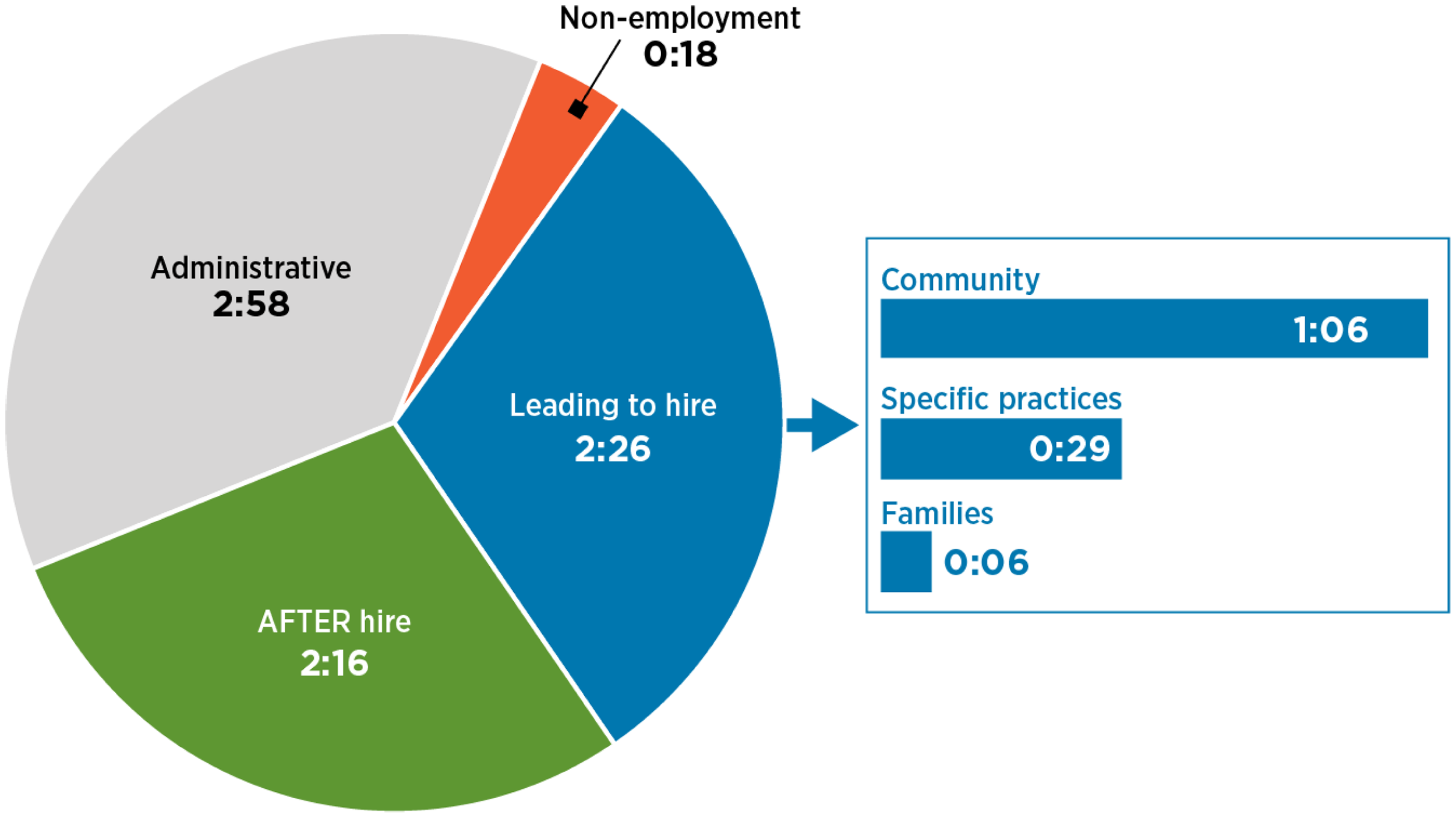
Time Dedicated to key Activities and Best Practices in an 8-h Workday (N = 96 Employment Consultants).
Variation Across Employment Programs
The key activities and best practices varied substantially across the 13 employment programs. As shown in Figure 2, time dedicated to supports leading to hire—the blue segment of the bars—ranged from 55 min per day in Program #1 to 3 h and 30 min per day in Program #13. There was also noticeable variation in time for supports after hire (green), administrative activities (gray), and non-employment activities (orange). Each bar represents an average 8-h workday per employment consultant, based on 12 months of data.
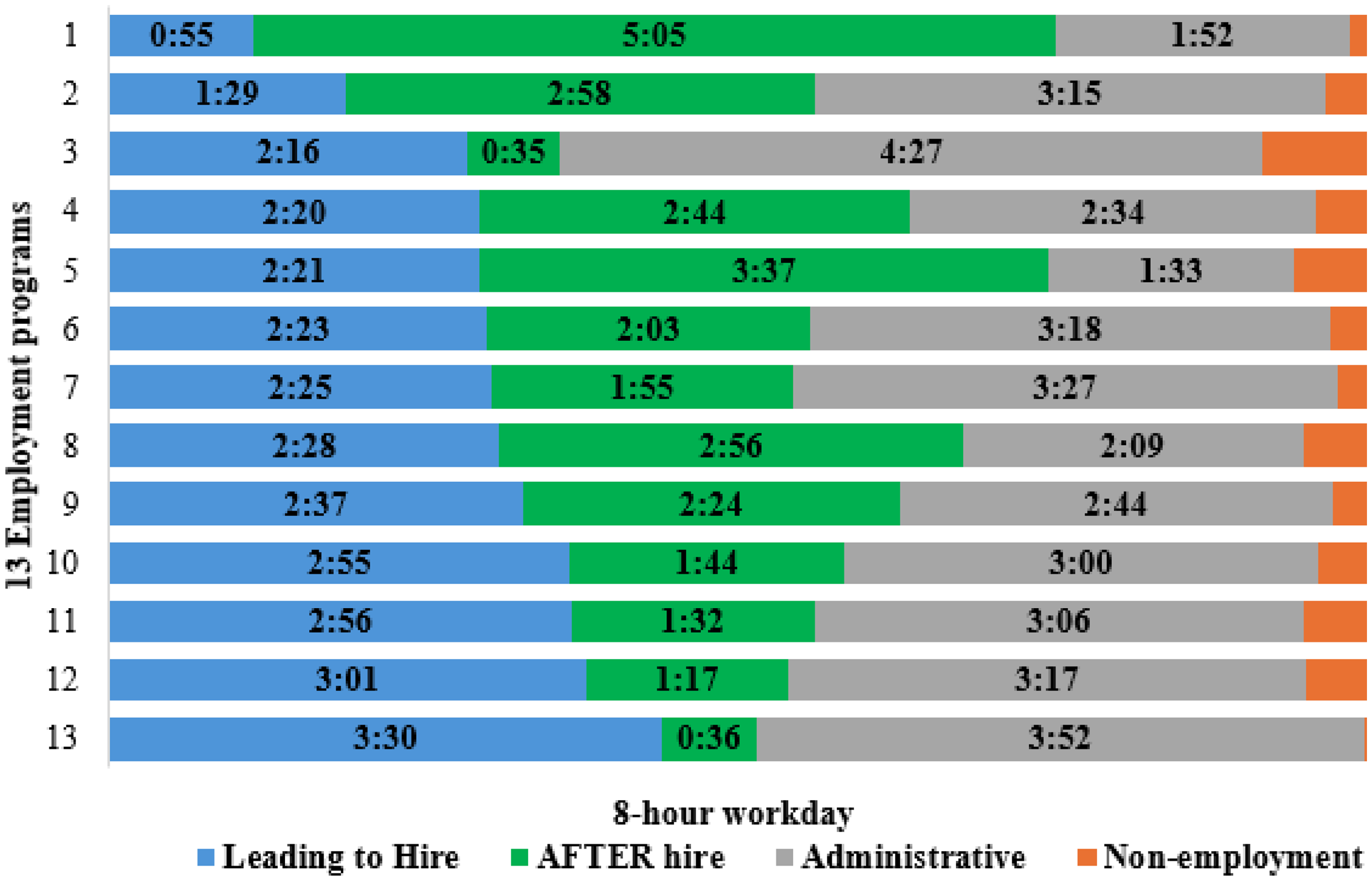
Time Dedicated to key Activities and Best Practices in an 8-h Workday Across Employment Programs (N = 96 Employment Consultants).
Figures 3 to 5 show the time invested in the three best practices in supports leading to hire described in Table 3. The dark blue indicates time dedicated to best practices in supports leading to hire, light blue shows other supports that lead to hire, and white represents all other activities. Figure 3 shows that time invested in supports leading to hire delivered while in community settings ranged from 15 min per day in Program #1 to 2 h and 20 min in Program #12. Figure 4 shows that time invested in best practices to get to know job seekers and find jobs ranged from 5 min per day in Program #13 to 56 min in Program #5. Finally, Figure 5 shows that time invested in supports leading to hire through engaging with families, friends, or acquaintances of job seekers—a nearly indistinguishable dark blue segment—ranged from 1 min per day in Program #1 to 14 min in Program #2.

Time Dedicated to Supports Leading to Hire in Community Settings (N = 96 Employment Consultants).
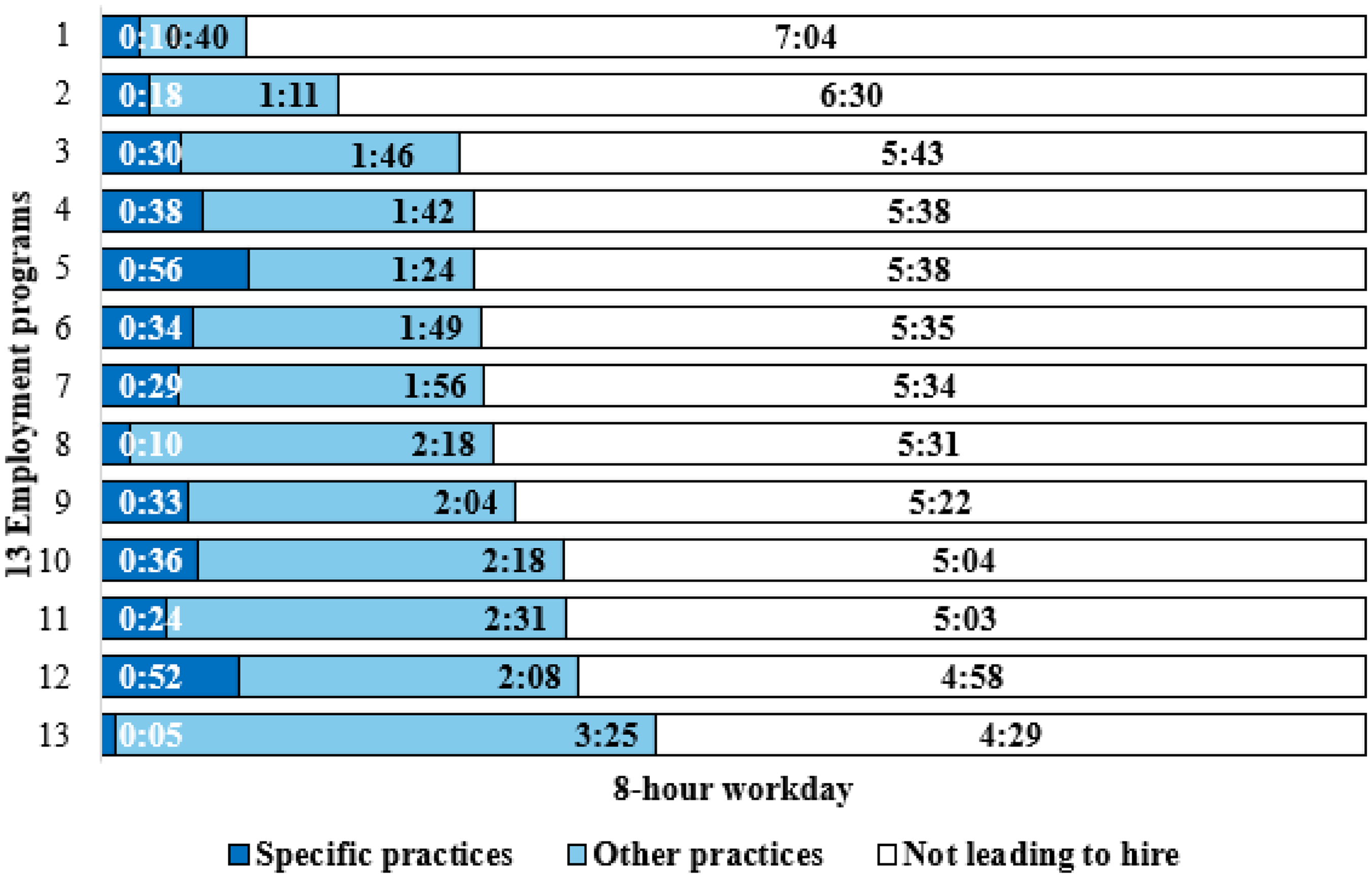
Time Dedicated to Best Practices in Getting to Know job Seekers and Finding Jobs (N = 96 Employment Consultants).
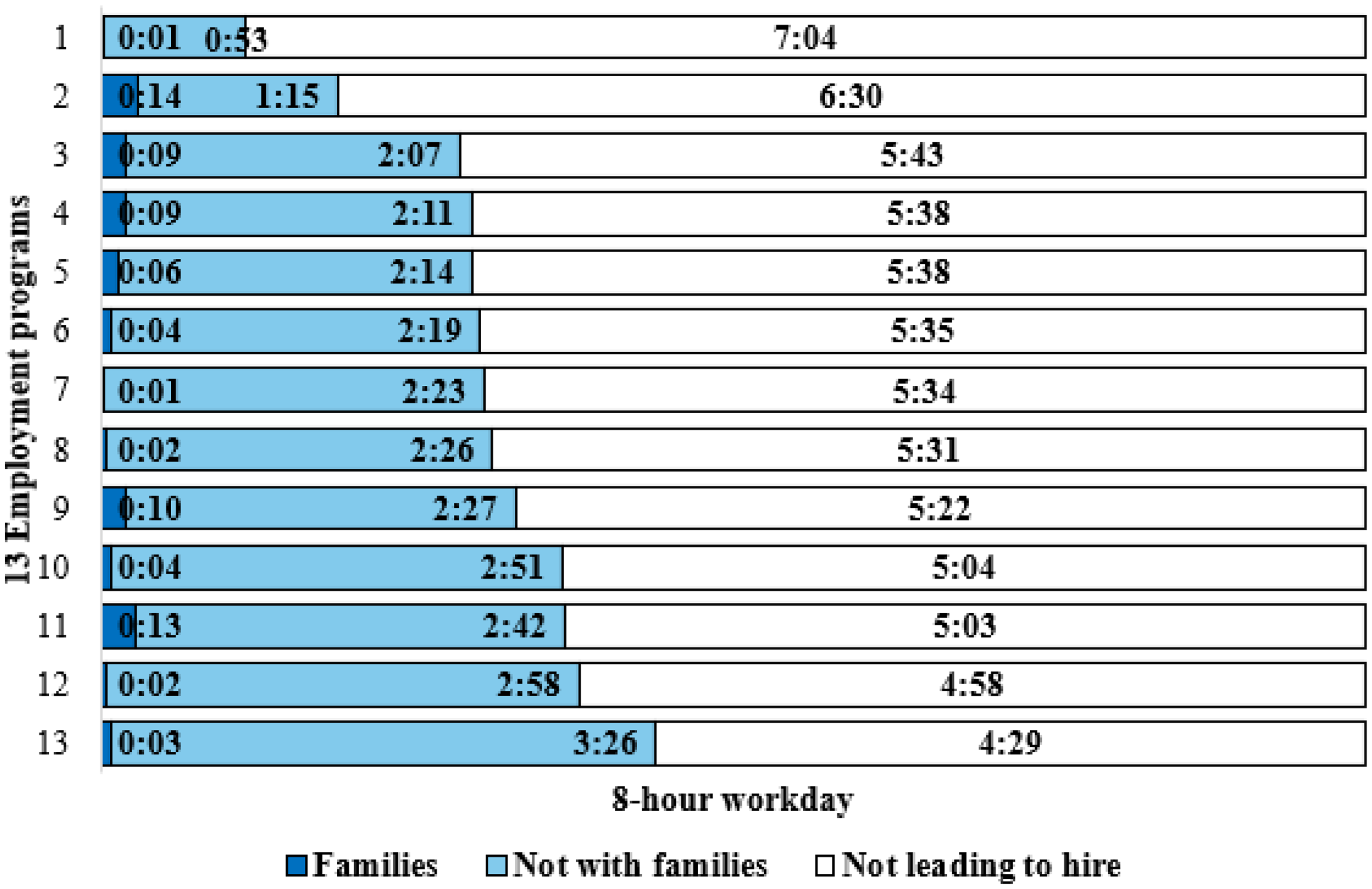
Time Dedicated to Engaging Families, Friends, and Acquaintances (N = 96 Employment Consultants).
Discussion
This section discusses the implications of these findings, along with project limitations, strengths, and recommendations for practice, policy, and research. The findings show that, on average, only about 2.5 h of a typical employment consultant's day are dedicated to supports leading to hire—consistent with earlier pilots reporting 2 h and 33 min (Migliore et al., 2023) and 2 h and 24 min (Migliore et al., 2018). However, interpreting this figure is challenging, as there are currently no established standards indicating how much of the typical workday should be devoted to these supports. Anecdotal evidence and polls from ES-Coach Open Houses suggest that allocating more than 2.5 h per day would boost employment consultants’ expertise, effectiveness, and professional growth, consistent with research on deliberate practice (Ericsson et al., 1993; Newport, 2016).
The amount of time dedicated to supports leading to hire is not the only important factor —how those services are delivered matters. For example, we found that only about one hour per day of supports leading to hire took place in community settings. It's unclear how this level of effort meets recommendations from the literature about the importance of operating primarily in the community by meeting job seekers where they live, visiting workplaces, and engaging with employers and families (Callahan, 2019; Griffin et al., 2007).
Similarly, employment consultants dedicated only about 30 min per day on specific best practices for getting to know job seekers and finding jobs, including (a) observing job seekers, (b) participating in activities with job seekers, (c) informational interviews and business tours, (d) networking, and (e) job negotiation—despite strong support for these practices in the literature (Callahan et al., 2011; Darling, 2010; Griffin et al., 2007; Inge et al., 2018; Riesen et al., 2023). Moreover, the literature emphasizes involving key allies, including job seekers’ family members, friends, and acquaintances, to enhance understanding of job seekers’ strengths, expand the network of employers, and lay the groundwork for natural supports after hire (Athamanah et al., 2024; Luecking, 2019; Nisbet & Hagner, 1988). However, our findings show minimal investment in this area—only about six minutes per day on average.
With only eight hours in a workday, increasing time on supports leading to hire and best practices means reducing time elsewhere. One option could be to optimize administrative burden through streamlined procedures and automation. Employment consultants currently spend nearly three hours per day on administrative tasks. This is concerning because this is time diverted from supporting more job seekers achieve their career goals. Moreover, administrative tasks are unlikely the reason employment consultants chose this profession, leading to frustration and potentially higher turnover—a persistent challenge for employment programs (Herbert et al., 2023; Johnson et al., 2021).
Finally, time investment in key activities and best practices varied widely across the 13 employment programs. This variation may reflect differences in job seekers’ needs or local socio-economic contexts—but it could also indicate a need for clearer guidelines and expectations for implementing supported and customized employment. Next, we highlight some of the article's limitations and strengths, followed by recommendations for practice, policy, and research.
Limitations and Strengths
A general limitation of this article is that the data were not collected explicitly for traditional research purposes. Instead, they were a byproduct of employment consultants enrolling in the ES-Coach project to use data for self-reflection and quality improvement. While this approach—known as embedded research—allows research activities to occur in real-world settings and balances practical and scientific goals, it can be a limitation because the data may be incomplete, inconsistent, or influenced by how participants use the system for their own purposes rather than following standardized research protocols.
Additionally, the data are estimates based on participants’ reports of their primary support activities during the 30 min before receiving a text message. Aggregating daily data across all team members over 12 months provides a reasonable approximation of time investment. However, these estimates are not precise measurements. While the findings align with similar pilot studies (Migliore et al., 2018, 2023), the small sample size limits generalization to all employment programs nationally. Finally, this article does not examine the relationship between the implementation of best practices and employment outcomes. Assessing the impact on outcomes would require a randomized controlled trial, which was beyond the scope of this project and in part already addressed in Butterworth et al., (2020).
Despite these limitations, the article has several strengths. A strength is the use of Ecological Momentary Assessment (EMA)—a well-established method for capturing real-time data in the workflow—which took less than a minute to complete and enhanced data validity (Shiffman, 2014; Walz et al., 2014). Another strength is the use of longitudinal data collected over a 12-month period. This timeframe helps to capture seasonal variations due to business cycles and organizational shifts, such as periods of active job development followed by increased post-hire supports—offering a more representative view of a typical workday than single-time-point snapshots. Finally, employment consultants had an incentive to respond accurately: their responses were confidential (not accessible to supervisors) and used to populate a dashboard for their own benefit, supporting self-reflection and quality improvement.
Recommendations
These findings highlight useful reflections for practice, policy, and research.
Practice
Employment programs should consider setting clearer goals for their employment consultants to strengthen the use of key activities and best practices in supported and customized employment including:
Increasing the share of the workday dedicated to supports that lead to hire. Prioritizing supports delivered in community settings rather than from an office. Expanding the use of specific best practices, such as observing job seekers, engaging in activities with job seekers, facilitating informational interviews and business tours, networking to find jobs, and job negotiation when existing jobs are not a good fit. Actively engaging key allies, including job seekers’ families, friends, and acquaintances.
Moreover, given the amount of time spent on administrative tasks, employment programs should collaborate with leadership and funding agencies to reduce administrative burdens, streamline procedures, and automate reporting through technology whenever possible. Vendors of management information systems should enhance their platforms to document key activities and best practices, providing employment consultants with access to data for quality improvement (Migliore et al., 2022). Employment programs are often stretched thin, with limited time and energy beyond addressing daily challenges such as securing funding, maintaining a stable workforce, and navigating complex rules and regulations (National Core Indicators, 2024; Pascoe et al., 2021). This underscores the importance of policies that support employment programs in implementing best practices in supported and customized employment.
Policy
First, we recommend that agencies that reimburse employment programs ensure that funding methodologies are based on data to reward best practices in employment support (Friedman & Rizzolo 2021; Nord et al., 2020). Second, policymakers and state funding agencies should support efforts to reduce the administrative burden, which currently consumes over a third of a workday. Excessive administrative tasks not only erode time that could be dedicated to helping job seekers get jobs, but also contribute to employment consultants’ frustration, leading to burnout and turnover (Herbert et al., 2023; Johnson et al., 2021). Finally, policymakers and funders of employment services should equip employment programs with tools to leverage data for self-reflection, goal setting, and action planning aligned with national standards of best practice in supported and customized employment. Making data-driven performance improvement is a priority—consistent with recommendations from the National Quality Forum for Home and Community-Based Services as well as the recent requirement for Medicaid-funded employment programs (Caldwell & Kaye, 2016; Centers for Medicare & Medicaid Services, 2024).
Research
There is a need for researchers to build on this body of work by using larger, more representative samples and robust research designs to better understand the implementation of key activities and best practices in supported and customized employment. Future research should establish benchmarks for time allocation in these practices, investigate the sources of administrative burden and solutions, and explore ways to streamline processes to increase time for direct supports that lead to more job seekers achieving their career goals. Finally, research should examine how funding models can be optimized to incentivize alignment with best practices.
Conclusions
While employment consultants play a vital role in helping job seekers with disabilities secure individual integrated employment, they often dedicate limited time on key activities and best practices emphasized in the supported and customized employment literature—particularly those involving community-based support and direct engagement with job seekers’ networks. The considerable variation across employment programs highlights the need for clearer expectations, stronger guidance, and improved systems that prioritize and sustain these effective practices. To advance the field toward fulfilling the promise of supported and customized employment—helping more job seekers obtain and retain individualized, integrated employment aligned with their career goals—it is essential that state funding agencies actively support employment programs by providing data-driven tools and resources for ongoing quality improvement. Such support can enable programs to monitor performance, set meaningful goals, and implement evidence-based strategies that strengthen service delivery and outcomes.
Footnotes
Acknowledgments
We thank the employment consultants and managers of the participating programs—without whom this project would not have been possible. We also appreciate our partners at SELN, APSE, and WISE for their support with outreach and feedback. Special thanks to John Butterworth for his contributions to creating ES-Coach and for reviewing this article, Paul Foos and the web team for building the platform, Mark Hutchinson for managing the microlearning emails, and Katie Allen for copyediting. We are also grateful to colleagues at the Institute for Community Inclusion at UMass Boston and the Institute on Community Integration at the University of Minnesota for their collaboration, and to Ellen T. Fleming and Meredith Eppel Jylkka from the Office of University Advancement for help in securing funding.
Ethical Approval Statement
This study was approved by the Institutional Review Board (IRB) of the University of Massachusetts Boston (Protocol #2022008, approved on 02/01/2022; amended and approved as #1766 on 02/15/2023).
Informed Consent
All participants gave informed consent to participate in this study, which was approved by the Institutional Review Board at the University of Massachusetts Boston on 02/15/2023, protocol #1766.
Funding
The authors disclosed receipt of the following financial support for the research, authorship, and/or publication of this article: This project was supported by a Signature Employment Grant –Kessler Foundation. ES-Coach was previously developed and piloted with support from the National Institute on Disability, Independent Living, and Rehabilitation Research (NIDILRR), Administration for Community Living (ACL), U.S. Department of Health and Human Services (HHS), grant # 90IFDV0009 and # 90RTCP0011. The Office of Technology and Commercialization Ventures (OTCV) at the University of Massachusetts funded an advanced user friendly ES-Coach dashboard. The content of this article does not necessarily represent the policy of the funding agencies. National Institute on Disability, Independent Living, and Rehabilitation Research, Kessler Foundation, (grant number # 90IFDV0009 and # 90RTCP0011).
Declaration of Conflicting Interests
The authors declared no potential conflicts of interest with respect to the research, authorship, and/or publication of this article.
