




Abstract

Leaving campus late one afternoon toward the beginning of the semester, we overheard the following conversation between two students:
“This promises to be a real ‘fun’ semester. I have three classes that require group work. I just hate it when I have to depend on the other people for my grade”! “Yeah, that’s the pits! I know exactly what you mean. That happened to me last semester and my grades really took a dive. Is it too late to change sectons”?
From the (often blind) viewpoint of instructors, we had always viewed group work as an added advantage for the students-an opportunity to receive additional support while working closely with their peers. We had never really considered what a disastrous experience some frustrated students must endure, or why some students reported only positive experiences from classes utilizing group learning techniques.
The issue of group learning has become an even greater concern in recent years as more college and university professors have begun to incorporate specific group assignments (i.e., assignments which require that students meet as a group and equally contribute to a final product) into their class requirements. There are several reasons for this movement toward an increased number of group assignments. In recent years there has been a marked trend for business decisions to be made within groups rather than by individuals acting solely on their own. One possible reason for this is the growth of professional management teams, together with the general movement within the business world towards more participative management styles. Arguably the most important single factor is that as the business environment has become more complex, the ability of any one person to cope with it satisfactorily has been greatly reduced. Hence, group learning is an attempt to introduce students to real-world experiences before graduation.
On the surface, this sounds like a good idea; however, survey data reported in this study reveals that many things can and do go wrong when instructors incorporate group work into their assignments. Entirely too many students are leaving the classroom experiencing only the frustrations of group work and not the numerous benefits possible through team effort.
The purpose of the present descriptive report is, therefore, to identify some of the reasons for students’ negative reactions to group work in the classroom. Hopefully, the information reported here will aid instructors in evaluating the source of any problems they have experienced in using group work and enhance the development of better group-oriented classes and assignments.
The Survey
During the fall semester of 1984, we distributed an eighteen item survey to students enrolled in several upper-division speech communication and business policy courses at two major southwestern universities. This questionnaire asked students to list the title of the course in which they had their most positive and least positive classroom group experience. The survey contained fourteen closed-ended items that were used to collect data on the composition of the groups, the grading system, and the nature of the classroom activities and graded assignments. In addition, the survey contained three open-ended items that asked students what they thought was the most important reason that the learning groups worked better in one class than in the other and what they felt were the most positive and most negative aspects of working with classroom groups.
Of the 215 questionnaires returned by the deadline, 155 were usable. Sixty questionnaires were omitted because respondents either misinterpreted the instructions or provided data on only one group experience. The majority of the subjects (97 percent) were classified as upper-division students.
From the Students’ View
Table 1 contains a frequency count of the specific subject areas in which students reported having their least positive and most positive group experiences. We were not surprised to learn that OB was the most frequently listed subject area and were also pleased that it was listed in the positive column. However, we were quite surprised to find such a wide range of subject areas in which students are required to participate in group work and also that Organizational Behavior courses represented only 15 percent of students’ experiences with learning groups.
Percentage of Least Positive Most Positive and Total Groups by Class.
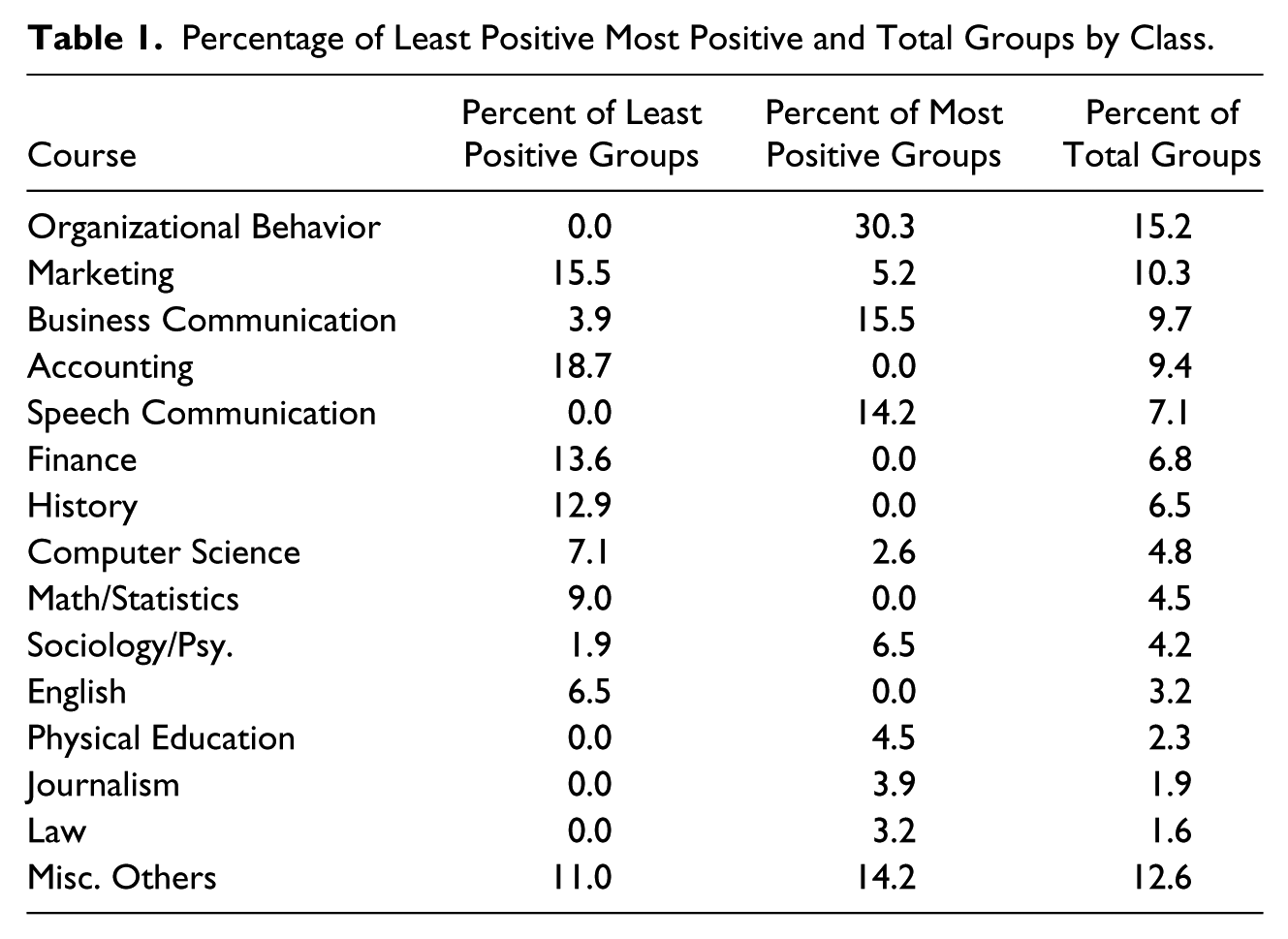
We also asked students to rate each of the courses on a scale of 1 (a complete waste of time) to 10 (an extremely valuable learning experience). The overall mean for their most positive group experience was 8.7, which justifies our optimism about the potential of learning groups. We were somewhat surprised, however, that the overall mean for students’ least positive group experience was just above the midpoint of the scale (5.2).
Structuring Groups
We were quite confident that the composition of the groups would have a significant impact on their success or failure in the learning process. As a result, we asked students how their groups were formed (instructor’s choice, students’ choice or combination) the number of members their groups contained and the duration of their group’s existence. (See Appendix A, questions 4-6).
Their responses indicated that students are more likely to have positive experiences in classes where groups are either formed by the instructor or by a combination of methods (e.g., one instructor collected data on students’ research interests and then grouped those with similar preferences). Specifically, in recording information concerning their worst group experience, 40 percent of the respondents noted that the groups were formed by the students themselves, while in the best group experience, only 22 percent reported that the students were responsible for forming the groups. Thus, by nearly a 2 to 1 margin, if students formed their own groups they were also likely to list the group as being a worst group experience.
Several of the responses to the open-ended question regarding reasons for the learning groups working better in one class than in the other (see Appendix A, question 3) also provide some insights into the problems often created by letting students form their own groups. For instance,
“We got to choose our groups and I was the only one not in a sorority. I felt left-out all semester.” “When we formed our group, we didn’t realize how important it would be to have someone who was good on the computer, so we were always at a disadvantage.”
One of the disappointing aspects of our inquiry was that a large percentage of respondents were confused by our question concerning the degree of permanence of the groups. (See Appendix A, question 6). As a result, the only data we are comfortable reporting comes from the open ended questions (see Appendix A, questions 3, 13 and 14). This data indicates that the groups need to remain stable enough for group cohesiveness to develop so that the groups can work effectively on their tasks. Otherwise, the group work is extremely frustrating. For example, one student reported:
“Group members were not the same for each project. Everytime I learned someone’s name and phone number he changed groups on us—just like fruit basket turn over.”
The size of the worst groups ranged from 2-12 members (mean = 6) and for the best groups from 3-16 (mean = 5). Thus there were minimal differences between the worst and best group experiences. However, group size was mentioned by several students as a problem due to the logististics of arranging outside meeting times. As one student reported:
“There were too many people (8) put in each group in my first group class, which made it almost impossible to arrange times to meet outside class.”
Taken together these results offer a number of guidelines with respect to structuring groups that are also consistent with our own experience. One is that four to seven member groups do very well, while smaller groups often lack resources and larger groups have difficulty maintaining cohesiveness. In addition, we strongly advocate the use of permanent, heterogeneous groups formed by the instructor. Although some students may prefer the freedom of making this choice, it often prevents close friends (sorority and fraternity members, foreign students, etc.) from forming subgroups from the start. Learning to work with a new set of peers and forming interpersonal relationships is an added advantage of group work.
Group Activities
We also felt that the type and number of graded group activities made a significant difference in students’ perception of the learning process. Students were asked how many graded assignments their groups were required to complete in both their worst and best groups. (See Appendix A, question 10). (The types of assignments reported were research projects, class presentations, written reports and group exams.) Figures 1-4 reveal several interesting findings regarding graded group assignments. Research projects and class presentations were required in just over three-fourths of the groups (76 percent and 77 percent of the groups respectively). Nearly all the groups (94 percent) used written reports, while less than one third (30 percent) of the groups took group exams.
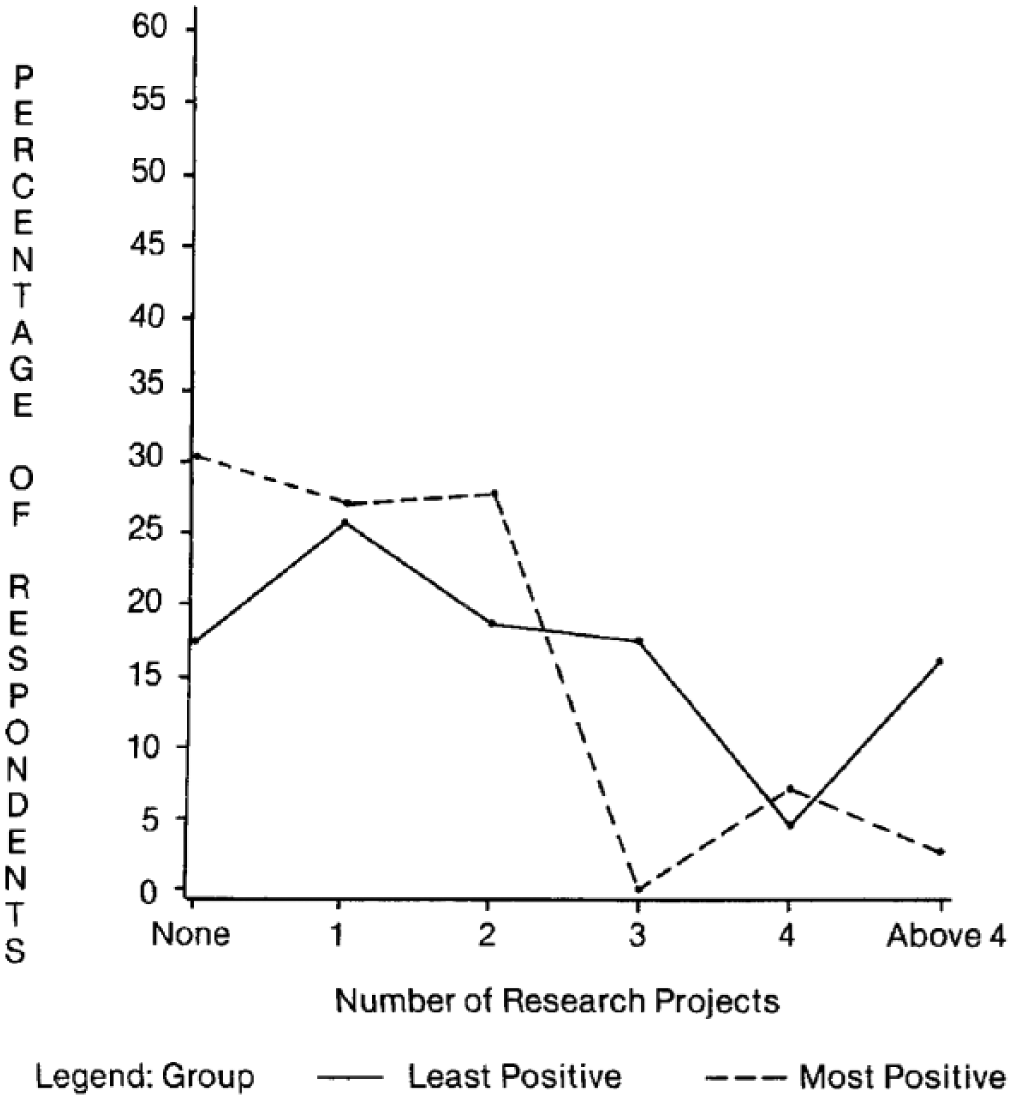
Research Projects (Used in 76% of the Groups).
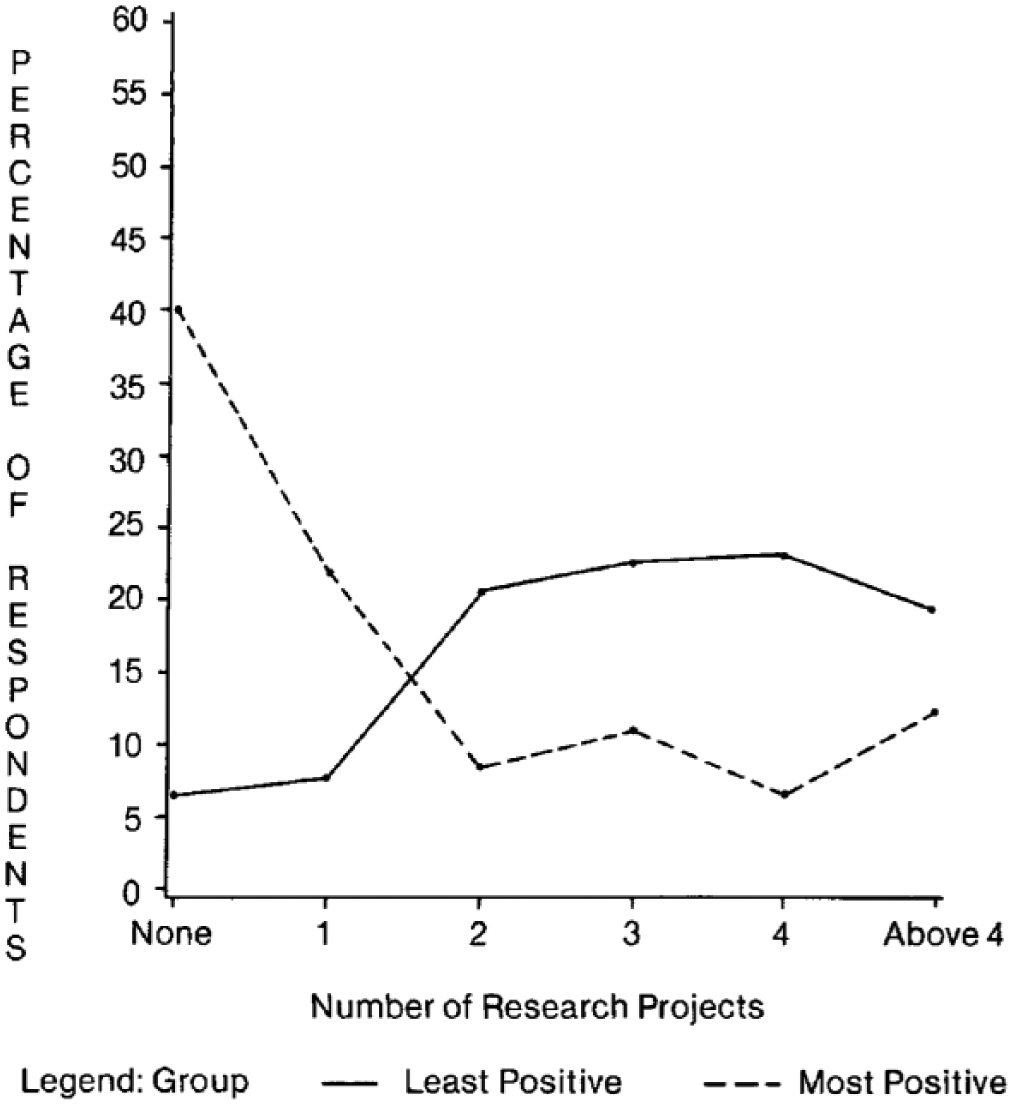
Class Presentations (Used in 77% of the Groups).
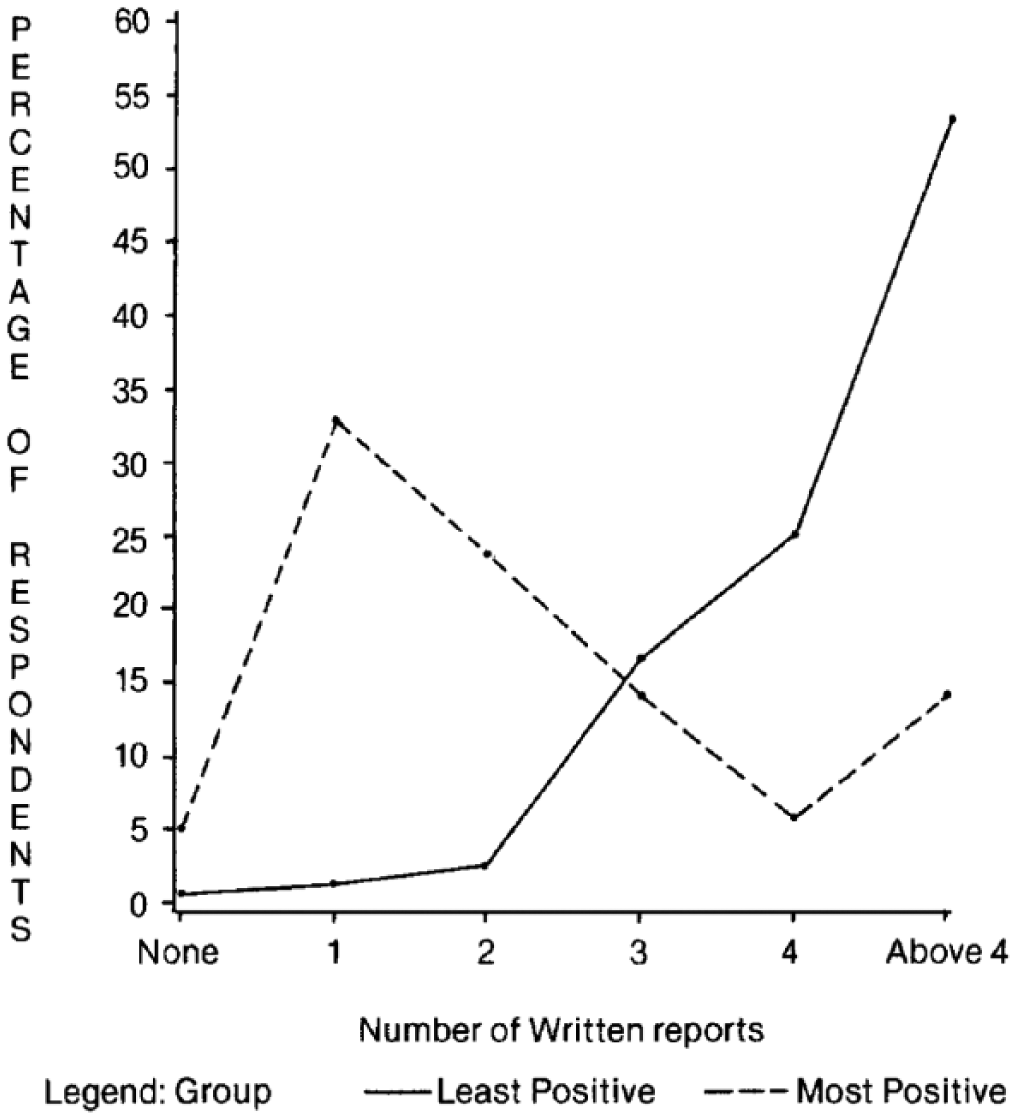
Written Reports (Used in 94% of the Groups).
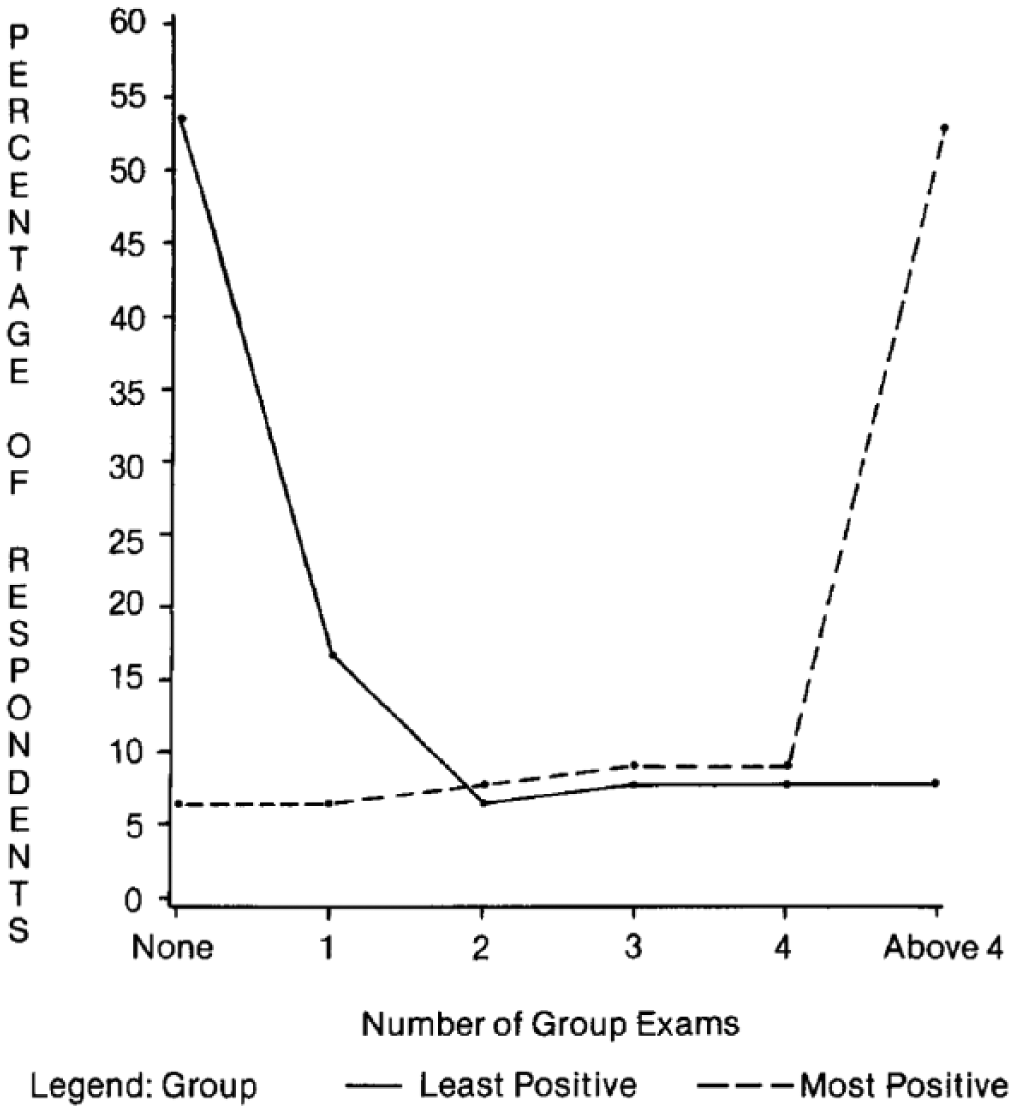
Group Exams (Used in 30% of the Groups).
Our results indicate that an increase in the number of graded group projects had a very different effect depending on the specific type of assignment. For example, although research projects were frequently used in group work, the number that were assigned did not appear to make any consistent difference in the students’ overall perceptions of their group experiences (see Figure 1). On the other hand, the number of class presentations which were required did affect their experiences. As Figure 2 indicates, students were much more likely to report a best group experience in classes in which either no class presentations were required (6:1 ratio) or in which only one was required (3:1). However, when two or more class presentations were required students were much more likely to report a worst experience (1 :2.5 for two; 1:2 for three; 1:3.5 for four; and i :1.~ for five or more).
Written reports had a similar but even more pronounced effect (see Figure 3). Although the number of groups was small, when no written reports were required, students were much more likely to report a best experience (8:1 ), and the probability was even higher with one or two reports (25:1 for one; 9:1 for two). When three written reports were required, there was almost no difference in the proportion of students reporting worst and best experiences. When four or more written reports were required, however, students were much less likely to report a best experience (1:4 for both four and five or more).
Probably the most dramatic finding concerning the number of different kinds of graded group activities was with respect to the number of group exams (see Figure 4). In this case, an increase in the number of group exams greatly enhanced the probability that students would report a best group experience. Only one of eight students reported a best experience when no group exams were given as compared to only one of eight students reporting a worst group experience when five or more group exams were given.
In addition, the data from the open ended questions (see Appendix A question 3, 13 and 14) alerted us to another potential problem with respect to the number of assignments. Several students indicated that having too few graded group assignments was detrimental to the process. As one student put it:
“We only had two group projects to complete all semester—so there was NO time to become cohesive.”
Taken together these findings appear to present a dilemma in deciding how many and what kind of graded group activities to employ. On one hand it is important to have enough assignments so that the groups have the opportunity to become cohesive. While on the other hand, too many activities appear to have a negative affect.
In our judgement, this dilemma is caused by the problems that students encounter in trying to coordinate their efforts in order to complete the group assignments. In an attempt to minimize these logistical problems, most groups will divide up the work in an appropriate way. For example, if a five member group is asked to analyze five cases, the vast majority will agree to assigning one case to each member, thereby virtually guaranteeing that students will experience many of the negative aspects and few of the benefits of working in groups.
Fortunately, the data from the survey also suggest at least two solutions to the problem. One is giving a series of group exams. This provides the groups the opportunity to become cohesive and also enhances the quality of students’ experiences with learning groups. In our opinion, the reason that group exams are ideally suited for this purpose is that they insure that the output from the groups will not be a series of projects completed by individuals working in isolation. The other potential solution involves providing the opportunity to work on group assignments in class.
In-Class vs. Out-of-Class Group Work
We felt that providing a significant amount of in-class time for group work in addition to the amount of time spent on group assignments outside of class would impact students’ perceptions of the learning process. Therefore, we were interested in discovering what percentage of the total class time was devoted to group work plus the amount of time students spent on group assignments outside of class for their best and worst groups. (See Appendix A, question 7 and 8). Interestingly, we found that in students’ worst group experience, only 10 percent of the total class time was devoted to group work, and an average ot 22 hours was spent in group work outside of class. In contrast, in students’ best group experience, an average of 36 percent of the class time was devoted to group work with an additional 31 hours spent outside the classroom setting. This confirms our belief that the more time students spend working on projects both in and out of class, the more cohesive the group becomes, thus making for a more positive group experience.
Grading System
The results from our question concerning the percentage of the grade determined by group work (see Appendix A, question 9) clearly indicate that it is important to include a substantial group performance dimension in the grading system of classes in which students are required to work in groups. For example, in classes in which less than 20 percent of the course grade was determined by group work, the proportion of students reporting a best group experience was only one in six (see Figure 5). When group work counted for more than 20 percent of the course grade, however, the ratio was reversed with the majority of students reporting a best group experience. The margin was as high as nearly two to one when group work accounted for between 41 percent and 80 percent of the grade.
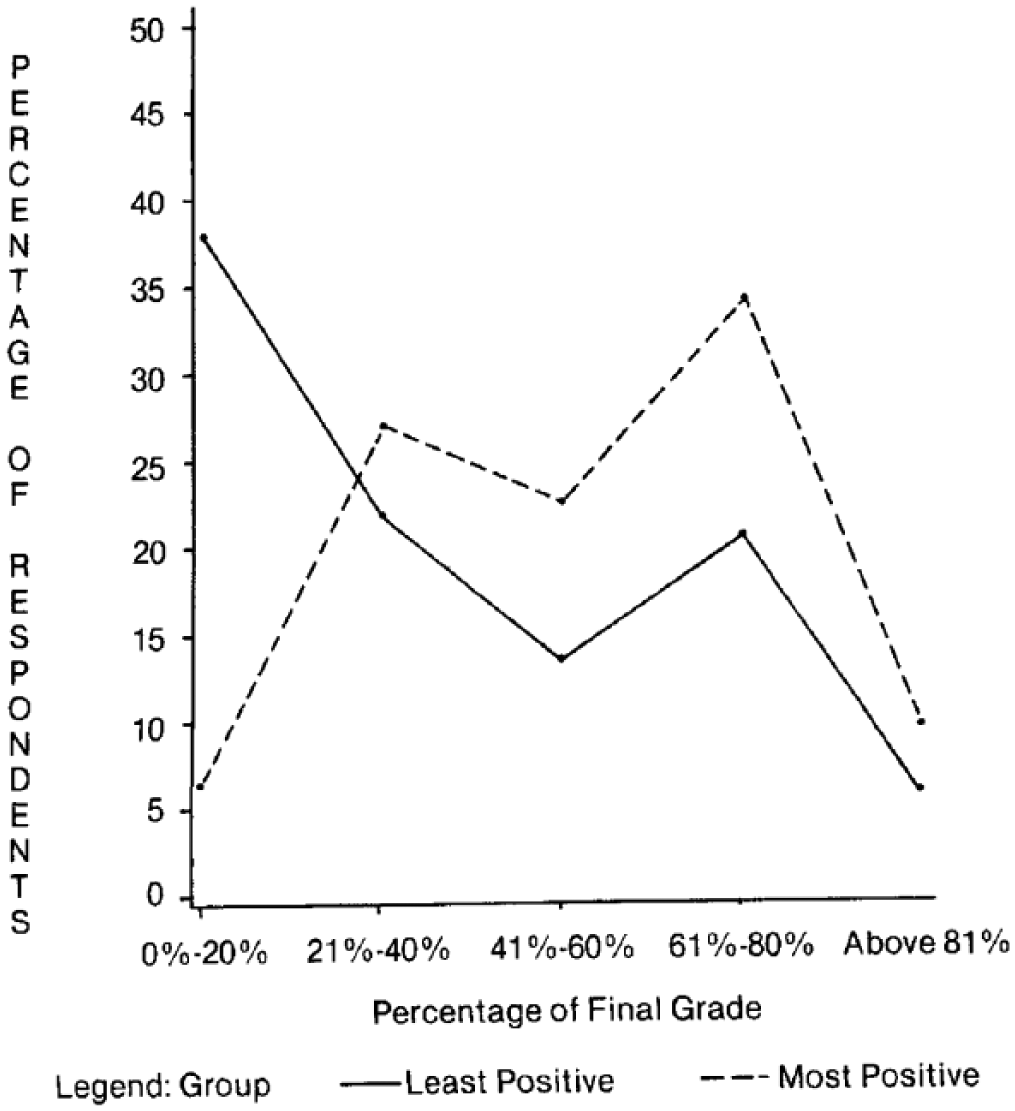
Percentage of Final Course Grade Determined By Group Work.
The results also indicate that it is important to utilize peer evaluations as a part of the course grade (see Appendix A, question 1). When no peer evaluations were used, only one student in three reported a best group experience (see Figure 6). By contrast, three students out of five reported a best group experience when instructors employed a grading system in which peer evaluations counted for between 21 percent and 40 percent of the course grade.
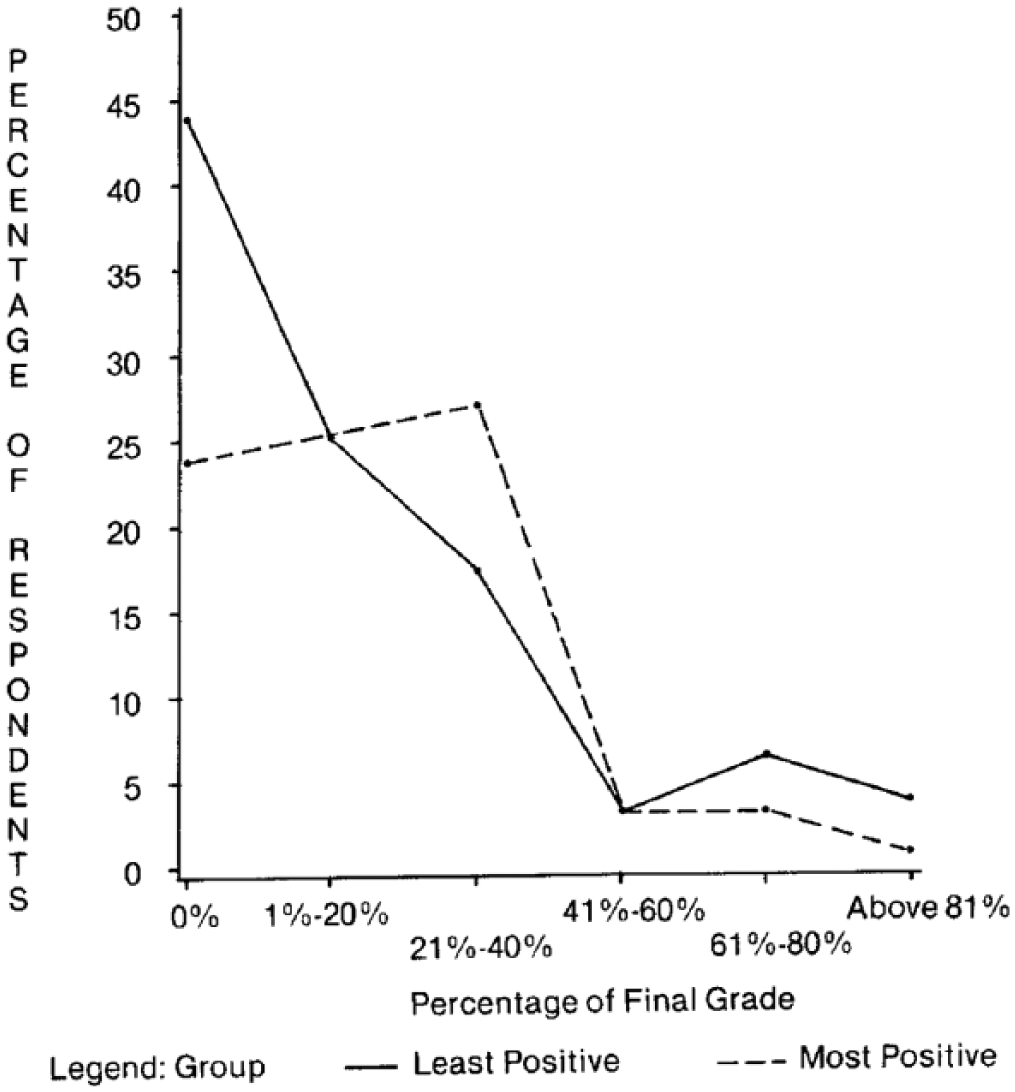
Percentage of Final Course Grade Determined By Peer Evaluation.
Data from the open ended questions also point to the value of employing peer evaluations as part of the grading system. For example:
“There were no peer-group evaluations, so some people just got to ride free.” “We were forced to cooperate with each other because of the peer evaluations.” “This often happens in the real world and taught me many things about human nature.”
On the other hand, the data also suggest that peer evaluations should be used with caution because they can produce problems. Our results indicated that if student influence on the grade is too great (over 61 percent-see Figure 6) the impact of peer evaluation will probably be negative. Furthermore, unless the peer evlauation process is carefully thought through it can cause a great deal of resentment on the part of students. For example, one student wrote:
“I really got burned/ripped on the evaluations at the end of the term, and I did the same amount of work as anybody.”
Actual vs. Expected Grades-the Importance of Feedback
Another aspect of grading that was related to students’ perception of the value of learning groups was the extent to which there was a discrepancy between the grade they expected and what they actually received. For example, although students received lower grades than they expected in both categories, the discrepancy was nearly five times as great for the worst groups (see Table 2).
Expected Vs. Actual Grades.
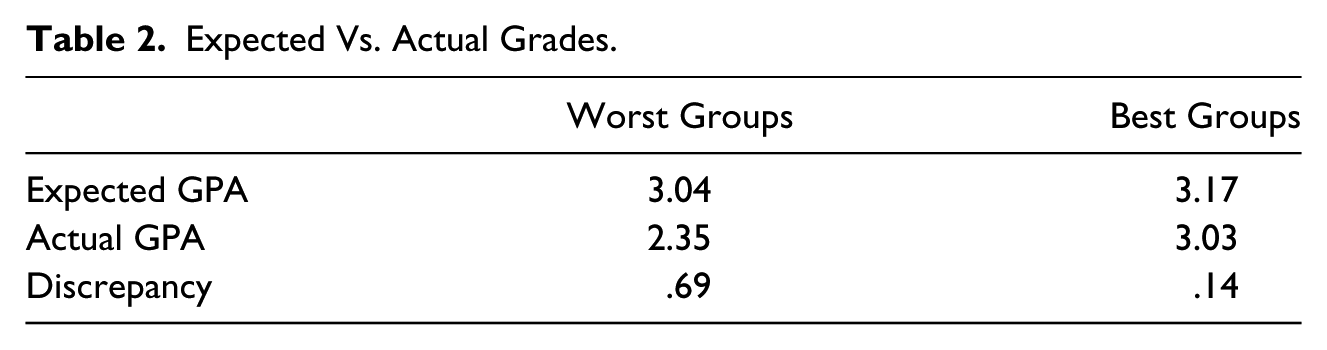
Because the survey did not require the students to list reasons for this discrepancy between expected and actual grades, we can only speculate as to its causes based on their responses to the open ended questions (see Appendix A questions 3, 13, and 14). One factor for some was that they felt like they got burned on the peer evaluations. Another was that a substantial proportion of the grade was determined by a group project that was due at the very end of the term. In particular, this is a problem when students divided up the work in a way that does not require them to be actively involved with other students prior to the time that the assignment is turned in. When this happens students are unaware of either deficiencies within or lack of integration between other sections of the overall group project. Irrespective of the reasons, however, it is apparent that we need to structure both the assignments we require and the feedback process we employ so that students 1) understand what we expect them to produce, 2) are familiar with the entire “product” that is submitted by their group and, 3) have multiple opportunities to receive feedback on their performance.
When Things are Not Going Well
The data from the open ended questions provided several insights into students’ perceptions about the reasons why some groups aren’t productive or effective. One of the most crucial reasons is that, overall, they are very likely to blame the group’s problems on the attitude or lack of competence of the instructor. Other sources of frustration included logistical or workload problems, unmotivated or incompetent peers and group process deficiencies. For example, the most frequently cited response to both “What do you think is the most important reason that the learning groups worked better in one class than the other?” and “Overall, what do you feel was the most negative aspect of your experience with small groups in the classroom?” was that the instructor was either incompetent or shirking responsibility. Sample comments included:
“The instructor was totally incompetent in one class. She couldn’t even answer the most simple questions!” “Her (instructor) attitude was terrible! This was just an ‘easy out’ for her so she wouldn’t have to lecture!” “The teacher was never around when we needed him, he just assigned an ambiguous project then went to drink coffee. What a jerk!” “I think he just put us in groups because that’s the fad now in the Business School.”
In contrast, there were absolutely no complementary statements about instructors for either of the open-ended questions recorded above, when the “negative” was replaced with the “positive.” Thus, at our universities instructors who use groups are liable for much of the blame when problems occur but are not likely to receive credit when the groups are effective. As a result, when we choose to utilize groups in our classes, it is imperative that we do all we can to remove the legitimate causes for critcism, increase students’ commitment to the groups, and increase students’ ability to make the groups work effectively.
Staying Out of Trouble
There are a number of steps we can take as instructors to minimize the negative feelings that students are likely to develop from being required to do group work. One technique is to carefully think through why we want to use groups and to communicate this rationale to our students through the ways we structure their group experiences. For example, if we want students to develop higher-level skills in group problem solving, we should use heterogenous groups and give them multiple opportunities to make decisions and receive feedback on their performance. Another strategy is helping students to establish realistic expectations about the group work we assign by contrasting both student and instructor roles in our classes with their experiences in other courses-particularly those that may have used group activities inappropriately. An additional key is being meticulously prepared for all classroom activities. Many of our most negative experiences have occured when we have overlooked even minor details such as a typographical error in our instructions to the groups or the fact that we needed a two-pronged plug for some video equipment that was essential to a group activity. It is inviting trouble to have groups either struggling or sitting “twiddling their thumbs” when they think you could have avoided the problem with a little more attention to detail. We also feel that it is important to “listen in” while the groups are working. This allows us to detect our mistakes early and to minimize students’ frustrations. This also seems to provide them with a visual demonstration that we’re still doing our job. In addition, we have found that providing immediate feedback on group projects is helpful because it reduces students’ most frequently expressed fear-that we are allowing “the blind to lead the blind.”
Possibly the factor that has the greatest impact on whether or not group work will produce a positive or negative student reaction is the degree to which activities and assignments are perceived as being relevent to the content of the course. This conclusion is based on the responses of the 72 students who reported having the worst group experiences with learning groups. Twenty-four students identified relevance as the number one distinguishing factor between their most positive and least positive group experience. For example:
“In one class the assignments were just ‘busy work’—there was nothing relevant to gain.” “Nothing was relevant to real-world situations.” “She [the instructor] researched organizations and came up with real questions and problems, not just something to keep us busy.”
In addition to providing grade incentives, the most effective strategy we have found for increasing students’ commitment to their groups is to employ a wide variety of activities that accomplish learning objectives and at the same time increase the cohesiveness of the groups. One of the most useful methods has been to involve students in the development of the grading system through the use of the “Grade Weight Setting” exercise (see Michaelsen, Cragin, and Watson, 1981). This activity ensures that students understand course requirements, are commited to a grading system that provides incentives for groups’ work, and also stimulates within each of the groups a discussion about individual constraints (e.g. work schedules) and the degree to which they might affect their ability to perform effectively. Another method is to provide immediate feedback to the class with respect to the performance of each of the groups. (The positive impact of this strategy grows dramatically with either the number or the variety of group activities since this creates more opportunities for each of the groups to be a winner.) We also encourage students to sit together and when possible provide a visual means for identifying group membership. For example, we have the groups sit under a set of numbered cardboard pyramids that we constructed and have attached to the ceiling of the room. In addition, in some of our classes we encourage students to assign a name to their group and possibly a group logo to use for identification purposes. For instance, groups working on a semester-long simulation analyzing refrigeration companies, created group titles such as “We Be Kuhl,” “Polar Bares” “Nice Fellows on Ice,” and “Frozen Assets Unlimited.” We also use a number of exercises that expose students to various communication problems within groups. One of our favorites is “Exercise Brazil” (Huse and Bowditch, 1977) which is a simulation where the correct answer is impossible to obtain unless all group members contribute.
A Profile for Failure
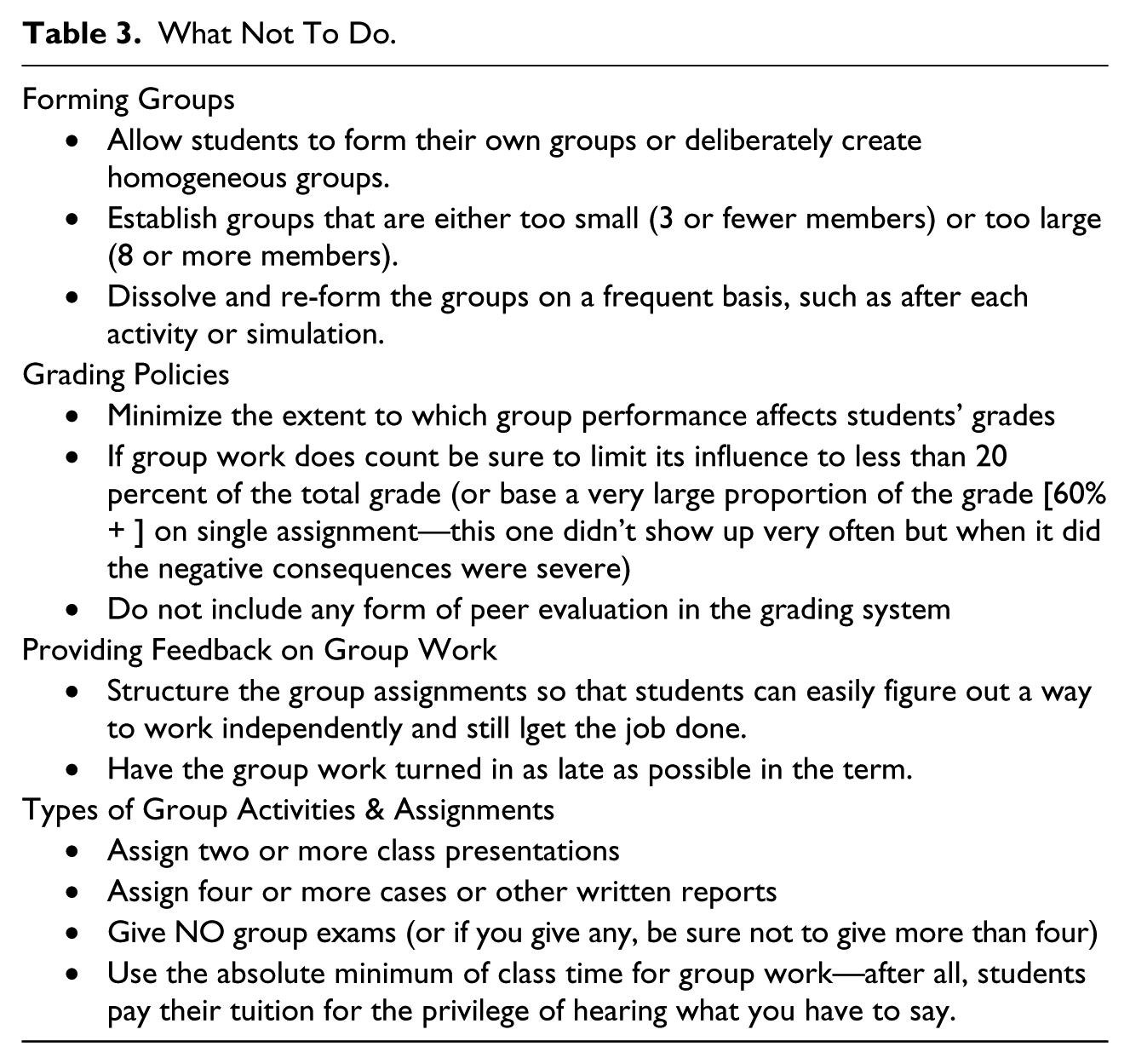
At this point we are confident that we can identify a set of tactics that: 1) are deliberately employed by a significant proportion of well meaning instructors, 2) when employed individually will measurably reduce the effectiveness of learning groups, and 3) when employed in combination will virtually ensure that learning groups will be counterproductive. These damaging but frequently used tactics are summarized in Table 3.
What Not To Do.
Conclusion
The teaching methods and skills involved in group learning classes differ significantly from those utilized in the traditional classroom, for both the role of the student and the teacher changes in the radical way. As is evident from this survey, this difference in methods is responsible both for the advantages of learning groups and for the limitations and difficulties inherent in their use.
Our experience indicates that these limiations can be overcome. If this is to be accomplished however, content and skills cannot be separated in the classroom—both are an integral part of the learning process. Knowledge that goes beyond mere information is always knowledge of how to do something, and skills can be developed only through use. The trend toward more group work in classroom settings represents not only the continual development of innovative teaching approaches, but also a movement toward the development of higher order communication and problem solving skills needed for the future.
Footnotes
Appendix A
This article was original published as: Fiechtner, S. B., & Davis, E. A. (1984). Why some groups fail: A survey of students’ experiences with learning groups. Journal of Management Education, 9(4), 58-73. (Original doi:10.1177/105256298400900409)