




Abstract
As collaborative artistic inquiries, studios challenge logical–analytical approaches to knowledge. Studio activities entail materializing artifacts to explore a range of management and organization issues. Theoretical references are currently needed to keep pace with the growing interest in studio-informed pedagogy. Inspired by organizational aesthetics, my article engages with Luigi Pareyson’s hermeneutic–aesthetic philosophy of production and theory of formativity for new understandings on the art of “learning-by-making” studio practices. Based in sensory knowing, formativity—conceptualized as aesthetic formativeness—denotes how artistic “making/doing” unfolds through trial and error, socio-material processes involving simultaneous invention and production. Building on previously established analytical distinctions for studying formativeness dynamics in practice, studio experimentations with two distinct MBA cohorts are explored. Excerpts from these studio accounts guide the reader through students’ creative formative adventures. Extensions to the initial conceptual framework are put forward with the aim of contributing more nuanced aesthetic insights on studio-based education. Practical implications and future directions are considered.
Introduction
In the wake of increased pressures for creativity and innovation, studio-based “learning-by-making” practices challenge cognitive, logical–analytical approaches to management education. Barry and Meisiek (2015) coin the term “business studio” to describe the emergence of collaborative artistic inquiries in both business schools and organizations. Growing interest in studio practices remain fueled, at least in part, by the arts-based movement (see Adler, 2006; Katz-Buonincontro, 2015; Taylor & Ladkin, 2009; Van Buskirk et al., 2018) in management learning. Where arts-based learning is primarily directed at the individual level (see Taylor & Ladkin, 2009), “business studios” are suggestive of collaborative socio-material processes. Collectively experimenting with “materials matters” (Taylor & Statler, 2014), studio participants materialize artifacts to explore a range of management and organization issues—such as leadership (Adler, 2015; Taylor & Ladkin, 2014) and organizational change (Meisiek & Barry, 2015). Further impetus for studio activities may be discovered in calls for more integration between the humanities and business education practices (see Colby et al., 2011).
Reflecting on the current state of arts and humanities inspired learning, Statler and Guillet de Monthoux (2015) suggest that studios exemplify a broader epistemological paradigm shift in management education—from individual, cognitive, rational–analytical approaches—toward active, collective ways of knowing and practicing that embrace aesthetic, affective, and emotional realms of experience. Accordingly, Dean and Forray (2016) urge management educators to experiment with studio-informed pedagogies. Barry and Meisiek (2015) emphasize the need for theoretically informed studio scholarship to accompany these “creative experimentations.” Drawing inspiration from organizational aesthetics, this article engages with Luigi Pareyson’s hermeneutic–aesthetic philosophy of production for new insights. Pareyson’s philosophy is important because it lends both theoretical and practical support to studio-based education.
One of the Italian philosopher’s major contributions, the aesthetic theory of formativity interweaves aesthetics and hermeneutics to theorize artistic processes as “interpretive acts” (Benso, 2018, p. 14). Thus, Gherardi and Strati (2017) conceptualize formativity in its action-oriented translation as “aesthetic formativeness.” Based in sensory knowing, formativeness proceeds dynamically as an artistic trial and error socio-material process toward the successful realization of “form” (Gherardi, 2016). This productive process focuses attention on “fare,” translated as the “art of making/doing” (Machado, 2016). From Pareyson’s viewpoint, “we form things by making and inventing the way things can be made” (Carravetta, 2010, p. 100). It is suggested here that studio practices may therefore, be understood as “creative formative adventures” (Eco, 1989) involving the “simultaneous invention and production” (Vercellone, 2018) of both studio artifacts and unique methods or “styles” (Eco, 1989) of making/doing. It is important to underscore that for Pareyson the “notion of fare assumes paramount relevance and must be examined closely” (Carravetta, 1989, p. 222, italics in the original). My article proposes a careful aesthetic reflection on collaborative studio fare. Alvesson and Gabriel (2015) caution against extravagant claims related to management learning scholarship and practices—in this spirit, the current Pareysonian exploration seeks to “rediscover the importance of unspectacular craft and versatile learning, imbued with humility and a tolerance for imperfection” (p. 471).
This article is organized in the following manner. To begin with, the field of organizational aesthetics provides the theoretical background and inspiration for engaging with central ideas from Pareyson’s philosophical legacy. In particular, his aesthetic theory of formativity is introduced as a novel way to understand artistic activities. Next, Gherardi and Perrotta’s (2013) Pareysonian-informed research outlines a conceptual framework for studying formativeness dynamics in practice. Building on these analytical distinctions, experimentations with MBA students are explored. It is suggested that formativity provides an important theoretical reference for understanding the art and aesthetics of studio fare. Excerpts from studio accounts guide the reader through students’ collaborative adventures in aesthetic formativeness. My exploratory work puts forth extensions to the initial framework that afford more nuanced aesthetic insights on studio-based management education. Finally, this article contributes to the philosophical, theoretical, and practical dialogue on studio practices. Limitations, practical implications, and future directions are considered.
Philosophical and Theoretical References
Within management and organization studies, “organizational aesthetics” emerged as an epistemological challenge to cognitive rational-analytical approaches to knowledge (Strati, 1992; Taylor & Hansen, 2005). Instead, aesthetic approaches prioritize sensory-based knowing (Strati, 1999). That is, embodied sensory perceptions (seeing, hearing, smelling, tasting, and touching) and intuitions evoke aesthetic judgments, sentiments, and “felt experiences” (Taylor & Hansen, 2005) on both organizations and organizational life. Its focus on corporeality and materiality enables aesthetic research to “grasp remainders” (Strati, 2010)—such as the “pathos” of artifacts, human interactions (Gagliardi, 2006), and quotidian practices (Ratiu, 2017)—left over from traditional scholarship. Aesthetics further highlights the importance of “sensible knowledge” (Strati, 2007), materiality (Ewenstein & Whyte, 2007) and aesthetic tastes (Gherardi, 2009) to learning and knowing in work-based practices. Aesthetic research continues to evolve in ways that employ artistic forms (Taylor, 2008; Taylor & Hansen, 2005) commensurate with both sensory knowing (Warren, 2008) and the “aesthetic dimension” (Strati, 2009). Moreover, the field of organizational aesthetics serves as an important reference for arts and aesthetics inspired learning in management education (Mack, 2013; Meisiek et al., 2016).
Numerous aesthetic philosophers—Baumgarten, Dewey, Kant, Langer, Pareyson, and Vico to mention a few (Strati, 1999; Taylor & Hansen, 2005)—have contributed to the foundation, development and legitimacy associated with sensory-aesthetic ways of learning and knowing. To bring about new insights, Strati’s (2016, 2018) recent reviews of the field call for more meaningful connections between organizational aesthetics and philosophical aesthetics. Specifically, Gherardi and Strati (2017) argue that Luigi Pareyson’s hermeneutic–aesthetic philosophy offers novel understandings on the art and aesthetics of working practices. Given limited translations of the Italian philosopher’s oeuvre, Gherardi’s (2016) publication in Organization and Gherardi and Strati’s (2017) essay in the Academy of Management Review serve as timely reintroductions to his philosophical, theoretical, and practical significance. These authors emphasize the potential value of Pareyson’s philosophical aesthetics for management and organization scholars because it primarily focuses on production rather than contemplation (Gherardi, 2016). Thus, his philosophy is often described as a hermeneutic aesthetics of production. The aesthetic theory of formativity represents one of Pareyson’s major theoretical contributions.
The Aesthetic Theory of Formativity
Pareyson’s focus on artistic production remains an important innovation to aesthetic philosophy (Eco, 2018). By connecting aesthetic knowledge with artistic activities (D’Angelo, 2018), the theory of formativity transforms the kinds of questions that can be asked about both art and aesthetics (Vercellone, 2018). The art of “making” (Carravetta, 1989) or “doing” (Valgenti, 2013) becomes central to understanding aesthetic formativity. In a “making that while making invents its way of making” (Pareyson, 1954, cited in D’Angelo, 2018), formative actions involve the simultaneous invention and production of art “forms” and unique ways of making/doing (Machado, 2016). Formativity theory draws attention to the active “path toward the production of art as meaningful in its own dynamics” (Vercellone, 2018, p. 97). As “artistic quests” (D’Angelo, 2018) formative dynamics proceed through trial and error “creative adventures” (Eco, 1989). Translations and commentaries on Pareyson’s work include a plurality of action verbs (see Gherardi, 2016)—trying, attempting, figuring, experimenting, searching, groping, grasping, shaping, improvising, playing, proposing, checking, and realizing, to mention a few—expressive of formativity. Gherardi and Strati (2017) articulate formativity as “aesthetic formativeness” to emphasize its active character.
Formativeness is set in motion by “cues” that appeal to artistic sensibilities (Eco, 1989). Initially, the artist may have an “image” or “idea” of the “thing” that ultimately develops into realized “form” (Pareyson, 2009). In order to produce “forms,” artists must rely on their own formative initiative to invent specific “rules of production required by the object that is being made” (Eco, 1989, p. 158). Pareyson (2009) considers “pre-established” procedures as more machine-like than human. For him “formative too is the sensible knowledge that grasps every ‘thing’, producing and ‘forming thereof’ the image so that this is ‘accomplished’ and reveals and captures, indeed is the thing” (Pareyson, 1960, p. vii, cited in Gherardi, 2016, p. 12). Unpacking this dimension of Pareysonian thinking requires an appreciation for the active role of materiality in aesthetic formativeness.
Materials allow artists to transition from rough ideas to concrete acts of formation (Eco, 1989). Material choice is thus fundamental to artistic freedom and inspiration (Eco, 2018). In order to move the formative process forward, selected materiality must be translated into artistic properties (Kasia, 2010). This involves “forming” materials in such a way that renders the artist’s distinctive way of making (Bredin, 1966). Although freely adopted materials often resist formative intentions (Eco, 1989), Pareyson insists that material resistance becomes a catalyst for creativity (Eco, 2018). Obstacles prompt “active dialogue” with materiality (Kasia, 2010) to unearth its formative potential (Eco, 2018). Since formativity denotes “trying” (D’Angelo, 2018), playful experimentations and improvisations (Harmon, 2017; Vercellone, 2018) facilitate the discovery of creative techniques for overcoming material barriers (Kasia, 2010). Once the artist has “conquered through the mobile and lively succession of attempts” (Pareyson, 2009, p. 91), the “image” and “thing” correspond in a realized “form.”
Uniting “thought, feeling and matter” (Eco, 1989, p. 159), completed artworks become “platforms” for dialogue, interpretation, and contemplation (Kasia, 2010). So Pareyson (2009) does not necessarily eschew contemplative aesthetics. He aptly stresses that reflections and enjoyments are made possible following the conclusion of formative processes. Originally developed from studies on the “artistic labor” of working artists (Strati, 2018), Pareyson considers art as the paradigm of “pure formativity” (Gherardi, 2016). Even so, his theorizing on formativity is actually more inclusive by establishing artistic creation, invention and production as common features of “human industriousness” (Pareyson, 1988, cited in Gherardi & Strati, 2017). For Pareyson, “people always try to do things ‘aesthetically’ . . . ‘fare le cose ad arte’ . . . to make [or do] things as if they were a work of art” (Pareyson, 1988, cited in Carravetta, 2010, p. 100). Because formativity “is not the exclusive territory of art” (Chiurazzi, 2018, p. 413), the theory has broader implications for appreciating the art and aesthetics of diverse human operations.
In the context of management and organization studies, Gherardi and Perrotta (2013, 2014) activate the concept of formativeness to study “the process elements and dynamic components” (Vercellone, 2018, p. 97) of craftwork. Gherardi and Perrotta (2013) generate formative dynamics from episodic interviews with crafters. Their research is significant because it suggests a nonlinear framework for analyzing formativeness in practice: “sensible knowing, co-formation of ideas and materiality, experimenting with playfulness, translating and hybridizing materials, realization and repetition” (Gherardi & Perrotta, 2013, p. 227).
Aesthetic Formativeness Dynamics
Figure 1 illustrates a conceptual framework for exploring formativeness dynamics in action. Created from Gherardi and Perrotta’s (2013) Pareysonian-informed study on craft making, sensible knowing is situated at the center of this framework to show its infusion throughout aesthetic formativeness. Beginning with co-forming dynamics, Gherardi and Perrotta use craft-making stories to unveil the “path toward the [craft, my addition] form itself in its various stages” (Vercellone, 2018, p. 97). This approach remains consistent with the value Pareyson places on makers’ voices (Carravetta, 1989). The reader is referred to Gherardi and Perrotta’s (2013, 2014) practice-based studies for narrative details on formativeness in craftwork. These authors underscore how the specification of discrete dynamics is intended for making analytical distinctions, rather than establishing ontological differences (Gherardi & Perrotta, 2013, p. 237). On the other hand, their concrete constructions provide crucial guidance for understanding how formativeness unfolds in differently situated practices. This article suggests that “business studios” remain fruitful arenas for studying collective formativity.

Conceptual framework: Dynamics of aesthetic formativeness.
Collaborative Aesthetic Formativeness
Even though the dynamics outlined in Figure 1 are based on Gherardi and Perrotta’s (2013) interviews with individual crafters, Gherardi and Strati (2017) argue that Pareyson’s philosophy lends intuitive support to the idea that shared working practices are formative too. Following this argument, collaborative formativeness rests on assumptions that co-makers rely on sensory knowledge and aesthetic deliberations for figuring out together “preferred ways of working, producing and inventing objects of practice” (Gherardi & Strati, 2017, p. 751). Exploring studio inquiries through the lens of formativity necessitates taking this intuitive leap. Moreover, the reader is reminded that Pareyson’s theory speaks to the art and aesthetics of diverse human activities, including studio practices. Indeed, the historical development of formativity theory is suggestive of the notion that the Italian philosopher spent considerable time hanging around artists’ studios (see D’Angelo, 2018; Eco, 2018; Strati, 2018).
Recent reviews on art and aesthetics in management education (Meisiek et al., 2016) portray studio methods as “underdetermined.” Notably, the aesthetics of formativity lends theoretical support to this assertion because prearranged “studio procedures” would circumvent the formative benefits of artistic studio activities. Formativity theory proposes that participants will invent their own methods of co-making governed by the artistic production of studio artifacts. As proposed in the introduction, the art of studio-making merits more thoughtful consideration. In a similar vein, Farías and Wilkie’s (2016) sociocultural studio studies depict aesthetics as the “elephant in the room” (p. 11) within traditional studio accounts. Aesthetic formativeness offers a unique way of “grasping” this studio elephant. The following section describes my exploratory study on collective studio-based formativeness dynamics.
Studio Experimentations
Two distinct MBA cohorts take part in studio practices situated within a human resource management (HRM) course required of all students. The course is offered near the end of participants’ MBA journey. During the final module, groups of four to five students collaborate in studio activities. In preparation for more complex studio inquiries, Barry and Meisiek (2015) recommend “studio-like” methods such as Visual Explorer™ (VE) developed by the Center for Creative Leadership (Palus & Horth, n.d.). A facilitator’s guide accompanies VE’s diverse collection of photographs/art images designed for generating dialogue on multiple topics. Each cohort experimented with this technique in a previous organizational behavior course. Students selected images that resonated with them about personal leadership challenges. In teams, they engaged in conversations on the meanings and metaphors evoked by each member’s chosen image(s). Reflecting on the value of arts-based learning can “prime the pump” for collaborative studio-making practices.
In Barry and Meisiek’s (2015) parlance, the HRM studio “theme” is directed at career/work experiences. This thematic approach is consistent with the course content. I also felt that it might evoke the interests and passions of students completing their MBA journey. However, the reader is reminded that this article centers on studio fare. Its aim is directed at exploring collaborative formativeness dynamics rather than career theories. As with other types of arts-based learning activities, specific “learning outcomes” are difficult to determine in advance (Taylor & Ladkin, 2009). Potential outcomes are “softly” directed toward the development of sensory–aesthetic knowing, co-creativeness and insights generated through socio-material artistic studio-making practices. I wanted to open a space for students to experience a unique self-graded integrative activity at the end of their MBA program. Given the “underdetermined” nature of studio methods (Meisiek et al., 2016), minimal instructions are provided: (a) collaborate in established teams to produce an artifact on career/work life experiences; (b) select materials, tools and studio sites; (c) focus on the making process; and (d) present materialized artifacts to the class. Students have two weeks to complete studio inquiries. As part of the creative process, students give specific names to the ideas and images materialized in their studio artifacts. In a final assignment, each studio-maker group submits a collective reflection paper on their distinctive studio experiences.
Although instructors/facilitators may opt to provide participants with materials such as clay, paint, canvas, blocks, wood, and so on (see Taylor & Statler, 2014), material choice is crucial for artistic freedom and inspiration (Eco, 1989). For example, Taylor and Statler (2014) posit that certain “material matters” enhance “student engagement,” as in the tactile fluidity of clay versus blocks. While Pareyson offers no “hierarchical distribution” (Kasia, 2010), of materiality, his theory contends that materials hold “different formative properties” (p. 91) in need of “artistic interpretations” (Eco, 1989). Additionally, Farías and Wilkie (2016) describe studios as “intimate sites” (p. 12) for socio-material creative practices. As matters of aesthetic preference, these MBA students ventured outside the classroom in search of both studio materials and maker spaces/places. On the last day of class, students return to the classroom for artifact reveals. Each studio group has ample time for showcasing artistic productions to their classmate and professor “audience.” During studio debriefings, students are invited to engage their senses and “sensemaking” in an active “tour” of studio artifact displays. This approach affords opportunities for informal dialogue to unfold. In maker groups, students are then instructed to craft “audience recipient” notes on sensations, sentiments, impressions, feelings, symbolic features, and insights associated with each studio artifact. Audience notations are provided directly to peer-groups for collective consideration. In lieu of a “final exam,” studio group-based reflection papers focus on studio-making processes, audience engagement, reflective understandings, and collaborative “assessments” (valued at 15% of the total HRM course grade). Students’ written narratives provide the basis for collective studio accounts described in the next section.
According to Strati (2018), aesthetic explorations bring about the likelihood of discovering “fragments.” In this case, fragments on “studio life” (Farías & Wilkie, 2016) interweave with fragments from both Pareyson’s hermeneutic aesthetic philosophy and interdisciplinary social-material studies. These interconnections inform my own formative interpretations of students’ studio practices. The conceptual framework outlined in Figure 1 serves as an initial guidepost for exploring their collaborative formative adventures.
Studio Practices: Creative Adventures in Aesthetic Formativeness
Sensible Knowing
Like aesthetic approaches more broadly, sensory knowing is fundamental to formativeness. Pareyson (2009) refers to sensible knowledge as both sensation and sentiment. For him, “it is impossible to know sensitively without experiencing sentimental reaction” (p. 79). As previously outlined, the corporeality of sensible knowing permeates throughout the formative process. Beginning with the first cohort, excerpts from studio narratives draw attention to the dynamic path of sense-based collaborative formativeness.
Co-formation of Ideas and Materiality
For Pareyson, formativity becomes more about “forming” materials, rather than “using” material matters (D’Angelo, 2018, p. 48). Ideas and materials mutually stimulate the formative process, sparking artistic imaginations (Eco, 2018).
We started off with a very clear image of the “endless staircase.” We did not have a clear vision of how we wanted to implement it . . . we couldn’t quite agree on a method for portraying our career [artifact] that would match both our skill levels and time constraints. There were a few tense moments when the dynamic within the group was questionable as we eventually settled on making a physical object out of craft materials . . . we headed to the nearest craft store. Selecting materials along with actually constructing the object gave us the most difficulty.
The career theme serves as an important “cue” (Eco, 1989) for mobilizing formativeness. In co-forming, “the image and the thing constantly search for one another” (Pareyson, 2009, p. 89). An encounter between the group’s image and craft store materials further “inspires the [endless staircase] form” (Gherardi & Perrotta, 2014, p. 141). Seeing and touching craft materials enable participants to imagine how they might go about co-forming ideas and materiality. This excerpt further shows how students’ corporeal engagements stimulate sentiments of frustration. In the course of trying, searching and groping, these material hurdles become invaluable to the creative process (Raffa, 1962).
The studio group’s formative “artistic quest” (D’Angelo, 2018) will require them to discover suitable techniques for “taming resistant [craft] materials” (Kasia, 2010) and construction tools. Co-forming calls for in-depth socio-material dialogue and engagement. Yet this excerpt cautions how time limitations may unintentionally encourage “hasty material interpretations” (Pareyson, 2009). Despite potential co-formative risks, Pareyson further contends that any “intention to capture . . . solicits the . . . productivity which will . . . figure out the image” (Carravetta, 2010, p. 102). Figuring out how to move forward often involves playing with materiality.
Experimenting With Playfulness
Playful “experimentations and improvisations” (Vercellone, 2018) are characteristic of trial and error formative dynamics. Pareyson maintains that “artists find their freedom and motivation in the potential for improvising, playing and creating material form” (Eco, 1989, p. 161).
The (seasonal) tree was a perfect fit for our team. We struggled with the painting and wondered if our individual scenes or objects would mesh with the other canvasses. Some of us did not feel that we were artistic or creative.
The above excerpt shows another studio group’s struggle to “practice the image that renders the thing” (Gherardi & Perrotta, 2013, p. 234). Moreover, Gherardi and Perrotta acknowledge how the “thing” may be considered as both “object” [seasonal tree artifact] and makers’ creativeness. Pareyson’s aesthetic theory asserts that creative actions happen through experimental formative processes, rather than individual “flashes of brilliance” (D’Angelo, 2018; Eco, 2018). Thus, formativity and creativity are similar notions (Eco, 1989; Raffa, 1962). Endrissat and Noppeney’s (2013) socio-material study on collective perfume making describes how “materials” [in this case, canvas] may not “work” when perceived as “inflexible for obtaining the group’s sensibilities.” On the other hand, materials await artistic discoveries (Kasia, 2010). Experimenting with playfulness calls for co-creative “aesthetic deliberations” (D’Angelo, 2018) and “collective taste-making practices” (Gherardi, 2009). This “ludic dimension” (Gherardi & Perrotta, 2014) of formativeness encourages students to uncover breakthrough solutions for fitting canvasses together.
Translating and Hybridizing Materials
Translating selected studio materials into “formative possibilities” (Bredin, 1966, p. 201) is central to the art of production. Material hybridizations may involve creative ways of combining materials or repurposing existing ones.
Readily available materials for our group were LEGO blocks (we all have kids). The four-quadrant labyrinth shows no single or right [career] path. We got lots of input [from coworkers] as to what things should be included in the “labyrinth.” Who knew learning would be so much fun?
Acting as “bricoleurs” (Gherardi & Perrotta, 2014), the excerpt shows how students are “making do” with materials at hand [LEGO blocks from kids’ stash] to produce a new material object [labyrinth]. Since members of this studio group are colleagues from the same workplace, they make an aesthetic choice to set up a “temporary” work-based studio in collaboration with coworkers. In an interesting hybrid arrangement, such socio-material “entanglements” [MBA students, LEGO blocks and coworkers] (Gherardi, 2016) turn out to be important for the group’s distinctive studio fare. Because formativity unfolds in a series of proposals and attempts, any creative artistic adventure is subject to the “risk of failure” (Vercellone, 2018). In other words, trial and error “interpretive actions” (Benso, 2018) may (or may not) produce what makers deem as successful artifact accomplishments. Mitigating potential formative risks, the studio group imaginatively seeks out artistic material (LEGO) translations from professional colleagues’ sensible knowing on careers and organizational life experiences. Here artistic production develops into a “kindred” (Valgenti, 2018) work-based “community” studio practice in their collaborative Pareysonian “search for the image” that ultimately becomes the “thing” that is the labyrinth. Such novel socio-material methods are unplanned in advance. Instead, specific rules of production are invented through formativeness dynamics that guide comakers toward successful studio artifact realizations.
Realizing and Repeating
As set forth in previous sections, the art of studio-making involves the simultaneous invention and production of artifacts and unique ways of making them. From Pareyson’s standpoint, “the way the object is made is the only way it could have been made” (Pareyson, 1954, cited in Vercellone, 2018). Realizing [studio] “objects” affords opportunities for makers to enjoy the fruits of their artistic labor (Pareyson, 2009). In Pareyson’s aesthetic judgment, a sense of beauty accompanies successful formative realizations.
We ultimately ended up making something [endless staircase] that we all felt good about.
Even though some of us did not feel that we were artistic or creative, we seemed to have done well as the four sections [of the seasonal tree painting] came together seamlessly, symmetrically, and symbolically to create a unified portrait of our team. [In the making] we told stories that were personal about our lives and career. A side benefit of working on the [labyrinth] project was the conversation generated with coworkers.
Photographic images are included to aid the reader’s sensibilities on the types of artifacts produced through these formative studio experimentations. Gherardi and Perrotta (2013, 2014) describe how emotional connections and aesthetic feelings become part and parcel of realizing “forms.” Despite formative tribulations, the “endless staircase” production (see Figure 2) evokes the group’s feelings on a “good” sense-based formative accomplishment. In the classroom, both makers and audience bear witness to the unfolding of four seasonal canvasses into a “beautiful” holistic tree shown in Figure 3. Artists Michael and Munday (2014) suggest that objects are not the only things “formed” through studio co-making processes. As revealed in student accounts, conversations and relationships are also co-formed through collaborative formativeness. Figure 4 shows the labyrinth artifact artistically produced from trial and error aesthetic deliberations with coworkers. Given minimal collaborative instructions, the group appreciates the freedom to move their studio “site” into the workplace for a fun “community” learning experience. Although specific details are unknown from these studio accounts, fragments of “studio life” express multiple co-formative bonds.
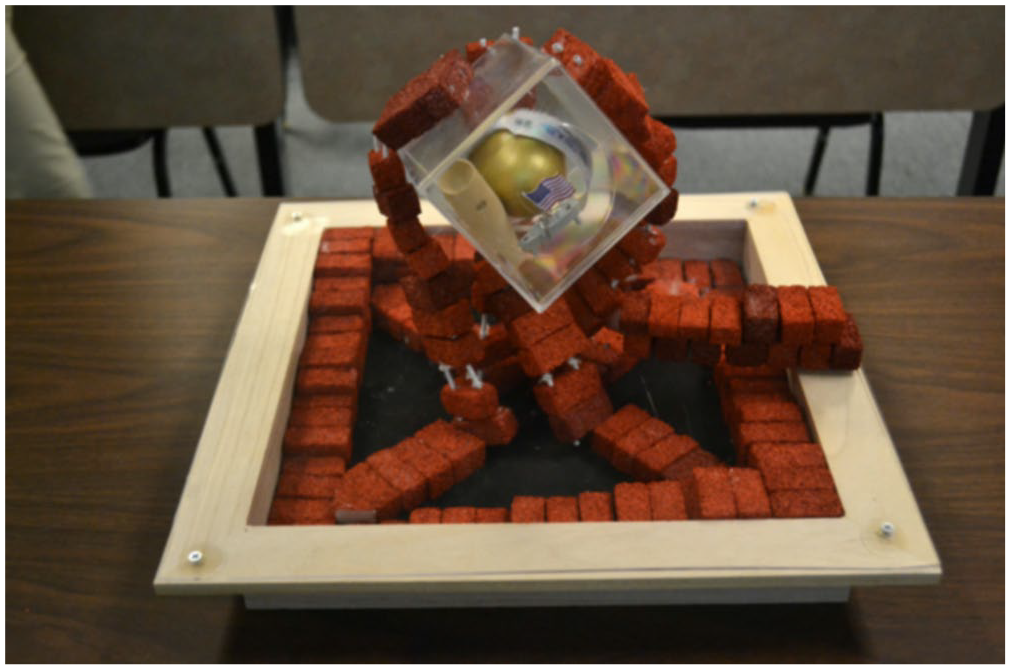
Endless staircase.
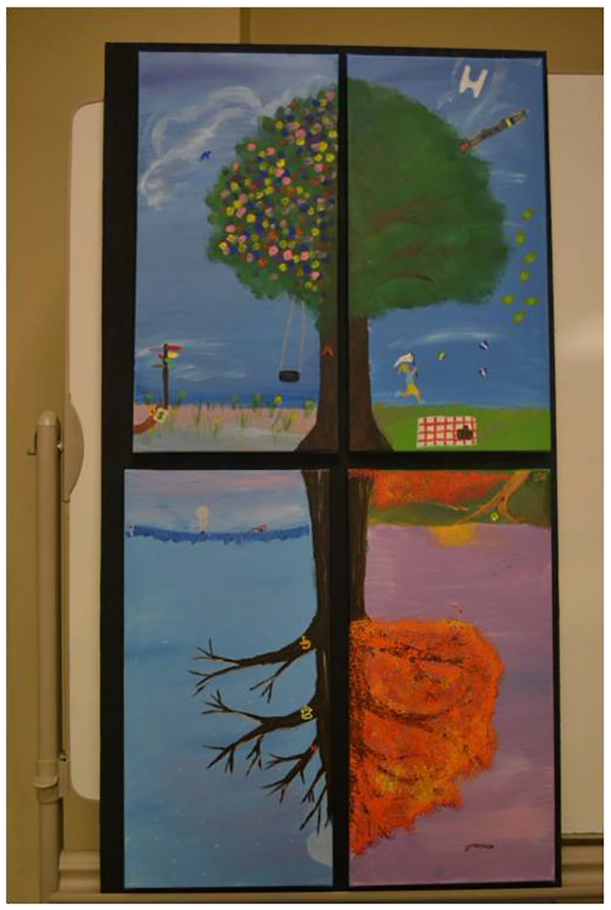
Seasonal tree.
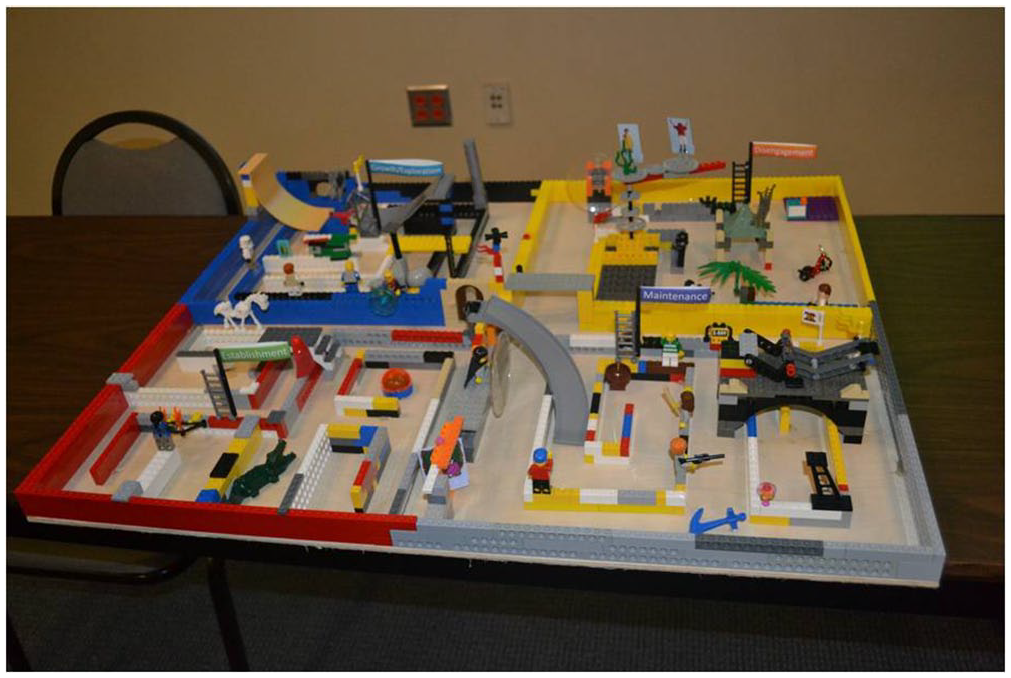
Labyrinth.
The framework constructed from Gherardi and Perrotta (2013) considers how makers perfect their craft through repeated formative practices. In contrast, the studio activities described in this article are a one-time event for MBA students. Yet multiple studio experimentations permit management educators to engage in “reflexive practice” (Cunliffe & Easterby-Smith, 2004). My own formative repetition happens with a new MBA cohort. After witnessing the lively atmosphere generated from artifact reveals, students in the second cohort were invited to consider how their classmates, as audience members, play a vital role in experiential artistic processes. Prior to studio-making, we discussed how artifacts evoke both sensory-aesthetic reactions and symbolic understandings from audience recipients. Eco (1989) makes clear that any additional “call” must be answered for it to become integrated into the formative process. Studio accounts are reflective of this aesthetic shift, prompting an extension to Gherardi and Perrotta’s (2013) conceptual framework. This expansion draws from Farías and Wilkie’s (2016) ideas surrounding “aesthetics in action” (p, 12) to accentuate the affective nature of socio-material studio practices. In management education, Taylor and Statler (2014) describe how emotional connections happen when students are materially engaged.
Aesthetics-in-Action
Gherardi and Strati’s (2017) overview of Pareyson’s philosophy considers how formativity is action. As a fundamental feature of studio formativeness, “aesthetics-in-action” highlights the “affective tinge” (Eco, 1989, p. 159) surrounding artistic invention and production. These types of “sensibilities” (Strati, 2016) become activated in studio education practices.
Amusement parks use colors to provide a dazzling array of excitement to its patrons. This effect seemed to work on our audience as it does on park goers, generating excitement and buzz. There was a palpable connection between us and the audience most noticeable in the visual sensation of the amusement park with multiple colors, sizes, and objects . . . green floor mimicked the grass . . . the six rides displayed a variety of color. Another sensation was just the sound of the rollercoaster going up the track and zooming around back to the beginning. This added touch gave a scaled down thrill of a life-size rollercoaster. “Oohs and ahs” could be heard from the audience.
As shown in Figure 5, studio participants co-form K’nect blocks to artistically produce an amusement park. They answer the added audience “call” by intentionally producing an artifact that “appeals to the senses” (Endrissat & Noppeney, 2013). Formativeness as “aesthetics-in-action” involves playfully co-forming ideas and materiality in ways that generate affect (Farías & Wilkie, 2016). Shotter (2013) portrays analogous aesthetic expressions as “performative”—expanding students’ thinking beyond meaning and symbols—to consider how “material matters” do things. In this case, dazzling colors, textures, sights, and sounds “engage the senses” (Jacucci & Wagner, 2007), evoking the artifact’s “pathos” (Gagliardi, 2006). Likewise Strandvad’s (2011) socio-material study contends that studio-makers learn how to affect studio audiences, while also being affected by their own artistic actions (see Farías & Wilkie, 2016, for similar points). Carlsen et al. (2014) describe comparable types of performative actions as “aesthetic events.” From Pareyson’s perspective, audiences, artifacts, and makers are ultimately situated as creative co-participants (Vercellone, 2018) in aesthetic formativeness.

Amusement park.
Realized “forms” [studio artifacts] open the door for additional dialogue, communication, and interpretation (Kasia, 2010). Thus the initial conceptual framework is further expanded to account for artifact interpretations. Interpreting realized objects reverberates with much of the established discourse on “business studios” (see Barry & Meisiek, 2015; Meisiek & Barry, 2015). While these authors acknowledge that materializing “topical business/management ideas” into artifacts encourages dialogue and reflection, Pareyson’s theory offers nuanced insights on the formativity of such interpretive actions.
Interpreting Materialized Forms
Pareyson’s philosophical and theoretical musings consider formativity and interpretation as “two sides of the same coin” (D’Angelo, 2018, p. 54). These active interpretive processes turn into another formative adventure (Eco, 2018) subject to the “risk of failure” (Vercellone, 2018). In order to diminish possible risks, Pareyson invites interpreters to approach materialized artifacts with attentive interest and respect (Carravetta, 1989; Harmon, 2017). Congenial attitudes facilitate the co-formation of “kindredness” (Valgenti, 2018) between makers and audience recipients. Like aesthetic perspectives more broadly, Pareyson remains respectful of individual differences in sensations, sentiments, and interpretations (Harmon, 2011; Gherardi & Strati, 2017). So members of the studio community may (or may not) share points of view. In studio-based education practices, interpreters are also original studio-makers; placing them in a “suitable position for [studio] artifact penetrations” (Pareyson, 2009, p. 136). Said otherwise, studio participants are aptly situated to interpret their own artifacts and those produced by classmates. Through dialogue and communication, interpreters reveal something about themselves (Eco, 2018).
We came to the realization that as managers we need to be concerned not only with our own careers but also about others. Most objects symbolize the importance of family. As managers and future managers we need to consider family influences on work and careers. This class is made up of people from diverse generations and career experiences. The audience picked up on how our artifact was created from a youthful perspective. More work experience would likely to change the type of artifact produced.
Since “thought, feeling and matter” (Eco, 1989, p. 159) come together in materialized forms, participants’ sensible encounters prompt interpretations on the content and symbolic features of studio artifacts. It is not surprising that MBA participants establish connections between the “studio theme” and management practices. During dialogue and communication, these students become more attentive to others’ career/work concerns and experiences. One group appreciates how a diverse “audience” notices a distinct “youthful spirit” to their artistic production. Studio artifacts set the stage for polyphonic communications and interpretations by both makers and audience recipients. The following excerpts show a range of alternative insights generated from interpreting artistic “forms.”
Diverse objects show that there is no best way to approach careers. Sometimes its luck; but careers need not be left entirely to chance. We reflected on how we might become better mentors for people at work and each other. This experience helps us to recognize similarities in experiences. An empathetic ear from a colleague and the memories of this experience may re-orient us [during difficult times]. Even though the MBA journey is coming to a close, we plan to stay connected. It’s hard not to stare at our painting. The colors, details, and sheer artistry intertwined with the memories of creating it serve as a powerful reminder of how far we have come, not just in our career experiences, but in this program as a group. We noticed that some of the more subtle symbols in our artifact were missed by the audience. Vast differences [in artifacts] show the potential for depth . . . our group just scratched the surface.
Studio accounts reveal how students recognize “vast differences” in artifacts and ways of making them. In Pareyson’s view, the discernment of artistic uniqueness is fundamental to interpreting materialized “forms” (Harmon, 2011, 2017). When students encounter realized artifacts with interest and respect, they empathize with others in “kindred” (Valgenti, 2018) interpretive moments. As an extra formative adventure, studio artifacts stimulate memories of artistic productions and the MBA journey itself. Although advancing “career theory” is beyond the scope of this article, students seem to detect a ‘formative’ character to career experiences. Indeed, Pareyson’s theory regards formativeness as relevant to all human endeavors. Since interpretations are risky adventures, members of the studio audience may fail to notice some of the symbolic–artistic subtleties intended by the maker group. While it is unknown from these fragments which “cues” were overlooked, such observations draw attention to the importance of makers’ own voices for interpreting artistic works (Carravetta, 1989). Even so, recipients’ formative interpretations cannot be diminished because the entire studio community participates in co-creative interpretive quests. “Scratching the surface” suggests that students acknowledge infinite possibilities for more in-depth understandings. Pareyson (2009) views the potential for interpretations as “inexhaustible,” resembling an endless staircase.
Discussion
This article starts out with the aim of discovering theoretical references that underpin “learning-by-making” studio practices in management education. Organizational aesthetics provides the inspiration for engaging with Luigi Pareyson’s hermeneutic–aesthetic philosophy and theory of formativity. The Italian philosopher’s innovative approach provides insights on the art of production common to all human operations. His theory of formativity ties aesthetic knowledge with interpretive artistic activities (D’Angelo, 2018). It is suggested here that aesthetic formativity offers important theoretical grounding for artistic studio inquiries. Formativity theory encourages up-close attention to “studio-fare,” translated as the art of “making” or “doing.” The aesthetics of formativity makes a significant contribution to understanding the “underdetermined” nature of studio methods. Instead of predetermined studio procedures, formativity theory supports artistic socio-material processes wherein participants rely on their own initiative to invent and produce uniquely stylized studio artifacts.
Stressing its active trial and error character, Gherardi and Strati (2017) conceptualize formativity as “aesthetic formativeness.” Based in sensory knowing, Gherardi and Perrotta (2013) suggest an initial framework for analyzing how formativeness unfolds in creative socio-material practices. These Pareysonian-informed dynamics become an essential guide for exploring the active path of studio-based collaborative formativeness. Excerpts from multiple studio accounts show how sensible knowing and materiality are crucial to dynamic formative processes. Materials such as LEGO blocks, K’nect, paint, canvasses, and other craft-like materials are co-formed to artfully produce artifacts that feature students’ distinctive ways of collaborative making. Moving through the formative process, studio participants activate visual, auditory, tactile, emotional, and affective realms of experience. Through co-formative encounters with diverse material matters, studio groups become sensitive to an assortment of constraints that oppose their artistic intentions. Engaging in playful attempts, improvisations, interpretive deliberations, and collective negotiations, they stumble on a variety of creative techniques for overcoming material resistance.
Aesthetic pleasures are also discovered in the co-forming of both materials and relationships. One studio group relied on their creative initiative to take their “business studio” to work, strengthening formative bonds with coworkers in a fun and meaningful way. By “doing” artistic studio inquiries, students learn “about and through the creative process” (Gherardi & Perrotta, 2013).While business students may not consider themselves to be “creative types,” Pareyson’s focus on creativity as a formative adventure (Eco, 1989) brings awareness to the “situated nature of creativeness” (Farías & Wilkie, 2016). Reflexive considerations on the first iteration of studio experimentations suggest that the audience is vitally connected to studio education practices. This prompted extensions to the initial conceptual framework that more fully grasp both the affective and postartifact interpretive dynamics of collaborative studio formativeness. From Pareyson’s viewpoint, key interpretive voices include both makers and audience recipients.
The affective nature of formativeness is placed at the center of this expanded conceptual framework (see Figure 6). Like sensible knowing, “aesthetics-in-action” (Farías & Wilkie, 2016) appears to permeate throughout studio-based formative dynamics. An affective dimension attends to the ways in which participants playfully experiment with artifacts and collective performances to engage the senses, evoking affect. This is demonstrated by the “oohing and aahing” expressed in audience encounters with the amusement park. In-class artifact “reveals” become “performative” (Shotter, 2013) “aesthetic events” (Carleson et al., 2014). Similarly, Gagliardi (2006) points out the import of artifacts in terms of “what sensations they rouse in us” (p. 719). Likewise Shotter (2013) contends that “material matters really matter when materials and bodies become creatively entangled and aesthetic knowledge is evoked” (p. 36). Figure 6 further illustrates how sensible encounters with materialized artifacts prompt formative interpretations. Within the context of studio-based management education, makers are placed in an exceptional position for recognizing how collaborative “fare” invents and produces varied artifacts with inimitable studio-making “styles.” When studio audiences approach artifacts with interest and respect, possibilities for formative interpretations remain limitless. Following Pareyson’s views on formativity, the studio experimentations explored in this article strive to show appreciation for makers’ aesthetic experiences as they move through dynamic formative processes. This includes creative adventures in both studio-making and interpreting realized “forms.”
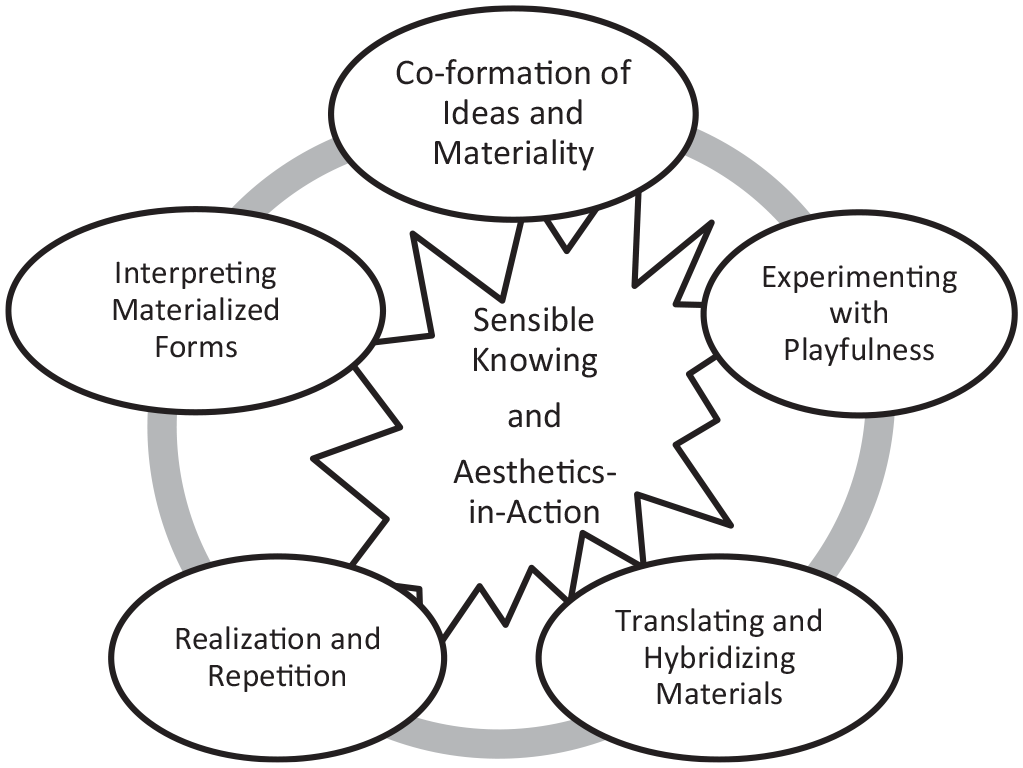
Extended conceptual framework: Studio-based collaborative aesthetic formativeness in management education.
Moreover, teaching practices can benefit from explorations on studio-based management education. First, studio fare nurtures and develops students’ artistic–aesthetic, socio-material, and affective sensibilities. The field of organizational aesthetics provides a firm foundation for understanding how sensory experiences, aesthetic feelings, sentiments, tastes, and judgments assist in the navigation of organizations and organizational life experiences. Designing for studio activities creates spaces to extend learning and knowing beyond logical–analytical approaches. This requires a certain level of critical reflexivity on how to address issues related to traditional learning outcomes, including assessment rubrics and grades. As Pareyson (2009) reminds us, artistic freedom is crucial to aesthetic formativity. Management educators are also encouraged to experiment with different studio “themes.” Moreover, the reader may be inspired to take her own “aesthetic risk” (Mack, 2013) by opening a space for studio participants choose their own thematic lens for artistic inquiries. Through studio education, participants “give life to their sensible knowing” (Gherardi & Perrotta, 2013). Antonacopoulou and Taylor (2019) suggest that sensuous learning becomes important for professionals because it serves to cultivate practical judgments in work-based practices, stimulating reflexivity in action (p. 10). Second, the juxtaposition of varied artifacts captures some of the complexities associated with multigroup studio inquiries. Management educators might consider what types of artifacts, ways of making and aesthetic knowledge become produced through different socio-material (human and material) collective actions. Third, formativity allows us to ask different questions about the artistic value of studio activities. Pareyson’s attention to “fare” focuses awareness on the artistic labor that produces studio artifacts. As a formative dynamic, “aesthetics-in-action” prompts additional considerations on the affective nature of studio practices. This permits reflection on what studio activities “do” (see Gherardi, 2016 for similar points on practice-based studies). Fourth, Pareyson contends that the potential for formativity may be discovered in all types of activities. Therefore, formative dynamics might be explored in alternative experiential management education practices. Fifth, studio work may be enhanced through multiple repetitions throughout both courses and programs. As studio excerpts reveal, felt time constraints materially impact studio actions.
Furthermore, there are a number of limitations to be addressed in future research. The current understanding of Pareyson’s philosophical aesthetics stems from partial translations and commentaries on his work. Hopefully, more complete translations will soon be available. Empirical research may also be conducted to elaborate on collaborative formativeness within a single studio group. This type of study would be beneficial for illustrating how a specific team moves through trial and error formative dynamics. Focused dialogue is needed to unearth more in-depth interpretations on materialized artifacts. Such efforts may produce insights on the similarities and differences between audience and maker interpretations. It would be worthwhile to explore how recipients’ interpretations potentially challenge/or modify makers’ formative understandings on their own materialized studio artifacts. Future opportunities also exist to interweave formativity with emerging topics in management and organizational studies. For example, scholarly interest in “serious play” (Statler et al., 2011) connects with the “ludic dimension” (Gherardi & Perrotta, 2014) of formativeness. Exploring the artistic nature of diverse working practices has further potential to generate new insights. The formative character of personal educational experiences is also in need of development. Pareyson’s aesthetic theory of formativity seems well-suited for researchers and practitioners interested in arts-based learning directed at the individual level of analysis. Barry and Meisiek (2015) identify space/place and theme-based studio practice “elements” that deserve future attention.
In terms of formative methodologies, Gherardi and Perrotta’s (2013; 2014) research shows how “doing” episodic interviews helps generate formativeness narratives. Gherardi and Strati (2017) contend that knowing, making and talking about making may be understood as aspects of the same formativeness process. Others argue that “showing making” (Lehmann, 2012) can be enhanced through visual methods such as photographs or film. Warren (2008) considers photo-elicitation as an important sensory method for aesthetic research. This approach could potentially prompt imaginative ideas about alternative ways of doing “studio artifact” elicitations. Since studio-making activities involve “intimate” encounters (Farías & Wilkie, 2016), such methodological decisions require the educator–scholar’s reflexive attention.
Concluding Remarks
Inspired by organizational aesthetics, this article engages with Pareyson’s philosophical hermeneutic aesthetics for theoretical and practical insights on studio practices. The aesthetic theory of formativity theoretically grounds studio activities. Through collaborative formative adventures, studio participants experience their own “creativeness” (Farías & Wilkie, 2016); rather than “displacing” it onto cleverly “pre-pared” learning materials (Blumenfeld-Jones, 1997). From a Pareysonian perspective, students activate their sensory knowing and aesthetic sensibilities to materialize studio artifacts without recipes for best studio practices. Hopefully, management educators will discover new theoretical and practical support for experimenting with socio-material artistic studio inquiries. As Pareyson reminds us, formativity is a matter of “trying” (D’Angelo, 2018). Formativeness as “aesthetics in action” further opens up the prospect of developing greater awareness around studios as affective events. The multiple sensibilities activated, nurtured, and developed through studio fare add to current interest in enhancing business education practices through liberal arts interfaces. In sum, this article contributes to the philosophical, theoretical, and practical dialogue on studio practices. Proposed extensions to the conceptual framework on formativeness dynamics offer a starting point for asking new questions and developing more nuanced understandings on studio-based management education.
Footnotes
Declaration of Conflicting Interests
The author declared no potential conflicts of interest with respect to the research, authorship, and/or publication of this article.
Funding
The author received no financial support for the research, authorship, and/or publication of this article.
