




Abstract
Stress and the associated correlates, such as depression, alcohol abuse, and suicidal ideation, are a global issue among college and university students. We assert that character is a personal resource that students have at their disposal to address personal, social, and environmental challenges they may encounter in their personal and academic lives. The results of a field study involving undergraduate business students show that character, operationalized as a higher order construct consisting of 11 interrelated dimensions, has a direct effect on the subjective well-being of students and an indirect effect through the perceived stressfulness of life events. Our results imply that it is essential for faculty and students at management education institutions to fully appreciate the importance of character for effective functioning and to develop the various character dimensions to address adverse personal, social, and environmental situations in a positive fashion.
Stress is becoming increasingly prevalent among students at colleges and universities across the globe (e.g., Garett et al., 2017; Regehr et al., 2013; Varghese et al., 2015; Watkins et al., 2012). Business students are not immune to stress given the high levels of pressure, uncertainty, and need to maintain high performance that are inherent in education contexts (e.g., Flinchbaugh et al., 2012; Jabbar et al., 2018). Stress is associated with a host of adverse emotional, mental, and health-related outcomes including depression, anxiety, and, in extreme cases, suicide (e.g., Beiter et al., 2015; Brownson et al., 2014).
Finding ways to help students cope with stressors during their academic life and beyond is both important and urgent for management education research and practice for at least two reasons. First, research has shown that interventions to reduce stress in students can contribute to an improvement in their subjective well-being (e.g., Heffner & Antaramian, 2016; Regehr et al., 2013; Yusufov et al., 2019). Second, as Bilimoria (1999) articulated, identification of research-supported teaching methods that facilitate student well-being advances the enterprise of management education. For example, subjective-well being among students is related to higher levels of classroom engagement which, in turn, enhances learning outcomes (e.g., Bücker et al., 2018; Reeve, 2012; Regehr et al., 2013).
Yusufov et al. (2019) outlined a nonexhaustive list of stressors that students at higher educational institutions in the United States, Asia, Europe, and Australia may face. These stress inducing life events include (a) academic pressures, family strains, and financial concerns; (b) the transition from adolescence to adulthood; (c) the struggle to solidify identities, attitudes, and values; (d) underpreparation for postsecondary education and a lack of requisite skills to cope with the myriad of stressors; (e) upcoming career decisions; (f) conflict related to racial and ethnic identity; (g) the rising cost of higher education; and (h) balancing school and work. Each of these life events that students may encounter affects the degree and impact of the stress experience, which typically demands a response, adjustment, or adaptation to the stressor.
Given the prevalence of stress among college and university students worldwide and the well-documented adverse outcomes associated with stress, the need to find ways to effectively manage stressful life events is self-evident. The implication for management educators is straightforward. Higher educational institutions, including business schools, are not just places where students acquire the requisite skills for success in the labour market—they are also places where students grow and develop as individuals. For example, by equipping business students with the tools to effectively address stressful situations, management educators not only help enhance students’ engagement and performance in the classroom but also help develop future managers who are able to thrive in uncertain business environments. Therefore, academic institutions have begun to implement interventions to strengthen students’ personal resources, such as their willpower and optimism, through processes like counseling services and support groups (e.g., Flinchbaugh et al., 2012; González-López et al., 2019).
Extant research on stress suggests that personal resources can help individuals deal with a myriad of life events that are perceived as stressful. The notion of personal resources is captured by two stress coping models: the job demands–resources model (e.g., Bakker & Demerouti, 2017; Xanthopoulou et al., 2007) and the conservation of resources model (e.g., Hobfoll, 2002; Hobfoll & Shirom, 2001). Both models suggest that job and personal resources are important determinants of an individual’s adaptability to a specific environment. Furthermore, an increase in personal resources contributes to beliefs of personal mastery and helps individuals deal more effectively with stressful events which, in turn, prevents individuals from experiencing negative outcomes such as emotional exhaustion (e.g., Hobfoll et al., 2003; Xanthopoulou et al., 2007). However, the role of personal resources as determinants of adaptability has been underdeveloped and, as a result, there have been calls for a more robust integration of personal resources into stress coping models (e.g., Huang et al., 2016; Xanthopoulou et al., 2009).
Bakker and Demerouti (2017) explained that personal resources refer to “the beliefs people hold regarding how much control they have over their environment” (p. 275). Our work expands the composition of personal resources to encompass character and examines its effect on subjective well-being. Subjective well-being is an evaluation that individuals make about the quality of their lives and is defined by emotional well-being (e.g., perceived happiness and life satisfaction) and positive functioning (e.g., perceived personal growth, purpose in life, and positive relations with others; e.g., Keyes & Magyar-Moe, 2003). Specifically, we investigate whether character determines how undergraduate business students perceive personal, social, and environmental challenges and the impact that the perceived stressfulness of such life events might have on subjective well-being. Consistent with Bakker and Demerouti (2017), we expected that character helps protect students from evaluating stressful life events in a negative fashion and enhances their subjective well-being.
Our study is unique in that we integrate two distinct yet related literatures—character and coping with stressors—and in doing so, we hope to achieve the following objectives. First, we advance the literature on stress by highlighting the role of personal resources in how individuals perceive stressful life events. Our study responds to the need to develop a more thorough understanding of personal resources individuals may employ when faced with challenging situations in their personal or academic lives. Second, we augment stress coping models by bringing into focus the role of character as a personal resource that affects subjective well-being.
We place our work in the study of virtuous character, henceforth character, which reflects the habits of cognition, emotion, volition, and behavior that represent human excellence and produce personal and social betterment (e.g., Arthur et al., 2019; Bright et al., 2006; Fowers, 2008; Newstead et al., 2019). In particular, our study is aligned with Crossan et al. (2017) who conceptualized character as an amalgam of virtues, traits, and values that enable excellence.
Virtues are contextually appropriate behaviors that are widely considered as emblematic of good citizenship or leadership in that they contribute to the common good. For example, demonstrating care for others and actively promoting their physical and mental well-being is a behavior associated with the virtue of humanity. A few of the virtuous behaviors reflect the activation of traits. These traits predispose individuals to behave in certain virtuous ways, if not overridden by contextual variables such as peer pressure or reward systems. For example, behaviors that help individuals bounce back from academic hardships reflect the trait of resiliency. However, character is not simply a set of desirable traits; it encompasses only traits that are virtuous (e.g., Peterson & Seligman, 2004; Wright & Huang, 2008). Last, a few of the virtuous behaviors are illustrative of values, such as fairness and honesty. For example, instructors who provide timely and unbiased feedback to their students demonstrate the virtue of justice. Character, in short, is a habit of being—a set of observable behaviors—anchored in a set of virtues, traits, and values that offer an ethic of individual excellence, continual moral development, and striving toward a common good (e.g., Crossan et al., 2017; Newstead et al., 2018). Furthermore, the development of virtues is a life-long process through deliberate practice.
We posit that character influences how undergraduate business students perceive personal, social, and environmental challenges that may arise in their personal and academic lives. Our assertion is that students who have well-developed character are better equipped to handle the stressors in their environment. For example, individuals who are confident, optimistic, resilient, reflective, and composed may believe they are capable of handling unforeseen events more so than individuals who lack these elements of character. Thus, as a personal resource, character is expected to facilitate the thoughts, feelings, and behaviors associated with confidence, resilience, optimism, and patience to handle stressful life events, which, in turn, enhances subjective well-being.
Hence, the purpose of our study is to examine both the effect of character on the subjective well-being of undergraduate business students as well as the indirect effect of character on subjective well-being through the perceived stressfulness of life events. We believe this is an important question that has significant implications for management education institutions. Colleges and universities play a critical role in helping students learn function effectively in societies through personal growth and development—of which building character has traditionally been an important part (e.g., Brooks et al., 2019; Carr, 2017). The development of character in students is a compelling means to help them build an integrated self that can serve to guide their decisions and subsequent actions, and it mitigates the myriad challenges students will face as they go on to serve organizations and communities.
Character
Many character scholars anchor their discussion of character in virtuous character (e.g., Arthur et al., 2019; Crossan et al., 2017; Crossan, Mazutis, & Seijts, 2013; Hannah & Avolio, 2011; Newstead et al., 2019). Foundational to this stream of research is the cross-national and cross-cultural work of Christopher Peterson and Martin Seligman. In 2004, Peterson and Seligman published their book, Character Strengths and Virtues: A Handbook and Classification, in which they explored whether there are stable, interindividual differences that promote meaningful and flourishing communities. They postulated that character strengths and virtues are the components of a positive, good character.
Peterson and Seligman identified 24 character strengths and clustered them within six virtues: courage, humanity, justice, temperance, transcendence, and wisdom. They explained that character strengths represent different routes to the superordinate virtues. For example, the virtue of courage is comprised of four character strengths: bravery, honesty, perseverance, and zest. Character strengths are expressed through habitual actions which can be developed (e.g., through deliberate practice or an intense or crucible experience; e.g., Byrne et al., 2018; Peterson & Seligman, 2004; Wright, 2015). The activation of character strengths contributes to a fulfilling life, leading to increased subjective well-being and happiness (e.g., Kristjánsson, 2016; Lounsbury et al., 2009; Newstead et al., 2019, 2020; Park et al., 2004; Peterson et al., 2007; Schutte & Malouff, 2019; Weber et al., 2013).
Research on, and the development of, character has recently attracted considerable attention from management educators (e.g., Byrne et al., 2018; Comer & Schwartz, 2020; Crossan, Mazutis, Seijts, & Gandz, 2013; Dufresne & Offstein, 2012). We believe this is because character education is seen as an important way to develop student competencies, such as promoting ethical behavior and maintaining favorable interpersonal relationships through collaboration, respect, and patience (e.g., C. K. Cheung & Lee, 2010; Comer & Schwartz, 2020). In fact, of the hundreds of C-suite leaders and board directors we have spoken with over the past 10 years, none would likely disagree with the idea that character is an indispensable component of human excellence.
However, Seijts et al. (2017) reported that many leaders and human resource executives in the public, private, and not-for-profit sectors had difficulty in fully embracing Peterson and Seligman’s (2004) classification of virtues and character strengths. First, the classification does not include key virtues and character strengths that organizational leaders deemed important to produce personal and social betterment. For example, the classification does not include accountability and drive, nor does it address being decisive and adaptable. Second, leaders found it difficult to relate to some of the language used by Peterson and Seligman. For example, love, spirituality, and zest are often difficult to place in an organizational context.
To address the need for an assessment instrument of character that would enable practitioners and management educators to attend to issues of character in educational (and other) settings, Crossan et al. (2017) conducted qualitative and quantitative research involving over 2,500 leaders in the public, private, and not-for-profit sectors. Crossan et al.’s engaged scholarship approach led to the development and validation of the character framework (see Figure 1) that we used in our study. The framework shows 11 character dimensions and 61 character elements that were widely considered by leaders to be emblematic of good leadership. The framework builds significantly on the work of Peterson and Seligman (2004) yet differs from their classification in an important way.
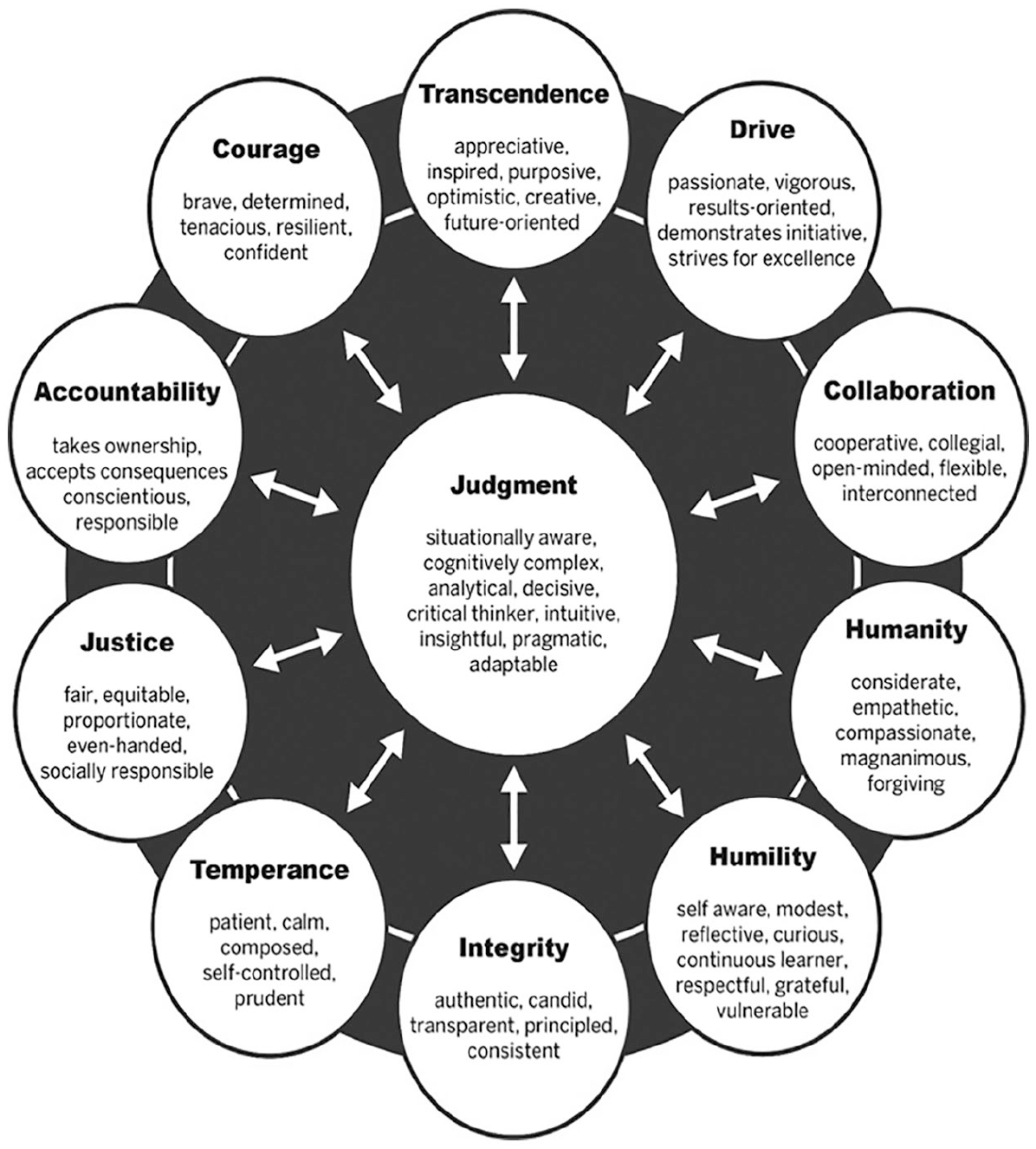
Framework of character.
Crossan et al. (2017) operationalize character as a network of interconnected virtues, or what they refer to as character dimensions, which mutually inform each other. Hence, instead of studying a collection of character dimensions in isolation, as is very common in the virtues and character strengths literature, Crossan et al. posit that strength of character is revealed not only in the strength of each dimension but also in their connectedness. The interconnectedness among dimensions is an essential underpinning of the framework since a character dimension that might appear to be inherently virtuous may in fact operate as a vice when not connected to other dimensions. For example, an excess of determination and confidence in students may be interpreted as arrogance or insensitivity in the absence of empathy and compassion. This operationalization of character is consistent with the idea that every virtue may become a vice if not correctly applied in a specific situation (e.g., Arthur et al., 2019; Crossan et al., 2017; Gillham et al., 2011).
A limitation of the existing body of research on character is that studies do not reflect the holistic perspective that character presents but rather examines the dimensions and elements of character in isolation. A unique contribution of our study is that we go beyond the current literature by treating character as a higher order construct consisting of 11 dimensions.
Character and Subjective Well-Being
Empirical studies have repeatedly shown positive and significant relationships between dimensions and elements of character and subjective well-being among individuals in a host of countries (e.g., Niemiec, 2013; Park, 2004; Park & Peterson, 2006; Peterson & Seligman, 2004).
For example, using a longitudinal design, Gillham et al. (2011) explored whether adolescents’ character strengths at the beginning of high school predict subjective well-being—including depression, happiness, and life satisfaction—through the end of 10th grade. Their results showed that character strengths directed toward others such as forgiveness, kindness, and teamwork predicted fewer symptoms of depression; moreover, gratitude, curiosity, and love of learning predicted greater life satisfaction.
Intervention studies further support the relationship between character strengths and subjective well-being. For example, Seligman et al. (2005) conducted a 1-week intervention over the internet comparing several exercises that activated character strengths (e.g., writing down three blessings every day) with a placebo activity (e.g., journaling every night about early memories). The researchers followed their adult participants for six months and found that individuals in the treatment group had greater increases in subjective well-being as compared with individuals in the placebo group. Studies that focused on the deliberate practice of character strengths among students reported similar findings (e.g., Lyubomirsky et al., 2011; Nelson et al., 2014; Schutte & Malouff, 2019).
Typically, researchers explore the effect of character on a specific outcome, such as subjective well-being, by looking at a correlation between a character strength and an outcome, or by aggregating a limited set of character strengths into a single construct (e.g., transcendence or intellectual strengths) and then running a series of regression analyses using strengths as predictors (see, e.g., Gillham et al., 2011). Our objective was to go above and beyond prior studies to examine the effect of character, operationalized as a higher order construct consisting of 11 interrelated dimensions and supporting elements that Crossan et al. (2017) identified, on the subjective well-being of undergraduate business students. Hence, based on research that has linked virtues and character strengths to positive outcomes, we formulated the following exploratory hypothesis regarding the holistic perspective that character presents:
Character and the Perceived Stressfulness of Life Events
Hobfoll (1989) considers personal resources, such as a sense of optimism and resiliency, an important determinant of adaptation to personal, social, and environmental challenges. Xanthopoulou et al. (2007) explained that personal resources “determine the way people comprehend the environment, formulate it, and react to it” (p. 124) as well as stimulate personal growth and development. Therefore, personal resources are directly related to adaptability; that is, people with highly developed personal resources perceive potentially stressful events in less threatening terms, which increases the propensity that they actively deal with the circumstances they face. For example, in their study on the economic crisis, job insecurity, and the household, Mäkikangas et al. (2004) found that high personal resilience among Finnish employees at Time 1 reduced mental distress one year later at Time 2. In contrast, individuals who are ill-equipped with personal resources are more vulnerable to adverse outcomes; that is, they are less able to organize and execute the activities required to address the stressor.
We argue that character strengths determine how individuals deal with adverse situations and challenges that demand a response, adjustment, or adaptation. Character strengths manifest in feelings (e.g., I am grateful for . . . ), thoughts (e.g., I have the self-confidence to . . . ), and behaviors (e.g., I engage in . . . ) that help individuals actively address adverse situations in a productive fashion (e.g., Harzer & Ruch, 2015; Newstead et al., 2019). Put differently, character strengths such as optimism, curiosity, gratitude, hope, open-mindedness, determination, and self-control should be directly related to the ways in which students perceive and respond to adverse situations. The easier it is for individuals to activate the behaviors associated with the character dimensions, the greater the potential personal resource, and hence, the stronger the impact on the perceived stressfulness of life events. Our second hypothesis was therefore as follows:
The Perceived Stressfulness of Life Events and Subjective Well-Being
The negative relationship between the perceived stressfulness of life events and physical and mental well-being has been well-established (e.g., Beasley et al., 2003; Clements & Turpin, 1996; Stoliker & Lafreniere, 2015; Thoits, 2010). For example, Linden (1984) found that Canadian college and university students who scored high on the life events scale also indicated more frequent reports of minor illnesses, seeking psychological help, and academic failure. Similarly, using a sample of undergraduate students at three universities in the United States, McCarthy et al. (2006) reported that perceptions of negative life events and evaluations of one’s coping resources jointly predicted subjective distress, which in turn affected depression and anxiety. Hence, consistent with prior studies, we hypothesize that:
The Perceived Stressfulness of Life Events as a Mediator
There are several routes or mechanisms through which character may enhance subjective well-being. We explore the role of the perceived stressfulness of life events as a mediator. The search for mediators is important because it facilitates a deeper understanding of the underlying processes by which character affects subjective well-being and, therefore, has implications for interventions to enhance subjective well-being.
Support for the mediating role of the perceived stressfulness of life events can be found in a study by Weber et al. (2013). They examined the relationship among character strengths and subjective well-being in Israeli adolescents who had been living under stressful environmental conditions. Their research was inspired by Park (2004), who conceptualized character strengths as protective factors “which would enable a positive youth development even under demanding conditions” (Weber et al., 2013, p. 322). Such protective forces to deal with personal, social, or environmental challenges or stressful life events are akin to a personal resource, consistent with both the job demands–resources and conservation of resources models. Weber et al. found that character strengths—perspective, leadership, humor, social intelligence, and bravery—were associated with perceptions of personal efficacy to master challenges, which, in turn, led to higher subjective well-being.
Individuals with well-developed character strengths tend to perceive adverse situations as challenges, perhaps even opportunities, not necessarily as threatening or discomforting (e.g., Avey et al., 2012; Bakker & Demerouti, 2017). This is because character strengths such as self-regulation, hope, creativity, gratitude, and perseverance help facilitate the confidence and deployment of behaviors required to master the challenges that confront individuals. For example, Koeske and Kirk (1995) found that mental health professionals with an internal locus of control—associated with behaviors such as being reflective, taking ownership, being determined, and continuous learning—were more likely than those with an external locus of control to approach work stressors with a problem-solving focus. Individuals with an internal locus of control reported higher subjective well-being and job satisfaction and more favorable attitudes toward clients than did their counterparts with an external locus of control. Xanthopoulou et al. (2013) reported that the relationship between emotional demands and work engagement among Dutch employees in an electronics company was negative when self-efficacy—akin to tenaciousness, resiliency, confidence, optimism, and vigour—was low. Their results also revealed that this personal resource was particularly beneficial for work engagement when employees faced high levels of emotional demands in their jobs.
We hypothesize that the perceived stressfulness of life events is a mediator of the relationship between character and subjective well-being among undergraduate business students. When business students believe they are able to effectively attend to adverse events in their personal and academic lives through the activation of the dimensions of character, they are more likely to view their subjective well-being more positively. In contrast, those who have fewer personal resources in the form of character dimensions available to address personal, social, or environmental challenges may perceive the situation as threatening or discomforting, which in turn will negatively affect their subjective well-being. 1 We therefore formulated our fourth hypothesis as follows:
The confirmation of character as a personal resource may empower university administrators, program directors, faculty, and students to see the development of character as a way to actively address the personal, social, and environmental challenges students face in their personal and professional lives. It is in this context that we tested the hypotheses we formulated regarding character. Our hypotheses are summarized in Figure 2.
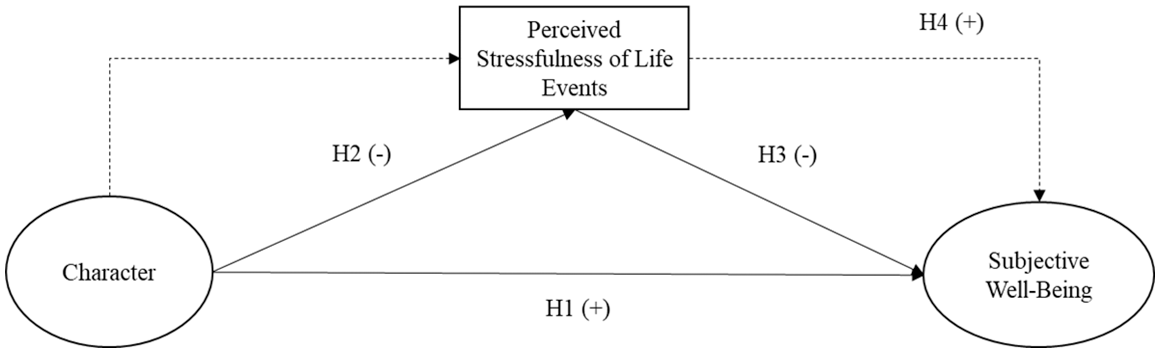
Model for the effect of character on subjective well-being through the perceived stressfulness of life events.
Method
Participants
Our final sample consisted of 139 undergraduate business students from a Canadian university. The students were enrolled in their third year of undergraduate studies and the first year of a business program. We chose undergraduate students because, as previously discussed, they frequently experience stress both in their personal (e.g., establishing new relationships, financial problems, or breaking up with a partner) and academic (e.g., low marks, switching programs, or job search) lives. The sample consisted of 76 (55%) men and 63 (45%) women. This distribution is an accurate reflection of the gender composition in the business program. The average age of the students was 20.38 years (SD = 0.69).
The students were recruited through an email invitation sent to the entire cohort of 607 students. Two reminders were sent encouraging students to participate in the study. Participation in the study, which consisted of two separate online surveys, was voluntary and anonymous. Students were informed that if they completed both surveys, they would be entered into a random draw to win one of forty $25 gift certificates as a gesture of thanks for their time.
Materials and Procedure
Our design involved a split administration self-report survey. This design enabled us to prevent some of the common biases associated with cross-sectional designs such as response bias and common method bias (e.g., Podsakoff et al., 2012). In the first survey, students were asked to self-assess their character using the scale developed and validated by Crossan et al. (2014). The survey, which took about 20 minutes to complete, consisted of a series of items describing virtuous behaviors related to character. The second survey included validated measures of the perceived stressfulness of life events (Clements & Turpin, 1996) and measures of subjective well-being (Keyes & Magyar-Moe, 2003). This survey took about 15 minutes to complete. The surveys were administered 2 weeks apart. Since the surveys were anonymous, we matched the responses from the online surveys through a unique code that was given to the students on the first survey.
Of the 471 students who completed the first survey, 182 also completed the second survey. We were able to connect 149 response sets. After deleting cases with missing values, our sample size was 139. The overall effective response rate was thus 23%.
Measures
Character
The character assessment asks individuals to rate the likelihood of demonstrating 61 specific behaviors. These behaviors can be classified into 11 dimensions of character: transcendence, drive, collaboration, humanity, humility, integrity, temperance, justice, accountability, courage, and judgment (see Table 1 for a description of the character dimensions). Sample items included “Displays resolve and stays committed to see things through” and “Demonstrates care for others and actively promotes their well-being.” We used a shortened 33-item version of the assessment because of time constraints (see Le Ber et al., 2018). Each character dimension was queried with three items. The scale scores ranged from 1 (extremely unlikely) to 5 (extremely likely); the midpoint was 3 (unsure).
Definitions for Dimensions of Character.
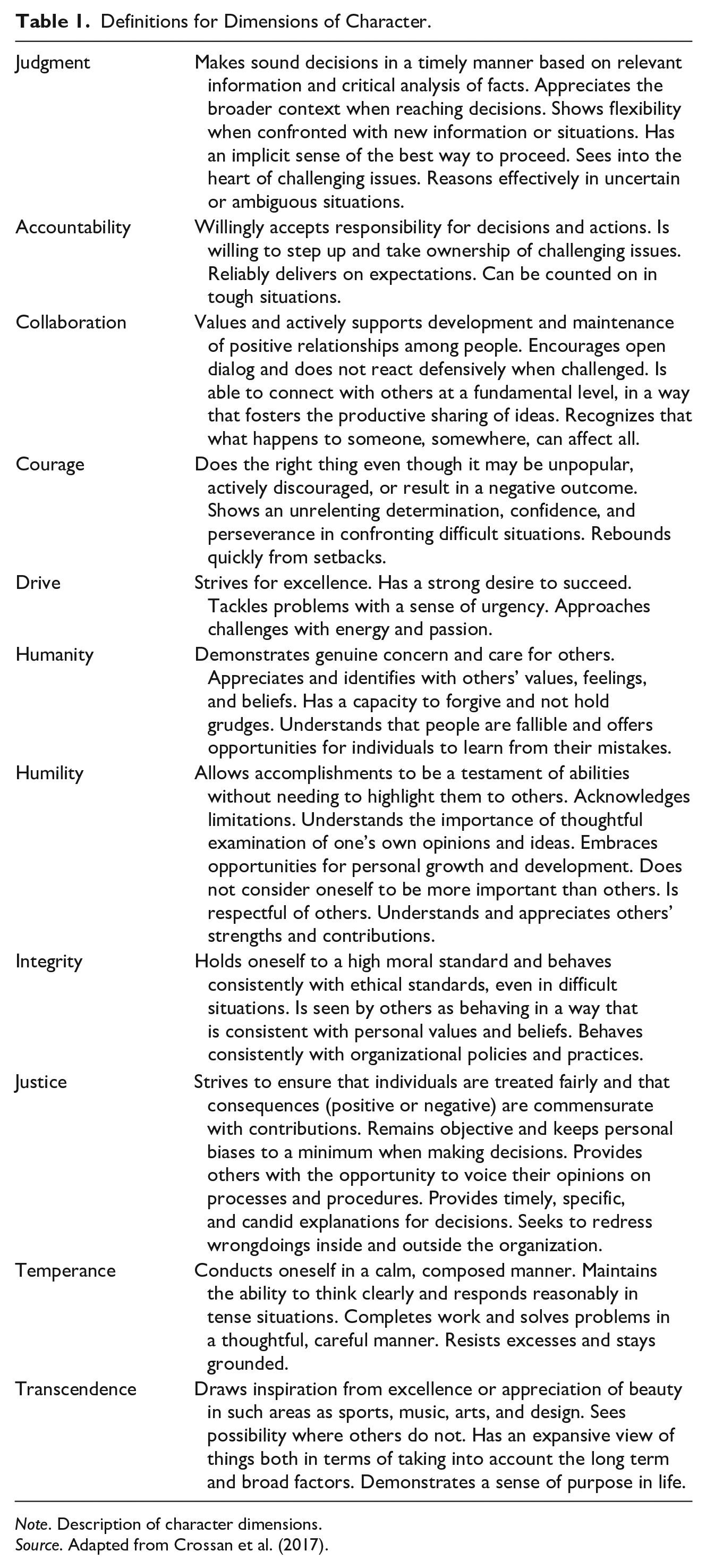
Note. Description of character dimensions.
Source. Adapted from Crossan et al. (2017).
Averaging the 33 items into a single character measure is not consistent with the ontology of character as a higher order construct. Thus, we used structural equation modeling to assess whether the 11 character dimensions load on a higher order factor—character—and then explore whether character is related to perceived stressfulness of life events and subjective well-being. This approach ensures consistency between our theoretical definition and operationalization of character.
Perceived Stressfulness of Life Events
The life events scale for students has been developed specifically to assess the relationship between life event stress and well-being among student populations (Clements & Turpin, 1996, 2000). The life events scale is a checklist measure and consists of 36 life events commonly reported as stressful by students. Each life event is considered to require personal adjustment. These life events largely correspond with the nonexhaustive list of stressors that undergraduate students may face in their personal and academic lives as identified by Yusufov et al. (2019).
The items were put in random order. The life event “death of a parent” was listed first and assigned the arbitrary and maximum value of 100, consistent with prior studies (e.g., Clements & Turpin, 1996; Lightsey & Hulsey, 2002). Participants then assigned values to each of the remaining 35 life events that they felt required an equal or lesser degree of readjustment as compared with death of a parent. Sample items included “Getting an unjustified low mark on a test” and “Finding a part-time job.” Scale scores could range from 0 to 100. We calculated the overall life events scale scores by multiplying the occurrence of a specific life event (0 = No; 1 = Yes) with the perceived stressfulness (0-100) of each event. The score for each of the 36 life events were added to obtain the overall life events score.
Studies have provided evidence for the utility of this approach in predicting physical and mental well-being—including physical disease, psychological problems, and substance abuse—in undergraduate students (e.g., Clements & Turpin, 2000; Lightsey & Hulsey, 2002; Linden, 1984; McCarthy et al., 2006).
Subjective Well-Being
We used the 14-item mental health continuum (MHC-SF) developed by Keyes and Magyar-Moe (2003) to assess self-reported well-being. The MHC-SF has a three-factor structure: emotional, psychological, and social well-being (e.g., Keyes, 2002; Keyes et al., 2008). The scale measures the degree of (a) emotional well-being; (b) social well-being; and (c) psychological well-being. Emotional well-being is equivalent to satisfaction with life and positive affect. Social and psychological well-being relate to how well individuals see themselves functioning in life. A sample item was, “During the past month, how often did you feel that you had something important to contribute to society?” The scale scores ranged from 1 (never) to 5 (frequently, if not always); the midpoint of the scale was 3 (sometimes).
Analytical Approach
Our analytical approach consisted of three steps. For each step, we followed Kline’s (2013) recommendations for the construction of structural equation models. For all analyses, we used Mplus 7.2, which provides a robust estimator that addresses potential nonnormal distribution of our measures, and a reduced N/parameter ratio, the weighted least squares means and variance adjusted (Moshagen & Musch, 2014). Structural equation modeling does not allow for the replacement of missing values at the item level. The statistical software retained only those cases without any missing information, therefore reducing our sample size to 126.
First, we constructed five alternative measurement models (Models A1 to A5, see Table 2 for a description of each model and the goodness-of-fit indicators), taking root mean square error of approximation (RMSEA) = 0.05 and comparative fit index (CFI) = 0.90 as cutoff points and fixing one parameter per latent construct to the value of 1.0 to identify the model (G. W. Cheung & Rensvold, 2002). To deal with potential multicollinearity issues in the correlation matrix of the latent constructs (see Models A1, A3), we modeled the shared variance among the character and subjective well-being dimensions into higher order constructs, even if this procedure reduced the overall fit of the models (see Models A2, A5).
Summary of Structural Equation Models and Goodness-of-Fit Indicators.
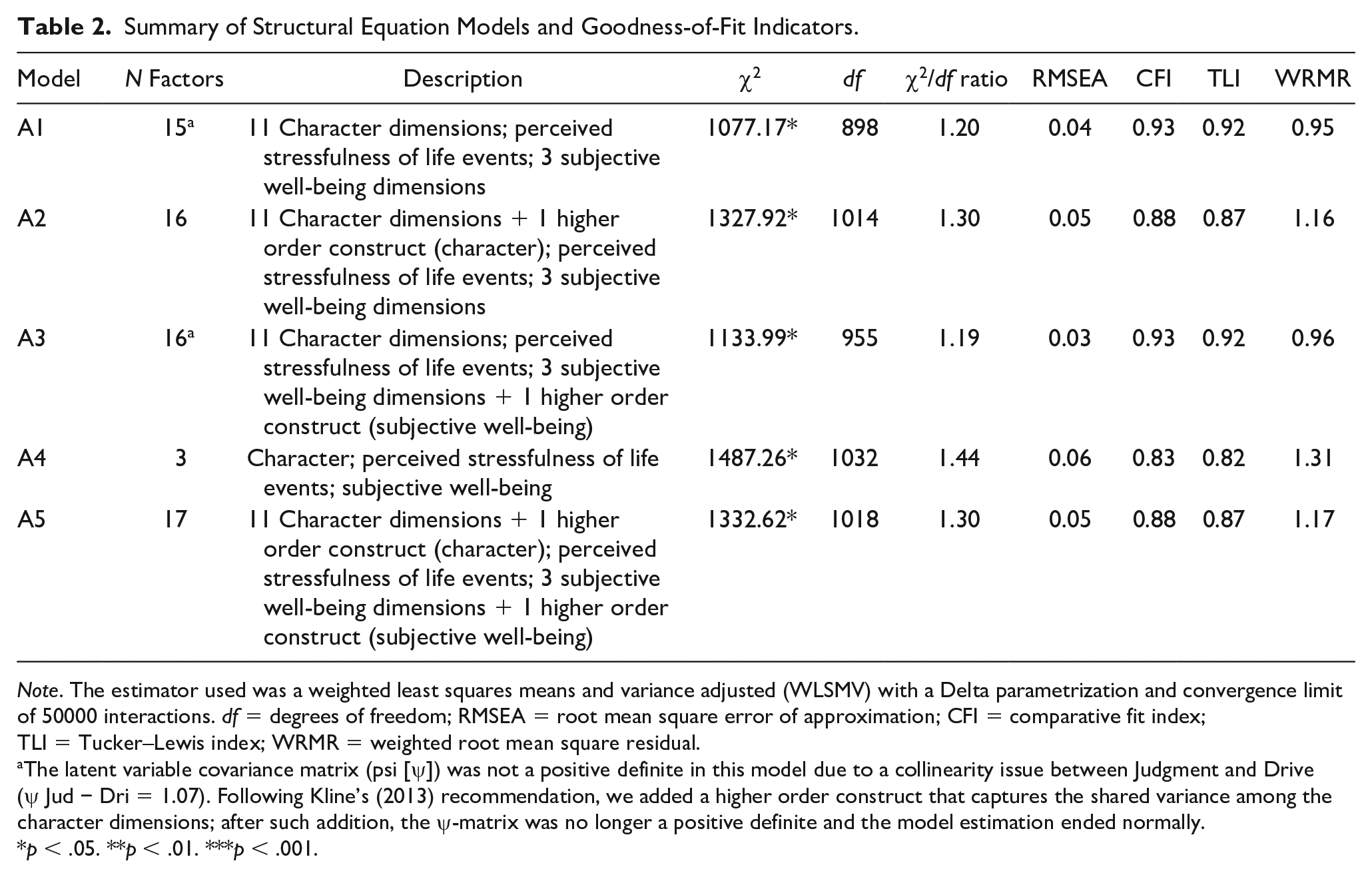
Note. The estimator used was a weighted least squares means and variance adjusted (WLSMV) with a Delta parametrization and convergence limit of 50000 interactions. df = degrees of freedom; RMSEA = root mean square error of approximation; CFI = comparative fit index; TLI = Tucker–Lewis index; WRMR = weighted root mean square residual.
The latent variable covariance matrix (psi [ψ]) was not a positive definite in this model due to a collinearity issue between Judgment and Drive (ψ Jud − Dri = 1.07). Following Kline’s (2013) recommendation, we added a higher order construct that captures the shared variance among the character dimensions; after such addition, the ψ-matrix was no longer a positive definite and the model estimation ended normally.
p < .05. **p < .01. ***p < .001.
Second, we constructed a more nuanced structural equation model (Model B) based on the most theoretically sound and best fitting measurement model (Model A5). Model B only includes the significant parameters detected in Model A5. Model B was used to assess the effects of character on subjective well-being as mediated by the perceived stressfulness of life events. This analytical approach allows for testing the effect of the shared variance among the 11 character dimensions and also isolates the specific contribution of a given character dimension (the nonshared variance) on subjective well-being and the perceived stressfulness of life events. Third, we used the Mplus INDIRECT command to determine whether the indirect effect of character on subjective well-being as mediated by the perceived stressfulness of life events is statistically significant.
Results
Descriptive Statistics
Table 3 shows the means and standard deviations, as well as the intercorrelations, of the variables measured.
Descriptive Statistics and Correlations.
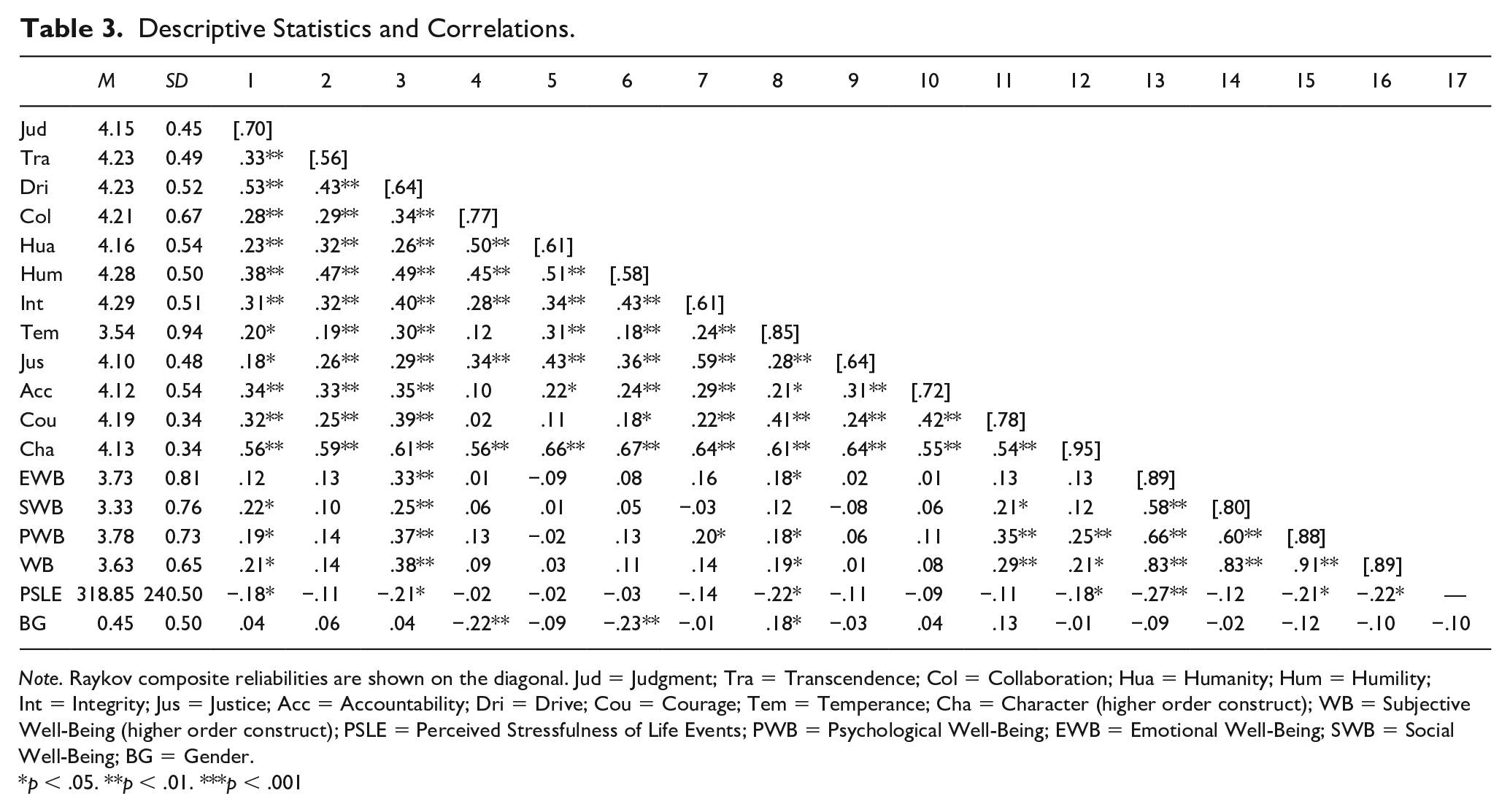
Note. Raykov composite reliabilities are shown on the diagonal. Jud = Judgment; Tra = Transcendence; Col = Collaboration; Hua = Humanity; Hum = Humility; Int = Integrity; Jus = Justice; Acc = Accountability; Dri = Drive; Cou = Courage; Tem = Temperance; Cha = Character (higher order construct); WB = Subjective Well-Being (higher order construct); PSLE = Perceived Stressfulness of Life Events; PWB = Psychological Well-Being; EWB = Emotional Well-Being; SWB = Social Well-Being; BG = Gender.
p < .05. **p < .01. ***p < .001
The overall mean for character as reported by the students suggests that they believe it is likely they can engage in the various behaviors that reflect the 11 character dimensions (4.13 out of 5.00). The three highest rated character dimensions were integrity, drive, and humility; the three lowest rated dimensions were accountability, justice, and temperance.
The five life events that students reported as occurring most often were family get-togethers, getting an unjustified low mark on a test, vacation with parents, switch in program within the same college or university, and finding a part-time job. The five life events that students reported as occurring least often were getting kicked out of college or university, pregnancy, failing a number of courses, jail term, and death of a parent. The five life events that were rated as most stressful were death of a parent, death of a best or very good friend, jail term, getting kicked out of college or university, and major car accident. The average score for the life events scale for students was 318.85 (SD = 240.50).
The means for emotional, social, and psychological well-being were all above the midpoint of the scale and indicates that, overall, the students were in positive mental health.
Measurement Model
Table 2 shows a summary of the different measurement models (A1-A5) and goodness-of-fit indices for our structural equation models. All items in Models A1 to A5 loaded significantly on their respective latent constructs with the exception of one item of the subjective well-being scale, which was subsequently excluded from our analyses.
The more nuanced structural equation model derived from Model A5, Model B, showed a just acceptable fit to our data, Satorra-Bentler’s (S-B) scaled χ2(1015) = 1322.38***; RMSEA = 0.05; χ2/df ratio = 1.30; CFI = 0.88; TLI = 0.88; and weighted root mean square residual (WRMR) = 1.15). The CFI and TLI values were slightly below the .90 cutoff value; however, it is known that goodness-of-fit indices tend to decrease as the number of latent constructs modeled increases (Kenny & McCoach, 2003).
Given the relatively low number of items in relation to the number of parameters in the model, it is advisable to use item parceling to improve the fit of our model. Hence, we followed the recommendations by Little et al. (2002) to aggregate the three items for each character dimension and then to respecify the structural equation model, having the aggregated dimensions as indicators loading onto a single latent construct, namely, character. The respecified model fit our data better than prior models, S-B scaled χ2(291) = 408.60***; RMSEA = 0.06; χ2/df ratio = 1.40; CFI = 0.94; TLI = 0.93; and WRMR = 0.95. The parceling procedure allowed us to achieve an N/parameter ratio of 6.25, which surpasses the established threshold of N/parameter = 5 (see Little et al., 2002).
Figure 3 shows results for the structural equation model for the effect of character on subjective well-being through the perceived stressfulness of life events.

Structural equation model for the effect of character on subjective well-being through the perceived stressfulness of life events.
The results indicate that character was a positive and significant predictor of subjective well-being, β = .21, (.10), t = 2.02, p < .05. Hypothesis 1 was supported. The relationship between character and perceived stressfulness of life events was negative and significant, β = −.22, (.07), t = −2.93, p < .01. Hypothesis 2 was therefore supported. And, consistent with Hypothesis 3, the relationship between the perceived stressfulness of life events and subjective well-being was negative and significant, β = −.21, (.09), t = −2.27, p < .05.
The results also provide support for Hypothesis 4. Character had a positive indirect effect on subjective well-being through the perceived stressfulness of life events, β = .05 (.02), t = 1.97, p < .05. Our results reveal partial mediation because character still predicted subjective well-being even after perceived stressfulness of life events was included in the model.
Post Hoc Analysis
Our main focus was on assessing the effects of character on the perceived stressfulness of life events and subjective well-being. However, a detailed observation of the modification indices provided by the statistical software suggested the inclusion of two additional paths would improve the fit of our model. More precisely, including direct paths from courage, β = .25 (.08), t = 3.17, p < .01, and drive, β = .24 (.09); t = 2.65, p < .01, to psychological well-being significantly improved the fit of our model.
Discussion
The results of our structural equation model show that character as a higher order construct has both a direct and positive effect on the subjective well-being of undergraduate business students and an indirect effect through the perceived stressfulness of life events. Furthermore, the relationships between courage and psychological well-being, as well as drive and psychological well-being were positive and significant.
We had no a priori hypotheses regarding the specific and independent effects of the dimensions of character on the perceived stressfulness of life events and subjective well-being. In hindsight, however, it is easy to envision that elements such as resiliency, tenaciousness, and determination (as part of courage) as well as vigor, passion, and striving for excellence (as part of drive) contribute to psychological well-being. For example, the character elements associated with courage help individuals persist when they confront challenges and contribute to problem-solving coping as part of personal mastery, which, in turn, facilitates feelings of positive functioning in life (e.g., Maddi, 2006; Mäkikangas et al., 2004). Furthermore, in Crossan et al.’s (2017) character framework, the notion of drive captures how individuals apply and direct energy toward the pursuit of both mastery and performance goals. Extant research has shown that the successful pursuit of meaningful goals plays an important role in the development of psychological well-being (e.g., Wiese, 2007). Prior studies have found that elements of drive such as vigor (Bray & Born, 2004), passion (Vallerand, 2012), and the pursuit of excellence (Martínez-Martí & Ruch, 2017) are connected to higher levels of psychological well-being.
Our study contributes to the ongoing conversation about the importance of developing character in business students enrolled in academic programs (e.g., Crossan, Mazutis, Seijts, & Gandz, 2013; Hartman, 2006). Our results offer several theoretical and practical contributions to the management education literature.
Theoretical Contributions
There are relatively few empirical studies in the management education literature that focus on the nature of character and why it matters to individual functioning, including, but not limited to, subjective well-being, prosocial behaviors, social skills, and academic achievement of business students. Therefore, a programmatic research approach to develop a better understanding of the correlates and consequences of character in higher educational institutions is important. This is because a more robust understanding of character may help individuals—administrators, program directors, and faculty—raise awareness of the importance of the construct, ensure it is brought to the forefront of management education, and initiate evidence-based practices to enhance the subjective well-being and subsequent performance of students through character-based education. Hence, our study contributes to the accumulating body of knowledge on character. In particular, the results we obtained provide further validation of the character framework developed by Crossan et al. (2017).
More important, however, our results suggest that character, operationalized as a higher order construct consisting of 11 interrelated dimensions, should be considered a personal resource to undergraduate business students that helps alleviate the perceived stress associated with personal, social, and environmental challenges and to promote their subjective well-being. Our study is unique in its contribution in that no prior studies have looked at the holistic perspective that character presents and the process by which character affects the subjective well-being of undergraduate business students.
Furthermore, our study shows that character not only complements but also strengthens stress coping models. For example, the conservation of resources model (e.g., Hobfoll, 1989; Hobfoll et al., 2018) helps explain the results we obtained in the present study. A basic tenet of the conservation of resources model is that individuals strive to retain, guard, and build resources—personal characteristics or otherwise—that help protect against stress and enhance positive well-being. The model implies that surpluses in personal resources serve as an aid in actively addressing potential stressful situations and, therefore, contribute to positive well-being, whereas individuals who are ill-equipped with personal resources are particularly vulnerable to perceiving situations as stressful. Character as a personal resource not only helps support a positive sense of self (e.g., through integrity, temperance, and transcendence) but also facilitates a view that one is able to work through potentially stressful circumstances (e.g., through collaboration, courage, and drive). Or, put differently, the likelihood that individuals perceive a life event as stressful decreases as their strength of character increases. Character, therefore, is not simply something that is nice to have but rather something that is highly desirable because of the role character plays in addressing stressors and facilitating subjective well-being.
Practical Contributions
There are at least two practical implications from our results. First, there is compelling data that indicates that undergraduate students across the globe are at heightened risk of stress and mental health problems (e.g., Andrews & Wilding, 2004; Eisenberg et al., 2013; Varghese et al., 2015; Watkins et al., 2012). There have been numerous initiatives to break the silence around mental health and to support well-being programs on campuses (e.g., Eisenberg et al., 2012; Regehr et al., 2013). For example, universities have begun to offer services that help students proactively address personal and academic challenges that may affect their well-being. Academic programs have also begun to rethink the qualities that educators need to develop in students as they step into a volatile, uncertain, complex, and ambiguous environment.
Crossan, Mazutis, and Seijts (2013) argued that individuals with well-developed character are better equipped to manage situational pressures (see also Caza et al., 2004; Seligman & Csikszentmihalyi, 2000). Furthermore, they see character as both a personal resource and a coping mechanism—a self-control strategy that facilitates the maintenance of behaviors that are deemed desirable, such as optimism, resiliency, forgiveness, and being grateful. Our results indicate that the character dimensions and their supporting elements that Crossan et al. (2017) identified affect the perception of life events and subjective well-being. The occurrence and timing of life events that may trigger stress are often beyond a student’s control. However, character affects how students perceive those events and adjust to adverse situations. We therefore believe it is essential for management educators and business students to fully appreciate the importance of character to human functioning and to engage in the development of character to help students avoid succumbing to personal, social, and environmental challenges.
Second, character can be developed through deliberate practice in management education (e.g., Byrne et al., 2018; Comer & Schwartz, 2020; Crossan, Mazutis, Seijts, & Gandz, 2013; Newstead et al., 2020). However, management education dominantly focuses on developing leadership competencies—imparting core knowledge, often in a functional paradigm to equip students for their professions (e.g., Crossan, Mazutis, Seijts, & Gandz, 2013; Kuechler & Stedham, 2018). In fact, many educators would not consider it their role or responsibility to contribute to the development of character in their students. But whether we teach finance, marketing, or leadership, we have the opportunity—indeed, some would say the obligation—to help students become managers, leaders, and citizens of good character. Today, management educators around the world need to ask how we can change the way we educate individuals to better equip them for the various roles they will play in making a positive difference in the world. Therefore, a key consideration for institutions in management education (e.g., business schools and professional associations) is how they can embed character development in their teachings and developmental activities for students.
Examples of possible interventions that provide students with opportunities to develop the various character dimensions and elements include transformative or stretch experiences embedded in course design (e.g., confident and open-minded), role-playing (e.g., considerate and composed), simulations (e.g., takes ownership and reflective), goal setting (e.g., inspired and vigorous), mentoring (e.g., candid and transparent), and reflexive conversations (e.g., critical thinker and adaptable). For example, Comer and Schwartz (2020) introduced a series of Mussar-inspired exercises to help students develop their character. They teach students about the malleability of character and the importance of character in organizations. Students are encouraged to identify dimensions and elements of character they wish to work on, set goals to enhance these aspects of character through a series of exercises, monitor progress, and make incremental adjustments for continuous improvement. Comer and Schwartz explain that their approach to the cultivation of character involves purposeful self-awareness, aspiration, assessment, and adjustment.
Over a century ago, most university administrators and faculty members would have said that building an integrated self was the most important task. Today, however, we seem to have forgotten about the importance of character building in academic institutions and, in particular, business schools. Instead, we focus primarily, if not only, on competencies, essentially turning the curricula of business schools into vocational training (e.g., Bennis & O’Toole, 2005; Crossan, Mazutis, Seijts, & Gandz, 2013).
Strengths, Limitations, and Areas for Future Research
Our study has several strengths. First, we studied a population for whom perceived stressfulness of life events and subjective well-being is highly salient. Second, we examined undergraduate students in a single business program. Any other approach would have introduced a myriad of contextual variables to our design, potentially attenuating any relationships among character, perceived stressfulness of life events, and subjective well-being. Third, we used a split administration self-report survey. We collected data from the students at two different points in time, thereby reducing priming effects. This approach also allowed us to examine the perceived stressfulness of life events as a mediator of the relationship between character and subjective well-being because the measure of character preceded the completion of the life events scale. Fourth, the study was anonymous, with no identifying information collected. This was done to maximize candor and the accuracy of self-reports. Fifth, we used character as a high-order construct, consistent with the ontology of character, rather than focusing on a single dimension or element of character. To our best knowledge, we are the first to empirically relate the Crossan et al. (2017) model of interconnected character dimensions to perceptions of stress and subjective well-being. Sixth, even though the overall results indicated that the business students were in good mental health, we still obtained significant results that have important implications for university administrators, program directors, and faculty. For example, our results may help address a foundational question: How can educational institutions build a culture of well-being that fosters engagement in the classroom, learning, and excellence?
Our study also has several limitations, which offer opportunities for future research. First, we only collected a single-source, self-rating measure of character, perceived stressfulness of life events, and subjective well-being. We did not manipulate any variables nor did we collect measures over time. Consequently, we cannot establish causal relationships or examine reciprocal and dynamic effects between the variables we measured. For example, it is highly plausible that, over time, character and the perceived stressfulness of life events are reciprocally related. Specifically, life events and so-called crucibles may help strengthen character (e.g., Bennis & Thomas, 2002; Byrne et al., 2018; Peterson et al., 2008). For example, actively involving undergraduate business students on a Dean’s Search Committee offers many opportunities to further develop students’ sense of justice, accountability, collaboration, and judgment.
Second, we did not measure the specific routes or mechanisms (e.g., problem-solving approaches, building friendships and social support networks, and demonstrating hope) through which character affected the perceived stressfulness of life events and subjective well-being. Future studies involving undergraduate business students would benefit from longitudinal and intervention designs that include multiple measures of variables to assess causality and tease apart the specific routes through which character and its dimensions help students work through stressful life events in their personal and academic lives.
Third, we used self-reported assessments of character. Future studies should include reports of peers to validate these self-assessments. The use of self-assessments is common although not ideal because measurement may be affected by memory biases. For example, future studies using a longitudinal design would be better suited to assess character and the subjective well-being of undergraduate business students over stressful periods of time and for specific events that emerge in a higher educational context (e.g., a poorly performing study group, the exam period, or the job search process).
Fourth, even though the results of our study reveal that character is associated with perceived stressfulness of life events and subjective well-being, the effect sizes, using Cohen’s guidelines, were small to moderate in magnitude. However, given the seriousness of the emotional, physiological, psychological, and social outcomes associated with stressful life events, the relationships we explored in our study are never trivial for students and the people surrounding them. Any personal resource that students may develop to buffer the perceived stressfulness of life events or enhance their subjective well-being is an asset. Character strengths are malleable and responsive to training and development. Hence, our results should bolster the design of intervention studies intended to further develop character in undergraduate business students. This raises two questions that warrant further discussion and exploration: First, what is the role of management educators in developing character in students? Second, what kind of learning activities help develop character and promote subjective well-being?
Footnotes
Acknowledgements
The authors are grateful to the Ian O. Ihnatowycz Institute for Leadership at the Ivey Business School for the funding that has supported much of our research on character.
Declaration of Conflicting Interests
The author(s) declared no potential conflicts of interest with respect to the research, authorship, and/or publication of this article.
Funding
The author(s) received no financial support for the research, authorship, and/or publication of this article.
