



Abstract
Leaders today must navigate “contradictory yet interrelated elements that exist simultaneously and persist over time”, known as paradoxes. A paradox mindset enables leaders to embrace paradoxes constructively, reframing them from “either-or” to “both-and.” Although paradox mindset has been widely theorized, research offers limited guidance on how it can be deliberately developed within management education. This study employs a design science approach to develop and evaluate an integrated paradox mindset learning intervention (PMLI) for emerging leaders. Drawing from transformative learning theory, the intervention incorporates Socratic questioning, individual reflection, group work, and practical activities within a sequenced, multi-workshop design to support mindset development. The study contributes to paradox literature by operationalizing a theoretically-grounded and empirically evaluated approach to paradox mindset development. It further contributes to management education by offering an integrated and sequenced learning intervention, alongside transferable design insights for cultivating paradox mindset in emerging leaders. In doing so, it extends existing scholarship by demonstrating how paradox mindset can be deliberately and systematically developed within leadership education.
Introduction
Leaders today face competing priorities, such as balancing rapid innovation with strategic stability or achieving growth while engaging in sustainable practices (Schulte, 2022). Addressing these contradictory priorities requires leaders to recognize and navigate paradoxes. We define paradoxes as “contradictory yet interrelated elements that exist simultaneously and persist over time” (Smith & Lewis, 2011). Examples of paradoxes faced by leaders include the need to both minimize costs while also investing in resilience capacities to withstand disruptions (Berendes, 2025), and to both empower teams to innovate and take risks while at the same time enforce the structures and processes needed for stability and compliance (Cunha et al., 2022).
Paradoxes cannot be resolved via simple trade-offs, rather they require a paradox mindset that enables leaders to embrace and manage competing priorities in ways that foster sustainable performance. A paradox mindset, defined as “the extent to which one is accepting of and energized by tensions” (Miron-Spektor et al., 2018, p. 38), is essential for leaders to thrive amidst competing priorities (Y. Liu et al., 2020; Miron-Spektor et al., 2018). Being “energized by tensions” entails viewing competing demands not as problems to be resolved or avoided, but as catalysts for creativity, learning, and adaptive, both/and thinking. This mindset helps leaders shift from traditional “either/or” to “both/and” perspectives (Lewis & Smith, 2014; Smith & Lewis, 2022), allowing them to uncover insights and possibilities that remain unavailable to those who rely on conventional either/or approaches (Y. Liu et al., 2020; Zheng et al., 2018).
Developing a paradox mindset necessitates a fundamental shift in how we think about and approach paradoxical tensions (Boemelburg et al., 2023; Miron-Spektor et al., 2018), toward viewing them as interdependent yet seemingly contradictory elements that coexist over time and must be managed simultaneously (Smith & Lewis, 2011). The shift in mindset is not immediate. It involves a learning process shaped by experience, failure, sustained effort, and reflection (Bednarek et al., 2017; Fairhurst, 2019; Jay, 2013). Developing such a mindset therefore requires integrated learning approaches that combine cognitive reframing with experiential engagement (Boemelburg et al., 2023; Simpson et al., 2021). Encouraging leaders to explore diverse viewpoints, question assumptions, and embrace complexities is crucial for developing and sustaining a paradox mindset (Miron-Spektor et al., 2018).
Despite this need, current leadership education rarely provides such integrated, sustained opportunities. Current efforts to develop a paradox mindset remain fragmented and inconsistently embedded within leadership education. Initiatives are often optional and hindered by rigid curricula, limited faculty capacity, and market-driven priorities that favor technical skill development over reflective practice. As a result, graduates may emerge with strong operational competencies but lack the integrative thinking needed to navigate paradoxes effectively (Fairhurst, 2019; Knight & Paroutis, 2017). This gap can lead to reactive, either/or decision-making, rather than the “both/and” reasoning essential for adaptive leadership in complex environments. A concrete consequence of this slow integration is missed innovation opportunities, where leaders may fail to reconcile competing demands such as efficiency versus experimentation or short-term results versus long-term sustainability. Without a paradox mindset, leaders may thus be ill-equipped to manage the tensions inherent in strategic transformation, stakeholder engagement, and systems-level change.
These findings highlight the need for more intentional, embedded approaches to paradox mindset development that combine structured tools, dialogic learning, and reflective practice to foster lasting cognitive and behavioral shifts. Informal discussions with practitioners and industry partners reinforced these preliminary findings. Practitioners consistently emphasized that while technical expertise remains essential, it is a leader’s capacity for reflection, curiosity, and comfort with contradiction that determines their effectiveness. These conversations also revealed a growing organizational demand for learning experiences that foster deeper, mindset-level development.
To address this gap, we draw on transformative learning theory, which helps individuals shift their thinking by challenging underlying assumptions and beliefs (Mezirow, 2006). This theory aligns well with our aim as it fosters the critical reflection and adaptability leaders need to navigate today’s complex and contradictory business environments. Integrating paradox scholarship with transformative learning provides a foundation for designing learning experiences that support both cognitive and experiential development.
Our research develops and examines a learning intervention for developing a paradox mindset in emerging leaders. We conceptualize emerging leaders as experienced professionals with growing responsibility for managing complexity and competing demands in organizational settings. Study participants are drawn from an MBA cohort. MBA programs offer a fertile context for such development, given their focus on strategic thinking and leadership in dynamic environments.
While some studies have explored the use of paradox as a threshold concept in management education (Knight & Paroutis, 2017), contributions are often fragmented, with limited evidence of structured approaches to teaching paradox within leadership education. This gap is significant because it underscores the need for a more holistic educational approach that can support paradox mindset development.
The research question guiding this study is: What educational practices can facilitate the development of a paradox mindset in emerging leaders? We draw insights from paradox mindset and transformative learning literatures to develop and evaluate a Paradox Mindset Learning Intervention (PMLI) for emerging leaders. The intervention was iteratively designed and assessed using principles from Design Science Methodology (DSM; Peffers et al., 2007), which served as a methodological framework. The PMLI comprises four learning pillars, delivered through three interactive workshops and supported by a reflective toolkit. Evaluation of the learning intervention incorporated participant surveys, interviews, and feedback from the Unit Coordinator.
This study’s primary contribution lies in the design, implementation and evaluation of an integrated educational approach for developing a paradox mindset. It advances paradox pedagogy by offering emerging leaders a structured opportunity to reflect on and develop their paradox mindset over time. The study introduces and evaluates the PMLI, which enriches paradox education literature (Khan et al., 2025; Knight & Paroutis, 2017; Tjemkes et al., 2025). By grounding the intervention in experiential learning principles, this research offers a novel, experience-based framework for developing paradox mindset in emerging leaders. In doing so, it responds to calls for more embedded and sustained approaches to paradox education.
Next, we review existing research on paradox mindset development and transformative learning. We then explain our methodology, describe the intervention, and discuss the study’s implications, contributions, and areas for future research.
Theoretical Background
Leadership Development
Despite significant insights over the past 20 years regarding how individuals grow as leaders, scant attention has been paid to learning interventions that might help facilitate leader development (Day, 2024). Traditional pedagogies, which focus on knowledge transmission through teacher-led instruction and rote memorization, often fall short of altering worldviews and behaviors. Even modern educational theories, such as constructivism, which emphasizes active learning and critical thinking, may overlook the social aspects of learning and offer limited insights into mindset transformation (Osborne, 2014; Petrie, 2014). These approaches fail to encourage deep reflection on underlying assumptions or provide the shared experiences essential for the significant perspective shifts needed to develop a paradox mindset (Jones et al., 2020).
Leader development research advocates for holistic approaches that go beyond formal training programs to incorporate a more integrated approach (Day, 2024; Wallace et al., 2021). This requires cultivating self-awareness (Goleman, 1995), promoting experiential learning (D. A. Kolb, 1984), and nurturing a growth mindset (Dweck, 2006). Building on this foundation, fostering a paradox mindset in emerging leaders may require a more holistic educational approach that integrates social learning and critical reflection. To date few efforts have been made to embed paradox mindset development into leadership education (Khan et al., 2025, Knight & Paroutis, 2017).
Transformative Learning
Developing a new mindset, such as a paradox mindset, requires transforming cognitive processes, deeply held assumptions, and mental models – an endeavor underpinned by learning (Kim et al., 2023). Transformative learning theory provides a useful framework for designing learning interventions aimed at developing and cultivating a paradox mindset.
While earlier learning theories such as behaviorism focused on observable changes in behavior through external reinforcement (Skinner, 1965), they overlooked the deep internal shifts required to reconcile and integrate contradictions. In contrast, transformative learning emphasizes the internal processes of meaning-making and critical reflection necessary for enduring mindset change. Rooted in experiential learning, it is defined as “the process by which we transform problematic frames of reference – mindsets, habits of mind, meaning perspectives – sets of assumptions and expectations, to make them more inclusive, discriminating, open, reflective and emotionally able to change” (Mezirow, 2006, p. 92). This transformation occurs through a series of experiences: encountering a disorienting dilemma, engaging in critical reflection, and participating in rational dialog (Mezirow, 1997). Together these experiences facilitate significant shifts in how individuals perceive, conceptualize, and interact with the world (Hoggan, 2016; Schnepfleitner et al., 2021).
Transformative learning plays a crucial role in helping leaders develop new approaches to familiar situations. It is particularly relevant for leadership educators and MBA students as it encourages a shift from traditional learning methods to more reflective and critical approaches. For educators, it offers a framework to design learning experiences that encourage students to question their assumptions, engage in dialog, and explore diverse perspectives, which is essential in understanding and dealing with paradoxical tensions. For students, transformative learning involves reflecting on personal experiences, reassessing beliefs, and remaining open to new viewpoints. This process strengthens their ability to connect theory with practice and explore opposing ideas, which are core for developing a paradox mindset.
There has been much examination of effective education programs for MBAs (e.g., Garvin, 2007; Kets de Vries & Korotov, 2007; Kim et al., 2023; Knight & Paroutis, 2017; Rafferty, 2013; Roglio & Light, 2009). For example, Kim et al. (2023) examine how educators can balance support and challenges to foster transformative learning. In their study executives initially exhibited a risk-averse mindset, focusing on minimizing potential harm. Through critical reflection and dialog, they realized the limitations of this narrow view and adopted more inclusive approaches. Similarly, leaders who favored an assertive negotiation style learned to integrate more collaborative and empathetic approaches, resulting in better outcomes. This aligns with Weick’s (2007) argument that effective leadership education requires individuals to “drop their tools,” that is, to unlearn rigid habits and assumptions that no longer serve them. This process of disorientation and reconfiguration is central to transformative learning and is supported by reflection, peer learning, and a willingness to challenge deeply held beliefs.
Transformative learning involves several interrelated and iterative processes (Mezirow, 2006). A disorienting dilemma challenges existing beliefs and assumptions, prompting critical reflection on values and assumptions. Through rational discourse, individuals engage in open dialog to explore alternative viewpoints. As learners begin to explore new roles they test and integrate these new perspectives. Reintegration occurs when these new understandings are incorporated into a new worldview, a more adaptive and inclusive mindset, and significant changes in self-concept, behaviors and capacity. However, the integration of transformative learning strategies can be slow (Mezirow, 1997), particularly in structured environments like MBA programs, due to curriculum rigidity, time constraints, or limited opportunities for reflective practice (Ossai et al., 2025; Yang, 2025). This slowness can have tangible consequences such as reduced leader preparedness for complexity, missed opportunities for innovation, and a diminished ability to navigate paradoxical tensions (Ossai et al., 2025). For instance, leaders unprepared for complexity may become overwhelmed, they may struggle to respond to change and default to short-term fixes. Poor navigation of paradoxical tensions may lead to suboptimal, either/or decisions rather than integrative solutions that create long-term value. The process is recursive rather than linear, involving ongoing reflection and reassessment (Mezirow, 2003). A leader might reflect on a previous challenge, gain new insights through dialog or coaching, and then re-evaluate that same experience through a more inclusive lens. Later, a new challenge may prompt them to revisit that same experience with fresh insight, illustrating the iterative nature of transformation. This dynamic process fosters continuous growth and adaptation, enabling individuals to respond more effectively to complex and contradictory situations. Ultimately, transformative learning fosters the ability to hold and integrate contradictory perspectives (Khan et al., 2025). This capacity is essential for developing a paradox mindset, as it enables leaders to move beyond either/or thinking and embrace complexity (Khan et al., 2025; Miron-Spektor et al., 2018).
Developing a Paradox Mindset
Research highlights that a paradox mindset, the ability to embrace and leverage contradictions, can be cultivated (Miron-Spektor et al., 2018), yet there is limited understanding of the specific mechanisms for its development. Early research by Lewis and Dehler (2000) aimed to assist management educators in fostering paradox mindset, proposing three approaches: (i) expanding conceptual polarities, (ii) recognizing personal contradictions, and (iii) managing paradoxical predicaments. Building on this, Smith et al. (2012) identified three meta-skills (acceptance, differentiation, and integration) and six supporting skills for effectively addressing paradoxes (i.e., “adopting an abundance mentality,” “embracing paradoxical thinking,” “recognizing the distinct value of each domain,” “mindfully attending to distinctions between domains,” “developing trust, openness, and cultural sensitivity,” and “seeking synergies in decision making” (pp 468–473). This research informs our approach to exploring how we can support leaders in reframing tensions as opportunities for innovation and long-term impact.
Other studies offer insights into educational approaches for developing a paradox mindset among leaders (Audebrand et al., 2017; Fairhurst, 2019; Yin, 2022; Zheng et al., 2018). Audebrand et al. (2017) describe how pedagogical tools such as case studies, games, and simulations can be used to foster paradox mindset in learners. The authors encourage further research into different pedagogical approaches for developing paradox mindset and navigating paradoxes. Zheng et al. (2018) discuss conditions that help women leaders develop a paradox mindset, suggesting that changes in mental models can be achieved through exposure to successful role models and engaging in reflective learning that challenges assumptions. Their study reveals that by observing role models who integrate assertiveness and relational sensitivity, women leaders can envision themselves embodying both agency and communion. The role modeling not only enhances confidence but also makes the integration of competing leadership demands seem both attainable and effective.
Fairhurst (2019) distinguishes between paradox-based and dialectical thinking interventions, noting that many interventions oversimplify paradox. She advocates for enhancing reflexivity through “reflection-in-action,” involving real-time critical reflection that enables adaptive responses during change (Schön, 1987). Our study builds on this by embedding reflection-in-action into its methodology to surface latent tensions and foster reflexivity. In doing so, it operationalizes Fairhurst’s recommendation to engage with paradox as embedded, dynamic, and context-dependent, and aligns with a growing body of literature that conceptualizes mindset development as a “learning journey” (Jay, 2013, p. 150) that requires time and practical application (Bednarek et al., 2017; Knight & Paroutis, 2017).
Among the limited research offering pedagogical strategies for teaching paradox, Knight and Paroutis (2017) describe paradox mindset as a concept in management education that challenges how students think and shift their perspective. Paradox mindset is powerful because it can transform how learners see problems, create lasting changes in thinking, and connect ideas. According to Knight and Paroutis (2017), paradox pedagogy aligns with these four characteristics: (1) transforming learners’ perceptions through exposure to paradox, (2) being irreversible as adopting a paradox perspective fundamentally alters the learner’s framework, (3) integrating across disciplines to reveal connections, and (4) being bounded, recognizing that not all contradictions qualify as true paradoxes. True paradoxes involve tensions that are both opposing and connected, and they do not go away, but must be navigated over time. This makes them different from typical problems or trade-offs, which can often be resolved. To teach paradox mindset effectively, Knight and Paroutis (2017) suggest using pedagogical approaches promoting real-world context, engaging content, critical reflection, and active learning. More recently, Khan et al. (2025) address this gap by demonstrating how leaders can cultivate a paradox mindset, which in turn fosters transformative learning. Tjemkes et al. (2025) contribute further by offering a structured framework of multilevel learning interventions to cultivate a collective paradox mindset within organizations.
However, despite these contributions, there remains a notable gap in pedagogical approaches that combine conceptual understanding of leadership development literature with practical strategies for engaging learners in activities that will help developing their mindset. Existing research into paradox mindset development offers limited guidance on how to design learning interventions that actively support individuals in recognizing, reflecting on, and navigating paradoxes in real-world contexts.
Methodology
Design Science Research Methodology
We adopt a Design Science Research (DSR) methodology as a guiding framework to develop a learning intervention for cultivating a paradox mindset. DSR is a problem-solving research methodology that can incorporate qualitative, quantitative, or mixed methods, depending on the research goals and the nature of the artifact being designed and evaluated. It emphasizes applied approaches aimed at discovery and real-world problem-solving (Gregor & Hevner, 2013; Hevner, 2008; Peffers et al., 2007). DSR is inherently problem-centered, prioritizing the creation of innovative artifacts to extend human and organizational capabilities and address specific real-world challenges (Hevner et al., 2008; Venable et al., 2016). In management education, such artifacts may include conceptual frameworks, pedagogical tools, or leadership development practices (Romme & Dimov, 2021). Our study positions the learning intervention as the artifact, designed to be both theoretically grounded and practically applicable through a process of user-centric design, iterative refinement, and contextual relevance.
We used the DSM process as a structuring lens to guide the iterative development and evaluation of a learning intervention. While grounded in DSR principles, the study focuses the intervention itself, including its theoretical rationale (transformative learning and paradox mindset), core pedagogical elements (learning pillars, workshops, and toolkit), and evaluation (scale, interviews, and unit coordinator feedback).
A DSR strategy is driven by a real-world problem faced by organizational actors, with the artifact (PMLI) designed to address this issue (Iivari, 2015). To maximize impact, we draw from established design science methods (Gregor & Hevner, 2013) and follow the six steps outlined by Peffers et al. (2007):
Identifying a problem
Defining the objectives of a solution
Designing the artifact
Demonstrating the artifact
Evaluating the effectiveness of the artifact
Communicating the artifact as a solution.
We commenced by identifying the problem, which was a need for more holistic pedagogical approach for developing paradox mindset in leaders, which will help them develop capacity to navigate complex and competing organizational challenges. Informed by existing knowledge in the fields of paradox and leadership education, we designed an artifact (intervention) which we labeled the Paradox Mindset Learning Intervention (PMLI). The PMLI is an integrated learning intervention designed to help leaders develop a paradox mindset. We then evaluated the PMLI’s effectiveness to determine its success in addressing the problem. Finally, we communicated the PMLI’s capabilities and solutions through relevant platforms, presenting a comprehensive solution to the initial problem.
Setting and Data Collection
The study was conducted at a leading Australian Business School. All students of an Advanced Global Strategy MBA unit were verbally invited to participate during the first in-person lecture and subsequently emailed participation information and consent forms via university channels. The unit is one of the final modules in the MBA program, designed to enhance participants’ strategic leadership capabilities in complex, fast-changing environments. Aligning with recent research into leadership development (e.g., Kim et al., 2023; Knight & Paroutis, 2017), the MBA served as an incubator for developing a paradox mindset. We refer to participants as “emerging leaders” based on their career stage and potential for increased strategic influence. While we use “students” when discussing their educational context, we refer to them as research “participants” when describing data collection and analysis.
The study initially involved 14 MBA students, each with at least 8 years of experience in professional, senior, or middle management roles (Table 1).
Participant Demographics.
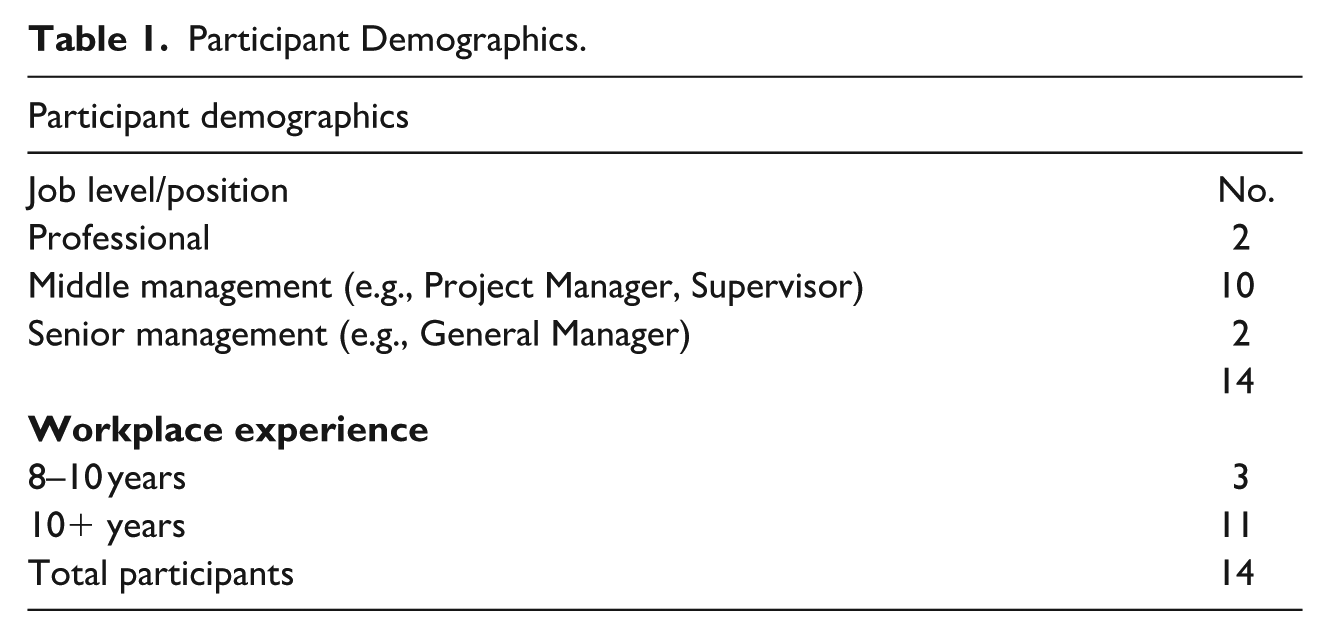
These participants completed the initial paradox mindset measurement survey at Time 0 (see Figure 1). Of those, seven continued through to the final interview at Time 2, providing in-depth reflections on their experience with the intervention. To protect anonymity, each participant was assigned a unique code (e.g., P1 and P2), based on the chronological order of interviews. These codes are used throughout the findings to reference individual responses. The sample, though modest, aligns with DSR’s emphasis on iterative, context-rich engagement rather than large sample sizes. A diversity of industries was represented, including government, natural resources, energy, manufacturing, retail, and professional services, further supporting the relevance to real-world leadership development. Australian MBA students typically have diverse backgrounds, including early and mid-career professionals seeking advancement, recent graduates aiming for leadership roles, and international students seeking a global business perspective. Our cohort was skewed toward middle management, with an average of 2.1 years of leadership experience. Half were between 35 and 45 years old, and none were international students. Limitations related to sample size and scope are acknowledged in the Discussion section.
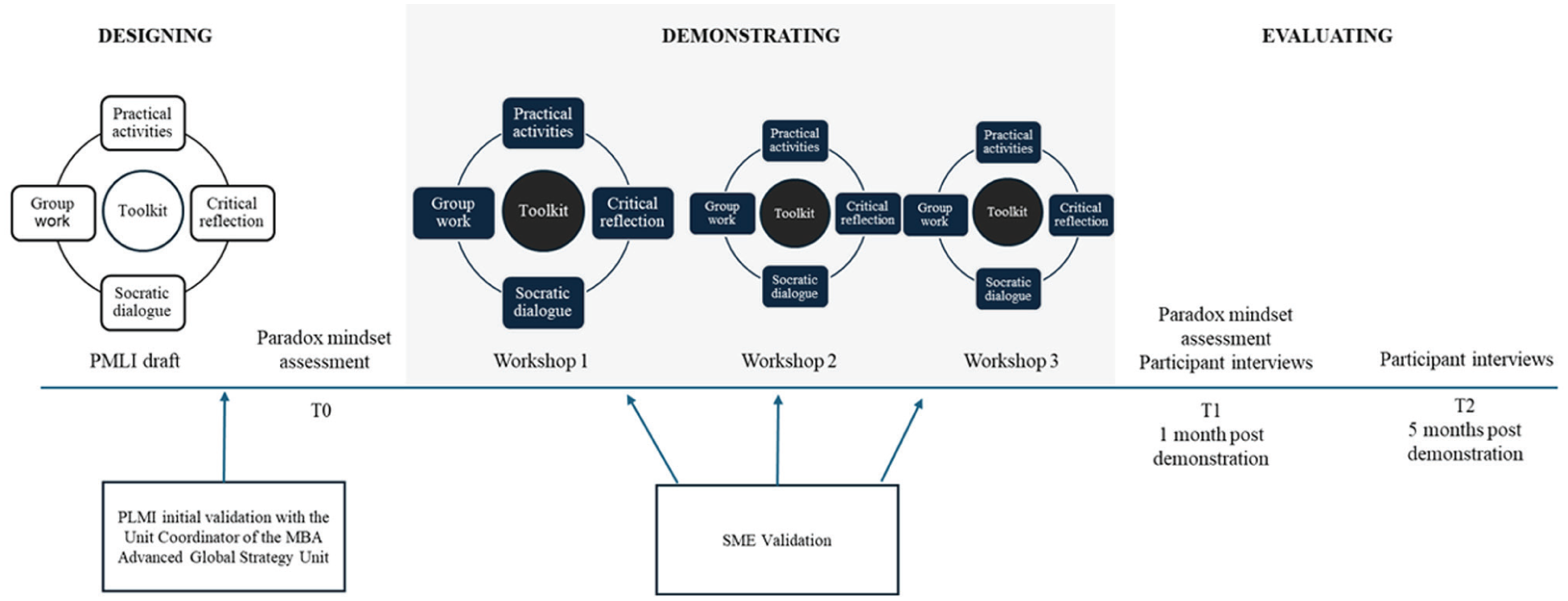
PMLI design, demonstration, and evaluation (DSR Steps 3–5).
Data Collection and Analysis Strategy
Data were collected from multiple sources to ensure triangulation and depth of insight. Quantitative data was gathered via the Paradox Mindset Inventory (Miron-Spektor et al., 2018), administered before (Time 0) and after (Time 1) the intervention to measure changes in paradox mindset. Descriptive statistics and mean values were used to assess significance. Qualitative data sources included guided reflections, classroom audio recordings, researcher observations, expert evaluation, and semi-structured interviews. Thematic analysis and iterative coding were employed to identify recurring patterns, supported by NVivo software for interview data. Ethics approval was obtained, and all participants provided informed consent. Data were anonymized and pseudonyms used in reporting. Participation was voluntary, with the option to withdraw at any time. These processes are summarized in Appendix A and further discussed in Evaluating the Effectiveness of the PMLI (DSR Step 5). Figure 1 illustrates the research stages including designing, demonstrating and evaluating the PMLI.
Design and Development of the Paradox Mindset Learning Intervention
This section outlines the design and development of the PMLI using the six-step Design Science Research (DSR) process described in the Methodology section. Following Peffers et al. (2007), we move from problem identification and definition of objectives to artifact design, demonstration, evaluation, and communication. The PMLI is conceptualized as an integrated learning artifact developed iteratively in response to a clearly identified pedagogical gap.
Identification of the Problem (Step 1)
Following Peffers et al. (2007), our study commenced with an initial phase of problem identification, based on both theoretical and empirical observations. Research into paradox education highlights that existing leader development programs, including MBAs, have not sufficiently addressed the need for developing a paradox mindset in a holistic or systematic manner (Knight & Paroutis, 2017). Despite growing recognition of the mindset shift crucial for effective paradox management (Miron-Spektor et al., 2018), traditional skill-focused approaches remain inadequate for fostering sustained mindset transformation (Kennedy et al., 2013). MBA programs have been slow to integrate transformative learning strategies to bridge this gap (Khan et al., 2025).
Discussions with the MBA Director and the Unit Coordinator of the Advanced Global Strategy unit underscored deficiencies in current methods aimed at preparing MBA students for real-world complexities. These discussions revealed that existing methods often fall short in preparing MBA students to grapple with real-world complexities and paradoxical tensions. This aligned with previous informal discussions with practitioners and industry partners (conducted while preparing for the study but not forming part of the formal research process) that highlighted the necessity for developing leaders who can adeptly navigate paradoxical tensions within organizational contexts.
Our review of paradox mindset and transformative learning literature, summarized in the preceding literature review section, along with the input from colleagues, students and industry contacts revealed a fragmented research landscape. Taken together, these inputs reveal that leaders aiming to cultivate their paradox mindset could benefit significantly from an integrated and transformative learning approach, an area currently receiving insufficient emphasis in research endeavors.
In response to these theoretical and practical imperatives, our research develops a more holistic learning intervention that embeds transformative learning to foster the development of a paradox mindset.
Defining Objectives of the Solution (Step 2)
The second step in the design science approach involves defining the objectives of the solution. Our solution aims to create an integrated learning intervention to cultivate a paradox mindset in leaders. The specific objectives are to: (a) enable leaders to recognize and identify paradoxes within their environments; (b) facilitate a deeper understanding of the nuances and interrelationships within and among paradoxes; (c) support leaders in adopting a paradox mindset to navigate complex and paradoxical tensions within their organizations. These objectives guided PMLI design and informed evaluation criteria in Step 5. Next, we describe the PMLI.
Designing the Paradox Mindset Learning Intervention (Step 3)
We began development of the learning intervention based on experiential learning principles (D. A. Kolb, 1984; A. Y. Kolb & Kolb, 2005), aiming to support participants in applying theoretical knowledge to lifelike workplace situations. Drawing from the paradox literature which differentiates between identifying and responding to paradoxes and also from research on the value of strategic challenges in leader education (de Vries et al., 2020), we developed learning activities to support participants in the process of developing a paradox mindset. These were designed to help participants engage with and understand the complexities and dualities that often arise in organizational settings and encourage them to draw from their prior experiences of paradoxes. We paid attention to language and framing so as to allow learners to frame the complexities of their strategic challenges with heightened awareness of interconnected conflicting elements. We leveraged the research team’s insights into the challenges leaders face in understanding and identifying paradoxes, spending considerable time discussing examples of paradoxes at organizational, team, and individual levels.
To facilitate reader understanding, we now introduce and describe the PMLI, before proceeding to Step 4 – Demonstrating the PMLI. Specifically, we clarify that the PMLI consists of three core pedagogical elements: a set of learning pillars, three workshops, and a supporting toolkit, which are presented in Figure 1 and further discussed in Appendix B.
Core Pedagogical Elements of the PMLI: Learning Pillars
We anchored our learning intervention in four learning pillars – practical activities, critical reflection, Socratic dialog, and group work. These were designed to provide a well-rounded and effective educational experience, catering to diverse learning styles, and promoting holistic skill development among participants. These pillars guided the selection of content and activities, ensuring a comprehensive and targeted educational experience aligned with the goal of developing a paradox mindset. Each pillar was designed to give participants a firm experiential understanding of organizational paradoxes and the opportunity for transformative learning in navigating them.
Practical Activities
Research consistently shows that practical, problem-centered approaches in education significantly enhance learning outcomes by bridging the gap between theory and practice (de Vries et al., 2020; Kosnik et al., 2013). Practical activities promote transformative learning through firsthand experiences that not only reinforce learning but also cultivate critical thinking and problem-solving skills (Yu & Zin, 2023). We designed practical activities to provide participants with direct experience in working through real world paradoxes. This included in-class case studies and examples of paradoxes from participants’ own workplaces. Examples of paradoxes included balancing short term financial targets with long term sustainability goals, or navigating conflicting stakeholder demands. One practical activity featured a financial services industry case study dealing with paradoxical tensions including innovation versus stability and cost control versus service quality. A key instruction, “Propose a strategy balancing a growth culture with a service culture,” required participants to apply tools, test integrative strategies, and adapt their approaches based on outcomes and peer feedback. For example, participants were encouraged to use SWOT analysis and cultural mapping to identify tensions between growth and service. These techniques led to participants then proposing a range of blended strategies, such as cross-training service teams for growth initiatives. Participants also reported responding to peer critiques, for example, that highlighted gaps in customer experience alignment. This applied approach helped participants develop a deeper understanding of paradoxes and build practical skills to embed paradox mindset into their everyday decision-making.
Critical Reflection
Developing a paradox mindset requires reconciling contradictory ideas, a process facilitated through reflective practices. Research highlights the role of reflection in enhancing self-awareness, metacognition, and deeper understanding of complex issues (Daudelin, 1996; Owens et al., 2022; Padmanabha, 2020). For many, scaffolding is essential to the reflective process (Wheeley et al., 2022). The PMLI integrated structured reflection exercises and online journaling to enable participants to engage deeply with paradoxes encountered in leadership contexts. Activities were designed to challenge assumptions, surface tensions, reconsider perspectives, and prompt participants to refine their approaches to navigating paradoxical situations (de Vries et al., 2020; Owens et al., 2022).
To set the tone for reflective inquiry and paradox mindset development, each session began with a short, contextually-relevant prompt that introduced a paradoxical tension, (such as balancing innovation with stability or autonomy with control). Prompts such as “Which paradox mindset strategies learned in the unit did you use, and how useful were they?” and “What are you learning about navigating paradox?” encouraged participants to explore the nuances of their thinking and articulate evolving insights. These reflective questions supported deeper engagement with complexity and helped participants internalize adaptive strategies for navigating contradiction.
Socratic Dialog
Socratic dialog enhances cognitive flexibility and the ability to navigate contradictory viewpoints with agility (Getachew, 2024). It fosters reflective, independent, and creative leadership (Friesen & Stephens, 2016; Getachew, 2024; Katsara & De Witte, 2019). Our aim was to incorporate Socratic dialog and reflective conversations into the PMLI to help participants strengthen their creativity and critical thinking. Participants engaged in a process of questioning and challenging ideas, promoting open-ended inquiry and thoughtful dialog.
We structured sessions to encourage participants to critically examine assumptions, probe deeper into contradictory perspectives, and explore the nuances of paradoxical situations. Questions were grouped into three clusters: clarifying concepts (e.g., “What do stability and innovation look like as future outcomes for this organization?”), probing evidence (e.g., “Where have we seen demonstrated the successful navigation between centralized control and decentralized autonomy, and what lessons can we draw from them?”), and exploring implications or consequences (e.g. “What are the potential consequences of prioritizing short-term efficiency over long-term adaptability in our decision-making processes, and how can we mitigate these risks?”; Stoddard & O’Dell, 2016).
We adopted peer dialog and coaching feedback, techniques known to deepen inquiry, surface cognitive dissonance and discomfort with ambiguity and to stimulate adaptive learning and growth (Heifetz et al., 2009). Facilitators modeled reflective practice and created a psychologically safe environment, encouraging intellectual risk-taking and framing disagreement as a learning opportunity. This atmosphere supported diverse perspectives and collective inquiry, helping quieter participants grow more confident and engaged (Getachew, 2024). Facilitation techniques included inviting quieter participants by using open-ended prompts like “What are your thoughts on this?” and offering small-group breakouts in addition to plenary discussions to build confidence. Psychological safety was reinforced through affirming contributions (“That’s an interesting perspective”) and normalizing mistakes as part of learning. Ground rules co-developed with participants, such as “listen to understand, not to respond,” further reinforced respectful dialog and collective sense-making. Ultimately, Socratic dialog bridged individual reflection and collaborative problem-solving, helping participants develop a mindset attuned to complexity and contradiction.
Group Work
Research suggests that group work can trigger transformative learning and helps internalize change processes (Kets de Vries & Korotov, 2007; Z. Liu et al., 2021; Mezirow, 1997). Collaborative learning was central to the intervention’s design. Participants were encouraged to work together to identify, diagnose, and navigate paradoxes in their own organizational contexts. Group activities included paradox identification sessions, peer coaching scenarios, and case study discussions. The groupwork fostered a supportive and inclusive learning environment where participants could experiment with different approaches, refine their strategies, and develop a more nuanced understanding of paradoxical situations. Participants also learned to leverage collective intelligence, navigate ambiguity, and harness the strengths of diverse viewpoints to address complex challenges effectively.
Participant reactions informed refinements to tools and facilitation strategies. Initial discomfort with ambiguity, or confusion or frustration with the abstract nature of paradox concepts, was documented through post-session interviews, coaching debriefs, and facilitator observation notes. This later helped inform refinements to tool instructions, case framing, and facilitation techniques in future iterations.
Core Pedagogical Elements of the PMLI: Workshops
The workshops were designed to develop a paradox mindset among participants. Structured as a progressive learning journey, each workshop built upon the previous one, guiding participants from initial recognition of paradoxes to deeper understanding and practical navigation. Each workshop was intentionally aligned with four core learning pillars (Practical Activities, Group Work, Critical Reflection, and Socratic Questioning) to support active engagement and facilitate the development of both cognitive and behavioral paradox-navigation capabilities.
Workshop 1 focused on identifying paradoxes, including definitions, recent research, and practical examples from participants’ experiences. The aim was to help participants identify paradoxes by distinguishing them from simple tensions or trade-offs. Participants engaged in guided reflection, shared real-world examples, and collaboratively explored whether these tensions met the criteria of paradox. For instance, one participant noted, “I constantly feel torn between meeting immediate client demands and ensuring our long-term strategic goals are not compromised.” This reflection highlighted the lived complexity of paradoxes in their role, demonstrating how abstract concepts intersect with day-to-day decision-making and emphasizing the emotional and cognitive strain involved in balancing competing priorities. This laid the foundation for a paradox mindset by introducing the concept of both/and thinking and helping participants recognize paradoxes in their own work contexts. Examples of paradoxes included balancing short-term financial targets as well as long-term sustainability goals, or navigating conflicting stakeholder demands. These scenarios, often marked by ambiguity and competing stakeholder expectations, required participants to apply paradox tools, test integrative strategies, and adapt their approaches based on outcomes and peer feedback. This hands-on approach helped them develop a deeper understanding of paradoxes and begin the process of embedding a paradox mindset into their everyday decision-making. By including participant reflections, the workshop not only conveyed theoretical knowledge but also illuminated the real-world implications of paradox management, showing how individuals negotiate and learn from tension in practical settings. Within this workshop, the four learning pillars were evident: practical activities through paradox identification tasks; group work via shared examples and collaborative evaluation; critical reflection through guided prompts exploring emotional and cognitive responses; and Socratic questioning used by facilitators to challenge assumptions and deepen insight.
Workshop 2 delved into the nuances of paradoxes, particularly those spanning organizational levels. The aim was to deepen understanding by diagnosing paradoxes through a systems-thinking lens. Participants mapped how tensions played out across individual, team, and organizational levels, and used tools like the Paradox Identification Checklist (Appendix C). This expanded participants’ capacity to see paradoxes as complex, nested, and persistent, reinforcing the need for integrative thinking. In Workshop 2, the learning pillars were embedded via practical mapping activities that supported applied learning; group discussions that enabled comparison of perspectives and a systems view; reflective questioning that helped participants interrogate their own role in sustaining tensions; and Socratic dialog that encouraged exploration of structural and cultural assumptions.
Workshop 3 centered on paradox navigation strategies. Drawing on the tensions identified in earlier sessions; participants engaged in scenario-based exercises and peer coaching to explore practical approaches to navigating paradoxes. The aim was to create an environment for experiential and transformative learning (Vince, 2022) by providing scenarios of paradoxical tensions (Lewis & Dehler, 2000) and opportunities for critical discourse and practice in a safe, collaborative setting. The learning pillars were again intentionally integrated in Workshop 3: practical activities in the form of strategy testing and refinement; group work through peer coaching and feedback; critical reflection on navigation attempts and emotional responses; and Socratic questioning to explore reasoning, challenge assumptions, and refine approaches.
Across all three workshops, incorporating the four learning pillars ensured an iterative developmental process: participants learned about paradoxes, explored them collectively, reflected on their own assumptions and experiences, and were guided through questioning to progressively adopt a more flexible, both/and mindset.
Core Pedagogical Elements of the PMLI: Toolkit
The PMLI toolkit comprised three tools to support the cognitive and behavioral practices that underpin a paradox mindset (Appendix C): a Paradox Navigation Roadmap, a Paradox Identification Checklist, and a Strategy Design Tool. These tools guided participants in identifying core paradoxes within their strategic challenges and then work through them using evidence-based practices. The tools were designed to scaffold metacognitive development, build confidence and promote independence, enabling participants to internalize these steps for navigating future paradoxical challenges.
The Paradox Navigation Roadmap provided structured guidance to help participants recognize, understand, and navigate paradoxes in their workplaces. It helped participants to visualize the complexity of strategic tensions and provided a structured way to consider multiple perspectives. As part of the pedagogical design, the roadmap was intended to support work with broad, systemic paradoxes and to guide users in engaging with competing demands simultaneously. Its purpose within the toolkit was to offer a systematic framework that encourages exploration of tensions rather than premature resolution.
The Paradox Identification Checklist assisted participants in recognizing and framing conflicting priorities as paradoxes. It helped participants unpack the nuances of a paradox, including its source, duration, internal and external impacts, and underlying assumptions. The checklist provided a cognitive scaffold to support structured analysis and deeper reflection on the nature of the tension. Its role within the toolkit was to guide users through a clear process for differentiating paradoxes from simple trade-offs and to facilitate more deliberate and transparent conceptualization of the issue.
The third tool, Paradox Mindset for Strategy Design supported strategic planning by integrating a paradox mindset into decision-making. This tool provided prompts to encourage a “both/and” orientation when approaching complex challenges. It was designed to help participants explore integrative solutions rather than binary choices. Its role within the toolkit was to connect paradox thinking to practical strategy work, enabling users to apply paradox principles to planning and decision-making processes.
Demonstrating the PMLI (Step 4)
To demonstrate the practical applicability and effectiveness of the PMLI, we introduced it to group of emerging leaders undertaking an MBA. Following Peffers et al. (2018), we sought to ensure the learning intervention worked as intended, and to refine and improve it before wider deployment. Each workshop combined theory with practice, encouraging participants to engage actively with the material, apply it to their own leadership contexts, and reflect on the PMLI’s usefulness. Toolkit components were introduced progressively and applied both within the classroom and in participants’ professional settings. This demonstration phase enabled observation of participant engagement and provided empirical input for formal evaluation.
Empirical Validation
To ensure the PMLI was designed correctly and aligned with its educational objectives we implemented it through a two-step process focused on empirical validation. The purpose was to assess whether the intervention could achieve its intended learning outcomes and adhere to established educational principles.
First, we presented the proposed approach to the Unit Coordinator of the MBA Advanced Global Strategy Unit, an experienced professor in management strategy and paradox research. The coordinator provided targeted feedback that led to refinements in both content structure and terminology. For example, academic definitions were replaced with practical comparisons between dilemmas and paradoxes, and language was simplified to improve clarity and accessibility for executive learners. Specific adjustments included changing “metacognitive reflection” to “thinking about how you learn best, and “navigating paradoxical tensions” to “handling situations where you need to balance two opposing priorities,” and “exploring the dualities inherent in leadership practice” to “looking at both sides of a leadership challenge.” Another shift involved refining a vague reflective prompt originally phrased as “Reflect on a paradox you have encountered” to a more targeted and actionable question: “Describe a time when you had to balance competing stakeholder demands and explain how you navigated the tension using a paradox mindset.” This change led to more focused responses and clearer evidence of applied learning in participant reflections. We also revised content to include more applied examples and interactive discussions.
Participant reactions were collected at each workshop to identify areas for improvement. Some participants reported difficulty with the complexity of some content and terminology, noting that certain concepts felt overly abstract or difficult to apply. Some participants requested more practical examples and clearer explanations. Several commented on the pace of sessions, reporting that some topics felt rushed while others were dense. This feedback was systematically documented by the researcher-facilitators through independent discussion notes and later corroborated through shared reflection and observational records.
Next, we engaged subject matter experts (SMEs; through workshops, structured interviews, and emails) to advise on the best conditions for fostering learning among emerging leaders. SMEs included a global leader in paradox mindset, editors of a leading management education journal, and an experienced Australian Professor of Leadership. SMEs consistently emphasized the need for an interactive environment that promotes open discussions, small group activities, peer-to-peer learning, collaboration, critical thinking, and exposure to diverse perspectives. Based on their recommendations, the workshops were redesigned to reduce theoretical density, focus on fewer core concepts, and incorporate real-world examples and tools that supported practical application. Taken together, these adjustments aimed to enhance learner engagement, support knowledge transfer, and align with adult learning principles.
Evaluating the Effectiveness of the PMLI (Step 5)
The next step was evaluating the solution to determine whether the PMLI met project objectives (Peffers et al., 2007) by assessing its performance and impact in a real-world setting. This involved collecting and analyzing data on outcomes, engagement, and user satisfaction from four sources:
Paradox Mindset Measurement
We used the validated Paradox Mindset Inventory scale (Miron-Spektor et al., 2018) to quantitatively measure changes in participants’ paradox mindset. Although participants knew the intervention’s purpose, this did not undermine validity because the measurement taps into deep cognitive orientations that are not easily faked. Research consistently shows that meaningful changes in paradox mindset reflect genuine cognitive shifts, not superficial responding (Miron-Spektor et al., 2018). Seven participants provided baseline data before and after implementing the PMLI. The scale assessed how participants experienced paradox, understood the need for a paradox mindset, and responded to paradox and responded with a paradox mindset before and after the PMLI. Survey questions included for example: “I am comfortable working on tasks that contradict each other.”
Between Time 0 and Time 1 the survey revealed subtle but measurable shifts across three dimensions related to paradox in the workplace. The mean score for Experiencing Tensions increased slightly from 1.71 at Time 1 to 1.79 at Time 2, suggesting a modest rise in the perception of contradictory demands. For Understanding the Need for a Paradox Mindset, the mean rose from 2.14 to 2.36, indicating a growing awareness of the importance of embracing paradoxes. For Responding with a Paradox Mindset, the mean decreased from 2.29 to 2.14, suggesting participants felt marginally less capable of acting on this understanding.
While the increase in Understanding the Need for a Paradox Mindset (+0.22) suggests that participants are beginning to cognitively grasp the concept and its relevance, the slight decrease in Responding with a Paradox Mindset (−0.15) may reflect a shift in self-awareness rather than a decline in capability. This pattern is consistent with the “conscious incompetence” phase of learning, where individuals, upon gaining new insights, reassess their earlier assumptions and recognize previously unacknowledged limitations. The small increase in Experiencing Tensions (+0.08) may similarly indicate heightened sensitivity to paradoxical tensions as participants develop greater awareness.
However, we are cautious in interpreting these quantitative findings, as the small sample size (n = 7) limits the statistical power of the survey and precludes drawing firm conclusions. The observed changes in mean scores offer only a preliminary indication that the intervention may have contributed to fostering a paradox mindset. Nonetheless, the results tentatively suggest a developmental trajectory whereby participants become more aware of paradoxes, appreciate the need for a paradox mindset, and reassess their own capacities considering this emerging understanding.
Participant Interviews
To assess both the immediate and sustained impacts of the intervention, we interviewed the same seven participants who had completed the survey, at 1 and 5 months post final workshop. This longitudinal approach enabled us to assess not only short-term reflections but also the evolution of mindset and behavior change and its sustainability over time. The first interview (1 month post workshops) was aimed at capturing early application of the tools and initial shifts in awareness, where participants reported beginning to notice and navigate conflicting demands but had limited confidence in consistently applying paradox mindset. The follow-up interview (5-month post workshops) examined whether these changes had been internalized and translated into sustained behavioral patterns, with findings indicating that participants were more adept at integrating paradoxical mindset into real-world decisions and demonstrated more consistent behavioral adaptations. This longitudinal design was particularly important for paradox mindset development, as cultivating the ability to embrace and integrate competing demands requires time, reflection, and real-world practice to become embedded in both thinking and behavior. The 1- and 5-month intervals were chosen to balance capturing early uptake with sufficient time for long-term embedding. This allowed us to observe how short-term applications evolved into deeper, sustained internalization over time.
Participant reflections were analyzed for both frequency and depth of integrative thinking, particularly for their capacity to acknowledge rather than prematurely resolve opposing tensions. Responses that embraced competing demands (e.g., innovation and risk management) and proposed “both/and” strategies were coded as indicators of a developing a paradox mindset. Over time, participants increasingly articulated paradoxes without seeking their immediate resolution, thus reflecting greater openness to complexity and a more strategic engagement with paradox.
Drawing from Apte (2009) and Venable et al.’s (2016) CIPP Model (Context, Input, Process, and Product), we asked: “What needs to be done? How should it be done? Is it being done? Did it succeed?” Participants consistently reported facing paradoxes in their workplace and indicated that the toolkit helped them respond more effectively. A key theme that emerged was a shift in real time awareness. P5 described becoming more attuned to paradoxical tensions in everyday conversations:
I’m more keyed into what people are saying now and thinking about: ‘Is that a paradox or not? What do they really mean? Why are we thinking about just one thing? Why couldn’t we do both?’ that kind of stuff. ‘Why do we have to choose between these horrible alternatives?’ for instance (P5).
This heightened sensitivity was not only cognitive but emotional. P5 described feeling less “boxed in” and more able to pause before reacting, which opened up conversations that previously felt like dead ends. This growing sensitivity enabled P5 to challenge binary framing and consider more inclusive options. Similarly, P6 noted quicker recognition of paradoxes: “I think what it gives you is you are more aware of the paradoxes. [. . .] I’m far more open to them and identifying them a lot quicker” (P6). Meanwhile P1 highlighted a conceptual shift from binary thinking to integrative reasoning, when she noted:
I think just that–the initial identification of what the paradoxes are, and the fact that you can address both elements. It’s not just that ‘either-or’, it’s that ‘and’ in the middle . . . I can start looking at things more broadly and be a bit more expansive in the way I look at things (P1).
For P1, this shift came with a sense of relief, where he shifted from a pressured need to choose one priority to a more spacious sense that multiple aims could be held at once. Rather than stuck in “either/or,” P5 paused to name the tension using the checklist, which eased the tone from pressured to curious and led the group to a staged “both/and” next step. This illustrates how even a brief diagnostic pause can create a noticeable change in group dynamics, reducing friction and allowing participants to re-engage with complex issues more constructively.
Together, these reflections illustrate how the intervention fostered a paradox mindset by encouraging participants to hold space for ambiguity and explore integrative, both/and solutions.
At Time 1, participants primarily described increased awareness and early experimentation with the tools. By the Time 2 follow-up, several reported instances of deeper integration of a paradox mindset into strategic planning and leadership conversations, demonstrating a shift from conceptual understanding to habitual practice. Participants described this as a move from “trying out” the tools to “thinking this way automatically.” While this shift in awareness was common, the degree of behavioral change varied. P1 applied the tools to address a live strategic challenge (balancing gender diversity with workforce needs):
How can we increase the gender (% of female) of our engineers coming through, while also making sure that we’re getting enough engineers through to meet the needs of the organization? [. . .] So that’s something that I’ve definitely been thinking a bit more about as I’ve been framing up my project plan and thinking, ‘Well, you know there’s a paradox here. Can I use some of the tools about that to try and address them?’ (P1).
Rather than trading off diversity against throughput, P1 used the roadmap to structure parallel workstreams (e.g., attraction and pipeline sufficiency), reflecting a shift toward broader framing that translated into clearer next steps and steadier confidence in conversations. She described feeling “less stuck” and more able to explain the logic of her decisions to others, which reduced tension in stakeholder discussions. The intervention thus the supported strategic integration of a paradox mindset. P1 also valued dialogic learning: “I get a lot more value out of communicating and sharing and understanding through that sort of spoken discussion, rather than just reading about it in a textbook” (P1). Her experience reinforces the importance of group coaching and peer interaction in deepening engagement.
Others emphasized the toolkit’s role in supporting ongoing reflection. P2 shared: “I keep the [toolkit] in my computer bag, so when you have time to reflect, just flicking through that material, just to get the memory jogging again” (P2). For P2, the toolkit functioned as a grounding device, something to return to during moments of uncertainty or complexity, providing reassurance as well as structure. These examples suggest that the toolkit supported both real-time strategic thinking and ongoing reflection.
Participants also reflected on the specific tools they found most valuable, with five of the seven reporting the Paradox Navigation Roadmap as particularly helpful for structuring complex decisions. Participants found it especially useful for navigating broad, systemic paradoxes such as balancing innovation with tradition, or strategic influence with operational constraints.
For example, P6, a COO in the mining sector, was wrestling with the paradox of whether to continue as a raw material supplier or expand into manufacturing. The roadmap helped him articulate the stability-change tension as a narrative of organizational evolution rather than operational confusion and helped provide meaning to a decision that previously felt overwhelming The roadmap helped him shift from a reactive, operations-focused mindset to a more strategic, systems-level view: “The roadmap was probably the broader component . . . it allowed me to try to understand the paradoxical component and how it applied to the assessment” (P6).
Similarly, P3 appreciated the roadmap’s potential as a diagnostic prompt in environments where tensions between innovation and shareholder value were constant: “If I had the roadmap sitting in front of my computer, I think it would help me to try and identify some of the diagnose section . . . it just provides that systematic framework.” (P3). This reflection highlights the roadmap’s role as a sense-making aid in a high-pressure commercial environment, where the constant trade-off between innovation and investor expectations often remained unspoken. By naming and mapping this tension, P3 described a clearer storyline for action that reframed ambiguity as a natural part of leadership rather than a personal failing. P3 also described a cognitive shift:
It changes the way I look at it, or the way I might perceive it. So that I’m not just shutting that down, I’m like, ‘Oh, okay, well, hang on then, I’ve got some things that I can look at this in a different way’ (P3).
This reflects increased openness and adaptability, key indicators of a paradox mindset. In these examples the roadmap supported development of a paradox mindset by encouraging participants to hold competing demands in view simultaneously and to resist premature resolution.
The Paradox Identification Checklist was reported as especially valued during the assessment phase, where it provided a scaffold for structured thinking.
P5, involved in legal aid, used the checklist to explore the paradox of service versus cost (expand access to justice while also facing severe funding constraints). The checklist helped him move from vague frustration to a structured analysis: “That one was quite good . . . I found that quite helpful. And that’s the kind of thing that I actually want to use for this particular issue at work, to unpack at those various levels” (P5). Using the tool, P5 identified specific trade-offs, such as between client service and budget limits, and applied these insights in a team strategy session. He proposed scaling back low-impact outreach programs while reallocating resources to priority cases, balancing equity with fiscal responsibility, and introduced a phased digital intake system, reducing administrative costs without compromising client access. These changes led to clearer prioritization of vulnerable clients, improved cost transparency, and greater shared understanding of trade-offs within the team. Emotionally, the process reduced his frustration and increased his sense of control. He described feeling “less stuck,” with the checklist functioning as a steadying frame that turned sometimes paralyzing pressure into actionable steps and renewed team confidence. Viewed through a narrative lens (Polkinghorne, 1995), P5’s account reflects how the tool helped create a storyline shifting workplace tension to strategic clarity, that transformed a chronic tension into an actionable account of regained agency.
P2 used the checklist to articulate the paradox between environmental responsibility and economic expansion, including/transitioning from fossil fuels to renewables while balancing digital innovation with traditional customer service. He found the checklist especially helpful: “I sit back a little bit now and think about it before I shoot off emails and stuff like that. Or maybe think about the checklist before doing phone calls” (P2). The checklist supported a paradox mindset by slowing responses, encouraging reflection, and moving beyond surface-level tensions. For P2, this narrative shift was particularly significant because it interrupted a long-standing pattern of urgency-driven communication, allowing organizational pressure to be reinterpreted not as a cue for speed, but as a cue for strategic reflection.
P4 valued the checklist as a useful tool, describing it as his own “mental checklist of ‘frame the problem, find the data’, all that kind of thing. ‘Is this a paradox in here? (They will be there somewhere!). Is it a material paradox or not?’” He used the checklist to structure his thinking, helping him to clarify the problem and guiding his diagnosis. He noted that this reduced the initial overwhelm he often felt when approaching complex issues. In each example, leaders moved away from tense stalemate toward calmer, option-generating dialog, with tools providing just-in-time prompts that reduced friction and clarified action.
The learning design also contributed to the intervention’s success. Five participants highlighted the value of group coaching, and six found the reflection activities helpful. P7 summarized this shift: “I feel like it’s just part of my toolkit now to have a little bit more understanding. [. . .] I’ve changed. I now have a paradox mindset. Most certainly. Without question. 100%” (P7). This was mirrored by P6 who reflected: “We were very ‘one after the other’, very series-orientated. So now we’re ‘So let’s run parallel!’”, illustrating the tangible shift in strategic thinking. P7’s language in particular signals deep internalization, and identity-level transformation rather than simple adoption of a new framework. P2’s comment about keeping the toolkit close for reflection further illustrates how the intervention supported both real-time strategic thinking and ongoing learning.
Participants found the Paradox Mindset Strategy Design checklist adaptable to industry-specific tensions. P3, reflecting on his engineering background, noted how it helped him resist the urge to jump to solutions and instead ask better questions. P2 applied it during internal delays that risked losing new customers, using it to pause, reframe the issue and engage head office earlier in the process: “I found tool 3 quite useful because . . . I can just flick over, and I change the question to ask, ‘how can we do both/and?’” (P2). This tool supported a paradox mindset by encouraging reflective action, helping participants hold space for ambiguity and explore integrative solutions rather than binary choices. P2’s experience links a moment of tension with a reflective shift that enabled more strategic engagement. Here, the significance lies in how the tool reframed an urgent operational setback into a leadership opportunity: rather than reacting to delay with frustration, P2 used the paradox lens to craft a more collaborative narrative with head office, demonstrating how the tool could reshape real-time sense-making under pressure. This illustrates how the tool facilitated integrative thinking in real-time leadership challenges, reinforcing its value as a prompt for meaning making under pressure.
Taken together, these reflections show how the tools and design elements of the intervention facilitated both behavioral shifts and sustained mindset transformation.
Expert Evaluation
The Unit Coordinator, an expert in management strategy and paradox research, assessed the intervention through a comparative analysis of student performance. This involved comparing the performance of current MBA students (who experienced the PMLI) with previous cohorts (not exposed to the artifact (PMLI)). The comparison revealed improvement in students’ ability to design strategies incorporating a paradox mindset. Students who participated in the workshops and utilized the PMLI toolkit demonstrated measurable increases in innovative problem-solving and in their ability to integrate a paradox mindset into strategic planning. The Unit Coordinator observed in the study cohort a higher frequency of strategies that embraced both/and thinking, rather than defaulting to either/or trade-offs.
For instance, students were more likely to propose solutions that simultaneously pursued short-term efficiency and long-term innovation, or that balanced global standardization with local responsiveness. According to the Unit Coordinator the current cohort presented more nuanced and sophisticated strategic approaches. These strategies reflected a deeper understanding of paradoxical tensions and a greater ability to apply theoretical insights to practical challenges He also highlighted the impact of combining practical application with theoretical grounding, noting that the toolkit effectively bridged the gap between abstract concepts and real-world strategic decision-making. Moreover, the Unit Coordinator reported that students’ post-assessment reflections and submitted work indicated increased confidence in handling ambiguity and complexity, key indicators of a developed paradox mindset. This shift was evident in the evolution of student responses, from binary and reactive in Time 0, to balanced and exploratory, to integrative and adaptive, to anticipatory, reflective, and paradox-embracing as the unit progressed. These findings suggest that the PMLI not only enhances academic performance but also equips students with critical capabilities for leadership in dynamic and uncertain environments.
This expert evaluation helped identify areas for improvement, informing future redesigns. Based on this feedback, we made several refinements to the intervention, including simplifying theoretical language, adding visual summaries, and adjusting the pacing to allow more time for group reflection. Another refinement was the development of a more in-depth case study that provided an opportunity for a deeper dive into multilayered and dynamic paradoxes that are more representative of real-world complexity. Future iterations might focus on enhancing feedback mechanisms and ensuring the PMLI’s effectiveness across diverse contexts (Peffers et al., 2018).
Communicating the PMLI (Step 6)
Our strategy for documenting and communicating the results of the PMLI involves both academic and practitioner-facing channels. We have shared our work with academic colleagues through research workshops and seminars. Additionally, we submitted our work to a leading management conference, where we have been invited to present our pedagogical process and findings. This paper is another research output from the study. We have also shared our research findings via practitioner channels via skill-building workshops with various industry practitioners.
Discussion
This research was designed to address the gap arising from limited pedagogical approaches for developing a paradox mindset in emerging leaders. Drawing insights from transformative learning theory and literature, the research aimed to answer the question: What educational practices can facilitate the development of a paradox mindset in leaders? Using a DSR approach, we designed a Paradox Mindset Learning Intervention to help leaders cultivate a paradox mindset. The PMLI was tested on a cohort of emerging leaders enrolled in an MBA program. Once we had confirmed that the PMLI comprised the necessary elements for transformative learning and mindset change, we evaluated it through expert interviews and participant assessment.
The purpose of the PMLI is to equip emerging leaders with the skills to effectively manage and thrive amidst competing demands and conflicting priorities. Specifically, the objective of this integrated learning intervention is to cultivate a paradox mindset among these leaders, enhancing their ability to balance contradictory yet interrelated elements, thereby improving decision-making, adaptability, and overall leadership effectiveness. The PMLI offers a holistic and multi-dimensional approach, integrating various educational practices. The benefits include (1) encouraging deep reflection on underlying assumptions, (2) providing shared experiences essential for the significant perspective shifts needed to develop a paradox mindset, (3) offering hands on activities to build capability to apply the learnings when navigating real world paradox, and (4) using Socratic dialog to enhance critical thinking and encourage open-ended exploration of complex issues. These findings directly address our research question by demonstrating how specific educational practices, particularly those grounded in experiential and reflective learning, can foster the development of a paradox mindset. We posit that combining these elements is more likely to lead to transformative learning. Furthermore, by integrating multiple pedagogical elements into one intervention the PMLI acknowledges different learning styles and appetites, thus helping learners deepen and cement their understanding on paradox navigation.
Our research contributes to paradox pedagogy by offering learners an opportunity to reflect on their mindset development over time. The three workshops over which the PMLI was deployed responds to the nature of developing a new mindset, which involves a “learning journey” (Jay, 2013, p.150) that requires time and practical application (Bednarek et al., 2017; Knight & Paroutis, 2017). The various and multi-dimensional aspects of the PMLI respond to the gap identified by Fairhurst (2019) that many interventions oversimplify paradox. Rather than offering a simplistic response to a complex problem, the PMLI offers a response to paradox that recognizes its complex and persistent characteristics.
When considering the generalizability of the PMLI, it is pertinent to mention that although the intervention is focused on mid and emerging leaders, its approach and tools can be used for leaders at all levels. Participants from sectors such as government, mining, and legal services, reported applying the tools in diverse contexts from strategic planning to interpersonal conflict resolution.
Contributions
Theoretical Contributions
There is a noticeable scarcity of theoretical and conceptual guidance on cultivating a paradox mindset among emerging leaders. Our study makes three theoretical contributions to the literature.
The primary contribution of this study is the design and evaluation of the PLMI, a novel integrated educational approach that demonstrates how a paradox mindset can be deliberately and systematically developed through a structured leadership education intervention. This advances paradox education literature (Khan et al., 2025, Knight & Paroutis, 2017) by operationalizing a learning intervention aimed at developing a paradox mindset in emerging leaders. The intervention is rooted in experiential learning principles and incorporates practical activities, critical reflection, Socratic dialog, and group work. It extends previous studies on facilitating effective responses to organizational paradox (Knight & Paroutis, 2017; Lewis & Dehler, 2000; Smith et al., 2012). To date, no validated approach has been established for fostering a leader’s paradox mindset, an essential capability for moving from “either/or” to “both/and” thinking. While previous research has highlighted the benefits of a paradox mindset (e.g., Miron-Spektor et al., 2018), our contribution lies in detailing how such a mindset can be developed intentionally. The PMLI integrates structured reflection, experiential learning, and cognitive reframing to help learners progress beyond conceptual understanding toward the practical ability to identify and navigate paradoxes with confidence.
Second, we introduce a theoretically grounded and empirically evaluated artifact (PMLI) that serves as a robust foundation for further research. Through evaluating the intervention amongst MBA user-learners working across various industries and one expert, we have demonstrated its adaptability across diverse organizational context of emerging leaders. This contribution strengthens the leadership learning and development literature, which has historically underexplored innovative pedagogies. While many educational programs emphasize principles through case studies (Z. Liu et al., 2021), traditional lecture-based teaching often presents leadership challenges as discrete problems with singular solutions. Case-based methods similarly position learners as detached analysts rather than participants navigating tensions in real time. In contrast, the PMLI challenges learners by exposing them to real world, lived paradoxes, which are often complex and messy. This experiential approach fosters cognitive complexity and emotional resilience, offering a substantive pedagogical alternative to conventional management education. In addition, the study contributes design insights regarding the sequencing of experiential engagement, structured reflection, dialogic learning, and practical tools in supporting integrative reasoning. These insights offer guidance for educators seeking to foster both/and thinking in complex leadership contexts.
Third, our study bridges theory and practice by offering a user-centric intervention grounded in Design Science Research. Drawing on paradox and transformative learning literatures, the PMLI was developed with the “user” (emerging leader) in mind. Using DSR we incorporated multiple opportunities for feedback in designing and evaluating the learning intervention. Practices such as Socratic questioning and guided reflection proved especially effective in helping participants hold competing demands in constructive tension – an approach often overlooked in directive teaching models. Moreover, our use of DSR contributes to establishing a validated framework for future research focused on practical, scalable leadership solutions.
Finally, our study opens a focused agenda for future research. Scholars could examine how context-specific organizational settings such as complex projects, multidisciplinary teams, high risk or safety critical environments shape paradox mindset development. Further studies could also explore how individuals’ preferences and abilities such as ambiguity tolerance, openness to experience, or conflict avoidance might affect their development of paradox mindset.
Practical Contributions
Our study contributes significantly to the development of paradox mindset in emerging leaders, enhancing their capacity to navigate complex business challenges characterized by contradictory demands. It also offers practical guidance for embedding a paradox mindset into leadership education and organizational learning programs.
First, the PMLI provides a practical framework for cultivating a paradox mindset. This approach promotes deep understanding and application of paradox mindset principles across diverse organizational scenarios. It fosters a holistic perspective through four integrated learning pillars: individual reflection, practical activities, Socratic dialog, and group work. By engaging with these pillars, leaders gain a versatile mindset capable of synthesizing diverse perspectives, avoiding fragmented approaches, and generating innovative solutions in the face of paradoxes and complexity.
Second, we introduce a validated developmental intervention endorsed by practitioners, including emerging leaders. Grounded in design science methodology, the PMLI offers adaptability to accommodate individual and contextual factors crucial for nurturing paradox mindset development across diverse settings, through a modular, developmentally sequenced learning design that allows participants to engage at varying levels of readiness and apply the intervention across different educational and organizational contexts. This flexibility enables customization to meet specific user needs and facilitates scalability across industry and educational institutions, accommodating varying learning styles and paces. Within management education specifically, this adaptability supports the integration of the PMLI into leadership courses, capstone subjects, and program-level curricula, allowing paradox mindset development to be scaffolded through reflective assessments, experiential classroom activities, facilitated dialog, and collaborative group work across the duration of a course or program.
For management educators, the PMLI offers a compelling alternative to pedagogical models that prioritize conceptual clarity over developmental depth. By positioning paradoxical tensions as catalysts for learning, the PMLI encourages a shift from content-heavy instruction toward learning architectures that cultivate adaptive, reflective, and emotionally grounded leaders. This has implications for curriculum design, faculty development, and institutional learning cultures.
To enhance the practical implications of our findings, we recommend that organizations implement regular reflective practice sessions or workshops centered around developing a paradox mindset. These sessions could include structured dialogs on real-world tensions and guided reflections to build self-awareness and a both/and response. Additionally, embedding paradox mindset principles into leadership development programs and performance reviews may help institutionalize a culture that embraces complexity and fosters innovation. We also suggest encouraging cross-functional teaming to expose leaders to diverse perspectives and competing priorities, helping them practice navigating paradoxes in real-world contexts.
In summary, our research equips leadership development practitioners with a transformative tool to enhance their practices, empowering leaders to effectively address the complexities and contradictions inherent in today’s business environments.
Limitations and Areas for Future Research
While our study introduces a novel intervention for developing a paradox mindset among emerging leaders, several limitations can be noted. Firstly, data collection was confined to a specific cohort of Australian MBA students, limiting generalizability of our findings. Cultural, institutional, and professional contexts likely shape how a paradox mindset is developed and enacted; for instance, senior executives may engage with paradoxes through more strategic lenses than emerging leaders, who often adopt a developmental orientation. To enhance the applicability of future research, broader studies should include international cohorts, leaders at various career stages, and diverse organizational and educational settings.
Secondly, the study remains a work-in-progress with ongoing evaluation pending further data collection and analysis. The current implementation also lacked robust feedback mechanisms, limiting opportunities for iterative refinement. Future iterations should incorporate peer feedback, instructor guidance, and self-assessment tools to enhance learning outcomes and learner engagement. Thirdly, it is important to note that MBA programs in Australia vary widely in focus and format, from globally oriented intensive models to regionally grounded, innovation-driven approaches. As such, our findings should not be generalized across all MBA contexts.
Despite these limitations, this work lays a valuable foundation for further inquiry. Future research could explore the long-term impact of the PMLI on decision-making, assess its effectiveness across cultures and leadership levels, and evaluate its relevance in specific industries. Expanding the PMLI into multi-semester programs or offering it as a micro-credential could further support sustained, flexible leadership development.
This research sheds light both on the complexities of navigating paradoxes and on the potential, they offer for growth and innovation. By integrating transformative learning theory into a comprehensive paradox mindset learning intervention, we bridge a critical gap in existing research. Our PMLI prioritizes experiential learning, deep reflection and continuous feedback, fostering the cognitive shifts crucial for leaders’ sustained growth and adaptation. Looking ahead, leaders must transcend either/or thinking and embrace a “both/and” perspective. Our intervention equips leader with the tools to reframe assumptions and view paradoxes as opportunities for creative problem-solving. We envision a future where leaders see paradoxes not as hurdles but as catalysts for enduring success and meaningful innovation.
Footnotes
Appendix A
Data Collection and Analysis.
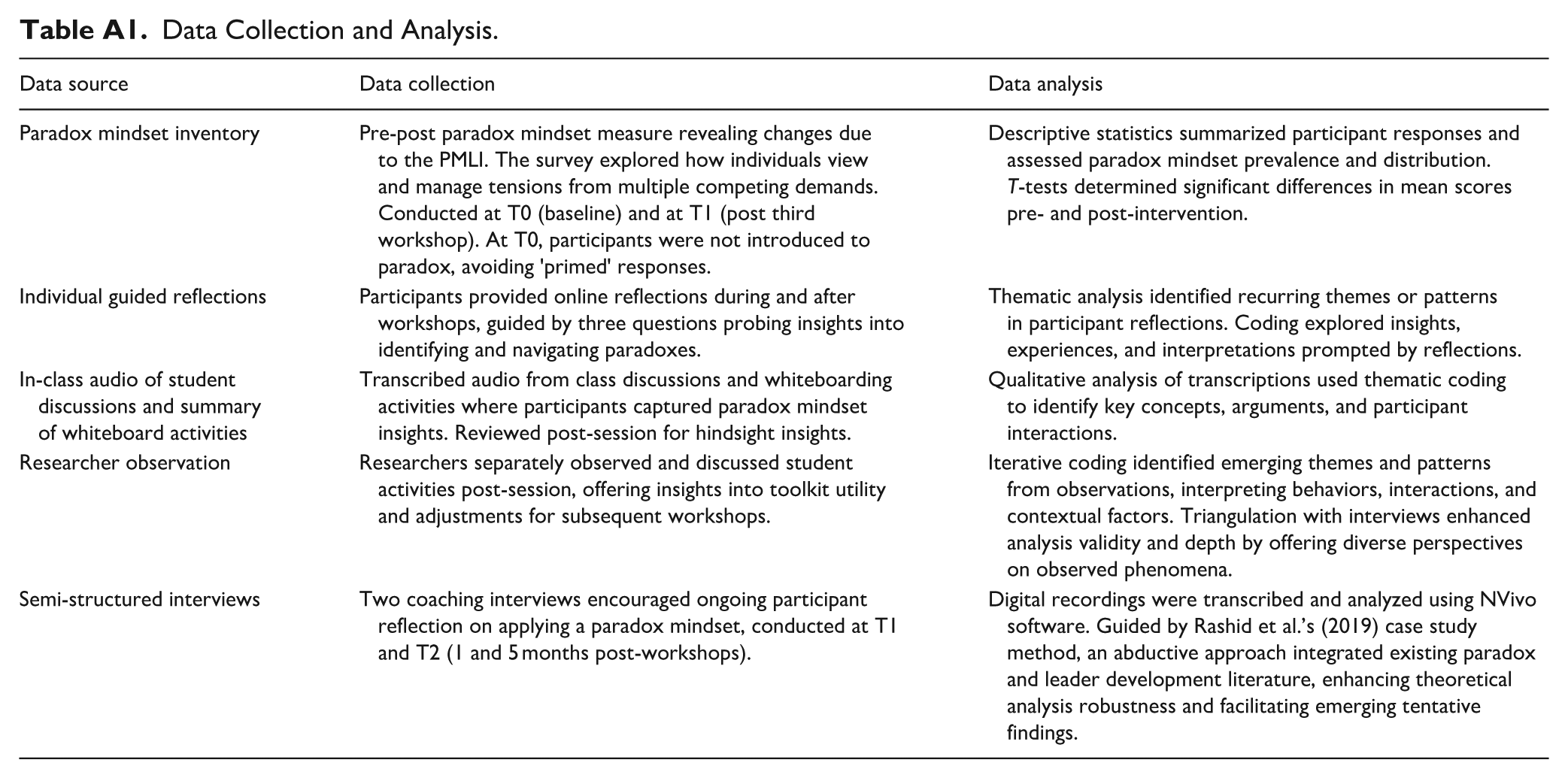
| Data source | Data collection | Data analysis |
|---|---|---|
| Paradox mindset inventory | Pre-post paradox mindset measure revealing changes due to the PMLI. The survey explored how individuals view and manage tensions from multiple competing demands. Conducted at T0 (baseline) and at T1 (post third workshop). At T0, participants were not introduced to paradox, avoiding 'primed' responses. | Descriptive statistics summarized participant responses and assessed paradox mindset prevalence and distribution. T-tests determined significant differences in mean scores pre- and post-intervention. |
| Individual guided reflections | Participants provided online reflections during and after workshops, guided by three questions probing insights into identifying and navigating paradoxes. | Thematic analysis identified recurring themes or patterns in participant reflections. Coding explored insights, experiences, and interpretations prompted by reflections. |
| In-class audio of student discussions and summary of whiteboard activities | Transcribed audio from class discussions and whiteboarding activities where participants captured paradox mindset insights. Reviewed post-session for hindsight insights. | Qualitative analysis of transcriptions used thematic coding to identify key concepts, arguments, and participant interactions. |
| Researcher observation | Researchers separately observed and discussed student activities post-session, offering insights into toolkit utility and adjustments for subsequent workshops. | Iterative coding identified emerging themes and patterns from observations, interpreting behaviors, interactions, and contextual factors. Triangulation with interviews enhanced analysis validity and depth by offering diverse perspectives on observed phenomena. |
| Semi-structured interviews | Two coaching interviews encouraged ongoing participant reflection on applying a paradox mindset, conducted at T1 and T2 (1 and 5 months post-workshops). | Digital recordings were transcribed and analyzed using NVivo software. Guided by Rashid et al.’s (2019) case study method, an abductive approach integrated existing paradox and leader development literature, enhancing theoretical analysis robustness and facilitating emerging tentative findings. |
Appendix B
PMLI Learning Pillars.
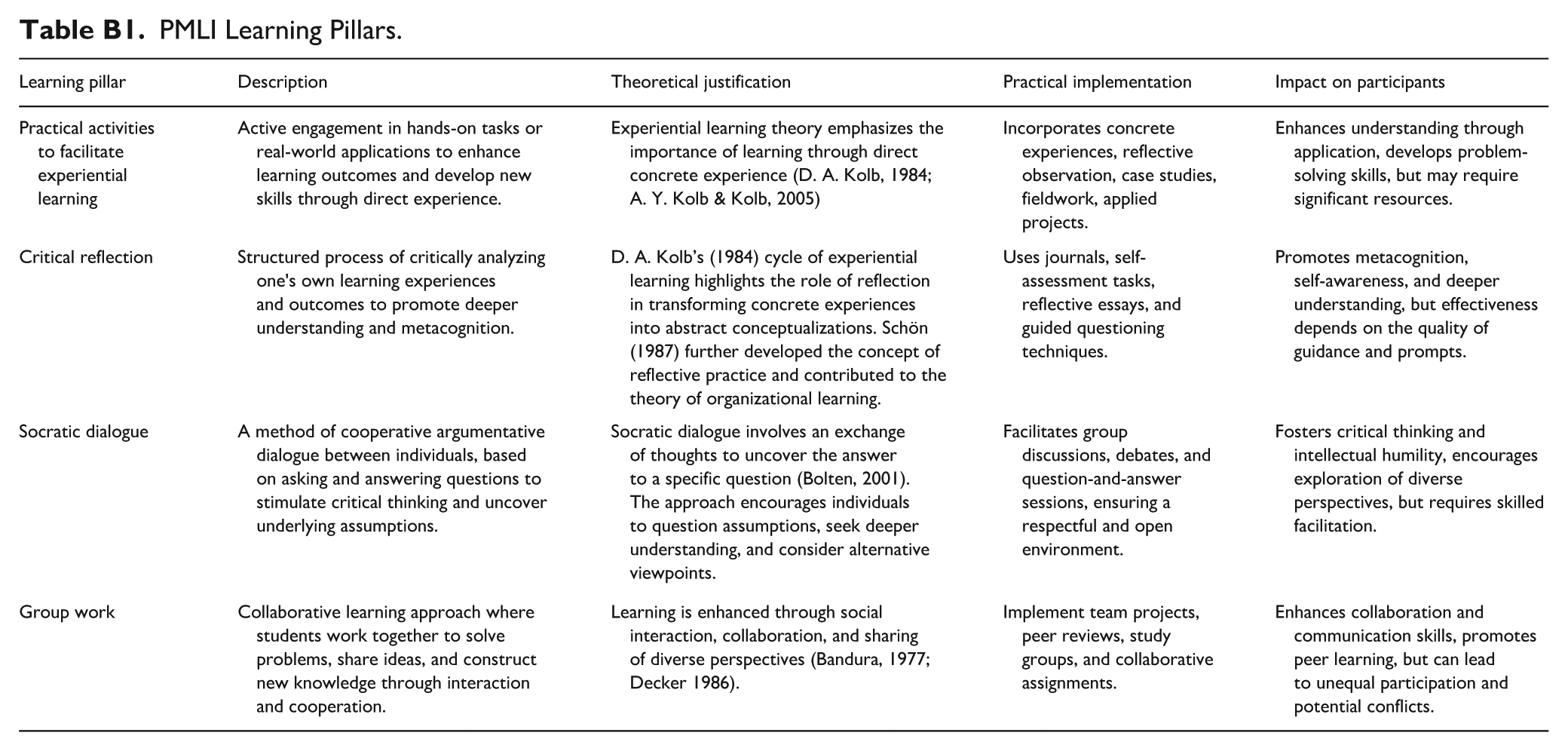
| Learning pillar | Description | Theoretical justification | Practical implementation | Impact on participants |
|---|---|---|---|---|
| Practical activities to facilitate experiential learning | Active engagement in hands-on tasks or real-world applications to enhance learning outcomes and develop new skills through direct experience. | Experiential learning theory emphasizes the importance of learning through direct concrete experience (D. A. Kolb, 1984; A. Y. Kolb & Kolb, 2005) | Incorporates concrete experiences, reflective observation, case studies, fieldwork, applied projects. | Enhances understanding through application, develops problem-solving skills, but may require significant resources. |
| Critical reflection | Structured process of critically analyzing one's own learning experiences and outcomes to promote deeper understanding and metacognition. | D. A. Kolb’s (1984) cycle of experiential learning highlights the role of reflection in transforming concrete experiences into abstract conceptualizations. Schön (1987) further developed the concept of reflective practice and contributed to the theory of organizational learning. | Uses journals, self-assessment tasks, reflective essays, and guided questioning techniques. | Promotes metacognition, self-awareness, and deeper understanding, but effectiveness depends on the quality of guidance and prompts. |
| Socratic dialogue | A method of cooperative argumentative dialogue between individuals, based on asking and answering questions to stimulate critical thinking and uncover underlying assumptions. | Socratic dialogue involves an exchange of thoughts to uncover the answer to a specific question (Bolten, 2001). The approach encourages individuals to question assumptions, seek deeper understanding, and consider alternative viewpoints. | Facilitates group discussions, debates, and question-and-answer sessions, ensuring a respectful and open environment. | Fosters critical thinking and intellectual humility, encourages exploration of diverse perspectives, but requires skilled facilitation. |
| Group work | Collaborative learning approach where students work together to solve problems, share ideas, and construct new knowledge through interaction and cooperation. | Learning is enhanced through social interaction, collaboration, and sharing of diverse perspectives (Bandura, 1977; Decker 1986). | Implement team projects, peer reviews, study groups, and collaborative assignments. | Enhances collaboration and communication skills, promotes peer learning, but can lead to unequal participation and potential conflicts. |
Appendix C

Funding
The authors received no financial support for the research, authorship, and/or publication of this article.
Declaration of Conflicting Interests
The authors declared no potential conflicts of interest with respect to the research, authorship, and/or publication of this article.