



Abstract
C. Michael Nelson began his special education career as a teacher of adolescents with learning and behavior disorders. He has worked as a child psychologist and as a professor with the Department of Special Education and Rehabilitation Counseling at the University of Kentucky. He coordinated the graduate Personnel Preparation Program for Teachers of Students with Emotional and Behavioral Disabilities. Dr. Nelson has authored or edited over 100 professional publications. He has prepared teachers of children and youth with behavior disorders at the pre- and in-service levels and has served as principal investigator on a number of research and personnel preparation grants. He has served as president of the Council for Children with Behavioral Disorders. Dr. Nelson shared with reflections and thoughts with members of the Janus Project on what he describes as a career that came at a good time.
Dr. C. Michael Nelson is an internationally recognized special educator whose contributions and dedication to serving children and youth with serious emotional disabilities in the special education and juvenile justice systems have been widely recognized. Dr. Nelson received his EdD from the University of Kansas in 1969 and that year began his career in higher education at the University of Kentucky, where he remained until retiring in 2004.
When he arrived in Kentucky, Dr. Nelson noted a lack of programs for children with emotional and behavioral problems. He visited Nicholas Hobbs at Peabody College in Nashville to learn more about Project Re-ED, an approach based on a European model for serving these children. Upon his return he assisted in starting a Re-ED program in central Kentucky, which has operated successfully for more than 25 years.
Since the early 1970s, Dr. Nelson has been involved in the Council for Children with Behavioral Disorders (CCBD), serving in leadership roles as vice president, president-elect, president, and past president, as well as chair of the Publications Committee for two terms.
Dr. Nelson became involved with a project called Bluegrass IMPACT (Interagency Mobilization for Progress in Adolescent and Children’s Treatment) designed to create an integrated system of care for children and families with emotional and behavioral disorders. Bluegrass IMPACT (later called Kentucky IMPACT) served 23 central Kentucky counties and became a statewide initiative. He also helped establish partnerships with the National Technical Assistance Center for Positive Behavioral Interventions and Supports (PBIS), the National Center on Education, Disability, and Juvenile Justice (EDJJ), and the Kentucky Center for School Safety. Dr. Nelson has authored or edited more than 100 professional publications, including books, textbook chapters, articles in refereed journals, and multimedia instructional packages.
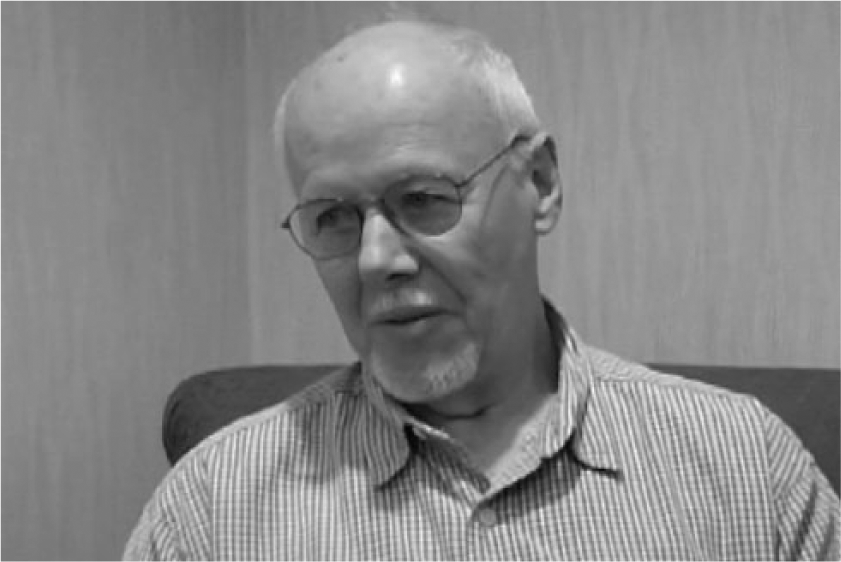
Dr. C. Michael Nelson.
Dr. Nelson has been the recipient of numerous awards and honors, including the Exceptional Achievement Award in Research and Scholarship, College of Education, University of Kentucky (1974 and 1987); Outstanding Leadership Award, Midwest Symposium for Leadership in Behavior Disorders (2000); and the Annual Award for Outstanding Leadership, Council for Children with Behavioral Disorders (2001).
Some of Dr. Nelson’s most important work outside of the special education system has been with adolescents in the juvenile justice system. Dr. Nelson realized that many youth with EBD were in the juvenile justice system, where most were not receiving appropriate services.
Dr. Nelson, we really appreciate your participation in the Janus Oral History Project. Would you tell us how you got into the field of education of children with behavioral and academic challenges?
It was sort of a convoluted process, considering I started out in the field as a consumer. I was something of a delinquent youth. I got in trouble with the law and was invited to drop out of high school and join the Navy. That was actually a good experience for me. It allowed me to kind of age into a more mature way of living within a structured environment.
While in the Navy, I got my GED and decided that I wanted to get an education. Not having a high school diploma, I had some fairly limited options. I could go to a state school, so I ended up going to the teacher’s college, Kansas State Teacher’s College, which is now Emporia State University (ESU). I majored in English, because my high school freshman English teacher was probably one of the most significant people in my adolescence, and in psychology, because I was interested in the field.
I married after I got out of the Navy and started a family, so I fast tracked through my college curriculum and managed to get through in three years. In the process of picking up psychology hours, I took some hours in special education. I signed a contract my senior year to teach English in a middle school in Kansas City in the Mission School District.
I was in Psy Chi, a national honors society of psychology. There was a state special education conference in Emporia. As president of the organization, I was sort of expected to go to this conference. There I met the director of special education for the school district where I was going to teach English, and he talked me into teaching special education instead. That wasn’t a hard sell because, first of all, the people I met at the state CEC (Council for Exceptional Children) conference were just extraordinary and I had a great time. To make a long story short, after I finished my degree I picked up additional hours in the summer and then taught a special education class. From there I moved to a senior high where I started a special education program. At the time, they were all kind of generic and I had every kid who had any kind of a disability. This was pre–P. L. 94-142, of course, so it was a potpourri of kids.
I then got my master’s in school psychology and did an internship at the Children’s Rehabilitation Unit (CRU) at the Kansas University Medical Center. Dick Whelan recruited Jim Kaufmann and me into the doc program. I also was hired as a psychologist at CRU to replace Dick Shores, so it was kind of an interesting chain of events that led me to where I got to be.
I think that the experience was just magnificent. I really had a wonderful program, between the KU Med Center and the Lawrence campus and having exposure to people like Ogden Lindsley, Don Baer, and Montrose Wolfe besides all the good people that worked in special education. The Medical Center was a fabulous place. Being on the staff, I had the run of the hospital. I went to grand rounds in psychiatry, I went to a lot of the developmental clinics, cerebral palsy clinics, and received families. It was really a rich experience.
How would you describe your career in the field?
Someone said to me, when I retired, “You know, your career came at a good time.” I have to say that I really feel that way. It was exciting. I had the opportunity to see so many things begin. First of all, the public law, IDEA, and the whole notion of kids with disabilities having rights, families having rights. It was pretty enormous.
When I arrived at the University of Kentucky, I joined a group of young faculty. We were all pretty much right out of our graduate programs. We really bonded quickly and well. We got some ideas going about how we might put together a curriculum for special education teachers. We built it around the concept of competency-based teacher education by looking at what effective teachers do and then working backward from there. We used that task analytic kind of mode to break down the skills and put them into a sequence of instruction that made sense, and that really worked. In fact, it worked so well that for many years the Kentucky “Special Education Teacher of the Year” was a graduate of our programs.
That was exciting. The faculty, as I said, were cohesive. We did a lot of exciting things. We would sit down and write grants together. The whole faculty would sit down and say, “This is what we want. Here’s our goal. These are our objectives. This is how we’re going to proceed.” We were very, very successful. So, I think that was a very exciting time and a great opportunity.
I also have to say that the last 10 or 15 years of my career, I saw a change in the university system from a focus on academic excellence—I mean that’s always been kind of a mantra—to a business model, and then to more of a “what have you done for the university lately” sort of thing. I think that’s really unfortunate. Anyway, my career came at a good time.
What events, policies, innovations, and people have had the most influence on your professional life?
I wish we could get back to this notion of competency-based teacher training, because that really was such a powerful approach and so darned effective. We extended that to our graduate programs as well. Our doc students who had matriculated would give us feedback. They’d say, “I didn’t have to learn how to develop a syllabus or how to work on a grant proposal because I had experience doing these things in our program.” That was part of our competency framework, so that was a big thing.
I think the training that I got at the University of Kansas and elsewhere in applied behavior analysis has been enormously significant in terms of identifying and implementing practices that are evidence-based and data-based. I think that’s a big thing.
Personalities? I don’t know where to start with that. My mentor, Dick Whelan, was an enormous influence. Ogden Lindsley and Montrose Wolfe, they were instrumental in just bottling and teaching things to me that I’ve never forgotten. Oh, and Earl Butterfield, who took me from being pretty much illiterate statistically to really understanding research design and methodology. The early leaders, early to me anyway, to whom I was exposed when they were invited to the KU campus included John Johnson, Frank Wood, and Frank Hewett. I really shouldn’t name names because then I will inevitably leave somebody out that I should mention. There have been a lot of really outstanding people and great colleagues. Jim Kauffman and I have been lifelong friends. Lew Polsgrove was one of my first doc students, and he and I are great friends. I did much of my doctoral work in a hospital setting, and as I mentioned earlier, was employed at the KU Medical School campus during my studies. Steve Forness had a similar background, and continued working at UCLA’s Psychiatry Institute after he graduated, so that kind of brought us together with a common frame of reference.
All in all, I have to say that maybe some of the events or opportunities in my experience were strictly fortuitous. I also think that our field, our little field of emotional/behavioral disabilities, is compact and we have a lot of fun being with one another. I think conferences like MSLBD (Midwest Symposium for Leadership in Behavior Disorders), TECBD (Teacher Educators for Children with Behavior Disorders), and CCBD (Council for Children with Behavior Disorders) gatherings are somehow a lot more. They’re both intimate and they’re incredibly invigorating. I’ve been coming to these conferences for 40-something years and I still go to sessions and I enjoy what I hear and I learn a lot. It’s novel, I think.
What has had the greatest positive impact on the field of EBD?
I’m going to say behavior science. I think that it’s not only the ability to identify interventions, but to also measure their effectiveness in ways that are accountable to families and individual children, and not just in terms of broad strokes and literature but how much impact they have made as measured by outcomes that are meaningful to kids and families.
What has had the greatest negative impact on the field?
I kind of laugh because my answer is one that is about to inspire rancor for some and pause for others. I believe that full inclusion has been a disaster for our kids. I’ll just say it frankly. It’s not because it’s a bad concept, but because it’s so badly implemented. Mary Margaret Kerr and I tried to advocate for change in the concept of full inclusion to one of supported inclusion. The support needs to go first of all to the student, who’s being placed in an environment where he needs a lot of understanding and support. That support also should focus on a whole lot of dimensions of living, not just academic. And support also has to go to the providers. General education teachers don’t get that support. Special education professionals have caseloads that are out of proportion to their ability to deliver.
What do you see for the future for the field of education of students with emotional and behavioral disorders?
I think we have to really turn some things around. I think we have to wake up and get rid of some of our policies and assumptions about things like “zero tolerance.” We need to stop failing to use the data we get from interventions that don’t work, such as exclusionary disciplinary practices that push kids out of school and into the school-to-prison pipeline. We continue to practice things that have no record of effectiveness. In fact, they demonstrate quite the opposite. They are detrimental to the most fragile or the most vulnerable of our kids. It’s a crime that we still embrace policies that marginalize and disaffect kids and their families to the extent that we have such an underclass of people. I’m thinking about a new term instead of “socially disadvantaged.” Why not “socially serviced disadvantaged?” We really do have that problem.
There are more kids with serious emotional disturbance and mental health needs in secure care, incarceration, than there are in mental health settings. A lot of professionals, myself included, agree that the juvenile justice system is the de facto children’s mental health system in this country. That’s simply wrong. I don’t care what you believe about the role of government, but we have to have services for people that need them if we are to look anybody in the eye and say, “We are a humanitarian society. We believe in values that put people in front of corporations, in front of profits, and so forth.”
How would that translate into teacher education programs?
Well, first of all, I believe at the bottom of my heart that as a framework, positive behavioral interventions and supports (PBIS) are absolutely on the money as far as supporting kids and staff in ways that make schools more fundamentally user-friendly environments. So, I think we need to consider how can we bring PBIS to scale in teacher education, not just in education settings where the education is delivered. I know RTI (response to intervention) gets a lot of bad press from various quarters because there are a lot of ways that it can go wrong or be misapplied, like anything. But again, the whole framework is really sound. You don’t wait for kids to fail. You try to implement things that support and build, but when students start to struggle, you identify them immediately through the process of monitoring their performance. I think the concepts of using performance-based academic and behavior measures and putting into place a framework that enables us to establish a continuum of diverse strategies is a really good way. If we could put that framework into teacher education, I think we’d see a lot more success in retaining teachers, in retaining kids, and in basically just better performance.
What advice would you offer to those just entering the field—those entering higher education to be professors and those actually teaching children with EBD?
Well, I want to be flip and say to either group, “Don’t expect to make a lot of money.” You’re not going to make a lot of money, but hopefully the people who enter the field enter it because they have a belief system that embraces the need to nurture and build human performance. I’d say that rewards come from the responses of your students, be they undergraduate or graduate college students or public school students. That whole attention to individuality and encouraging personal growth and prosperity are important. One thing I tell people is, “Don’t do it if you don’t love it. Also don’t do it if you’re not going to do it well.”
I’m really alarmed at some of the practices that are coming out such as online courses and certification by examination. Those are perplexing to me. How can you deliver pedagogy in an online course? Now, I have to add a caveat. I have recently worked with a group in Texas on a proposal to provide online professional development using a platform that is really innovative and interactive. I’ve not seen it before and I’m just beginning to learn about it. Perhaps I need to investigate further and learn about the evolution of technology in building the interactivity and loops that make teaching a process that actually has some accountability and merit.
Any last comments?
Even though I’ve been retired now for several years, I don’t see myself leaving the field. I continue to find ways to stay involved. It is a process that you go through. I think backing out of some things and making more restrictive choices about what you do are important all along your career path. As you get older, you want to be able to stop and smell the roses and do a few other things.
I think the greatest experience is being a lifelong learner. That provides the opportunity to meet with young people, new people and exposure to points of view and ideas that you haven’t really appreciated before. It’s a great way of meeting people.
Footnotes
Declaration of Conflicting Interests
The authors declared no potential conflicts of interest with respect to the research, authorship, and/or publication of this article.
Funding
The authors acknowledge ongoing financial support from the Midwest Symposium for Leadership in Behavior Disorders.