



Abstract
Based on work with state and local education agencies in dropout prevention for students with disabilities, successful research-based interventions are described along with details of how these interventions have been implemented in middle and high schools across the country. The interventions that have helped students with disabilities graduate from school include early warning systems, mentoring programs, student engagement, family engagement, academic remediation and enrichment, career-focused curricula, interpersonal skills instruction, a focus on the transition to high school, and class/school restructuring initiatives.
Dropping out of high school is associated with many negative adult outcomes, including an increased likelihood of experiencing unemployment, low wages, incarceration, poverty, and poor health (Archambault, Janosz, Morizot, & Pagani, 2009; Belfield & Levin, 2007; Bridgeland, Dilulio, & Morison, 2006; Lehr, Johnson, Bremer, Cosio, & Thompson, 2004; Sanford et al., 2011). These situations are costly for society in both social and economic terms. Therefore, helping young people graduate from high school is an important endeavor, not just for the individuals whose lives are improved through the attainment of a high school diploma, but for entire communities and society as a whole.
Students drop out of school for a variety of reasons, including (a) missing too much school, (b) academic failure, (c) poor relationships with teachers, (d) pregnancy, and (e) family or job obligations (Bridgeland et al., 2006; Croninger & Lee, 2001; Shuger, 2012). Due to the variety of reasons students drop out, school completion interventions must include multiple components, with efforts to increase student engagement at their core. It has been found that student outcomes are most likely to improve when a caring and supportive school environment is combined with a focus on learning and high expectations for student achievement (Dynarski et al., 2008).
This article describes school-based interventions that have proven successful at increasing graduation rates for students with disabilities and provides recommendations for state departments of education, local education agencies, and schools. These recommendations are based on practices that that have been described in several syntheses of research on dropout prevention interventions for students with disabilities (e.g., Cobb, Sample, Alwell, & Johns, 2006; Lehr, Hansen, Sinclair, & Christenson, 2003; Prevatt & Kelly, 2003), as well as findings from the National Dropout Prevention Center for Students with Disabilities (NDPC-SD). The NDPC-SD was established by the U.S. Department of Education’s Office of Special Education Programs in 2004 to address the problem of high dropout rates among students with disabilities and since that time has provided technical assistance to all 50 states, the District of Columbia, the Bureau of Indian Education, and several U.S. territories.
This article describes the most impactful school-based interventions associated with school completion for students with disabilities, which include (a) early warning systems, (b) mentoring, (c) family engagement, (d) academic interventions, (e) transition to high school, (f) student engagement, (g) career-focused/vocational curricula, (h) interpersonal skills, and (i) class/school restructuring.
Interventions
Early Warning Systems
The implementation of dropout prevention interventions depends on the use of data systems that identify individual students at risk of dropping out and indicate risk factors that can be addressed with both schoolwide strategies and targeted interventions. Data systems should provide real-time data so that individual student performance can be continually monitored to allow interventions to be adjusted as needed. Early warning system (EWS) data can also be used to examine grade-level and school-level patterns to address systemic issues that may be impeding students’ ability to graduate. This analysis should be conducted in conjunction with an evaluation of killer policies that contribute to the problem of dropout, such as punitive and inflexible attendance and disciplinary procedures that exclude students from school.
In West Virginia, the State Department of Education data managers used the research on risk factors for dropouts (i.e., attendance, behavior, and course performance; Neild, Balfanz, & Herzog, 2007) to develop an EWS that was integrated into the state’s longitudinal data system. The threshold settings (e.g., number of days absent) and filters (e.g., grade level, students with disabilities) were designed to be flexible to meet the needs of individual schools. Data could be accessed at the student, grade, individual school, or all school level that showed records from students’ previous schools. Students identified as being at-risk appeared in a color-coded list indicating the severity of their risk level, enabling school teams to identify individual students for targeted interventions in a uniform and efficient manner.
Through using an EWS, it may become apparent that a school has a schoolwide problem with attendance. To address this problem, a schoolwide attendance program may be implemented, involving tracking daily classroom attendance, assigning staff to respond to all student absences, and providing weekly recognition and monthly social rewards for good attendance, such as pizza parties and field trips. A student who continues to miss school despite schoolwide interventions would be targeted for individual interventions, such as signing an attendance contract or attending a school conference with family members. A staff member would then follow-up with daily attendance monitoring of that student. If the student continues to have attendance problems, he or she might be assigned to a school-based team consisting of a counselor, an assistant principal, and a teacher, who will attempt to determine the source of the student’s attendance problem. If the school is not equipped to deal with the problem, the team may arrange for the student and his or her family to receive appropriate social service supports outside of the school (Neild et al., 2007). In this way, the EWS allows for ongoing progress monitoring and targeted interventions.
Mentoring
Students who are at risk of dropping out often have a variety of personal, academic, and family problems that hinder their likelihood of succeeding in school. These problems may also negatively impact students’ attendance at school and when students are frequently absent, it can affect their ability to bond with others in the school environment. Having a connection to an adult in the school setting can increase students’ sense of belonging in school. Research on mentoring indicates that even informal relationships with caring adults can increase the likelihood that students with disabilities will graduate (Ahrens, DuBois, Lozano, & Richardson, 2010; Dunn, Chambers, & Rabren, 2004; Murray & Naranjo, 2008).
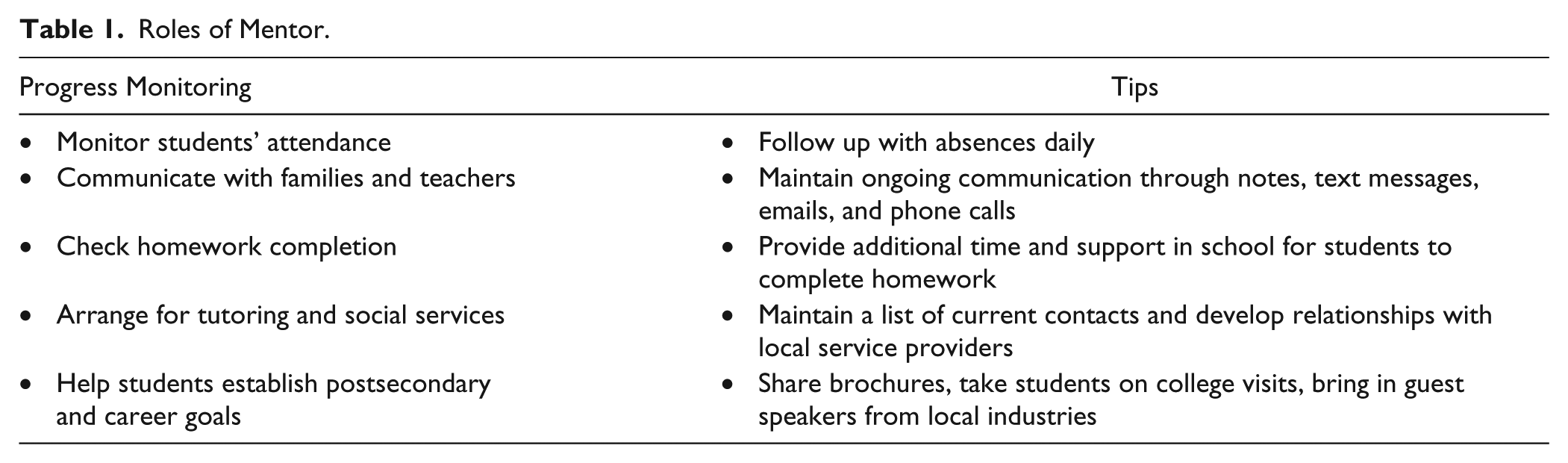
Mentors should be selected based on their sincere belief that students can succeed and their willingness to provide ongoing support and encouragement. Mentors should be positive role models who can help students acquire the skills needed to succeed the face of adversity. Schools can draw mentors from a variety of sources including graduate students from local universities, community volunteers, and special education teachers. To increase the likelihood of students bonding with their mentor, it is recommended that students and mentors are purposefully matched and kept together for multiple years. In addition to serving as a caring adult, mentors play many practical roles in students’ lives, including addressing their academic needs, communicating with families, and helping to connect them to needed services, such as counseling or drug rehabilitation. The roles of mentors engaged in student progress monitoring, along with implementation tips, are shown in Table 1.
Roles of Mentor.
Mentoring in practice
At a high school in West Virginia, all special education students were matched with mentors, many of whom were special education teachers. Mentors were relieved of homeroom duties so they could meet with students on a daily basis, individually and in small groups, to monitor student performance and identify areas in which they needed additional support. Mentors provided tutoring, assistance with homework, and test preparation. They also reviewed students’ individualized education programs, looked at how accommodations were being met in students’ classes, and worked with students on self-advocacy skills. Mentors and mentees also role-played ways for students to handle challenging situations with their teachers and peers. In addition, as an advocate for their mentee, mentors communicated with general education teachers, conducted parent conferences, made home visits, and collaborated with guidance counselors and outside agencies (Wilkins et al., 2014).
Family Engagement
When families are engaged in their children’s education, children are more likely to be successful in school (Epstein, 1987, 2001). It is important that schools create a welcoming atmosphere for families and convey the message that family participation is wanted and valued. It is particularly important to reach out to parents who have low rates of participation in school activities. Holding informal school functions, such as potluck dinners, usually draws many family members and provides a relaxed setting in which teachers can develop relationships with parents. Such functions also provide opportunities for parents to network with one another.
It should not be assumed that parents have the information and skills needed to help their children succeed in school. Schools should provide parents with materials that explain school rules and expectations, and adapt materials for families from culturally and linguistically diverse backgrounds (Bae & Clark, 2005). It is also important for teachers to share information about what students are learning in school and recommend specific ways that parents can support that learning at home (Wilkins & Terlitsky, 2016).
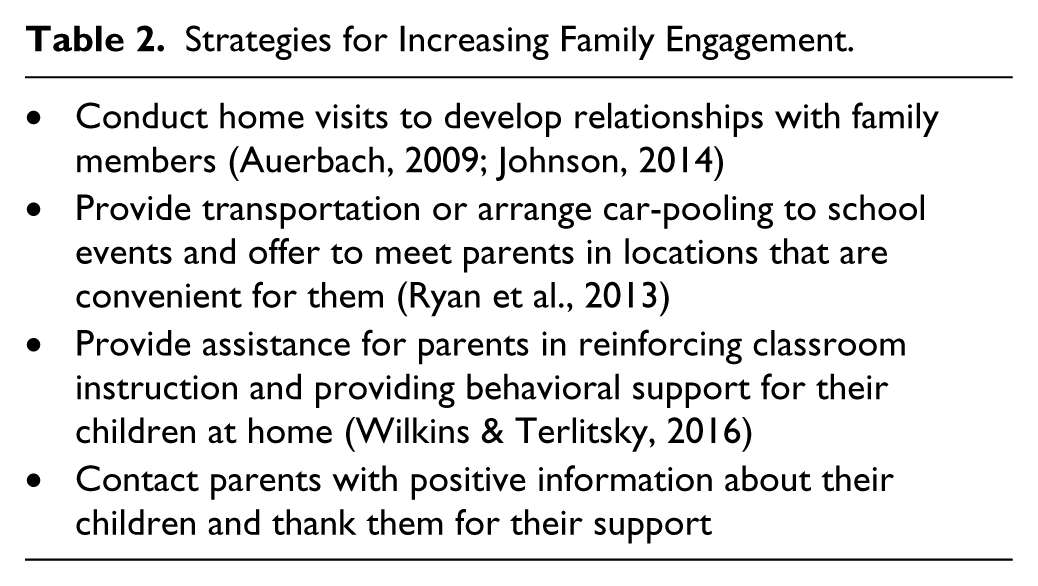
Teachers should ensure they communicate with parents on a regular and ongoing basis (Christenson & Sheridan, 2001). A variety of communication methods can be used (e.g., phone calls, text messages, newsletters, face-to-face meetings), but the convenience of families is paramount. In addition, communication between teachers and parents should be a two-way process; parents should be encouraged to contact teachers with questions, concerns, and recommendations regarding their children’s learning. Strategies for increasing family engagement are shown in Table 2.
Strategies for Increasing Family Engagement.
Family engagement in practice
In Georgia, a parent mentor partnership, an initiative funded by the Georgia Department of Education and partnering school districts, actively involved parents of children with disabilities in the special education process by hiring parents as mentors to provide information, tools, and resources to other parents of students with disabilities. Mentors responded to parent requests for information through telephone calls, letters, email, and face-to-face meetings. They also worked with teachers and administrators in planning and implementing activities that supported family involvement. Through this process, parents became equal partners with teachers in the education of students with disabilities. Title 1 parent involvement coordinators also served as home–school liaisons to build parent capacity to increase student achievement (Georgia Parent Mentor Partnership, 2013).
Academic Interventions
Low academic performance and frequent absences may result in students being retained a grade. Falling behind with work and being retained significantly increase students’ likelihood of dropping out (Jimerson, Anderson, & Whipple, 2002). Students who fail courses need support to develop academic skills as well as accumulate credits. Providing academic supports, such as tutoring, academic enrichment, and credit recovery, can help students catch up with work, improve their academic skills, and increase the chances that they will pass the required courses and high school exit exams needed to graduate (Wilkins, 2011a). It is also important to consider proactive interventions to increase students’ chances of success. Evidence-based interventions include the use of mnemonic devices, graphic organizers, cross-age peer tutoring (University of Missouri, 2011), spacing learning over time, using quizzes to re-expose students to content, and asking deep level questions that allow students to respond with explanations that promote deep understanding of the material (Pashler et al., 2007). Tiered interventions, as provided by the response to intervention model, should also be used so that students who are struggling with the regular curriculum can be provide more intensive academic instruction matched to their individual needs.
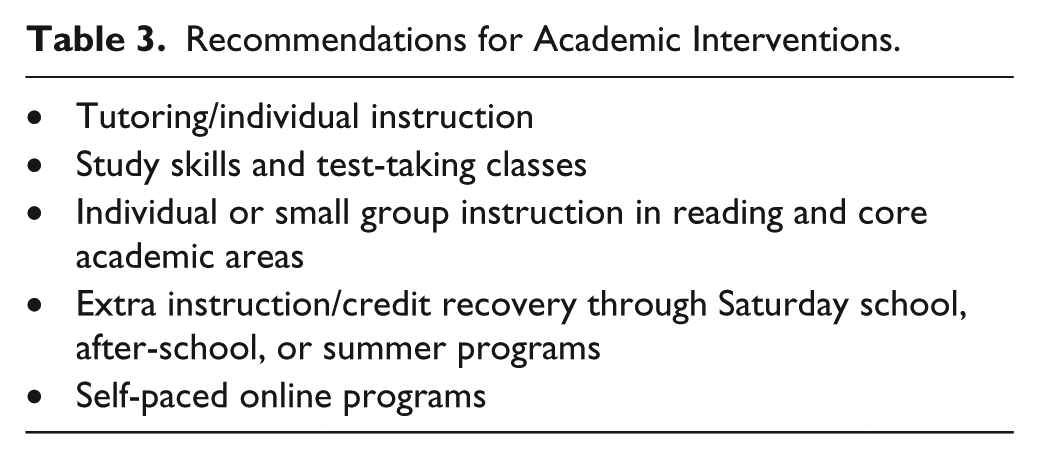
Students who are in high school and are not on track to graduate may need additional opportunities outside regular school hours, such as after-school programs, Saturday school, and summer enrichment programs where teachers can provide a personalized environment while helping students catch up on coursework and earn the credits they need to graduate. Additional reading courses are beneficial because they can help improve students’ skills in a variety of content areas (Graves, Juel, & Graves, 1998). Likewise, online programs are effective as they provide a medium through which students can complete work at a more individualized pace than a traditional classroom setting. Some recommendations for academic interventions are shown in Table 3. See Wilkins (2011a) for additional examples of interventions.
Recommendations for Academic Interventions.
Academic interventions in practice
In a West Virginia county, high school counselors and administrators conducted ongoing credit checks and referred students who were failing courses to one of the many high school options including: an after-school tutoring program that provides dinner and transportation home; the Saturday Scholars program that provides tutoring, credit recovery, and test preparation; and summer credit recovery classes that can be taken not only in core content areas, but also in physical education, health, and music appreciation (Wilkins et al., 2014). Students could also participate in the computer-based READ 180 program, a program focused on improving literacy skills for adolescent learners (U.S. Department of Education, 2009).
Transition to High School
Students who start to lose interest in school during middle school often have a difficult time transitioning to high school, particularly if they are already struggling academically. The increased academic demands in high school along with the more depersonalized environment can contribute to students’ disengagement and decreased sense of motivation. Students may begin to skip school and fail classes without any follow-up from the school. In fact, more students fail ninth grade than any other grade, and making a poor transition to ninth grade is associated with dropping out of school (Williams & Richman, 2007).
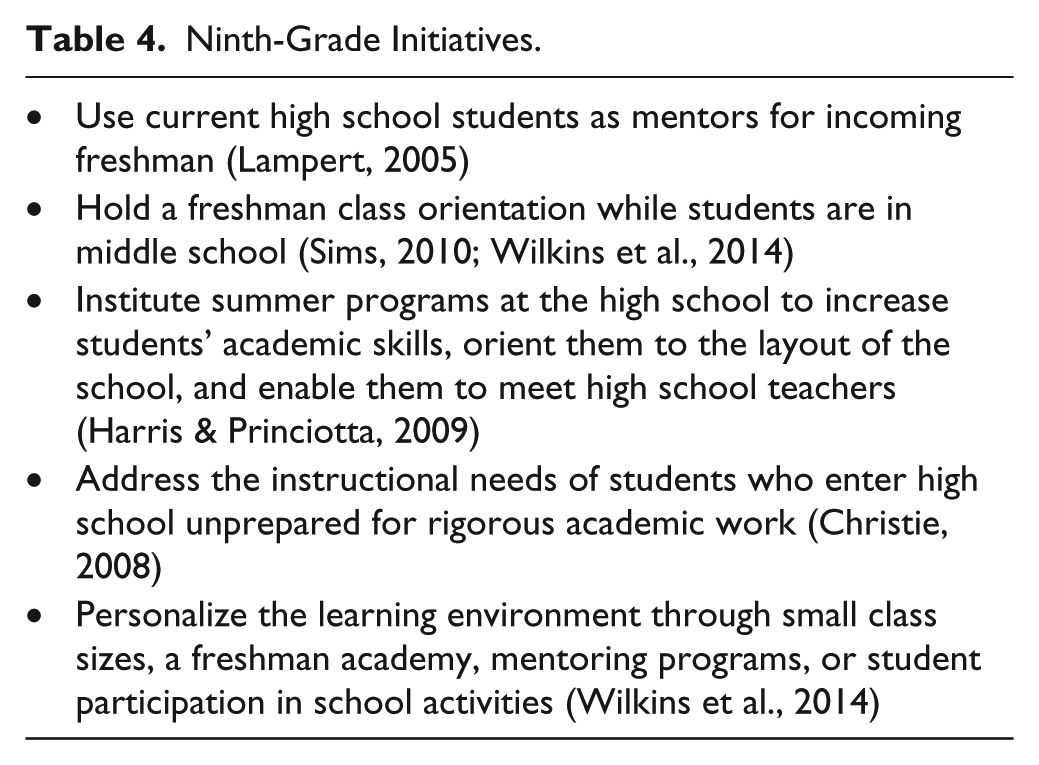
It is critical that schools use data systems to focus on student attendance given that low attendance during the first 30 days of ninth grade is a stronger indicator that a student will drop out than any other eighth grade predictor, including test scores, academic achievement, and age (Jerald, 2006). In implementing ninth grade initiatives, many schools place a particular focus on personalizing the high school environment to promote a sense of community. In working toward this goal, it is important for schools to consider structural changes, such as creating small learning communities, as well as programs that increase opportunities for relationship-building between adults and students, such as mentoring programs. Some recommendations for easing the transition to high school are provided in Table 4.
Ninth-Grade Initiatives.
Ninth grade initiatives in practice
In a Utah high school, students made the transition to high school by being assigned to an adult mentor who monitored their progress on a weekly basis throughout the year. If a student was falling behind, a member of the Freshmen Success Team contacted the student to offer assistance, tutoring, or mediation. Students could attend tutoring sessions at lunch time to get caught up with work, and if they continued to fall behind, a written plan was drawn up for the students’ success with the input of the students’ parents. In addition, all freshmen were encouraged to participate in at least two extra-curricular activities during their freshman year (Highland High School, 2014).
Student Engagement
Although students typically drop out during high school, dropping out represents the culmination of a long process of disengagement (Rumberger & Lin, 2008). Students who are engaged in school demonstrate behaviors consistent with academic success and graduating, such as attending school regularly, completing class work and homework, and participating in school activities. In addition to increasing students’ sense of belonging in school, participating in school activities provides friendship networks that can motivate students to attend (Goodenow & Grady, 1993; Ream & Rumberger, 2008). Students who are at risk of dropping out should therefore be encouraged to participate in extracurricular activities. To appeal to students with a wide range of interests, schools should conduct surveys to ask students what types of extracurricular activities they would be interested in.
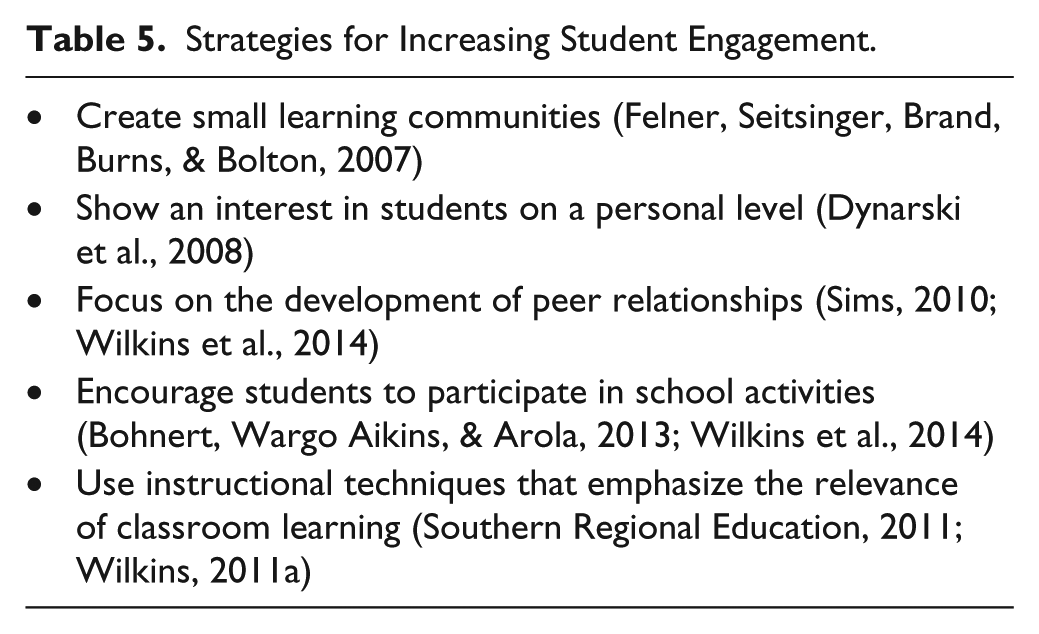
Personalizing the learning environment through small classes is another way that teachers can develop close relationships with students and help them feel a sense of community in school. In addition, team teaching enables teachers to devote one-on-one attention to students and contributes to the creation of a family atmosphere. When students understand the relevance of classroom learning, they are also more likely to be engaged, so teachers should emphasize real-world applications. Strategies for increasing student engagement are shown in Table 5.
Strategies for Increasing Student Engagement.
School engagement in practice
The principal of a West Virginia high school asked every teacher in the school to lead a school club, which resulted in the formation of 38 new clubs, including classic movies, nature, comedy, fantasy sports, outdoor activities, volleyball, weight lifting/fitness, classic board games, scrapbooking, and Young Democrats. All students were required to participate in a school club, and one day per month was allocated to club activities. Developing a personal connection to an adult with similar interests is a powerful factor in motivating students to attend school. Many students signed up for the same club 2 years in a row, which enabled teachers to develop meaningful, long-term relationships with them (Wilkins et al., 2014).
Career and Vocational Preparation
One reason that students lose interest in school is that what they are learning does not seem relevant to their lives. Vocational and career and technical education (CTE) is an effective way to engage students, as students learn real-world applications of their academic classes and have opportunities for field-based learning. Partnerships with local businesses can provide students with a variety of work-related opportunities, such as on-the-job training, interview preparation, and even permanent employment. Schools should consider providing opportunities for students with disabilities to explore careers in a variety of settings so that students can make connections with people who know about job vacancies and employers who are open to hiring young people with disabilities (Trainor, Smith, & Kim, 2012).
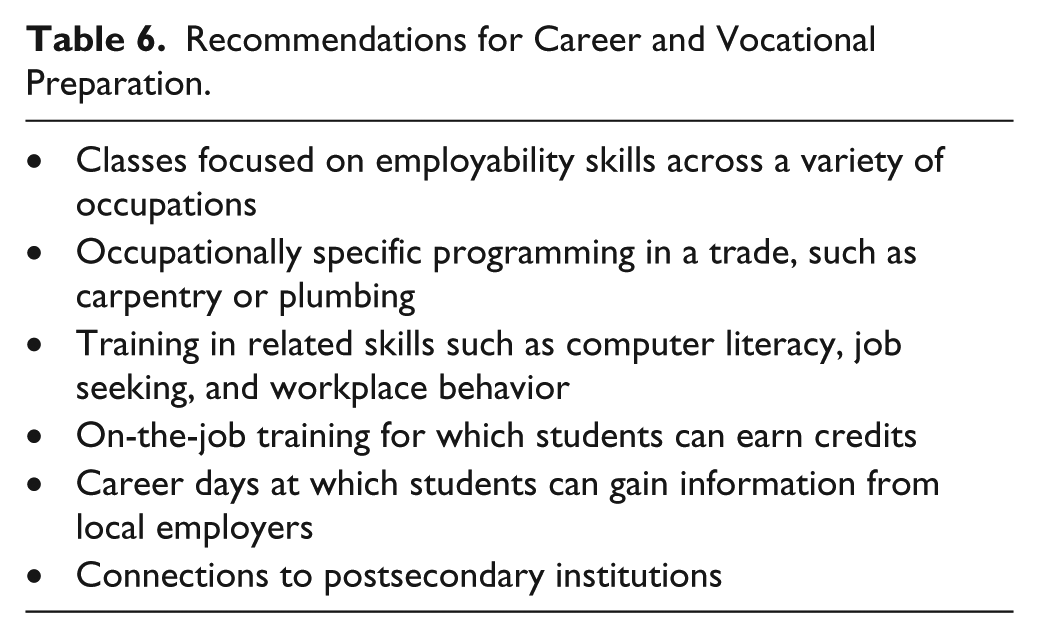
The focus on career preparation should not take away from preparation for postsecondary education. Most careers require postsecondary training and education, and employment should therefore be considered in tandem with postsecondary education. Schools should help students understand the connections between education and work by demonstrating how high school academics are connected to college, work experiences, and students’ future career goals. Schools should also help connect students with support services at local institutions of higher education, such as disability service, mentoring programs, and advocacy groups. Recommendations for career and vocation preparation are shown in Table 6 (Wilkins, 2011a, 2011b).
Recommendations for Career and Vocational Preparation.
Vocational and career preparation in practice
The Nebraska Department of Education implemented an academy approach in which students with disabilities can participate in a variety of work experiences through externships in such settings as zoos, hospitals, and schools. Students in the Law, Public Safety, and Security Academy can do externships with law enforcement, public safety, and security personnel. Students in the Athletic Training Academy can assist coaching staff and fitness trainers. Students receive job coaching through Vocational Rehabilitation services and work on developing realistic career goals, as well as related job skills, such as interview skills, time management, conflict resolution, and dressing for success (Nebraska Department of Education, n.d.).
Interpersonal Skills
Students who lack appropriate interpersonal skills are at a high likelihood of being suspended or expelled from school for disruptive behavior. Rather than increasing students’ commitment to school, excluding students pushes them further onto a path of disengagement. Learning how to problem solve in social situations is a critical skill needed by students to avoid disciplinary action and is also important for students’ postschool success. Many dropout prevention programs incorporate classes on self-determination skills, which help students develop the capacity to engage in goal-directed, self-regulated, autonomous, and independent behavior, and understand their strengths, interests, needs, and preferences (Carter, Trainor, Owens, Sweden, & Sun, 2010).
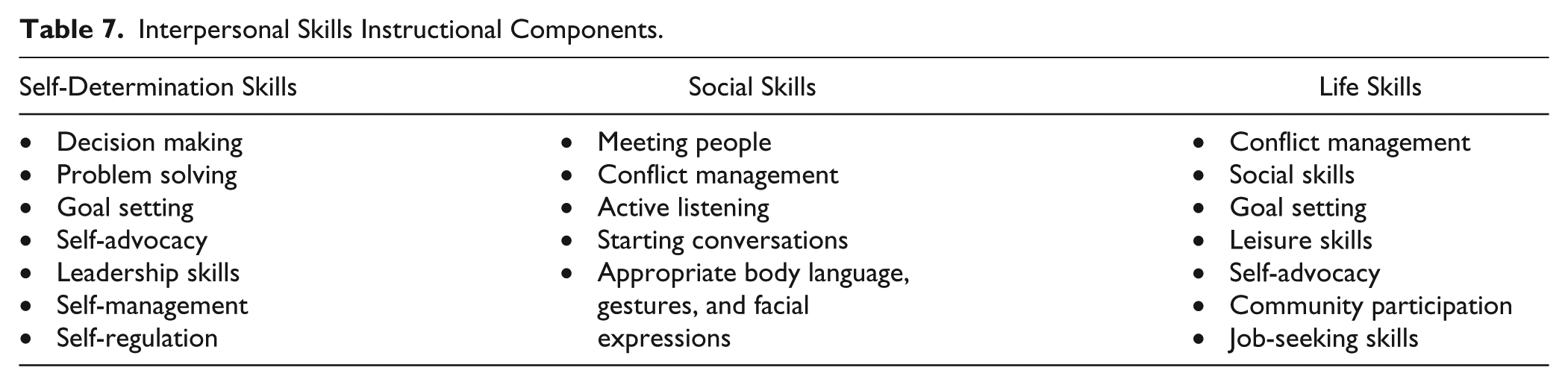
Positive relationships are central to self-determination, and providing social skills instruction for students to learn how to maintain positive relationships, is therefore a key component of self-determination programming. When students gain self-determination skills and social skills, they are also gaining life skills. Similarly, it was found that students’ self-determination increased when students learned life skills such as goal setting and positive thinking/self-talk in a program to develop students’ physical fitness (Kolovelonis, Goudas, Dimitriou, & Gerodimos, 2006). These overlapping instructional areas tend to incorporate similar skills, such as problem solving and conflict resolution, and may be addressed in specific classes or embedded in academic instruction. The skill areas targeted in the domains of self-determination, social skills, and life skills contribute to the development of students’ interpersonal skills and are shown in Table 7 (Riccomini, Williams Bost, Katsyiannis, & Zhang, 2005).
Interpersonal Skills Instructional Components.
Interpersonal skills in practice
In a large public school system in Florida, the Residential Electrical Wiring Program provided an opportunity for students with emotional/behavioral disabilities to participate in vocational education while developing self-esteem and social skills. Students got hands-on work experience and took field trips to work sites in the local community where they interacted with plant managers, building contractors, and company directors to learn about employment skills and job expectations. Through cognitive behavioral interventions, students also learned how to use self-talk to promote positive self-growth and social interactions. Students were evaluated daily on such dispositions as attitude, pride in work, and working with others (Miami-Dade Public Schools Division of Special Education, n.d.).
Class/School Restructuring
Students who attend large schools may feel lost and disconnected from school. When students feel little attachment to school, it is usually not a difficult decision for them to drop out. Some school restructuring programs involve smaller classes and block schedules in which students have fewer teachers. In such learning environments, teachers can focus on building relationships with students and between peers. A personalized learning environment promotes a sense of community and has long been associated with students’ increased sense of belonging in school and improved academic performance (Cotton, 1996; Oxley & McCabe, 1990; Raywid, 1998). Small learning environments also enable teachers to interact with students on an individual basis, which gives teachers the opportunity to target students’ interests to motivate them and be more attentive to students’ areas of difficulty.
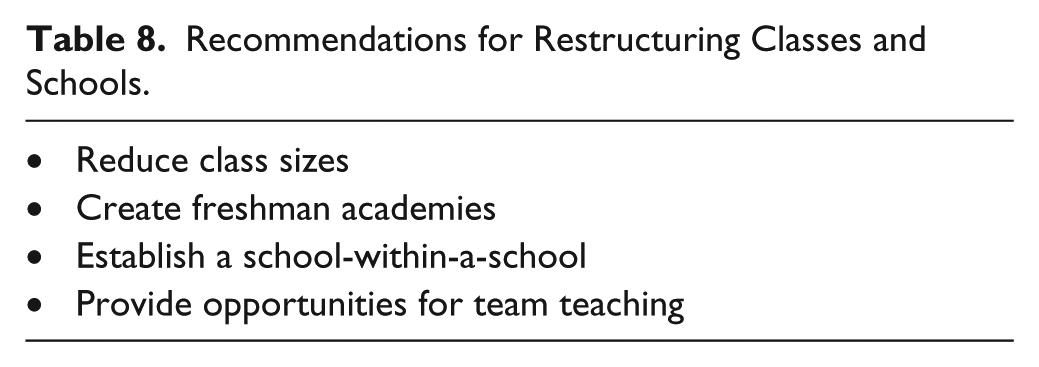
To bring a small school atmosphere into a large high school, restructuring efforts include ninth grade academies, school-within-a school programs, and career academies. In ninth grade academies, students may be housed in a separate wing of the school building, with core-academic teacher teams that share the same students. Similarly, the school-within-a-school model allows students to receive personalized instruction in learning environments targeting just their grade level, within the larger high school. Each small learning community consists of an interdisciplinary team of teachers who remain with students throughout high school. Some recommendations for restructuring classes and schools are shown in Table 8.
Recommendations for Restructuring Classes and Schools.
Class/School Restructuring in Practice
In West Virginia, an academy approach was adopted in a high school, which involved the integration of the CTE electricity program and general education classes, with classes team taught by special education and content area teachers. Agricultural science and biology were also integrated and team taught by content area teachers in both subjects, with an intentional focus on hands-on projects for students who had not been successful through traditional teacher-directed instruction (Wilkins et al., 2014). Team teaching is conducive to a personalized learning environment as it gives students access to more than one teacher who can offer individualized attention and allows teachers to devote more attention to struggling students (Dieker & Murawski, 2003; Friend & Cook, 2007).
Conclusion
While many schools have managed to increase the graduation rates of students with disabilities by implementing the interventions described in this article, it is important to remember that effective dropout prevention programs are comprised of multiple components. Despite their success, interventions may not be sufficient without a revision of school policies that are counterproductive to keeping youth in school. In addition, the success of interventions depends on regular review of data to identify students with specific risk indicators and a continual examination of student performance data to assess outcomes of interventions. Attending school is critical for students to stay on track, and attendance monitoring should therefore be a component of any school completion initiative. When students miss school, it indicates that they are disengaged and are on the trajectory toward dropping out. School completion initiatives should address student engagement by providing students opportunities to connect with adults in the school setting, participate in school activities, and take courses that are relevant to their futures, while providing interventions focused on students’ academic and behavioral needs and support from the family.
Footnotes
Declaration of Conflicting Interests
The author(s) declared no potential conflicts of interest with respect to the research, authorship, and/or publication of this article.
Funding
The author(s) disclosed receipt of the following financial support for the research, authorship, and/or publication of this article: The National Dropout Prevention Center for Students with Disabilities is funded by the U.S. Department of Education’s Office of Special Education Programs’ Cooperative Agreement No. H326W080003. The content herein does not necessarily reflect views or policies of the U.S. Department of Education, nor does mention of other organizations imply endorsement by those organizations or the U.S. government.