




Abstract
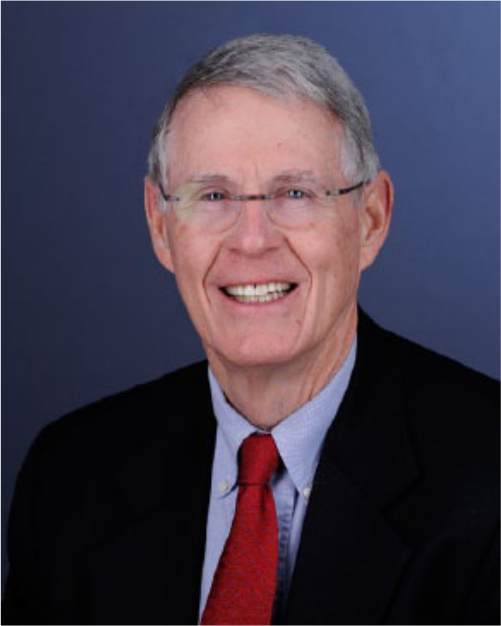
Richard Simpson is professor of special education at the University of Kansas (KU). Dr. Simpson’s duties at KU have included roles of staff psychologist, teaching associate, assistant professor, project director, associate professor, professor, and chairperson for the Department of Special Education. He has directed numerous University of Kansas and University of Kansas Medical Center demonstration programs for students with autism and other disabilities. He has authored numerous books, articles, and assessment instruments on a variety of topics related to students with disabilities.
Dr. Richard Simpson is the former senior editor of the professional journal, Focus on Autism and Other Developmental Disabilities. He has also presented at numerous conferences, meetings, and workshops throughout his career. Dr. Simpson has received numerous professional awards, including the Council for Exceptional Children Research Award, Midwest Symposium for Leadership in Behavior Disorders Leadership Award, Autism Society of Kansas Leadership Award, and the Gene A. Budig Endowed Teaching Professorship of Special Education.
* * * * *
Richard Simpson
How did you got into the field of working with children with emotional/behavior disorders?
Well, it’s probably one of those convoluted routes like is the case with most people. As a college student, I was seeking what I wanted to do for my life’s work and I ended up being a psychology major. Having an undergraduate psychology degree is really a route to nowhere, because there’s really not a lot you can do with that, as my father reminded me on certain occasions. It was like, “You’re making good grades, we’re so glad you’re in college, you’re not in Vietnam, you’re staying out of trouble, what the hell are you going to do with that?”
I was very interested in kids and I ended up taking a master’s degree. I thought I wanted to be an experimental psychologist, which I thought was really pretty cool. I had some early experiences in lab environments and quickly discovered that I got too attached to the animals. When part of my job was to destroy part of their brains or do those sorts of things, I just didn’t like that. I found myself being much more interested in children, so I took licensure as a school psychologist. I did that for a while and quickly, probably like many school psychologists, decided when I was having nightmares about administering the Wechsler repetitively, that it wasn’t exactly what I wanted to do.
The backdrop of all of this is that I have an older sister who died recently. She had a pretty significant emotional/behavior disorder and was in and out of psychiatric hospitals the entire time I was a child. I saw my parents struggle dramatically with this. So on the one hand I was interested in behavioral sciences and it was sort of a natural thing to find myself interested in. I have to tell you, I did not have a lot of respect for the people who were working with kids at the time. I was watching my parents struggle. Being in school and not responsible for things, I think it was a little easier to be distanced. I didn’t have to deal with the phone calls. My sister—this was pre-94-142—was out of school and spending so much time at hospitals and psychiatric facilities.
Were you in Kansas?
I was. I grew up in the Kansas City area and my father was a business owner, so we were a middle class family. We were not without resources, but I saw my parents struggle and I saw the work that was being done and I just had so little respect for the therapists. It was at a time when one of the primary things that was done was shock therapy and some pretty draconian, almost barbaric things. On one occasion, a therapist came to our house and led a family meeting because my sister was coming home from the psychiatric hospital and was being phased back into our home. I was probably a junior or senior in high school, and I thought these are the most uninformed, lack of common sense thoughts and ideas that I ever heard in my life.
So, that’s sort of the backdrop. When I started seriously looking at what I was going to do with my life’s work, I went from animals to school psychology. I kind of had an epiphany moment where I realized that schools are where the action is. I felt heartened by that and it made sense to connect with school settings.
When I was a school psychologist in the Olathe [Kansas] Public Schools, I was very fortunate to make contact with some people connected to the University of Kansas. Several people were doctoral students. Some of the faculty members were doing work in Olathe and I started running around with them. I found them to be very creative and they had ideas that just resonated positively with me. I started taking a couple of classes and was fortunate to be hired as a psychologist on a project at the University of Kansas Medical Center because I was licensed as a psychologist. I didn’t know very much but I could qualify for the funding and it was my entrance into this field.
At the time, this was in the early 1970s, the University of Kansas Medical Center, was running a lab school and had an affiliation with Kansas City Public Schools and a couple of other schools where they were doing lab school programs. They were getting extremely challenging youngsters. Compulsory education and the obligation of schools to take all kids was not yet on the books. Schools could exclude these kids and did. I saw people in action doing things with these kids that I found to be extraordinary and that actually worked. Because of my experiences with my family member, I probably was a little cynical at an early age, but when I saw this interdisciplinary program in action I was absolutely blown away. These approaches were making sense. It was not just kids being medicated or traditional therapy but it was people working together.
Give an example of what that looked like.
An example for kids who had these highly aggressive behaviors, we would do assessments of these kids who would be very belligerent and would attack. Then, I would see these kids progress and actually acquire academic skills and social skills and do problem solving. I would see them out on the playground area adjacent to the Children’s Rehabilitation Unit actually negotiate on things. You could hear them parrot some of the therapeutic language. I saw behavioral reinforcements that were above and beyond standard tokens. Kids were self-monitoring and cognitively self-directing. I’m searching for a really good example, but this is a field that does have a great deal to offer when people do things in the right way, when they collaborate.
This was a little oasis that provided an amazing demonstration of expertise. I found it to be so encouraging and decided that this is what I want to do and make a contribution. I had been sort of dancing around the edges. I have to confess, looking back, I was probably convinced that mental health couldn’t do anything, because of my own personal experiences with it.
How would you describe your career in the field?
I started off as a school psychologist and then I was fortunate to take my degree at University of Kansas (KU). My advisor and then the second person on my committee left in the middle of my dissertation to take other jobs and I was hired to sort of fill in for them. The unfortunate victims, of course, were the students who were under my tutelage. I was sort of hired to be a teaching assistant, but there wasn’t another faculty member in place. When the job subsequently came up, I was offered the position and so was able to gain a faculty position at a fairly early age. I was woefully unprepared. Looking back, I think I really didn’t know what I needed to know to have that position but I got very lucky. It was a very fortuitous event.
A year into my position at KU, there was a grant announcement seeking proposals for a relatively large-scale demonstration program for kids with serious emotional disturbance. I made a pitch to our department chair and to the dean to go for it. In a somewhat patronizing fashion, they said, “Rich, that is a good idea.” The subtext (and they were very candid about this later) was, “You don’t have a chance in hell of scoring on this grant, but it’s going to be a good learning experience and it’ll keep you busy for awhile.” Well, I wrote the proposal and I won the funding for a pretty big demonstration program for serious emotional disturbances. I was able to strike a deal with the Kansas City, Kansas, Public Schools just shortly before PL 94-142 went into effect. Kansas City had a relatively small group of kids—I’m guessing 15 to 20—that they were going to try to serve. These kids had been pretty much kept out of the schools and in a couple of cases were in private programs. I made a pitch that we really needed to get this project into the schools. Kansas City had an old school building that was about half-filled with kids in Grades 1 through 6. I got a wing in the school and set up shop there.
I was able to hire a group of colleagues and we ran a program that was the perfect learning environment. By the way, some of the people that we hired turned out to be extraordinarily talented individuals. I mean, for instance, Debbie Kamps was one of the teachers. She was a master’s student. Debbie has turned out to be one of the premiere researchers in autism and behavior disorders and has had extraordinary success. Gary Sasso, who’s now dean of the school of education at Lehigh University, had just returned from Vietnam and was a wild and crazy young man. He was hired as a paraeducator. So I had this collection of people and a number of wild and crazy kids who had not been in school for a long time. We were able to set up shop and essentially create the program from scratch. We had remarkable success.
We had a collection of doctoral students from a variety of other departments at KU. We were trying to do best practices, but I have to confess, we were really unencumbered by human subjects protocol because, at the time, there was really not a lot of human subjects oversight. For example, we had a little guy named Corky who had an intellectual disability. By today’s standards, he probably had moderate to severe autism. He was self-stimulating and highly aggressive at the same time. He also had a partially repaired cleft palate and would ruminate for long periods of time. He would vomit into his mouth, then hold and swallow. This was a serious situation because he would get pieces of food in his cleft and then he would get infections and be out of school.
We were trying to move all of our kids into general education classrooms in the little school on 18th Street Trafficway. The school was slated for closing but they had a principal and a small group of students. We were trying to do integration, but Corky was keeping us from integration because his rumination was such an offensive behavior and he just stunk up classrooms. The general education teachers said, “We don’t really want your kids if Corky’s going to come.” So we tried some experimental programs, such as an over-correction procedure that involved use of lemon juice. When he would ruminate, we would take this small plastic thing of lemon juice and have him squirt it down. We took very careful data and were able to literally eliminate the behavior in school. That advanced the integration effort. We did lots of general education things like talk to the kids in the general education classroom about Corky and the other kids. They were so into, “He’s improving,” so we were doing all of these things and really picking up steam.
PL 94-142 was just coming on the books, and we had this experimental program. We had lots of school district people who wanted to come over and work in our program and other people from KU. We were getting some national attention and it was really exciting. The take away from that experience for me is that I moved my office out from campus and into the school for three years and was the principal/director. I taught some of the classes. I learned those things that I should have learned earlier in life, and it gave me some street cred and made me more confident about what I could do.
How did you take that experience back to the university, and how did that impact your later work?
When the grant ran out, we continued to run the program subsequent to funding. I was getting additional funding, but it really was more for research. I had a really cool affiliation with the Kansas City, Kansas, public schools and when the federal funding expired, they took over our program. They loved the program and made it theirs. They integrated it. They hired folks who had worked on our projects. I was able to continue that affiliation and was able to have students placed there, to do research work. Then we were also doing similar programs in several other school districts. So it was just kind of using those springboard experiences, forming some of those relationships, and just being able to move the programs from a university into a real world setting, doing on-spot training. We taught a lot of our classes over there. It was like, “We’re going to meet over here because we’re going to work with these kids.” Now, as our classes got bigger and the programs grew in number, it was harder and harder to do that. For one thing, the university got sort of upset about that because there was this question, “What happens if somebody falls and breaks an arm? You know, we’re going to get sued. This class says it’s meeting at this building on the University of Kansas campus, but you’re actually holding the class over here.” So, we had to fall in line.
Would you like to be able to go back and do some of that again?
I would. It was a great experience. I’d like to be able to do it again, knowing what I currently know. It probably sounds like I was just completely out of control, but it was more just being in an era when we had this federal enactment that said we’re going to be serving these kids that nobody had been dealing with. A lot of these kids had been sitting at home and when we brought them into school, it was like, “Gosh, we have to do something.” I think all of our group was just so excited. There was this feeling of “Yeah, we’re doing this because nobody else is doing it and aren’t we cool!” We were just so full of ourselves for a while, but it was a great learning experience for everybody.
Several people that we have talked to over the years have mentioned what an exciting time that was. What events, policies, innovations, and people have had the most significant impact on your personal career?
In short, I think it was those opportunities to be with kids and with families—desperate families—and people who were very passionate and dedicated. This was their life’s work and they were not just looking for a paycheck; they really wanted to do good work. That was just inspiring. I also think that being around some very strong leaders was so exciting.
Can you name some?
Dick Whelan was one. You know, he was just this gentle giant who’s a sage leader, so measured and forthright and could guide gently. I have such admiration for him. Jim Kauffman was another. I read some things Jim had written, and then I introduced myself to him at a conference. I was sort of like, “Gosh, Dr. Kauffman, I’m such an admirer!” He was in the fairly early stages of his career. He had finished his degree at the University of Kansas, gone to Illinois State University for a year or two, and then went to the University of Virginia, where he spent his career. I remember him being so approachable. It was inspiring to find people who are really doing all this cool work and are so much smarter than I was. I think just having the opportunity to be around some of the leaders in the field has had an impact on my career.
I have to tell you that, unapologetically, I will put in a plug for MSLBD [Midwest Symposium for Leader-ship in Behavior Disorders]. MSLBD has been a wonderful opportunity for people to filter through this part of the planet. I’m not sure how many of the people would come to Manhattan and Lawrence otherwise. I mean, they would come eventually, but to collect them here in Kansas City and to have this opportunity to work and form those relationships. I view this as really one of those significant events.
Another event, and again this was just kind of fortuitous, was federal policy that fell at a point in time when I was just starting my career. I was part of the second or the third wave of people who went through graduate school who were being trained for positions in higher education, because, with enactment of federal disability laws, there was a need for personnel. We were given opportunities at a time when there was this very broad enactment, but the terms of hammering out how we would do it, how we would prepare personnel, were yet to be determined. What an opportunity!
Are you saying you make the road by walking it?
If you happen to be at the right time, you might forge the path. I mean, you might be taking a lot of wrong turns but you’re sort of learning as you go. I suppose when we share stories like that with our students, many of them are interested, but there’s a little bit of a glazing over of the eyes.
What do you think has had the greatest positive impact on the field in general?
I think one of the strongest movements is a willingness by policy makers at the federal level to pass legislation declaring all kids need an education—a free and public education—and that as a society we have an obligation to serve people with special needs. It’s baffling to me that it took us so long to get there. Kind of tracking back to my childhood and seeing my parents struggle with the questions like, “What are we going to do? Where are we going to send our daughter?” and just having all these problems. There wasn’t anything, and the things they tried to do to support her were stick her in a state hospital, stick her in a private hospital, and let them do these really bad things to her.
That was an era when it was a little bit of fend for yourself. In my mind, clearly, it was the policy makers having the perspective that humanity is important enough that we’re going to provide these opportunities. I think we’ve done that. Without that, I don’t think that many of the things that we now struggle with would even be on the radar screen. We’re talking about things like evidence-based practices, full integration, and inclusion. Well, that’s far, far down the path from where we began. We have far to go, but we’ve made progress.
What would you consider to be the most negative impact on the field?
I think there’s several. One of the movements that I find somewhat distressing and that I would love to see change, is a reliance on generic training models. I think one of the things that’s happening is that we have moved away from categorical and specified training models to training models where we expect every educator to be able to be successful in working with kids with disabilities and every special educator to handle every type of disability. In some ways, like high incidence disabilities, generic-training models may make some sense. The caveats are kids with emotional behavior disorders and kids with autism. Specialized teachers are few and far between and so, politically, there has been a movement to have generic licensure. I think that has eroded some of our capacity. When I look back on some of our training approaches, I think we were learning lots of things and we had some folks who came into the field and were committed, trained, and dedicated to particular types of groups of kids. Now, the people that come to this [MSLBD] conference, they’re still there. They’re still working with EBD kids and kids with autism; however, it’s much, much more difficult for them to be strong people for a particular group of kids with which they have expertise.
Another issue that comes to mind for me is the lack of integration between mental health services and educational services. It’s very difficult. We have the DSM [Diagnostic and Statistical Manual of Mental Disorders] lexicon, we have IDEA [Individuals With Disabilities Education Act] protocol, and it’s a challenge to integrate those two and sort out responsibilities.
Integrated services clearly are the solution, that’s the easy part. But the fact is that 13 to 20% of our school-age population is in need of mental health services. We’re serving a tiny percentage, 1 to 2% of those kids. Our prevalence is way up here and our services in the schools are way down here. We’re under-resourced. I think that has been a drag on our capacity to move forward. Frankly, we have incredibly talented and dedicated people. I’m just amazed at what people are doing, the progress they make. I don’t work in a public school, but I know from hearing the stories that these folks are not getting all the reinforcement and the support in the world. They’re kind of doing this out of the goodness of their hearts and by the skin of their teeth, too. There’s room for improvement.
What do you see for the future of the field?
One of my hopes for the future is that we have the foresight to pull out some high-need areas where particular expertise is required and create systems that will permit us to have expertise, specifically with kids with emotional/behavior disorders. To me, that would be the future I hope is coming down the pike. I would love to see a greater connection between mental health and schools and to have more integrated programming. I think the three-tier model as a platform very much makes sense, so I think we have a foundation to build on. It’s not like we’re starting totally fresh or need to start totally without any sort of capacity existing.
I would also love to see more attention—sort of a movement—to be able to work with criminal justice and the judicial system on behalf of our kiddos who are on track from poor school performance to incarceration. Talk about a human tragedy! I don’t care if you’re the most conservative political individual on the planet, if you look at not only the human misery connected to the system we have in place, but also financially, it’s just a heartbreaker. Exclusion from schools—suspension and expulsions—are really the beginning of the pathway to places we don’t want our kids to go. Once they get trapped in there, it’s tough to get out.
My hope is that in the future we’re going to see more of that kind of moving upstream a little bit and try to provide programs for these kids. I’m not sure that policy makers are going to do this out of the love that they have for difficult kids, but I think we have evidence that we can do lots of things to mitigate some of those disasters and that resources will be saved if we invest in youth and youth programs. It just makes so much sense.
What is your advice to someone entering the field?
I think it’s an incredibly exciting time. Given our ages, we were the folks in the early wave that came through, but to me this also is a pretty exciting time. One of the bits of advice I would offer people is follow your heart. If this is the right fit then go for it. There are just lots and lots of opportunities.
When I was growing up, my dad was an orphan. His parents died at an early age of a tuberculosis epidemic. He was raised by an uncle who was a superintendent of schools. My dad grew up in an educator family and everybody had that profession. On my mother’s side of the family, her mother, my grandmother, was a teacher. They went to Emporia State back when it was Kansas State Teacher’s College. We came from a family of educators. My dad, much to the horror of his family, dropped out of college and bought a gas station. He turned out to be a very successful businessman, owned a business in town and throughout the Midwest had stores, so he did okay. My dad was like the black sheep of the family because he didn’t go into education. Then he had a daughter, my sister, who had horrible experiences in school and was treated, I think, pretty shabbily, as was typical at the time. The take away of this is that I remember when I went away to college, my dad said, “Do anything you want. This is your opportunity. Go for it. This is your ticket to a higher quality of life than you’d have otherwise. But my advice is, stay away from the school of education because I grew up in those families. I know what it’s like. Do you want to be painting houses during the summer for the rest of your life?”
I remember thinking that’s probably pretty good advice, but that’s where my heart was and it felt comfortable. So I would say to young folks, “If it feels good, even if people are telling you to get an MBA or a law degree or be a hedge fund manager, if it’s your thing, go for it.” There are so many benefits to the work that we do and so many payoffs. It sounds corny, but I encourage young people to follow your heart and passion. If this is where your passion is, these kids are very needy and their families are needy, and it’s so fulfilling when we do it right.
* * * * *
The authors would like to thank Dr. Simpson for is willingness to share not only in this conversation but with countless children, teachers, families, and other professional throughout the years.
Footnotes
Declaration of Conflicting Interests
The author(s) declared no potential conflicts of interest with respect to the research, authorship, and/or publication of this article.
Funding
The author(s) disclosed receipt of the following financial support for the research, authorship, and/or publication of this article: The authors acknowledge ongoing financial support from the Mid West Symposium for Leadership in Behavior Disorders.