




Abstract
Dr. Tim Lewis provides his reflections on his career working as a researcher-teacher to address the issues of children with challenges. Dr. Lewis also provides his advice for those entering the field.
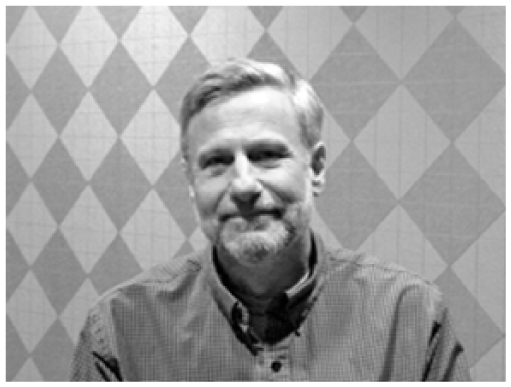
Tim Lewis is professor of special education at the University of Missouri and has been involved with the field of special education for more than 30 years. He has taught students with emotional and behavioral disorders (EBD) in a variety of settings including high school, elementary school, and psychiatric educational settings. Dr. Lewis has focused his efforts on developing school-wide systems of support for children with significant behavioral concerns. He directs the University of Missouri Center for School-wide Positive Behavior Support and is also Co-Director of the national Office of Special Education Programs (OSEP) Center for Positive Behavioral Interventions and Supports. His work has involved schools across the United States and around the world and has received grant support of more than $38 million.
* * * * *
Would you tell us how you got into the field of educating children with EBD?
I think my story is similar to a lot of folks: I kind of fell into it. As an undergraduate, I started out in pre-med. I was a psychology major because I was interested in behavior, but I quickly decided that I didn’t fit, that medicine wasn’t going to be a good route for me. I continued with psychology, and at the time the program required a minor. I thought, well, I’ve always liked kids, so maybe special education might be an interesting minor.
I took some special education classes and fell in love with the content and the professors. They basically wore me down! Almost on a daily basis they were saying, “Did you ever think about going into special education? I think you’d really like that. It’d be a great opportunity, given your interest in kids and your passion for research.” I would reply, “No, I don’t want to be a teacher. I don’t want to go into education.” But, the more classes I took, the more opportunities to get to know the kids, the more opportunities I had to be around the schools and other special educators, it just started making sense to me.
I went straight through the program and got my master’s, my certification, went out and taught for several years, always knowing in the back of my mind I’d go back to school. Research and teaching have always been passions of mine.
So, I fell into it. As they say, I truly do owe credit to the professors I had at the University of Missouri when I was a student there.
Sharon Maroney
How would you describe your career?
I describe my career first and foremost as a researcher-teacher. I’ve always been interested in understanding behavior, understanding how we can help young people especially be successful. I’ve always been pretty passionate about translating that and getting it to our pre-service teachers, who are just getting into the field.
I’ve been really fortunate that this is an applied field. I think that’s one of the really unique pieces of our field, so my laboratory is a school. I’m working with educators on problems of practice and that’s always been at the forefront.
I did a fair amount of work on functional behavioral assessment and the logic of creating a behavior plan. That was one of those big “aha moments” that I didn’t have the benefit of when I was a classroom teacher. It was kind of the dark ages then. It was all about behavior management and setting up points and rewards and punishers. Now we’re thinking through “why is this kid doing this?” That also led me into thinking about social skills and how we teach social skills.
While I was at the University of Oregon—I went there for my PhD and like everyone else, I fought to stay as long as I could—that’s really when I and George Sugai (see Teagarden, Zabel, & Kaff, 2016), Geoff Colvin (see Teagarden & Kaff, 2013), and others had the same sort of story about having self-contained classrooms of kids with emotional and behavioral disabilities (EBD). While they were in our room, they did okay. When they left the room, all hell would break loose. So, we started thinking about how there was zero magic to what we did as teachers. We basically matched the environment to the kids’ needs. In addition to that, at the time, all sorts of outcomes were coming to life around the limitations of the Individuals with Disabilities Education Act (IDEA), if you will, in special education, particularly for kids with EBD. At the time, it was becoming really apparent that early intervention is the best hope and the way we need to go. That led us into thinking about the logic of putting in school-wide positive supports, what we refer to now as multitier systems of support (MTSS). It wasn’t at the cost of kids with EBD. It was more about how we prevent some kids from getting to the sort of chronic stage, and secondarily, how we create environments that, when the bell rings, everywhere they go has the same logic, the same mind-set, the same kind of structural focus that prompts what’s to take place, that consistency across the adults and the environments.
Once we were getting into the systems thing, my career took an interesting turn, in that I do a lot of policy now. I never thought in a million years that I’d be speaking to Congressional staffers and work groups at the federal level. That’s taken my career in an interesting way, but a good way. In my heart and soul, I’m still a teacher, still a researcher. Even when we’re in those work groups, I think about the teacher’s perspective. In the back of my mind, it’s always about how can I help classroom teachers be more successful with kids and less about buying into platitudes or telling them what’s best for them. That basic logic of what are your problems, what are your challenges, and how do we work together to solve them, continues even though the audience may change, the groups may change. That, I think, would be my career in a nutshell.
What events, policies, innovations and people have had the most influence in your profession?
There again, I was thinking through this and I don’t know that I can point to an event, but I absolutely think about events in kind of the general case. Some of the most important things for my career were getting involved early on in organizations like Council of Children with Behavior Disorders (CCBD), and when I returned here to Missouri, getting involved with the Midwest Symposium for Leadership in Behavior Disorders (MSLBD). Those events were key and essential because almost overnight they gave me this amazing professional community of like-minded folks who were passionate about doing things for kids, but in a lot of different ways. I think it’s the nature of our profession. There’s an egalitarian point of view: I’m not better than you because I’m in higher education or you’re just somebody at the state department. You never get that sense.
I think that getting into these professional organizations, side-by-side with state department people, classroom teachers, researchers and teacher trainers, really had an amazing impact on me. One, because I resonated with that, but two, because it also just made sense. I’ve tried to continue to kind of shape my career in that fashion, understanding and valuing research, but at the same time being incredibly humble and working at the ground level with classroom teachers who are struggling with kids, working with families, and trying to understand their stories. I’m always amazed and blown away by the resiliency of the population that we work with.
So, I think that there wasn’t a single event, but ongoing events that really did have a profound impact. I know the conventional wisdom—I talk to junior colleagues all the time in higher education—is don’t do service. Stay away, you’ve got to get tenured, you’ve got to get your research going. My advice is always the exact opposite: Get engaged in your professional organization, because you will, overnight, have this network that you wouldn’t have otherwise. That’s going to increase your productivity overnight. It’s going to give you access to really smart people, it’s going to give you access to and an understanding of the challenges out in the field. Your work is meaningful, not just a series of publications, a committee checking a box, so somehow you’re advanced. Make your work meaningful.
As for policy influences, that has to be IDEA 1997. That was the first time where we started seeing provisions around challenging behavior and discipline, bringing forth civil rights and procedural safeguards for kids with challenging behavior, and really saying we need to rethink this, we need to start looking at innovative ways. The fact that functional behavioral assessment was mentioned by name, where you don’t see any other strategies or interventions in the law, was an incredibly important policy piece that moved our field in very, very good directions in terms of outcomes for kids.
Kind of tied to that innovation, I keep going back to the whole function-based logic. I remember reading Carr and Durand in the early ’80s and it was like this light bulb lit up. Yes, this makes sense! Instead of just looking at the outcomes of behavior, we’ve got to look at the function of behavior. Why are these kids doing this? It made so much sense to me. When I think of innovations in our field, that probably had the most profound influence on my career because it really shifted our thinking. It fit beautifully with an instructional context, it fit beautifully with environmental supports, not in that kind of reward-punish sort of mind-set.
As for influential people, I have two levels. Probably the most important profound impacts were on a personal level. My mom was in education. Her passion and compassion for learning and for kids were just boundless and she definitely was an inspiration. My mom had that same thirst for knowledge. I remember every vacation was, yes, the beach or fishing and fun things, but we’d also always hit a museum or do something cultural and educational. I look back and I’m so grateful for that. It was so apparent that was her value and it became my value. We did the same. My wife is an educator as well, and I joke that our children never stood a chance. Those were two sort of personal influences important to me.
In terms of professional influences, it was going to the University of Oregon. I had applied to a lot of places and it was kind of serendipity I went there. I love the northwest, so I decided to go there. Without a doubt, that was probably the best decision of my life. I got to work with folks like Hill Walker at the height of his career. I remember someone said, “You should go meet Hill and chat with Hill.” I’m like, “He’s not going to talk to a first-year doc student. He’s busy. I mean, he’s Hill Walker.” I remember setting up a meeting for a half hour, and 2 hours later, he had basically spent the entire time talking about me and what I was doing. I left there thinking, “This is what I should become. This is what a professor should do.” So, Hill, and my good colleague and friend, George Sugai, definitely helped shape the way I do business, the way I mentor students, my research and my kind of work ethic level of integrity.
I talked earlier about those professors wearing me down. Again, Sharon Huntze at the University of Missouri just wore me down, but in a good way. The others kept saying, “You should do this. You should do this,” and she kept saying, “Well, what do you want to know? What do you want to learn?” She never really said, “You should do this,” she kept asking me, “What do I want to know? What fascinates you about this? What opportunities would you like?” and kept throwing those my way. That really inspired me. I mean, it was great that other folks thought that I would be a good classroom teacher, but it was really Sharon’s insight saying, “What do you want to know? You should become a teacher, but what do you want to know? What’s interesting to you?” So those are definitely people who have had a profound impact and really shaped my career.
What would you say has had the most positive impact on the field of emotional/behavioral disorders?
I think there are three things. First, going back again to the professional organizations—CCBD, MSLBD, and all of the other groups that are front and center, advocating good research, good science, good practice for kids with emotional/behavioral disorders. We don’t have much parent advocacy, we don’t have the attention at the national level like the other groups and even within the disability community, so professional organizations are essential in bringing together like-minded folks in a very, very humble way and doing good stuff.
I think the second most profound impact was federal funding for research and administration efforts. The Office of Special Education Programs (OSEP) and now IES (Institutes for Education Science), I think were critical in moving us forward, in that we’re not that old. I tell our students that we’re still a pretty young profession just approaching middle age. Without that funding and without those opportunities, not just to do research individually, but bringing together that community and having those conversations and developing networks around those kinds of practice and what the field is struggling with, I think is essential.
The final influence goes back to federal funding for personnel preparation. I saved every penny that I could because I knew I wanted to go back to school. I had the good fortune to go back to school on a leadership grant. My tuition was paid, I got a stipend, and I’ve since been very, very lucky to have a series of similar grants. Without those leadership grants, without personnel preparation grants, I know we couldn’t have attracted the best and the brightest in our field. I remember talking to a colleague in the general education side of my college one time who was talking about the shortages in special education and that they weren’t getting the shortage in higher education as well, and I said, “Let me explain it to you.” I said, “I have a leadership grant. I pay people $30,000 to come to school, I pay their tuition and travel, and I still lose them because somebody down the road is saying, ‘Well, they’re paying me $40,000, can you match that?’” They were just dumbfounded. “You are paying people to come to school to become part of this profession and you struggle to find people?” It’s like, “Absolutely!” To try to attract the best and the brightest, and then say, “Oh, by the way, I can pay you to pursue this. I can pay you to come back to school.” I think those three things have the most impact in shaping our field into what it is today.
What would you say has had the most negative impact on the field?
The most negative impacts are the ongoing misperceptions about children and youth with EBD. The perception that, as a general educator or administrator, I don’t know what to do, I think has had the most negative impact. We have to own some of that. The story I tell of our field is that the law (PL 94-142) passed and we all did the happy dance and it was like, “Give them to us, we’re special educators.” Then we looked around and said, “This is bad, here, take them back.” We had mainstreaming and the regular education initiative and they were a disaster. I think the balance now with class-within-a-class and pushing in and still respecting a continuum of services is a better way to go.
Second, even though I said IDEA ’97 had a profound, great positive impact, I think it also had a negative impact in that the perception prior to that, particularly among administrators, was that you could still suspend kids and still discipline kids with significant challenging behavior. IDEA ‘97 came around and I’ve never had so many conversations about so much misinformation and misperception about what the law says and doesn’t say about 10 days, functional behavior assessments (FBA), and alternative settings. While it was good to move our science within the profession, it had this incredible negative toll in that all of a sudden you’re getting, “We’re not giving this kid a BD label anymore because you’ll hamstringing me and I can’t discipline them.” People will say that out loud today.
The third piece that’s had the most negative impact is that Congress got 94-142 right. It’s a unique piece of law for both entitlement and civil rights. Civil rights are absolutely there—procedural rights, due process protections—but I think an unintended consequence is that the field has taken on a kind of what I call “an attorney mentality.” I go to a law conference every year and it does my head in. I tell the conference organizers all the time, “It’s like you bring these attorneys in and they do a day on how not to get sued. What they should be saying is that this district got sued because they weren’t doing the right things for kids.” So, even though there are procedural safeguards, even though parents or even school districts have the right to contest what’s going on, I think one of the negative pieces is the emphasis on not getting sued, this over-generalization from one case to thinking we have to change policy. Policy should be driven by best practice research, not one isolated case. I think all of those things are double-edged. There are great benefits, but at the same time, there are some problems and challenges.
What do you see for the future of the field of education for children with EBD?
I continue to be hopeful. I think the root cause of that is that I see much more shared ownership among educators of children with challenging behavior than I ever did. At the beginning of my career, it was an us and them situation. It was black and white: “They’re your kids, take them away. You know what to do, why would they come into my class.”
It occurred to me a few years ago that every one of our undergraduates has spent their entire lives with IDEA in place. They don’t know any different. They went to school with kids with disabilities. That wasn’t the case for me. I literally remember kids who were struggling and all of a sudden, they disappeared one day. Today, I think the mind-set is different. I even see that my young professional colleagues have a different set of ownership. I think a story best summarizes that. In our undergraduate program, where all of us in teacher education and teacher training try to be innovative, we’ve moved away from isolated classes. The classes are integrated. Our students are out in the field, and they do an entire senior year in a school. They need to get out there, they need to get their hands dirty, but with lots of support.
One of the teacher education blocks was doing some innovative things in science, math and literacy. All the classes were taught together and the logic was that you don’t teach these things in isolation. In science you need literacy and math, in math you need literacy and science, so they would do integrated blocks, and they had some of their undergraduates, as kind of a brown bag, report out. They were all telling the same story and they work in one of the schools where I work. It’s a tough old building with tough kids, lots of kids with disabilities, and they were telling stories about how “We worked for hours on these lesson plans. We were all excited and within 2 minutes it became really clear this was not going to work. So, we all went home and had a good cry, but then we went back and we met with our professors, we brainstormed and we problem-solved, and we just kept at it. It didn’t work again. We made some more adaptations.”
I’m sitting there listening to this and finally, I raise my hand and say, “I just want to make a comment. You don’t know who I am. I don’t teach much in the undergraduate program. I’m in Special Education. I gotta tell you, this is fantastic.” They looked at me funny. I said, “You guys were working with kids with disabilities, with kids at risk, working with kids in poverty, working with kids with significant behavior problems, with kids with learning challenges, and every one of you kept talking about how can I change ‘my instruction’ to help these kids be successful.” They’re looking at me like, “Of course, that’s what we do.” I said, “No, this is huge. This is exactly what you need to keep doing. None of you said, ‘Oh, we’ve got to get the counselor in.’ None of you said, ‘Where’s the special education teacher? Shouldn’t you be in that room?’ None of you said that. You all said, ‘How can I change my instruction?’” I see that as incredibly hopeful. Our kids need to be in those general education classes. Our kids need to be engaged with typical peers. Our kids need to benefit from people who have content expertise. So, I think that’s one piece.
I think the other hopeful piece is that even though we’re still working out the bugs, there’s a much greater emphasis on evidence-based practices . . . no longer just grabbing what feels right or sounds good, or what matches our philosophy or theory, but people doing their homework. Agencies like IES are coming out with what we know works and challenging the research community. We don’t have enough evidence yet. We need to replicate these things. I see educators and administrators becoming much better consumers of evidence-based practices. At the end of the day, that is absolutely going to benefit kids with disabilities and those at risk.
Would you offer advice to two groups—those entering the field as practitioners and those wanting to enter higher education?
I would basically give the same response to both. My advice is first, read and learn from reliable resources. Again, technology and the world-wide web and the ability to take a smart phone and access any information is an amazing, amazing thing. At the same time, there’s no regulation. I can put up a website tomorrow, come up with a bunch of craziness, say that this is what we should do. I can make it look really professional and I can say it’s just this simple: Do these three things . . . and somebody’s going to believe it. So, whether you’re a practitioner or in higher educator, read and learn from reliable sources.
Second, become engaged and become involved in professional organizations. Step up and don’t view it as, “Oh, I’ve got to take this out of my hide,” but view it as an opportunity to become immersed with people who share your vision, your passion, your interests at various levels. Again, in both of the organizations I’ve mentioned, I sit next to scholars and practitioners and family members and everything in between. That’s the conversation that we as a field need to have.
Third, and again, this is the advice I’d give to practitioners, to my students interviewing for a job: don’t worry about the reputation of the school. Don’t worry about what you “think” you should do or where you belong. Basically, you need to find a school or agency with like-minded, passionate people who are interested in building communities. It might be a small college that’s not so prestigious, but find a good group of people who are passionate about what you are doing and you can get along with. That’s where you need to be. If you want to advocate for kids with EBD, find a school where the administrator is on board. It’s plainly apparent if this school is about building community versus they want you to come in, take these kids away and “fix them.”
So, my advice would be the same: Find that group of people. Share your vision. Share your passion. Your life will be much more enjoyable.
* * * * *
Footnotes
Declaration of Conflicting Interests
The authors declared no potential conflicts of interest with respect to the research, authorship, and/or publication of this article.
Funding
The authors acknowledge ongoing financial support from the Midwest Symposium for Leadership in Behavior Disorders (MSLBD).