




Abstract
Dr. David Rose is perhaps best known for his connection to the Center for Applied Special Technology (CAST) and as a main and driving force behind the collection of instructional, assistive, and access principles known as Universal Design for Learning (UDL). His research background includes principal investigator on National Science Foundation and U.S. Department of Education projects, and he has authored dozens of journal articles, book chapters, and books, which comprise much of the foundation for UDL.
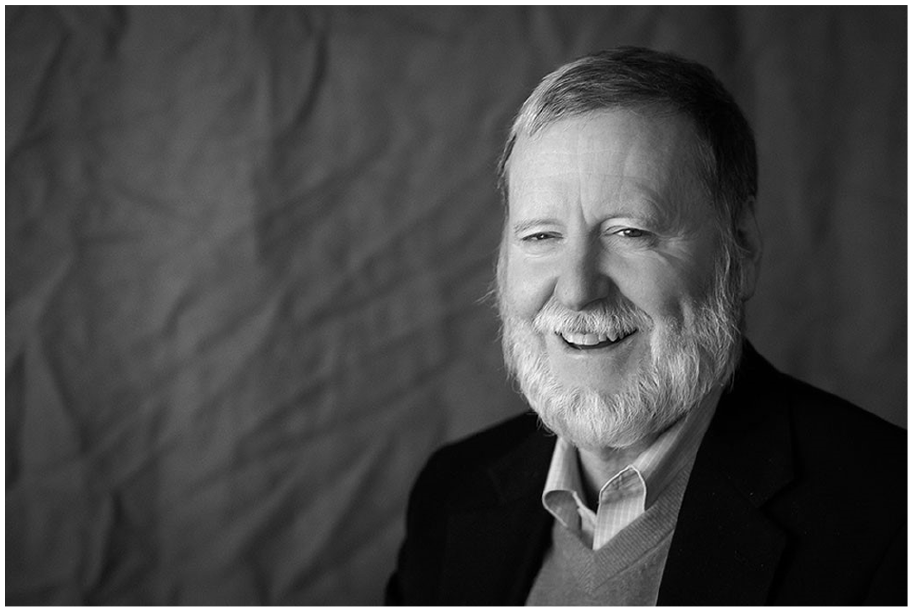
As a co-founder of Center for Applied Special Technology (CAST) in 1984, a not-for-profit research and development organization, Dr. Rose has dedicated his professional life to advancing ideas, practices, and policy in the development of new technologies for learning, especially for individuals with disabilities. In addition to his career duties at CAST, Dr. Rose has worked as a consultant for many top educational publishing houses and media outlets such as WGBH and PBS. A list of awards includes Computerworld/Smithsonian Award for Innovation in Education and Academia (1993), Tech Museum of Innovation Award (2002), the EdNET HERO Award (2005), the Strache Leadership Award (2014), and the Council for Exceptional Children J.E. Wallace Wallin Special Education Lifetime Achievement Award (2017). He was named one of education’s “Daring Dozen” by the George Lucas Educational Foundation and was honored at the White House as a “Champion of Change.” He has taught graduate education classes at Harvard for 35 years.
: Your biography on the CAST website refers to you as a “developmental neuropsychologist and educator.” Which came first? Did neuropsychology lead you into education or were you an educator first, who then became interested in neuropsychology? How did these two worlds collide for you?
: I was an educator first (and last!). As the dutiful son of a very hard-working minister, my first experience as a teacher was during high school when I was “volunteered” as an assistant Sunday School teacher. I don’t believe there is any evidence that I was any good at it and I doubt if any lives were saved. During college, I volunteered each year as a teacher/counselor in an afterschool program for immigrant children hosted by the East End Settlement House in Cambridge, Massachusetts (it still exists!). That experience, plus my parent’s vocations (my mother was a superb first grade teacher) bent me along the path toward education.
After college, I journeyed cross-country to Portland, Oregon, where I was lured by a fabulous new M.A.T (Master of Arts in Teaching) program at Reed College. The best part of that program was that all of us newbies—from day one (yikes!)—were immersed half-time in highly supervised teaching positions within the Portland school system. The rest of the day was spent at Reed, enrolled in relevant academic courses and supervised by faculty. Since my undergraduate major was in learning psychology (my senior advisor was no less than B.F. Skinner himself!), I was exempt from the pedagogical courses at Reed (a mistake!) and instead took lots of courses in the domain I assumed I would be teaching for the rest of my life: English Literature, Modern Poetry, American Novels, Shakespeare’s Histories, etc. It was great. I learned to like both Shakespeare and poetry!
The Reed teacher education program that you describe seems a lot like some of the alternative route to licensure programs that are popular today, albeit with mixed results and not without some controversy. Any thoughts?
It might perhaps be noted that the Reed MAT program was apparently well suited for me: with a strong background in the learning sciences, but not in typical content areas (like English or History), I was able to focus my preparation on WHAT to teach rather than HOW to teach. That certainly seemed right at the time but in retrospect it would be fair to say that I knew a lot more about teaching rats and pigeons than human adolescents. The science of learning and the science of teaching are not completely overlapping and I would hope that modern programs provided a better background in the science of teaching than I ever got. On the positive side, I had great mentoring in how to build relationships with my students, something that would provide the emotional basis for all of my teaching later. The biggest benefit of the MAT program, however, came from meeting the lovely Ruth Walker—a fellow apprentice teacher of English. A year later we were married. This past summer we celebrated our 50th anniversary.
After that experience I returned to Boston as a high school teacher of English, focusing specifically on inner-city underprivileged students in the lowest tracks of high school. I loved that too. But I did not feel I was effective enough in closing the achievement and opportunity gaps for my students, so I enrolled in Harvard’s Graduate School of Education to get my doctorate in human development and reading. (To be honest, I had no idea what I would do with a doctorate except for one important thing: I wanted to return to Boston Public Schools with clout enough to fire a department head, a man who was truly racist and demeaning to students.) It was at the ed school that I got the bug for neuroscience—eventually taking most of my upper-level courses at either MIT or Harvard Medical School. That seemed a promising way to understand the profound individual differences that my students brought to their learning.
Along the way, I got my license as a neuropsychologist (at Children’s Hospital in Boston) and became the director of North Shore Children’s Hospital Neuropsychology clinic. But I never felt comfortable far away from teaching. During those formative years, I taught part-time or full-time as a teacher at almost every level of education, from a state institution for severely and profoundly retarded individuals, to a local Head Start preschool program, to elementary school in Boston, to high school in suburbia, and finally to graduate students at Harvard, where I taught for the next 35 years. The breadth of that teaching experience has been the important foundation for me, the neuroscience is just a lens for understanding it.
You voice some pretty strong language denouncing racism you encountered within a school system many years ago. Considering the tone of the diversity narrative today, are you optimistic about how our educational system views minority students and diverse learners, especially those with disabilities?
I would say that the racism and ableism continue but with less virulence and explicitness. And I think there has been progress. But justifying that view would take too long an answer here I think.
As a person who is clearly an academic at heart, how is it that you were not pulled into the more traditional path of academe through the professoriate.
Before completing my doctorate, I was offered a wonderful full-time position at Tuft’s Department of Child Study. While I had not envisioned an academic career, that offer was too exciting to pass up, and it gave me an opportunity to explore an academic career. After a few years, I found that it was not “immediate” or “intimate” enough: I could only affect the students I most cared about through intermediaries. The students at Tufts, the intermediaries, were all very capable and well resourced. They were going to do fine whether I showed up or not. I found myself longing for a more direct relationship with the students I most wanted to help. After 5 years, I took a leave of absence from Tufts to explore whether a more clinical path would provide the right balance. That led to neuropsychology.
What was it that led you into working with individuals with disabilities, especially those with learning challenges such as learning disabilities? Many leaders in the field can point to an early association with someone, often a family member or friend with a disability, that set them down their professional pathway. Was it like that for you?
: Actually, there was no specific family or friend that focused my attention and effort on people with disabilities. Instead, my experience as a teacher, at every level I taught, taught me how diverse my children were. What was disturbing was that schools were much better prepared and designed for some of them than for others. The kids for whom schools were least prepared suffered the most (those with traditional physical, sensory, or intellectual disabilities) but many others were canaries in the mine: their “learning disabilities” signaled that there was not enough “oxygen” in schools. Over time, and especially during the work at CAST, I began to focus on the disabilities of schools rather than students, and especially on the role of practices that disabled and handicapped those children that were most vulnerable.
There is a lot of information available about your accomplishments over the past 35 years with CAST, but not much before that. Who was the pre-CAST David Rose?
: The pre-CAST David Rose would have been diagnosed (even by myself) as ADHD and would have been completely invisible on the Web (had it been invented then) for lack of productivity. I knew I wanted to work in education, and specifically in teaching the most vulnerable children, but I couldn’t find or maintain a single focus. As a result, I meandered along a distractible pathway that only makes sense in reverse. That pathway included stops along the way as a teacher (noted previously), as an academic researcher (my thesis title was Dentate Gyrus Granule Cells and Cognitive Development: Explorations in the Substrates of Behavioral Change!), as a university assistant professor (Tufts Department of Child Study), as a clinical psychologist, as a child neuropsychologist, and finally as the director of The Medical and Educational Evaluation Clinic at a local children’s hospital. After all that meandering, CAST saved me from a life of ruin—it was just right for people with ADHD because it changed all the time. I did keep one steady job for 35 years—teaching at Harvard—because, well, I always wanted to be a teacher.
Who had the most influential impact on your career? Who did you call for help, guidance, or to affirm your ideas, theories, and conclusions over the years?
: By far the biggest impact on my career came from three remarkable friends and colleagues I first met at North Shore Children’s Hospital: Anne Meyer, Skip Stahl, and Grace Meo. All three of them were senior clinicians with a great deal of experience—much more than me—in teaching and evaluating students with a wide variety of learning and emotional disabilities. Together, the four of us (and one other clinician named Linda Mensing who left the country) grew restless with the relative impotence of our own recommendations. We thought our neuropsychological evaluations were as good as anybody’s but in the final analysis our recommendations seemed neither powerful nor transformative enough. Our visits to schools confirmed our low opinion: Mostly what kids got from our evaluations were new labels. But for many children, those new labels only led to minor improvements in their overall prospects or experiences in school.
Even though none of us were the least bit technically savvy (Anne was the only one who had her own computer), we came to believe that there was great promise—even powerful and transformative promise—in the new technologies that were just emerging in homes and schools (This was around 1983, when the Apple IIe had 64K of memory). To capture the time and space for us to learn about how to use these new technologies with kids who had disabilities, we formed CAST as a not-for-profit organization. At first, we met after work in a local pizza parlor but eventually succeeded in raising some money to buy our time from the hospital and to launch ourselves as a separate organization.
What is most important, and amazing, is that all four of us (Anne, Grace, Skip, and I) stayed together for the next several decades through all the twists and turns of learning how to be an organization with larger and larger aspirations. During those three decades, we constantly turned to each other, learned from each other, inspired each other, even loved each other. Their impact on me is what made all the difference.
You are now retired from your responsibilities at CAST. How is that going for you? Is there anything that you would have liked to accomplish that didn’t get done?
: I have said many times that I am now in the early stages of failing to retire. The issues that lured me to education, and to disability, still loom as both important and unfinished. I find myself being drawn back into several projects—a book about emotional development and an emerging interest in applying UDL to aging and dementia. The latter interest needs no explanation, especially on days when I struggle to remember what day it actually is. I wish we had reached a point where UDL was so ubiquitous that it was essentially invisible.
Other than the inception and successful creation of CAST itself and your many awards, what is it that you are most proud professionally?
: I am most proud that CAST has survived the transition to new leadership (the founders are now retired)—and that it is a hearty organization with a future. I am also proud that my courses at Harvard have also survived the transition—now taught by Jose Blackorby and Lis Hartmann (two wonderful colleagues who have notably improved the course, and made it a more innovative example of UDL in practice). I was also informed that Harvard will be incorporating UDL into a foundational course for all incoming Master’s students, another healthy sign.
Expanding the scope of our discussion now, and looking especially to things that matter most, what has been the most important event, policy, or technology innovation during your professional career that has had the greatest impact on the community of individuals with disabilities? Conversely, what has been the greatest disappointment?
: All of the founders of CAST, including me, used to think that policy work was for losers, losers who couldn’t teach. Over time, we all came to see what a powerful lever policy work could actually be. Policy work is not enough, of course, but I still see that IDEA (Individuals with Disabilities Education Act) and its revisions, the formulation of NIMAS (National Instructional Materials Accessibility Standard) and the concept of print disabilities, and the inclusion of UDL in the Higher Education Act all had positive impact that lingers today.
I feel most disappointed in the outcome of one of my favorite projects: a web-based universally designed literacy platform that seemed the best expression so far of the confluence of technology and UDL. It was very popular with students and teachers and had really innovative features, especially around the engagement principle of UDL. Unfortunately, the research did not demonstrate significant gains in reading comprehension for our middle school students with learning disabilities. I am quite convinced that the lack of significant impact was due primarily to the dosage effect; in most of the experimental classrooms, students were only able to use the platform very sparingly, totaling a matter of a dozen hours or so over the course of the trials. I don’t think anything can move the needle on comprehension with that little dosage. But that was very disappointing because I loved the program and the people working on it did a wonderful job.
: Looking back, not necessarily at your own career, but at the accomplishments in the field of special education technology and all the related innovations for individuals with disabilities, are you satisfied with the progress that has been made? Do you see a positive trend line for more innovations in the future?
: Of course, the proper response is something like: Compared to what? Nonetheless, there seems little doubt that there has been very positive progress. When I think of other large-scale movements around equity or injustice, it seems that the progress in special education and especially special education technology matches up very well (think about the comparative pace of progress in civil rights around race or gender inequities, etc.)
I think the most profound accomplishments have been on changing expectations. While there is much more work to do, it seems that the expectations for individuals with disabilities—both in school and life—have been considerably raised. And technology has been a major lever in changing those expectations. Increasingly, the rigid boundary between disability and ability has been breached. When people with autism now expect to be hired by Microsoft (and are), it is no longer seen as a benevolent gesture because of their disabilities, but as a wise business decision because of their talents.
As you know, Intervention in School and Clinic is a research-to-practice publication designed to provide teachers and clinicians with strategies for implementing research outcomes directly into their classrooms and clinics. Has the field done a good job in implementing what we have learned about teaching and learning with technology? How do we improve that aspect of what we do?
: Change is hard. Everyone knows that. Changing implementation is harder still. Everyone knows that. The hardest thing in medicine wasn’t to teach doctors that washing their hands between patients is important, the hardest thing has been to get them to actually wash their hands. I think the UDL principles seem germane here. To change implementation, we have to do three things, not one. First, provide the knowledge needed. Second, provide the strategies needed. Third provide the motivation needed. The last one is the hardest, and by far the most important.
What would you have to say to someone who wants to follow in your footsteps?
: Don’t.
: You are clearly joking here, we hope! Are there still pioneering paths such as you have taken available for bright young educators and learning psychologists today?
: It will come as no surprise—from a UDL perspective—that I don’t think it is a good idea for anyone to try to follow someone else’s path. Everyone’s optimal path will be different. The important thing is not to follow a path but to discover/develop a passion for learning in some domain that will motivate you to bushwhack a path of your own, even through very uncertain terrain. Developing (and nurturing) that passion is not only important for you, but for your students. That is because what students most need to see in their teacher is their passion for learning—whether it is neuroscience, art, music, oceanography, history, or teaching itself. That will encourage and sustain them in finding their own path to expert learning.
Footnotes
Declaration of Conflicting Interests
The author(s) declared no potential conflicts of interest with respect to the research, authorship, and/or publication of this article.
Funding
The author(s) received no financial support for the research, authorship, and/or publication of this article.