



Abstract
Background.
Total knee arthroplasty (TKA) and unilateral knee arthroplasty (UKA) are often the treatment of choice for knee osteoarthritis. Approximately 20% of patients affected by osteoarthritis suffer from depressive symptoms.
Objective.
The present study aims to evaluate the influence of depression on functional outcomes in patients with knee osteoarthritis undergone UKA and TKA.
Methods.
Depression was assessed using the preoperative Geriatric Depression Scale (GDS), on postoperative outcomes of TKA and UKA measured using Forgotten Joint Score-12 (FJS-12), Short Form Health Survey-36 (SF-36), Western Ontario and McMaster Universities Arthritis Index (WOMAC), Oxford Knee Score (OKS), and Barthel Index.
Results.
A total of 90 patients (47 UKA, 43 TKA) met inclusion criteria and were enrolled in the present study. Correlation between preoperative GDS score and postoperative outcome measures revealed a low-moderate correlation with WOMAC Functional limitations (rho = 0.239, p = 0.046) at 6-month follow-up. Patients that underwent UKA with a higher GDS score preoperatively were found to have a higher WOMAC functional limitations score postoperatively. Other statistically significant correlations between preoperative GDA and postoperative outcome scores following UKA and TKA were not found.
Conclusion.
Taken together, findings of our study suggested that more literature is needed to fully elucidate the influence of psychological factors such as depression and depressive symptoms on postoperative outcomes of UKA and TKA. Understanding such correlations is potentially beneficial in the development of preoperative and postoperative treatment programs that deal with psychosocial components of illness.
Introduction
Osteoarthritis (OA) is among the most frequent degenerative diseases and affects a large portion of the global population.1,2 Total knee arthroplasty (TKA) is the treatment of choice for this condition along with unicompartmental knee arthroplasty (UKA) when degeneration is restrained to medial or lateral compartments of the knee.1,2 Both TKA and UKA are, in most cases, effective in restoring normal knee kinematics. In Italy alone, between 2001 and 2016, in a population of approximately 60 million, 848,863 TKAs were performed. On the other side of the world, in the United States, TKA incidence has reached approximately 220 per 100,000 people.1–3 It is estimated that 85% of knees suffering from OA have an isolated medial compartment OA and are eligible for UKA, thus it is a procedure projected to grow in the coming decades.1,4 Two of the major postoperative concerns include pain and length of recovery and 60% of patients report severe postoperative pain following TKA.2,5,6
Approximately 20% of patients affected by OA suffer from depressive symptoms and were shown to be 1.17 times more likely to be diagnosed with depression than the average person. 7 Depressive symptoms are detrimental to patients with these conditions and often contribute to increasing the disease-burden as well as making patients less active in daily activities, possibly worsening OA, and perhaps even contributing to worse surgical outcomes. 7 In addition, persistent pain is associated with increased likelihood of developing depression, highlighting the possible correlation between this condition and surgical interventions such as UKA and TKA with psychiatric symptoms. 7 Furthermore, studies have shown that both anxiety and depression are risk-factors for increased postoperative complications of TKA as well as being factors contributing to an increase in length of hospital stay. 8
Depression is usually prevalent in patients before major surgery and if left untreated has been associated with increased mortality and morbidity, as well as increased postoperative pain, higher incidence of infections, and decreased overall quality of life. 9 Unfortunately, despite awareness of its possible detrimental effects postoperatively, often preoperative risk assessments and clinical decision making algorithms don’t include major depression in their patient-related factors. 9
Despite recent interest in understanding the relationships between chronic illnesses such as OA and depression, and how psychological conditions may influence surgical interventions such as TKA and UKA, evidence is still lacking on the matter.
Hence, the present study aims to evaluate the influence of depression on functional outcomes in patients with knee osteoarthritis undergone TKA or UKA.
Materials and methods
Participants
All patients who underwent UKA or TKA of our University Hospital in Italy were included in the present analysis. Patients were included if showing radiographic and clinical symptoms of knee osteoarthritis (grade 3–4 according to the Kellgren-Lawrence Classification). Other criteria for eligibility comprised frontal varus-valgus 15°, flexion contracture 15° and anterior cruciate ligament functional integrity.
Exclusion criteria in diagnosis of inflammatory arthritis, injury to the knee ligaments; secondary prosthesis implantation.
Patient grouping was prospectively determined based on the surgical intervention received, which was indicated according to established clinical and radiographic criteria. UKA was indicated for patients with isolated unicompartmental osteoarthritis that was correctable with surgery, an intact anterior cruciate ligament (ACL), and minimal patellofemoral involvement. Clinically, UKA was generally preferred for younger, more active patients. TKA was indicated for patients with multicompartmental osteoarthritis, ACL deficiency, severe deformity not correctable with unicompartmental surgery, and/or significant patellofemoral joint involvement.
Outcomes
The present study aims to evaluate the influence of depression, measured via the preoperative Geriatric Depression Scale (GDS) score, on postoperative outcomes of TKA and UKA measured via the Forgotten Joint Score-12 (FJS-12), Short Form Health Survey-36 (SF-36), Western Ontario and McMaster Universities Arthritis Index (WOMAC), Oxford Knee Score (OKS), and Barthel Index.
Patients completed the GDS questionnaire preoperatively and the FJS-12, SF-36, WOMAC, OKS, and BARTHEL questionnaires 6 months postoperatively.
Trained nursing staff administered preoperative questionnaires on the day of surgery. The same staff conducted postoperative assessments during the 6 month follow-up visit or, when necessary, via telephone. All nurses underwent specific training to ensure standardized questionnaire administration and were available to provide clarifications if needed. To minimize bias, patients were not informed of the study's objective while completing the questionnaires.
Geriatric depression scale (GDS)
The validated Italian version of the GDS survey was utilized to measure preoperative depression. 10 It consists of a 30-item self-report questionnaire that excludes somatic or psychotic symptoms. Items are scored dichotomously (0 or 1) and the score goes from 0 to 30. 10 A score of ≤9 is considered normal, 10–19 indicates mild depression, and 20–30 indicates severe depression. 11 Patients with a GDS of more than 9 were identified as depressed.
The GDS was selected instead of other scales and scores given that it is a valuable tool for identifying depression in older adults thanks to its accuracy, brevity, and suitability for various patient populations. Additionally this tool has been used extensively in elderly populations with a variety of comorbidities and has been proved to be effective. 11
Postoperative scores
6 months postoperatively FJS-12, SF-36, WOMAC, OKS, and BARTHEL questionnaires were completed by patients in their validated Italian versions.12–16 Each score that did not range from 0 (worst condition) to 100 (best condition) was standardized to this range to allow for comparisons.
The FJS-12 assesses joint awareness. 17 It consists of 12 questions with a five-point Likert response format, summed to obtain scores ranging from 12 to 60. 17
The SF-36 provides general health indicators. There are 36 questions divided into eight scales that make up the Physical Component Summary (SF-36 PCS) and Mental Component Summary (SF-36 MCS). 13 A single unscaled question on health changes in the previous year is also included (SF-36 Health change). 13
The WOMAC is a clinical orthopedic score that is used to evaluate pain, stiffness, and physical function. It has 24 questions with a 0 to 4 point Likert scale response that are summed to give a score between 0 and 96. 18 The 24 items are grouped into 3 categories: WOMAC Pain, WOMAC Stiffness and WOMAC Functional limitations.
The OKS is a 12-item questionnaire that addresses knee pain and activities of daily living. It has two subscales for pain and function, each with five response categories on a Likert scale. The total is calculated by summing the score of each individual item (which ranges from 1 to 5) resulting in a minimum possible score of 12 and a maximum total score of 60.
The Barthel index is used to assess recovery and independence and ranges from 0 (worst condition) to 100 (best condition).
Statistical analysis
A priori power analysis was performed, with a level of significance of 0.05, a statistical power of 80%, and a correlation of 0.395 between preoperative GDS and WOMAC scores. 19 The minimum total sample size amounted to 38 subjects per group (UKA and TKA).
Normal distribution was assessed using Shapiro–Wilk test and Kolmogorov-Smirnov test. Since data was not normally distributed, the difference in scores between groups (preoperative “depression” vs “no depression”) were calculated using the Independent-Samples Mann-Whitney U Test. Correlations between preoperative GDS and postoperative scores were calculated using Spearman's correlation. Statistical significance was set at p ≤ 0.05.
SPSS for Windows (version 26; Armonk, NY: IBM Corp), R Core Team (2020) version 4.0.3, and SAS OnDemand for Academics were used to perform all statistical analyses and figures.
Results
A total of 90 patients (63 females and 27 males; mean age 68.5 ± 8.5 years) affected by knee osteoarthritis were included in the study and completed the questionnaires at 6-month postoperative follow-up. Out of 90 subjects, 47 underwent UKA (34 females and 13 males; mean age 68.7 ± 6.0 years) and 43 underwent TKA (29 females and 14 males; mean age 68.5 ± 9.4 years).
Results are presented in Figures 1 to 3 as radar plots, the rays of the radar plot represent the standardized values of each score and the color-coded lines display the differences between groups. Overall, it can be interpreted as the profile of the different scores for each patient group.
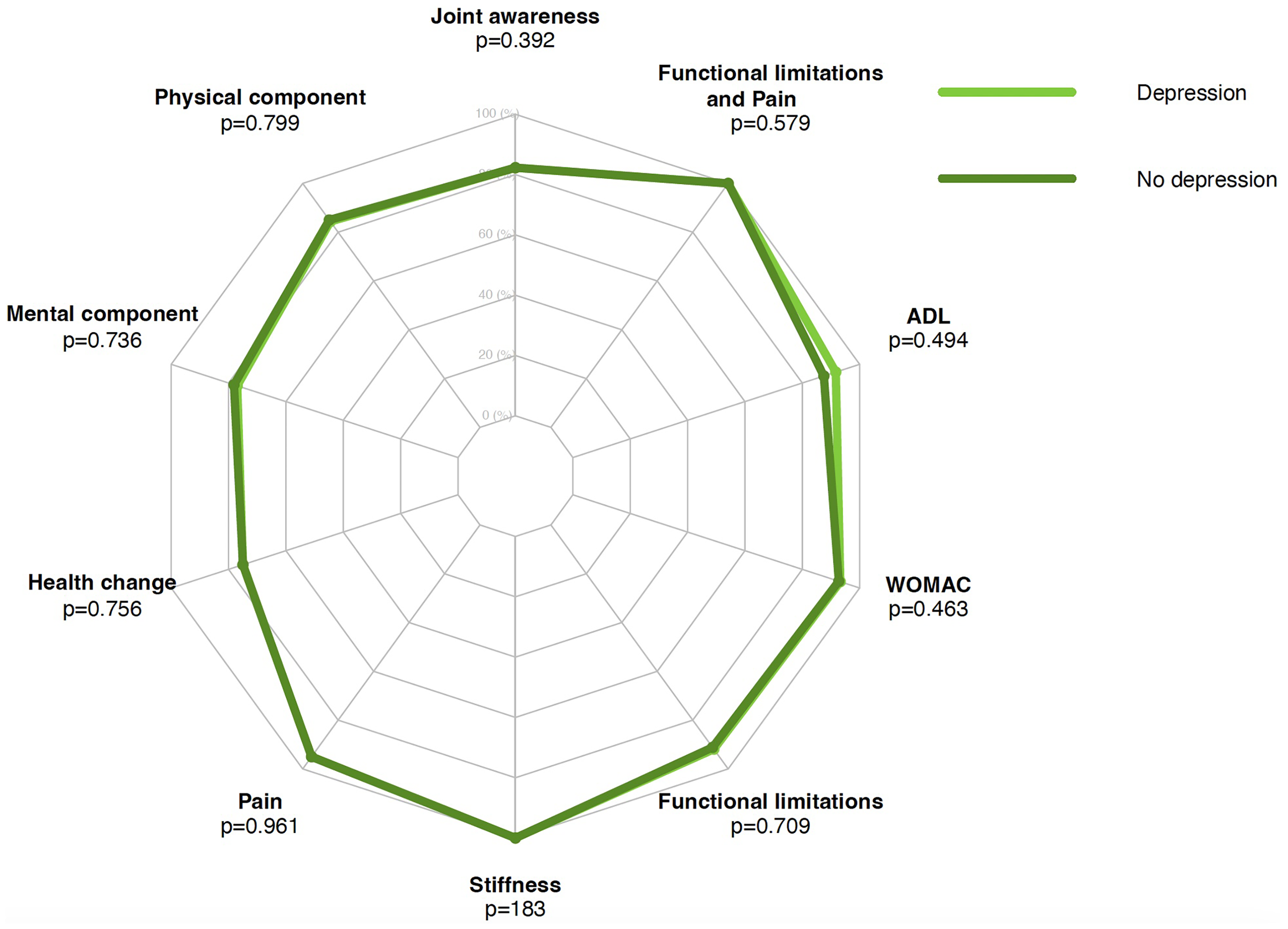
Radar plot comparing postoperative SF-36 Health Change; SF-36 MCS; SF-36 PCS; Joint Awareness; Functional limitations and pain; ADL; WOMAC overall, WOMAC Pain; WOMAC Stiffness; WOMAC Functional limitations scores in “depression” versus “no depression” groups of UKA patients.
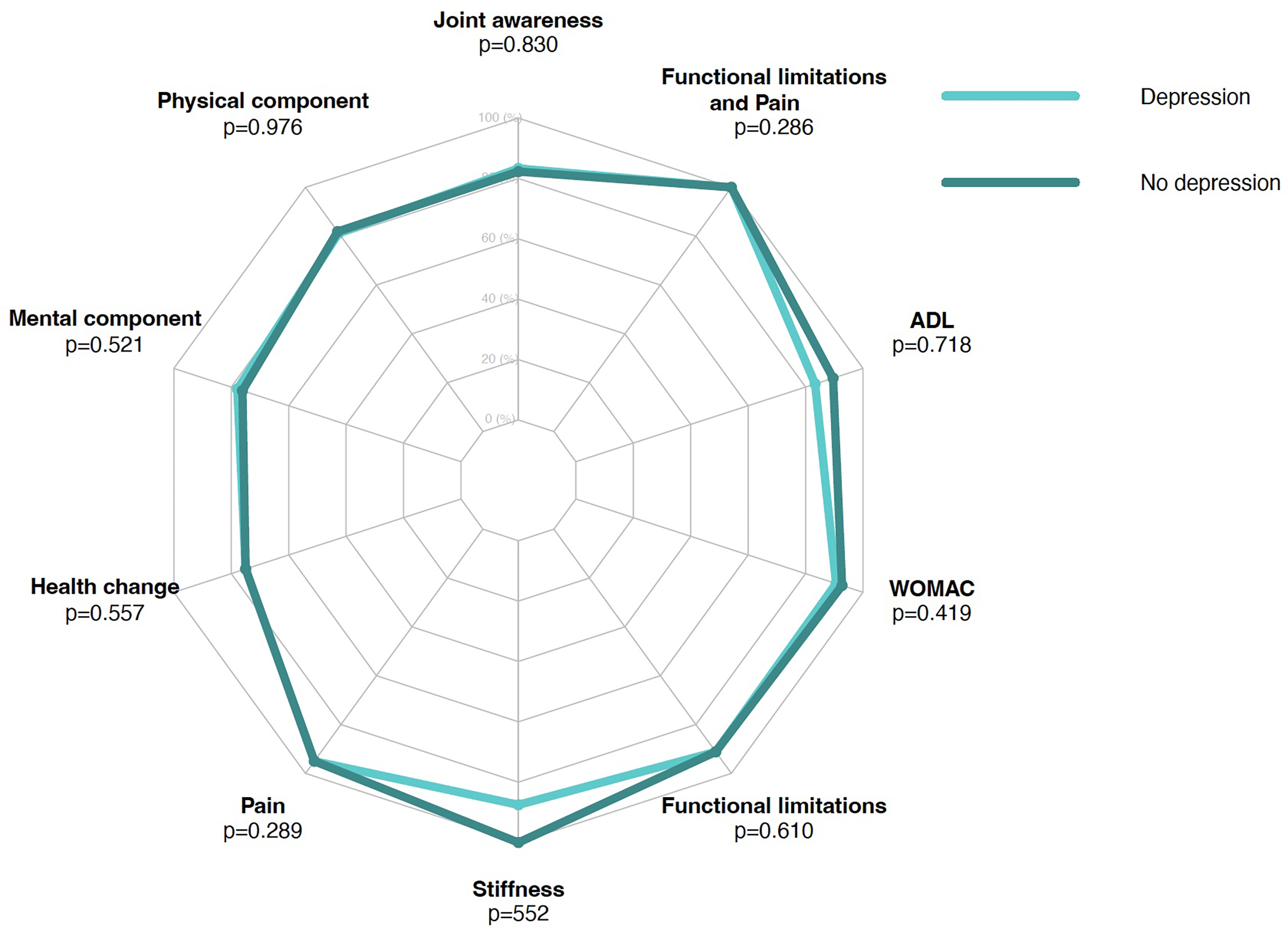
Radar plot comparing postoperative SF-36 Health Change; SF-36 MCS; SF-36 PCS; Joint Awareness; Functional limitations and pain; ADL; WOMAC overall, WOMAC Pain; WOMAC Stiffness; WOMAC Functional limitations scores in “depression” versus “no depression” groups of TKA patients.
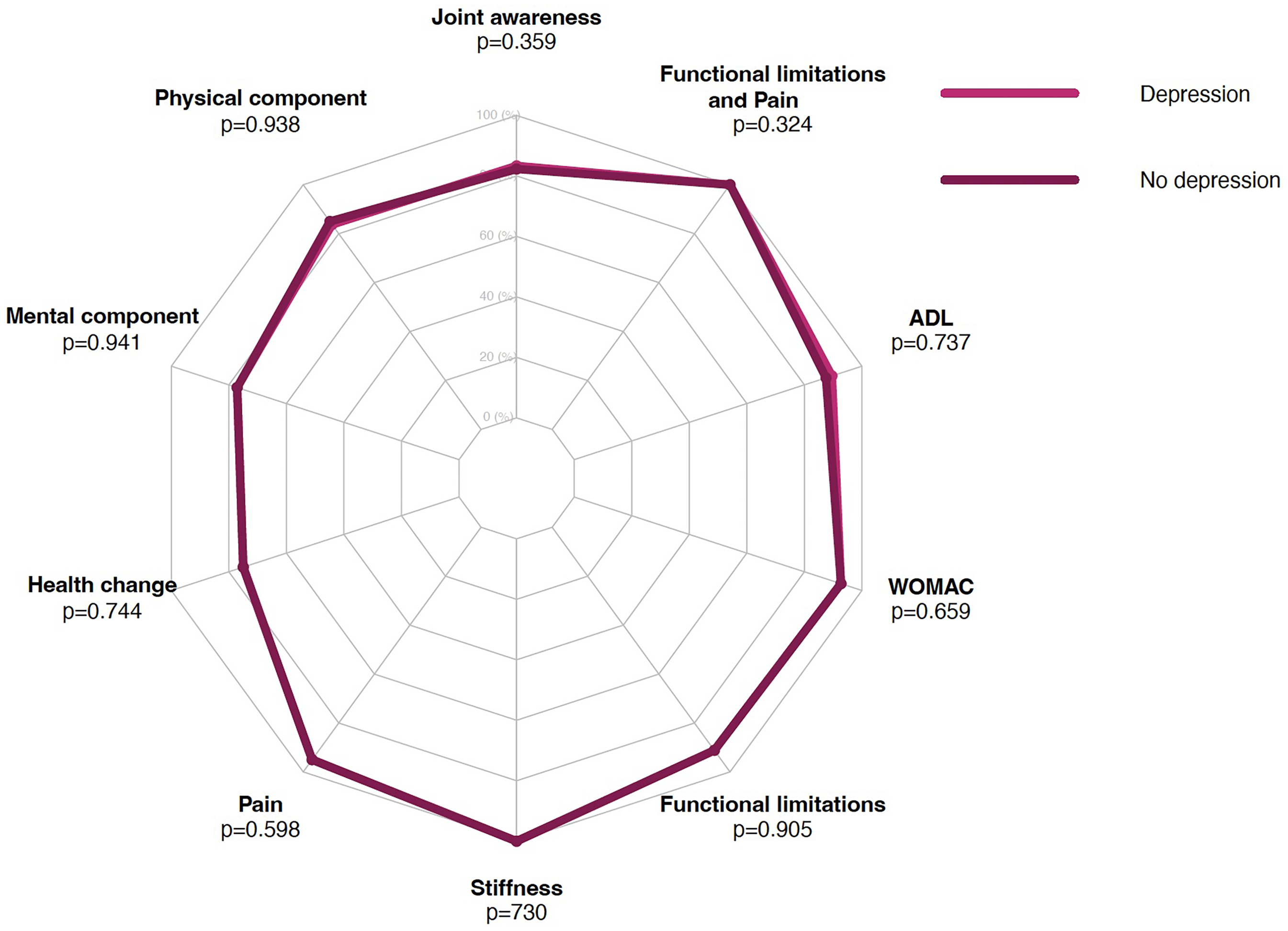
Radar plot comparing postoperative SF-36 Health Change; SF-36 MCS; SF-36 PCS; Joint Awareness; Functional limitations and pain; ADL; WOMAC overall, WOMAC Pain; WOMAC Stiffness; WOMAC Functional limitations scores in “depression” versus “no depression” groups of both TKA and UKA patients.
Unicompartmental knee arthroplasty (UKA)
At preoperative follow-up, 8 patients (17%) were classified in the “depression” group, whereas 39 were classified in the “no depression” group (83%).
Correlation between preoperative GDS score and postoperative outcome measures revealed a low-moderate correlation with WOMAC Functional limitations (rho = 0.239, p = 0.046) at 6-month follow-up (Table 1). As the preoperative GDS score increased, the WOMAC Functional limitations score also increased.
Correlations between preoperative GDS and postoperative scores in patients who underwent UKA.
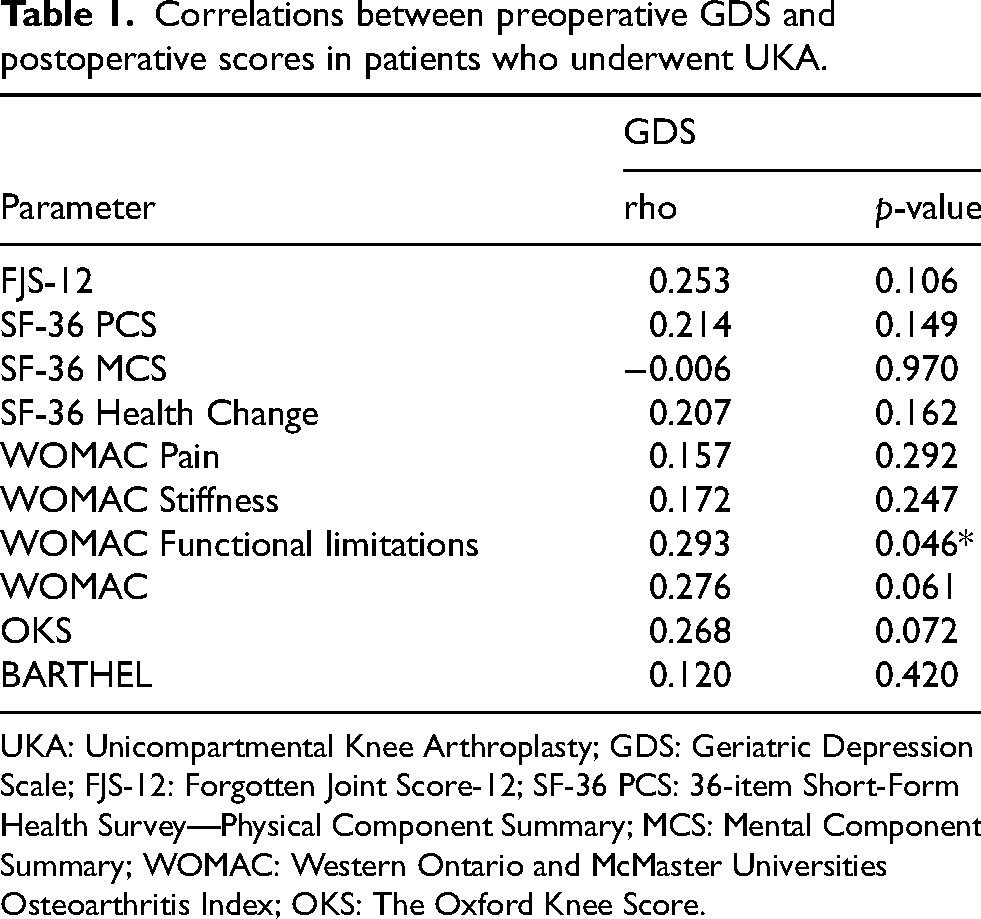
UKA: Unicompartmental Knee Arthroplasty; GDS: Geriatric Depression Scale; FJS-12: Forgotten Joint Score-12; SF-36 PCS: 36-item Short-Form Health Survey—Physical Component Summary; MCS: Mental Component Summary; WOMAC: Western Ontario and McMaster Universities Osteoarthritis Index; OKS: The Oxford Knee Score.
No statistically significant differences between the two groups (“depression” and “no depression”) were found (Table 2, Figure 1).
Median (min – max) values of postoperative scores compared to preoperative GDS in patients who underwent UKA (n = 47).

UKA: Unicompartmental Knee Arthroplasty; FJS-12: Forgotten Joint Score-12; SF-36 PCS: 36-item Short-Form Health Survey—Physical Component Summary; MCS: Mental Component Summary; WOMAC: Western Ontario and McMaster Universities Osteoarthritis Index; OKS: The Oxford Knee Score
Total knee arthroplasty (TKA)
At preoperative follow-up, 9 patients (21%) were classified in the “depression” group, whereas 34 were classified in the “no depression” group (79%).
No statistically significant correlations were found between preoperative depression and postoperative scores (Table 3).
Correlations between preoperative GDS and postoperative scores in patients who underwent TKA.

TKA: Total Knee Arthroplasty; GDS: Geriatric Depression Scale; FJS-12: Forgotten Joint Score-12; SF-36 PCS: 36-item Short-Form Health Survey—Physical Component Summary; MCS: Mental Component Summary; WOMAC: Western Ontario and McMaster Universities Osteoarthritis Index; OKS: The Oxford Knee Score
No statistically significant differences between the two groups (“depression” and “no depression”) were found (Table 4, Figure 2).
Median (min – max) values of postoperative scores compared to preoperative GDS in patients who underwent TKA (n = 43).

TKA: Total Knee Arthroplasty; FJS-12: Forgotten Joint Score-12; SF-36 PCS: 36-item Short-Form Health Survey—Physical Component Summary; MCS: Mental Component Summary; WOMAC: Western Ontario and McMaster Universities Osteoarthritis Index; OKS: The Oxford Knee Score
At preoperative follow-up, 17 patients (19%) were classified in the “depression” group, whereas 73 were classified in the “no depression” group (81%).
No statistically significant correlations were found between preoperative depression and postoperative scores (Table 5).
Correlations between preoperative GDS and postoperative scores in patients who underwent UKA or TKA.

UKA: Unicompartmental Knee Arthroplasty; TKA: Total Knee Arthroplasty; GDS: Geriatric Depression Scale; FJS-12: Forgotten Joint Score-12; SF-36 PCS: 36-item Short-Form Health Survey—Physical Component Summary; MCS: Mental Component Summary; WOMAC: Western Ontario and McMaster Universities Osteoarthritis Index; OKS: The Oxford Knee Score
No statistically significant differences between the two groups (“depression” and “no depression”) were found (Table 6, Figure 3).
Median (min – max) values of postoperative scores compared to preoperative GDS in patients who underwent UKA or TKA (n = 90).

UKA: Unicompartmental Knee Arthroplasty; TKA: Total Knee Arthroplasty; FJS-12: Forgotten Joint Score-12; SF-36 PCS: 36-item Short-Form Health Survey—Physical Component Summary; MCS: Mental Component Summary; WOMAC: Western Ontario and McMaster Universities Osteoarthritis Index; OKS: The Oxford Knee Score.
Discussion
Statistically significant correlation between preoperative GDS and postoperative scores was found between UKA patients and postoperative WOMAC functional limitation score. As the preoperative GDS increased in patients the WOMAC functional limitations also increased at 6-month follow-up. The WOMAC is frequently used to assess domains of pain, stiffness, time in healthcare system. Evidence suggests that patient personality and mental health status have an impact on postoperative outcomes and thus the WOMAC score may reflect this, as found in the present study. 20 Mental health, and more specifically psychological distress levels, seem to influence pain, function, and quality of life the most, and a higher degree of preoperative distress causes worsening of these domains preoperatively and postoperatively. 20 A study evaluating long-term postoperative outcomes of UKA, at 2 and 10 year follow up, found that psychologically distressed patients had poorer American Knee Society Score, OKS, and SF-36 PCS compared to their non-distressed counterparts. 21 Furthermore these patients also suffered from lower fulfillment of expectations despite comparable rates of satisfaction. 21 The present study did not find statistically significant correlations between preoperative GDS and postoperative OKS and SF-36, hence, contrasting results reveal the necessity for further investigation.
Although some studies found worsened outcomes in the case of psychologically distressed patients preoperatively, which included depressive symptoms, the distress was found to decrease from 34.16% to 7.9% postoperatively in one study, and in another distress declined from 41% to 35% in UKA patients.20,21 This suggests that the illness itself and the preoperative period are factors that could influence mental health status and may aggravate depressive states, that then improve postoperatively following the resolution of the illness. While the present study aims to evaluate the the influence of preoperative depression on postoperative outcomes following TKA and UKA, it is nonetheless important to acknowledge that the illness itself and the preoperative period may contribute to worsened mental health status, potentially aggravating depressive symptoms. The observed postoperative improvement in depression could be linked to the resolution of the illness and the relief from the emotional burden associated with surgery. This bidirectional relationship may explain why only one statistically significant correlation was found between preoperative depression and postoperative outcome measures, and suggests that further studies into these relationships are relevant in the field of orthopedics.
The effects of depression in patients undergoing surgery, of any kind, still need to be elucidated fully, only few high-quality studies have been carried out exploring this topic. 9 Furthermore, available literature, including the present study, are usually not randomized and non-blinded which increases likelihood of confounding. 9 This makes it difficult to definitively find statistically significant correlations between poor postoperative clinical outcomes and complex conditions such as depression, however this does not mean that correlations may not be present. An example of this is that a higher postoperative WOMAC functional limitations score was correlated to a higher preoperative GDS score in UKA only despite the similarity in intervention between UKA and TKA, and the less invasive nature of the former.
In the geriatric population suffering from chronic illnesses, such as OA, prevalence of depression ranges from 25–50%, and it is a cause of emotional suffering contributing to morbidity of medical disorders affecting these patients. 22 In addition, there is a strong influence of depression on functional deficits causing patients to give up daily activities, increasing bedrest, and causing exaggerated helplessness and dependency. 22 These behaviors inevitably influence patient adherence to rehabilitation programs which could worsen postoperative outcomes. Fortunately geriatric depression can be managed, and up to 80% of patients recover with appropriate therapy combined with treatment of underlying medical conditions. 22 Patient compliance in rehabilitation programs using goals and achievement strategies was found to be 91% effective in achievement of preoperatively formulated activity goals 6 months following UKA. 23 If patients are unable to work on such rehabilitation due to depressive states it is unlikely that preoperative goals would be fully achieved. This highlights the potential need for incorporation of psychosocial rehabilitation in postoperative programs for patients undergoing major surgical interventions.
In general, chronic pain conditions such as OA impact a wide variety of both physical and psychosocial variables that ultimately influence daily activities, sports, and movement and often aggravate the condition itself along with mental status.
In this scenario, patients with mild knee osteoarthritis can also be treated by conservative rehabilitative approaches, such as physical exercise, anti-inflammatory and analgesic drugs, nutraceuticals, intra-articular hyaluronic acid injections, oxygen-ozone therapy, and instrumental physical modalities, that could be crucial in the early stages or in the pre-surgery phase.24–28
Studies have shown that exercise alleviated some of the impact of chronic pain from OA and resulted in better management of the condition preoperatively. 29 These activities and behaviors that improve pain and function preoperatively may also have a positive effect on psychosocial variables, possibly alleviating mental health symptoms and distress preoperatively. 29 Perhaps preoperative rehabilitation programs taking into consideration depressive symptoms as well as other psychosocial conditions would be beneficial for patients and possibly improve postoperative outcomes of UKA and TKA. 30
Limitations of the present study include the lack of randomization and being a non-blinded study, both of which contribute to an increased risk of confounding. In addition to the use of patient-reported outcome measures inevitably introduce an element of subjectivity in reporting. To reduce possible biases follow-up was set at 6 months to allow sufficient time for healing and rehabilitation in all patients. Furthermore, questionnaires were explained using a standardized approach, ensuring that all patients had the same set of information. Another limitation included the smaller cohort of patients, which may be a contributing factor to the discovery of only one statistically significant relationship between GDS values and postoperative outcomes. These factors suggest that more research evaluating these correlations is needed to fully understand the possible relationships between depression and postoperative outcomes of procedures such as UKA and TKA.
Conclusions
Taken together, patients that underwent UKA with a higher GDS score preoperatively were found to also have a higher WOMAC functional limitations score postoperatively. Other statistically significant correlations between preoperative GDS score and postoperative outcome scores following UKA and TKA were not found.
These results suggest that more literature is needed to fully elucidate the influence of psychological factors such as depression and depressive symptoms on postoperative outcomes of UKA and TKA. Understanding such correlations is potentially beneficial in the development of preoperative programs that deal with psychosocial components of illness allowing patients to be better prepared for surgical procedures.
Therefore, it is crucial to develop pre-operative and post-operative rehabilitation programs that should also incorporate management of a variety of psychological conditions.
Footnotes
Acknowledgements
We would like to thank Alessandra Corradini.

Author Contributions
Conceptualization, U.G.L.; methodology, M.M., I.P., and A.d.S.; software; validation, U.G.L. and S.D.S.; formal analysis, S.C., M.M., and I.P.; investigation, S.C., M.M. and P.D.H.; data curation, U.G.L., I.P., and R.P.; writing—original draft preparation, U.G.L., S.C., M.M., and A.G.; writing—review and editing, A.A., P.D.H., A.d.S., and R.P.; visualization, I.P. and S.D.S.; supervision, U.G.L., A.d.S., and R.P. All authors have read and agreed to the published version of the manuscript. All authors have read and agreed to the published version of the manuscript.
Funding
The authors received no financial support for the research, authorship, and/or publication of this article.
Declaration of conflicting interests
The authors declared no potential conflicts of interest with respect to the research, authorship, and/or publication of this article.
Data availability statement
The datasets used and/or analysed during the current study are available from the corresponding author on reasonable request.
Institutional review board statement
The study was conducted according to the guidelines of the Declaration of Helsinki and approved by the Institutional Review Board of Campus Bio-Medico University of Rome (COSMO study, Protocol number: 78/18 OSS ComEt CBM, 16/10/18). The study was developed following Good Clinical Practice (GCP) guidelines. The study was submitted and approved by the ethics committee of “Campus Bio Medico” of Rome. All patients gave written consent to participate in the study.