



Abstract
Background
The Mulligan techniques address lumbar disc lesions and related dysfunctions. However, the current body of evidence of its effectiveness remains limited.
Aims
To assess the effectiveness of the Mulligan concept on pain alleviation, range of motion, function, and flexibility in patients with sciatica.
Methods
This meta-analysis included randomized controlled trials that applied Mulligan techniques to patients with sciatica and assessed outcomes such as pain, range of motion, function, or flexibility. We searched six electronic databases to identify the relevant trials. The methodological quality of the studies was evaluated using the Cochrane risk of bias assessment.
Results
A total of 21 randomized controlled trials (RCTs) were included in this study. Three primary Mulligan techniques were performed: spinal mobilization with leg movement (SMWLM), bent leg raise (BLR), and traction straight leg raise (TSLR). In this review, seven trials exhibited a high to moderate risk of bias, while the remaining trials demonstrated a low risk of bias. The analysis revealed that SMWLG could be beneficial in improving pain (standardized mean difference [SMD] = −0.58, 95% confidence interval [CI] = −0.82 to −0.33, p < .001) and function (SMD = −1.02, 95% CI = −1.87 to −0.17, p = .02). Additionally, BLR showed potential benefits in improving flexibility, particularly when combined with standard treatment (SMD = 0.59, 95% CI = 0.30 to 0.88, p < .001).
Conclusions
SMWLG demonstrates greater improvements in pain and function compared to other Mulligan techniques in patients with sciatica. However, the limited number of trials and the overall low quality of the existing literature highlight the need for future high-quality research that encompasses all related Mulligan techniques.
Introduction
Low back pain is one of the most common musculoskeletal issues, with research suggesting that nearly everyone will experience it at least once in their lifetime (Hussien et al., 2017). One cause of low back pain is lesions in the lumbar spine and intervertebral discs at the L4-S3 levels. Protruded discs can compress nerve roots in the intervertebral foramina, leading to the narrowing of the vertebral canal and resulting in sciatic pain that typically radiates along the course of the sciatic nerve (Ostelo, 2020). Additionally, sciatica can arise from dysfunction in the piriformis muscle, underscoring the importance of differential diagnosis (Son & Lee, 2022).
Patients with sciatic pain often experience multiple associated symptoms, including discomfort, sensory deficits, bladder dysfunction, limited lumbar range of motion (ROM) (especially in flexion), tightness in the hamstrings, and reduced functional capacity, which can lead to disability (Fairag et al., 2022). Psychological effects, such as fear of movement and varying degrees of depression, may also be present, particularly in patients who avoid movements that exacerbate their pain (Oosterhuis et al., 2019).
Sciatica can be assessed using various tools. Pain intensity can be measured with scales like the visual analog scale (VAS), numeric pain rating scale (NPRS), and McGill pain questionnaire (Ramasamy et al., 2017; Tachibana et al., 2016). The degree of hip flexion in the straight leg raise (SLR) test can assess sciatic nerve flexibility (Hussein et al., 2024), while functional scales evaluate the impact of sciatic pain on daily activities (Machado et al., 2016).
Therapeutic interventions for sciatica include surgical options (Fernandez et al., 2016; Machado et al., 2016), medications, physical therapy (Ostelo, 2020), electrotherapy (Goulios et al., 2021), and manual therapies such as soft tissue mobilization, myofascial release, and medical massage (Kuligowski et al., 2021). The severity of sciatica and its underlying causes influence the choice of intervention (Konstantinou et al., 2018). While surgical interventions and medications can provide effective relief, they carry potential risks, such as infection and symptom recurrence, while long-term use of analgesics and anti-inflammatory drugs may lead to resistance or adversely affect organs like the stomach and liver.
Recent studies have highlighted the efficacy of manual therapy in managing various musculoskeletal disorders, including sciatica (Clar et al., 2014). One such manual therapy is the Mulligan Concept, a relatively recent approach developed by pioneer manual therapist Brian Mulligan (Hing et al., 2020). Specific Mulligan techniques—such as spinal mobilization with leg movement (SMWLM), bent leg raise (BLR), traction straight leg raise (TSLR), and two-leg rotation—have been described for treating sciatic pain that radiates to the foot or knee (Ashraf, Ahmad, et al., 2021a; Bello et al., 2019; Elbalawy et al., 2023; Pawar & Metgud, 2014). These techniques function differently; for instance, SMWLM and two-leg rotation are thought to enhance vertebral rotation, widen the intervertebral foramina, and relieve nerve root compression, resulting in reduced pain intensity (centralization) (Bello et al., 2019). The BLR technique is typically employed to stretch the hamstrings and promote flexibility and ROM (Adnan et al., 2022).
While previous systematic reviews have examined the evidence for Mulligan mobilization, no studies have specifically analyzed these techniques by subgrouping them according to their objectives. Most existing work has broadly addressed manual therapies with variable approaches (Kuligowski et al., 2021). Thus, specific reviews focusing on the efficacy of Mulligan techniques for treating sciatica are scarce in the literature.
This study aims to investigate the level of evidence regarding the efficacy of Mulligan Concept techniques on pain, ROM, function, and flexibility in patients with sciatica.
Objectives
This study's objective is to assess the efficacy of different Mulligan mobilization techniques on pain alleviation, ROM, function, and flexibility in patients with both acute and chronic sciatica.
Methods
The protocol for this meta-analysis was registered on the PROSPERO registry (CRD42024547848) and adhered to the PRISMA guidelines for reporting systematic reviews and meta-analyses.
Eligibility Criteria
Studies were included if they met the following criteria: they were randomized controlled trials (RCTs), involved participants aged 18 years or older diagnosed with acute or chronic sciatica affecting all or part of the lower extremity, utilized one of the Mulligan Concept techniques as an experimental intervention compared to any comparator or sham interventions, and assessed at least one of the outcomes of interest (pain intensity, ROM, function, or flexibility). Additionally, the studies must have been published within the last 20 years and in English.
Information Sources
A systematic search was conducted across several electronic bibliographic databases, including PEDro, PubMed, Web of Science, Medline, EBSCO, and Google Scholar, from June 15 to June 30, 2024. Additionally, a manual search of the reference lists of the included RCTs was performed.
Search Strategy
Two authors conducted a search of electronic databases for RCTs published in English. The following keywords were utilized: “Mulligan,” “mobilization with movement,” “spinal mobilization,” “manual therapy,” “spine,” “lumbar,” “sciatica,” and “radiculopathy.” Wildcards and necessary modifications were applied according to the specific guidelines of each search engine.
Study Records
Data Management
The results of the search process were uploaded to Rayyan QCRI (Ouzzani et al., 2016), an internet-based software program that facilitates collaboration among reviewers during the assessment of studies against inclusion and exclusion criteria. Prior to the formal screening process, a calibration exercise was conducted to pilot and refine the screening procedures, ensuring the screening team was familiar with the Rayyan software.
The team created a table using Microsoft Excel 2019 to compile the characteristics of the eligible studies. This table included the authors’ names, publication year, study setting and country, outcome measures, interventions, sample sizes, and details of the Mulligan techniques used. Review Manager Software 5.4 was employed to manage the data for the meta-analysis.
Selection Process
Rayyan software was utilized to assess the studies against the inclusion criteria. The total research findings were refined to eliminate duplicates, after which two reviewers independently screened the titles and abstracts of the studies to identify potentially eligible articles. In cases of uncertainty or incomplete data, the full article was downloaded for further review. If necessary, an email was sent to the corresponding author to obtain any missing information.
The reviewers determined whether each article met the inclusion criteria, with any disagreements resolved through consensus, including the input of a third reviewer. Reasons for exclusion—such as differing study designs (e.g., systematic reviews, case-control studies, case studies), different manual therapy interventions, and the application of Mulligan techniques to all groups—were recorded. Cohen's kappa test was employed to assess the degree of agreement between the reviewers in selecting eligible studies.
Data Collection Process
Using the prepared Excel table, the characteristics of each study were extracted and recorded. The lead reviewer attended a workshop on the clinical appraisal of clinical trials and conducted a pilot data collection process before initiating the main review to become more familiar with the methodology.
Methodological Quality Assessment
The risk of bias was assessed using the Cochrane Collaboration Tool (Higgins et al., 2021), which comprises five domains addressing various aspects of methodological quality in RCTs. The first domain, selection bias, focuses on allocation sequence and concealment, while the second, performance bias, relates to the blinding of participants and personnel. Detection bias, the third domain, pertains to the blinding of outcome assessment, and attrition bias, the fourth, emphasizes the completeness of outcome data. The final domain addresses any quality concerns not covered by the previous four.
Each item in the tool is scored as “yes” if the domain criteria are fulfilled, “no” if there is a clear risk of bias, and “unsure” if the reported information is insufficient. Two reviewers independently conducted this assessment, and the final evaluation tables were compiled using RevMan 5.4 software (Cochrane Collaboration, Oxford, UK).
Data Synthesis and Analysis
Studies investigating similar outcomes and interventions, as well as those providing clear quantitative data, were grouped together for evaluation of heterogeneity and pooling. If studies did not meet these criteria, a subjective analysis was conducted.
In the present study, a meta-analysis was performed to quantify the pooled effect of Mulligan concept techniques, either alone or as an adjunct treatment, on the intensity of sciatic pain, flexibility, ROM, and function, compared to a placebo, control, or alternative intervention. RevMan software 5.4 was utilized to summarize the effects (pooled mean differences) and to create forest plots for all comparisons, using a 95% confidence interval. The I² test for heterogeneity was also conducted.
The random effects model was applied when outcomes were assessed using different measurement tools, while the fixed effects model was used when the same measurement tools were employed across the analyzed trials.
Results
A total of sixty studies were retrieved from the electronic search engine, of which fourteen were removed as duplicates (Figure 1). The titles and abstracts of the remaining forty-six studies were subjected to initial screening for eligibility using Rayyan software. After this screening, twelve studies were excluded, leaving thirty-four full-text articles for thorough review. Eighteen studies were excluded during the full-text assessment for various reasons, including different study designs (Danazumi et al., 2019; Dave et al., 2015; Hall, Beyerlein, et al., 2006a; Irshad et al., 2021; Suharto et al., 2023), different study populations (Chawla et al., 2021; Hall et al., 2001; Kage & Ratnam, 2014; Karkousha et al., 2023; Kumar et al., 2021; Naz et al., 2024; Pradeep et al., 2020; Tsirakis & Perry, 2015; Zhang et al., 2022), different languages (Choi et al., 2013), lack of the desired intervention (Mitra & Gaikwad, 2019; Rajan & Gurudut, 2023), and inaccessibility to the full article (Aroona & Ranjani, 2023).

Flaw chart.
Seventeen RCTs met all the inclusion criteria and were included in the study (Abo Alfa et al., 2021; Adnan et al., 2022; Ashraf, Ahmad, et al., 2021a; Ashraf, Ashraf, et al., 2021; Bello et al., 2019; Danazumi et al., 2021b; Das, 2018; Ghanima et al., 2023; Hall, Hardt, et al., 2006b; Kim et al., 2023; Mishra et al., 2022; Patel, 2014; Satpute et al., 2019; Selim et al., 2022; Singh & Malik, 2022; Tambekar et al., 2016; Yasmeen et al., 2022). Additionally, three more trials were identified through manual searches of the reference lists of related studies (Ahmed et al., 2016; Pawar & Metgud, 2014; Yadav et al., 2014), and one trial was obtained by contacting the corresponding authors (Danazumi et al., 2023). Thus, the final count of included trials in the current meta-analysis totaled twenty-one. The Kappa value for agreement between the reviewers who assessed the trials for eligibility was .945.
Characteristics of the Included Studies
The main characteristics of the included trials are summarized in Appendix 1. Among the twenty-one trials, thirteen (61.9%) investigated the Spinal Mobilization with Movement (SMWLM) technique (Abo Alfa et al., 2021; Ahmed et al., 2016; Ashraf, Ashraf, et al., 2021a; Bello et al., 2019; Danazumi et al., 2021, 2023; Das, 2018; Kim et al., 2023; Satpute et al., 2019; Selim et al., 2022; Singh & Malik, 2022; Yadav et al., 2014). BLR techniques were the experimental treatment in six trials, accounting for 28.5% of the total (Adnan et al., 2022; Ghanima et al., 2023; Hall, Hardt, et al., 2006b; Patel, 2014; Tambekar et al., 2016; Yasmeen et al., 2022). Only two trials focused on the traction TSLR technique (Mishra et al., 2022; Pawar & Metgud, 2014).
The most common outcome measures included pain intensity, lumbar spine and/or SLR ROM, and functional abilities. Other outcomes, such as the H-index and sciatica bothersomeness and frequency, were also assessed. Pain intensity was evaluated in all trials, with thirteen using the VAS (Abo Alfa et al., 2021; Bello et al., 2019; Danazumi et al., 2021, 2023; Ghanima et al., 2023; Hall, Hardt, et al., 2006b; Patel, 2014; Pawar & Metgud, 2014; Satpute et al., 2019; Selim et al., 2022; Singh & Malik, 2022; Tambekar et al., 2016; Yadav et al., 2014) and eight employing the NPRS (Adnan et al., 2022; Ahmed et al., 2016; Ashraf, Ahmad, et al., 2021a; Ashraf, Ashraf, et al., 2021b; Das, 2018; Kim et al., 2023; Mishra et al., 2022; Yasmeen et al., 2022).
Functional ability was measured in all but three trials (Hall, Hardt, et al., 2006b; Patel, 2014; Tambekar et al., 2016), with eleven trials using the Oswestry Disability Index (ODI) (Abo Alfa et al., 2021; Adnan et al., 2022; Ahmed et al., 2016; Ashraf, Ahmad, et al., 2021a; Ashraf, Ashraf, et al., 2021b; Das, 2018; Kim et al., 2023; Mishra et al., 2022; Satpute et al., 2019; Selim et al., 2022; Singh & Malik, 2022). Four trials used the Roland-Morris Disability Questionnaire (RMDQ) (Bello et al., 2019; Danazumi et al., 2021, 2023; Yadav et al., 2014), while the study by Yasmeen et al. did not specify the tool used for assessing function (Yasmeen et al., 2022). All trials that assessed ROM or flexibility, indicated by the angle of the SLR, utilized traditional goniometric measures.
The study design in eight trials employed two parallel groups, both receiving standard treatment, while each group also received a distinct experimental treatment (Adnan et al., 2022; Ahmed et al., 2016; Bello et al., 2019; Danazumi et al., 2023; Mishra et al., 2022; Satpute et al., 2019; Yadav et al., 2014; Yasmeen et al., 2022). Four trials compared the Mulligan techniques of interest with other interventions, such as McKenzie (Ashraf, Ahmad, et al., 2021a; Ashraf, Ashraf, et al., 2021b), Butler's neural mobilization (Tambekar et al., 2016), and slump stretch (Patel, 2014). Two trials provided standard treatment for both groups, adding the Mulligan technique only to the experimental group (Abo Alfa et al., 2021; Ghanima et al., 2023). A placebo control was implemented in one trial (Hall, Hardt, et al., 2006b), while another trial administered Mulligan mobilization to both groups (Pawar & Metgud, 2014). The last five trials involved more than two treatment conditions (Danazumi et al., 2021; Das, 2018; Kim et al., 2023; Selim et al., 2022; Singh & Malik, 2022).
Regarding follow-up, four trials examined the SMWLM technique (Danazumi et al., 2021, 2023; Satpute et al., 2019; Singh & Malik, 2022), and two trials investigated the BLR technique (Hall, Beyerlein, et al., 2006a; Tambekar et al., 2016) with follow-up designs. The follow-up periods ranged from 24 h (Hall, Beyerlein, et al., 2006a; Tambekar et al., 2016) to nine months (Danazumi et al., 2021). Despite the importance of assessing long-term effectiveness in chronic conditions like sciatica, only six out of the twenty-one studies (26.5%) addressed this issue, highlighting a need for greater awareness in future research.
Methodological Quality of the Studies
The critical appraisal findings of the included studies are presented in Figures 2 and 3. The analysis revealed variable results across the seven domains of the Cochrane Collaborative tool. A low risk of bias was reported for attrition and selection, whereas concealment procedures and blinding were either neglected or unclearly described in over 50% of the trials, raising concerns about bias in these performance domains.
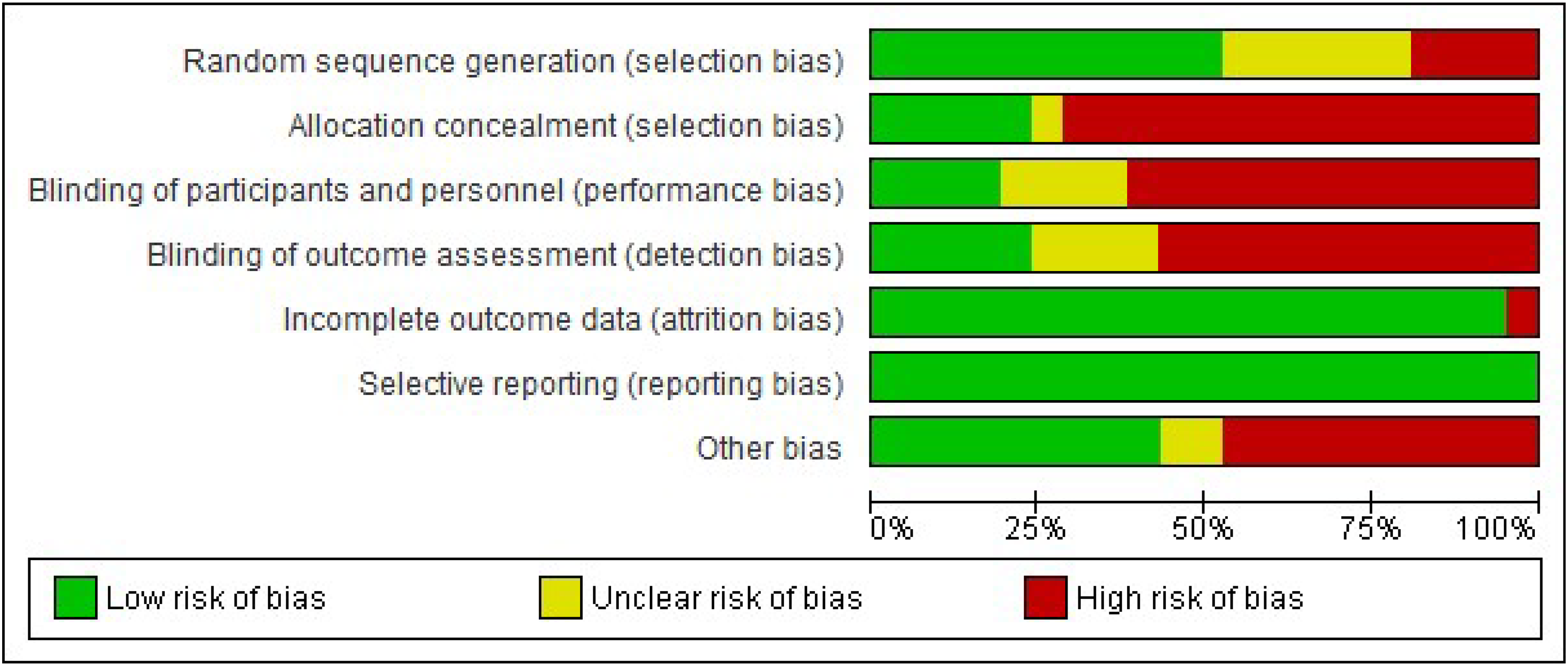
Risk of bias graph: review authors’ judgments about each risk of bias item presented as percentages across all included studies.
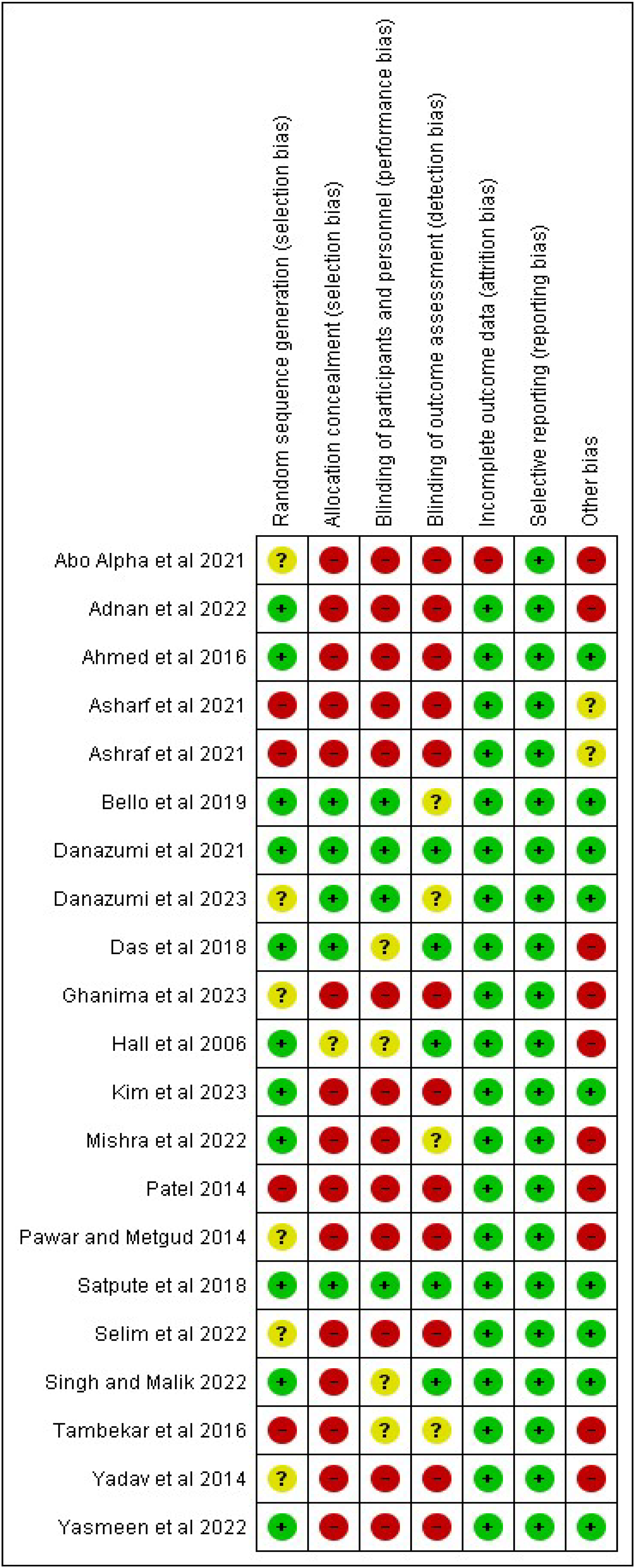
Risk of bias summary: review authors’ judgments about each risk of bias item for each included study.
Seven out of the twenty-one trials exhibited uncertainty regarding various items, such as the randomization sequence (Abo Alfa et al., 2021; Danazumi et al., 2023; Ghanima et al., 2023; Pawar & Metgud, 2014; Selim et al., 2022; Yadav et al., 2014) and blinding (Bello et al., 2019; Danazumi et al., 2023; Das, 2018; Hall, Hardt, et al., 2006b; Singh & Malik, 2022; Tambekar et al., 2016). Notably, only two studies demonstrated no risk of bias across all assessment domains (Danazumi et al., 2021; Satpute et al., 2019).
Meta-Analysis
This meta-analysis was conducted by categorizing the included trials into several homogeneous subgroups based on the specific Mulligan technique investigated, the interventions in the experimental and control groups, and the outcome measures. Two main analyses were defined: the first focused on studies investigating the SMWLM technique, while the second addressed those using the BLR Mulligan technique.
Several trials were excluded from the meta-analysis for various reasons, including a lack of necessary data (Ashraf, Ahmad, et al., 2021a; Ashraf, Ashraf, et al., 2021b; Bello et al., 2019), unclear identification of intervention and control group data (Abo Alfa et al., 2021), unique designs that did not fit into any subgroup analysis (Hall, Hardt, et al., 2006b), an insufficient number of trials for adequate comparisons (Mishra et al., 2022), and situations where both groups received the Mulligan techniques (Pawar & Metgud, 2014). Ultimately, a total of 14 trials, comprising 690 patients, were included in this meta-analysis (Adnan et al., 2022; Ahmed et al., 2016; Danazumi et al., 2021, 2023; Das, 2018; Ghanima et al., 2023; Kim et al., 2023; Patel, 2014; Saini et al., 2023; Satpute et al., 2019; Selim et al., 2022; Tambekar et al., 2016; Yadav et al., 2014; Yasmeen et al., 2022).
Most trials assessed pain and function, using VAS and NPRS as pain measurement tools, while ODI and RMDQ served as the primary functional scales. The flexibility of the sciatic nerve was evaluated through the ROM of the SLR test. However, the heterogeneity of trials assessing lumbar ROM prevented a comprehensive analysis based on this outcome.
Comparison 1: Effectiveness of SMWLM
Fourteen trials examined the effect of SMWLM on various outcomes, including pain, function, ROM, and flexibility. Five trials were excluded from the analysis (Abo Alfa et al., 2021; Ashraf, Ahmad, et al., 2021a; Ashraf, Ashraf, et al., 2021b; Bello et al., 2019; Pawar & Metgud, 2014), leaving nine trials that contributed to three levels of sub-analyses based on the outcome measures. Some studies compared SMWLM to a single comparator (Danazumi et al., 2021; Singh & Malik, 2022), while others evaluated the effect of adding SMWLM to standard treatment versus standard treatment alone (Das, 2018; Kim et al., 2023; Satpute et al., 2019; Selim et al., 2022; Yadav et al., 2014). Additionally, some trials compared SMWLM to another comparator after incorporating standard treatment for both groups (Ahmed et al., 2016; Danazumi et al., 2023).
1-A: Effect of SMWLM on Pain Level
Nine trials examined pain levels in the lower extremities following the application of SMWLM (Ahmed et al., 2016; Danazumi et al., 2021, 2023; Das, 2018; Kim et al., 2023; Satpute et al., 2019; Selim et al., 2022; Singh & Malik, 2022; Yadav et al., 2014). The VAS and NPRS scales were utilized to assess this outcome, leading to the use of a random effects model for analysis.
The overall results of this sub-analysis indicated high heterogeneity among the included trials (I² = 96.9%, p < 0.001). However, a statistically significant reduction in pain was observed in the group receiving SMWLM (Z = 4.61, p < 0.001). Further analysis revealed a significant effect favoring those who received SMWLM in addition to standard treatment compared to standard treatment alone, with a Z value of 8.42 and a p-value of < 0.001. There was also a positive trend for patients receiving SMWLM plus standard treatment versus those receiving a comparator treatment alongside standard treatment (Z = 0.59, p = 0.56) (Figure 4).
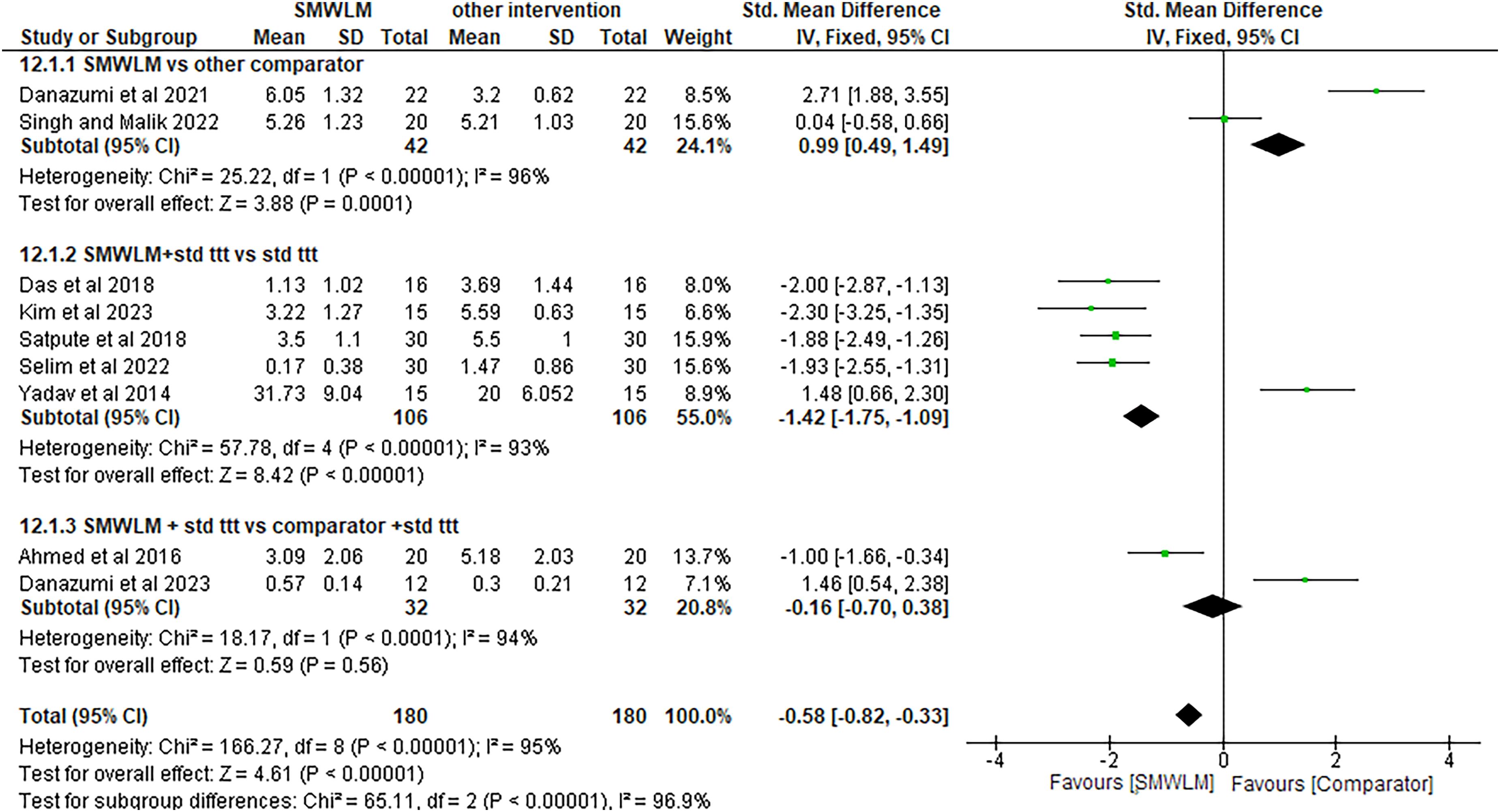
Forest plots for the sub-analysis showing the effect of SMWLM on pain level.
1-B: Effect of SMWLM on Function
This sub-analysis (Figure 5) encompassed nine trials, which were further categorized based on the types of interventions applied to the study and control groups. High heterogeneity was observed within each individual sub-analysis, with I² values exceeding 89; however, no overall heterogeneity was detected between subgroups (I² = 0). The overall findings of this analysis indicated that the use of SMWLM resulted in statistically significant differences in functional outcomes (Z = 2.35, p = 0.02). A closer look at the sub-analyses revealed that the combination of SMWLM with standard treatment was the most effective, yielding a Z value of 2.52 and a p-value of 0.01. Additionally, there was a trend favoring SMWLM when compared to another experimental intervention, although this was not statistically significant (Z = 1.01, p = 0.31).

Forest plots showing the effect of SMWLM on function.
1-C: Effect of SMWLM on Flexibility
Three trials with the same design and appropriate data were included in this analysis (Das, 2018; Kim et al., 2023; Satpute et al., 2019). These studies evaluated the impact of adding SMWLM to standard treatment compared to standard treatment alone on the flexibility of the sciatic nerve, as indicated by the angle of the SLR test. The results (Figure 6) showed a high level of heterogeneity (I² = 84%). Notably, there was a statistically significant improvement in the ROM for the SLR test following the application of SMWLM, with a Z value of 7.13 and a p-value of less than 0.001.

Forest plot showing the effect of SMWLM on flexibility indicated by the SLR angle.
Comparison 2: Effectiveness of BLR
This analysis comprised five trials (Adnan et al., 2022; Ghanima et al., 2023; Patel, 2014; Tambekar et al., 2016; Yasmeen et al., 2022). Among these, three trials compared the effects of the BLR technique against other experimental interventions (Ghanima et al., 2023; Patel, 2014; Tambekar et al., 2016), while the remaining two trials incorporated the experimental interventions alongside standard treatments (Adnan et al., 2022; Yasmeen et al., 2022).
Comparison 2-A: Effect of BLR on Pain
This sub-analysis involved three trials (Figure 7) that compared the effectiveness of the BLR technique against other experimental interventions, including slump stretch (Patel, 2014), neural mobilization (Tambekar et al., 2016), and core stabilization exercises (Ghanima et al., 2023). The level of heterogeneity among these trials was high (I² = 84%). However, there was no statistically significant difference in pain intensity between the groups that received the BLR technique (Z = 0.32, p = 0.75).

Forest plots for the effects of BLR on pain.
Comparison 2-B: Effectiveness of BLR on Function
This analysis included only two trials (Adnan et al., 2022; Yasmeen et al., 2022), both of which added the BLR technique to a standard treatment and compared its effects with another experimental intervention alongside standard treatment. A high level of heterogeneity was observed (I² = 97%). The comparison between the BLR technique and its comparators did not reveal any statistically significant difference (Z = 1.42, p = 0.16) (Figure 8).

Forest plots for the effects of BLR on function.
Comparison 2-B: Effectiveness of BLR on Flexibility
This analysis included five trials (Ahmed et al., 2016; Ghanima et al., 2023; Patel, 2014; Tambekar et al., 2016; Yasmeen et al., 2022), which were further divided into two sub-analyses based on the type of interventions. Flexibility in all trials was assessed through the range of the SLR. The overall analysis revealed a statistically significant difference in favor of the BLR technique (Z = 4.03, p < 0.001), with a heterogeneity level (I²) exceeding 60%, as illustrated in Figure 9.
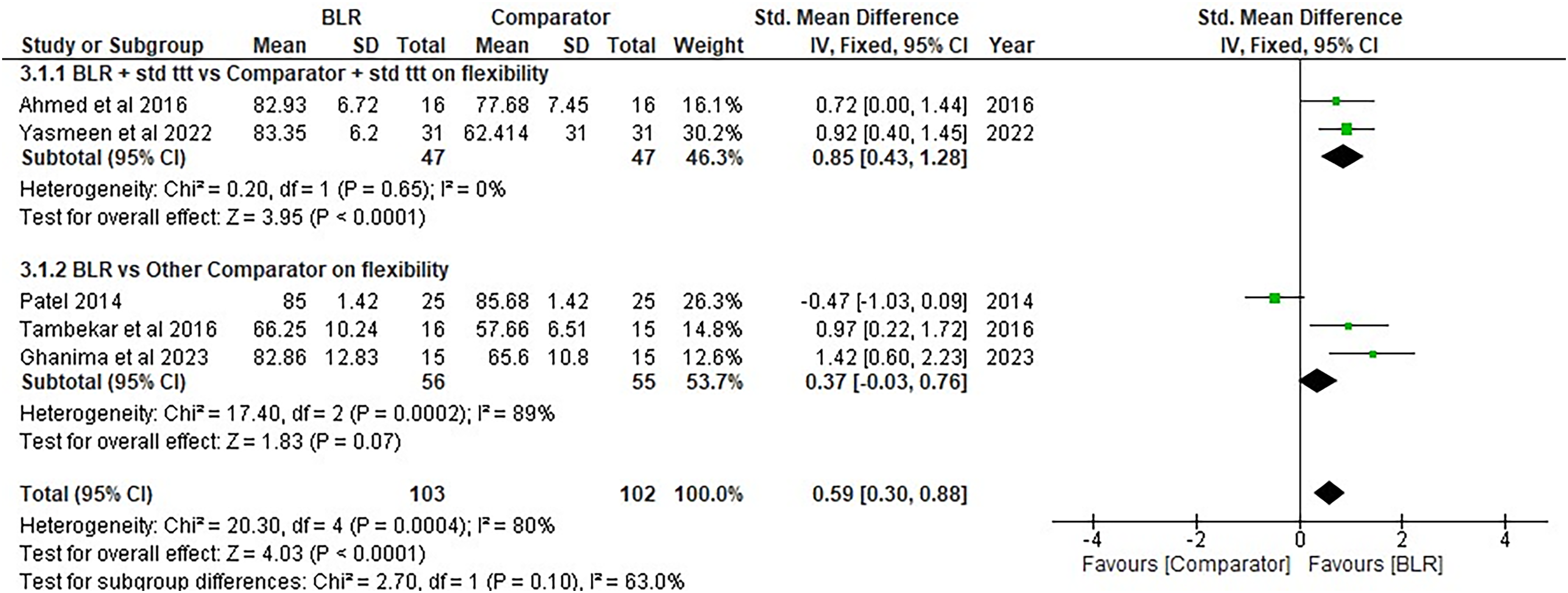
Forest plots for the effects of BLR on flexibility.
Subgroup analysis indicated significant findings favoring the BLR technique plus standard treatment when compared to another comparator intervention plus standard treatment (Z = 3.95, p < 0.001). Additionally, there was a trend favoring the BLR technique compared to another experimental intervention (Z = 1.83, p = 0.07).
Discussion
This meta-analysis aimed to evaluate the effectiveness of Mulligan techniques of manual therapy on sciatica, focusing on outcomes such as pain, ROM, function, and flexibility. Our findings support the effectiveness of Mulligan techniques, particularly the SMWLM, in improving pain and flexibility. Both SMWLM and BLR techniques were effective in enhancing function, though the limited studies on two-leg rotation and TSLR techniques hindered definitive conclusions.
While several systematic reviews have investigated the effects of the Mulligan Concept on patients with lower back pain (LBP) (Almushaiqeh et al., 2024; Athanasiadis et al., 2022; Cheng et al., 2020), this meta-analysis uniquely focuses on Mulligan techniques designed for LBP patients with radiating pain. Pourahmadi et al. (2018) conducted a systematic review examining the effectiveness of the Mulligan concept on pain, ROM, and disability in LBP patients. They included 20 studies utilizing various techniques, but concluded that the evidence supporting the Mulligan concept was not robust. Unlike our meta-analysis, Pourahmadi's work centered on LBP, rather than sciatica, and did not involve a meta-analysis (Pourahmadi et al., 2018).
A recent meta-analysis evaluated lumbar traction against sham traction or no intervention in patients with disk herniation, finding short-term benefits on pain and function but no significant long-term effects (Cheng et al., 2020). Similarly, Athanasiadis and colleagues assessed the psychosocial and cognitive effects of the Mulligan concept in LBP patients, reporting controversial evidence and limited literature (Athanasiadis et al., 2022). Almushaiqeh et al. (2024) reviewed five trials from 2010 to 2019 that examined the effectiveness of manual therapies, including the Mulligan concept, concluding that these techniques improved pain and ROM (Almushaiqeh et al., 2024).
In our meta-analysis, several significant issues were observed that could affect the results. The limited number of trials in specific subgroups increased heterogeneity and raised doubts about the conclusions. For instance, we could not find RCTs on the effectiveness of two-leg rotation techniques, and only two studies assessed the TSLR technique (Mishra et al., 2022; Pawar & Metgud, 2014). In Pawar's study, all groups received Mulligan techniques (TSLR and BLR), complicating the analysis (Pawar & Metgud, 2014).
Although we found numerous studies on SMWLM, particularly regarding pain and ROM, the assessment of function and flexibility was less common. This trend has been noted in previous reviews as well (Almushaiqeh et al., 2024; Athanasiadis et al., 2022). Additionally, many included studies did not report sample size calculations; 14 trials lacked prior power tests, and one trial did not provide clear details on sample size calculation (Ashraf, Ahmad, et al., 2021a). Neglecting appropriate sample size calculations can significantly undermine the accuracy of conclusions.
The duration of interventions varied widely. Some studies involved a single session (Hall, Hardt, et al., 2006b; Tambekar et al., 2016), while others extended to two (Satpute et al., 2019), four (Ashraf, Ashraf, et al., 2021b; Patel, 2014; Selim et al., 2022), or eight weeks (Abo Alfa et al., 2021; Bello et al., 2019). This variability in treatment duration likely contributed to the heterogeneity among studies, affecting the accuracy of findings.
Another critical issue is the lack of long-term follow-up. In our analysis, 14 trials did not consider long-term effects, and only two trials assessed follow-up on a short-term basis (24 h post-intervention) (Hall, Hardt, et al., 2006b; Tambekar et al., 2016). Given that sciatica due to lumbar discogenic issues is often a long-term condition, incorporating long-term follow-up is crucial to accurately evaluate the effectiveness of Mulligan techniques.
Reporting adverse effects is essential in any clinical study (Hussein et al., 2022). In the context of the Mulligan concept, monitoring for worsening pain or movement is crucial to identify patients who may not be suitable candidates for this treatment (Hing et al., 2020). Thus, documenting adverse effects following the first session is a vital safety consideration and a useful guideline for practitioners.
Furthermore, eight of the twenty-one studies (38%) did not report ethical approval data. Future research should prioritize obtaining ethical clearance to ensure the appropriate management of patient rights and the confidentiality of sensitive information.
Summary of Evidence
The SMWLM technique showed significantly better results in reducing pain and improving function, particularly when combined with standard treatment compared to standard treatment alone. However, no significant differences were observed in the other sub-analyses. Notably, the BLR technique, when added to standard treatment, was less effective than comparators that also included standard treatment.
Regarding the TLR technique, only two trials were conducted. Both demonstrated comparable effectiveness in improving pain, flexibility, and function when compared to the BLR technique (Pawar & Metgud, 2014) or standard treatment and stretching (Mishra et al., 2022). While these findings are promising, they are not conclusive and warrant further investigation.
Long-term effects of the SMWLM were evaluated in four trials. Danazumi et al. (2021) reported significant improvements in back and leg pain as well as function when SMWLM was combined with progressive inhibition of neuromuscular structures, with assessments made at 3, 6, and 9 months post-treatment (Danazumi et al., 2021). In another study, Danazumi et al. (2023) found better improvements in pain related to sciatica with SMWLM (Danazumi et al., 2023). Similarly, Satpute et al. (2019) reported improved outcomes in pain, ROM, function, and flexibility after a six-month follow-up for groups receiving SMWLM along with standard treatments such as TENS and exercises (Satpute et al., 2019).
In contrast, the short follow-up periods in the BLR studies were insufficient to adequately assess the long-term effects of this technique. More comprehensive follow-up studies are necessary to draw definitive conclusions regarding the long-term benefits of both SMWLM and BLR techniques.
Strengths
This meta-analysis represents a pioneering effort to specifically examine Mulligan techniques for treating radiating sciatic pain in patients with sciatica. Our thorough search encompassed recent randomized trials published between 2020 and 2024, enabling us to draw conclusions grounded in the latest research. By conducting multiple sub-analyses, we were able to group studies with more homogeneous designs, thereby providing clearer evidence on the effectiveness of Mulligan techniques and identifying the research designs that yield the most significant results. This approach enhances the reliability of our findings and contributes valuable insights into optimizing treatment strategies for sciatica.
Limitations
The main limitations of this meta-analysis include the heterogeneity of the analyzed trials and their limited sample number, which may impact the validity of our results. Additionally, the exclusion of non-English-language publications could introduce bias. Furthermore, since this meta-analysis specifically focused on patients with sciatic pain, the findings may not be applicable to other categories of low back dysfunction. These factors should be considered when interpreting the results and drawing conclusions. Future research could benefit from addressing these limitations to enhance the robustness and applicability of findings in broader contexts.
Implications for Practice
The Mulligan concept is a relatively recent manual therapy approach that shows promise in providing immediate pain relief and improving ROM. Recent studies have highlighted additional benefits for various spinal dysfunctions and related pathologies (Elgendy et al., 2020; Hussein et al., 2021; Hussien et al., 2017).
Based on the findings of this study, incorporating the SMWLM into standard physical therapy for patients with sciatica may lead to better outcomes in pain and function. Furthermore, BLR technique should also be considered in physical therapy programs for sciatica due to its observed positive effects on flexibility. However, given the limited number of studies on the TSLR and two-leg rotation techniques, we could not draw definitive conclusions regarding their use. Future research is needed to establish clearer recommendations for these techniques.
Implications for Research
Future research should prioritize conducting more trials to explore the effects of various Mulligan techniques specifically aimed at treating sciatic pain, particularly the BLR and TSLR techniques. It's essential that these trials adhere to rigorous methodological guidelines, including the use of a priori power tests for sample size calculations and maintaining consistent intervention durations.
Moreover, investigating the long-term effects of these techniques is crucial. Future studies should incorporate follow-up strategies to assess the sustained impact of Mulligan techniques on pain, function, and overall quality of life for patients with sciatica. By addressing these gaps, we can enhance the evidence base and provide clearer recommendations for clinical practice.
Conclusion
The findings suggest that SMWLM significantly improves pain and function in patients with sciatica compared to other interventions. However, the BLR technique did not show superior benefits over comparator treatments across all outcomes. Given the limited number of trials and the overall low quality of the existing literature, there is a pressing need for future high-quality research that comprehensively examines all relevant Mulligan techniques.
Additionally, the high heterogeneity among the studies indicates that conclusions should be interpreted cautiously. Future research should address the weaknesses identified in previous studies, ensuring a thorough exploration of various Mulligan techniques for sciatica treatment. This will help provide clearer evidence and more reliable recommendations for clinical practice.
Supplemental Material
sj-docx-1-nre-10.1177_10538135241301693 - Supplemental material for A Systematic Review and Meta-Analysis of the Effectiveness of Mulligan Mobilization with Movement on Pain, Range of Motion, Function, and Flexibility in Patients with Sciatica
Supplemental material, sj-docx-1-nre-10.1177_10538135241301693 for A Systematic Review and Meta-Analysis of the Effectiveness of Mulligan Mobilization with Movement on Pain, Range of Motion, Function, and Flexibility in Patients with Sciatica by Hisham Hussein, Mohamed Atteya, Aisha Ansari and Ehab Kamel in NeuroRehabilitation
Footnotes
Acknowledgment
The Scientific Research Deanship at the University of Ha’il, Saudia Arabia

Funding
This research was funded by the Scientific Research Deanship at the University of Ha’il, Saudia Arabia, grant number RG-20 202.
Declaration of Conflicting Interests
The authors declared no potential conflicts of interest with respect to the research, authorship, and/or publication of this article.
Supplemental Material
Supplemental material for this article is available online.
References
Supplementary Material
Please find the following supplemental material available below.
For Open Access articles published under a Creative Commons License, all supplemental material carries the same license as the article it is associated with.
For non-Open Access articles published, all supplemental material carries a non-exclusive license, and permission requests for re-use of supplemental material or any part of supplemental material shall be sent directly to the copyright owner as specified in the copyright notice associated with the article.
