



Abstract
Background
The Activities-specific Balance Confidence (ABC) scale lacks sufficient psychometric evidence for use in patients with subacute stroke.
Objective
To investigate the floor and ceiling effects, construct validity, responsiveness, and the minimal important change (MIC) of the ABC scale in patients with subacute stroke.
Methods
The cases of patients with subacute stroke (n = 62) were analyzed for floor/ceiling effects and construct validity at baseline; those of 39 of the patients were analyzed for responsiveness and MIC at baseline and after 4 weeks. Outcome measures included the ABC scale, Mini-Balance Evaluation Systems Test (Mini-BESTest), Timed Up and Go test (TUG), comfortable walking speed (CWS), and maximal walking speed (MWS) measured at both baseline and 4-week follow-up. The MIC was calculated using a ≥ 4-point improvement on the Mini-BESTest as the anchor.
Results
The ABC scale's total score did not exhibit any floor or ceiling effects. The ABC scale was correlated with the Mini-BESTest (ρ = 0.74), TUG (ρ = −0.56), CWS (ρ = 0.60), and MWS (ρ = 0.64). The correlation of change score between the ABC scale and Mini-BESTest was ρ = 0.39. The MIC for the ABC scale was 15.6% (95%CI: 10.4%–21.1%).
Conclusions
The ABC scale may help assess self-efficacy in patients with subacute stroke.
Keywords
Introduction
A stroke can cause persistent balance limitations, increase an individual's risk of falls, and decrease his or her physical activity level (Chiu et al., 2023; Roelofs et al., 2023). The modifiable factors related to the physical activity of stroke survivors include not only physical function and cardiorespiratory fitness but also depression and self-efficacy (Thilarajah et al., 2018). Specially, balance self-efficacy mediates the relationship between physical function and activity and participation (French et al., 2016). Increasing balance self-efficacy is thus important for stroke survivors.
The Activities-specific Balance Confidence (ABC) scale is a balance self-efficacy test that asks individuals to rate their balance confidence (Powell & Myers, 1995). It is included in a core set of outcome measures described in clinical practice guidelines for use in adults with neurologic conditions (Moore et al., 2018), and its use is recommended by the American Physical Therapy Association (Sullivan et al., 2013). Patient-reported outcome measures such as the ABC scale are considered important because they are more sensitive to underlying changes in patients’ functional status compared to clinicians’ reports (Basch, 2010).
The ABC scale evaluates both indoor and outdoor activities and has shown good psychometric properties among community-dwelling individuals with stroke, including internal consistency (Botner et al., 2005; Ishige et al., 2019; Salbach et al., 2006; Ylva & Anette, 2012), reliability (Botner et al., 2005; Ishige et al., 2019), content validity (Botner et al., 2005; Forsberg & Nilsagård, 2013; Ishige et al., 2019; Salbach et al., 2006; Ylva & Anette, 2012), and structural validity (Seamon et al., 2019). However, the validity of the ABC scale is supported primarily by a single study that explored its correlation with functional mobility and quality of life in acute stroke patients (Ylva & Anette, 2012). Nevertheless, the ABC scale is used in patient settings and even as an anchor to calculate the minimal important change (MIC) (Beghi et al., 2018; Corrini et al., 2021). We speculated that the ABC scale may be a useful self-efficacy scale for patients who have experienced a stroke, and we thus sought to clarify this scale's floor and ceiling effects, construct validity, responsiveness, and interpretability. We conducted the present study as a preliminary investigation of the floor and ceiling effects, construct validity, responsiveness, and MIC of the ABC scale in patients with subacute stroke.
Patients and Methods
Study Setting and Patients
We recruited a cohort of inpatients with subacute stroke at two rehabilitation hospitals in Gunma, Japan. Data collection took place from June 2020 to November 2022. All of the inpatients participated in daily ≥40-min sessions of physical therapy and daily ≥40-min sessions of occupational therapy. Exercises such as resistance training, balance exercise, walking exercise, and activities of daily living (ADL) training were part of each patient's therapy.
The inclusion criteria for the study were as follows: (1) this was the first occurrence of a supratentorial stroke in the patient, (2) the patient's cases was at the early subacute phase (≤3 months from the stroke's onset)(Bernhardt et al., 2017), (3) a physician's confirmation of a stable general condition was available, (4) the patient had the ability to follow verbal instructions in functional evaluations (without cognitive dysfunction), and (5) the patient was undergoing walking training in his/her rehabilitation. The exclusion criteria were: (1) the presence of a severe neurological or musculoskeletal condition other than stroke, (2) a visual or verbal impairment that affects the ability to read the questionnaires, and (3) discharge before the study's baseline assessment.
The study was approved by the ethics review committees of Ibaraki Prefectural University of Health Sciences, Fujioka General Hospital, Public Nanokaichi Hospital (#922, #195, #20200010), and was carried out in accordance with the Declaration of Helsinki. All of the patients received verbal and written explanations of the study, and their informed consent to participate was obtained. The Consensus-based Standards for the Selection of Health Measurement Instruments (COSMIN) (Mokkink et al., 2019) were applied in this study. Given that this was a preliminary study, the minimal target sample sizes for construct validity and responsiveness were 50 and 30, respectively and the target sample for the evaluation of floor and ceiling effects was 50, based on a previous study (Terwee et al., 2007).
Measurements
The following patient characteristics were collected: sociodemographic information (age, sex), medical information (type of stroke), period from stroke onset to the baseline assessment, the Brunnstrom recovery stage of lower extremity (BRS-LE), the ABC scale, the Mini-Balance Evaluation Systems Test (Mini-BESTest), the Timed up and Go (TUG) test, the Functional Independent Measure (FIM), and the patient's walking speed. Four weeks after the patient's baseline, the ABC scale, Mini-BESTest, and walking speed were re-measured in a follow-up examination. We selected a 4-week measurement period because the inpatients’ scores on the ABC scale are re-evaluated within 3–5 weeks after the baseline measurements (Corrini et al., 2021; Gervasoni et al., 2017; Godi et al., 2020).
The ABC scale is a 16-item self-report questionnaire related to indoor and outdoor activities that asks individuals to rate their balance confidence on an 11-point scale that ranges from 0% (no confidence) to 100% (completely confident) (Powell & Myers, 1995; Salbach et al., 2006). The average percentage of the 16 items is used, with a higher percentage indicating greater balance confidence. The scale was provided in Japanese in this study. The Japanese version of the ABC scale was translated according to established international guidelines and has been demonstrated to be reliable and valid among community-dwelling individuals who have suffered a stroke (Ishige et al., 2019).
The Mini-BESTest is a balance-assessment measurement comprised of 14 items with scores of 0–2 points each (Franchignoni et al., 2010). The total score ranges from 0 to 28 points, with higher scores indicating better balance function (Franchignoni et al., 2010). The Mini-BESTest has shown good reliability and validity in a variety of diseases, including stroke (Di Carlo et al., 2016).
The TUG test is functional mobility measurement of the time that is necessary for the testee to stand up independently from a seated position in a chair, walk 3 m, turn, and return to the seated position without physical assistance(Podsiadlo & Richardson, 1991). We administered the TUG test as described (Podsiadlo & Richardson, 1991) only to the patients who were able to walk without physical assistance. The TUG has shown good reliability and validity in stroke survivors (Flansbjer et al., 2005).
Walking speed was measured as both the patient's comfortable walking speed (CWS) and his/her maximal walking speed (MWS). These walking speeds have demonstrated good reliability and validity in stroke survivors (Flansbjer et al., 2005). A stopwatch was used to measure the patients’ CWS and MWS for walking the middle 10-m portion of a 16-m walkway. Both walking speeds were measured twice, and the faster walking speed was used for the analyses. The walking speeds are presented as [m/sec], and the patients who needed assistance walking were assumed to have the speed 0 m/sec based on a clinical practice guideline (Moore et al., 2018).
The FIM is a functional status assessment concerning daily activity and is comprised of 18 items with a score ranging from 1–7 points for each item with good reliability and validity for rehabilitation inpatients (Dodds et al., 1993). The total score thus ranges from 18 to 126 points, with higher scores suggesting better functionality.
The BRS-LE assesses the motor progress of the lower extremities of patients with hemiplegia (Brunnstrom, 1966). This scale consists of six stages, with higher stages suggesting better motor function. The BRS-LE has demonstrated good validity compared to Fugl-Meyer assessment for assessing motor paralysis in the lower extremities (Nakazono et al., 2022).
Statistical Analyses
We used only the patients’ baseline data to investigate the ABC scale's construct validity, and we used both the baseline and follow-up data to analyze floor/ceiling effects, responsiveness and interpretability. Missing data were excluded from the analyses. All statistical analyses were performed with the R software package 4.3.0 (R Foundation for Statistical Computing, Vienna, Austria). Probability (p)-values <0.05 were accepted as significant.
We identified the percentages of patients with total scores of 0% or 100% on the ABC scale. A floor effect or a ceiling effect exceeding 15% is considered significant (Terwee et al., 2007). We investigated the scale's construct validity by using hypotheses for the correlation between the ABC scale and the Mini-BESTest, TUG test, walking speeds, FIM, and BRS-LE results based on the COSMIN method. The hypotheses were defined based on previous studies (Botner et al., 2005; Forsberg & Nilsagård, 2013; Ishige et al., 2019; Rodrigues et al., 2014; Salbach et al., 2006; Ylva & Anette, 2012) and on consensus among the present investigators (Table 1). Spearman correlation coefficients and 95% confidence intervals (CIs) were used to estimate associations. We applied the criteria from a study in which the percentages of refuted hypotheses used to rate construct validity were as follows: high = ≤25% of the hypothesis is refuted; moderate = >25% to <50% is refuted; and poor ≥50% is refuted (Terwee et al., 2007).
Hypotheses, Justifications, and Results for Assessing Construct Validity and Responsiveness.
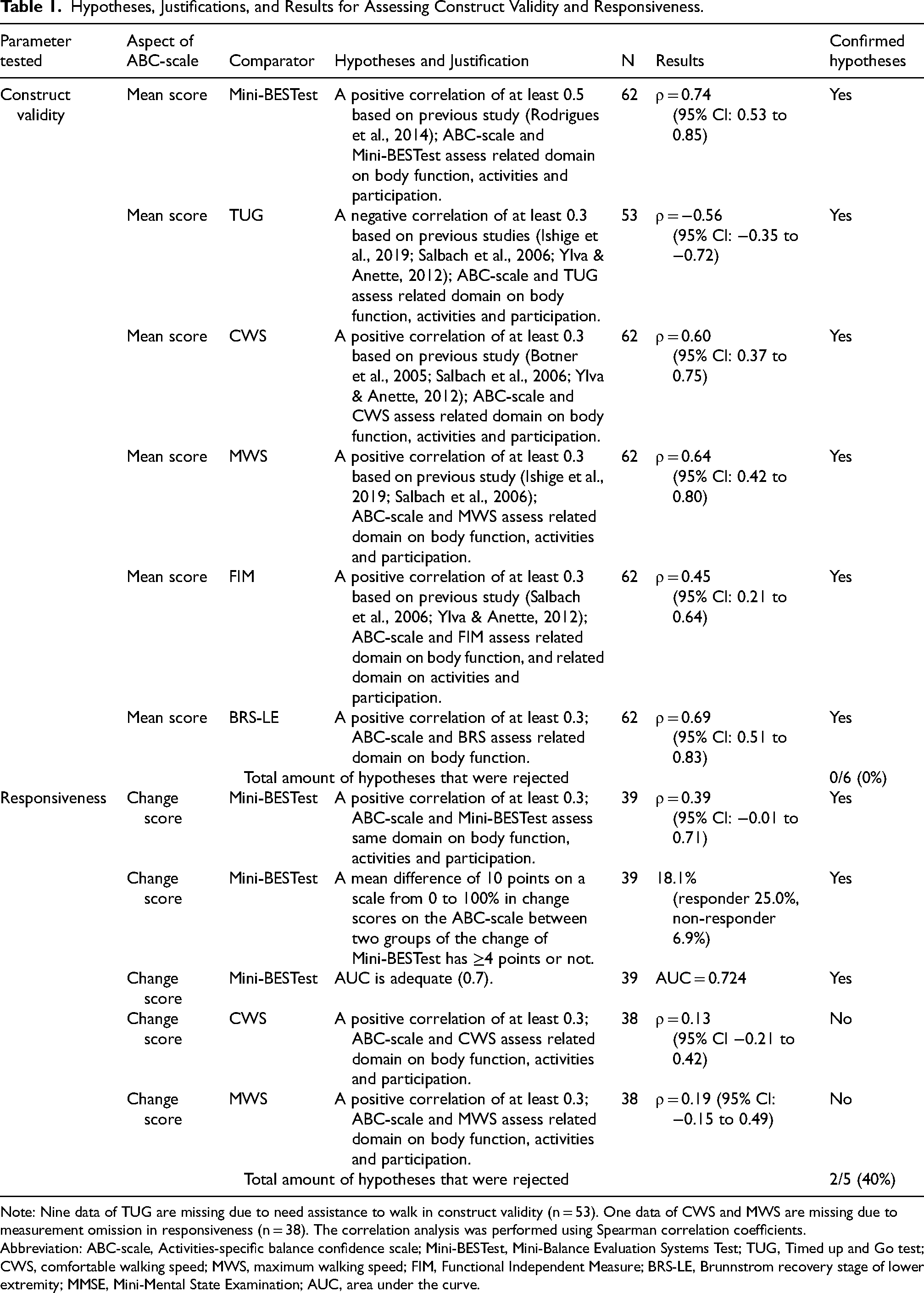
Note: Nine data of TUG are missing due to need assistance to walk in construct validity (n = 53). One data of CWS and MWS are missing due to measurement omission in responsiveness (n = 38). The correlation analysis was performed using Spearman correlation coefficients.
Abbreviation: ABC-scale, Activities-specific balance confidence scale; Mini-BESTest, Mini-Balance Evaluation Systems Test; TUG, Timed up and Go test; CWS, comfortable walking speed; MWS, maximum walking speed; FIM, Functional Independent Measure; BRS-LE, Brunnstrom recovery stage of lower extremity; MMSE, Mini-Mental State Examination; AUC, area under the curve.
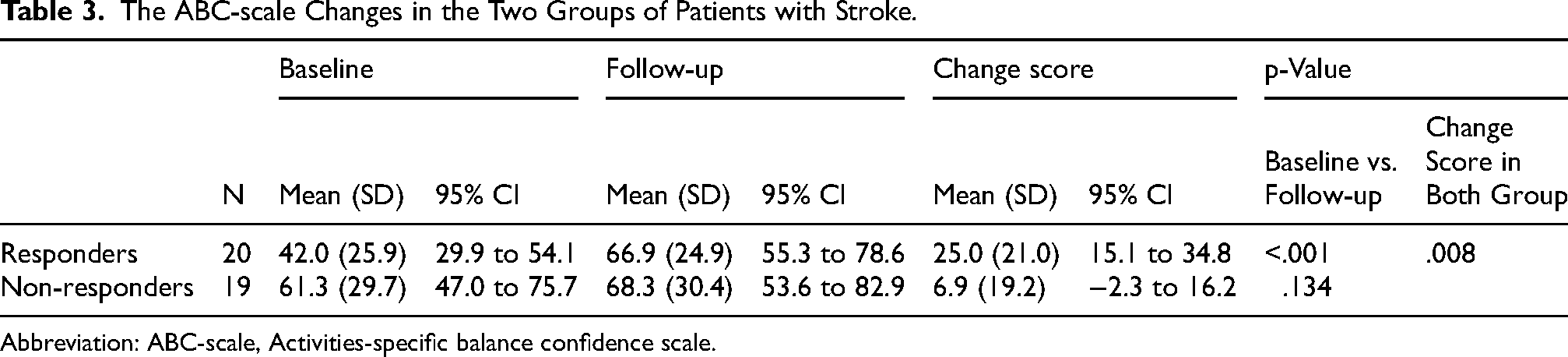
The responsiveness was also examined in relation to these hypotheses and tested in three different ways based on the COSMIN (Prinsen et al., 2018). Table 1 describes the hypotheses. First, we established hypotheses based on the investigators’ consensus regarding the correlations between the change in the ABC scale from baseline to follow-up and the comparator changes (Mini-BESTest and walking speed). Second, two patient groups were classified based on the change in their Mini-BESTest result from baseline to follow-up: the patients who achieved a ≥ 4-point improvement on the Mini-BESTest were the “responders” (n = 20 patients; 51.3% of the cohort), and those who achieved an improvement <4 points were classified as the “non-responders” in order to test the hypothesis that there would be a significant difference between the two groups. Third, we performed a receiver operating characteristic (ROC) analysis between the two groups to test the hypothesis that the area under the curve (AUC) would be >0.7. We used the same criteria as those used for construct validity to rate the hypotheses concerning responsiveness as described (Terwee et al., 2007).
We calculated the MIC of the ABC scale by using the anchor ‘≥4-point improvement on the Mini-BESTest.’ The MIC of the Mini-BESTest anchored by the patient report outcomes of the Global Rating for Change Scale at 2–4 weeks after baseline measurements in patients with subacute stroke is reported to be 3.5–3.8 points (Tamura et al., 2024; Winairuk et al., 2019). We performed a Spearman's correlation analysis between the changes in the patients’ ABC scale scores and the changes in the Mini-BESTest scores to determine whether the changes on the Mini-BESTest met the recommendation as anchors (≥0.3) (Terwee et al., 2021).
The calculation of the MIC used the predictive modelling method that includes a logistic regression analysis and uses the intercept, regression coefficient, and log odds of post-test improvement (Terluin et al., 2015). The MIC for a change score was defined as having a likelihood ratio of 1.
Results
Figure 1 is the flow diagram of the study sample. A total of 62 patients who had experienced a subacute stroke were enrolled in the study and included in the baseline assessment. During the follow-up, 23 patients were discharged within 3 weeks from admission. The data from 62 patients were thus used in our analyses of the ABC scale's construct validity and floor and ceiling effects of baseline, whereas the data of only the remaining 39 patients were used for the analyses of floor/ceiling effect of follow-up, responsiveness and interpretability. The patients’ demographics and characteristics are summarized in Table 2.
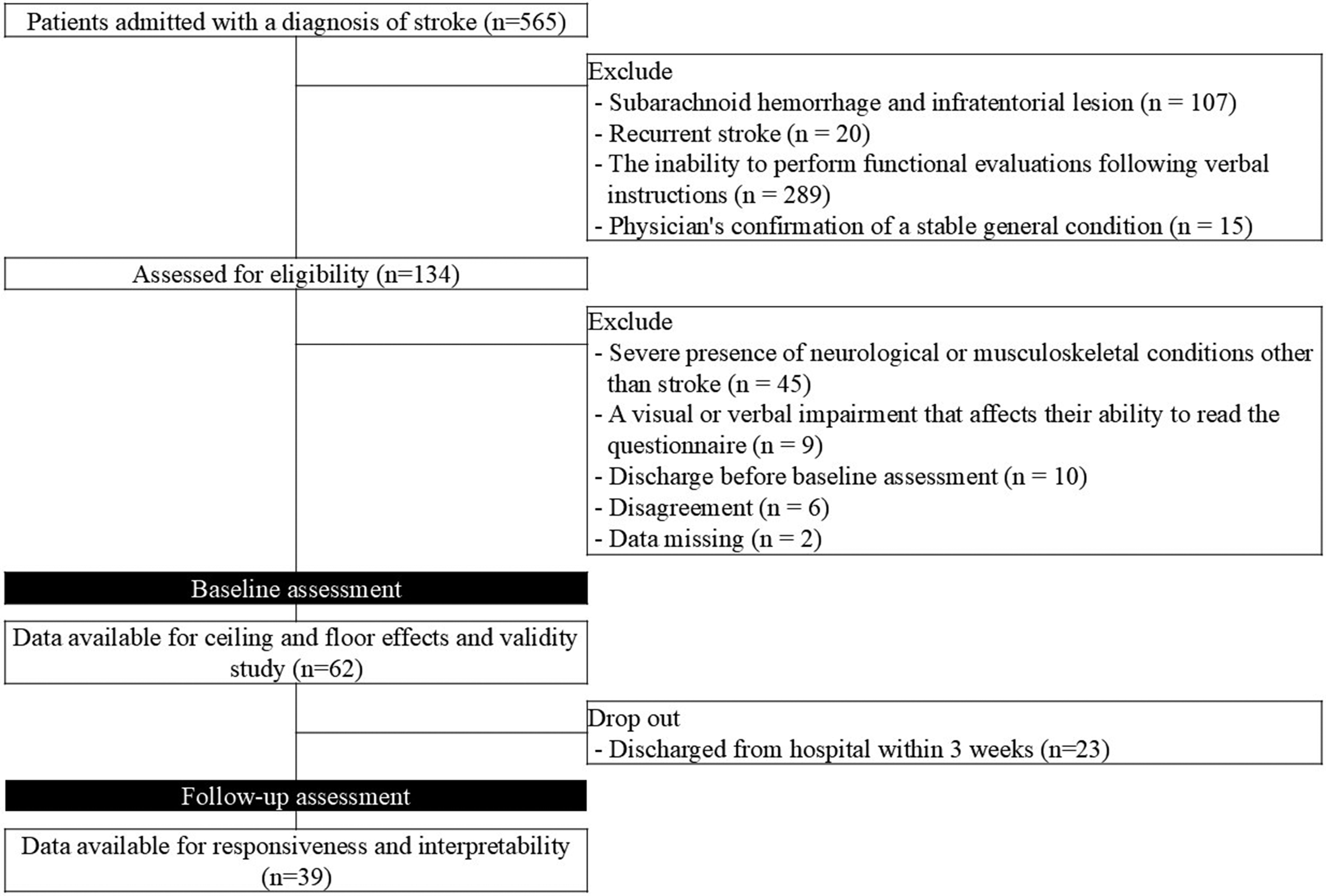
Flow Chart of Patient Enrolment.
Patient Characteristics of Baseline Completers and Follow-up Completers.

Note: Values for continuous variables are mean (SD). Nine data of TUG are missing due to need assistance to walk (n = 53). One data of CWS and MWS are missing due to measurement omission in follow-up (n = 38).
Abbreviation: BRS, Brunnstrom recovery stage; MMSE, Mini-Mental State Examination; ABC-scale, Activities-specific balance confidence scale; Mini-BESTest, Mini-Balance Evaluation Systems Test; TUG, Timed up and Go test; CWS, comfortable walking speed; MWS, maximum walking speed; FIM, Functional Independent Measure.
The patients who completed only the baseline measurements tended to have better balance function and walking capacity compared to the patients who completed the follow-up. In the follow-up, nine patients were unable to undergo the TUG test and the measurement of walking speeds because they required assistance to walk; some TUG test data were thus missing, and the walking speeds were 0 m/s in this group. At the baseline, 28 patients (45.2%) achieved ≥6 points on the FIM for walking, and 34 patients (54.8%) required assistance or supervision in walking during the performance of ADLs.
Floor and Ceiling Effects
Table 2 shows the floor and ceiling effects in the total score on the ABC scale. Two patients had the ABC scale score of 0%, and three patients had a score of 100% at baseline. At follow-up, three patients had the ABC score of 100%. The ABC scale's total score exhibited neither a floor effect nor a ceiling effect at baseline or at follow-up. Figure 2 illustrates the distribution of individual item scores on the ABC scale. At both baseline and follow-up, three items (nos. 6, 15, and 16) exhibited a proportion of “No confidence (0%)” responses that was >15%. Similarly, the proportion of patients reporting “Complete confidence (100%)” exceeded 15% for all but four items (nos. 6, 12, 13, and 16).
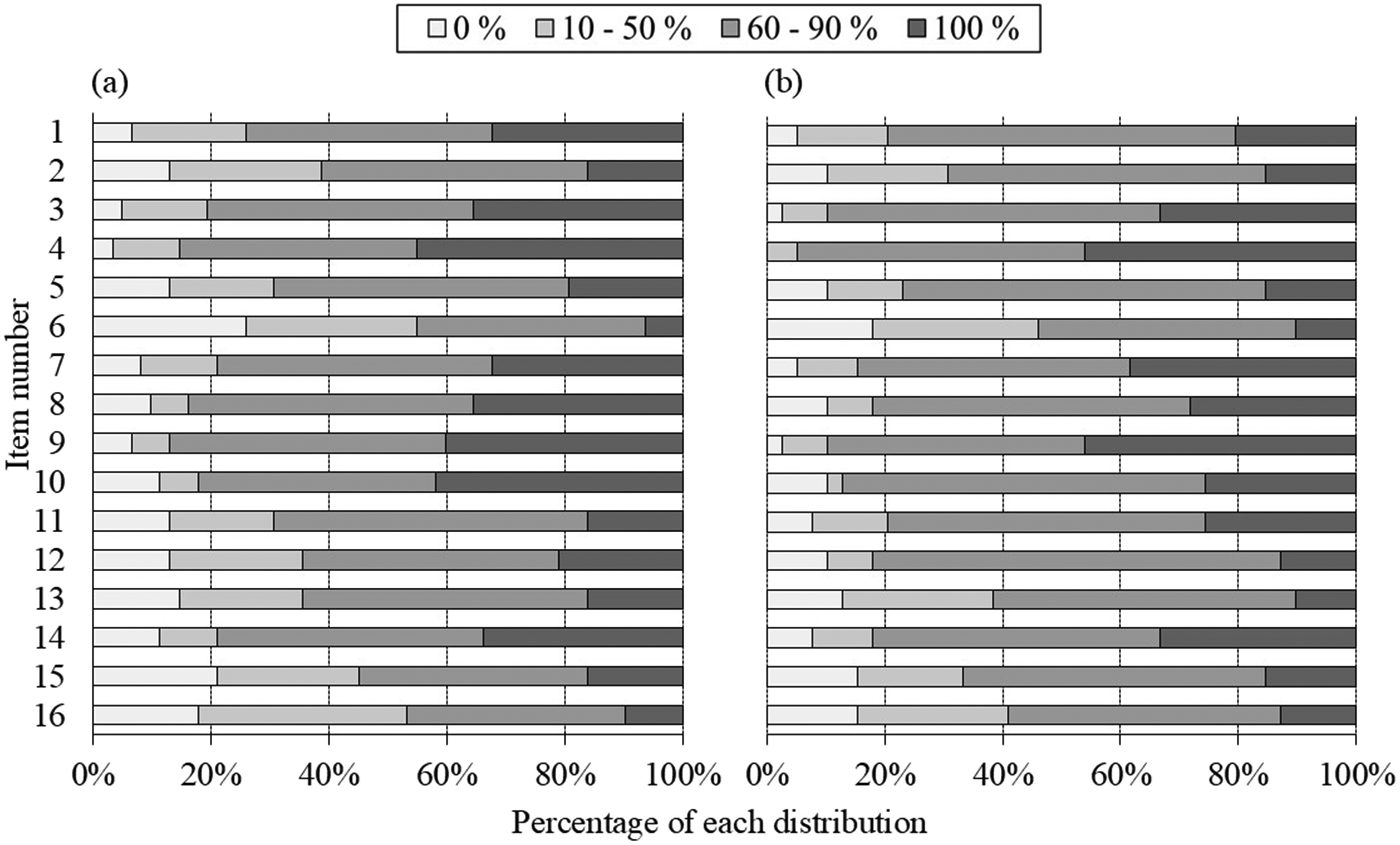
The Percentages of Scores for Each Item of the Activities-Specific Balance Confidence (ABC) Scale.
Construct Validity
The correlations between the ABC scale and the comparator measurements are listed in Table 1. The patients’ ABC scale scores correlated with their Mini-BESTest scores (ρ = 0.74). The correlations between the ABC scale and the other comparator measurements ranged from 0.45 to 0.69. The results of our analyses confirmed that all of the hypotheses were not rejected (0%), indicating high construct validity.
Responsiveness
The correlation of the change scores between the ABC scale results and the Mini-BESTest results was 0.39 (Table 1). The responders exhibited significantly higher change values compared to the non-responders (Table 3, Figure 3). In the ROC analysis, the AUC of the ABC scale was 0.724 (95%CI: 0.560–0.887), which is >0.7 (Figure 4). As shown by the data in Table 1, we confirmed that two of the five hypotheses were rejected, indicating moderate responsiveness (40%).
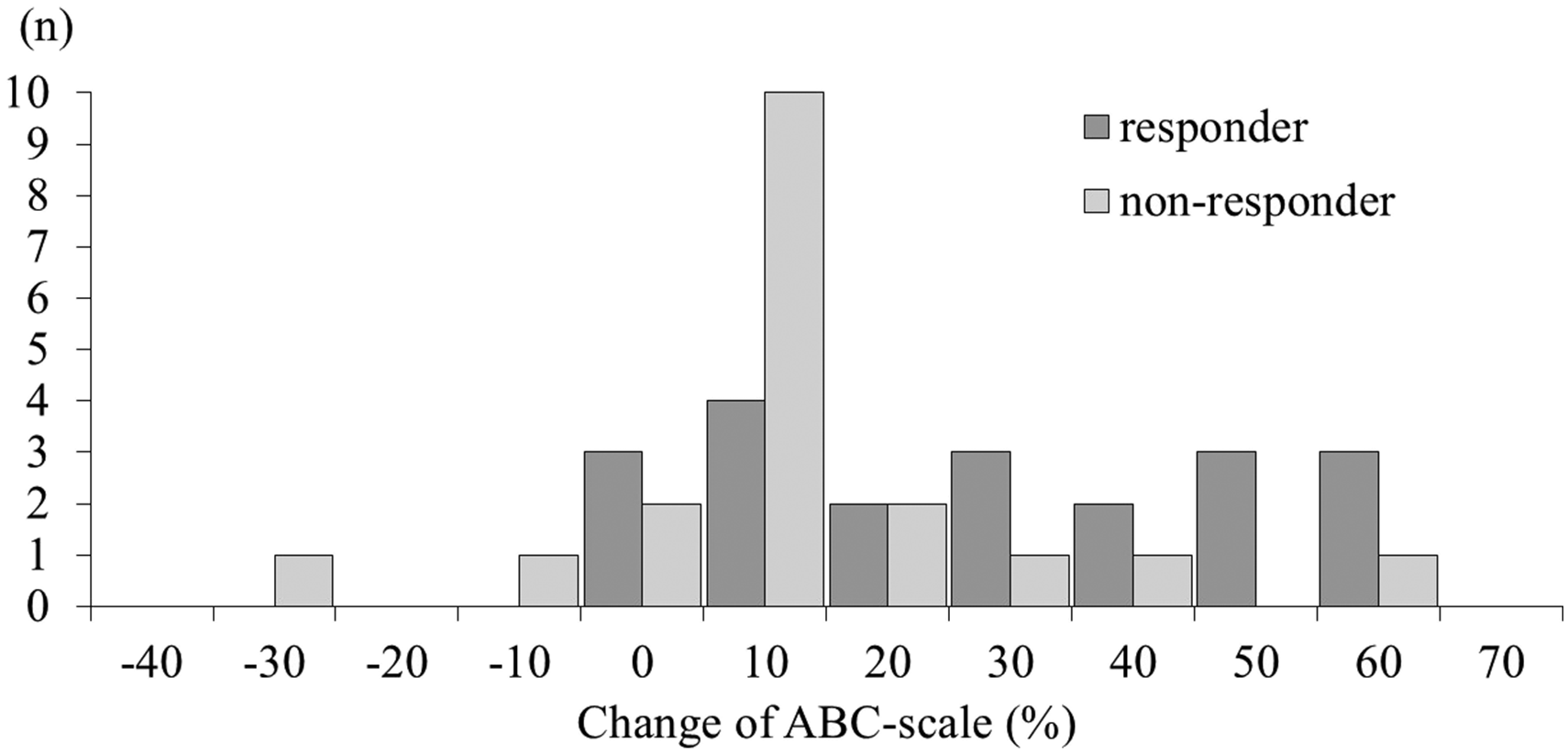
The Distribution of Score Changes in ABC Scale.
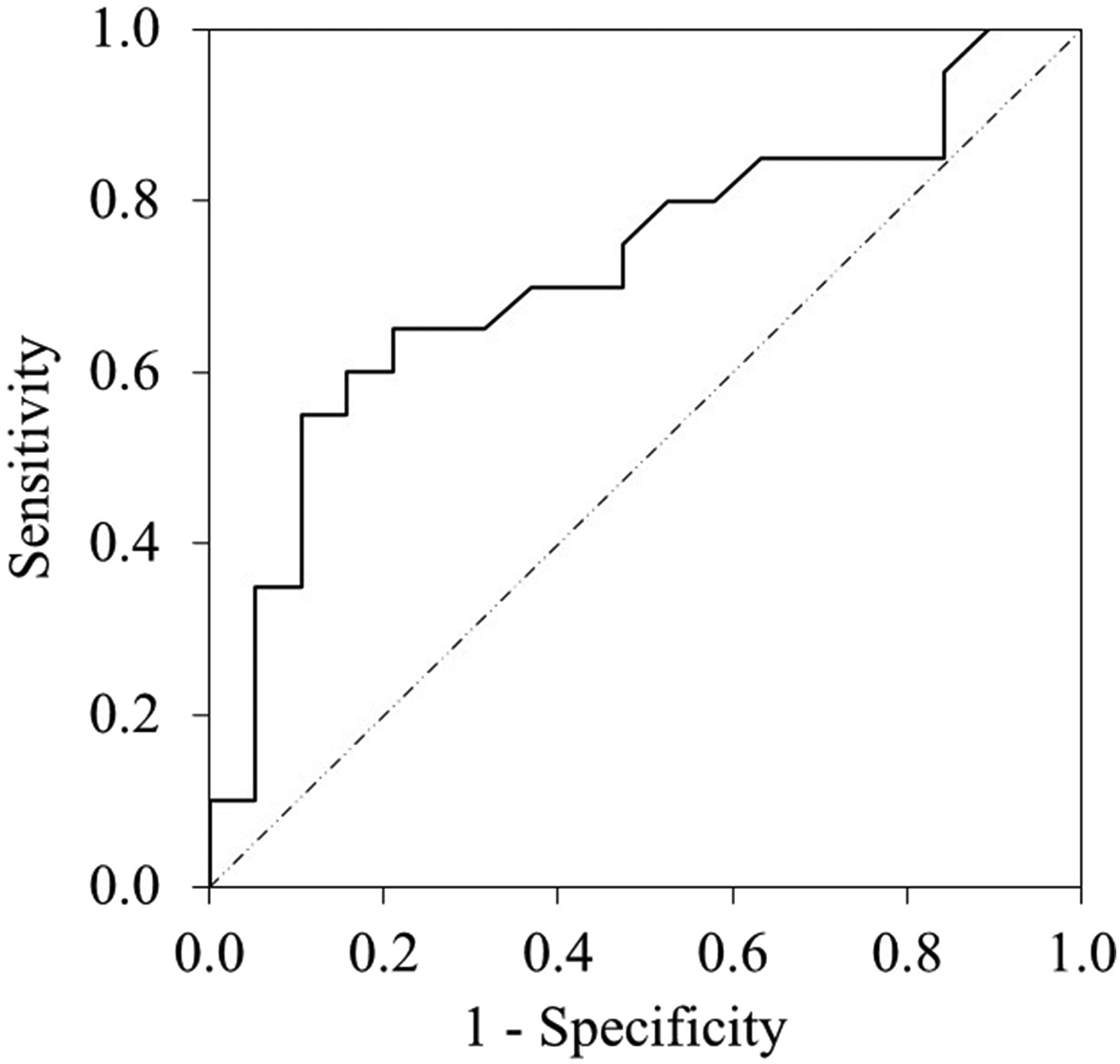
The Results of the Receiver Operator Curve Analysis Concerning the Responsiveness of the ABC Scale.
The ABC-scale Changes in the Two Groups of Patients with Stroke.
Abbreviation: ABC-scale, Activities-specific balance confidence scale.
Interpretability
The Spearman ρ-value between the changes in the ABC scale and the Mini-BESTest was 0.39 (Table 1), and thus the anchor criteria were met. The MIC (95%CI) value for the ABC scale was 15.6% (10.4%–21.1%).
Discussion
This study is apparently to characterize psychometric properties of the ABC scale including the floor/ceiling effect, validity, responsiveness, and the MIC among patients with subacute stroke. The results of our analyses revealed that the ABC scale showed high validity and moderate responsiveness for these patients, with an MIC of 15.6%.
The total score of the ABC scale did not show a floor effect or a ceiling effect. Individuals’ item scores showed floor effects (3 items) and ceiling effects (12 items) at baseline and at follow-up. The floor and ceiling effects revealed in this study are similar to those in the original and French Canadian versions of the ABC scale among stroke survivors in a community setting (Salbach et al., 2006). We also observed that the ABC scale three items with a floor effect matched the most difficult items of the Rasch analysis in stroke survivors (Seamon et al., 2019). The ABC scale is composed of items that are designed to examine aspects of life in the community such as walking around the house, walking in a crowded mall, and stepping onto or off an escalator. Although the ABC scale includes some items that are difficult for inpatients, our observation of no floor effect strongly supports the usefulness of the ABC scale in hospitalized patients.
The ABC scale also showed high construct validity and moderate responsiveness by a confirmed hypothesis. We observed the highest correlations between the ABC scale and the Mini-BESTest for both validity (ρ = 0.74) and responsiveness (ρ = 0.39). In validation studies, the correlation values of the ABC scale and balance ability assessed by the Berg Balance Scale were ρ = 0.36–0.61 (Botner et al., 2005; Ishige et al., 2019; Salbach et al., 2006), and those assessed by the TUG test were ρ = −0.55 to −0.34 (Ishige et al., 2019; Salbach et al., 2006; Ylva & Anette, 2012). Our results regarding the relationship between the ABC scale and balance assessment were agreement to those found in community-dwelling individuals with stroke. While the correlation between the ABC scale and the Mini-BESTest obtained in the present investigation is strong compared to the previous studies. The Mini-BESTest consists of anticipatory transitions, postural responses, sensory orientation, and dynamic gait evaluations (Franchignoni et al., 2010), and it has been used to assess postural responses that are not included in the Berg Balance Scale or TUG test. Individuals who have experienced a stroke have shown a high risk of falling when exposed to slip-like perturbations, due to their inability to execute an effective compensatory step to regain stability upon a loss of balance (Salot et al., 2016). Our results thus revealed a high correlation between the ABC scale and the Mini-BESTest compared to earlier studies. In addition, the responsiveness results correlated with the Mini-BESTest rather than walking speed, which indicates that the ABC scale captures changes in balance ability rather than walking ability.
Our analysis results established that the MIC of the ABC scale was 15.6% in patients with subacute stroke. The MIC of the ABC scale has been described as ranging from 14.2 to 18.9% only for individuals with chronic obstructive pulmonary disease or vestibular disorders (Beauchamp et al., 2016; Wellons et al., 2022). These previous studies were used anchor for patient report outcome measure such as Global Rating of Change Scale and Dizziness Handicap Index. Although we did not use GRC as the anchor, we obtained scores similar to those in previous studies, suggesting that a valid MIC estimate could still be derived. The present investigation provides the first report of an MIC of the ABC scale for patients with stroke. In order to obtain the MIC for some outcome measurements, several research groups have used a 10% change on the ABC scale as an anchor (Corrini et al., 2021; Gervasoni et al., 2017; Godi et al., 2020). However, a 10% change is not a meaningful change and may be within the margin of error. Further investigations are necessary to consider the MIC when using the ABC scale as an anchor.
Study Strengths
Although the use of the ABC scale has been recommended for adults with stroke (Moore et al., 2018; Sullivan et al., 2013), the understanding of the psychometric properties of this scale for use at the subacute stroke phase has been inadequate. Our findings provide a rationale for the use of the ABC scale in patients with stroke, as they clarify the floor/ceiling effect, construct validity, responsiveness, and MIC of the ABC scale in patients with subacute stroke and suggest that the ABC scale can be effectively used in inpatient settings, even during the subacute phase.
Study Limitations
During the follow-up, 23 patients dropped out due to discharge within 3 weeks, which could have introduced a tapering bias. The sample size was “adequate,” not “very good” in the analyses of both the construct validity and responsiveness of the COSMIN guidelines (Mokkink et al., 2019). Based on COSMIN guidelines (Mokkink et al., 2019), future studies should validate findings with larger sample sizes, e.g., > 100 participants. In addition, the ABC scale total score showed no ceiling or floor effect, but the percentage of 100% scores (complete confidence) exceeded 15% in 14 of the ABC scale's sub-items although the activities were not actually completed. The results of this study may indicate patients’ higher confidence compared to their actual ability because some items were answered ‘imaginatively.’ In the future, the consistency of ABC scale sub-item scores for inpatients should be compared with the corresponding scores achieved by stroke survivors in the community, matched based on functional ability.
Another study limitation is that our calculation of the MIC used the anchor ‘≥4-point improvement on the Mini-BESTest.’ The reported MIC values of the Mini-BESTest anchored by the patient-reported outcome on the Global Rating for Change Scale at 2–4 weeks after baseline measurements in patients with subacute stroke has ranged from 3.5 to 3.8 points (Tamura et al., 2024; Winairuk et al., 2019). Although the ≥4-point change in the Mini-BESTest result is a meaningful change based on patient-reported outcomes, it is not yet clear whether it also reflects the subjectivity of the study's participants. It thus remains necessary to clarify the external validity of the MIC obtained in this study by calculating the MIC based on patient subjectivity with tests such as the Global Rating for Change Scale.
Conclusion
We demonstrated that the ABC Scale exhibits no ceiling or floor effects and has high validity and moderate responsiveness in patients with subacute stroke. Additionally, we identified a minimal important change (MIC) of 15.6%. Together our present findings indicate that the ABC scale can help assess self-efficacy in patients with subacute stroke. We thus recommend the use of the ABC scale for patients with subacute stroke in inpatient rehabilitation settings. Further studies should assess both the validity of the ABC scale based on the data of >100 patients and the external validity of the MIC value.
Footnotes
Acknowledgements
We thank all of the patients and therapists who participated in this study.

Funding
The author(s) disclosed receipt of the following financial support for the research, authorship, and/or publication of this article: This study was supported by a grant from the Japan Society for the Promotion of Sciences KAKENHI (grant number. JP21K17458).
Conflicting Interests
The author(s) declared no potential conflicts of interest with respect to the research, authorship, and/or publication of this article.
Data Availability
The data that support the findings of this study are available from the corresponding author, MK, upon reasonable request.