




Abstract
Background
The Perri Auditory Verbal Learning Test (Perri-AVLT) is a cognitive tool that is used to assess verbal learning and memory. To date, demographically adjusted norms for Perri-AVLT have not been identified for Mexican adults.
Objectives
This study aimed to 1) estimate the means, standard deviations, and ranges for Perri-AVLT raw scores, 2) develop regression-based norms from healthy participants to enable demographic adjustments for clinical interpretation, and 3) assess test-retest reliability.
Methods
The sample included 430 participants (380 cognitively normal individuals and 50 clinical cases) aged 18–59 years from Mexico (Jalisco, Guanajuato and Mexico City). The participants completed the Perri-AVLT. A multivariate regression-based norming approach was used to evaluate the effects of age, sex, and years of education on test performance.
Results
Healthy participants aged
Conclusion
We provided normative data for the Perri-AVLT after performing regression analyses adjusted for sociodemographic factors. These norms can be used to evaluate verbal learning and memory in early-to-midlife Mexican adults. This information can support neuropsychologists in the context of cognitive assessment, rehabilitation and research.
Introduction
The Perri Auditory Verbal Learning Test (Perri-AVLT) is a neuropsychological instrument that is used to assess verbal learning and memory. On the basis of the structure of the California Verbal Learning Test (CVLT), the Perri-AVLT was specifically designed and validated in Spanish for use with Hispanic populations (Perri et al., 1995). This cultural and linguistic adaptation makes it an important tool for assessing cognitive function in Spanish-speaking individuals, thus addressing a critical gap in neuropsychological testing resources for this population.
In 2011, Olmos et al. (i Olmos et al., 2011) adapted the Perri-AVLT for use with Mexican children aged six to 11 years and provided normative data for this demographic. Their findings demonstrated that the Perri-AVLT showed acceptable psychometric properties, including reliability and validity, for evaluating learning and memory in this younger population. However, despite the availability of norms for children, no such data exist for Mexican adults, particularly those aged 18–59. This limitation restricts broader clinical and research applications of Perri-AVLT in the adult population.
The Perri-AVLT assesses learning and memory through a structured series of trials. The test begins with the examiner reading a list of 16 words (List A) drawn from four semantic categories. The participants complete five trials, during which they listen to the list and recall as many words as possible in any order. After these five consecutive trials, a new list of words (List B; the interference list) is presented, and participants attempt to recall as many words as possible from this new list. Immediately following this, participants are prompted to recall only words from List A (Trial 6; immediate free recall). Next, they are asked to recall the words from List A grouped by category (Trial 7; immediate memory category). After a 20-min delay, during which other neuropsychological tests involving nonverbal stimuli are conducted, participants are again prompted to recall words from List A (Trial 8; delayed memory), followed by recalling words from List A by category (Trial 9; delayed memory category). Finally, participants are presented with a list of 40 words, which include the 16 words from List A, eight words from List B, and 16 new words not found in either list. They are then asked to identify the words from List A (“targets”) in a recognition task (Trial 10; delayed recognition).
Normative data are essential for interpreting individual test scores within a meaningful context, enabling comparisons to a representative population. However, most existing norms for verbal learning, such as the CVLT or the Rey Auditory Verbal Learning Test (RAVLT), are based on English-speaking or non-Hispanic populations, thus limiting the generalizability of these norms to Spanish-speaking individuals. Sociocultural factors such as language proficiency, educational quality, and acculturation significantly influence test performance, making it critical to develop norms that account for these variables in Mexican and other Latin American populations.
While normative data for children are available, Mexican adults remain underexamined in neuropsychological research. This gap is particularly concerning given the growing prevalence of neurodegenerative disorders, such as Alzheimer's disease, among Latinos, who are at a greater risk than non-Hispanic Whites. Without appropriate norms, clinicians and researchers may struggle to differentiate between true cognitive impairment and variations due to sociodemographic factors, potentially leading to misdiagnosis.
This study aims to address this gap by providing normative data for Perri-AVLT among Mexican adults aged 18–59 years using regression analyses, adjusted for key demographic variables such as age, sex, and education. The objectives of this study are as follows: 1) to estimate means, standard deviations, and ranges for raw scores on the Perri-AVLT; 2) to generate regression-based norms from a healthy adult population, thus enabling demographic corrections to facilitate clinical interpretation; and 3) to estimate test‒retest reliability to establish instrument consistency over time.
Materials and Methods
Participants
The present study included 435 Mexican participants who were divided into two groups. The first group consisted of 385 cognitively normal, healthy participants stratified by age and years of education into the following categories: participants aged 18–39 years with fewer than 12 years of education (n = 56); participants aged 40–59 years with fewer than 12 years of education (n = 110); participants aged 18–39 years with 12 or more years of education (n = 134); and participants aged 40–59 years with 12 or more years of education (n = 80). These participants were recruited from Mexico: Jalisco, Guanajuato and Mexico City. Cognitively normal, healthy participants were contacted by research staff to ask whether they were interested in participating. Five participants were excluded from the data analysis because of incomplete sociodemographic information, resulting in a final sample of 380 cognitively normal, healthy participants. Table 1 summarizes the demographic characteristics of the sample, including age, sex, and years of education. Stratification was validated, with no statistically significant associations observed between age, sex and years of education (X2 = 0.039; p = 0.998).
Demographic Characteristics of the Normative Sample.

The inclusion criteria for the cognitively normal group were as follows: (a) being born and currently residing in Mexico; (b) speaking Spanish as their native language; (c) being between 18 and 59 years old at the time of the cognitive evaluation; (d) having completed at least one year of formal education; (e) being able to read and write; (f) scoring
The exclusion criteria for this group were as follows: (a) a history of neurological disorders, developmental or learning disabilities, psychiatric disorders, or chronic medical conditions that might affect cognition (e.g., metabolic syndrome, chronic heart failure, or apnea); (b) a history of psychotropic medication use that could impair cognition; (c) substance abuse or dependence; or (d) visual, auditory, or sensory problems.
The second group consisted of 50 Mexican adults diagnosed with multiple sclerosis (MS). All MS patients were evaluated by the Mexican Foundation for Multiple Sclerosis in Guadalajara, Mexico. A greater proportion of patients had relapsing-remitting MS (RRMS; n = 47, 94%), and the remainder had secondary progressive MS (SPMS; n = 3, 6%). The mean disease duration in this group was 7.01 years (SD = 3.55), and the mean Expanded Disability Status Scale (EDSS) score was 2.88 (SD = 1.12). The inclusion criteria for the clinical group were as follows: (a) had a confirmed diagnosis of MS according to the McDonald 2017 criteria (Thompson et al., 2018); (b) provided signed informed consent; and (c) were aged 18–59 years at the time of cognitive evaluation. The exclusion criteria were as follows: (a) a history of other neurological or psychiatric diagnoses; (b) recent substance and/or alcohol use; (c) a relapse within 30 days prior to cognitive assessment; (d) corticosteroid treatment within the past 30 days; or significant visual impairment (better than 20/200 in at least one eye) or auditory problems.
Procedure
The present study was approved by the Ethics Committee at the university's Center of Health Sciences (CUCS), University of Guadalajara (approval code CI-04524). This research was designed in accordance with the principles of the 64th Declaration of Helsinki (Last revision Fortaleza, Brazil 2013). Participants (cognitively normal participants and patients diagnosed with MS) who met the inclusion/exclusion criteria were invited to complete a 2-h neuropsychological evaluation.
Data collection from cognitively normal participants began in 2023 and ended in 2024. Data collection from MS patients began in January 2024 and ended in November 2024. All participants in both groups were volunteers and received no financial compensation for their participation. All participants provided informed consent.
Statistical Analyses
Statistical analyses were conducted using SPSS version 29 and R version 4.0.3 (R Development Core Team, 2020). The normality and homoscedasticity of the quantitative variables were evaluated using the Kolmogorov‒Smirnov and Levenés tests, respectively. The development of regression-based norms followed the methodology described by Van der Elst et al. (2017). Using data from the cognitively normal participants (n = 380), a multiple linear regression model was generated to predict raw scores on the Perri-AVLT. Age, sex (coded as 1 = male; 2 = female), and years of education were incorporated as predictors.
Results
Objective 1: Estimate to means, Standard Deviations, and Ranges for Perri-AVLT Raw Scores
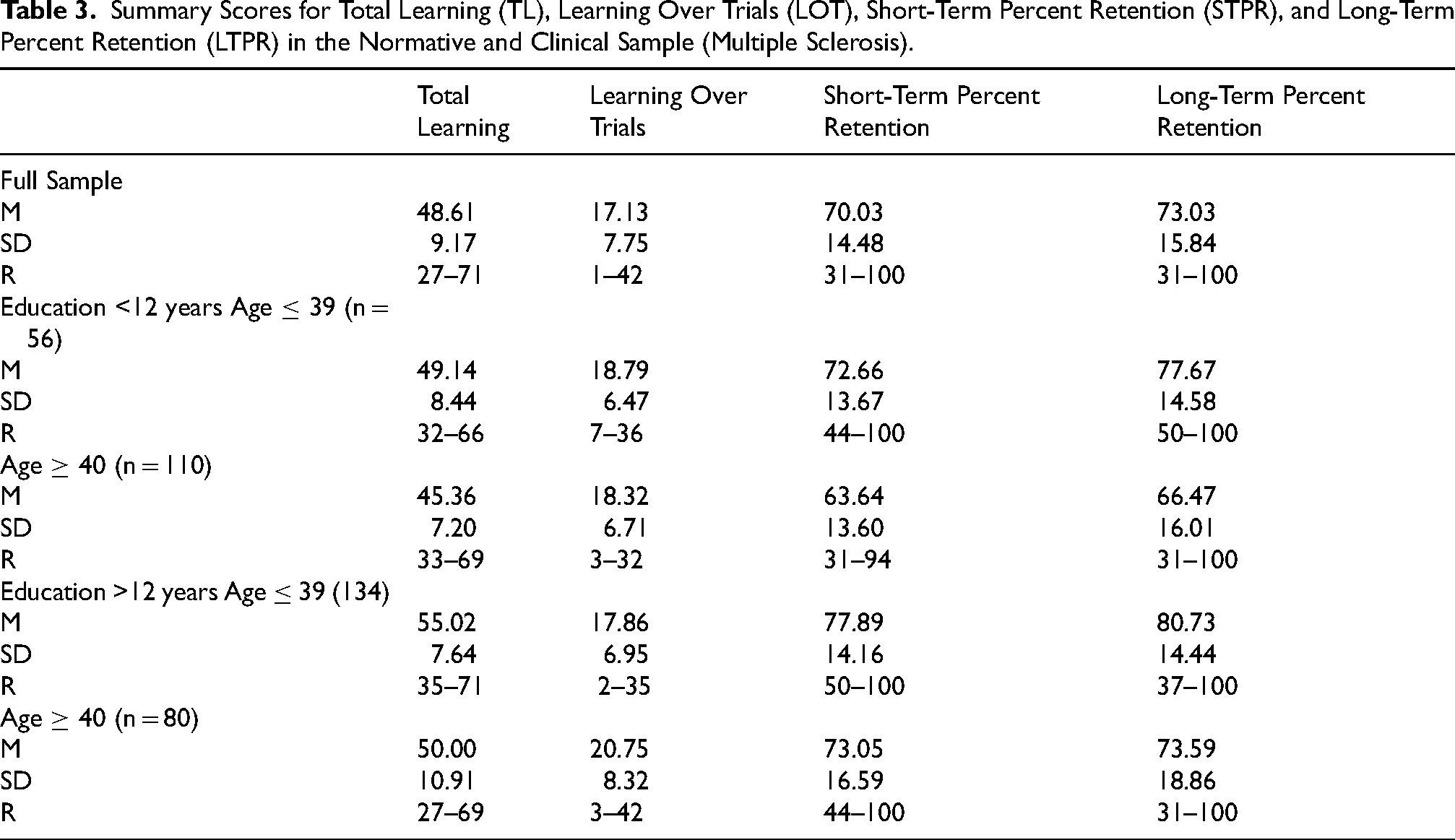
Table 2 presents the means, standard deviations and ranges of Perri-AVLT raw scores for cognitively normal, healthy participants (n = 380), stratified by age and education group. To complement these raw scores, derived measures are frequently computed to provide a more comprehensive evaluation of learning and memory performance (Ivnik et al., 1990). Four key derived scores were calculated: (1) Total Learning (TL), representing the sum of words recalled across trials 1 to 5; (2) Learning Over Trials (LOT), calculated as the difference between the TL score and the recall score for Trial 1 (TL
Means (M), Standard Deviations (SD), and Ranges (R) for the Normative Sample (n = 380), Stratified by Education and Age Groups.
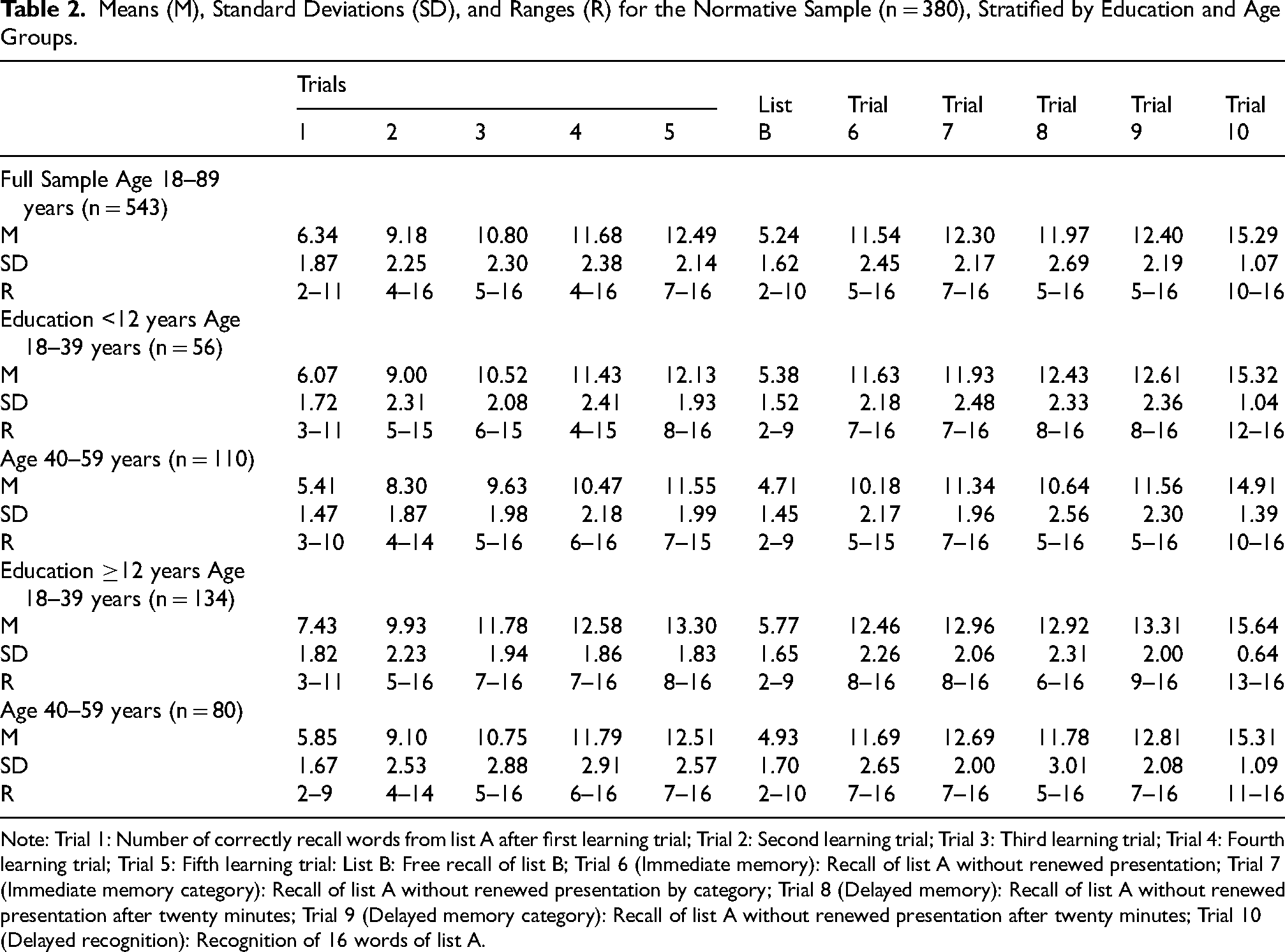
Note: Trial 1: Number of correctly recall words from list A after first learning trial; Trial 2: Second learning trial; Trial 3: Third learning trial; Trial 4: Fourth learning trial; Trial 5: Fifth learning trial: List B: Free recall of list B; Trial 6 (Immediate memory): Recall of list A without renewed presentation; Trial 7 (Immediate memory category): Recall of list A without renewed presentation by category; Trial 8 (Delayed memory): Recall of list A without renewed presentation after twenty minutes; Trial 9 (Delayed memory category): Recall of list A without renewed presentation after twenty minutes; Trial 10 (Delayed recognition): Recognition of 16 words of list A.
Summary Scores for Total Learning (TL), Learning Over Trials (LOT), Short-Term Percent Retention (STPR), and Long-Term Percent Retention (LTPR) in the Normative and Clinical Sample (Multiple Sclerosis).
Sex
Student's t test revealed that males performed worse than females did on specific trials of the Perri-AVLT. These significant differences were observed in Trial 5, where males scored 12.08
Age
A significant difference was observed between participants aged
Education
Participants with
Clinical Samples
A comparison of test performance between the clinical sample (n = 50) and cognitively normal participants (n = 50) revealed that the clinical group scored significantly lower (p
Raw Scores for the Clinical Sample and Cognitively Intact, Healthy Participants.
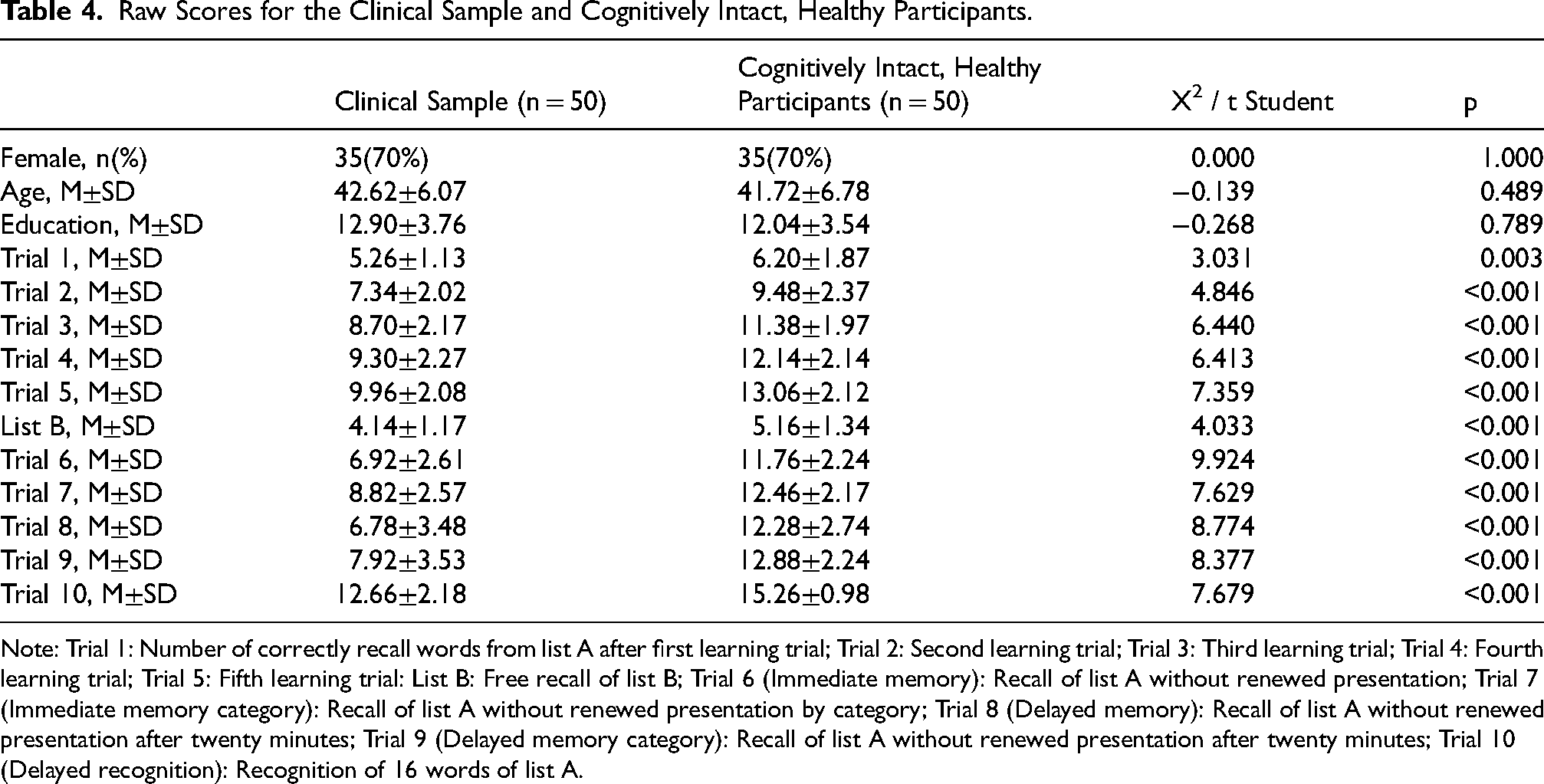
Note: Trial 1: Number of correctly recall words from list A after first learning trial; Trial 2: Second learning trial; Trial 3: Third learning trial; Trial 4: Fourth learning trial; Trial 5: Fifth learning trial: List B: Free recall of list B; Trial 6 (Immediate memory): Recall of list A without renewed presentation; Trial 7 (Immediate memory category): Recall of list A without renewed presentation by category; Trial 8 (Delayed memory): Recall of list A without renewed presentation after twenty minutes; Trial 9 (Delayed memory category): Recall of list A without renewed presentation after twenty minutes; Trial 10 (Delayed recognition): Recognition of 16 words of list A.
Objective 2: Generate Regression-Based Norms for Healthy Participants to Enable Demographic Correction to Facilitate Clinical Interpretation
Regression-based norms were developed via the normative performance of cognitively normal, healthy participants. A multiple linear regression model was generated to predict the actual raw scores of cognitively normal participants, incorporating age, sex (coded 1 = male; 2 = female), and years of education as predictors. The unstandardized Estimating the Predicted Performance: The predicted performance (scale score predicted, (SSpredicted) was calculated using the regression equation: SSpredicted = intercept Subtracting the observed score from the predicted score: The observed scale score (scale score actual, SSactual) was subtracted from the predicted scale score (SSpredicted): Standardization: Z scores were calculated via the following formula: Z = SSactual – SSpredicted/standard deviation of residual. These Z scores were subsequently converted to T scores with a mean of 50 and standard deviation of 10 using the following formula: T = Z*10 + 50.
Coefficients from Multivariate Regression for Normative Adjustments on Primary Variables of the Perri AVLT, based on Data from 380 Cognitively Intact Participants.
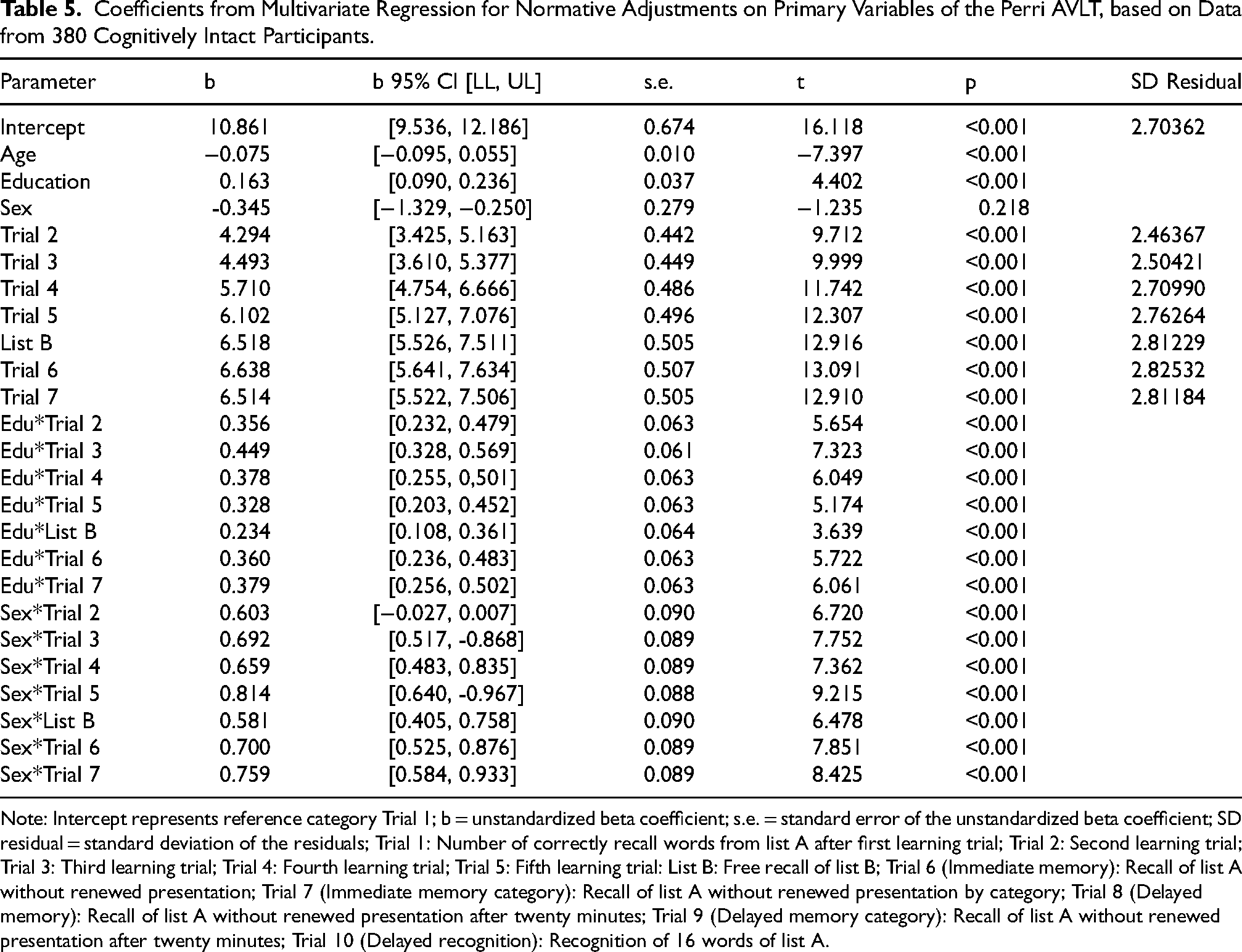
Note: Intercept represents reference category Trial 1; b = unstandardized beta coefficient; s.e. = standard error of the unstandardized beta coefficient; SD residual = standard deviation of the residuals; Trial 1: Number of correctly recall words from list A after first learning trial; Trial 2: Second learning trial; Trial 3: Third learning trial; Trial 4: Fourth learning trial; Trial 5: Fifth learning trial: List B: Free recall of list B; Trial 6 (Immediate memory): Recall of list A without renewed presentation; Trial 7 (Immediate memory category): Recall of list A without renewed presentation by category; Trial 8 (Delayed memory): Recall of list A without renewed presentation after twenty minutes; Trial 9 (Delayed memory category): Recall of list A without renewed presentation after twenty minutes; Trial 10 (Delayed recognition): Recognition of 16 words of list A.
In the analyses, age and years of education were mean-centered using the following values: mean age (M = 36.93
Coefficients from Multiple Regression Analysis for Derived Perri-AVLT Measures, Based on Data from 380 Cognitively Intact Adult Participants.
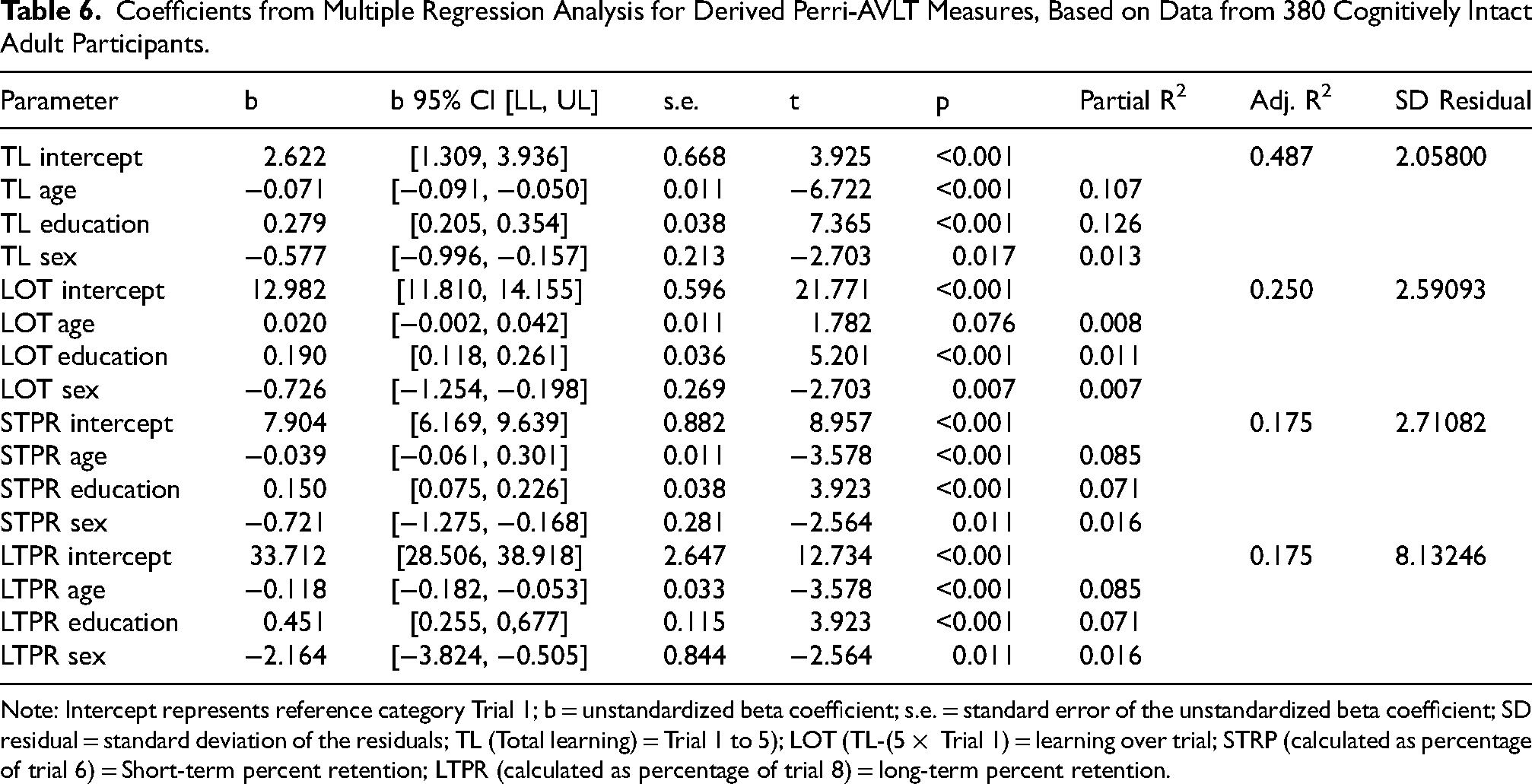
Note: Intercept represents reference category Trial 1; b = unstandardized beta coefficient; s.e. = standard error of the unstandardized beta coefficient; SD residual = standard deviation of the residuals; TL (Total learning) = Trial 1 to 5); LOT (TL-(5
As an example, consider a 45-year-old female with 13 years of education who recalled 10 words in Trial 2. To calculate the predicted performance and T score, the following steps were taken:
Centering Variables: The participants’ age was centered as follows: Age centered = 45–36.93 = 8.07. Similarly, years of education were centered as follows: Year of education centered = 13–12.79 = 0.21. Predicted score (SSpredicted): Using the regression formula, the predicted score (SSpredicted) was calculated as follows: SSpredicted = 10.861 Standardized Residual (Z score): The actual observed score (SSactual (was subtracted from the predicted score and divided by the standard deviation of residual for Trial 2: Z = SSactual -SSpredicted/standard deviation of residual. Substituting values: Z = 10–11.19)/2.46367) = -0.4836
Converting to the T score: The Z score was then converted to a T score using the following formula: T = (Z*10) + 50. Substituting values: T = (−0.4836*10) + 50 = 45.16.Thus, the participant's T score for Trail 2 was 45.16, reflecting their performance adjusted for age, sex, and years of education.
Objective 3: Estimate Test-Retest Reliability and Practice Effects
Sixty cognitively normal participants were examined twice at an interval of two weeks (test‒retest group). This test-retest sample consisted of 41 women (68.3%) and 19 men (31.7%), with a mean age of 34.28 years (SD = 13.66) and a mean of 15.12 years of education (SD = 2.65). The reliability coefficients for the primary Perri-AVLT measures were calculated for the two testing sessions. Performance metrics at Time 1 and Time 2, along with their correlation coefficients, were as follows: Trial 1 (Time 1 = 10.43
The Pearson correlation coefficients for the Perri-AVLT measures were interpreted as follows: very low (r = 0
Discussion
This study addressed several objectives. First, we estimated the means, standard deviations, and ranges for Perri-AVLT raw scores in cognitively normal, healthy participants (n = 380). Second, we generated regression-based norms to enable demographic corrections (age, sex, and years of education) to facilitate clinical interpretation. Third, we evaluated test-retest reliability and practice effects.
Sociodemographic factors and cultural differences significantly influence neuropsychological test performance (Acevedo et al., 2007; Boone et al., 2007; Castora-Binkley et al., 2015; Drebing et al., 1994; Espino et al., 2004; Sherrill-Pattison et al., 2000; Testa et al., 2009). In this study, women outperformed men in trials assessing immediate memory (Trail 5 and Trial 6), which is consistent with the findings of previous studies (Sundermann et al., 2016, 2017). Similarly, Espenes et al. (2023) reported that women outperformed men in all RAVLT trials in a sample of Norwegian and Swedish adults, further highlighting sex differences in verbal memory performance. We also found that participants aged
Appropriate norms are critical for enhancing the sensitivity and specificity of neuropsychological tools, enabling more accurate diagnoses and treatment plans for individuals with cognitive disorders (Chiaravalloti et al., 2015). This study generated regression-based normative data for the Perri-AVLT using a sample of 380 cognitively normal Mexican adults aged 18–59 years. The regression model incorporated age, sex, and years of education as predictors. These findings are consistent with those of previous studies. Older age was associated with lower performance, whereas more years of education correlated with better recall. These findings are consistent with those of Arango-Lasprilla et al. (2015), who generated normative data on the HVLT-R across 11 countries in Latin America. Their results revealed that total recall and delayed recall HVLT-R scores were inversely associated with age across all countries. Espenes et al. (2023) and Arango-Lasprilla et al. (2024) reported significant effects of age and education on RAVLT and WHO-UCLA AVLT performance, respectively. Such evidence underscores the value of using regression-based equations to predict test performance on the basis of demographic characteristics (Oosterhuis et al., 2016; Parmenter et al., 2010; Stricker et al., 2021; Testa et al., 2009, Valdivia-Tangarife et al., 2024).
Another important psychometric property of neurophysiological tools is test-retest reliability (Rao et al., 2023; Carone, 2007). Reliable measures are vital for constructing test batteries and interpreting scores (Calamia et al., 2013; Carone, 2007). Our results demonstrated moderate-to-high levels of test-retest reliability for all Perri-AVLT trials, thus supporting its utility in clinical and research settings.
Limitations and Future Directions
The present study has several limitations that warrant consideration. First, the sample size (n = 380) limits the degree to which normative data reflect population-level parameters. Second, the age range of the healthy participants (18–59 years) excludes older adults, thus limiting the generalizability of the findings to the population aged 60 years and older. Third, participants were recruited exclusively from Jalisco, Guanajuato, and Mexico City, which may not fully represent the broader Mexican population. Fourth, this study only generated regression-based norms for cognitively normal adults; thus, the findings cannot be generalized to pediatric populations. Addressing these limitations in future studies can provide a more comprehensive understanding of the applicability of Perri-AVLT.
Conclusion
The present study is the first to generate regression-based normative data for the Perri-AVLT using a sample of cognitively normal Mexican adults aged 18–59 years. We established regression-based norms that account for the interaction effects of key demographic predictors (age, years of education and sex). These norms provide a valuable tool for neuropsychologists, enhancing cognitive assessment, rehabilitation, and research efforts. Future studies should explain these norms to include diverse populations and broader age ranges, enduring the test's applicability across the lifespan.
Footnotes
Acknowledgements
This study was conducted by members of the Research Group for the Development and Validation of Cognitive Instruments, led by Teresita J. Villaseñor-Cabrera. The group comprised a multidisciplinary team of researchers dedicated to advancing the field of cognitive assessment.
ORCID iDs

Author Contributions
Funding
The author(s) received no financial support for the research, authorship, and/or publication of this article.
Declaration of Conflicting Interests
The author(s) declared no potential conflicts of interest with respect to the research, authorship, and/or publication of this article.