



Abstract
Significance of the Research
This study advances understanding of how teachers’ psychological needs influence the quality of outdoor play provision, offering new insights into the intersection of Self-Determination Theory (SDT) and experiential learning in school contexts. The findings provide an evidence base for policy, professional development, and school leadership practices that can enhance teacher motivation and embed outdoor play as a core educational strategy. Table 1 provides a summary of the SDT needs, major themes, illustrative teacher quotations, and interpretive insights from the study.
SDT Needs, Themes, Illustrative Teacher Quotation, and Interpretive Insights from the Study.
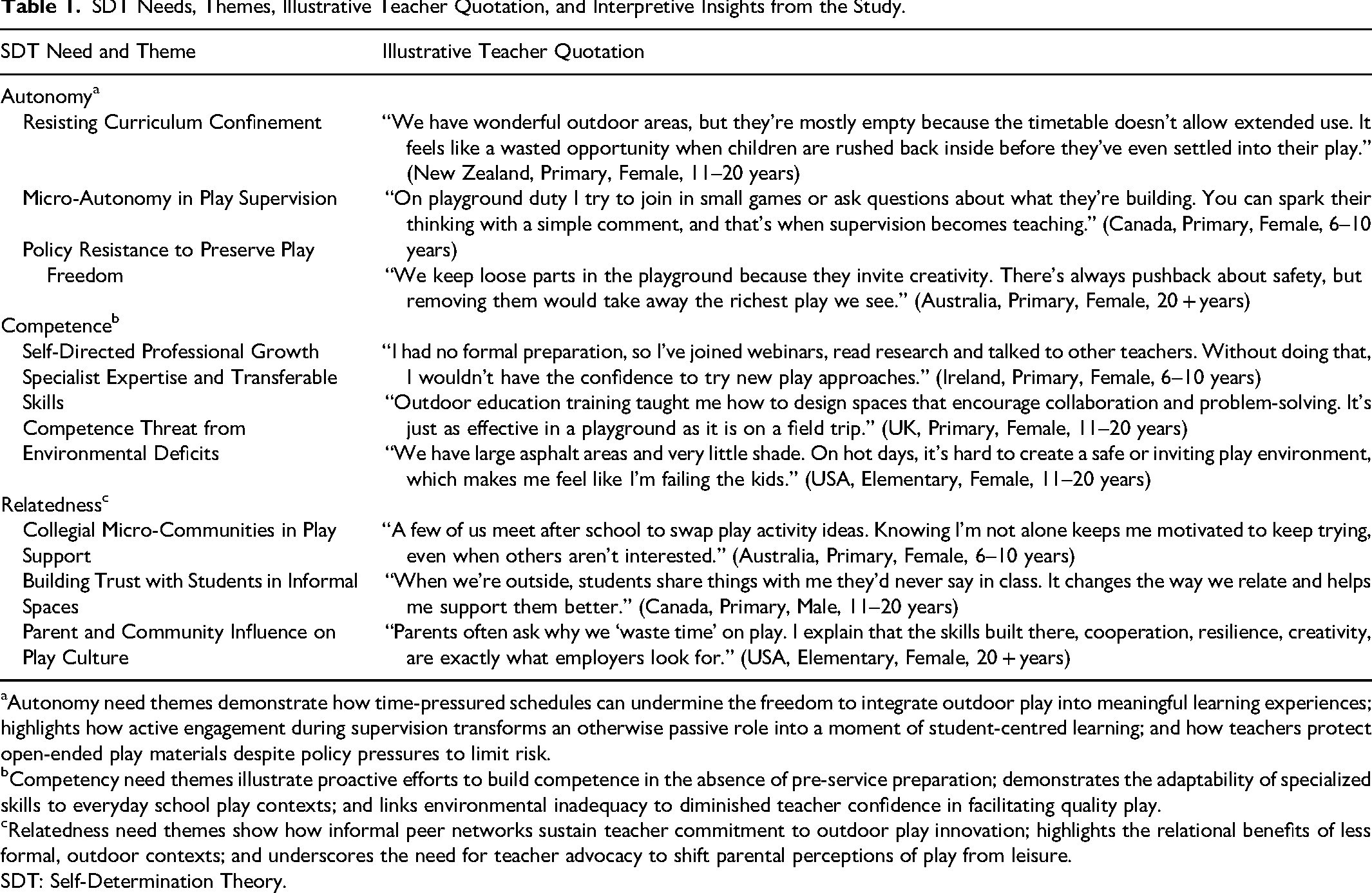
Autonomy need themes demonstrate how time-pressured schedules can undermine the freedom to integrate outdoor play into meaningful learning experiences; highlights how active engagement during supervision transforms an otherwise passive role into a moment of student-centred learning; and how teachers protect open-ended play materials despite policy pressures to limit risk.
Competency need themes illustrate proactive efforts to build competence in the absence of pre-service preparation; demonstrates the adaptability of specialized skills to everyday school play contexts; and links environmental inadequacy to diminished teacher confidence in facilitating quality play.
Relatedness need themes show how informal peer networks sustain teacher commitment to outdoor play innovation; highlights the relational benefits of less formal, outdoor contexts; and underscores the need for teacher advocacy to shift parental perceptions of play from leisure.
SDT: Self-Determination Theory.
Outdoor play has long been recognized as a vital foundation for children's development, fostering physical, cognitive, social, and emotional growth (Hyndman & Wyver, 2021; Little et al., 2017; Qayyum et al., 2024). Play can be defined as an activity that is “(1) self-chosen and self-directed; (2) intrinsically motivated; (3) guided by mental rules; (4) imaginative; and (5) conducted in an active, alert, but relatively non-stressed frame of mind” (Gray, 2013, p. 1). In this study, outdoor play refers to play that occurs in outdoor school settings (e.g., schoolyards, playgrounds, and naturalized areas), where the affordances of outdoor space (materials, terrain, weather, and perceived risk) shape the forms of exploration, interaction, and learning that become possible. Outdoor play is not simply a break from learning; it can function as learning in itself, providing a rich context for experiential learning in which children engage with their surroundings, take developmentally appropriate risks, solve problems, collaborate with peers, and express creativity (Gül, 2024; Kiviranta et al., 2024; Martin & Franc, 2017). Within experiential learning theory, as articulated by Dewey (1986) and Kolb (2014), such environments provide authentic, real-world contexts in which learning occurs through the interaction of concrete experiences, reflection, conceptualization, and experimentation.
The unique developmental contributions of unstructured, child-led outdoor play continue to be unearthed. Evidence links such experiences to enhanced physical health, stronger mental wellbeing, and improved executive function (Dodd et al., 2023; Hyndman & Wyver, 2021; von Borck, 2025). Outdoor play also nurtures adaptive skills such as resilience, persistence, and self-regulation, which are increasingly valued in global education policy frameworks aimed at holistic development and lifelong learning (Global Recess Alliance et al., 2022).
Despite these well-documented benefits, the provision of outdoor play in schools continues to be inconsistent and, in some systems, undervalued (Aminpour et al., 2020; Harper, 2017). In many contexts, play is framed as a break from “real” learning rather than as an integral pedagogical space (Meeuwissen et al., 2025). The compression of recess and lunch periods to meet academic performance targets (Bauml et al., 2020; Brickman et al., 2022) risks diminishing opportunities for meaningful experiential engagement, a concern made more pressing by global trends of physical inactivity (Guthold et al., 2020) and rising mental health issues (Beckwith et al., 2024) among children and young people. However, little is known about how autonomy, competence, and relatedness interact to shape teacher decision making in this domain, particularly across different national contexts (Barrable & Arvanitis, 2019).
Systemic and Cultural Influences on Outdoor Play Provision
Provision of outdoor play is shaped by macro-level policies, meso-level school cultures, and micro-level teacher practices, with policy frameworks differing markedly across jurisdictions (Hyndman & Vanos, 2023). For example, Nordic countries such as Finland and Norway integrate outdoor play and experiential learning into core educational philosophies, viewing them as essential for wellbeing, academic readiness, and lifelong learning (Rutkauskaite et al., 2021; Skovbjerg & Jensen, 2024). In contrast, many Anglo-centric systems prioritize standardized assessment and curriculum coverage, narrowing opportunities for unstructured outdoor experiences (Brickman et al., 2022; Chancellor & Hyndman, 2017; Jerebine et al., 2022; Russell et al., 2021).
At the school culture level, leadership priorities, available resources, and prevailing attitudes toward risk strongly influence play provision (Jerebine et al., 2024). Risk-averse environments may restrict challenging physical activities despite their role in developing resilience, decision making, and self-assessment skills (Gray et al., 2025; Hyndman, 2021; Jerebine et al., 2022). Parental perspectives also shape provision, with some communities strongly valuing outdoor experiential opportunities, while others express concern over safety, academic disruption, or adverse weather conditions (McHugh et al., 2024).
At the individual teacher level, factors such as professional identity, prior training, and perceived competence determine how play is facilitated. Teachers with training in outdoor education or experiential pedagogy often recognize the potential for outdoor learning and design activities accordingly (Chancellor & Hyndman, 2017; Neville et al., 2023). Those without such preparation may lack confidence or adopt limited supervisory roles that do not fully exploit the learning potential of outdoor settings (Chancellor & Hyndman, 2017). Within these macro- and meso-level conditions, teachers operate as the key day-to-day mediators of what outdoor play becomes in practice. Teachers also play a part in how outdoor play is protected, constrained, supervised, and valued as an experiential learning context.
Teachers as Mediators of Outdoor Play Within School Systems
While curriculum and environmental provisions influence the availability of outdoor play, teachers are the pivotal mediators who interpret, adapt, and implement these opportunities within daily school life (Hyndman & Cruickshank, 2025; Zeni et al., 2025). Their professional beliefs, priorities, and perceptions of value determine whether outdoor play is embraced as a legitimate context for experiential learning or treated as a logistical requirement to be managed (Al Shishani, 2023; Hyndman, 2026; Zeni et al., 2025). Teachers who recognize the pedagogical potential of outdoor play are more likely to structure and facilitate experiences that support exploration, skill development, and reflective learning (Hunter et al., 2020; Little et al., 2017). Those who do not may engage in minimal supervision or impose restrictions that limit its benefits.
Research exploring outdoor play often centers on children's experiences or the design and quality of physical environments (Barrable & Arvanitis, 2019; Sağocak & Demirbaş, 2024). While valuable, these perspectives rarely capture the complex decision-making processes, motivational influences, and contextual realities teachers navigate in facilitating outdoor experiential learning (Cenić et al., 2023; Yildiz, 2022). Understanding these dynamics is essential for designing professional development and policy interventions that enable teachers to provide high-quality play-based learning experiences.
The Role of Teacher Motivation and Self-Determination Theory
Explaining why some teachers actively champion outdoor play while others limit or neglect it requires attention to teacher motivation. Experiential learning theory emphasizes learning through cycles of experience, reflection, conceptualization, and experimentation (Kolb, 2014). In school outdoor contexts, these processes can occur informally through child-led play and relational facilitation, particularly when adults protect time, space, and affordances that enable exploration and problem solving. SDT provides a theoretical underpinning for motivational analysis, proposing that motivation is shaped by the fulfillment of three basic psychological needs: autonomy, competence, and relatedness (Ryan & Deci, 2020). Autonomy involves the sense of agency in one's actions; competence refers to feeling capable and effective; and relatedness reflects a sense of connection to others (Ryan & Deci, 2020). In outdoor contexts, relatedness may also be experienced as connection to place (e.g., feeling a sense of belonging in outdoor spaces or connection with natural elements), which can shape both teachers’ and students’ engagement in outdoor play.
In the context of outdoor experiential learning, autonomy is supported when teachers can make professional judgements about the structure and content of play opportunities (Catucci et al., 2024; Lyons, 2024). Competence is strengthened through access to resources, training, and environments conducive to high-quality facilitation (Hyndman & Harvey, 2020). Relatedness grows through nature (Baxter & Pelletier, 2019), collegial collaboration, positive relationships with students, and alignment with community values (Hyndman & Harvey, 2020). When these needs are thwarted, through rigid schedules, lack of preparation, inadequate facilities, or unsupportive cultures, teacher engagement with outdoor experiential learning can diminish (Barrable & Arvanitis, 2019; Sağocak & Demirbaş, 2024).
While SDT has been widely applied to student learning (Guay, 2022) and various types of outdoor education such as forest school (Barrable & Arvanitis, 2019), adventure education (Wang et al., 2004) and outdoor teaching (Dettweiler et al., 2015), its application to teachers’ facilitation of outdoor play remains under-researched. This represents an important gap because outdoor play, when conceptualized as experiential learning, is also important to foster a motivational climate that supports teacher engagement and innovation.
There is a gap in research integrating the study of outdoor play provision with an analysis of teachers’ motivational experiences, situated within broader policy, cultural, and environmental contexts. Existing literature confirms the developmental value of outdoor play (Global Recess Alliance et al., 2022; Hyndman & Wyver, 2021), the gatekeeping role of teachers (Chancellor & Hyndman, 2017), and the potential of professional learning to build teacher competence (Campbell et al., 2025; Xavier et al., 2025).
In this article, “quality outdoor play” refers to teachers’ descriptions of outdoor play conditions and practices that support children's agency and engagement (e.g., time protection, appropriate affordances/materials, inclusion, and developmentally appropriate risk–benefit), and that enable learning-relevant outcomes such as problem solving, collaboration, self-regulation, and exploration. The intent is not to claim an observational rating of play quality, but to analyze how teachers conceptualize and enact conditions they perceive as enabling high-quality outdoor play as experiential learning.
This study addresses these gaps through a qualitative, internationally comparative analysis of teachers’ perspectives on providing quality outdoor play as experiential learning, using SDT as the guiding framework. Drawing on voices from across multiple countries and educational contexts, the study examines how motivational needs are supported or hindered and how these conditions influence the facilitation of experiential learning outdoors. The study contributes to knowledge in three ways: it extends SDT into a novel domain of teacher practice, highlights the systemic and cultural factors shaping teacher engagement with experiential play, and offers evidence-based recommendations for policy, teacher education, and school leadership. Participants included teachers working across primary/elementary and secondary school levels, enabling analysis of how outdoor play is facilitated across different schooling phases and age groups. Guided by these gaps in the literature, the present study is guided by the research question “How do teachers across diverse international contexts experience and navigate their autonomy, competence, and relatedness in facilitating quality outdoor play?” Moreover, these experiences are interpreted in relation to principles of experiential learning. By situating teachers’ experiences within both theoretical and practical frameworks, the study aims to inform the creation of supportive conditions that allow outdoor experiential learning to realize its potential for enhancing student development and wellbeing.
Methods
Design
The study adopted a qualitatively focused, cross-sectional survey design with narrative depth to capture extended open response prompts. Eligible participants were qualified teachers or school leaders who were actively employed in a school at the time of completing the survey. School leaders referred to staff in formal school-based leadership roles (e.g., principals, assistant principals, heads of school, or equivalent jurisdictional roles) who were actively employed within a school setting. Inclusion was not restricted by teaching phase, subject specialization, educational sector, or geographic region. Teachers across schooling phases participated, including early primary/elementary through senior secondary roles (see Participants for detail). This breadth was intentionally sought to capture how outdoor play provision is experienced across different age groups and school structures. This open criterion was intended to capture a wide spectrum of professional teaching perspectives. Participation was voluntary and without financial incentive. Demographic items were collected to contextualize interpretation of teachers’ qualitative accounts (e.g., schooling phase, role, and jurisdiction), rather than for statistical inference (Creswell & Plano Clark, 2023; Fusch et al., 2018).
Materials
A web-based survey was developed to collect both contextual information and rich qualitative depictions about the place of outdoor play in education. The survey was divided into two main sections. The first section recorded demographic and role information to describe the sample and provide context for interpretation. The second section included seven open-ended prompts that invited detailed accounts of how outdoor play is valued, organized, and experienced, as well as the barriers and enablers teachers encounter. These items sought examples of professional decision making, perceptions of capability, and relational dynamics with students, colleagues, and parents. To illustrate the nature of the open-ended prompts, one question invited teachers to describe the preparation or professional learning received to facilitate outdoor play outside timetabled classes and to reflect on how this shaped confidence and prioritization of play. A second prompt invited reflection on how outdoor play was valued and organized within the school context, including key barriers and enablers and the relational influences (e.g., with students, colleagues, and families) shaping provision.
Item wording was guided by established principles for web-based surveys to promote clarity, minimize respondent burden and ensure accessibility across devices (Dillman, 2016; Fowler, 2014). Questions were conceptually aligned to SDT (Ryan & Deci, 2020) and experiential learning principles (Beard, 2022; Kolb, 2014), targeting professional agency, perceptions of facilitation competence, and the relational climate surrounding outdoor play. They also reflected experiential learning processes (Beard, 2022; Kolb, 2014) such as designing concrete experiences, supporting reflection, and adapting practice based on observation.
Establishing Content Validity
The web-based survey was reviewed by an expert panel before launch. This group included two senior education academics with teacher education experience, one practicing primary teacher, two survey methodology specialists, and one international expert in play and outdoor learning. Panel members were provided with the study aims, target population and intended constructs, and were invited to assess clarity, cultural accessibility for an international audience, and alignment with the theoretical and practical domains. Feedback led to consolidation of overlapping items, refinement of terminology for cross-national relevance, and clarification of school type categories. The panel confirmed that the instrument adequately captured the constructs of interest for an international teacher audience.
Procedures
Ethical approval was granted by the host university human research ethics committee (approval number available on request). The opening page of the web-based survey presented information about the study purpose, procedures, voluntary nature of participation, data handling, and the right to withdraw prior to submission. Participants indicated informed consent electronically before proceeding. Responses were anonymized and checked to remove any potentially identifying details.
A combined purposeful and convenience sampling approach was employed to recruit teachers from multiple jurisdictions. The survey was promoted through professional networks and social media channels frequently used by educators, including LinkedIn, Twitter or X, and Facebook. It was also shared with national and international education and play organizations to extend reach beyond the investigator's personal network. Invitations highlighted the focus on outdoor play and encouraged participation from teachers across educational sectors. Recruitment remained open for approximately two months and closed after several days without new responses. Recruitment materials and survey instructions explicitly invited participation from practicing teachers and school leaders with professional experience in supervising or facilitating outdoor play in school contexts. During data cleaning, responses were reviewed for relevance to this context; no responses required exclusion on this basis.
Data were collected anonymously using a secure survey platform optimized for desktop, tablet, and mobile use. Participants could save progress and return later to complete the survey, which reduced the burden for those responding during busy work periods. All items were optional. The survey design followed best practice for online surveys, using simple layouts and clear navigation to reduce technical barriers (Dillman, 2016).
Survey data were exported to a secure research drive for cleaning and analysis. Demographic variables were checked for internal consistency and plausibility. Open ended responses were imported into NVivo qualitative analysis software for coding. Any content that could potentially identify individuals or institutions was removed or generalized during cleaning. An audit trail documented each step of data handling, coding, and theme development.
Author Positionality
The authorship is informed by expertise in school-based outdoor play, physical education/outdoor learning, and teacher education. This background shaped an interest in outdoor play as a legitimate experiential learning context and informed the theoretical framing using self-determination theory and experiential learning. Consistent with a reflexive thematic analytic approach, reflexive memoing was used throughout the analytic process to document evolving interpretations, interrogate assumptions, and examine how professional commitments may have shaped coding decisions and theme development.
Analytical Strategy
Open-ended responses were analyzed using reflexive thematic analysis (Braun & Clarke, 2019) to generate patterns of meaning relevant to teachers’ autonomy, competence, and relatedness in facilitating outdoor play as experiential learning. Analysis began with immersion in the dataset through repeated readings, accompanied by reflexive memoing to note early patterns, tensions, and interpretive assumptions (Braun & Clarke, 2021). Initial codes were then generated across the dataset, attending to both semantic content (what participants explicitly articulated) and latent meaning (how teachers positioned outdoor play and their professional role), while remaining sensitized to SDT concepts without forcing the data into pre-existing theoretical categories.
Candidate themes were developed by clustering codes into coherent patterns (e.g., different forms of autonomy enactment and constraint), and a preliminary thematic outline was drafted to represent these groupings. Themes were subsequently reviewed and refined through iterative comparison with the full dataset, with attention to internal coherence, conceptual clarity, and analytic usefulness. Where overlap between themes was conceptually meaningful, boundaries were adjusted rather than treated as analytic problems (Braun & Clarke, 2021).
Themes and subthemes were then defined and named, with the central organizing concept of each specified and illustrative quotations selected to support analytic claims. The final thematic outline (Figure 1) was produced as a structured representation of the themes and subthemes; this figure is presented as a thematic grouping rather than an interconnecting thematic map.
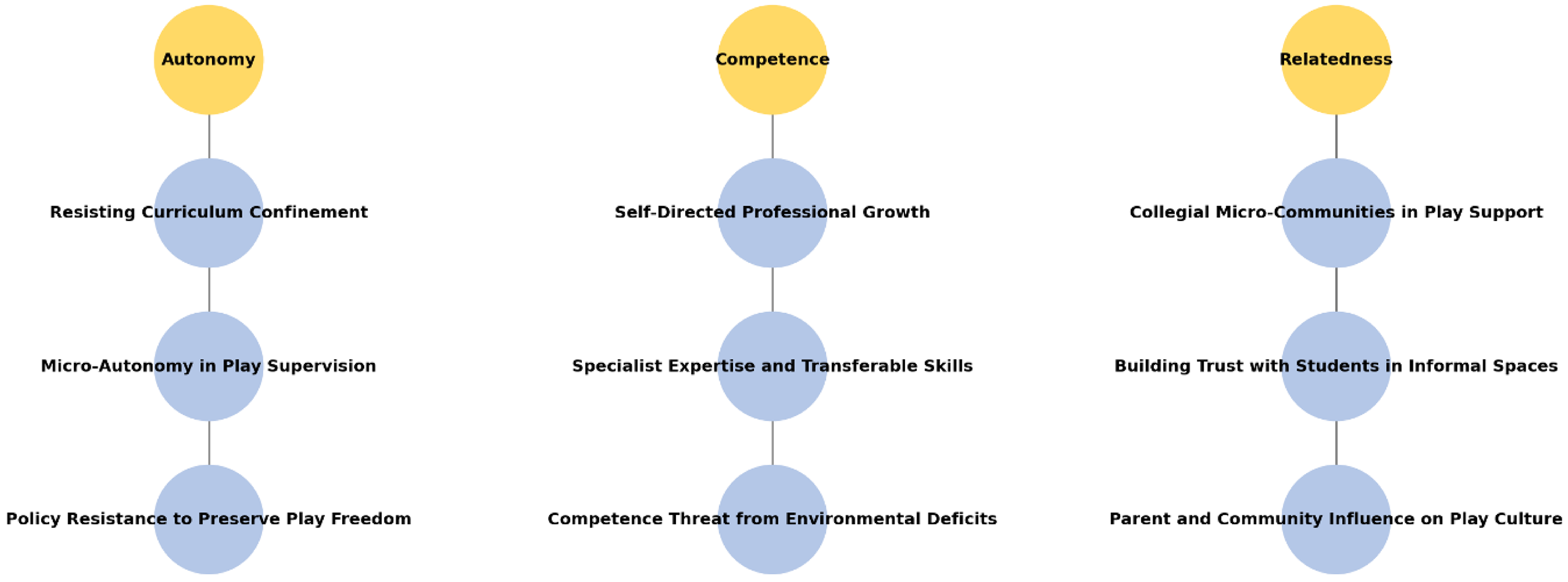
Thematic map: teachers’ perspectives on providing quality outdoor play.
Analytic quality was supported through sustained reflexive engagement with the dataset rather than through procedural checklists (Braun & Clarke, 2021). Reflexive memoing was used throughout to document evolving interpretations, analytic decisions, and moments of uncertainty, creating a transparent audit trail of how themes were generated and refined. In addition, thick description and carefully selected participant quotations were used to demonstrate how analytic claims were grounded in teachers’ accounts across diverse contexts.
Participants
A total of N = 135 in-service teachers participated. The cohort was predominantly female (77%) and represented a broad international spread. Six countries accounted for 80% of respondents: Australia (36%), the United States (19%), Canada (10%), the United Kingdom (6%), Taiwan (5%), and New Zealand (4%). The remaining participants were drawn from 19 other nations, primarily located in Asia, South America, and Europe.
Most respondents were aged between 35 and 54 years (72%) and were engaged in full-time teaching (81%). Nearly all were employed in co-educational schools (96%), with a small minority working in single-gender institutions. Over half (54%) reported holding a master's degree as their highest qualification. The group was highly experienced, with 81% having taught for more than 11 years. The largest proportion worked in the early years of primary/elementary education (Foundation/years 0–2; 48%), whereas only 13% taught at senior secondary level (years 11–12). In terms of professional focus, just over half (53%) identified as generalist teachers without a specific subject specialization. Teachers were recruited on the basis that they had professional experience in supervising or facilitating play outside of timetabled classes, such as during recess, lunch breaks, or dedicated outdoor learning periods.
Results
Teachers’ accounts revealed a rich tapestry of experiences in providing quality outdoor play beyond timetabled lessons, with patterns evident across multiple participants and international contexts. Analysis through the lens of SDT highlighted how the fulfillment or frustration of autonomy, competence, and relatedness shaped their ability to prioritize and facilitate such opportunities (Figure 1). While contexts varied across countries, sectors, and career stages, a consistent message emerged that quality outdoor play is not merely a supplement to formal learning, but a vital and under-recognized component of education.
Autonomy Themes: Navigating Systems to Protect Play
Resisting Curriculum Confinement (Autonomy)
Many teachers across primary and secondary school settings described actively resisting the dominance of classroom-based structures to carve space for outdoor play: In secondary schools, the prioritisation is purely on classrooms. Outdoors is almost an afterthought, a place for sitting at picnic tables rather than developing skills. Students see this as a signal, it tells them this space isn’t important. We know timetabled classes have value, but we could easily treat this time with the same educational respect. That requires someone to step outside the timetable mindset. (Australia, Secondary, Female, 20 + years teaching) Play is squeezed out. Discovery time linked to formal learning is disappearing. The curriculum doesn’t allow for it, and yet when it happens, you see students light up. It's a reminder that the timetable is not the only structure that matters. (Australia, Primary, Female, 20 + years teaching)
Micro-Autonomy in Play Supervision (Autonomy)
Several teachers from different national contexts described redefining “supervision” as an opportunity for pedagogical engagement: I would take away the word supervising and ensure that teachers are scaffolding the children's play. They need engaged adults who interact and show an interest. The moment you stop seeing it as ‘just watching them’, it becomes another opportunity to teach without them even realising. (UK, Primary, Female, 20 + years teaching) I had to broach the idea of supervision for inclusion in play. I prepare mentally and physically so I can be present in the moment, ready to observe who is not engaging and why. That's where the teaching happens. (Ecuador, Primary, Female, 11–20 years teaching)
Policy Resistance to Preserve Play Freedom (Autonomy)
A smaller number of teachers described working within or around school policies to safeguard the child-led nature of play: We use the definition that ‘play is freely chosen by the child and for no external reward’. We audit our site and opportunities against all schemas to ensure children can direct and learn in their own way. We don’t accept a cookie-cutter approach to learning; nature is our third teacher. (UK, Primary, Male, 20 + years teaching) In addition, Teacher 8 reported “Play must be the children's choice. They should have a range of areas and equipment, but ultimately decide what to do. That's how you keep it authentic and not another structured lesson.” (Australia, Primary, Female, 20 + years teaching)
Competence Themes: Building Confidence to Facilitate Outdoor Play
Self-Directed Professional Growth (Competence)
Many teachers reported that their preparation for facilitating quality outdoor play was minimal or absent in initial teacher education: As a trained secondary teacher, very little of my preparation was about outdoor play. I’ve had to invest in my own training- reading research, talking to colleagues. It's frustrating because you see the potential for outdoor learning, but without that knowledge base, most teachers stick to what they know inside the classroom. (Australia, Secondary, Male, 20 + years teaching)
This pattern was evident across participants from multiple countries and teaching contexts.
Specialist Expertise and Transferable Skills (Competence)
Several teachers, particularly those with specialist backgrounds in physical education or early childhood education, described greater confidence and creativity in outdoor play facilitation: I’m a physical education major with a focus on outdoor education. My university training took my passions and propelled them. I can design activities that build not just motor skills but teamwork, risk assessment, and environmental connection, things that spill over into everything else they do. (Canada, Primary/Secondary, Female, 11–20 years teaching) My years in early childhood taught me to see recess and lunch as learning time. You learn to set up provocations and step back, knowing when to join in. Those skills are entirely transferable to older children if you know how to adapt them. (Australia, Primary Leadership, Female, 20 + years teaching)
Competence Threat from Environmental Deficits (Competence)
Many teachers across varied school contexts described inadequate infrastructure and unsafe conditions that undermined their perceived competence: Our playground has no fence, so I have anxiety that students could run into the street. It changes how freely I can engage with them, because part of my brain is always calculating risk. If we had the right infrastructure, I could focus on supporting their play instead of scanning for danger. (USA, Elementary, Female, 20 + years teaching)
These constraints limited teachers’ ability to facilitate experiential learning opportunities involving risk-taking, exploration, and environmental interaction.
Relatedness Themes: “Connection as a Driver for Quality Play”
Collegial Micro-Communities in Play Support (Relatedness)
Several teachers described professional relationships and collegial networks as critical to sustaining motivation and innovation in outdoor play: teacher 71 outlined that “Sharing good practice…collaborating within and beyond your school and having play on the school development plan as a priority was good PL to inspire teachers!” (Belgium, International Primary School, Female, 20 + years teaching). These peer networks provided resources, alongside a shared moral purpose in defending and enhancing outdoor play provision.
Building Trust With Students in Informal Spaces (Relatedness)
Several teachers across different contexts noted that outdoor play spaces revealed aspects of students’ personalities and capabilities not visible in classroom settings: It is good to get to know students in their natural environments and behaviours, especially the reserved children who do not speak much in class. You learn who they really are and can connect that back into your classroom teaching. (Australia, Primary, Female, 11–20 years teaching)
Relational insights reinforced teachers’ appreciation for outdoor play as a context for holistic learning. Teacher 29 pointed out that “When I’m outside with my students, I see their problem-solving, leadership, and creativity in ways the classroom never reveals. Those moments build trust and mutual respect” (India, Secondary, Female, 20 + years teaching). These relational interactions support experiential learning by enabling observation, trust-building, and responsive engagement.
Parent and Community Influence on Play Culture (Relatedness)
Many teachers across multiple national contexts described how parent and community perceptions shaped the extent to which outdoor play was prioritized: In Taiwan, many parents think classroom learning is the only real learning. Even as an indicator of a good teacher. So, risky play or time in nature has to be explained again and again to parents as much as to the children. (Taiwan, Teacher Educator, Female, 20 + years teaching)
The voices of teachers across multiple contexts converge on a clear message that quality outdoor play requires autonomy to act, competence to facilitate, and relational capital to sustain. When any of these needs are undermined by rigid curricula, lack of training, unsafe environments, or unsupportive community attitudes, the potential of outdoor play as a rich site of learning is reported to be diminished. Conversely, when these needs are met, teachers not only protect but actively enhance the quality of play, integrating it into the fabric of educational practice.
Discussion
This study provides a globally scoped qualitative examination of teachers’ perspectives on the provision of quality outdoor play in schools, analyzed through the lens of SDT (Ryan & Deci, 2020) and interpreted in relation to experiential learning (Kolb, 2014). The findings illuminate how the fulfillment or frustration of autonomy, competence, and relatedness shapes teachers’ capacity to facilitate meaningful play beyond timetabled lessons. While research on outdoor play has expanded in recent years (Ärlemalm-Hagsér & Waters-Davies, 2025), this study makes a distinct contribution by foregrounding teachers’ voices and demonstrating how their motivational needs interact with systemic, environmental, and cultural conditions to influence practice. Across themes, teachers’ accounts positioned outdoor play as a context for experiential learning, characterized by exploration, interaction, risk-taking, and adaptive decision making. These processes were evident in how teachers facilitated play, observed student behavior, and adjusted their engagement in response to emerging situations.
The results reveal that the quality of outdoor play provision is not determined solely by the amount of time or physical space allocated, but by the motivational climate in which teachers operate. Similar to previous studies (Graham et al., 2022; Leggett & Newman, 2017; Mart et al., 2025), teachers expressed autonomy through resistance to macro-level restrictive curricula and through micro-level pedagogical choices that reframed playground supervision as active facilitation. Reinforcing findings and recommendations from Chancellor and Hyndman (2017), it was revealed that competence was strengthened through specialist expertise and adaptive problem-solving yet undermined by environmental deficits and limited pre-service preparation for quality play provision. Relatedness was recognized to be developed through collegial micro-communities, student–teacher trust-building, and engagement with parents and communities, which are hallmarks of effective educational practices (Admiraal et al., 2021; Hyndman & Harvey, 2020). Similar to other findings (Beauchamp et al., 2022; Dottori & Purcaro, 2025; Hunter et al., 2020), it was revealed that when teachers’ psychological needs are met, they are more likely to integrate quality outdoor play provisions for their students, treating play spaces as a legitimate site for skill development, exploration, and social learning.
From an experiential learning perspective, the three SDT motivational needs map closely onto Kolb's (2014) four-stage learning cycle. Autonomy enabled teachers to create authentic concrete experiences and support active experimentation (Hyndman, 2021) by allowing students to explore, take initiative, and direct their learning outdoors. Competence supported reflective observation and abstract conceptualization as teachers adapted play opportunities through professional knowledge and ongoing evaluations (Billett, 2024). Relatedness enriched every stage of the cycle by fostering the trust, collaboration, and community alignment necessary for sustained learner engagement (Bouten et al., 2025). When autonomy, competence, and relatedness intersected in supportive ways, outdoor play was a powerful vehicle for holistic development and transformative learning. Conversely, when these needs are constrained by rigid curricula, resource deficits, or unsupportive cultures, outdoor play opportunities are reduced to unstructured downtime without intentional pedagogical value (Jerebine et al., 2022; Russell et al., 2021).
Although the themes are organized around autonomy, competence, and relatedness, these needs were not experienced by teachers as discrete or independent. Instead, they were deeply interwoven. For example, teachers’ autonomy to prioritize outdoor play was often contingent on feelings of competence; when teachers lacked training, resources, or safe environments, their willingness to exercise professional discretion diminished. Similarly, relatedness supported both autonomy and competence: collegial networks sustained teachers’ confidence to experiment, while trusting relationships with students encouraged teachers to adopt more facilitative and responsive roles. These findings align with SDT's proposition that psychological needs operate synergistically rather than hierarchically (Ryan & Deci, 2020), and they help explain why constraints in one domain (e.g., infrastructure or collegial support) reverberated across others.
Autonomy in Outdoor Play Facilitation
Autonomy was expressed at both macro- and micro-levels, reflecting the need for professional discretion in designing and facilitating meaningful outdoor experiences. At the macro-level, many teachers resisted curriculum structures that positioned outdoor play as secondary to formal learning. This resistance echoes findings from studies showing that overly prescriptive curricula reduce opportunities for child-led, experiential approaches (Harris, 2024; Hyndman, 2021; Meeuwissen et al., 2025). Teachers’ reframing of recess as a legitimate learning segment of the school day aligns with the Global Recess Alliance's international position statement (2022) and Dewey’s (1986) principle that education should be grounded in learners’ lived experiences and that the school environment should foster interaction with real-world contexts.
At the micro-level and reflecting recommendations from school recess scholars (Kern et al., 2024; Massey et al., 2021), autonomy emerged in moment-to-moment decisions during supervision. Teachers described choosing to scaffold and engage with children's play rather than passively monitor it, thereby transforming a supervisory duty into a pedagogical opportunity. This is consistent with autonomy-supportive teaching practices (Reeve & Cheon, 2024), active supervision approaches (Hyndman, 2021; Massey et al., 2021) and Schön's (1983) concept of reflection-in-action, where educators respond dynamically to emergent situations. Within an experiential learning framework, these micro-autonomy decisions enable active experimentation, where teachers and students co-create learning through shared inquiry in authentic contexts (Hyndman, 2021).
Policy resistance was another form of restricted autonomy. Teachers described navigating or challenging school policies that limited child-led play, such as overly restrictive safety rules or standardized equipment use. This reflects findings of teachers having challenges in the preservation of pedagogical integrity against pressures for standardization (Bento & Costa, 2018; Neville et al., 2023; Prince & Diggory, 2024). From an experiential education standpoint, such acts protect the conditions necessary for learners to take initiative, make decisions, and experience the natural consequences of their actions, all of which are core elements of authentic experiential engagement (Beard, 2022).
Competence as Confidence and Constraint
Competence, meaning teachers’ perceived ability to effectively facilitate outdoor play, was a decisive factor in whether such provision was prioritized or marginalized. Many participants reported minimal or no preparation for outdoor pedagogy in their initial teacher education, a gap echoed in prior research (Chancellor & Hyndman, 2017; Kelly et al., 2025). In the absence of structured training, teachers often relied on self-directed professional learning, peer mentoring, and experiential trial-and-error. This aligns with Billett's (2024) notion of adaptive professionalism, where practitioners build capability through context-specific problem-solving and reflective cycles, processes that mirror Kolb's reflective observation and abstract conceptualization stages.
Teachers with specialist expertise in physical education, outdoor education, or early childhood pedagogy demonstrated greater confidence and creativity in integrating cross-curricular objectives into play. Such cross-disciplinary integration has been shown to deepen students’ learning by connecting physical, cognitive, and social development, while also supporting teachers’ professional learning and pedagogical development (Hyndman, 2021; Mann et al., 2022). In experiential terms, these teachers designed and facilitated play in ways that offered authentic challenges, opportunities for mastery, and reflective debriefs, which are key ingredients for transformative learning (Sweet, 2023).
However, competence was often undermined by environmental deficits such as unsafe infrastructure, lack of diverse resources, or inadequate shade. These physical limitations not only restricted the scope of possible activities (Gray et al., 2025) but also divert teacher attention away from quality learning and toward risk management. From an experiential learning perspective, a safe yet challenging environment is essential for learners to engage fully in concrete experiences without undue preoccupation with hazard avoidance (Taylor & Dearybury, 2021). The interplay between structural resources and psychological need satisfaction here reinforces the point that competence is not solely an individual trait, but a product of the interaction between personal skills and environmental affordances.
Relatedness as Relational Capital
Relatedness, the experience of meaningful connection with others, emerged as a critical driver of sustained outdoor play provision. Teachers described collegial micro-communities as vital sources of support, innovation, and resilience. Such informal professional networks mirror the dynamics of professional learning communities where relational trust and shared purpose facilitate pedagogical change (Liou et al., 2025). In experiential education, these communities of practice enable facilitators to share resources, troubleshoot challenges, and co-develop activities that are contextually responsive (Bitetti & Huber, 2023; Gokiert et al., 2024).
Outdoor play also provided unique opportunities for teacher–student relationship building. Teachers observed students’ leadership, creativity, and problem-solving skills, capacities that may remain hidden in classroom contexts. These observations support research showing that informal interactions can strengthen trust and enhance teachers’ understanding of learners (Leite et al., 2022). Trust is foundational in experiential learning, as it enables participants to take risks, engage authentically, and reflect honestly on their experiences (Brooks, 2024).
Parents and communities were also influential in shaping play culture. In contexts where play was undervalued, teachers engaged in advocacy, reframing outdoor play in terms of transferable skills relevant to academic and life success. These advocacy strategies align with findings from comparative education research on how societal beliefs influence pedagogical priorities (Gemmink et al., 2021; Hyndman et al., 2020). In experiential terms, aligning community perceptions with educational objectives strengthens the social ecosystem supporting learners’ engagement in authentic, hands-on experiences (Anderson et al., 2022; Bonoff et al., 2024).
Theoretical Contributions to SDT and Experiential Learning
By applying SDT to the domain of outdoor play, this study extends the theory into a context that is less formalized yet educationally significant. The identification of micro-autonomy and competence threats from environmental deficits offers new conceptual tools for understanding teacher motivation in spaces where formal recognition is limited but professional judgment remains essential.
These findings also highlight the interdependence of SDT's three motivational needs for teachers within experiential contexts. For instance, teachers’ ability to exercise autonomy in redefining play supervision often depended on their competence in facilitation, which in turn was supported by relational trust with colleagues and students. This mirrors experiential learning theory's assertion that effective learning environments require the alignment of agency, capability, and supportive relationships (Beard, 2022; Kolb, 2014). Although participants were drawn from diverse national and educational contexts, the analysis prioritized shared patterns of meaning rather than formal cross-context comparison. Nonetheless, curriculum pressures, environmental constraints, and community expectations appeared to shape how autonomy, competence, and relatedness were experienced across settings.
Limitations of the Present Study
While the diversity of this study's sample enhances transferability, the self-selecting nature of participation may mean that teachers with a strong interest in outdoor play are overrepresented. Methodologically, more in-depth approaches such as interviews, focus groups, and ethnographic observation could provide richer insight into the nuanced processes of facilitation in outdoor contexts. Additionally, while participants emphasized social relatedness (with colleagues, students, and communities), the dataset included fewer explicit references to relatedness with outdoor environments/place; this dimension warrants targeted investigation in future research.
Future Research
Future research should purposively sample educators with neutral or negative attitudes towards outdoor play to capture the full range of perspectives. Longitudinal studies could explore how changes in policy, professional development, or school leadership affect the fulfillment of autonomy, competence, and relatedness over time.
Implications for Education
Implications for Autonomy
These findings suggest that autonomy-supportive conditions are critical if teachers are to protect and prioritize outdoor play as a legitimate learning context. At the school level, leadership can enhance teacher autonomy by protecting discretionary time for teacher-led innovations, providing resources for diverse and challenging play environments, and formally recognizing the pedagogical value of playground interactions. While policy legitimization can protect time and resourcing for outdoor play, overly prescriptive frameworks risk constraining professional judgement and child-led activity. Autonomy-supportive policy should therefore specify protected conditions (time, space, and resourcing) while allowing local professional judgment in enactment.
Implications for Competence
Teachers’ accounts indicate that competence is not merely an individual trait but a condition shaped by training, environments, and institutional investment. Pre-service and in-service teacher education should explicitly address outdoor play facilitation as a pedagogical skill rather than an incidental duty. This includes learning to scaffold play, assess risk dynamically, and use outdoor affordances as learning resources. Without such preparation, teachers may avoid outdoor play not because of disinterest, but because they feel ill-equipped to enact it meaningfully. For teacher education, integrating outdoor pedagogy, risk–benefit assessment, and experiential learning design into pre-service programs could help address competence gaps (Chancellor & Hyndman, 2017). Professional learning for in-service teachers should likewise focus on enabling teachers to adapt experiential frameworks to their contexts, drawing on both SDT and experiential learning theory to design activities that meet students’ developmental needs while also supporting teachers’ own motivational needs.
Implications for Relatedness
Relatedness emerged as a key sustaining force for outdoor play provision. Informal collegial networks, shared moral purpose, and trusting teacher–student relationships were central to teachers’ willingness to innovate and persist. Schools might therefore consider how relational infrastructures such as collaborative planning time, shared supervision models, and community engagement strategies can support outdoor play as a collective endeavor rather than an individual burden.
Conclusion
This study demonstrates that meeting teachers’ needs for autonomy, competence, and relatedness is essential if outdoor play is to function as a high-quality experiential learning environment. When these needs are supported, educators are more able to design and sustain play experiences that promote holistic development, foster deep engagement, and connect learning with authentic contexts.
By integrating self-determination theory with experiential learning theory, this research offers both a conceptual contribution and a practical framework for understanding how outdoor play is shaped within contemporary schooling. Rather than positioning outdoor play as an optional or recreational add-on, the findings highlight its pedagogical value and the conditions required for it to flourish.
Supporting teachers’ capacity to provide high-quality outdoor play experiences is therefore not simply a matter of professional satisfaction; it is a prerequisite for enabling outdoor play to realize its potential as a catalyst for children's wellbeing, engagement, and lifelong learning. Overall, the findings suggest that the fulfillment of teachers’ autonomy, competence, and relatedness is central to embedding outdoor play as a meaningful experiential learning practice within school contexts.
Footnotes
Acknowledgments
The corresponding author wishes to thank the participating teachers from 25 countries who generously shared their insights, and the professional networks and organizations that assisted with recruitment, including the International Play Association, Play Australia, the Global Recess Alliance, the Australian Council for Health, Physical Education and Recreation (ACHPER), and OPAL UK.

Ethical Consideration
This study received ethical approval from the Charles Sturt University Human Research Ethics Committee (approval number: H22401).
Consent to Participate
Informed consent was obtained from all participants via the online survey, with participation indicating consent after reading the plain language statement.
Funding
The author received no financial support for the research, authorship, and/or publication of this article.
Declaration of Conflicting Interests
The author declared no potential conflicts of interest with respect to the research, authorship, and/or publication of this article.
Data Availability Statement
The qualitative datasets generated and analyzed during the current study are not publicly available due to ethical restrictions but are available from the corresponding author on reasonable request.