




Abstract
Teacher leadership is a critical aspect of school change while there is lack of a consistent definition for it. This examines teacher leadership conceptualization and its associated outcomes. The review of 33 articles published 2018–2023 focused on teacher leadership in K-12 setting, found that many authors relied on established definitions, with few offering their own interpretations. These articles depict teacher leadership as an informal and individual form of leadership. The analysis revealed outcomes of teacher leadership at school development level; teacher-level benefits including professional growth; and student-level impacts such as increased achievement and motivation.
Introduction
Teacher leadership, as a significant component of school change, has become a topical issue in the last decades (Wenner & Campbell, 2017). In recent decades, teacher leadership has evolved from small-scale cooperation and instructional contexts to becoming a cornerstone of school reforms in the late 1980’s and early 1990’s, and eventually focusing on supporting accountability systems in the early 2000’s (Little, 2003). Current studies have made important contributions in the literature by identifying factors that precede teacher leadership, e.g. school structure, school climate, and teacher personal characteristics, and they have also recognized the outcomes of teacher leadership, such as improved collegial relationships (e.g. Wenner & Campbell, 2017; York-Barr & Duke, 2004), enhanced teaching practices and increased student achievement (e.g. Martin & Coleman 2011). Despite such important contributions, the literature still lacks a common definition of teacher leadership which would support future research on the topic and development of teacher preparation programs. In order to develop responsibilities for teacher leadership, it is important to be clear on the definition of teacher leadership. The critique towards lacking a clear definition of teacher leader is supported by the York-Barr and Duke (2004) review which stated that the literature on teacher leadership is “largely atheoretical” (p. 291) and Wenner and Campbell (2017) review which concluded that only 35% of articles published in the period 2004–2013 clearly state the definition they use for the term “teacher leadership” in their study. This gap in the understanding of teacher leadership necessitates additional empirical evidence to promote cohesive future research in this field. Moreover, Harris (2003) points out the ambiguity of teacher leadership stating that “there are overlapping and competing definitions of the term teacher leadership” (p. 315). For example, the term teacher leader is used interchangeably in the literature to describe both formal positions e.g. department heads, coaches, etc. and informal teacher leaders e.g. teachers who engage in leadership positions for different occasions without holding formal positions (e.g. Wenner & Campbell, 2017; York-Barr & Duke, 2004; Ingersoll et al., 2018).
Considering the limitations in the literature, this review paper aims to add to the existing body of literature on the teacher leadership topic by understanding the current conceptualization of teacher leadership. More specifically, through the review of relevant articles, the authors will identify the definitions used for describing teacher leadership and while using the deductive method the authors will rely on the theoretical framework of Snoek et al. (2019) to understand the conceptualization of teacher leadership in the recent literature. Finally, considering the ubiquitous presence of the concept teacher leadership in the current literature, through the inductive method the authors will try to distinguish the most important outcomes of teacher leadership. Against this background, the study aims to answer the following research questions by reviewing the studies that examined teacher leadership as a central topic published in the period from 2018 to 2023:
How is teacher leadership defined and conceptualized in the literature? What are the outcomes of teacher leadership as identified in the literature?
Conceptual Framework of Teacher Leadership
According to the literature, teacher leadership has become more popular with the shift in educational leadership that puts more emphasis on distributed leadership (Liu, 2021). The leadership structure that utilizes the potential of everyone within the school community, especially teachers, is considered as a latent remedy to numerous educational issues. It is believed that if tapped into their talents, teachers can be the catalyst of school improvement (Katzenmeyer & Moller, 2009). The idea of teacher leadership acknowledges the enormous problems that twenty-first-century schools face and the need for schools to transcend those issues through creative structures (Danielson, 2006). Distributed leadership is closely related to teacher leadership since it enables teachers to assume more leadership roles, both at the instructional level as well as organizational (Gulmez, 2022). A myriad of definitions exists in the literature that describe teacher leadership. Katzenmeyer and Moller (2009) state that teachers who assume leadership roles inside and outside of the classroom, persuade colleagues to enhance educational practice, and support the community of teacher learners, are considered teacher leaders. According to York-Barr and Duke (2004), teacher leadership refers to educators leveraging their knowledge of teaching and learning to promote curriculum and school climate for the benefit of students. Wenner and Campbell (2017) define teacher leaders “as teachers who maintain K-12 classroom-based teaching responsibilities, while also taking on leadership responsibilities outside of the classroom” (p. 7) and Harris (2003) acknowledges that though the construction of the term varies in many ways, one profound assumption that dominates is that leadership is not embedded within a position or role. Taylor et al. (2011) consider that teacher leadership is “based in the work of classroom teachers that is neither supervisory nor hierarchical but focused on individual and school growth and development” (p. 920). Struyve et al. (2015) describe teacher leadership regarding responsibilities they have in addition to classroom duties, as having a “formal mandate to carry out leadership tasks through encouraging other teachers toward enhanced educational practice” (p. 7). As described in the definitions, teacher leadership is viewed from the perspective of influence, behavior, capability, and responsibility (Wenner & Campbell, 2017) and takes many forms in practice.
Teachers can exhibit leadership roles in formal or informal positions. As part of formal role, teachers are given a position inside the organization that provides them the authority to affect practice, such as a position as a curriculum leader during a reform process (Cheung & Yuen, 2017). Whereas, in informal teacher leadership, every teacher can undertake an initiative and become a leader in an informal setting, regardless of position, function, or command, e.g. engaging with other teachers to support and influence them informally when implementing a new curriculum (Lai & Cheung, 2015). When teachers are formally assigned a leadership role, it is evident to everyone in the school community, but teachers can also assume leadership responsibilities through self-initiative, which is usually discreet in the school. Moreover, when practicing leadership roles in informal roles, teachers are often not aware of that or do not admit it (Oppi et al., 2020). In addition, teacher leadership can be an individual or collective responsibility. As defined by York-Barr & Duke (2004), teachers can lead the way individually or in close collaboration with colleagues.
The descriptions indicate that teacher leaders lead while teaching, but it remains unclear whether teacher leadership is predominantly seen as a formal or informal role in different settings. Therefore, it's vital to grasp the prevailing perspectives in literature, specifically whether teacher leadership is conceived as a formal or informal role and an individual task or a collective responsibility. For this review, the study will be using Oppi et al. (2020) definition who view teacher leadership as “a process through which teachers, in formal and informal positions, individually or collectively support their colleagues’ professional development, improving teaching and learning practices to enhance student learning” (p. 4). Using Snoek et al. (2019) framework depicted in Figure 1 on teacher leadership, considering the four dimensions of teacher leadership, the study will review selected papers to comprehend the conceptualization of teacher leadership compared to the four forms of teacher leadership.
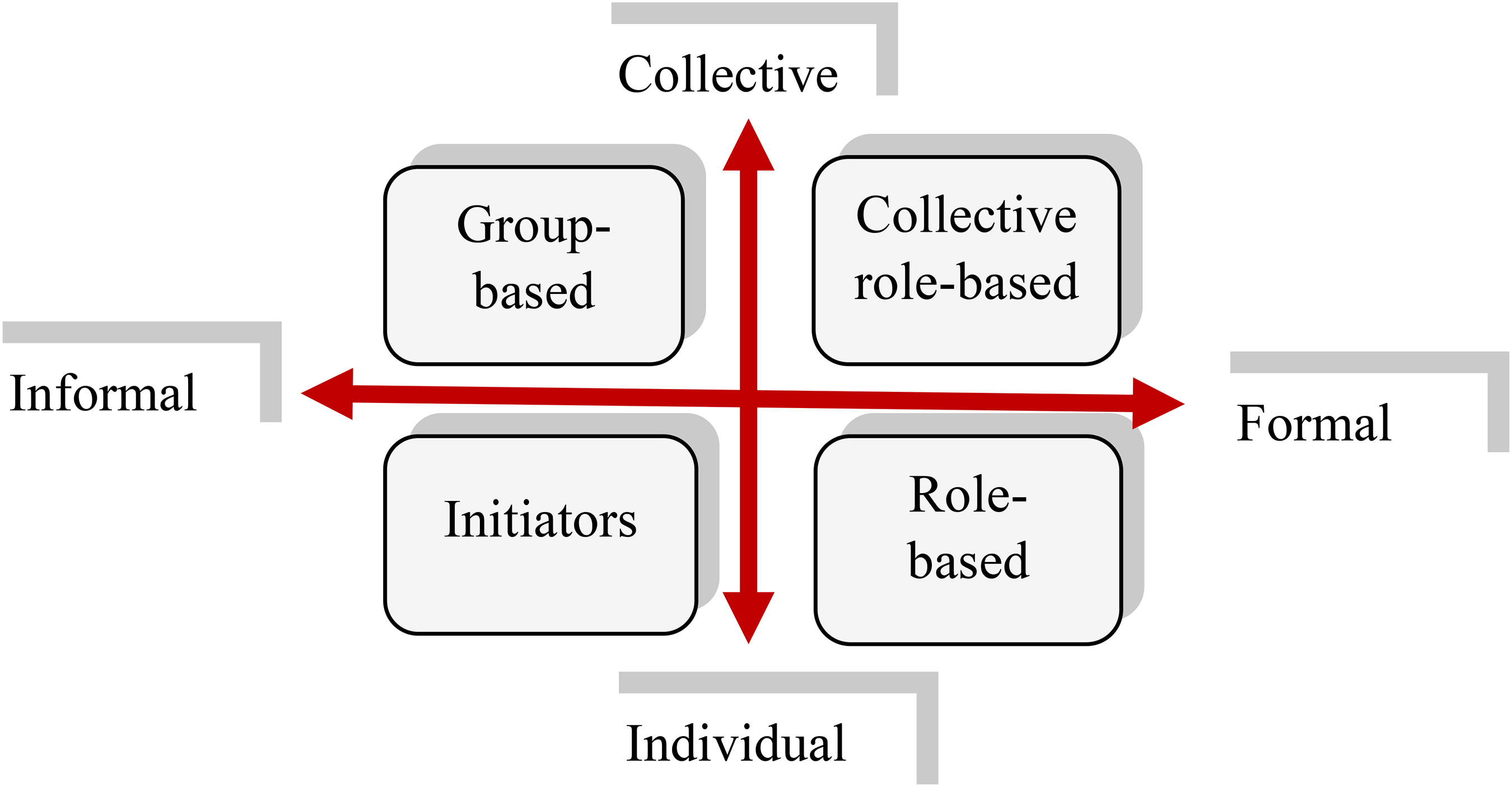
Theoretical framework of teacher leadership (Snoek et al., 2019).
Teacher leadership can be categorized into four main forms: (i) Formal and Individual: This type involves teachers holding specific, formal roles within the school's organizational structure, such as coordinators or team leaders, assigned by higher authorities; (ii) Formal and Collective: Here, teachers are given roles and mandates, but they work collectively to influence those outside the group, often with a specific objective, such as improving student motivation or supporting colleagues’ professional development, (iii) Informal and Individual: In this form, leadership isn’t derived from formal positions but rather from a teacher's personal initiative, often based on their competence, experience, or personal attributes. They act as initiators and have authority among their colleagues, and (iv) Informal and Collective (Community-Based): This type is community-based and dynamic, where leadership is attributed to teachers with the most relevant expertise for specific occasions. It changes as circumstances evolve, requiring constant assessment and adaptation within the school community. These distinctions provide a comprehensive view of teacher leadership in different contexts and settings.
Methods
To answer the research questions, this study utilized a systematic review method that synthesized qualitative information while extracting and summarizing themes related to teacher leadership definition and outcomes of teacher leadership that are manifested in the existing literature. This qualitative information is combined with quantitative data, specifically descriptive data, to provide a comprehensive overview of the existing evidence related to the conceptualization of teacher leadership against the Snoek et al. (2019) theoretical framework. A systematic review is an investigation method that enables synthesizing different studies to provide the existing evidence in the literature for a more comprehensive understanding of a certain phenomenon. As such, it is an increasingly used method in the age of evidence-based decisions in policy making (Suri, 2018). The study utilized specific criteria for searching relevant literature and incorporating appropriate studies for the analysis as described below.
Selection Procedure
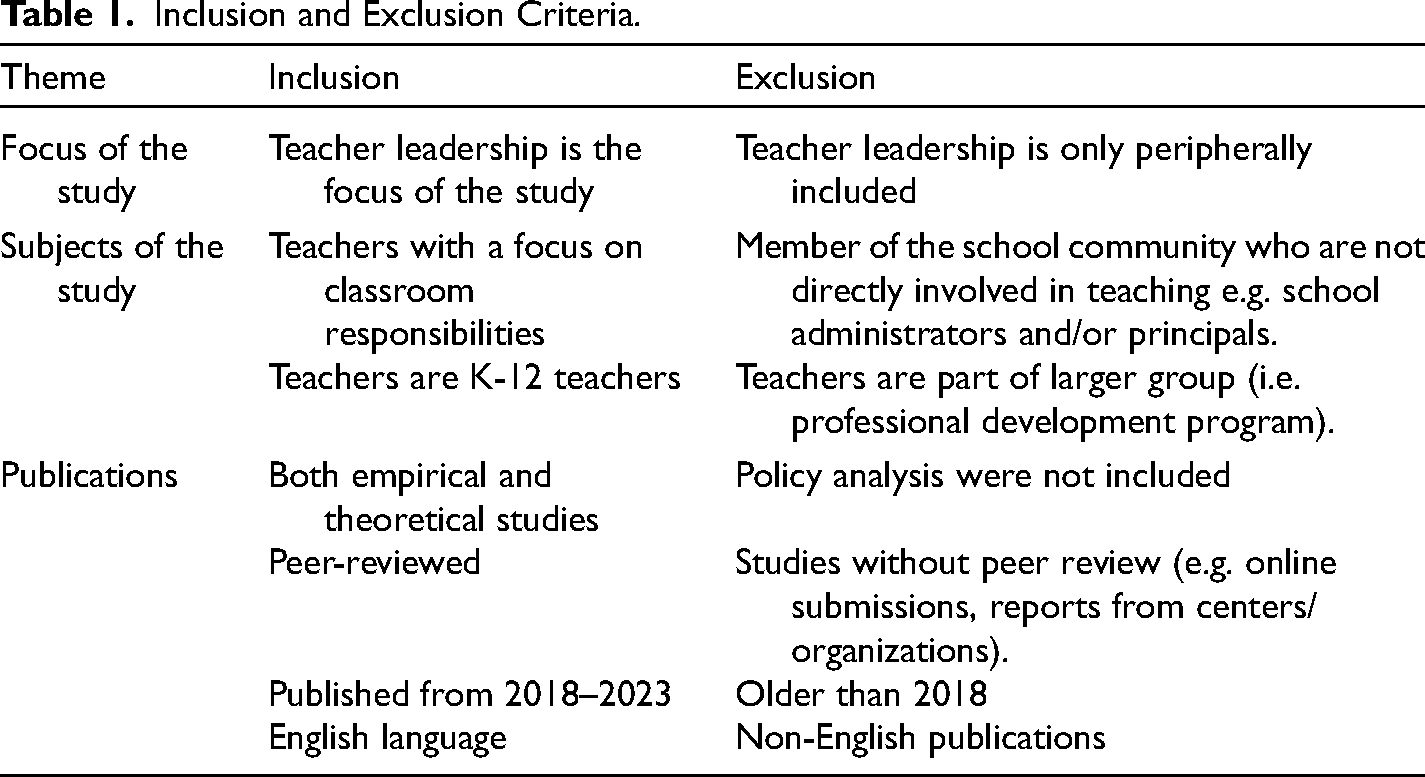
To select studies for review, the authors adhered to the PRISMA approach developed by Moher et al. (2009) and applied specific inclusion and exclusion criteria outlined in Table 1. Three main themes guided the criteria, namely main focus, subject focus, and publication criteria. Firstly, studies had to primarily focus on teacher leadership to qualify for review; those only briefly mentioning teacher leadership were excluded. Secondly, eligible studies concentrated on teachers with teaching as their primary role, excluding those exploring teacher leadership from the perspective of principals or school administrators. The focus was also on K-12 teachers due to their strong classroom responsibilities. Thirdly, the studies considered for review needed to be either empirical or theoretical and peer-reviewed. Policy analyses and non-peer-reviewed publications were excluded. Furthermore, eligible studies were required to have been published between 2018 and mid-2023 and be in English.
Inclusion and Exclusion Criteria.
Sample
To identify relevant studies for this review, an initial search was conducted in the ERIC database using terms like “teacher leadership” and “teacher leader*.” The search was constrained to include articles published between 2018 and mid-2023. A total of 3,066 peer-reviewed journal articles were initially retrieved. To narrow down the selection, the author assessed article titles to ensure that they centered on teacher leadership, in line with the inclusion criteria. When the focus was unclear from the title, abstracts were examined. This process resulted in 58 qualifying articles for further review. To broaden the search, additional articles were sought by searching the term “teacher leadership” in specific journals such as Educational Management Administration and Leadership, International Journal of Leadership in Education, School Leadership and Management, and Teaching and Teacher Education. This extended search contributed 27 more articles for a comprehensive review. The process and findings are visually represented in the PRISMA flowchart in Figure 2.

PRISMA flowchart.
While the search strategy generated a substantial number of articles, it's important to note that some studies related to teacher leadership might have used different terms like “school leadership,” “instructional leadership,” or “faculty leadership.” However, the decision was made to stick with the term “teacher leadership” to avoid potential confusion with leadership roles held by principals. In total, 85 studies were subject to an in-depth review, ensuring they met all eligibility criteria. Any studies that did not align with the predetermined criteria, such as those where teacher leadership was mentioned peripherally, where the study focused on school principals or administrators, where teachers were part of a larger group, or where the study primarily cantered on policy analysis, were excluded. This procedure determined that 33 studies to be included in the review. These studies are marked with an asterisk (*) under the references.
Analysis Procedure
Through the review of the selected studies, this paper aims to draw together the literature on teacher leadership to understand the conceptualization and outcomes of teacher leadership in the existing literature. To answer the first research question, the analysis was conducted deductively, meaning that the analysis was performed against an already developed theoretical framework for teacher leadership. Whereas, for the second research question, the analyses were done inductively in order to let theory emerge from the reviewed articles (Cohen et al., 2011). To code the selected articles, the authors employed an Excel document to facilitate systematic organization. One sheet was dedicated to checking if the articles met the inclusion criteria, while the other was used to code the findings from eligible studies. For the first research question, coding was deductive, based on Snoek's et al. (2019) theoretical framework, which outlines four types of teacher leadership. As for the second research question, articles were inductively coded to identify outcomes of teacher leadership and group them into broader categories.
Results and Discussion
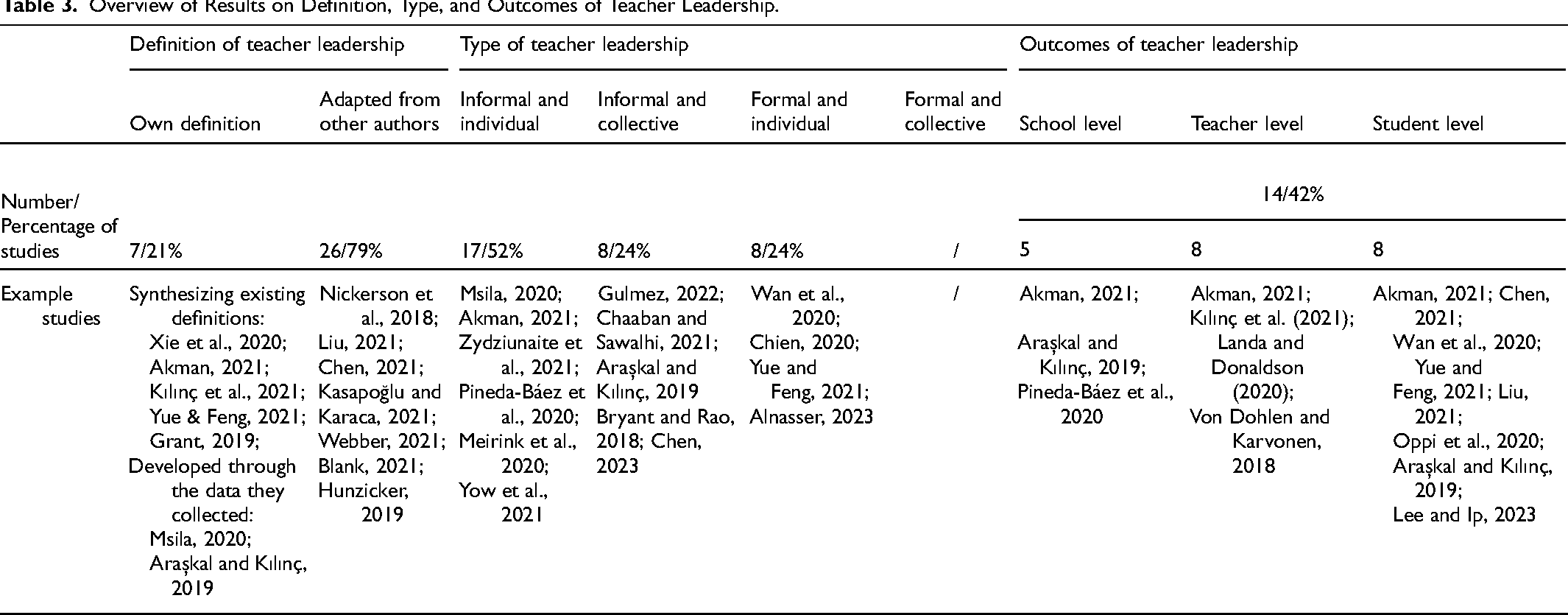
The results of the review are presented based on 33 studies answering the two posed research questions. As seen in Table 2 below, most studies were empirical studies (n = 31) while the remaining were review papers. Most studies were published in 2021 (n = 10) whereas the remaining were published in years 2018, 2019, 2020, 2022, and 2023. The included studies were conducted in various contexts, i.e. included empirical data from different countries e.g. U.S., Canada, Australia, Turkey, China, Thailand, etc. The context of the study did not determine differences in the identified outcomes of teacher leadership. This did not hold for the conceptualization of teacher leadership since it depended on the overall societal culture whether it was perceived more as a formal or informal role, as an individual responsibility or collective. For example, China with a more hierarchical school structure defines teacher leadership more as a formal role of teachers (e.g. Wan et al., 2020; Wang & Ho, 2020; Yue & Feng, 2021). This relates to the authority and influences that teacher leaders are expected to exert to influence change and development. However, a more in-depth analysis that focuses specifically on the contextually drawn vision of a teacher leader is recommended for a more comprehensive understanding of the role of social context on the conceptualization of teacher leader. The overview of findings is presented in Table 3 and discussed throughout this section.
Descriptive Statistics of Studies.

Overview of Results on Definition, Type, and Outcomes of Teacher Leadership.
How is Teacher Leadership Defined and Conceptualized?
The literature illustrates various descriptions of teacher leadership; yet, scholars are often unsuccessful in providing an explicit definition of teacher leadership (Wenner & Campbell, 2017; York-Barr & Duke, 2004). A clear and unified definition of teacher leadership would help in developing an explicit image of teacher leaders and uncovering the factors that enable and empower teacher leaders to exert their influence outside of the classroom, while teaching in the classroom. A clearer understanding and conceptualization of this concept is required for the new role of teachers, which transcends the traditional responsibilities of teachers, to be valued and practiced. Despite this gap in the literature regarding the unified definition of teacher leadership, it was identified a common trend in the way teacher leadership is defined in articles published in recent years. In the studies of this review, the authors referred to the work of seminal scholars upon which to build and contribute further to the topic. More specifically, 26 studies (79%) aligned the definition of teacher leadership with the existing definitions in literature. The most used definitions (43%) are those from York-Barr and Duke (2004) who suggest that “teacher leadership is the process in which teachers individually or collectively influence their colleagues, principals, and other members of school communities to improve teaching and learning practices with the aim of better student learning and achievement” (p. 288) (e.g. Nickerson et al., 2018, p. 67; Chaaban & Sawalhi, 2021, p. 550; Chen, 2021, p. 632) and Katzemeyer and Moller (2001) who refer to teacher leadership as the behavior of those who “lead within and beyond the classroom, identify with and contribute to a community of teacher learners and leaders, and influence others towards improved educational practice” (p. 5) (e.g. Wan et al., 2020, p. 134; Wang and Ho, 2020, p. 356; Kasapoğlu & Karaca, 2021, p. 67). These definitions explicitly place student learning and achievement at the core of teacher leadership.
Other studies include a more holistic definition of how the authors embrace the concept of teacher leadership in their study by including collegial collaboration, professional development, and overall school development (36%). Webber (2021) adopted the definition of Sterrett (2015) defining teacher leadership as “collaborative involvement, initiative, and guiding direction from the teaching faculty to help realize the school goals, mission, and vision in a reflective manner” (p. 43). Blank (2021) utilized the description created by Koellner et al. (2011) who define teacher leadership as follows: “teacher leaders mentor other teachers, lead professional development, and organize learning opportunities explicitly targeted at instruction for new standards”. Liu (2021) builds upon Margolis and Huggins (2012) to not just define teacher leadership but outline the preconditions for its emergence. This definition states that “Beyond role-based duties or titles, teacher leadership depends on the agency of teachers to work with the school principal; to construct community; to support colleagues; and to determine, execute or make manifest a school-wide vision for educational practice” (p. 395). Whereas Hammad et al. (2023) adopted Angelle and DeHart's (2011) broader definition of teacher leaders “as those who share their professional experience with other colleagues; who readily accept leadership opportunities provided by their principal; and who willingly perform tasks that are not part of their ‘prescribed roles’” (p. 3).
The review of the articles showed that the number of studies that provide their definition of teacher leadership is limited. The authors noticed that only 21% of the reviewed studies came up with their working definitions of teacher leadership which were constructed upon the definitions of seminal authors (e.g. Katzemeyer and Moller, 2001; York-Barr and Duke (2004); Wenner and Campbell, 2017). For example, Xie et al. (2020) developed their working definition of the concept while synthesizing the ideas of Katzenmeyer and Moller (2009), Silva et al. (2000), Harris (2003), York-Barr and Duke (2004), and Taylor et al. (2011) and defined teacher leadership as following “Teacher leadership derives from the expertise of teachers instead of the appointed positions; the responsibilities of teacher leadership are not limited to the classroom, but also extend to their leading roles played outside the classroom, especially their responsibility for the colleagues, schools, and communities” (Xie et al., 2020, p. 410). Akman (2021) also came up with a unique definition stating that “teacher leadership points to a partially informal process facilitating a more friendly work environment with other teachers. In this environment, it can be asserted that leader teachers who guide and train their colleagues with expert knowledge might support their development” (Akman, 2021, p. 722). Kılınç et al., (2021) combined the definitions of Harris (2002), Katzenmeyer and Moller (2009), and York-Barr and Duke (2004) to emphasize that “teacher leaders operate both within and beyond the classroom, assume leadership functions at both instructional and organizational levels and aim to leverage student learning outcomes” (p. 1560).
Some studies did not provide the definition they used to inform their study, however, developed the definition through the data they collected in their studies (10%). For example, Msila (2020) used one participant's words to summarize the understanding of teacher leaders as those who are “effective instructors and are able to mentor others whilst helping learners grow” (p. 100). Araşkal and Kılınç (2019) delineated teacher leadership through the words of study participants who stated that “teacher leaders would set an example for their colleagues with their strong pedagogical content knowledge and expertise and would contribute to the teaching process in this way.” (p. 423). Despite the varying definitions used in literature to define teacher leadership, they all exemplify one general theme which appears to conceptualize teacher leadership in literature. Teacher leaders are individuals who have the capacity to influence others in the school community through their knowledge, experience, or competence. The emphasis is on the principles of collective actions to initiate positive changes that contribute to school improvement or educational practice.
Using the framework of Snoek et al. (2019), it is noticeable that studies predominantly conceptualize teacher leadership as an informal role, rather than embedded in a formal position or function (76% of studies). Informal role means that teacher leadership is not about “formalized organizational authority and responsibilities” … [but about] … “influencing, (co)developing and sharing professional knowledge” (Campbell et al., 2015, p. 96).Teacher leadership is hence conceptualized as a more dynamic and spontaneous process rather than a structurally rigid phenomenon. In other words, it can be postulated that the concept of teacher leadership emerges in an informal setting. According to Muijs and Harris (2003), teacher leaders share their creative learning experiences with other teachers by nourishing informal interactions with colleagues. The informal teacher leadership utilizes teachers’ expertise for a greater influence on the school community. As Margolis and Strom (2020) state “Teacher leadership, focuses on leveraging teachers’ knowledge and expertise to influence and improve the instruction of their colleagues” (p. 607). It is also expected that teachers contribute outside of their classroom and take initiatives to support colleagues and overall school development, a trait that falls under the individual dimension of the framework where the teacher leader is an initiator. Seventeen studies under review conceptualized teacher leadership as an informal and individual type of leadership. For instance, in the study conducted by Msila (2020), participants conceptualized teacher leaders as those who are “effective instructors and are able to mentor others whilst helping learners grow” (p. 100). As Akman (2021) states “teacher leadership points to a partially informal process facilitating a more friendly work environment with other teachers. In this environment, it can be asserted that leader teachers who guide and train their colleagues with expert knowledge might support their development” (p. 722). Zydziunaite et al. (2021) adopt Harris and Jones (2019) definition to conceptualize teacher leadership as “an influence rather than a role or a formal responsibility, it is an action that goes beyond teachers’ formally assigned classroom roles in order to share practice and initiate changes, and it develops pedagogical excellence within the classroom and beyond to influence the practice of others”. Pineda-Báez et al. (2020) explains that teacher leaders who participated in their study clarify that “they were mobilized by their drive, enthusiasm and perseverance to change their environments and assumed informal roles to guide others in the analysis of their contexts and to propose solutions to improve their school community” (p. 396).
Though most studies emphasize the individual dimension of teacher leadership, there are a considerable number of authors (8 studies) who consider teacher leadership a collective responsibility. The initiatives undertaken for school improvement are done on the principles of collaboration and community spirit. Gülmez (2022) emphasizes teacher leadership on the principles of collective action, empowerment, and relationships and connections that exist inside the institution. Chaaban and Sawalhi (2021) also focus on describing teacher leadership on the collegial dimension built on mutual respect, responsibility, collaboration, and accountability. The study conducted by Araşkal and Kılınç (2019) found that teacher leaders are considered those who collaborate with colleagues to meet the individual needs of students and improve instructional practice.
Only 24% of reviewed studies conceptualized teacher leadership as a formal position. The formal leadership position is identified in studies conducted under a “hierarchical” system where trust and authority stem from the assigned titles and positions. For example, in the study of Wan et al. (2020), teachers declared that “those with positional power had ‘duties’ to ‘help’ with other positional teachers, as well as those non-positional teachers” (p. 151). Chien (2020) recognizes that “Teacher leaders can play a wide range of roles to support both their schools’ and students’ success, such as resource supporters, instructional specialists, curriculum specialists, classroom supporters, learning facilitators, mentors, school leaders, data coaches, and even the catalysts for change and learners” (p. 47) emphasizing as such the formal aspect to teacher leadership. Yue and Feng (2021) conceptualize teacher leadership as “the extensive work on behalf of management, the establishment of a learning team and getting along with other stakeholders” (p. 7). Also, Alnasser (2023) described that the most common understanding of teacher leadership among participants was “tied to position, status, and authority. They also noted that teacher leadership is held by those in formal roles (e.g., department chair, director of intellectual disabilities programs, special education supervisor, special education director)” (p. 162). The emphasis that teacher leaders work on behalf of the management implies that they are assigned formal functions or positions by school management. The authors identified that the conceptualization of teacher leadership as a formal role comprised individual roles of teachers rather than collective roles where teachers work as a group to exert influence over others outside of the group.
Using the findings of the analysis, it can be asserted that in the recent literature, teacher leadership is conceptualized more as an informal and individual form of leadership. The graphical representation of the conceptualization of teacher leadership is presented in Figure 3 to depict where the conceptualization of teacher leadership stands against the conceptual framework of Snoek et al. (2019) regarding teacher leadership. This denotes that the concept of teacher leadership is evolving from formal senior, administrative, and positional leaders to informal, regular teachers who do not have any official position or function other than teaching (Wan et al., 2020). This paradigm shift aligns with the existing belief that teachers can be the catalyst of school improvement (Katzenmeyer & Moller, 2009). The new role of the teaching profession transcends the classroom responsibilities to expand teachers’ responsibilities for tackling the daunting challenges confronting schools of the twenty-first century. Many authors argue that non-formalizing teacher leaders can evoke school improvement more since the formal role may deter teachers from assuming outside of classroom responsibilities e.g. engaging in professional collaboration and sharing, as they may feel unprepared to assume leadership roles (Gurr & Drysdale, 2013). Also, assigned functions, e.g. department chairs or head teachers, can provide legitimacy but not necessarily influence (Liang & Wang, 2019), a characteristic that is essential for teacher leadership to be effective. Influence does not derive solely from the title or the position, but rather it is earned by the respect and trust other colleagues have towards a teacher. Teachers lead informally by introducing new ideas to the school, participating in projects, sharing skills and expertise, mentoring colleagues, inspiring parent and community engagement (York-Barr & Duke, 2004).

Distribution of studies using conceptual framework of Snoek et al., 2019.
What are the Outcomes of Teacher Leadership?
To help justify the efforts for stimulating teacher leadership, it is important to understand the outcomes of teacher leadership. Hence the review focused on identifying the consequences of teacher leadership that were presented in the articles to accentuate the importance of teacher leadership. What is worth mentioning is that most of the reviewed studies presented the outcomes of teacher leadership referring to the existing literature. In 42% of the studies where outcomes were identified, they could be categorized into three levels: school level (5 studies), teacher level (8 studies), and student level (8studies). At the school level, the most common outcome identified was school development. Akman (2021) argues that teacher leaders affect and guide their environment in various ways allowing new practices to spread across the school. This contributes to teachers’ professional development and hence to school development. Wang and Ho (2019) state that all involvement and collaborative efforts of teacher leaders will benefit school development, teacher professional development, and student learning. Another striking outcome identified related to school development was school culture. The study conducted by Araşkal and Kılınç (2019) shows that teachers mentioned the importance of teacher leadership in creating an effective school culture by stating that teacher leadership contributes towards innovation and change in school which are significant dimensions of school culture. The change in school culture because of teacher leadership was also supported by the findings of Pineda-Báez et al. (2020) who found that the process of teacher leadership transformed the school culture because of “healthier relationships developed based on trust and collaboration” (p. 404).
At the teacher level, professional development, improved instructional practices, self-efficacy, and teacher collaboration are outcomes identified because of teacher leadership. An example of these outcomes are the findings of Akman (2021) who claims that “teacher leaders exhibiting behaviors towards the professional development of other teachers might be considered to positively impact their educational efficiency by providing them with new learning experiences” (p. 734). Kılınç et al. (2021) who studied the link between teacher leadership and teacher self-efficacy found a positive and significant relationship between engagement in leadership behaviors and teachers’ perceived self-efficacy. This implies that when teachers take on outside-of-classroom responsibilities in influencing instructional practices and engaging in school development initiatives, as well as continuing professional learning, they have a higher sense of self-efficacy. Another study performed by Landa and Donaldson (2020) identified improved teacher collaboration and instructional practice as significant outcomes of teacher leadership. According to the findings, teacher leaders were particularly interested and willing to learn and share their ideas about instructional practices since they believed that have valuable expertise to share with colleagues.
Finally, at the student level, the common outcome identified in all the articles was student achievement (see Akman, 2021; Chen, 2021; Wan et al. 2020; Yue & Feng, 2021; Oppi et al. 2022; Araşkal & Kılınç, 2019; Lee and Ip, 2023) which was considered also the driving force behind teachers exhibiting leadership behaviors. This outcome is supported also by previous studies which emphasize that the ultimate purpose of teacher leadership is to improve students’ achievement (Carpenter & Sherretz, 2012; Hunzicker, 2012). Teacher leadership plays an important role in supporting students to achieve their goals by instigating positive communication with them and increasing student motivation (Araşkal & Kılınç, 2019). The findings of the review are summarized in the scheme below in Figure 4.
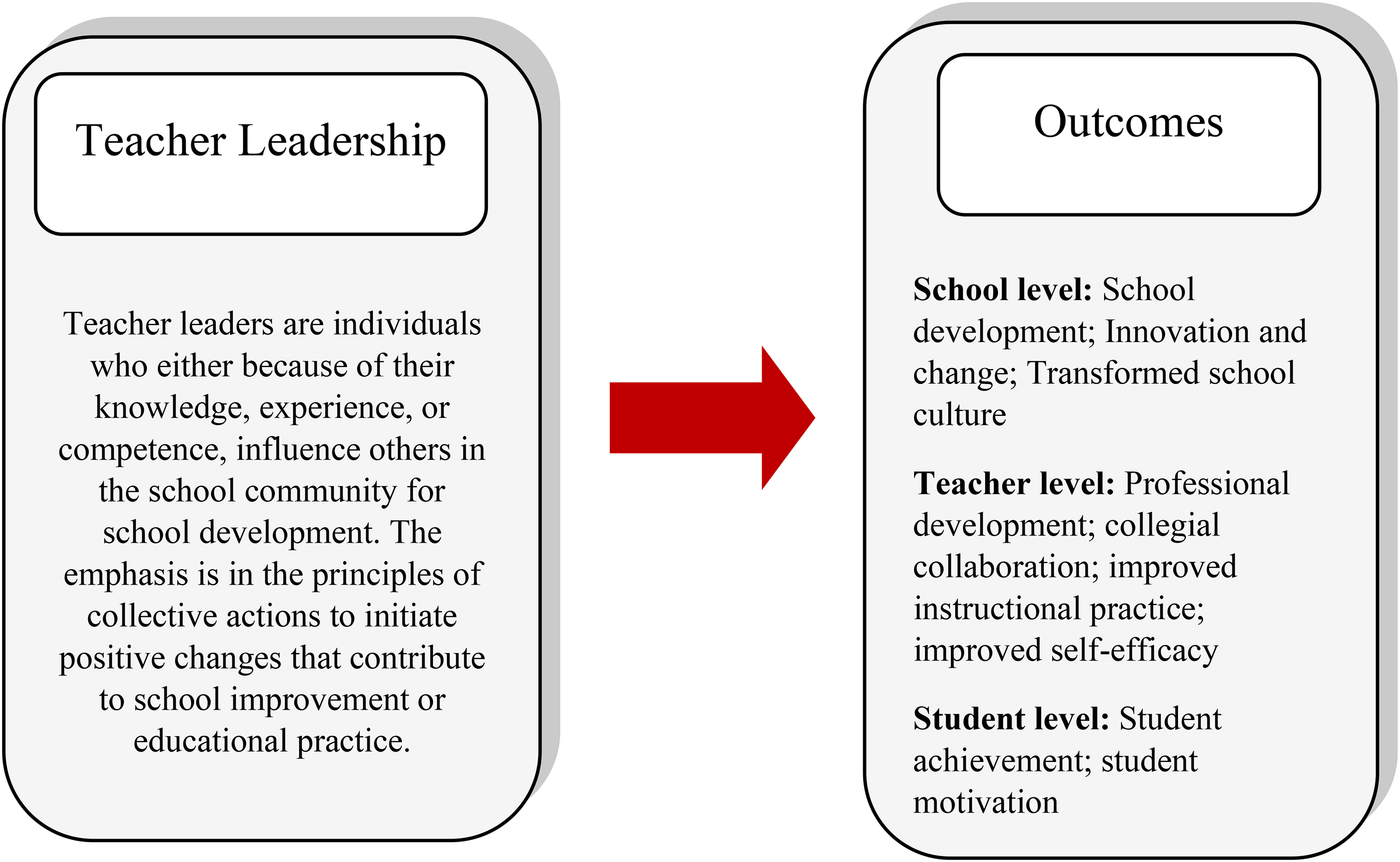
Overview of the definition/concept of teacher leadership and identified outcomes.
Conclusion
The results of this review demonstrate that there is still a lack of a common and consistent definition of teacher leadership in the literature. A clear understanding of the concept would help in better preparing prospective teachers for the new roles that the teaching profession demands for overcoming the daunting challenges that schools face nowadays. Most studies included in the review relied their work on the already existing definitions of the concept in literature. The definitions of York-Barr and Duke (2004) and Katzenmeyer and Moller (2001) were identified by the author as the most used definitions in the studies published in the period 2018−2023. Other studies either utilized definitions of other authors, developed their own working definitions based on the existing literature, or came up with definitions after analyzing first-hand data via qualitative or quantitative methodologies. Regardless, the studies reviewed revealed that teacher leadership is mostly conceptualized more as an informal and individual form of leadership. Whereas, the outcomes and impact teacher leadership causes can be at the school level e.g. school development, innovation and change, and transformation of school culture, at the teacher level e.g. professional development, collegial collaboration, improved instructional practice, and self-efficacy, and at the student level e.g. student achievement and student motivation. This study points to the need to advance the debate on the occurrence and projection of teacher leadership within schools by combining the various variables of forms it occurs and the purposes it is meant to serve. The dimensions of school autonomy, school culture, and teacher identity and agency are three important dimensions that school managers, teacher educators, and policymakers need to consider when projecting the development of teacher leadership. It will not be nurtured and developed on its own to the level that it is desired, and processes need to be put into place to advance this feature of school culture and education system functioning. Further studies need to examine these dimensions in greater depth and through empirical evidence.
Limitations
This study contains several limitations. Firstly, the search strategy to use only “teacher leadership” as a key term for searching articles might have left out of this review relevant studies that refer to this concept with a different terminology. Secondly, the analysis of the articles did not specifically consider the educational context in which the studies were conducted. Therefore, a more in-depth analysis that focuses on the contextually drawn vision of a teacher leader is recommended for a more comprehensive understanding of the role of social context on the conceptualization of teacher leadership. Finally, this review relied solely on the articles that had a focus on teachers, leaving out the perspectives of principals or administrators who could add a valuable dimension to the conceptualization as well as outcomes of teacher leadership.
Footnotes
Declaration of Conflicting Interests
The authors declared no potential conflicts of interest with respect to the research, authorship, and/or publication of this article.
Funding
The authors received no financial support for the research, authorship, and/or publication of this article.
