



Abstract
This article reviews the literature on bystander intervention with a view to establishing what we know about how guardians can be effective in preventing, disrupting, or reducing the severity of sexual offenses against women through intervention. Viewing bystanders as potential guardians, this review explores what is currently known about the presence of potential guardians at the scene of sexual offenses against women, and how these potential guardians respond to witnessing such events. Research shows that the likelihood and type of intervention by available guardians varies across situational contexts. Relatedly, trends in the characteristics of available and active guardians also reveal the importance of individual characteristics such as age, and most significantly gender, in affecting the willingness to intervene and perceptions of capability in intervening in various situational contexts. Results suggest that while men generally have greater confidence in their physical capability to intervene directly, women generally express a greater willingness to help and are more likely to intervene indirectly. The implications of these gendered bystander responses for sexual assault prevention are discussed.
Introduction
It has been well established in the criminological literature that the actions and reactions of third parties can greatly assist in de-escalating, and even preventing, the occurrence of deviant criminal behavior (Reynald, 2009). The utility of bystanders as potential guardians against various forms of crime has been well established in studies of both property crime (such as burglary and theft) and interpersonal victimization (such as armed robbery) with a reduced risk of victimization observed when active third parties are present (Nugent, Burns, Wilson, & Chappell, 1989; Reynald, 2011b). More recently, scholars have begun to suggest that the presence of other persons beyond the offender and victim may also be associated with the avoidance of sexual assault (Beauregard & Leclerc, 2007; Leclerc, Smallbone, & Wortley, 2015; Ullman, 2007). Although limited work has yet been undertaken to empirically validate this proposition, preliminary findings support the utility of bystanders as potential guardians in both sexual offenses committed against child victims (persons under 16 years of age) and, of particular significance for this article, sexual offenses against adult female victims (Hart & Miethe, 2008; Leclerc et al., 2015).
A large volume of sexual offenses committed against adult women occur between known persons in private dwellings. Compared to the capacity for opportunity reduction in public places, these private settings reflect a situational context which is relatively difficult to infiltrate. For this reason, the presence and intervention capabilities of third parties offer what is arguably a unique and innovative method for addressing the high incidence of sexual offenses against women. In particular, the ability of bystanders to identify high-risk markers suggests that they have the power to act as guardians by intervening and assisting in preventing sexual assault both before it has occurred and during its commission (Burn, 2009). In the instance that bystanders are able to identify and report the offender involved, they can also assist in reducing incidents of revictimization (McMahon & Banyard, 2012). This article highlights the significance of bystanders as potential guardians who have the power to prevent sexual offenses against adult women.
To integrate the concept of the “bystander” within the framework of routine activity theory, bystanders can be viewed as potential or available guardians (Hart & Miethe, 2008; Reynald, 2011b). By definition, bystanders are people (other than the offender(s) and victim(s)) who are present when a crime event occurs. We argue that the presence of a bystander is the equivalent of the presence of a potential guardian. Under some circumstances, the mere presence of a third party or bystander functions as an effective form of guardianship against crime as the presence of others is sufficient to discourage offending (Felson, 1995). In other situations, however, presence of others alone is not a sufficient condition for preventing crime (Reynald, 2010). Once a crime is in progress, bystanders who witness the crime event in progress have the potential to take some form of action to disrupt the crime event, and as such, they can be viewed as potential guardians. Bystanders or potential guardians who intervene, either directly or indirectly, in an attempt to disrupt the event can be viewed as active guardians.
By drawing attention to what is currently known about bystanders, we aim to organize and review the current knowledge about their role as potential guardians who are present at the scene of a crime. First, we highlight trends in the characteristics of bystanders who are reportedly present at the scene of sexual offenses against women, with a particular focus on the significance of gender. Based on this review, we will next explore how and under what conditions bystanders (available guardians) become active guardians who take action to disrupt or prevent a sexual offense in progress. This article then leads into a discussion of active guardianship against sexual offenses targeting adult women, highlighting the different forms of action taken by different types of guardians (e.g., male guardians compared to female guardians).
By completing this exercise, we provide a tentative framework which can be used to guide the delivery of bystander intervention programs and broader sexual offending prevention models. Moreover, this contribution calls attention to the critical gaps in knowledge which remain in order to develop a more sophisticated understanding about how regular citizens can play a significant role in preventing, disrupting, and minimizing the severity of sexual offenses committed against adult women.
Bystanders as Potential Guardians During Sexual Offenses
Recent research has brought attention to the importance of the sexual offense opportunity structure and the role of situational factors in shaping the commission of sexual offenses against women (Beauregard & Leclerc, 2007; Leclerc, Proulx, & Beauregard, 2009). This research has also demonstrated that although few empirical attempts have been made to apply this body of knowledge to the prevention of sexual offenses against women, there is capacity for strategies driven by this situational approach to not only help prevent these events from happening in the first place but also disrupt the crimes during perpetration. One such promising strategy is to increase the risk of offenders’ getting caught through the presence of others who can be viewed as potential guardians. Derived from the routine activity approach, the concept of guardianship proposes that third parties (people other than the victim and offender) can help to prevent or discourage criminal violations from occurring through their availability and monitoring of potential crime targets (Cohen & Felson, 1979). In addition to availability and monitoring, Reynald (2009, 2010, 2011a, 2011b) suggested that direct and indirect interventions are also critical action-oriented dimensions of guardianship that are important for crime prevention and control. The presence of potential guardians therefore holds enormous power for assisting in the prevention of sexual offenses against women, given that the majority of these incidents take place in private locations, are committed by an offender who has an established relationship with their victim, and have relatively low reporting rates as a result of fear of repercussion.
To identify the relevant studies to be included in this review of guardianship in sexual offenses against women, a search was first conducted using the PyschInfo database. Using the key words “guardians,” “guardianship,” and “bystanders,” we were able to include in our search strategy publications from both the criminology and psychology areas. In line with the purpose of this review, we then implemented selection criteria which further refined the results. First, we only included studies that involved the analysis of sexual offenses or sexual offenders. This allowed us to explore both the pertinent offense contexts where guardianship is a salient factor and the perceptions which offenders or potential offenders hold about the role of bystanders acting as guardians. For the gaps in literature where guardianship had not been explored in the specific context of a sexual offense, studies of broader emergency situations were included. Next, we only selected those articles which to some degree focused on sexual offenses involving adult female victims. Given how little is known about the role of bystanders as guardians in these offenses, however, there were some studies included which had a mixed sample of offenders (i.e., child sexual offenders and sexual offenders against women). This decision was critical because it ensured that we were able to synthesize all the current knowledge in this area of research.
Our search of current literature revealed there are only a small number of empirical studies which have included a measure of guardianship in their exploration of sexual offense outcomes (Ullman, 2007). This body of research tends to focus on the frequency and influence of the presence of potential guardians, with little consideration of who the guardian is (individual characteristics) and their monitoring and/or intervention capabilities. Taken together, the limitations of the available research mean little information is known about the circumstances under which potential guardians are available during sexual offenses against women. Similarly, there remain critical questions about the extent to which guardianship discourages the commission of these offenses, and if the impact of guardianship varies under different situational contexts (Hart & Miethe, 2008). This article will begin by elucidating what we know about the guardianship dimension of presence or availability of third parties during sexual offending.
The Presence of Potential Guardians or Bystanders During Sexual Offenses
In discussing the situational contexts which surround sexual offending, few scholars have included a measure of bystander presence or the availability of potential guardians (Banyard, 2011). The small body of work which has considered bystander presence is also subject to a number of limitations including an absence of uniformity in the way bystanders are conceptualized, and disparities in the frequency with which bystanders are reported as being present during a sexual offense. The reasoning for this is summarized by Hart and Miethe (2008, p. 642) who note that “the likelihood of bystander presence varies dramatically across different situational contexts for violent crime.” These difficulties in getting a clear impression of the frequency with which potential guardians or bystanders tend to be available are further compounded by the significant underreporting of sexual offenses committed in private dwellings (see, e.g., Lievore, 2003). Nevertheless, by pulling together what is known about the availability of bystanders in sexual offenses against women, there is tentative evidence that up to a third of these crimes are committed in the presence of a third party or a person other than the offender or victim (Hart & Miethe, 2008; Planty, 2002).
Clay-Warner (2003) used data from the U.S. National Crime Victimization Survey (NCVS) to assess how situational factors, such as the presence of bystanders, affect a victim’s choice of self-protective strategy. By analyzing all male-perpetrated single-assailant attacks committed against women between 1991 and 2001 (n = 453), Clay-Warner (2003) found that bystanders 1 were reported as present in 18% of assaults. Both Tark and Kleck (2014) and Guerette and Santana (2010) reported a similar prevalence of third parties in their analysis of the same body of NCVS data (20% and 18.4%, respectively). Using the same NCVS data but including all sexual incidents in which a third party was reportedly present (e.g., not limited to sexual contact), the availability of bystanders was reported to be slightly higher in both Hart and Miethe (2008) and Planty (2002; 28% and 29%, respectively).
The work of Hart and Miethe (2008) makes a further contribution to the body of knowledge on bystander presence in sexual assault. In highlighting that 29% of all rapes in the U.S. national data occurred in the presence of another person, the authors found that this presence was not constant across all situational contexts. Their results suggest that there are in fact unique situational contexts in which bystanders are relatively more, and also less, likely to be available. Hart and Miethe (2008) used the conjunctive analysis of case configurations to identify the micro-situational contexts most conducive to bystander presence in sexual assaults. The situational profile leading to the highest likelihood of bystander presence was situations of rape which occurred in public, during daylight hours, between people known to each other and without the use of a weapon. For incidents with this particular combination of situational factors, 49% were found to have been committed in the presence of bystanders. This figure is not entirely surprising, given that it is under these circumstances we would expect higher levels of pedestrian movement and the subsequent intersection of third parties with the offender and victim (Hewitt & Beauregard, 2014). The lowest rates of bystander presence (14%) arose during incidences of rape which occurred in private dwellings during the day and between persons previously known to each other with no recorded weapon (Hart & Miethe, 2008). The expected daily routines of potential bystanders in these contexts (e.g., children at school, housemates at work) present a plausible explanation for their relatively infrequent presence in private dwellings during daylight hours.
Further analyzing these offenses committed in private places between known persons, Hart and Miethe (2008) found that the presence of a third party was slightly higher for rapes that occurred during the night both with the use of weapons (25%) and without the use of weapons (20%). A more recent examination of acquaintance sexual offending in Queensland, Australia, identified that almost half of these cases involved the presence of third parties (Leclerc & Chiu, 2016). This study involved the thematic analysis of sexual assault by acquaintances cases and operationalized third parties to include any person other than the victim or offender. This definition therefore extended to the victim’s children, romantic partners, and other relatives or known persons such as friends, acquaintances, coworkers, and housemates. Importantly, it was not a necessity of the study’s inclusion criteria that third parties had to witness or be aware of the sexual offense to be defined as being present. Rather, third parties were coded as being present if they were nearby at any point during the course of the crime whether this was the beginning or during commission (e.g., person located in another part of the house). The primary implication of approaching bystander presence from this angle is that it does not necessitate that third parties are aware an offense is occurring and this would obviously have a negative impact on their potential intervention capabilities. Nevertheless, these results provide a strong foundation for the argument that even within private dwellings the availability of others means that there is the potential for bystanders to assist in sexual offense prevention (Hart & Miethe, 2008; Leclerc & Chiu, 2016).
Characteristics of Available Guardians or Bystanders in Sexual Offenses
One of the critical limitations of current knowledge on the presence and influence of potential guardians is the scarcity of information describing who these guardians are in terms of the individual characteristics which define them. Given the variations among groups with respect to skills that facilitate their effectiveness as a guardian (e.g., assertiveness, strength), it may be suggested that different types of bystanders will have varying influences on an offender’s decision to either proceed with or refrain from offending (Fischer et al., 2011). Considering differences in guardianship potential between adults and children, or males and females, it may be that an offender’s decision-making process is in part mediated by how willing or capable the bystander is perceived to be in their capacity to intervene or report. Drawing on this logic, it is clear that knowledge about trends in the characteristics of bystanders in sexual offenses against women has important implications for the effectiveness of any recommendations that are made for prevention purposes.
Available Guardian/Bystander Characteristics and Settings
Drawing on what is known about the types of third parties present during sexual offenses against women, it is evident that bystander characteristics such as gender, age, and relationship with the victim are heavily contingent on the location or site at which the sexual offense occurs. In the context of sexually motivated burglaries 2 committed in private dwellings, for example, Pedneault and Beauregard (2014) found that when someone else in addition to the victim was present they were more commonly either a child (12.9%) or adult female (8.9%). The most infrequently reported type of third party was an adult male (7.6%). Considering these differences, it may be that offenders perceive a greater success in controlling the actions of a potential witness when they are regarded as a person of lesser physical strength (e.g., child or physically smaller woman). Taken together, the findings of Pedneault and Beauregard (2014) could indicate a sexual offender’s conscious preference for situations where they see themselves as more equipped to control or to eliminate potential risks. This preference for situations where risks can be anticipated and managed is supported by the prevalence of sexual offenses which occur in private dwellings. In these settings, offenders are afforded a greater level of control over who might potentially be witness to an offense (Beauregard & Leclerc, 2007; Deslauriers-Varin & Beauregard, 2010). The capacity of offenders to assess a situation for cues and intentionally act on viable opportunities is further seen in the literature on bystander presence in child sexual abuse. Here it is demonstrated that children are the most commonly reported type of third party present in offenses occurring within the home (Leclerc et al., 2015; Mouzos & Makkai, 2004; Underwood, Patch, Cappelletty, & Wolfe, 1999).
In the context of sexual offenses against women in public spaces, there is no mention in the current literature about the specific characteristics of bystanders. Similarly, there is an absence of information on the gender and age of those third parties who are witnesses or are at the least nearby during offenses which occur between people who meet socially on dates or at parties (Hart & Miethe, 2008). In light of these gaps in the literature, further research is required to understand the characteristics of guardians who are most likely to be present in sexual offenses within public spaces. In doing this, bystander intervention programs can be tailored and targeted to educate specific groups about their guardianship potential in different public spaces.
The Willingness to Intervene in Sexual Offenses Against Women
Offender decision-making is influenced by situational factors. By engaging in a rational cost–benefit assessment, offenders base their decision to offend on considerations including the effort involved, perceived risk of apprehension, and anticipated rewards of the behavior. Sexual offenders often select environments in which there is a lower likelihood of intervention by available guardians and we therefore reason that the presence and intervention behaviors of guardians offer enormous potential in reducing both the severity and likelihood of completion in these offenses. Unfortunately, there is a relative paucity of empirical evidence that explores the interaction between bystander behaviors and sexual assault. The consequence is that very little is understood about willingness to intervene among different types of third parties. Approaching this knowledge gap from a policy perspective, we argue that an understanding of intervention willingness is just as important as an understanding of bystander/guardian impact. The rationale is that the guardians who both witness and take steps to disrupt an offense offer more in terms of prevention than a bystander or available guardian who witnesses the behavior but chooses to take no further action (Reynald, 2009, 2011b). Understanding what constitutes “effectiveness” within bystander responses, in addition to the characteristics of the bystanders/most likely to employ these actions, will help build knowledge around what is promising for preventing sexual violence and abuse. Moreover, it will facilitate the development of strategies aimed at encouraging intervention behaviors.
Research has shown that crime levels decrease as the intensity of active guardianship increases (Hollis-Peel & Welsh, 2014; Reynald, 2009, 2011a). Although these findings relate to property crime, they provide the basis for understanding how active guardianship can function as a successful intervention to protect against interpersonal crime. Results suggest that third-party presence alone has a notable impact on crime. When bystanders are more overt in making their presence, capability, and willingness to intervene apparent however, it is proposed that the likelihood of impacting the crime event outcome increases. As Reynald (2011b, p. 141) states “direct intervention is more likely to be effective than indirect intervention because of the immediacy of the response.” Although not empirically tested with respect to sexual offending, it may be that this concept would similarly apply given that sexually abusive behaviors don’t always involve penetration and can, in some instances, be quite short in duration (Balemba & Beauregard, 2012). Available guardian/bystander responses which are more immediate in disrupting the offense (e.g., yelling out to the perpetrator or taking direct physical action) may therefore be of greater help for reducing offense severity than indirect responses which defer direct intervention responsibility onto other parties (e.g., reporting an offense in progress to the police).
The situational context of violent crime (including rape) has been determined to play an important role in the success of any intervention actions taken (Hart & Miethe, 2008). As such, it may be that the effectiveness of a guardian’s action will vary between contexts characterized by different combinations of micro-situational factors. A bystander response that would be highly effective in one context may not be in another due to the amalgamation of different situational factors. Further research is required to clarify if there are in fact differences in the effectiveness of different intervention behaviors under varying situational contexts, and if so, what these differences entail. When formulating recommendations about what guardians can do to disrupt or discourage incidents of sexual abuse, it is also important to recognize that not all third parties will exhibit equal willingness to intervene. Reflecting on what is noted in general studies of helping behavior (see, e.g., Latane & Darley, 1970), it has even been suggested that “inactivity is the typical reaction of bystanders who witness violent crimes” (Hart & Miethe, 2008, p. 638). Building on this understanding, a sizeable body of literature has emerged which examines the factors predicting bystander behavior across a range of emergency situations which, of particular relevance for this study, includes sexual violence (Bennett, Baynard, & Garnhart, 2014).
Factors Predicting Bystander Intervention Behavior
Within social psychology research on bystander intervention behaviors a number of key factors are argued to be most salient in determining willingness to intervene. These are (1) the bystander noticing the event, (2) the bystander’s subsequent assessment of the event as an emergency, and (3) the bystander’s own perception of their ability to take intervention responsibility (Latane & Darley, 1970). Originally, this situational model of bystander intervention was formulated as a means of understanding bystander behaviors in emergency situations more generally. However, recent scholarly research into the model’s applicability to violent behaviors also provides preliminary support for its use in explaining why certain individuals will choose to intervene in violence while others will remain passive (Banyard, 2008; Banyard & Moynihan, 2011; Burn, 2009). For sexual offending in particular, scholars reason that it is the experience of a situational barrier during the decision to intervene which ultimately explains both the intrapersonal (individual) and contextual (situational) differences observed in bystander responses to sexual offenses.
Gender
In exploring individual-level differences linked with bystander responses to sexual offending, males and females are shown to differ markedly in their likelihood of taking intervention actions. Interestingly, the types of differences observed are inconsistent with broader helping situations which find that men are more likely than women to intervene in generally violent situations (e.g., physical assault; Eagly & Crowley, 1986). In the case of perceived sexual misconduct, Burn (2009), Banyard (2008), and Nicksa (2014) instead identified that women are actually more likely than men to express a willingness to intervene in incidents. In explaining these inconsistencies in male and female helping behaviors across situations, Burn (2009) suggests that women have an increased knowledge with regard to the issue of sexual offending because of their disproportionate victimization and vulnerability as a population. The greater willingness women express for intervening in sexually risky situations may therefore be explained by their enhanced capacity for recognizing these behaviors and the obligation they feel for intervening on behalf of other females. Established in studies of helping behavior, it is individuals who self-report a lower rape myth acceptance, a greater awareness of the problem of sexual violence, and a greater perceived responsibility for helping, that are more likely to offer some type of intervention in the context of sexual offending (Banyard, 2008; Banyard & Moynihan, 2011; Chabot, Tracy, Manning, & Poisson, 2009).
An alternate suggestion offered by Banyard (2011) to explain these gender differences in helping behaviors is that while females may be more likely to intervene on behalf of the victims, men may instead be more likely to try and obstruct the perpetrator. Although no research has empirically validated this proposal, there is evidence in the sexual offending literature to suggest that women will often choose an indirect method of intervention (e.g., yelling for help, calling the police) because of a perceived deficit in their physical intervention capabilities (Chabot et al., 2009; Nicksa, 2014). Men, on the other hand, generally express greater confidence in their physical self-efficacy and might thus be more likely to adopt an immediate and direct strategy to disrupt any witnessed events (e.g., push the offender off; Banyard, 2008; Harari, Harari, & White, 1985). However, in making this point it should be noted that not all males confronted by emergency situations will choose to employ direct actions. Rather, studies exploring male bystander responses to emergencies show that male responses are greater influenced by the attitudes and norms of their peer group and less influenced by their perceived responsibility for helping. Therefore, in situations where a male bystander sees his peers to be accepting of the victimization of women, he may choose not to take any intervention responsibility for fear that doing so could make him appear less masculine (Brown & Messman-Moore, 2010; Gage, 2008).
Situation-Specific Characteristics: Ambiguity in Identifying the Crime Event
Following on from individual differences in helping behaviors, it is also suggested that in the context of perceived sexual violence, the proclivity of a person to engage in a bystander response is also mediated by the characteristics of the immediate situation. First identified in the work of Latane and Darley (1970), this influence of situation is based on the argument that both aspects of and cues within the immediate environment contribute to the selected activity or inactivity of a potential bystander. Considering, for example, the situational contexts which people often regard as “high risk” for sexual assault (e.g., parties, entertainment districts), it has been found that distractions such as music, conversation, and alcohol can have the effect of masking a person’s ability to identify risk indicators (Burn, 2009). Adding to this, it is possible that in the context of a social gathering there may be greater ambiguity in terms of the perceived seriousness of a witnessed event (i.e., sexually assertive behaviors may be misconstrued as flirtation). This might then lead a bystander to question whether taking action and intervening would actually be a help or a hindrance to the presumed victim.
With respect to helping behaviors in broader emergency situations, numerous scholars have put forward evidence that supports this argument that intervention likelihood is partially dependent on a person’s own confidence in their ability to correctly interpret situations. That is, bystanders have been observed as less likely to intervene when they express hesitancy in their reading of a situation, and more likely to intervene when there is reduced ambiguity in the victim’s need for help (e.g., the victim is yelling out for aid; Clark & Word, 1972). Unfortunately, in the context of sexual violence and assault specifically there is very little research which has empirically validated this association.
Studies also reveal a great deal of inconsistency in terms of how “willingness to intervene” is measured and how “intervention actions” are defined. For example, in one of the earliest studies to explore the effect of situational ambiguity on a bystander’s decision to intervene during sexual assault, Shotland and Straw (1976) carried out a simulated laboratory study in which subjects witnessed a violent argument between a man and a woman. Under these conditions, an intervention was defined as including any behavior, whether indirect (e.g., called the police or asked another person to stop the attack) or direct (e.g., pushing offender away) that was made in an attempt to disrupt the witnessed event. More recent research by both Banyard (2008) and Banyard and Moynihan (2011), however, explored willingness to intervene retrospectively. In both these studies, data regarding intervention attitudes were collected via self-report surveys which asked participants to report on bystander behaviors actually carried out in the last 2 months. Finally, work by authors including Burn (2009) and Nicksa (2014) has looked at differences in propensity to intervene by questioning participants about how they think they would respond in the context of a hypothetical preassault situation. In these two studies, Burn (2009) considered both direct and indirect intervention actions while Nicksa (2014) took a much narrower approach and looked only at the likelihood of reporting to an authority figure.
Considering the varying methodologies adopted in this body of work, it is not surprising to see mixed conclusions in the likelihood of helping behaviors across contexts. In particular, retrospective studies tend to suggest a relatively minimal difference in the actual offering of help for situations involving a friend compared to situations involving a stranger. When queried about a hypothetical scenario or staged event, however, people suggest they would be less likely to intervene if it is inferred that the perpetrator and victim had a preexisting relationship (e.g., husband and wife). Participants further reasoned that their assistance would be more warranted in situations where a woman is arguing with someone she doesn’t know because an encounter between strangers is seen as more damaging than an encounter between known persons (Shotland & Straw, 1976).
Gender and Situation-Specific Characteristics: Ambiguity in Identifying the Crime Event
More recent work by Nicksa (2014) extends these findings, as the study showed that the likelihood of intervention in situations where the risk of sexual assault is unclear was actually found to differ between male and female subjects. Using vignettes that described a person overhearing a description of sexual assault, and operationalizing intervention actions as a bystander’s willingness to report (i.e., indirect intervention), Nicksa (2014) found that irrespective of the perceived offender–victim relationship, women indicated a greater inclination than men to report the suspected sexual assault. One plausible explanation for this increased reporting by females draws on the earlier discussed work of Burn (2009). Here it is suggested that women, compared with men, more strongly identify with the victim because of a heightened awareness regarding the potential consequences of unwanted sexual contact. This may be due to either their own experience as a victim of sexual assault or the experience of someone else. Additionally, Laner, Benin, and Ventrone (2001) who found similar patterns in the context of violent assault suggest that the women may not be as affected by this situational ambiguity because the perceived risks of their own victimization are actually lower in cases involving intimate partners. As such, female bystanders may see the risks of intervening to be quite minimal when compared to the potential costs of not helping the victim (Eagly & Crowley, 1986; Fischer, Greitemeyer, Pollozek, & Frey, 2006).
This work ties in with the idea that people who better understand of the realities of sexual assault are more easily able to identify when others are at risk and take subsequent action (Banyard, 2008). It is evident that more research needs to be undertaken that explores ambiguity as a situational influence in sexual offenses against women. Particularly, the focus needs to be on whether ambiguity (in terms of offender–victim relationship) does in fact impact all forms of bystander responses in sexual offenses or whether it only influences the likelihood of direct action, a finding tentatively suggested in the current literature. This requires further exploration at all levels of bystander intervention including primary (prior to the assault), secondary (during the assault), or tertiary (a response after the event) prevention.
Situation-Specific Characteristics: Ambiguity and the Number of Bystanders
Analysis of the influence had by ambiguity in bystander decision-making within sexual offenses indicates that ambiguity is also related to the number of other bystanders present. Based again on the work of Latane and Darley (1970), this concept termed the “bystander effect” is grounded in the premise that the likelihood of a bystander offering assistance in a critical situation decreases as the number of other passive bystanders increase. The reasoning for this phenomenon relates back to three psychological processes referred to as diffusion of responsibility (the belief that one of the other bystanders will step in), evaluation apprehension (fear of being judged by other people), and pluralistic ignorance (relying on the reactions of others to define the seriousness of a situation; Burn, 2009).
Across broader emergency behaviors, there is a sizeable body of knowledge which demonstrates the validity of these original conclusions drawn by Latane and Darley (1970; i.e., the probability of helping is diminished when other people are nearby). However, much like the previously discussed literature on bystander action in sexual assaults, it is still relatively unclear the extent to which this argument also applies in sexually aggressive behaviors. In part, the challenges of understanding ambiguity in sexual assault stem from the observation that as perceived dangerousness of the situation increases, the bystander effect decreases (Fischer et al., 2006; Harari et al., 1985). As such it may be that while the bystander effect would likely be observed in contexts which suggest a low or ambiguous risk of sexual assault (e.g., an interaction between intimates), it may not be observed in situations in which the risk of potential sexual assault is determined to be high (e.g., interaction between strangers).
Situation-Specific Characteristics: Gender and the Bystanders’ Relationship
The extent to which the bystander effect applies in sexual offenses is also confounded by the observation that intervention likelihood differs depending on how well acquainted bystanders are with one another. It has been shown that female bystanders in particular express a greater willingness to help if they are in a group of people they associate with (i.e., other females) compared to if they are alone or in a group of people with whom they are not familiar (Levine & Crowther, 2008; Levine, Prosser, Evans, & Reicher, 2005). For males, however, this likelihood of helping has been found to be inhibited by the presence of other bystanders who they consider “in-group members” (i.e., other males) but significantly increased when other bystanders are considered “out-group members” (Levine & Crowther, 2008, p. 18).
Literature on sex-role stereotypes can be drawn upon to explain this trend. Here it is shown that while male helping behaviors tend to be driven by the desire to appear heroic and chivalrous, females helping is instead characterized by compassion and empathy (Eagly & Crowley, 1986). Under these conditions, the expectation is that males would be more likely to assist in an emergency when strangers were nearby as it provides them with an opportunity to appear courageous and capable. A female bystander, on the other hand, would be arguably less inclined to step forward in this situation as she may prescribe to the perceived social norm that it is the man’s responsibility to take action. When in the presence of friends however (e.g., other females), a woman may feel a greater sense of empowerment to assist because there are no males nearby to activate conformity to the sex-role stereotype (Levine & Crowther, 2008).
Situation-Specific Characteristics: Gender and the Bystander–Victim Relationship
The salience of the bystander effect has been further found to differ according to the relationship between the bystander and potential victim. In these studies, bystanders are reportedly more likely to intervene if the victim is someone with whom they associate with (Levine, Cassidy, Brazier & Reicher, 2002; Levine et al., 2005). For females this may include intervening on behalf of a fellow female regardless of how well they are known (given the heightened awareness of sexual offense consequences), whereas for males this intervention would more likely occur when the offense involved a female with whom they share an intimate relationship (Flood, 2010). Relating back to the evidence cited earlier regarding the increased likelihood of women intervening in situations where the risk to the victim was perceived to outweigh the consequences to them, it may be that when presented with a scenario about a known person in danger, the effect of audience inhibition is reduced.
The Effectiveness of Guardianship Against Sexual Offenses Against Women
Within the current body of sexual victimization literature, very few studies have explored the actual impact of guardianship availability and intervention on the commission of sexual offenses against women (Ullman, 2007). The types of policy implications that can be drawn from this research area are also subject to a number of limitations, given that most bystander impact data come from qualitative interviews with victims, official victimization figures, and thematic analyses of case reports. Although rich sources of supplementary information, it can be argued that survey data and victim accounts may not be the most comprehensive sources of data to determine the actual effectiveness of guardianship presence and action. Nevertheless, these types of data do offer approximations of the cues that might assist in preventing further victimization. It is from this perspective that we argue there is preliminary evidence to suggest that third-party presence appears to reduce both the severity and likelihood of completion in sexual offenses committed against adult women. 3
Active Guardianship Through Bystander Intervention: Helping or Hurting?
Across the body of work that explores the association between bystanders and sexual assault outcome, third parties have been subject to an inclusion criteria restricted to persons aged 12 years and older. These studies cite evidence in support of the positive influence of bystanders in reducing the inflicted harms of sexual offending. Marchbanks, Lui, and Mercy (1990) found that the odds of rape completion decreased when persons other than the victim and offender were present at the immediate scene of the assault. Likewise, Clay-Warner (2002) reported that bystanders significantly reduced the likelihood of completed rape among female victims (i.e., rape was 44% less likely to be completed in the presence of another party). Planty (2002) corroborates these findings, indicating that in cases where available third parties also take steps to intervene in situations, their actions more often assist in helping (33.4%) rather than worsening (15.2%) the sexual assault. According to the NCVS, from which the data were derived, helping is defined by the “prevention of injury or further injury” to the victim, and hurting as “making the offender angrier.”
The work of Hart and Miethe (2008) also provides evidence to suggest that bystander impact varies across situational contexts. With the intention of identifying “the most predominant situations of bystander intervention and its relative effectiveness within them” (Hart & Miethe, 2008, p. 641), these scholars found that victim perceptions of third-party helpfulness differed between situational contexts. Across all offense types analyzed in this data set (robbery, rape, and assault), situations with the highest “helping” responses were observed to be sexual assaults committed in the absence of a weapon. Of particular interest was the observation that the highest overall ratio of “helping” to “hurting” was in cases of nighttime sexual assault within the home, which occurred between strangers in the absence of any weapons. Under these circumstances, the assistance of a bystander was, on average, 10 times more likely to help than to hurt—an outcome that provides some of the strongest evidence to date in support of the role that active bystanders/guardians can play in disrupting sexual offenses. It can also be said that even with the relative infrequency with which this situational context arose in the data (36%, n = 21), it is clear that these findings from Hart and Miethe (2008) provide support for the utility of active guardianship as an effective strategy for addressing sexual assaults committed in both public and private space.
Available Guardians/Bystanders as Witnesses: Helping?
The argument that passive guardianship is enough to influence the outcome of a sexual offense is supported by a small number of studies that have explored bystander impact from the perspective of the offender. Drawing on interviews with male college students, both Malamuth (1981) and Burgess (2007) found that 35% and 48% of their samples, respectively, acknowledge some possibility of committing a sexual assault against an adult woman if they could be sure they would not get caught or receive some form of penalty. Similarly, Beauregard and Leclerc (2007) used interview data acquired from stranger serial sex offenders who had victims of all ages (e.g., women and children) to find that 24% of the sample estimated the risks of apprehension to be high when in the presence of a third party. The consequences perceived from having these other persons present was also substantiated by the finding that in just under one fifth of offender accounts, the reason cited to explain why the assault came to an end was either a witness interfering or the victim screaming (which could arguably attract the attention of nearby persons).
Implications for Prevention
It is clear from the literature reviewed in this article that the likelihood and extent of intervention by a guardian in a sexual offense against an adult woman is not constant across situational contexts. Rather, the effectiveness of guardianship as a preventative strategy varies according to the characteristics of the crime event. Consistent with the observations of Reynald (2009), the most significant of these characteristics is the availability of guardians. This is because third parties must be in close proximity to the crime event in order to first take notice of, or be noticed by, the perpetrator involved. Assuming that a guardian is present within the immediate environment, research suggests one of the other most important aspects determining their impact on offense outcome is individual characteristics (Nicksa, 2014). Taking into consideration factors such as the guardian’s age, and relationship to the offender and/or the victim, it is of particular significance for the current study that this decision to either remain passive or actively intervene (which then also involves a decision regarding the type of intervention employed) is also shown to vary according to the gender of the guardian (Banyard, 2011; Burn, 2009).
Based on the studies reviewed, it can be tentatively suggested that men are depicted to be the more physically capable guardian. This is because men generally express greater confidence in their physical self-efficacy and ability to respond to a situation directly (e.g., physically pushing an offender off). The challenge is that men’s actual likelihood of intervening in an emergency situation is largely influenced by audience inhibition and the social norms of their peers (Brown & Messman-Moore, 2010). For this reason, it is women who are argued to be more willing in terms of their guardianship intensity and likelihood of intervention. That is, perceptions of similarity between female guardians and potential victims are suggested to increase feelings of empathy and, in turn, the likelihood of helping others when in need. The perceived deficits which women often report in their physical intervention capabilities, coupled with the fear of becoming a victim themselves, do however lead to a greater use of indirect intervention behaviors by female guardians (Burn, 2009).
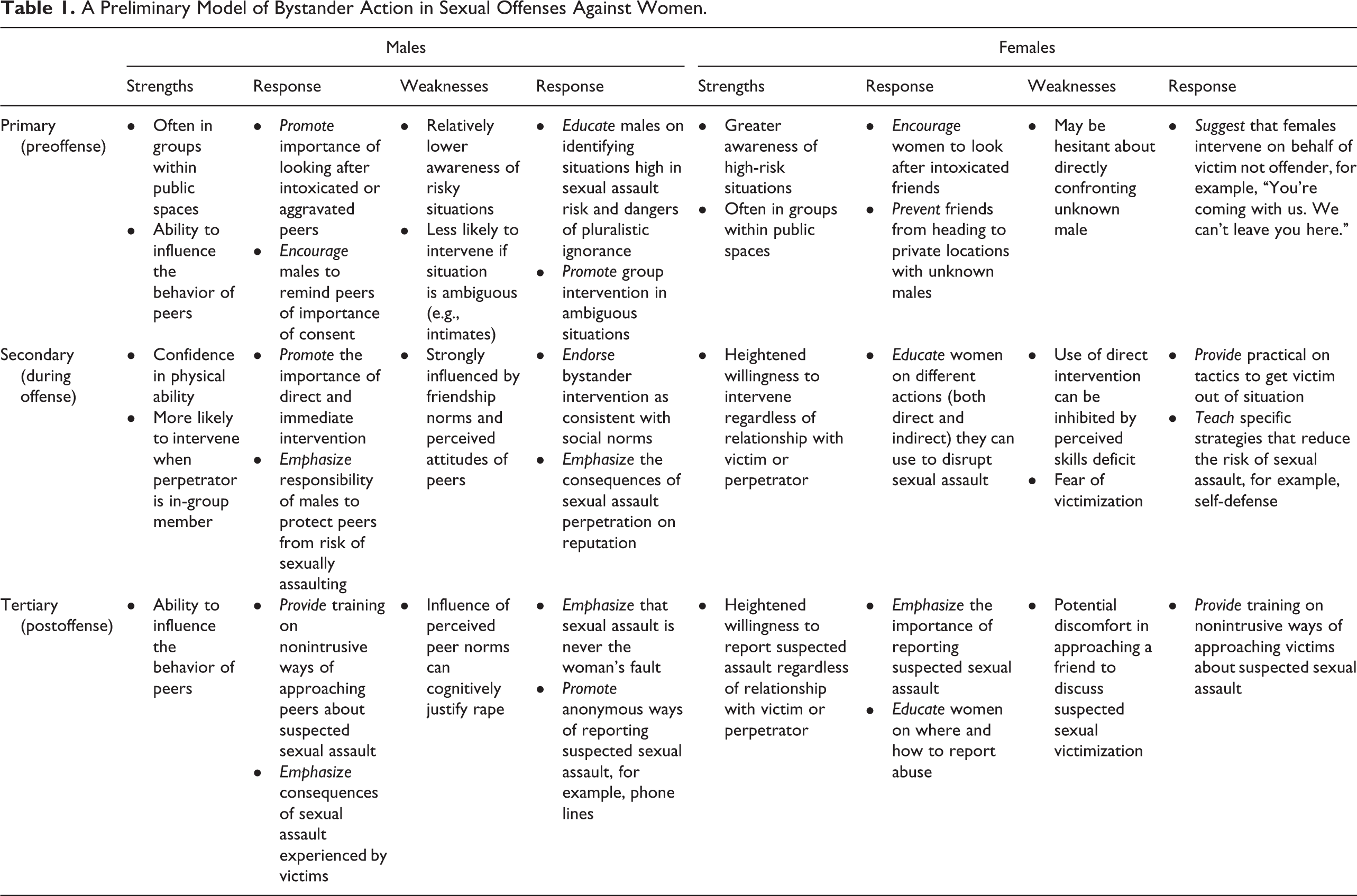
These differences in the likely intervention behaviors of male compared to female guardians in sexual offenses against women have important implications for prevention. Instead of supporting a “one size fits all” approach, the results of this review suggest that the education provided to men and women about their guardianship potential should be each characterized by a markedly different set of strategies. Given that intervention during a sexual offense can also be employed at each of the primary, secondary, and tertiary levels, it is further suggested that different guardianship strategies will apply for each of these respective stages. Drawing together these empirical differences in guardianship capacity at both the individual and situational levels, Table 1 puts forward a model of bystander action which will be of use in the development of future bystander intervention programs. Basing this model on the types of responses that males and females are found to confidently employ in the context of a sexual offense, this work highlights the types of actions that bystanders should be encouraged to adopt. By similarly highlighting those responses that males and females are less likely to exhibit and the reasons why the model can be also used to identify strategies that could potentially circumvent the barriers which impact on one’s decision to intervene both immediately and directly.
A Preliminary Model of Bystander Action in Sexual Offenses Against Women.
Summary and Conclusions
The review undertaken in this article highlights the critical need for additional research that explores in detail the relationship between capability and willingness in terms of guardianship. In turn, this will allow us to develop a much clearer understanding of the relative importance of these dimensions in terms of having an impact on the outcome of a crime event. The complexities associated with this distinction, particularly in light of the fact that a bystander’s presence in itself may be enough to deter some sexual offenses from occurring, are illustrated by Guerette and Santana (2010, p. 206) who state that: What determines a capable guardian from one that is not could be the presence of any bystander who either (a) intervenes in the incident; (b) notifies others for help, such as calling the police during the incident; or (c) observes the incident and later identifies the offender to police. In each case, the risk of detection and/or apprehension for the offender is increased …. Yet even if no action is taken by the bystander (assuming that he or she is not a co-offender), the offender could perceive that the bystander will carry out one of these actions, which could be sufficient to deter the offender from completing the crime.
Footnotes
Declaration of Conflicting Interests
The authors declared no potential conflicts of interest with respect to the research, authorship, and/or publication of this article.
Funding
The authors received no financial support for the research, authorship, and/or publication of this article.