



Abstract
Drawing upon environmental criminology principles and fear of crime literature, this article investigates the types of outdoor places where most crimes against the elderly happen as well as the types of places most feared by them. The study employs an analysis of secondary data, crime mapping, fieldwork, and interviews with residents in a senior housing area in Stockholm, Sweden. Results show that most crime victims were exposed to theft, and all incidents took place in the environment close to the senior housing. Elderly perceived safety follows a “distance decay” from the residence, the safest places being the areas immediately outside the entrance of the senior housing, while the least safe are the deserted areas close to the petrol station. Findings also show that for those who are fairly mobile, the fact that they avoid some places does not necessarily mean their mobility is restricted, as previously expected, but it makes them walk farther.
Introduction
The world is rapidly aging. According to the World Health Organization (WHO, 2007), the number of people aged 60 and over as a proportion of the global population will double, from 11% in 2006 to 22% by 2050. Perceived safety is an important factor for active aging. This means that urban environments must be safe, accessible, and inclusive for older people with varying needs and capabilities. Yet, the international literature has long illustrated the paradox of elderly 1 fear of crime and the actual level of victimization. Although those who are 65 years and older run less risk of being victimized (Cook & Cook, 1976; Liang & Sengstock, 1983; Malinchak & Wright, 1978; Morgan & Mason, 2014), they are more likely than the rest of the population to declare being fearful (Fattah, 1993; Fattah & Sacco, 2012; Killias & Clerici, 2000; Pantazis, 2000). A number of factors affect their perceived safety. In addition to individual factors in older age, including unstable health and poor economic resources (Beaulieu, Leclerc, & Dube, 2004; Hale, 1996; Rader, Cossman, & Porter, 2012), the characteristics of the outdoor immediate environments where they live also affect their declared fear levels (Funk, Allan, & Chappell, 2007; Lorenc et al., 2013; Sampson, Raudenbush, & Earls, 1997; Wyant, 2008).
This article sets out to investigate the elderly’s victimization and declared fear of crime in outdoor environments using a case study in Stockholm, Sweden. The study also assesses whether patterns of elderly use of space are influenced by their previous victimization experience and/or fear of crime. Using multimethod approach, the study focuses on the immediate outdoor environments of a senior housing area (Hässelgården) but also uses evidence from the larger neighborhood and city contexts as a reference to the analysis.
Hässelgården senior housing area constitutes an interesting case because it is “a typical example” of what is publicly available to the elderly in terms of housing standards for this age-group in Sweden. Although these flats comply with national safety standards (Bamzar & Ceccato, 2016), they are simple in layout and design, accommodating most senior individuals who have enough but limited economic resources. The neighborhood is more disadvantaged than the municipal average but does not stand out as particularly criminogenic (Stockholm Municipality, 2013).
The article is structured as follows: First, the theoretical background of the study is discussed in the next section. Then, this is followed by the characterization of the study area and a description of data and methods. Finally, results, conclusion, and recommendations are presented in the final sections.
Theoretical Background
Previous victimization is a strong predictor of fear of crime, regardless of age. Although elderly people declare feeling fearful, the rate of victimization (as well as offending) is lower among this age-group than in the rest of the population (Aiken, 1998; Baker, Nienstedt, Everett, & McCleary, 1983; Fattah, 1993; Fattah & Sacco, 2012; Hindelang, Gottfredson, & Garofalo, 1978; Killias & Clerici, 2000; Lamnek, 1991; Lewis & Salem, 1986; Pantazis, 2000; Matcha, 1997). Morgan and Mason (2014) confirm that in the United States, the rates of nonfatal violent crime and property crime among elderly are lower than among younger people. Yet, in the UK, robbery, burglary, and violence are common crimes against elderly people (Serfaty et al., 2015). Other international studies find comparable findings for property crime (Moore, 2010), robbery (Fox & Levin, 1991), vandalism (Akers, La Greca, Sellers, & Cochran, 1987), assault (Bachman & Meloy, 2008), and mistreatment (Acierno et al., 2010). Several reasons can help explain this mismatch. Fear among the elderly is fed by individual factors, such as health and physical vulnerability. Declining physical health makes older individuals feel defenseless if they encounter violence, which would explain high levels of declared fear (De Donder, Verté, & Messelis, 2005; Ferraro & LaGrange, 1987; Killias & Clerici, 2000; Warr, 1984; Ziegler & Mitchell, 2003). Ceccato (2014) reports that those who feel that they have one or more disabilities experience more anxiety and fear of being a victim to crime and declare that they avoid going out. Older individuals fear because they are aware of someone else’s victimization. A study by Joseph (1997) suggests that two thirds of subjects who knew someone who had been a victim of crime declared being more fearful than those who did not. Fear can be multidimensional, as an individual can fear for oneself (personal fear) and for others (e.g., children, spouses, and friends) whose safety the person values, also called “altruistic fear” (Doran & Burgess, 2011). The elderly are not aware that worrying about crime is not the same as the risk of being victimized by crime. Fear is, according to Warr (2000, p. 453), “an emotion, a feeling of alarm or dread caused by awareness or expectation of danger.” Ferraro (1995, p. 8) defines “fear of crime” as “an emotional reaction of dread or anxiety to crime or symbols that a person associates with crime.” Thus, an increase in crime would hypothetically affect perceived safety, but this simplistic causal relationship is rarely confirmed by empirical studies, as the fear of crime refers to the anxiety of becoming a victim of crime as opposed to the actual probability of becoming a victim of crime, that is, the actual risk (Hale, 1996). Elderly fear of crime may be about fear of the unknown. Fear (and other anxieties) results from the overall sense of change that a place is undergoing. Differences between existing and new residents can be maximized by both groups, giving expression to us-them feelings. Fear of others is often a cause of the animosity between newcomers and locals in a neighborhood, identified by Sandercock (2005) as an expression of the fear of the unknown. Elderly fear can reveal some general contemporary anxieties generated by a sense of loss of personal security (Giddens, 1991) imposed by changes that go far beyond the local community. The sense that “everything was better before” and the sense of lack of control over one’s life may also explain disproportionate elderly fear. Elderly fear may reflect anxieties other than fear of crime, such as uncertainty about personal finances in retirement. International literature contains evidence of the relationship between fear of crime and elderly income: poor senior citizens feel more unsafe and insecure than those with higher income (Christmann, Rogerson, & Waiters, 2003; Hale, 1996; McCoy, Wooldredge, Cullen, Dubeck, & Browning, 1996; Qin & Yan, 2014; Schweitzer, Kim, & Mackin, 1999). Thus, when poor seniors are victimized by property crime, they feel the economic impact more keenly (Pogrebin & Pjoan, 2014). Older citizens may fear more than young people do, as they have greater difficulty understanding that “danger” is a social construct fed by the attention put on it, which may not be backed up by facts. The increasing commodification of security (by a market for personal security products and services), for instance, indicates that crime is one of these contemporary perceived “dangers.” The mass media and social media play an important role in this context by propagating images of danger and risk (Ceccato, 2016). By spending most of their time at home, older people may be more dependent on the quality of their immediate surroundings. Research has long found that living in areas with lack of trust among residents may increase fear of crime (Funk et al., 2007; Sampson et al., 1997; Wyant, 2008). Social isolation and poor social networks (Hale, 1996) are also bound to affect seniors’ perceived safety. Elderly people do not always report a crime when they are victimized (Butler, Lewis, & Sunderland, 1998), thus the mismatch between declared fear and actual victimization also reflects crime reporting practices. Note that the offence-reporting level may be underestimated in areas where people think that it is not worthwhile to report crime, for example, in deprived areas with low social capital (Farr, 2003). Elderly fear is maximized in places where poor social control is evident and the presence of “incivility” and disorder are a norm (Markowitz, Bellair, Liska, & Liu, 2001; Wyant, 2008). Thus, the characteristics of the immediate outdoor environment also affect older individuals’ perceived safety (Foster & Giles-Corti, 2008).
In the next section, we discuss in more detail the effects of the characteristics of the outdoor environment on elderly mobility, risk of victimization, and fear of crime.
Fear of crime and the urban environment
Overall, fear of crime can change and limit activities when specific places or areas are perceived as unsafe (Clememte & Kleiman, 1976; Dowd, Sisson, & Kern, 1981; Lorenc et al., 2013). A person who feels anxiety when waiting at a bus stop or using a car park after dark may avoid these spots in the future, restricting their own mobility (Thomas & Bromley, 2000). Four main categories of behavioral responses to fear of crime are compiled by Jackson and Gouseti (2012): avoidance behavior, protective behavior, behavioral and lifestyle adjustments, and participation in relevant collective activities. Avoidance behavior involves minimizing one’s contact with certain types of people, routine activities, or places. Protective behavior constitutes activities that are thought to prevent crime (putting up fences) as well as wider activities of self-protection and safety improvement (traveling in groups). Behavioral and lifestyle adjustments involve a withdrawal from activities that are considered to be dangerous, such as taking public transportation in the evenings. Collective activities include participation in groups, such as neighborhood watch programs or activities directed at elderly well-being.
Research has long suggested a relationship between high levels of fear of crime and poorly illuminated areas (Girling, Loader, & Sparks, 2000; Koskela & Pain, 2000; Pain, 1993; Pain, MacFarlane, Turner, & Gill, 2006; Pain & Townshend, 2002; Valentine, 1989; Waters, 2006), while well-lit public spaces lead to increased visibility and surveillance (Koskela & Pain, 2000; Valentine, 1989; Waters, 2006). Better lighting is also linked to a better chance of surveillance and to less crime (Painter, 1996). Some physical security measures, such as secure entry systems involving locks and fencing, may reduce fear of crime (Gilchrist, Bannister, Ditton, & Farrall, 1998; Whitley & Prince, 2005), while shutters and security gates have been shown to increase fear of crime (Girling et al., 2000; Nelson, 1998; Rohe & Burby, 1988; Taylor, Evans, & Fraser, 1996; Waters, 2006). Similarly, the presence of hiding places and blocked views may evoke fear (Ceccato, Uittenbogaard, & Bamzar, 2013; Waters, 2006). Physical incivilities including graffiti, litter, and dirt are considered a strong predictor of fear of crime (Cozens, Neale, Whitaker, & Hillier, 2003; Farrall, Gray, & Jackson, 2007; Goodey, 1997; Innes & Jones, 2006; Little, Panelli, & Kraack, 2005). Appleyard (1981) also finds that residents of busy shopping neighborhoods were reluctant to use their front yards, so the likelihood of informal surveillance was low. On the one hand, the presence of people can promote feelings of safety when perceived as surveillance or potential help. On the other hand, feelings of powerlessness and social disintegration promote a fear of crime which again restricts social participation. Several studies also indicate that there is a strong positive association between most disadvantaged neighborhoods (some more crime prone) and fear of crime (Kawachi, Kennedy, & Wilkinson, 1999; Kennedy, Kawachi, Prothrow-Stith, Lochner, & Gupta, 1998; Wilson, Kirkland, Ainsworth, & Addy, 2004). The opportunity for social interaction in public places can become restricted if individuals feel unsafe. If they limit themselves to indoor environments, fear may escalate, and they may refrain from going out. The way the elderly perceive public spaces is directly linked to whether they use them and vice versa.
Fear of crime and mobility
The environment where the elderly live can promote physical activity but may also work against their mobility (Cunningham & Michael, 2004; Gallagher et al., 2010; Mathews et al., 2010; Strath, Isaacs, & Greenwald, 2007; Van Cauwenberg et al., 2011). In Sweden, for instance, Sallis et al. (2009) indicate that older people with a higher level of fear of crime walk less. Accessibility to basic services, street connectivity, the condition of pavements and surroundings, pedestrian/traffic safety, as well as the risk of being a victim of crime and experiencing fear of crime explain the variance in neighborhood walking patterns among older adults with limited mobility (Gallagher et al., 2012).
The attractiveness of the environment highly affects elderly mobility. Some activities will only take place because they are necessary. Pleasant and safe environments invite people to stay beyond what is necessary and to perform optional activities. As suggested by Gehl (1987), while necessary activities take place regardless of the quality of the physical environment, optional activities depend to a significant degree on what the place has to offer and how it makes people behave and feel about it. The better a place, the more optional activity takes place. Yet, human activities depend on place users and their specific needs. Findings from a report by the Swiss National Science Foundation (Acebillo, 2009) indicate that older people in good health prefer to walk in places close to nature, waterways, parks, and city centers. However, seniors in poorer health prefer to walk in places with many people around. Föbker and Grotz (2006) indicate that the presence of good infrastructure in central districts encourages independent and active lifestyles in the elderly. Easily accessible, decentralized supply facilities and greater recreational opportunities are important for an age-appropriate residential neighborhood (Humpel, Owen, & Leslie, 2002; Owen, Humpel, Leslie, Bauman, & Sallis, 2004). Conversely, Marquet and Guasch (2015) indicate that living in an environment with a poor supply of walkable pathways contributes to poor mobility among older adults. As discussed below, one of the factors that contribute to elderly mobility is the perceived risk of being victimized by crime.
Risk of crime in public places
The link between crime risk and microenvironment features has long been pointed out in the international literature (Angel, 1968; Block & Block, 1995; Jacobs, 1961; Newman, 1972; Roncek & Meier, 1991). Environments that allow for observation by people who are walking, in vehicles, or in buildings, discourage crime (Angel, 1968; Jacobs, 1961; Newman, 1972). Gehl (2011) confirms that areas associated with more defensible space features such as clear boundaries between public and private spaces, low-rise buildings, and good illumination have better control of outdoor space and a lower level of victimization and fear of crime. Walkable neighborhood design, including accessible destinations and street connectivity, allows more pedestrian traffic and surveillance and less crime (Foster & Giles-Corti, 2008). Better lighting is also linked to less crime through better chance of surveillance (Painter, 1996). Proper garden and housing maintenance is associated with lower crime rates (Foster & Giles-Corti, 2008), while physical disorder or incivilities such as vandalism, graffiti, and litter are associated with burglary (DeFrances & Titus, 1993).
Yet, crime does not happen at random places. Some areas are more vulnerable to crime than others. A park in one neighborhood can be completely safe, while the same type of park in another neighborhood can be a crime magnet. Why? Both risk of crime and fear of crime reflect ecological processes that coincide with area-level characteristics, such as the demography of the population, socioeconomic status, and general patterns of land use. Since the 1940s, social disorganization theory has indicated that crime tends to happen more often in socially disorganized neighborhoods. These areas are characterized by poverty, population heterogeneity, and residential mobility that together have a negative impact on the effectiveness of social controls thus allowing crime and social disorder (Kelly, 2000; Messner, Baumer, & Rosenfeld, 2004; Shaw & MacKay, 1942). Transport nodes and spots with mixed land use also are more targeted by crime (Ceccato, Haining, & Signoretta, 2002; Uittenbogaard & Ceccato, 2012) because they give rise to crime attractors or generators (Brantingham & Brantingham, 1995) but also crime radiators or crime absorbers (Bowers, 2014). In Stockholm, crime concentrations have followed an “inverted doughnut shape pattern” since the 1980s, with crime concentrations in both inner-city and peripheral suburbs (Ceccato et al., 2002; Uittenbogaard & Ceccato, 2012).
Considering the above, it is expected that elderly victimization and fear of crime are associated with particular features of the micro-urban environment (e.g., Girling et al., 2000; Nelson, 1998; Newman, 1972; Taylor et al., 1996; Waters, 2006) as well as area-level characteristics that take shape through the types of neighborhood and city-wide contexts that the elderly experience. For the purposes of this case study, we follow the recent strand of Western research on victimization and fear of crime, and we expect that in our study area (Hässelgården senior housing): Elderly show higher levels of fear than the rest of the population (neighborhood and city-wide contexts). Elderly victimization takes place in public places where the situational conditions facilitate crime, such as poor maintenance and few opportunities for natural surveillance. The frequency of use of outdoor areas by the elderly varies seasonally, with hot months of the year allowing longer stays outdoors. Fear may trigger a “place-avoidance strategy,” which limits the mobility of the elderly outdoors.
The Study Area
Hässelgården senior housing is located in the Hässelby district, in the outskirts of Stockholm municipality (Figure 1). The senior residents of Hässelgården live in 83 two-room flats, 52–57 m2 each, built in 1973. Each flat has a private balcony with access from the living room. The owner of the housing development is Micasa Fastigheter, a subsidiary of Stockholm Stadshus AB, owned by the City of Stockholm. Micasa manages the City of Stockholm’s elder care homes. Flats are one of the lowest cost rental accommodation among Micasa’s senior housing because of few adaptations of the flats to the elderly and their distance from the Stockholm city Centre, 15 km, about 40 min by train. The residents declared that some physical features inside their flats have not been modified according to their needs (Bamzar & Ceccato, 2016).

The study area.
The Hässelby district has a high proportion of children and middle-aged residents, while young adults are not as well represented as in the rest of Stockholm City. Figure 1 shows the location of Hässelgården, in relation to Hässelby-Vällingby and Stockholm Municipality. Hässelby-Vällingby is located in western Stockholm and had a total population of 71,042 in 2014, of which 15% were 65 years old or older. The average yearly income for the elderly is SEK 230,500 (equivalent to US$27,015), which is slightly below Stockholm Municipality’s (2013) average yearly income in 2010 of SEK 297,900. Stockholm, the capital of Sweden, is located near the east coast. The municipality of Stockholm is a part of Stockholm County and covers the central part of Stockholm and the southern and western suburbs. The elderly (65+) make up 14% of the population, and 4.7% of the elderly live in senior home care. In Stockholm municipality, 19.3% of seniors need some kind of elder care, while 20% of seniors in Hässelby receive some form of elder care.
Data and Method
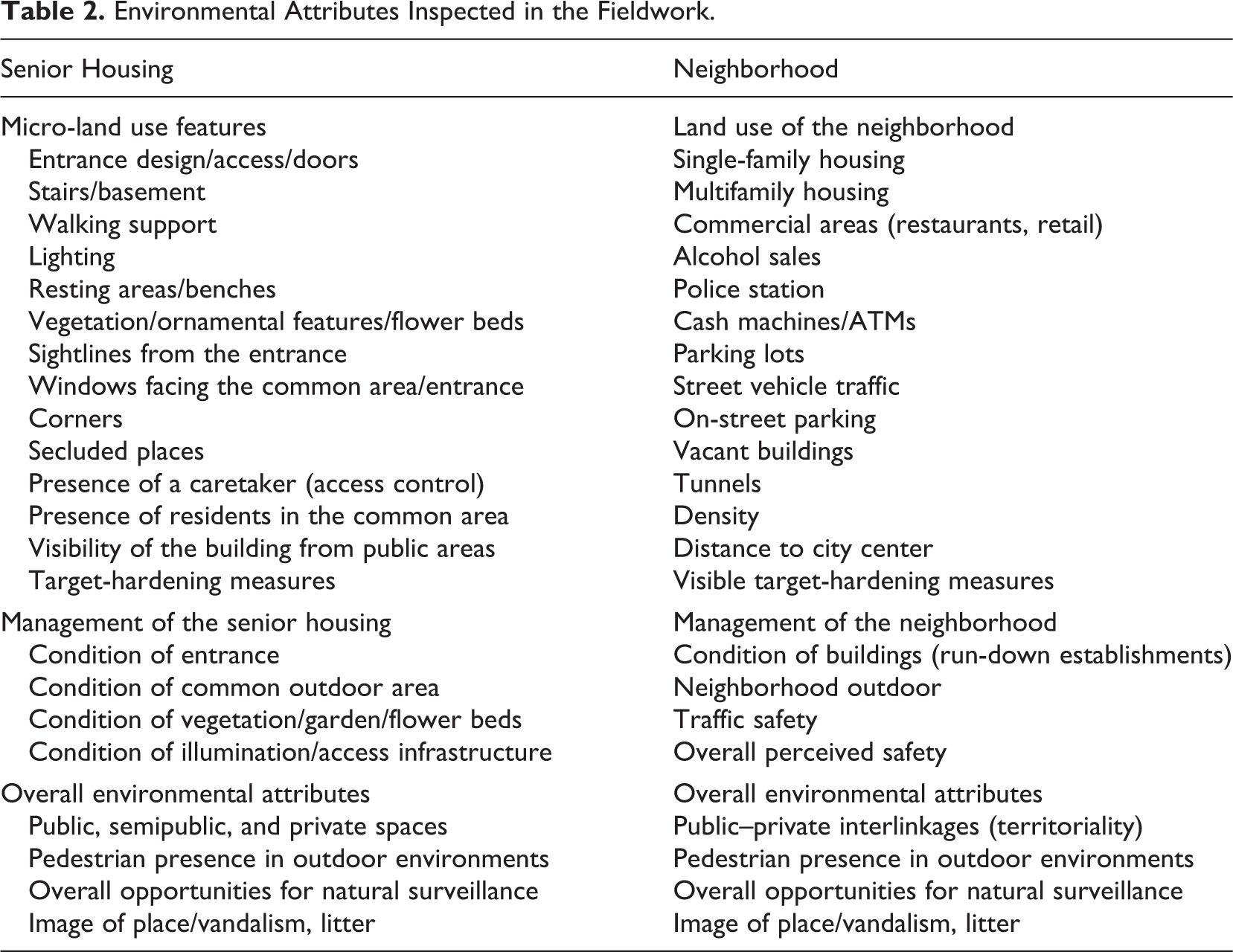
The first data set is a survey of the residents in about half of the two-room flats in Hässelgården, conducted in June–August 2014, with 43 questions about occupants’ health, use of space, safety, and previous victimization. 2 At the first stage, a letter was sent to 56 residents informing them of the survey 2 weeks in advance. The primary intention was to conduct face-to-face interviews. To cover the times people are at home, a first round was done in the morning, 10:00–12:00, and a second round in the afternoon, 15:00–17:00. Those who were not at home at these times received the questionnaire by post. They were given 2 weeks to answer the questions. Overall, 56 questionnaires were distributed, of which 27 were collected (10 were face-to-face interviews, the remainder sent by post). Table 1 shows the demographic characteristics of the participants. The survey was associated with an inspection of the outdoor environmental features of the senior housing area and its immediate neighborhood. Table 2 summarizes the types of features inspected during the fieldwork, registered using photographs that are reported in the next section.
Demographic Characteristics of the Participants in the Survey.
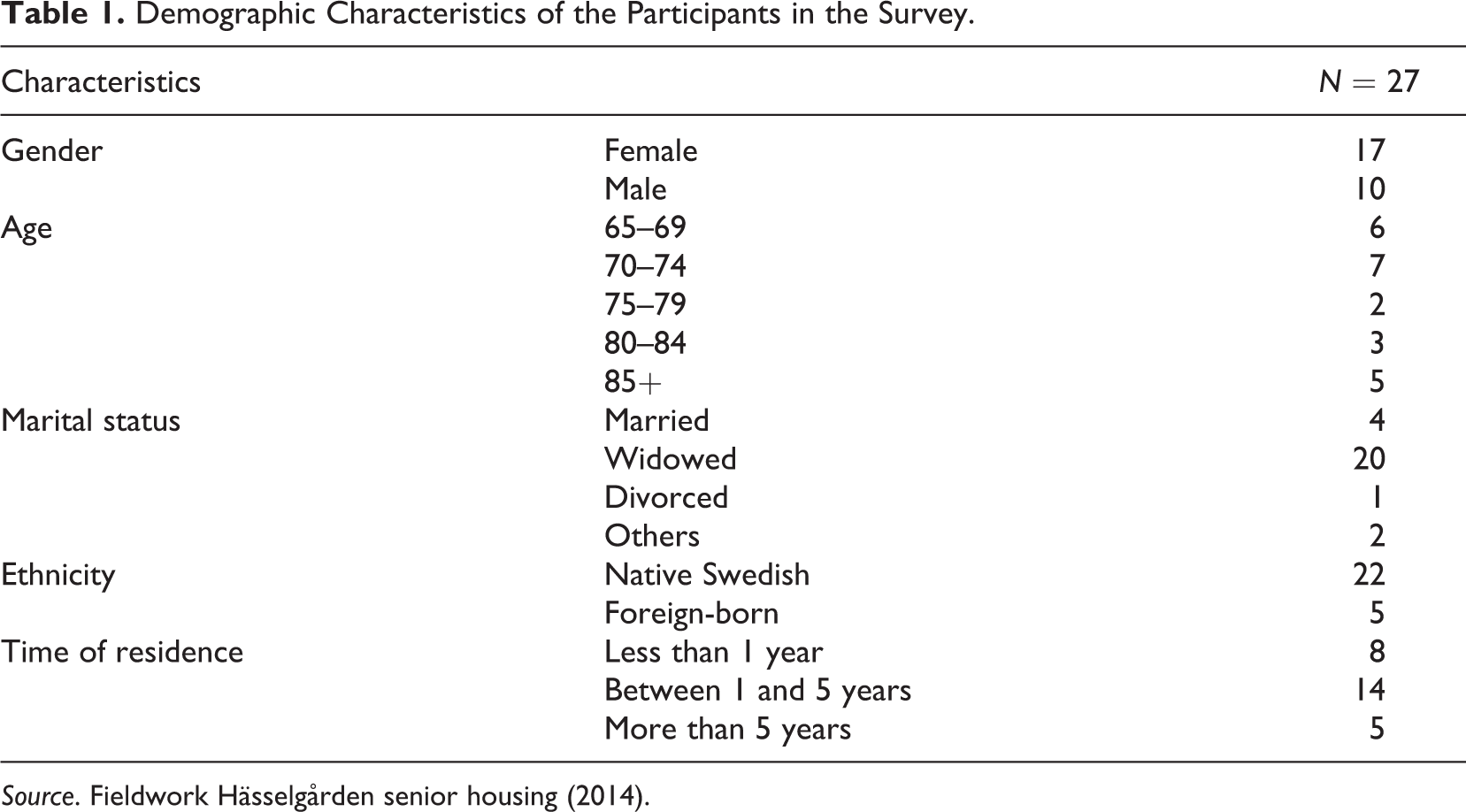
Source. Fieldwork Hässelgården senior housing (2014).
Environmental Attributes Inspected in the Fieldwork.
The second data set is a Stockholm safety survey from 2014 obtained from Stockholm municipality. The data set covers the population 16–79 years old and includes data about crime victimization and fear of crime. The data related to the elderly population contain 1,260 records. The number of elderly who participated in the survey for the Hässelby area was 108 and for Stockholm city is 1,263. The data set can be sorted by location, time, and age-group.
A multimethod approach was utilized to examine the triangle association between elderly fear of crime and victimization, older population use of space and mobility, and characteristics of the environment. A multimethod approach is a research framework that combines various research methods (Teddlie & Tashakkori, 2009). A single method may not adequately shed light on a phenomenon, so multiple methods can facilitate deeper understanding of the issues of elderly safety stemming from different data sources. Triangulation involves using multiple data sources in an investigation to produce a better understanding of a phenomenon by corroborating evidence (Creswell, 2013), in this case, from observations from fieldwork, surveys, and secondary data (questionnaires).
A geographic information system (GIS) was used to map the most fearful places in the study area. A GIS is a system designed to capture, store, manipulate, analyze, manage, and present all types of spatial or geographical data. Those places declared frequently by the elderly as the most/least fearful places in the survey were plotted on a map. Residents of Hässelgården were asked to draw a route on a map of their surroundings by which they satisfy their daily needs. A map with aggregated answers was produced to show the most frequent daily routes of the elderly in ArcMap (Version 10.3). The data from the Stockholm safety survey were sorted and analyzed using a spreadsheet.
Results
Table 3 shows that the elderly in Hässelgården show higher levels of fear than those living in the same neighborhood or indeed anywhere else in Stockholm. Similarly, the proportion of those respondents who declared being fearful in their neighborhood (Hässelby Gård), where Hässelgården is located, was also relatively higher than the proportion for Stockholm overall. Despite being a small sample in the senior housing area, the survey data confirm the expected pattern of elderly fear found elsewhere in the literature.
Elderly Crime and Fear of Crime.
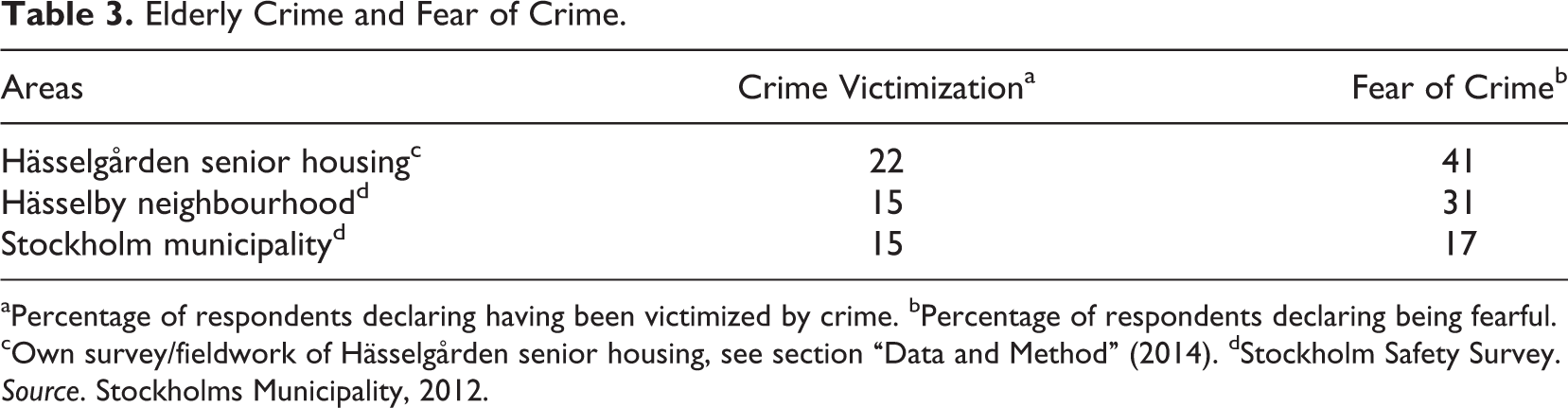
aPercentage of respondents declaring having been victimized by crime. bPercentage of respondents declaring being fearful. cOwn survey/fieldwork of Hässelgården senior housing, see section “Data and Method” (2014). dStockholm Safety Survey. Source. Stockholms Municipality, 2012.
Areas close to a petrol station as well as a bus stop were pointed out as the most unpleasant and feared in Hässelgården (Table 4). The petrol station and the bus stop are not far apart, but both are by a desolated street, with high-rise buildings on one side and a parking lot on the other, not offering much opportunity for natural surveillance. In the area, there are also a few buildings which may provide hiding places and different escape routes for potential offenders.
Types of Places Perceived as Unsafe by the Elderly.
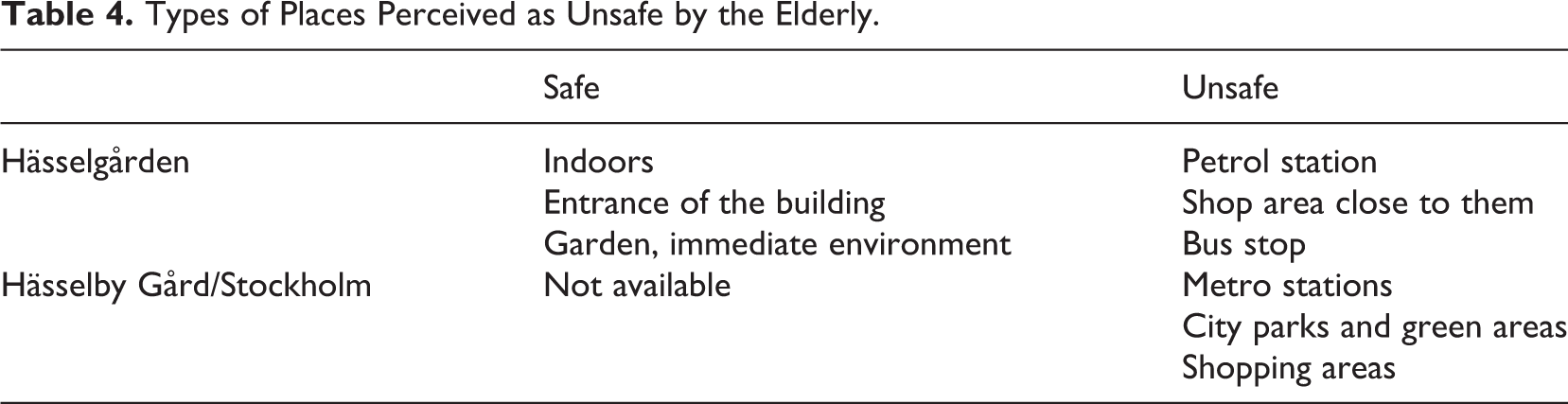
In the neighborhood of Hässelby, a commercial area with many shops was pointed out as the most fearful. Moreover, the areas near the metro station and Hässelby Gård Centrum were designed, so that the boundaries between public and private space are not clear (Figure 2). As previously suggested, this may lead to a weaker sense of ownership and a negative image of the environment. This association between nonresidential areas, concentrations of people at particular times, and the elderly’s fear of crime was also found for Stockholm as a whole (Table 4). The elderly declare as “not safe” large shopping and entertainment areas (such as Medborgarplatsen, Fridhemsplan, and Hornstull), city parks, and metro stations (Table 4). Violence and street crime are not unusual in these areas with bars, restaurants, entertainment clubs, and city parks (Uittenbogaard & Ceccato, 2014). This is not surprising, because some inner-city parks are associated with alcohol consumption and drug dealing (Iqbal & Ceccato, in press).
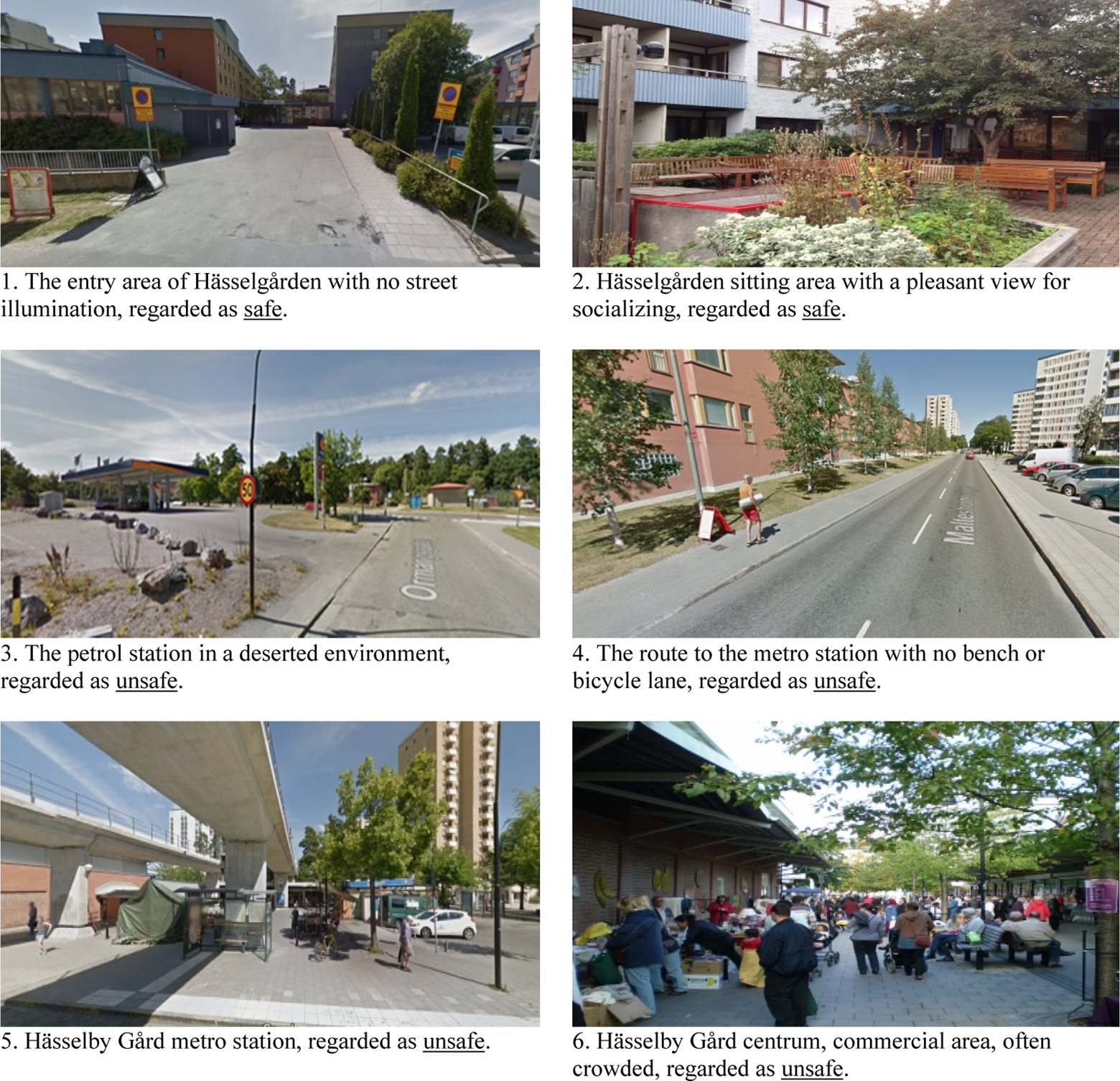
Hässelgården senior housing immediate areas. Source. Own fieldwork of Hässelgården senior housing, and Google map.
Figure 3a shows the areas used daily by the elderly living at Hässelgården. The thick line indicates the most common route taken by the elderly outdoors, from the building to the metro station/shops, while the thinner line is the least used path, to another shop. The places most feared by respondents are indicated by stars, the size being the number of times that respondents indicated that place as fearful or unpleasant. The most common route (thick line) was often used by the elderly on summer afternoons and, surprisingly, in the winter after 16:00. The majority of interviewed individuals go out regardless of the season but go out more often during the summer. Those who go outdoors in the winter normally use the common route to perform necessary activities (Gehl, 1987), such as going to town by metro or going to local shops. At this time of day in the winter, more people are in the street, as they are returning home from work. This fact may make elderly feel it is safer to go out and may explain the late walking pattern in the winter. Although there is another shopping area closer to Hässelgården (thinner line), the sample of interviewed individuals indicated that they often prefer to walk farther, where they feel safer, it is more pleasant, and the shop has a better stock of groceries. There are clear signs of behavioral and lifestyle adjustments among this group of the elderly: Bars (licensed for alcohol) may be regarded by the elderly as risky facilities which prevent them from going to nearby shops for their daily needs. Contrary to what was expected, the place-avoidance strategy does not limit their mobility but, quite the opposite, encourages them to walk farther to another shopping area. Figure 2 illustrates the near environment of the senior housing in Hässelgården. This path does not have a single resting area (e.g., with benches), which indicates that those who take this longer route are fairly mobile.
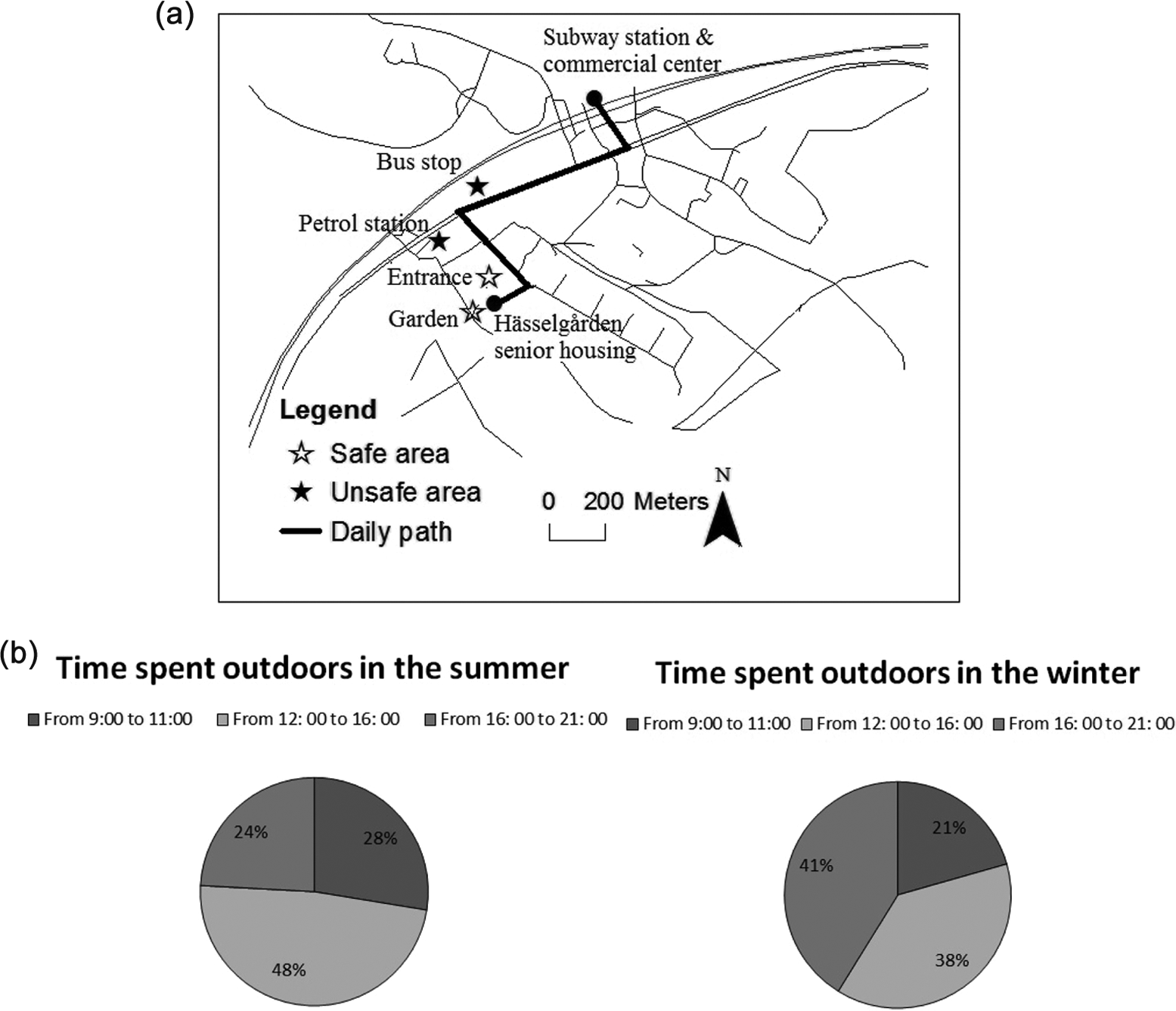
(a) Areas of daily use by the elderly in Hässelgården. (b) Use of outdoor space by the elderly in Hässelgården during summer and winter. Source. Survey of residents and fieldwork inspection. Own survey/fieldwork of Hässelgården senior housing, see section “Data and Method” (2014).
Respondents declared feeling safe in the immediate environment around their building, close to the entrance and garden, though these areas lack proper lighting. In the evenings and dark hours of the day, the areas near the entrance are illuminated by a light from the street, which seems to be enough to ensure their safety. In this area, the physical design, outdoor furniture, and flower beds create a sense of ownership in clear and specific zones, so residents feel a sense of belonging to this area, an extension to the building. The area includes seating with a clear view of the garden, allowing for social interaction at the spot and being seen by people from windows and balconies. Natural surveillance is possible all year-round, because the area is surrounded by low-rise buildings. More importantly, in the summer, residents gather in the garden weekly to barbeque and socialize. During this meeting time, they may plan a collective activity, such as watching a movie or exercising. As suggested by Jackson and Gouseti (2012), these collective activities at the entrance ensure safety.
Table 3 shows that more than one fifth of the residents interviewed had experienced crime during the preceding 12 months. Despite the small sample, results indicate that the proportion of those interviewed in Hässelgården declaring being a victim of crime is higher than for those in the neighborhood overall or in Stockholm as a whole. Interestingly, there seems to be some particular triggers of victimization in Hässelgården that are not present in the wider neighborhood or city context. Most of the victims were exposed to theft, and, not surprisingly, all the incidents took place in the immediate environment of the senior housing where they spent most of their time outdoors. There are no good details on the particular places where crime has happened, but it is most certain they have occurred around the buildings or on the paths to the metro stations and shops/petrol station. As previously mentioned, although these two paths are frequently used (Figure 3), they do not offer a pleasant walkable design to pedestrians from a safety perspective. Neither do they have resting areas or paths to separate pedestrians from bicycle traffic.
Discussion of the Results
The elderly in Hässelgården senior housing show higher levels of fear than those living in the same neighborhood or anywhere else in Stockholm. This is no surprise, because the sample contains individuals aged 65 and older, a group that often declares being more fearful than the rest of the population, for reasons specified earlier in this article (see, e.g., Hale, 1996; Joseph, 1997; Sandercock, 2005; Ziegler & Mitchell, 2003). Another reason for the higher levels is that perceived safety also results from social interaction, that is, if someone becomes a victim of crime in the nearby area, the event becomes a “fear generator” as people talk about it, which triggers even more anxiety.
Similarly, the proportion of those elderly respondents who declared being fearful in their neighborhood (Hässelby, where Hässelgården is located) is also relatively higher than the proportion of elderly for Stockholm overall, although crime levels in the neighborhood are similar to levels in the city. This is certainly due to the fact that elderly fear reflects anxieties in addition to fear of crime, such as uncertainty about personal finances, living in poor areas, or areas with poor trust among residents (e.g., Christmann et al., 2003; Hale, 1996; McCoy et al., 1996; Qin & Yan, 2014; Sampson et al., 1997). Note that this neighborhood is more disadvantaged than the municipal average (Stockholm Municipality, 2013).
It has long been argued in the literature that an individual’s mobility as well as his or her perceived safety is affected by the environmental conditions of a place, for instance, walkable pedestrian paths, presence of litter and other physical incivilities, signs of social disorder, and animosity between transients and residents (e.g., Appleyard, 1981; Cozens et al., 2003; Farrall et al., 2007; Gallagher et al., 2012; Goodey, 1997; Innes & Jones, 2006; Marquet & Guasch, 2015). Therefore, it was initially expected that if any part of the outdoor environment in Hässelgården was perceived as fearful or unpleasant, the elderly would refrain from going out or would avoid certain spots, limiting their mobility. To our surprise, the results from Hässelgården indicate that, for those who are fairly mobile, if they perceive some places as less safe, they choose another route and are persuaded to walk farther. Although this is a small sample, and conclusions drawn should be considered with care, these findings are interesting because they go against the assumption that fear of certain places will prevent people from going out and thus make them walk less. In Hässelgården, and for the particular group interviewed, they do “change” routes, but the change need not restrict their mobility.
Another interesting finding is that respondents declare feeling safe in the immediate outdoor environment of Hässelgården, although the conditions for safety are lacking at times. For instance, despite inadequate illumination at entrance areas, which is bound to affect safety especially in the evenings (Acebillo, 2009), the area is considered safe. This is not a surprise, given residents’ familiarity with the environment and frequency of use of that area. These findings may also indicate that, although some places are thought to be risky (for not having what it takes to become safe), they may not be risky at all, because other safety factors offset what is lacking (e.g., illumination). The reported perceived safety follows a clear “distance-decay pattern” from the building, the safest places being the areas immediately outside the entrance of the building (with benches and a view of the garden and balconies), while the least safe are the areas close to the petrol station (deserted at most times, poor opportunities for surveillance). The path to the metro station is also challenging, as it offers no resting areas or separation of pedestrian and bicycle traffic.
Conclusions and Recommendations
This study sets out to investigate the elderly’s victimization and declared fear of crime in outdoor environments through a case study in Stockholm, Sweden, using a combination of data sources and methods. As expected, findings show that residents of Hässelgården senior housing feel more fearful, despite a relatively low victimization rate. This pattern is also found in Hässelby district and the City of Stockholm overall. Unfortunately, because of data limitations (there are no good details on the particular places where crime against the elderly has happened), little can be said in this study about elderly victimization and the characteristics of public places. Informed by fear of crime literature and environmental criminology principles, this study has shown much better evidence of potential links between characteristics of outdoor environment and elderly’s patterns of declared perceived safety.
In Hässelgården, the elderly’s perceived safety follows a distance-decay pattern from the building, the safest outdoor areas being close to the entrance, in familiar places, which seem to work as an extension of the indoor environment of the building. Among the elderly, there are signs of behavioral responses to low perceived safety, such as avoidance behavior (taking a longer route) and indications of behavioral and lifestyle adjustments (going out at certain times, engaging in social activities) as previously suggested by the international literature (e.g., Jackson & Gouseti, 2012). Although the types of places they fear tend to match the “typical” fearful places pointed out in previous literature, it is not obvious how these results can be translated into measures easily applied to city planning to make outdoor spaces more reassuring for the elderly. For instance, as far as natural surveillance is concerned, these “unsafe places” vary a lot, from empty, desolated places to commercial areas with many people around. Yet, there are clues that might guide better planning of these areas, some including a more pleasant walkable design of paths to pedestrians toward the subway station and commercial area, with resting areas (e.g., with benches), good illumination, and separation of pedestrians from bicycle traffic. Before other policy recommendations are made, future research is needed to better understand whether and how indoor and outdoor safety are related. It may also be that, as previous research on women’s fear has shown, the declared outdoor perceived safety of the elderly reflects overall levels of fear and anxiety, some caused by indoor triggers or other aspects of their lives (such as poor health) that interact with their environment. Note, for example, that residents declared that some physical features inside their flats have not been adapted according to their needs. More knowledge about the nature of elderly’s fear and overall anxieties is needed.
An interesting and surprising result is that, although elderly people avoid some places and change routes (as a behavioral and lifestyle adjustment), this particular group of elderly does not seem necessarily to walk less. Of course, this is a small sample of residents, so caution is needed when drawing conclusions, as it would be necessary in the future to check whether this finding applies to those with health problems or limited physical mobility. Yet, this finding has important practical implications, because it sheds new light on the relationship between physical environment and perceived safety. This reinforces the idea that the quality of the environment is fundamental for the elderly with an active lifestyle. In Global Age-friendly Cities: A guide (WHO, 2007), the elderly point out the beauty and maintenance of the surroundings as an important feature for their motivation for going out (p. 12). This also means that the environment has to be adapted to elderly needs, including transportation infrastructure, with a whole journey perspective to the trip, for instance. In this WHO’s guide, the availability of seating areas is also viewed as a necessary urban feature for older people (WHO, 2007, p. 13). Although it may seem a minor detail, many older people find it difficult to walk around their neighborhood without somewhere to rest, a fact also pointed out by Hässelgården’s residents.
However, the results of this study must be considered in light of several limitations. The sample size of the survey is small (n = 27), encompassing just half of the residents of the building. Future research is needed to explore quantitatively the relationship between elderly fear of crime/victimization and outdoor environment usability on a larger scale. Moreover, in addition to the features of their surroundings, being fearful or a victim of crime is influenced by the physical vulnerability of the elderly. This study did not investigate in depth the relationship between an individual’s physical and mental abilities, use of spaces, and safety. The geographies of use of public spaces are gendered and culturally determined, so future research should pay more attention to potential differences in elderly safety in later ages, as mobility decreases. This study, despite its limitations, is a step forward toward a better understanding of safety from the perspective of those who, despite old age and mobility constraints, make use of public spaces and, as any other social group, deserve more attention from research in criminology. This article also makes a contribution by bringing together evidence from a Scandinavian case study, which has so far been lacking in the international literature.
Footnotes
Acknowledgments
We sincerely thank Lars Erik Lundberg Scholarship Foundation for partially funding the study. We also would like to acknowledge the support of the residents of Hässelgården, Stockholm municipality, to make the study possible.
Declaration of Conflicting Interests
The authors declared no potential conflicts of interest with respect to the research, authorship, and/or publication of this article.
Funding
The authors disclosed receipt of the following financial support for the research, authorship, and/or publication of this article: This study was partially funded by Lars Erik Lundberg Scholarship Foundation.